9 Best Support Automation Software Options by Cost in 2026
Finding the right support automation software cost structure is crucial for B2B companies, as pricing varies dramatically from free tiers with limitations to complex per-agent models that scale unpredictably. This comprehensive comparison examines nine leading platforms across all budget ranges, analyzing not just base pricing but also critical factors like AI capabilities, resolution rates, integration options, and how costs evolve with ticket volume, helping you identify the most cost-effective solution for your specific support needs.
 Grant CooperFounder11 min read
Support automation software pricing can feel like navigating a maze. Free tiers with hidden limits, per-agent fees that balloon as you scale, and enterprise quotes that require a sales call just to see a number. For B2B companies evaluating their options, understanding the true cost of support automation means looking beyond the sticker price to factors like resolution rates, integration capabilities, and how pricing scales with ticket volume.
This guide breaks down nine leading support automation platforms across every budget tier, from AI-native solutions to traditional helpdesk tools with automation add-ons, so you can find the right fit for your support operation and your bottom line.
1. Halo AI
Best for: Teams seeking AI-native support automation with continuous learning and business intelligence integration.
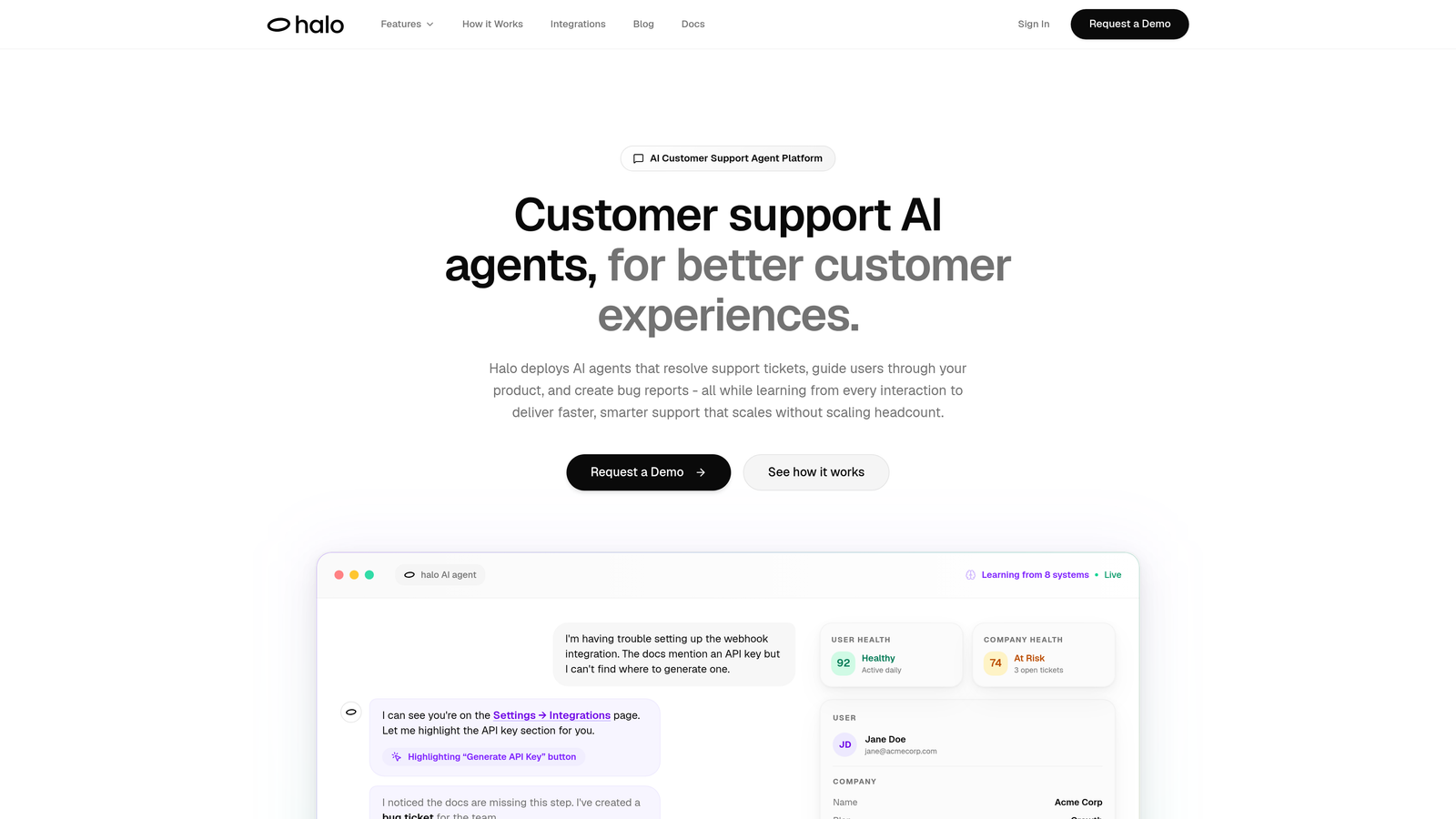
Halo AI is an AI-first customer support platform where automation isn't an add-on but the foundation of how the system operates.
Where This Tool Shines
Unlike traditional helpdesks that layer AI features on top of existing infrastructure, Halo AI builds everything around autonomous agents that learn from every interaction. The platform sees what your users see through page-aware context, which means it can guide customers through your actual product interface rather than just responding to text queries.
The business intelligence layer goes beyond support metrics to surface customer health signals, revenue intelligence, and anomaly detection across your entire stack. This transforms support from a cost center into a strategic data source.
Key Features
Autonomous AI Agents: Handle ticket resolution end-to-end without human intervention for routine inquiries.
Page-Aware Chat Widget: Provides visual UI guidance based on exactly what the user is viewing in your product.
Smart Inbox with BI Analytics: Delivers support metrics alongside business intelligence about customer behavior and health.
Auto Bug Ticket Creation: Automatically identifies technical issues and creates tickets in Linear or other dev tools.
Native Multi-System Integration: Connects directly to Linear, Slack, HubSpot, Intercom, Stripe, Zoom, PandaDoc, and Fathom.
Best For
B2B SaaS companies and product teams that need support automation to scale without scaling headcount, particularly those already using modern tools like Linear, Intercom, or HubSpot and wanting deeper integration across their business stack.
Pricing
Platform-based pricing with AI included rather than charged per resolution. Contact for custom quote based on ticket volume and integration requirements.
2. Intercom
Best for: Conversational support with pay-per-resolution AI automation across multiple channels.
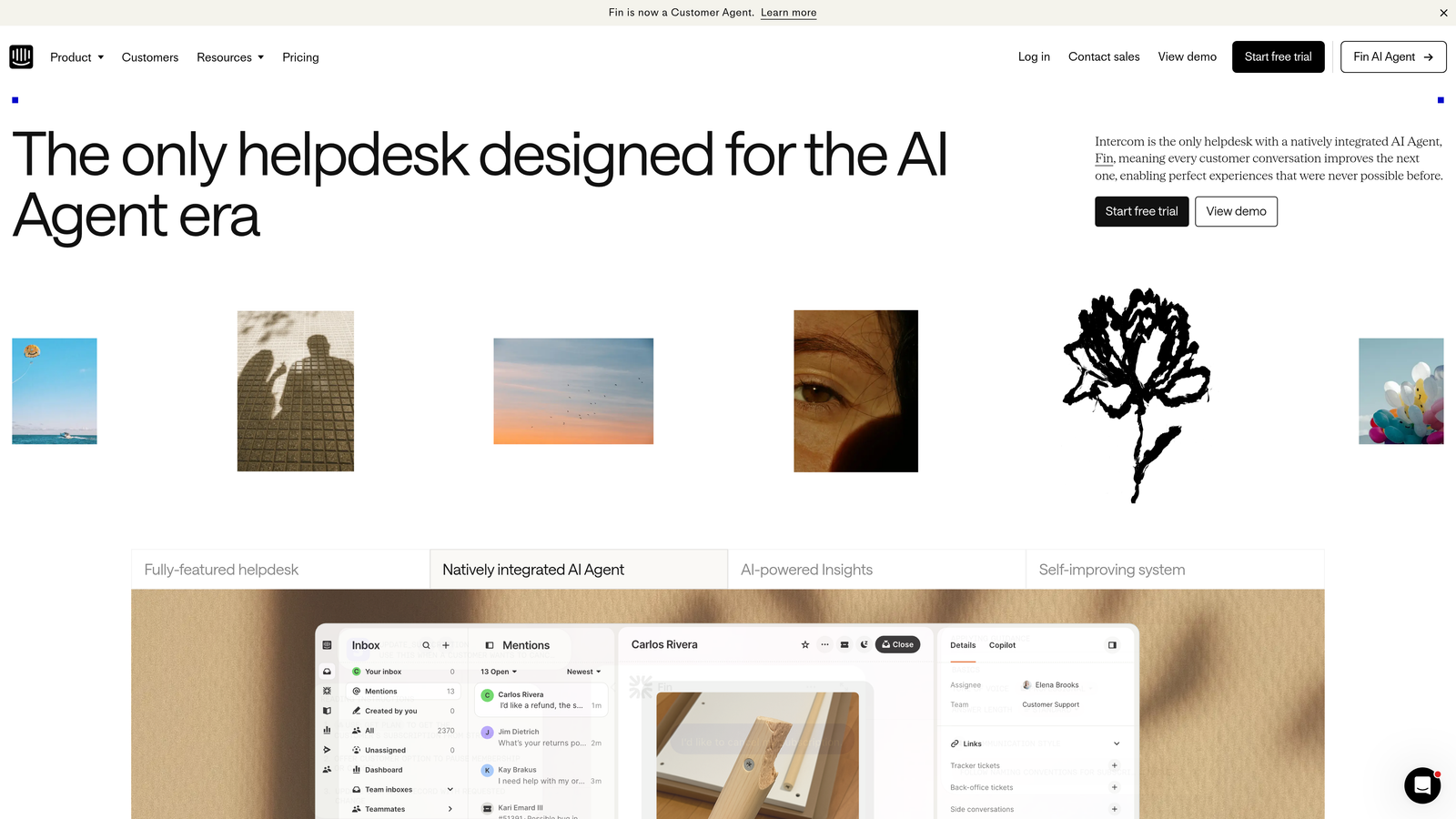
Intercom is a conversational customer platform that combines live chat, chatbots, and the Fin AI agent for automated resolution.
Where This Tool Shines
Intercom's Fin AI agent handles customer conversations autonomously, drawing from your knowledge base and past interactions to resolve common inquiries. The platform excels at blending automated and human conversations seamlessly, with clear handoff points when AI reaches its limits.
The product tour and onboarding tools make it particularly strong for SaaS companies that need to guide users through features while simultaneously providing support. The unified inbox brings together conversations from chat, email, and social channels into one workspace.
Key Features
Fin AI Agent: Autonomous conversation handling with natural language understanding and knowledge base integration.
Customizable Chatbots: Visual workflow builder for creating automated conversation paths without coding.
Unified Inbox: Manages conversations across chat, email, SMS, and social media in one interface.
Product Tours: In-app guidance and onboarding flows that reduce support burden by proactively educating users.
App Ecosystem: Extensive marketplace of integrations with CRMs, analytics tools, and business systems.
Best For
SaaS companies prioritizing conversational support and product-led growth, especially those needing strong onboarding tools alongside support automation.
Pricing
Platform starts around $39 per seat per month. Fin AI is charged separately at approximately $0.99 per resolution, which can add up quickly at scale.
3. Zendesk
Best for: Enterprise teams needing comprehensive automation workflows and extensive integration options.
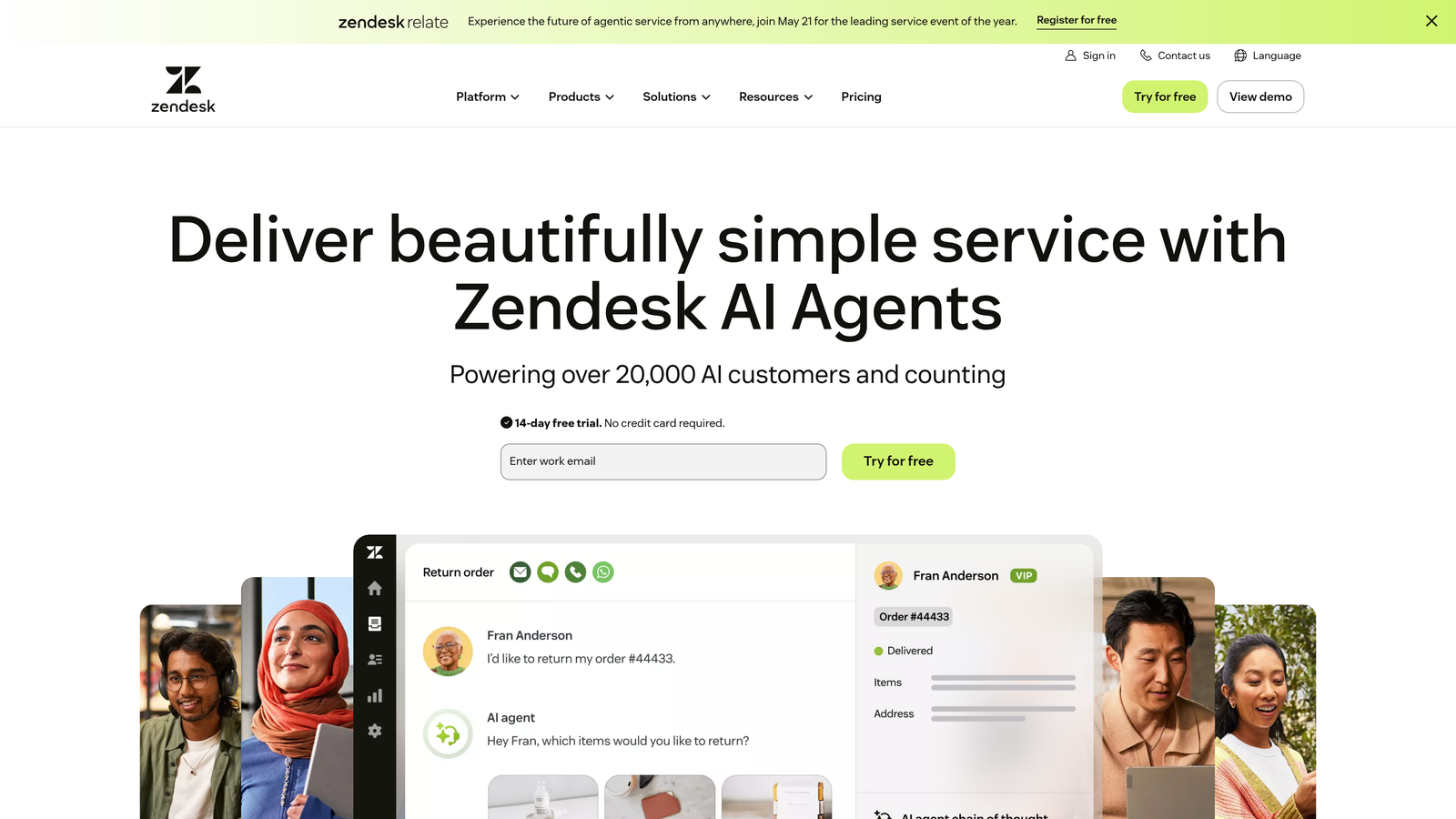
Zendesk is an established helpdesk platform with Answer Bot for automated deflection and advanced workflow automation capabilities.
Where This Tool Shines
Zendesk's strength lies in its maturity and depth. The platform offers sophisticated trigger systems and automation workflows that can handle complex routing, escalation, and response scenarios. Answer Bot uses machine learning to suggest relevant knowledge base articles and can fully resolve simple inquiries.
The marketplace contains hundreds of integrations, and the platform's API allows for extensive customization. For enterprises with complex support operations spanning multiple departments and channels, Zendesk provides the infrastructure to manage it all.
Key Features
Answer Bot: AI-powered deflection that suggests articles and handles simple resolutions automatically.
Advanced Triggers and Automations: Sophisticated workflow engine for routing, escalation, and automated responses based on complex conditions.
Omnichannel Routing: Unified ticketing across email, chat, phone, social media, and messaging apps.
Reporting and Analytics: Comprehensive dashboards and custom reports for tracking performance across teams and channels.
Integration Marketplace: Extensive ecosystem of pre-built integrations with business tools and custom API access.
Best For
Large enterprises with complex support operations, multiple departments, and high ticket volumes requiring sophisticated routing and reporting capabilities.
Pricing
Suite Team starts at $55 per agent per month. Suite Professional at $115 per agent per month includes advanced automation features. Costs scale significantly with team size.
4. Freshdesk
Best for: Mid-market teams seeking comprehensive features at competitive per-agent pricing.
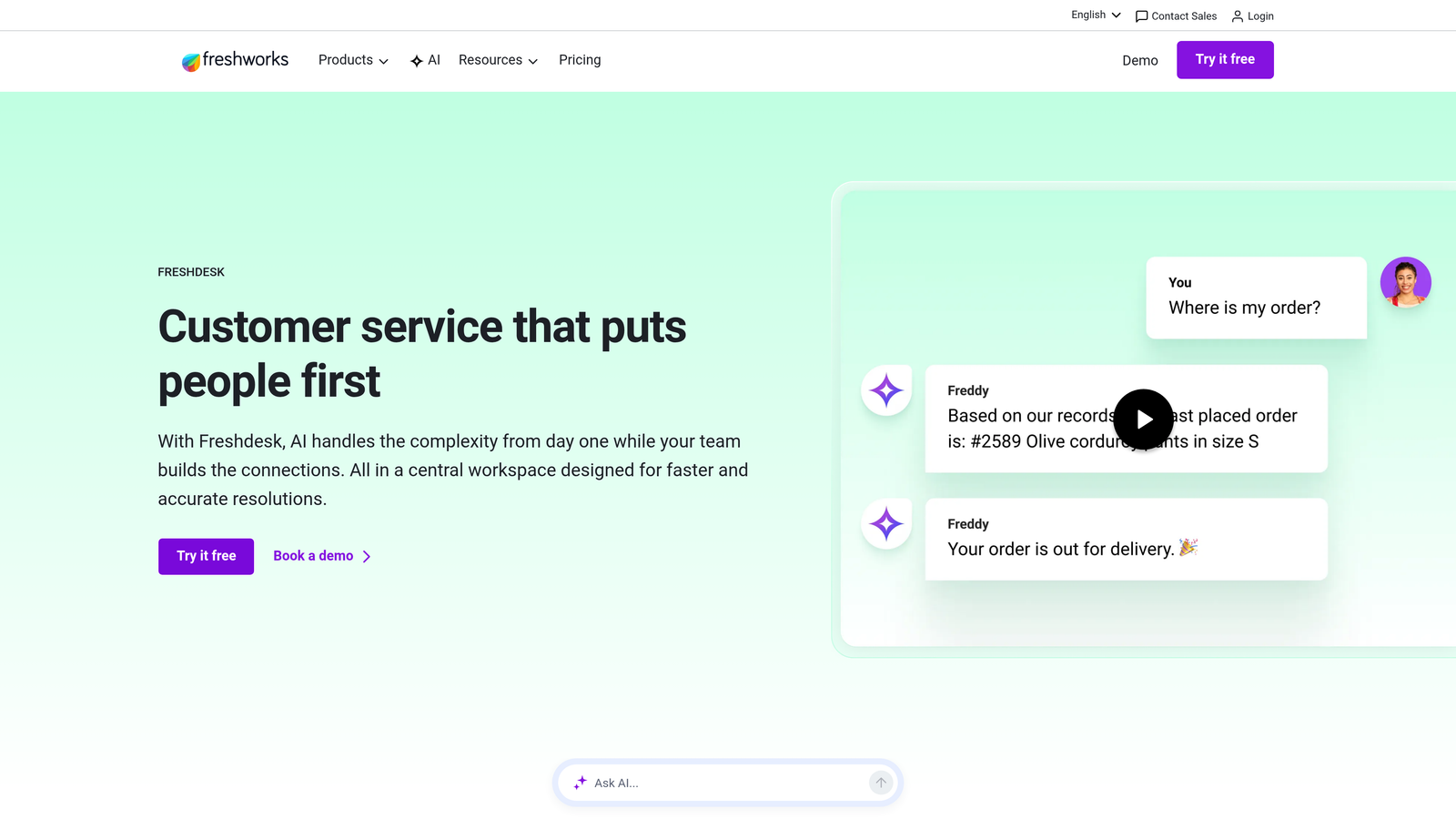
Freshdesk is a helpdesk platform with Freddy AI for ticket automation, auto-triage, and intelligent suggestions.
Where This Tool Shines
Freshdesk positions itself as the more affordable alternative to Zendesk while still offering robust automation. Freddy AI handles ticket categorization, priority assignment, and suggests responses based on historical data. The platform's scenario automations let you build if-then workflows for common support patterns.
The knowledge base includes AI-powered search that improves over time, helping customers self-serve before creating tickets. SLA management tools ensure critical issues get attention even as automation handles routine inquiries.
Key Features
Freddy AI: Intelligent ticket triage, priority assignment, and response suggestions based on historical patterns.
Scenario Automations: Workflow builder for creating automated responses and routing based on ticket properties.
Multi-Channel Ticketing: Email, chat, phone, and social media support in a unified interface.
AI-Powered Knowledge Base: Self-service portal with intelligent search that learns from user behavior.
SLA Management: Automated escalation and priority handling to ensure critical tickets receive timely attention.
Best For
Growing teams that need enterprise-level features without enterprise pricing, particularly those wanting AI automation without per-resolution fees.
Pricing
Free tier available for basic use. Pro at $49 per agent per month. Enterprise at $79 per agent per month includes full Freddy AI capabilities.
5. Help Scout
Best for: Small to mid-sized teams focused primarily on email support with straightforward automation needs.
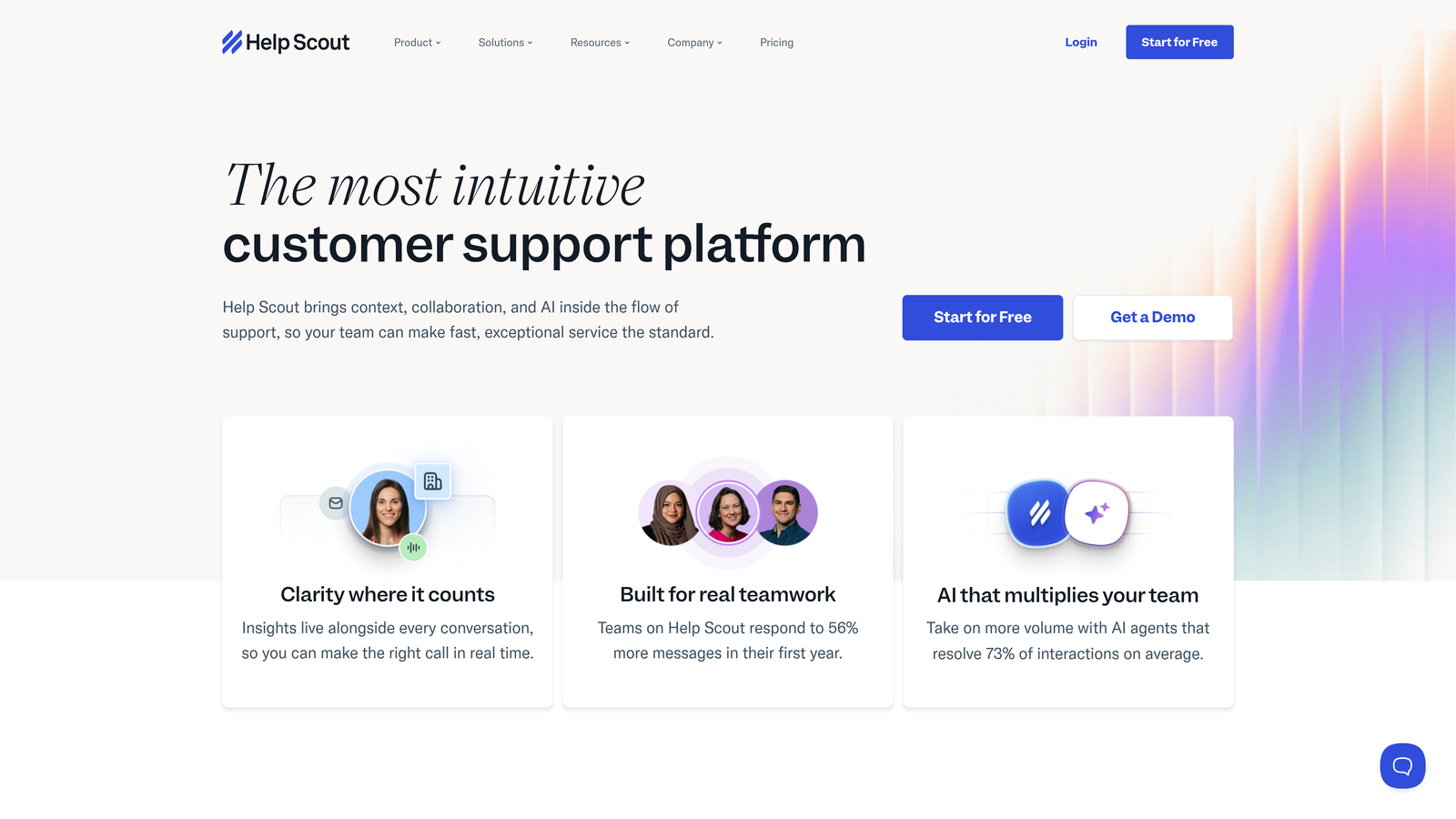
Help Scout is a streamlined helpdesk emphasizing simplicity and email-centric support with AI features for growing teams.
Where This Tool Shines
Help Scout deliberately avoids feature bloat in favor of doing email support exceptionally well. The AI summarize feature condenses long email threads into quick overviews, while AI assist helps agents draft responses faster. The shared inbox prevents multiple agents from responding to the same customer through collision detection.
The Beacon widget embeds help content directly into your product, allowing customers to search your knowledge base without leaving your interface. Workflows automate tagging, routing, and basic responses without requiring complex configuration.
Key Features
AI Summarize and Assist: Condenses conversation history and suggests response drafts to speed up agent replies.
Shared Inbox: Collision detection prevents duplicate responses and keeps team communication organized.
Beacon Widget: Embedded help widget that surfaces relevant knowledge base articles within your product.
Docs Knowledge Base: Self-service documentation with search functionality and article suggestions.
Workflows: Automated tagging, routing, and responses based on conversation properties and customer data.
Best For
Teams that primarily support customers via email and want a clean, user-friendly interface without the complexity of enterprise platforms.
Pricing
Standard at $20 per user per month. Plus at $40 per user per month includes AI features and advanced reporting.
6. Tidio
Best for: Budget-conscious small businesses needing basic chatbot automation and live chat.
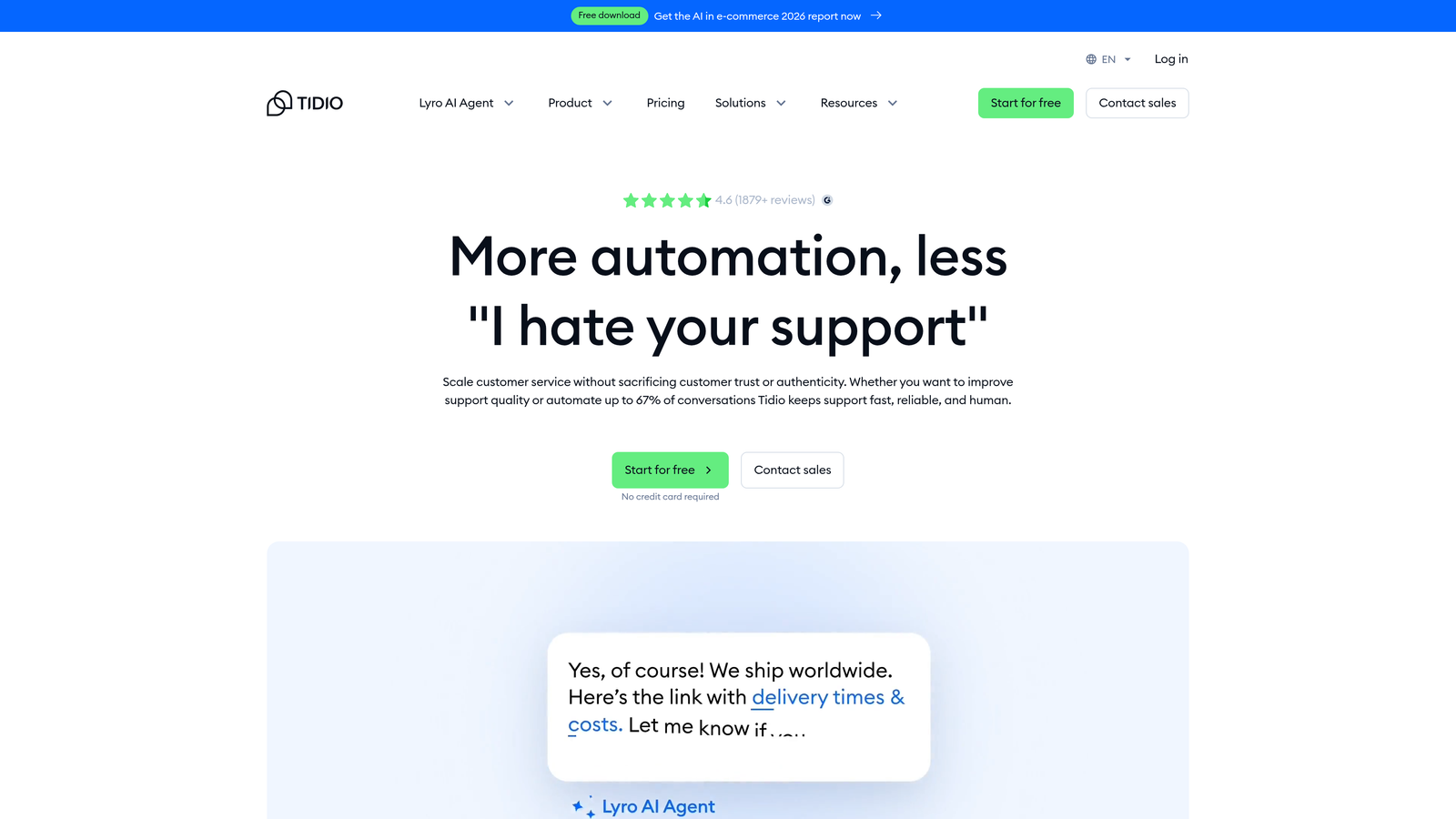
Tidio is an affordable live chat and chatbot platform with Lyro AI for automated customer conversations.
Where This Tool Shines
Tidio makes chatbot creation accessible through a visual builder that doesn't require coding knowledge. Lyro AI handles common customer questions automatically, learning from your website content and FAQ pages. The platform combines live chat with chatbot automation, allowing seamless handoff when conversations need human attention.
Integration with e-commerce platforms like Shopify and WooCommerce lets the chatbot access order information and provide status updates. Visitor tracking shows you who's on your site and their browsing behavior, helping agents provide contextual assistance.
Key Features
Lyro AI Chatbot: Automated response handling trained on your website content and common customer questions.
Visual Chatbot Builder: Drag-and-drop interface for creating conversation flows without coding.
Live Chat: Real-time messaging with visitor tracking and browsing behavior insights.
Multi-Channel Integration: Connects email, Messenger, and website chat into unified conversations.
E-Commerce Integrations: Native connections to Shopify, WooCommerce, and other platforms for order management.
Best For
Small businesses and e-commerce stores needing affordable chat and basic automation without complex helpdesk features.
Pricing
Free tier with limited chats available. Starter at $29 per month for expanded chat volume. Lyro AI add-on starts at $39 per month.
7. Gorgias
Best for: E-commerce businesses on Shopify, BigCommerce, or Magento needing order-focused automation.
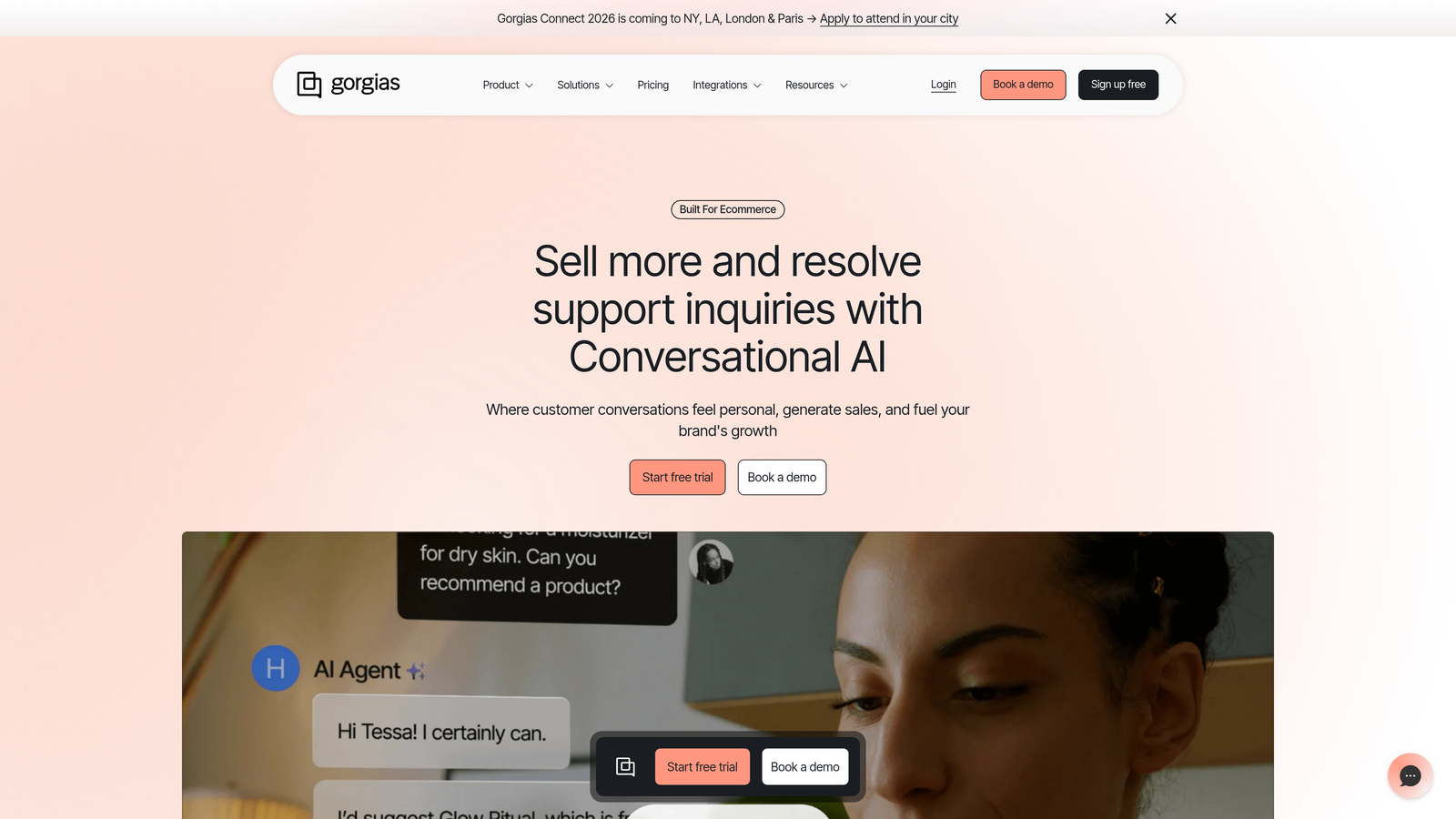
Gorgias is an e-commerce helpdesk with deep platform integrations and automation rules designed specifically for online retail.
Where This Tool Shines
Gorgias builds everything around e-commerce workflows. The platform pulls order information directly into support tickets, allowing agents to modify orders, process refunds, and check shipping status without leaving the conversation. Automation rules handle common inquiries like "Where is my order?" by automatically checking tracking information and responding.
AI-powered intent detection categorizes incoming messages and routes them appropriately. Revenue attribution reporting shows which support interactions lead to sales, helping justify support investment with concrete ROI data.
Key Features
Deep E-Commerce Integrations: Native connections to Shopify, BigCommerce, Magento with order management within tickets.
Automation Rules: Pre-built templates for common e-commerce inquiries like order status, returns, and shipping questions.
AI Intent Detection: Automatically categorizes and routes messages based on customer intent and inquiry type.
In-Ticket Order Management: Modify orders, process refunds, and update customer information without switching platforms.
Revenue Attribution: Tracks which support conversations lead to purchases and calculates support ROI.
Best For
E-commerce businesses that need support tightly integrated with their online store platform and want automation focused on order-related inquiries.
Pricing
Ticket-based pricing starting at $10 per month for 50 tickets. Scales based on monthly ticket volume rather than agent count.
8. Zoho Desk
Best for: Teams already using Zoho products seeking cost-effective helpdesk with AI assistance.
Zoho Desk is a helpdesk platform with Zia AI assistant, offering strong value for teams in the Zoho ecosystem.
Where This Tool Shines
Zoho Desk provides enterprise helpdesk features at small business prices, especially for companies already using Zoho CRM or other Zoho products. Zia AI analyzes sentiment in customer messages, suggests relevant articles, and can predict ticket properties like category and priority. Blueprint workflow automation lets you design complex multi-step processes visually.
Multi-department support allows different teams to manage their own ticket queues while sharing a unified knowledge base. The native CRM integration means support context flows directly into sales records without middleware.
Key Features
Zia AI Assistant: Sentiment analysis, response suggestions, and predictive ticket tagging based on content analysis.
Blueprint Workflows: Visual process designer for creating multi-step automated workflows across departments.
Multi-Department Support: Separate ticket queues and workflows for different teams sharing common knowledge resources.
Native Zoho CRM Integration: Seamless data flow between support and sales without third-party connectors.
Self-Service Portal: Customer-facing knowledge base and community forums for reducing ticket volume.
Best For
Small to mid-sized businesses already invested in the Zoho ecosystem or seeking comprehensive features at budget-friendly pricing.
Pricing
Free for up to 3 agents. Standard at $14 per agent per month. Professional at $23 per agent per month includes Zia AI capabilities.
9. Front
Best for: Teams managing shared email workflows with emphasis on internal collaboration.
Front is a collaborative inbox platform with automation rules designed for teams handling shared email accounts.
Where This Tool Shines
Front transforms email into a collaborative workspace. Internal comments let team members discuss customer issues without cluttering the actual email thread. Rules-based automation handles routing, tagging, and assignment based on sender, content, or other properties. AI-assisted drafts suggest responses based on previous similar conversations.
The platform supports multiple channels including SMS and social media alongside email. Analytics track response times, resolution rates, and SLA compliance across the team. The interface feels more like a modern communication tool than a traditional helpdesk.
Key Features
Shared Inbox with Comments: Internal team discussion threads attached to customer emails without exposing internal conversation.
Rules-Based Automation: Automated routing, tagging, and assignment based on customizable conditions and triggers.
AI-Assisted Drafts: Response suggestions and automated tagging based on message content and historical patterns.
Multi-Channel Support: Email, SMS, social media, and chat unified in one collaborative interface.
Analytics and SLA Tracking: Performance metrics, response time monitoring, and compliance reporting across teams.
Best For
Teams that primarily work through shared email addresses and need strong internal collaboration tools alongside automation.
Pricing
Starter at $19 per seat per month. Growth at $59 per seat per month includes advanced automation and analytics features.
Finding the Right Fit for Your Budget
Pricing models across support automation software fall into three main categories. Per-agent pricing (Zendesk, Freshdesk, Help Scout, Front) scales linearly with team size, making costs predictable but potentially expensive as you grow. Per-resolution or ticket-based pricing (Intercom's Fin AI, Gorgias) ties costs to usage rather than headcount, which can be more economical for high-automation scenarios but unpredictable during volume spikes.
Platform-based pricing with AI included (Halo AI, Tidio) often provides the most predictable costs since automation capabilities are built into the core product rather than charged separately.
When evaluating total cost of ownership, look beyond the monthly subscription. Integration costs matter significantly. Platforms requiring extensive middleware, custom development, or premium connectors add hidden expenses that can exceed the base platform fee. Native integrations with your existing tools reduce both implementation time and ongoing maintenance costs.
Resolution rate impact deserves careful consideration. A platform with higher upfront costs but superior automation capabilities can actually cost less per resolved ticket than a cheaper platform requiring more human intervention. Calculate your expected ticket volume, estimate automation rates for each platform, and determine how many agent hours each solution would save.
For teams just starting with support automation, Help Scout or Tidio offer affordable entry points with basic AI features. Growing B2B companies typically benefit most from platforms like Freshdesk or Halo AI that provide sophisticated automation without enterprise complexity. E-commerce businesses should strongly consider Gorgias for its order-focused automation.
Enterprise teams with complex multi-department operations may find Zendesk's higher costs justified by its comprehensive workflow capabilities. Teams already invested in specific ecosystems (Zoho, Intercom) gain efficiency from staying within those platforms.
Your support team shouldn't scale linearly with your customer base. Let AI agents handle routine tickets, guide users through your product, and surface business intelligence while your team focuses on complex issues that need a human touch. See Halo in action and discover how continuous learning transforms every interaction into smarter, faster support.