9 Best Support Automation Software Features to Look For in 2026
Choosing the right support automation software features can make or break your team's efficiency, and not all platforms deliver equally. This guide evaluates the nine most critical capabilities to look for in 2026, helping support teams reduce ticket volume, improve resolution rates, and scale operations without increasing headcount.
 Matt PattoliFounder13 min read
Not all support automation platforms are built the same. Some bolt AI onto a legacy helpdesk and call it a day. Others are purpose-built to resolve tickets, surface insights, and scale your support operation without scaling headcount. The difference shows up fast: in resolution rates, agent burnout, and customer satisfaction scores.
This guide breaks down the most important feature sets to evaluate when choosing support automation software, with real platforms that deliver each one. Whether you're migrating off a traditional helpdesk, scaling a fast-growing SaaS product, or trying to reduce ticket volume without sacrificing quality, these are the tools worth your time. We've covered related challenges in depth, from customer support ticket volume too high to support agents spending time on repetitive questions, and the platforms below represent the most capable solutions we've seen address them.
1. Halo AI
Best for: B2B SaaS teams that need AI-native support with business intelligence built in
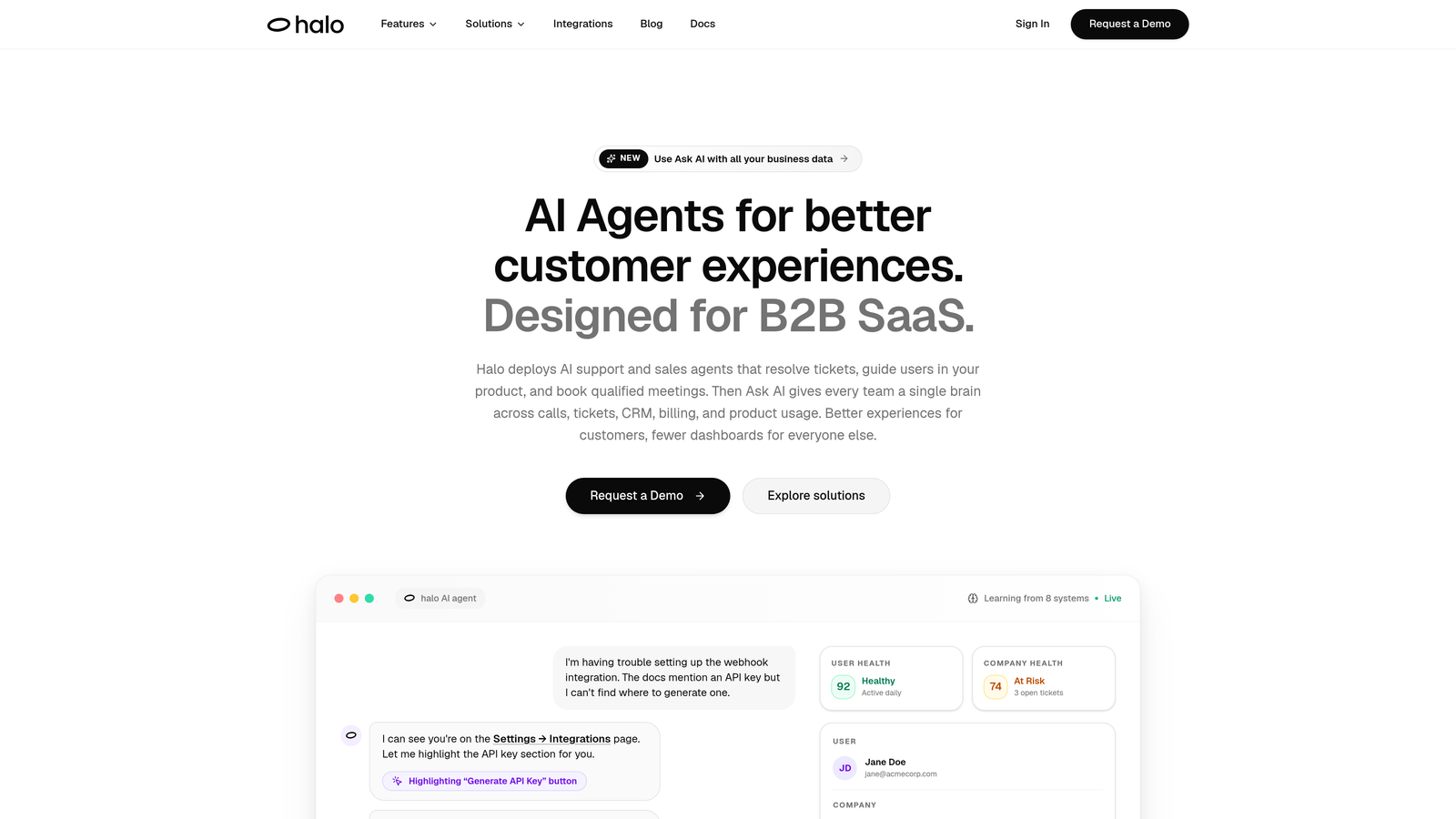
Halo AI is an AI-first customer support platform built specifically for B2B SaaS teams that need more than automated replies.
Where This Tool Shines
Halo isn't AI bolted onto an existing helpdesk. It's built from the ground up around intelligent agents that resolve tickets end-to-end, understand product context, and continuously learn from every interaction. That architectural difference matters: the system gets smarter over time rather than staying static.
The page-aware chat widget is particularly distinctive. It sees exactly what a user sees at any given moment, enabling precise visual guidance rather than generic instructions. Pair that with a smart inbox that surfaces customer health signals, revenue anomalies, and product insights, and you have a platform that doubles as a business intelligence layer for your entire support operation.
Key Features
Intelligent AI Agents: Resolve support tickets end-to-end without human intervention for common issues, learning continuously from each resolved conversation.
Page-Aware Chat Widget: Understands exactly where users are in your product to deliver contextually precise visual guidance, not generic answers.
Smart Inbox with Business Intelligence: Surfaces customer health signals, revenue anomalies, and product insights directly from support interactions.
Auto Bug Ticket Creation: Automatically generates and routes bug reports to Linear or your preferred dev toolchain when support conversations reveal product issues.
Live Agent Handoff: Transfers conversations to human agents with full context preserved, so agents never start from scratch.
Deep Integrations: Connects to Slack, HubSpot, Intercom, Stripe, Zoom, PandaDoc, and Fathom to unify your entire business stack.
Best For
Product-led SaaS companies that want AI to handle routine tickets while generating actionable business intelligence from support data. Particularly well-suited for teams scaling quickly who need support capacity to grow without proportional headcount increases.
Pricing
Contact Halo AI directly for pricing. Plans are designed for scaling B2B SaaS teams and are tailored to your support volume and team size.
2. Zendesk
Best for: Enterprise support organizations with complex routing, SLA requirements, and established workflows
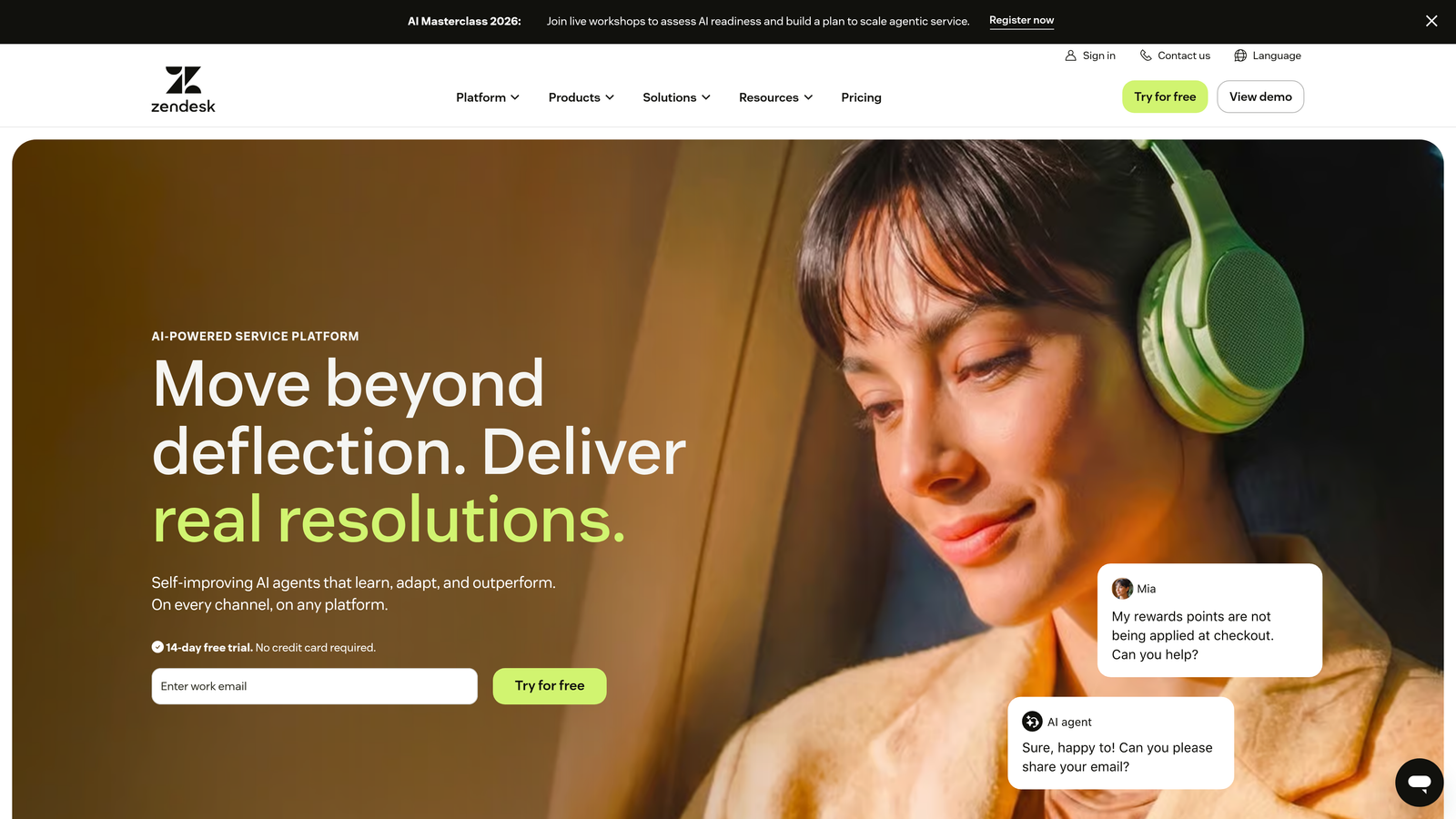
Zendesk is one of the most established helpdesk platforms on the market, with a mature AI layer built on top of robust ticket management and workflow automation.
Where This Tool Shines
Zendesk's strength is depth of configuration. Complex routing rules, SLA enforcement across tiers, and a marketplace of hundreds of third-party integrations make it a reliable choice for large support organizations with established processes. It's the platform many enterprise teams have built their operations around.
Zendesk AI adds automated triage, suggested replies, and intent detection on top of that foundation. It's a capable layer, though it functions more as an enhancement to existing workflows than as a rethinking of how support operates.
Key Features
Advanced Routing and SLA Management: Sophisticated rules engine for ticket assignment, escalation paths, and SLA enforcement across complex support tiers.
Zendesk AI: Automated triage, suggested replies, and intent detection that layers onto the core helpdesk experience.
Omnichannel Support: Unified coverage across email, chat, voice, and social media channels.
Integration Marketplace: Hundreds of third-party connectors covering CRM, billing, ecommerce, and productivity tools.
Reporting and Analytics: Comprehensive dashboards covering ticket volume, resolution times, agent performance, and SLA compliance.
Best For
Enterprise support teams with established workflows, complex routing requirements, and a need for deep customization. Also strong for organizations that need a wide integration ecosystem out of the box.
Pricing
Starts at approximately $55/agent/month for the Suite Team plan. Enterprise plans vary based on features and agent count.
3. Intercom
Best for: SaaS companies that want support and product engagement in a single conversational platform
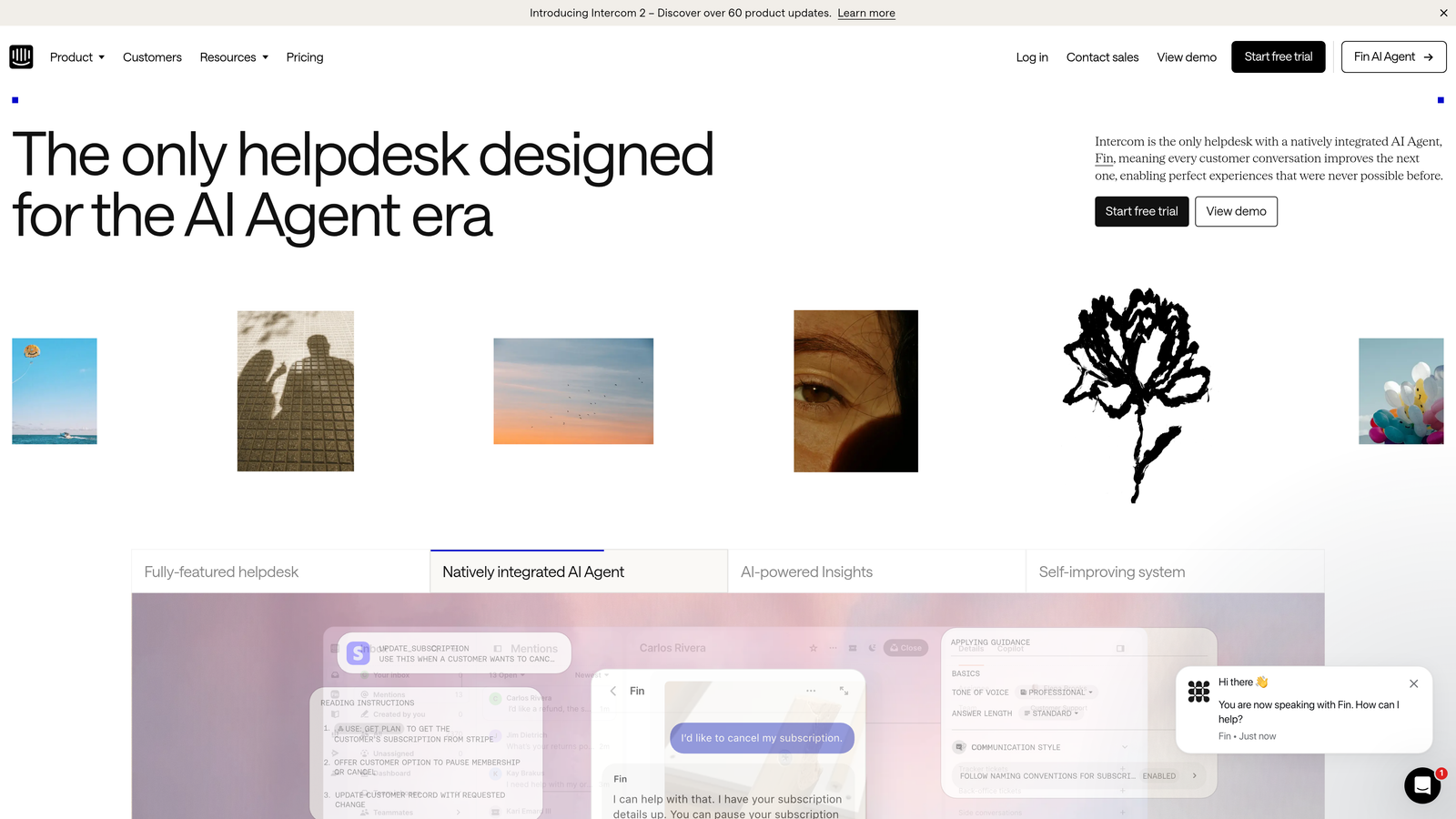
Intercom is a messenger-first support platform offering Fin AI for automated ticket resolution alongside proactive messaging and product engagement tools.
Where This Tool Shines
Intercom's design philosophy centers on conversation rather than tickets. The in-app messenger creates a seamless experience for users, and Fin AI handles a meaningful share of common support queries automatically. The real differentiator is how tightly support integrates with product onboarding and proactive engagement flows.
For SaaS teams that want to handle support, onboarding tours, and proactive outreach from a single platform, Intercom reduces the number of tools in the stack. The tradeoff is that pricing scales with usage in ways that can become significant at higher volumes.
Key Features
Fin AI Agent: Automated resolution of common support queries using conversational AI, with escalation to human agents when needed.
In-App Messenger: Native in-product chat with proactive outbound messaging capabilities for onboarding and engagement.
AI-Assisted Inbox: Shared inbox with AI-generated reply drafts and conversation summarization for faster agent responses.
Product Tours and Onboarding Flows: Built-in tools for user onboarding that integrate directly with the support experience.
Conversation Routing: Automated assignment rules based on conversation attributes, user data, and team availability.
Best For
SaaS companies that want to consolidate support and product engagement tooling. Especially useful for teams that rely heavily on in-app messaging and proactive user communication.
Pricing
Starts at approximately $39/seat/month. Fin AI resolution is priced per resolved conversation, which can add up at higher support volumes.
4. Freshdesk
Best for: Mid-market teams that need omnichannel support automation at accessible pricing
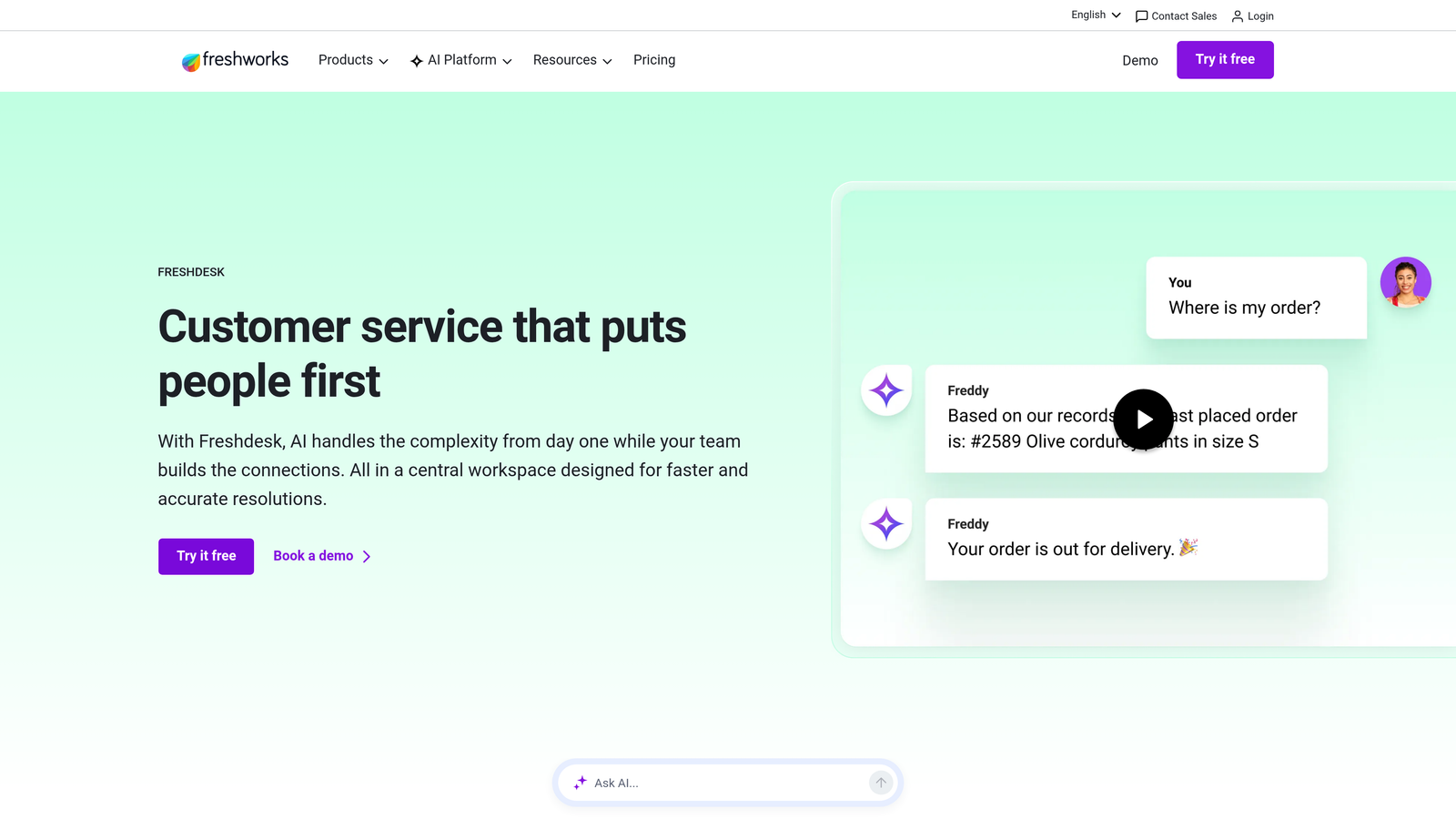
Freshdesk is a feature-rich omnichannel helpdesk from Freshworks with Freddy AI layered in for automation, sentiment detection, and suggested responses.
Where This Tool Shines
Freshdesk punches above its price point. The Freddy AI layer handles automated triage, sentiment analysis, and suggested replies, while the core platform covers email, chat, phone, social media, and WhatsApp in a unified inbox. For teams coming from basic email-only support, the jump in capability is substantial.
The scenario automation engine and time-triggered workflow rules give operations-minded teams meaningful control over how tickets move through the system without requiring developer involvement to configure.
Key Features
Freddy AI: Automated ticket triage, suggested replies, and sentiment analysis to help agents prioritize and respond faster.
Omnichannel Coverage: Unified inbox spanning email, chat, phone, social media, and WhatsApp.
Scenario Automations: Multi-step workflow rules and time-triggered automations for common ticket handling scenarios.
Knowledge Base with AI Suggestions: Self-service knowledge base with AI-assisted article recommendations to deflect tickets before they're created.
Collision Detection: Team inbox feature that prevents multiple agents from working on the same ticket simultaneously.
Best For
Mid-market support teams that need broad omnichannel coverage and AI-assisted automation without enterprise-level pricing. Also a strong choice for teams already using other Freshworks products like Freshsales or Freshservice.
Pricing
Free plan available for small teams. Paid plans start at approximately $15/agent/month, making it one of the more accessible options in this category.
5. Gorgias
Best for: E-commerce brands on Shopify, WooCommerce, or Magento with high order-related ticket volume
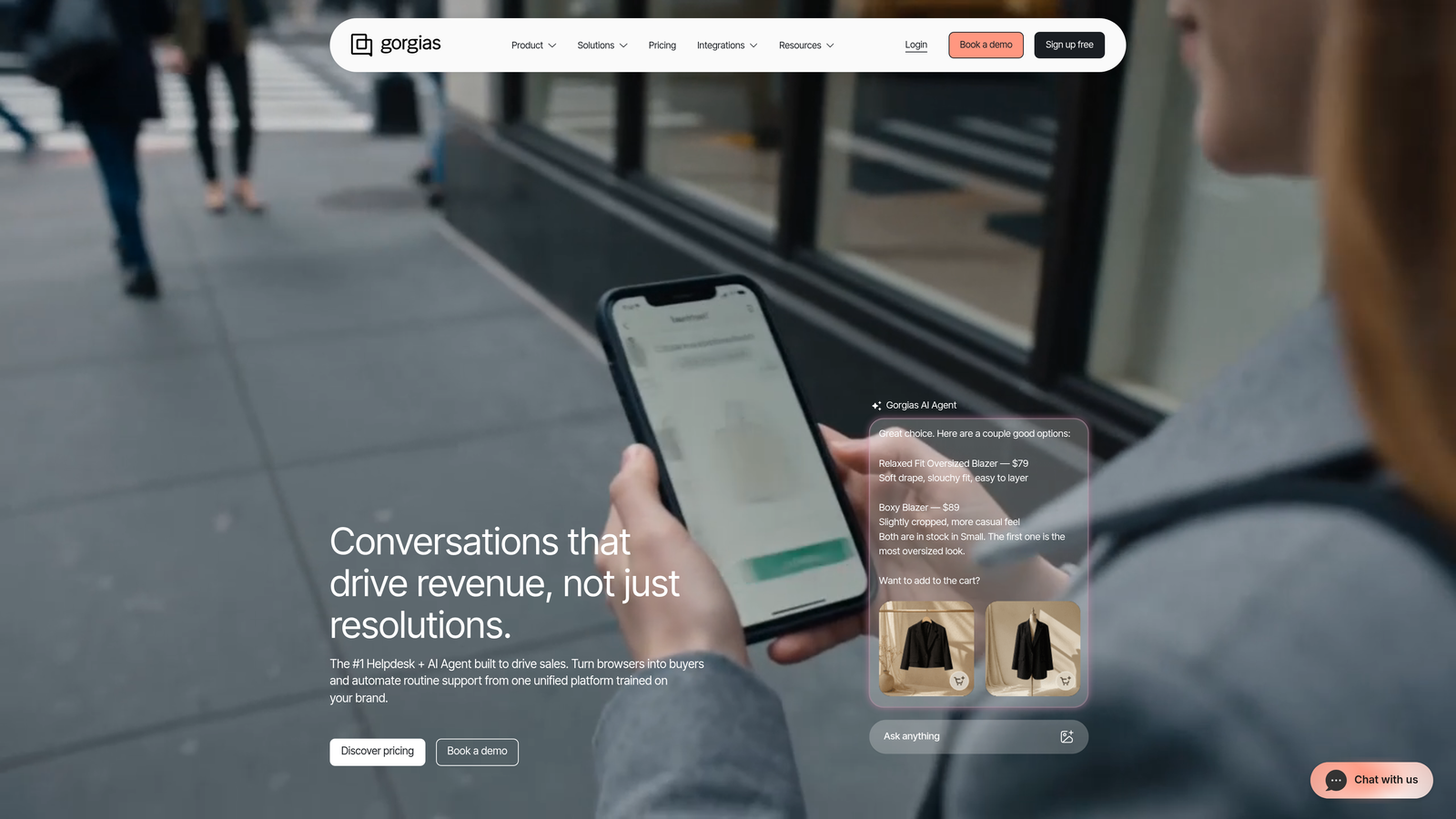
Gorgias is a support automation platform purpose-built for e-commerce brands, with deep integrations that enable automated responses to order, return, and shipping queries.
Where This Tool Shines
If your support queue is dominated by "where is my order" and "how do I return this" tickets, Gorgias was built for exactly that. The Shopify integration pulls order data directly into the support context, enabling automation rules that can resolve or respond to these queries without agent involvement.
The revenue-tied support metrics are a genuinely useful differentiator for e-commerce teams: you can see how support interactions correlate with conversion and customer retention, making the business case for support investment easier to quantify.
Key Features
Deep E-Commerce Integrations: Native connections to Shopify, WooCommerce, and Magento bring order data directly into every support conversation.
Automated Order Query Responses: Rules-based automation handles order status, return requests, and shipping inquiries without agent involvement.
Revenue-Tied Metrics: Support analytics that connect ticket resolution to conversion and revenue impact.
Macros and Rules Engine: Flexible automation rules for high-volume repetitive ticket types across all channels.
Omnichannel Inbox: Unified coverage across email, chat, social media, and SMS.
Best For
E-commerce brands with high order-related ticket volume, particularly those running on Shopify. Not designed for B2B SaaS use cases, but exceptional in its intended vertical.
Pricing
Starts at approximately $10/month for small ticket volumes, with pricing that scales based on ticket count rather than agent seats.
6. Tidio
Best for: Small businesses and early-stage companies that need fast AI chatbot deployment with minimal setup
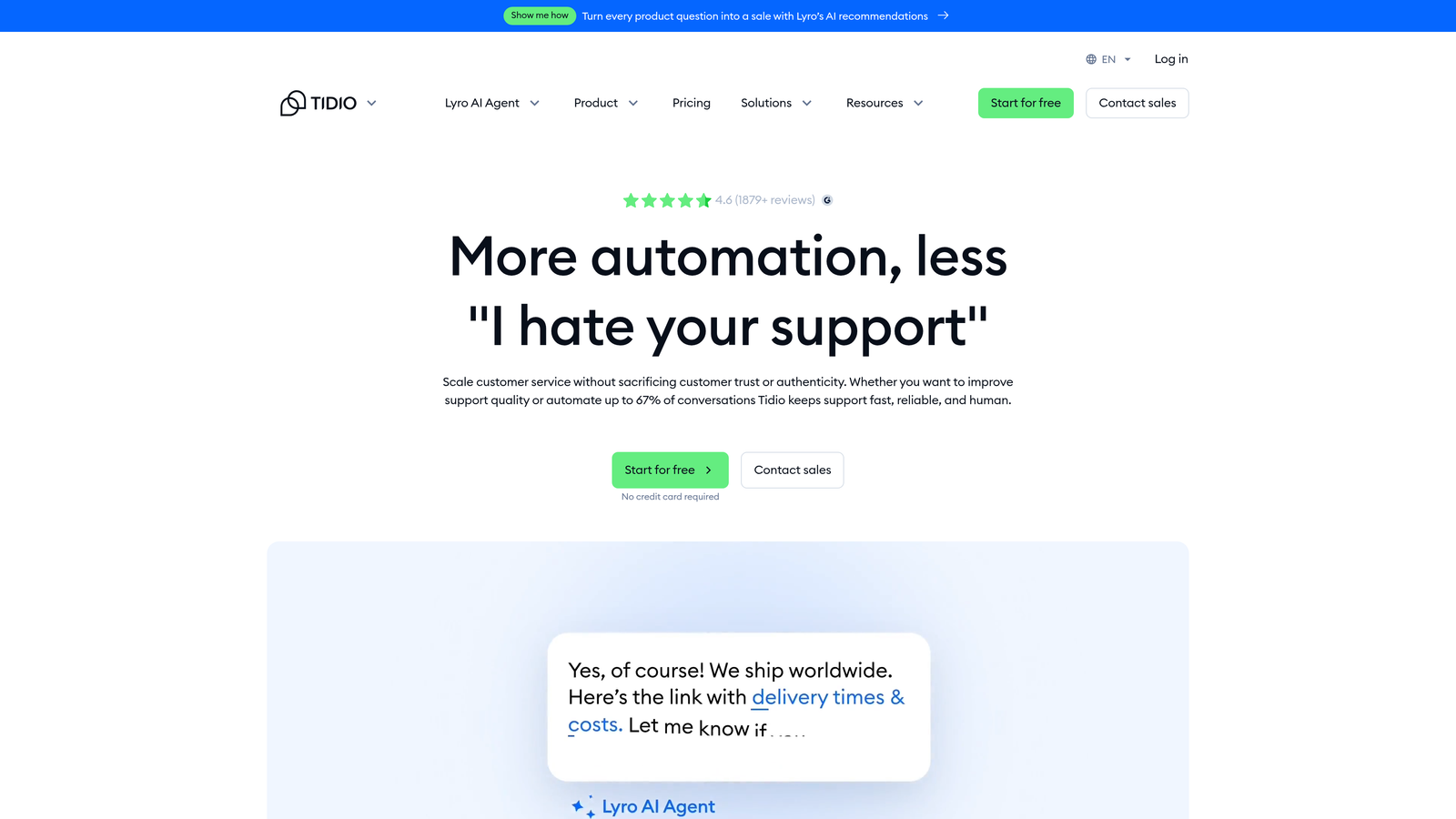
Tidio is an SMB-focused live chat and AI chatbot platform featuring Lyro AI, a conversational agent that handles common queries automatically with a no-code setup.
Where This Tool Shines
Tidio's greatest strength is speed to value. The visual no-code automation builder and Lyro AI chatbot can be configured and deployed in hours rather than weeks. For small teams that need something working quickly without dedicated technical resources, that matters enormously.
The agent takeover feature ensures that when Lyro reaches the edge of its capabilities, a human agent can step in without the conversation losing continuity. It's a practical design that acknowledges the limits of AI on simple deployments.
Key Features
Lyro AI Chatbot: Conversational AI that automatically handles common customer questions and resolves routine queries without agent involvement.
No-Code Automation Builder: Visual flow builder for creating chat automation sequences without technical knowledge.
Live Chat with Agent Takeover: Seamless handoff from AI to human agents when conversations require personal attention.
Multi-Channel Integration: Connects email and Facebook Messenger alongside the core website chat widget.
Quick Deployment: Minimal technical setup required, making it accessible for teams without dedicated engineering support.
Best For
Small businesses, early-stage startups, and e-commerce stores that need a functional AI chatbot deployed quickly. Less suited for complex B2B support scenarios with nuanced product knowledge requirements.
Pricing
Free plan available for basic live chat. Lyro AI starts at approximately $29/month, making it one of the most affordable AI chatbot options available.
7. Help Scout
Best for: Teams that prioritize relationship-driven support with AI assistance rather than AI replacement
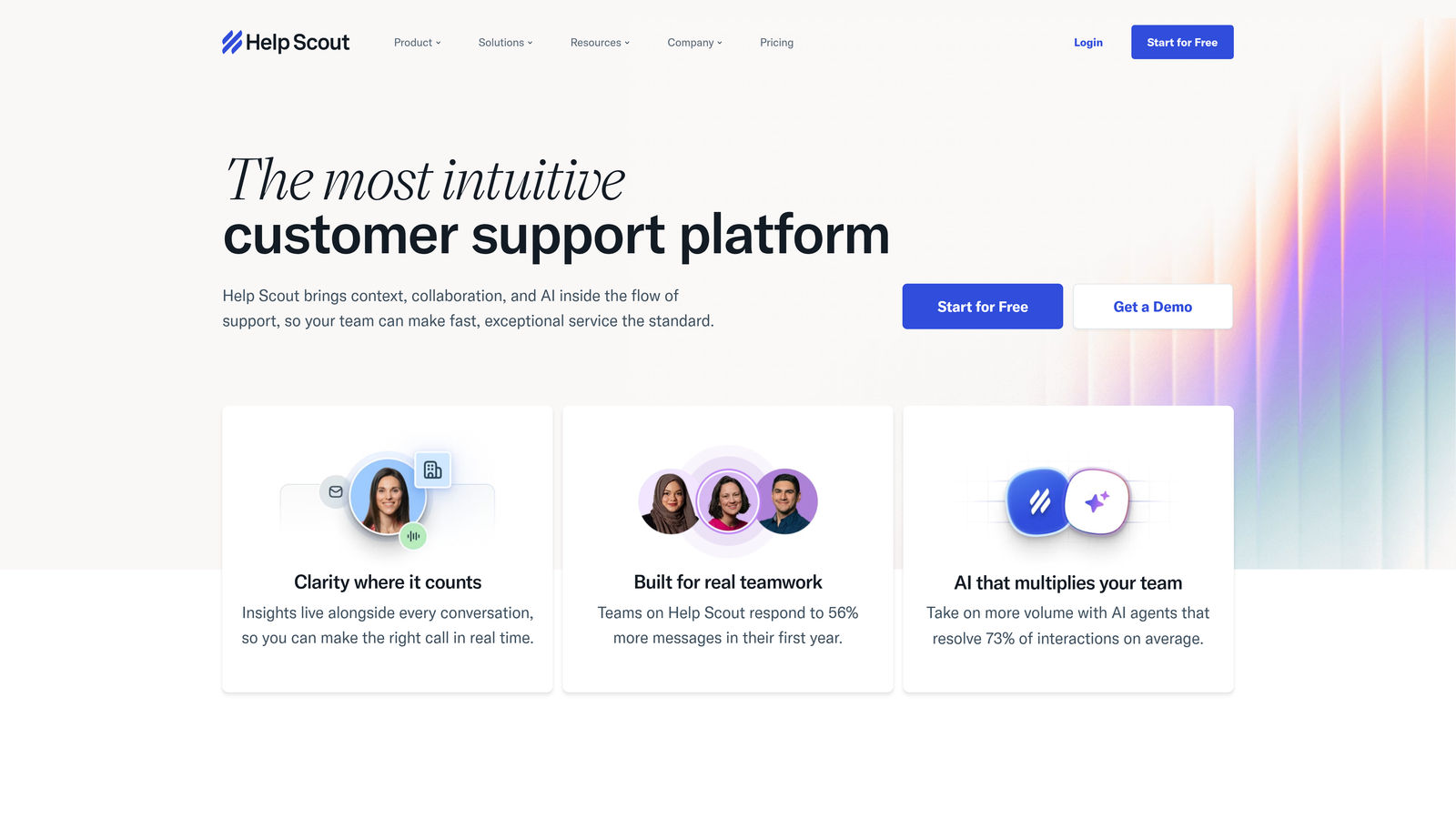
Help Scout is a human-first support platform that uses automation to assist agents rather than replace them, with a clean shared inbox and strong customer context tools.
Where This Tool Shines
Help Scout's philosophy is that great support is fundamentally human, and automation should make that human interaction better rather than eliminate it. AI Drafts suggests replies that agents review and send, keeping a human in the loop while reducing the cognitive load of writing from scratch.
The customer sidebar is particularly well-executed: it surfaces full interaction history, profile data, and conversation context alongside every ticket, so agents always have the background they need without hunting through separate systems.
Key Features
AI Drafts: AI-generated reply suggestions that agents can review, edit, and send, balancing automation efficiency with human oversight.
Shared Inbox with Collision Detection: Prevents duplicate responses by showing when another agent is already working on a ticket.
Customer Sidebar: Full interaction history, profile data, and customer context displayed alongside every conversation.
Docs Knowledge Base: Self-service knowledge base with AI-powered article recommendations to deflect common questions.
Workflow Automation: Saved replies and rule-based automation for routing and handling common ticket types.
Best For
SaaS companies, nonprofits, and service businesses where tone, relationship quality, and brand voice matter as much as resolution speed. Strong fit for teams that want AI assistance without full AI autonomy.
Pricing
Starts at approximately $22/user/month on the Standard plan. Higher tiers unlock additional automation and reporting capabilities.
8. Kustomer
Best for: High-volume B2C and subscription businesses that need CRM-native support automation with full customer context
Kustomer is a CRM-native customer support platform that unifies the full customer timeline, enabling automation that is context-aware across purchase history, prior interactions, and customer attributes.
Where This Tool Shines
The unified customer timeline is Kustomer's defining feature. Rather than treating each support conversation in isolation, every interaction sits alongside purchase history, prior tickets, subscription status, and CRM data. Automation rules can branch based on that full context, enabling genuinely intelligent routing and response logic.
For subscription businesses and high-volume B2C operations, the ability to report on customer lifetime value alongside support metrics adds a dimension of business intelligence that most pure helpdesks don't offer.
Key Features
Unified Customer Timeline: Combines support history, order data, and CRM attributes into a single view of every customer.
Context-Aware Automation: AI-powered routing and automation rules that factor in customer attributes, history, and lifetime value.
Omnichannel Conversation Management: Unified handling across email, chat, voice, and social media channels.
Conditional Workflow Automation: Branching logic rules that adapt based on customer data and conversation attributes.
LTV-Integrated Reporting: Support analytics that include customer lifetime value data for business-level decision making.
Best For
High-volume B2C companies, subscription businesses, and teams that need deep CRM integration baked into their support workflow rather than bolted on via integration.
Pricing
Starts at approximately $89/user/month at the Enterprise tier. Pricing reflects the platform's positioning toward larger, higher-volume operations.
9. Capacity
Best for: IT and HR teams automating internal support requests and knowledge deflection
Capacity is an AI-powered helpdesk platform focused on internal support automation, with knowledge base and deflection workflows designed to reduce repetitive internal requests.
Where This Tool Shines
Capacity occupies a distinct niche: internal support for IT and HR teams rather than external customer-facing support. The AI knowledge base answers employee questions automatically, and deflection workflows are designed specifically to reduce tier-1 ticket volume before it reaches a human.
The integrations with HRIS, ITSM, and communication tools like Slack and Microsoft Teams make Capacity a natural fit for internal operations teams that want to stop answering the same questions about benefits, IT access, and onboarding procedures repeatedly.
Key Features
AI Knowledge Base: Automatically answers employee questions by pulling from connected knowledge sources, reducing inbound ticket volume.
Deflection Workflows: Structured flows that resolve tier-1 IT and HR requests before they require human intervention.
HRIS and ITSM Integrations: Connects to HR systems, IT service management tools, and communication platforms including Slack and Teams.
Escalation Paths: Clearly defined routes to human agents when the AI cannot resolve a request.
Usage Analytics: Dashboards showing deflection rates, knowledge gaps, and areas where automation is underperforming.
Best For
Internal IT and HR support teams at mid-size to enterprise companies looking to reduce tier-1 ticket volume. Not designed for external customer support use cases.
Pricing
Contact Capacity directly for pricing. Plans are enterprise-focused with custom pricing based on organization size and use case.
Choosing the Right Platform for Your Team
The right support automation software depends less on feature count and more on feature fit. A platform with fifty capabilities you don't need is less valuable than one with ten that map precisely to your support model.
Here's a quick orientation by buyer profile:
AI-native B2B SaaS teams: Halo AI is purpose-built for this use case, with page-aware context, continuous learning, and business intelligence that goes beyond support metrics. It's the strongest choice for product-led companies that want support to be a strategic asset rather than a cost center.
Enterprise organizations with complex workflows: Zendesk or Kustomer are the natural fits, depending on whether you need routing depth (Zendesk) or CRM-native context (Kustomer).
SaaS teams consolidating support and engagement tooling: Intercom makes the most sense if in-app messaging and proactive outreach are core to your product experience.
Mid-market teams watching budget: Freshdesk delivers strong omnichannel coverage and AI assistance at pricing that doesn't require an enterprise contract.
E-commerce brands: Gorgias is the clear choice for Shopify-heavy operations where order-related queries dominate the queue.
Small businesses and early-stage teams: Tidio gets you to a working AI chatbot faster than any other option on this list.
Teams where human tone matters most: Help Scout's AI-assist model keeps agents in control while reducing their workload.
Internal IT and HR teams: Capacity is the only platform here built specifically for that use case.
The broader principle: evaluate platforms on how they handle the moments that matter most. How does the AI perform at the edge of its knowledge? How does handoff to a human agent actually work? Does the system surface insights that help your team get better over time, or does it just process tickets?
Your support team shouldn't scale linearly with your customer base. Let AI agents handle routine tickets, guide users through your product, and surface business intelligence while your team focuses on complex issues that need a human touch. See Halo in action and discover how continuous learning transforms every interaction into smarter, faster support.