9 Best Support Automation Software for Agencies in 2026
Agencies managing support across multiple client accounts need tools that scale quality without scaling headcount — this guide evaluates the 9 best support automation software for agencies in 2026, comparing platforms on multi-client management, automation depth, integrations, and reporting to help you protect margins while delivering consistent, high-quality client support.
 Matt PattoliFounder15 min read
Managing support across multiple client accounts is a fundamentally different challenge than supporting a single product. You're juggling varied SLAs, different brand voices, separate tooling environments, and clients who all expect the same level of attention regardless of ticket volume. The pressure to deliver high-quality, personalized support without proportionally growing your team is real — and it's exactly where the right automation platform makes or breaks an agency's margins.
This list covers the strongest support automation platforms built (or well-suited) for agency workflows in 2026. Whether you're running a five-person digital agency or a 200-person managed services operation, these tools address the core tension agencies face: scaling support quality without scaling headcount.
Each tool was evaluated on multi-client management capabilities, automation depth, integration breadth, reporting quality, and pricing transparency. Where relevant, we've flagged which tools are purpose-built for AI-first workflows versus those that bolt automation onto a traditional helpdesk foundation.
1. Halo AI
Best for: Agencies managing SaaS clients who want AI doing the work, not just suggesting replies.
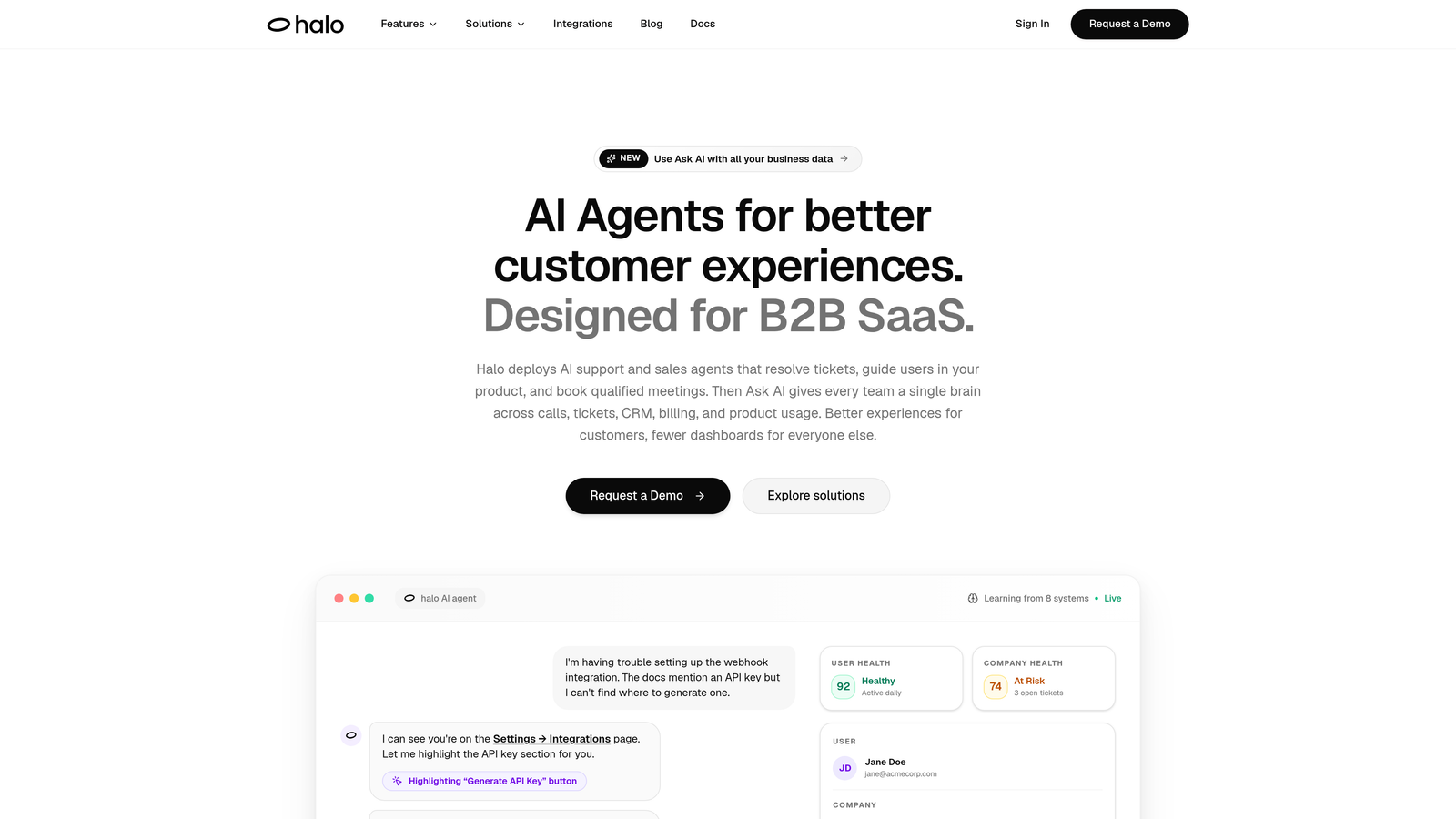
Halo AI is an AI-native customer support platform where intelligent agents autonomously resolve tickets, guide users through products, and surface business intelligence — all while continuously learning from every interaction.
Where This Tool Shines
Most support platforms treat AI as a feature layer sitting on top of a traditional helpdesk. Halo is built the other way around: AI resolution is the core, and human escalation is the exception. For agencies, this distinction matters enormously. Your team isn't spending hours triaging tickets that a well-trained AI agent could handle autonomously — they're focused on complex, high-judgment issues that actually require their expertise.
The page-aware chat widget is a particularly strong differentiator for agencies managing SaaS clients. The AI agent understands what the user is looking at inside the product, which means it can provide contextually accurate guidance rather than generic responses. Combined with auto bug ticket creation routed directly to Linear or your preferred dev tool, Halo reduces the manual handoffs that slow down agency workflows.
Key Features
Autonomous AI Agents: Resolve support tickets end-to-end and continuously improve from every resolved interaction, reducing repetitive ticket volume over time.
Page-Aware Chat Widget: The AI sees what the user sees inside the product, enabling precise, context-specific guidance without agent intervention.
Auto Bug Ticket Creation: Automatically generates and routes bug reports to Linear or connected dev tools — a meaningful time-saver for agencies managing SaaS client environments.
Smart Inbox with Business Intelligence: Goes beyond standard analytics with customer health signals, anomaly detection, and revenue intelligence that surface account-level insights for agencies managing client retention.
Live Agent Handoff: Smoothly escalates complex issues to human agents with full conversation context preserved, so nothing gets lost in transition.
Broad Integration Stack: Connects with Linear, Slack, HubSpot, Intercom, Stripe, Zoom, PandaDoc, and Fathom — covering the tools most SaaS-focused agencies already use.
Best For
Agencies managing SaaS product clients where support volume is high and ticket types are repetitive enough for AI to handle autonomously. Particularly strong for teams that want business intelligence beyond basic support metrics — customer health signals and revenue anomalies are genuinely useful for account management conversations.
Pricing
Contact for pricing. See haloagents.ai for current plans and to request a demo tailored to your agency's client volume.
2. Zendesk
Best for: Mid-market and enterprise agencies needing a proven, scalable helpdesk with native multi-brand support.
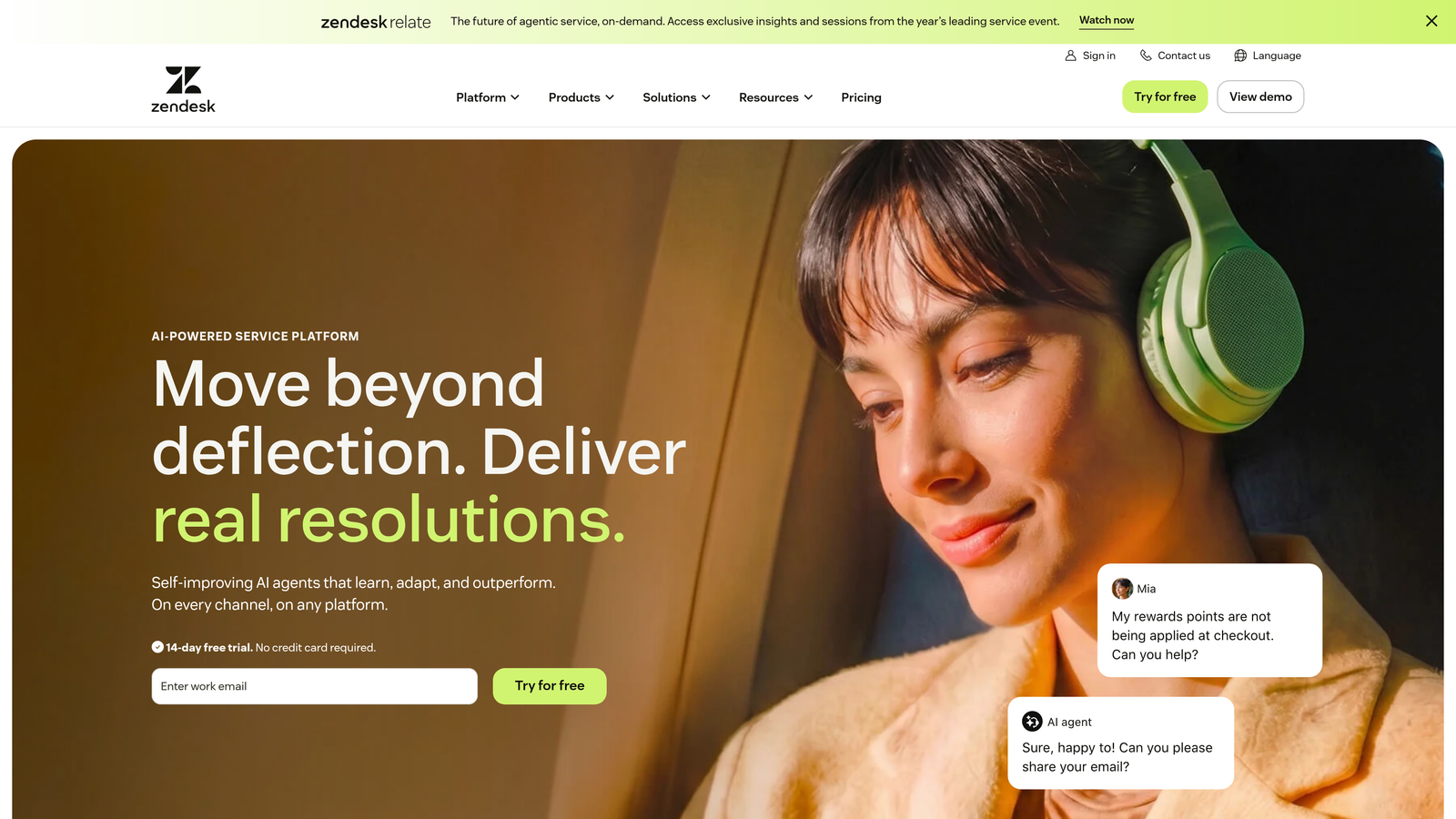
Zendesk is the industry-standard helpdesk platform with mature multi-brand architecture, extensive automation rules, and an AI layer built on top of a deeply established ticketing foundation.
Where This Tool Shines
Zendesk's native multi-brand support is one of the most mature implementations in the market. Agencies can manage multiple client inboxes from a single instance, with separate branding, SLA policies, and escalation workflows per account. This is not a workaround or a configuration trick — it's a first-class feature that has been refined over years of enterprise use.
The app marketplace is another genuine strength. With over 1,000 integrations available, Zendesk can slot into almost any client tech stack an agency encounters. The tradeoff is complexity: Zendesk's depth requires meaningful setup time, and the AI features (Zendesk AI and Copilot) are add-ons rather than the core experience, which can affect total cost at scale.
Key Features
Native Multi-Brand Support: Manage separate client inboxes, SLAs, and escalation policies from a single Zendesk instance without additional workarounds.
SLA Management: Robust SLA tracking and escalation workflows ensure client commitments are monitored and enforced automatically.
Zendesk AI / Copilot: Agent assist and basic automation capabilities layered onto the core helpdesk — useful, though not the same as an AI-first architecture.
App Marketplace: Over 1,000 integrations covering CRM, billing, project management, and communication tools across client environments.
Advanced Reporting: Custom dashboards and analytics for tracking performance across clients and teams.
Best For
Larger agencies or managed service providers that need enterprise-grade reliability, multi-brand configuration, and a vast integration ecosystem. Also well-suited to agencies whose clients specifically require or prefer Zendesk as their support platform.
Pricing
Paid plans start at approximately $55 per agent per month (Suite Team tier). Pricing scales with features and agent count — verify current pricing at zendesk.com.
3. Freshdesk
Best for: Agencies adding support as a managed service who want a cost-effective, full-featured helpdesk with a freemium entry point.
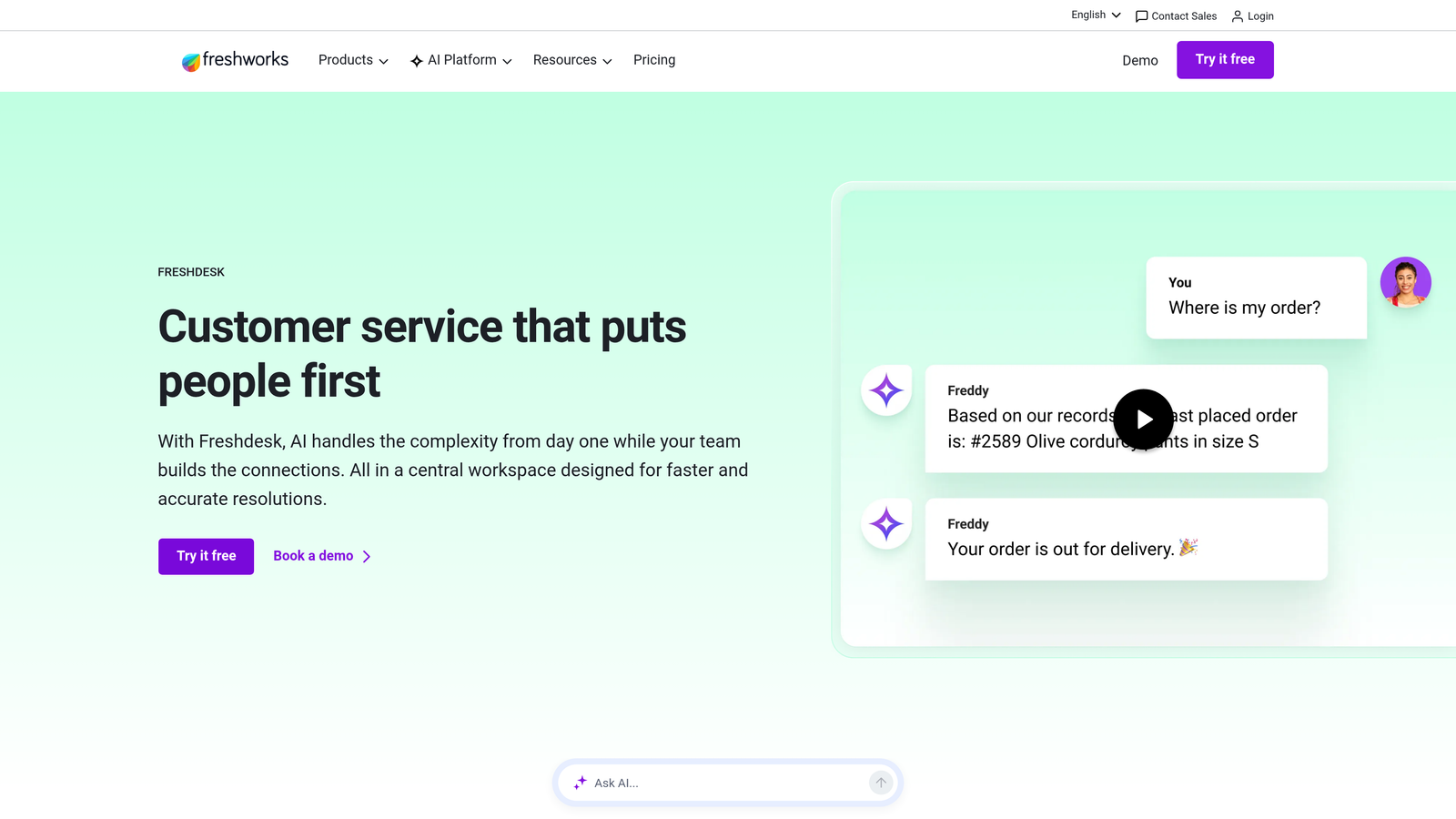
Freshdesk is an affordable, feature-rich helpdesk from Freshworks with multi-product support, Freddy AI automation, and a free tier that lowers the barrier for agencies testing the waters with support as a service offering.
Where This Tool Shines
Freshdesk's multi-product architecture lets agencies create separate support environments for different clients within a single account, each with its own inbox, branding, and automation rules. The learning curve is gentler than Zendesk, and the pricing is more accessible — which matters when you're onboarding a new client and need to spin up support infrastructure quickly without a large upfront commitment.
Freddy AI handles the automation layer: ticket categorization, routing, and suggested responses that reduce the manual work agents spend on triage. It's not autonomous resolution in the way AI-native platforms deliver, but for agencies that want AI-assisted rather than AI-led support, Freddy provides meaningful efficiency gains.
Key Features
Multi-Product Architecture: Separate support environments per client within one Freshdesk account, each with independent workflows and branding.
Freddy AI: Automated ticket categorization, intelligent routing, and suggested responses to speed up agent handling time.
Collision Detection: Prevents multiple agents from responding to the same ticket simultaneously — a small but operationally important feature in shared agency environments.
Canned Responses and Scenario Automations: Pre-built response templates and multi-step automations for handling repetitive client support workflows efficiently.
Free Tier: A genuinely usable free plan for small teams, making it accessible for agencies piloting a new client support offering.
Best For
Agencies that are cost-conscious, managing a mix of smaller clients, or adding support as a new managed service line. Also a strong fit for agencies already using other Freshworks products like Freshsales or Freshservice.
Pricing
Free plan available; paid plans start at approximately $15 per agent per month. Verify current pricing at freshworks.com.
4. Intercom
Best for: Agencies supporting SaaS clients who prioritize in-product, conversational support experiences.
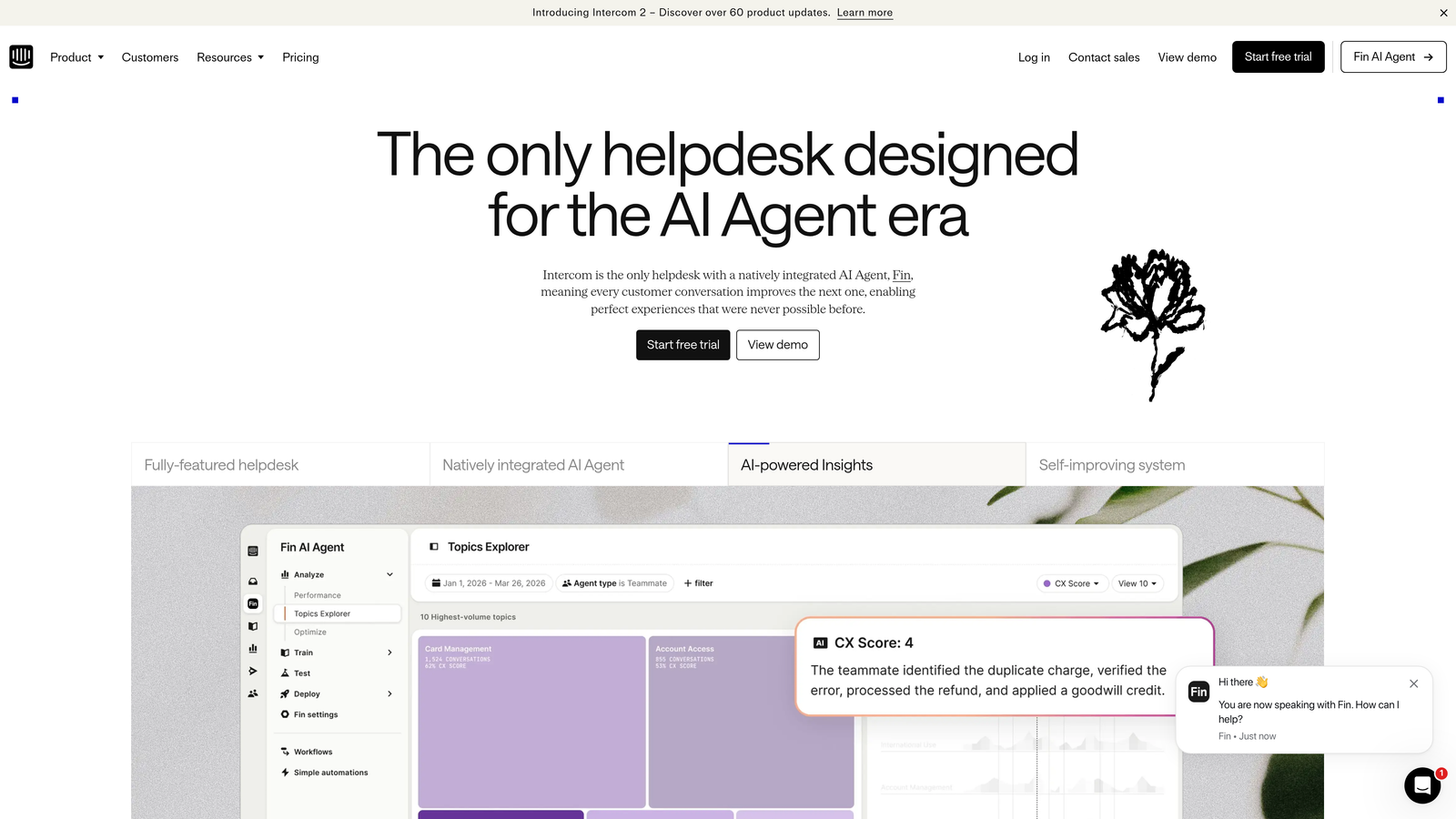
Intercom is a messenger-first support platform with Fin AI agent handling front-line queries, strong in-product support capabilities, and a conversational design particularly well-suited to SaaS client environments.
Where This Tool Shines
Intercom's in-product messenger is one of the most polished in the market. Users get support without leaving the product, and the experience feels conversational rather than transactional. For agencies managing SaaS clients, this matters: your clients' customers stay engaged with the product while getting help, rather than being redirected to an external portal.
Fin AI agent handles front-line query resolution autonomously, drawing on connected knowledge sources to answer common questions before routing to a human. The behavioral context layer — surfacing what users have done in the product during a support conversation — gives agents and AI alike meaningful context that generic helpdesks lack.
Key Features
Fin AI Agent: Autonomous query resolution across client products, handling common questions without human intervention.
In-Product Messenger: Native in-product support with product tours, checklists, and proactive messaging built in.
Shared Inbox: Conversation routing, tagging, and assignment for team coordination across client accounts.
Customer Data Platform: Behavioral context surfaced during support conversations, giving agents relevant user history without manual lookup.
Series Automation Builder: Proactive outreach and onboarding flow automation for agencies that want to deliver lifecycle support, not just reactive help.
Best For
Agencies whose clients are primarily SaaS products where in-product support and user onboarding are core deliverables. Less suited to agencies with e-commerce or non-digital clients where the messenger model doesn't fit naturally.
Pricing
Pricing varies by plan and usage volume. Intercom's pricing has historically been a consideration for agencies managing multiple client seats — verify current plans at intercom.com.
5. Gorgias
Best for: Agencies with DTC, e-commerce, or retail clients — especially those running on Shopify.
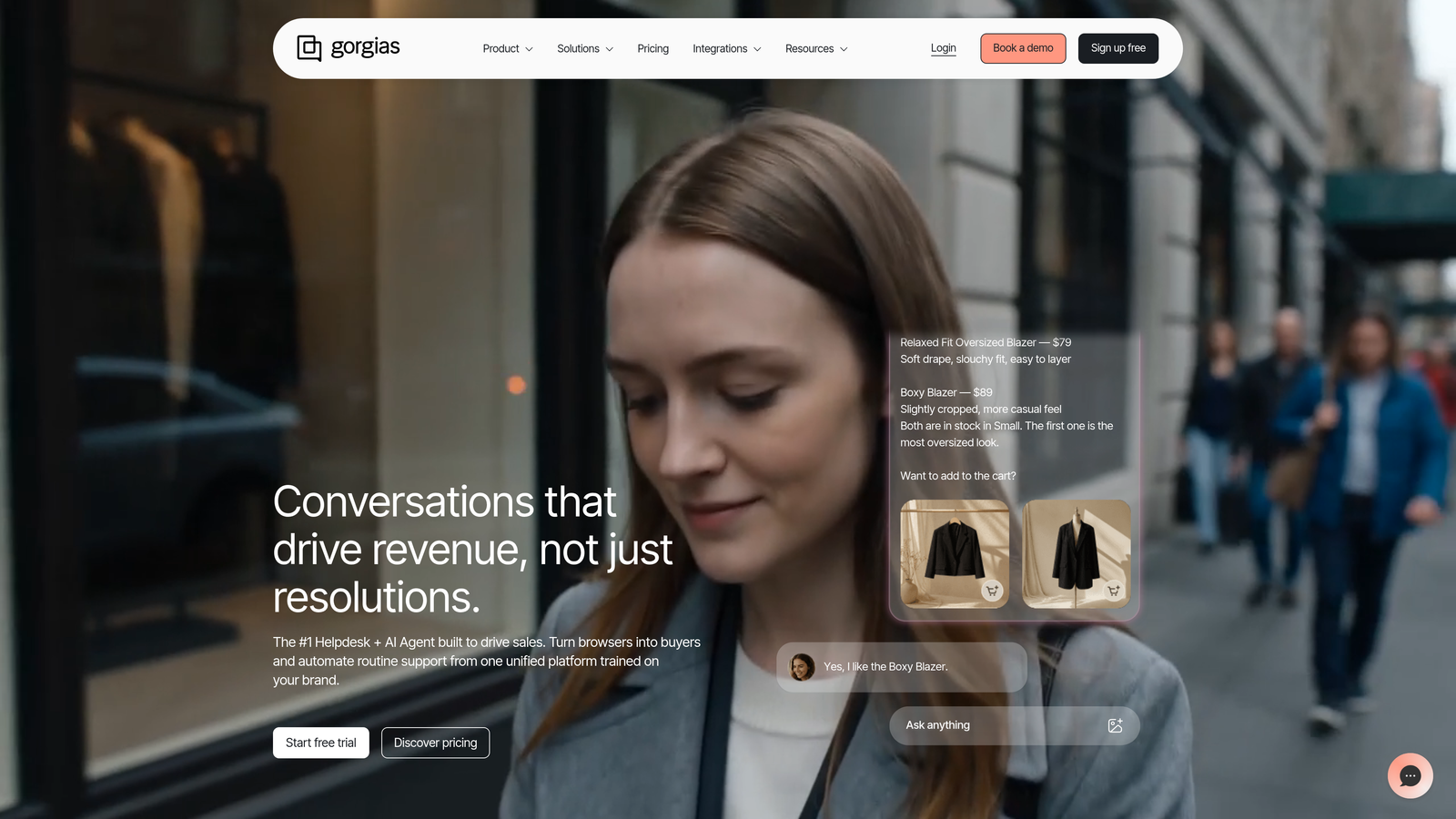
Gorgias is a support automation platform purpose-built for e-commerce, surfacing order data, returns, and customer history directly inside the support view so agents never have to switch tabs to answer basic questions.
Where This Tool Shines
If your agency manages e-commerce clients, Gorgias is in a category of its own for contextual support. Order status, return history, loyalty points, and customer lifetime value appear automatically alongside every conversation. Agents can process refunds, cancel orders, and apply discounts directly from the support interface without leaving Gorgias — a workflow that would require multiple tool switches in a generic helpdesk.
The automation rules are e-commerce-aware in a way that generic platforms can't replicate out of the box. Rules can trigger based on order status changes, refund requests, or specific product SKUs, enabling agencies to automate large portions of the repetitive volume that dominates e-commerce support queues.
Key Features
Native E-Commerce Integrations: Deep connections with Shopify, WooCommerce, and BigCommerce with order data surfaced in-context for every conversation.
Revenue Statistics per Ticket: Prioritize conversations with high-value customers based on purchase history and lifetime value data.
E-Commerce Automation Rules: Trigger automations based on order events, refund requests, and customer segments — not just keyword matching.
Macros: Pre-built response templates for common e-commerce scenarios like tracking inquiries, return requests, and exchange processes.
Multi-Store Dashboard: Manage support across multiple client storefronts from a single Gorgias instance.
Best For
Agencies specializing in e-commerce clients, particularly those on Shopify. Less relevant for agencies whose clients are SaaS products, professional services, or non-retail businesses.
Pricing
Starts at approximately $10 per month for small ticket volumes, with pricing scaling by ticket count rather than agent seats. Verify current pricing at gorgias.com.
6. Tidio
Best for: Agencies adding live chat and chatbot automation as a lightweight, fast-deploy managed service across multiple client websites.
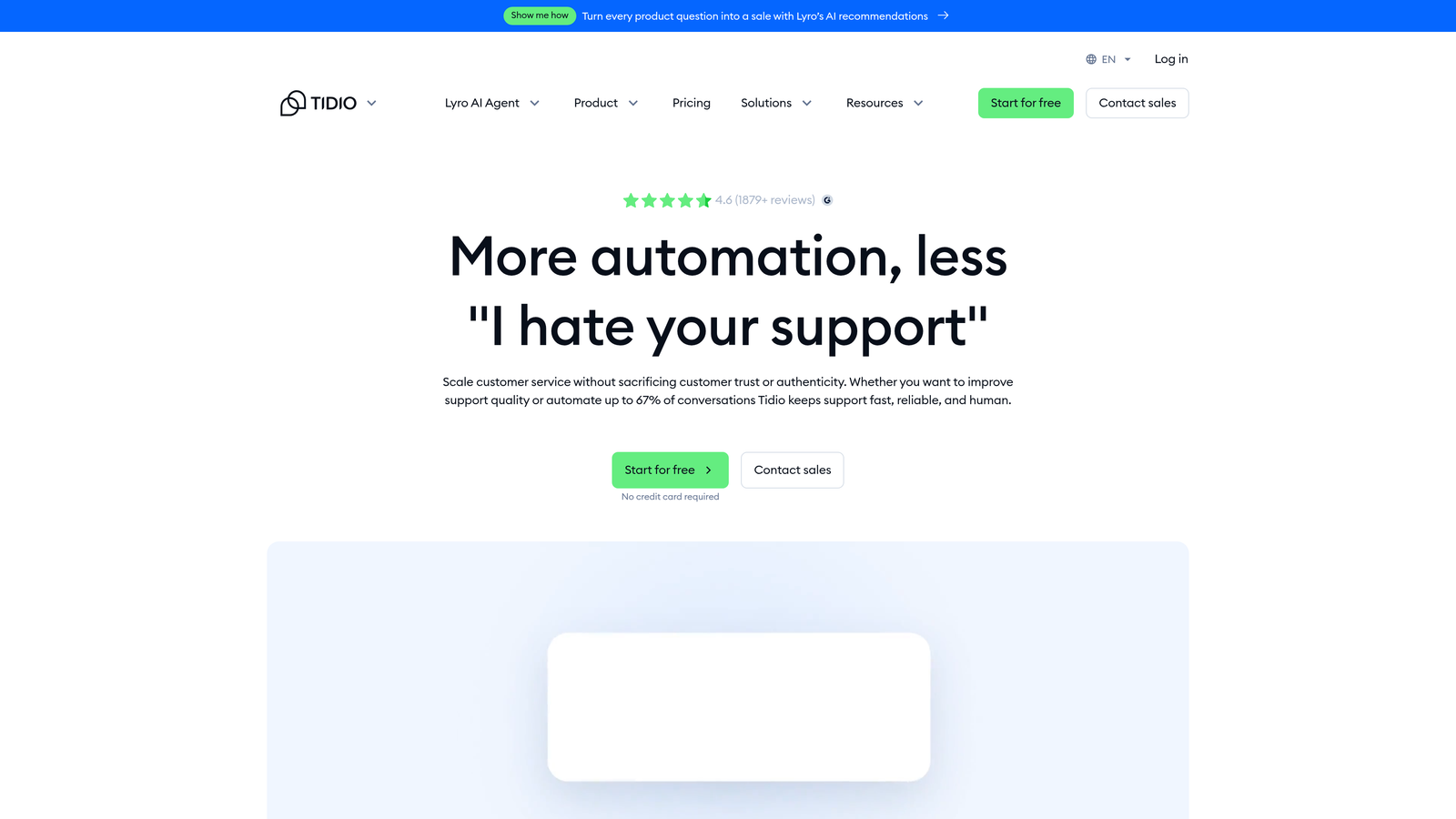
Tidio is a lightweight chat and chatbot platform with a visual flow builder and Lyro AI chatbot, designed for fast deployment across multiple client websites with minimal setup overhead.
Where This Tool Shines
Tidio's deployment model is its primary advantage for agencies: embed a JavaScript snippet, configure a chatbot flow in the visual builder, and you're live. For agencies offering chat as a value-add service to clients who don't have complex support operations, this low-friction setup is genuinely useful. You can replicate and adapt flows across client sites without rebuilding from scratch each time.
Lyro AI handles the front-line query layer, answering common questions from the client's existing content without requiring extensive training or configuration. For clients with straightforward FAQ-type support needs, this can deflect a meaningful portion of chat volume before it reaches a human agent.
Key Features
Lyro AI Chatbot: Handles common queries autonomously using the client's existing knowledge content, reducing live agent workload.
Visual Flow Builder: Drag-and-drop chatbot flow creation that makes it practical to configure and replicate flows across multiple client deployments.
Unified Inbox: Live chat, email, and Messenger conversations in a single view for agencies managing communication across channels.
Fast Multi-Site Deployment: JavaScript snippet embed means new client sites can go live quickly without complex technical integration work.
Accessible Pricing: Entry-level plans make it financially viable to offer chat as a managed service without significant per-client infrastructure cost.
Best For
Agencies adding chat automation as a new service offering for clients with relatively straightforward support needs. Less suited for agencies managing high-complexity enterprise support environments where deeper workflow automation and reporting are required.
Pricing
Free plan available; paid plans start at approximately $29 per month. Verify current pricing at tidio.com.
7. Help Scout
Best for: Agencies where brand voice and human-feeling support experiences are core to the client value proposition.
Help Scout is a shared inbox platform designed to make support feel personal and human, with AI assist features, a built-in Docs knowledge base, and a Beacon widget for in-product help.
Where This Tool Shines
Help Scout's defining design choice is hiding ticket numbers from customers. Conversations feel like emails, not support cases — and for agencies managing clients whose brand identity is built on warmth and personal service, this distinction matters. You're not asking customers to "submit a ticket"; you're having a conversation. That framing shapes the entire experience.
The Docs knowledge base is included rather than sold as an add-on, which simplifies the per-client setup for agencies building self-service support alongside their managed inbox service. Beacon combines chat, knowledge base search, and proactive messaging in a single in-product widget — a practical all-in-one for clients who want help accessible without a dedicated support portal.
Key Features
Human-First Inbox: No ticket numbers exposed to customers — conversations feel like personal email exchanges, preserving brand voice and warmth.
Docs Knowledge Base: Included knowledge base for building per-client self-service content without additional tooling costs.
Beacon Widget: In-product widget combining live chat, knowledge base search, and proactive messages in a single embed.
AI Summarize and AI Assist: AI-powered tools to speed up agent responses and summarize long conversation threads without requiring agents to read everything.
Collision Detection and Private Notes: Internal coordination features that prevent duplicate responses and enable team communication within conversations.
Best For
Agencies managing clients in professional services, lifestyle, health, or any sector where support tone and brand voice are differentiators. Also a strong fit for smaller client teams where a human-feeling inbox is more appropriate than an enterprise ticketing system.
Pricing
Starts at approximately $50 per month for small teams. Verify current pricing at helpscout.com.
8. Zoho Desk
Best for: Agencies standardized on the Zoho ecosystem looking for a deeply integrated, competitively priced helpdesk.
Zoho Desk is a full-featured helpdesk with Zia AI assistant, deep integration across the Zoho product suite, and competitive pricing that makes it the natural choice for agencies already operating within Zoho One or Zoho CRM.
Where This Tool Shines
If your agency has standardized on Zoho, Zoho Desk is not just a good option — it's the obvious one. The native connections to Zoho CRM, Zoho Analytics, and the broader Zoho One suite mean that customer data flows between systems without custom integration work. Support context is enriched by CRM data automatically, and reporting can pull across systems in ways that require significant configuration effort in non-native integrations.
Zia AI brings sentiment analysis, automatic ticket tagging, and anomaly detection to the support workflow — features that are particularly useful for agencies managing multiple client accounts where spotting unusual patterns early can prevent escalations. Blueprint workflow automation handles structured, multi-step support processes that require defined handoffs and approval steps.
Key Features
Zia AI: Sentiment analysis, intelligent ticket tagging, and anomaly detection that surface issues before they escalate.
Zoho Ecosystem Integration: Native connections to Zoho CRM, Zoho Analytics, and Zoho One for seamless data flow across the agency's operational stack.
Multi-Department and Multi-Brand Support: Separate client environments within a single Zoho Desk instance with independent workflows and branding.
Blueprint Workflow Automation: Structured, multi-step automation for support processes that require defined sequences, approvals, or conditional branching.
Competitive Pricing: Strong feature depth relative to cost, particularly for agencies that can leverage the broader Zoho suite value.
Best For
Agencies already using Zoho CRM, Zoho Analytics, or Zoho One who want to add support automation without introducing a separate vendor relationship. Also a strong option for cost-conscious agencies that need enterprise-grade features without enterprise-grade pricing.
Pricing
Free plan for up to 3 agents; paid plans from approximately $14 per agent per month. Verify current pricing at zoho.com/desk.
9. Capacity
Best for: IT MSPs and operations-heavy agencies with large volumes of repetitive, knowledge-base-answerable queries.
Capacity is an AI-powered helpdesk and knowledge automation platform that connects to structured knowledge bases to deflect repetitive queries — well-suited to agencies where documentation depth and FAQ volume are the primary support challenge.
Where This Tool Shines
Capacity's core strength is knowledge automation. It ingests existing documentation, FAQs, and structured knowledge sources, then uses that content to automatically resolve repetitive queries without human intervention. For IT MSPs or operations-focused agencies where a large percentage of support requests are variations of the same questions, this can meaningfully reduce ticket volume reaching human agents.
The internal helpdesk capability is also worth noting: Capacity handles both client-facing support and internal employee support within the same platform, which is useful for agencies that manage both external client support and internal IT or operations queries without wanting to run separate systems for each.
Key Features
AI Knowledge Base Automation: Learns from existing documentation and FAQs to automatically resolve repetitive queries at scale.
High-Volume Query Deflection: Reduces the volume of repetitive tickets reaching human agents, particularly effective for FAQ-heavy support environments.
Internal Helpdesk Features: Supports both client-facing and internal employee support within a single platform.
Business Tool Integrations: Connects to common business tools for knowledge ingestion and workflow continuity.
Escalation Paths: Routes to human agents when AI confidence is low, ensuring complex or ambiguous queries don't get stuck in automated loops.
Best For
IT managed service providers and operations-heavy agencies where repetitive, documentation-answerable queries make up a significant share of support volume. Less suited for agencies managing customer-facing SaaS support where conversational nuance and product context are more important than knowledge base depth.
Pricing
Contact for pricing. Verify current plans at capacity.com.
Which Tool Is Right for Your Agency?
The honest answer is that the best tool depends entirely on what kind of agency you run and what your clients expect from support.
For agencies managing SaaS clients who want genuine AI-first automation — where the AI resolves tickets rather than just triaging them — Halo AI stands apart. The page-aware context, auto bug ticket creation, and business intelligence layer are capabilities that go beyond what traditional helpdesks offer even with AI add-ons. If your goal is to scale support without scaling headcount, an AI-native architecture is the right starting point.
If you're managing enterprise clients with complex SLA requirements and need a proven, battle-tested platform, Zendesk's multi-brand support and deep marketplace make it the reliable choice. For agencies adding support as a new managed service line on a tight budget, Freshdesk's freemium model and multi-product architecture offer a low-risk entry point. Agencies with e-commerce clients should look seriously at Gorgias — no other platform comes close for Shopify-native workflows. And if your clients are already standardized on Zoho, Zoho Desk is the natural extension.
Your support team shouldn't scale linearly with your customer base. Let AI agents handle routine tickets, guide users through your product, and surface business intelligence while your team focuses on complex issues that need a human touch. See Halo in action and discover how continuous learning transforms every interaction into smarter, faster support.