9 Best Support Automation Software for B2B in 2026
This guide evaluates the 9 best support automation software for B2B teams in 2026, comparing platforms on AI capabilities, account-level context, CRM integrations, and pricing to help complex B2B support operations resolve tickets faster, surface business intelligence, and protect high-value customer relationships.
 Matt PattoliFounder14 min read
B2B support teams face a challenge that doesn't get talked about enough: the volume is lower than B2C, but the stakes are exponentially higher. A single unresolved ticket can stall a renewal conversation, frustrate a power user, or quietly damage a relationship worth six figures. Generic helpdesk tools weren't designed with that reality in mind.
That's why B2B teams increasingly need support automation software purpose-built for complex workflows, multi-stakeholder accounts, and deep integrations with the tools product and success teams already use. The best platforms in this space don't just deflect tickets — they resolve them, surface business intelligence, and keep human agents focused on the issues that actually need them.
This guide covers the top support automation platforms worth considering for B2B teams in 2026. We evaluated each tool on AI capabilities, B2B-specific features like account-level context and CRM integrations, pricing transparency, and how well they reduce resolution time without sacrificing quality. Whether you're a 20-person startup or a scaling enterprise, there's an option here that fits.
1. Halo AI
Best for: B2B teams that want AI-first autonomous support with business intelligence built in.
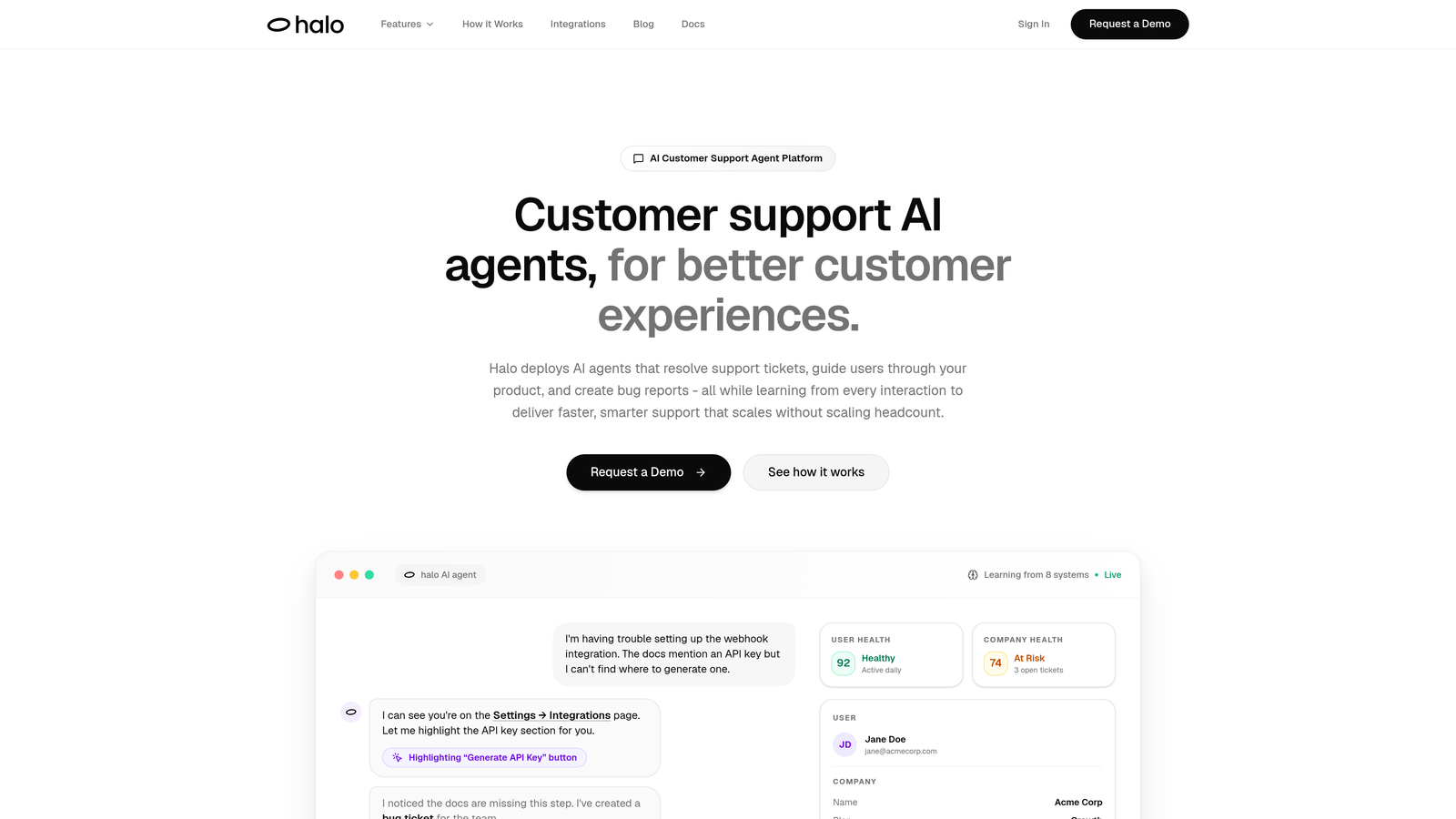
Halo AI is an AI-native support platform that deploys autonomous agents to resolve B2B tickets, guide users through product UI, and surface actionable business intelligence from every support interaction.
Where This Tool Shines
Most support tools treat AI as a layer on top of an existing helpdesk. Halo is built AI-first, which means the intelligence isn't bolted on — it's the foundation. The platform's page-aware agents can see exactly what a user is looking at inside your product, giving them the context to provide genuinely useful, step-by-step guidance rather than generic help articles.
What separates Halo from the rest of this list is what it does with support data beyond resolving tickets. The smart inbox surfaces customer health signals, revenue intelligence, and anomaly detection, turning your support queue into a source of business insight. For B2B teams where every account matters, that kind of visibility is hard to put a price on.
Key Features
Page-Aware AI Agents: Agents see what users see in real time, enabling contextual UI guidance that's specific to where a customer is stuck.
Continuous Learning: Every resolved interaction improves the model, so resolution quality compounds over time rather than staying static.
Auto Bug Ticket Creation: Automatically creates bug reports in Linear when recurring issues are detected, closing the loop between support and engineering without manual effort.
Smart Inbox with Business Intelligence: Surfaces customer health signals, revenue intelligence, and anomaly detection directly from ticket patterns.
Live Agent Handoff: Escalates to human agents with full conversation context preserved, so customers never have to repeat themselves.
Best For
Halo is the strongest fit for B2B SaaS companies and product teams that want support to do more than deflect tickets. If you're already using tools like Linear, Slack, HubSpot, Intercom, Stripe, or Zoom, Halo's integration depth means your support data flows across your entire stack. Particularly well-suited for teams that want to scale support quality without scaling headcount.
Pricing
Contact for pricing; a free demo is available at haloagents.ai. Custom pricing is typical for AI-native platforms at this capability level.
2. Intercom
Best for: B2B teams that want conversational support and product engagement in a single platform.
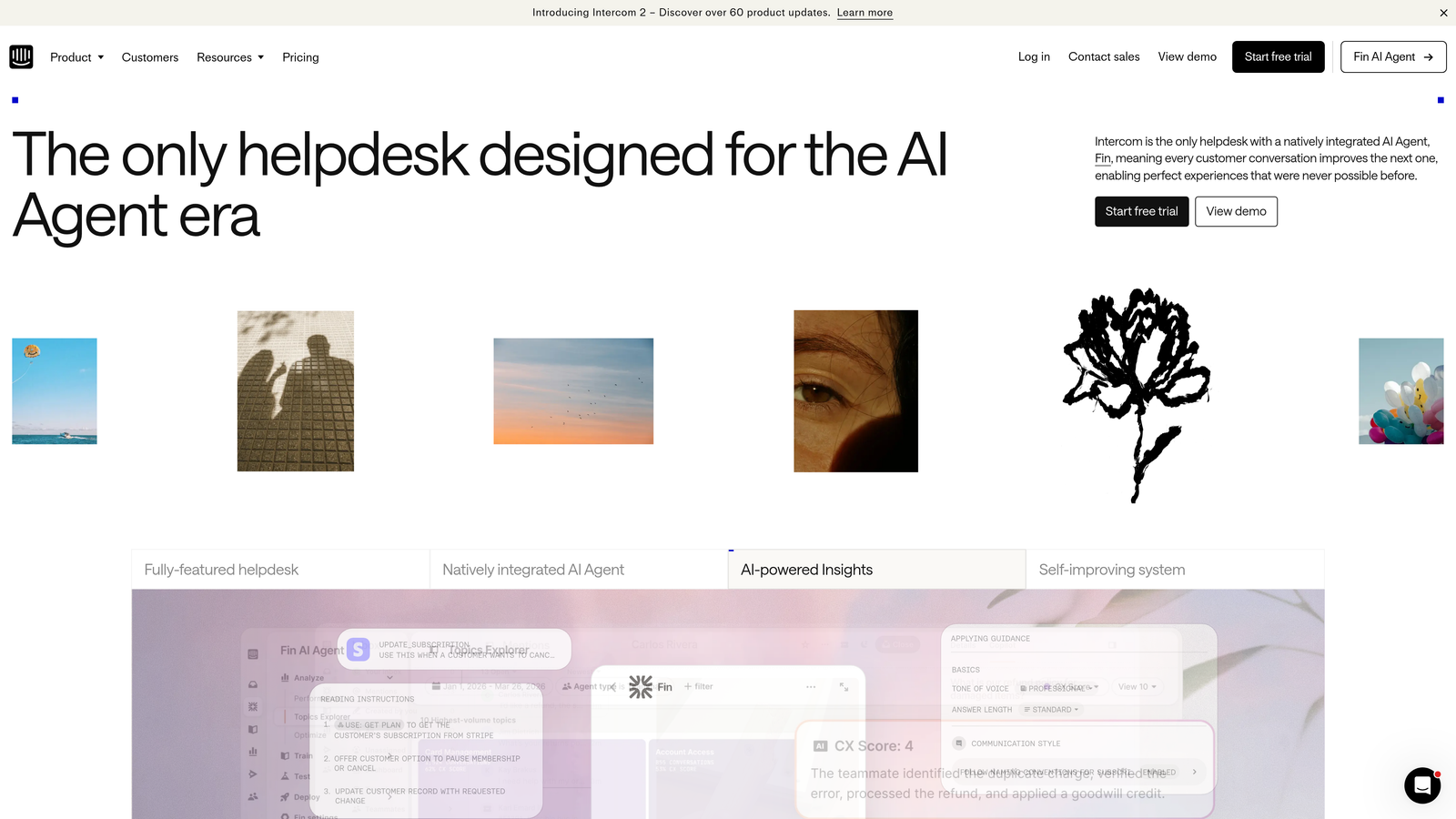
Intercom is a conversational support platform combining its Fin AI agent, shared inbox, and in-product messaging for teams that want support and customer engagement under one roof.
Where This Tool Shines
Intercom's Fin AI agent has matured into one of the more capable automated resolution tools on the market, handling chat and email queries with reasonable accuracy across a range of support scenarios. The platform's real strength for B2B teams is the combination of support and product engagement: onboarding tours, proactive messaging, and support conversations all live in the same system.
The unified inbox with SLA tracking and conversation routing works well for growing teams, and the workflow automation builder gives non-technical admins meaningful control over how tickets move through the system. The integration ecosystem is broad, though some deeper CRM connections require configuration work.
Key Features
Fin AI Agent: Handles automated ticket resolution across chat and email channels with knowledge base grounding.
Unified Inbox: Conversation routing and SLA tracking in a shared inbox with team assignment controls.
Product Tours and Onboarding Flows: In-product guidance tools integrated directly with the support layer.
Custom Bots and Workflow Builder: Visual automation builder for routing, tagging, and escalation logic.
Strong API Ecosystem: Broad integration library with Salesforce, HubSpot, Slack, and many others.
Best For
B2B SaaS companies that want to consolidate support and customer engagement tooling. Especially useful for teams investing in proactive support and product-led onboarding alongside reactive ticket management.
Pricing
Starts at $39/seat/month; Fin AI usage is billed per resolution, so costs scale with automation volume. Enterprise pricing available on request.
3. Zendesk
Best for: Mid-market and enterprise B2B teams with complex workflows and high customization requirements.
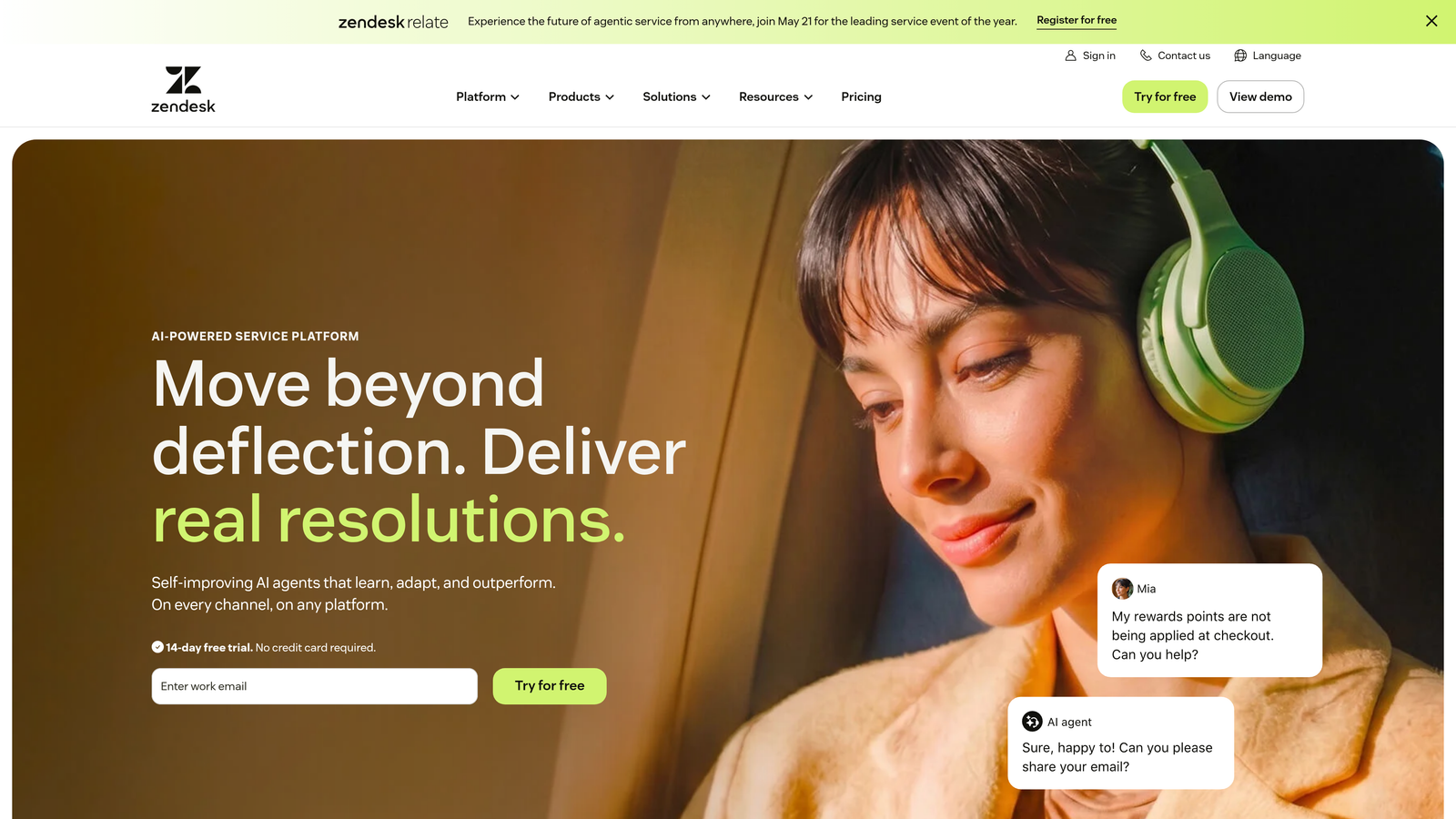
Zendesk is an enterprise-grade helpdesk platform with extensive customization, a massive app marketplace, and AI-powered automation features built for complex B2B support operations.
Where This Tool Shines
Zendesk's depth is its defining characteristic. Multi-tier SLA management, granular role-based permissions, compliance certifications, and a marketplace of over 1,500 pre-built integrations make it a natural fit for organizations with sophisticated operational requirements. If your support workflow involves multiple teams, escalation paths, and strict SLA commitments, Zendesk has the infrastructure to support it.
The AI capabilities have improved considerably, with ticket classification, intelligent routing, and generative reply suggestions now standard across plans. That said, Zendesk's AI features feel more like enhancements to an existing workflow than a ground-up rethink of how support works.
Key Features
Advanced SLA Management: Multi-tier escalation workflows with granular SLA policy controls by ticket type, priority, and customer segment.
AI-Powered Automation: Ticket classification, intelligent routing, and suggested responses powered by Zendesk AI.
1,500+ Integrations: Extensive marketplace covering CRM, engineering, billing, and communication tools.
Custom Analytics Dashboards: Flexible reporting with Explore for tracking team performance and ticket trends.
Compliance and Security: SOC 2, ISO 27001, HIPAA, and GDPR certifications available depending on plan tier.
Best For
Enterprise B2B teams with complex, multi-department support operations, strict compliance requirements, or large agent workforces. Also a strong choice for organizations already deeply integrated into the Zendesk ecosystem.
Pricing
Suite Team starts at $55/agent/month; Enterprise plans with advanced AI and customization are priced on request.
4. Freshdesk
Best for: Growing B2B teams that want powerful automation without enterprise-level complexity or cost.
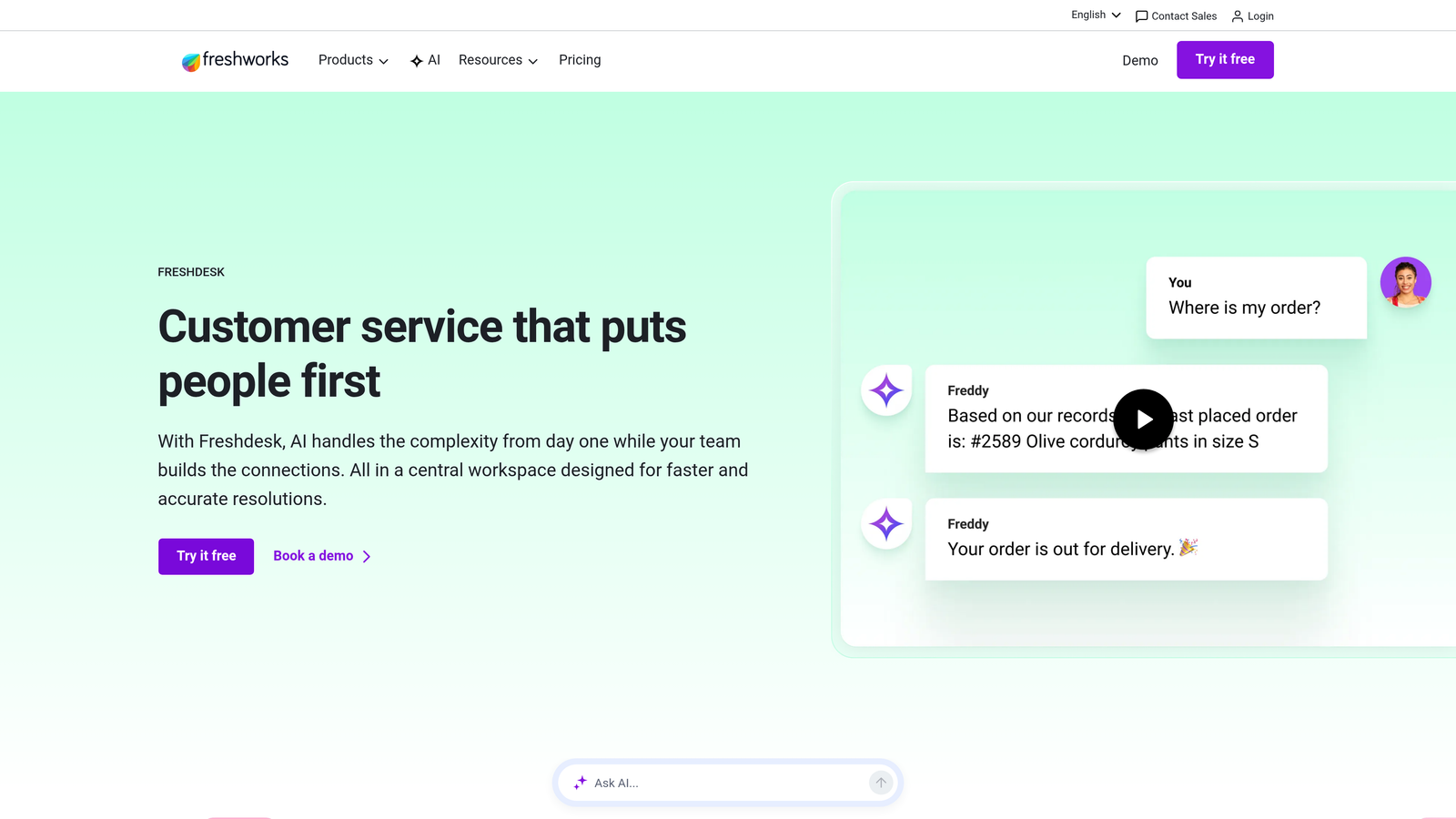
Freshdesk is an affordable, full-featured helpdesk with Freddy AI for ticket auto-triage and resolution, designed for teams that need solid automation without the overhead of larger platforms.
Where This Tool Shines
Freshdesk punches above its price point. Freddy AI handles auto-triage, suggested responses, and ticket summarization with enough reliability to meaningfully reduce manual work for small-to-mid-sized teams. The scenario automation system is particularly useful for B2B workflows, allowing multi-step triggers based on ticket properties, customer segments, or time-based conditions.
The built-in knowledge base with AI-suggested articles is a genuine time-saver, and the collaboration tools — shared ownership and linked tickets — address a common B2B pain point where multiple team members need visibility into the same account issue.
Key Features
Freddy AI: Auto-triage, suggested responses, and ticket summarization to reduce agent workload on routine queries.
Scenario Automations: Multi-step workflow triggers based on ticket properties, customer data, or time conditions.
AI-Suggested Knowledge Base: Automatically surfaces relevant articles during ticket creation and agent response.
Collaboration Tools: Shared ticket ownership, linked tickets, and team notes for multi-stakeholder issues.
Free Tier: Available for up to 10 agents, making it accessible for early-stage teams.
Best For
Small to mid-sized B2B companies that want meaningful automation without the cost or complexity of enterprise platforms. Also a strong option for teams already using other Freshworks products like Freshsales or Freshservice.
Pricing
Free plan available for up to 10 agents; paid plans start from $15/agent/month, making it one of the more accessible options on this list.
5. HubSpot Service Hub
Best for: B2B teams already on HubSpot CRM that want full customer context on every support interaction.
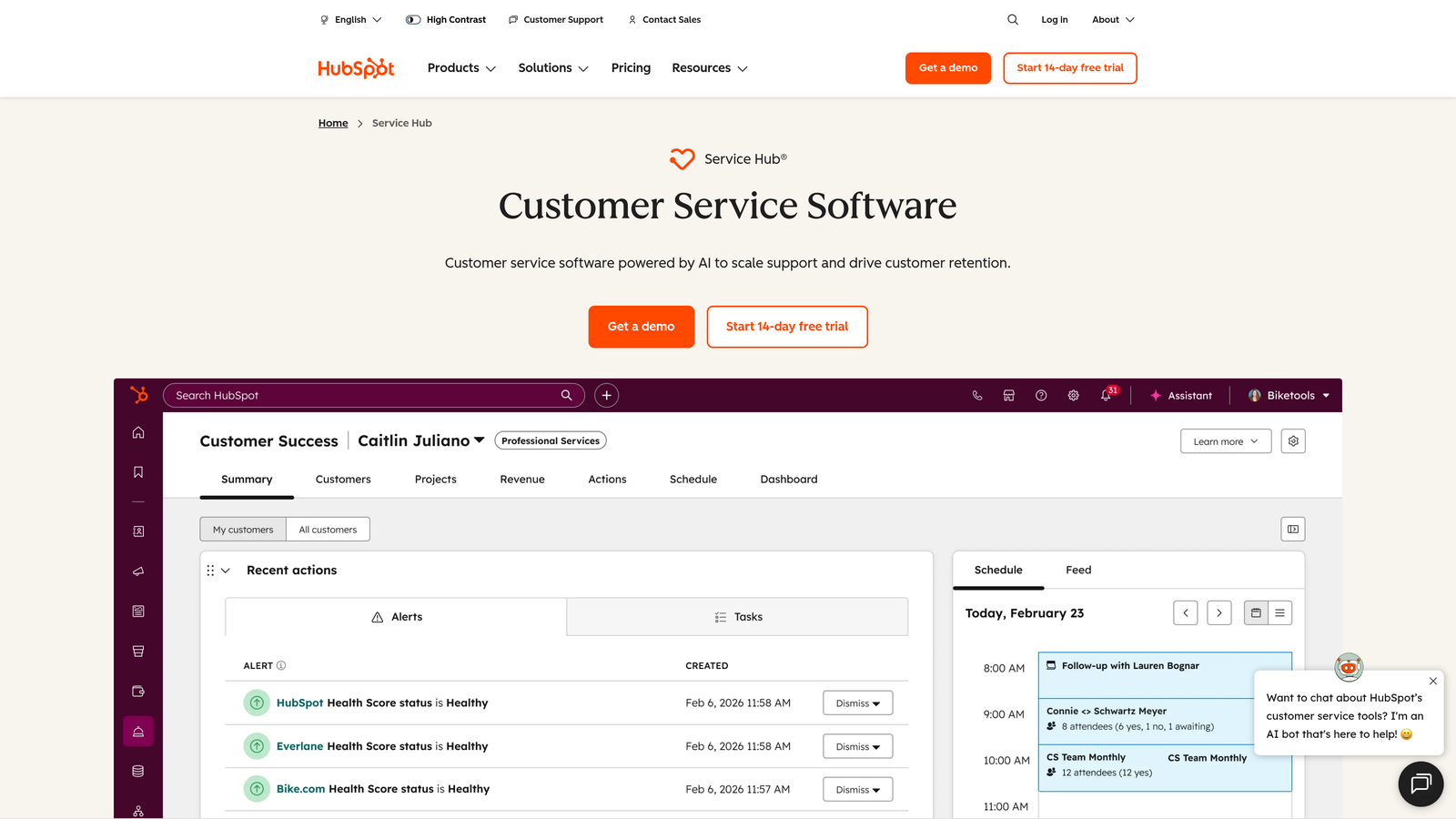
HubSpot Service Hub is a CRM-native support platform that attaches deal history, company data, and lifecycle stage to every ticket, giving support teams the account context that B2B interactions require.
Where This Tool Shines
The core value proposition here is context. When a support ticket comes in from a customer who is mid-renewal negotiation or three weeks from their contract end date, that information is immediately visible to the agent. No tab-switching, no CRM lookup, no "let me check with your account manager." That kind of alignment between support, sales, and success is genuinely valuable in B2B environments.
The AI-powered chatbot builder is straightforward to configure, and the customer feedback tools — NPS, CSAT, and CES surveys tied directly to CRM records — give teams a structured way to track account health over time.
Key Features
Unified CRM Record: Deal history, contact data, and company information visible on every support ticket without leaving the inbox.
AI Chatbot Builder: No-code bot builder with knowledge base integration for automated first-response handling.
Customer Feedback Surveys: NPS, CSAT, and CES surveys tied to CRM data for account-level health tracking.
SLA Management: Automated ticket routing and SLA policies with escalation rules.
Cross-Team Handoff: Seamless coordination between sales, marketing, and support within the same platform.
Best For
B2B teams already using HubSpot for sales or marketing who want to extend that investment into support. Particularly strong for companies where support, success, and sales need to share account context regularly.
Pricing
Free tools available with HubSpot account; Service Hub Starter from $20/seat/month. Higher tiers unlock more advanced automation and reporting.
6. Zoho Desk
Best for: Budget-conscious B2B teams already in the Zoho ecosystem looking for solid multi-channel helpdesk functionality.
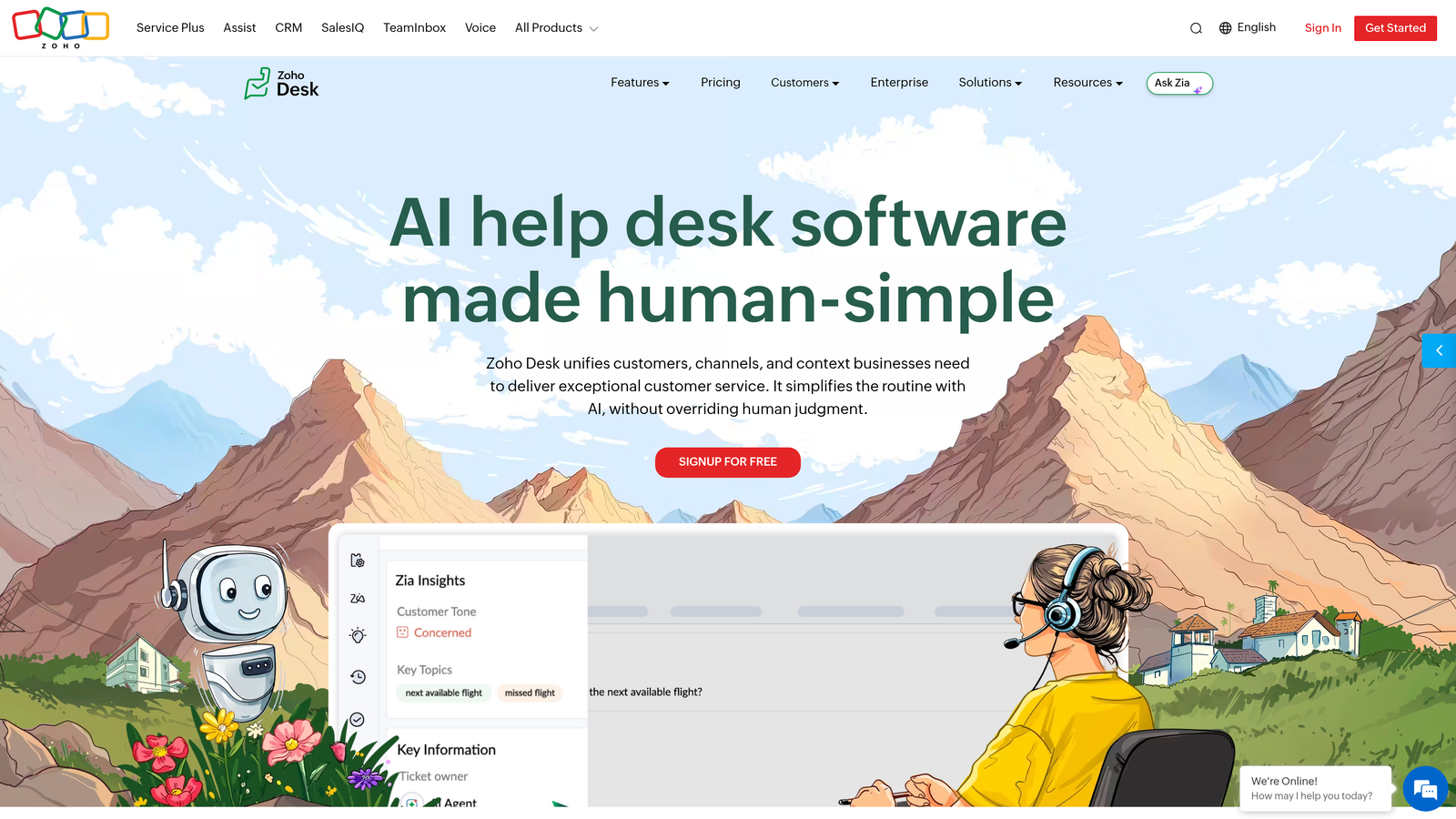
Zoho Desk is a multi-channel helpdesk with Zia AI assistant and deep integration across the Zoho product suite, ideal for smaller B2B teams that want capable automation at a competitive price.
Where This Tool Shines
Zoho Desk's Zia AI brings sentiment analysis, automatic ticket tagging, and anomaly alerts to a price tier where those features are rarely available. For teams managing support across email, chat, phone, and social, the multi-channel consolidation works well without requiring significant configuration overhead.
The Blueprint process automation feature is worth calling out specifically: it guides agents through structured resolution workflows, which is particularly useful for B2B teams handling technical issues with defined escalation procedures. If you're already using Zoho CRM, the integration is seamless and avoids the data silos that plague multi-tool stacks.
Key Features
Zia AI Assistant: Sentiment analysis, automatic ticket tagging, and anomaly alerts to help teams prioritize effectively.
Zoho Ecosystem Integration: Deep native connections with Zoho CRM, Projects, Analytics, and other Zoho products.
Multi-Department Management: Custom workflows and ticket queues for teams supporting multiple product lines or business units.
Blueprint Process Automation: Guided ticket resolution workflows that enforce consistent handling procedures.
Self-Service Portal: Embeddable knowledge base and customer portal with branded customization options.
Best For
Small to mid-sized B2B teams already invested in the Zoho ecosystem, or teams looking for the most feature-rich option at the lower end of the pricing spectrum. Less compelling as a standalone purchase if you're not using other Zoho tools.
Pricing
Free plan for up to 3 agents; Standard plan from $14/agent/month, making it one of the most affordable paid options on this list.
7. Salesforce Service Cloud
Best for: Large enterprise B2B organizations with complex account hierarchies and existing Salesforce investments.
Salesforce Service Cloud is an enterprise support platform with Einstein AI and full Salesforce Data Cloud integration, built for organizations where support complexity matches enterprise scale.
Where This Tool Shines
For large B2B organizations already running Salesforce as their CRM and revenue platform, Service Cloud's integration depth is unmatched. Einstein AI brings case classification, next-best-action recommendations, and generative reply capabilities, all grounded in the full Salesforce data model — account hierarchies, entitlements, contract terms, and product usage data included.
The case management system handles sophisticated escalation logic with milestones, entitlements, and SLA rules that reflect the complexity of enterprise B2B relationships. If you're managing support for accounts with multiple subsidiaries, custom SLA agreements, and cross-functional escalation paths, Service Cloud has the infrastructure to match.
Key Features
Einstein AI: Case classification, next-best-action recommendations, and generative reply drafts powered by Salesforce's AI layer.
Salesforce Data Cloud Integration: 360-degree account context including deal history, product usage, and contract data on every case.
Omni-Channel Routing: Intelligent routing across chat, email, phone, and social with workload balancing.
Advanced Case Management: Entitlements, milestones, and escalation rules for complex SLA structures.
Salesforce Flow and AppExchange: Extensive customization and a large marketplace of pre-built integrations and add-ons.
Best For
Enterprise B2B organizations with large support teams, complex account structures, and existing Salesforce infrastructure. The cost and implementation complexity make it less suitable for smaller teams, but for the right organization it's a powerful unified platform.
Pricing
Starter Suite from $25/user/month; Enterprise tier from $165/user/month. Implementation costs can add significantly to the total investment at enterprise scale.
8. Help Scout
Best for: Small B2B teams that want clean, human-centered support with just enough automation to stay efficient.
Help Scout is a simple, human-centered support platform with shared inbox, AI drafts, and knowledge base tools designed for teams that want automation without losing the personal touch that small B2B relationships depend on.
Where This Tool Shines
Help Scout's philosophy is deliberate simplicity. The shared inbox is clean and intuitive, with collision detection to prevent two agents from responding to the same conversation simultaneously — a small feature that prevents a surprisingly common problem. The AI Drafts feature suggests replies based on knowledge base content, which speeds up response time without removing the agent from the loop entirely.
For B2B teams where relationships matter as much as resolution speed, Help Scout's tone feels right. Customer profiles surface conversation history and app activity data, giving agents enough context to respond personally without the complexity overhead of a full CRM integration.
Key Features
Shared Inbox with Collision Detection: Prevents duplicate responses and keeps team coordination clean across active conversations.
AI Drafts: Suggested replies grounded in knowledge base content to speed up agent response without full automation.
Docs Knowledge Base: Integrated with the Beacon widget for in-product self-service that connects to the support inbox.
Workflow Automation: Automated tagging, assignment, and escalation rules based on conversation properties.
Customer Profiles: Conversation history and app activity data visible alongside each support interaction.
Best For
Small B2B teams, early-stage startups, or companies where support is handled by a small, relationship-focused team. Not the right fit for organizations that need advanced SLA management, deep CRM integration, or high-volume automation.
Pricing
Standard plan from $25/user/month; a free plan is available for up to 50 contacts, making it accessible for very small teams just getting started.
9. Ada
Best for: B2B teams with high frontline support volume that want to automate the majority of first-contact resolution.
Ada is an AI-first automation platform built for high-deflection conversational AI across chat, email, and voice, designed for teams that want to automate a significant portion of frontline support without sacrificing resolution quality.
Where This Tool Shines
Ada's reasoning engine is its standout capability. Rather than matching keywords to scripted responses, it handles multi-step troubleshooting autonomously, pulling from help centers, APIs, and internal databases to work through more complex queries without human intervention. For B2B teams dealing with technical onboarding questions, integration issues, or account management tasks at scale, that depth of automation is meaningful.
The multi-channel deployment — chat, email, and voice from a single no-code builder — reduces the operational overhead of managing separate automation tools per channel. The analytics dashboard provides resolution rates, containment metrics, and CSAT tracking to give teams visibility into where automation is working and where it needs refinement.
Key Features
No-Code AI Agent Builder: Multi-channel deployment across chat, email, and voice from a single configuration interface.
Reasoning Engine: Handles multi-step troubleshooting autonomously, going beyond simple FAQ deflection.
Knowledge Integration: Connects to help centers, internal APIs, and databases for grounded, accurate responses.
Live Agent Handoff: Escalates to human agents with full conversation context when automation reaches its limits.
Analytics Dashboard: Tracks resolution rates, containment metrics, and CSAT for continuous optimization.
Best For
Mid-to-large B2B teams with sufficient support volume to justify a dedicated AI automation platform. Particularly strong for companies with predictable, high-frequency query types that are well-suited to autonomous resolution at scale.
Pricing
Custom pricing based on resolution volume; contact Ada's sales team for a quote. Pricing structure reflects usage at scale rather than per-seat costs.
Choosing the Right B2B Support Automation Platform
The right tool depends less on feature checklists and more on where your team sits today and where your support operations need to go. Here's how to think through the decision.
If you want AI-native support that goes beyond ticket resolution — surfacing customer health signals, integrating with your product and engineering stack, and continuously learning from every interaction — Halo AI is the strongest starting point. It's built for B2B SaaS teams that want support to be a source of business intelligence, not just a cost center.
For teams already running Salesforce or HubSpot as their CRM backbone, the native support tools from those platforms deserve serious consideration. The account context they provide is genuinely hard to replicate through integrations, and the cross-team alignment between sales, success, and support is a real operational advantage.
If budget is the primary constraint, Freshdesk and Zoho Desk both offer meaningful automation at accessible price points. Neither matches the depth of the AI-native platforms, but both will handle the fundamentals well for smaller teams.
For enterprise organizations with complex account structures, global operations, and existing Salesforce infrastructure, Service Cloud's depth justifies its cost. For teams that want conversational support and product engagement in one tool, Intercom remains a strong contender. And for small teams that prioritize relationship quality over automation depth, Help Scout's simplicity is a genuine feature, not a limitation.
The broader shift worth noting: the best B2B support teams in 2026 aren't choosing between automation and quality. They're using platforms that deliver both, letting AI handle the routine while keeping humans focused on the interactions that actually move the needle on retention and revenue.
Your support team shouldn't scale linearly with your customer base. Let AI agents handle routine tickets, guide users through your product, and surface business intelligence while your team focuses on complex issues that need a human touch. See Halo in action and discover how continuous learning transforms every interaction into smarter, faster support.