9 Best Support Automation Software for Enterprises in 2026
Enterprise support teams face unique challenges—high ticket volumes, compliance demands, and complex tech stacks that basic tools can't handle. This guide evaluates the 9 best support automation software for enterprises in 2026, comparing top platforms on AI capability, integration depth, scalability, and analytics to help large teams choose solutions that reduce workload without sacrificing customer experience.
 Grant CooperFounder14 min read
Enterprise support teams operate in a different league. Ticket volumes in the thousands, compliance requirements across multiple jurisdictions, customers expecting instant answers at any hour, and a technology stack that spans CRM, ITSM, billing, and product analytics. A basic chatbot or legacy helpdesk simply wasn't designed for this environment.
The right support automation software for enterprises does more than deflect tickets. It learns from every interaction, integrates with your entire business stack, surfaces actionable intelligence, and hands off to human agents without losing context. The gap between tools that check those boxes and those that don't is significant at enterprise scale.
Here are the top support automation platforms purpose-built or well-suited for enterprise teams, evaluated on AI capability, integration depth, scalability, analytics, and total cost of ownership.
1. Halo AI
Best for: B2B SaaS companies wanting an AI-first support platform with business intelligence built in
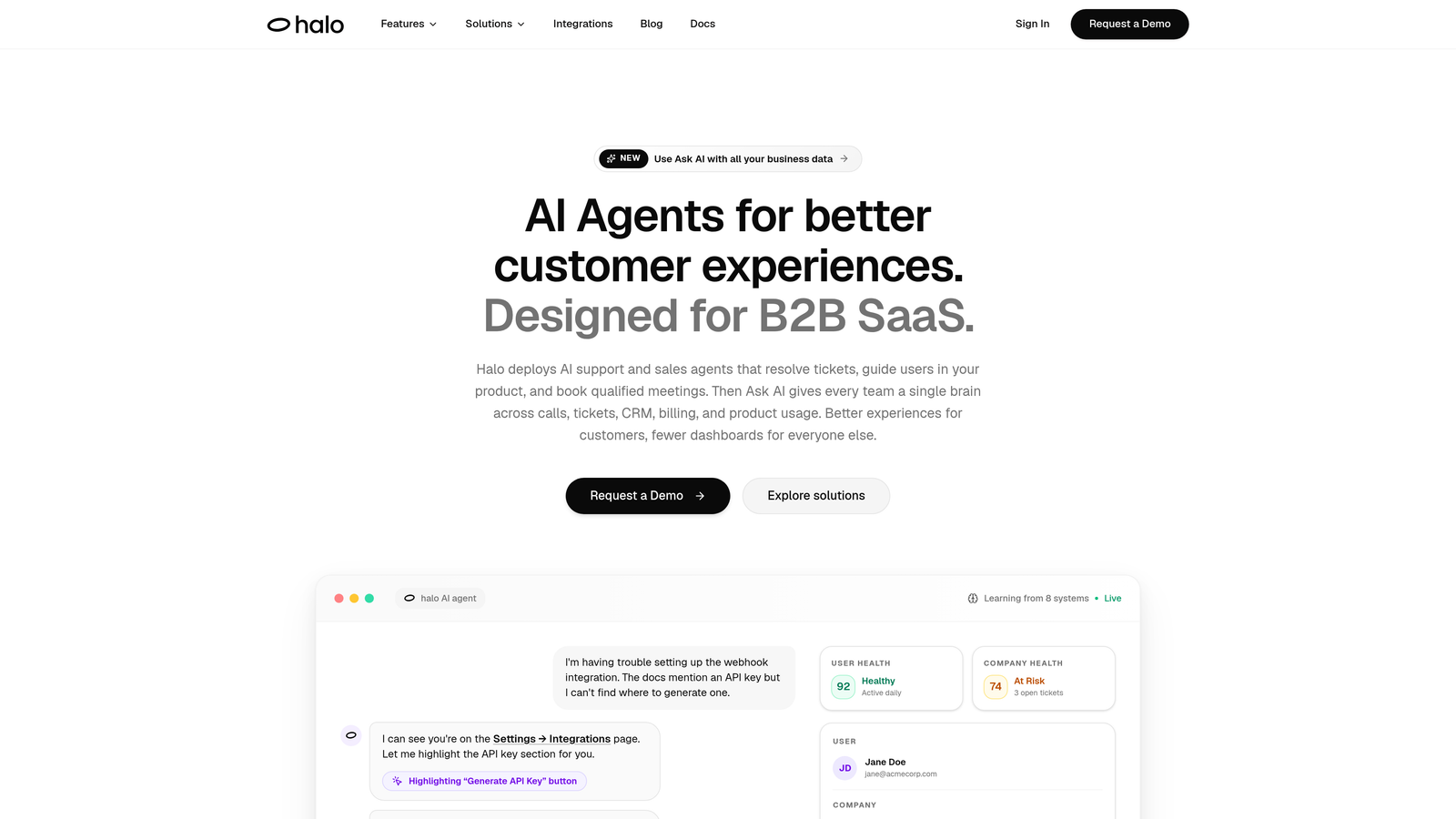
Halo AI is an AI-native customer support platform that resolves tickets, guides users through your product with page-aware context, and surfaces business intelligence from every interaction.
Where This Tool Shines
Most enterprise support tools started as helpdesks and bolted AI on later. Halo was built AI-first, which means the intelligence isn't a feature layer — it's the architecture. The platform's page-aware chat widget is a standout: the AI understands which product page or feature a user is currently on and delivers contextual visual guidance accordingly, rather than generic responses that make users feel like they're talking to a search engine.
Beyond ticket resolution, Halo's smart inbox surfaces business intelligence that most support tools never touch: customer health signals, revenue anomaly detection, and churn indicators. For B2B SaaS teams, this turns the support inbox into a strategic asset rather than a cost center. The auto bug ticket creation feature is also genuinely useful — it identifies patterns in support interactions and converts them into structured engineering tickets automatically, closing the loop between customer issues and product development.
Key Features
Page-Aware AI Agents: The AI understands which product page or feature a user is on and delivers contextually relevant guidance, not generic responses.
Smart Inbox with Business Intelligence: Surfaces customer health signals, revenue anomaly detection, and churn indicators alongside standard support metrics.
Auto Bug Ticket Creation: Converts recurring support patterns into structured engineering tickets automatically, connecting support data to product development.
Live Agent Handoff: Full context preservation during escalation means human agents see the complete conversation history and don't start from scratch.
Broad Integration Stack: Connects natively with Linear, Slack, HubSpot, Intercom, Stripe, Zoom, PandaDoc, and Fathom — covering the full B2B SaaS toolchain.
Best For
B2B SaaS companies and product-led growth teams that want AI-first architecture rather than an AI add-on. Particularly strong for organizations that want support automation to generate business intelligence, not just reduce ticket volume. Teams already using Slack, HubSpot, Linear, or Stripe will benefit most from the native integration depth.
Pricing
Enterprise pricing is available on request. Contact the team directly at haloagents.ai for a custom quote based on your team size and requirements.
2. Zendesk
Best for: Enterprises wanting a proven, ecosystem-rich helpdesk with broad AI capabilities
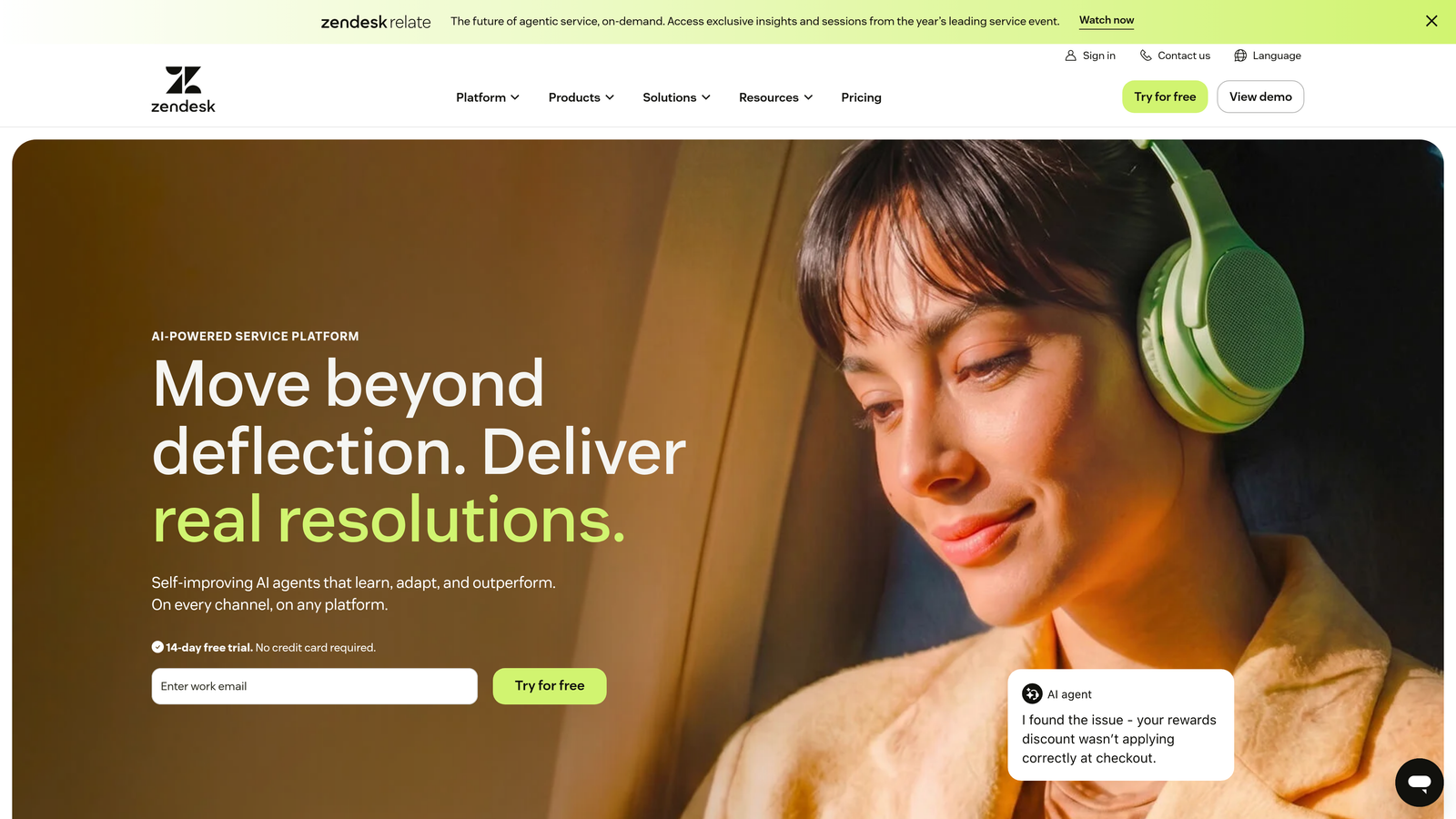
Zendesk is one of the most established enterprise helpdesk platforms globally, with a mature AI layer, a vast integration marketplace, and deep compliance and security certifications.
Where This Tool Shines
Zendesk's primary strength is its ecosystem. With over 1,000 marketplace integrations and years of enterprise deployments behind it, the platform connects to almost anything your team already uses. Reliability and audit trail depth are genuine differentiators here: enterprise teams in regulated industries value Zendesk's governance features, custom roles, and SLA management capabilities.
The Zendesk AI layer, built in partnership with OpenAI, adds intelligent triage, suggested replies, and macro recommendations across the ticket workflow. It's not an AI-native architecture, but it's a capable addition to an already mature platform. For organizations that need a known quantity with broad compliance certifications, Zendesk is a low-risk choice.
Key Features
Zendesk AI: Intelligent triage, suggested replies, and macro recommendations powered by an OpenAI partnership.
1,000+ App Marketplace: Integrations covering CRM, ITSM, billing, analytics, and collaboration tools.
Enterprise Governance: Advanced SLA management, custom roles, audit logs, and compliance certifications.
Omnichannel Coverage: Email, chat, voice, social, and messaging unified in a single workspace.
Customizable Reporting: Robust analytics dashboards with customizable metrics and reporting views.
Best For
Mid-to-large enterprises that need a reliable, well-documented helpdesk with broad integration coverage. Strong fit for teams in regulated industries that prioritize compliance posture and audit capabilities. Less ideal if AI-first architecture is a core requirement rather than a nice-to-have.
Pricing
Enterprise plans typically start around $115 per agent per month. Verify current pricing at zendesk.com/pricing as rates change frequently.
3. Intercom
Best for: SaaS companies with high chat volume and in-product support needs
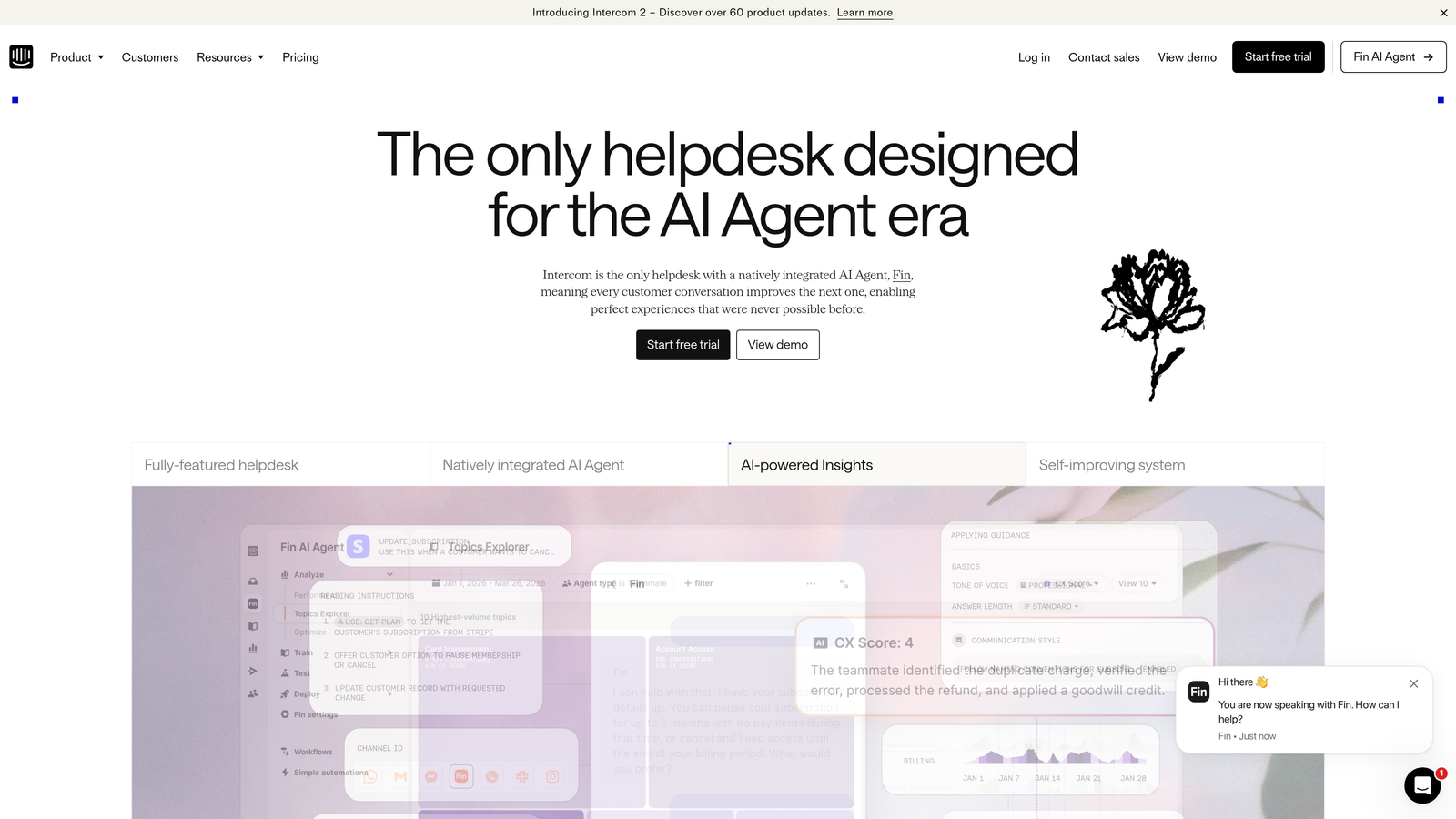
Intercom is a conversational support platform with Fin, its LLM-powered AI agent, at the center — designed for SaaS companies that want to resolve support issues inside the product experience.
Where This Tool Shines
Fin, Intercom's AI agent, is genuinely capable. It resolves queries from your knowledge base and connected data sources using large language model reasoning, handling multi-turn conversations with more nuance than rule-based bots. For product-led growth companies where the support experience happens inside the application, Intercom's in-product messaging, onboarding tours, and proactive support flows create a cohesive user experience.
The platform also handles conversation routing and team inbox management well, making it practical for support teams managing a mix of AI-resolved and human-handled conversations. The main consideration at enterprise scale is cost: Intercom's pricing scales with contact volume, which can add up quickly for high-volume operations.
Key Features
Fin AI Agent: LLM-powered resolution drawing from your knowledge base and connected data sources for genuine multi-turn conversation handling.
In-Product Messaging: Onboarding tours, proactive support flows, and contextual in-app messaging built into the platform.
Omnichannel Inbox: Chat, email, and phone support (via integration) managed from a unified workspace.
Conversation Routing: Intelligent routing and team inbox management for mixed AI and human workflows.
Strong API: Flexible API for custom integrations with your existing technology stack.
Best For
SaaS companies with product-led growth models that want AI-powered support integrated directly into the product experience. Particularly strong for teams prioritizing in-app messaging and onboarding alongside ticket resolution. Monitor pricing carefully at high contact volumes.
Pricing
Tiered pricing with enterprise plans available on request. See current rates at intercom.com/pricing.
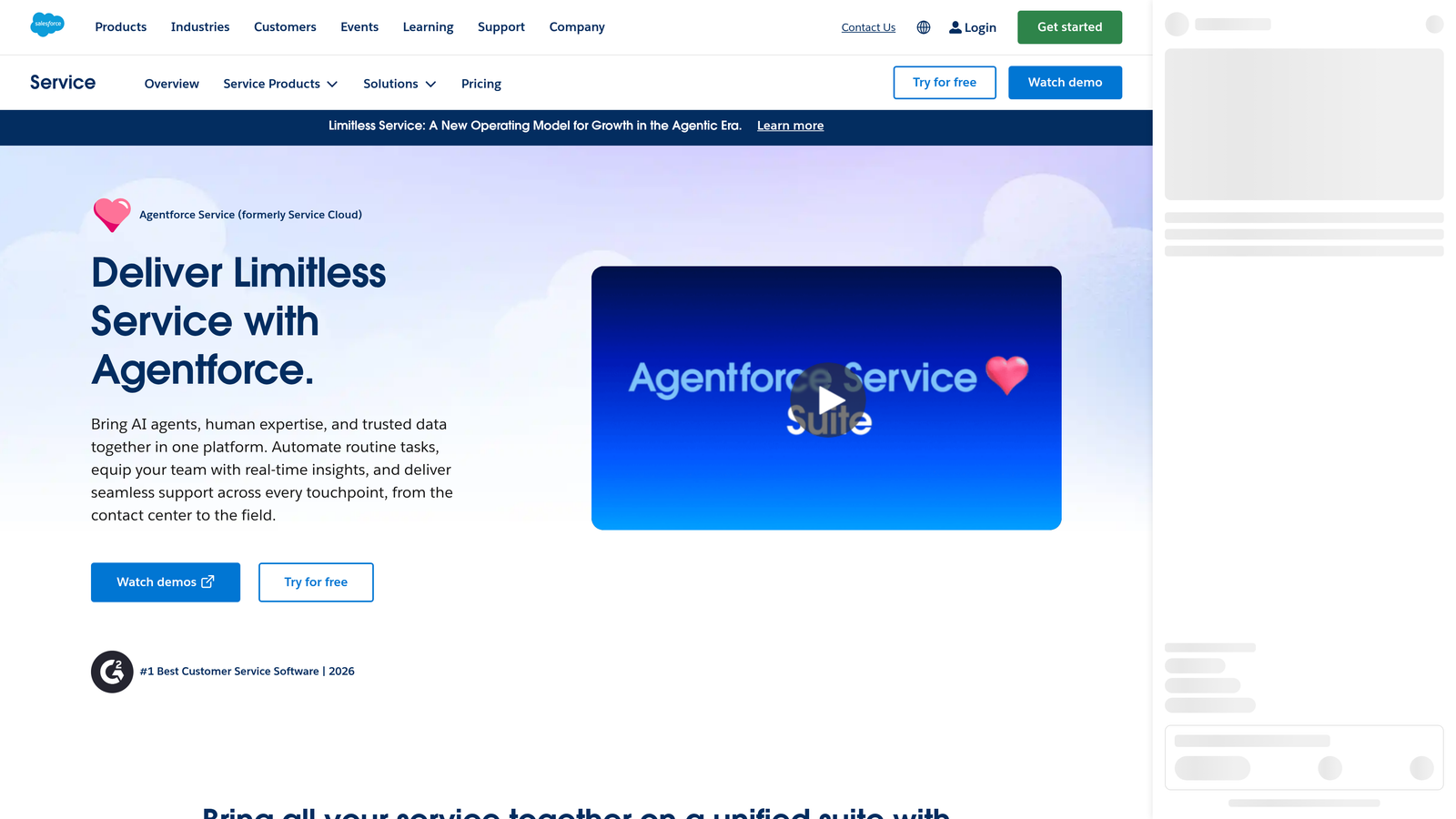
4. Salesforce Service Cloud
Best for: Enterprises already on Salesforce CRM needing native customer data unification
Salesforce Service Cloud is the enterprise support platform for organizations already running Salesforce CRM, offering native customer data unification, Einstein AI, and deep case management capabilities.
Where This Tool Shines
If your organization already lives in Salesforce, Service Cloud is the natural support extension. The native CRM integration means every support ticket arrives with full customer context: contract history, account health, open opportunities, and past interactions — all visible to the agent without switching tabs. This level of context is difficult to replicate by integrating separate tools.
Einstein AI adds case classification, next best action recommendations, and knowledge article suggestions that improve with your data over time. The compliance posture is also a genuine strength: FedRAMP and HIPAA certifications make Service Cloud viable for enterprises in regulated industries like healthcare and government. The honest caveat is implementation complexity — Service Cloud typically requires a Salesforce partner for deployment and ongoing administration.
Key Features
Einstein AI: Case classification, next best action recommendations, and knowledge article suggestions built on your Salesforce data.
Native CRM Integration: Full customer context from Salesforce CRM available in every support interaction without additional configuration.
Omni-Channel Routing: Intelligent case routing and management designed for enterprise-scale support operations.
Field Service and Self-Service: Field service management and customer-facing self-service portal capabilities included.
Enterprise Compliance: FedRAMP, HIPAA, and strong security posture for regulated industries.
Best For
Enterprises already running Salesforce CRM that want to unify customer data and support operations on a single platform. Strong fit for regulated industries requiring FedRAMP or HIPAA compliance. Budget for implementation services and ongoing Salesforce administration.
Pricing
Enterprise and Unlimited tiers available. Contact Salesforce directly or see current pricing at salesforce.com/pricing.
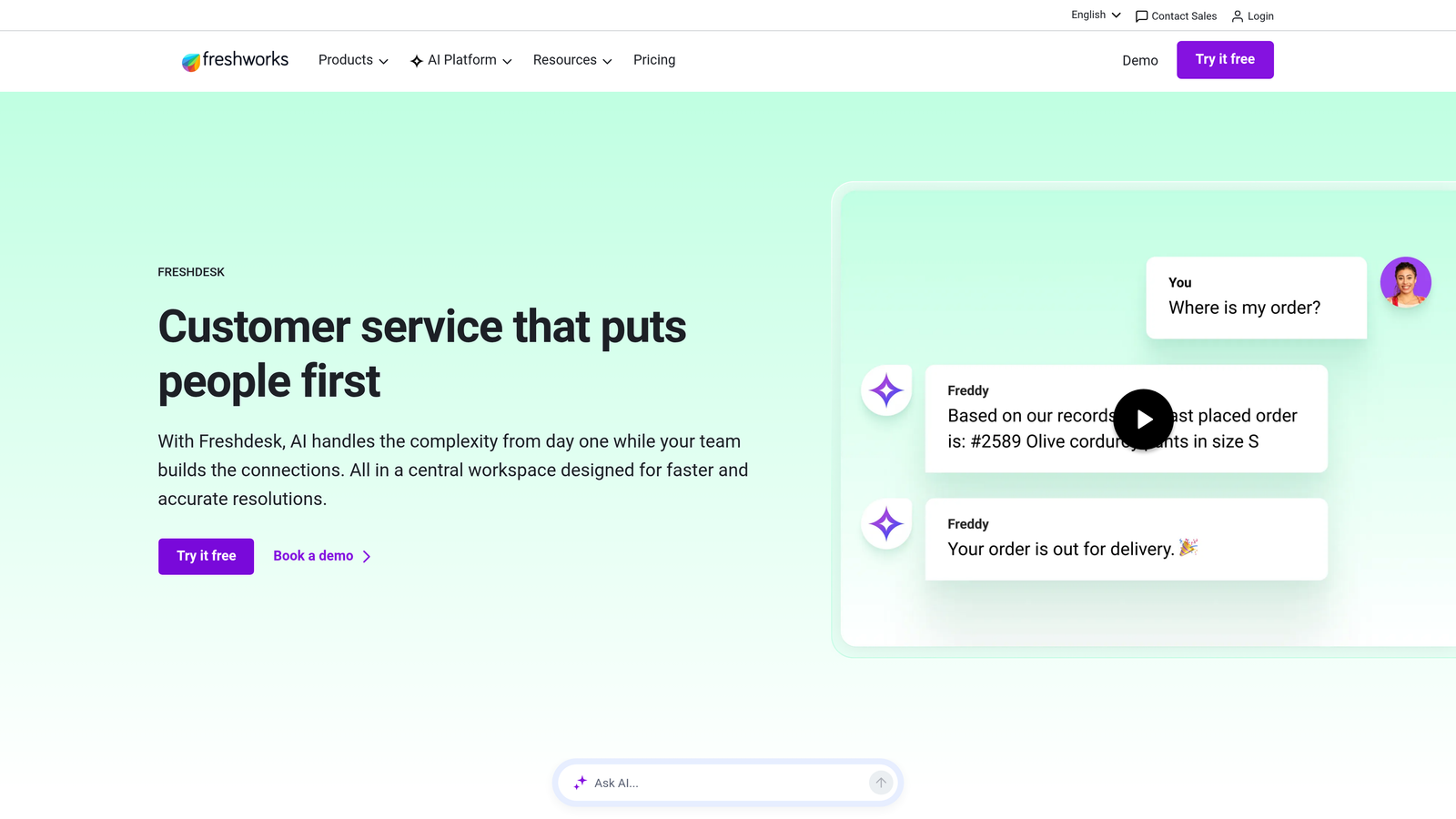
5. Freshdesk (Freshworks)
Best for: Cost-conscious enterprises moving off legacy helpdesks without sacrificing feature depth
Freshdesk is a competitive enterprise helpdesk with Freddy AI spanning the full Freshworks suite, offering a strong alternative for organizations looking to modernize without the premium price tag of Zendesk or Salesforce.
Where This Tool Shines
Freshdesk's value proposition is clear: comparable omnichannel coverage and AI capabilities at a more accessible price point than the top-tier enterprise platforms. Freddy AI runs across the entire Freshworks ecosystem, which means the same intelligence layer covers support, messaging, and CRM if you adopt the full suite. This cross-product coherence is a genuine advantage for teams managing multiple customer touchpoints.
Freddy Copilot provides real-time agent assistance and suggested responses during live interactions, which can meaningfully reduce handle time without requiring agents to leave the ticket view. The platform's omnichannel coverage is solid across email, chat, phone, and social. The honest trade-off: some enterprise-grade depth in governance and compliance features still lags behind Zendesk and Salesforce, so teams with complex compliance requirements should evaluate carefully.
Key Features
Freddy Self Service: AI-powered bot automation for deflecting common queries before they reach the support queue.
Freddy Copilot: Real-time agent assistance with suggested responses and next best action guidance during live interactions.
Freddy Insights: AI-driven analytics for trend detection, performance monitoring, and support intelligence.
Omnichannel Coverage: Email, chat, phone, and social channels managed from a unified inbox.
Marketplace Integrations: Connections to CRM, billing, and collaboration tools for broader workflow automation.
Best For
Enterprises prioritizing total cost of ownership who want strong AI capabilities without the premium pricing of Zendesk or Salesforce. A natural fit for teams already using or considering the broader Freshworks suite across sales, marketing, and support.
Pricing
Pro and Enterprise tiers available. Verify current pricing at freshdesk.com/pricing.
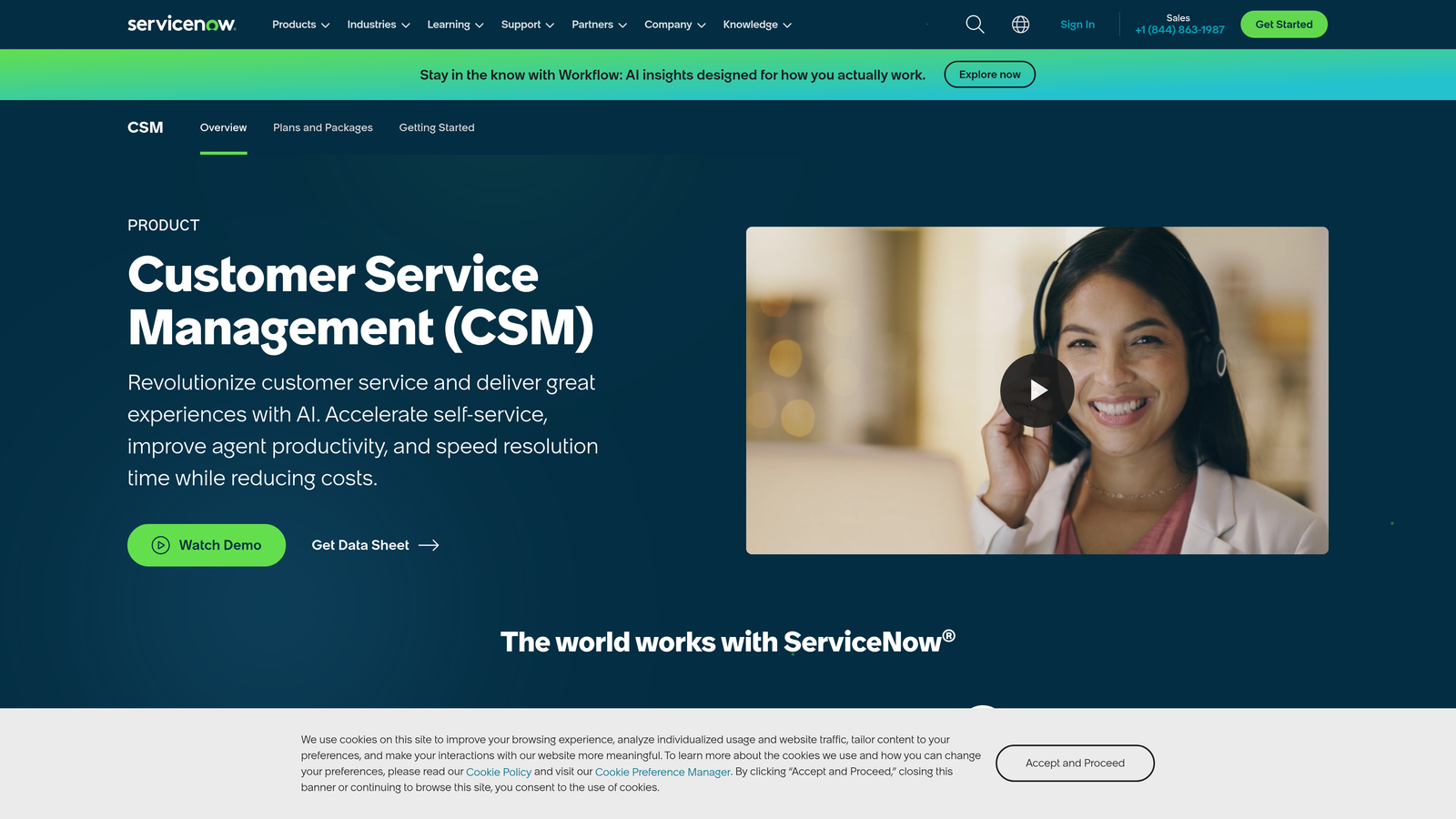
6. ServiceNow Customer Service Management
Best for: Enterprises needing cross-departmental workflow automation triggered by customer issues
ServiceNow Customer Service Management is built on the same Now Platform as ServiceNow's ITSM and HR products, making it the platform of choice for enterprises that need customer issues to trigger workflows across multiple departments.
Where This Tool Shines
ServiceNow CSM's unique capability is cross-departmental orchestration. When a customer reports an issue that requires IT remediation, HR involvement, or operational changes, ServiceNow can automatically initiate the appropriate internal workflows — all from a single customer interaction. For large enterprises where resolving a customer issue means coordinating across multiple internal teams, this is a genuine differentiator that standalone helpdesks can't match.
Now Assist, ServiceNow's generative AI layer, adds case summarization, resolution suggestions, and agent guidance that reduces the cognitive load on support staff handling complex cases. Teams already using ServiceNow for ITSM will find the unified platform approach particularly compelling, since agent and customer-facing workflows share the same data model and governance framework.
Key Features
Now Assist (Generative AI): Case summarization, resolution suggestions, and agent guidance powered by generative AI.
Cross-Departmental Workflow Triggers: A single customer issue can automatically initiate IT, HR, or operations workflows across the organization.
Predictive Intelligence: AI-powered routing and prioritization based on case characteristics and historical patterns.
Unified ITSM and CSM: Shared platform for enterprises managing both internal IT support and external customer support.
Enterprise Security and Compliance: Enterprise-grade security, data governance, and compliance capabilities.
Best For
Large enterprises already running ServiceNow for ITSM that want to unify internal and external support on a single platform. Particularly strong for organizations where customer issues regularly require cross-departmental resolution. Budget for significant implementation investment and dedicated ServiceNow expertise.
Pricing
Enterprise pricing available on request. Contact ServiceNow directly at servicenow.com for a custom quote.
7. Genesys Cloud CX
Best for: High-volume contact centers with complex voice and digital channel operations
Genesys Cloud CX is a contact center platform purpose-built for enterprises with large-scale voice and digital channel operations, combining AI-powered routing with workforce engagement management.
Where This Tool Shines
Genesys is the natural choice when "support automation" means managing hundreds of agents across voice, chat, email, SMS, and social simultaneously. The platform's predictive AI routing goes beyond simple queue management: it factors in customer intent, interaction history, and agent skills to match each contact with the right resource. For enterprises where routing quality directly affects CSAT and handle time, this is a meaningful capability.
Workforce engagement management is another area where Genesys has genuine depth. Scheduling, quality management, and performance analytics are built into the platform rather than bolted on, which simplifies the technology stack for large contact center operations. The platform is also well-suited to regulated industries like financial services and healthcare, with strong compliance features baked in.
Key Features
Predictive AI Routing: Routes contacts based on customer intent, interaction history, and agent skills rather than simple queue rules.
Voicebots and Chatbots: Automated self-service across voice and digital channels for common query resolution.
Workforce Engagement Management: Scheduling, quality management, and performance analytics for large agent teams.
Unified Omnichannel: Voice, chat, email, SMS, and social managed from a single platform.
Compliance Features: Built-in capabilities for regulated industries including financial services and healthcare.
Best For
Enterprises running large contact center operations with significant voice channel volume. Strong fit for regulated industries needing compliance features alongside AI-powered routing. Less suited for product-led SaaS teams whose support is primarily digital and in-product.
Pricing
Tiered pricing based on channels and AI features. See current options at genesys.com/pricing.
8. Ada
Best for: Enterprises wanting to add AI automation without replacing their existing helpdesk
Ada is a dedicated AI automation platform designed to layer on top of existing helpdesks like Zendesk, Salesforce, or Freshdesk, letting enterprises add AI resolution capabilities without ripping out current infrastructure.
Where This Tool Shines
Ada solves a specific enterprise problem: you've invested heavily in your existing helpdesk, your team knows it, your data lives in it — but your AI capabilities are limited. Rather than a full platform replacement, Ada sits in front of your existing stack and handles automated resolution before tickets reach human agents or your helpdesk queue. The no-code AI agent builder with enterprise governance features like approval workflows and version control makes it practical for organizations with multiple stakeholders involved in support content management.
Multilingual support across dozens of languages out of the box is a genuine differentiator for global enterprises that would otherwise need to build and maintain separate bot flows for each language. The containment rate analytics also give leadership clear visibility into what the AI is resolving versus escalating, making ROI calculations straightforward.
Key Features
No-Code AI Agent Builder: Enterprise governance with approval workflows and version control for managing AI content at scale.
Multilingual Support: Dozens of languages supported out of the box without separate configuration for each.
Native Helpdesk Integrations: Connects directly with Zendesk, Salesforce, Freshdesk, and other major platforms without replacing them.
Graceful Escalation: Automated resolution with structured handoff to human agents when needed.
Containment Analytics: Dashboard showing containment rates and conversation quality metrics for clear ROI visibility.
Best For
Enterprises that want to significantly improve AI resolution rates without replacing their existing helpdesk investment. Strong fit for global organizations needing multilingual automation and teams with governance requirements around AI content approval. Performance depends on the quality of the underlying knowledge base.
Pricing
Enterprise pricing available on request. Contact Ada directly at ada.cx for a custom quote.
9. Kustomer
Best for: B2C enterprises in e-commerce, retail, and fintech with high interaction volumes
Kustomer is a CRM-native support platform that organizes every interaction around a customer timeline rather than isolated tickets, making it a strong fit for B2C enterprises managing high-volume, relationship-driven support.
Where This Tool Shines
Kustomer's fundamental architecture is different from traditional helpdesks: instead of treating each contact as an isolated ticket, every interaction is attached to a continuous customer timeline. For B2C enterprises where a single customer might contact support via chat, email, social, and SMS across multiple issues over time, this unified view eliminates the "let me pull up your account" friction that frustrates customers and slows agents down.
KustomerIQ adds AI-powered automation, routing, and sentiment analysis that works across this unified data model, meaning the AI has richer context than it would in a ticket-based system. Suggested replies and next best action recommendations are informed by the full customer history, not just the current conversation. Kustomer now operates as an independent subsidiary following its acquisition by Meta, with continued investment in the platform.
Key Features
Customer Timeline View: Full interaction history across every channel unified in a single chronological view per customer.
KustomerIQ: AI-powered automation, routing, and sentiment analysis built on the full customer data model.
Suggested Replies and Next Best Action: Agent efficiency tools informed by complete customer history rather than isolated ticket context.
Omnichannel Coverage: Chat, email, voice, social, and SMS managed from the unified customer timeline.
Workflow Automation: Configurable automation for repetitive support processes and routing logic.
Best For
B2C enterprises in e-commerce, retail, fintech, and consumer apps where relationship context across multiple interactions is critical to support quality. Less suited for complex B2B SaaS environments with multi-product support needs or technical enterprise workflows.
Pricing
Enterprise tiers available. Verify current pricing at kustomer.com/pricing.
Choosing the Right Platform for Your Team
The honest answer is that no single platform wins across every enterprise use case. The right choice depends on your existing stack, the nature of your support interactions, and how central AI intelligence is to your strategy going forward.
Here's a quick way to think through the decision:
AI-first architecture with business intelligence: Halo AI is purpose-built for this, particularly for B2B SaaS teams that want support data to inform product and revenue decisions — not just reduce ticket volume.
Mature enterprise helpdesk with ecosystem depth: Zendesk or Salesforce Service Cloud are the established choices, with Salesforce being the clear winner if you're already on their CRM.
Conversational in-product support for SaaS: Intercom with Fin AI Agent is the natural fit for product-led growth teams prioritizing in-app experience.
Large-scale contact center operations: Genesys Cloud CX handles the complexity of high-volume voice and digital channel management better than any other platform on this list.
Budget-conscious enterprise modernization: Freshdesk delivers strong AI capabilities and omnichannel coverage at a lower total cost of ownership than the premium platforms.
Cross-departmental workflow automation: ServiceNow CSM is the only platform that natively orchestrates customer issues across IT, HR, and operations workflows at enterprise scale.
AI layer without replacing your helpdesk: Ada is designed specifically for this scenario, with multilingual support and enterprise governance built in.
B2C relationship-driven support: Kustomer's customer timeline architecture makes it the strongest choice for e-commerce, retail, and fintech enterprises.
Before finalizing any decision, assess three things: how deeply the platform integrates with your existing stack, how mature its AI capabilities are relative to your resolution complexity, and what the true total cost looks like at your ticket volume and agent count. Enterprise SaaS pricing is rarely what it appears at first glance.
Your support team shouldn't need to grow headcount every time your customer base grows. See Halo in action and discover how continuous learning transforms every interaction into smarter, faster support that scales without scaling your team.