9 Best Support Automation Software for Startups in 2026
Discover the 9 best support automation software for startups in 2026, evaluated for ease of setup, affordable pricing, and AI capability. This guide helps small teams deliver fast, high-quality customer support at scale without the enterprise complexity or headcount, covering options suited for every growth stage from early founding teams to Series A companies.
 Grant CooperFounder13 min read
Startups face a unique support paradox: customers expect fast, high-quality responses, but you don't have the headcount to deliver them at scale. Hiring your way out of the problem isn't viable when you're growing fast and watching burn rate. That's where support automation software changes the equation, letting small teams punch well above their weight without sacrificing the experience that wins loyalty.
But not all automation tools are built with startups in mind. Some are enterprise-grade platforms with pricing and complexity to match. Others are lightweight chatbots that handle FAQs but fall apart the moment a conversation gets nuanced.
This list cuts through the noise. We evaluated tools based on ease of setup, startup-friendly pricing, AI capability, integration depth, and how well they scale as your team grows. Whether you're a two-person founding team or a Series A company building out your first support function, there's a tool here that fits your stage.
1. Halo AI
Best for: B2B SaaS startups that want AI-first support with built-in product intelligence
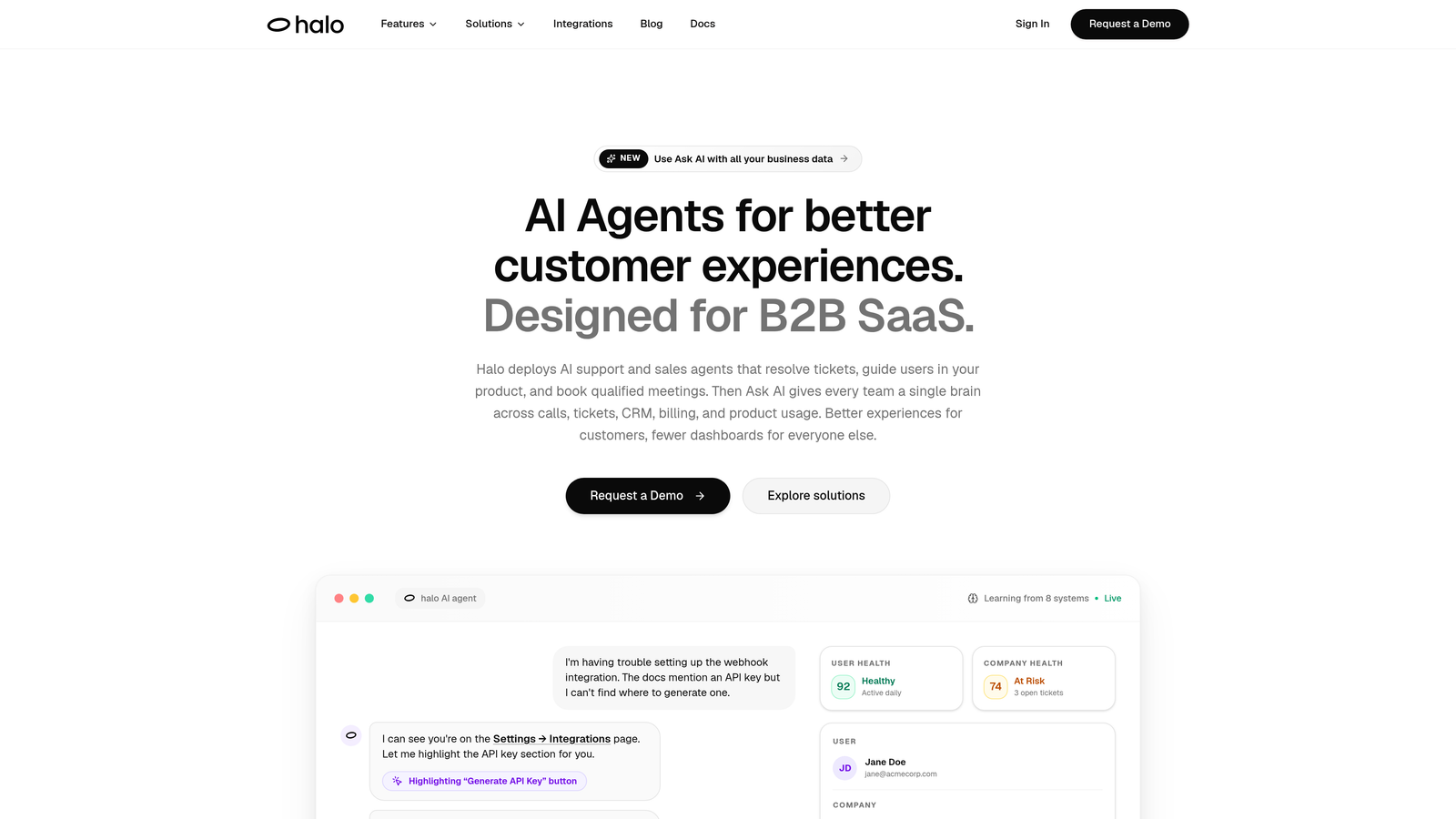
Halo AI is a purpose-built AI support platform that resolves tickets, guides users through your product, and surfaces business intelligence — all from a single system.
Where This Tool Shines
Most support tools bolt AI onto an existing helpdesk. Halo is built the other way around: the AI layer is the foundation, not an afterthought. That distinction matters most for B2B SaaS startups where support conversations carry product signals, churn indicators, and feature feedback that traditional ticket queues bury.
The page-aware chat widget is a genuine differentiator. Rather than generic responses, Halo's AI sees what the user sees on screen and delivers contextual guidance that maps to their exact situation. Combined with continuous learning from every interaction, the system gets meaningfully smarter over time without requiring manual retraining from your team.
Key Features
Page-Aware Context: The chat widget understands which page a user is on and what they're looking at, enabling precise UI guidance rather than generic help articles.
Autonomous Ticket Resolution: AI agents handle and close tickets end-to-end, learning from each interaction to improve future responses automatically.
Auto Bug Ticket Creation: User-reported issues are automatically converted into structured, developer-ready bug reports, removing a manual step that typically falls through the cracks.
Smart Inbox with Business Intelligence: The inbox surfaces customer health signals, revenue intelligence, and anomaly detection — turning support data into strategic insight beyond ticket metrics.
Live Agent Handoff: When a conversation exceeds what the AI should handle, it escalates gracefully to a human agent with full context preserved.
Deep Integration Stack: Native connections to Linear, Slack, HubSpot, Stripe, Zoom, PandaDoc, Fathom, and Intercom mean support fits into your existing workflow rather than sitting apart from it.
Best For
B2B SaaS startups at seed through Series B that want support to do more than deflect tickets. Particularly valuable for product-led growth companies where user behavior in support conversations carries meaningful signal about activation, retention, and bugs.
Pricing
Contact for pricing. Built for B2B SaaS teams. Visit haloagents.ai to learn more.
2. Intercom
Best for: Growth-stage startups with existing content libraries and omnichannel support needs
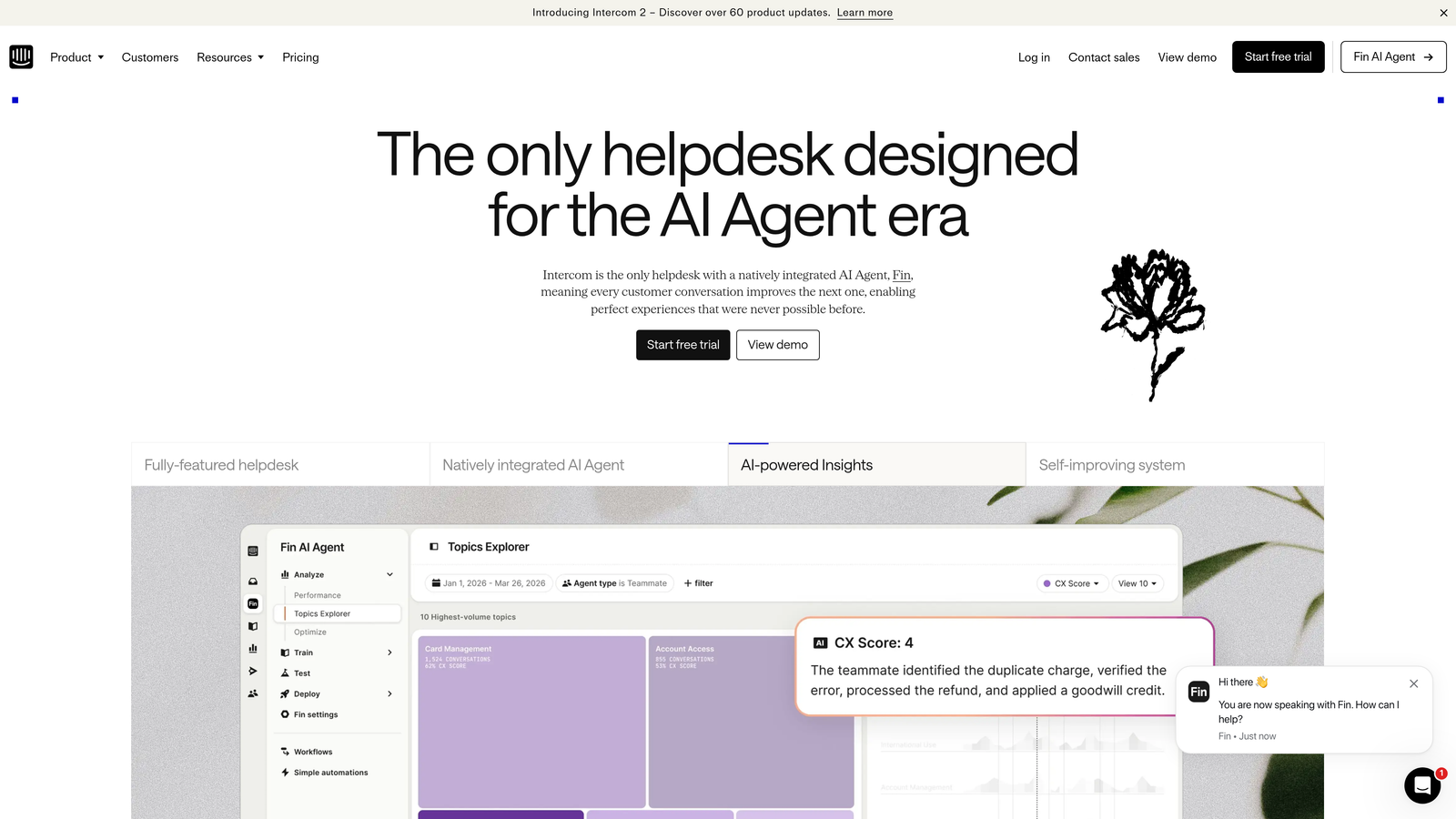
Intercom is a mature customer communications platform combining Fin AI, omnichannel messaging, and rich engagement tooling in one ecosystem.
Where This Tool Shines
Intercom's Fin AI agent has matured considerably since its launch and now handles autonomous conversation resolution across a wide range of query types. For startups that have already invested in building out a help center or knowledge base, Fin can draw from that content immediately, making time-to-value shorter than it would be starting from scratch.
The broader platform goes well beyond support. Product tours, onboarding checklists, and proactive messaging make Intercom useful across the full customer lifecycle, which is appealing for early-stage teams that want a single tool covering support and engagement. The tradeoff is pricing that can escalate quickly as seat count and usage grow.
Key Features
Fin AI Agent: Handles autonomous conversation resolution by drawing from your help center and custom content.
Omnichannel Messaging: Covers in-app chat, email, and social messaging from a unified inbox.
Product Tours and Checklists: Proactive onboarding tools that reduce support load by helping users succeed before they need help.
AI-Powered Help Center: Knowledge base with smart search that surfaces relevant articles contextually.
Extensive Integration Marketplace: Hundreds of integrations covering CRM, billing, analytics, and developer tools.
Best For
Growth-stage startups with existing documentation and a need for both support and customer engagement in one platform. Less ideal for very early teams on tight budgets where per-seat pricing adds up fast.
Pricing
Starts at approximately $39/month; scales with usage and seat count. Pricing can increase significantly as teams grow, so model your expected usage before committing.
3. Freshdesk
Best for: Early-stage startups that need a free or low-cost helpdesk with solid AI out of the box
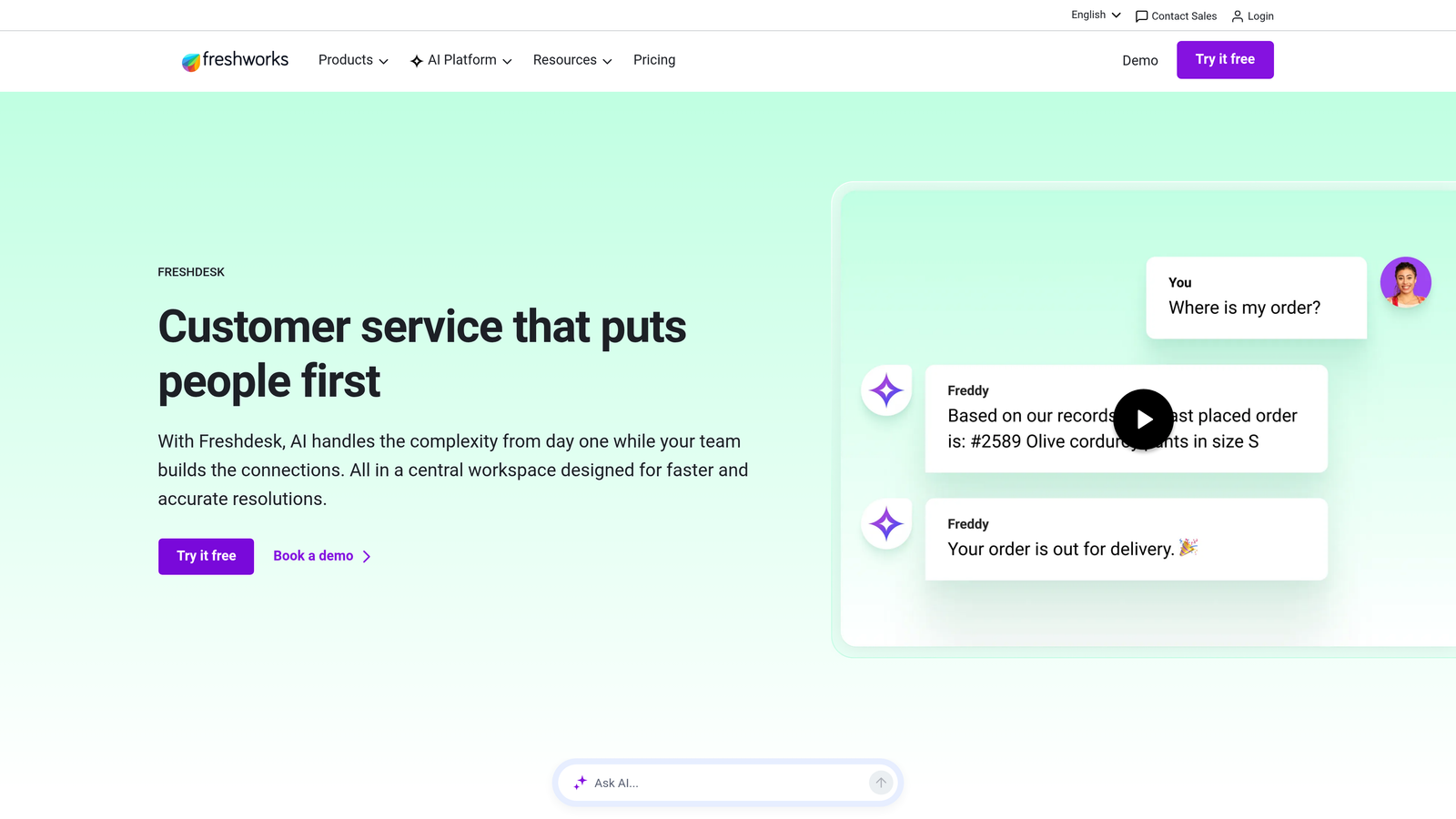
Freshdesk is a popular helpdesk platform with a genuinely useful free tier and Freddy AI built in for triage, suggested replies, and self-service automation.
Where This Tool Shines
For a founding team that needs to get support infrastructure live fast and cheap, Freshdesk is hard to beat on accessibility. The free Sprout plan supports up to 10 agents and includes the core helpdesk functionality most early-stage teams need. Onboarding is straightforward enough that teams can be live within hours rather than days.
Freddy AI adds meaningful automation without requiring configuration expertise. Auto-triage routes tickets correctly, sentiment detection flags frustrated customers, and reply suggestions speed up agent responses. It won't replace a dedicated AI-first platform, but it meaningfully reduces manual work at a price point that makes sense for pre-revenue or early-revenue startups.
Key Features
Free Sprout Plan: Supports up to 10 agents with core helpdesk features at no cost.
Freddy AI Triage: Automatically routes tickets, detects sentiment, and suggests replies to speed up agent workflows.
Freddy Self Service: Deploys a chatbot for ticket deflection without heavy configuration work.
Omnichannel Support: Handles email, chat, phone, and social channels from a single platform.
Fast Onboarding: Minimal setup time means small teams can be operational quickly.
Best For
Pre-seed and seed-stage startups that need a functional helpdesk immediately without upfront cost. Also suitable for teams that want a familiar, structured ticketing experience with AI assistance layered in.
Pricing
Free plan available. Paid plans start at approximately $15 per agent per month, making it one of the more affordable paid options in this category.
4. Zendesk
Best for: Well-funded startups anticipating rapid scale that need enterprise-grade infrastructure from day one
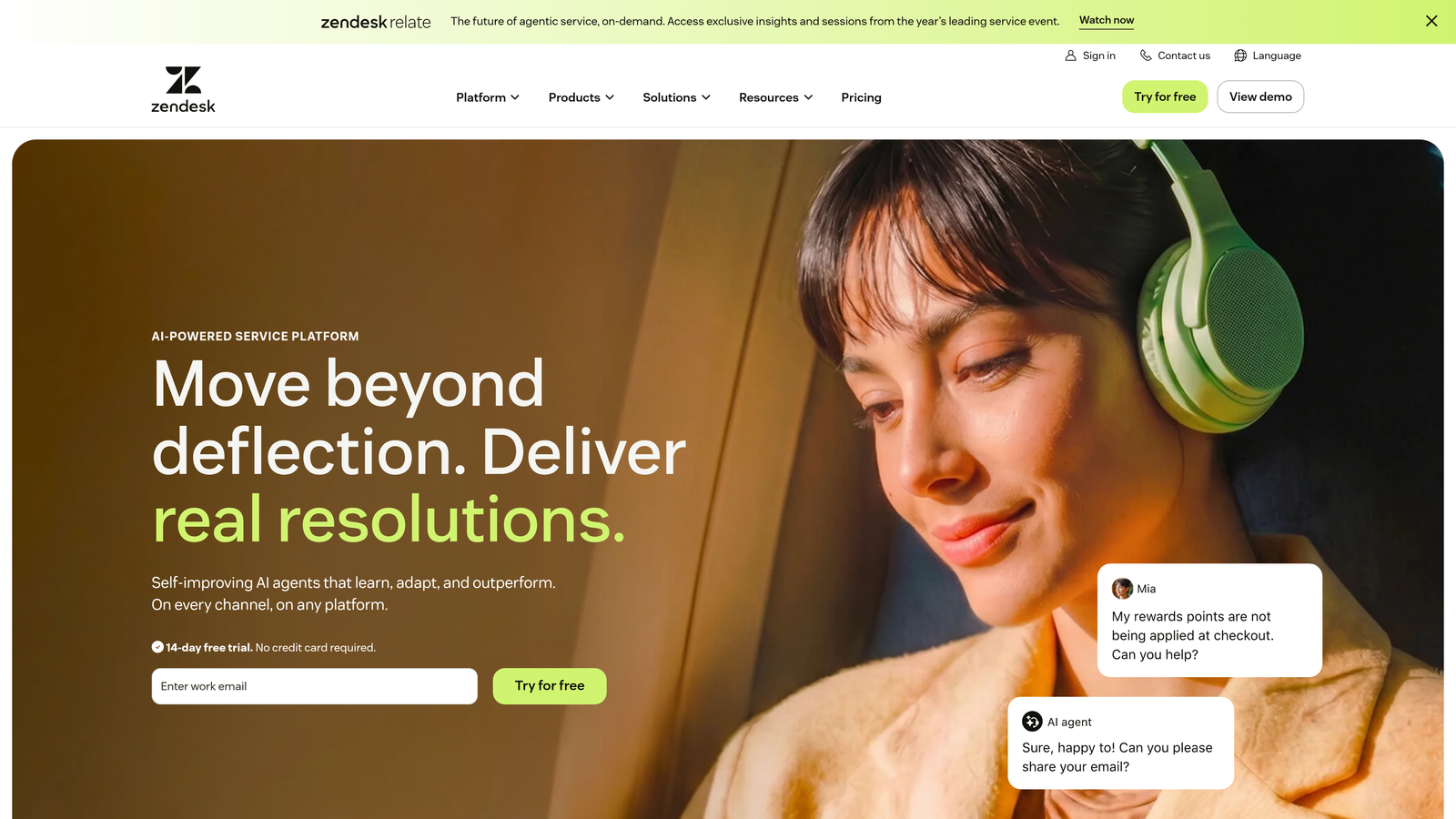
Zendesk is the industry-standard helpdesk platform with mature AI capabilities, an extensive integration marketplace, and reporting depth that serious support operations depend on.
Where This Tool Shines
Zendesk's greatest strength is its depth. The integration marketplace, advanced reporting, SLA management, and workflow automation are built to handle support operations at significant scale. For a well-funded startup that expects to grow its support volume quickly and wants infrastructure that won't need replacing in 18 months, Zendesk is a defensible choice.
The AI layer handles deflection, intent detection, and triage competently. It's not the most cutting-edge AI implementation in this list, but it's reliable and well-documented. The honest caveat for early-stage startups: the pricing and configuration complexity can be overkill if you're handling a modest ticket volume with a small team.
Key Features
Zendesk AI: Handles ticket deflection, intent detection, and automated triage across channels.
Extensive Marketplace: Hundreds of pre-built integrations covering virtually every tool in a modern startup stack.
Advanced Reporting: Granular dashboards and analytics for tracking team performance and support trends.
Omnichannel Coverage: Email, chat, voice, and social all managed from a unified workspace.
SLA Management: Robust tools for setting, tracking, and reporting on service level commitments.
Best For
Series A and beyond startups with dedicated support hires and significant ticket volume. The Suite Team plan is the most accessible entry point, but even that investment is better justified once your support operation has meaningful scale.
Pricing
Suite Team starts at approximately $55 per agent per month. More advanced plans with fuller AI and reporting capabilities are priced higher.
5. Tidio
Best for: Early-stage startups and e-commerce brands that want autonomous chat support without any coding
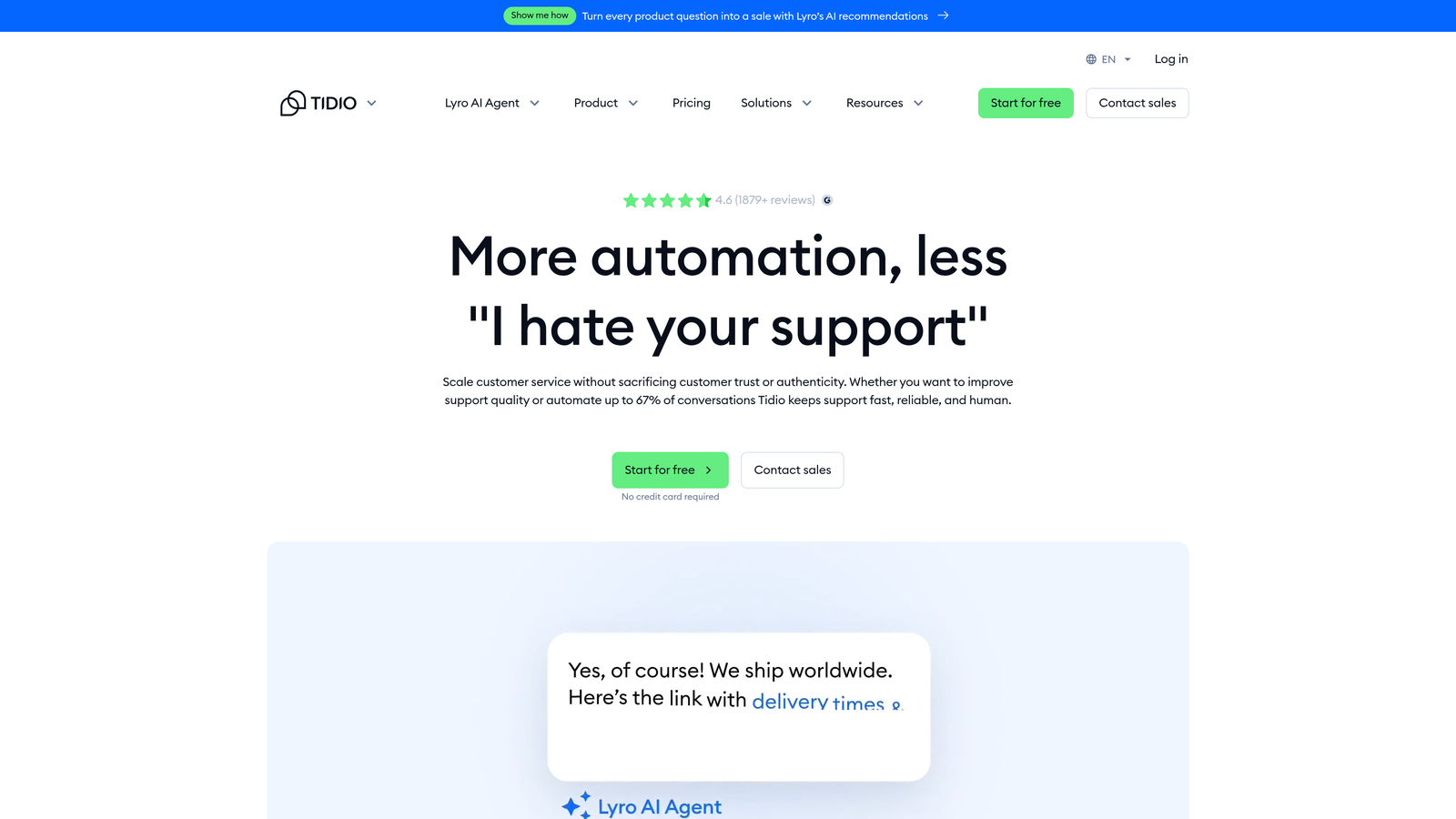
Tidio is an accessible live chat and AI chatbot platform with Lyro AI for autonomous conversations and a visual builder that anyone on the team can configure.
Where This Tool Shines
Tidio's accessibility is its core advantage. The visual drag-and-drop chatbot builder requires no technical knowledge, and Lyro AI handles conversational support autonomously across a range of common query types. For a small startup where the founder or a generalist is managing support, getting something useful live in an afternoon is a real benefit.
The free plan includes core chat features, and Lyro AI is available at a price point that's among the most affordable in the market. The tradeoff is depth: Tidio is well-suited to relatively straightforward support flows, but it's less equipped for complex B2B workflows or deep integrations with developer tooling and CRMs.
Key Features
Lyro AI Chatbot: Handles autonomous conversational support for common queries without human intervention.
Visual Builder: Drag-and-drop chatbot configuration with no coding required.
Free Plan: Core chat features available at no cost for teams just getting started.
Unified Dashboard: Email and live chat managed from a single interface.
E-Commerce Integrations: Native connections to Shopify and other e-commerce platforms.
Best For
Early-stage startups with simple support flows, and e-commerce or B2C brands where chat volume is high and query types are predictable. Less suited for B2B SaaS teams with complex integration requirements.
Pricing
Free plan available. Lyro AI starts at approximately $29/month, making it one of the more budget-friendly AI chat options available.
6. Crisp
Best for: Bootstrapped startups that need multi-channel support without per-seat pricing surprises
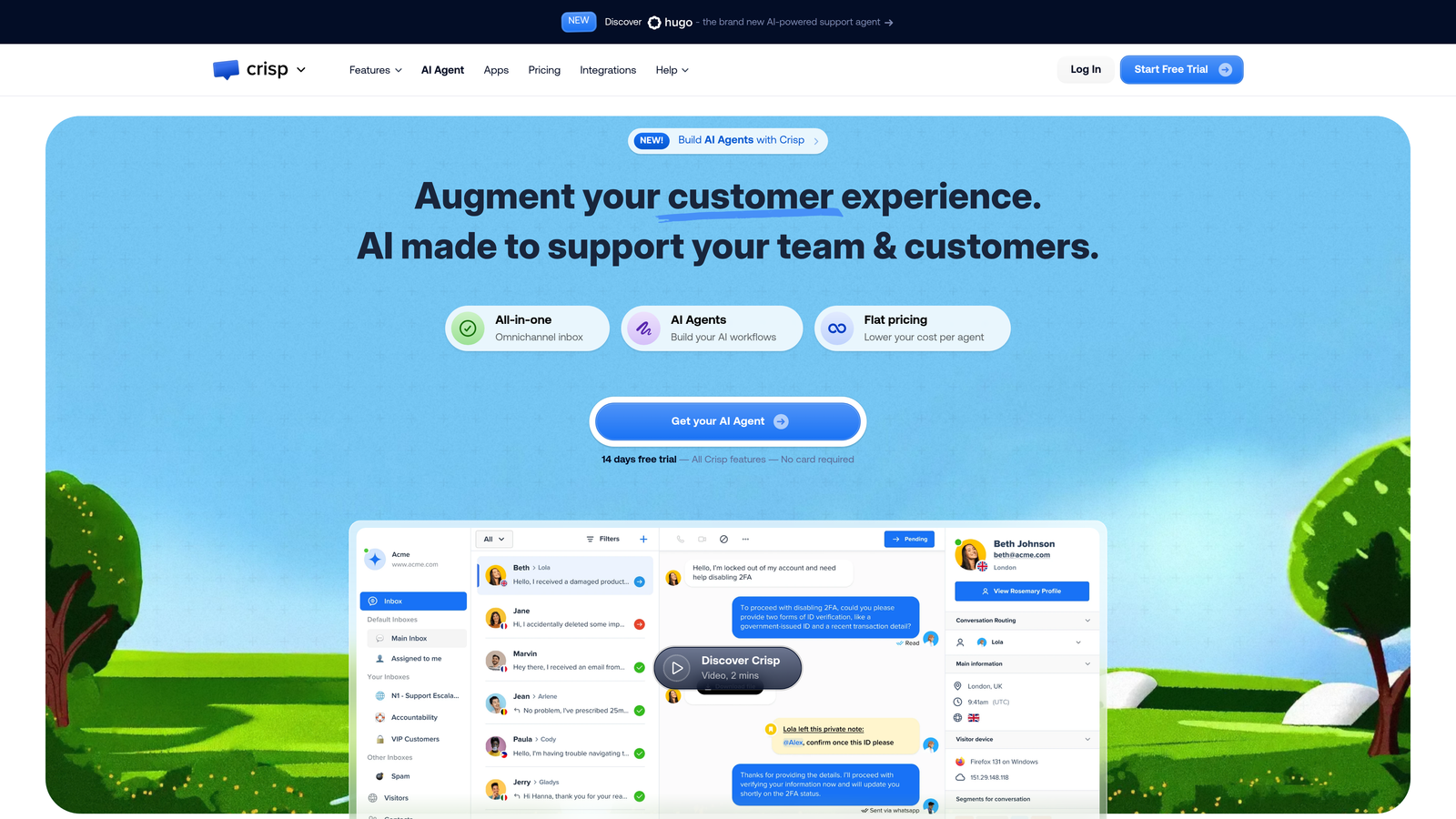
Crisp is a flat-rate shared inbox, chatbot, and lightweight CRM platform that packs a lot of functionality into a predictable pricing model.
Where This Tool Shines
The pricing model is the first thing bootstrapped founders notice about Crisp: you pay per workspace, not per seat. For a small team where multiple people need access to the support inbox, this removes the anxiety of adding a new team member and watching the monthly bill jump. The platform includes a shared inbox, chatbot builder, CRM, and knowledge base in a single flat-rate plan.
MagicReply AI suggests responses to speed up agent replies, though Crisp's AI capabilities are more assistive than autonomous. If you need high deflection rates from AI agents, you'll likely outgrow Crisp's AI layer. But for teams where the primary goal is organized, multi-channel inbox management with some AI assistance, it delivers solid value at a fair price.
Key Features
Per-Workspace Pricing: Flat rate regardless of seat count, making costs predictable as your team grows.
Shared Inbox: Consolidates chat, email, and social channels into a single team inbox.
MagicReply AI: Suggests responses based on conversation context to speed up agent replies.
Built-in CRM: Contact profiles and conversation timelines without a separate CRM subscription.
Chatbot and Knowledge Base: Both included in paid plans without additional cost.
Best For
Bootstrapped startups and indie teams where per-seat pricing is a genuine constraint. Also a good fit for teams that want inbox, CRM, and knowledge base functionality without stitching together multiple tools.
Pricing
Free plan available. Pro plan starts at approximately $25 per workspace per month, regardless of how many team members need access.
7. Help Scout
Best for: Startups where brand voice and human-feeling support are non-negotiable
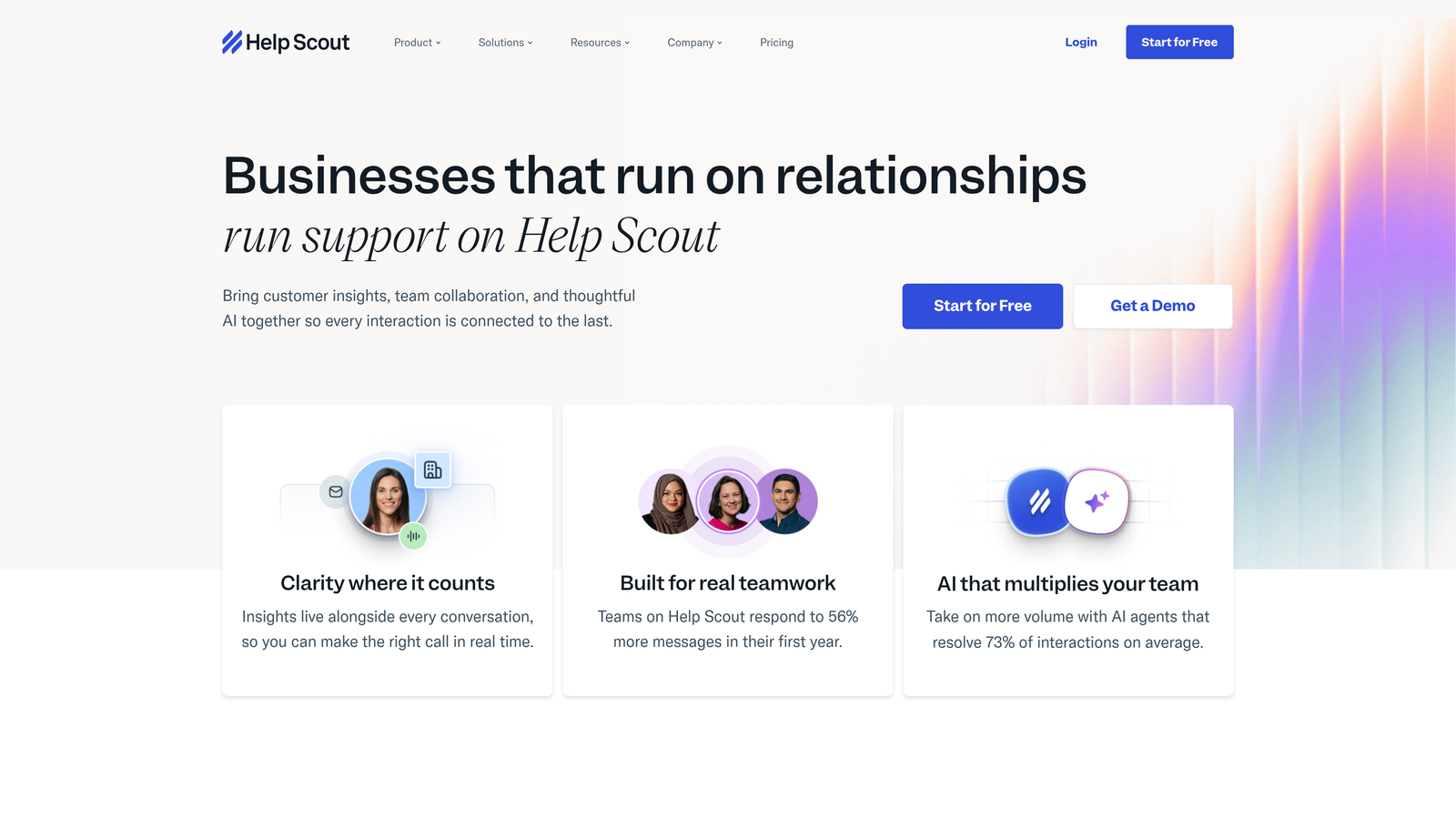
Help Scout is an email-first support platform that adds AI assistance without turning support into a bot-heavy experience.
Where This Tool Shines
Help Scout takes a deliberately human approach to support. AI Drafts help agents write replies faster while preserving the brand voice that resonates with customers. AI Summarize condenses long conversation threads so agents can get up to speed quickly. Neither feature replaces the human, but both meaningfully reduce the time it takes to respond well.
For startups where the support experience is a brand differentiator — think premium B2B products, high-touch SaaS, or any company where customer relationships are a competitive moat — Help Scout's philosophy fits better than platforms that optimize primarily for deflection rates. The Beacon widget brings in-product help without feeling intrusive.
Key Features
AI Drafts: Generates reply suggestions in a human voice, giving agents a strong starting point rather than a robotic template.
AI Summarize: Condenses long conversation threads into concise summaries for faster agent context-setting.
Beacon Widget: In-product help widget with knowledge base search and proactive messaging.
Docs Knowledge Base: Included in all plans with no additional cost.
Collision Detection: Prevents two agents from working the same ticket simultaneously.
Best For
Startups where brand voice, relationship quality, and human-feeling responses matter more than maximum deflection. Particularly well-suited for high-touch B2B products and companies with a strong brand identity in their customer communications.
Pricing
Standard plan starts at approximately $20 per user per month. Reasonable at startup scale, though it grows with headcount like most per-seat tools.
8. Gorgias
Best for: E-commerce and DTC startups built on Shopify, WooCommerce, or BigCommerce
Gorgias is a revenue-focused helpdesk built specifically for e-commerce brands, with deep integrations that let agents take order actions directly inside tickets.
Where This Tool Shines
Gorgias solves a specific problem that generic helpdesks handle poorly: e-commerce support requires agents to look up orders, issue refunds, edit shipping details, and apply discounts — actions that normally require switching between systems. Gorgias brings those actions directly into the ticket interface, cutting resolution time significantly for the order-related queries that dominate e-commerce support queues.
AI automation handles the high-volume repetitive queries — order status, shipping updates, return policies — so human agents can focus on situations that actually need judgment. The ticket-volume pricing model is also worth noting: for e-commerce brands with predictable query patterns, paying by ticket volume rather than by seat is often more cost-effective than agent-based pricing.
Key Features
Deep E-Commerce Integrations: Native connections to Shopify, WooCommerce, and BigCommerce with order data surfaced directly in tickets.
In-Ticket Order Actions: Agents can issue refunds, edit orders, and apply discounts without leaving the helpdesk.
AI Automation: Handles repetitive queries like order status and shipping updates at scale.
Ticket-Volume Pricing: Costs scale with query volume rather than headcount, which suits e-commerce economics.
Revenue Attribution: Tracks which support interactions contribute to purchases and retention.
Best For
DTC and e-commerce startups where order management is central to the support workflow. Not relevant for B2B SaaS teams, but highly specialized and genuinely valuable for the e-commerce use case.
Pricing
Starter plan from approximately $10/month for up to 50 tickets. Pricing scales by ticket volume, making it accessible at early stages and predictable as order volume grows.
9. Zoho Desk
Best for: Budget-conscious startups already using Zoho CRM or the broader Zoho ecosystem
Zoho Desk is a feature-rich helpdesk with Zia AI assistant, strong automation, and compelling value for startups watching every dollar.
Where This Tool Shines
Zoho Desk's price-to-feature ratio is hard to argue with, especially for startups already using Zoho CRM or Zoho One. The native integration between Zoho Desk and Zoho CRM means customer context flows seamlessly between sales and support without any custom configuration. For a startup managing both functions on a tight budget, that native connection has real operational value.
Zia AI handles sentiment analysis, suggests tags, and detects anomalies in ticket trends, which is more sophisticated than the AI layers found in many tools at similar price points. The Blueprint automation builder enables complex multi-step workflows, though it does carry a learning curve that smaller teams should factor into their onboarding timeline.
Key Features
Zia AI Assistant: Provides sentiment analysis, tag suggestions, and anomaly detection in ticket trend data.
Blueprint Automation: Builds complex multi-step workflows for ticket routing, escalation, and process enforcement.
Free Plan: Supports up to 3 agents with core helpdesk functionality at no cost.
Zoho Ecosystem Integration: Native connections to Zoho CRM, Zoho Analytics, and the broader Zoho suite.
Multi-Channel Coverage: Handles email, chat, phone, and social from a unified interface.
Best For
Budget-conscious startups, particularly those already invested in the Zoho ecosystem. Also a strong option for teams that want powerful automation without paying Zendesk-level prices, and are willing to invest some time in configuration.
Pricing
Free plan available for up to 3 agents. Standard plan starts at approximately $14 per agent per month, making it one of the best value propositions in this category.
Which Tool Is Right for Your Startup?
The right choice depends heavily on your stage, your business model, and what you actually need support to do for you.
If you're building a B2B SaaS product and want support that generates product intelligence, surfaces churn signals, and resolves tickets autonomously while learning from every interaction, Halo AI is the most purpose-built option on this list. Its page-aware context and business intelligence layer set it apart from tools that treat support as a cost center rather than a signal source.
For growth-stage startups that need both support and customer engagement in one platform, Intercom remains a strong choice with its mature Fin AI and rich content tooling. If budget is the primary constraint at the earliest stages, Freshdesk's free tier and Zoho Desk's affordable plans offer genuine functionality without upfront cost.
Matching tools to use case at a glance:
B2B SaaS, AI-first with product intelligence: Halo AI
Growth-stage with omnichannel needs: Intercom
Free tier, fast setup, early-stage: Freshdesk or Zoho Desk
Scaling fast, enterprise infrastructure now: Zendesk
Simple chat, no coding, B2C or e-commerce: Tidio
Bootstrapped, flat-rate pricing: Crisp
Brand voice matters most: Help Scout
Shopify or WooCommerce e-commerce: Gorgias
Your support team shouldn't scale linearly with your customer base. Let AI agents handle routine tickets, guide users through your product, and surface business intelligence while your team focuses on complex issues that need a human touch. See Halo in action and discover how continuous learning transforms every interaction into smarter, faster support.