9 Best Support Automation Software Tools: Pricing Compared for 2026
This comprehensive guide compares support automation software pricing across nine leading platforms for 2026, helping teams decode complex pricing models from per-agent fees to resolution-based charges. You'll find transparent cost breakdowns, feature comparisons at each pricing tier, and expert guidance on matching the right pricing structure to your support volume—whether you're a budget-conscious startup or an enterprise ready to scale your customer service operations.
 Grant CooperFounder12 min read
Choosing support automation software often comes down to one critical question: what will this actually cost us? Between per-agent fees, resolution-based pricing, and hidden charges for integrations, comparing options can feel like decoding a foreign language.
The challenge isn't just finding affordable software. It's understanding what you're actually paying for and whether that pricing model aligns with how your team operates.
This guide cuts through the complexity by breaking down real pricing structures across nine leading support automation platforms. Whether you're a growing startup watching every dollar or an enterprise team ready to scale, you'll find transparent cost comparisons, feature breakdowns at each tier, and guidance on which pricing model fits your support volume and goals.
1. Halo AI
Best for: Teams seeking AI-first automation with resolution-based pricing that scales with value delivered
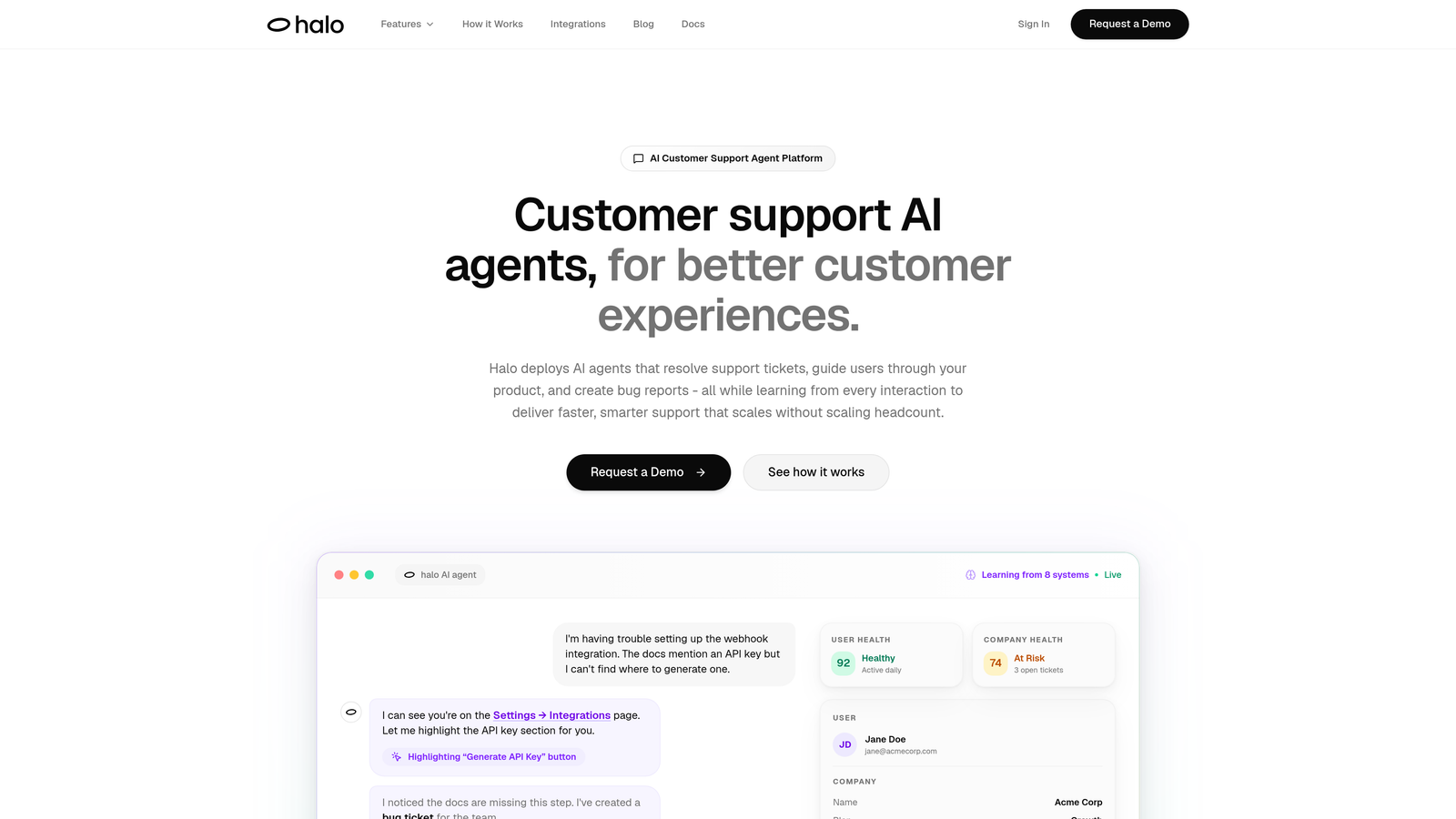
Halo AI is an AI-first support automation platform built around intelligent agents that autonomously resolve tickets, provide contextual product guidance, and continuously improve through every interaction.
Where This Tool Shines
Unlike traditional helpdesk platforms with AI bolted on, Halo's architecture starts with automation at its core. The platform's page-aware capabilities mean AI agents can see exactly what users see in your product, enabling them to provide visual guidance and contextual help that goes beyond generic responses.
The continuous learning aspect sets it apart from static automation. Every resolved ticket, every customer interaction, and every piece of feedback feeds back into the system, making the AI progressively smarter without manual rule updates.
Key Features
Autonomous AI Agents: Resolve support tickets without human intervention while maintaining context across the entire customer journey.
Page-Aware Chat Widget: Provides visual UI guidance based on exactly what the user is viewing in your product interface.
Smart Inbox with Business Intelligence: Surfaces customer health signals, revenue intelligence, and anomaly detection beyond basic support metrics.
Auto Bug Ticket Creation: Automatically identifies technical issues and creates tickets in Linear or other project management tools.
Multi-System Integrations: Native connections to Linear, Slack, HubSpot, Intercom, Stripe, Zoom, PandaDoc, and Fathom.
Best For
B2B companies and product teams using helpdesk systems like Zendesk, Freshdesk, or Intercom who want to reduce support headcount scaling while maintaining high-quality customer experiences. Particularly effective for SaaS companies where product complexity drives support volume.
Pricing
Contact for pricing. Uses a resolution-based model focused on value delivered rather than per-seat licensing, which can be more cost-effective for teams with high ticket volumes.
2. Zendesk
Best for: Enterprise teams needing comprehensive customization and established marketplace ecosystem
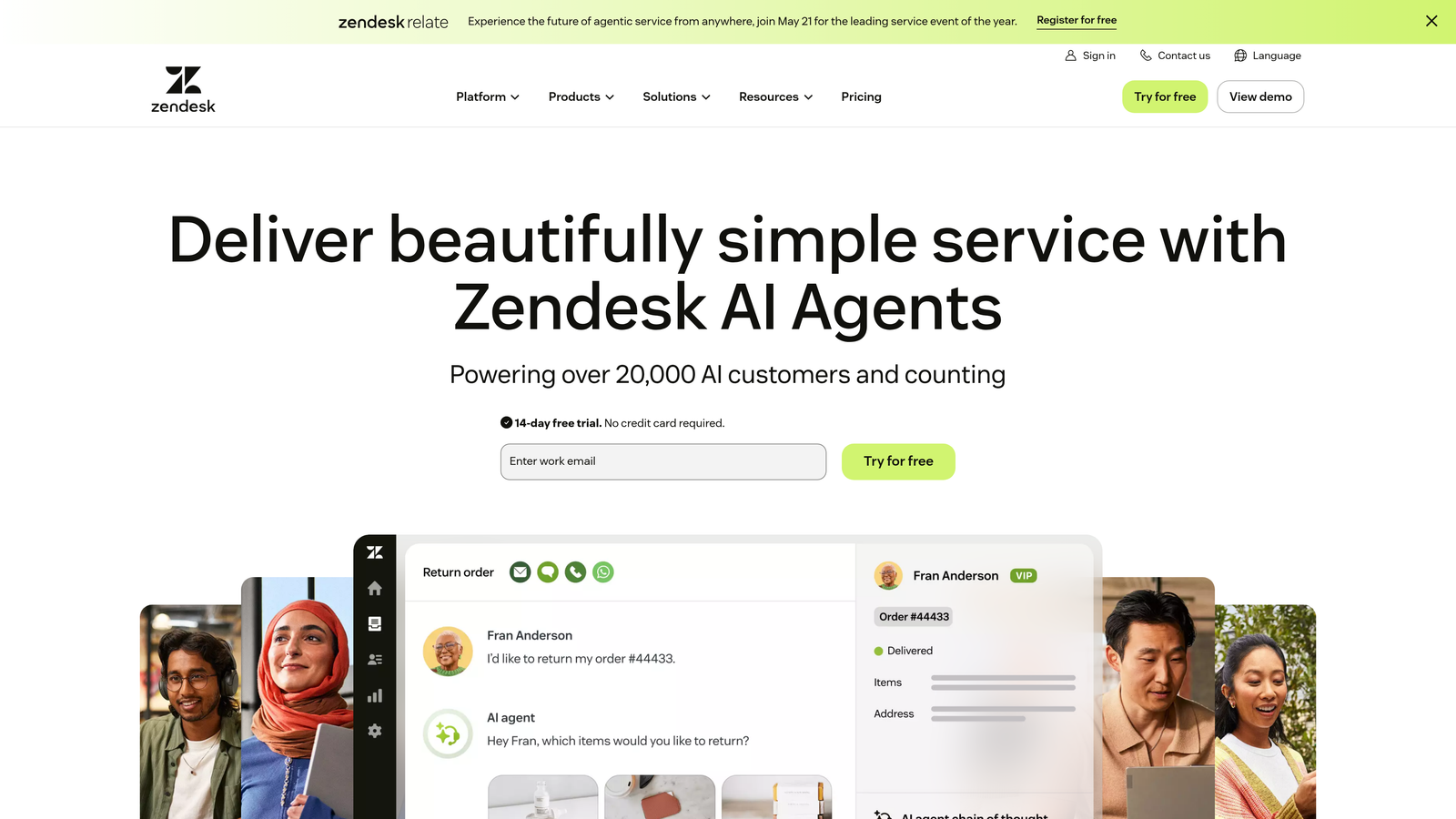
Zendesk is an enterprise-grade customer service platform offering extensive ticketing capabilities, workflow customization, and a vast marketplace of integrations.
Where This Tool Shines
Zendesk's strength lies in its maturity and flexibility. Companies with complex support workflows and enterprise security requirements find the platform's customization depth invaluable. The marketplace offers hundreds of pre-built integrations, reducing development time for connecting your entire tech stack.
For organizations already invested in the Zendesk ecosystem, the Suite packages provide unified access across support, chat, and voice channels with consistent reporting.
Key Features
Multi-Channel Ticket Management: Centralize email, chat, phone, and social media conversations in a unified interface.
Advanced AI and Automation: Available as add-on features including intent detection, article suggestions, and macro recommendations.
Marketplace Integrations: Access to over 1,000 pre-built apps and integrations covering most business tools.
Customizable Workflows: Build complex routing rules, SLA policies, and escalation paths tailored to your team structure.
Enterprise Security: SOC 2 compliance, HIPAA readiness, and advanced data residency options for regulated industries.
Best For
Mid-market to enterprise companies with dedicated support teams who need extensive customization and are willing to invest time in configuration. Works well for organizations with complex compliance requirements or multi-brand support operations.
Pricing
Support Team plan starts at $19 per agent per month. Suite plans range from $55 to $115 per agent monthly. Advanced AI features require additional add-on purchases, which can significantly increase total cost.
3. Intercom
Best for: Product-led companies prioritizing in-app messaging and proactive customer engagement
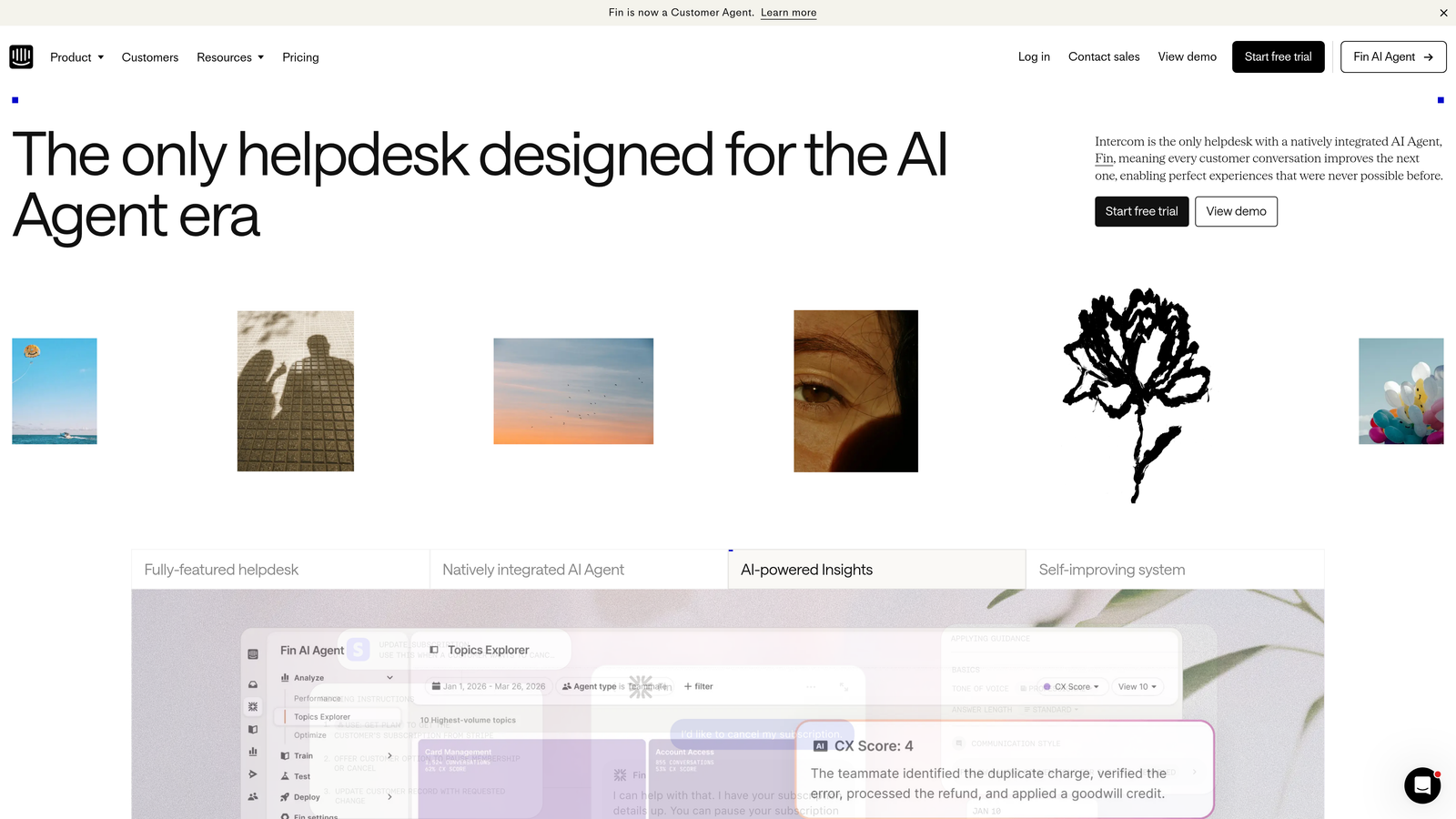
Intercom is a customer messaging platform that combines live chat, help center functionality, and AI-powered automation designed specifically for product-led growth companies.
Where This Tool Shines
Intercom excels at proactive engagement. Product tours, targeted messages, and behavior-triggered outreach help teams guide users through onboarding and feature adoption before issues arise. The platform feels native to modern SaaS products rather than a traditional support bolt-on.
Fin AI, their automation layer, handles common questions with natural language understanding while seamlessly handing off complex issues to human agents with full conversation context.
Key Features
Unified Inbox: Manage all customer conversations across chat, email, and in-app messages from a single interface.
Fin AI Agent: Automated resolution powered by generative AI that learns from your help content and past conversations.
Product Tours: Create interactive walkthroughs and feature announcements delivered inside your product.
Customizable Bots: Build conversation flows for qualification, routing, and self-service without coding.
Customer Data Platform: Rich user profiles combining behavioral data, company attributes, and conversation history.
Best For
SaaS companies with product-led growth strategies where in-app communication and proactive engagement drive retention. Particularly valuable for teams that view support as part of the product experience rather than a separate function.
Pricing
Starts at $39 per seat monthly for basic features. Fin AI is charged per resolution, typically around $0.99 per automated conversation, which can add up quickly for high-volume teams.
4. Freshdesk
Best for: Growing teams seeking affordable omnichannel support with AI capabilities
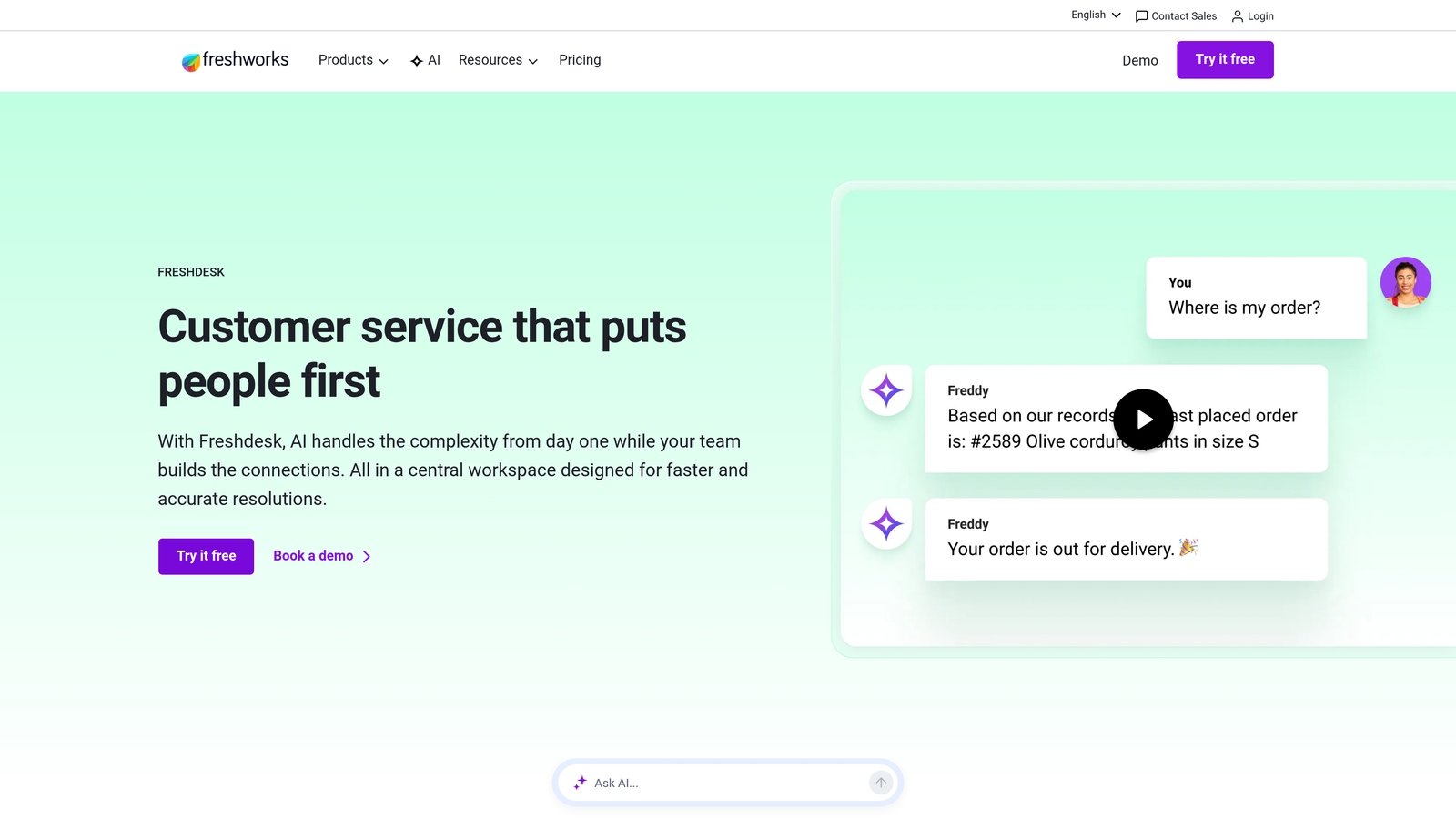
Freshdesk is a helpdesk solution from Freshworks that balances affordability with robust features, including Freddy AI for automation and predictive insights.
Where This Tool Shines
Freshdesk's pricing makes enterprise-level features accessible to smaller teams. The free tier supports unlimited agents with basic ticketing, making it viable for startups testing support workflows before committing budget. As teams grow, the upgrade path provides AI capabilities and advanced automation without the price shock of enterprise platforms.
Freddy AI integrates across the platform, offering agent assist features, sentiment analysis, and automated ticket categorization at price points that don't require executive approval.
Key Features
Omnichannel Ticketing: Consolidate email, phone, chat, social media, and messaging app conversations into unified tickets.
Freddy AI: Provides intelligent ticket assignment, article suggestions, and chatbot capabilities with natural language processing.
Team Collaboration: Parent-child ticketing, shared ownership, and internal notes keep teams coordinated on complex issues.
SLA Management: Set business hours, escalation rules, and SLA policies with automated enforcement and reporting.
Free Tier: Unlimited agents with basic ticketing and email support, making it risk-free to test.
Best For
Small to medium-sized support teams that need professional ticketing capabilities without enterprise pricing. Companies transitioning from email-based support to structured helpdesk workflows find the learning curve manageable.
Pricing
Free tier available with basic features. Growth plan from $15 per agent monthly. Pro plan from $49 per agent monthly. Freddy AI capabilities vary by plan, with some features requiring add-on purchases.
5. HubSpot Service Hub
Best for: Companies already using HubSpot CRM who want unified customer data across marketing, sales, and service
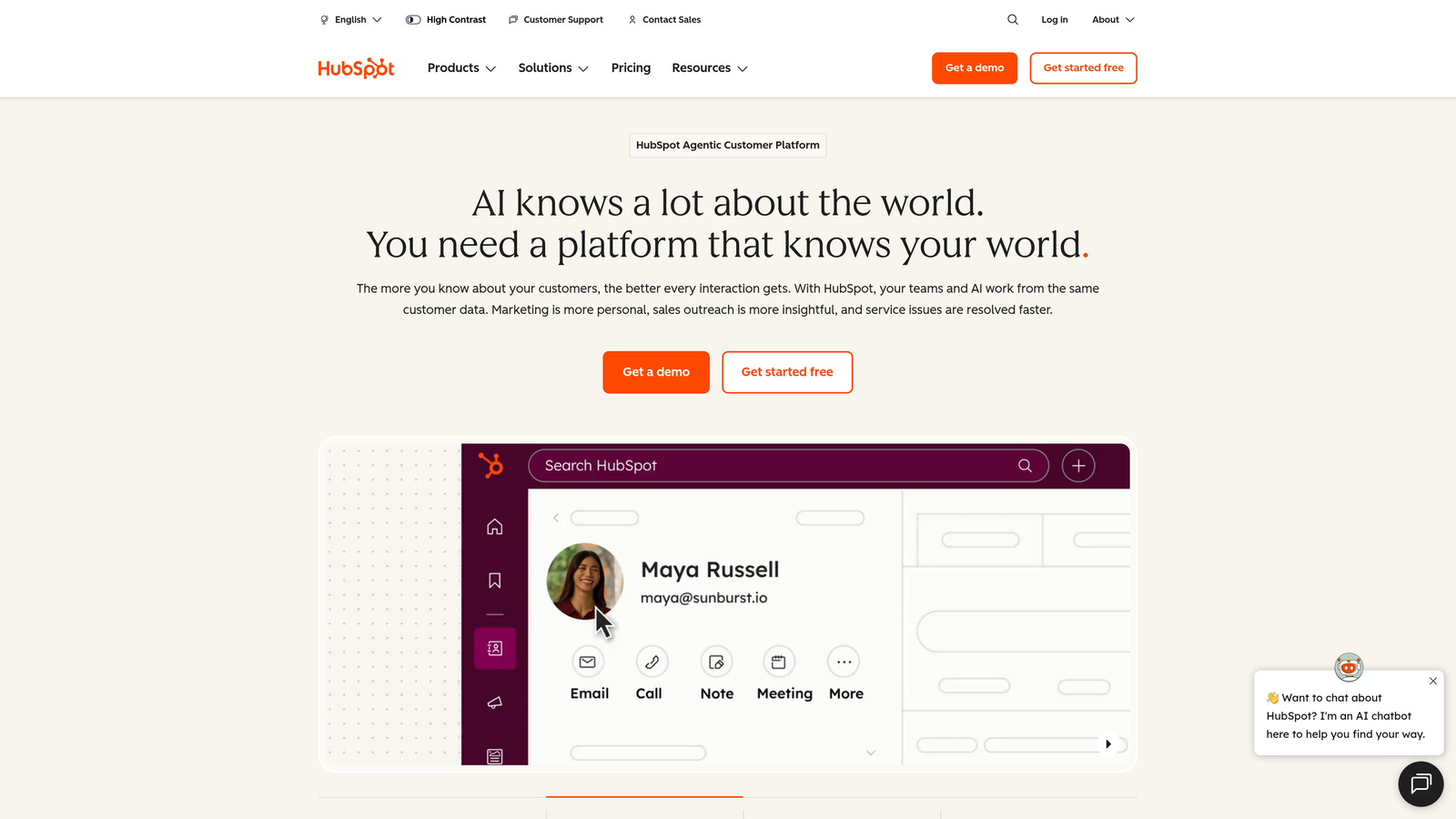
HubSpot Service Hub is customer service software that integrates natively with HubSpot's CRM, creating a unified platform for the entire customer lifecycle.
Where This Tool Shines
The power of Service Hub comes from its CRM foundation. Support agents see complete customer histories including marketing touchpoints, sales conversations, and product usage without switching systems. This context enables more personalized service and helps identify upsell opportunities during support interactions.
For teams already invested in HubSpot's ecosystem, adding Service Hub eliminates integration headaches and data silos that plague multi-vendor stacks.
Key Features
Shared Inbox and Ticketing: Manage customer conversations with full CRM context and automated ticket creation from any channel.
Knowledge Base Builder: Create self-service content with built-in SEO recommendations and analytics on article effectiveness.
Customer Feedback Surveys: Deploy NPS, CSAT, and custom surveys with responses automatically logged in customer records.
Native CRM Integration: Access complete customer journey data including deals, marketing campaigns, and website behavior.
Automation Workflows: Build ticket routing, escalation, and follow-up sequences using HubSpot's visual workflow builder.
Best For
Companies using HubSpot for marketing or sales who want to unify customer data across teams. Particularly valuable when support interactions influence renewal decisions or upsell opportunities that sales needs visibility into.
Pricing
Free tools available with basic ticketing. Starter plan from $20 monthly for the account. Professional from $100 per seat monthly. Enterprise from $150 per seat monthly. Note that per-seat pricing applies only to service agents, not the entire company.
6. Salesforce Service Cloud
Best for: Enterprise organizations requiring deep customization, Einstein AI, and Salesforce ecosystem integration
Salesforce Service Cloud is an enterprise service platform offering case management, omni-channel routing, and Einstein AI capabilities for large-scale support operations.
Where This Tool Shines
Service Cloud's customization depth is unmatched. Organizations with unique business processes can configure the platform to match exact workflows rather than adapting processes to software limitations. The Lightning Platform enables custom objects, fields, and business logic without leaving the Salesforce environment.
Einstein AI provides predictive capabilities like case classification, next-best-action recommendations, and automated case routing based on agent expertise and availability patterns.
Key Features
Case Management and Routing: Advanced queue management with skills-based routing and priority escalation rules.
Einstein AI: Predictive case classification, article recommendations, and intelligent chatbots that learn from resolution patterns.
Omni-Channel Support: Unified agent desktop managing phone, email, chat, SMS, and social media with presence-based routing.
Field Service Management: Dispatch and scheduling capabilities for companies with on-site service components.
Salesforce Ecosystem: Native integration with Sales Cloud, Marketing Cloud, and thousands of AppExchange applications.
Best For
Large enterprises with complex support operations and existing Salesforce investments. Companies needing field service capabilities alongside digital support channels find the unified platform eliminates coordination gaps.
Pricing
Starter plan from $25 per user monthly for basic case management. Professional from $80 per user monthly. Enterprise from $165 per user monthly with advanced features. Einstein AI capabilities require additional licensing, and implementation costs can be substantial.
7. Help Scout
Best for: Small to medium teams prioritizing simple, human-focused customer relationships over complex automation
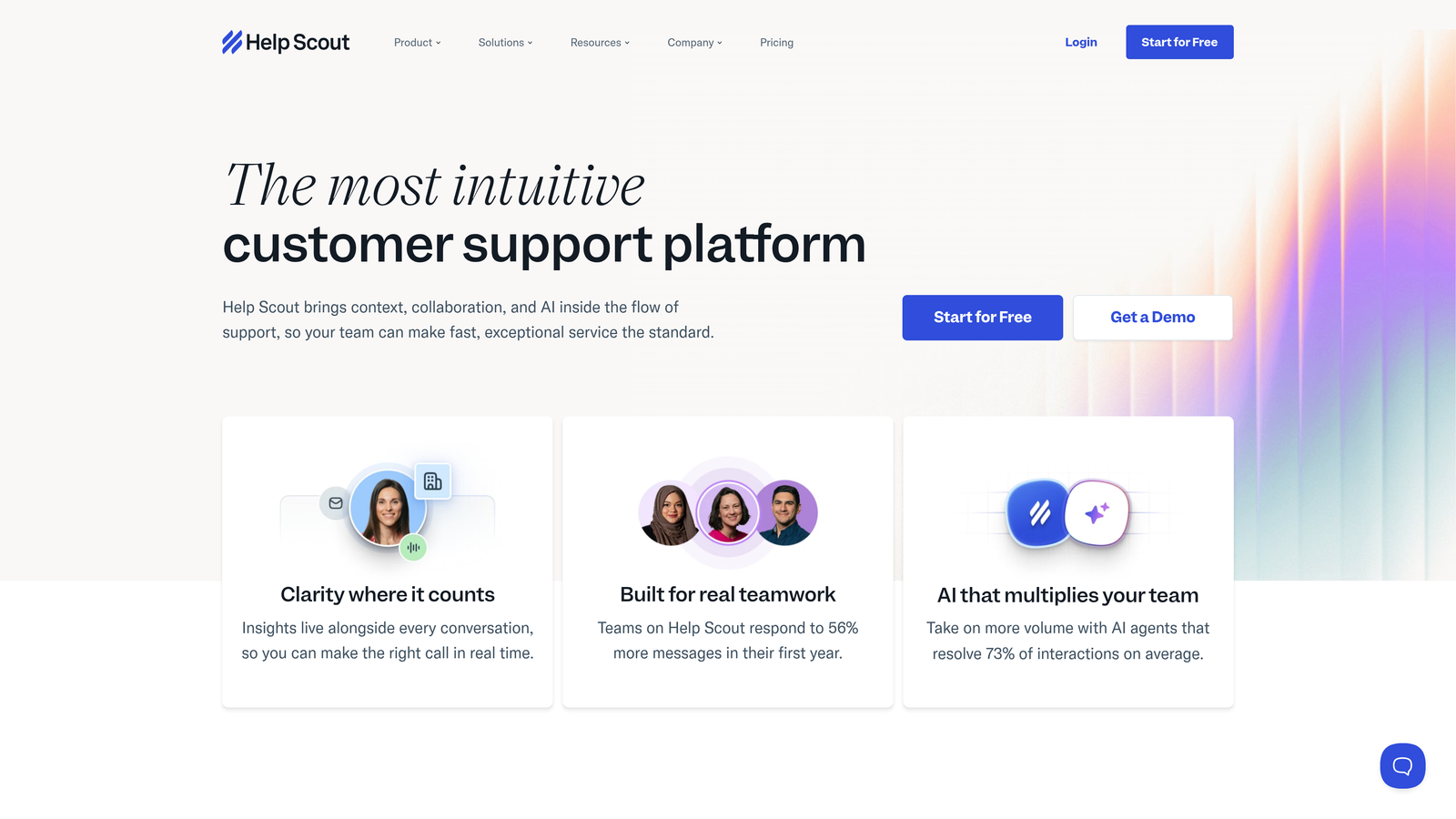
Help Scout is a help desk designed around simplicity and personal customer relationships, avoiding the complexity that makes enterprise platforms overwhelming.
Where This Tool Shines
Help Scout's interface feels like email rather than a ticketing system, reducing training time and agent resistance. The shared inbox approach keeps teams coordinated without forcing rigid workflows that slow down simple conversations. Collision detection prevents duplicate responses when multiple agents jump on the same thread.
The platform philosophy emphasizes treating customers like people rather than ticket numbers, which resonates with teams building relationship-driven businesses.
Key Features
Shared Inbox: Email-style interface with collision detection, saved replies, and conversation threading.
Docs Knowledge Base: Create searchable help content with category organization and usage analytics.
Beacon Widget: Embeddable widget for websites offering search, messaging, and contact options in one interface.
AI Features: Available in Plus and Pro tiers including summarization, tone adjustment, and draft assistance.
Simple Reporting: Focus on key metrics like response time, resolution time, and customer satisfaction without overwhelming dashboards.
Best For
Small businesses and growing companies where personal customer relationships drive retention. Teams that find enterprise platforms over-engineered for their needs appreciate the focus on core functionality.
Pricing
Standard plan from $25 per user monthly with core features. Plus plan from $50 per user monthly adds AI capabilities and advanced reporting. Pro tier offers custom pricing for larger teams needing additional features.
8. Tidio
Best for: E-commerce businesses and small websites needing live chat with AI chatbot capabilities
Tidio is a live chat and chatbot platform featuring Lyro AI, designed specifically for e-commerce stores and small business websites.
Where This Tool Shines
Tidio's e-commerce focus shows in pre-built chatbot templates for abandoned cart recovery, product recommendations, and order tracking. The platform integrates directly with Shopify, WooCommerce, and other e-commerce platforms, enabling chatbots to access order data and provide personalized responses.
Lyro AI handles common customer questions using conversational AI trained on e-commerce scenarios, freeing human agents to focus on complex issues and sales conversations.
Key Features
Live Chat with Visitor Tracking: See who's browsing your site and proactively engage based on behavior triggers.
Lyro AI Chatbot: Conversational AI that learns from your content and handles routine questions automatically.
E-commerce Integrations: Direct connections to Shopify, WooCommerce, and major e-commerce platforms for order data access.
Chatbot Flow Builder: Visual builder for creating custom conversation paths without coding.
Mobile Apps: iOS and Android apps let agents respond to chats from anywhere.
Best For
Online stores and small businesses where live chat drives conversions and quick responses to product questions impact sales. Companies without dedicated support teams appreciate the AI handling routine inquiries.
Pricing
Free tier available with basic live chat. Starter plan from $29 monthly adds more conversations and features. Lyro AI from $39 monthly based on conversation volume, with pricing scaling as usage increases.
9. Ada
Best for: Enterprise companies handling high support volumes who need custom AI automation at scale
Ada is an enterprise AI-first automation platform focused on high-volume resolution through generative AI and multi-language support.
Where This Tool Shines
Ada's enterprise focus means the platform handles complexity that overwhelms simpler tools. Multi-language support with localization goes beyond translation to understand cultural context and regional variations. The platform can manage hundreds of thousands of conversations monthly while maintaining consistent quality.
Generative AI capabilities enable the platform to handle nuanced questions that rule-based chatbots struggle with, adapting responses based on conversation context rather than following rigid decision trees.
Key Features
Generative AI Automation: Advanced language models that understand context and generate appropriate responses beyond scripted flows.
Multi-Language Support: Native support for dozens of languages with cultural localization and regional variations.
Enterprise Integrations: Connect to CRM, e-commerce, knowledge bases, and business systems with custom API capabilities.
Advanced Analytics: Detailed insights into automation performance, conversation trends, and resolution patterns.
Dedicated Customer Success: Enterprise accounts receive dedicated support for strategy, optimization, and ongoing improvement.
Best For
Large enterprises with support volumes exceeding 50,000 monthly conversations where automation ROI justifies custom enterprise pricing. Companies operating globally who need consistent multi-language support find the localization depth valuable.
Pricing
Custom enterprise pricing based on automated resolution volume, complexity, and required features. Typically requires annual contracts with implementation services included in total cost.
Finding Your Pricing Sweet Spot
The right support automation software isn't the cheapest option. It's the one where pricing aligns with how you deliver support and scales predictably as you grow.
For small teams just starting with structured support, Freshdesk's free tier or Tidio's affordable plans provide essential features without upfront investment. Help Scout works well when you're prioritizing relationship-building over automation complexity.
Mid-market companies often find value in platforms like Intercom or HubSpot Service Hub, especially when existing tech stack integration reduces total cost of ownership. The per-seat pricing becomes manageable when automation reduces the number of seats you need.
Enterprise teams evaluating Zendesk, Salesforce Service Cloud, or Ada should calculate total cost including implementation, training, and ongoing customization. The sticker price rarely reflects true investment, particularly when AI features require separate add-on purchases.
Resolution-based pricing models like Halo AI's approach shift the equation entirely. Instead of paying for seats whether agents are productive or not, you pay based on value delivered. For high-volume teams, this often proves more cost-effective than traditional licensing.
The critical question isn't what the software costs. It's what continuing with your current approach costs in team scaling, customer satisfaction, and missed opportunities for intelligence buried in support conversations.
Your support team shouldn't scale linearly with your customer base. Let AI agents handle routine tickets, guide users through your product, and surface business intelligence while your team focuses on complex issues that need a human touch. See Halo in action and discover how continuous learning transforms every interaction into smarter, faster support.