9 Best Support Operations Automation Platforms in 2026
Discover the 9 best support operations automation platforms in 2026, evaluated on AI capability, integration depth, and scalability for B2B SaaS teams. This guide helps support leaders move beyond reactive ticket management by identifying platforms that combine intelligent resolution, proactive analytics, and deep integrations to reduce costs without sacrificing customer experience.
 Matt PattoliFounder13 min read
Support teams are drowning in repetitive tickets, slow handoffs, and disconnected tools. The pressure to do more with less headcount isn't letting up, and the old approach of throwing more agents at the problem simply doesn't scale.
Support operations automation platforms have become essential infrastructure for B2B companies that want to grow customer experience without growing costs. But not all platforms are built the same. Some bolt AI onto legacy helpdesks. Others focus narrowly on chatbots without touching the broader ops workflow. The best platforms combine intelligent ticket resolution, proactive analytics, and deep integrations that connect support to the rest of the business.
This list covers the top support operations automation platforms in 2026, evaluated on AI capability, integration depth, scalability, and how well they serve B2B SaaS teams. Whether you're replacing a clunky helpdesk, augmenting your current setup, or building a fully autonomous support function, there's an option here for you. We've also included guidance on customer support automation strategy and AI support platform features to help you evaluate your options.
1. Halo AI
Best for: B2B SaaS teams wanting AI-first support with business intelligence beyond ticket deflection
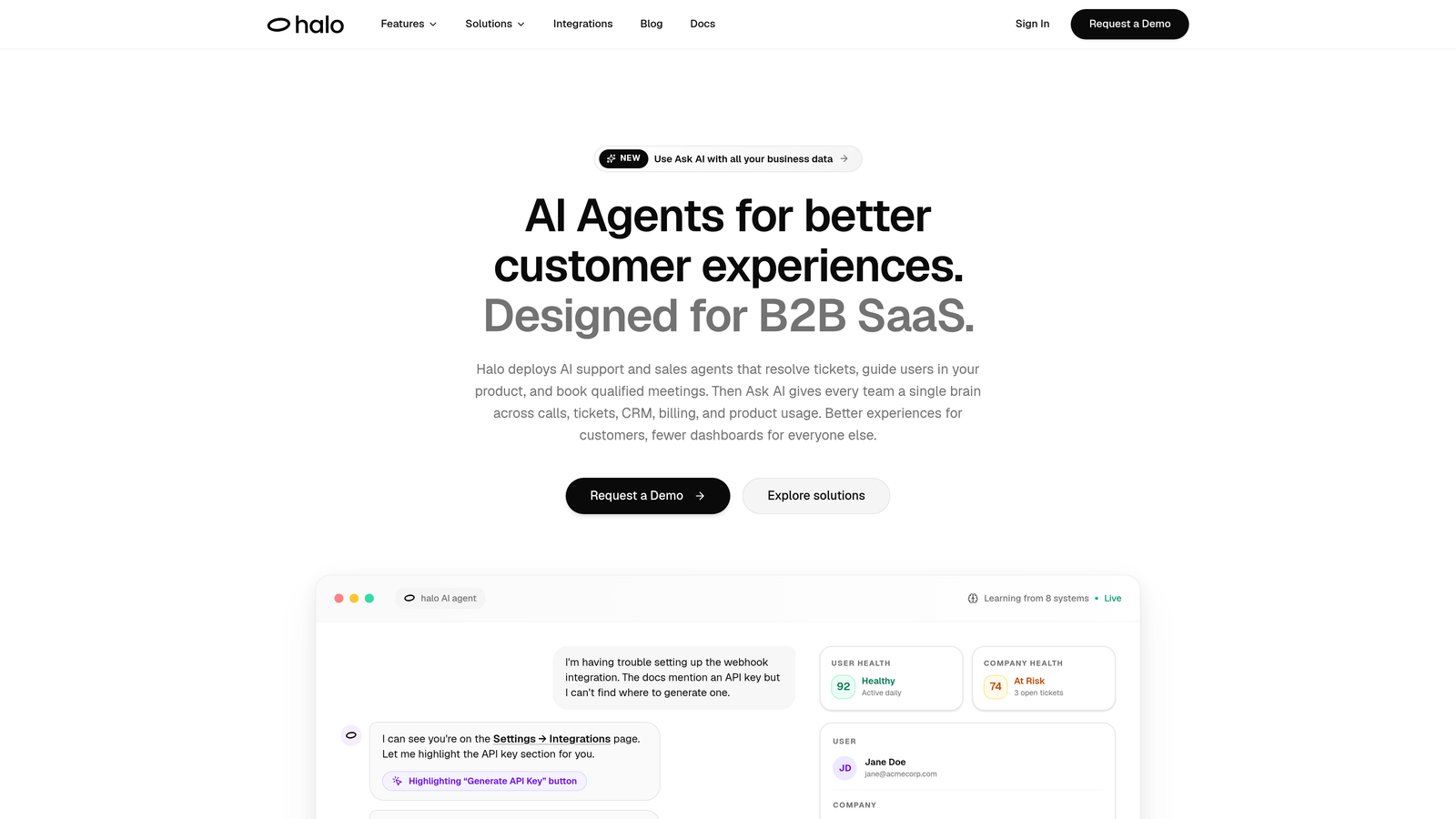
Halo AI is an AI-first support operations platform that deploys intelligent agents to resolve tickets, guide users through your product with page-aware context, auto-create bug reports, and surface business intelligence across your entire stack.
Where This Tool Shines
What separates Halo AI from the field is its architecture. Rather than layering AI onto an existing helpdesk, Halo is built AI-first from the ground up. Its agents don't just respond to tickets; they understand the page a user is on, see what they see, and provide visual UI guidance that feels like a knowledgeable teammate walking someone through a problem in real time.
The smart inbox goes well beyond CSAT scores and ticket volume. It surfaces anomaly detection, customer health signals, and revenue intelligence, turning support interactions into a genuine signal source for the broader business. For teams that want support to inform product decisions and flag churn risk, this layer of intelligence is genuinely differentiated.
Key Features
Page-Aware AI Agents: Agents see what the user sees and deliver contextual, visual UI guidance specific to the page they're on.
Smart Inbox with Business Intelligence: Surfaces anomaly detection, customer health signals, and revenue insights alongside standard support metrics.
Autonomous Ticket Resolution with Live Agent Handoff: Handles tickets end-to-end and escalates intelligently when a human touch is needed.
Auto Bug Ticket Creation: Automatically generates and routes bug reports to Linear or your existing engineering workflow.
Deep Integration Stack: Connects with Slack, HubSpot, Intercom, Stripe, Zoom, PandaDoc, and Fathom so support data flows across the entire business.
Best For
Halo AI is purpose-built for B2B SaaS companies that want more than ticket deflection. It's the right fit for product-led growth teams, scaling startups, and any organization that wants support to operate as a revenue signal rather than a cost center.
Pricing
Contact for pricing. Visit haloagents.ai to request a demo and discuss plans based on your team's needs.
2. Zendesk
Best for: Large enterprises needing a proven, full-featured helpdesk with extensive integrations
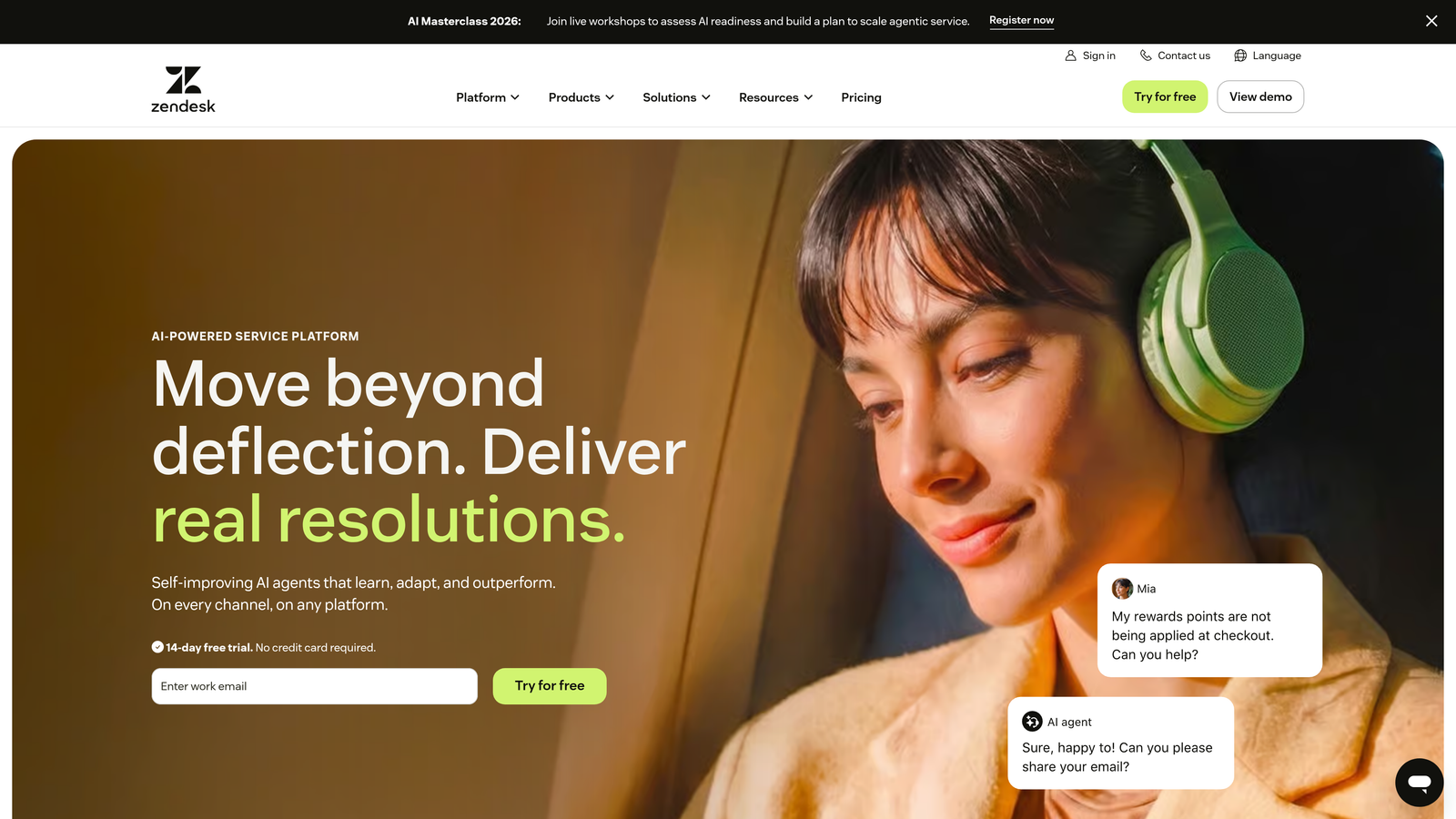
Zendesk is an enterprise-grade helpdesk platform with AI Agents for deflection and Copilot for agent assist, backed by one of the largest integration marketplaces in customer support.
Where This Tool Shines
Zendesk's strength is its maturity. With hundreds of marketplace integrations, robust SLA management, and omnichannel coverage across email, chat, voice, and social, it's the platform that enterprise support teams have standardized on for years. Its AI Agents handle automated deflection while Zendesk Copilot sits inside the agent workflow to assist with replies and context.
For organizations already running complex support operations with multiple teams and regions, Zendesk offers the configurability and reporting depth to manage it all. The tradeoff is that AI feels like a layer on top of the platform rather than its core, and costs can escalate significantly at scale.
Key Features
AI Agents: Automated ticket deflection and self-service resolution for common query types.
Zendesk Copilot: In-workflow agent assistance with reply suggestions and context surfacing.
Advanced Routing and SLA Management: Configurable rules for intelligent ticket distribution and escalation.
Extensive Marketplace: Hundreds of integrations spanning CRM, analytics, e-commerce, and more.
Omnichannel Support: Unified inbox across email, chat, voice, and social channels.
Best For
Large enterprise teams with established support operations, dedicated admins, and a need for deep configurability. Also a strong choice for organizations already invested in the Zendesk ecosystem.
Pricing
Starts at approximately $55 per agent per month for the Suite Team plan. Enterprise plans are available at significantly higher price points.
3. Intercom
Best for: Teams that want to blend support automation with in-product messaging and customer engagement
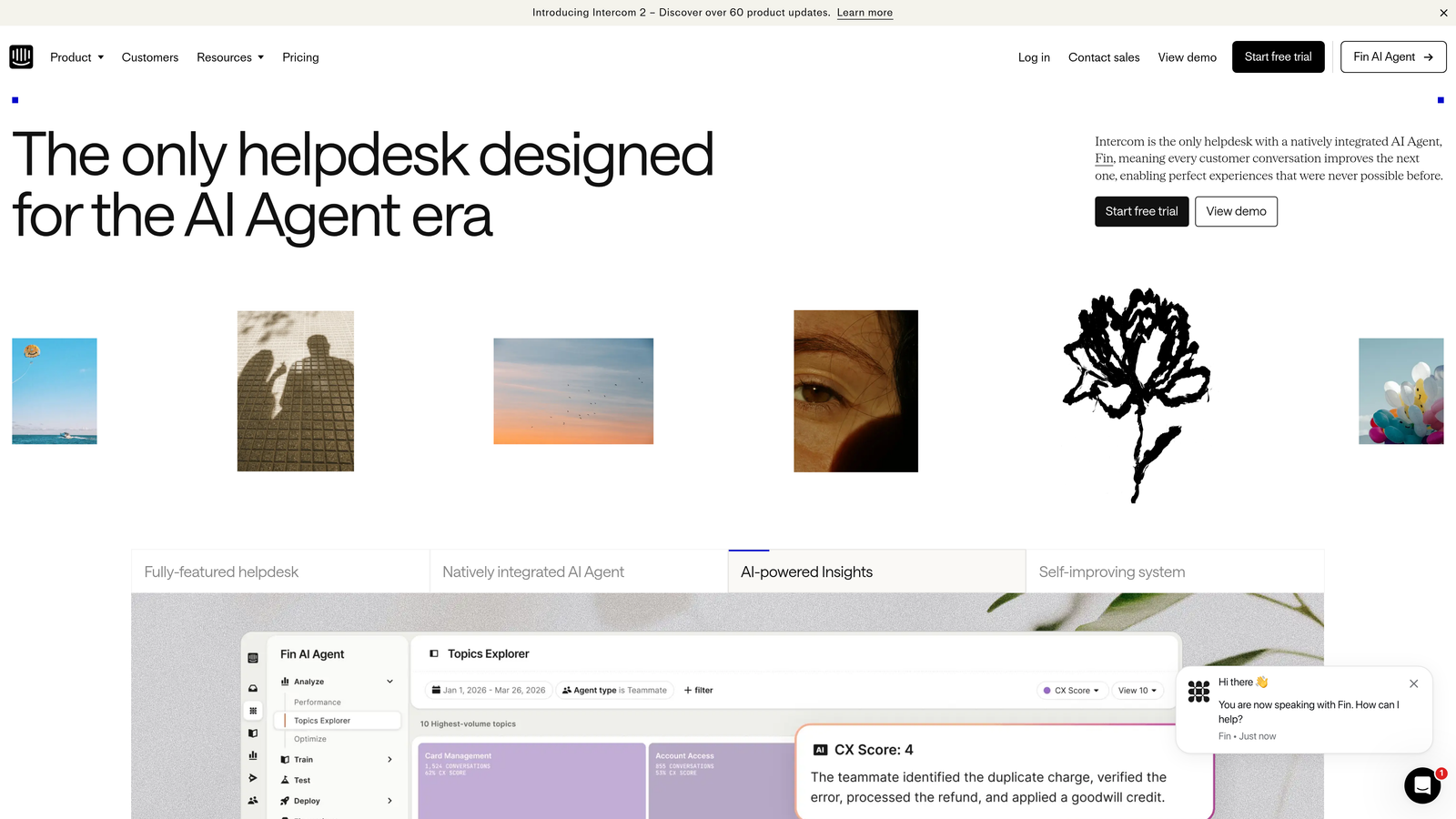
Intercom is a conversational support platform combining Fin AI Agent for automated resolution with in-product messaging, onboarding flows, and customer engagement tools.
Where This Tool Shines
Intercom's Fin AI Agent has earned strong reviews for conversational resolution quality. It handles tickets autonomously and hands off to human agents smoothly when the situation calls for it. What makes Intercom distinct is its blurring of the line between support and customer success: the same platform handles reactive tickets and proactive outbound messaging, onboarding tours, and lifecycle engagement.
For product teams that want to use support as a touchpoint throughout the customer journey rather than just a reactive inbox, Intercom's breadth is appealing. Teams should note that pricing can escalate quickly, particularly when Fin AI Agent is billed per resolution at higher volumes.
Key Features
Fin AI Agent: Autonomous conversational resolution with natural language understanding across support channels.
In-Product Messaging and Onboarding: Embeddable tours and proactive messages to guide users through your product.
AI-Assisted Shared Inbox: Reply suggestions and context for human agents handling escalated conversations.
Customer Data Platform: Connects support interactions to lifecycle context and user attributes.
Proactive Outbound Triggers: Automated messages based on user behavior and product events.
Best For
SaaS companies that want a single platform spanning support, onboarding, and customer engagement. Particularly well-suited for product-led teams with in-app support requirements.
Pricing
Starts at approximately $39 per month for the Essential plan. Fin AI Agent is billed per resolution, which can add up at higher volumes.
4. Freshdesk
Best for: Mid-market teams wanting comprehensive AI features at a more accessible price point
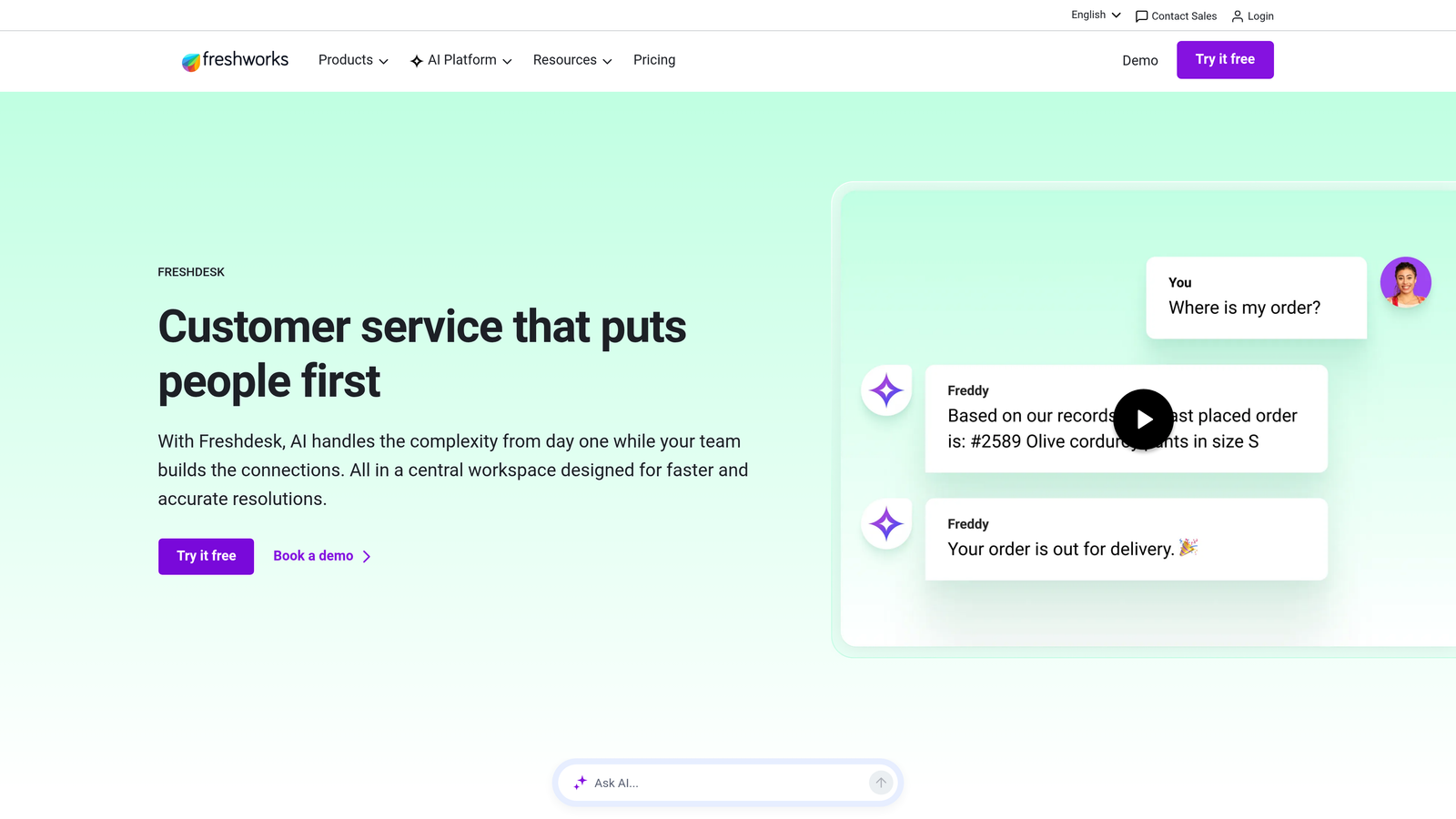
Freshdesk is a mid-market helpdesk with Freddy AI spanning self-service, agent assist, and analytics, offering strong automation at a more accessible price point than enterprise alternatives.
Where This Tool Shines
Freshdesk's Freddy AI suite covers the full support workflow: Freddy Self Service handles customer-facing resolution, Freddy Copilot assists agents with real-time suggestions and summarization, and Freddy Insights surfaces analytics and trend detection. Getting that breadth of AI capability without enterprise-tier pricing makes Freshdesk a compelling option for growing teams.
The platform's automation capabilities for routing, escalation, and SLA management are solid, and omnichannel ticketing covers email, chat, phone, and social. It may not have the depth of customization that Zendesk or Salesforce offer, but for most mid-market use cases, it covers the essential ground well.
Key Features
Freddy Self Service: AI-powered customer-facing resolution for common queries without agent involvement.
Freddy Copilot: Real-time agent suggestions, summarization, and next-step recommendations.
Freddy Insights: AI-driven analytics with trend detection and performance reporting.
Omnichannel Ticketing: Unified inbox spanning email, chat, phone, and social channels.
Workflow Automation: Rules-based routing, escalation, and SLA management across ticket types.
Best For
Mid-market B2B teams that want a full-featured helpdesk with meaningful AI capability without committing to enterprise-level pricing or implementation complexity.
Pricing
Free tier available for small teams. Paid plans start at approximately $15 per agent per month, scaling with features and team size.
5. Salesforce Service Cloud
Best for: Enterprises already running Salesforce CRM that want support and sales data unified
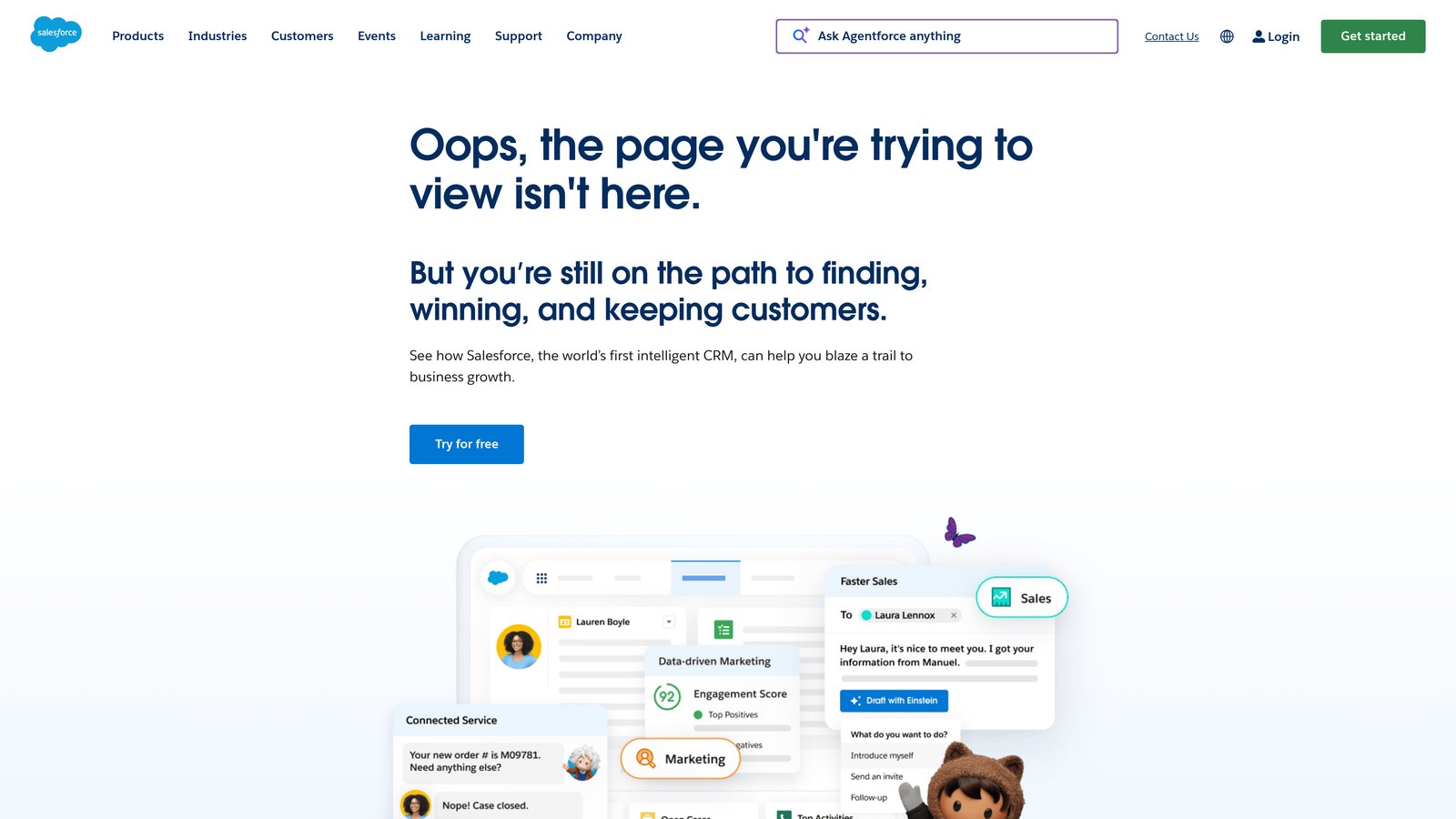
Salesforce Service Cloud is an enterprise service platform deeply integrated with Salesforce CRM, using Einstein AI to connect support interactions with sales and customer success data.
Where This Tool Shines
If your organization runs Salesforce as its CRM, Service Cloud's unified customer view is genuinely powerful. Einstein AI handles case classification, routing, and next-best-action recommendations, all informed by the full Salesforce customer record including deal history, account health, and sales interactions. For enterprises where support and sales teams need to share context, that integration is hard to replicate elsewhere.
The tradeoff is implementation complexity and cost. Service Cloud is not a quick-deploy solution. It typically requires dedicated Salesforce admins and a meaningful implementation investment. For teams not already in the Salesforce ecosystem, the overhead is rarely justified.
Key Features
Einstein AI: Case classification, intelligent routing, and next-best-action recommendations powered by CRM data.
Unified Customer View: Support interactions connected to the full Salesforce CRM record across sales and success.
Omni-Channel Routing: Intelligent workload distribution across agent queues and skill sets.
Service Analytics: Deep operational reporting with dashboards built on Salesforce's analytics layer.
Self-Service Portal: Customer-facing knowledge base and case submission integrated with CRM data.
Best For
Large enterprises already invested in Salesforce where connecting support data to CRM context is a strategic priority. Not recommended for teams outside the Salesforce ecosystem.
Pricing
Starts at approximately $25 per user per month for the Starter edition. Enterprise editions are significantly higher and typically require custom pricing conversations.
6. Kustomer
Best for: High-volume omnichannel support teams that want a unified customer timeline across every interaction
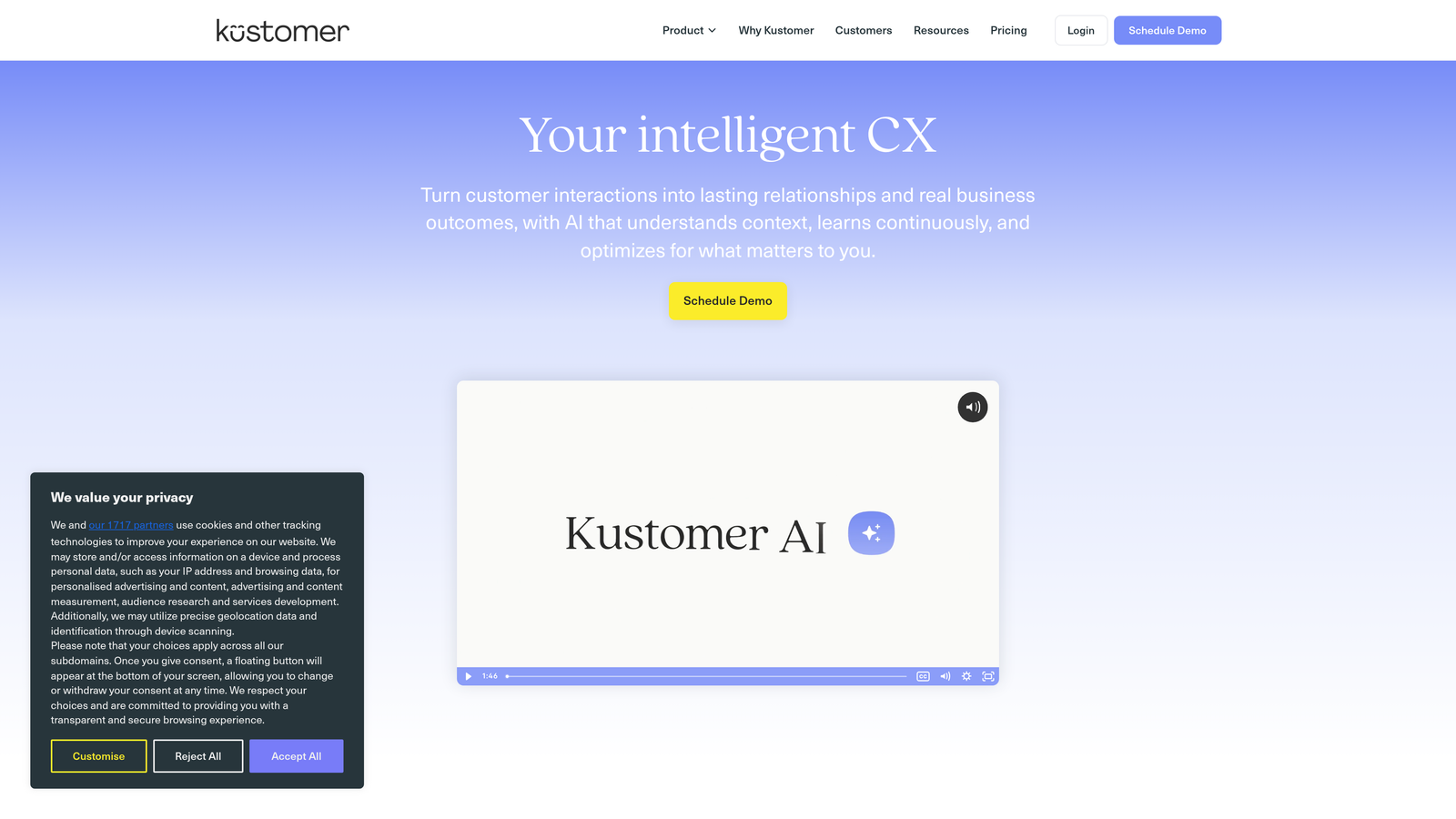
Kustomer is a CRM-first support platform offering a unified customer timeline across all channels, with AI automation for routing, responses, and workflow management.
Where This Tool Shines
Kustomer's defining feature is its unified customer timeline: every interaction across every channel, email, chat, SMS, social, and voice, aggregated into a single view. Agents never have to piece together context from separate threads. KustomerIQ adds intelligent deflection and agent assist on top of that foundation, while customizable data objects give operations teams flexibility to model support workflows around their specific business logic.
For teams handling high volumes across multiple channels with complex customer histories, Kustomer's CRM-first approach reduces the context-switching that slows agents down. It's a mature platform that suits organizations with dedicated ops resources to configure and maintain it.
Key Features
Unified Customer Timeline: Every interaction across all channels aggregated into a single, chronological customer view.
KustomerIQ: AI-powered deflection, routing, and agent assist capabilities.
Omnichannel Inbox: Email, chat, SMS, social, and voice handled in a single workspace.
AI-Powered Routing: Automated response workflows and intelligent ticket assignment.
Customizable Objects: Flexible data modeling to adapt the platform to specific business workflows.
Best For
High-volume B2C and B2B support teams that handle customers across many channels and need a unified view of every interaction. Well-suited for teams with ops resources to manage configuration.
Pricing
Starts at approximately $89 per user per month for the Enterprise plan.
7. Gorgias
Best for: E-commerce brands on Shopify or WooCommerce that want order-aware support automation
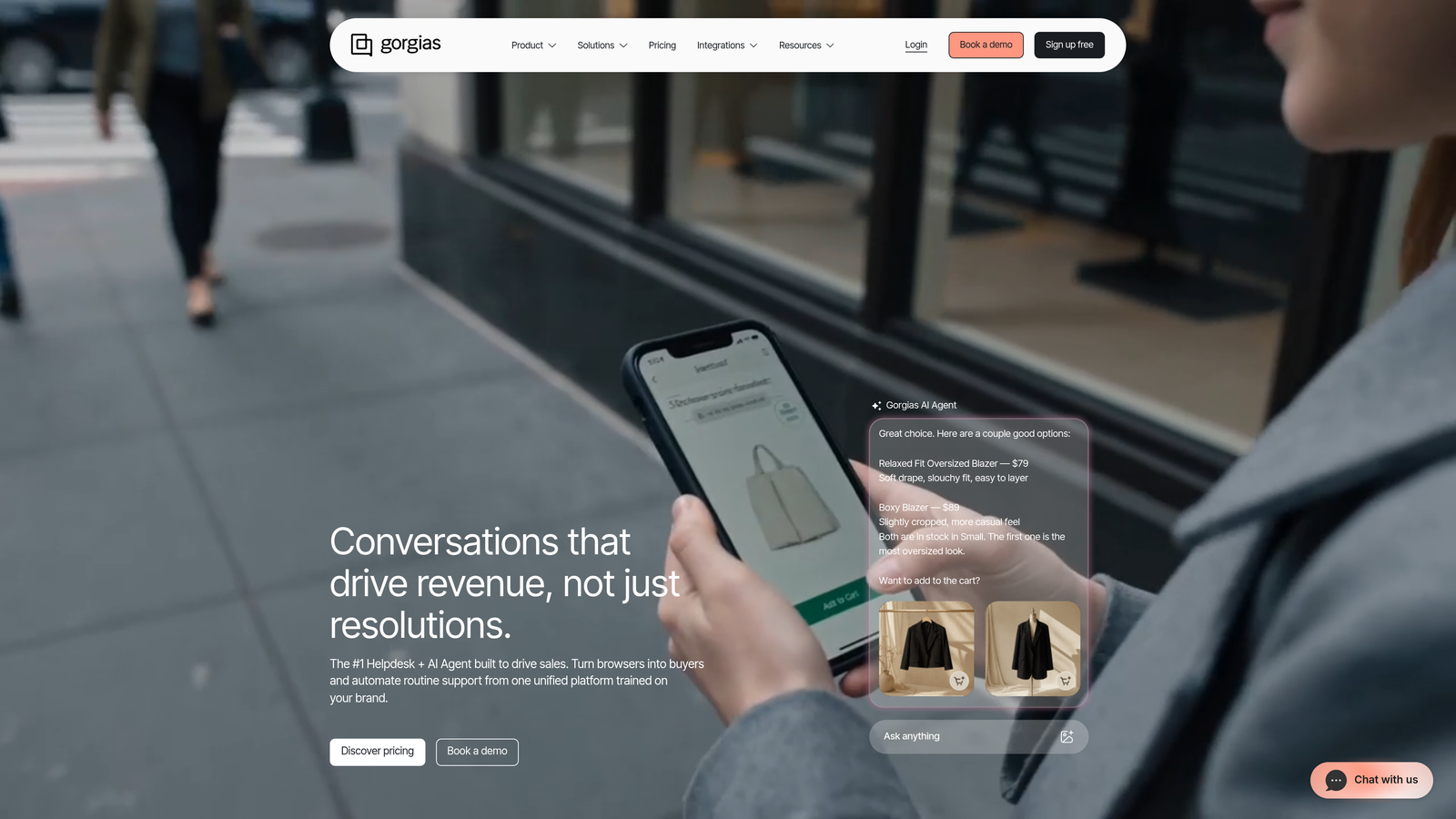
Gorgias is a support automation platform purpose-built for e-commerce, with deep Shopify integration and revenue-impact metrics that connect support activity to business outcomes.
Where This Tool Shines
Gorgias does one thing exceptionally well: e-commerce support. Its deep Shopify, WooCommerce, and BigCommerce integrations mean agents see order history, shipping status, and return eligibility directly inside the ticket. The platform automates the highest-volume, lowest-complexity ticket types in e-commerce, specifically order status, returns, and shipping queries, without agents needing to touch them.
The revenue statistics feature is a standout for direct-to-consumer brands. It tracks support interactions that convert to sales, giving teams a concrete way to demonstrate that support isn't just a cost center. For non-e-commerce use cases, Gorgias is not the right fit.
Key Features
Deep E-Commerce Integrations: Native connections to Shopify, WooCommerce, and BigCommerce with order data surfaced inside tickets.
Order-Aware Automation: Automated handling of order status, return, and shipping ticket types without agent involvement.
Revenue Statistics: Tracks support interactions that contribute to conversions, connecting support activity to business revenue.
AI Agent: Autonomous resolution of common e-commerce queries with natural language understanding.
Macros and Rules: Template-based and rules-driven automation for high-volume ticket management.
Best For
E-commerce brands, particularly DTC companies on Shopify, that want to automate order-related support at scale and measure support's impact on revenue. Not designed for B2B SaaS use cases.
Pricing
Starts at approximately $10 per month for the Starter plan. Pricing scales by ticket volume rather than per agent seat.
8. Help Scout
Best for: Small to mid-sized teams that want clean, effective support tooling without enterprise complexity
Help Scout is a clean, inbox-style support platform with AI Summarize and Assist features, designed for teams that want effective automation without enterprise overhead.
Where This Tool Shines
Help Scout's appeal is intentional simplicity. It's not trying to be a full enterprise platform, and that restraint is a genuine advantage for teams that don't need one. The interface is clean and intuitive, onboarding is fast, and the AI features, Summarize for instant conversation context and Assist for draft suggestions and tone adjustments, are practical rather than flashy.
Beacon, Help Scout's embeddable widget, handles self-service and proactive messaging without requiring a separate tool. For teams that find platforms like Zendesk or Salesforce overwhelming and over-engineered for their scale, Help Scout is a breath of fresh air.
Key Features
AI Summarize: Instant conversation context at a glance, so agents can catch up on long threads in seconds.
AI Assist: Draft suggestions and tone adjustments to help agents reply faster and more consistently.
Beacon: Embeddable self-service widget with proactive messaging capabilities.
Shared Inbox: Collision detection and private notes to keep team communication organized.
Simple Reporting: Team performance metrics and CSAT tracking without unnecessary complexity.
Best For
Small to mid-sized teams that prioritize usability, fast onboarding, and clean workflows over deep enterprise configurability. A strong choice for teams that have outgrown email but don't need a full-scale helpdesk.
Pricing
Starts at approximately $22 per user per month for the Standard plan.
9. Tidio
Best for: SMBs and early-stage teams needing quick-deploy chat automation at accessible pricing
Tidio is an accessible AI chat and support automation platform with Lyro AI chatbot and live chat fallback, designed for quick deployment at SMB-friendly pricing.
Where This Tool Shines
Tidio's strength is accessibility. The Lyro AI chatbot handles common FAQ and query resolution, and when it reaches its limits, handoff to a live agent is seamless. The visual chatbot flow builder requires no coding, making it possible for a small team to build meaningful automation without engineering resources.
For teams that are earlier in their support automation journey and need something deployed quickly without a large implementation lift, Tidio delivers real value. It's not a platform for complex enterprise workflows, but it's an excellent starting point that doesn't require a significant upfront investment to get running.
Key Features
Lyro AI Chatbot: Automated resolution of FAQ and common queries with natural language understanding.
Live Chat with Bot-to-Human Handoff: Seamless escalation from AI to human agent when queries exceed automation capability.
Visual Flow Builder: No-code chatbot automation builder for creating custom conversation flows.
Multi-Channel Integration: Email and Messenger integration alongside the core live chat widget.
Analytics Dashboard: Conversation volume and resolution tracking to monitor automation performance.
Best For
SMBs, early-stage startups, and small teams that need basic chat automation deployed quickly without significant technical overhead or budget commitment.
Pricing
Free tier available. Lyro AI plans start at approximately $29 per month, scaling with usage volume.
Which Platform Is Right for Your Team?
The right support operations automation platform depends on where you are today and where you're headed. Context matters enormously here.
If you're a large enterprise already invested in Salesforce or Zendesk, layering AI onto existing infrastructure may be the fastest path forward. If you're an e-commerce brand, Gorgias's order-aware automation is genuinely hard to beat in its category. For small teams on tight budgets, Tidio or Help Scout offer a solid starting point without heavy implementation requirements.
For mid-market teams that want a full feature set without enterprise pricing, Freshdesk's Freddy AI suite covers a lot of ground. And if omnichannel unification and customer timeline visibility are the priority, Kustomer and Intercom each bring distinct strengths to that problem.
But if you're a B2B SaaS company that wants more than ticket deflection, if you want AI that understands your product, learns from every interaction, and surfaces revenue signals alongside support metrics, Halo AI is built for exactly that from the ground up.
Unlike platforms that treat AI as a feature added to a legacy system, Halo AI is AI-first architecture. Agents resolve tickets autonomously, a page-aware chat widget guides users visually through your product, auto bug ticket creation routes issues directly to your engineering workflow, and a smart inbox delivers business intelligence that goes well beyond support. It connects to your entire stack: Linear, Slack, HubSpot, Stripe, Intercom, and more. Support stops being a cost center and starts being a signal source.
Explore more on automated customer support, customer support AI benefits, and customer support intelligence analytics to build your evaluation framework.
Your support team shouldn't scale linearly with your customer base. Let AI agents handle routine tickets, guide users through your product, and surface business intelligence while your team focuses on complex issues that need a human touch. See Halo in action and discover how continuous learning transforms every interaction into smarter, faster support.