9 Best Support Operations Efficiency Tools in 2026
Discover the 9 best support operations efficiency tools in 2026, evaluated across automation depth, integration breadth, analytics quality, and scalability to help B2B SaaS teams reduce ticket volume, meet rising customer expectations, and shift from reactive firefighting to proactive, intelligent service delivery without adding headcount.
 Matt PattoliFounder14 min read
Support teams are under more pressure than ever. Ticket volumes keep climbing, customer expectations have never been higher, and the pressure to do more without adding headcount is relentless. The good news: the right combination of tools can fundamentally shift your operation from reactive firefighting to proactive, intelligent service delivery.
This list covers the best support operations efficiency tools available in 2026, evaluated across four criteria: automation depth, integration breadth, analytics quality, and scalability for B2B SaaS teams. Whether you're running a lean startup support team or managing a multi-tier enterprise helpdesk, there's something here for every stage of growth.
Tools are ordered by overall impact on operational efficiency, starting with Halo AI, an AI-first platform built specifically for teams that want to automate resolution, not just deflection.
1. Halo AI
Best for: B2B SaaS teams that want autonomous ticket resolution with continuous learning and business intelligence built in.
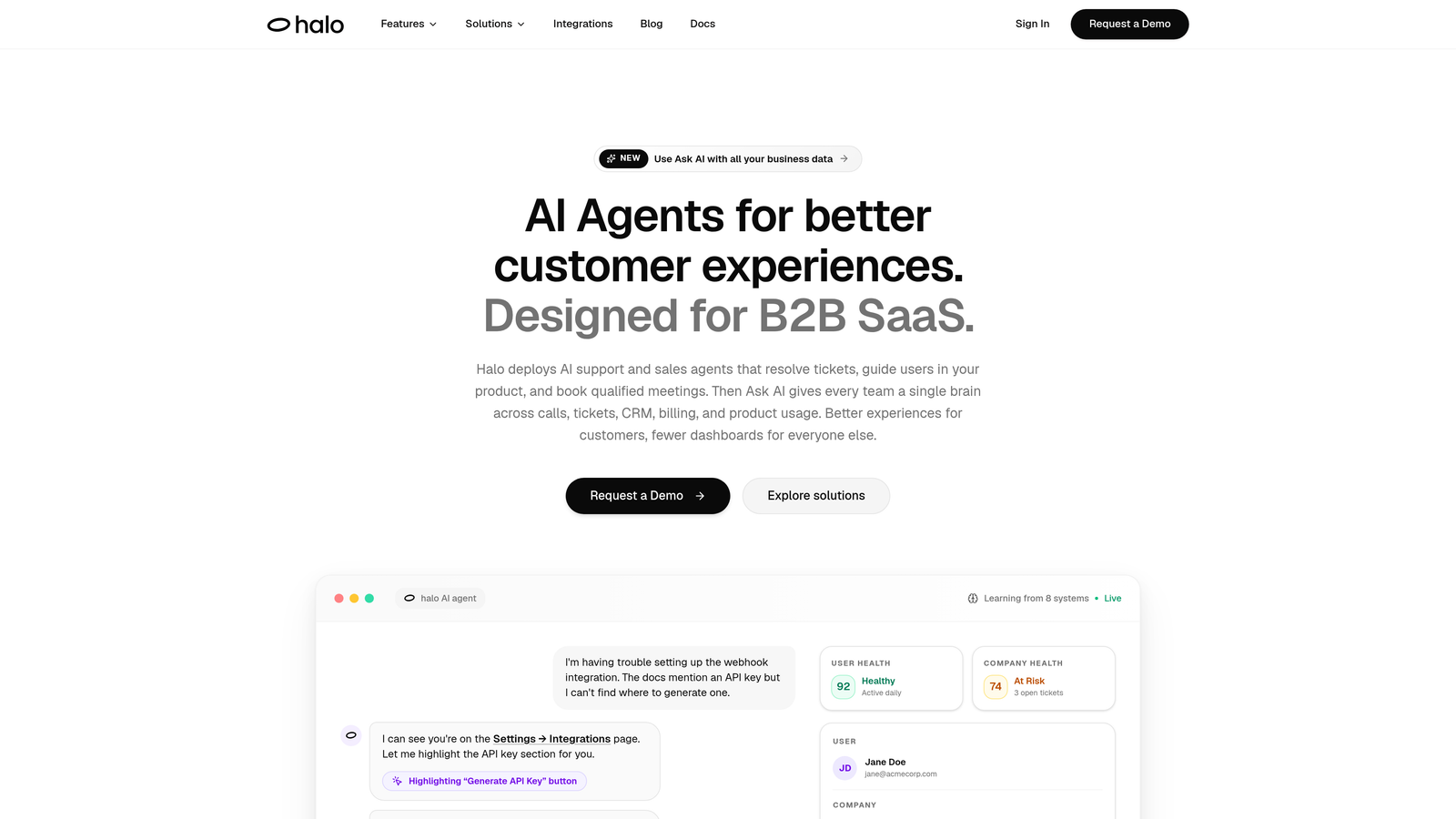
Halo AI is an AI-first customer support platform that deploys intelligent agents to resolve tickets, guide users through your product, and surface business intelligence, all while learning from every interaction.
Where This Tool Shines
What separates Halo from most support tools on this list is that it was built AI-first from the ground up, not retrofitted onto a legacy helpdesk. That architectural difference matters: the AI isn't a layer on top of workflows, it's the engine driving them. Every resolved ticket, every escalation, every user interaction feeds back into the system to make future responses smarter.
The page-aware chat widget is a particularly compelling differentiator. Rather than serving generic help content, Halo's widget sees what the user sees, delivering contextual guidance based on exactly where they are in your product. For SaaS teams dealing with complex, multi-step products, this level of context dramatically reduces the back-and-forth that inflates handle times.
Key Features
Autonomous Ticket Resolution: AI agents handle routine tickets end-to-end, continuously learning from past interactions to improve accuracy over time.
Page-Aware Chat Widget: The widget understands which page or feature a user is on, delivering relevant guidance without requiring the user to describe their context.
Smart Inbox with Business Intelligence: Goes beyond standard reporting to surface customer health signals, anomaly detection, and revenue intelligence directly in the support workflow.
Auto Bug Ticket Creation: Automatically creates bug tickets in Linear when support interactions surface product issues, closing the loop between support and engineering without manual effort.
Live Agent Handoff: Seamlessly escalates complex issues to human agents with full conversation context preserved, so customers never have to repeat themselves.
Deep Integrations: Connects natively with Slack, HubSpot, Intercom, Stripe, Zoom, PandaDoc, and Fathom, giving support teams visibility across the entire business stack.
Best For
Halo is purpose-built for B2B SaaS companies that want AI to handle resolution, not just deflection. It's particularly well-suited to product-led growth teams, technical support operations, and any team currently evaluating or already using Zendesk, Freshdesk, or Intercom who wants an intelligent automation layer on top.
Pricing
Contact for pricing. Visit haloagents.ai to learn more and request a demo tailored to your team's scale and use case.
2. Zendesk
Best for: Mid-market and enterprise support teams needing deep ticketing workflows and omnichannel coverage.
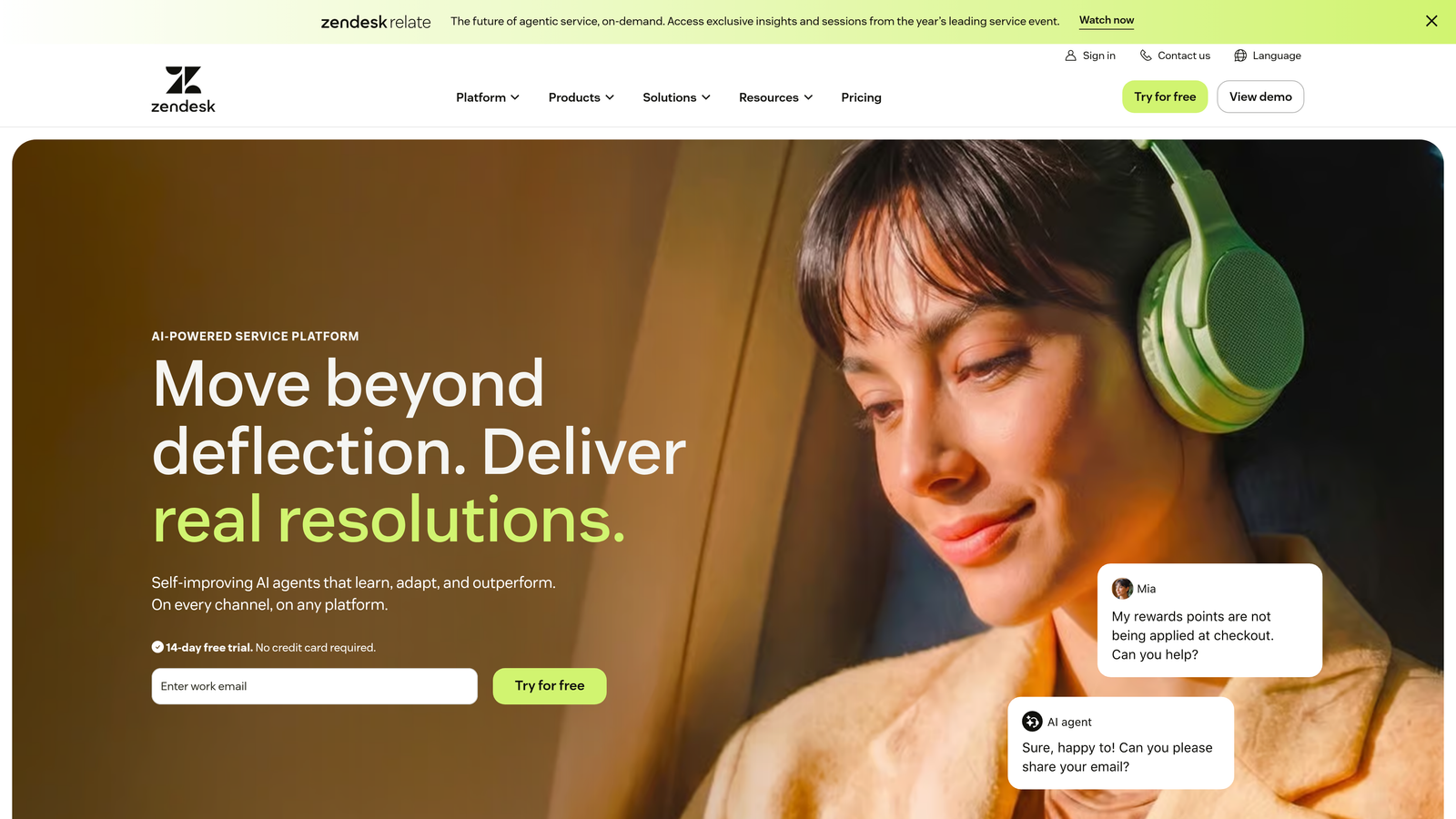
Zendesk is the market-leading helpdesk platform offering robust ticketing, SLA management, and a broad AI feature set built for scale.
Where This Tool Shines
Zendesk's greatest strength is its depth. Few platforms match its configurability across ticketing workflows, SLA rules, escalation paths, and reporting. For enterprise teams managing high volumes across multiple channels and regions, that depth is genuinely valuable rather than just complexity for its own sake.
The integration marketplace is another major asset. With over a thousand integrations available, Zendesk connects to virtually every tool in a modern support stack. That breadth makes it a natural hub for teams that need to centralize operations across email, chat, voice, and social in one place.
Key Features
Robust Ticketing System: Comprehensive SLA tracking, escalation rules, and multi-tier routing built for complex support organizations.
Zendesk AI: Automated responses, ticket triage, and intelligent suggestions to reduce agent workload on routine queries.
Extensive Marketplace: 1,000+ integrations covering CRM, billing, analytics, and collaboration tools.
Advanced Reporting: Customizable dashboards tracking team performance, SLA compliance, and channel-level metrics.
Omnichannel Support: Unified inbox across email, live chat, voice, and social media channels.
Best For
Mid-market and enterprise teams with complex routing needs, multi-tier support structures, or strict SLA requirements. Smaller teams may find the configuration overhead steep relative to the value at early stages.
Pricing
Suite plans start at approximately $55 per agent per month billed annually. Enterprise pricing is available for larger teams with advanced needs.
3. Intercom
Best for: SaaS companies focused on product-led growth that want in-app support blended with customer lifecycle context.
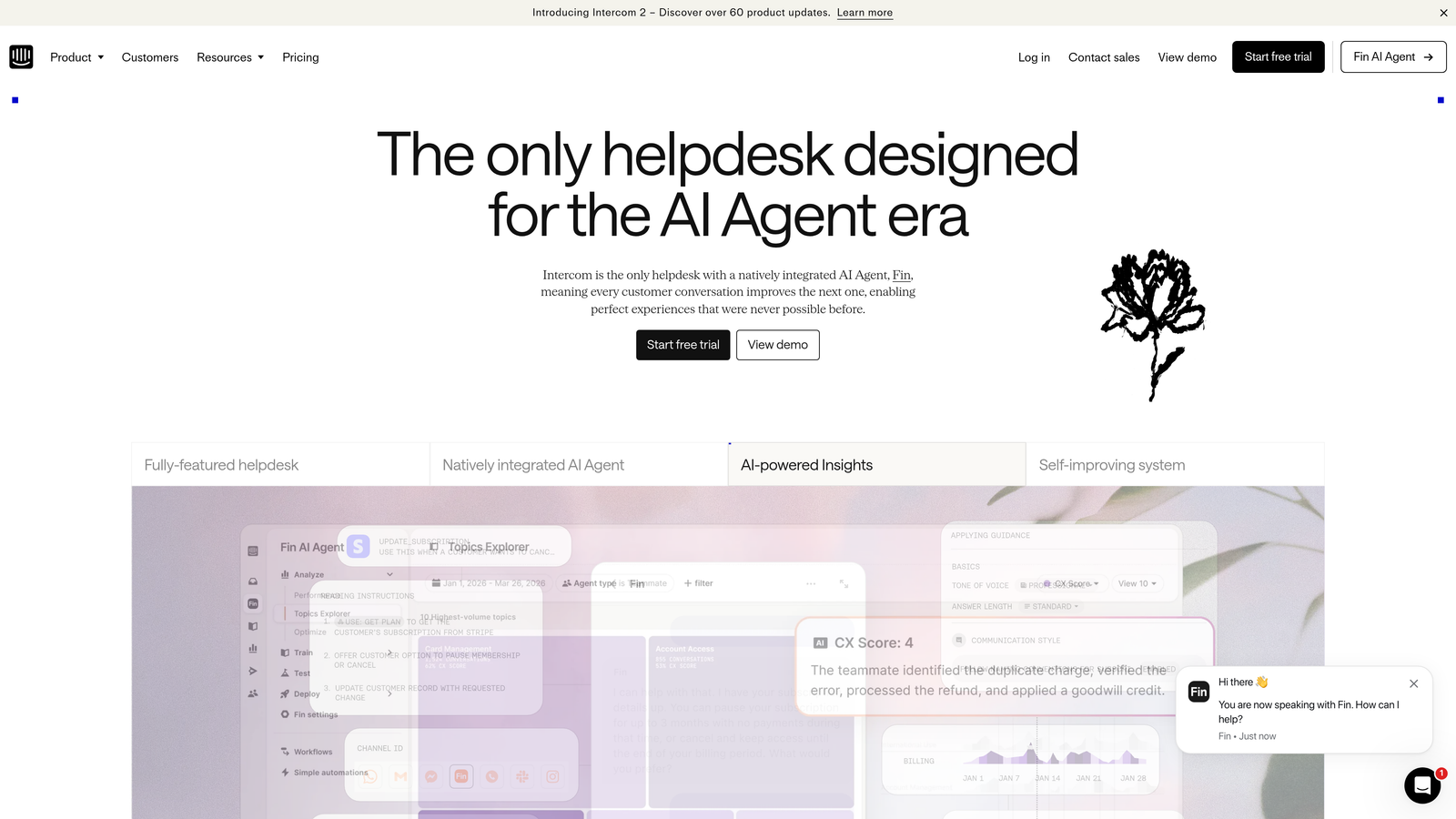
Intercom is a conversational support platform that combines in-app messaging, AI-powered resolution via Fin, and deep customer lifecycle context in a single product.
Where This Tool Shines
Intercom's core advantage is the connection between support and the broader customer journey. Because it sits inside your product as a messenger, it has access to product usage data, customer attributes, and lifecycle stage, giving support agents (and AI agents) context that a traditional helpdesk simply doesn't have.
Fin, Intercom's AI resolution agent, has matured considerably and handles a meaningful share of inbound conversations for teams that have invested in their help content. The proactive messaging capabilities also allow support teams to get ahead of common issues rather than waiting for tickets to arrive.
Key Features
Fin AI Agent: Automated conversation resolution using your existing help content, with resolution-based billing that aligns cost with value delivered.
In-App Messenger: Contextual support embedded directly in your product with access to customer lifecycle and usage data.
Shared Inbox: Conversation routing, assignment rules, and team collaboration tools for human agents.
Proactive Outbound Messaging: Trigger onboarding, retention, and support messages based on user behavior or lifecycle stage.
CRM and Analytics Integrations: Connects to HubSpot, Salesforce, product analytics tools, and other helpdesks.
Best For
SaaS companies with product-led growth motions where support, onboarding, and customer success overlap. Less suited to teams that primarily handle high-volume transactional support without a strong in-product component.
Pricing
Essential plan starts at approximately $29 per seat per month. Fin AI usage is billed per resolution, so costs scale with the volume of conversations the AI handles.
4. Freshdesk
Best for: SMBs and growing support teams that want solid automation and an intuitive UI without enterprise-level complexity.
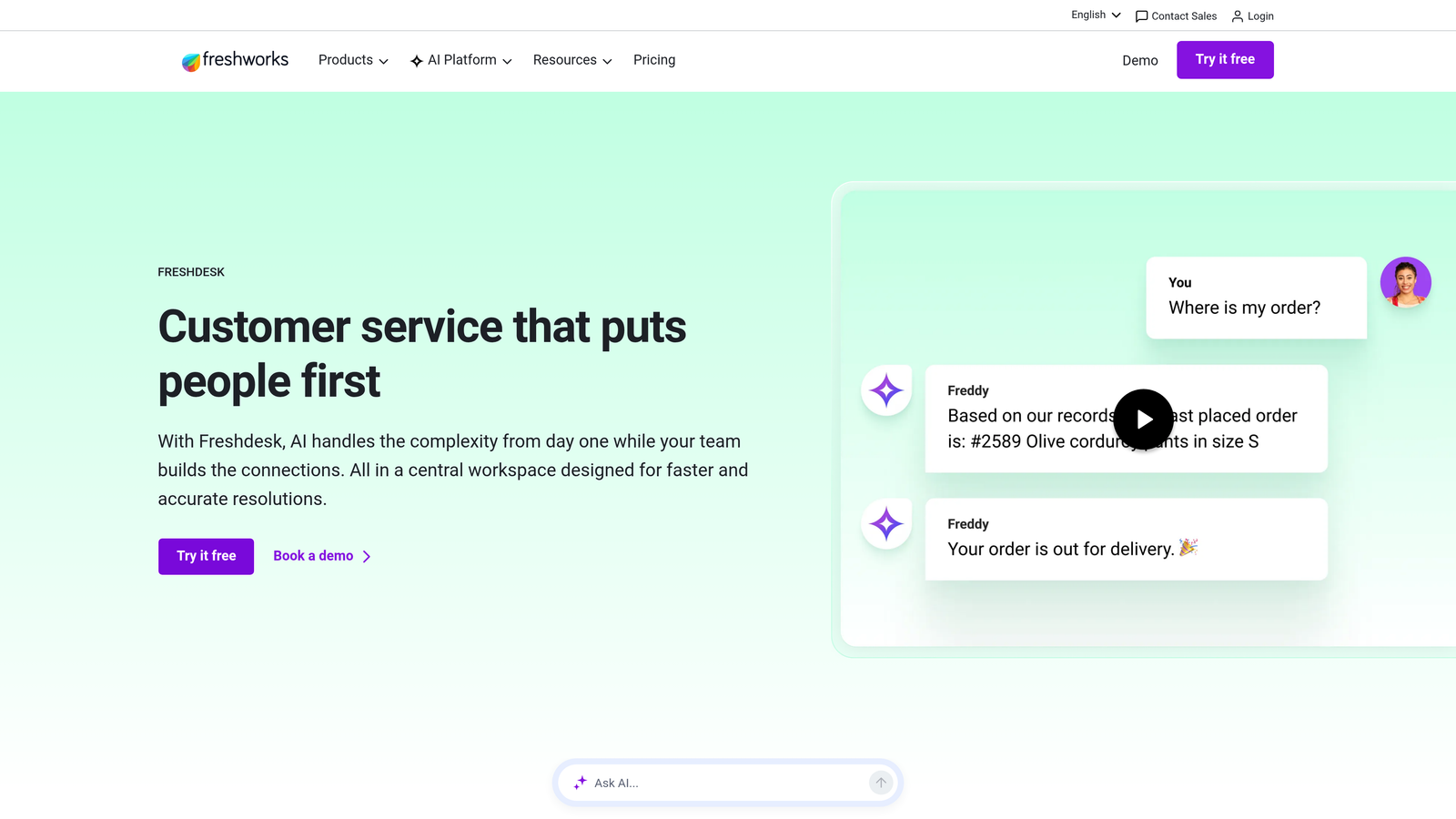
Freshdesk is a helpdesk platform by Freshworks that delivers accessible pricing, strong automation rules, and a clean interface that teams can get up and running quickly.
Where This Tool Shines
Freshdesk hits a sweet spot between capability and simplicity that Zendesk sometimes misses for smaller teams. The automation rules are genuinely powerful for routing, escalation, and SLA management, but they're presented in a way that doesn't require a dedicated admin to configure. That approachability matters when your support team is also wearing other hats.
The free tier is a real differentiator for early-stage teams. Getting a proper helpdesk in place with basic automation before you're ready to invest in paid tooling is genuinely useful, and Freshdesk's free plan is functional enough to run a small team's operations.
Key Features
Freddy AI: Ticket summarization, suggested responses, and auto-triage to reduce manual work on incoming volume.
Automation Rules: Configurable workflows for ticket assignment, SLA management, and escalation without requiring developer involvement.
Free Tier: Available for teams of up to 10 agents, providing a genuine starting point without upfront cost.
Omnichannel Support: Handles email, chat, phone, and social channels from a unified inbox.
Marketplace Integrations: Connects to CRM, billing, and collaboration tools including HubSpot, Salesforce, and Slack.
Best For
SMBs and growing teams that need a reliable, easy-to-configure helpdesk without the overhead of enterprise platforms. Also a strong choice for teams migrating from email-based support for the first time.
Pricing
Free plan available for small teams. Growth plan starts at approximately $15 per agent per month billed annually.
5. Linear
Best for: Support ops teams that need clean, reliable bug escalation workflows with direct handoffs to engineering.
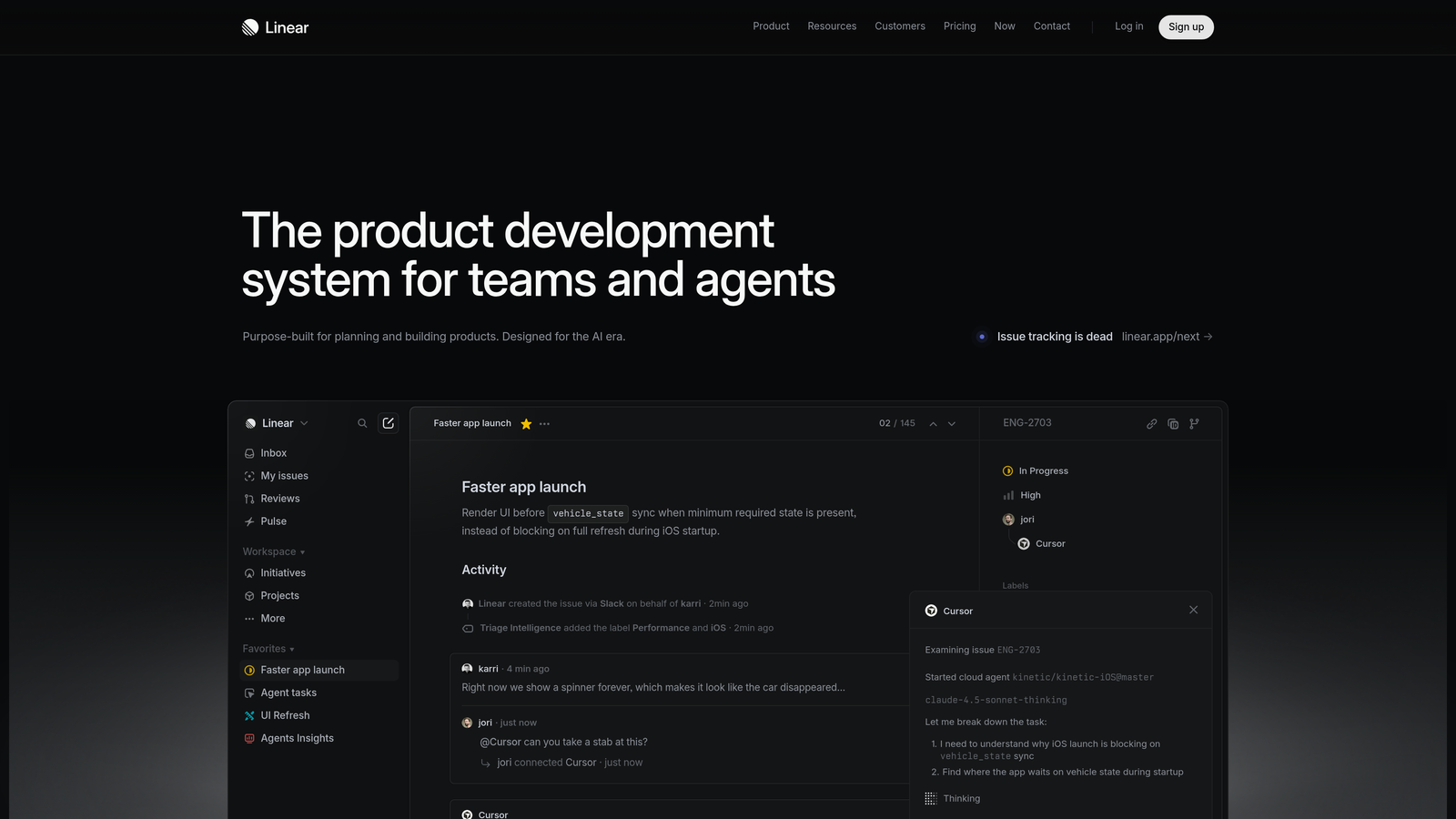
Linear is a fast, opinionated issue tracking tool built for engineering teams that has become an essential part of support-to-engineering escalation workflows.
Where This Tool Shines
Linear isn't a support tool in the traditional sense, but it belongs on this list because the support-to-engineering handoff is one of the most friction-heavy parts of any support operation. When bugs reported by customers take days to reach engineering in a usable format, everyone loses. Linear's speed and opinionated structure make it the cleanest place for engineering teams to receive and act on escalated issues.
For teams using Halo AI, the native integration enables automatic bug ticket creation directly in Linear when support interactions surface product issues. That closed loop between support and engineering, without manual copy-paste or Slack messages, is a meaningful efficiency gain for technical support teams.
Key Features
Keyboard-First Issue Management: High-speed issue creation and management designed to minimize friction for engineering teams.
Cycle and Project Tracking: Sprint visibility that helps support teams understand where escalated bugs sit in the engineering queue.
Native Support Integrations: Connects with Halo AI for auto bug ticket creation and other support tools for escalation workflows.
Git Integration: Links issues to pull requests and deployments, giving support teams visibility into when fixes ship.
Customizable Workflows: Priority labeling and status customization to match how your engineering team actually works.
Best For
Technical support teams at SaaS companies where product bugs drive a meaningful share of inbound tickets. Particularly valuable when used alongside Halo AI for automated bug escalation from support to engineering.
Pricing
Free for small teams. Standard plan starts at approximately $8 per user per month.
6. Guru
Best for: Support teams with large or distributed knowledge bases who need answers surfaced in the tools agents already use.
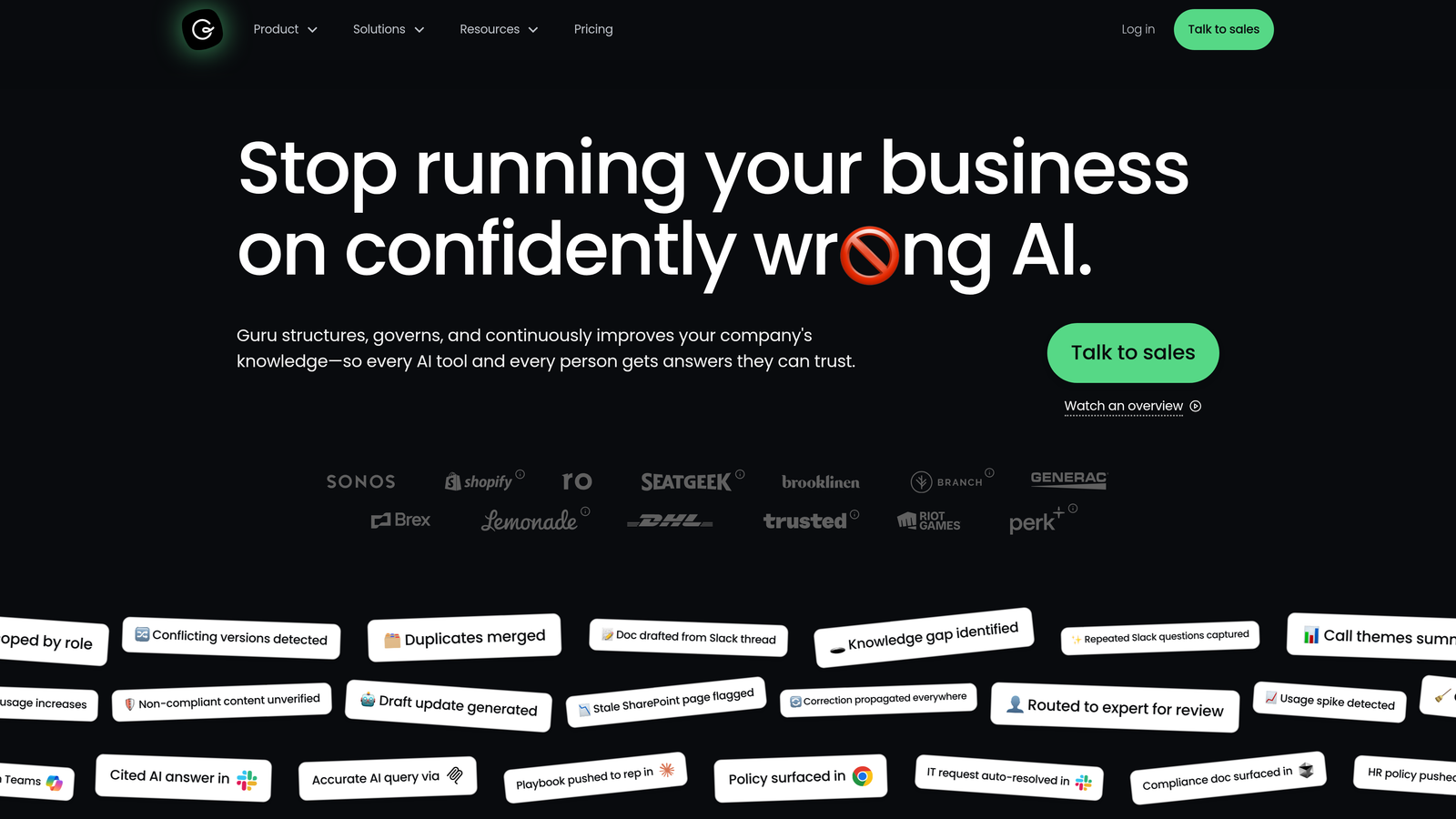
Guru is an AI-powered knowledge management platform that delivers the right answers inside Slack, Chrome, and helpdesks, without requiring agents to switch tabs or dig through documentation.
Where This Tool Shines
The core problem Guru solves is the time agents spend searching for answers rather than responding to customers. In support operations where knowledge is spread across wikis, Notion docs, Slack threads, and helpdesk macros, the cognitive overhead of finding the right answer adds up quickly. Guru centralizes that knowledge and brings it to wherever the agent is working.
The knowledge verification workflow is an underappreciated feature. Outdated knowledge bases are a silent killer of response quality, and Guru's system for flagging and updating content on a scheduled basis keeps accuracy high without requiring a dedicated knowledge manager to audit everything manually.
Key Features
AI-Powered Knowledge Suggestions: Surfaces relevant answers in Slack, Chrome, and helpdesks based on the conversation context.
Knowledge Verification Workflows: Scheduled review cycles ensure content stays accurate and up to date without manual auditing.
Browser Extension: In-context answer lookup without leaving the current tab or tool.
Knowledge Gap Analytics: Tracks what agents search for most, revealing where documentation is missing or insufficient.
Helpdesk Integrations: Connects with Zendesk, Intercom, Salesforce, and Slack for in-workflow knowledge delivery.
Best For
Support teams managing large, complex knowledge bases across multiple products or regions. Also valuable for teams with high agent turnover where consistent knowledge access accelerates onboarding.
Pricing
Starter plan available. Builder plan starts at approximately $10 per user per month.
7. Assembled
Best for: Support managers at teams of 20+ agents who need accurate forecasting, scheduling, and capacity planning.
Assembled is a workforce management platform built specifically for support teams, covering everything from volume forecasting to real-time schedule adherence.
Where This Tool Shines
Most support efficiency conversations focus on automation and AI, but workforce management is just as important. Understaffing creates SLA breaches and burnout. Overstaffing wastes budget. Assembled's AI-driven forecasting helps support managers find the right balance by predicting volume patterns across channels and time zones with enough accuracy to build reliable schedules.
The real-time schedule adherence monitoring is particularly useful for managers overseeing distributed or remote teams. Rather than relying on manual check-ins or end-of-day reports, managers get live visibility into who is on schedule, who is behind, and where capacity gaps are forming before they become problems.
Key Features
AI-Driven Volume Forecasting: Predicts ticket and chat demand by channel, time of day, and day of week to support accurate staffing decisions.
Real-Time Schedule Adherence: Live monitoring of agent schedules so managers can identify and address gaps as they happen.
Capacity Planning: Multi-channel, multi-timezone planning tools for teams with complex scheduling requirements.
Performance Reporting: Utilization and performance metrics by agent and team to support coaching and resource decisions.
Support Tool Integrations: Connects with Zendesk, Intercom, Salesforce, and Slack to pull volume data directly from existing systems.
Best For
Support operations managers at teams of 20 or more agents where scheduling inefficiency has a measurable impact on SLA performance and cost. Less relevant for small teams where scheduling complexity is low.
Pricing
Contact Assembled directly for pricing. The platform is designed for teams of 20 or more agents.
8. Klaus (by Zendesk)
Best for: Support leads running structured QA programs who need AI-assisted scoring at scale without manual sampling.
Klaus is a QA and conversation review tool that uses AI to score support interactions across channels, enabling quality programs that scale without proportional manual effort.
Where This Tool Shines
Quality assurance is one of the most neglected efficiency levers in support operations. When QA relies entirely on manual sampling, most conversations never get reviewed, coaching is inconsistent, and quality trends are invisible until they show up in CSAT scores. Klaus's AutoQA feature changes that by automatically scoring conversations without requiring a reviewer to read every ticket.
The calibration tools are genuinely useful for teams with multiple QA reviewers. Scoring drift, where different reviewers apply different standards to the same interaction type, is a common problem that undermines the value of QA data. Calibration sessions in Klaus help align reviewers so that scores are comparable across the team.
Key Features
AI-Assisted Conversation Scoring: Automated quality scoring across email, chat, and voice interactions without manual review of every ticket.
AutoQA: Fully automated quality reviews that run continuously, surfacing outliers and trends without reviewer input.
Calibration Tools: Structured sessions to align QA reviewers on scoring standards and reduce inter-rater variability.
Coaching Workflows: Connects quality scores directly to agent development plans and feedback loops.
Quality Trend Dashboards: Tracks quality metrics by agent, team, and channel over time to identify patterns and improvement areas.
Best For
Support leads and QA managers at teams large enough to need structured quality programs but who lack the bandwidth for fully manual review processes. Now integrated into Zendesk's suite, making it a natural fit for existing Zendesk customers.
Pricing
Now part of Zendesk's suite following acquisition. Standalone pricing is available. Contact Klaus or Zendesk directly for current pricing details.
9. Datadog
Best for: Technical support teams at SaaS companies who need real-time visibility into system health to get ahead of incident-driven ticket spikes.
Datadog is an infrastructure monitoring and observability platform that gives technical support teams real-time awareness of system incidents before customers start filing tickets about them.
Where This Tool Shines
Datadog belongs on a support efficiency list because some of the most expensive support moments aren't caused by poor processes, they're caused by incidents that the support team learns about from customers rather than from monitoring. When support teams have direct visibility into Datadog dashboards, they can proactively communicate outages, set accurate expectations, and reduce inbound volume during incidents rather than being caught flat-footed.
The anomaly detection and alerting capabilities are particularly relevant here. Rather than waiting for a ticket spike to signal that something is wrong, technical support teams with Datadog access can see system anomalies as they develop and prepare responses before the flood of inbound inquiries arrives.
Key Features
Real-Time Infrastructure Monitoring: Live visibility into application performance and infrastructure health across your entire stack.
Anomaly Detection and Alerting: Proactive alerts when system behavior deviates from baseline, enabling early incident awareness.
Log Management: Correlates system events with support ticket trends to identify the root cause of volume spikes.
Shareable Dashboards: Incident context dashboards that can be shared with support teams for real-time situational awareness.
Broad Integrations: Connects with PagerDuty, Slack, Jira, and major cloud providers for incident workflow management.
Best For
Technical support teams at SaaS companies where product incidents regularly drive ticket spikes. Most valuable when support managers have direct access to monitoring dashboards and can coordinate with engineering during active incidents.
Pricing
Infrastructure monitoring starts at approximately $15 per host per month. Pricing is usage-based across modules, so total cost scales with the breadth of monitoring coverage.
Which Tool Is Right for Your Team?
Most high-performing support operations don't rely on a single tool. They use two or three in combination, each covering a distinct layer of the operation. Here's a quick way to think about it by team stage and need.
Early-stage teams (under 10 agents): Start with Freshdesk's free tier for ticketing basics, add Guru for knowledge management, and layer Halo AI on top for autonomous resolution. You get a full-stack support operation without significant upfront investment.
Growth-stage teams (10 to 50 agents): Zendesk or Intercom as your helpdesk foundation, Halo AI as the intelligence and automation layer, and Linear for clean bug escalation to engineering. If quality consistency is a concern, Klaus adds structured QA without heavy manual overhead.
Scaling teams (50+ agents): Add Assembled for workforce management and forecasting, and Datadog for technical support teams dealing with incident-driven volume spikes. At this stage, the operational efficiency gains from accurate scheduling and proactive incident awareness become significant.
Across all stages, Halo AI works as the connective intelligence layer that sits alongside your helpdesk rather than replacing it. Its integrations with Zendesk, Freshdesk, Intercom, Slack, HubSpot, and Linear mean it fits into whatever stack you've already built, adding autonomous resolution, page-aware guidance, and business intelligence without requiring you to rip and replace your existing tools.
Your support team shouldn't have to scale linearly with your customer base. Let AI agents handle routine tickets, guide users through your product, and surface business intelligence while your team focuses on the complex issues that genuinely need a human touch. See Halo in action and discover how continuous learning transforms every interaction into smarter, faster support.