9 Best Support Operations Optimization Software Tools in 2026
Support operations optimization software has become essential as businesses navigate the $15 billion market for tools that bridge the gap between customer expectations for instant, personalized service and the need for operational efficiency. This guide evaluates the top 9 platforms based on automation capabilities, integration ecosystems, and proven impact on critical metrics like response times and resolution rates, helping teams scale support without proportionally increasing headcount.
 Grant CooperFounder11 min read
Support operations teams face an increasingly complex challenge: customers expect instant, personalized responses across multiple channels, while businesses demand better efficiency metrics and cost control. The gap between these expectations and traditional support capabilities has created a $15 billion market for optimization software (according to Gartner's 2025 Customer Service Technology report). The right platform doesn't just organize tickets—it transforms how work flows through your team, automating repetitive tasks, surfacing actionable insights, and scaling support without proportionally scaling headcount.
We evaluated dozens of platforms to identify tools that deliver measurable operational improvements. Our selection criteria focused on automation depth, integration ecosystems, analytics sophistication, and real-world impact on key metrics like first response time and resolution rates. Here are the top support operations optimization tools reshaping how teams work in 2026.
1. Halo AI
Best for: Teams wanting autonomous AI resolution with deep business intelligence capabilities
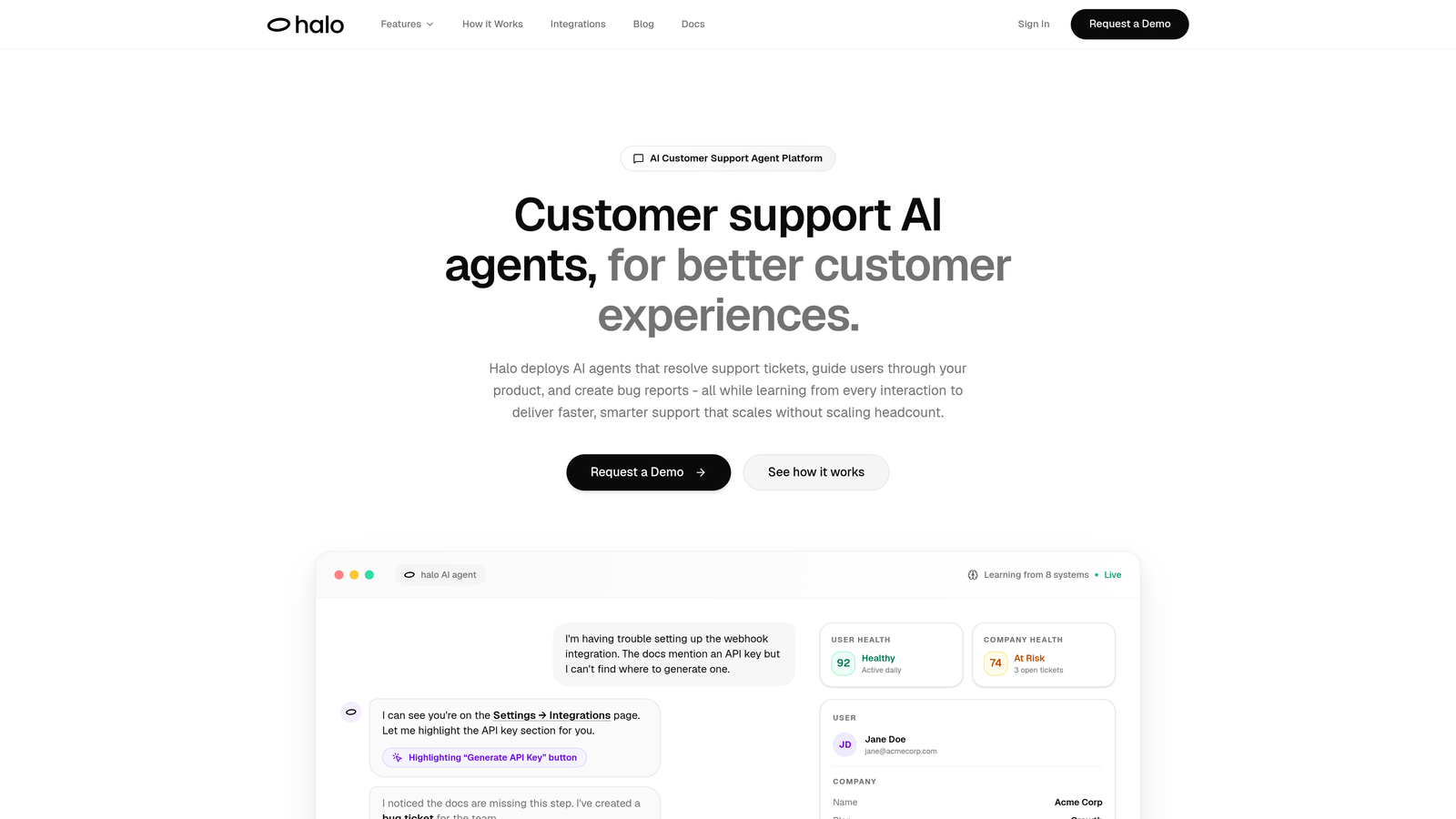
Halo AI represents a fundamental shift from traditional helpdesk architecture to AI-first support operations, where intelligent agents handle ticket resolution autonomously while continuously learning from every interaction.
Where This Tool Shines
Unlike platforms that bolt AI features onto existing helpdesk systems, Halo's architecture treats AI agents as primary operators. These agents don't just suggest responses—they resolve tickets independently, create bug reports in developer tools, and escalate to humans only when necessary.
The page-aware chat widget sees exactly what users see in your product, enabling visual guidance that traditional chatbots can't provide. This contextual awareness, combined with connections to your entire business stack (Linear, Slack, HubSpot, Intercom, Stripe), transforms support from reactive ticket-handling into proactive business intelligence.
Key Features
Autonomous AI Agents: Resolve tickets without human intervention, learning from every interaction to improve accuracy and speed over time.
Page-Aware Context: Chat widget captures visual context of what users see, enabling precise guidance through UI elements and workflows.
Business Intelligence Analytics: Surface customer health signals, revenue intelligence, and anomaly detection beyond standard support metrics.
Auto Bug Ticket Creation: Automatically generate detailed bug reports in Linear, Slack, and developer tools when issues are identified.
Multi-System Integration: Connect to helpdesk platforms, CRM, payment processors, communication tools, and product analytics for unified operations.
Best For
B2B companies and product teams seeking to scale support without proportionally growing headcount. Particularly valuable for organizations using modern tech stacks (Zendesk, Freshdesk, Intercom) who want AI that understands their product deeply and connects operational support to broader business intelligence.
Pricing
Contact for pricing; demo available to explore autonomous resolution capabilities with your actual workflows and integration requirements.
2. Zendesk Suite
Best for: Enterprise-scale omnichannel operations requiring extensive customization and integrations
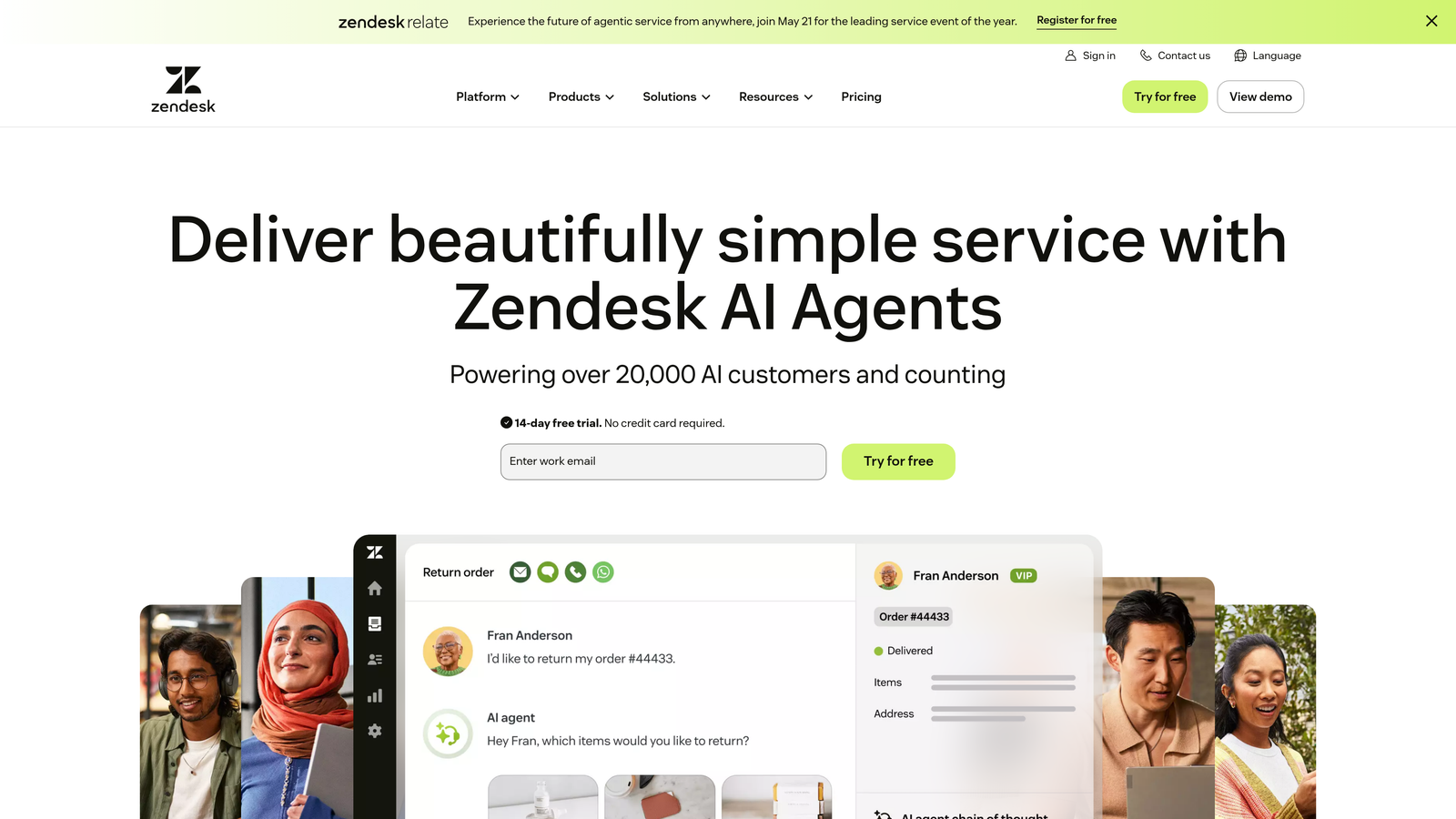
Zendesk Suite delivers comprehensive customer service infrastructure with mature automation capabilities and an ecosystem of 1,500+ integrations.
Where This Tool Shines
Zendesk's strength lies in handling complex, multi-channel support operations at enterprise scale. The platform manages email, chat, phone, social media, and messaging apps through a unified interface, with sophisticated routing rules that consider agent skills, workload, and customer priority.
The extensive app marketplace means you can connect virtually any business tool to your support workflows. Trigger-based automations handle routine tasks like ticket categorization, priority assignment, and follow-up scheduling without manual intervention.
Key Features
Omnichannel Ticketing: Unified inbox consolidates conversations across email, chat, phone, social media, and messaging platforms.
Advanced Workflow Automation: Triggers, macros, and business rules automate repetitive tasks based on ticket properties and customer data.
Extensive Integration Marketplace: Over 1,500 apps and integrations connect support operations to CRM, analytics, collaboration, and business tools.
Answer Bot: AI-powered self-service deflection suggests knowledge base articles before tickets reach agents.
Enterprise Analytics: Customizable dashboards track SLA compliance, agent performance, customer satisfaction, and operational efficiency metrics.
Best For
Large support organizations managing high ticket volumes across multiple channels, particularly those needing deep customization, complex routing rules, and enterprise-grade security and compliance features.
Pricing
Suite Team starts at $55/agent/month; Professional at $89/agent/month; Enterprise pricing available for organizations requiring advanced features and dedicated support.
3. Freshdesk
Best for: Growing teams balancing robust features with budget constraints
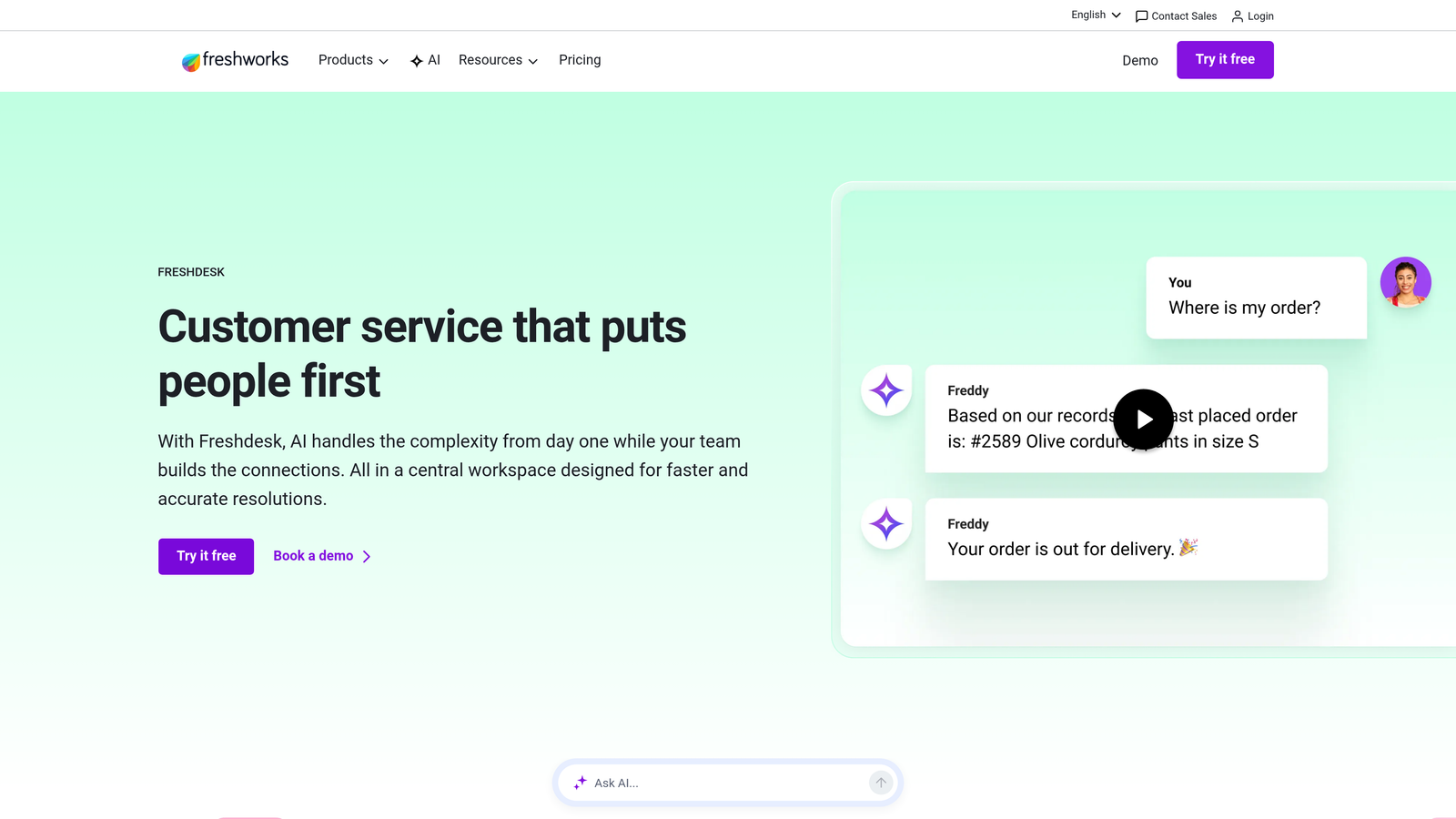
Freshdesk offers scalable helpdesk capabilities with intelligent automation at price points accessible to mid-market companies.
Where This Tool Shines
Freshdesk delivers enterprise-level features without enterprise pricing. Freddy AI handles intelligent ticket categorization and routing, learning from historical patterns to improve accuracy. The platform's scenario automations enable complex multi-step workflows that would typically require expensive enterprise plans elsewhere.
The integrated knowledge base includes SEO optimization, making your self-service content discoverable through search engines. This drives ticket deflection while improving your overall web presence—a dual benefit that justifies the investment beyond pure support metrics.
Key Features
Freddy AI: Intelligent ticket categorization, priority assignment, and agent routing based on content analysis and historical patterns.
Scenario Automations: Complex multi-step workflows with conditional logic for sophisticated ticket handling processes.
SEO-Optimized Knowledge Base: Self-service content management with search engine optimization to drive organic traffic and ticket deflection.
Team Collaboration: Shared ticket ownership, linked tickets, and internal notes facilitate complex issue resolution across teams.
Field Service Management: Optional add-on extends support operations to on-site service with dispatch, scheduling, and mobile capabilities.
Best For
Mid-market companies experiencing rapid growth who need enterprise features but can't justify enterprise pricing. Particularly suited for teams managing 10-50 agents who want room to scale without platform migration.
Pricing
Free tier available for basic ticketing; Growth plan starts at $15/agent/month; Pro at $49/agent/month; Enterprise at $79/agent/month with advanced automation and analytics.
4. Intercom
Best for: Proactive engagement and conversational AI-powered resolution
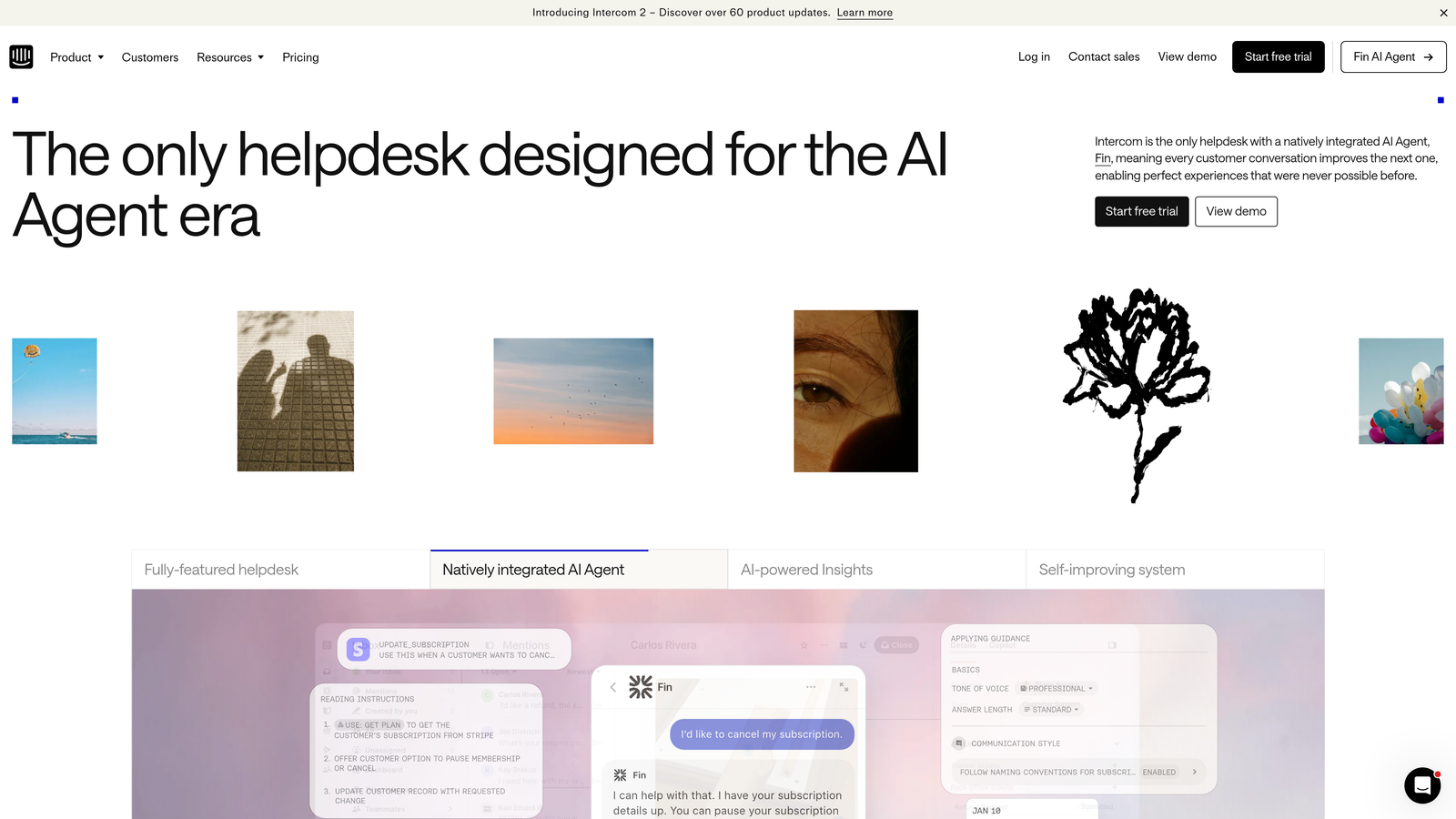
Intercom emphasizes conversational support with AI agents that resolve issues through natural dialogue rather than traditional ticketing workflows.
Where This Tool Shines
Intercom's Fin AI agent handles conversational resolution with impressive natural language understanding. Unlike chatbots that follow rigid decision trees, Fin interprets intent and resolves issues through multi-turn conversations that feel genuinely helpful rather than scripted.
The platform's strength extends beyond reactive support. Product tours and in-app messaging enable proactive engagement—onboarding new users, announcing features, or reaching out when behavior patterns suggest confusion. This shifts support from purely reactive to strategically proactive.
Key Features
Fin AI Agent: Conversational AI resolves customer issues through natural dialogue, learning from knowledge base content and past interactions.
Product Tours: In-app messaging and guided tours proactively educate users, reducing support volume through strategic engagement.
Unified Inbox: Consolidate conversations across chat, email, and social channels with contextual customer data.
Custom Bots and Workflows: Visual builder creates automated workflows and bot conversations without coding requirements.
Customer Data Platform: Segment users based on behavior, attributes, and engagement for targeted messaging and personalized support.
Best For
Product-led growth companies wanting to blend support with user engagement and onboarding. Best suited for SaaS businesses where proactive education reduces support volume and improves product adoption simultaneously.
Pricing
Starts at $39/seat/month for core platform; Fin AI priced separately per resolution (approximately $0.99 per resolution); Enterprise plans available with volume discounts.
5. Assembled
Best for: Workforce management with ML-powered forecasting and scheduling optimization
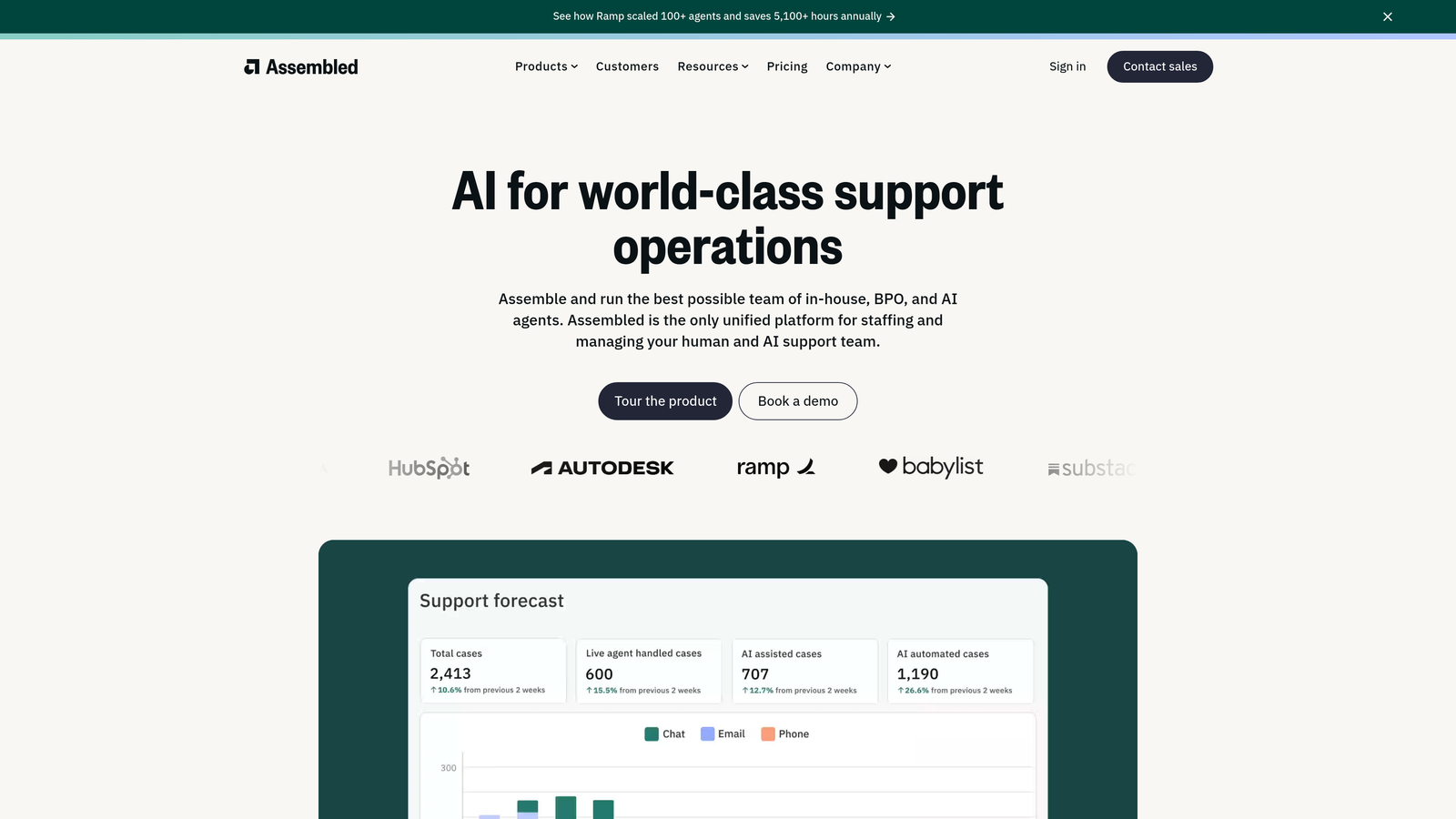
Assembled specializes in the operational challenge of having the right number of agents available at the right times across channels.
Where This Tool Shines
Assembled applies machine learning to demand forecasting, analyzing historical patterns, seasonality, and growth trends to predict support volume with impressive accuracy. This transforms workforce planning from reactive guesswork to data-driven decision-making.
The real-time scheduling capabilities adjust dynamically as actual demand deviates from forecasts. Agents can swap shifts, request time off, and view schedules through mobile apps, while managers maintain adherence tracking and capacity visibility across the entire team.
Key Features
ML-Powered Forecasting: Predict support demand across channels using historical patterns, seasonality analysis, and growth trajectory modeling.
Intelligent Scheduling: Optimize shift assignments based on forecasted demand, agent skills, preferences, and labor cost constraints.
Intraday Management: Real-time adherence tracking and schedule adjustments as actual demand deviates from forecasts.
Helpdesk Integrations: Connect to Zendesk, Intercom, Freshdesk, and other platforms to pull actual ticket volume and handle time data.
Capacity Planning: Long-term hiring forecasts show when you'll need additional headcount based on growth projections and efficiency targets.
Best For
Support organizations with 20+ agents struggling with scheduling complexity, particularly those managing multiple channels with varying demand patterns throughout the day and week.
Pricing
Contact for pricing; scales based on team size and feature requirements. Typically cost-justifies through improved agent utilization and reduced overtime expenses.
6. Klaus
Best for: Quality management with systematic conversation review and agent coaching
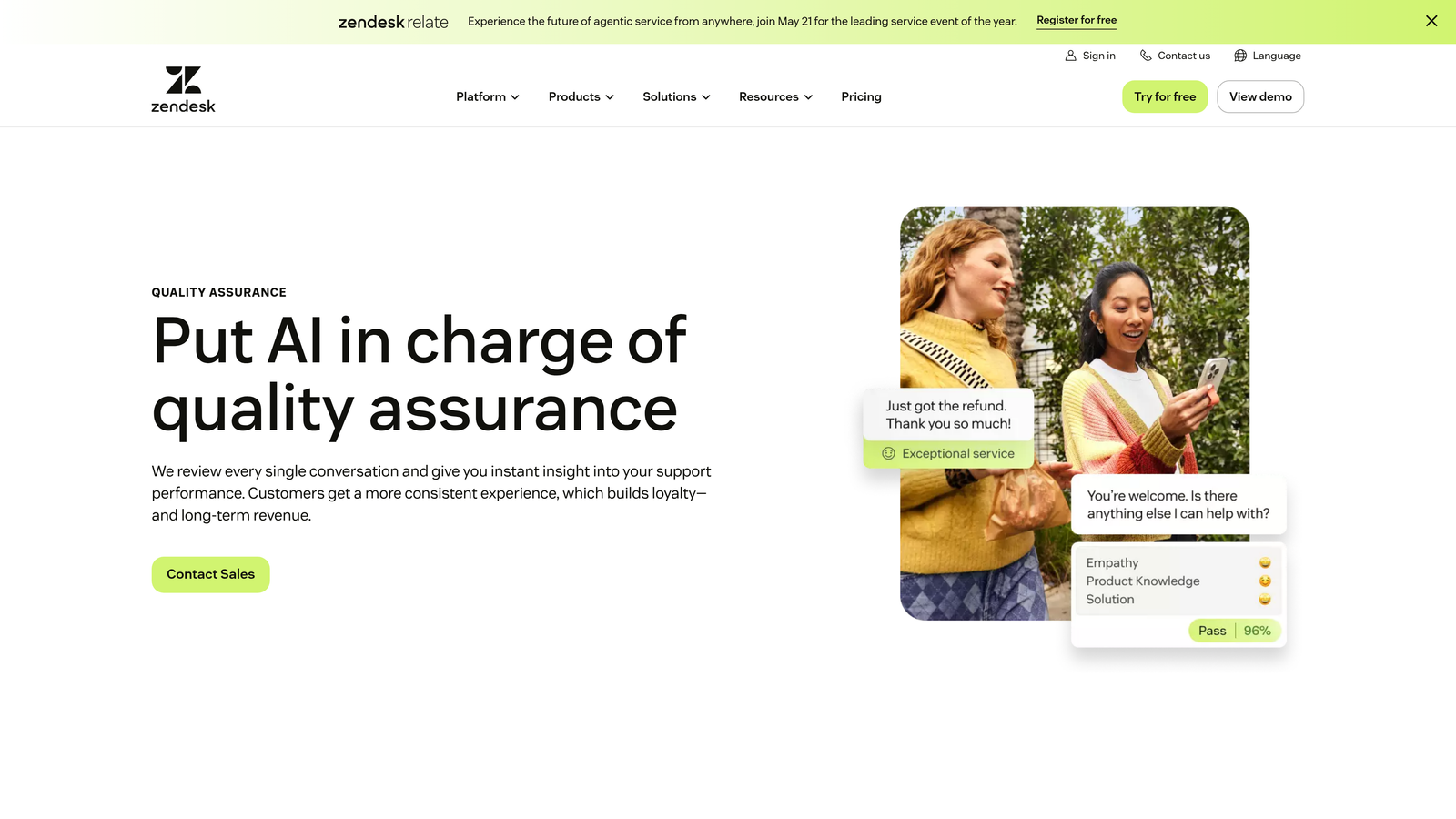
Klaus addresses the quality assurance challenge of maintaining consistent support excellence as teams scale.
Where This Tool Shines
Klaus automates the time-consuming work of sampling conversations for quality review. AI-powered sampling ensures you review representative interactions rather than cherry-picking, while customizable scorecards standardize evaluation criteria across reviewers.
The coaching workflow closes the feedback loop effectively. Agents receive specific, actionable feedback tied to actual conversations, with tracking to ensure improvement over time. CSAT prediction identifies potentially problematic interactions before customers submit negative ratings.
Key Features
AI-Powered Sampling: Automatically select representative conversations for review based on statistical sampling and risk indicators.
Customizable Scorecards: Define rating criteria and evaluation standards that align with your specific quality goals and brand voice.
Agent Coaching Workflows: Deliver feedback directly within reviewed conversations, track improvement trends, and identify coaching opportunities.
CSAT Prediction: Machine learning analyzes conversation sentiment to flag potentially negative experiences before customer surveys arrive.
Helpdesk Integration: Works with Zendesk, Intercom, Freshdesk, Front, and other major platforms to pull conversations for review.
Best For
Support leaders prioritizing quality consistency and agent development, particularly teams where maintaining brand voice and customer experience standards is critical to business success.
Pricing
Contact for pricing; typically structured as per-agent monthly fee. ROI comes from improved CSAT scores and reduced escalations through systematic quality improvement.
7. Gorgias
Best for: E-commerce support with deep platform integrations and revenue tracking
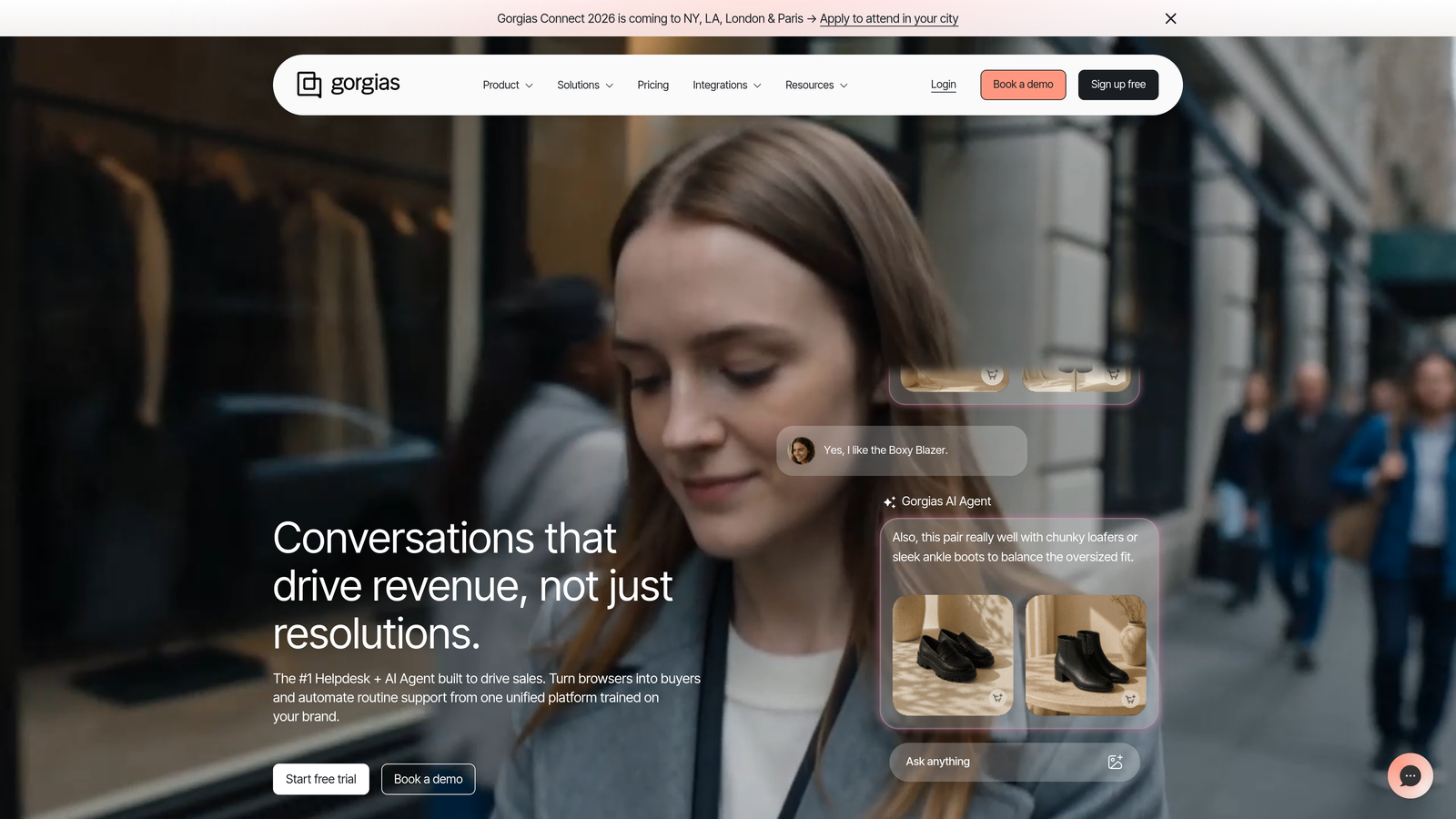
Gorgias built specifically for e-commerce businesses, with native integrations to Shopify, BigCommerce, and Magento that transform support into a revenue channel.
Where This Tool Shines
Gorgias agents can view complete order history, process refunds, modify shipments, and update customer information without leaving the support interface. This eliminates the context-switching that slows down e-commerce support teams using general-purpose helpdesks.
The platform tracks revenue statistics tied to support interactions, showing which conversations led to purchases and quantifying support's business impact. Macros can include dynamic order data, personalizing responses with specific product names, order numbers, and shipping details automatically.
Key Features
Native E-commerce Integrations: Deep connections to Shopify, BigCommerce, Magento pull order data, inventory levels, and customer purchase history directly into tickets.
Order Management Actions: Process refunds, cancel orders, modify shipments, and update customer information without switching between platforms.
Revenue Attribution: Track which support interactions led to purchases, quantifying support team's direct contribution to revenue.
Dynamic Macros: Automated responses include customer-specific order details, product names, and shipping information pulled from e-commerce platforms.
Social and SMS Support: Manage Instagram, Facebook, SMS, and WhatsApp conversations alongside email and chat in unified inbox.
Best For
E-commerce businesses of any size, particularly those on Shopify or BigCommerce who want support deeply integrated with their commerce platform rather than treating it as a separate system.
Pricing
Starts at $10/month for 50 tickets; Basic at $60/month for 300 tickets; Pro at $360/month for 2,000 tickets; Advanced and Enterprise plans scale by ticket volume.
8. Kustomer
Best for: CRM-style support with unified customer timelines and intelligent routing
Kustomer organizes support around customers rather than tickets, providing complete interaction history and context in a unified timeline.
Where This Tool Shines
Kustomer's customer-centric architecture displays every interaction—support conversations, purchases, website visits, email opens—in a single chronological timeline. This eliminates the frustrating "can you repeat your issue" experience when customers contact support through different channels.
Intelligent routing considers customer attributes, conversation history, and current context when assigning conversations. VIP customers automatically route to senior agents, returning customers connect with previous representatives, and complex issues escalate based on conversation content analysis.
Key Features
Unified Customer Timeline: Complete interaction history across all channels and touchpoints displayed chronologically with full context.
Intelligent Routing: Assign conversations based on customer attributes, agent skills, conversation content, and historical relationships.
SLA Management: Automated escalation workflows ensure time-sensitive issues receive appropriate priority and attention.
Business Process Automation: Visual builder creates multi-step workflows that span support, sales, and operational processes.
Sentiment Tracking: Monitor customer satisfaction trends and identify at-risk accounts based on conversation sentiment analysis.
Best For
Businesses where customer relationships extend beyond individual support interactions, particularly B2B companies with high-value accounts requiring personalized service and relationship continuity.
Pricing
Enterprise pricing model; contact for quote. Positioning targets mid-market to enterprise organizations rather than small teams or startups.
9. Dixa
Best for: Agent-friendly interface with smart routing and integrated quality tools
Dixa prioritizes agent experience alongside customer experience, recognizing that efficient, satisfied agents deliver better support.
Where This Tool Shines
Dixa's interface presents contextual customer data exactly when agents need it, without overwhelming them with information. The conversation-first design treats phone, chat, email, and messaging as equally important channels rather than bolting non-email channels onto ticket-centric architecture.
Native quality assurance features eliminate the need for separate QA tools. Managers can review conversations, provide feedback, and track quality trends without purchasing additional platforms or managing complex integrations.
Key Features
Intelligent Routing: Smart queue management distributes conversations based on agent availability, skills, customer priority, and conversation type.
Contextual Agent Interface: Customer data, interaction history, and relevant information surface automatically as conversations progress.
Native Quality Assurance: Built-in conversation review, feedback delivery, and quality tracking without requiring separate QA platform.
Real-Time Dashboards: Performance metrics, queue status, and agent activity visible to both managers and agents for transparency.
Mim Chatbot: Automated resolution for common questions with seamless handoff to human agents when needed.
Best For
Support teams prioritizing agent experience and retention, particularly organizations where agent turnover impacts service quality and training costs.
Pricing
Essential plan starts at $39/agent/month; Advanced at custom pricing includes additional automation and analytics capabilities.
Making the Right Choice
The support operations optimization landscape offers solutions for every operational challenge. Halo AI stands out for teams wanting autonomous AI resolution that learns continuously while providing business intelligence beyond traditional support metrics. Zendesk remains the enterprise standard for complex omnichannel operations requiring extensive customization. Freshdesk delivers the best feature-to-price ratio for growing teams not yet ready for enterprise investment.
For specialized needs, consider your primary pain point. Assembled solves workforce management challenges with ML-powered forecasting. Klaus addresses quality consistency through systematic conversation review. Gorgias serves e-commerce businesses with deep platform integrations that turn support into a revenue channel.
The platforms differ fundamentally in architecture. Traditional helpdesks with AI features bolted on versus AI-first platforms built around intelligent automation represent different operational philosophies. Your choice should align with your vision for support's role—reactive ticket-handling or strategic business intelligence.
Most platforms offer trials or demos. Test with your actual workflows, integration requirements, and team dynamics before committing. Pay attention to how the platform handles your specific edge cases and whether the interface matches how your team actually works.
Your support team shouldn't scale linearly with your customer base. Let AI agents handle routine tickets, guide users through your product, and surface business intelligence while your team focuses on complex issues that need a human touch. See Halo in action and discover how continuous learning transforms every interaction into smarter, faster support.