9 Best Support Platforms with Revenue Intelligence in 2026
Modern support platforms with revenue intelligence transform customer service teams from cost centers into revenue drivers by surfacing upsell opportunities, predicting churn, and connecting support interactions to business outcomes. This comprehensive evaluation examines nine leading platforms that integrate customer support capabilities with revenue analytics, helping B2B teams select the solution that aligns with their workflow and growth goals while turning every customer interaction into a potential revenue opportunity.
 Grant CooperFounder12 min read
Customer support has evolved from a cost center into a revenue driver. Modern support platforms now combine ticket resolution with revenue intelligence—surfacing upsell opportunities, predicting churn before it happens, and connecting support interactions directly to revenue outcomes.
For B2B teams managing complex customer relationships, choosing a platform that bridges support and revenue data is no longer optional. This guide evaluates top platforms that merge customer support capabilities with revenue intelligence features, helping you identify which solution fits your team's workflow and growth objectives.
1. Halo AI
Best for: Teams wanting AI-native support with automatic business intelligence and revenue insights
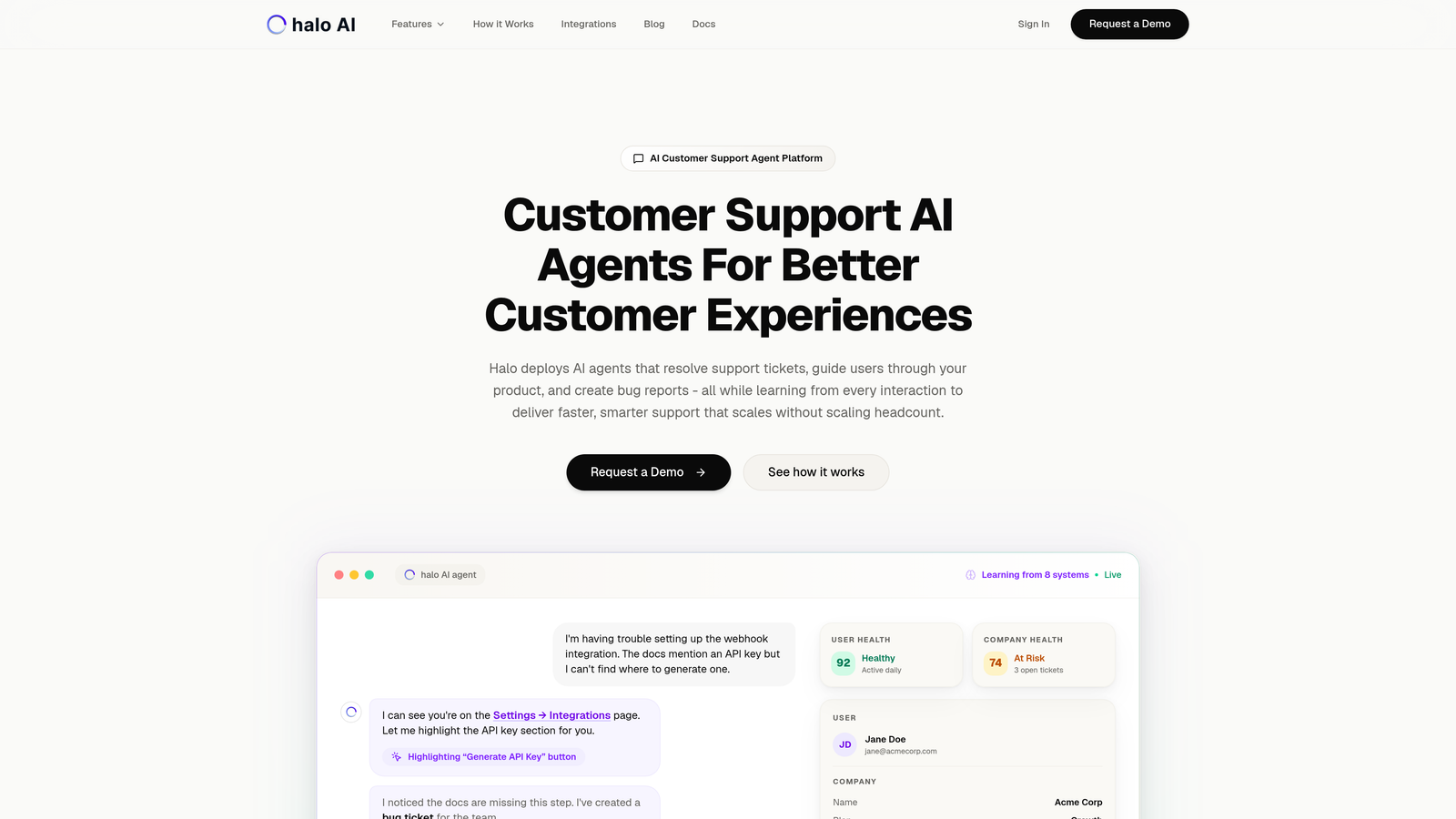
Halo AI takes a fundamentally different approach by building revenue intelligence into the support experience from the ground up, rather than bolting analytics onto traditional ticketing.
Where This Tool Shines
Halo's AI agents don't just resolve tickets—they learn from every interaction to surface business signals that matter. The platform connects support patterns to customer health automatically, identifying at-risk accounts and expansion opportunities without requiring manual analysis.
The page-aware chat widget sees exactly what users see in your product, enabling contextual guidance that reduces tickets while gathering intelligence about where customers struggle. This visual context feeds directly into business intelligence that helps product and revenue teams make better decisions.
Key Features
Autonomous AI Agents: Resolve support tickets independently while continuously learning from every interaction to improve resolution quality.
Smart Inbox with Business Intelligence: Surfaces customer health signals, anomaly detection, and revenue insights directly within the support workflow.
Page-Aware Context: Chat widget understands user location and interface state to provide relevant guidance and collect product intelligence.
Revenue Stack Integrations: Native connections to HubSpot, Stripe, Linear, Slack, and other business tools create unified customer intelligence.
Continuous Learning Architecture: Every resolved ticket trains the AI to handle similar issues faster, creating compounding efficiency gains over time.
Best For
B2B product teams and growing companies that want support to scale without adding headcount. Particularly valuable for teams using modern helpdesk systems who need deeper business intelligence than traditional platforms provide.
Pricing
Contact for pricing based on your support volume and integration requirements.
2. Gainsight
Best for: Enterprise customer success teams managing large accounts with complex revenue relationships
Gainsight positions itself as the comprehensive customer success platform, combining support workflows with enterprise-grade revenue analytics and health scoring.

Where This Tool Shines
Gainsight excels at managing the entire customer lifecycle for enterprise accounts. The platform's health scoring system incorporates support interactions alongside product usage, engagement metrics, and business outcomes to create a holistic view of account risk and opportunity.
The automated playbook system triggers interventions based on support patterns—when a high-value account opens multiple tickets or sentiment drops, revenue teams get immediate visibility and suggested actions.
Key Features
Multi-Dimensional Health Scores: Combines support sentiment, product usage, and engagement data into predictive customer health metrics.
Revenue Expansion Tracking: Identifies upsell and cross-sell opportunities based on support conversations and product adoption patterns.
Automated Success Playbooks: Triggers workflows when support patterns indicate risk or opportunity, routing actions to appropriate team members.
Deep CRM Integration: Native connections to Salesforce and other enterprise systems create unified customer records across support and revenue.
Enterprise Analytics: Custom dashboards track how support quality impacts retention, expansion, and net revenue retention.
Best For
Enterprise organizations with dedicated customer success teams managing accounts worth six or seven figures. Works best when you have the resources to configure and maintain sophisticated workflows.
Pricing
Custom enterprise pricing, typically starting at $2,500 per month or higher depending on customer count and features.
3. Intercom with Fin AI
Best for: Product-led growth companies wanting conversational support connected to sales and marketing data
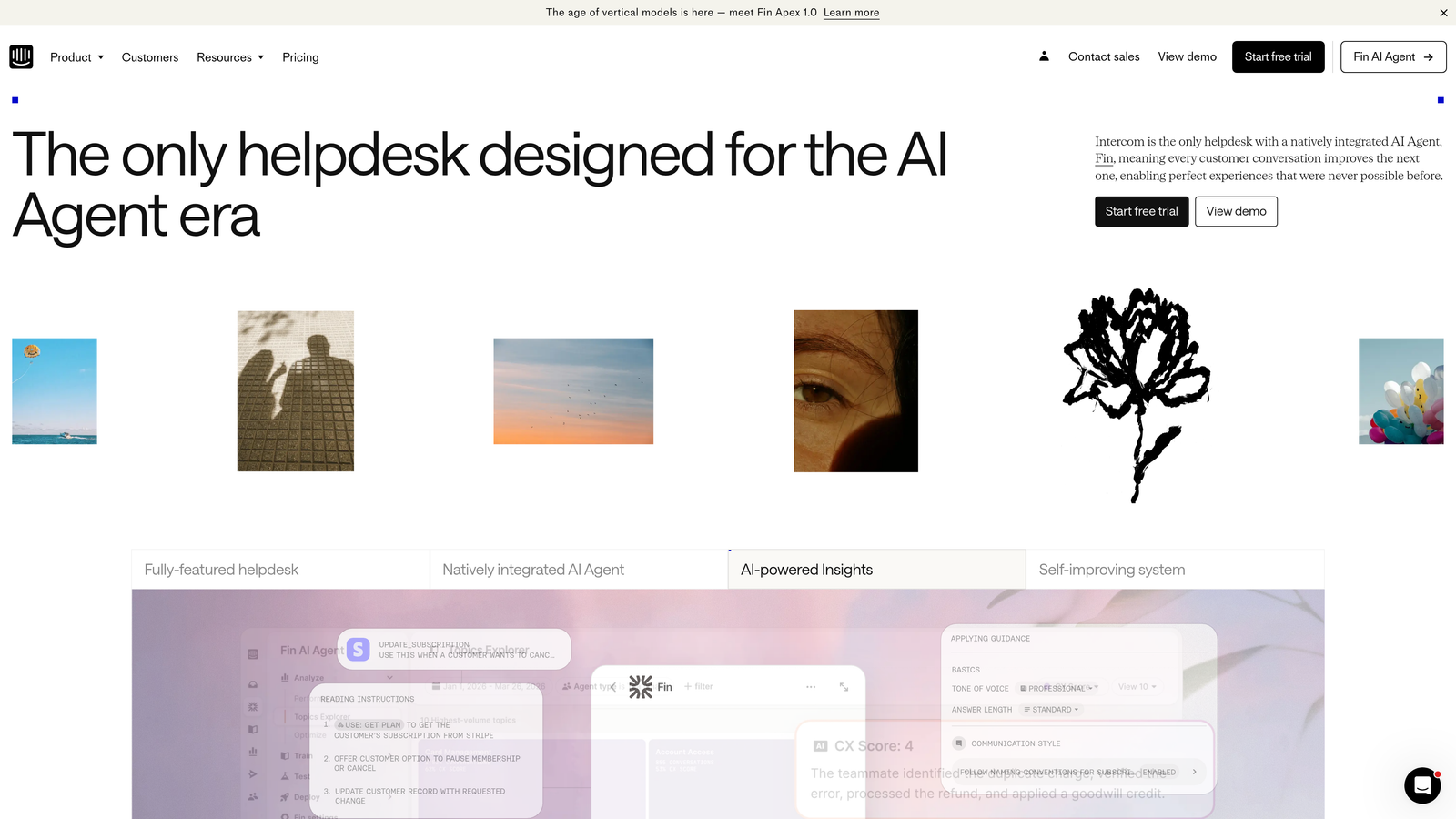
Intercom combines conversational support with AI automation and native visibility into how support interactions influence revenue outcomes across the customer journey.
Where This Tool Shines
Intercom's unified platform means support conversations exist alongside sales outreach and marketing campaigns in a single customer timeline. This creates natural visibility into how support quality affects conversion, expansion, and retention.
The Fin AI agent handles routine questions autonomously, while the platform tracks which support interactions lead to upgrades, renewals, or churn. Support teams can see customer lifetime value and subscription tier during conversations, enabling contextual responses.
Key Features
Fin AI Resolution: Autonomous AI agent resolves common questions using your knowledge base, with transparent pricing per resolution.
Unified Customer Platform: Support, sales, and marketing data exist in one system, creating complete revenue context for every interaction.
Revenue Attribution: Track which support conversations influence upgrades, expansions, and retention decisions.
Product Tours and Onboarding: In-app guidance reduces support volume while collecting data on where users need help.
Custom Revenue Reporting: Build dashboards connecting support metrics to business outcomes like MRR impact and customer lifetime value.
Best For
SaaS companies with product-led growth models where support, sales, and marketing teams need shared customer context. Particularly strong for companies wanting conversational interfaces across the customer lifecycle.
Pricing
Starts at $39 per seat per month for core support features. Fin AI priced separately per resolution, typically adding $0.50-$1.00 per AI-resolved conversation.
4. Zendesk with Explore Analytics
Best for: Established support teams wanting robust analytics connecting support performance to business metrics
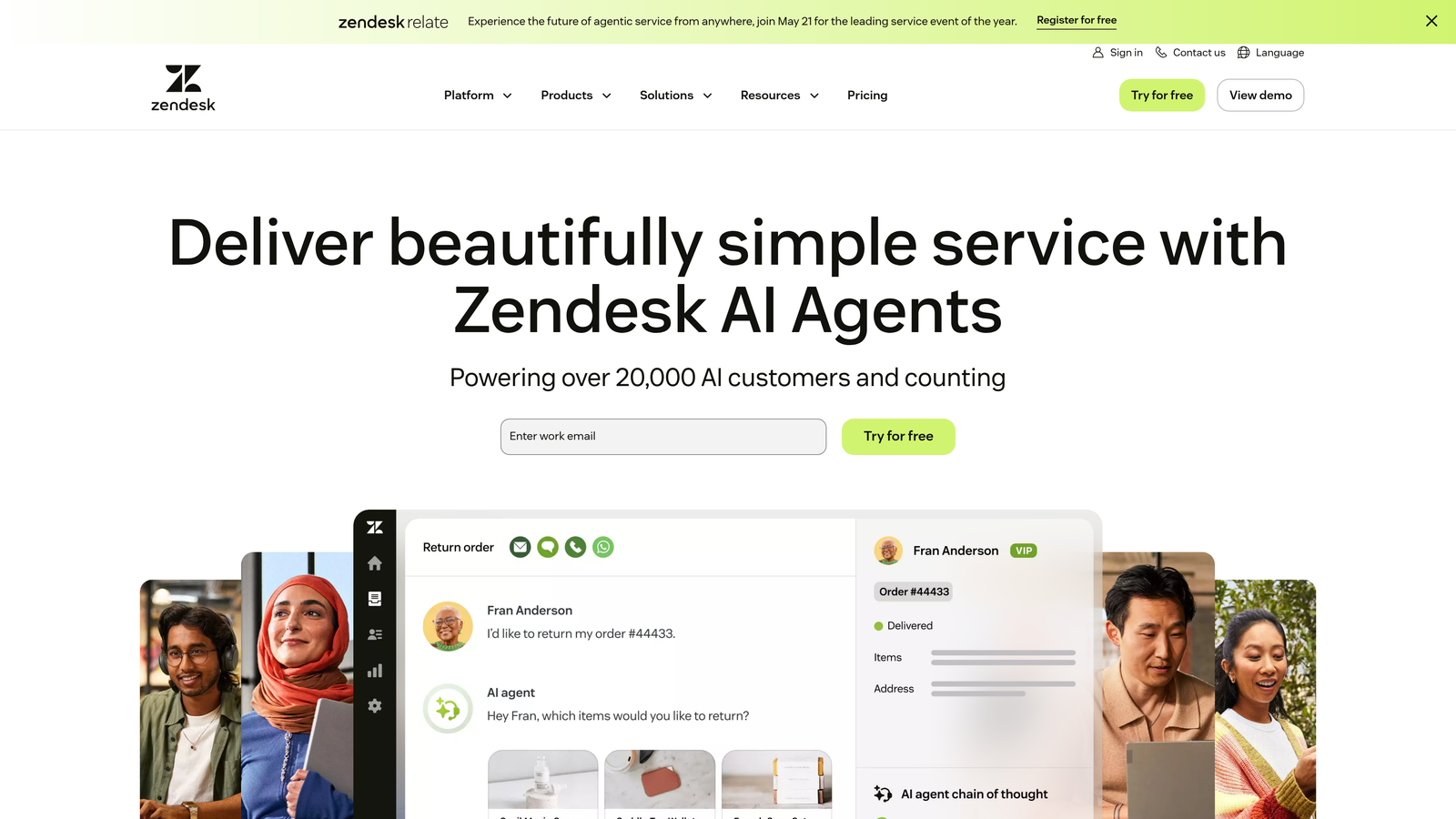
Zendesk brings enterprise helpdesk capabilities with Explore analytics that connect support quality to retention, satisfaction, and revenue outcomes.
Where This Tool Shines
Zendesk's massive marketplace and integration ecosystem means you can connect virtually any revenue tool to your support data. Explore analytics lets you build custom dashboards tracking how support metrics correlate with customer lifetime value, churn risk, and expansion revenue.
The platform's maturity shows in workflow automation and reporting depth. You can segment support quality by customer tier, track how resolution time affects renewal rates, and identify which support issues correlate with account expansion or contraction.
Key Features
Explore Analytics Platform: Build custom dashboards connecting support KPIs to revenue metrics like retention rate and customer lifetime value.
Customer Satisfaction Tracking: CSAT and NPS scores tied to customer segments, allowing analysis of support quality's impact on retention.
Marketplace Integrations: Over 1,000 apps connect Zendesk to CRMs, billing systems, and analytics platforms for unified revenue intelligence.
AI-Powered Agent Assistance: Suggests responses and automates workflows, improving efficiency for support teams handling high volumes.
Enterprise Scalability: Handles millions of tickets with advanced routing, SLAs, and security features required by large organizations.
Best For
Mid-market to enterprise companies with established support operations wanting better analytics without replacing their core helpdesk. Strong choice when you need extensive customization and integration options.
Pricing
Suite Team starts at $55 per agent per month, with Explore analytics included. Suite Enterprise at $115 per agent per month adds advanced analytics and AI features.
5. Freshdesk with Freshsuccess
Best for: Mid-market companies wanting combined support and customer success capabilities at accessible pricing
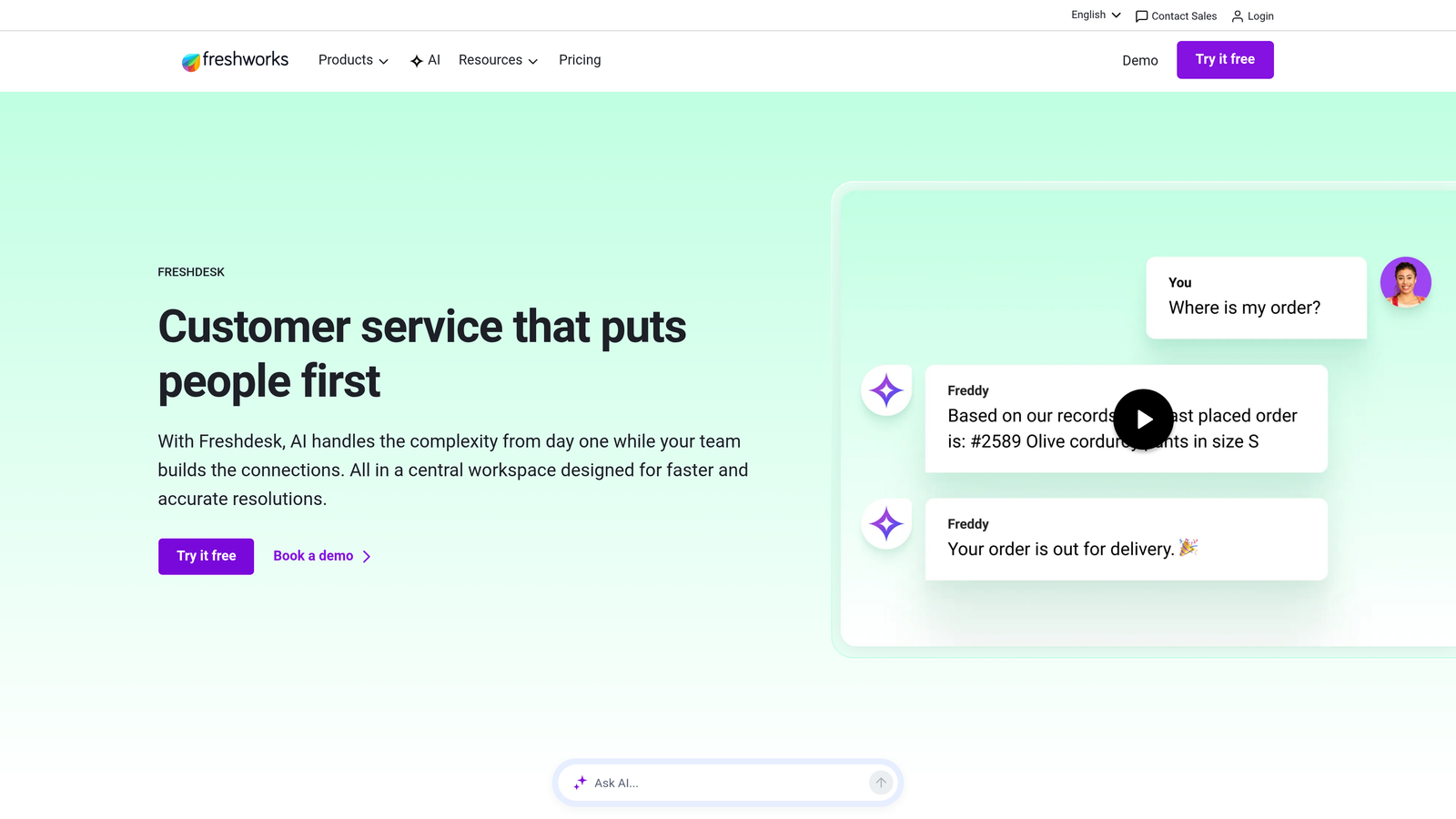
Freshdesk offers helpdesk functionality that integrates with Freshsuccess for customer health scoring and revenue tracking, creating a mid-market alternative to enterprise platforms.
Where This Tool Shines
The Freshworks ecosystem provides unified workflows across support, sales, and customer success without enterprise complexity or pricing. Freshsuccess adds health scoring based on support sentiment, enabling teams to identify at-risk accounts and expansion opportunities.
Freddy AI automates ticket categorization and suggests responses, while the combined platform tracks how support quality influences renewal forecasts and expansion pipeline. The native integration across Freshworks products creates smoother data flow than connecting separate tools.
Key Features
Unified Support and Success Workflows: Freshdesk tickets feed into Freshsuccess health scores, creating visibility between support quality and account health.
Support Sentiment Analysis: AI analyzes ticket sentiment to identify frustrated customers before they churn or satisfied customers ready for expansion.
Renewal and Expansion Forecasting: Freshsuccess uses support patterns alongside usage data to predict renewal risk and upsell readiness.
Freddy AI Automation: Automates ticket routing, response suggestions, and workflow triggers based on support patterns and customer context.
Freshworks Suite Integration: Native connections across CRM, marketing automation, and support create unified customer intelligence.
Best For
Growing B2B companies that want customer success capabilities without enterprise platform costs. Works well when you're building revenue intelligence practices and need approachable tools.
Pricing
Freshdesk Pro starts at $49 per agent per month. Freshsuccess priced separately, typically starting around $500 per month depending on customer count.
6. HubSpot Service Hub
Best for: Companies already using HubSpot CRM wanting seamless support-to-revenue visibility
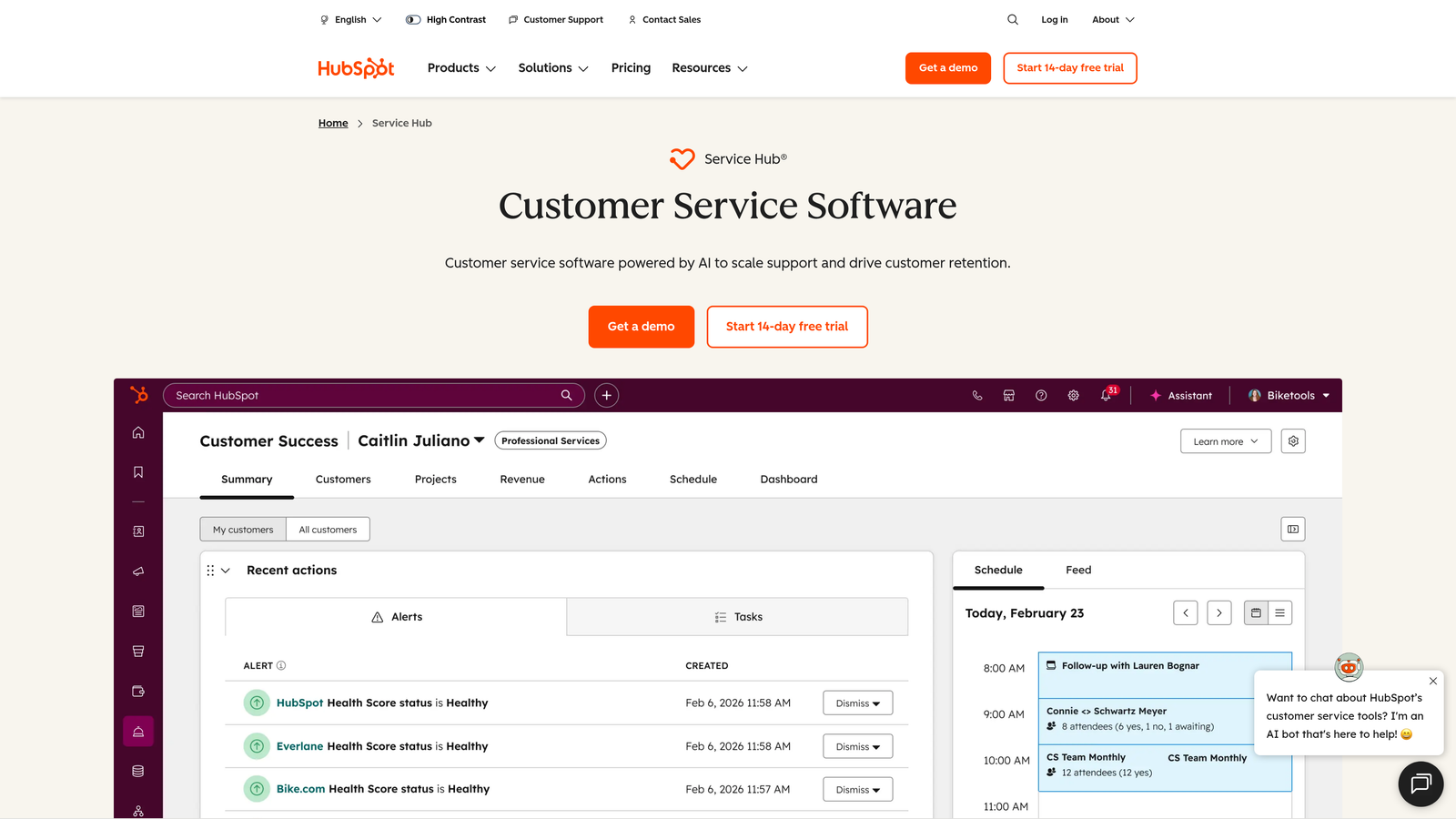
HubSpot Service Hub provides support functionality deeply integrated with HubSpot's CRM, creating natural connections between support tickets, deal pipeline, and revenue outcomes.
Where This Tool Shines
If you're already in the HubSpot ecosystem, Service Hub creates unmatched visibility between support and revenue. Support agents see deal stage, customer lifetime value, and renewal dates during every conversation. Tickets automatically link to contact records, deals, and companies.
The unified platform means support quality metrics flow directly into lifecycle stage tracking. You can see which support interactions influence deal progression, identify when support issues stall renewals, and track how knowledge base usage affects expansion revenue.
Key Features
Complete CRM Integration: Support tickets exist alongside deals, marketing campaigns, and sales activities in unified customer records.
Lifecycle Stage Visibility: Customer feedback and support sentiment automatically update lifecycle stages, triggering appropriate sales or success workflows.
Value-Based Ticket Routing: Automatically prioritize and route tickets based on customer lifetime value, deal size, or renewal proximity.
Knowledge Base Analytics: Track which articles reduce tickets and correlate self-service usage with customer expansion and retention.
Single Platform Operations: Eliminate data silos by running marketing, sales, and support from one system with shared customer intelligence.
Best For
Companies committed to the HubSpot ecosystem wanting support capabilities that share customer data seamlessly with sales and marketing. Less ideal if you need best-in-class support features independent of CRM choice.
Pricing
Starter at $20 per month for basic features. Professional at $100 per seat per month adds automation and custom reporting. Enterprise at $150 per seat per month includes advanced analytics.
7. Totango
Best for: Product-led growth companies connecting product usage patterns and support to expansion revenue
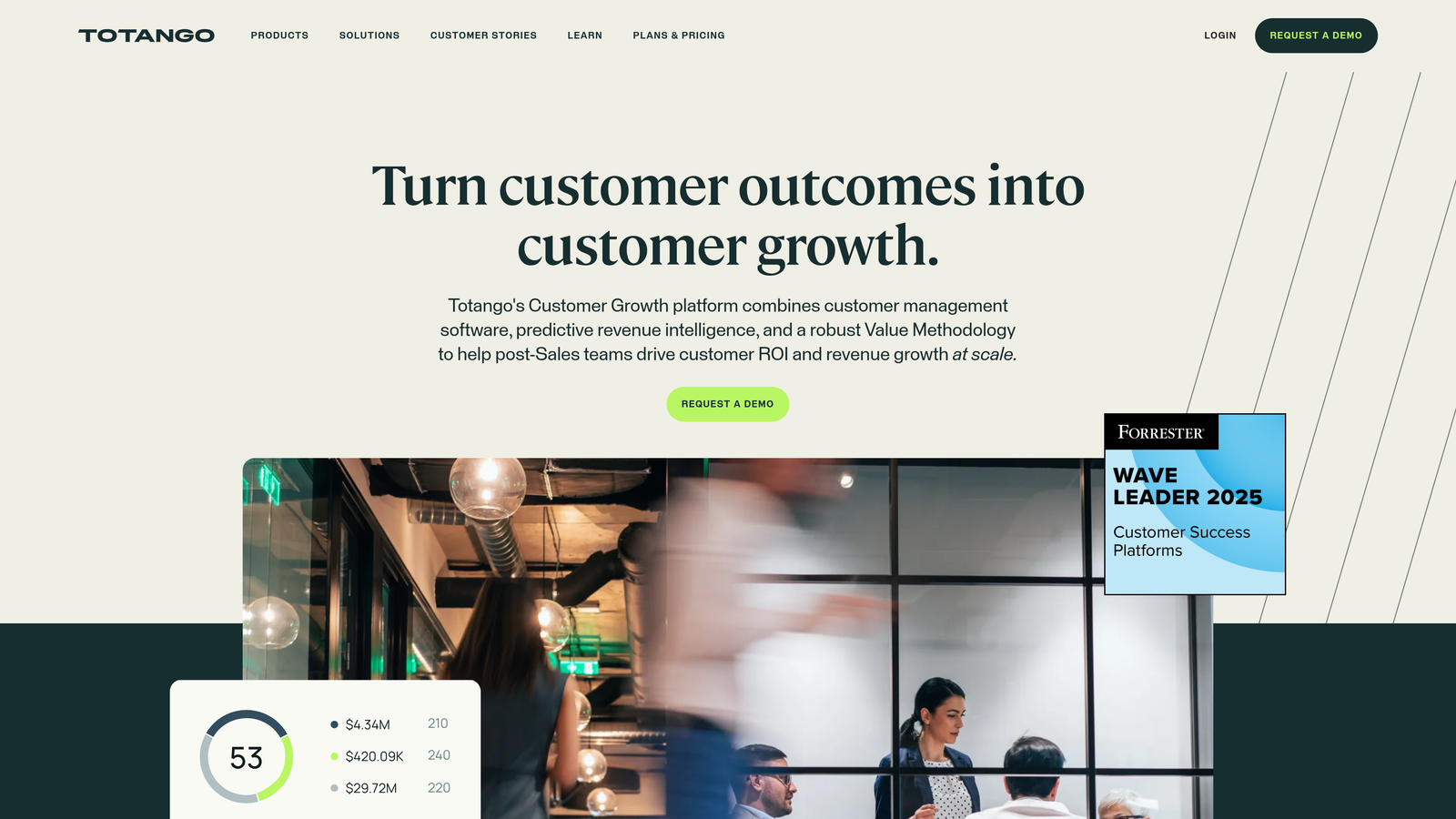
Totango focuses on customer success for product-led companies, using product usage data and support interactions to predict expansion opportunities and retention risk.
Where This Tool Shines
Totango's usage-based health scoring incorporates support patterns alongside feature adoption and engagement metrics. When a customer with high product usage suddenly opens multiple support tickets, the platform flags potential churn risk before it becomes critical.
The SuccessBLOCs provide templated workflows for common revenue scenarios—onboarding sequences, renewal campaigns, expansion plays—that trigger automatically based on support sentiment and product behavior. This helps smaller teams operate with enterprise-level sophistication.
Key Features
Usage-Based Health Scoring: Combines product analytics with support sentiment to create predictive customer health metrics tied to revenue outcomes.
Support Impact Analysis: Track how support interactions influence customer health scores, product adoption, and expansion readiness.
Automated Success Playbooks: Pre-built workflows trigger interventions when support patterns indicate risk or opportunity, scaling customer success operations.
Revenue Forecasting: Predict renewals and expansion based on combined signals from product usage, support quality, and engagement patterns.
SuccessBLOCs Templates: Industry-specific workflow templates accelerate implementation of customer success best practices.
Best For
SaaS companies with product-led growth models where product usage data is central to customer success strategy. Particularly valuable for teams wanting to scale customer success without proportional headcount growth.
Pricing
Free tier available for basic features. Paid plans start at $249 per month, scaling based on customer count and feature requirements.
8. Salesforce Service Cloud with Revenue Intelligence
Best for: Enterprise organizations with complex Salesforce implementations needing complete customer 360 visibility
Salesforce Service Cloud provides enterprise service capabilities with Einstein AI delivering predictive insights and deep integration with Salesforce revenue operations.
Where This Tool Shines
Service Cloud creates complete customer 360 views by combining support cases with opportunity data, account history, and revenue forecasts within the Salesforce platform. Einstein AI predicts case escalation, suggests routing based on customer value, and identifies which support patterns correlate with churn or expansion.
The platform's enterprise customization means you can build exactly the workflows and reporting you need, connecting support quality to revenue metrics specific to your business model. This flexibility comes with implementation complexity that requires dedicated resources.
Key Features
Einstein AI Predictions: Predicts case escalation, routing optimization, and customer churn risk based on support patterns and historical data.
Revenue Intelligence Integration: Native connection to Salesforce Revenue Intelligence provides unified forecasting incorporating support health signals.
Customer 360 Platform: Complete view of customer interactions across sales, service, commerce, and marketing within unified Salesforce records.
Advanced Workflow Automation: Build complex routing, escalation, and intervention workflows triggered by support patterns and customer value metrics.
Enterprise Customization: Unlimited ability to customize objects, workflows, and reporting to match specific business requirements and revenue models.
Best For
Large enterprises with existing Salesforce investments and dedicated administrators to manage platform complexity. Best when you need deep customization and complete control over support-to-revenue workflows.
Pricing
Enterprise edition starts at $165 per user per month. Revenue Intelligence add-on priced separately, typically adding $50-$100 per user per month depending on features.
9. ChurnZero
Best for: Retention-focused teams wanting real-time health monitoring triggered by support sentiment
ChurnZero specializes in customer retention, using real-time health monitoring and automated playbooks triggered by support sentiment and behavior patterns.
Where This Tool Shines
ChurnZero's real-time approach means customer health scores update immediately when support sentiment shifts. A frustrated support conversation triggers retention playbooks before the customer starts evaluating alternatives. The platform connects support quality directly to net revenue retention tracking.
The in-app engagement capabilities let you address support issues proactively—when usage patterns suggest confusion, you can trigger in-product guidance that prevents tickets while gathering intelligence about where customers struggle.
Key Features
Real-Time Health Monitoring: Customer health scores update immediately based on support interactions, product usage, and engagement patterns.
Support Sentiment Analysis: AI analyzes support conversations to identify frustration, satisfaction, and churn risk in real time.
Automated Retention Playbooks: Trigger interventions immediately when support patterns indicate churn risk, enabling proactive retention efforts.
Net Revenue Retention Tracking: Connect support quality metrics directly to NRR, showing how support excellence drives revenue retention and expansion.
In-App Engagement: Proactively guide users through your product based on usage patterns and support history, reducing ticket volume while improving outcomes.
Best For
B2B SaaS companies where retention is the primary growth lever and support quality directly impacts renewal rates. Particularly valuable for subscription businesses with measurable churn risk.
Pricing
Custom pricing based on customer count and features. Typically positioned at mid-market pricing levels, starting around $1,000-$2,000 per month depending on scale.
Making the Right Choice
The platform that works best depends on where you are in your revenue intelligence journey and how support fits into your broader customer operations.
If you want AI-native support that surfaces business intelligence automatically, Halo AI delivers continuous learning and revenue insights without requiring extensive configuration. Intercom and HubSpot Service Hub excel when you need support tightly integrated with sales and marketing in a unified platform.
For enterprise organizations with complex requirements, Gainsight and Salesforce Service Cloud provide the depth and customization needed to manage sophisticated customer success operations. Zendesk remains strong when you need extensive integrations and mature helpdesk capabilities with analytics layered on top.
Mid-market teams often find the best balance with Freshdesk plus Freshsuccess or Totango, which provide customer success capabilities without enterprise complexity. ChurnZero stands out when retention is your primary focus and you need real-time health monitoring tied to support sentiment.
Consider these questions: Does your team need AI to handle routine tickets, or primarily analytics on existing support data? Do you want revenue intelligence built into the support workflow, or are you comfortable connecting separate tools? How important is it that support agents see customer value context during conversations?
Your support team shouldn't scale linearly with your customer base. Let AI agents handle routine tickets, guide users through your product, and surface business intelligence while your team focuses on complex issues that need a human touch. See Halo in action and discover how continuous learning transforms every interaction into smarter, faster support.