9 Best Support Quality at Scale Solutions in 2026
Maintaining consistent support quality as your customer base grows is one of the toughest challenges in SaaS — and the right support quality at scale solutions make it achievable. This guide evaluates 9 purpose-built tools across AI-driven ticket resolution, QA automation, intelligent routing, and analytics to help modern support teams scale without sacrificing customer experience.
 Matt PattoliFounder14 min read
Maintaining consistent, high-quality support as your customer base grows is one of the hardest operational challenges in SaaS. What works at 500 customers often breaks down at 5,000: response times slip, agent knowledge becomes inconsistent, and ticket queues balloon faster than you can hire.
The good news is that a new generation of tools is purpose-built to help support teams scale quality, not just volume. Whether you need AI-driven ticket resolution, QA automation, intelligent routing, or deep analytics, the tools below cover the full spectrum of what modern support operations require.
We evaluated each solution on its ability to handle growing ticket volumes without sacrificing customer experience, how cleanly it integrates with existing helpdesk stacks, and the genuine intelligence it brings to support operations — not just automation for automation's sake.
1. Halo AI
Best for: B2B SaaS teams that want AI-first ticket resolution combined with product-aware guidance and business intelligence.
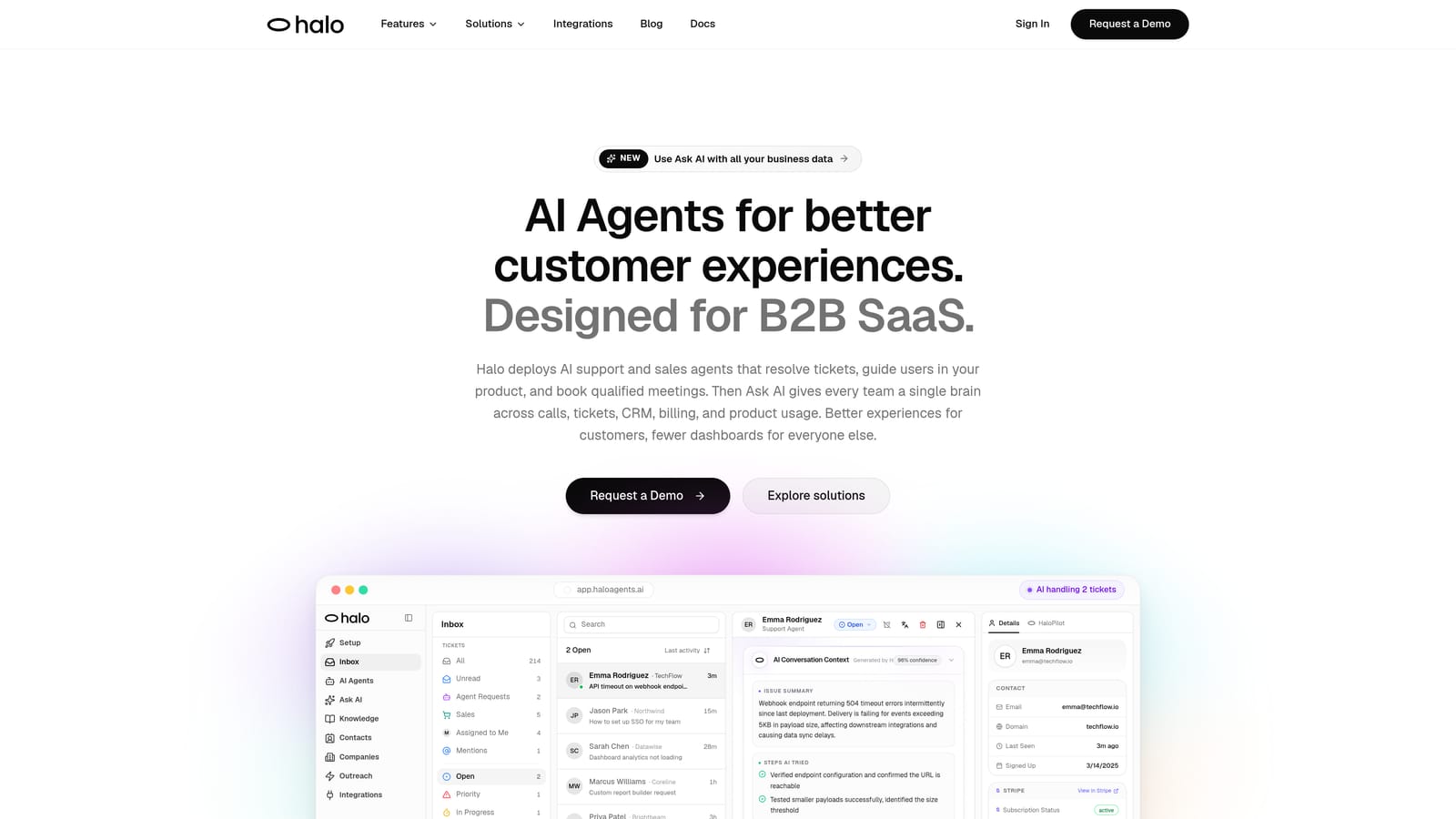
Halo AI is an AI-first customer support platform that deploys intelligent agents to resolve tickets, guide users through your product with page-aware context, and surface business intelligence — all while learning from every interaction.
Where This Tool Shines
Most tools on this list address one dimension of support quality: either they resolve tickets, or they analyze them, or they manage staffing. Halo operates across all three. Its AI agents don't just respond to tickets; they understand what users are doing inside your product at the moment they reach out, giving them the kind of contextual awareness that typically requires a senior support engineer.
What makes Halo genuinely different is the business intelligence layer. While your AI agents are handling tickets, Halo's smart inbox is surfacing customer health signals, revenue anomalies, and trend patterns that your support team would otherwise miss entirely. That's not a support tool — that's a cross-functional intelligence layer that happens to live in your helpdesk.
Key Features
Autonomous AI Agents: Resolve support tickets without human intervention, learning from every interaction to get smarter over time.
Page-Aware Chat Widget: Sees what users see inside your product and provides visual UI guidance in context — not generic help articles.
Smart Inbox with Business Intelligence: Surfaces customer health signals, revenue anomalies, and emerging trends directly in the support view.
Auto Bug Ticket Creation: Automatically routes bug reports to Linear or your engineering workflow, closing the loop between support and product teams.
Live Agent Handoff: Escalates complex issues to human agents with full conversation context preserved, so nothing gets lost in the transfer.
Deep Integrations: Connects with HubSpot, Slack, Intercom, Stripe, Zoom, PandaDoc, Fathom, and Linear for a unified operational picture.
Best For
Halo is the strongest fit for B2B SaaS companies and product teams that want AI agents handling routine resolution while simultaneously generating business intelligence from support interactions. It's particularly well-suited for teams already using Intercom, HubSpot, or Linear who want their support layer to plug into the broader business stack.
Pricing
Contact for pricing or book a demo at haloagents.ai. Pricing is tailored to team size and ticket volume.
2. Zendesk
Best for: Mid-market and enterprise teams that need a proven, comprehensive helpdesk with deep customization and omnichannel coverage.
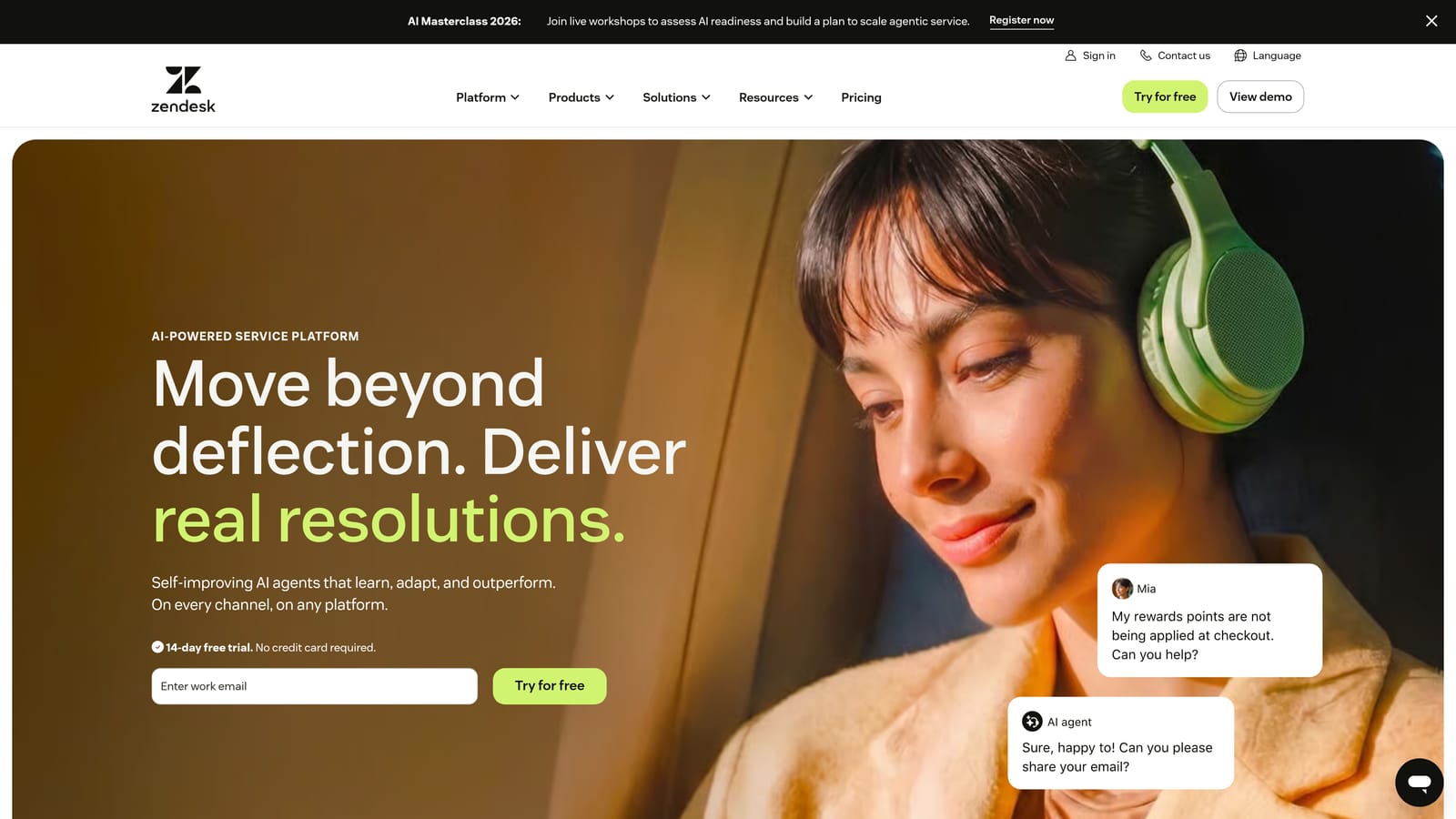
Zendesk is one of the most established helpdesk platforms available, offering a comprehensive suite of ticketing, automation, AI assistance, and analytics tools for growing support organizations.
Where This Tool Shines
Zendesk's greatest strength is its maturity. The platform has been refined over many years, and it shows in the depth of its automation rules, reporting capabilities, and marketplace ecosystem. For teams that need to handle complex routing logic, multi-channel support, and detailed CSAT tracking, Zendesk provides a reliable foundation.
The addition of Zendesk AI brings suggested responses, ticket summarization, and intent detection. It's worth noting that this AI layer is built on top of a traditional helpdesk architecture — which means it's powerful, but it's AI as an enhancement rather than AI as the core design principle.
Key Features
Advanced Automation: Robust ticketing system with triggers, automation rules, and macros for consistent response workflows at scale.
Zendesk AI: Suggested responses, ticket summarization, and intelligent triage to reduce agent effort on routine queries.
Omnichannel Support: Unified inbox across email, chat, voice, and social channels with consistent routing and reporting.
Reporting and CSAT: Extensive built-in analytics and customer satisfaction measurement tools with customizable dashboards.
Marketplace Ecosystem: Hundreds of third-party integrations covering CRM, billing, workforce management, and QA tools.
Best For
Mid-market to enterprise support teams that need a battle-tested helpdesk with broad integration support and strong governance features. Also the natural choice for teams already using Klaus for QA, since the two platforms are now part of the same product family.
Pricing
Suite Team starts at approximately $55 per agent per month; enterprise plans with advanced AI and analytics are available at higher tiers. Verify current pricing at zendesk.com.
3. Intercom
Best for: Product-led growth companies that want conversational, in-product support combined with proactive user engagement.
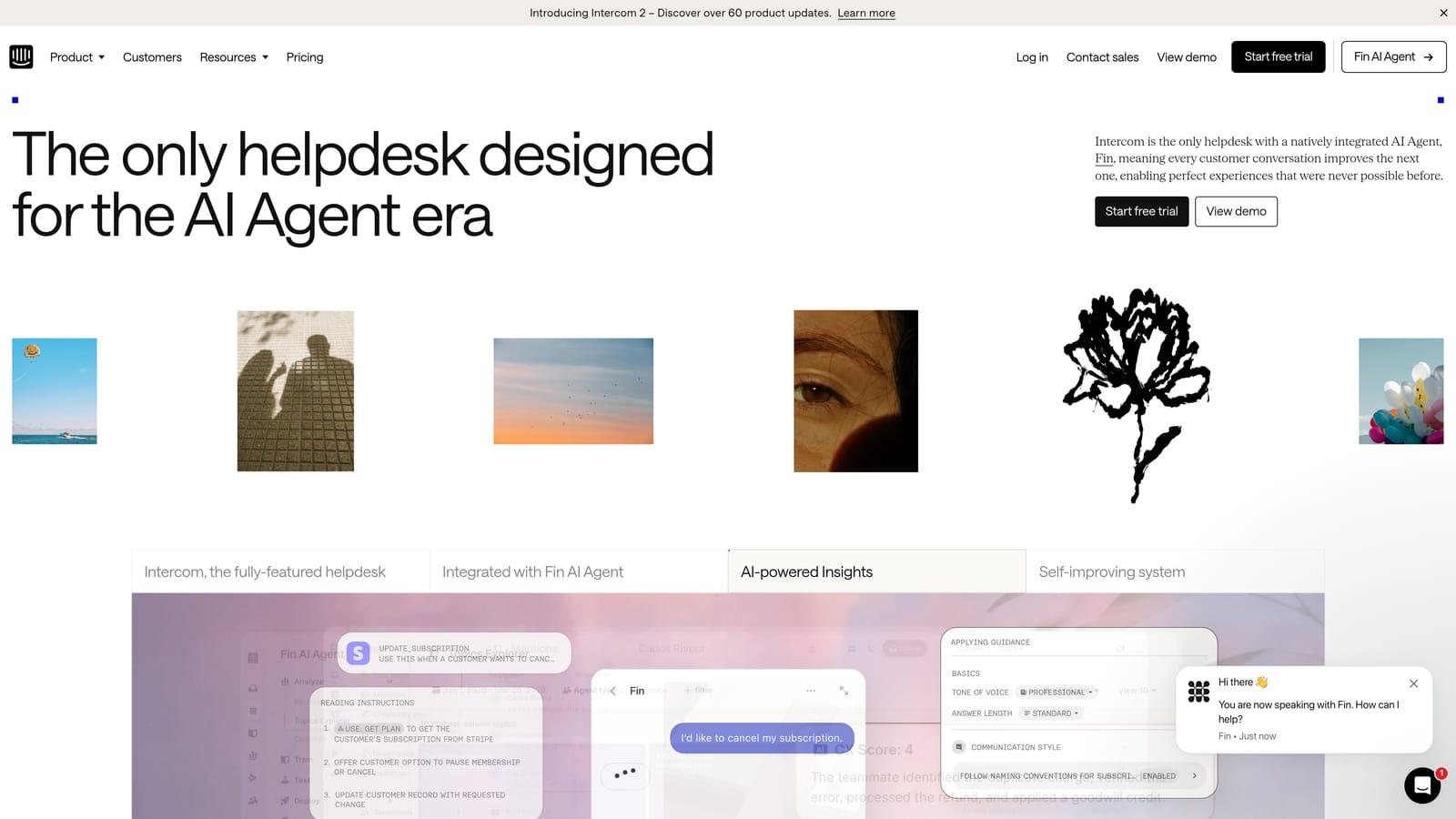
Intercom is a conversational support platform combining in-product messaging, AI-powered resolution through its Fin agent, and proactive engagement tools designed for companies with a strong product-led motion.
Where This Tool Shines
Intercom's real differentiator is its ability to blur the line between support and product engagement. Beyond resolving tickets, it lets teams send targeted in-app messages, run product tours, and proactively reach users before they even submit a ticket. For companies where support and growth are closely linked, that's a meaningful advantage.
Fin, Intercom's AI agent, can autonomously resolve a significant portion of common queries using your existing help content. The resolution-based pricing model means you pay for outcomes, which aligns incentives well — though costs can scale quickly as resolution volume grows.
Key Features
Fin AI Agent: Autonomous ticket resolution using your existing help center content, with configurable escalation paths.
In-App Messaging and Product Tours: Proactive engagement tools that address user confusion before it becomes a support ticket.
Shared Inbox: Conversation routing, assignment, and collaboration tools for support teams of any size.
Customer Data Platform: Personalized support experiences based on user attributes, plan type, and behavioral data.
Outbound Messaging: Targeted messages for onboarding sequences and proactive issue communication.
Best For
SaaS companies with a product-led growth model where support, onboarding, and user engagement are managed by overlapping teams. Less suited for high-volume transactional support environments where conversation-based pricing can become expensive.
Pricing
Essential plan starts at approximately $39 per seat per month; Fin AI is priced per resolution, so total costs depend on volume. Review current plans at intercom.com.
4. Freshdesk
Best for: Growing teams that need omnichannel AI-assisted support without enterprise-level pricing commitments.
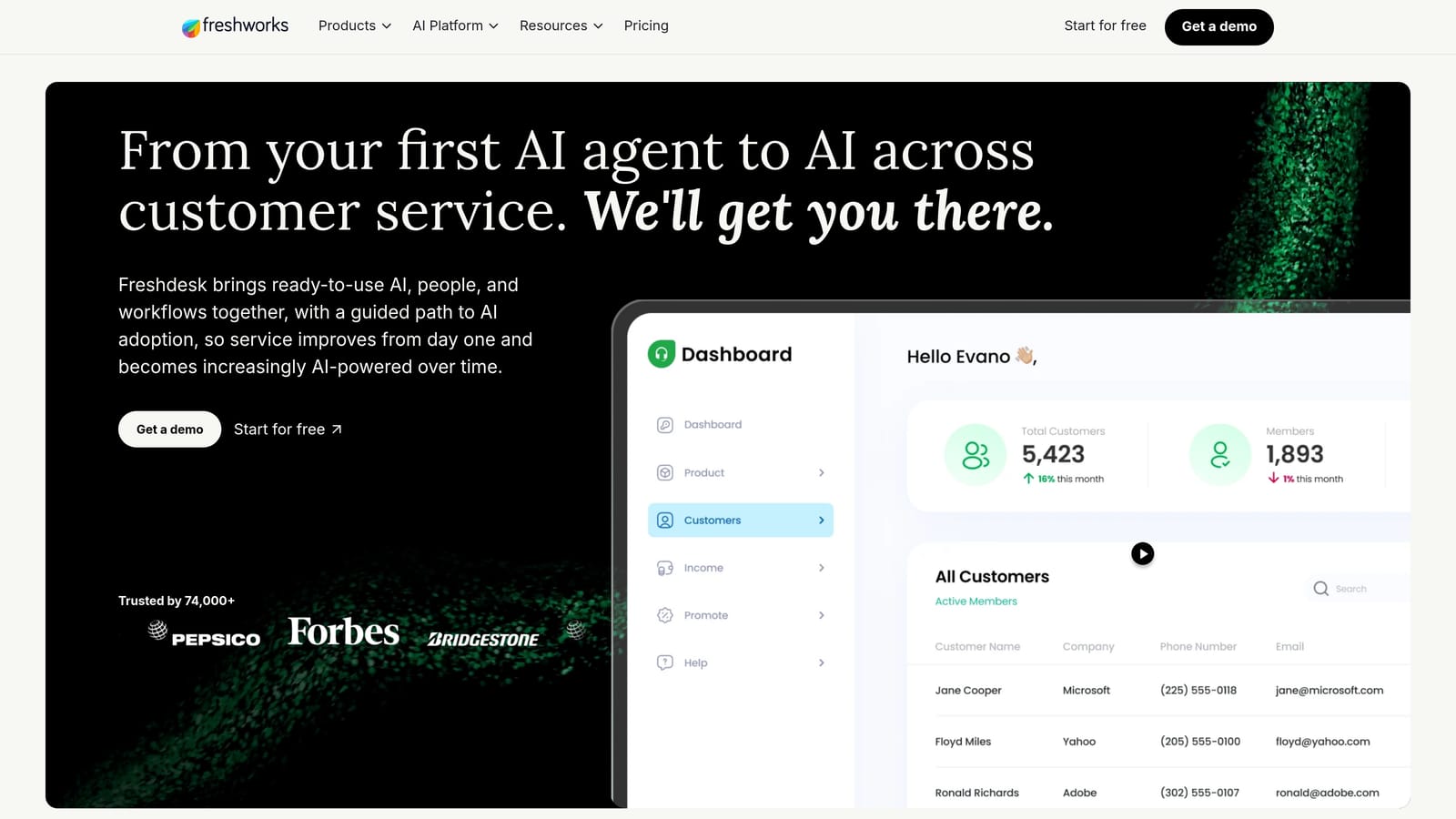
Freshdesk is an omnichannel helpdesk platform with Freddy AI capabilities, offering a cost-accessible entry point for teams that need intelligent support tooling without the budget requirements of larger platforms.
Where This Tool Shines
Freshdesk hits a sweet spot for teams that are past the startup phase but not yet at enterprise scale. The platform covers the core helpdesk requirements — omnichannel ticketing, automation, and CSAT — while Freddy AI adds triage, agent suggestions, and auto-categorization without requiring a significant additional investment.
Features like collision detection (preventing two agents from responding to the same ticket simultaneously) and parent-child ticketing for complex issues show that Freshdesk has thought carefully about the operational problems that emerge as teams grow, not just the basics.
Key Features
Freddy AI: Handles ticket suggestions, auto-triage, and agent assistance to reduce manual effort across high-volume queues.
Omnichannel Ticketing: Unified inbox across email, chat, phone, and social channels with consistent workflow management.
Collision Detection: Prevents duplicate agent responses by flagging when multiple agents are viewing the same ticket.
Parent-Child Ticketing: Manages complex, multi-step issues by linking related tickets without losing thread.
CSAT Surveys: Built-in satisfaction measurement and reporting to track quality trends over time.
Best For
SMBs and mid-market teams that want solid omnichannel coverage and AI assistance at a predictable, accessible price point. The free tier makes it particularly attractive for teams evaluating helpdesk tools before committing to a paid plan.
Pricing
Free tier available for small teams; Growth plan starts at approximately $15 per agent per month. Check freshworks.com for current tier details.
5. Klaus (by Zendesk)
Best for: Support teams that want to automate conversation quality review across 100% of tickets, not just a sample.
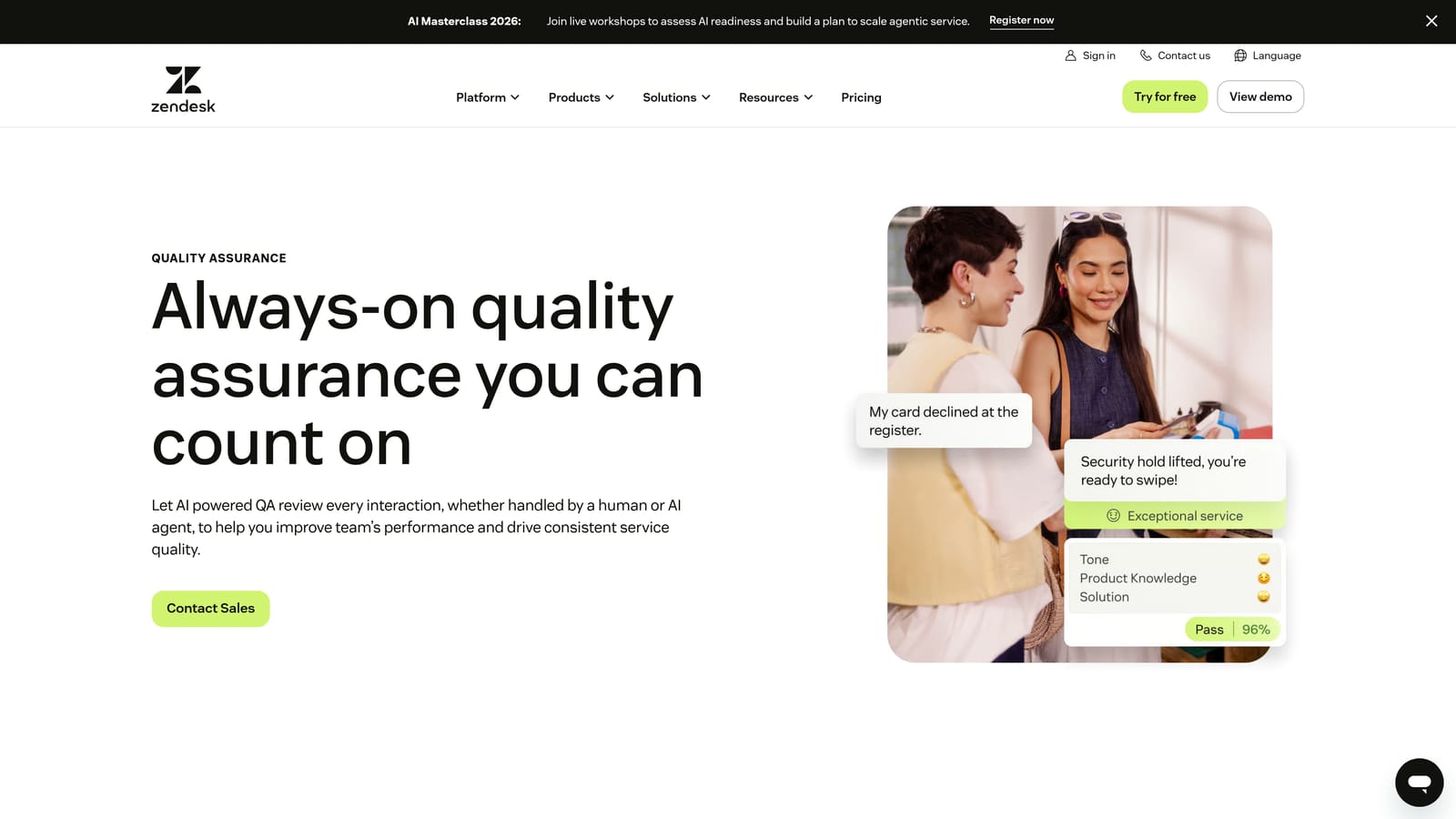
Klaus is an automated QA platform that uses AI to score and review support conversations at scale, helping teams identify quality gaps and coach agents systematically rather than reactively.
Where This Tool Shines
The fundamental problem Klaus solves is one of coverage. Traditional QA means a manager manually reviews a small sample of tickets — maybe a few per agent per week. At scale, that's statistically meaningless. Klaus's AutoQA scores every single conversation, giving quality teams a complete picture rather than a snapshot.
The coaching workflow integration is particularly valuable. Rather than surfacing quality scores in isolation, Klaus connects them to structured coaching sessions and calibration tools that help QA reviewers stay aligned on what "good" actually means across a growing team.
Key Features
AutoQA: AI-powered scoring of 100% of conversations without requiring manual review of each ticket.
Customizable Scorecards: Quality rubrics aligned to your specific standards, not generic templates.
Agent Coaching Workflows: Structured coaching sessions triggered by quality scores, linking data to development action.
Calibration Sessions: Tools to align QA reviewers on scoring consistency, reducing subjectivity at scale.
Helpdesk Integrations: Connects with Zendesk, Intercom, Freshdesk, and other major helpdesk platforms.
Best For
Support teams with dedicated QA programs that need to move beyond manual spot-checking. Particularly strong for teams already on Zendesk, given the native integration following the acquisition.
Pricing
Contact Zendesk for current Klaus pricing; the product was acquired by Zendesk in 2024 and pricing may be bundled with Zendesk plans.
6. MaestroQA
Best for: Teams with dedicated QA programs that need highly customizable grading rubrics and deep coaching analytics.
MaestroQA is a dedicated QA and agent coaching platform with customizable rubrics, grading workflows, and analytics designed for organizations that treat quality assurance as a core operational function.
Where This Tool Shines
Where Klaus emphasizes AI-automated scoring at volume, MaestroQA emphasizes flexibility and depth in the QA process itself. Teams with complex, nuanced quality standards — where a one-size rubric doesn't capture what excellent support actually looks like — will find MaestroQA's customization options more accommodating.
The root cause analysis capability is worth highlighting specifically. Rather than just flagging low-quality tickets, MaestroQA helps teams identify the systemic reasons quality is slipping: knowledge gaps, process failures, or specific ticket categories that consistently underperform. That's the difference between fixing symptoms and fixing the underlying problem.
Key Features
Customizable Scorecards: Fully configurable QA rubrics and grading criteria tailored to your team's quality definition.
Automated Ticket Sampling: Systematic assignment of tickets to QA reviewers, removing selection bias from the process.
Agent Performance Dashboards: Individual and team-level quality tracking with coaching session history.
Root Cause Analysis: Identifies systemic quality issues rather than just surfacing individual low scores.
Helpdesk Integrations: Connects with Zendesk, Salesforce Service Cloud, Kustomer, and other enterprise platforms.
Best For
Mid-market and enterprise support organizations with dedicated QA teams, complex grading requirements, and a formal coaching program. Less suited for smaller teams without a structured QA function in place.
Pricing
Contact MaestroQA for pricing; the platform is positioned for mid-market and enterprise customers. Request a demo at maestroqa.com.
7. Assembled
Best for: Support operations teams that need accurate demand forecasting and scheduling to prevent quality degradation during peak periods.
Assembled is a workforce management platform built specifically for support teams, providing demand forecasting, scheduling, and real-time adherence tracking to ensure staffing aligns with actual ticket volume.
Where This Tool Shines
Support quality doesn't just degrade because agents lack skills or knowledge — it degrades because teams are understaffed when volume spikes. Assembled addresses this structural cause directly. By forecasting ticket volume based on historical patterns and helping managers build schedules accordingly, it prevents the reactive chaos that typically accompanies growth.
The real-time adherence tracking is particularly useful for distributed or remote support teams. Knowing whether your team is on schedule during a high-volume period — and being able to respond quickly when they're not — is a quality lever that pure ticketing tools simply can't provide.
Key Features
Volume Forecasting: Predicts ticket demand based on historical patterns to inform staffing decisions before queues build.
Drag-and-Drop Scheduling: Intuitive shift management with visibility across time zones and coverage requirements.
Real-Time Adherence Tracking: Monitors whether agents are following their scheduled assignments during active shifts.
Scenario Planning: Models different staffing configurations for peak periods, product launches, or team growth phases.
Helpdesk Integrations: Connects with Zendesk, Salesforce, and other major support platforms for unified data.
Best For
Mid-market to enterprise support operations with complex scheduling needs, multiple shifts, or distributed teams. Assembled is a complementary layer to your helpdesk, not a replacement — it's most valuable when paired with strong ticketing and QA tools.
Pricing
Contact Assembled for pricing; the platform is designed for mid-market to enterprise support operations. Visit assembled.com to request a demo.
8. Gorgias
Best for: E-commerce brands that need order data, customer history, and support conversations unified in a single view.
Gorgias is a helpdesk platform purpose-built for e-commerce brands, pulling order, subscription, and customer data directly into the support view for faster, more accurate resolutions without tab-switching.
Where This Tool Shines
For DTC and e-commerce brands, the most common support quality problem isn't a knowledge gap — it's context. Agents need to see order status, shipping details, and purchase history to answer questions accurately, and every second spent hunting through Shopify or a separate CRM is a second that slows resolution and increases error risk. Gorgias eliminates that entirely by surfacing all of it in the ticket view.
The revenue statistics feature is a genuinely useful addition: it shows how support interactions influence sales and retention, making it easier to justify support investment and identify which ticket types have the highest revenue impact.
Key Features
Deep E-Commerce Integrations: Shopify, BigCommerce, and Magento data surfaced directly in the ticket view without switching tools.
AI Auto-Responses: Automated responses for high-frequency queries like order status, returns, and shipping updates.
Revenue Statistics: Tracks how support interactions contribute to sales and customer retention metrics.
Macros and Rules: Consistent, on-brand responses at scale with configurable automation for common scenarios.
Omnichannel Coverage: Unified inbox across email, chat, SMS, and social DMs for complete customer communication history.
Best For
E-commerce and DTC brands running on Shopify, BigCommerce, or Magento that need support and order management tightly integrated. Less suited for B2B SaaS or service businesses without a strong transactional commerce component.
Pricing
Starter plan at approximately $10 per month; pricing scales by ticket volume rather than per seat. Review current plans at gorgias.com.
9. Guru
Best for: Growing support teams where knowledge inconsistency — agents giving different answers to the same question — is the primary quality problem.
Guru is an AI-powered knowledge management platform that ensures support agents always have access to accurate, verified answers, reducing quality variance as headcount and ticket volume scale together.
Where This Tool Shines
Here's a pattern that shows up consistently in scaling support teams: two agents receive the same question and give different answers. One is right, one is wrong, or both are partially outdated. The customer gets confused, trust erodes, and the support team doesn't even know it's happening. Guru's verification workflow directly addresses this by requiring knowledge owners to regularly confirm that content is still accurate.
The AI-assisted suggestions surface relevant knowledge cards inside the agent's existing workflow, which means agents don't have to leave their helpdesk to find the right answer. The analytics layer then shows which knowledge gaps agents encounter most frequently, giving team leads a clear roadmap for what to document next.
Key Features
AI Knowledge Suggestions: Surfaces relevant knowledge cards in the agent's workflow at the moment they're needed, without manual searching.
Verification Workflows: Requires knowledge owners to periodically confirm content accuracy, preventing outdated answers from circulating.
Browser Extension: Provides in-context knowledge access across any tool, not just dedicated Guru interfaces.
Duplicate Content Detection: Flags conflicting or redundant knowledge cards before they cause inconsistent agent responses.
Knowledge Gap Analytics: Identifies which topics agents search for most without finding answers, prioritizing documentation efforts.
Best For
Support teams experiencing the knowledge consistency problem that comes with rapid headcount growth: too many agents, too much tribal knowledge, and no systematic way to ensure everyone is working from the same source of truth. Works well as a complement to any helpdesk platform.
Pricing
Free tier available for small teams; All-in-One plan starts at approximately $18 per user per month. Check current pricing at getguru.com.
Which Tool Is Right for Your Team?
The honest answer is that no single tool solves every dimension of support quality at scale. The best outcomes come from understanding where your biggest quality bottleneck actually lives before you start evaluating platforms.
If your primary problem is ticket volume overwhelming your team, the answer is AI-first resolution. Halo AI is the strongest option here, particularly for B2B SaaS teams that want resolution, product guidance, and business intelligence in one platform. Intercom's Fin is a solid alternative for product-led companies already in the Intercom ecosystem.
If your problem is inconsistent agent responses and no visibility into quality, look at the QA layer. Klaus is the right choice if you want AI-automated scoring at full conversation volume. MaestroQA is better suited if your QA program is more nuanced and requires highly customizable rubrics and coaching workflows.
If the issue is staffing misalignment — quality dropping during peak periods because you simply don't have enough agents scheduled — Assembled addresses that structural problem directly, and no amount of AI or QA tooling will fix it without solving the staffing layer first.
For teams where knowledge inconsistency is the core issue, Guru is purpose-built for exactly that problem. And if you're an e-commerce brand, Gorgias is the clear specialist choice given how tightly it integrates order data into the support experience.
For general helpdesk needs with strong omnichannel coverage, Zendesk is the enterprise standard and Freshdesk is the more accessible alternative for teams watching budget.
Start by auditing your support quality data honestly: Where are response times slipping? Where are CSAT scores lowest? Where do agents give inconsistent answers? The tool that solves your actual bottleneck will deliver far more value than the one with the most impressive feature list.
Your support team shouldn't scale linearly with your customer base. Let AI agents handle routine tickets, guide users through your product, and surface business intelligence while your team focuses on complex issues that need a human touch. See Halo in action and discover how continuous learning transforms every interaction into smarter, faster support.