9 Best Support Response Automation Tools in 2026
Support response automation tools transform customer service by instantly handling routine inquiries, intelligently routing complex issues, and preventing tickets from being overlooked. This comprehensive guide examines nine leading platforms for 2026, evaluating their automation capabilities, integration options, and real-world performance to help businesses—from startups to enterprises—select the right solution for faster response times, improved customer satisfaction, and reduced support costs.
 Grant CooperFounder11 min read
When customers reach out, every minute counts. Slow responses don't just frustrate users—they cost revenue and damage trust. Support response automation tools solve this by handling routine inquiries instantly, routing complex issues intelligently, and ensuring no ticket falls through the cracks.
But with dozens of options claiming to revolutionize your support workflow, choosing the right tool matters. This guide evaluates nine leading platforms based on automation capabilities, integration depth, ease of implementation, and real-world performance. Whether you're scaling a startup or optimizing enterprise operations, you'll find a solution that fits your support strategy.
1. Halo AI
Best for: B2B product teams wanting autonomous AI agents that learn continuously
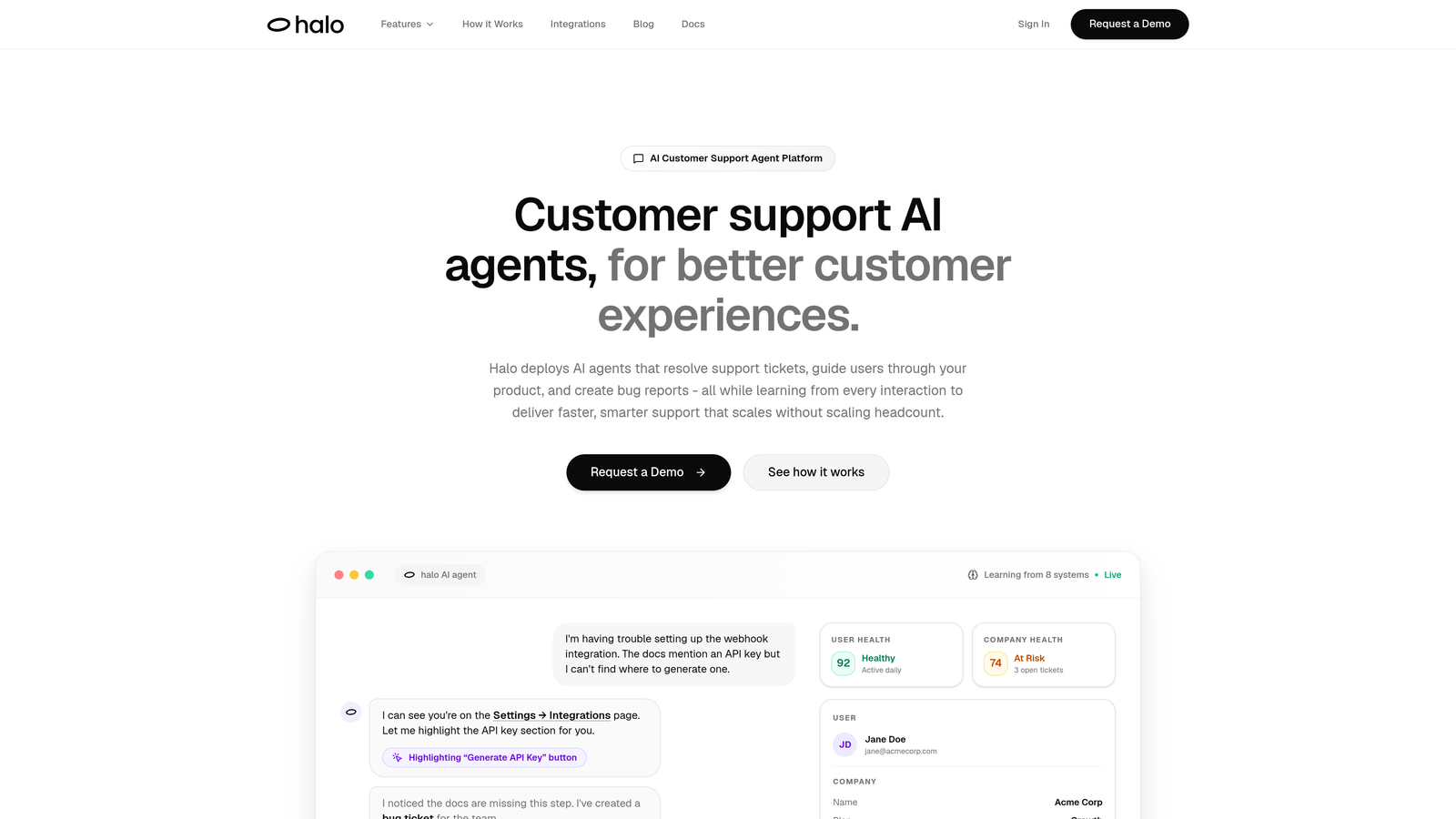
Halo AI is an AI-native customer support platform designed for autonomous ticket resolution with continuous learning capabilities.
Where This Tool Shines
Unlike automation bolted onto legacy helpdesks, Halo AI is built AI-first from the ground up. Its agents don't just follow scripts—they understand context, learn from every interaction, and improve their responses over time without manual retraining.
The platform's page-aware capabilities set it apart. When a user asks for help, Halo knows exactly what they're looking at in your product, enabling visual UI guidance that traditional chatbots can't match. This contextual awareness dramatically improves resolution rates for product-related questions.
Key Features
Autonomous AI Agents: Resolve tickets end-to-end without human intervention while learning from each interaction.
Page-Aware Chat Widget: Sees what users see in your product to provide visual guidance and contextual help.
Smart Inbox with Business Intelligence: Surfaces customer health signals, revenue intelligence, and anomaly detection beyond basic support metrics.
Auto Bug Ticket Creation: Automatically creates engineering tickets in Linear when issues are detected, complete with reproduction steps.
Multi-System Integration: Connects to your entire business stack including Slack, HubSpot, Intercom, Stripe, Zoom, and PandaDoc.
Best For
B2B product companies that want AI to operate autonomously rather than just assist human agents. Particularly valuable for teams using modern tools like Linear, Slack, and Intercom who want their support system to connect seamlessly across their entire stack.
Pricing
Contact for pricing. The platform is designed for product-focused companies prioritizing continuous improvement and intelligence over basic ticket deflection.
2. Zendesk AI
Best for: Enterprise teams already invested in the Zendesk ecosystem
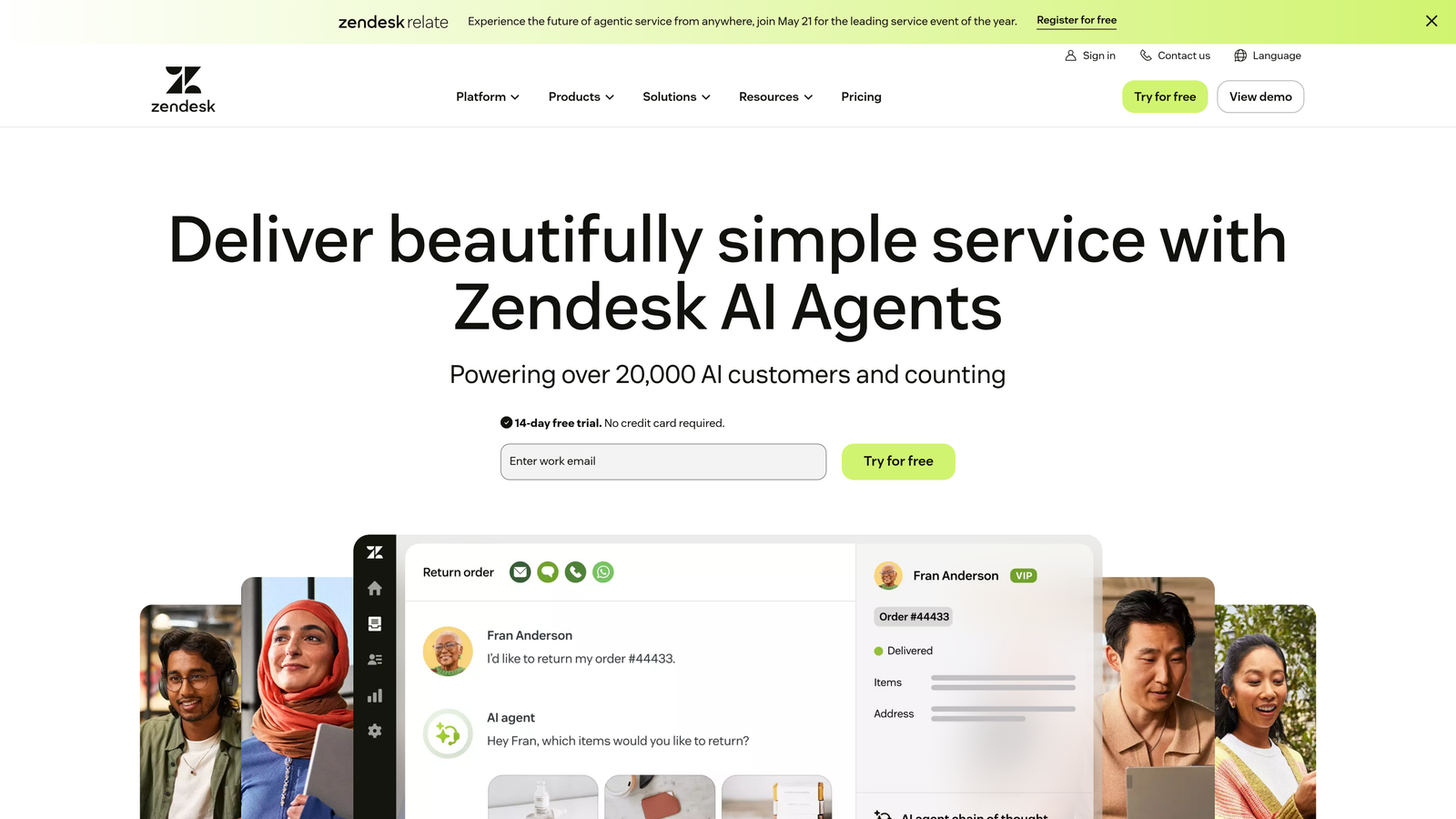
Zendesk AI is an enterprise-grade automation suite integrated directly into the Zendesk platform.
Where This Tool Shines
If you're already running Zendesk, their AI capabilities offer the path of least resistance. The automation suite integrates seamlessly with your existing workflows, macros, and reporting—no migration headaches or data synchronization issues.
The advanced bot builder includes sophisticated intent detection that goes beyond keyword matching. It understands customer goals even when phrased differently, making automated responses feel more natural and less robotic.
Key Features
Advanced Bot Builder: Create conversation flows with intent detection that understands customer goals beyond exact phrasing.
Intelligent Triage and Routing: Automatically categorizes and routes tickets to the right team based on content analysis.
Agent Assist: Suggests responses and relevant articles to agents in real-time during conversations.
Omnichannel Automation: Deploy consistent automation across email, chat, social media, and messaging channels.
Analytics Dashboard: Track bot performance, resolution rates, and customer satisfaction specific to automated interactions.
Best For
Enterprise organizations with existing Zendesk deployments who want to add automation without platform migration. Teams that value tight integration with their current support infrastructure and have the budget for higher-tier plans.
Pricing
Included with Suite Professional and above plans. Available as an add-on for lower-tier plans, with pricing varying based on conversation volume and feature set.
3. Intercom Fin
Best for: SaaS companies prioritizing conversational, GPT-powered customer experiences
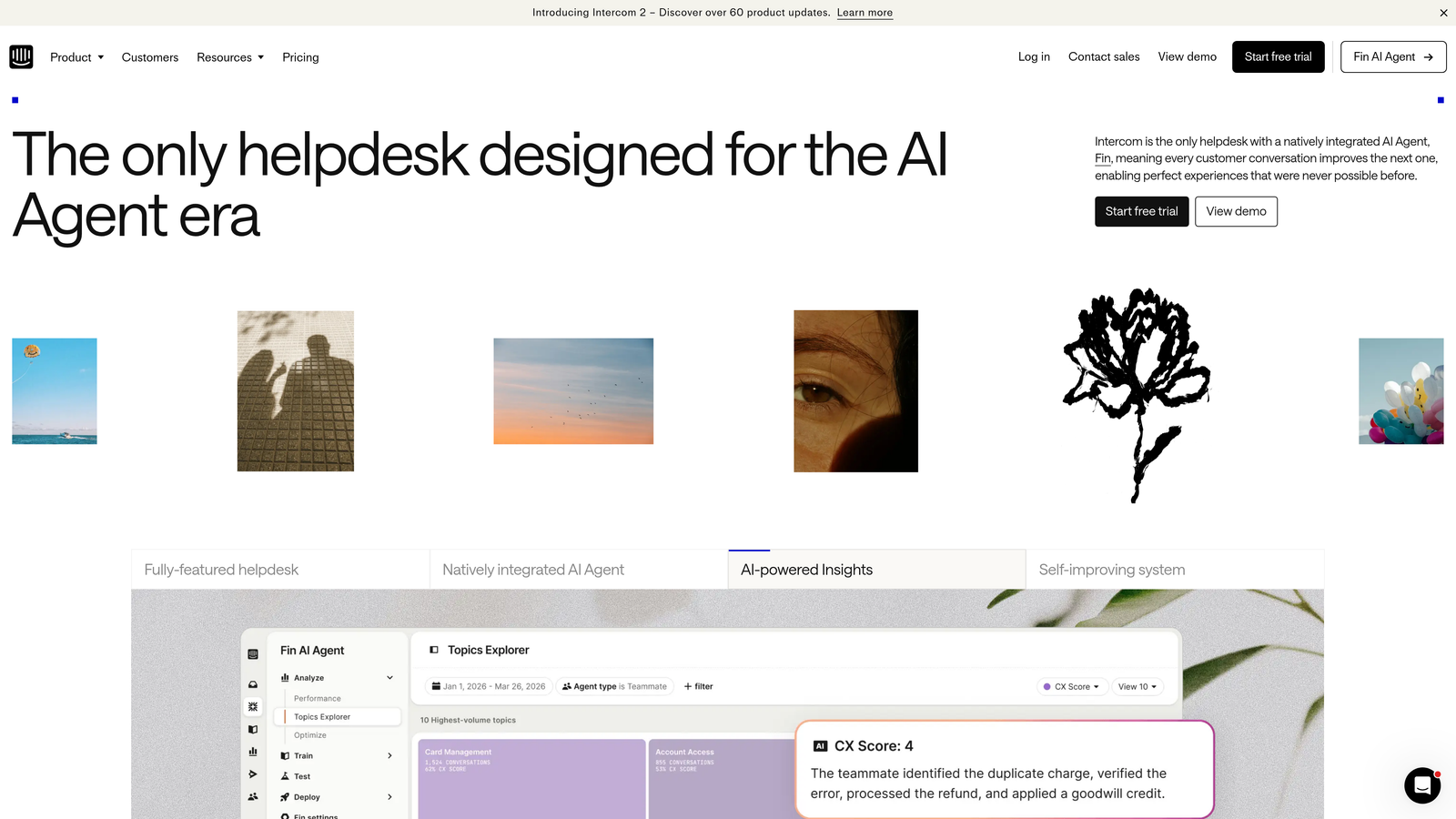
Intercom Fin is a GPT-powered AI agent that provides natural conversational support automation.
Where This Tool Shines
Fin leverages large language models to generate responses that sound remarkably human. It trains on your help center content and past conversations, then answers questions in a conversational tone that matches your brand voice.
The handoff experience is particularly smooth. When Fin encounters a question it can't handle confidently, it escalates to a human agent with full context intact. Your team picks up exactly where the AI left off, creating a seamless experience for customers.
Key Features
GPT-Powered Responses: Generates natural, conversational answers based on your help center and conversation history.
Automatic Training: Learns from your existing documentation and support interactions without manual configuration.
Seamless Human Handoff: Escalates complex issues to agents with complete conversation context preserved.
Custom Answer Controls: Set guardrails on what topics Fin can address and when it should defer to humans.
Performance Analytics: Track resolution rate, customer satisfaction, and cost per resolution in real-time.
Best For
SaaS companies already using Intercom who want to add sophisticated AI without switching platforms. Teams that value conversational quality and have comprehensive help documentation for the AI to learn from.
Pricing
$0.99 per resolution. This per-resolution model means costs scale with value delivered, though high-volume support teams should calculate total costs carefully.
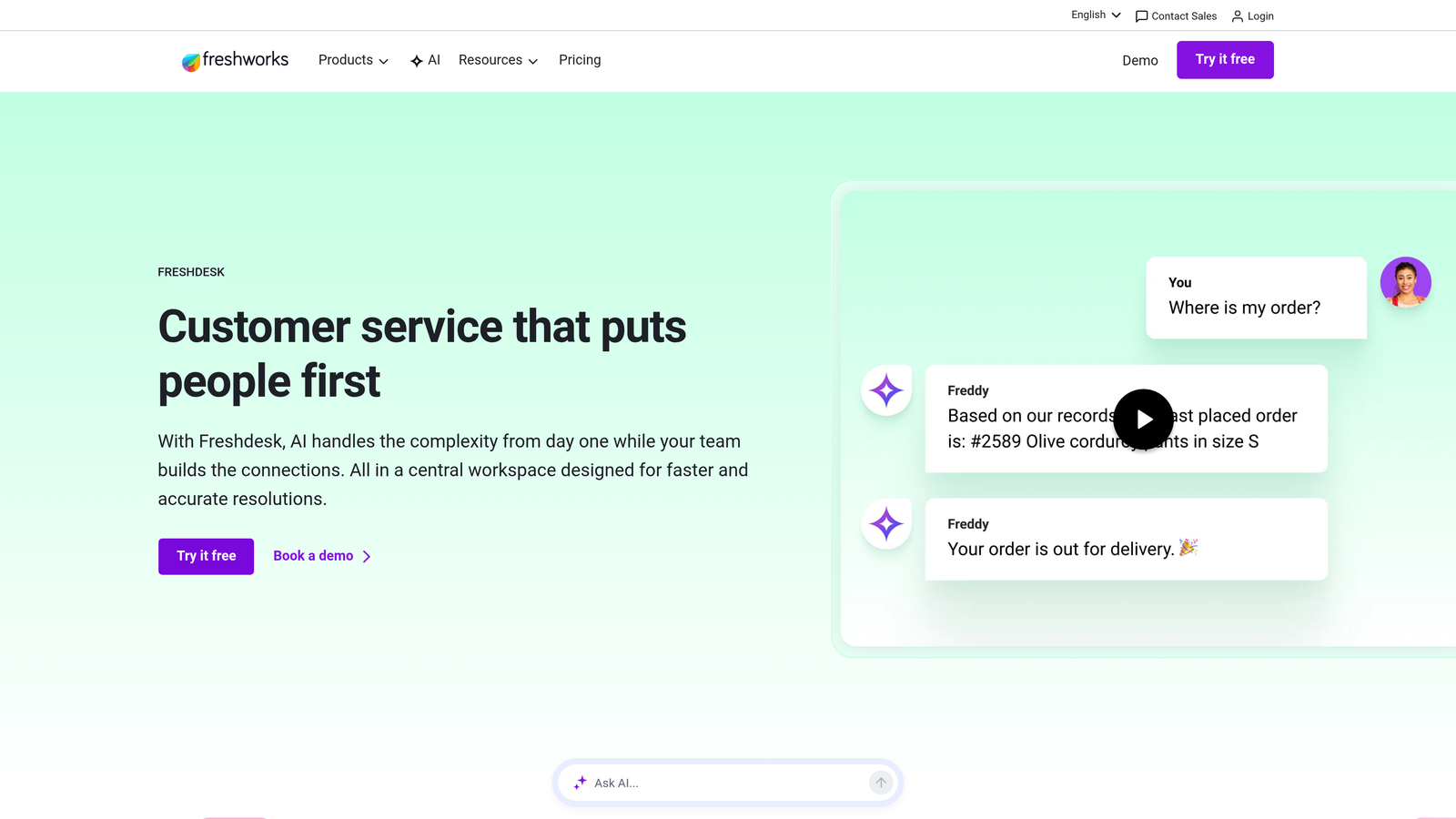
4. Freshdesk Freddy AI
Best for: Mid-market teams wanting AI automation at an accessible price point
Freshdesk Freddy AI is an AI automation suite built into the Freshworks customer service platform.
Where This Tool Shines
Freddy AI delivers solid automation capabilities at a more accessible price than enterprise platforms. The suggested responses feature helps agents respond faster by recommending replies based on ticket content and historical patterns.
Sentiment analysis adds valuable intelligence to ticket routing. Freddy detects frustrated or angry customers and can automatically escalate those tickets to senior agents or flag them for priority handling, preventing minor issues from becoming major problems.
Key Features
Auto-Triage and Categorization: Automatically tags and categorizes incoming tickets based on content analysis.
Suggested Responses: Recommends replies to agents based on ticket content and past successful resolutions.
Chatbot Builder: Create automated conversation flows using pre-built templates for common scenarios.
Sentiment Analysis: Detects customer emotion and adjusts priority or routing accordingly.
Predictive Support: Identifies customers likely to need help based on behavior patterns and proactively reaches out.
Best For
Growing companies that need AI capabilities but aren't ready for enterprise pricing. Teams that want a balance between automation sophistication and implementation simplicity.
Pricing
Included with Pro plan at $49 per agent per month and above. This makes it one of the more affordable options for teams wanting comprehensive AI features.
5. Kustomer IQ
Best for: Companies needing unified customer context across all touchpoints
Kustomer IQ is an AI-powered automation platform with a unified customer timeline across all channels.
Where This Tool Shines
Kustomer's unified timeline gives AI access to complete customer history—purchases, past tickets, website behavior, and interactions across every channel. This comprehensive context enables smarter routing decisions than platforms working with fragmented data.
Predictive routing goes beyond simple keyword matching. The system analyzes customer history, issue complexity, and agent expertise to route tickets to the person most likely to resolve them quickly. This reduces transfers and improves first-contact resolution rates.
Key Features
Unified Customer Timeline: Consolidates all customer interactions, purchases, and behavior into a single chronological view.
Predictive Routing: Routes tickets based on customer history, issue complexity, and agent expertise patterns.
Sentiment and Intent Detection: Analyzes customer emotion and underlying goals to inform automation decisions.
Workflow Automation: Build custom automation rules based on any combination of customer data and business logic.
Conversation Intelligence: Surfaces insights from support interactions to inform product and service improvements.
Best For
Enterprise companies with complex customer journeys spanning multiple touchpoints. Organizations that need deep integration between support, sales, and customer success data.
Pricing
Enterprise pricing model with costs based on conversation volume and feature requirements. Contact their sales team for specific quotes.
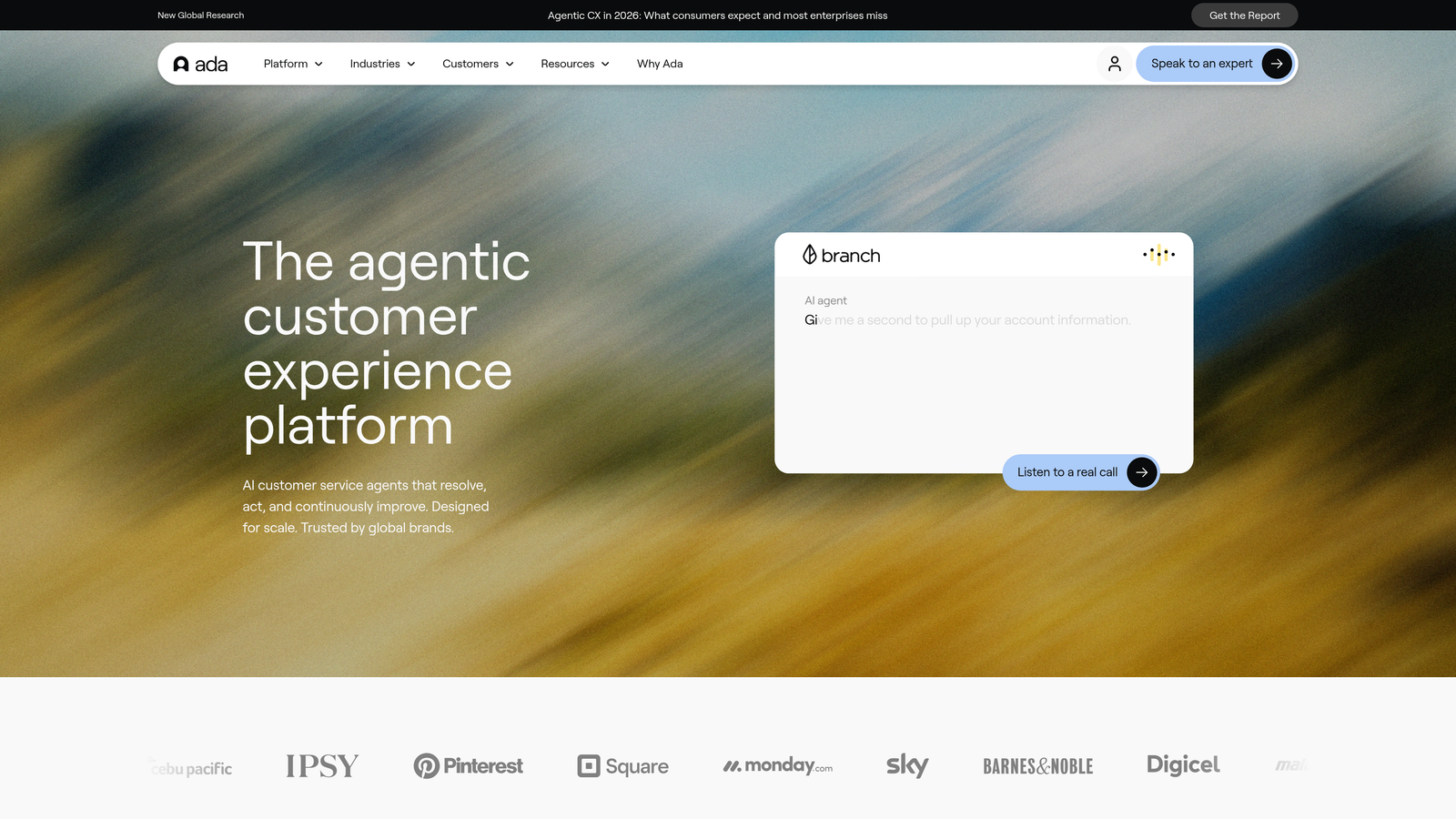
6. Ada
Best for: Enterprise teams wanting no-code bot building with brand control
Ada is a no-code AI automation platform designed for enterprise support teams.
Where This Tool Shines
Ada's drag-and-drop bot builder empowers non-technical teams to create sophisticated automation without engineering resources. Marketing and support teams can build, test, and deploy conversation flows independently, dramatically reducing time-to-value.
The brand voice controls are particularly robust. You can define personality traits, tone guidelines, and response patterns to ensure automated conversations feel authentically aligned with your brand, not generic or robotic.
Key Features
No-Code Bot Builder: Create complex conversation flows using visual drag-and-drop interface without coding.
50+ Language Support: Deploy automation in multiple languages with native language processing for each.
Brand Voice Controls: Define personality, tone, and response patterns to maintain brand consistency.
Proactive Messaging: Trigger automated outreach based on customer behavior or lifecycle stage.
A/B Testing: Test different conversation flows and responses to optimize performance over time.
Best For
Large enterprises with global customer bases needing multilingual support. Teams that want marketing and support to own bot development without constant engineering involvement.
Pricing
Enterprise pricing starting around $10,000 annually, scaling with conversation volume and feature requirements. Custom quotes based on specific needs.
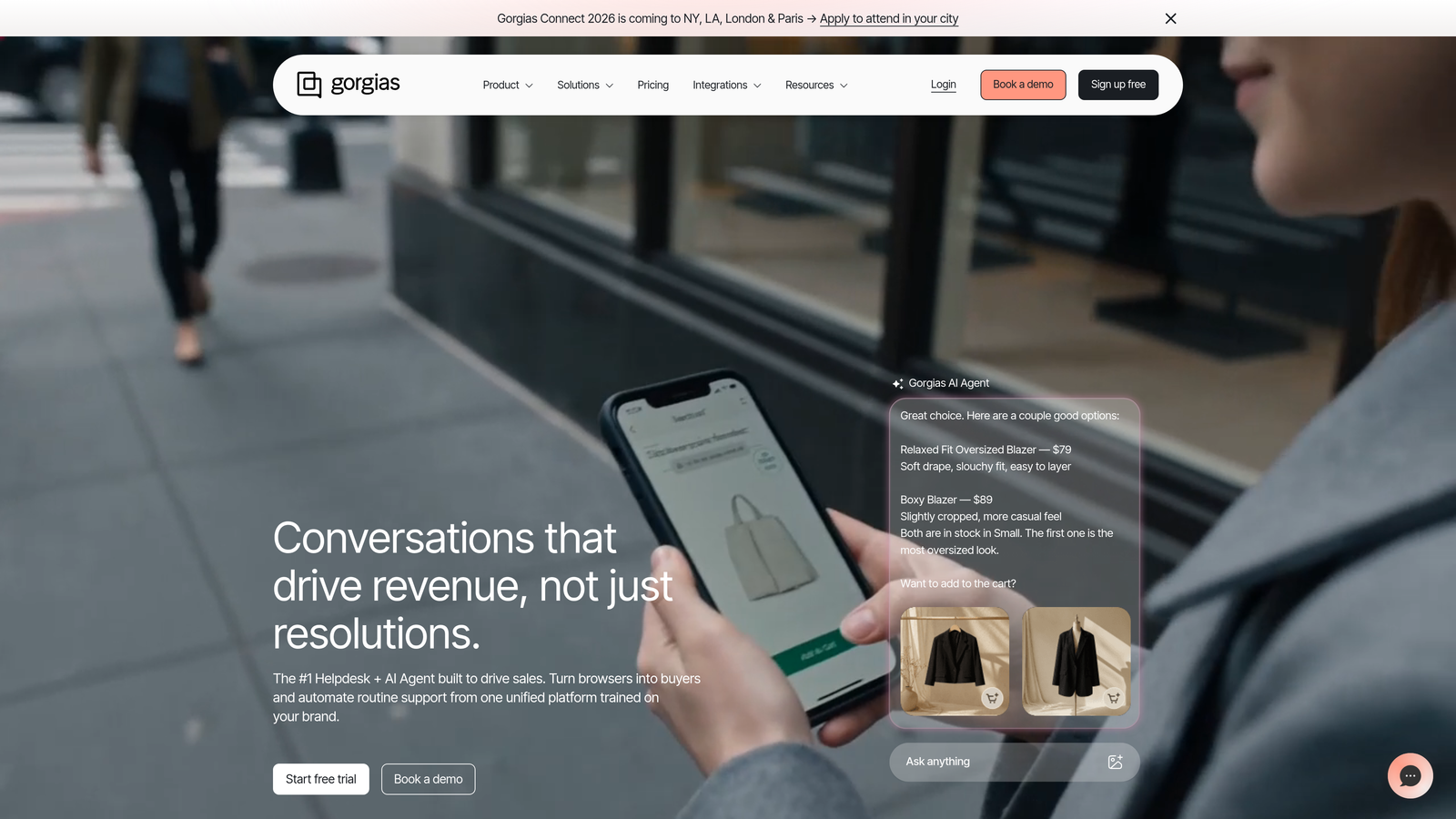
7. Gorgias
Best for: E-commerce businesses with deep Shopify integration needs
Gorgias is an e-commerce focused helpdesk with specialized automation for online retail.
Where This Tool Shines
Gorgias understands e-commerce workflows at a fundamental level. Agents can process refunds, cancel orders, update shipping addresses, and check inventory without leaving the support interface. These one-click actions eliminate the context-switching that slows down traditional helpdesks.
Revenue attribution connects support interactions directly to sales outcomes. You can see which conversations led to purchases, calculate the ROI of your support team, and identify high-value customer segments that warrant white-glove service.
Key Features
One-Click Order Actions: Refund, cancel, track, or modify orders directly from the support interface without switching systems.
Macro Automation: Create response templates with dynamic customer variables for personalized bulk actions.
Revenue Attribution: Track which support interactions lead to purchases and calculate support ROI.
Self-Service Order Portal: Let customers track, modify, or cancel orders without contacting support.
Shopify Deep Integration: Access complete order history, customer lifetime value, and product information within tickets.
Best For
E-commerce businesses running on Shopify, BigCommerce, or Magento. Retailers with high order-related ticket volume who need agents to process transactions efficiently.
Pricing
Starts at $10 per month for 50 tickets, scaling to $300+ monthly for higher volumes. Pricing tiers based on monthly ticket count rather than agent seats.
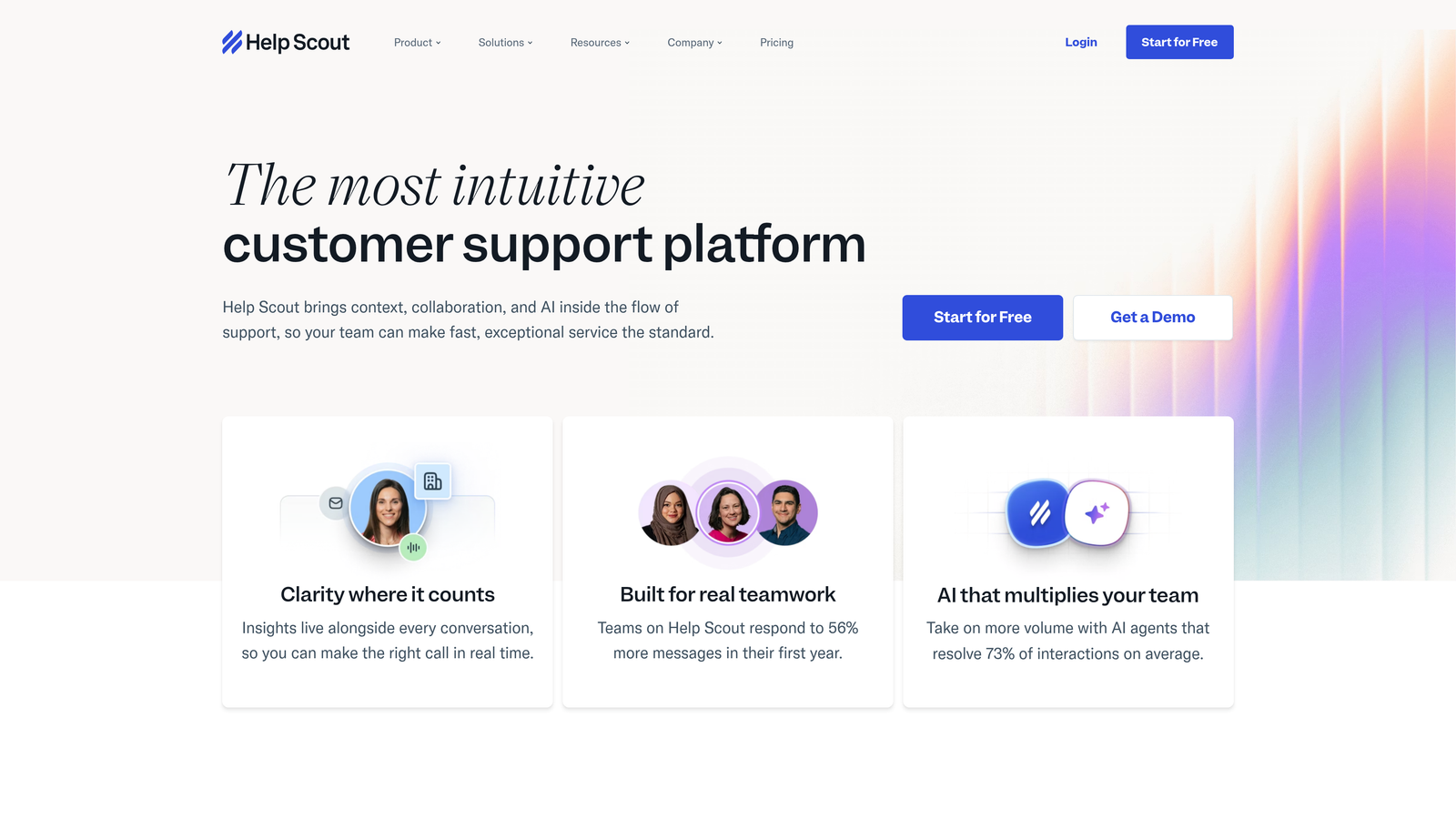
8. Help Scout AI
Best for: Small support teams wanting AI assistance without losing the human touch
Help Scout AI provides human-centered AI assistance designed for small to mid-sized support teams.
Where This Tool Shines
Help Scout's AI philosophy emphasizes augmenting humans rather than replacing them. The AI draft feature generates response suggestions that agents review and edit before sending, maintaining quality control while accelerating response times.
Conversation summaries are particularly valuable for teams handling complex, multi-message threads. The AI condenses long conversations into key points, helping agents get up to speed quickly when taking over from colleagues or returning to old tickets.
Key Features
AI Draft Responses: Generates suggested replies for agent review and editing before sending to customers.
Conversation Summaries: Automatically summarizes long ticket threads into key points and action items.
Smart Suggestions: Recommends relevant help documentation based on ticket content.
Collaborative Inbox: Collision detection prevents multiple agents from working the same ticket simultaneously.
Customer Profiles: Consolidates customer history and context for personalized responses.
Best For
Small to mid-sized teams that value personal customer relationships and want AI to enhance rather than replace human agents. Companies prioritizing response quality over pure automation volume.
Pricing
AI features included with Plus plan at $50 per user per month. Straightforward per-seat pricing with no hidden automation fees.
9. Tidio
Best for: Small businesses needing affordable chat and email automation
Tidio is an affordable automation platform combining chat and email support for small businesses.
Where This Tool Shines
Tidio makes automation accessible to businesses with limited budgets. The visual chatbot builder includes pre-built templates for common scenarios like order tracking, FAQ responses, and lead qualification, dramatically reducing setup time.
Lyro AI handles conversational automation using natural language processing at a price point that makes sense for smaller operations. While not as sophisticated as enterprise platforms, it covers the basics effectively for straightforward support scenarios.
Key Features
Visual Chatbot Builder: Create automation flows using templates and drag-and-drop interface.
Lyro AI: Conversational AI for automated responses to common questions.
Unified Inbox: Manage email and chat conversations in a single interface.
Visitor Tracking: See what pages visitors are viewing to provide proactive, contextual help.
Proactive Chat: Trigger chat invitations based on visitor behavior and time on page.
Best For
Small businesses, solo entrepreneurs, and startups that need basic automation without enterprise pricing. E-commerce stores wanting to add live chat and simple bot responses affordably.
Pricing
Free tier available for basic features. Lyro AI starts at $39 per month, making it one of the most accessible AI automation options.
Making the Right Choice
The right support response automation tool depends on your current stack, team size, and growth trajectory. For B2B product teams wanting AI that learns continuously and operates autonomously, Halo AI delivers the most advanced capabilities with its page-aware context and business intelligence features.
Enterprise Zendesk users benefit from staying in-ecosystem with Zendesk AI, avoiding migration complexity while adding sophisticated automation. SaaS companies prioritizing conversational experiences find Intercom Fin compelling for its GPT-powered natural language capabilities. E-commerce businesses should look at Gorgias for its commerce-specific integrations that turn support into a revenue driver.
Whatever you choose, start with a clear automation goal—whether that's reducing first response time, deflecting common questions, or freeing agents for complex issues. Consider your existing technology investments carefully. Switching costs are real, and platforms that integrate deeply with your current stack often deliver faster ROI than best-of-breed solutions requiring extensive integration work.
Most platforms offer trials or demos, so test with real tickets before committing. Pay attention to how the AI handles edge cases and unexpected questions, not just the happy path scenarios in sales demos. The difference between tools becomes apparent when customers ask questions the AI hasn't seen before.
Your support team shouldn't scale linearly with your customer base. Let AI agents handle routine tickets, guide users through your product, and surface business intelligence while your team focuses on complex issues that need a human touch. See Halo in action and discover how continuous learning transforms every interaction into smarter, faster support.