9 Best Support Software with Best Integrations in 2026
The right support software with best integrations eliminates the chaos of disconnected tools by seamlessly connecting your helpdesk to platforms like Slack, HubSpot, Linear, and Stripe. This 2026 guide highlights nine support solutions built with connectivity at their core, helping teams access customer data instantly, automate workflows across their tech stack, and resolve issues faster without manual copying between systems.
 Grant CooperFounder11 min read
Your support software is only as powerful as the tools it connects to. When tickets flow in from Slack, customer data lives in HubSpot, bugs need tracking in Linear, and payments process through Stripe, a disconnected helpdesk creates chaos. Support teams waste hours switching between tabs, copying information manually, and losing context that could resolve issues faster.
The best support platforms in 2026 don't just offer integrations as an afterthought—they're built with connectivity at their core, enabling seamless workflows that pull the right data at the right moment. This guide covers top support solutions with standout integration ecosystems, helping you find the platform that actually fits into your existing tech stack.
1. Halo AI
Best for: AI-native support with intelligent context from your entire business stack
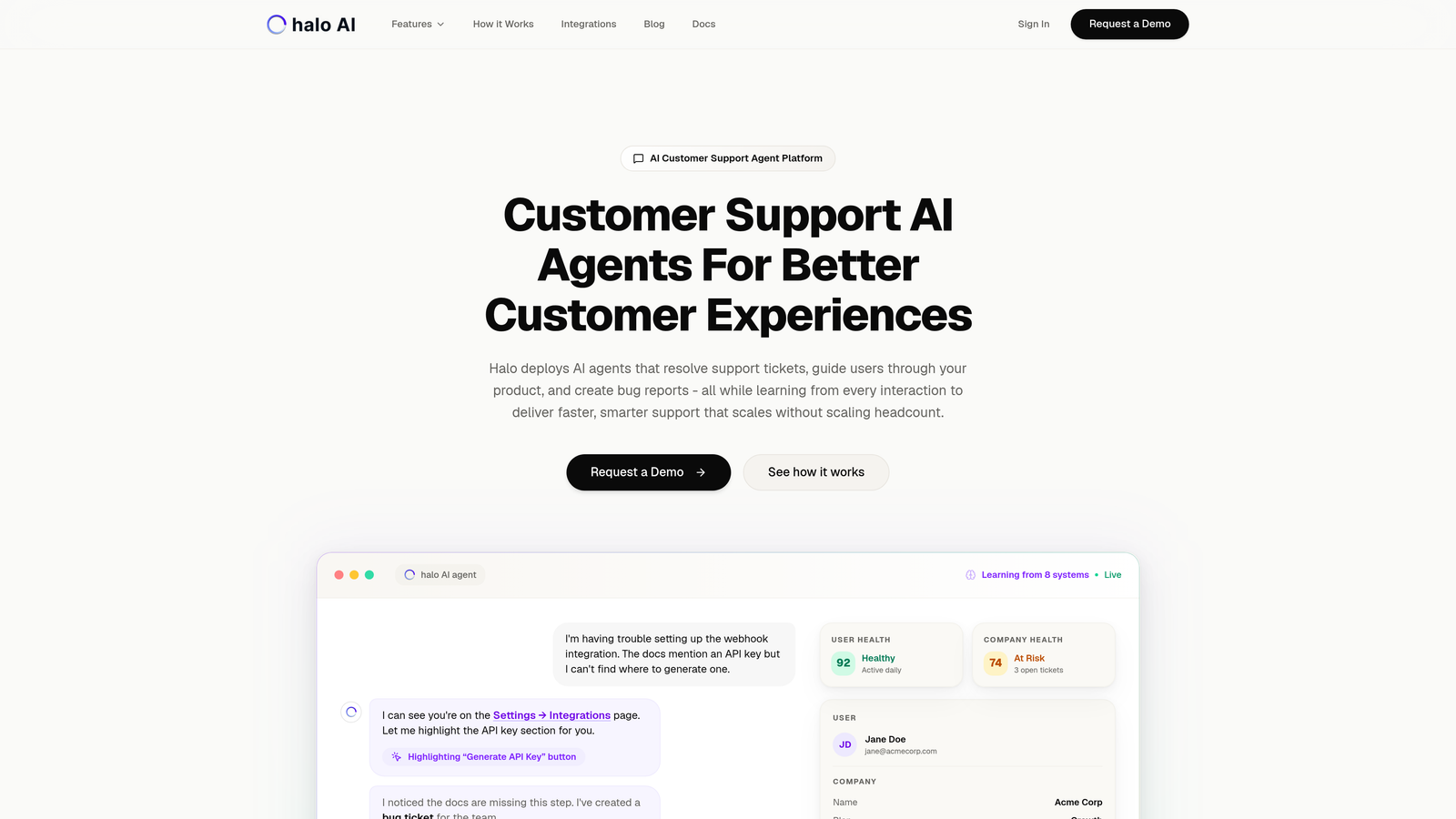
Halo AI is an AI-powered customer support platform that treats integrations as a first-class feature, not an add-on.
Where This Tool Shines
Halo's AI agents don't just connect to your tools—they actively pull context from them to resolve tickets faster. When a customer asks about a billing issue, the AI automatically references their Stripe payment history. When a bug surfaces, it creates a Linear ticket without anyone lifting a finger.
The page-aware AI sees what users see in your product, combining that visual context with data from connected systems to provide genuinely intelligent support. Every interaction trains the system to get smarter, creating a support experience that improves continuously without manual intervention.
Key Features
Native Modern Stack Integration: Connects deeply with Linear, Slack, HubSpot, Intercom, Stripe, Zoom, PandaDoc, and Fathom for seamless workflows.
Contextual AI Agents: Pulls relevant customer data from connected systems in real-time to resolve tickets with full context.
Auto Bug Ticket Creation: Syncs support issues directly to Linear without manual ticket creation or context switching.
Business Intelligence Analytics: Surfaces insights by pulling data across integrated platforms, revealing patterns beyond individual tickets.
Continuous Learning: Improves automatically from interactions across all connected channels, getting smarter with every resolved ticket.
Best For
B2B SaaS companies and product teams who use modern tools like Linear, Slack, and HubSpot and want AI that actually understands their entire business context. Particularly valuable for teams tired of manually copying information between systems.
Pricing
Contact for pricing based on your team size and integration needs.
2. Zendesk
Best for: Enterprise teams needing maximum integration options and marketplace depth
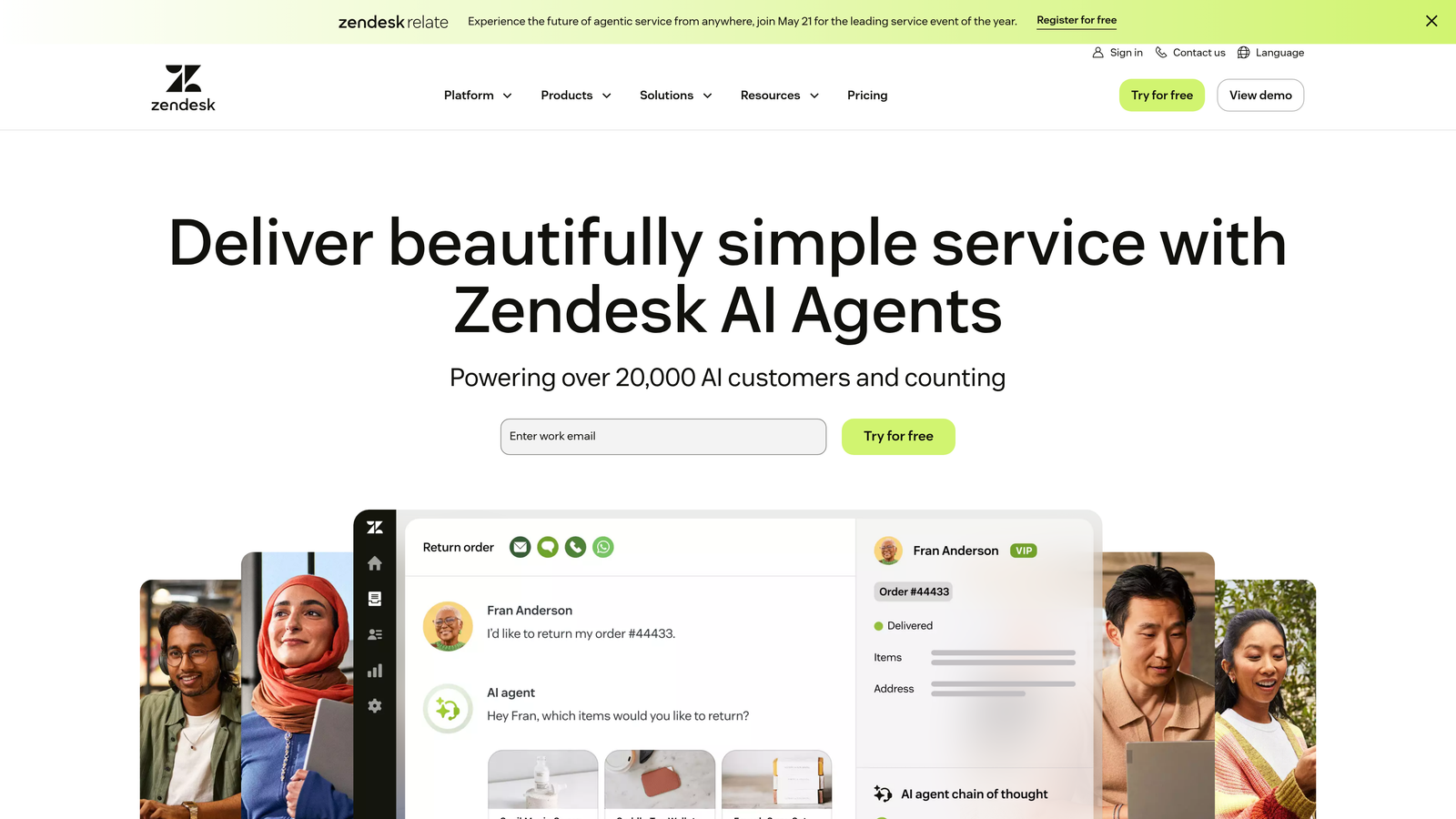
Zendesk is an enterprise-grade helpdesk platform with one of the largest integration marketplaces in the support software space.
Where This Tool Shines
When you need to connect virtually anything to your support system, Zendesk's marketplace delivers. With over 1,500 pre-built integrations, chances are the tool you're using already has a Zendesk app. The platform has been around long enough that most enterprise software vendors prioritize Zendesk compatibility.
The depth of integrations matters as much as the breadth. Native connections to Salesforce, HubSpot, and Shopify feel polished and mature, with rich data sync capabilities that go beyond basic ticket creation. For custom needs, the robust API enables development teams to build exactly what they need.
Key Features
Massive Integration Marketplace: Over 1,500 pre-built integrations covering virtually every business tool category.
Enterprise CRM Connections: Strong native integrations with Salesforce, HubSpot, and other major CRM platforms.
Collaboration Tool Support: Native Slack and Microsoft Teams integrations for internal team communication.
Developer-Friendly API: Comprehensive REST API for building custom integrations when marketplace apps don't fit.
Zapier Connectivity: Extends integration possibilities to thousands of additional tools through automation workflows.
Best For
Enterprise organizations with complex tech stacks requiring broad integration coverage. Teams that need both off-the-shelf marketplace apps and the flexibility to build custom connections for specialized tools.
Pricing
Starts at $19 per agent per month, with enterprise plans available for larger teams.
3. Intercom
Best for: Product-led SaaS companies needing deep product analytics and CRM integration
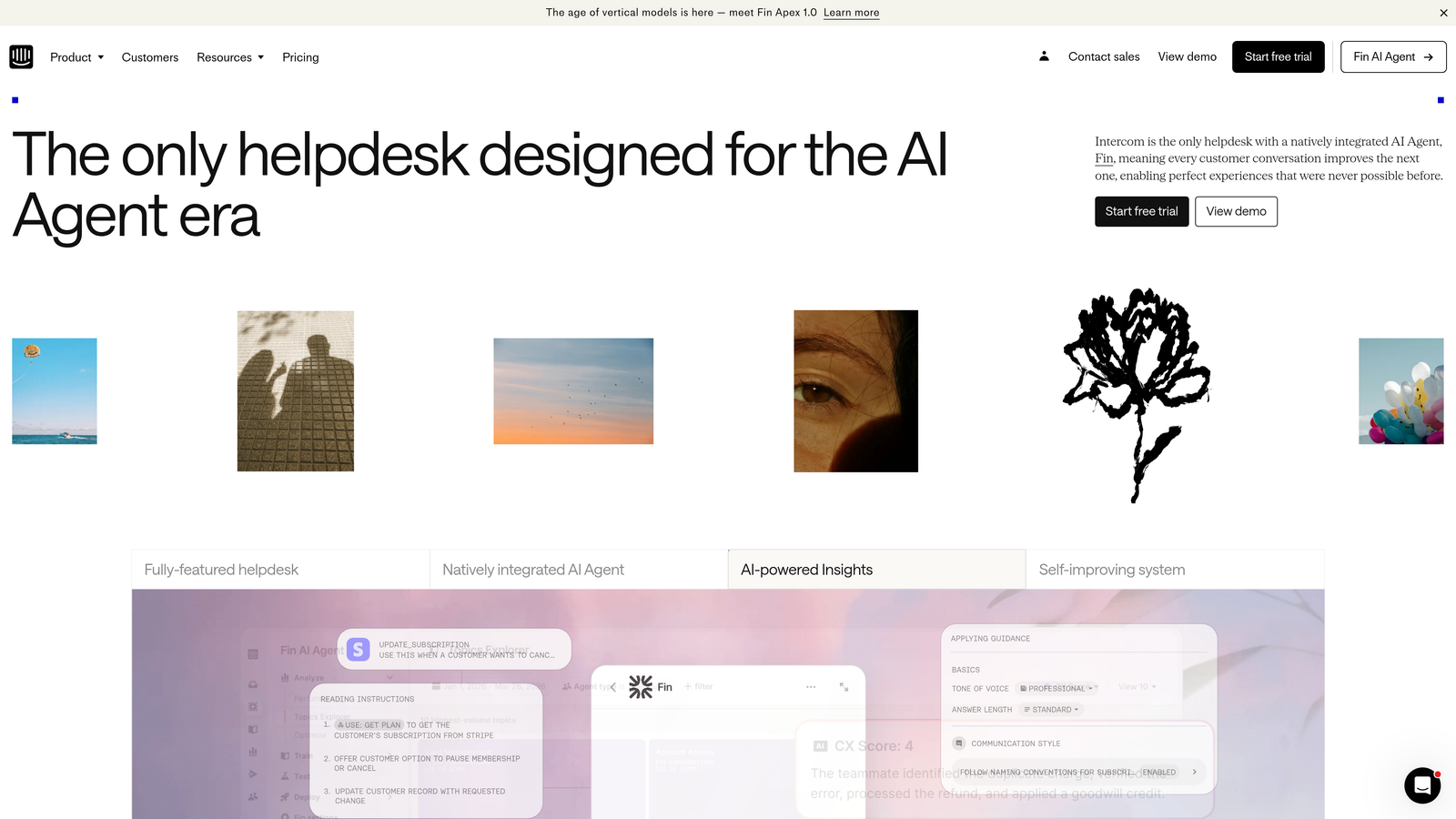
Intercom is a modern customer communication platform built with strong integrations for product-focused and SaaS companies.
Where This Tool Shines
Intercom understands that product-led companies need support software that connects to where users actually are—in the product. Native integrations with Segment, Amplitude, and other product analytics tools mean support agents see user behavior data right alongside conversation history.
The Slack integration goes beyond basic notifications, enabling teams to collaborate on complex issues without leaving their communication hub. For companies using Snowflake or other modern data platforms, Intercom's integration capabilities enable sophisticated customer data pipelines that power both support and business intelligence.
Key Features
Product Analytics Integration: Native connections to Segment, Amplitude, and product analytics platforms for behavior-based support.
Advanced Slack Integration: Deep collaboration features that keep teams aligned without switching tools.
CRM Connectivity: Strong Salesforce and HubSpot integrations for unified customer records.
Developer-Friendly Architecture: Comprehensive API and webhooks for custom integration workflows.
Data Platform Support: Integration with modern data warehouses like Snowflake for advanced analytics.
Best For
SaaS companies with product-led growth strategies who need support software that integrates deeply with product analytics and user behavior data. Particularly strong for teams using Segment or Amplitude.
Pricing
Starts at $74 per month, with pricing scaling based on features and seat count.
4. Freshdesk
Best for: Mid-market teams wanting broad integration coverage without enterprise complexity
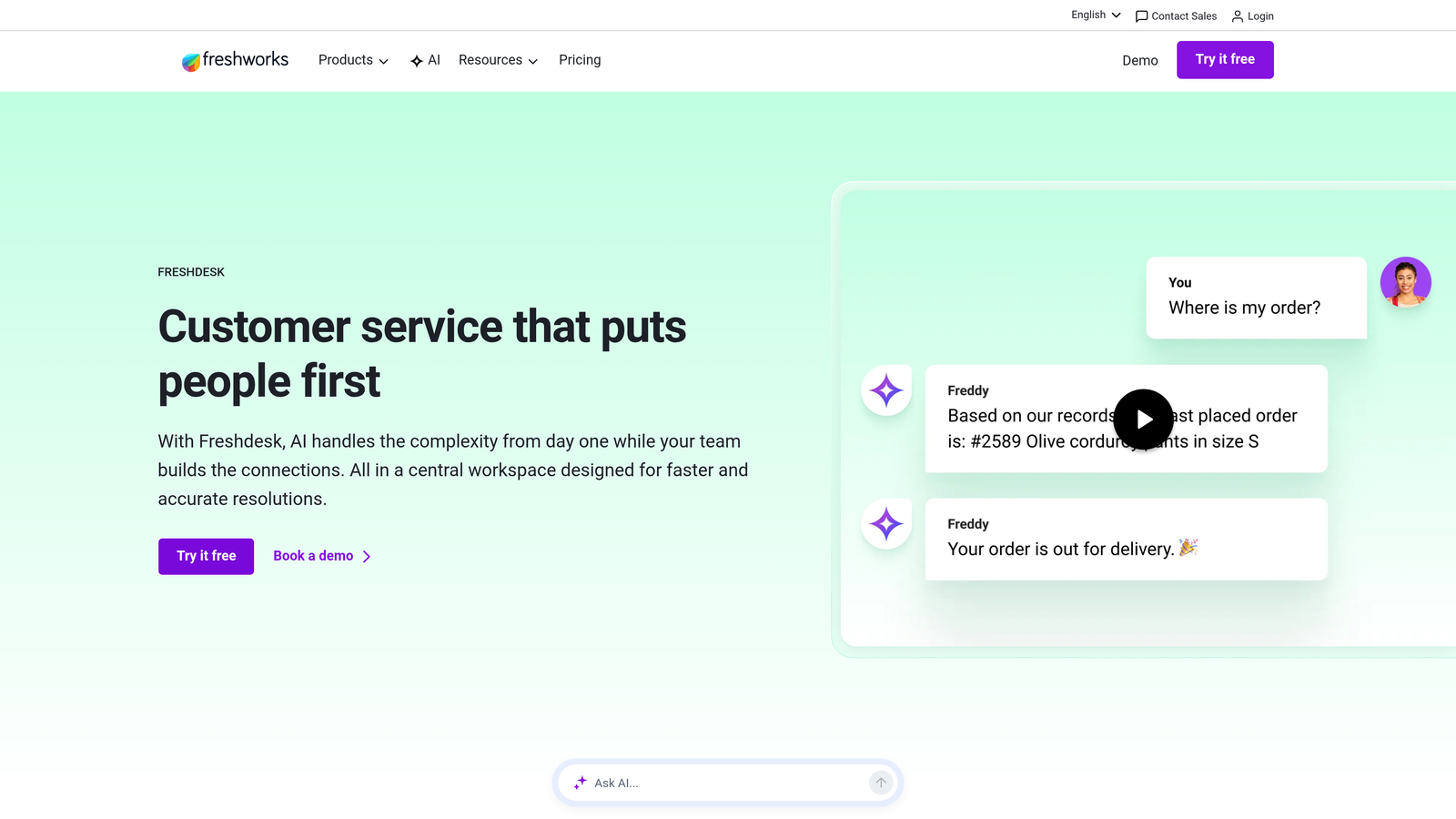
Freshdesk is a mid-market helpdesk solution with an extensive integration marketplace and native connectivity across the Freshworks ecosystem.
Where This Tool Shines
Freshdesk hits a sweet spot for growing companies that need more than basic helpdesk features but don't want enterprise-level complexity. The Freshworks Marketplace offers over 1,000 integrations, covering most common business tools without overwhelming teams with options.
What sets Freshdesk apart is the seamless integration with other Freshworks products. If you're using Freshsales for CRM or Freshmarketer for campaigns, the native connections create a unified ecosystem that shares customer data effortlessly. E-commerce integrations with Shopify and WooCommerce are particularly well-executed, making it a solid choice for online retailers.
Key Features
Extensive App Marketplace: Over 1,000 integrations covering CRM, e-commerce, communication, and productivity tools.
Freshworks Ecosystem Integration: Native connections to Freshsales, Freshmarketer, and other Freshworks products for unified data.
Communication Platform Support: Integrations with Slack, Microsoft Teams, and WhatsApp for multi-channel support.
E-commerce Connectivity: Strong Shopify and WooCommerce integrations for online retail support.
Workflow Automation: Zapier and Make connectivity for extending integration capabilities beyond the marketplace.
Best For
Mid-market companies looking for broad integration coverage without enterprise pricing. Especially valuable if you're already using other Freshworks products or run an e-commerce business on Shopify or WooCommerce.
Pricing
Free tier available for small teams; paid plans start at $15 per agent per month.
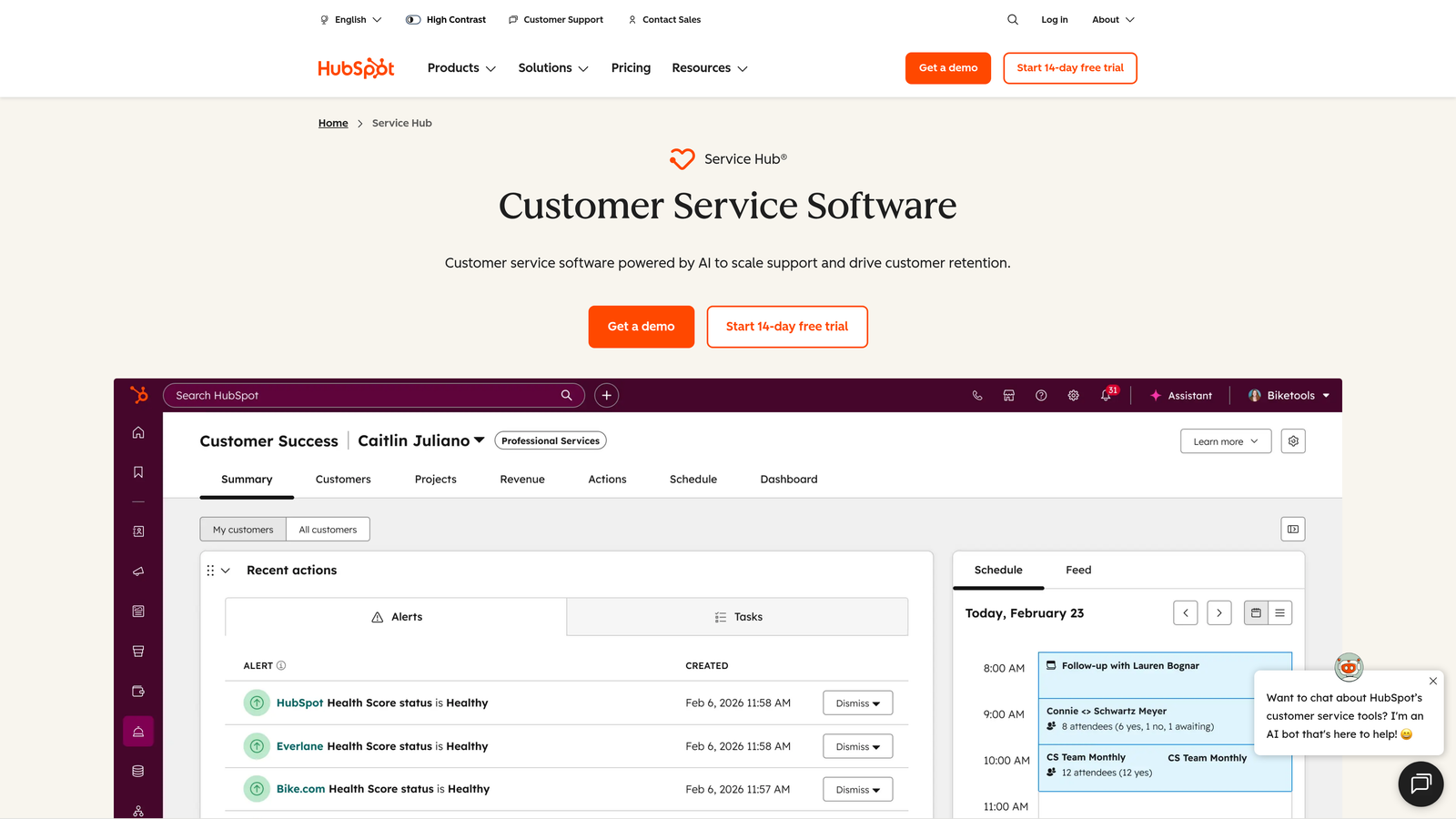
5. HubSpot Service Hub
Best for: Teams already using HubSpot CRM who want unified customer data
HubSpot Service Hub is customer service software with seamless integration into the broader HubSpot CRM ecosystem.
Where This Tool Shines
If you're already using HubSpot for sales or marketing, Service Hub is the obvious choice for support. The native integration creates a unified customer timeline that shows every interaction—marketing emails, sales calls, support tickets—in one place. No data syncing, no duplicate records, no integration headaches.
The 500+ integrations in HubSpot's App Marketplace extend functionality beyond the core CRM, while the reporting capabilities pull data across all HubSpot tools. This creates visibility into how support impacts the entire customer journey, from first touch to renewal.
Key Features
Native HubSpot CRM Integration: Seamless connection to Marketing Hub and Sales Hub with unified customer records.
Unified Customer Timeline: Complete interaction history across marketing, sales, and support in one view.
Collaboration Tools: Slack and Microsoft Teams integration for internal team communication.
App Marketplace: Over 500 integrations extending HubSpot's core functionality.
Cross-Platform Reporting: Analytics that pull data across the entire HubSpot ecosystem for comprehensive insights.
Best For
Companies already invested in the HubSpot ecosystem who want support software that shares the same customer database. Particularly valuable for teams that need visibility into how support impacts marketing and sales metrics.
Pricing
Free tier available with basic features; paid plans start at $45 per month.
6. Salesforce Service Cloud
Best for: Enterprise organizations needing complex integrations across massive tech stacks
Salesforce Service Cloud is an enterprise service platform with the AppExchange marketplace and deep Salesforce ecosystem integration.
Where This Tool Shines
When your tech stack spans dozens of enterprise systems and you need everything to talk to everything else, Service Cloud delivers. The AppExchange offers thousands of enterprise-grade integrations, many built specifically for complex use cases that smaller platforms can't handle.
Native connections to Sales Cloud, Marketing Cloud, and Commerce Cloud create a unified Salesforce ecosystem where customer data flows seamlessly. For companies with truly complex integration needs, MuleSoft (Salesforce-owned) enables sophisticated enterprise connectivity that goes beyond simple API calls.
Key Features
AppExchange Marketplace: Thousands of enterprise integrations covering virtually every business software category.
Salesforce Ecosystem Integration: Native connections to Sales Cloud, Marketing Cloud, and Commerce Cloud for unified data.
MuleSoft Connectivity: Enterprise integration platform for complex, multi-system data flows.
Slack Integration: Deep collaboration features through Salesforce's ownership of Slack.
Custom Integration Capabilities: Robust API and developer tools for building specialized integrations.
Best For
Large enterprises with complex tech stacks requiring sophisticated integration capabilities. Best suited for organizations already using Salesforce products or those with dedicated integration teams.
Pricing
Starts at $25 per user per month, with enterprise pricing available for advanced features.
7. Help Scout
Best for: Small teams wanting quality integrations without marketplace overwhelm
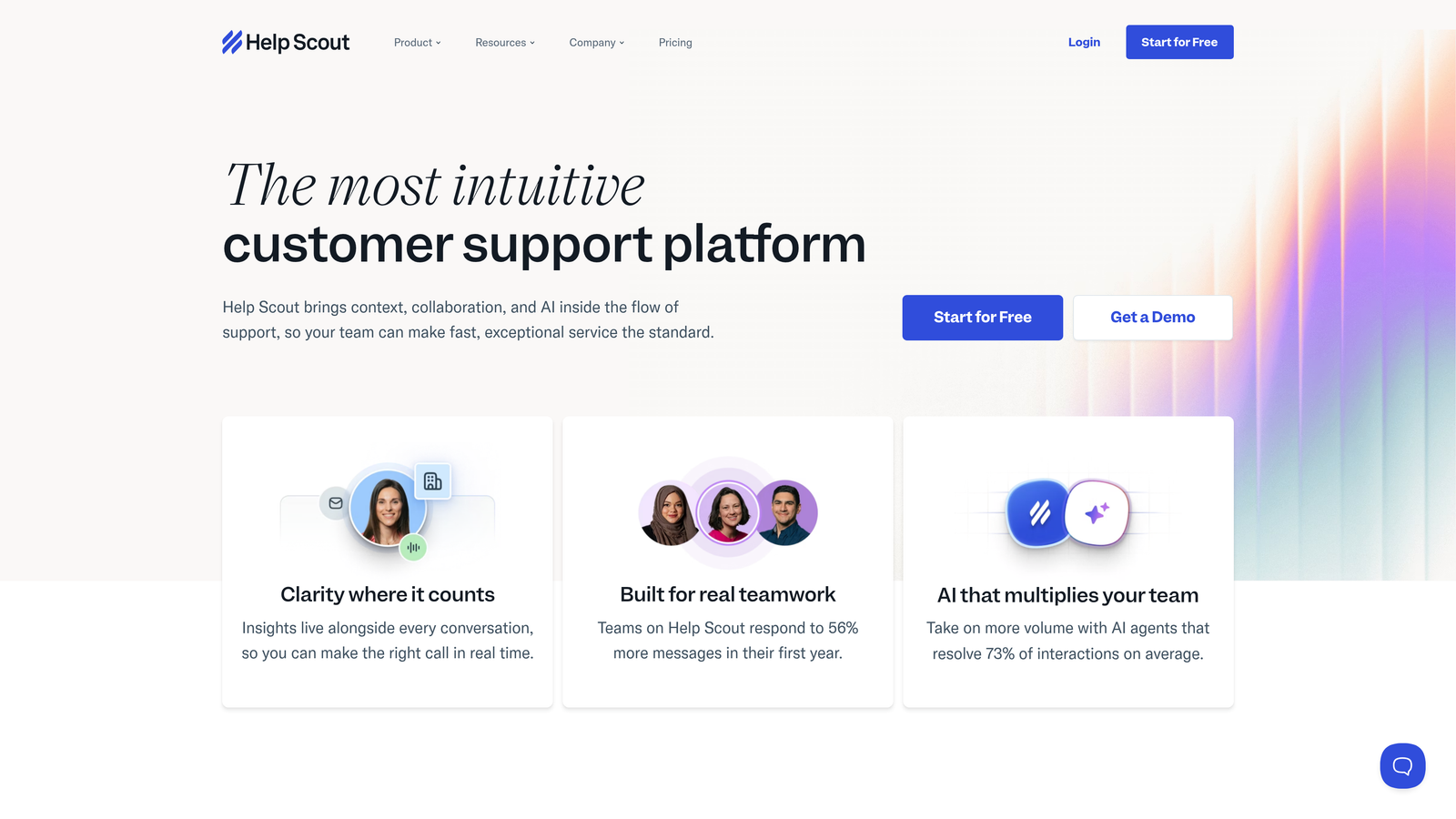
Help Scout is a simple helpdesk for small teams with a focused selection of quality integrations.
Where This Tool Shines
Help Scout takes a different approach to integrations—quality over quantity. Instead of offering thousands of marketplace apps, they focus on roughly 90 carefully selected integrations that small teams actually use. Each integration feels polished and well-maintained, avoiding the abandoned apps that clutter larger marketplaces.
The e-commerce integrations with Shopify, WooCommerce, and BigCommerce are particularly strong, providing order data right in the ticket view. For teams using HubSpot or Salesforce, the CRM connections work smoothly without requiring developer resources to configure.
Key Features
Curated Integration Library: Around 90 quality integrations focused on tools small teams actually use.
E-commerce Platform Support: Strong Shopify, WooCommerce, and BigCommerce connections with order data in tickets.
CRM Integrations: HubSpot and Salesforce connections that work without complex setup.
Slack Collaboration: Integration for team communication and ticket notifications.
Zapier Connectivity: Extends integration options for tools not in the core library.
Best For
Small to mid-sized teams who want a simple helpdesk with the essential integrations they'll actually use. Particularly good for e-commerce businesses and teams that prefer focused tools over feature bloat.
Pricing
Starts at $20 per user per month with all core features included.
8. Front
Best for: Teams managing email-heavy workflows who need CRM and task management integration
Front is a shared inbox platform with strong integrations for teams managing email-heavy support workflows.
Where This Tool Shines
Front excels at integrating email-based support with the rest of your business tools. Native connections to Salesforce, HubSpot, and Pipedrive mean CRM data appears right in the email thread, eliminating the need to switch between systems to understand customer context.
Task management integrations with Asana, Trello, and Jira enable teams to convert support conversations into actionable work items without losing context. For teams handling phone support alongside email, integrations with Dialpad and Aircall bring voice conversations into the same unified inbox.
Key Features
CRM Platform Integration: Native connections to Salesforce, HubSpot, and Pipedrive with customer data in email threads.
Task Management Connectivity: Asana, Trello, and Jira integrations for converting conversations into work items.
Collaboration Tools: Slack and Microsoft Teams integration for internal team communication.
Phone System Integration: Dialpad and Aircall connections for unified voice and email support.
Custom API Access: Developer-friendly API for connecting internal tools and custom CRM systems.
Best For
Teams whose support workflows center around email and need strong CRM integration. Particularly valuable for B2B companies managing complex customer relationships across email, phone, and task management systems.
Pricing
Starts at $19 per seat per month with core features included.
9. Gorgias
Best for: E-commerce businesses needing deep Shopify and online retail integrations
Gorgias is an e-commerce-focused helpdesk with deep native integrations for Shopify, BigCommerce, and Magento.
Where This Tool Shines
Gorgias understands e-commerce support in a way that general-purpose helpdesks don't. The Shopify integration goes far beyond basic order lookup—agents can modify orders, process refunds, and update shipping information directly from the support ticket without ever leaving Gorgias.
Integrations with e-commerce marketing tools like Klaviyo and Attentive enable support teams to see customer communication history and segmentation data. For subscription businesses, the Recharge integration provides subscription management right in the ticket view, while Loop Returns integration streamlines the returns process.
Key Features
Deep Shopify Integration: Order management, refunds, and shipping updates directly from support tickets.
E-commerce Platform Support: Native BigCommerce and Magento connections for multi-platform retailers.
Marketing Tool Integration: Klaviyo and Attentive connections for customer communication history.
Subscription Management: Recharge and Loop Returns integrations for subscription and returns workflows.
Social Commerce: Instagram and Facebook integrations for managing social media customer inquiries.
Best For
E-commerce businesses, particularly those on Shopify, who need support software built specifically for online retail. Especially valuable for subscription businesses and high-volume stores managing returns and exchanges.
Pricing
Starts at $10 per month for 50 tickets, scaling with ticket volume.
Finding Your Integration Match
The right support software depends on where your data lives and how your team works. If you're running a modern SaaS stack with Linear, Slack, and HubSpot, Halo AI's intelligent integration approach pulls context automatically without manual data entry. Enterprise teams needing maximum marketplace coverage will find what they need in Zendesk or Salesforce Service Cloud.
Product-led SaaS companies benefit from Intercom's deep product analytics integration, while HubSpot users should strongly consider Service Hub for its unified customer timeline. E-commerce businesses get the most value from Gorgias's purpose-built retail integrations, and teams wanting simplicity over complexity will appreciate Help Scout's curated approach.
The key question isn't how many integrations a platform offers—it's whether it connects to the specific tools your team uses every day. A smaller number of well-executed integrations beats a massive marketplace full of abandoned apps.
Your support team shouldn't scale linearly with your customer base. Let AI agents handle routine tickets, guide users through your product, and surface business intelligence while your team focuses on complex issues that need a human touch. See Halo in action and discover how continuous learning transforms every interaction into smarter, faster support.