9 Best Support Software with CRM Integration in 2026
Support software with CRM integration eliminates the frustration of disconnected customer data by giving agents instant access to purchase history, subscription details, and sales conversations. This comprehensive guide evaluates the nine best platforms in 2026 based on integration depth, AI capabilities, setup ease, and pricing to help teams deliver personalized, context-rich support without making customers repeat themselves.
 Matt PattoliFounder11 min read
When your support team can't see a customer's purchase history, subscription tier, or recent sales conversations, every interaction starts from scratch. Support agents waste time asking questions customers have already answered, while customers grow frustrated repeating themselves.
The solution? Support software that connects directly to your CRM, giving agents instant context and enabling personalized service at scale.
We've evaluated the leading platforms that bridge the gap between support and customer data, considering factors like integration depth, AI capabilities, ease of setup, and pricing. Here are the top options for teams ready to unify their customer experience.
1. Halo AI
Best for: Teams wanting AI-first support with continuous learning and deep business intelligence
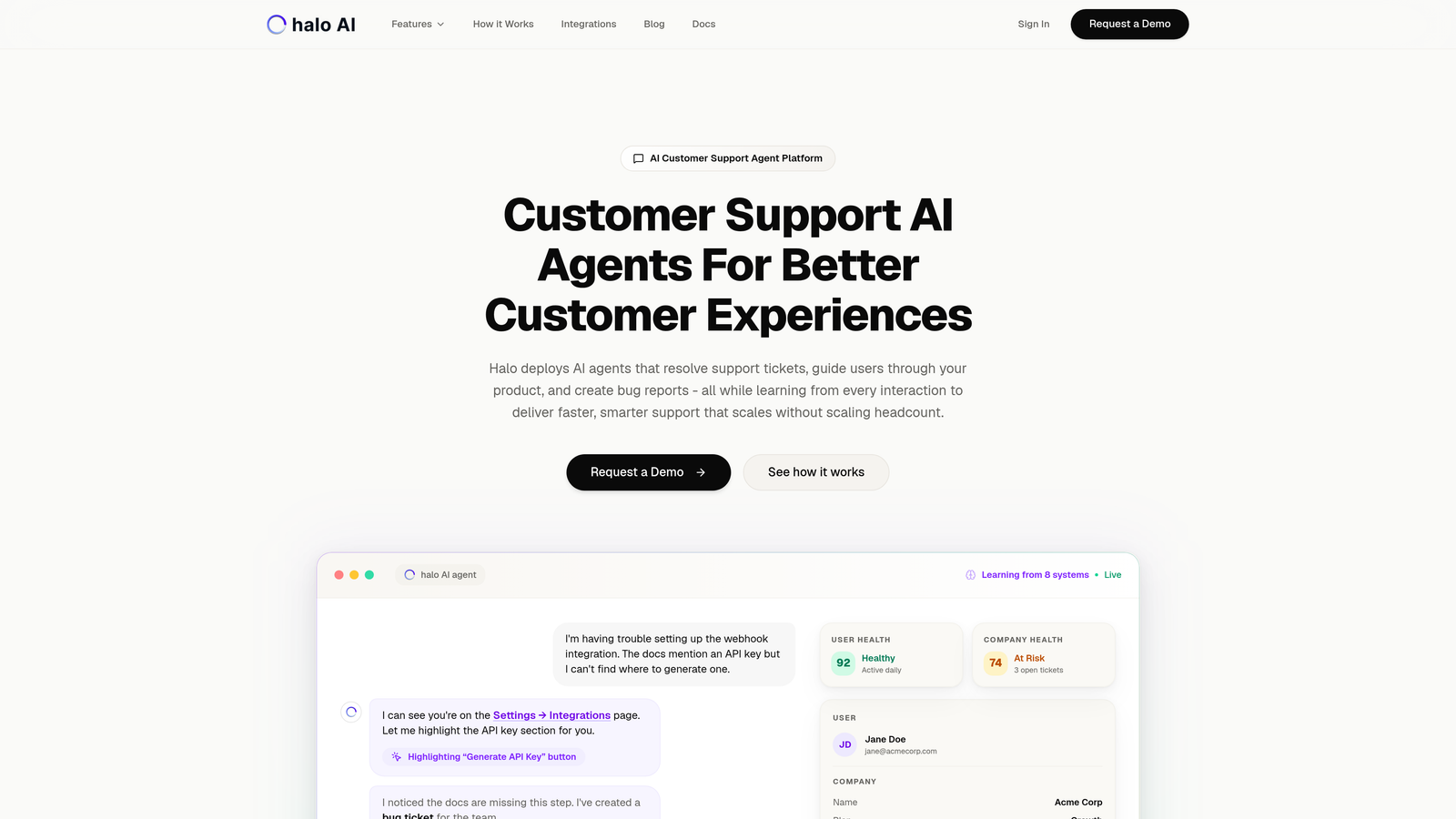
Halo AI is an AI-native customer support platform that deploys intelligent agents capable of resolving tickets, guiding users through products, and creating bug reports while learning from every interaction.
Where This Tool Shines
Unlike traditional helpdesks with AI bolted on, Halo is built AI-first from the ground up. Its agents don't just answer questions—they see what users see through page-aware context, understand the full business picture through integrations, and get smarter with every ticket they handle.
The platform connects to your entire business stack, pulling context from HubSpot, Stripe, Intercom, Slack, and more. This means AI agents can reference subscription status, recent purchases, product usage patterns, and sales conversations without agents manually switching between tools.
Key Features
AI Agents with Human Escalation: Autonomous ticket resolution that knows when to bring in human experts for complex issues.
Page-Aware Chat Widget: Sees exactly what users see on your product, enabling visual guidance and context-aware responses.
Smart Inbox with Business Intelligence: Surfaces customer health signals, revenue intelligence, and anomaly detection beyond basic support metrics.
Native Integrations: Connects to HubSpot, Stripe, Intercom, Slack, Linear, Zoom, PandaDoc, Fathom, and more for complete customer context.
Continuous Learning: Every interaction trains the AI, creating a support system that improves automatically without manual retraining.
Best For
B2B SaaS companies and product teams that want support to scale without scaling headcount. Particularly valuable for teams using helpdesks like Zendesk, Freshdesk, or Intercom who need deeper intelligence and autonomous resolution capabilities.
Pricing
Contact for pricing. The platform is designed for growing teams ready to invest in AI-powered support infrastructure.
2. Zendesk
Best for: Established teams needing extensive third-party CRM integrations and enterprise scalability
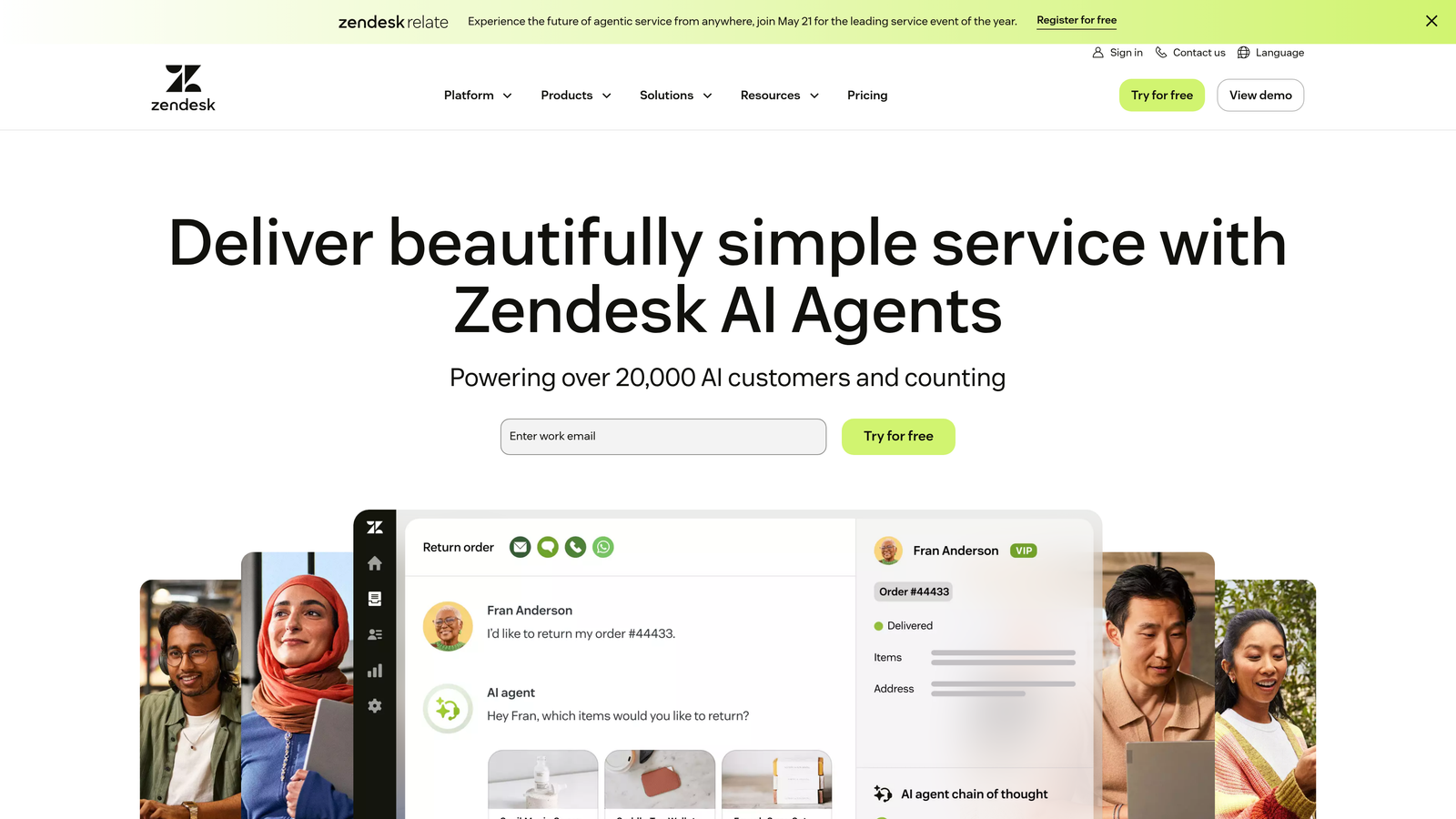
Zendesk is an established support platform with a marketplace of over 1,500 apps for connecting customer data across systems.
Where This Tool Shines
Zendesk's real strength is its ecosystem. If you're running Salesforce, HubSpot, Microsoft Dynamics, or practically any major CRM, there's a pre-built integration ready to go. The Sunshine platform lets developers create custom data connections when off-the-shelf integrations don't cut it.
The platform handles omnichannel support seamlessly—email, chat, phone, social media—all with CRM context flowing through every interaction. For large teams with complex tech stacks, this flexibility is hard to beat.
Key Features
Pre-Built CRM Integrations: Native connections to Salesforce, HubSpot, Microsoft Dynamics with customer data synced in real-time.
Sunshine Platform: Custom data layer for connecting any system and creating unified customer profiles.
Omnichannel Support: Unified agent workspace across email, chat, phone, messaging, and social channels.
AI-Powered Routing: Intelligent ticket assignment based on agent skills, workload, and CRM customer data.
Marketplace Ecosystem: Over 1,500 apps and integrations for extending functionality.
Best For
Mid-market to enterprise teams with established CRM systems who need proven scalability and extensive customization options. Works particularly well for companies with complex support workflows across multiple channels.
Pricing
Starts at $55/agent/month for Suite Team. Enterprise plans with advanced features and integrations available at higher tiers.
3. Freshdesk
Best for: Growing teams wanting modern helpdesk features with strong CRM integration at competitive pricing
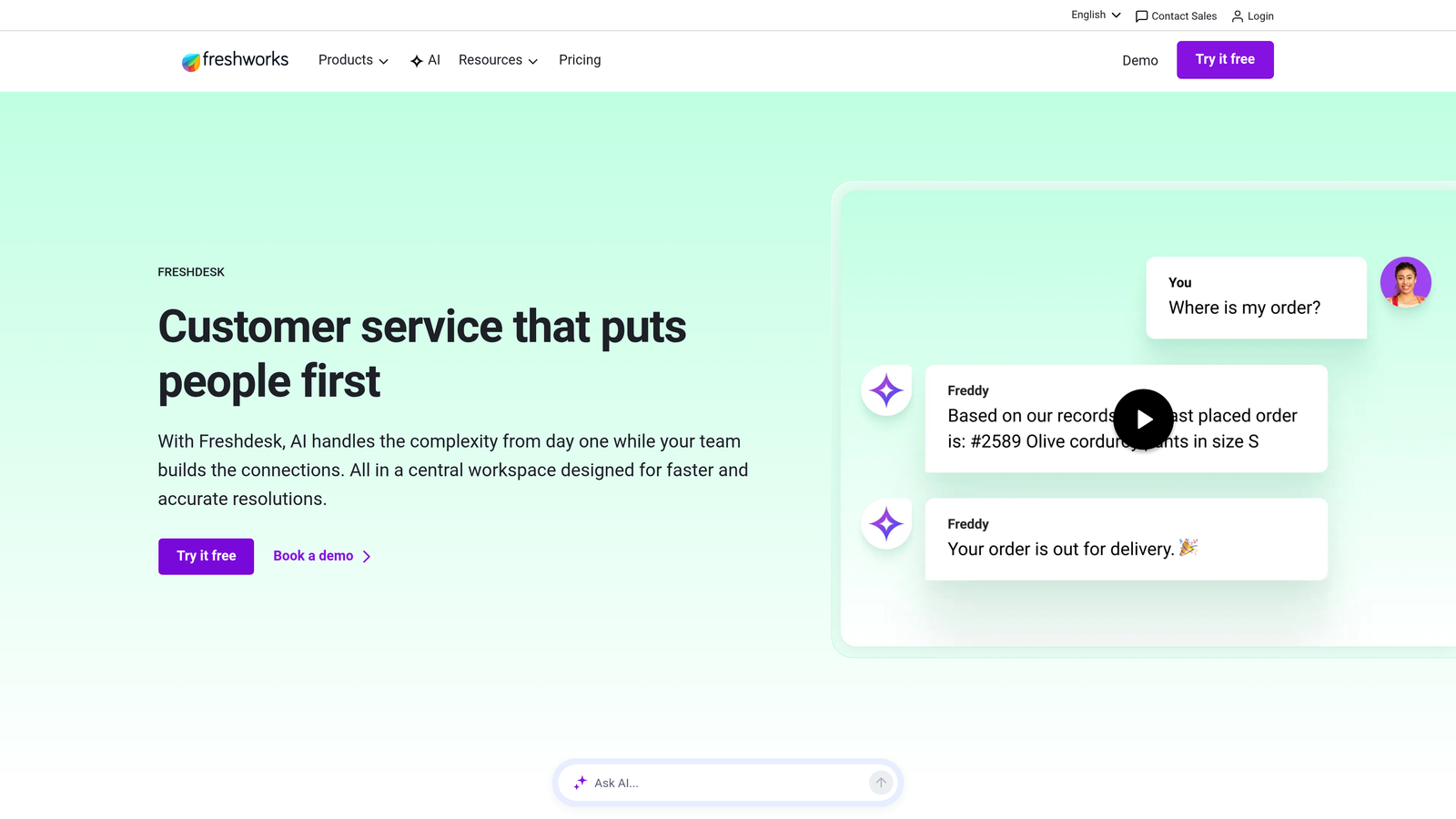
Freshdesk is a modern helpdesk that pairs seamlessly with Freshsales CRM while offering integrations with major third-party CRMs.
Where This Tool Shines
Freshdesk hits a sweet spot between capability and affordability. If you're already using Freshsales, the native integration creates a unified customer view without configuration headaches. But even if you're on Salesforce, HubSpot, or Zoho, marketplace integrations bring CRM data into the support experience.
Freddy AI handles the intelligent work—classifying tickets, suggesting responses, and routing conversations based on CRM context. For teams that don't want to manage complex integrations, Freshdesk's automation engine does the heavy lifting.
Key Features
Native Freshsales Integration: Zero-configuration CRM sync with complete customer timeline and deal context.
Freddy AI: Automated ticket classification, sentiment analysis, and AI-suggested responses based on customer data.
Marketplace Integrations: Pre-built connections to Salesforce, HubSpot, Zoho, Pipedrive, and other major CRMs.
CRM-Based Automations: Workflow rules that trigger actions based on customer tier, purchase history, or account status.
Collaboration Tools: Team inbox with shared ownership and internal notes visible to sales and support.
Best For
Small to mid-sized teams that need professional-grade features without enterprise pricing. Especially valuable for Freshworks ecosystem users or companies evaluating a unified platform.
Pricing
Free tier available for basic support. Paid plans start at $15/agent/month with CRM integration features included.
4. Intercom
Best for: Product-led companies wanting conversational support with built-in customer data capabilities
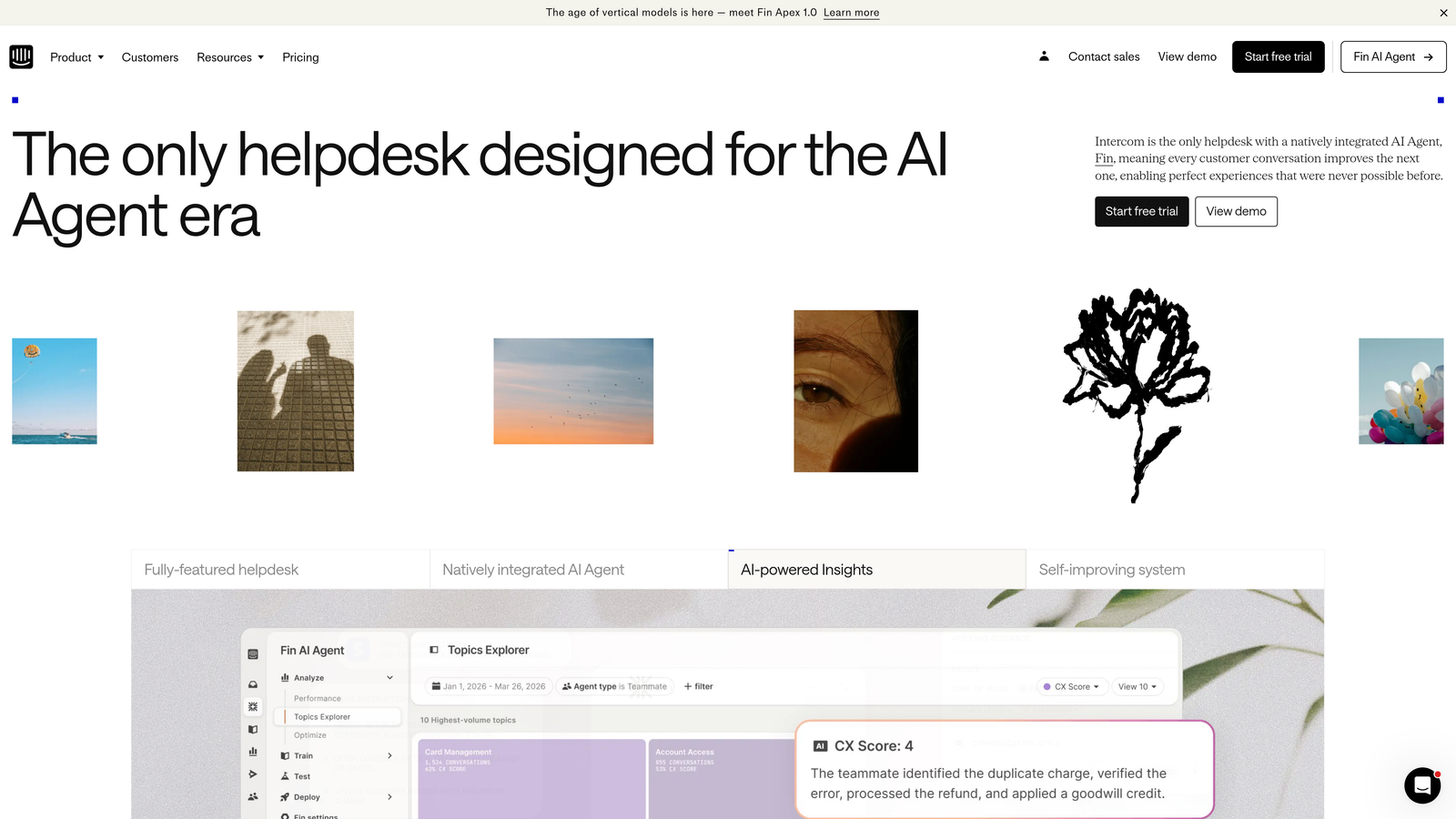
Intercom is a conversational support platform with a built-in customer data platform and strong integrations for product-focused teams.
Where This Tool Shines
Intercom doesn't just connect to your CRM—it functions as one. The platform's built-in customer data capabilities let you track custom attributes, segment users, and trigger support actions based on product behavior without external integrations.
Fin AI agent leverages this rich customer data for automated resolution that feels personal. Combined with product tours and in-app messaging, Intercom creates a support experience that lives inside your product rather than feeling like a separate help center.
Key Features
Built-In Customer Data Platform: Store custom attributes, track events, and segment users without external CRM dependencies.
Fin AI Agent: Automated resolution powered by customer context, product usage, and conversation history.
Native Salesforce and HubSpot Sync: Bidirectional data flow between support conversations and CRM records.
Product Tours: In-app guidance tied to support interactions and customer segments.
Messenger Platform: Customizable chat widget with customer context and proactive messaging capabilities.
Best For
SaaS companies and product-led businesses that want support integrated directly into the product experience. Ideal for teams where product usage data is as important as traditional CRM fields.
Pricing
Starts at $39/seat/month for Essential plan. Advanced features and higher volume require custom enterprise pricing.
5. HubSpot Service Hub
Best for: Existing HubSpot users wanting zero-configuration CRM integration and unified customer data
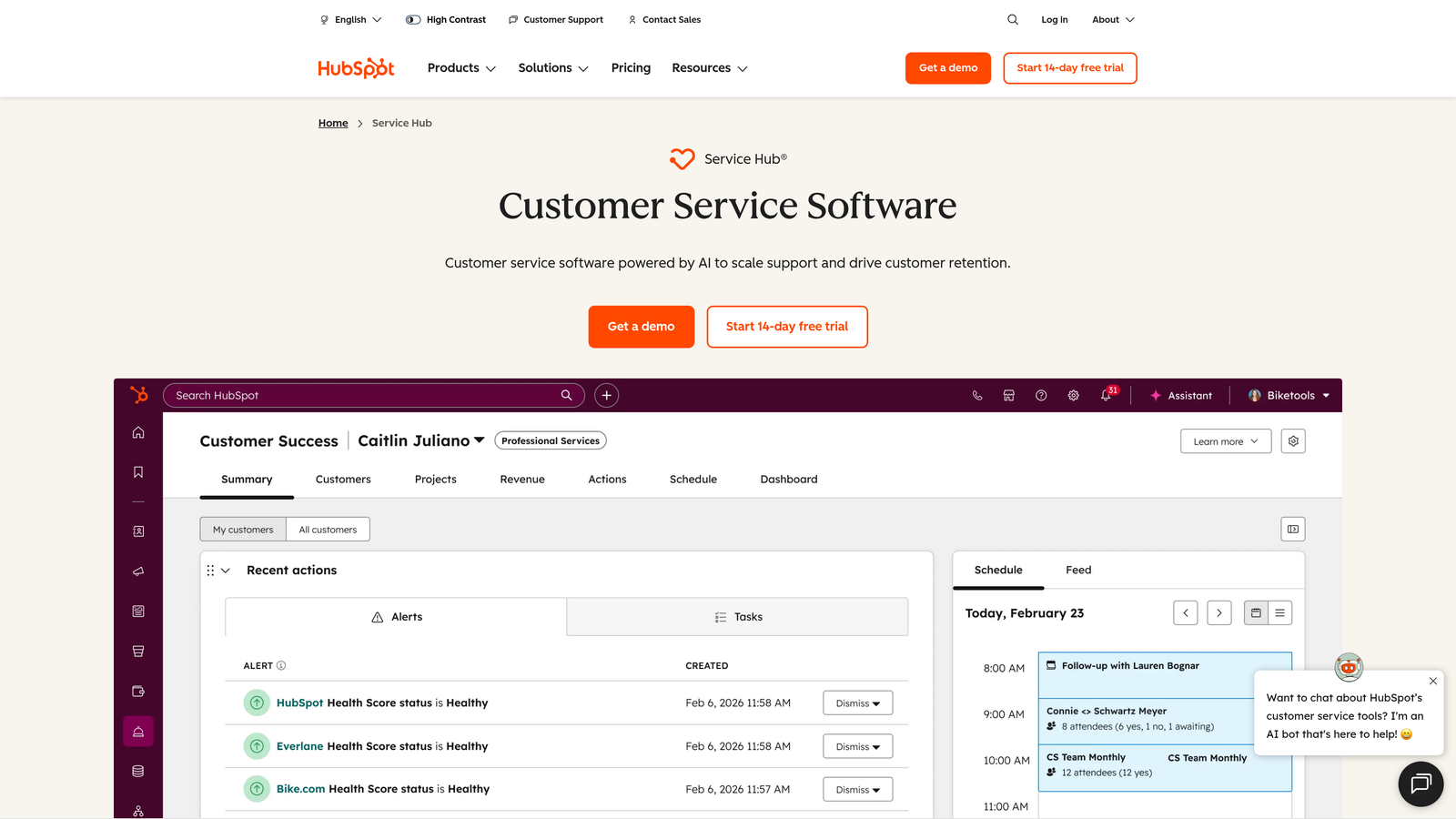
HubSpot Service Hub is support software built directly into the HubSpot ecosystem, offering native CRM integration for HubSpot customers.
Where This Tool Shines
If you're already running HubSpot CRM, Sales Hub, or Marketing Hub, Service Hub is the obvious choice. There's no integration to configure—customer data, deal context, and interaction history are already there. Agents see the complete customer timeline without switching tools.
The shared inbox shows not just support tickets but also sales emails, marketing engagement, and website behavior. This unified view means support agents can reference the exact webinar a customer attended or the pricing page they visited before asking for help.
Key Features
Native HubSpot CRM Integration: Complete customer timeline including sales, marketing, and support interactions in one view.
Shared Inbox: Team email management with full contact and deal context visible to all agents.
Knowledge Base: Help center content tied to CRM segmentation for personalized self-service.
Customer Feedback Surveys: NPS, CSAT, and custom surveys linked directly to CRM contact records.
Conversation Intelligence: Call recording and transcription tied to customer records for quality assurance.
Best For
Teams already invested in the HubSpot ecosystem who want to unify support with their existing sales and marketing data. The free tier makes it easy to test without commitment.
Pricing
Free tier available with basic features. Starter plan at $20/month/seat includes automation and reporting. Professional and Enterprise tiers add advanced capabilities.
6. Salesforce Service Cloud
Best for: Enterprise teams needing the deepest Salesforce CRM integration and Einstein AI capabilities
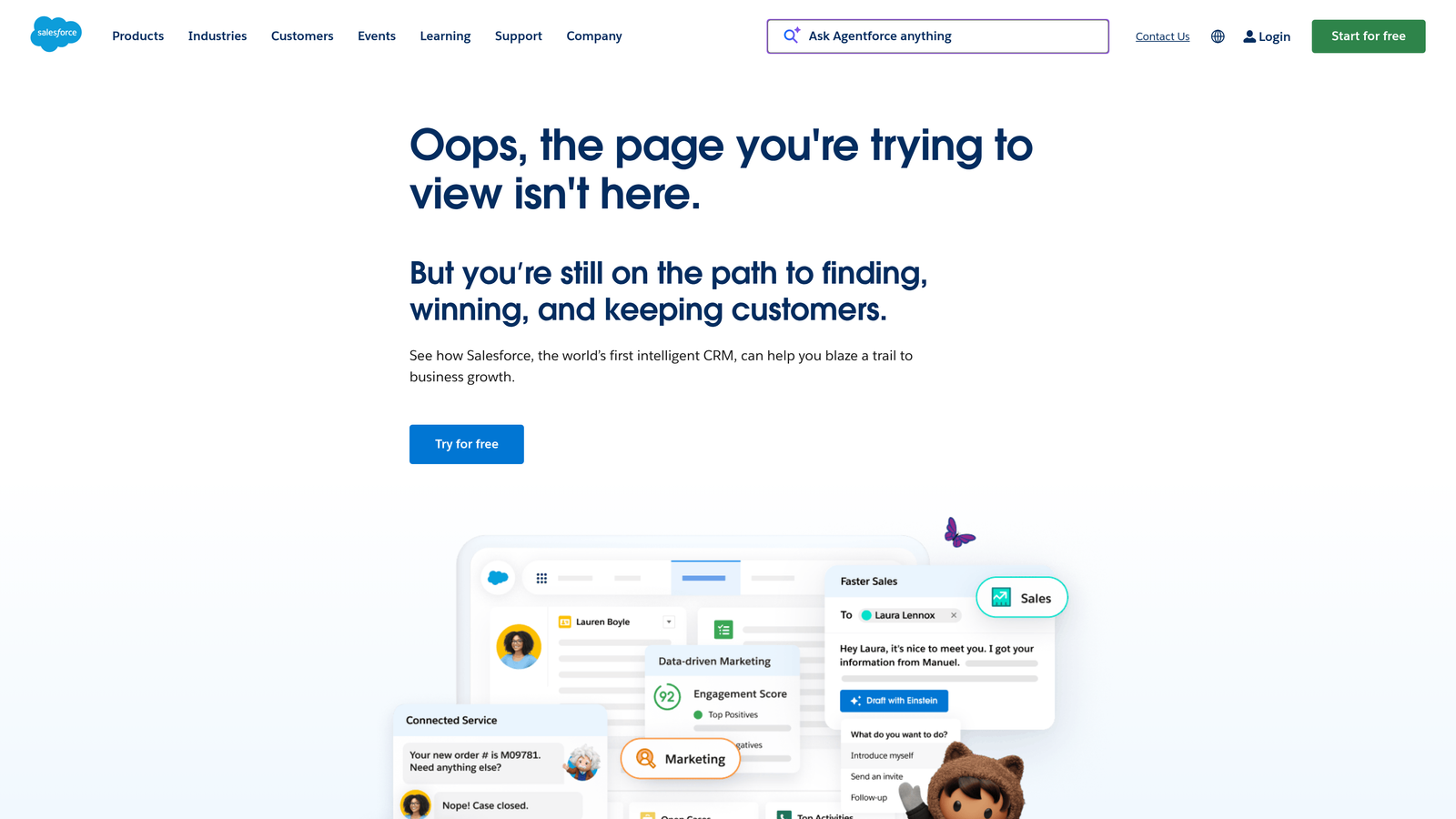
Salesforce Service Cloud is enterprise-grade support software with complete Salesforce ecosystem access and AI-powered automation.
Where This Tool Shines
Service Cloud doesn't integrate with Salesforce—it is Salesforce. Agents work in the same platform as sales, marketing, and operations teams, with access to every customer data point in your Salesforce instance. There's no data sync delay, no integration points to break, just unified customer records.
Einstein AI leverages this rich data for case classification, next-best-action recommendations, and predictive routing. For enterprises with complex Salesforce implementations, this native approach eliminates integration headaches entirely.
Key Features
Complete Salesforce Ecosystem: Native access to Sales Cloud, Marketing Cloud, Commerce Cloud data without integrations.
Einstein AI: Predictive case classification, automated routing, and next-best-action suggestions based on CRM patterns.
Omni-Channel Routing: Intelligent work distribution based on agent skills, capacity, and customer CRM data.
Field Service Management: On-site support scheduling and dispatch tied to customer accounts and service contracts.
AppExchange Ecosystem: Thousands of pre-built apps for extending functionality within the Salesforce platform.
Best For
Enterprise organizations already running Salesforce CRM who need support that scales to thousands of agents and millions of customers. Best suited for complex B2B sales cycles where support needs complete account context.
Pricing
Starts at $25/user/month for Starter edition. Professional at $80/user/month, Enterprise at $165/user/month with advanced AI and customization.
7. Zoho Desk
Best for: Budget-conscious teams in the Zoho ecosystem wanting AI assistance and CRM integration
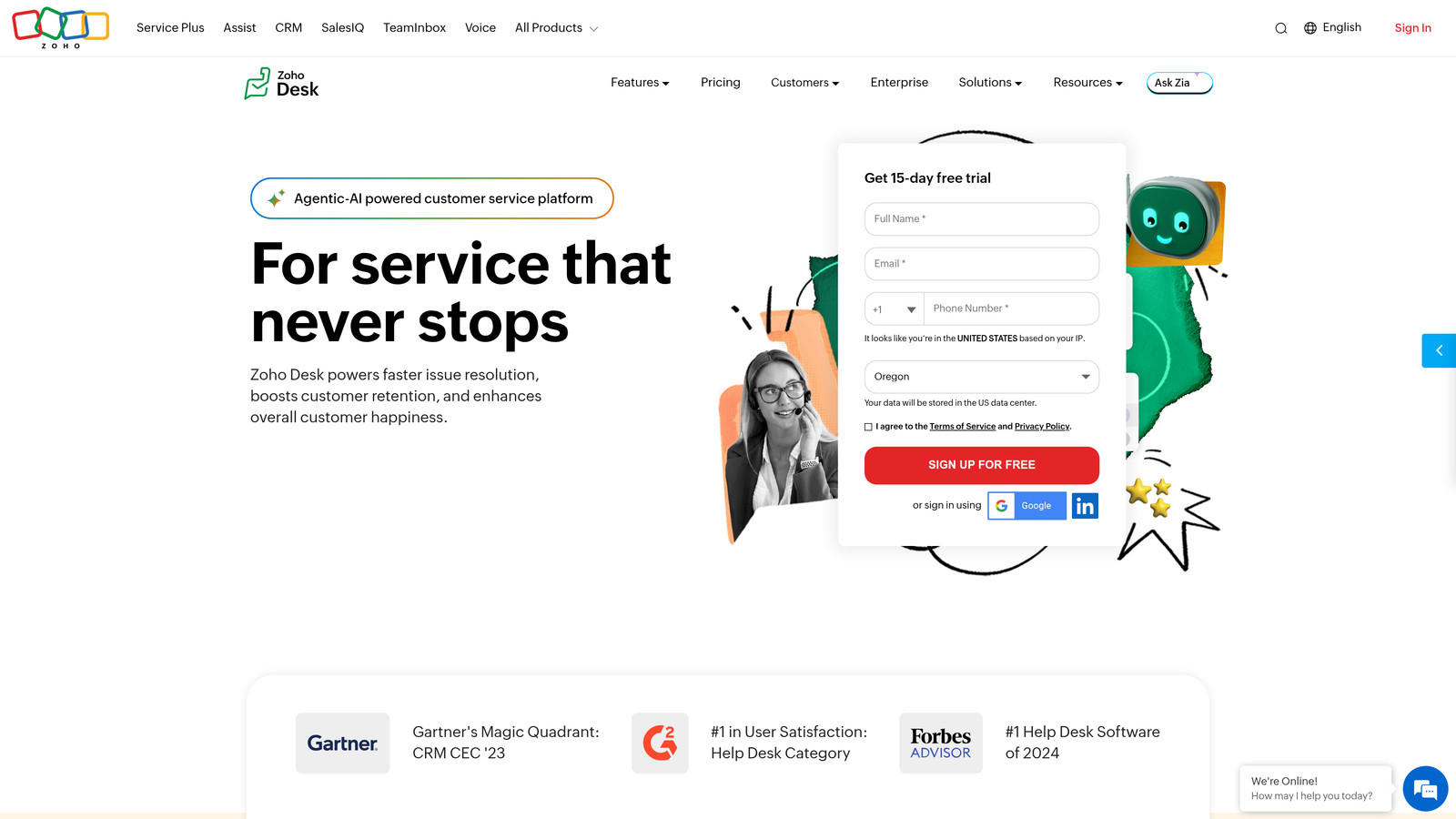
Zoho Desk is a cost-effective helpdesk with tight Zoho CRM integration and Zia AI assistant.
Where This Tool Shines
Zoho Desk delivers enterprise-level features at small business prices. If you're running Zoho CRM, the native sync creates a unified customer view without additional integration costs. Zia AI handles sentiment analysis and response suggestions, making agents more efficient without expensive add-ons.
Blueprint automation lets you create process workflows that span support and CRM—when a VIP customer submits a ticket, it can automatically notify their account manager in Zoho CRM and escalate based on deal value. This cross-platform automation typically requires enterprise tools, but Zoho includes it at accessible price points.
Key Features
Native Zoho CRM Sync: Real-time customer context from Zoho CRM visible in every ticket without configuration.
Zia AI Assistant: Sentiment analysis, response suggestions, and anomaly detection included in paid plans.
Blueprint Process Automation: Visual workflow builder for creating support processes that trigger CRM actions.
Third-Party CRM Integrations: Pre-built connections to Salesforce, HubSpot, and other major CRMs via marketplace.
Multi-Department Support: Separate helpdesks for different teams with shared customer data across departments.
Best For
Small to mid-sized businesses already using Zoho applications or teams evaluating cost-effective alternatives to Zendesk and Freshdesk. The free tier for three agents makes it easy to test.
Pricing
Free for up to 3 agents. Paid plans start at $14/agent/month with CRM integration and AI features included.
8. Help Scout
Best for: Teams prioritizing personal customer relationships with lightweight CRM data access
Help Scout is a human-focused helpdesk with sidebar apps that pull in CRM data while maintaining simplicity.
Where This Tool Shines
Help Scout takes a different approach to CRM integration. Instead of trying to replicate your entire CRM inside the helpdesk, it uses sidebar apps that surface relevant customer data exactly when agents need it. This keeps the interface clean while still providing context.
The platform emphasizes agent experience and customer relationships over automation complexity. When an agent opens a conversation, sidebar apps pull data from HubSpot, Salesforce, or Pipedrive—showing recent deals, contact details, and interaction history without cluttering the main workspace.
Key Features
Sidebar Apps: Contextual CRM data from HubSpot, Salesforce, Pipedrive displayed alongside conversations.
Customer Profiles: Unified view of support history, previous conversations, and satisfaction ratings.
Beacon Widget: Embeddable help widget with knowledge base integration and contextual article suggestions.
Collision Detection: Prevents multiple agents from responding to the same customer simultaneously.
Workflows: Automated actions based on customer tags, conversation properties, or CRM data.
Best For
Small to mid-sized teams that value simplicity and personal customer relationships over complex automation. Ideal for companies where support quality matters more than ticket volume metrics.
Pricing
Starts at $22/user/month for Standard plan. Plus plan at $44/user/month adds advanced features and integrations.
9. Kustomer
Best for: High-volume e-commerce and retail teams needing timeline-based customer views
Kustomer is a customer service CRM built for high-volume support with a timeline view that unifies all customer data.
Where This Tool Shines
Kustomer rethinks the support interface around a customer timeline rather than individual tickets. Agents see every order, support conversation, chat interaction, and email in chronological order. This timeline view is particularly powerful for e-commerce where understanding the customer journey matters more than isolated ticket resolution.
The platform's e-commerce integrations with Shopify, Magento, and major retail platforms pull in order data, shipping status, and purchase history automatically. AI-powered chatbots leverage this complete context to resolve common issues like order tracking and returns without human intervention.
Key Features
Timeline Customer View: Chronological display of all interactions, orders, and events across channels in one interface.
E-Commerce Integrations: Deep connections to Shopify, Magento, BigCommerce with order and inventory data sync.
AI Chatbots: Automated resolution powered by complete customer context including purchase and support history.
Proactive Support: Triggered outreach based on customer events like delayed shipments or subscription renewals.
Unified Agent Workspace: Single interface for email, chat, SMS, social, and phone with full customer context.
Best For
E-commerce brands and retail companies handling high ticket volumes where order context is critical. Works well for direct-to-consumer brands with complex customer journeys across multiple touchpoints.
Pricing
Contact for pricing. Platform is typically positioned for mid-market to enterprise e-commerce operations.
Making the Right Choice
The best support software with CRM integration depends on your existing tech stack and support philosophy. AI-first teams exploring autonomous resolution should evaluate Halo AI for its continuous learning capabilities and deep business intelligence integrations. The platform's ability to see what users see and improve with every interaction represents where support automation is heading.
Teams already invested in major CRM ecosystems have clear paths forward. Salesforce shops will find Service Cloud or Zendesk most seamless, with Einstein AI leveraging your existing customer data. HubSpot users should start with Service Hub for zero-friction setup and unified customer timelines. Zoho customers get enterprise features at small business prices with native CRM sync.
Growing teams on a budget can't go wrong with Freshdesk or Zoho Desk—both deliver professional features with strong CRM integrations at accessible price points. E-commerce brands handling high ticket volumes should evaluate Kustomer's timeline approach, which transforms how agents understand customer journeys.
The key is matching integration depth to your actual CRM usage. There's no point paying for Salesforce-level connectivity if you're running a lightweight CRM setup. Similarly, don't settle for basic sidebar widgets if your support team needs to update CRM records, trigger sales workflows, or access complex account hierarchies.
Your support team shouldn't scale linearly with your customer base. Let AI agents handle routine tickets, guide users through your product, and surface business intelligence while your team focuses on complex issues that need a human touch. See Halo in action and discover how continuous learning transforms every interaction into smarter, faster support.