9 Best Support Systems with Revenue Intelligence in 2026
Discover the 9 best platforms combining a support system with revenue intelligence that go beyond ticket metrics to surface churn signals, expansion opportunities, and pipeline health insights. Ideal for B2B SaaS teams, these tools connect support activity to business outcomes by integrating with CRM and customer success platforms, transforming every customer interaction into actionable intelligence that drives retention and revenue growth.
 Matt PattoliFounder14 min read
Most support platforms tell you how many tickets got closed. Revenue intelligence changes the question entirely. Instead of "did we resolve the issue?" it asks: "what is this interaction telling us about pipeline health, churn risk, and expansion opportunity?" For B2B SaaS teams, that shift is significant. A support conversation isn't just a cost center event — it's a signal about product-market fit, customer health, and revenue trajectory.
The tools in this list go beyond traditional helpdesk metrics. They connect support activity to business outcomes, surfacing churn signals, flagging at-risk accounts, and feeding customer intelligence into the broader go-to-market stack. Whether you're running a lean support team or scaling a customer success operation, these platforms help you turn every ticket into actionable business intelligence.
Selection criteria: native or deep revenue and business intelligence features, integration with CRM and CS tools, AI-powered signal detection, and genuine value for B2B SaaS teams.
1. Halo AI
Best for: B2B SaaS teams that want support activity to feed revenue intelligence automatically
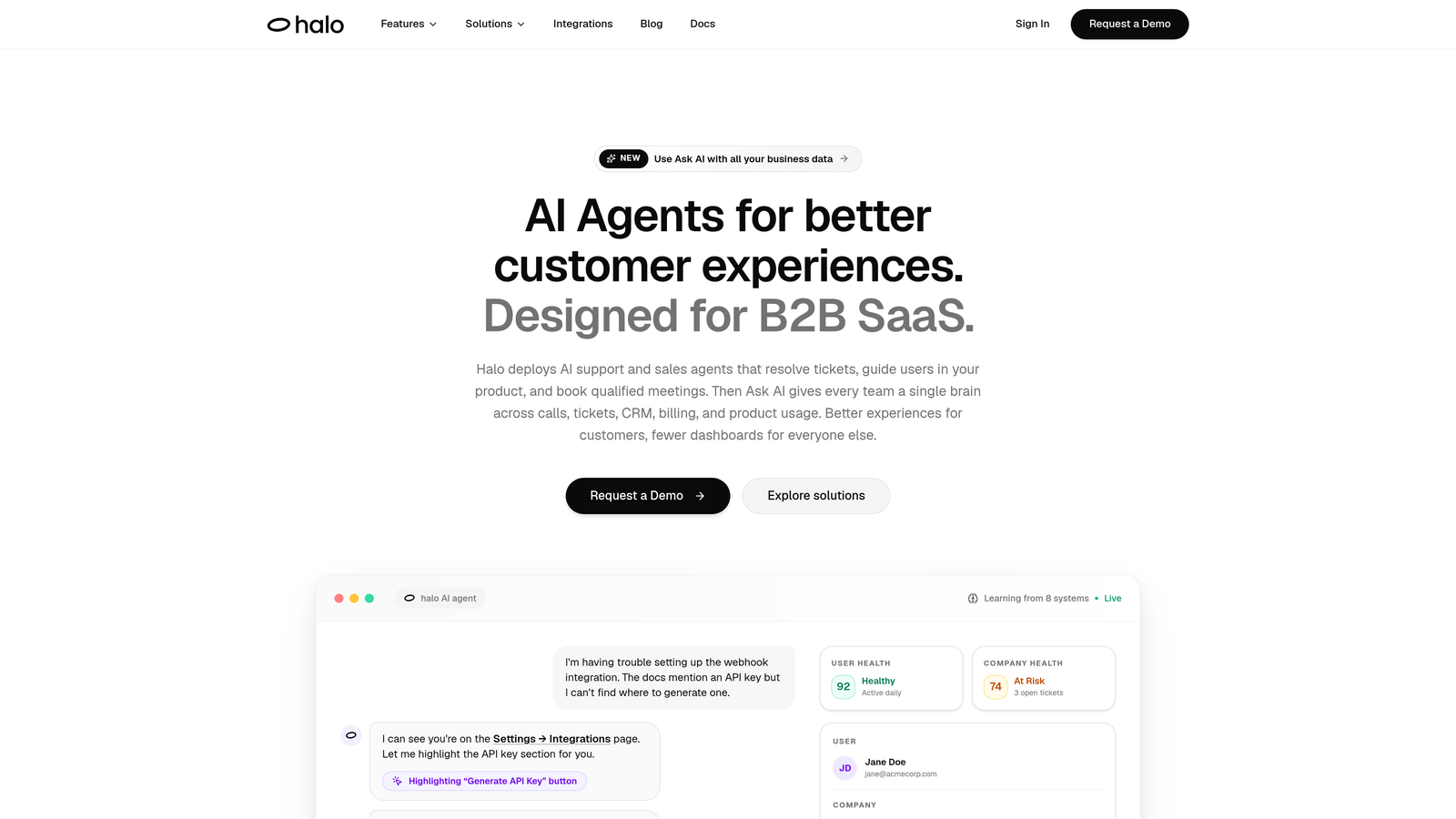
Halo AI is an AI-native customer support platform with a smart inbox that surfaces customer health signals, revenue anomalies, and churn indicators alongside ticket resolution.
Where This Tool Shines
Most support tools are built to close tickets. Halo is built to understand what those tickets mean. Its smart inbox doesn't just organize incoming requests — it actively surfaces business intelligence: which accounts are showing stress signals, where anomalies are appearing in customer behavior, and what patterns suggest expansion or churn risk. That intelligence is available to support agents, CS managers, and executives without anyone having to build a custom report.
The page-aware AI agents are a genuinely differentiated capability. Rather than offering generic responses, Halo's agents see what the user sees in your product and provide contextual, visual guidance in real time. Combined with continuous learning from every resolved interaction, the system gets sharper over time rather than staying static.
Key Features
Smart Inbox with Business Intelligence: Customer health signals, revenue anomalies, and churn indicators are surfaced automatically alongside incoming tickets — no manual analysis required.
Page-Aware AI Agents: Agents understand the user's current context within your product and deliver relevant, visual guidance rather than generic scripted responses.
Auto Bug Ticket Creation: Technical issues are automatically routed into engineering workflows, reducing the manual handoff between support and product teams.
Live Agent Handoff: Complex issues escalate seamlessly to human agents with full conversation context preserved, so customers never have to repeat themselves.
GTM Stack Integrations: Deep integrations with Linear, Slack, HubSpot, Intercom, Stripe, Zoom, PandaDoc, and Fathom connect support signals across the entire go-to-market operation.
Continuous Learning Architecture: Every resolved interaction feeds back into the system, improving agent accuracy and response quality over time.
Best For
B2B SaaS product teams and customer success operations that want a support system built around business intelligence from day one. Particularly strong for teams that are tired of managing separate helpdesk, CS, and analytics tools and want a single system that connects support activity to revenue outcomes.
Pricing
Contact Halo AI directly for pricing details. Given the AI-native architecture and GTM integration depth, pricing is tailored to team size and use case.
2. Intercom
Best for: Mid-market SaaS teams connecting support conversations to product usage data
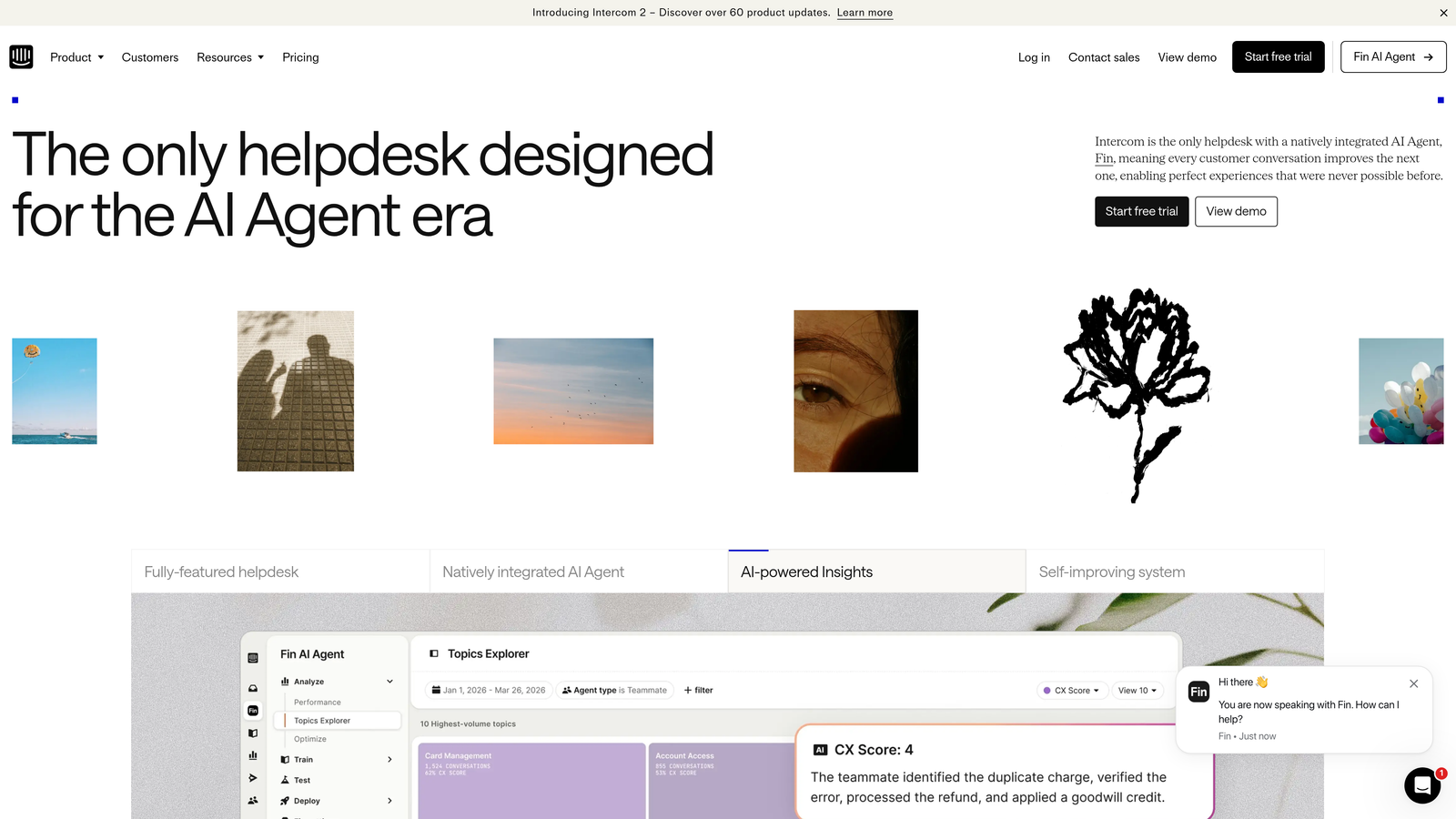
Intercom is a messenger-based customer communications platform with a rich customer event data model and AI-powered support via its Fin agent.
Where This Tool Shines
Intercom's core strength is its event data model. Because it tracks user behavior within your product alongside support conversations, it can surface patterns that purely ticket-based systems miss. A customer who opens five support conversations in a week while their product usage drops is telling you something important — Intercom gives you the infrastructure to see that connection.
The Fin AI agent handles automated ticket resolution with intelligent escalation to human agents when needed. For teams already using Intercom as a product communication layer, the support intelligence capabilities feel natural rather than bolted on.
Key Features
Fin AI Agent: Handles automated ticket resolution with contextual understanding and smooth escalation to human agents for complex issues.
Customer Event Data Model: Connects support conversations to product behavior and usage patterns for richer customer context.
Reporting Dashboard: Links support volume and resolution data to product engagement and usage metrics.
Outbound Messaging: Proactive support capabilities that can reach customers before they submit a ticket.
CRM Integrations: Native connections to Salesforce, HubSpot, and major CRM platforms for cross-functional visibility.
Best For
Mid-market SaaS teams that want support and product communication in a single platform. Strong fit for product-led growth companies where in-app messaging and support overlap significantly.
Pricing
Starts at approximately $39 per seat per month. Pricing scales with usage and contact volume, and can increase substantially for larger teams or high-volume deployments. Verify current pricing at intercom.com.
3. Zendesk
Best for: Enterprise teams with dedicated analytics resources and complex integration requirements
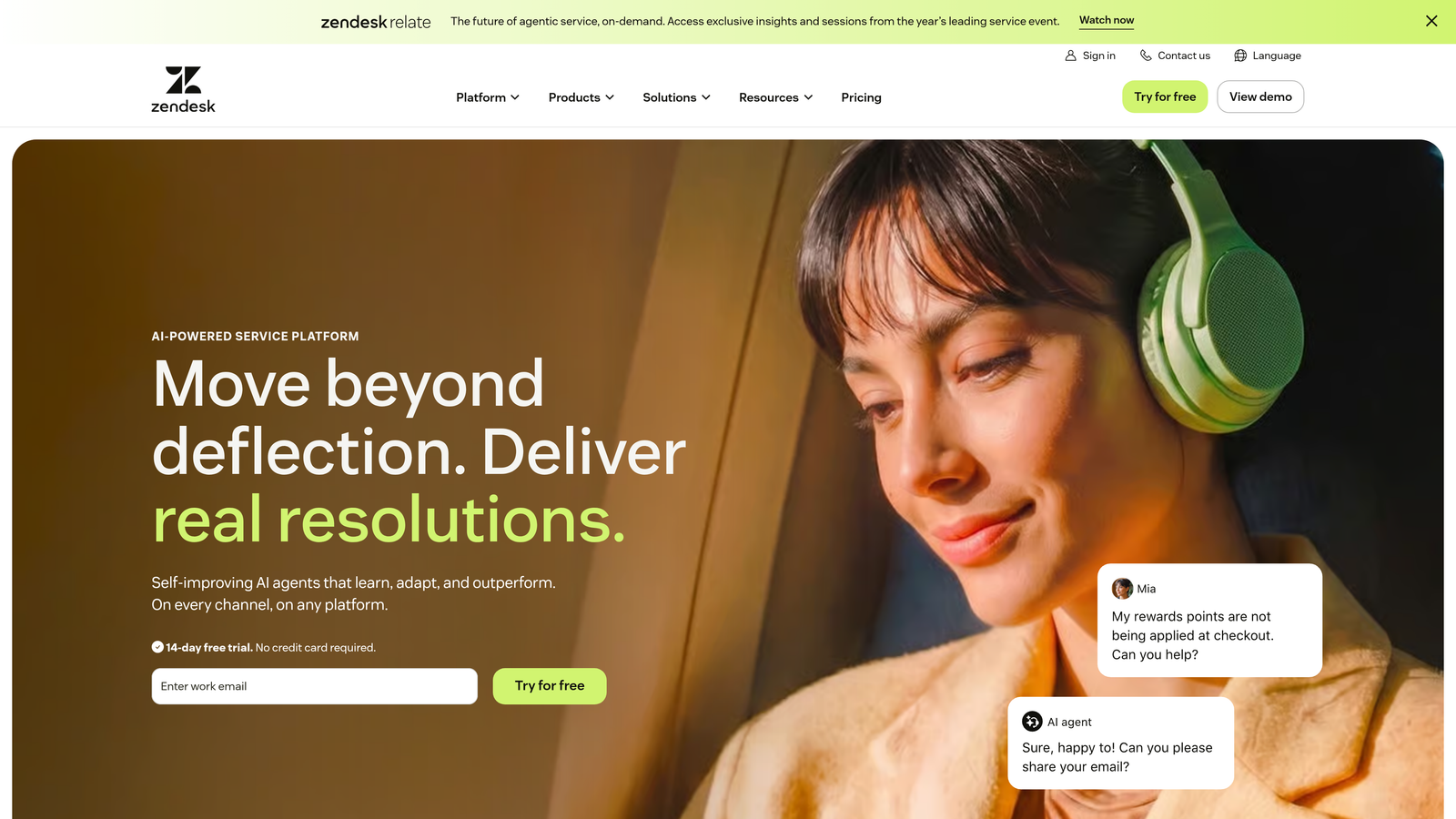
Zendesk is a mature enterprise helpdesk platform with deep analytics via Zendesk Explore and an extensive marketplace for layering revenue intelligence through third-party integrations.
Where This Tool Shines
Zendesk's strength is its ecosystem. With hundreds of marketplace integrations, teams can connect Zendesk to Gainsight, Salesforce, or dedicated revenue intelligence tools to build a custom stack around it. The platform itself is operationally excellent for high-volume support environments, with robust SLA management, omnichannel routing, and enterprise compliance features.
Zendesk Explore gives analytics-minded teams significant flexibility for custom reporting. That said, revenue intelligence in Zendesk is largely what you build with it, rather than what comes out of the box. Teams with dedicated analytics or RevOps resources will get more from it than lean support teams.
Key Features
Zendesk Explore: Deep custom reporting and analytics for support operations, with flexible dashboard building capabilities.
Zendesk AI: AI-powered triage, routing, and agent assistance features built into the core platform.
Marketplace Ecosystem: Hundreds of integrations including Gainsight, Salesforce, and revenue intelligence tools.
Omnichannel Support: Unified inbox across email, chat, voice, and social channels.
Enterprise SLA Management: Advanced compliance and SLA enforcement for complex enterprise requirements.
Best For
Enterprise support teams with existing Salesforce or Gainsight investments, or organizations that need a highly configurable platform they can build custom revenue intelligence workflows around.
Pricing
Suite plans start at approximately $55 per agent per month. Enterprise plans are priced higher. Verify current pricing at zendesk.com before purchasing.
4. Gainsight
Best for: Enterprise CS teams that need comprehensive health scoring and renewal forecasting
Gainsight is a purpose-built customer success platform that ingests support data alongside product usage, NPS, and CRM signals to build health scores and revenue forecasts.

Where This Tool Shines
Gainsight is the category leader in customer success platforms for a reason. Its health scoring engine doesn't just count tickets — it weighs support frequency, sentiment, issue severity, and resolution patterns alongside product usage and NPS data to build a multi-dimensional view of account health. That depth of signal makes its renewal and expansion forecasting genuinely useful for CS and executive teams.
The automated playbook capability is particularly valuable. When a customer's health score drops due to a spike in support tickets, Gainsight can automatically trigger a CS intervention — a check-in call, an executive outreach, or a proactive training offer — without a human having to notice the pattern first.
Key Features
Multi-Source Health Scoring: Incorporates support ticket frequency, sentiment, product usage, NPS, and CRM data into unified account health scores.
Renewal and Expansion Forecasting: Revenue intelligence dashboards driven by aggregated customer signals across the full CS data model.
Automated CS Playbooks: Workflows triggered automatically by support activity patterns and health score changes.
360-Degree Customer View: Combines support, product, and CRM data into a single account record for CS teams.
Executive Dashboards: Revenue intelligence reporting designed for CS leadership and executive stakeholders.
Best For
Enterprise SaaS companies with dedicated customer success teams managing large, complex accounts where renewal forecasting and churn prevention are strategic priorities. Note that Gainsight is typically deployed alongside a separate helpdesk tool, not as a replacement for one.
Pricing
Enterprise pricing, typically starting at $30,000 or more per year. Contact Gainsight directly for a quote based on your team size and data requirements.
5. Freshdesk
Best for: SMB and mid-market teams wanting a revenue-aware support loop at competitive pricing
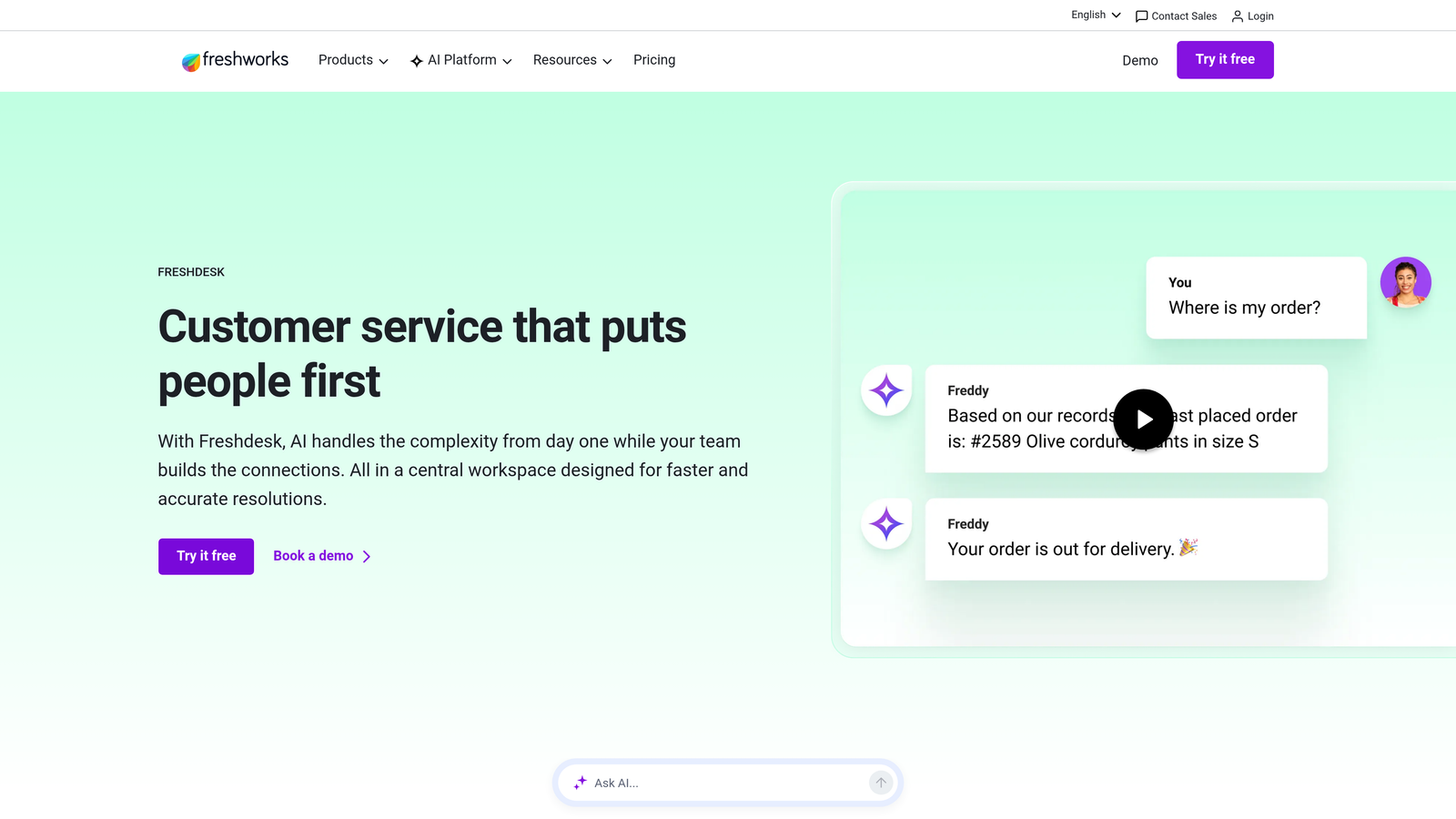
Freshdesk is part of the Freshworks ecosystem, combining AI-powered support automation with native CRM integration through Freshsales for a lightweight but connected revenue loop.
Where This Tool Shines
Freshdesk's advantage is the Freshworks ecosystem. When you're using Freshdesk alongside Freshsales CRM, support tickets automatically connect to contact and deal records, giving agents visibility into account context without switching tools. For smaller teams that can't afford a full enterprise CS stack, this native integration creates a meaningful revenue-awareness layer at a fraction of the cost.
The Freddy AI features handle ticket classification, suggested responses, and agent assistance well for the price point. The platform is accessible enough that teams without dedicated operations staff can get meaningful value quickly.
Key Features
Freddy AI: Ticket classification, suggested responses, and agent assistance powered by AI built into the core platform.
Native Freshsales Integration: Support tickets link directly to contact and deal records in Freshsales CRM without custom configuration.
Customer 360 View: Available when using Freshworks suite products together, combining support and CRM data in a single view.
Omnichannel Support: Email, chat, phone, and social channels unified in a single inbox.
Competitive Pricing: Free tier available for small teams, with paid plans accessible for SMBs.
Best For
SMB and mid-market SaaS teams already using or considering the Freshworks ecosystem. Less suited for teams that need deep revenue intelligence or advanced churn prediction — the platform's strengths are accessibility and ecosystem connectivity rather than analytical depth.
Pricing
Free tier available for small teams. Paid plans start at approximately $15 per agent per month. Verify current pricing at freshworks.com/freshdesk.
6. Salesforce Service Cloud
Best for: Enterprise teams fully invested in the Salesforce ecosystem
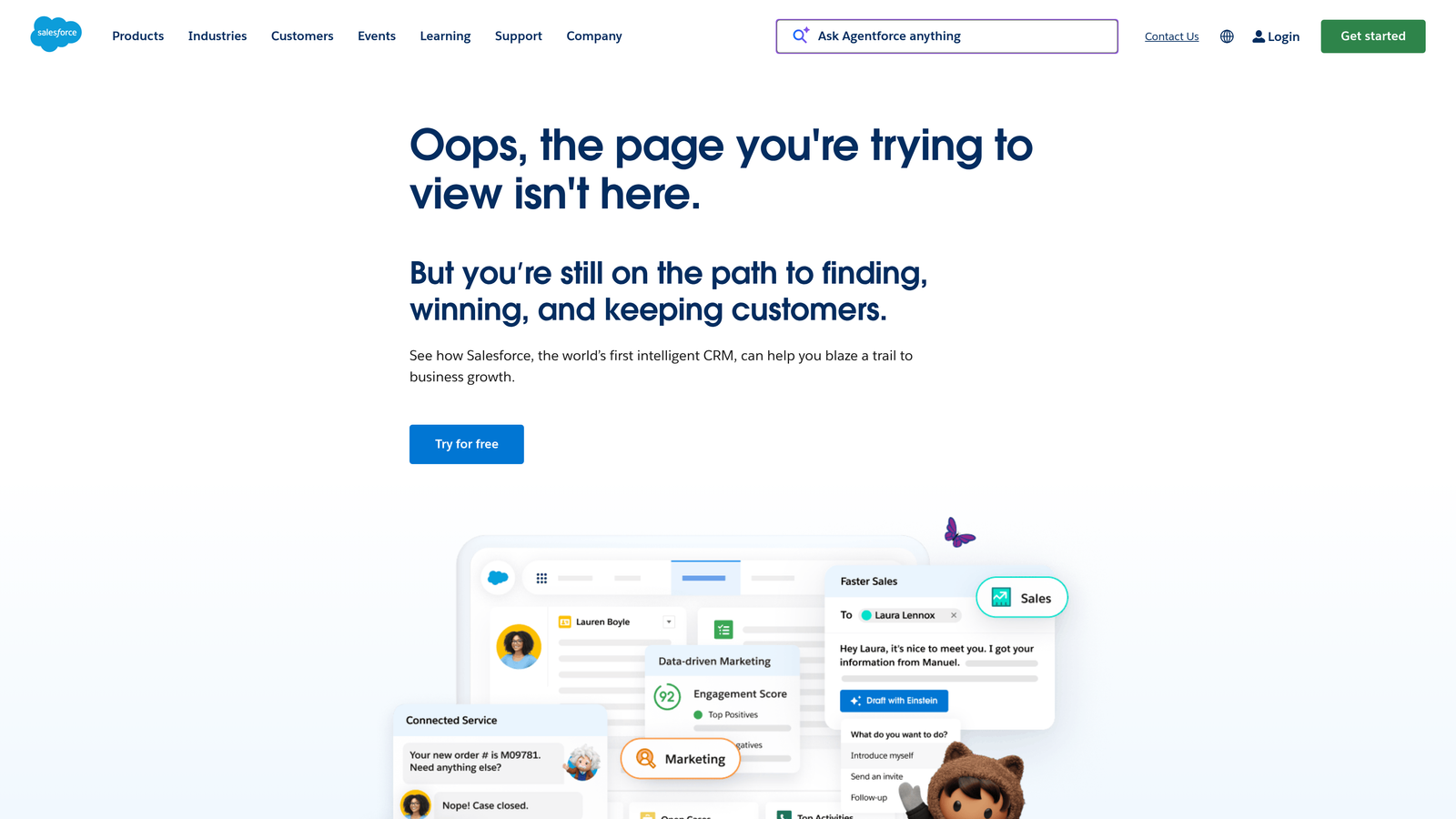
Salesforce Service Cloud is an enterprise support platform natively embedded in Salesforce, where every support case automatically links to account health, opportunity stage, and renewal data.
Where This Tool Shines
If your organization runs on Salesforce, Service Cloud's native CRM integration is genuinely powerful. Support cases are tied directly to account records, which means sales, CS, and support teams share a single view of every customer interaction. When a key account's support ticket volume spikes two weeks before a renewal, the account executive sees it in their Salesforce dashboard without anyone having to send a report.
Einstein AI adds case classification, sentiment analysis, and next-best-action recommendations on top of that data foundation. The revenue intelligence isn't a separate module — it's a natural consequence of everything living in the same Salesforce data model.
Key Features
Native Salesforce CRM Integration: Support cases tied directly to account and opportunity records, creating a unified customer view across sales and support.
Einstein AI: Case classification, next-best-action recommendations, and sentiment analysis powered by Salesforce's AI layer.
Cross-Functional Revenue Dashboards: Shared Salesforce reporting across sales, CS, and support teams without data exports or integrations.
Entitlement Management: SLA enforcement and entitlement tracking for enterprise account structures.
Omni-Channel Routing: Intelligent case routing and workforce management capabilities for complex support operations.
Best For
Enterprise organizations already running their GTM operations on Salesforce. The implementation complexity and cost are significant — this platform rewards organizations that can invest in proper configuration and administration.
Pricing
Starter plans from approximately $25 per user per month. Enterprise plans are priced substantially higher. Implementation costs can add significantly to the total investment. Verify current pricing at salesforce.com.
7. ChurnZero
Best for: SaaS companies where early churn detection from support patterns is a top strategic priority
ChurnZero is a customer success platform focused specifically on churn reduction, with real-time alerts when support patterns indicate account risk and automated playbooks that trigger CS interventions.
Where This Tool Shines
ChurnZero is laser-focused on one outcome: preventing churn. That focus shows in the product. Its real-time alerting system monitors support ticket patterns and health score changes continuously, triggering CS workflows the moment an account shows stress signals. For SaaS companies where a handful of at-risk renewals can meaningfully impact ARR, that speed of detection matters.
The platform ingests support data from major helpdesks including Zendesk, Freshdesk, and Intercom, so it works alongside your existing support infrastructure rather than replacing it. The revenue intelligence dashboards give CS leaders visibility into at-risk ARR and expansion opportunities segmented by account tier.
Key Features
Real-Time Churn Risk Alerts: Triggered by support ticket patterns, sentiment changes, and health score drops — not just manual reviews.
Automated CS Playbooks: Workflows activated by support signals and health score changes, reducing the lag between risk detection and CS response.
Account Health Scoring: Incorporates support frequency, issue severity, and resolution patterns alongside other CS signals.
Revenue Intelligence Dashboards: Tracks at-risk ARR and expansion opportunities by account segment and CS owner.
Helpdesk Integrations: Connects to Zendesk, Freshdesk, Intercom, and other major support platforms to ingest ticket data.
Best For
SaaS companies with dedicated CS teams where churn prevention is a defined business priority. Best deployed alongside an existing helpdesk rather than as a standalone support tool.
Pricing
Custom enterprise pricing. Contact ChurnZero directly for a quote based on your customer count and team structure.
8. HubSpot Service Hub
Best for: Teams already using HubSpot CRM who want support integrated into their existing workspace
HubSpot Service Hub is a support platform tightly integrated with HubSpot CRM, where every ticket automatically updates contact health records and feeds into marketing and sales workflows.
Where This Tool Shines
Service Hub's value proposition is ecosystem coherence. For teams running HubSpot CRM, Marketing Hub, and Sales Hub, adding Service Hub means support tickets automatically appear on contact timelines alongside email opens, deal stages, and marketing engagement. That shared record creates a natural revenue intelligence layer without any custom integration work.
The Breeze AI features handle ticket summarization, suggested replies, and conversation intelligence competently. For teams that want a complete HubSpot-native stack, Service Hub removes the friction of connecting a separate helpdesk to CRM data.
Key Features
Native HubSpot CRM Integration: Support tickets linked to contact and deal records automatically, with no custom configuration required.
Contact Activity Timelines: Customer health tracked across marketing, sales, and support touchpoints in a single HubSpot record.
Breeze AI: Ticket summarization, suggested replies, and conversation intelligence built into the HubSpot workspace.
Shared Inbox: Omnichannel ticketing managed within the familiar HubSpot interface.
Revenue-Connected Reporting: Support activity connected to pipeline and revenue data for teams using HubSpot across sales and marketing.
Best For
Companies already using HubSpot CRM and Marketing Hub who want to extend that ecosystem to support without managing a separate platform. Revenue intelligence depth is more limited than dedicated CS platforms, but the ecosystem connectivity is strong for HubSpot-native teams.
Pricing
Free tier available. Starter from approximately $15 per seat per month. Professional from approximately $90 per seat per month. Verify current pricing at hubspot.com.
9. Totango
Best for: Enterprise CS teams managing complex customer segments with structured playbook requirements
Totango is an enterprise customer success platform using a SuccessBLOCs framework to operationalize revenue intelligence from support signals, product usage data, and health score changes.
Where This Tool Shines
Totango's SuccessBLOCs framework is its most distinctive feature. Rather than building CS workflows from scratch, teams work with pre-built playbook modules that can be triggered by specific support signals, health score thresholds, or lifecycle events. For enterprise CS operations managing diverse customer segments, that structure reduces the time to operationalize revenue intelligence significantly.
The multi-source health scoring engine combines support data, product usage, NPS, and CRM signals into segment-level views that help CS leaders prioritize their team's attention on the accounts that matter most. Integrations with Zendesk, Salesforce, HubSpot, and major data sources mean Totango sits on top of your existing stack rather than replacing it.
Key Features
SuccessBLOCs: Pre-built playbook modules triggered by support signals, health changes, and lifecycle events — reducing workflow build time.
Multi-Source Health Scoring: Combines support, product usage, NPS, and CRM data into unified, segmented health views.
Revenue Intelligence Dashboards: Tracks renewal risk and expansion potential by customer segment and account tier.
Automated CS Workflows: Responds to support-driven churn indicators with defined CS actions and escalations.
Broad Integration Support: Connects to Zendesk, Salesforce, HubSpot, and major data platforms to ingest support signals.
Best For
Enterprise SaaS companies with complex customer segmentation, dedicated CS operations, and a need for structured, scalable playbooks. Like Gainsight and ChurnZero, Totango works best alongside a separate helpdesk tool rather than as a standalone support platform.
Pricing
Custom enterprise pricing. Contact Totango directly for a quote based on your account volume and team requirements.
Which Platform Is Right for Your Team?
The right choice here depends on where you are in your support and CS maturity, and what problem you're actually trying to solve.
If you want a support system that generates revenue intelligence natively, without stitching together a helpdesk, a CS platform, and a separate analytics tool, Halo AI is the most coherent option. Its smart inbox surfaces customer health signals and revenue anomalies as a core function, not an add-on, and its GTM integrations mean those signals flow directly into the tools your sales and CS teams already use.
For teams already deep in the Salesforce ecosystem, Service Cloud is the natural choice — the CRM integration is unmatched for organizations where sales and support need to share a single account record. HubSpot Service Hub fills the same role for HubSpot-native teams at a more accessible price point.
If churn prevention is your primary focus, ChurnZero and Gainsight are purpose-built for that outcome. Gainsight offers more analytical depth for complex enterprise CS operations; ChurnZero is faster to operationalize and more focused on real-time risk alerting. Totango is a strong fit for enterprise teams that want structured, scalable CS playbooks without building everything from scratch.
Intercom works well for product-led growth companies where in-app messaging and support overlap. Freshdesk is the most accessible entry point for SMB teams that want ecosystem connectivity without enterprise pricing. Zendesk remains a solid foundation for high-volume enterprise support, particularly for teams with dedicated analytics resources to build on top of it.
The broader shift here is worth naming directly: support is increasingly a revenue function, and the platforms that treat it that way are creating real competitive advantages for the teams using them. Your support team shouldn't scale linearly with your customer base. Let AI agents handle routine tickets, guide users through your product, and surface business intelligence while your team focuses on complex issues that need a human touch. See Halo in action and discover how continuous learning transforms every interaction into smarter, faster support.