9 Best Support Ticket Automation Platforms for B2B Teams in 2026
This comprehensive support ticket automation platforms review examines nine leading solutions that help B2B teams handle growing ticket volumes without expanding headcount. We evaluated platforms based on AI capabilities, integration options, setup complexity, and ticket deflection rates—covering everything from AI-first autonomous resolution systems like Halo AI to established helpdesks with robust automation features, helping you choose the right solution for your team's specific needs.
 Matt PattoliFounder11 min read
Support teams are drowning in repetitive tickets while customers expect instant responses. The gap between ticket volume and team capacity keeps growing, and throwing more headcount at the problem isn't sustainable. Modern ticket automation platforms use AI to resolve common issues autonomously, route complex problems to the right agents, and learn from every interaction.
This review covers nine platforms that actually deliver on the automation promise—from AI-first solutions built for autonomous resolution to established helpdesks with automation add-ons. We evaluated each based on AI capabilities, integration depth, ease of setup, and real-world ticket deflection potential.
1. Halo AI
Best for: B2B teams seeking autonomous ticket resolution with continuous learning capabilities
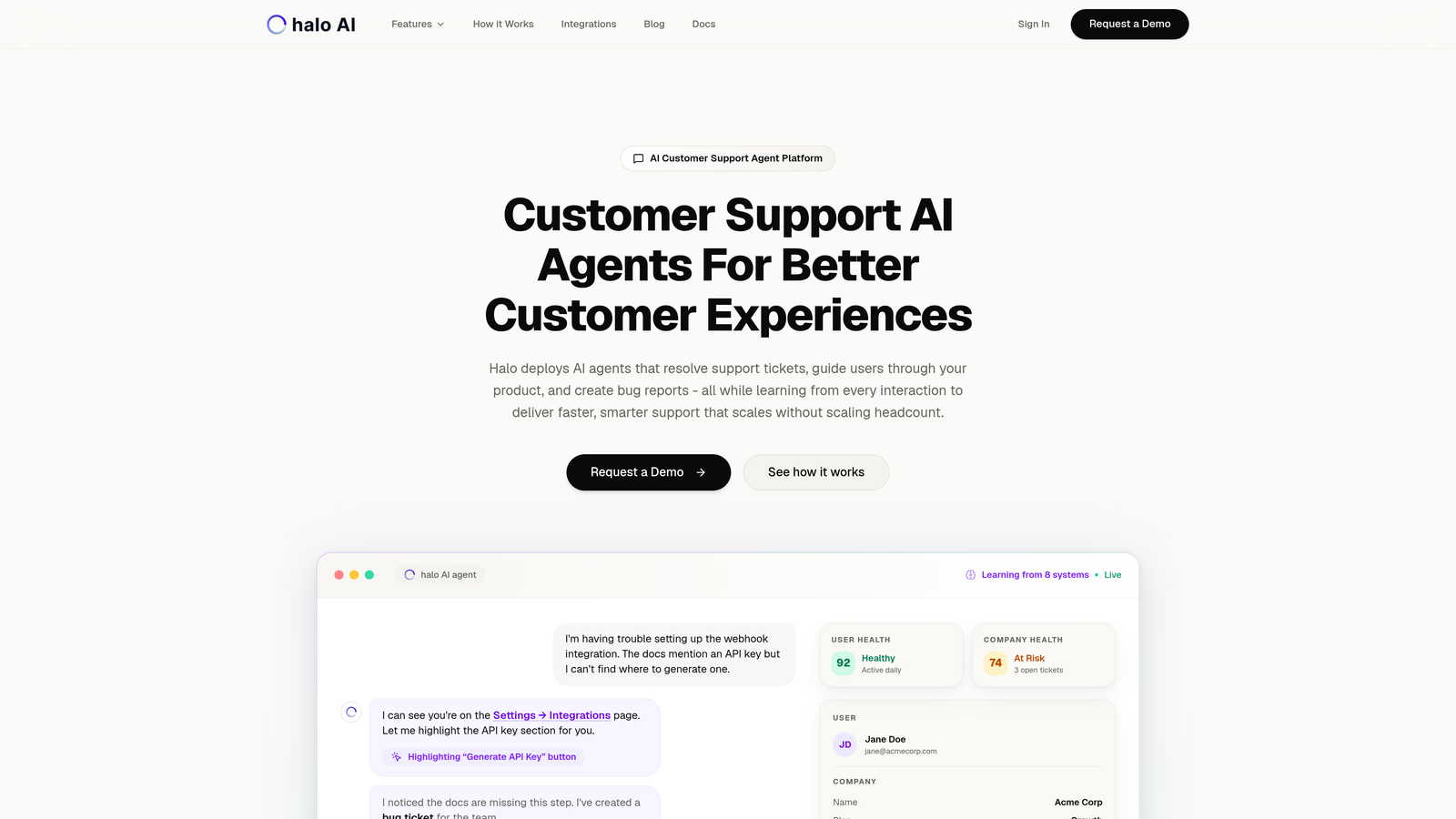
Halo AI is an AI-first customer support platform built specifically for autonomous ticket resolution rather than bolt-on automation.
Where This Tool Shines
Unlike traditional helpdesks that added AI features later, Halo's architecture was designed from the ground up for autonomous operation. The platform's AI agents don't just suggest responses—they resolve tickets independently while learning from every interaction to improve future performance.
The page-aware context feature sets it apart by seeing exactly what users see in your product. When someone asks for help, the AI understands the visual context and can provide step-by-step guidance based on the actual interface, not just text-based knowledge base articles.
Key Features
Autonomous AI Agents: Resolve tickets without human intervention by understanding intent and executing multi-step solutions.
Page-Aware Chat Widget: Sees the user's current screen to provide visual guidance and context-specific help.
Smart Inbox with Business Intelligence: Surfaces customer health signals, revenue insights, and anomaly detection beyond basic support metrics.
Auto Bug Ticket Creation: Automatically generates technical bug reports with full context when product issues are detected.
Deep Business Stack Integrations: Connects natively with Linear, Slack, HubSpot, Intercom, Stripe, Zoom, PandaDoc, and Fathom for cross-system intelligence.
Best For
B2B product teams and SaaS companies who want AI agents that actually resolve tickets autonomously rather than just suggesting responses. Particularly valuable for teams using helpdesk systems like Zendesk, Freshdesk, or Intercom who need deeper automation capabilities.
Pricing
Contact for pricing. Enterprise-focused with custom implementations based on ticket volume and integration requirements.
2. Zendesk
Best for: Enterprise teams needing extensive customization through marketplace apps and workflows
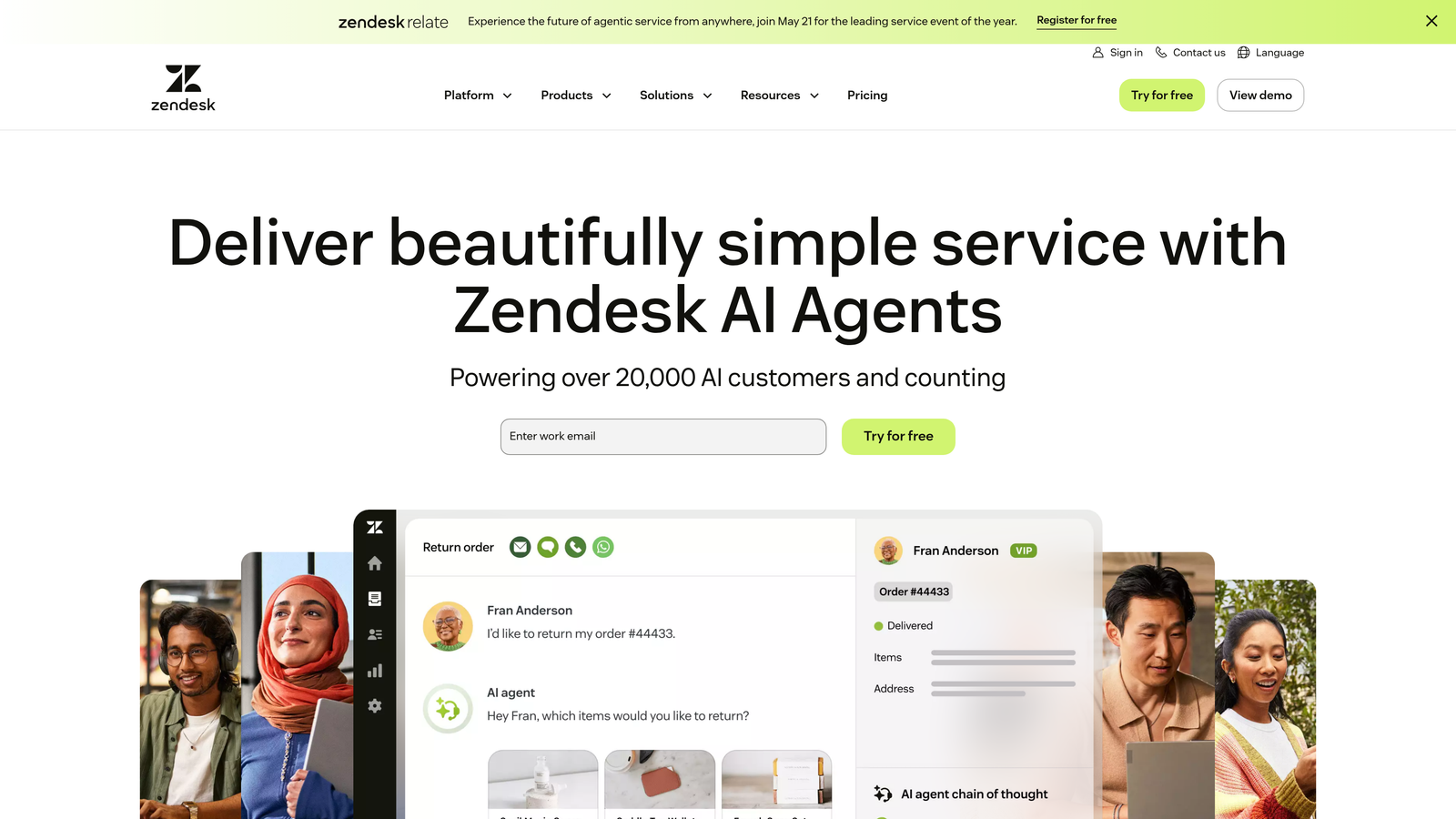
Zendesk is an established enterprise helpdesk platform with comprehensive automation features and a massive ecosystem of integrations.
Where This Tool Shines
Zendesk's strength lies in its maturity and extensibility. The platform has been refined over years of enterprise deployments, resulting in sophisticated workflow automation that handles complex routing scenarios. The marketplace offers thousands of apps that extend functionality for nearly any use case.
Answer Bot provides automated responses based on knowledge base content, though it operates more as an assistant than an autonomous resolver. The real power comes from combining triggers, automations, and marketplace apps to build custom support workflows.
Key Features
Advanced Ticketing Workflows: Create complex automation rules with triggers, conditions, and actions across multiple channels.
Answer Bot: AI-powered bot suggests knowledge base articles and can provide automated responses to common questions.
Marketplace Ecosystem: Access over 1,000 apps for specialized functionality from CRM sync to advanced analytics.
Multi-Channel Support: Unified inbox for email, chat, phone, social media, and messaging apps with consistent automation across channels.
Reporting and Analytics: Comprehensive dashboards tracking ticket volume, resolution time, CSAT, and custom metrics.
Best For
Large enterprises with complex support operations requiring extensive customization and integration capabilities. Teams with technical resources to configure and maintain sophisticated automation workflows.
Pricing
Starts at $55/agent/month for Suite Team. Enterprise plans with advanced automation and AI features require custom pricing.
3. Intercom
Best for: Product-led companies prioritizing conversational support and in-app messaging
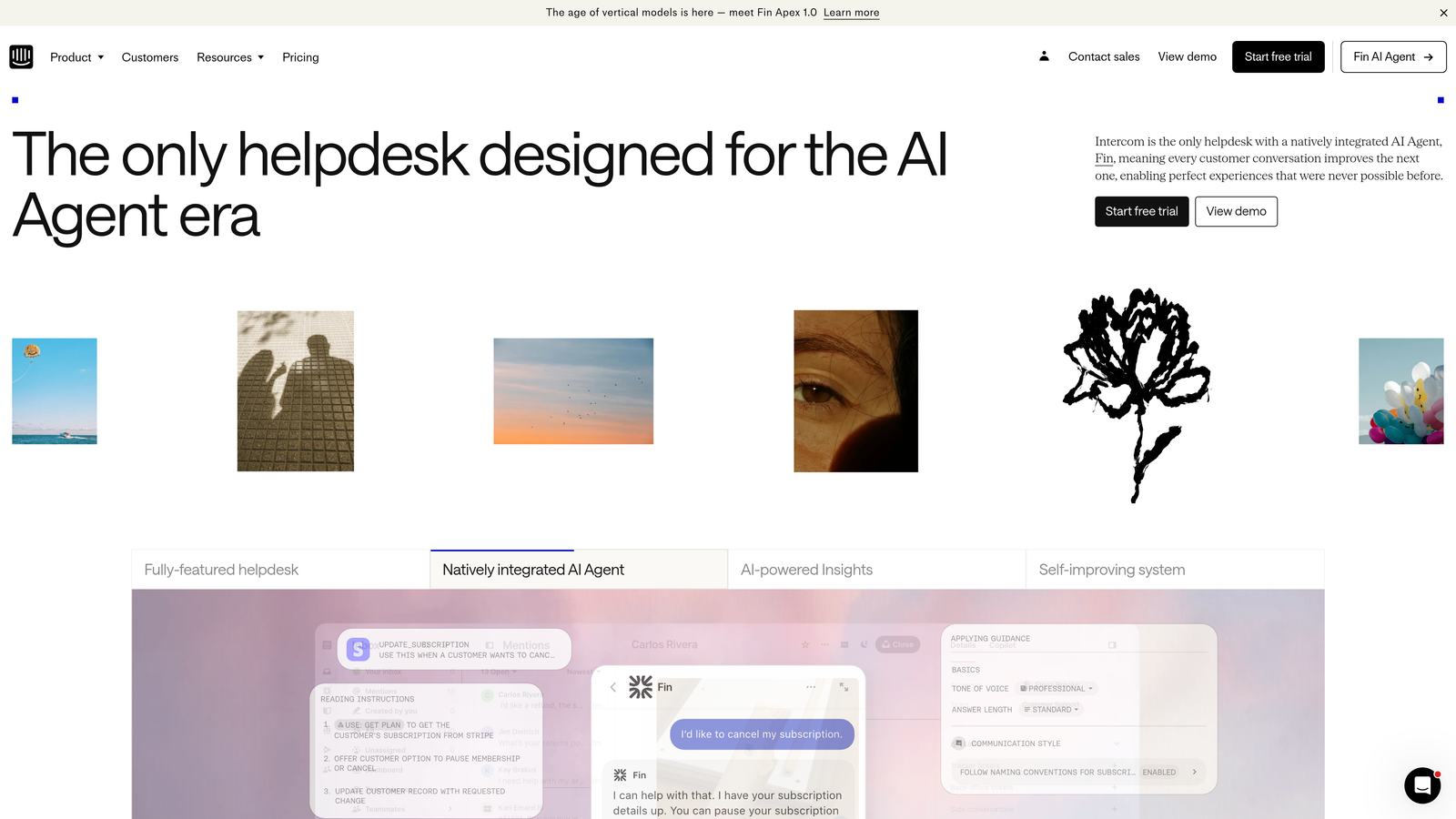
Intercom is a conversational support platform centered around its messenger experience with Fin AI agent for automated interactions.
Where This Tool Shines
Intercom excels at proactive, conversational support that feels native to your product. The messenger doesn't just react to incoming tickets—it reaches out to users with targeted messages, product tours, and contextual help based on their behavior.
Fin AI represents Intercom's push into autonomous resolution, handling conversations end-to-end without human intervention. The AI learns from your knowledge base and past conversations to resolve customer questions conversationally rather than through rigid decision trees.
Key Features
Fin AI Agent: Conversational AI that resolves customer questions autonomously using natural language understanding.
Product Tours: Create interactive walkthroughs that guide users through features without support intervention.
Custom Bot Workflows: Build conversation flows for qualification, routing, and initial triage before human handoff.
Messenger Experience: Highly customizable chat widget that feels integrated with your product rather than a separate support tool.
Behavioral Targeting: Trigger messages based on user actions, page visits, and product usage patterns.
Best For
SaaS companies and product teams who want support that feels like a natural extension of their product experience. Particularly strong for companies with robust knowledge bases that Fin can leverage for conversational resolution.
Pricing
Starts at $39/seat/month for core platform. Fin AI is priced separately per resolution, with costs varying based on volume.
4. Freshdesk
Best for: Mid-market teams seeking affordable automation with AI-assisted categorization
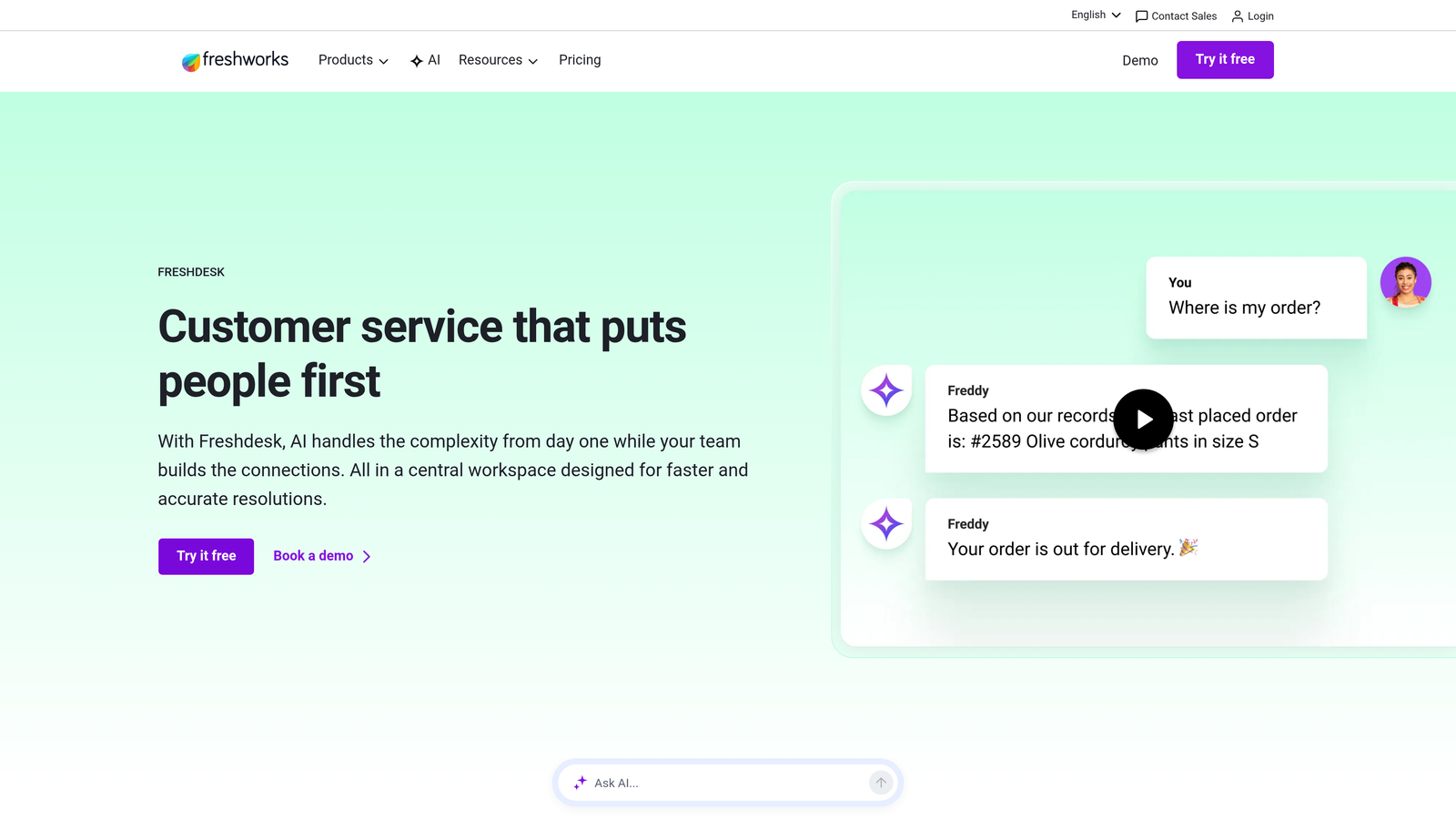
Freshdesk is a mid-market helpdesk platform with Freddy AI for ticket automation and intelligent categorization.
Where This Tool Shines
Freshdesk strikes a balance between enterprise capabilities and mid-market pricing. Freddy AI automatically categorizes incoming tickets, suggests responses to agents, and identifies sentiment to prioritize urgent issues. This reduces manual triage work significantly.
Scenario automations handle complex multi-step workflows without custom coding. You can build conditional logic that routes tickets, updates fields, and triggers notifications based on ticket properties and customer data.
Key Features
Freddy AI Classification: Automatically categorizes tickets by topic, priority, and sentiment using machine learning.
Scenario Automations: Build complex if-then workflows with multiple conditions and actions without technical expertise.
Canned Responses: Template library with variables that auto-populate customer-specific information for faster replies.
Multi-Product Support: Manage support for multiple products or brands within a single instance with separate workflows.
SLA Management: Define and track service level agreements with automatic escalations for breached tickets.
Best For
Growing companies that need enterprise-level automation without enterprise pricing. Teams handling multiple products or brands who want consolidated support operations with intelligent routing.
Pricing
Free tier available for basic functionality. Pro plan starts at $49/agent/month with Freddy AI and advanced automation included.
5. Help Scout
Best for: Teams prioritizing human connection with AI assistance for agent productivity
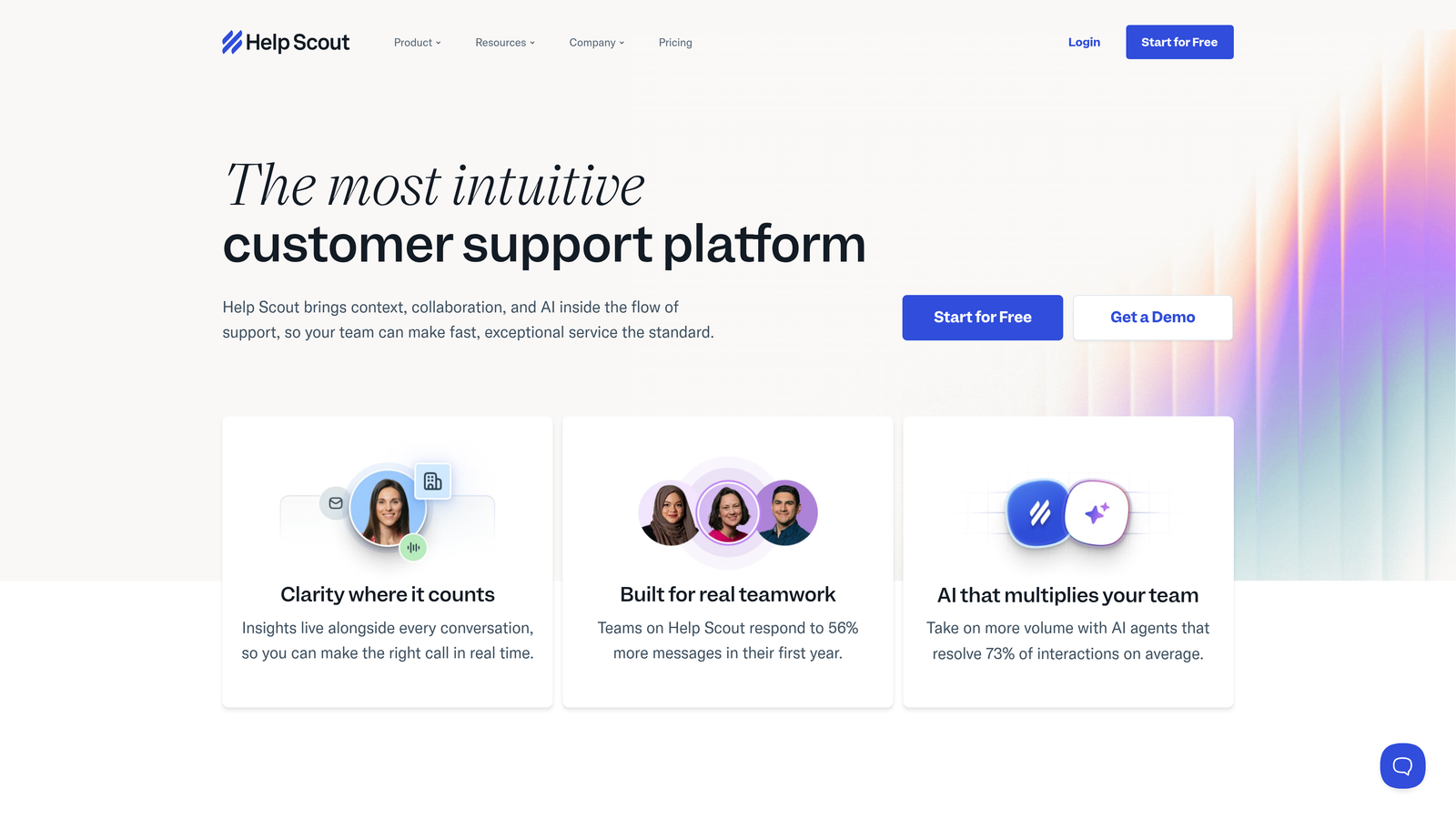
Help Scout is a human-centered helpdesk that uses AI to enhance agent productivity rather than replace human interaction.
Where This Tool Shines
Help Scout's philosophy centers on maintaining authentic customer relationships while using automation to remove friction. The AI drafts feature suggests complete response text based on ticket content and past interactions, but keeps humans in the decision loop.
The interface is refreshingly clean compared to feature-bloated enterprise platforms. Agents can focus on conversations without navigating complex menus or overwhelming dashboards. This simplicity reduces training time and improves response quality.
Key Features
AI Drafts: Generates suggested response text based on ticket context and historical conversations to speed up replies.
Beacon Widget: Embedded help widget that surfaces knowledge base articles before customers submit tickets.
Workflows: Automated routing, tagging, and assignment rules that organize incoming conversations without manual sorting.
Collision Detection: Prevents multiple agents from responding to the same conversation simultaneously.
Customer Properties: Custom fields that surface relevant customer data within conversations for personalized support.
Best For
Small to mid-sized teams who value personal customer relationships and want AI to enhance human agents rather than replace them. Companies seeking a clean, focused interface without enterprise complexity.
Pricing
Starts at $20/user/month with all core features included. No separate charges for AI drafts or automation capabilities.
6. Gorgias
Best for: E-commerce brands needing order-aware automation with native Shopify integration
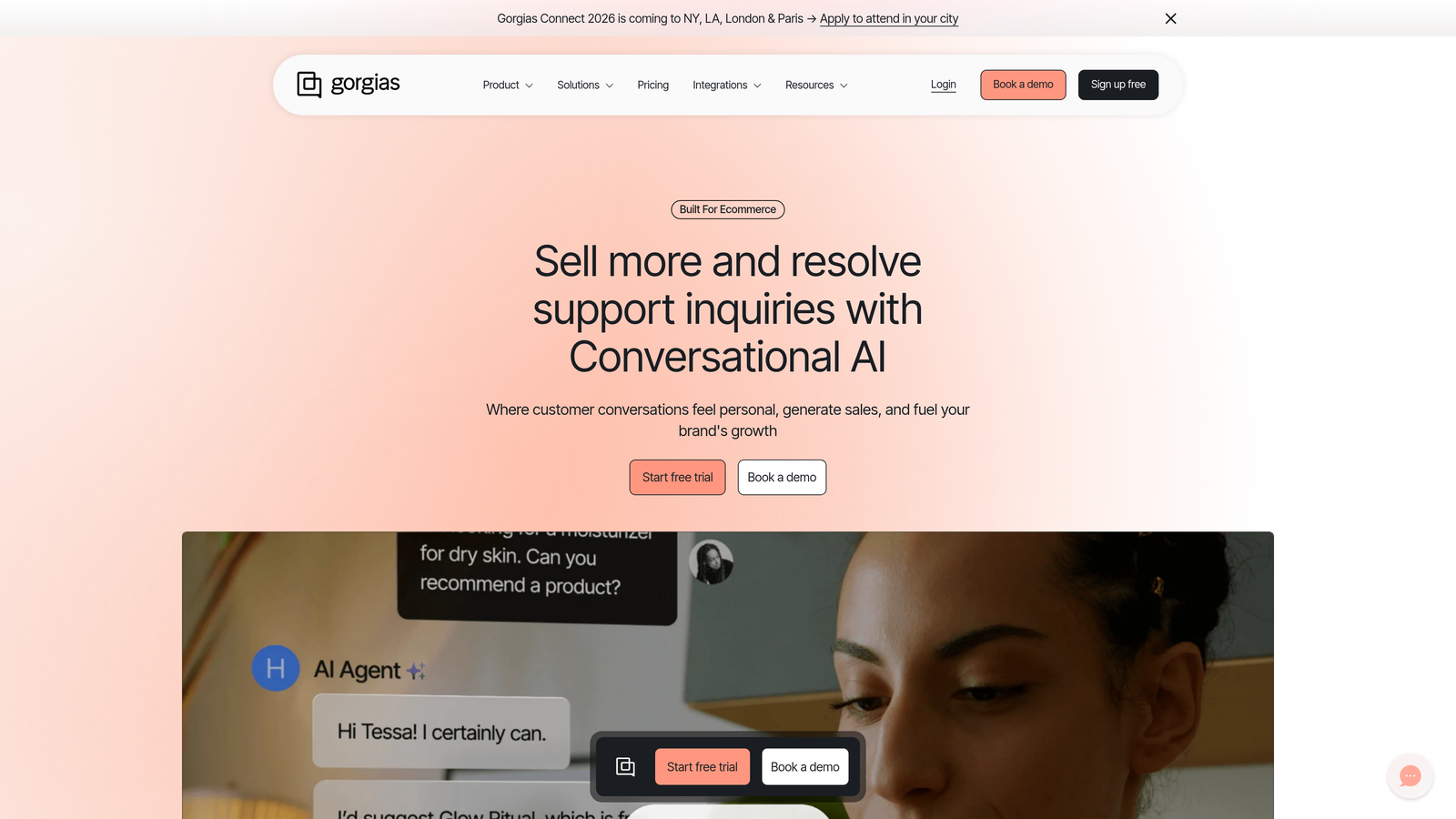
Gorgias is an e-commerce focused helpdesk built specifically for online retail with deep platform integrations.
Where This Tool Shines
Gorgias understands e-commerce workflows at a fundamental level. When a customer asks about an order, agents see the complete order history, shipping status, and can modify orders directly within the ticket interface without switching to Shopify or other platforms.
Macro automation uses customer data variables to personalize responses at scale. Instead of generic canned responses, you can create templates that automatically insert order numbers, tracking links, product names, and customer-specific details for each interaction.
Key Features
Native E-commerce Integrations: Direct connections to Shopify, BigCommerce, and Magento with bidirectional data sync.
Order Management: Look up orders, process refunds, and modify shipments directly within ticket conversations.
Revenue Attribution: Track how support interactions influence sales and customer lifetime value.
Macro Variables: Create automated responses that dynamically insert customer data, order details, and tracking information.
Social Media Integration: Manage Instagram, Facebook, and SMS conversations alongside email in a unified inbox.
Best For
E-commerce brands running on Shopify, BigCommerce, or Magento who need support agents to handle order inquiries without platform switching. Particularly valuable for high-volume stores with repetitive order status questions.
Pricing
Starts at $10/month for 50 tickets. Scales based on ticket volume with plans up to $900/month for 6,000 tickets.
7. Kustomer
Best for: Enterprise teams requiring complete customer timeline visibility across all touchpoints
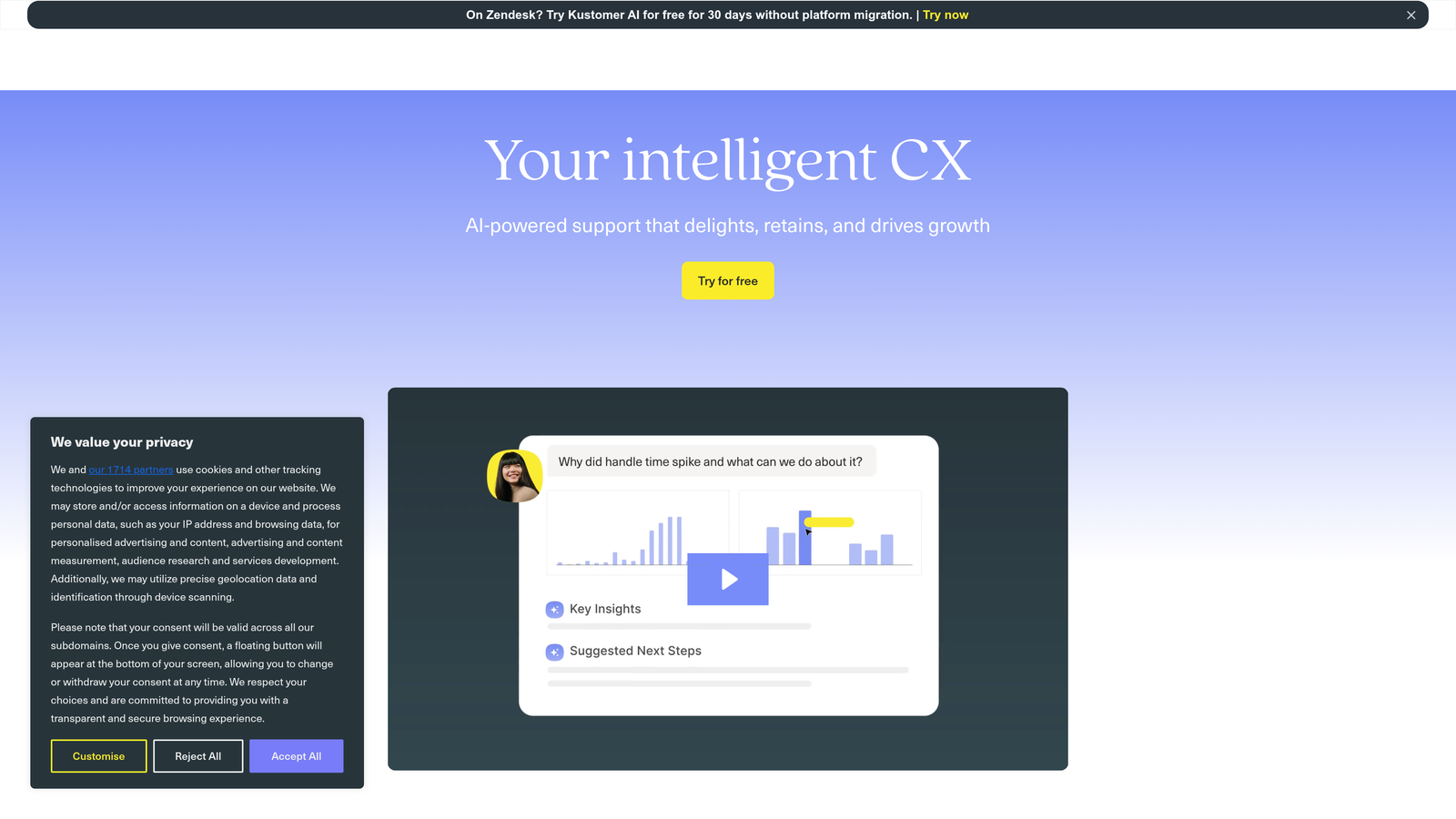
Kustomer is a CRM-powered support platform that unifies customer data across every interaction and channel.
Where This Tool Shines
Kustomer's timeline approach fundamentally changes how agents view customers. Instead of seeing isolated tickets, agents get a complete chronological history of every email, chat, purchase, support interaction, and product usage event in one view.
AI-powered conversation classification automatically tags and routes conversations based on content analysis and sentiment. The system learns from agent actions to improve categorization accuracy over time, reducing manual triage work significantly.
Key Features
Unified Customer Timeline: Complete chronological view of every customer interaction across all channels and systems.
AI Conversation Classification: Automatically categorizes and routes conversations based on content, intent, and sentiment analysis.
Business Process Automation: Build complex workflows that span multiple systems and trigger actions based on customer data changes.
Sentiment Analysis: Identifies frustrated or at-risk customers automatically for priority handling and escalation.
Custom Object Support: Track any type of customer data beyond standard fields with flexible data modeling.
Best For
Enterprise companies with complex customer relationships requiring complete visibility across support, sales, product usage, and business operations. Teams who need sophisticated automation that considers the full customer context.
Pricing
Contact for pricing. Enterprise-focused with custom implementations based on user count, data volume, and integration requirements.
8. Front
Best for: Teams managing shared email inboxes with internal collaboration needs
Front is a collaborative inbox platform that transforms team email into a coordinated workflow with automation.
Where This Tool Shines
Front excels at team collaboration on customer emails. Multiple people can work on the same inbox without stepping on each other's toes, with internal comments, assignment, and collision detection preventing duplicate responses.
The platform's strength is bridging individual email productivity with team coordination. You get the familiar email interface everyone knows, enhanced with automation rules, shared drafts, and analytics that traditional email clients can't provide.
Key Features
Shared Inbox Collaboration: Multiple team members manage shared email addresses with internal comments and assignment.
Rule-Based Automation: Auto-route emails, assign conversations, and trigger actions based on sender, subject, content, or custom criteria.
AI Message Drafting: Generates suggested reply text based on conversation context to accelerate response times.
SLA Management: Set response time targets and track team performance against service level agreements.
Analytics Dashboard: Monitor team productivity, response times, and conversation volume with detailed reporting.
Best For
Teams currently using shared email inboxes who need better coordination and automation without abandoning email as their primary support channel. Sales and support teams who value email familiarity over specialized helpdesk interfaces.
Pricing
Starts at $19/seat/month for core shared inbox functionality. Higher tiers add advanced automation and analytics features.
9. Tidio
Best for: Small businesses needing accessible chatbot automation with visual bot building
Tidio is a chatbot platform with visual bot builder designed for small business automation without technical expertise.
Where This Tool Shines
Tidio makes chatbot creation accessible to non-technical users through its drag-and-drop visual builder. You can create conversation flows by connecting blocks rather than writing code or complex logic statements.
Pre-built templates cover common use cases like lead qualification, FAQ handling, and appointment scheduling. You can deploy a functional chatbot in minutes by customizing a template rather than building flows from scratch.
Key Features
Visual Bot Builder: Drag-and-drop interface for creating conversation flows without coding or technical knowledge.
Pre-Built Templates: Ready-made chatbot scenarios for common use cases that can be customized to your needs.
Live Chat Handoff: Seamlessly transfer conversations from bot to human agent when automation reaches its limits.
Basic Ticketing: Simple ticket management for conversations that require follow-up beyond chat.
Mobile Apps: Respond to chats and manage conversations from iOS and Android apps.
Best For
Small businesses and startups who need basic chat automation without enterprise complexity or pricing. Teams with limited technical resources who want to deploy chatbots quickly using visual tools.
Pricing
Free tier available with basic chatbot and live chat features. Paid plans start at $29/month for increased conversation volume and advanced features.
Making the Right Choice
The right platform depends on where you are in your automation journey and what you're trying to solve. If you need AI agents that actually resolve tickets autonomously rather than just suggesting responses, Halo AI's architecture delivers continuous learning that improves over time. For enterprise teams with complex workflows and extensive customization needs, Zendesk's marketplace ecosystem provides nearly unlimited extensibility.
E-commerce brands should look at Gorgias for native order management capabilities, while teams prioritizing conversational support will find Intercom's messenger experience more aligned with product-led growth strategies. Mid-market teams seeking balance between capabilities and cost often find Freshdesk or Help Scout hits the sweet spot.
Think about your technical resources honestly. Platforms like Zendesk and Kustomer deliver sophisticated automation but require dedicated resources to configure and maintain. Visual builders like Tidio trade power for accessibility, letting non-technical teams deploy basic automation quickly.
The market has shifted from rule-based automation to AI-driven resolution. The key differentiator isn't whether a platform has AI features—it's whether the AI was bolted onto an existing helpdesk or built into the architecture from day one. Native AI platforms learn from every interaction and improve continuously, while add-on AI features often operate as separate tools with limited context.
Your support team shouldn't scale linearly with your customer base. Let AI agents handle routine tickets, guide users through your product, and surface business intelligence while your team focuses on complex issues that need a human touch. See Halo in action and discover how continuous learning transforms every interaction into smarter, faster support.