9 Best Support Ticket Automation Tools in 2026
Support ticket automation tools have evolved beyond simple routing to fully resolve repetitive customer inquiries like password resets and order tracking without human intervention. This guide evaluates the top nine platforms in 2026 based on AI resolution capabilities, integration options, and setup complexity, helping support teams from startups to enterprises eliminate ticket backlog and focus on complex issues that require human expertise.
 Grant CooperFounder12 min read
Support teams are drowning in repetitive tickets—password resets, order status checks, feature questions that get asked dozens of times daily. The right automation tool doesn't just route these tickets faster; it resolves them entirely, freeing your team to handle complex issues that actually need human judgment. We evaluated dozens of platforms based on AI capabilities, integration depth, ease of setup, and real-world resolution rates. Whether you're a growing startup or an enterprise managing thousands of daily tickets, here are the tools worth your attention in 2026.
1. Halo AI
Best for: Teams that want autonomous ticket resolution, not just smarter routing
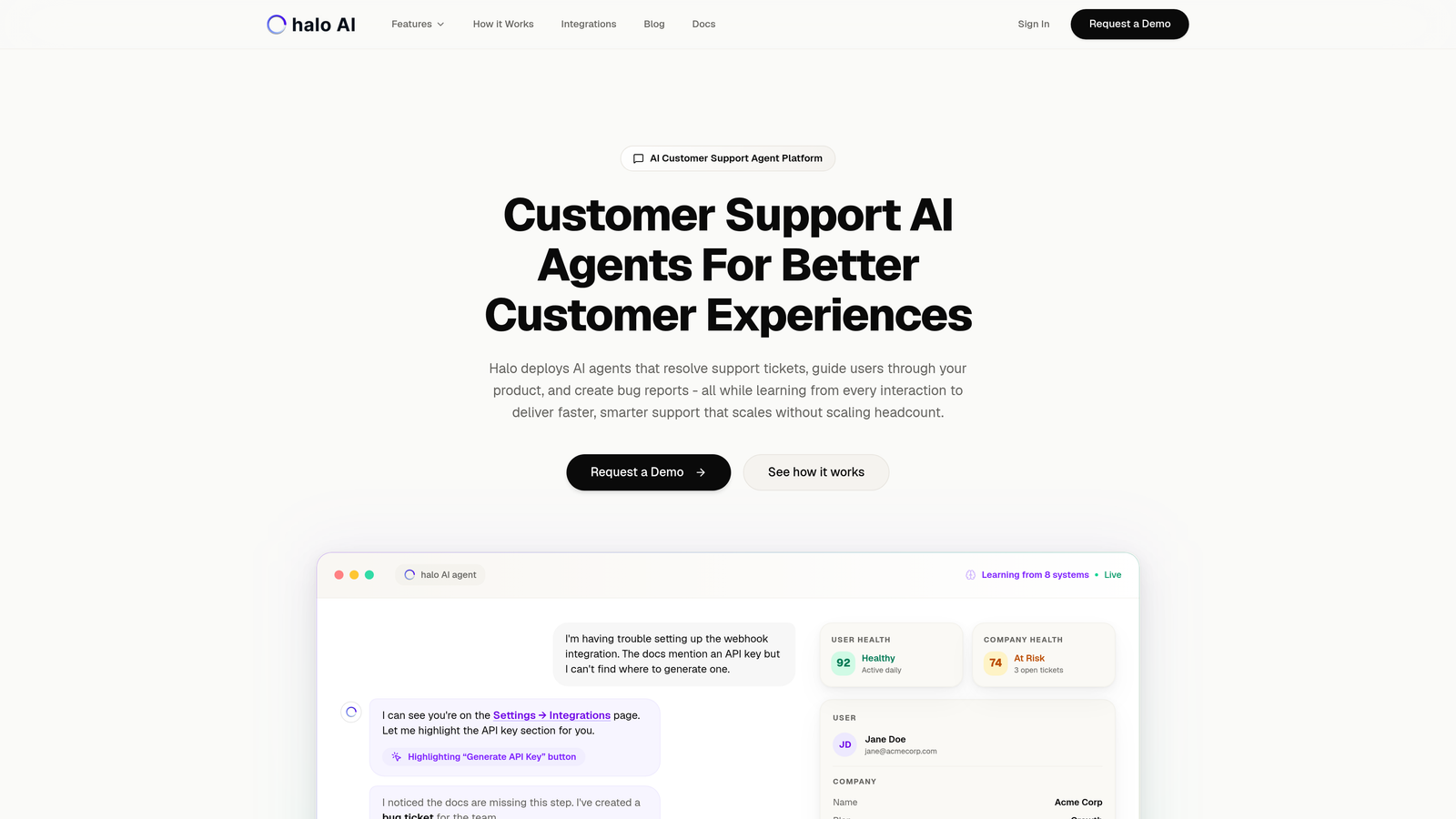
Halo AI takes a fundamentally different approach to support automation by deploying AI agents that actually resolve tickets end-to-end rather than simply categorizing and routing them to humans.
Where This Tool Shines
Unlike traditional helpdesks that bolt AI onto existing workflows, Halo is built AI-first. Its agents learn from every interaction, continuously improving their resolution capabilities without requiring manual retraining. The platform sees what your users see through page-aware context, enabling it to provide visual guidance and troubleshooting that goes beyond text-based responses.
What sets Halo apart is its business intelligence layer. While other tools focus purely on ticket metrics, Halo surfaces customer health signals, revenue intelligence, and anomaly detection across your entire support operation. It's not just handling tickets—it's helping you understand your business better.
Key Features
Autonomous Resolution: AI agents handle tickets from start to finish, escalating only when human judgment is genuinely needed.
Page-Aware Chat Widget: Sees your product interface alongside the user, enabling contextual visual guidance that traditional chatbots can't provide.
Auto Bug Ticket Creation: Automatically creates detailed bug reports with full context and sends them directly to Linear, Jira, or your engineering workflow.
Smart Inbox with BI: Goes beyond ticket queues to provide customer health scoring, revenue intelligence, and proactive issue detection.
Deep Integration Stack: Connects seamlessly with Linear, Slack, HubSpot, Intercom, Stripe, Zoom, PandaDoc, and Fathom for complete business context.
Best For
B2B SaaS companies and product teams that want support to scale without scaling headcount. Particularly valuable if you're currently using Zendesk, Freshdesk, or Intercom and need true automation rather than just intelligent routing. Ideal for teams that want their support system to contribute business intelligence, not just resolve tickets.
Pricing
Contact for custom pricing based on your ticket volume and integration requirements. The platform is designed to replace multiple tools, not add to your stack.
2. Zendesk AI
Best for: Enterprise teams already invested in the Zendesk ecosystem
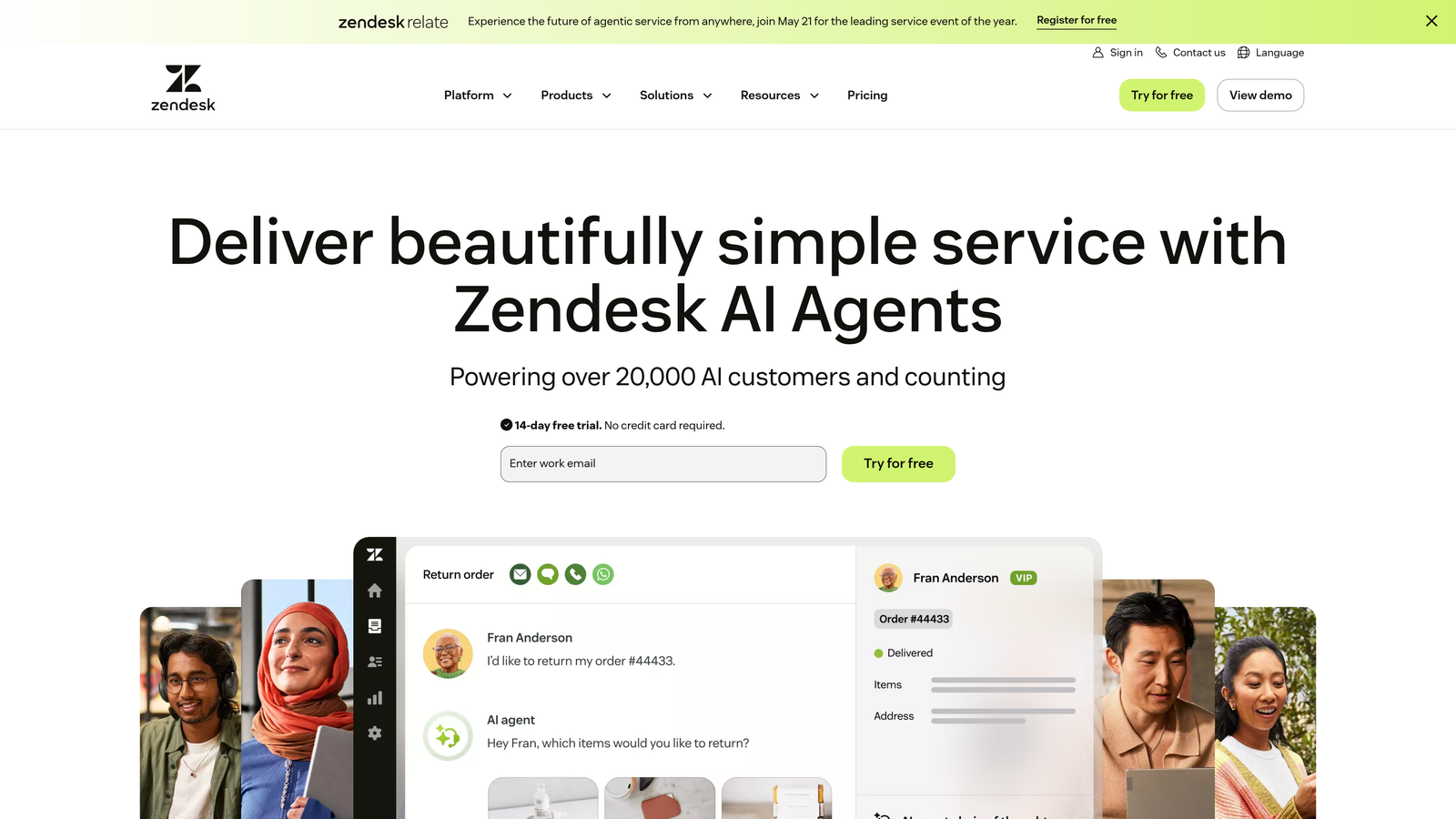
Zendesk AI brings artificial intelligence capabilities to the widely-adopted Zendesk platform through an add-on module that enhances existing workflows.
Where This Tool Shines
If your organization already runs on Zendesk, the AI add-on integrates seamlessly without requiring a platform migration. It leverages your existing ticket history, macros, and workflows to provide intelligent suggestions and routing decisions. The familiarity factor means minimal training time for agents who already know the Zendesk interface.
Zendesk's enterprise-grade security certifications and compliance frameworks make it a natural choice for regulated industries. The analytics dashboard provides detailed performance metrics across automated and human-handled tickets.
Key Features
Intelligent Classification: Automatically categorizes incoming tickets by topic, sentiment, and urgency based on content analysis.
Agent Assist: Suggests relevant help articles and response templates while agents are composing replies.
Smart Triage: Routes tickets to the right team or agent based on intent analysis and workload balancing.
Performance Dashboards: Comprehensive analytics showing automation impact, resolution times, and agent productivity metrics.
Multi-Language Support: Handles customer inquiries across dozens of languages with automatic detection and routing.
Best For
Organizations with existing Zendesk deployments looking to add AI capabilities without switching platforms. Best suited for enterprises that prioritize security compliance and need extensive reporting capabilities for stakeholder visibility.
Pricing
AI functionality starts at $50 per agent per month as an add-on to existing Zendesk plans, which begin at $19/agent/month for basic support features.
3. Intercom Fin
Best for: Product-led companies using Intercom for customer messaging
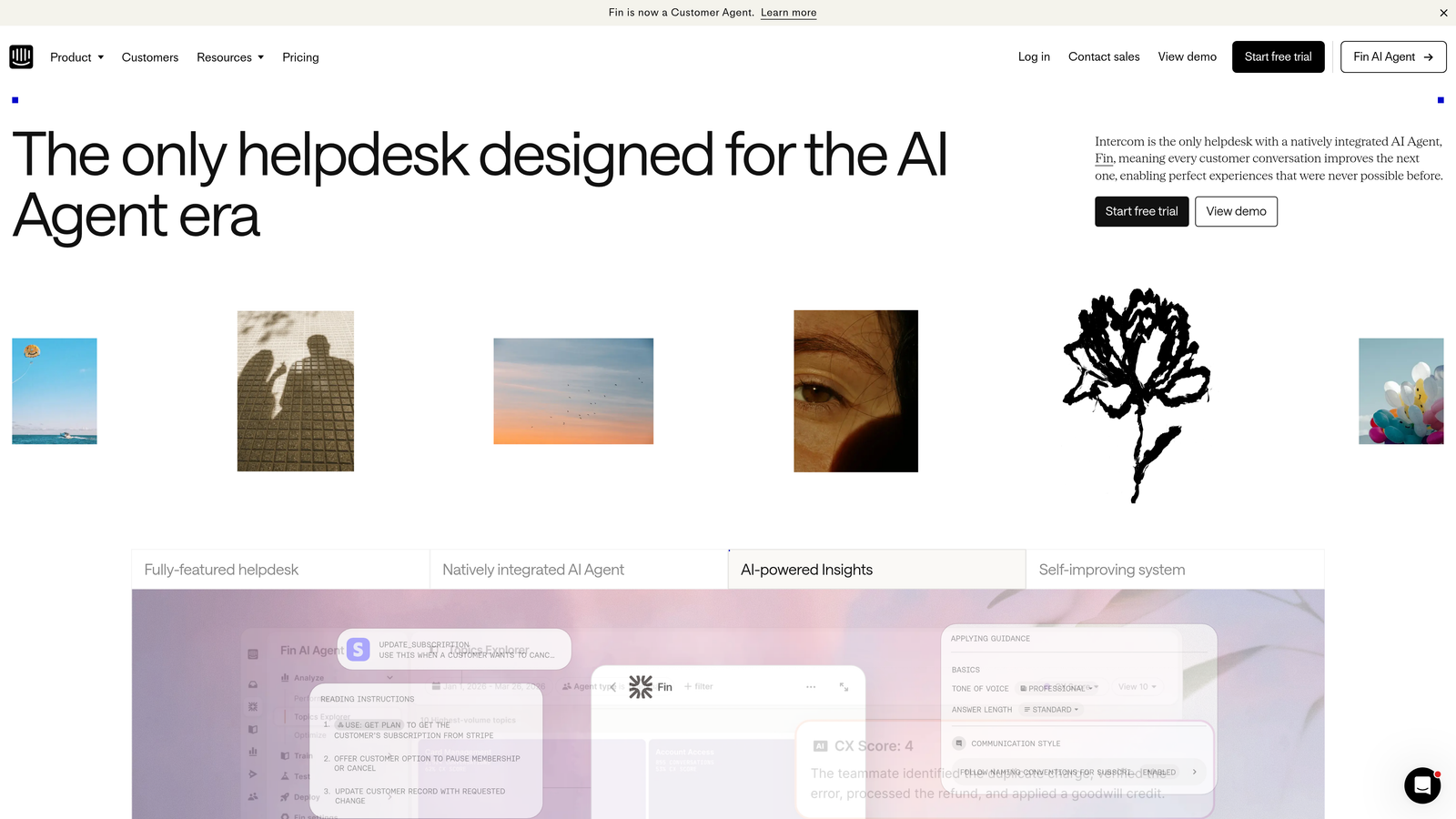
Intercom Fin is a conversational AI agent built natively into Intercom's messaging platform, designed to handle customer conversations with natural language understanding.
Where This Tool Shines
Fin excels at conversational support where context matters. It trains on your help center content and past conversation history to provide answers that feel genuinely helpful rather than robotic. The natural language processing handles complex, multi-part questions without forcing customers into rigid conversation flows.
The handoff experience to human agents is particularly smooth. When Fin determines it can't fully resolve an issue, it transfers the conversation with complete context, so customers don't need to repeat themselves. Resolution reporting shows exactly which questions Fin handles autonomously versus those requiring human intervention.
Key Features
Help Center Training: Automatically learns from your knowledge base articles and previous support conversations to improve answers.
Natural Language Understanding: Handles complex queries with multiple intents without requiring keyword matching or rigid flows.
Configurable Handoff Rules: Set custom triggers for when conversations should escalate to human agents based on sentiment, complexity, or specific topics.
Resolution Analytics: Detailed reporting on autonomous resolution rates, common question patterns, and content gaps in your knowledge base.
Proactive Messaging: Can initiate conversations based on user behavior patterns or product usage signals.
Best For
SaaS companies already using Intercom for customer communication who want to add AI resolution without switching platforms. Works well for product-led growth companies where in-app messaging is the primary support channel.
Pricing
Fin charges $0.99 per resolution, with Intercom's base platform starting at $39 per seat per month. The per-resolution model means costs scale directly with usage.
4. Freshdesk Freddy AI
Best for: Mid-market teams wanting AI features at accessible price points
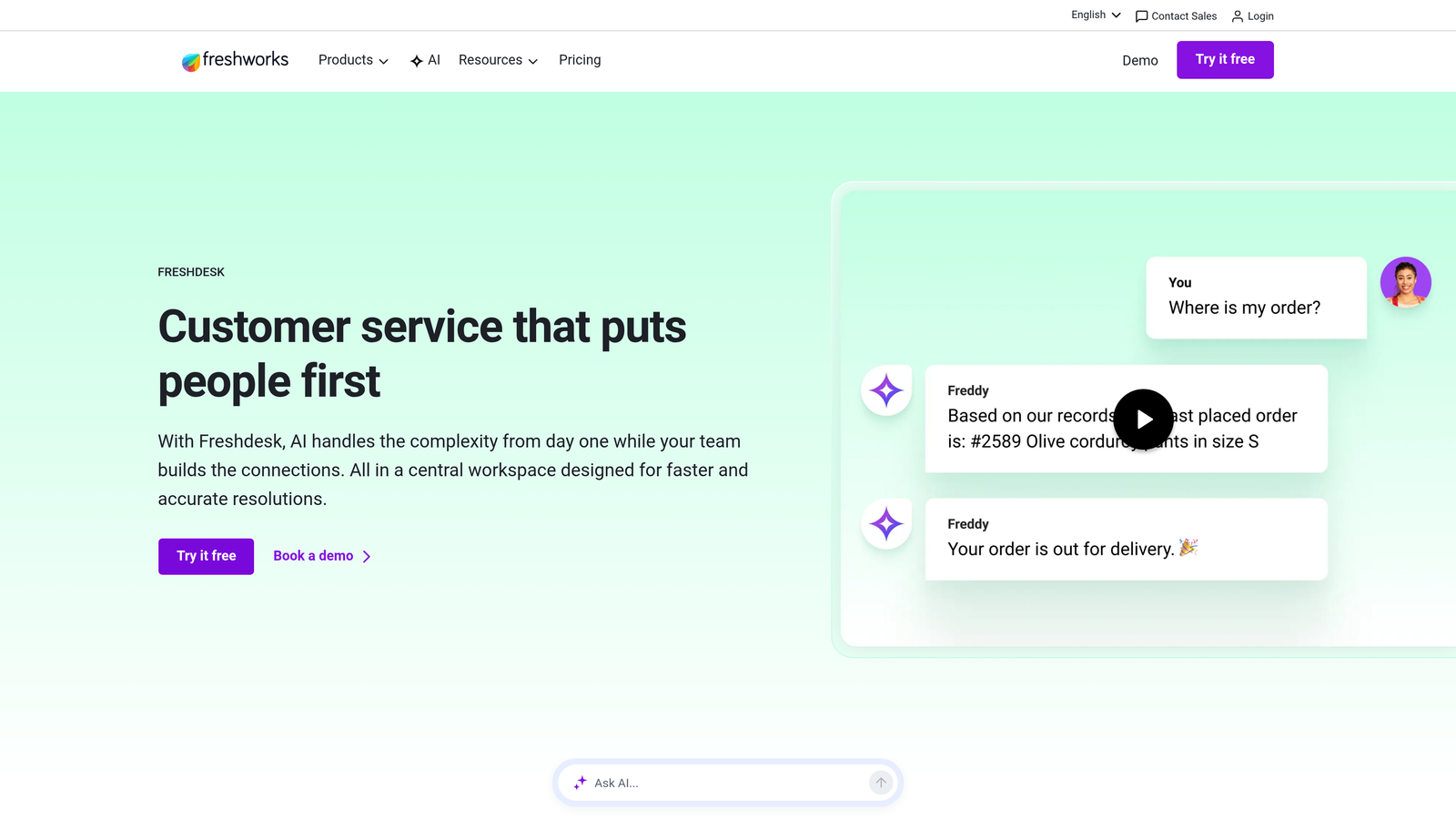
Freshdesk Freddy AI integrates artificial intelligence capabilities directly into the Freshdesk platform, providing automation features without requiring enterprise-level budgets.
Where This Tool Shines
Freddy AI makes intelligent automation accessible to mid-market companies that can't justify enterprise pricing. The auto-categorization and priority assignment happen instantly as tickets arrive, eliminating the manual triage work that typically slows down response times.
The "thank you detector" is a surprisingly valuable feature—it prevents tickets from reopening when customers simply reply with gratitude, reducing unnecessary back-and-forth. Multi-channel support means automation works consistently whether customers reach out via email, chat, social media, or phone.
Key Features
Auto-Categorization: Analyzes ticket content to automatically assign categories, tags, and priority levels without manual sorting.
Canned Response Suggestions: Recommends relevant pre-written responses based on ticket content, speeding up agent reply times.
Omnichannel Support: Applies AI automation across email, chat, social media, and phone channels from a unified interface.
Thank You Detection: Recognizes customer gratitude messages to prevent unnecessary ticket reopening and follow-up.
Sentiment Analysis: Flags frustrated or angry customers for priority handling before situations escalate.
Best For
Growing companies that need professional AI-powered support automation without enterprise complexity or pricing. Ideal for teams handling 500-5,000 tickets monthly across multiple communication channels.
Pricing
Freddy AI capabilities are included in the Pro plan at $49 per agent per month, making it one of the more affordable AI-powered options available.
5. Ada
Best for: Non-technical teams building complex automation workflows
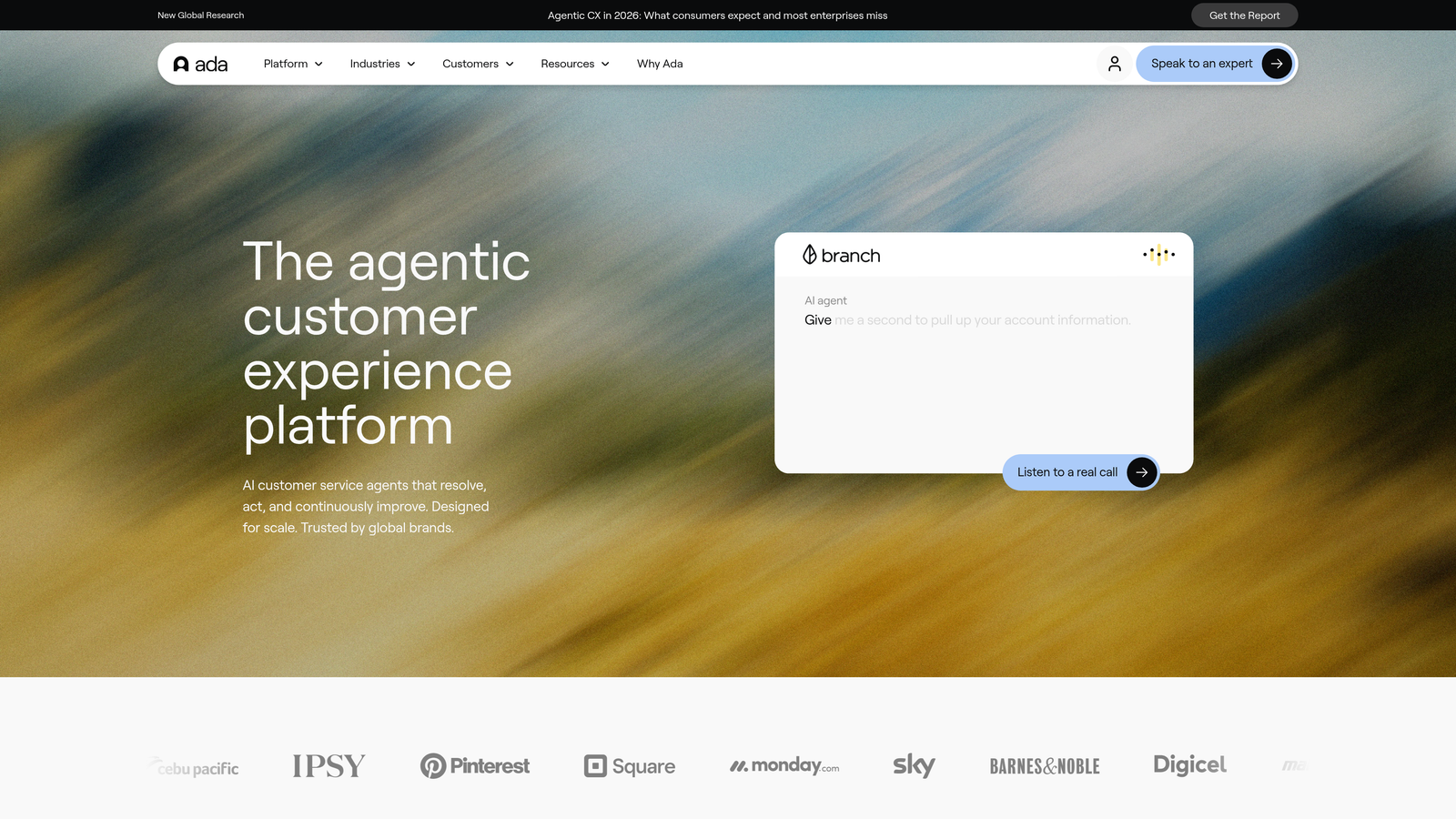
Ada provides a no-code platform for creating sophisticated AI-powered customer support automation, designed specifically for teams without engineering resources.
Where This Tool Shines
The drag-and-drop automation builder lets support teams create complex conversation flows without writing code or involving developers. You can build, test, and deploy new automation in hours rather than weeks. The visual interface makes it easy to see exactly how conversations will flow and where handoffs occur.
Out-of-the-box support for over 50 languages is genuinely impressive, enabling global companies to provide consistent automated support across markets without separate implementations. Proactive messaging capabilities let you reach customers before they even submit tickets, addressing common issues preemptively.
Key Features
No-Code Builder: Visual drag-and-drop interface for creating automation workflows without technical skills or developer involvement.
Multi-Language Support: Handles customer conversations in 50+ languages with automatic language detection and switching.
Proactive Engagement: Triggers automated messages based on customer behavior, page visits, or time-based rules.
Platform Integrations: Connects with major CRM systems, helpdesks, and business tools for data synchronization.
A/B Testing: Test different conversation flows and response variations to optimize resolution rates over time.
Best For
High-volume support operations where non-technical teams need to build and iterate on automation quickly. Particularly valuable for global companies requiring multi-language support without separate regional implementations.
Pricing
Custom pricing based on monthly conversation volume and feature requirements. Ada typically works with companies handling thousands of customer interactions monthly.
6. Kustomer IQ
Best for: Teams wanting unified customer context across all touchpoints
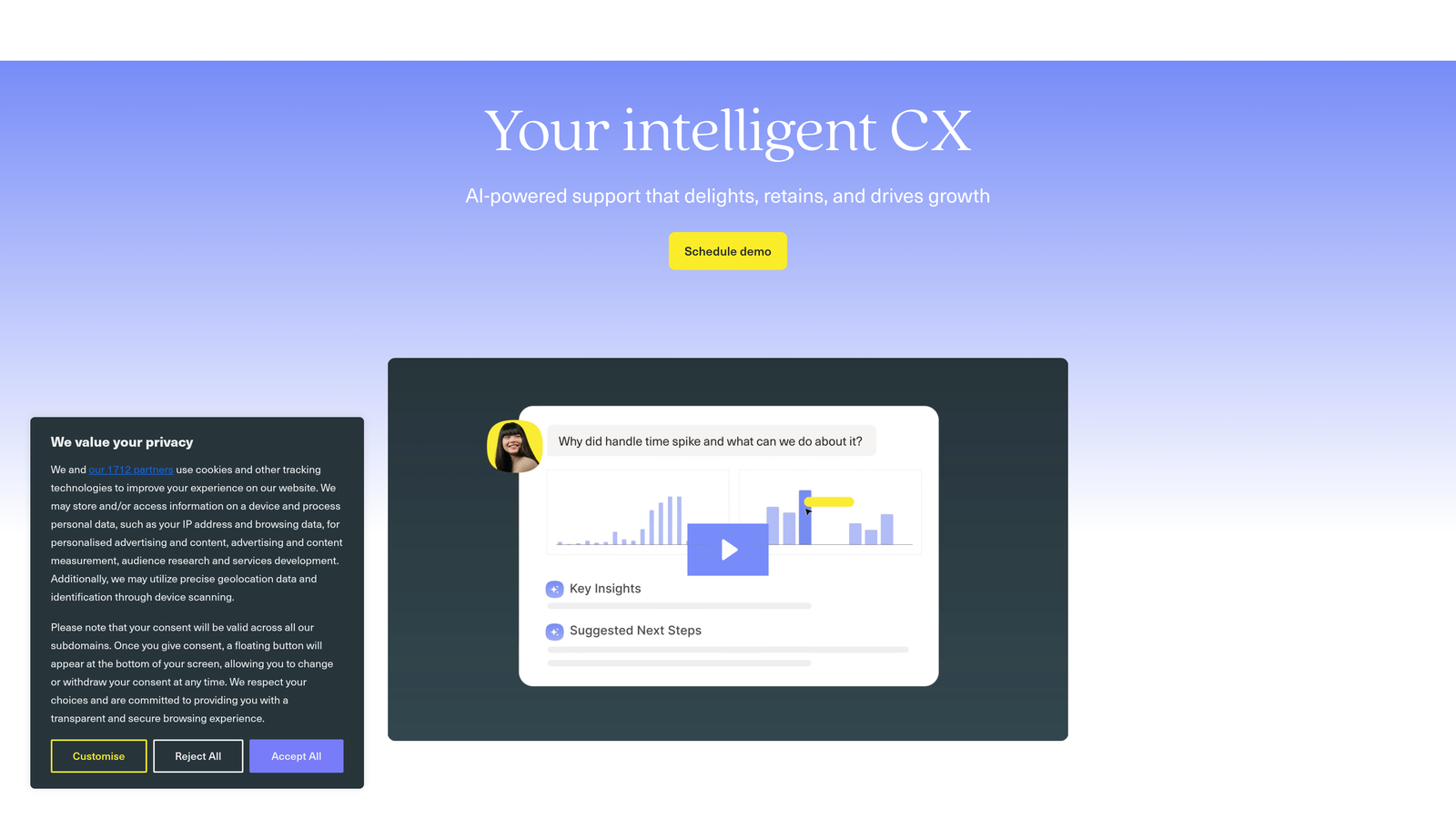
Kustomer IQ combines CRM functionality with AI-powered support automation, providing complete customer timeline visibility in a single interface.
Where This Tool Shines
The unified timeline view shows every customer interaction—purchases, support tickets, chat conversations, social media mentions—in chronological order. This eliminates the context-switching that slows down traditional helpdesks where customer data lives in separate systems. Agents see the complete story before they even respond.
Proactive outreach based on customer behavior patterns lets you address issues before they become tickets. If a customer's usage pattern suggests confusion or frustration, Kustomer can trigger automated check-ins or resource recommendations.
Key Features
Unified Customer Timeline: Complete interaction history across all channels displayed in a single chronological view.
AI Classification: Automatically categorizes and prioritizes incoming requests based on content and customer context.
Sentiment Detection: Analyzes customer messages to identify frustration, urgency, or satisfaction for appropriate routing.
Behavioral Triggers: Initiates proactive outreach based on usage patterns, purchase history, or engagement signals.
Omnichannel Support: Handles email, chat, SMS, social media, and voice from a unified agent workspace.
Best For
Companies that want to consolidate CRM and support into a single platform with complete customer context. Works well for subscription businesses where understanding customer lifecycle stage matters for support interactions.
Pricing
Enterprise plan with IQ capabilities starts at $89 per user per month, positioning it in the premium segment of the market.
7. Gorgias
Best for: E-commerce brands running on Shopify or similar platforms
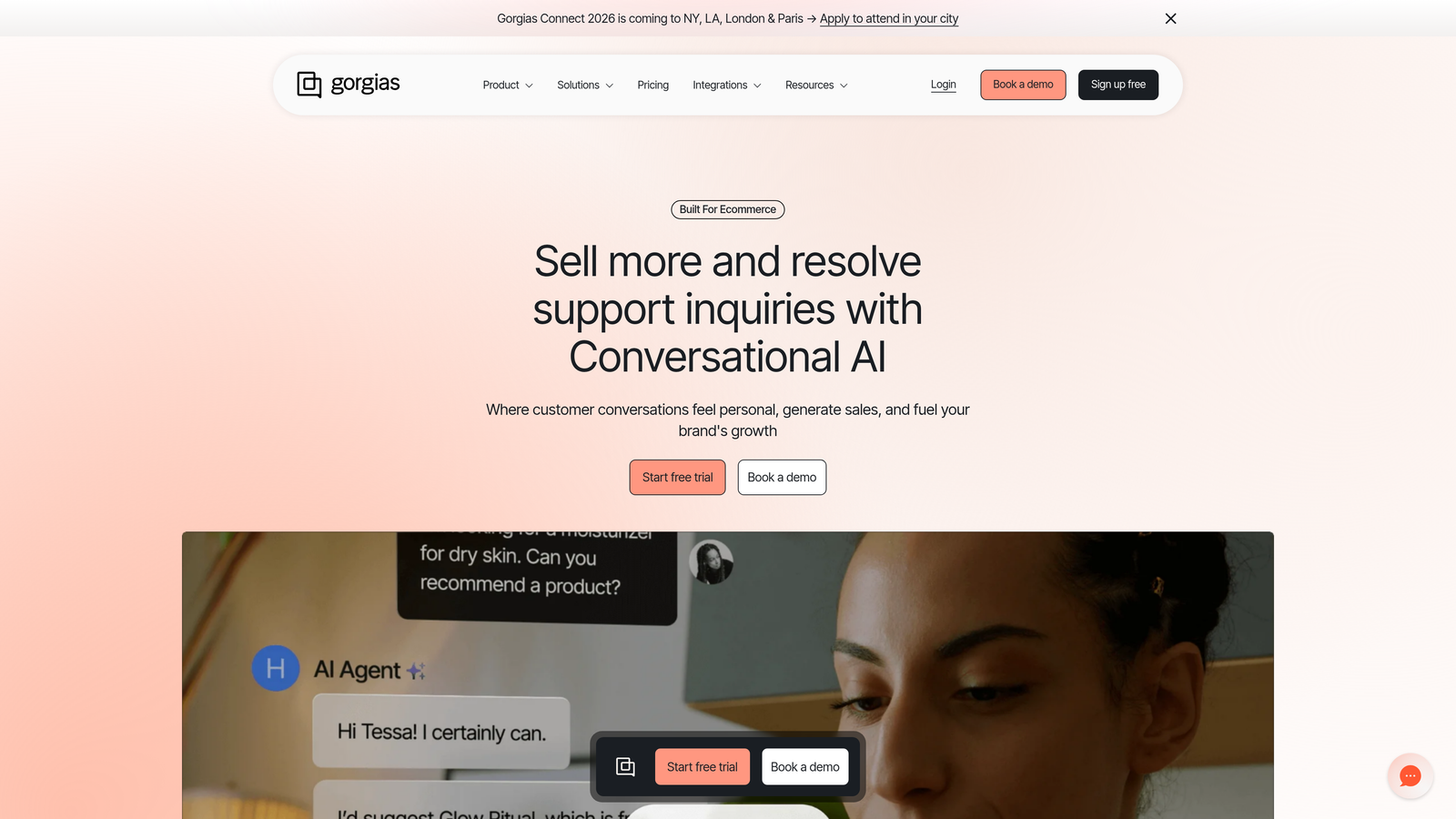
Gorgias is purpose-built for e-commerce support, with deep integrations into Shopify, BigCommerce, and Magento that enable one-click order actions.
Where This Tool Shines
The e-commerce-specific features save massive amounts of time on common retail support tasks. Agents can process refunds, cancel orders, update shipping addresses, or send tracking information without leaving the conversation interface or switching to your e-commerce admin panel. This turns multi-step processes into single clicks.
Revenue attribution for support interactions is genuinely valuable for understanding ROI. You can see which support conversations led to purchases, demonstrating that great support drives sales, not just costs. The rules engine handles repetitive scenarios like order status inquiries automatically.
Key Features
One-Click Order Actions: Process refunds, cancellations, exchanges, and shipping updates directly from the support interface.
Automation Rules: Create macros for auto-tagging, auto-responding, and auto-assigning based on order data and message content.
Revenue Attribution: Track which support conversations result in purchases to measure support's impact on sales.
Native E-Commerce Integrations: Deep connections with Shopify, BigCommerce, Magento, and major e-commerce platforms.
Self-Service Portal: Customer-facing order tracking and FAQ system that reduces ticket volume.
Best For
E-commerce brands handling high volumes of order-related support tickets. Most valuable for Shopify merchants who want support tightly integrated with their store operations.
Pricing
Starts at $10 per month for 50 tickets, then scales based on volume. The pricing model grows with your business, making it accessible for small stores while supporting enterprise retailers.
8. Help Scout
Best for: Small teams prioritizing simplicity and human-feeling support
Help Scout offers a shared inbox with AI-powered drafts and summarization, designed for teams that want automation without losing the personal touch.
Where This Tool Shines
The AI-generated reply drafts strike a good balance between automation and personalization. Rather than sending canned responses, Help Scout drafts contextual replies that agents can quickly edit and send, maintaining a human voice while speeding up response times. This works particularly well for teams that pride themselves on personalized support.
Conversation summarization helps with team handoffs and manager oversight. Instead of reading entire ticket threads, agents and supervisors can quickly understand what's happened and what's needed. The Docs knowledge base with Beacon chat widget provides self-service options that reduce ticket volume.
Key Features
AI Reply Drafts: Generates contextual response suggestions based on conversation history that agents can edit before sending.
Conversation Summaries: Automatically creates concise summaries of long ticket threads for quick handoffs and oversight.
Workflow Automation: Automates tagging, assignment, and routing based on customizable rules and triggers.
Docs Knowledge Base: Self-service help center with analytics showing which articles prevent ticket creation.
Beacon Widget: Embeddable chat and help widget that suggests relevant articles before customers submit tickets.
Best For
Small to mid-sized teams (under 50 agents) that want AI assistance without fully automated responses. Ideal for companies where brand voice and personalized support are competitive differentiators.
Pricing
Standard plan at $20 per user per month includes basic automation; Plus plan at $40 per user per month adds AI features and advanced workflows.
9. Salesforce Service Cloud Einstein
Best for: Enterprise organizations deeply integrated with Salesforce CRM
Salesforce Service Cloud Einstein brings AI-powered support automation to organizations already running their business on the Salesforce platform.
Where This Tool Shines
The tight integration with Salesforce CRM means support agents have complete customer context—purchase history, opportunity stages, account details, previous cases—all in one interface. This eliminates the data silos that plague many support operations where customer information lives in disconnected systems.
Einstein's next best action recommendations guide agents through complex scenarios by suggesting specific steps based on case details and historical outcomes. Predictive routing ensures tickets reach the right specialist immediately rather than bouncing through multiple transfers. For enterprises already invested in Salesforce, adding Einstein is far simpler than implementing a separate support platform.
Key Features
Predictive Case Classification: Automatically categorizes and routes cases based on content analysis and historical patterns.
Einstein Bots: Conversational AI for automated self-service that handles routine inquiries without agent involvement.
Next Best Action: Recommends specific resolution steps to agents based on case details and successful past outcomes.
Full CRM Context: Complete customer data from Salesforce—accounts, opportunities, contacts, history—available during every support interaction.
Knowledge Recommendations: Suggests relevant articles to both customers and agents based on case content and context.
Best For
Large enterprises with existing Salesforce implementations where support needs to integrate tightly with sales, marketing, and customer success operations. Most valuable when customer context across the entire business lifecycle matters for support quality.
Pricing
Service Cloud starts at $25 per user per month for basic features; Einstein AI capabilities require higher-tier plans with pricing that varies based on features and user count.
Making the Right Choice
The support automation landscape has evolved beyond simple ticket routing. Today's leading tools actually resolve issues autonomously, learn from interactions, and surface business intelligence that helps you understand your customers better.
If you're looking for genuine autonomous resolution rather than just smarter routing, Halo AI's approach of seeing what users see and learning continuously stands out. For teams already committed to specific platforms, Zendesk AI, Intercom Fin, and Freshdesk Freddy provide solid automation within familiar interfaces.
E-commerce teams will find Gorgias's order-action capabilities invaluable, while enterprises deeply integrated with Salesforce should look at Service Cloud Einstein. Small teams prioritizing simplicity and personal touch will appreciate Help Scout's AI-assisted approach that keeps humans in the loop.
The key decision factor comes down to resolution philosophy. Do you want AI to handle tickets end-to-end, or do you prefer AI that assists human agents? Your answer determines whether you need platforms like Halo, Ada, or Intercom Fin (autonomous resolution) versus Help Scout or Zendesk AI (agent assistance).
Consider your current tech stack integration requirements. Tools that connect deeply with your existing systems—whether that's Shopify for e-commerce, Salesforce for CRM, or Linear for engineering—will deliver faster time-to-value than standalone platforms requiring extensive custom integration work.
Your support team shouldn't scale linearly with your customer base. Let AI agents handle routine tickets, guide users through your product, and surface business intelligence while your team focuses on complex issues that need a human touch. See Halo in action and discover how continuous learning transforms every interaction into smarter, faster support.