9 Best Support Ticket Deflection Tools in 2026
Support ticket deflection tools use AI to automatically resolve common customer inquiries before they reach your support team, dramatically reducing manual workload and operational costs. The best platforms in 2026 combine sophisticated AI capabilities with deep integrations, learning from each interaction to autonomously handle routine questions while providing actionable insights about customer pain points—enabling support teams to scale efficiently without proportionally increasing headcount.
 Matt PattoliFounder13 min read
Every support ticket your team manually handles costs time, money, and focus that could go toward building better products. The math is simple: if your average ticket takes 15 minutes to resolve and you're handling 500 tickets per week, that's 125 hours of support time—over three full-time employees just triaging and responding.
Ticket deflection tools flip this equation. Instead of scaling your support team linearly with customer growth, AI-powered platforms intercept routine questions, guide users to answers, and resolve common issues autonomously. The best tools don't just deflect—they learn from every interaction, integrate deeply with your existing stack, and provide intelligence about what's actually blocking your customers.
We evaluated deflection tools based on AI sophistication, integration capabilities, implementation complexity, and transparent pricing. Here are the top platforms transforming how modern support teams operate.
1. Halo AI
Best for: B2B SaaS teams wanting autonomous AI agents that continuously learn and improve
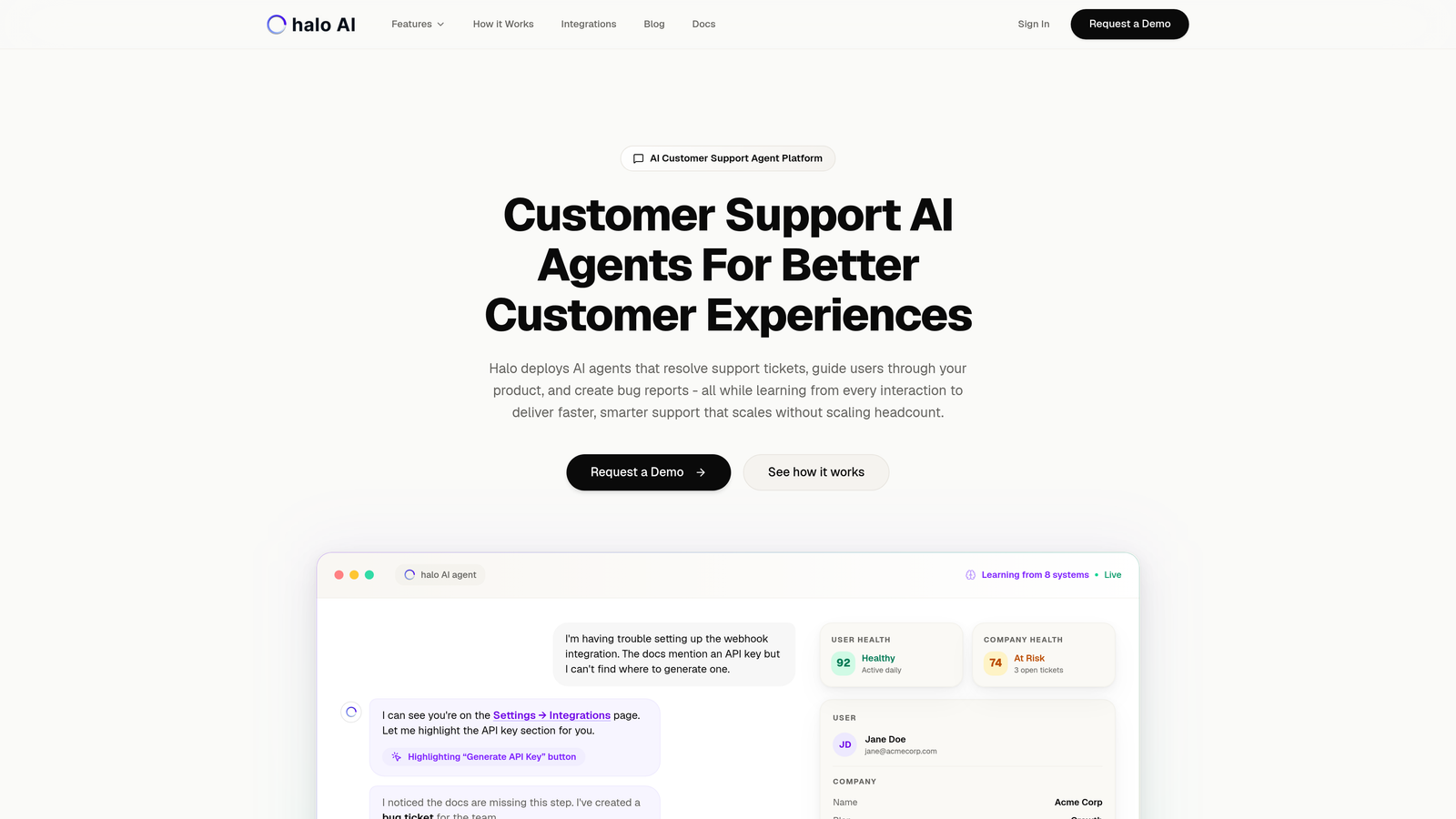
Halo AI takes an AI-first approach to customer support, deploying autonomous agents that don't just answer questions—they resolve tickets, create bug reports, and guide users through your product interface.
Where This Tool Shines
Unlike traditional helpdesk add-ons, Halo's architecture is built around continuous learning. Every resolved ticket, every user interaction, every handoff to a human agent feeds back into the system, making the AI smarter with each conversation. The platform doesn't require extensive training or constant rule updates—it evolves naturally as your product and customer needs change.
The page-aware chat widget sets Halo apart from generic chatbots. It sees what your users see on screen, enabling visual guidance that goes beyond text-based instructions. When a customer is stuck on a specific workflow, Halo can reference the exact UI elements they're viewing and provide contextual help that feels like having an expert looking over their shoulder.
Key Features
Autonomous AI Agents: Resolve support tickets end-to-end without human intervention, handling everything from password resets to complex product questions.
Page-Aware Context: Chat widget understands what users are viewing in your product, enabling precise visual guidance and contextual troubleshooting.
Continuous Learning: Every interaction improves the AI's understanding, creating a support system that gets smarter over time without manual retraining.
Deep Integrations: Connects with Linear, Slack, HubSpot, Intercom, Stripe, Zoom, and PandaDoc for comprehensive business intelligence beyond support metrics.
Auto Bug Ticket Creation: Identifies technical issues during conversations and automatically creates detailed bug reports with context for your engineering team.
Best For
Product teams and B2B SaaS companies that want support to be a strategic advantage, not just a cost center. Particularly valuable for organizations already using multiple business tools that Halo can connect to surface customer health signals and revenue intelligence alongside support metrics.
Pricing
Contact for custom pricing based on your support volume and integration requirements.
2. Zendesk AI
Best for: Enterprise teams already invested in the Zendesk ecosystem
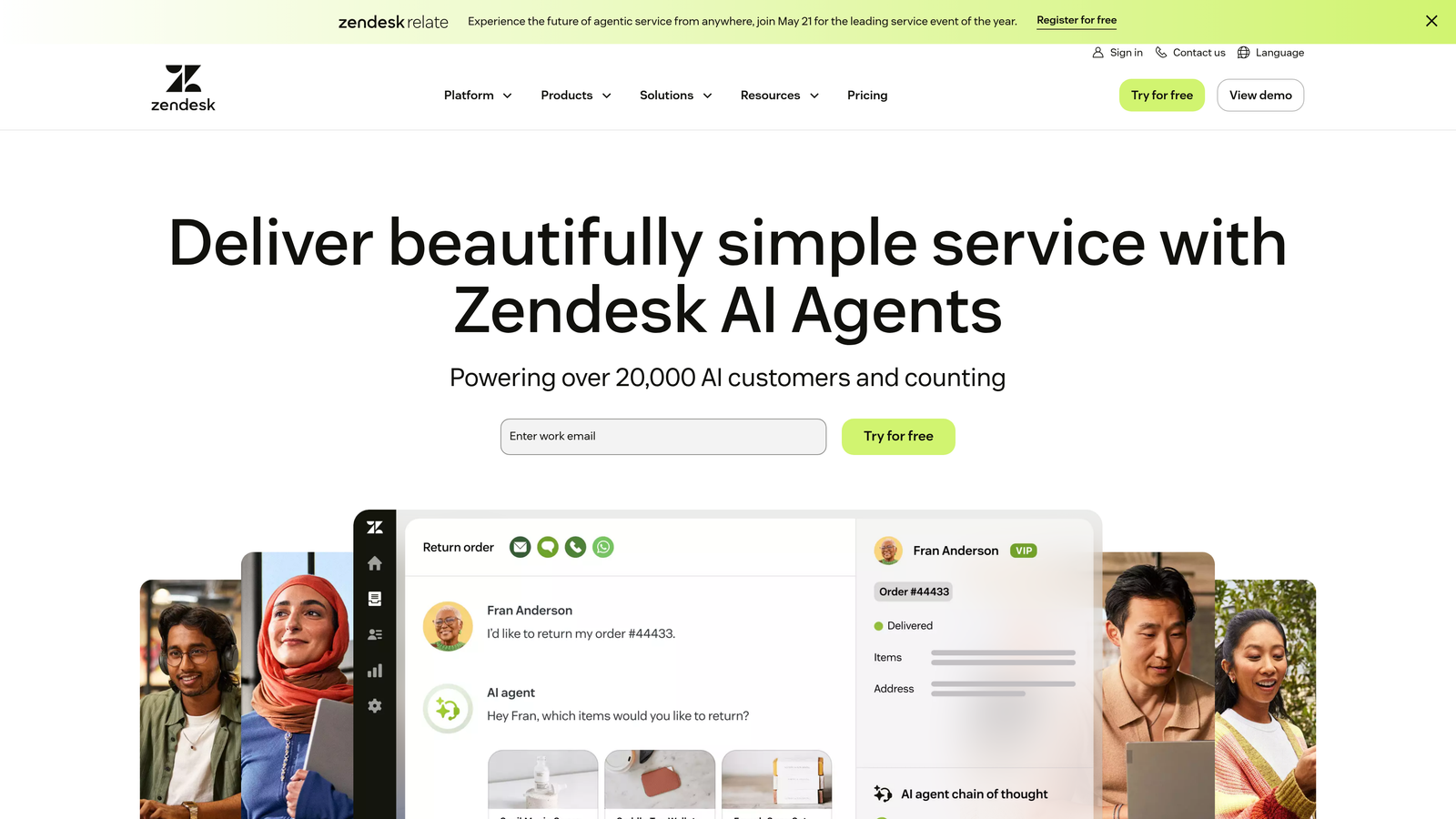
Zendesk AI brings intelligent automation to one of the most widely deployed customer service platforms, offering native AI capabilities trained on billions of customer interactions.
Where This Tool Shines
If you're already running Zendesk, the AI features integrate seamlessly without requiring migration or complex setup. The platform leverages years of aggregated customer service data to understand intent, suggest responses, and route tickets intelligently from day one.
The agent workspace suggestions are particularly valuable for hybrid teams where AI assists human agents rather than fully replacing them. As agents work through tickets, Zendesk AI surfaces relevant help articles, suggests response templates, and highlights similar resolved cases—essentially giving every agent the institutional knowledge of your entire support history.
Key Features
Native Zendesk Integration: Works directly within your existing Zendesk Suite without additional platforms or logins.
Intelligent Routing: Automatically classifies and prioritizes tickets based on content, sentiment, and urgency before they reach human agents.
Agent Workspace AI: Provides real-time suggestions, relevant articles, and draft responses while agents work tickets.
Pre-Trained Models: Leverages billions of customer service interactions to understand intent and context without extensive custom training.
Multilingual Support: Handles customer queries across multiple languages with consistent quality and understanding.
Best For
Large enterprises with existing Zendesk deployments, particularly those handling high ticket volumes across multiple languages and channels who need enterprise-grade reliability and compliance.
Pricing
AI capabilities included with Suite plans starting at $89 per agent monthly. Advanced AI features available as add-on for higher-tier plans.
3. Intercom Fin
Best for: Teams wanting GPT-4 powered conversations with transparent per-resolution pricing
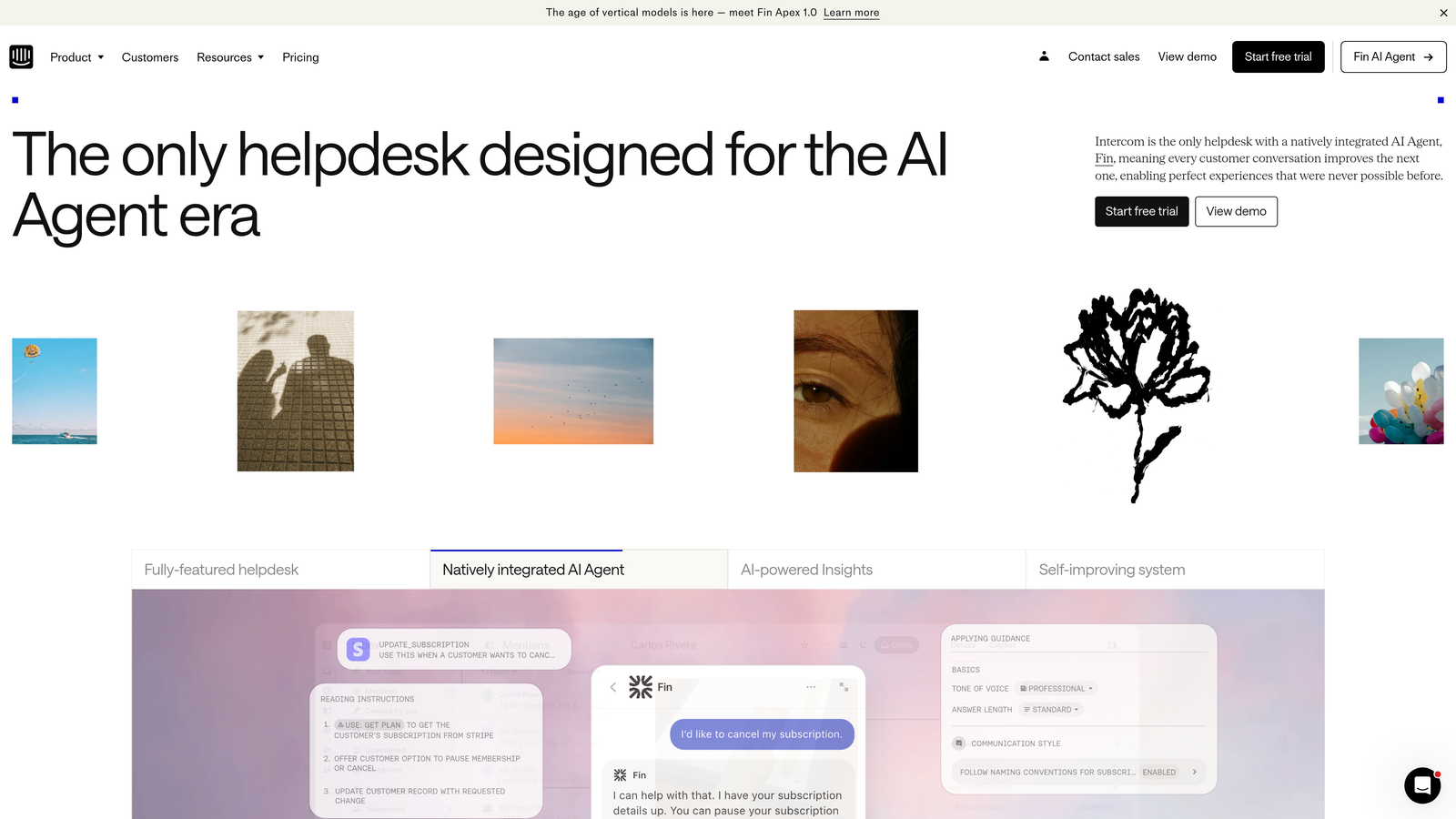
Intercom Fin leverages GPT-4 to create conversational AI that feels remarkably human, learning from your help center content and conversation history to resolve customer questions autonomously.
Where This Tool Shines
Fin's conversational quality stands out immediately. Unlike rigid chatbots that follow decision trees, Fin understands context, handles follow-up questions naturally, and adapts its tone to match the conversation. The GPT-4 foundation means it can parse complex questions, understand ambiguous requests, and provide nuanced answers that don't feel robotic.
The pricing model is refreshingly straightforward. At $0.99 per resolution, you pay only when Fin successfully resolves a customer question without human intervention. This aligns incentives perfectly—Intercom succeeds when deflection actually works, not just when the bot responds to queries.
Key Features
GPT-4 Foundation: Powered by OpenAI's most advanced language model for natural, context-aware conversations that handle complexity gracefully.
Content Learning: Automatically learns from your help center articles, past conversations, and product documentation without manual training.
Smart Handoff: Recognizes when questions exceed its capabilities and transitions seamlessly to human teammates with full conversation context.
Multi-Language: Handles customer queries in over 40 languages with consistent quality and understanding.
Resolution Analytics: Detailed reporting on what Fin resolved, where it struggled, and which content gaps need addressing.
Best For
Companies already using Intercom for customer communication, particularly those with strong help center content that want to leverage existing documentation for automated support.
Pricing
$0.99 per successful resolution. No upfront costs or monthly minimums—you pay only for conversations Fin resolves without human intervention.
4. Freshdesk Freddy AI
Best for: Mid-market teams needing comprehensive AI features at accessible pricing
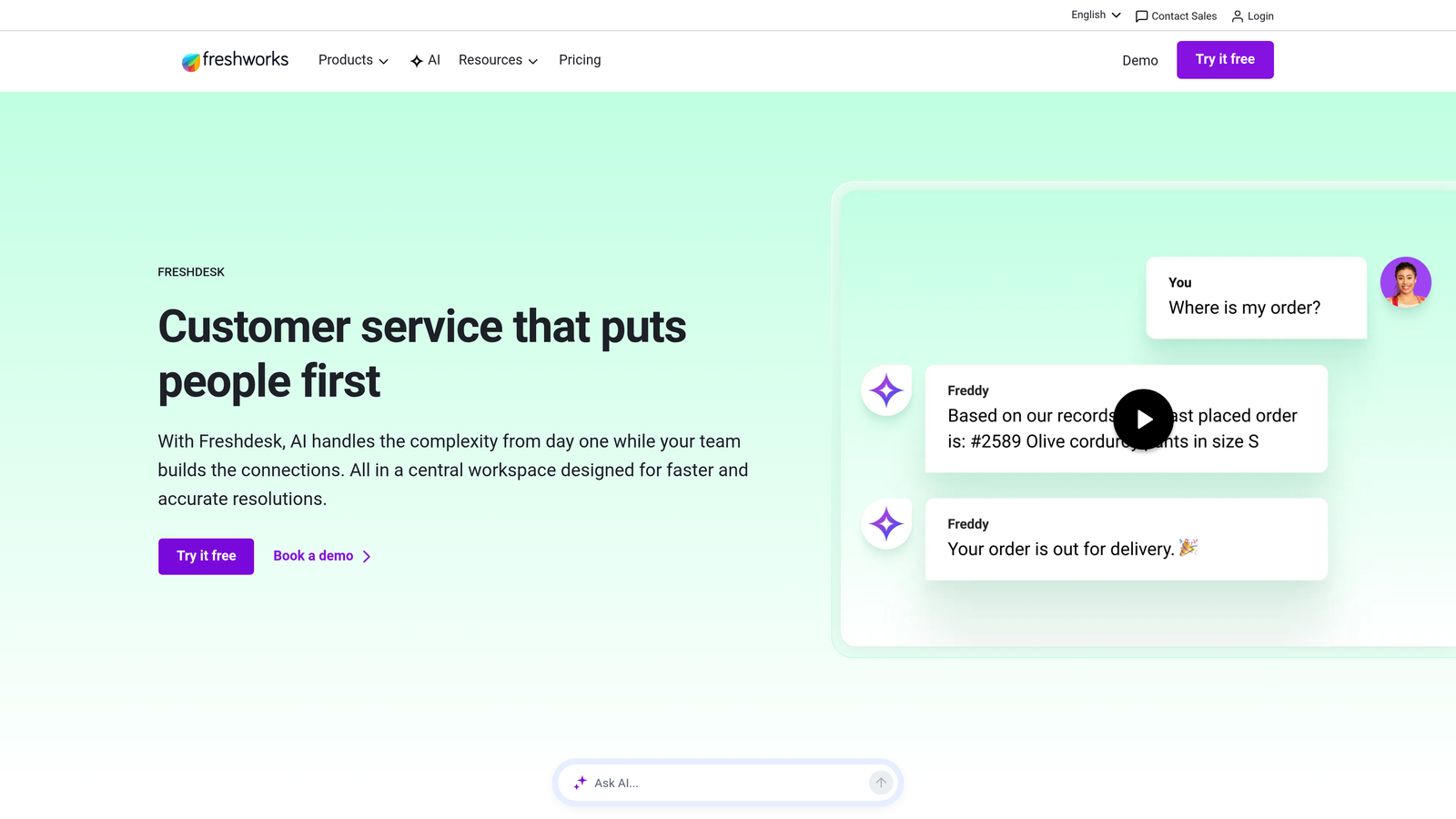
Freshdesk Freddy AI brings intelligent automation to Freshdesk's helpdesk platform, handling everything from ticket classification to sentiment analysis and self-service chatbots.
Where This Tool Shines
Freddy AI excels at the unglamorous but critical work of ticket triage. It automatically categorizes incoming requests, detects sentiment to flag frustrated customers, and routes tickets to the right team members based on content and expertise. This behind-the-scenes intelligence means your team spends less time organizing and more time solving.
The canned response suggestions are smarter than typical templates. Freddy analyzes the ticket content and customer history to recommend personalized responses that agents can send with one click or customize as needed. It's the sweet spot between full automation and completely manual responses.
Key Features
Auto-Triage: Automatically classifies and tags incoming tickets based on content, reducing manual categorization work for agents.
Sentiment Analysis: Detects customer frustration or urgency in messages and adjusts routing priority accordingly.
Response Suggestions: Recommends contextually relevant canned responses based on ticket content and customer history.
Self-Service Bot Builder: Visual interface for creating chatbots that handle common questions before they become tickets.
Knowledge Base Integration: Connects with Freshdesk's help center to surface relevant articles during conversations.
Best For
Growing companies that need sophisticated AI capabilities without enterprise pricing, particularly teams handling diverse ticket types that benefit from intelligent routing and classification.
Pricing
Freddy AI Copilot starts at $29 per agent monthly. Available as add-on to Freshdesk Growth and higher plans.
5. Ada
Best for: High-volume support teams needing no-code automation across 50+ languages
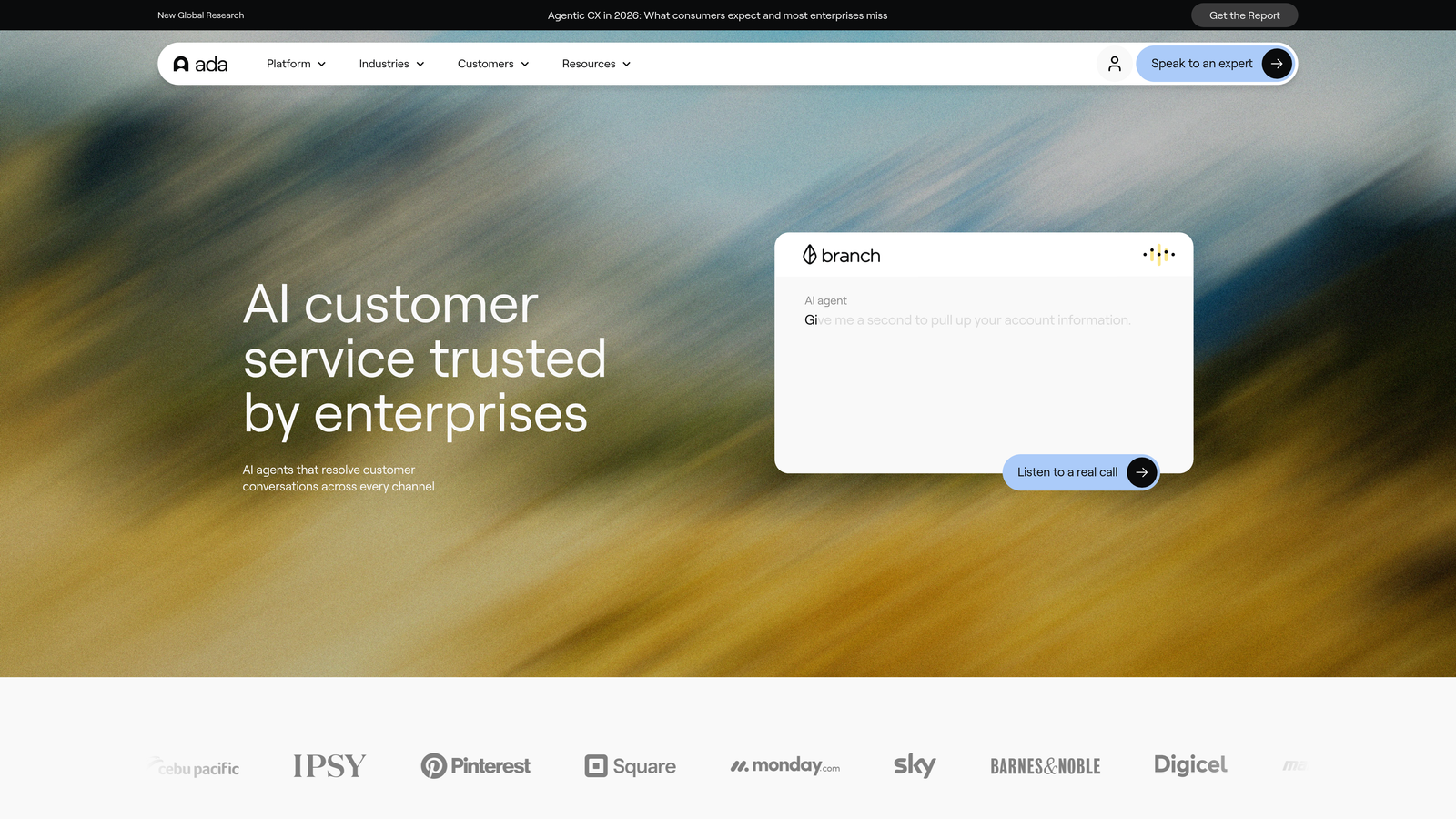
Ada provides enterprise-grade AI customer service without requiring technical expertise, using a visual conversation builder that marketing and support teams can manage independently.
Where This Tool Shines
Ada's drag-and-drop conversation builder democratizes AI automation. Support managers can create sophisticated conversation flows, test variations, and deploy updates without involving engineering teams. This means faster iteration and the ability to respond quickly to changing customer needs or new product features.
The multilingual capabilities are genuinely impressive. Ada handles over 50 languages with consistent quality, automatically detecting customer language and responding appropriately. For global companies, this eliminates the need to build separate automation for each market or language group.
Key Features
Visual Conversation Builder: Drag-and-drop interface for creating complex conversation flows without coding or technical dependencies.
50+ Languages: Automatic language detection and native support across major global languages with consistent quality.
CRM Integrations: Connects with Salesforce, Zendesk, Intercom, and major helpdesks to access customer context during conversations.
Proactive Messaging: Reach out to customers based on behavior triggers, not just reactive support.
Analytics Dashboard: Track deflection rates, conversation completion, and identify automation gaps with detailed reporting.
Best For
Enterprise support teams handling thousands of monthly conversations across multiple languages, particularly those wanting to empower non-technical teams to manage and improve automation independently.
Pricing
Custom pricing based on conversation volume and feature requirements. Typically positioned for mid-market to enterprise budgets.
6. Forethought Solve
Best for: Data-driven teams focused on measuring and optimizing deflection performance
Forethought Solve combines AI-powered ticket resolution with sophisticated analytics that help you understand not just what's being deflected, but where your automation strategy has gaps.
Where This Tool Shines
Forethought's intent classification is exceptionally accurate, going beyond keyword matching to understand what customers actually need. This means fewer frustrating bot interactions where the AI misunderstands the question and provides irrelevant answers. When Solve doesn't know something, it recognizes its limitations and routes to humans gracefully.
The knowledge gap identification feature is invaluable for continuous improvement. Forethought analyzes conversations where automation failed and surfaces patterns—showing you exactly which topics need better documentation, which workflows confuse customers, and where your product might have usability issues. It transforms support data into product insights.
Key Features
High-Accuracy Intent Detection: Advanced NLP that understands customer needs beyond simple keyword matching for more relevant responses.
Automated Tagging: Classifies and tags tickets automatically, providing clean data for reporting and workflow automation.
Deflection Analytics: Detailed dashboard showing deflection rates by topic, channel, and customer segment with trend analysis.
Knowledge Gap Analysis: Identifies topics where automation fails consistently, highlighting documentation and product improvement opportunities.
Workflow Integration: Triggers actions in connected systems based on ticket content and classification.
Best For
Support leaders who treat deflection as a strategic initiative requiring measurement and optimization, particularly teams with complex product offerings where understanding customer intent is challenging.
Pricing
Custom enterprise pricing based on ticket volume and integration requirements. Positioned for mid-market to enterprise organizations.
7. Tidio
Best for: Small businesses and e-commerce brands starting their deflection journey affordably
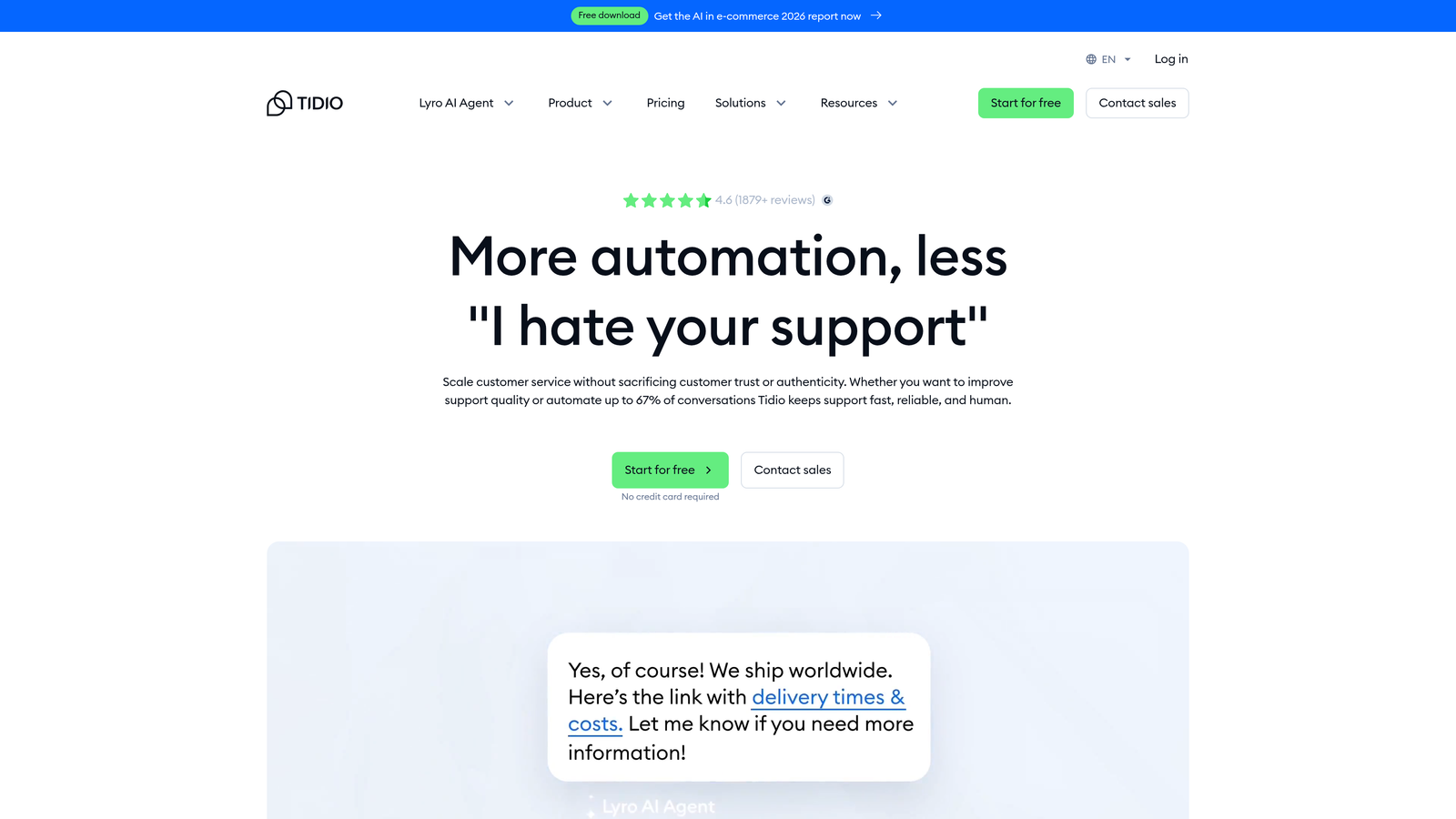
Tidio offers live chat and chatbot capabilities at accessible pricing, with pre-built templates and e-commerce integrations that get small teams up and running quickly.
Where This Tool Shines
Tidio removes the barriers to entry for businesses that can't justify enterprise AI platforms. The free tier provides genuine value, including basic chatbots and live chat capabilities that many small businesses can run indefinitely without upgrading. When you do need more, the paid plans remain remarkably affordable compared to enterprise alternatives.
The e-commerce integrations are thoughtfully designed for online retailers. Tidio connects with Shopify, WooCommerce, and other platforms to access order data, track shipments, and handle common retail queries like "where's my order" without human intervention. For small e-commerce teams drowning in repetitive questions, this targeted automation delivers immediate ROI.
Key Features
Pre-Built Templates: Ready-made chatbot flows for common use cases that work immediately without customization.
Visual Bot Builder: Simple drag-and-drop interface for creating custom conversation flows as needs evolve.
E-Commerce Integrations: Native connections to Shopify, WooCommerce, and major retail platforms with order tracking capabilities.
Live Chat Hybrid: Seamless transition between bot and human agents when automation reaches its limits.
Free Tier: Genuinely useful free plan that includes basic chatbots and live chat for small teams.
Best For
Small businesses, solopreneurs, and e-commerce brands with limited budgets that need immediate deflection capabilities without complex setup or ongoing management overhead.
Pricing
Free plan available with basic features. Paid plans start at $29 monthly for expanded chatbot capabilities and integrations.
8. Help Scout AI
Best for: Teams wanting AI to enhance human agents rather than replace them
Help Scout takes a human-first approach to AI, offering features that make your support team more efficient while maintaining the personal touch that builds customer loyalty.
Where This Tool Shines
Help Scout's philosophy differs from full automation platforms. Instead of trying to eliminate human agents, it makes them superhumanly efficient. The AI draft feature analyzes incoming tickets and generates thoughtful, on-brand response drafts that agents can send immediately or personalize. This dramatically reduces time-to-first-response without sacrificing quality.
The conversation summaries are particularly valuable for complex, multi-message threads. Help Scout AI distills long conversations into concise summaries that new agents can read in seconds, getting full context without scrolling through dozens of messages. This makes handoffs smoother and helps managers review team performance efficiently.
Key Features
AI Draft Replies: Automatically generates contextual response drafts that agents can send or customize, reducing response time significantly.
Conversation Summaries: Condenses long ticket threads into brief summaries for quick context when agents jump into ongoing conversations.
Docs Site: Built-in knowledge base that powers self-service alongside the AI-assisted agent experience.
Clean Interface: Deliberately simple design that keeps agents focused on customers rather than navigating complex software.
Team Collaboration: Internal notes, @mentions, and collision detection prevent duplicate responses from multiple agents.
Best For
Customer-centric teams that view support as a relationship-building opportunity, particularly those wanting to maintain personal connections while handling growing ticket volume efficiently.
Pricing
AI features included in Plus plan at $40 per user monthly. Docs site available on all paid plans.
9. Kustomer IQ
Best for: Enterprise teams needing AI integrated with comprehensive customer data and CRM
Kustomer IQ combines AI automation with a customer service CRM, using unified customer data to power personalized deflection and intelligent routing across every channel.
Where This Tool Shines
Kustomer's unified customer timeline is the foundation for truly personalized automation. When a customer reaches out, the AI sees their entire history—past purchases, previous conversations, account status, and interaction patterns across channels. This context enables responses that feel personalized rather than generic, addressing customers as individuals rather than ticket numbers.
The omnichannel bot deployment means consistent automation whether customers reach out via email, chat, SMS, social media, or phone. Kustomer maintains conversation context across channels, so if a customer starts on chat and continues via email, the AI remembers the full context without making them repeat information.
Key Features
Unified Customer Timeline: Single view of all customer interactions, purchases, and data that powers AI personalization.
Intent Detection: Advanced NLP that understands customer needs and routes conversations to appropriate automation or human agents.
Omnichannel Deployment: Consistent AI experience across email, chat, SMS, social media, and voice channels.
CRM-Powered Personalization: Leverages customer data to tailor responses based on purchase history, account tier, and interaction patterns.
Workflow Automation: Triggers actions across connected systems based on conversation content and customer attributes.
Best For
Enterprise organizations with complex customer journeys spanning multiple channels and touchpoints, particularly those needing CRM-level customer data integration alongside support automation.
Pricing
Enterprise plan required for AI features. Custom pricing based on agent count, conversation volume, and integration requirements.
Making the Right Choice
The right ticket deflection tool depends on your team size, technical resources, and support philosophy. Small businesses and e-commerce brands should start with Tidio's accessible pricing and pre-built templates. The free tier provides immediate value, and the e-commerce integrations deliver ROI quickly for retail operations handling repetitive order questions.
Mid-market teams benefit from platforms like Freshdesk Freddy AI or Ada. Freshdesk offers comprehensive AI features at $29 per agent monthly, making sophisticated automation accessible without enterprise budgets. Ada's no-code builder empowers support teams to manage automation independently, particularly valuable for organizations handling global customers across 50+ languages.
Enterprise organizations with existing helpdesk investments should evaluate their current platform's AI capabilities first. Zendesk AI and Kustomer IQ integrate deeply with their respective ecosystems, leveraging existing customer data and workflows. The native integration eliminates migration complexity while providing enterprise-grade reliability and compliance.
Teams prioritizing conversational quality should consider Intercom Fin's GPT-4 foundation. The per-resolution pricing aligns costs with value—you pay only when deflection actually works. This makes it easier to justify investment and measure ROI directly.
For organizations wanting AI to enhance rather than replace human agents, Help Scout's approach stands out. The AI draft replies and conversation summaries make teams more efficient while maintaining the personal touch that builds customer loyalty. This hybrid model works particularly well for customer-centric brands where support is a differentiator.
B2B SaaS teams should evaluate whether they need AI assistance or autonomous AI agents. If your goal is helping human agents work faster, most platforms deliver value. But if you want support that learns continuously, takes actions autonomously, and provides business intelligence beyond ticket metrics, you need an AI-first architecture designed for that purpose.
Your support team shouldn't scale linearly with your customer base. Let AI agents handle routine tickets, guide users through your product, and surface business intelligence while your team focuses on complex issues that need a human touch. See Halo in action and discover how continuous learning transforms every interaction into smarter, faster support.