9 Best Support Ticket Intelligence Software Platforms in 2026
Support ticket intelligence software goes beyond basic helpdesk metrics to analyze patterns, surface actionable insights, and help teams understand why customers are frustrated and which issues drive churn. This guide reviews the 9 best platforms in 2026, evaluated on AI capabilities, analytics depth, integration ecosystems, and value for B2B support teams.
 Grant CooperFounder14 min read
Support teams today aren't struggling with too few tickets. They're struggling with too little understanding of what those tickets actually mean. Volume is up, response times are tracked, and dashboards are full of numbers — but the real questions go unanswered: Why are customers frustrated? Which issues are accelerating churn? What product gaps keep generating the same conversations week after week?
Support ticket intelligence software addresses exactly this gap. It goes beyond the basic helpdesk metrics to analyze patterns, surface actionable insights, detect anomalies, and help teams make data-driven decisions about their support operations — and increasingly, about their product and business as a whole.
The tools in this list were selected based on AI and ML capabilities, depth of analytics, integration ecosystem, ease of implementation, and specific value for B2B teams. Some are native layers built into existing helpdesks. Others are purpose-built intelligence platforms that sit on top of your current stack. And a newer category — AI-native platforms — bakes intelligence directly into the core architecture rather than bolting it on afterward.
Here are the top support ticket intelligence software platforms worth evaluating in 2026.
1. Halo AI
Best for: B2B teams wanting AI-native ticket resolution and deep business intelligence in one platform
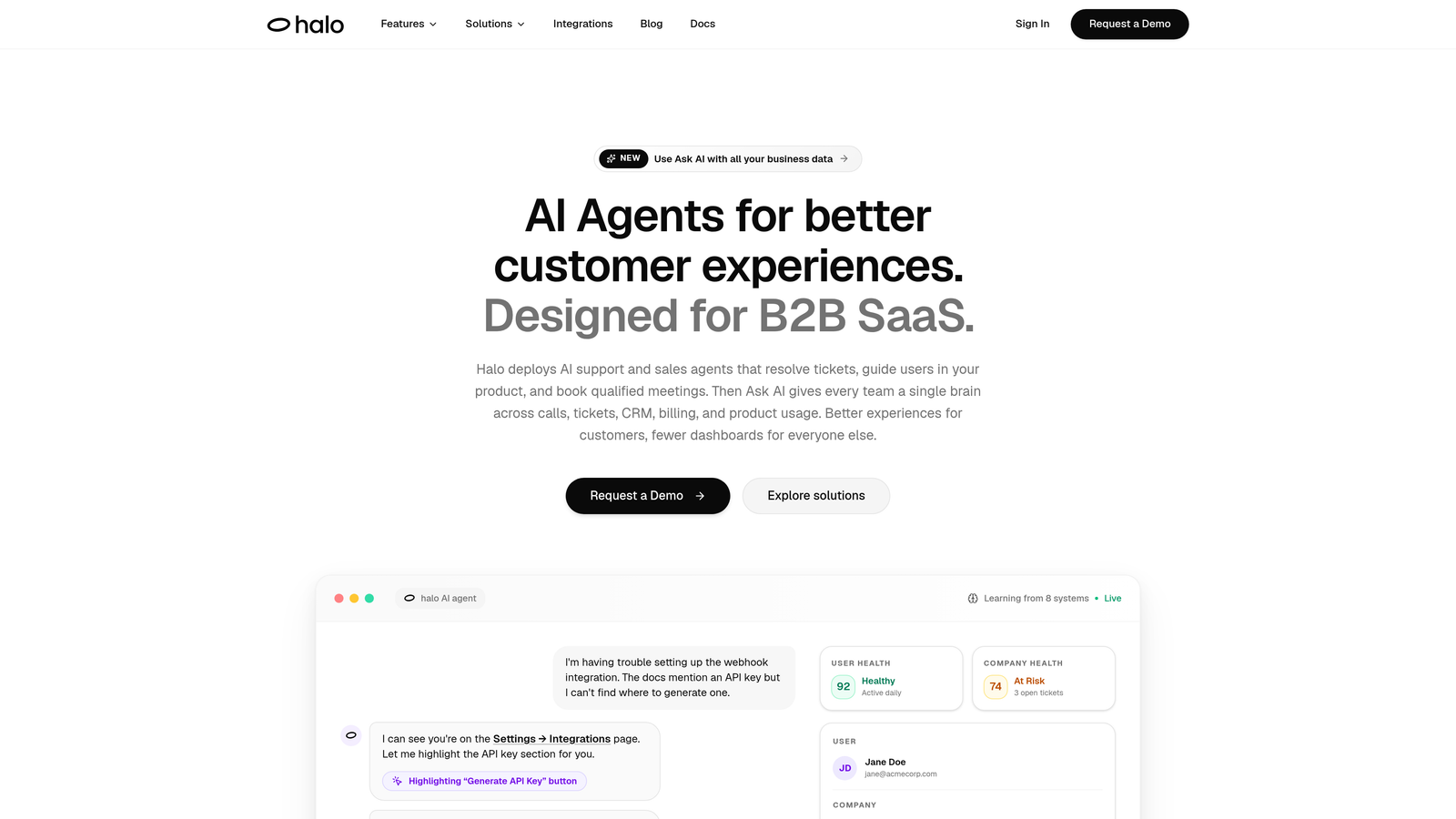
Halo AI is an AI-native support platform that combines autonomous ticket resolution with business intelligence — including customer health signals, revenue intelligence, and anomaly detection — while learning from every interaction.
Where This Tool Shines
Most support intelligence tools are reporting layers: they analyze what's already happened and surface it in a dashboard. Halo AI takes a different approach. Intelligence is built into the core architecture, which means every ticket resolved, every user interaction, and every pattern detected feeds back into a continuously improving system rather than sitting in a static report.
What makes this particularly valuable for B2B teams is the cross-functional reach of the intelligence. Halo doesn't just tell your support team what's trending — it surfaces customer health signals and revenue intelligence that matter to product, engineering, and customer success teams as well. That's a meaningful distinction when support data is one of the richest signals a SaaS company has about its customers.
Key Features
Smart Inbox with Business Intelligence Analytics: Goes beyond ticket triage to surface anomaly detection, trending issues, and patterns that matter across your customer base.
Autonomous AI Agents: AI agents resolve tickets independently while extracting intelligence from every interaction, creating a feedback loop that improves over time.
Page-Aware Chat Widget: Sees what users see in real time, providing context-rich guidance and capturing richer data about where users get stuck.
Auto Bug Ticket Creation: Automatically generates bug reports and routes them directly to Linear or Slack, closing the loop between support and engineering without manual handoffs.
Customer Health and Revenue Intelligence: Extracts churn signals, account health indicators, and revenue-relevant patterns from support data — making it useful far beyond the support team.
Best For
B2B SaaS companies that want to move away from reactive ticket management entirely. Particularly strong for product-led growth teams where support data should inform product decisions, and for organizations that want intelligence built into their support workflow rather than layered on top of a legacy helpdesk.
Pricing
Contact for pricing. Designed for B2B teams looking to scale support capacity without scaling headcount linearly.
2. Zendesk Explore + AI
Best for: Existing Zendesk customers who want native analytics and AI-powered insights without adding another tool
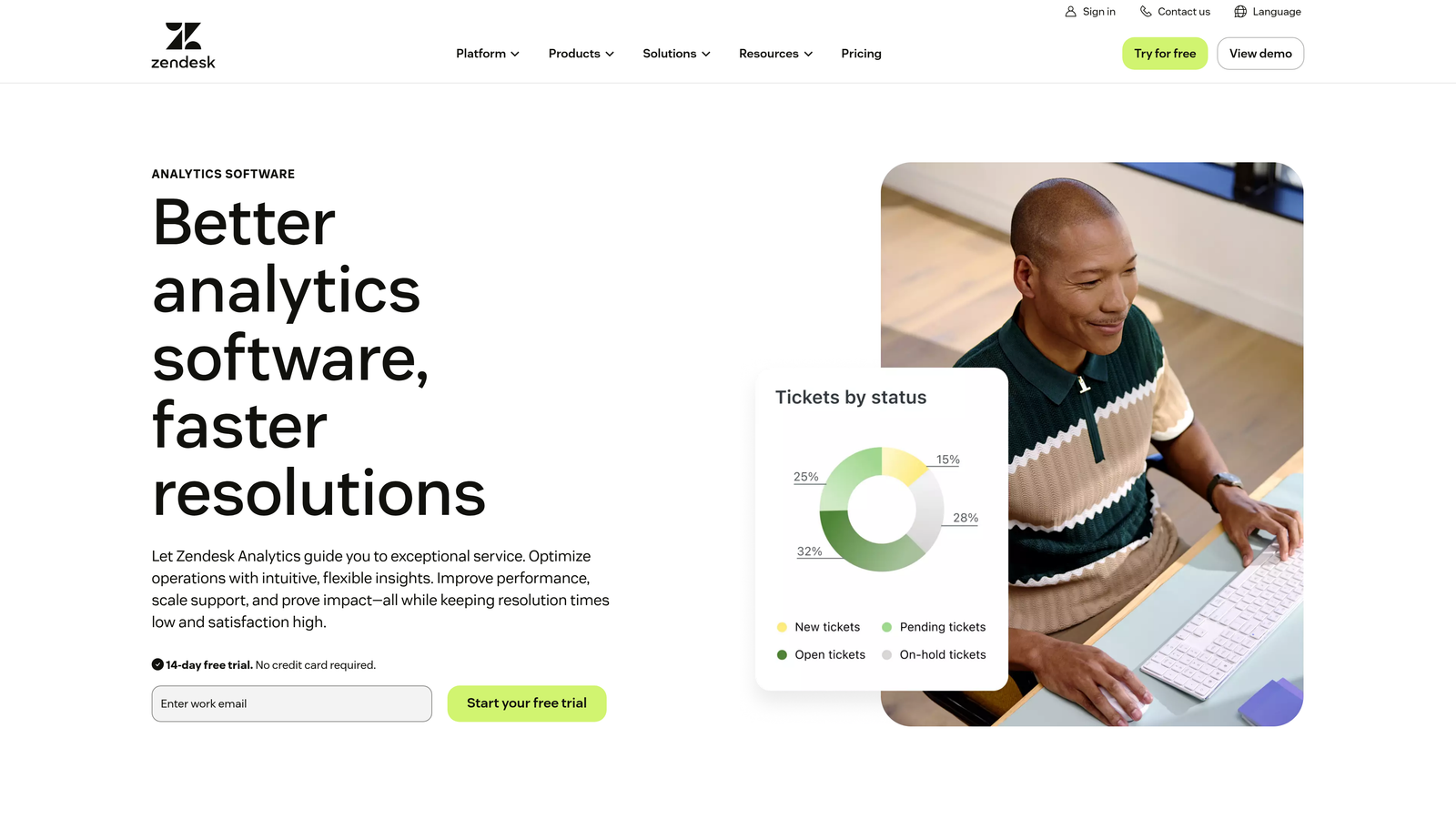
Zendesk Explore is Zendesk's built-in analytics and reporting platform, now enhanced with AI-powered insights including intent detection, sentiment analysis, and predictive ticket analytics across the Zendesk ecosystem.
Where This Tool Shines
The biggest advantage here is zero integration friction. If your team is already running on Zendesk, Explore gives you access to ticket intelligence without migrating data or managing a separate vendor relationship. The pre-built dashboards cover the most common reporting needs out of the box, and the custom dashboard builder is flexible enough for teams with more specific requirements.
The AI enhancements added in recent product cycles bring intent classification and sentiment analysis into the native workflow, which is a meaningful upgrade from pure volume-based reporting. For teams that live in Zendesk, this is often the logical first step before evaluating standalone intelligence tools.
Key Features
Pre-Built and Custom Dashboards: Covers ticket volume trends, agent performance, and resolution metrics with customizable views for different stakeholders.
AI-Powered Intent and Sentiment Detection: Classifies incoming tickets by intent and monitors sentiment trends across your ticket queue.
Cross-Channel Analytics: Unifies data from email, chat, phone, and social into a single reporting view.
Scheduled Report Delivery: Automates report sharing with stakeholders on a set cadence, reducing manual reporting work.
Best For
Mid-market and enterprise teams already committed to the Zendesk ecosystem who want to deepen their analytics capabilities without introducing a new platform. Less compelling for teams considering a broader stack change.
Pricing
Included in Zendesk Suite plans; advanced AI features available in higher tiers starting around $115 per agent per month.
3. Intercom Fin + Analytics
Best for: SaaS teams using Intercom who want AI resolution data tied directly to conversation analytics
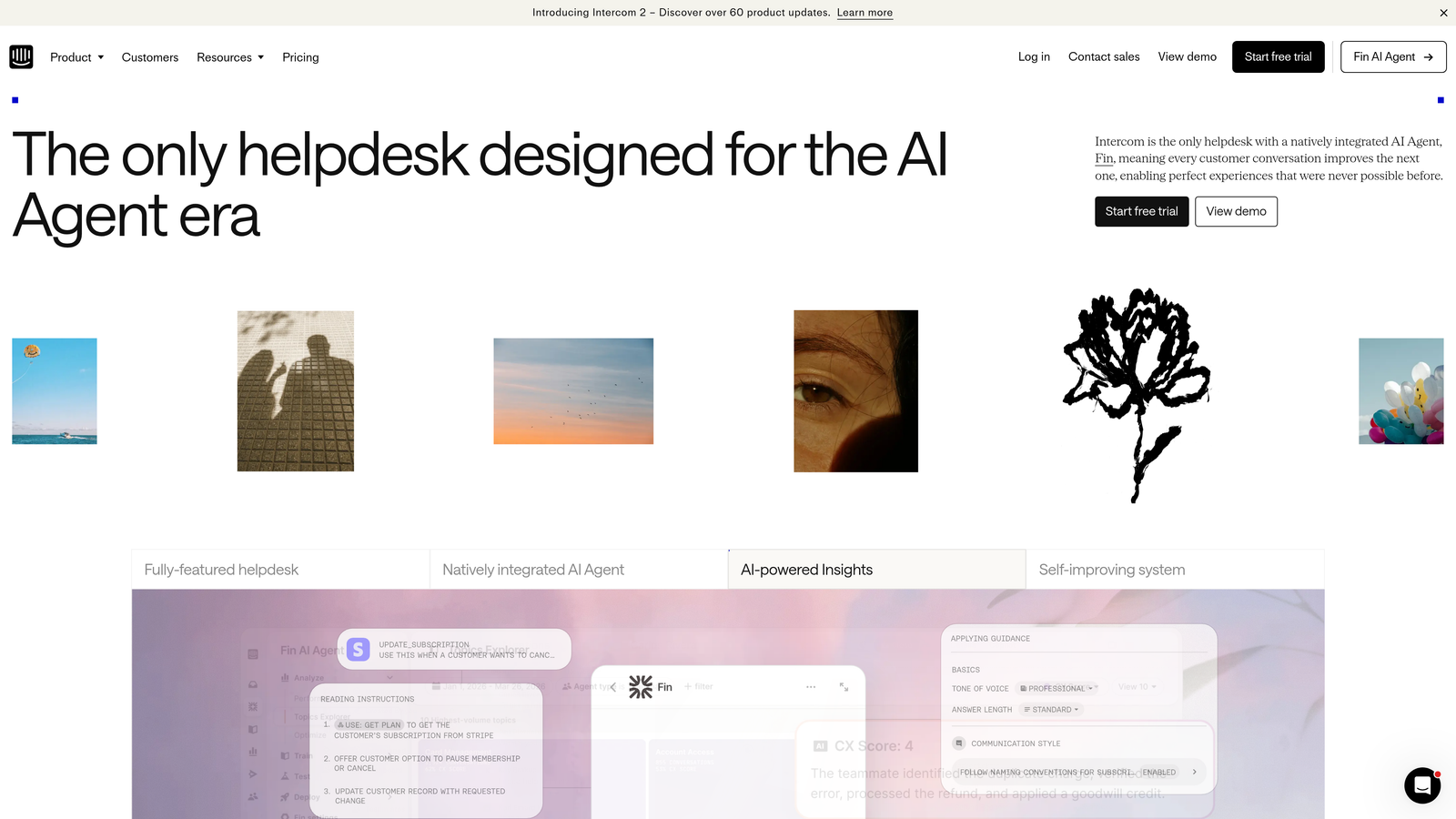
Intercom's Fin AI agent, paired with its conversation analytics, provides ticket intelligence within a product-led, conversational support framework — a natural fit for SaaS companies already operating in the Intercom ecosystem.
Where This Tool Shines
Fin's resolution analytics stand out because they don't just track whether a ticket was resolved — they include confidence scoring, which gives teams a clearer picture of where AI is performing well and where human review is warranted. This makes it easier to tune the system over time without guessing.
The connection between in-app messaging data, product tours, and support conversations is a genuine differentiator for product-led teams. When a user escalates from an onboarding flow to a support conversation, that context travels with the ticket — giving agents and analytics a richer picture than most standalone tools can provide.
Key Features
Fin AI Resolution Analytics: Tracks AI resolution rates with confidence scoring to identify where automation is working and where it needs refinement.
Custom Reports with Flexible Segmentation: Filter and segment conversation data by topic, channel, user attribute, or time period.
Topic and Sentiment Tracking: Monitors conversation-level sentiment and clusters tickets by topic for trend analysis.
In-App Context Integration: Ties product tour and messaging engagement data to support conversations for richer context.
Best For
SaaS teams with a product-led growth motion already invested in Intercom. The intelligence capabilities are strongest when the full Intercom stack is in use; teams using only part of the platform will see less value from the analytics layer.
Pricing
Starts at $39 per seat per month; Fin AI usage is billed per resolution, so costs scale with AI activity rather than seat count alone.
4. Freshdesk Freddy AI
Best for: Growing teams that want accessible ticket intelligence without enterprise-level pricing
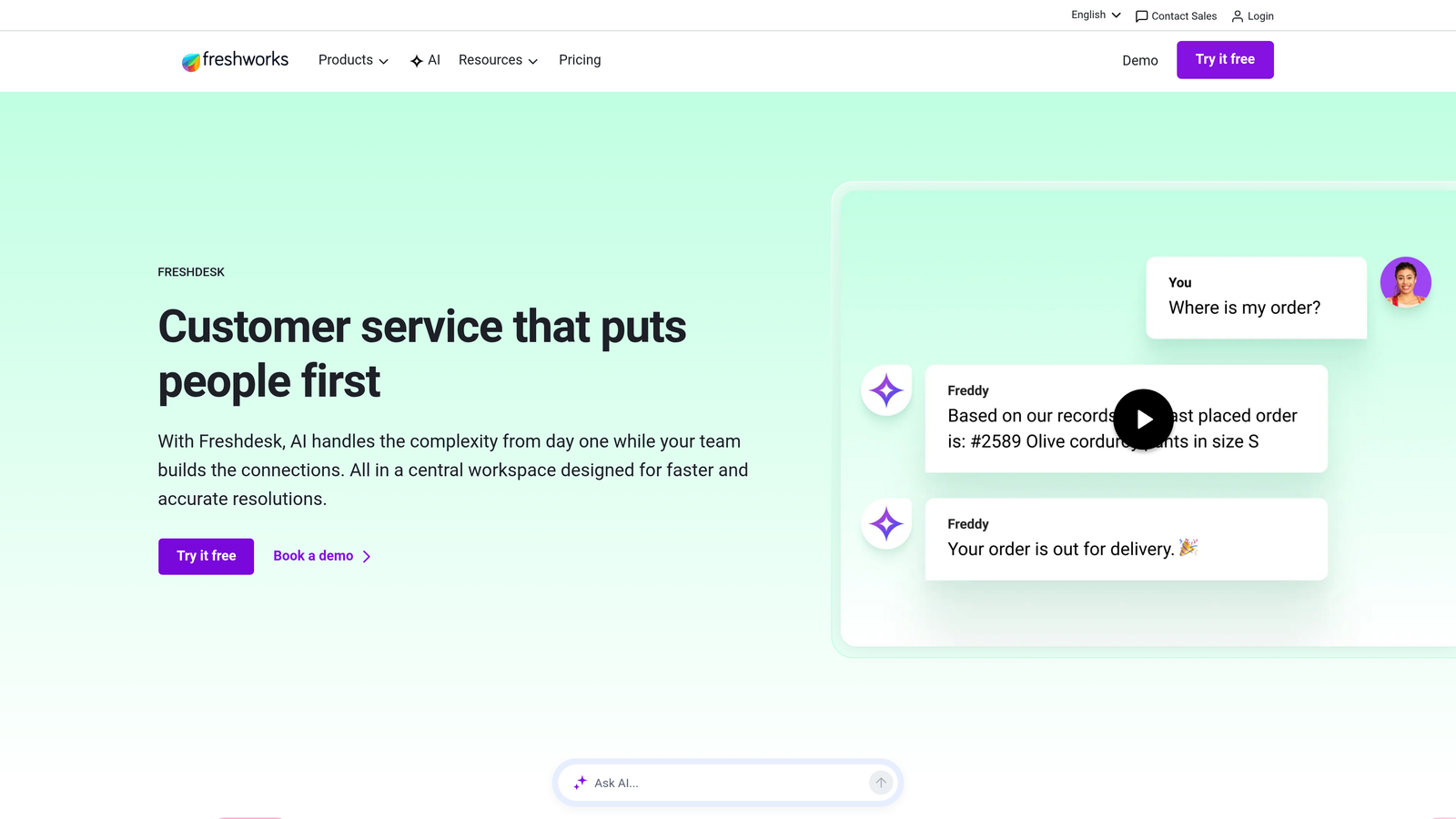
Freshdesk's Freddy AI provides auto-categorization, sentiment analysis, and predictive analytics at pricing that makes ticket intelligence accessible to teams that aren't yet at enterprise scale.
Where This Tool Shines
Freddy AI's auto-triage capability is where most mid-market teams will feel the immediate impact. Incoming tickets are automatically categorized and prioritized, which reduces the manual sorting work that quietly drains agent time at growing companies. Pairing that with CSAT prediction means teams can identify at-risk interactions before they become negative reviews.
The free tier is genuinely useful for small teams getting started with ticket analytics, which lowers the barrier to evaluating the platform without a procurement process. For teams outgrowing basic helpdesk metrics but not ready for an enterprise intelligence platform, Freddy AI occupies a practical middle ground.
Key Features
Freddy AI Auto-Triage: Automatically categorizes and prioritizes incoming tickets, reducing manual routing decisions.
Sentiment Analysis and CSAT Prediction: Flags tickets likely to result in negative satisfaction scores before resolution, enabling proactive intervention.
Built-In Analytics Dashboards: Trend detection and performance reporting without requiring a separate analytics tool.
Canned Response Suggestions: Recommends relevant responses based on ticket content, speeding up agent workflows.
Best For
SMB and mid-market support teams using Freshdesk who want to add AI-powered intelligence without migrating platforms or investing in a standalone analytics solution.
Pricing
Free tier available; Pro plan at $49 per agent per month with advanced Freddy AI features included.
5. SentiSum
Best for: Teams that need granular, customizable ticket tagging and root cause analysis on top of their existing helpdesk
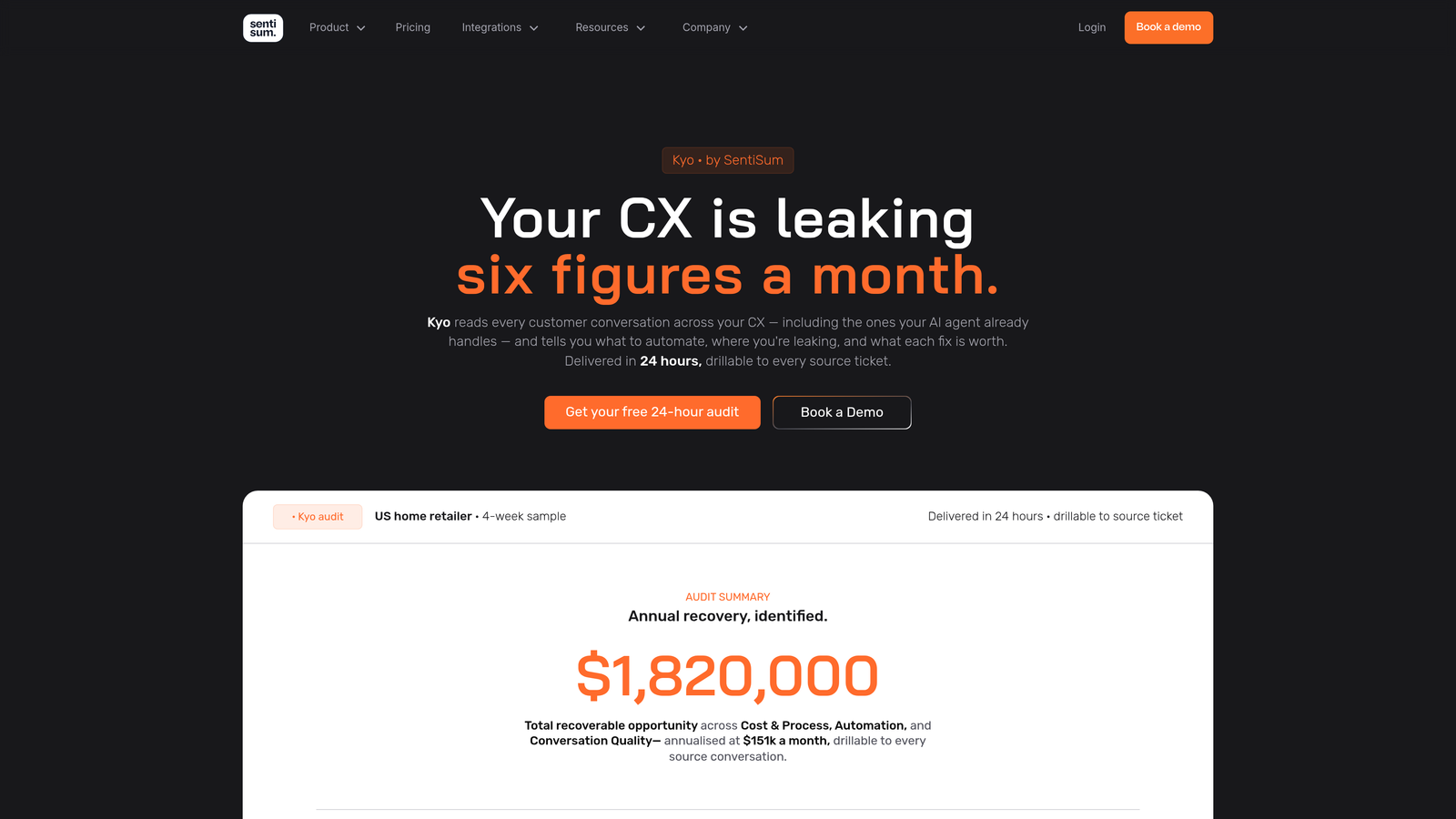
SentiSum is a purpose-built ticket intelligence platform that auto-tags support conversations with granular AI-driven labels, surfaces trending topics, and provides root cause analysis — designed to sit on top of existing helpdesks rather than replace them.
Where This Tool Shines
The granularity of SentiSum's tagging is what separates it from the analytics layers built into most helpdesks. Where a native tool might classify a ticket as "billing issue," SentiSum can apply a custom taxonomy that distinguishes between invoice disputes, failed payments, plan confusion, and refund requests — giving product and support teams far more actionable data.
The real-time trending topic detection is particularly valuable for teams managing high ticket volumes. When a spike in a specific issue category appears, SentiSum surfaces it with enough context to identify whether it's a product bug, a documentation gap, or an operational problem — before it becomes a widespread customer complaint.
Key Features
Granular AI Auto-Tagging: Applies custom taxonomy labels at a level of specificity that native helpdesk analytics typically can't match.
Real-Time Trending Topic Detection: Alerts teams to emerging issue spikes as they develop, not after the fact.
Root Cause Analysis: Connects ticket volume increases to specific product changes, outages, or operational events.
Helpdesk Integrations: Works with Zendesk, Intercom, Freshdesk, and other major platforms without requiring migration.
Best For
Mid-market to enterprise teams that want deep ticket intelligence without changing their helpdesk, and where custom taxonomy and root cause analysis are higher priorities than AI-powered resolution.
Pricing
Custom pricing based on ticket volume; typically suited for mid-market to enterprise organizations.
6. Idiomatic
Best for: CX and insights teams that need unified intelligence across tickets, surveys, reviews, and social feedback
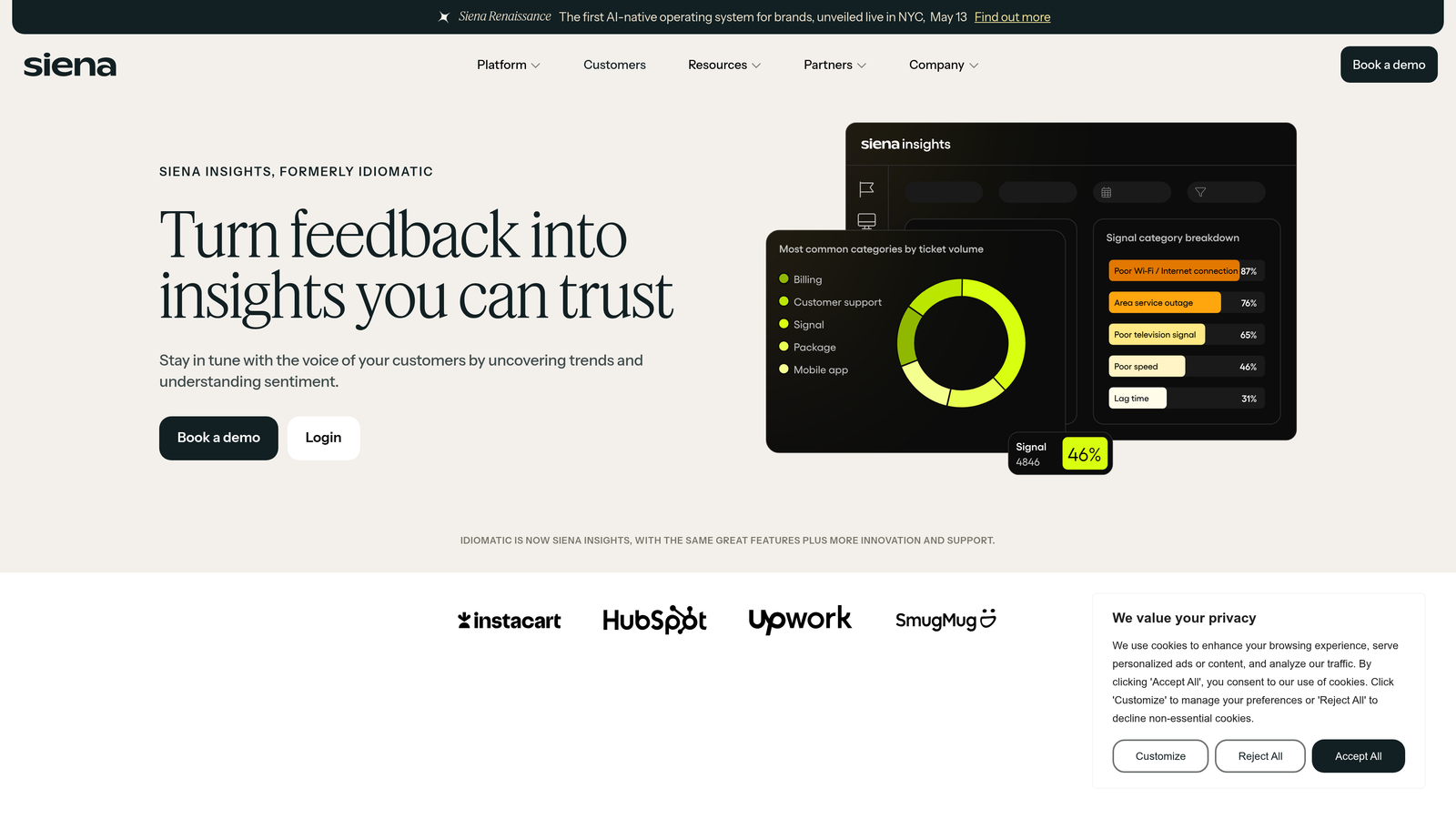
Idiomatic is an AI-powered customer intelligence platform that unifies support ticket data with surveys, reviews, and other feedback channels to provide a comprehensive view of customer sentiment and emerging issues.
Where This Tool Shines
Most ticket intelligence tools are limited to helpdesk data. Idiomatic's value proposition is the cross-channel view: combining ticket topics with NPS survey verbatims, app store reviews, and social feedback into a single intelligence layer. This matters because customers rarely express the same issue in the same way across different channels, and correlating those signals provides a more accurate picture of what's actually driving dissatisfaction.
The driver analysis feature — which connects specific ticket topics to CSAT scores and churn indicators — is particularly useful for customer success and product teams that need to prioritize which issues deserve engineering attention based on business impact rather than ticket volume alone.
Key Features
AI Labeling Engine: Applies custom taxonomy mapping across all connected feedback channels for consistent classification.
Cross-Channel Intelligence: Unifies tickets, surveys, reviews, and social data into a single analytical view.
Trend Visualization and Executive Reporting: Produces stakeholder-ready reports that communicate customer intelligence beyond the support team.
Driver Analysis: Links specific ticket topics to CSAT and churn metrics to quantify the business impact of support issues.
Best For
Mid-market and enterprise CX teams where voice-of-customer data spans multiple channels and where connecting support intelligence to retention and satisfaction metrics is a priority.
Pricing
Custom pricing; geared toward mid-market and enterprise customer experience teams.
7. SupportLogic
Best for: Enterprise B2B teams that need predictive escalation detection and account health monitoring from support signals
SupportLogic is an enterprise-grade predictive intelligence platform that layers on top of existing CRMs and helpdesks to predict escalations, detect churn signals, and monitor account health from support ticket patterns.
Where This Tool Shines
SupportLogic is purpose-built for the enterprise B2B scenario where a single account escalation can have significant revenue consequences. Its predictive escalation scoring analyzes ticket sentiment, volume patterns, and historical account behavior to flag accounts at risk before they formally escalate — giving customer success and support leadership time to intervene proactively.
The quality monitoring layer adds another dimension: tracking agent performance and interaction quality at scale, which is particularly valuable for large support organizations where manual QA review covers only a fraction of tickets. The combination of account-level intelligence and agent-level quality monitoring makes it one of the more comprehensive enterprise options in this category.
Key Features
Predictive Escalation Scoring: Real-time alerts when account sentiment and ticket patterns indicate escalation risk.
Account Health Monitoring: Tracks sentiment trends at the account level to surface churn signals before they become formal escalations.
Quality Monitoring and Agent Intelligence: Evaluates interaction quality across the ticket queue without requiring manual sampling.
CRM and Helpdesk Integrations: Connects with Salesforce, Zendesk, Jira, and ServiceNow to layer intelligence onto existing workflows.
Best For
Large B2B support organizations, particularly those in enterprise software or complex SaaS environments where account health and escalation prevention are tied directly to revenue outcomes.
Pricing
Enterprise pricing; contact for a quote. Typically suited for larger support organizations with the volume to justify the investment.
8. Lang.ai (Cx Moments)
Best for: Multilingual support teams that need no-code AI tagging and automated routing without engineering resources
Lang.ai is a no-code AI platform for intelligent ticket tagging, routing, and analytics — with strong multilingual support and visual dashboards for tracking emerging topics and resolution patterns.
Where This Tool Shines
The no-code taxonomy builder is a meaningful differentiator for teams without dedicated data science or engineering resources. Support operations managers can build and adjust classification models through a visual interface, which dramatically reduces the time between identifying a new ticket category and having it reflected in the analytics. This kind of agility is hard to achieve with tools that require technical configuration.
The multilingual classification capability deserves specific mention. Many ticket intelligence tools perform well in English and degrade noticeably in other languages. Lang.ai's language-agnostic approach makes it a strong option for global support teams managing tickets across multiple languages without wanting to maintain separate classification models for each.
Key Features
No-Code AI Tagging: Visual taxonomy builder allows non-technical users to create and modify classification models without engineering support.
Language-Agnostic Classification: Consistent tagging and routing performance across multiple languages for global support teams.
Topic Clustering and Emerging Issue Detection: Groups related tickets to surface new issue categories as they develop.
Automated Routing and Prioritization: Routes tickets based on AI classification to reduce manual triage decisions.
Best For
Global support teams managing multilingual ticket queues, and operations-focused teams that need to build and iterate on classification models without relying on engineering resources.
Pricing
Custom pricing; a free tier is available for small ticket volumes, making it accessible for teams evaluating the platform before committing.
9. Assembled
Best for: Support operations teams that need ticket intelligence connected to workforce planning and capacity management
Assembled is a workforce management platform that bridges ticket intelligence with staffing decisions — using volume patterns, complexity trends, and demand forecasting to optimize team capacity.
Where This Tool Shines
Assembled occupies a distinct niche in this list: it's less focused on understanding ticket content and more focused on using ticket patterns to make better staffing decisions. For support operations leaders who are constantly balancing coverage against cost, the ability to forecast ticket volume by category and complexity — rather than just raw count — changes how scheduling and hiring decisions get made.
The real-time queue monitoring with staffing recommendations is particularly useful for teams managing variable demand. When a ticket spike hits, Assembled surfaces not just that volume is up, but which categories are driving it and what staffing adjustment would address the backlog — connecting intelligence directly to operational action.
Key Features
AI-Powered Volume Forecasting: Predicts ticket demand by category and time period to inform staffing decisions before queues build up.
Complexity and Handle-Time Analytics: Breaks down ticket complexity by category to give a more accurate picture of actual workload than raw volume alone.
Real-Time Queue Monitoring: Surfaces live staffing recommendations when queue patterns deviate from forecast.
Helpdesk and CRM Integrations: Connects with Zendesk, Salesforce, Intercom, and others to pull ticket data into workforce planning models.
Best For
Support operations teams at scale where workforce planning is a significant operational challenge and where ticket intelligence needs to connect directly to scheduling and capacity decisions.
Pricing
Custom pricing; designed for support operations teams managing meaningful ticket volume and headcount complexity.
Choosing the Right Platform for Your Team
The right support ticket intelligence software depends on one fundamental question: do you want intelligence layered on top of your existing tools, or built into a new AI-native workflow from the ground up?
Here's a quick-reference guide based on use case:
AI-native intelligence and autonomous resolution: Halo AI is the strongest option for teams that want ticket resolution and business intelligence in a single, continuously learning system — rather than a reporting layer added to a legacy helpdesk.
Already committed to Zendesk, Intercom, or Freshdesk: Start with the native intelligence features in each platform before adding another tool. Zendesk Explore + AI, Intercom Fin Analytics, and Freshdesk Freddy AI each provide meaningful intelligence within their respective ecosystems, and the integration cost is zero.
Pure-play ticket analytics on top of an existing helpdesk: SentiSum is the better choice when granular custom tagging and root cause analysis are the priority. Idiomatic is stronger when you need to unify ticket data with surveys, reviews, and other feedback channels into a single view.
Enterprise escalation prediction and account health: SupportLogic is purpose-built for large B2B organizations where account-level churn signals and predictive escalation management are tied directly to revenue outcomes.
Workforce planning connected to ticket intelligence: Assembled is the only platform in this list that bridges ticket pattern analysis with staffing decisions — a distinct value proposition for support operations leaders managing large teams.
Multilingual, no-code classification: Lang.ai is the most accessible option for global teams that need to build and iterate on tagging models without engineering support.
The broader trend worth noting: the most forward-thinking support teams are moving away from treating intelligence as a reporting function and toward treating it as an operational capability. That shift — from dashboards that describe the past to systems that actively improve future interactions — is where AI-native platforms have a structural advantage.
Your support team shouldn't scale linearly with your customer base. Let AI agents handle routine tickets, guide users through your product, and surface business intelligence while your team focuses on complex issues that need a human touch. See Halo in action and discover how continuous learning transforms every interaction into smarter, faster support.