9 Best Support Workflow Optimization Tools in 2026
This guide reviews nine support workflow optimization tools for B2B SaaS teams in 2026, ranging from AI agents that autonomously resolve tickets to analytics platforms that uncover actionable patterns in support queues. Whether you're using Zendesk, Freshdesk, or Intercom, these tools address key challenges like automating first responses, reducing escalations, and scaling support operations without expanding headcount.
 Grant CooperFounder14 min read
Support teams are under more pressure than ever: rising ticket volumes, shrinking headcount budgets, and customers who expect instant, accurate answers. The right support workflow optimization tools can be the difference between a team that's constantly firefighting and one that scales intelligently.
This list covers nine tools that genuinely move the needle, from AI agents that resolve tickets autonomously to analytics platforms that surface the patterns hiding in your queue. We've focused on tools built for B2B SaaS and product teams, particularly those already running Zendesk, Freshdesk, or Intercom environments.
Whether you're looking to automate first-response, reduce escalations, or extract smarter business intelligence from your support data, there's something here for every stage of maturity. Tools are ranked with the most comprehensive, AI-native solution first, followed by strong point solutions for specific workflow needs.
1. Halo AI
Best for: B2B SaaS teams wanting autonomous ticket resolution, page-aware guidance, and business intelligence from support data.
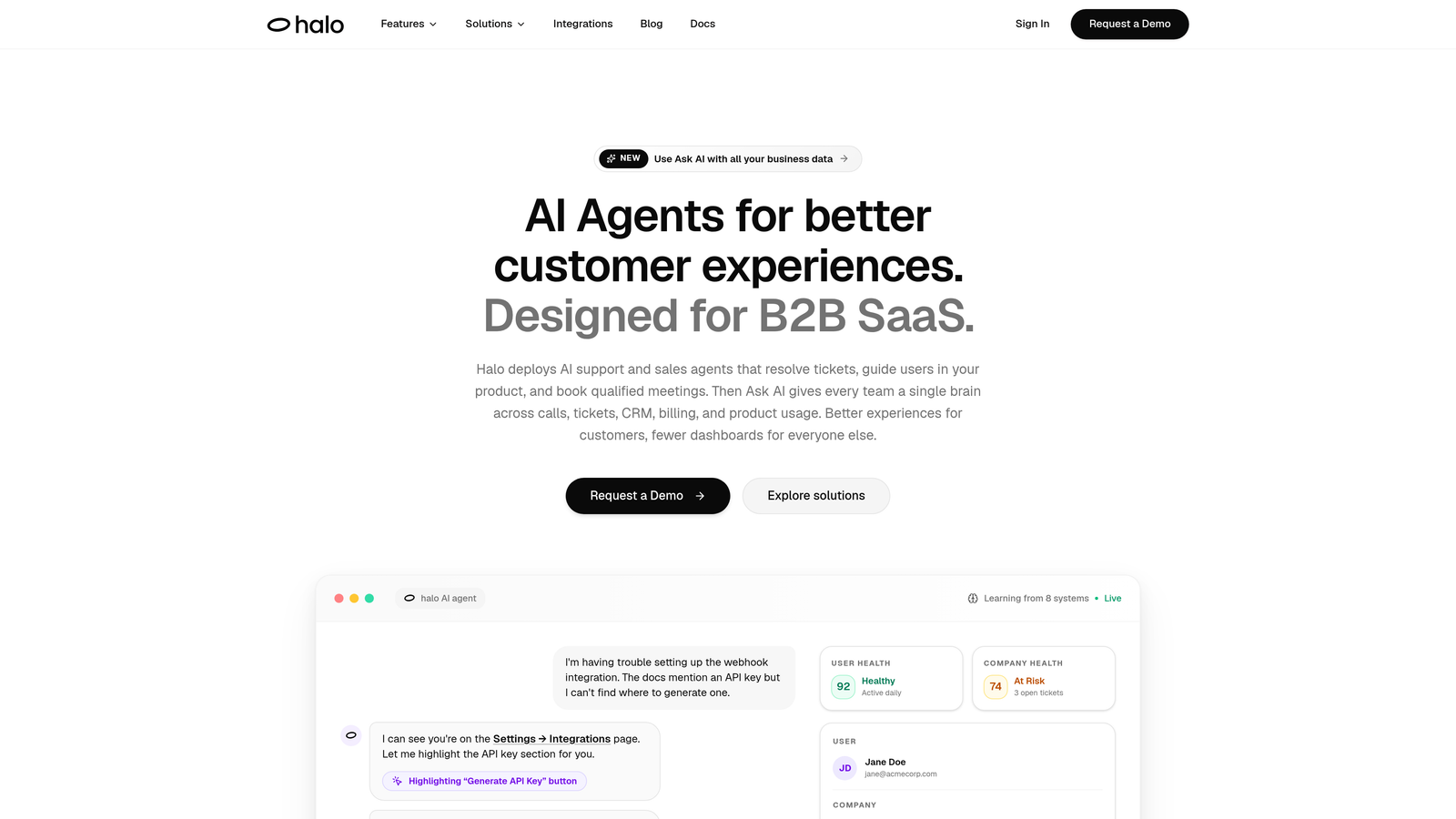
Halo AI is an AI-native customer support platform that deploys intelligent agents to resolve tickets, guide users through your product, and surface business intelligence from every interaction.
Where This Tool Shines
What separates Halo from legacy helpdesks with AI add-ons is its architecture. It's built AI-first, meaning the intelligence layer isn't a feature you toggle on—it's the foundation everything runs on. Agents learn continuously from every resolved ticket, getting smarter over time rather than staying static.
The page-aware chat widget is particularly distinctive. It understands what a user is actually looking at in your product and provides contextual, visual UI guidance rather than generic answers. That context-awareness meaningfully reduces back-and-forth and improves resolution quality without requiring any extra effort from your team.
Key Features
Autonomous AI Agents: Intelligent agents resolve support tickets end-to-end and continuously learn from every interaction to improve accuracy over time.
Page-Aware Chat Widget: Understands the user's current location in your product and delivers visual, contextual guidance rather than generic knowledge base links.
Smart Inbox with Business Intelligence: Goes beyond deflection metrics to surface customer health signals, revenue intelligence, and anomaly detection directly from support data.
Auto Bug Ticket Creation: Automatically routes product issues to engineering tools like Linear, closing the loop between customer problems and engineering fixes without manual handoff.
Live Agent Handoff: Seamlessly escalates complex issues to human agents when AI judgment isn't sufficient, with full conversation context preserved.
Native Integrations: Connects with Linear, Slack, HubSpot, Intercom, Stripe, Zoom, PandaDoc, and Fathom for a fully connected support stack.
Best For
Product-led SaaS companies that want AI handling routine tickets autonomously while extracting meaningful customer intelligence as a byproduct. Particularly valuable for teams that have outgrown basic helpdesk automation and want support to inform product and revenue decisions, not just close tickets.
Pricing
Contact for pricing at haloagents.ai. Designed for B2B SaaS teams and scales with your support volume and complexity.
2. Zendesk
Best for: Enterprise teams needing deep workflow customization, SLA management, and omnichannel support at scale.
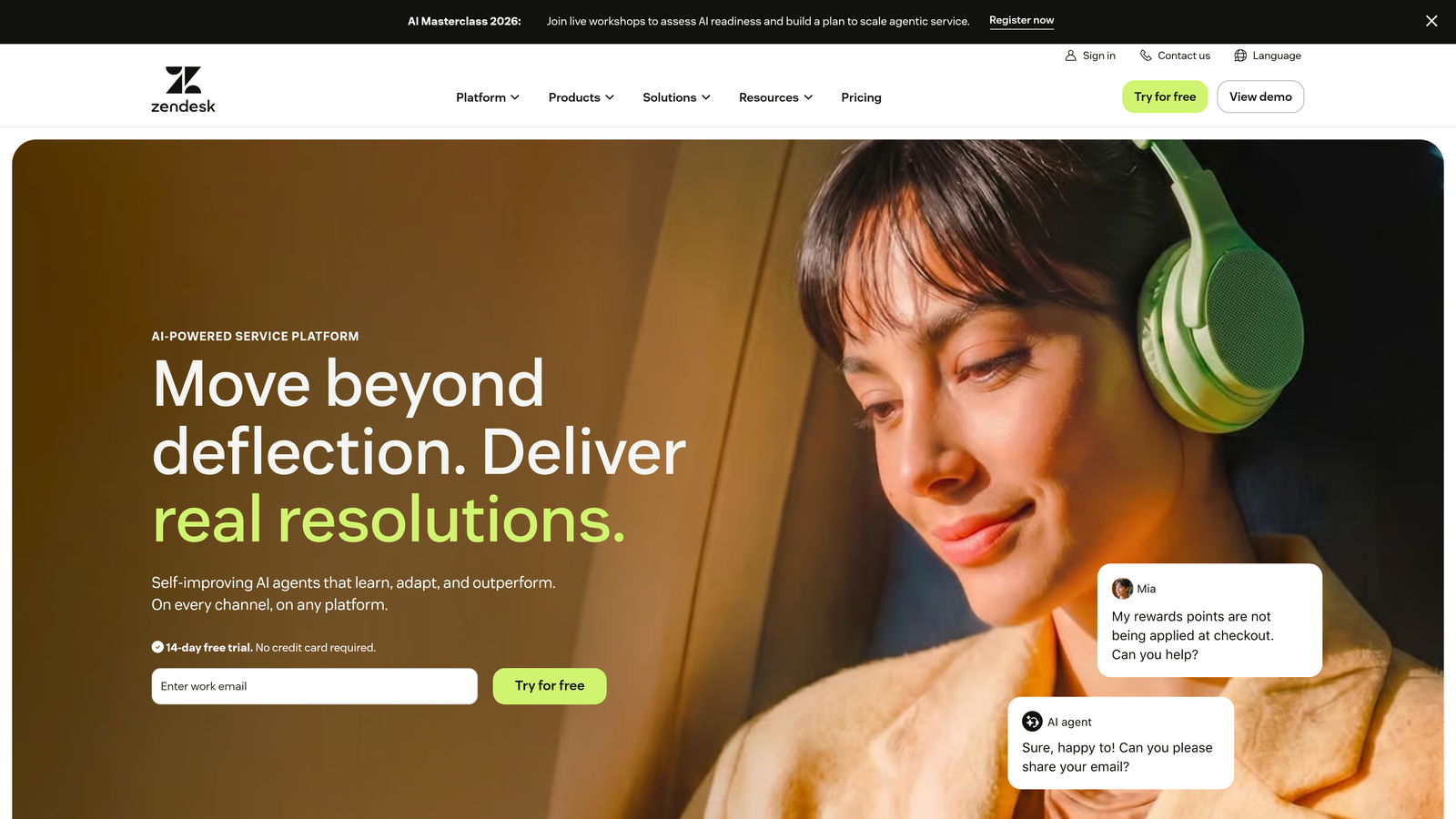
Zendesk is one of the most widely adopted enterprise helpdesk platforms, offering extensive workflow customization, a large app marketplace, and a mature AI layer built on their acquisition of Ultimate.ai.
Where This Tool Shines
Zendesk's strength is its configurability. Custom triggers, automations, SLA policies, and routing rules give operations teams granular control over how tickets move through the system. For larger support organizations with complex workflows, that flexibility is genuinely hard to replicate elsewhere.
The app marketplace is also a legitimate differentiator. With hundreds of integrations available, Zendesk connects to almost any tool in a modern support stack. That said, the AI capabilities are additive rather than foundational—teams evaluating depth of automation should weigh that architectural difference carefully.
Key Features
Advanced Ticket Routing: Custom triggers, automations, and SLA policies give precise control over how and when tickets are assigned and escalated.
Zendesk AI: Automated triage, suggested replies, and intent detection help agents work faster without fully replacing human judgment.
Omnichannel Support: Unified inbox covering email, chat, voice, social, and messaging channels with consistent routing rules across all of them.
Reporting and Analytics: Robust built-in dashboards tracking CSAT, SLA compliance, agent performance, and ticket trends.
App Marketplace: Hundreds of integrations spanning CRM, billing, communication, and productivity tools.
Best For
Mid-market to enterprise support teams with complex routing requirements, multiple channels, and dedicated operations staff to manage configuration. Less ideal for lean teams looking for out-of-the-box AI resolution without significant setup investment.
Pricing
Suite Team starts at approximately $55/agent/month. Enterprise plans are available with custom pricing. Zendesk AI features may carry additional costs depending on the plan.
3. Intercom
Best for: SaaS teams that want AI-powered support and proactive product messaging in a single platform.
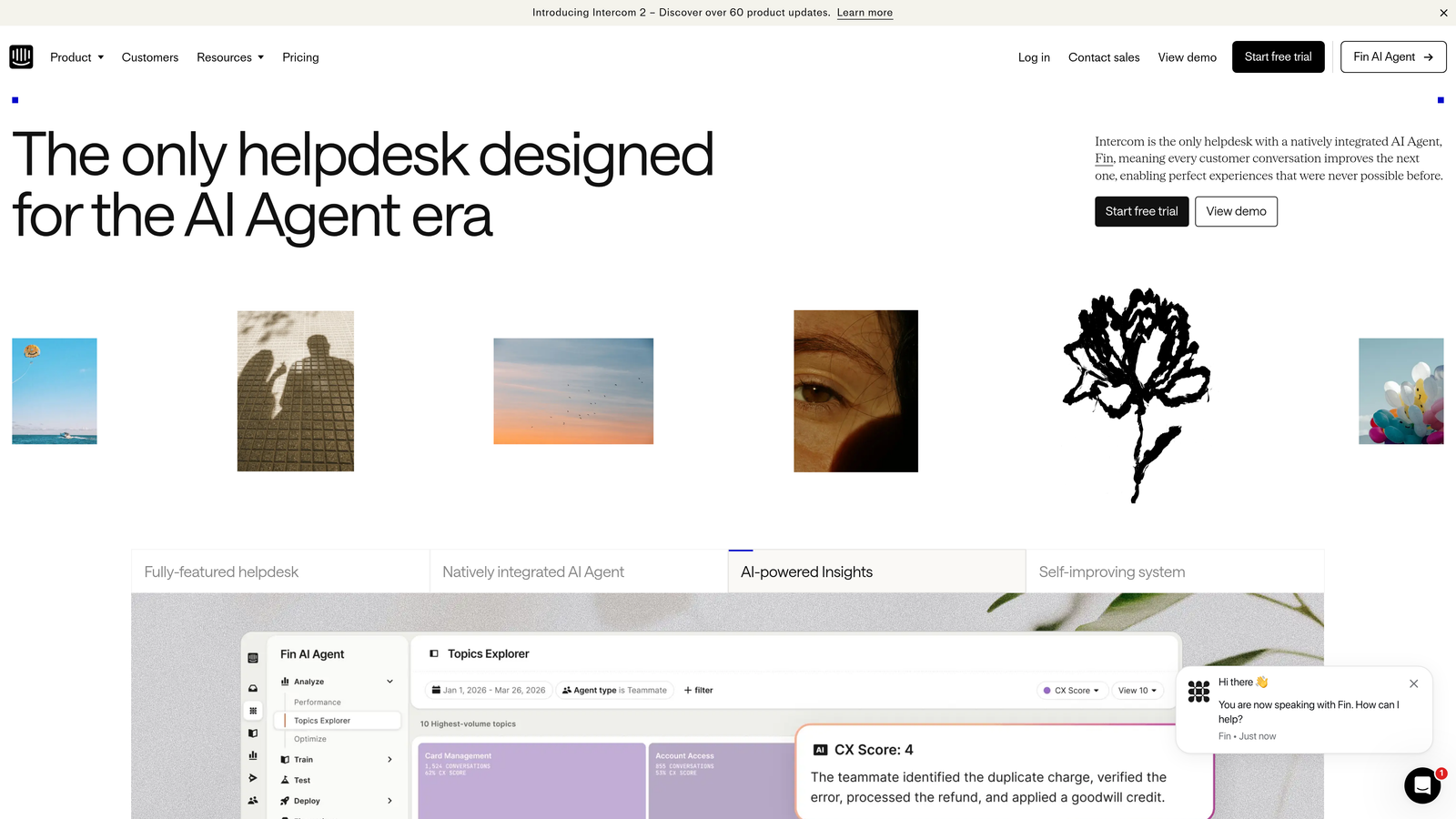
Intercom is a customer service platform that combines AI-driven support with proactive engagement tools, making it a natural fit for product-led SaaS companies managing both reactive support and user onboarding.
Where This Tool Shines
Intercom's Fin AI agent is one of the more capable AI resolution tools in the market, handling a meaningful share of common queries without human involvement. For teams that want to reduce first-response load without building a complex automation stack from scratch, Fin provides a relatively low-friction starting point.
The platform's proactive messaging capabilities also set it apart from pure helpdesk tools. In-app product tours, targeted messages, and behavior-triggered outreach mean Intercom can deflect support volume before tickets are even created, which is a fundamentally different approach to workflow optimization.
Key Features
Fin AI Agent: Handles autonomous query resolution across common support topics, with usage-based pricing that scales with volume.
Unified Inbox: Combines live chat, email, and messaging channels into a single agent workspace with shared routing rules.
Proactive Messaging: In-app product tours and behavior-triggered messages that reduce inbound support volume proactively.
Conversation Routing: Assignment rules and team inboxes keep tickets moving to the right agents without manual intervention.
Help Center: AI-assisted article suggestions surface relevant documentation during live conversations.
Best For
SaaS companies that want support and customer engagement managed from one platform. Teams already using Intercom for in-app messaging will find the support layer a natural extension rather than a separate tool to manage.
Pricing
Starts at approximately $39/seat/month. Fin AI resolution is usage-based and priced on top of the base plan, so total costs scale with automation volume.
4. Freshdesk
Best for: SMB and mid-market teams wanting omnichannel helpdesk features with AI assist at competitive pricing.
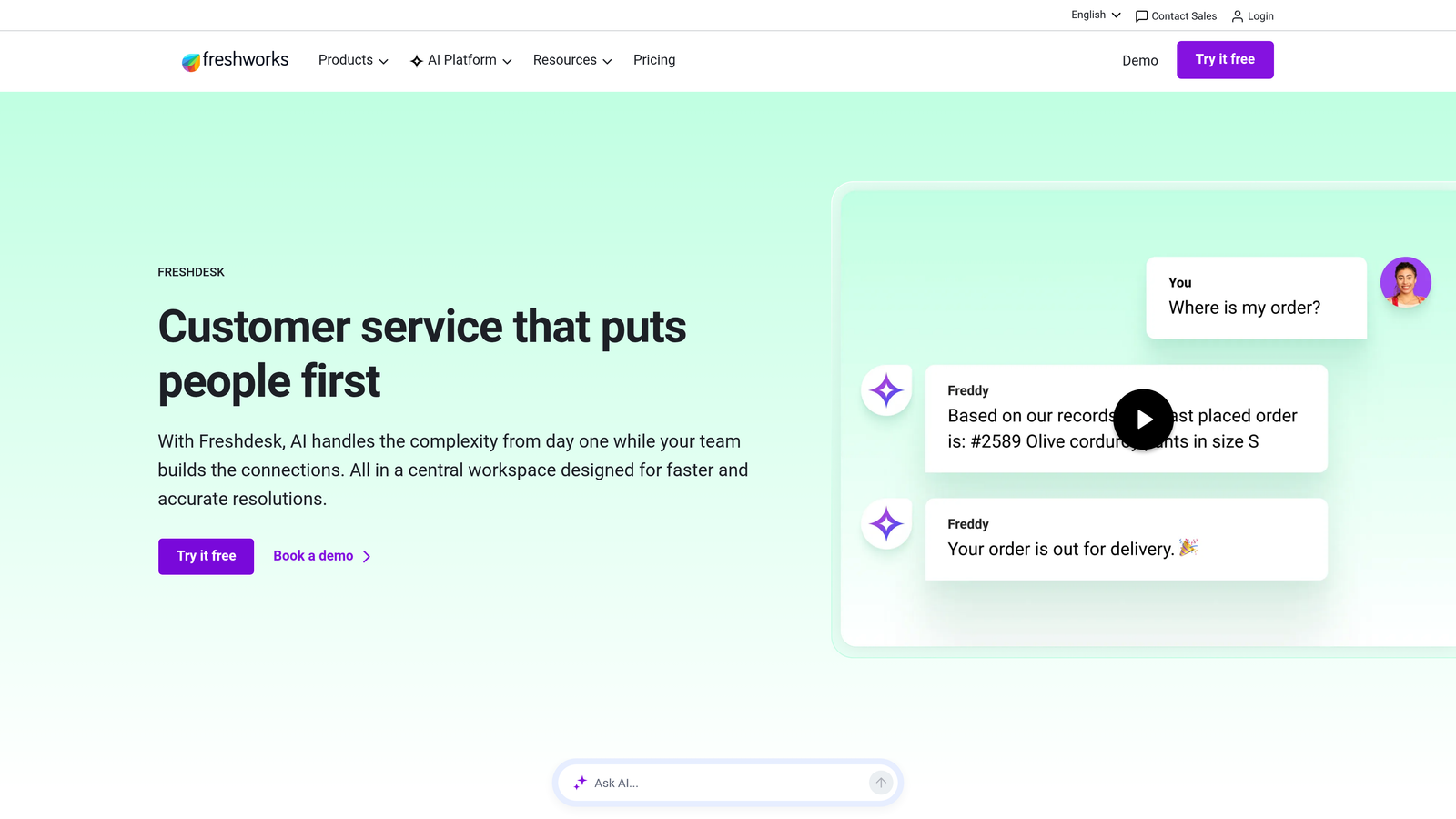
Freshdesk is a feature-rich helpdesk platform from Freshworks with Freddy AI built in, offering strong omnichannel coverage and a pricing structure that's accessible for teams not ready for enterprise-tier costs.
Where This Tool Shines
Freshdesk punches above its price point. Freddy AI handles ticket summarization, suggested replies, and agent assist features that typically cost significantly more on competing platforms. For teams that want AI-augmented workflows without committing to enterprise pricing, Freshdesk is a genuinely strong option.
Collision detection is a small but meaningful feature that prevents two agents from working the same ticket simultaneously—a common source of wasted effort in growing support teams. Combined with scenario automations for repetitive workflows, Freshdesk does a solid job of reducing operational friction without requiring heavy configuration.
Key Features
Freddy AI: Embedded across ticket summarization, suggested replies, and agent assist to speed up resolution without full automation.
Omnichannel Ticketing: Unified inbox covering email, chat, phone, and social channels with consistent routing across all of them.
Collision Detection: Prevents duplicate agent responses by flagging when multiple agents are viewing the same ticket simultaneously.
Scenario Automations: One-click macros and canned responses for handling repetitive workflows quickly and consistently.
Marketplace Integrations: Connects with CRM, billing, and communication tools to keep context flowing between systems.
Best For
SMB and mid-market support teams looking for a full-featured helpdesk with AI assistance at a price point that doesn't require enterprise budget approval. Also a good fit for teams migrating off basic email-based support who need structure without complexity.
Pricing
Free plan available for small teams. Paid plans start at approximately $15/agent/month, making it one of the more accessible options in this category.
5. Linear
Best for: Engineering teams receiving support-originated bug reports who need fast, frictionless issue tracking.
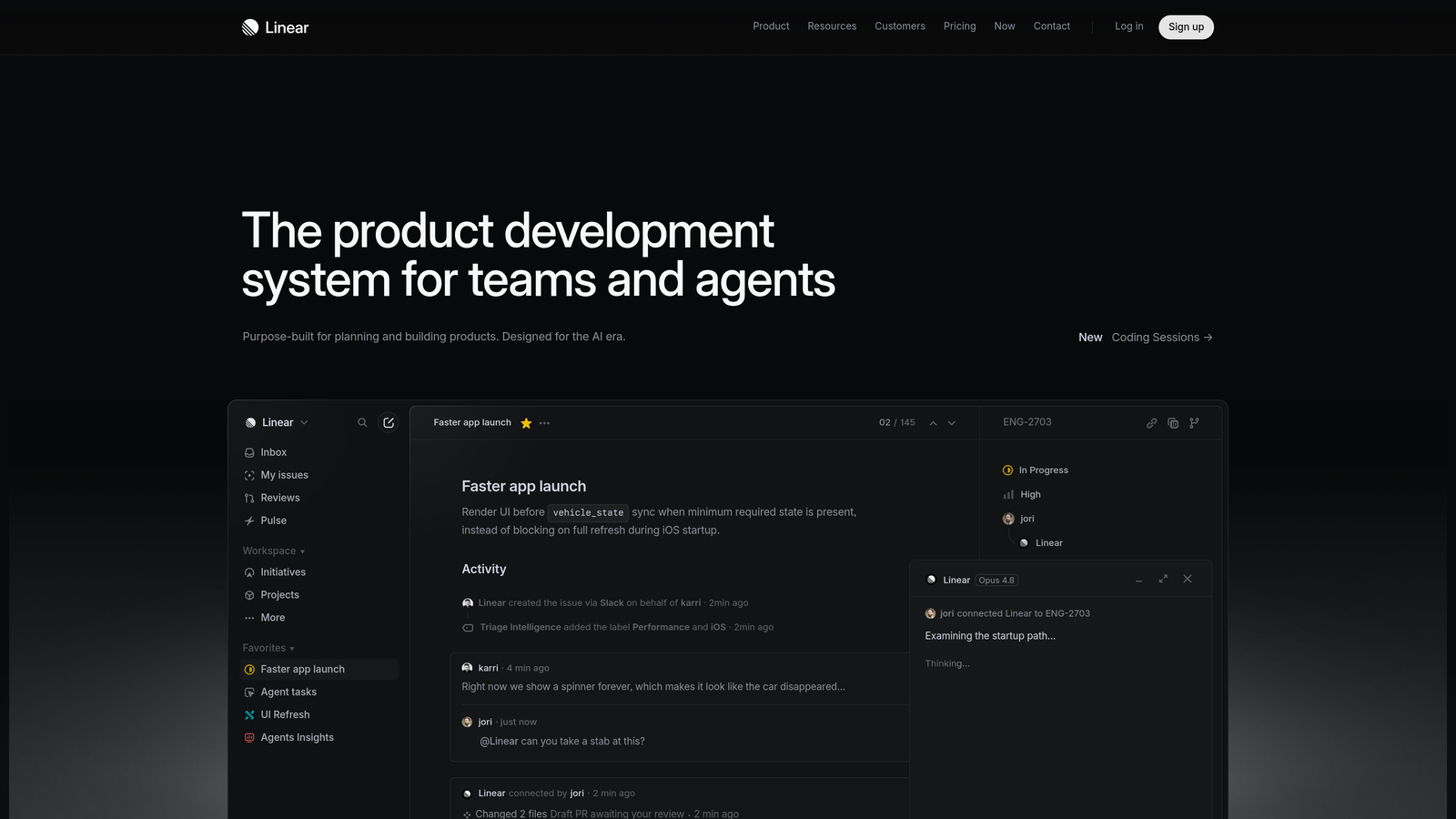
Linear is a modern issue tracking tool built for engineering teams that has become the preferred destination for support-to-engineering handoffs, closing the loop between customer problems and product fixes.
Where This Tool Shines
Linear's reputation is built on speed. The keyboard-driven interface is designed to minimize friction, and engineers who use it consistently describe it as the fastest issue tracking tool available. For support teams trying to get bugs in front of engineering quickly, that speed matters—slow handoff workflows mean customer issues sit in limbo.
The integration story is equally strong. Linear connects natively with Slack, GitHub, Figma, and most major support platforms, meaning support-originated issues can flow into engineering queues automatically rather than through manual copy-paste. Halo AI's auto bug ticket creation feature routes issues directly into Linear, making the support-to-engineering loop nearly seamless.
Key Features
Keyboard-Driven Interface: Designed for speed and minimal friction, reducing the time between identifying an issue and creating a tracked ticket.
Project and Cycle Management: Sprint planning and cycle tracking help engineering teams prioritize and ship support-reported bugs systematically.
Native Integrations: Connects with GitHub, Slack, Figma, and support platforms for automated issue routing without manual handoff.
Automatic Issue Linking: Duplicate detection and issue linking prevent engineering teams from working the same problem twice.
Roadmap Views: Track support-reported bugs from creation through to resolution with clear visibility for both engineering and support teams.
Best For
Engineering-led SaaS teams that receive a meaningful volume of support-originated bug reports and need a fast, clean system for managing them. Most valuable when paired with a support platform that can automatically create Linear issues from customer-reported problems.
Pricing
Free plan available. Paid plans start at approximately $8/user/month, making it one of the more affordable tools on this list relative to the workflow value it delivers.
6. Slack
Best for: Teams needing a connective layer for support escalation, incident response, and cross-functional collaboration.
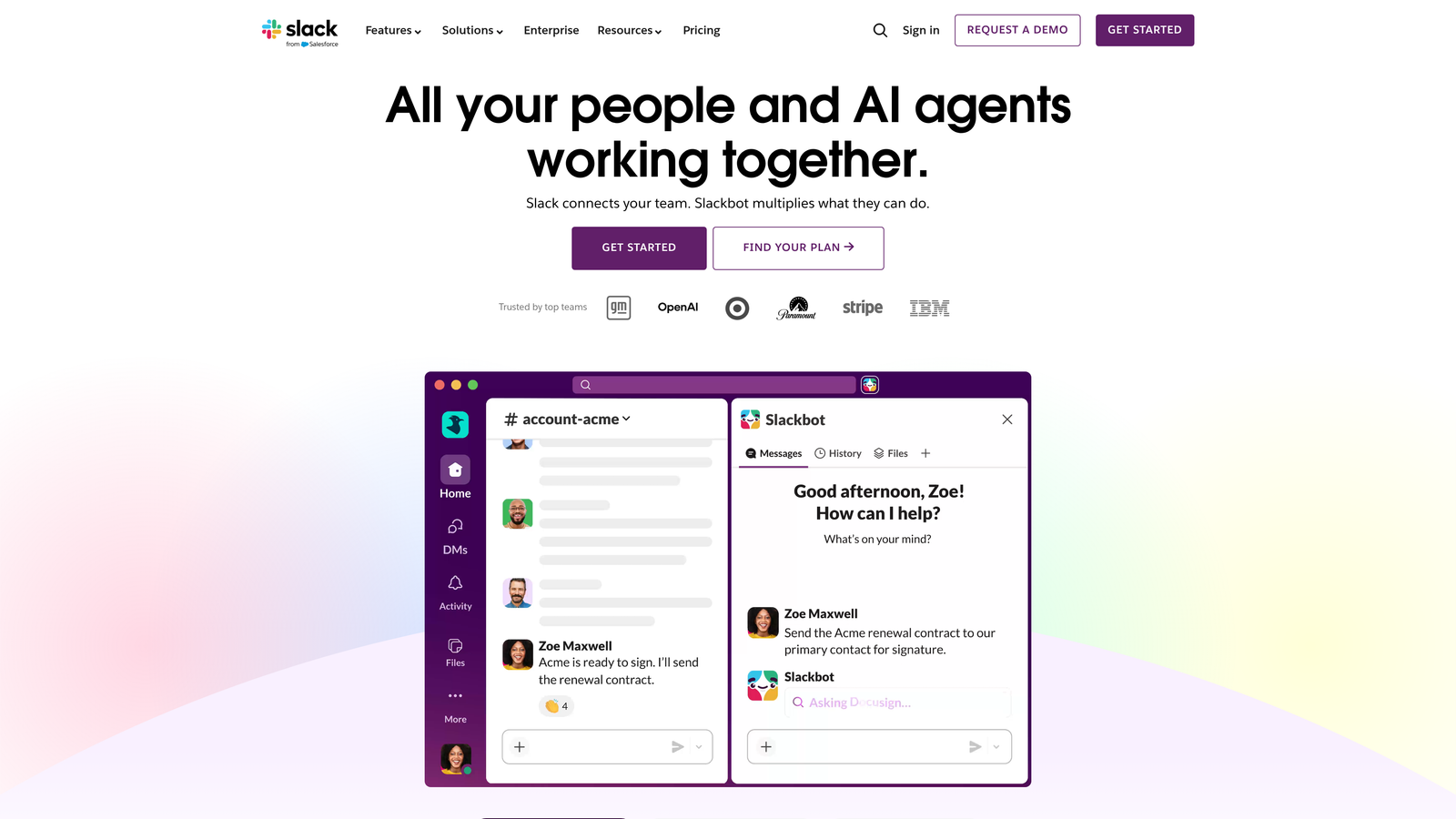
Slack is the internal communication platform that serves as the connective tissue for support escalation workflows, incident response, and real-time coordination between support, engineering, and customer success teams.
Where This Tool Shines
Slack's role in support workflows is often underestimated. It's not a helpdesk, but it's where critical escalations actually happen in most SaaS companies. Dedicated channels for VIP customers, incident response, or engineering escalations give teams a structured way to move fast when something urgent surfaces.
Workflow Builder adds automation capabilities that many teams don't fully use. Automated notifications when a high-priority ticket is created, escalation alerts when SLA thresholds approach, or structured handoff forms between support and engineering can all be built without writing a single line of code. The result is a more consistent escalation process that doesn't rely on individual judgment calls.
Key Features
Escalation Channels: Dedicated channels for VIP customers, critical incidents, or specific product areas keep urgent issues visible and moving.
Workflow Builder: No-code automation for internal handoff notifications, escalation alerts, and structured cross-team communication.
Native Integrations: Connects with Zendesk, Intercom, Linear, and most support tools to surface ticket context inside Slack conversations.
Huddles: Quick voice escalation for situations where async messaging creates too much back-and-forth.
Searchable Message History: Post-incident review is significantly easier when escalation history is fully searchable and timestamped.
Best For
Any support team operating in a multi-functional SaaS environment where engineering, customer success, and support need to coordinate in real time. Practically universal at this point, but teams that haven't structured their escalation workflows intentionally are leaving significant efficiency on the table.
Pricing
Free plan available with message history limits. Pro plan starts at approximately $7.25/user/month with full history and advanced workflow features.
7. Guru
Best for: Support teams struggling with knowledge fragmentation and inconsistent agent responses.
Guru is an AI-powered knowledge management platform that surfaces the right answers inside the tools support agents already use, reducing search time and improving response consistency across the team.
Where This Tool Shines
The core problem Guru solves is knowledge fragmentation. Most support teams have answers scattered across Notion, Google Docs, Confluence, Slack threads, and tribal knowledge. Agents waste meaningful time hunting for the right answer while customers wait. Guru centralizes that knowledge and brings it to wherever agents are working, rather than requiring them to switch context to find it.
The verification workflow is a feature that's easy to overlook but genuinely important. Knowledge bases go stale quickly, especially in fast-moving SaaS products. Guru's system for flagging content for review and routing it to subject matter experts keeps the knowledge base accurate without requiring a dedicated knowledge manager to audit everything manually.
Key Features
In-Context Knowledge Cards: AI-powered cards surface relevant answers directly within Chrome, Slack, and helpdesk tools without requiring agents to leave their current workflow.
Verification Workflows: Structured review process ensures knowledge base content stays accurate and up to date as products and policies evolve.
Knowledge Analytics: Tracks which cards are used, searched, and flagged as outdated to identify gaps and prioritize content updates.
Browser Extension and Slack Integration: Instant agent access to the full knowledge base without tab switching or context interruption.
Helpdesk Integrations: Connects with Zendesk, Salesforce, and Google Workspace to pull context into knowledge suggestions automatically.
Best For
Support teams of 10 or more agents where knowledge inconsistency is causing CSAT variance or escalations. Particularly valuable during rapid product growth phases when documentation struggles to keep pace with feature releases.
Pricing
Starts at approximately $10/user/month. Enterprise plans with advanced analytics and custom integrations are available for larger teams.
8. Assembled
Best for: Support operations teams managing forecasting, scheduling, and real-time adherence at scale.
Assembled is a workforce management platform built specifically for support teams, covering demand forecasting, agent scheduling, real-time adherence monitoring, and capacity planning in a single purpose-built tool.
Where This Tool Shines
General workforce management tools weren't designed with support operations in mind. Assembled was. The platform understands the nuances of support scheduling: variable ticket volume patterns, channel-specific staffing requirements, and the SLA implications of coverage gaps. That specificity shows in how the forecasting and adherence features actually work in practice.
The SLA risk alerting is particularly useful for teams managing tight response time commitments. Rather than discovering an SLA breach after the fact, Assembled surfaces coverage gaps proactively, giving operations teams time to adjust staffing before customers feel the impact. For teams where SLA compliance is tied to contract terms, that early warning capability is genuinely valuable.
Key Features
Demand Forecasting: Predicts ticket volume based on historical patterns to inform staffing decisions before gaps appear.
Agent Scheduling: Shift management, time-off tracking, and coverage planning in a single interface built for support operations.
Real-Time Adherence Monitoring: Tracks whether agents are following their scheduled assignments and flags deviations as they happen.
SLA Risk Alerts: Proactive warnings when coverage gaps threaten response time targets, giving operations teams time to respond.
Helpdesk Integrations: Syncs with Zendesk, Salesforce, and Intercom to pull live ticket data into forecasting and adherence models.
Best For
Mid-market and enterprise support operations teams managing 20 or more agents across multiple channels and shifts. Less relevant for small teams, but increasingly important as support organizations scale and scheduling complexity grows.
Pricing
Contact Assembled directly for pricing. The platform is positioned for mid-market and enterprise support operations where workforce management complexity justifies dedicated tooling.
9. Klaviyo
Best for: SaaS and e-commerce teams connecting support interaction data to proactive customer retention workflows.
Klaviyo is primarily an email and SMS automation platform that's increasingly used to connect support interaction data with customer lifecycle signals, enabling proactive outreach triggered by support patterns rather than purely marketing events.
Where This Tool Shines
Klaviyo's inclusion on a support workflow list might seem unexpected, but the use case is real. When a customer submits multiple support tickets in a short window, or contacts support shortly before a renewal date, those are meaningful signals. Klaviyo lets teams act on those signals automatically, triggering personalized outreach, satisfaction surveys, or proactive check-ins without manual monitoring.
The customer segmentation capabilities are where this gets genuinely interesting for support teams. Combining purchase history, behavioral data, and support interaction patterns into a single customer view enables a level of proactive retention work that reactive support tools simply can't deliver. It bridges the gap between support as a cost center and support as a retention function.
Key Features
Event-Based Automation: Triggers outreach flows based on support interaction patterns, such as multiple tickets, unresolved issues, or post-resolution follow-up windows.
Customer Segmentation: Combines purchase, behavioral, and support data into unified segments for targeted proactive communication.
Pre-Built Flows: Ready-to-use automation flows for post-support follow-up, satisfaction surveys, and at-risk customer outreach.
CRM and Platform Integrations: Connects with e-commerce platforms, CRM tools, and support systems to centralize customer data.
Revenue Analytics: Connects support touchpoints to retention and revenue outcomes, making the ROI of proactive support visible.
Best For
SaaS and e-commerce teams that want to use support interaction data as an input to customer retention workflows. Most valuable when paired with a support platform that can push interaction events to Klaviyo automatically, creating a closed loop between support activity and proactive customer communication.
Pricing
Free plan available for smaller contact lists. Paid plans scale with contact count, making Klaviyo accessible at early stages with costs that grow alongside the customer base.
Which Tool Is Right for Your Stack?
The strongest support stacks in 2026 don't rely on a single platform. They combine an AI-native resolution layer with solid routing, knowledge management, and escalation workflows, each tool handling the layer it was actually built for.
Here's a quick guide by use case. If you want autonomous AI handling tickets end-to-end while surfacing business intelligence from every interaction, start with Halo AI. If you need enterprise helpdesk infrastructure with deep workflow customization, Zendesk and Freshdesk are proven choices at different price points. For support and proactive product messaging in a single tool, Intercom is hard to beat for SaaS teams.
For point solutions: Linear closes the support-to-engineering loop faster than anything else on the market. Guru solves knowledge fragmentation before it becomes a CSAT problem. Assembled is purpose-built for the forecasting and scheduling complexity that general WFM tools handle poorly. Slack is the connective tissue that holds escalation workflows together. And Klaviyo turns support interaction data into proactive retention signals that most teams leave untapped.
You don't need every tool on this list. But you do need intentional choices at each layer of your workflow. A reactive support team that handles tickets one by one will always struggle to scale. A team with the right tooling resolves issues faster, catches problems earlier, and turns customer interactions into intelligence that improves the entire business.
Your support team shouldn't scale linearly with your customer base. Let AI agents handle routine tickets, guide users through your product, and surface business intelligence while your team focuses on complex issues that need a human touch. See Halo in action and discover how continuous learning transforms every interaction into smarter, faster support.