9 Top AI Customer Service Solutions for B2B Teams in 2026
This guide evaluates the top AI customer service solutions available in 2026 for B2B SaaS teams, comparing platforms on autonomous ticket resolution, integration depth, and scalability. From AI-first tools to enhanced legacy helpdesks, it helps teams identify which solution best balances volume deflection, business intelligence, and seamless human handoffs to deliver faster resolutions and leaner support operations.
 Matt PattoliFounder13 min read
AI customer service has moved well past the era of scripted chatbots that frustrated users with dead-end responses. Today's leading platforms resolve tickets autonomously, detect customer health signals, hand off to human agents without losing context, and integrate across your entire business stack. The result: faster resolutions, leaner support teams, and customers who actually feel helped.
But not every solution is built the same way. Some bolt AI onto legacy helpdesk infrastructure; others are built AI-first from the ground up. Some excel at volume deflection; others go deeper into business intelligence and product-aware guidance. This list covers the strongest AI customer service solutions available in 2026, evaluated on autonomy, integration depth, scalability, and real-world usability for B2B SaaS teams.
1. Halo AI
Best for: B2B SaaS teams that need AI-first autonomous support with deep product and business context.
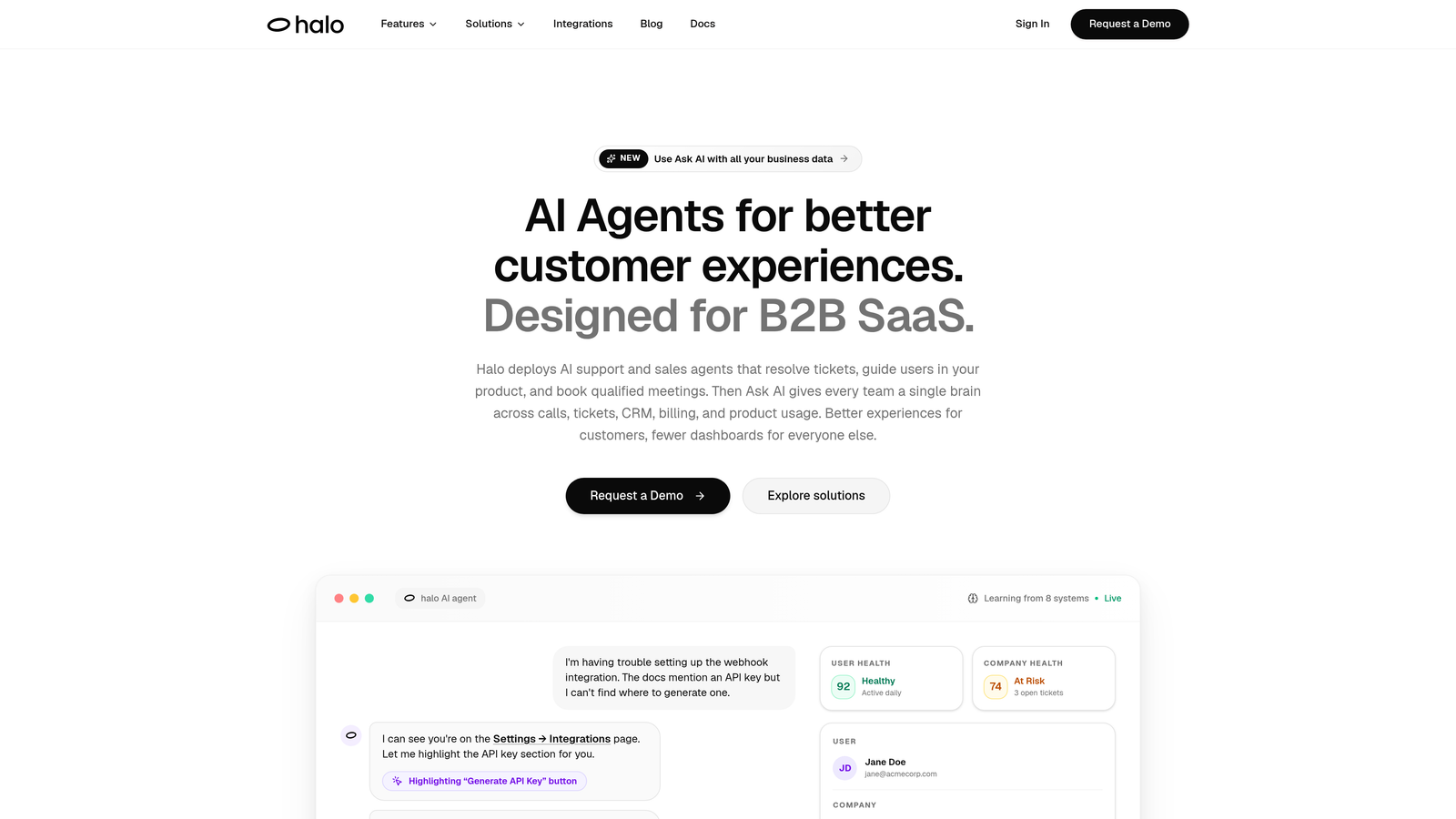
Halo AI is an AI-first customer support platform that deploys autonomous agents to resolve tickets, guide users through your product, and surface business intelligence signals continuously.
Where This Tool Shines
What separates Halo from most competitors is its page-aware architecture. The AI agent doesn't just read a ticket in isolation; it sees what the user sees, understands which page they're on, and delivers contextual guidance with visual UI direction. That's a meaningful difference when your users are stuck mid-workflow and need more than a link to a help article.
The smart inbox goes beyond ticket management by surfacing customer health signals and revenue anomalies, turning your support queue into a source of business intelligence. Halo is also built to continuously learn from every interaction rather than requiring manual retraining cycles, which means the system gets smarter as your team uses it.
Key Features
Page-Aware Chat Widget: The AI sees the user's current page and delivers contextual, visual UI guidance rather than generic answers.
Autonomous Ticket Resolution: AI agents handle tickets end-to-end, with a smart inbox that surfaces customer health signals and revenue intelligence alongside standard metrics.
Auto Bug Ticket Creation: Automatically identifies and routes bug reports to Linear without any agent involvement, keeping your engineering team informed without manual triage.
Live Agent Handoff: Escalates to human agents with full conversation context preserved, so customers never have to repeat themselves.
Broad Integration Stack: Connects natively with Slack, HubSpot, Intercom, Stripe, Zoom, PandaDoc, and Fathom, covering the tools most B2B SaaS teams already rely on.
Best For
B2B SaaS companies that have outgrown bolt-on AI and want a platform built for autonomous resolution from day one. Particularly strong for product-led growth teams where support and product experience are tightly connected.
Pricing
Contact for pricing. Halo is built for B2B SaaS teams and pricing is scoped to your team's needs. Visit haloagents.ai to get started.
2. Intercom (Fin AI Agent)
Best for: Teams already using Intercom who want autonomous resolution without switching platforms.
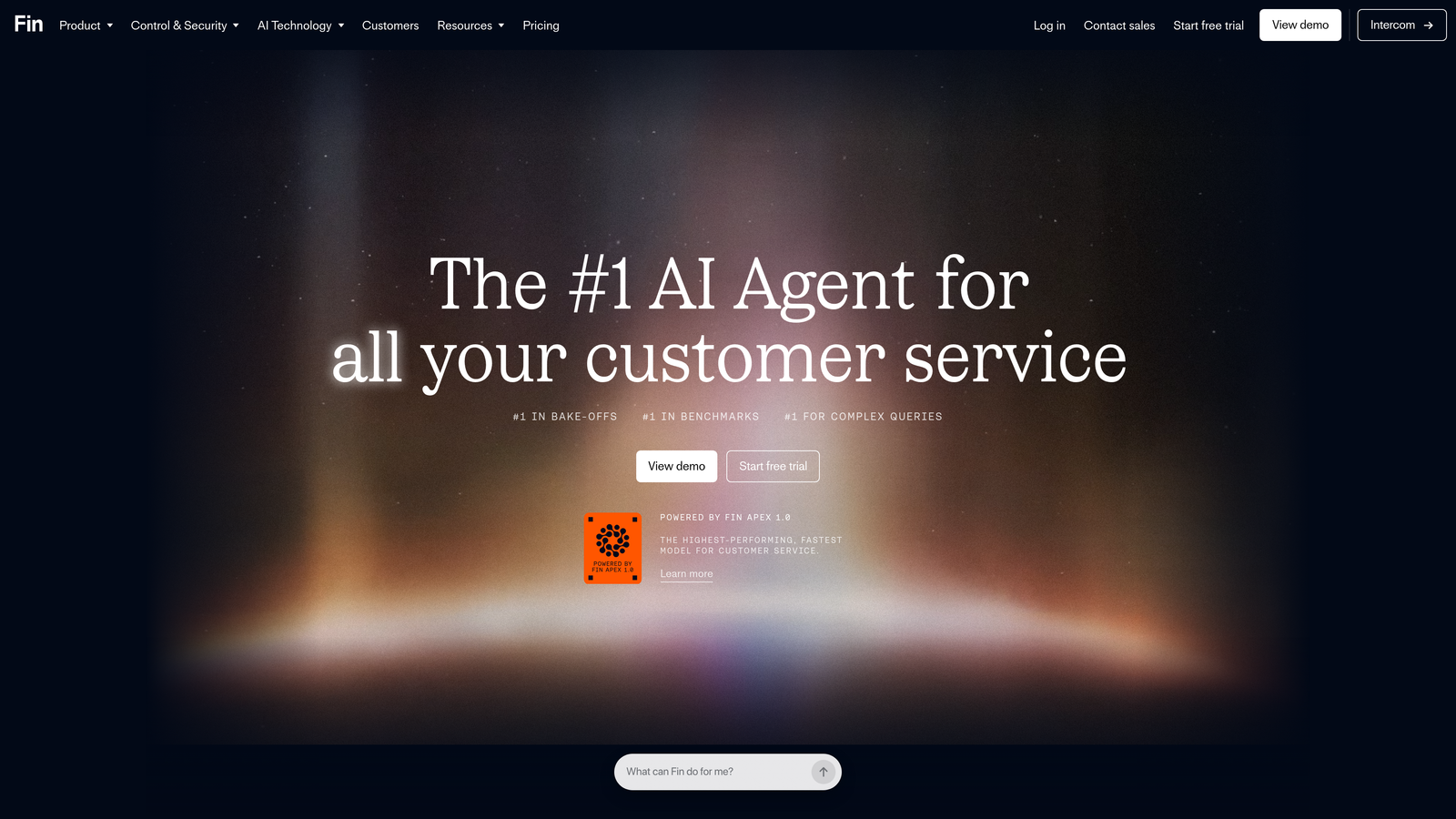
Intercom's Fin AI Agent is a native autonomous agent that resolves customer conversations using your existing help content, built directly into the Intercom Messenger ecosystem.
Where This Tool Shines
If your team is already running Intercom for support, Fin is the path of least resistance to AI-powered resolution. It draws on your existing help center articles and knowledge base without requiring you to rebuild your content library, and handoffs to human agents happen inside the same inbox your team already works in.
Fin's tone customization and multi-language support make it practical for teams serving international customer bases. The usage-based pricing model, where you pay per resolved conversation, is also worth noting: it aligns cost directly with value delivered rather than charging a flat seat fee regardless of AI performance.
Key Features
Autonomous Conversation Resolution: Fin resolves conversations using your existing help center content with no additional training required.
Seamless Human Handoff: Escalates to agents within the Intercom inbox, preserving conversation history throughout.
Multi-Language Support: Handles conversations in multiple languages with tone customization options.
Usage-Based Pricing: Charges per resolved conversation rather than per seat, tying cost to outcomes.
Native Suite Integration: Works directly with Intercom Inbox, Articles, and Product Tours without additional configuration.
Best For
Teams already embedded in the Intercom ecosystem who want to add autonomous resolution without introducing a new platform. Less compelling if Intercom isn't already your primary support tool.
Pricing
Fin charges per resolved conversation. Intercom base plans start around $39 per seat per month. Verify current pricing at intercom.com before purchasing.
3. Zendesk AI
Best for: Large enterprise support organizations with complex SLA requirements and high ticket volumes.
Zendesk AI is an enterprise-grade helpdesk platform with AI capabilities layered across triage, agent assist, intelligent routing, and self-service workflows.
Where This Tool Shines
Zendesk's AI capabilities have expanded substantially, partly through their acquisition of Ultimate.ai, and the platform now covers the full spectrum from automated deflection to agent copilot suggestions. For enterprise teams managing large queues with strict SLA requirements, Zendesk's reporting depth and compliance tooling are genuinely strong.
The 1,500-plus marketplace integrations give large organizations flexibility to connect Zendesk into nearly any existing stack. That said, smaller teams often find the platform feels heavyweight relative to their actual needs, and the AI capabilities can feel like an add-on layer rather than a native architecture.
Key Features
AI-Powered Triage and Routing: Automatically categorizes and routes incoming tickets to the right team or queue based on content and intent.
Agent Copilot: Provides suggested replies and next-best-action recommendations to help agents respond faster and more consistently.
Automated Self-Service Bots: Deflects common requests before they become tickets using AI-driven bot flows.
Advanced Reporting and SLA Management: Comprehensive dashboards with SLA tracking and performance analytics built for enterprise accountability.
Marketplace Ecosystem: Over 1,500 integrations available through the Zendesk marketplace.
Best For
Enterprise support teams with large volumes, complex routing needs, and strict compliance or SLA requirements. May be more infrastructure than a lean SaaS team needs.
Pricing
Suite plans start around $55 per agent per month. AI add-ons are priced separately. Confirm current pricing at zendesk.com.
4. Freshdesk Freddy AI
Best for: SMB teams looking for AI-assisted support at accessible price points within the Freshworks ecosystem.
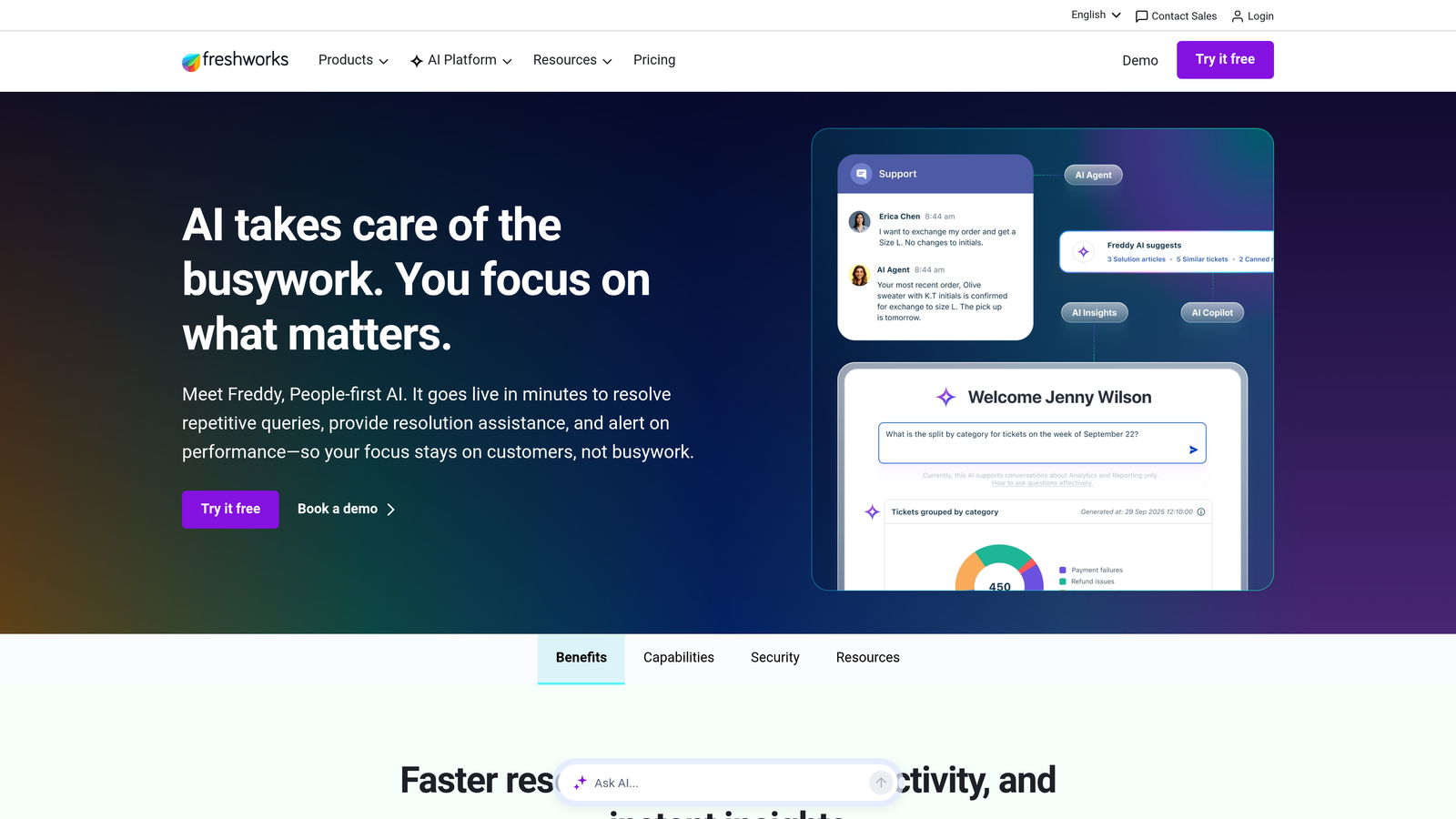
Freshdesk Freddy AI is Freshworks' AI layer across the Freshdesk helpdesk suite, offering agent assistance, self-service deflection, and AI-powered insights at SMB-friendly pricing.
Where This Tool Shines
Freddy's value proposition centers on accessibility. You get meaningful AI capabilities, including agent reply suggestions, ticket summarization, and deflection bots, at price points that don't require an enterprise budget. For teams that need to improve support efficiency without a major platform investment, Freshdesk Freddy is a practical starting point.
The omnichannel coverage across email, chat, phone, and social is solid for the price tier. Freddy's AI capabilities are generally considered less sophisticated than enterprise-tier competitors, but for SMB use cases with relatively straightforward support needs, the gap matters less than the cost difference.
Key Features
Freddy Copilot: Assists agents with reply suggestions and ticket summarization to speed up resolution times.
Freddy Self Service: Handles AI-driven deflection before tickets are created, reducing inbound volume.
Freddy Insights: Surfaces trend analysis and support performance reporting for team leads and managers.
Knowledge Base Integration: AI sources answers directly from your existing knowledge base content.
Omnichannel Support: Covers email, chat, phone, and social channels within a single platform.
Best For
SMBs and growing teams that want AI-assisted support without enterprise pricing. Works well for teams already using other Freshworks products like Freshsales or Freshchat.
Pricing
Freshdesk offers a free plan. Freddy AI features are available on the Growth plan at $15 per agent per month and above. Verify current tiers at freshworks.com.
5. Salesforce Agentforce
Best for: Enterprise teams deeply invested in Salesforce who need AI agents with full CRM context.
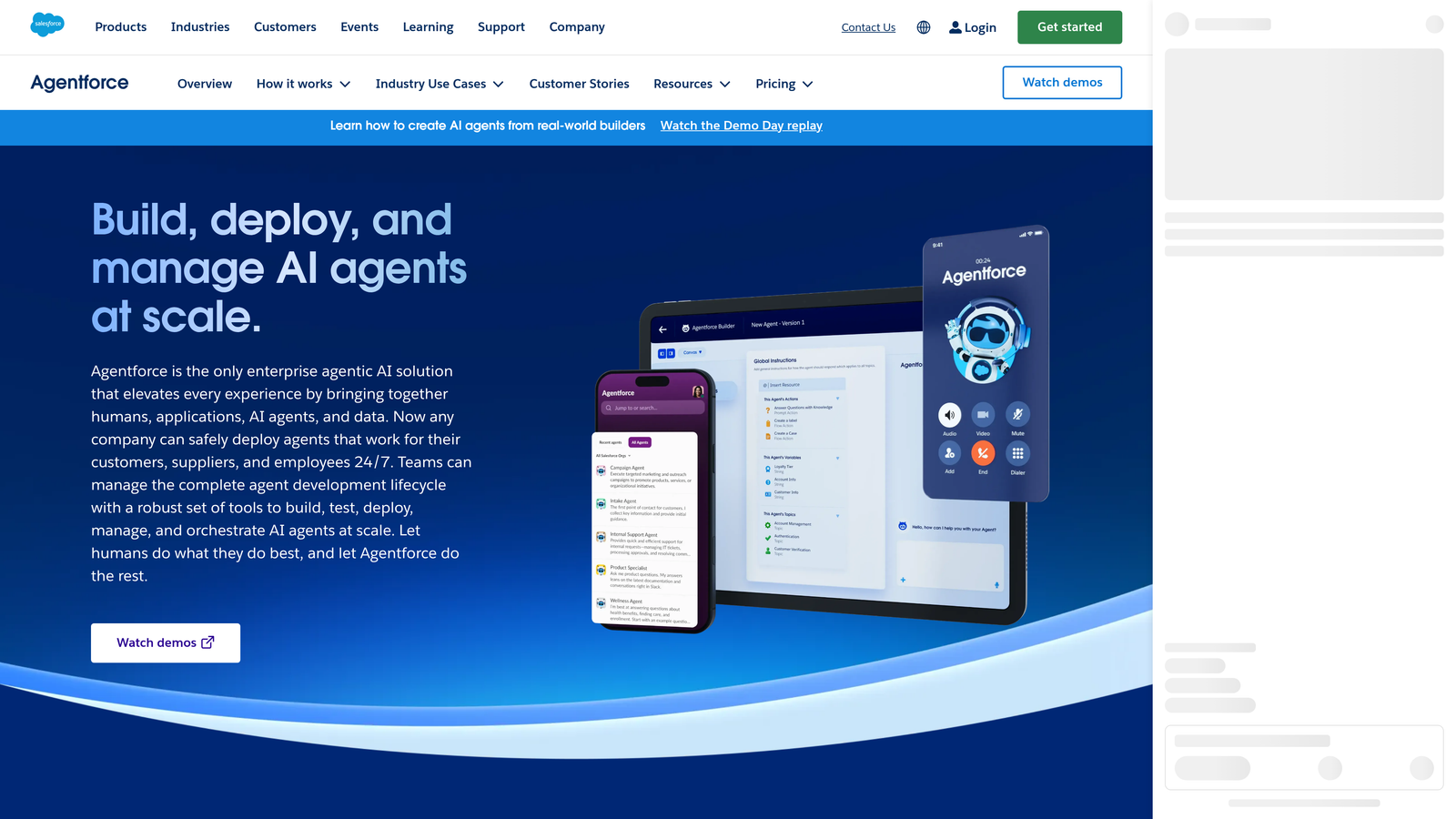
Salesforce Agentforce is Salesforce's autonomous AI agent platform that draws on native CRM data to deliver highly personalized customer service across Sales Cloud and Service Cloud.
Where This Tool Shines
The core differentiator here is CRM-native context. Agentforce agents don't just see the support ticket; they see the full customer relationship: account history, purchase records, open opportunities, and prior interactions across every channel. That depth of context enables more personalized, accurate responses than platforms working from a knowledge base alone.
Agentforce is also notable for executing actions, not just providing answers. It can update cases, trigger workflows, and complete transactions autonomously using Salesforce Flow. The tradeoff is implementation complexity. Getting Agentforce configured and performing well requires meaningful Salesforce expertise and investment.
Key Features
CRM-Native Context: AI agents access full customer history, account data, and purchase records from within Salesforce.
Autonomous Action Execution: Goes beyond answers to complete transactions, case updates, and workflow triggers.
Multi-Channel Deployment: Operates across web, mobile, and messaging platforms from a single configuration.
Einstein AI Foundation: Continuous model improvement powered by Salesforce's Einstein AI layer.
Salesforce Flow Integration: Deep workflow automation for complex, multi-step resolution paths.
Best For
Enterprises already running Salesforce as their CRM and Service Cloud as their support platform. Significant implementation investment required; not practical for teams outside the Salesforce ecosystem.
Pricing
Agentforce starts at $2 per conversation. Salesforce platform licensing is required in addition. Contact Salesforce for full pricing details.
6. Drift (Salesloft AI Conversations)
Best for: B2B revenue teams where support deflection and sales qualification happen in the same conversation.
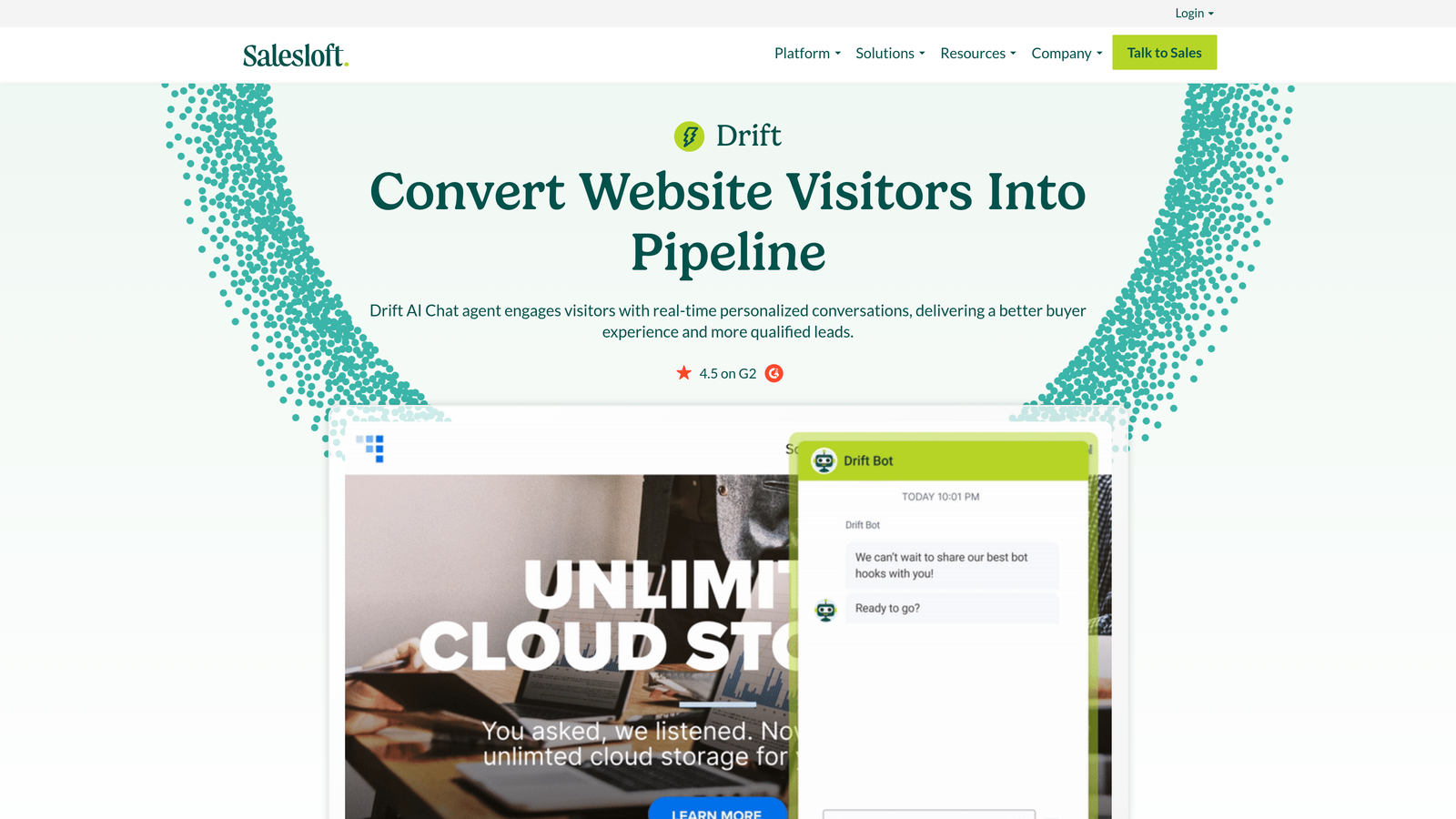
Drift, now part of Salesloft, is a conversational AI platform that blends support deflection with revenue-focused qualification, making it useful for B2B teams where support and sales overlap significantly.
Where This Tool Shines
Drift's positioning has shifted meaningfully since the Salesloft acquisition. The platform now sits within a broader revenue intelligence context, which makes it more relevant for teams where inbound chat serves both support and pipeline functions. If your support team frequently fields pre-sales questions or qualifies inbound leads, Drift's combination of deflection and buyer intent signals is genuinely useful.
The account-based routing capability, which matches conversations to the right rep or agent based on account data, is a practical feature for ABM-focused B2B teams. For pure support use cases without a revenue component, the fit is less compelling compared to dedicated support platforms.
Key Features
Dual-Purpose Conversational AI: Handles both support deflection and inbound lead qualification within a single chat interface.
Buyer Intent Signals: Surfaces real-time intent data to sales and support teams during active conversations.
Meeting Scheduling Automation: Embeds calendar booking directly into chat flows for seamless rep handoffs.
Account-Based Routing: Routes conversations to the right rep or agent based on account and contact data.
Salesloft Integration: Connects into Salesloft's broader revenue intelligence and engagement platform.
Best For
B2B teams where the boundary between support and sales is intentionally blurred. Less suited for teams that need a dedicated, pure-play support solution.
Pricing
Custom pricing. Contact Salesloft for current plans and packaging.
7. Ada CX
Best for: High-volume support teams that need an AI agent capable of executing transactions, not just answering questions.
Ada CX is an action-oriented AI customer service platform built around autonomous resolution, enabling agents to complete transactions and take real actions within customer accounts.
Where This Tool Shines
Ada's defining characteristic is its ability to act. Where many AI platforms stop at providing answers, Ada can process refunds, reset passwords, look up orders, and update subscription details autonomously. For SaaS and e-commerce teams handling high volumes of repetitive, transactional requests, that capability meaningfully reduces the tickets that require human intervention.
The no-code bot builder makes Ada accessible to non-technical teams, and the multilingual support across 50-plus languages is practical for global customer bases. Ada is less focused on business intelligence or product-aware context, so teams looking for deeper analytics or page-level guidance may find it limited in those areas.
Key Features
Action-Capable AI: Executes transactions including refunds, password resets, and subscription changes autonomously.
No-Code Bot Builder: Enables non-technical teams to build and modify AI flows without engineering support.
Multilingual Support: Handles conversations in 50-plus languages out of the box.
Pre-Built Integrations: Connects with Zendesk, Salesforce, Shopify, and other common platforms.
Complex Request Handling: AI reasoning engine manages multi-step requests that require conditional logic.
Best For
SaaS and e-commerce teams with high volumes of repetitive, transactional support requests where AI action execution creates the most value.
Pricing
Custom pricing based on conversation volume. Contact Ada directly for a quote at ada.cx.
8. Tidio Lyro AI
Best for: Startups and small businesses deploying their first AI support layer with minimal setup time.
Tidio Lyro AI is a conversational AI agent designed for fast deployment and accessible pricing, making it a practical entry point for teams building AI support capabilities for the first time.
Where This Tool Shines
Lyro's appeal is straightforwardness. You can get it running quickly by pointing it at your existing help content, and it handles common questions without requiring extensive configuration or technical setup. For early-stage teams that need to reduce support load without a major platform investment, that low friction matters.
The automatic escalation to human agents when the AI's confidence is low is a sensible safeguard for teams that can't afford to have an AI deliver poor answers at scale. Lyro's capabilities are more limited than enterprise platforms, but for teams just starting their AI support journey, it covers the essentials at a price that makes sense.
Key Features
Fast Deployment: Trains on your existing help content with minimal setup required.
Automatic Escalation: Hands off to human agents when the AI's confidence falls below threshold, reducing the risk of poor automated responses.
Unified Inbox: Combines live chat and AI in a single interface for agents.
E-Commerce Integrations: Native connections with Shopify and WooCommerce for product and order context.
Deflection Analytics: Dashboard tracking deflection rate and resolution quality to measure AI performance.
Best For
Startups, small businesses, and e-commerce teams deploying AI support for the first time. Not designed for enterprise-scale complexity or deep business intelligence needs.
Pricing
Lyro AI starts at $29 per month. A free plan is available for basic live chat. Confirm current tiers at tidio.com.
9. Kustomer
Best for: High-volume omnichannel support teams that need a unified customer timeline across every channel.
Kustomer, owned by Meta, is a CRM-native customer service platform with AI layered across a unified customer timeline, built for teams managing complex, multi-channel support at scale.
Where This Tool Shines
Kustomer's unified customer timeline is its most distinctive capability. Every interaction, regardless of channel, appears in a single chronological view: email, chat, SMS, social, and voice all consolidated without switching between tools or losing context. For teams managing customers who contact support through multiple channels over time, that unified view genuinely changes how agents can respond.
AI capabilities have expanded post-Meta acquisition, covering routing, suggested replies, and conversation summarization. The platform is better suited to teams handling significant volume across many channels than to smaller teams looking for lightweight AI deflection.
Key Features
Unified Customer Timeline: Aggregates all interactions across every channel into a single chronological view per customer.
AI-Powered Routing and Suggestions: Routes conversations intelligently and surfaces suggested replies to speed agent responses.
Omnichannel Coverage: Handles email, chat, SMS, social, and voice within a single platform.
Workflow Automation: Automates repetitive resolution paths to reduce manual agent work.
CRM Data Integration: Connects customer data into support context for personalized, informed responses.
Best For
High-volume B2B or B2C support teams managing complex, multi-channel customer relationships where a unified customer history is a meaningful operational advantage.
Pricing
Plans start around $89 per agent per month. Enterprise pricing is available. Confirm current pricing at kustomer.com.
Which Tool Is Right for Your Team?
The right AI customer service solution depends on where your team is today and what "better support" actually means for your business. Here's a quick way to think through the decision.
If you're a B2B SaaS team that has outgrown bolt-on AI: Halo AI's AI-first architecture, page-aware context, and business intelligence signals make it the strongest fit. It's built for teams where support, product experience, and customer health are interconnected rather than siloed.
If you're already running Intercom: Fin AI Agent is the natural next step. It adds autonomous resolution without requiring a platform change, and the usage-based pricing keeps cost aligned with actual value delivered.
If you're enterprise-scale with Salesforce at the center: Agentforce's CRM-native context is hard to replicate elsewhere. The implementation investment is real, but so is the depth of customer context available to your AI agents.
If you need action-capable AI at high volume: Ada CX handles transactional requests that most platforms only answer. For SaaS teams with repetitive, automatable support patterns, that distinction matters.
If you're just getting started: Tidio Lyro AI offers the fastest path to a working AI support layer without requiring enterprise budget or technical resources.
Your support team shouldn't scale linearly with your customer base. Let AI agents handle routine tickets, guide users through your product, and surface business intelligence while your team focuses on complex issues that need a human touch. See Halo in action and discover how continuous learning transforms every interaction into smarter, faster support.