9 Top AI Helpdesk Platforms Transforming Customer Support in 2026
Discover the top AI helpdesk platforms transforming B2B customer support in 2026, from fully autonomous ticket resolution systems to AI-enhanced traditional helpdesks. This guide evaluates nine leading solutions across key criteria including AI autonomy, integration depth, live agent handoff, and pricing—helping support teams scale efficiently without proportional headcount growth.
 Matt PattoliFounder12 min read
B2B teams are under more pressure than ever to resolve tickets faster, cut support costs, and scale without hiring in lockstep with growth. The good news: AI helpdesk platforms have come a long way from basic chatbots. Today's best tools can autonomously resolve tickets, detect bugs, hand off to live agents intelligently, and surface business intelligence from support data that would otherwise go unnoticed.
This list covers platforms worth evaluating in 2026, spanning AI-first architectures built for autonomous resolution and established helpdesks that have layered AI onto proven workflows. Whether you're replacing an existing helpdesk, augmenting it, or building a support stack from scratch, this guide will help you find the right fit.
Each platform was evaluated on AI autonomy, integration depth, ease of deployment, live agent handoff capabilities, and pricing transparency.
1. Halo AI
Best for: B2B SaaS teams that want AI-first autonomous support with deep product context
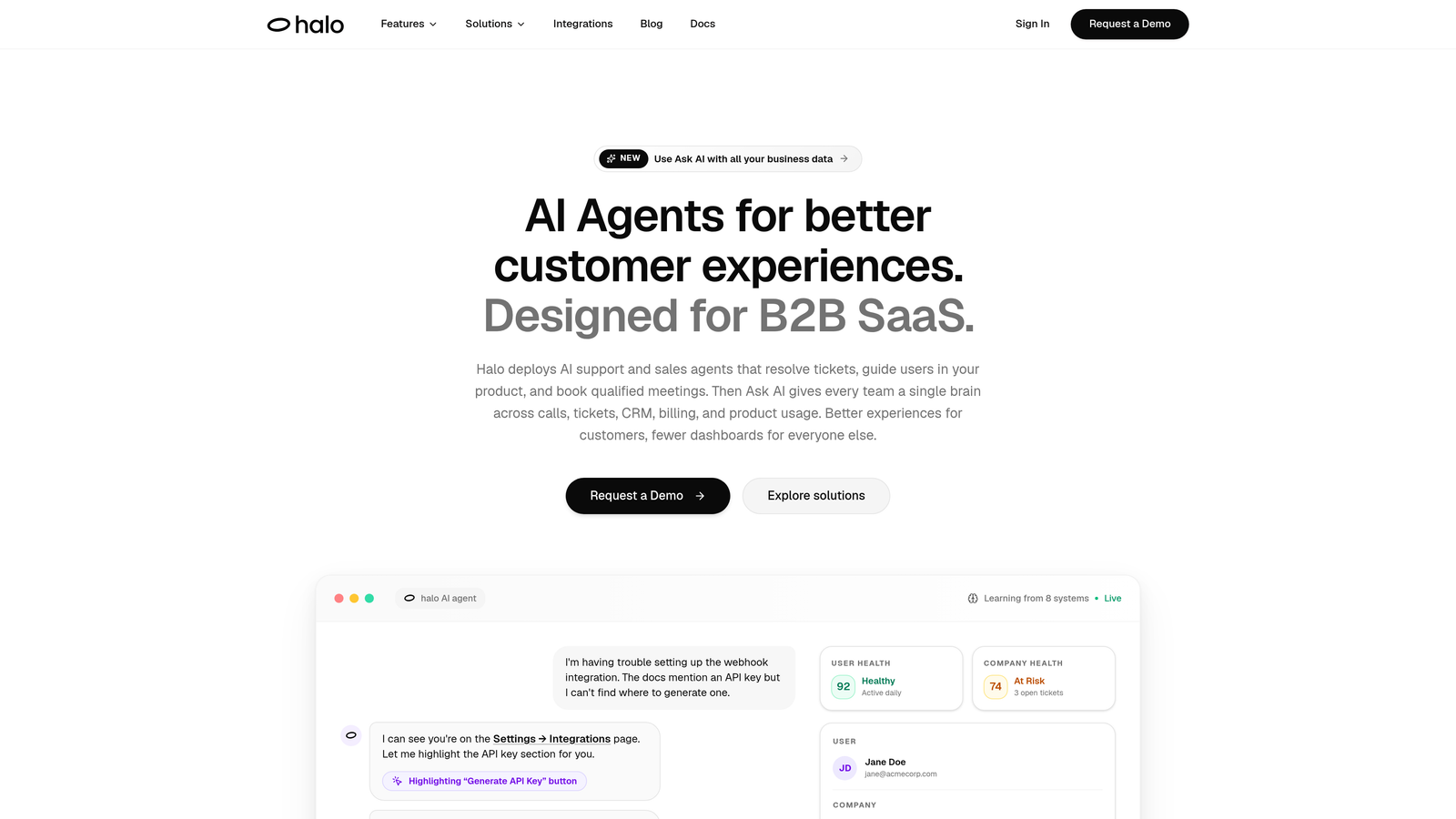
Halo AI is an AI-first customer support platform designed specifically for B2B SaaS teams who want AI agents that genuinely resolve tickets rather than just deflect them.
Where This Tool Shines
Halo's most distinctive capability is its page-aware chat widget. Unlike standard chat tools that respond to text alone, Halo's AI sees the exact page and UI state a user is on, enabling precise in-product guidance rather than generic instructions. This is particularly valuable for SaaS products with complex workflows where "go to Settings" means something different depending on where the user already is.
Beyond ticket resolution, Halo surfaces business intelligence from support interactions: customer health signals, revenue intelligence, and anomaly detection. Your support data stops being a cost center and starts informing product, sales, and customer success decisions. The auto bug ticket creation feature routes issues directly to engineering tools like Linear, closing the loop between customer-reported problems and engineering queues without manual handoffs.
Key Features
Page-Aware Chat Widget: The AI sees what users see on screen, enabling contextually accurate in-product guidance that generic chatbots cannot match.
Autonomous AI Agents: Continuously learn from every resolved interaction, improving accuracy and resolution rates over time without manual retraining.
Smart Inbox with Business Intelligence: Surfaces customer health signals, revenue intelligence, and anomaly detection directly from support data.
Auto Bug Ticket Creation: Automatically generates and routes bug reports to engineering tools like Linear, eliminating manual triage for technical issues.
Live Agent Handoff: Escalates complex issues to human agents with full conversation context preserved, so agents never start from scratch.
Deep Integrations: Connects to Linear, Slack, HubSpot, Intercom, Stripe, Zoom, PandaDoc, and Fathom, bridging support with the broader business stack.
Best For
B2B SaaS teams building or rebuilding their support stack from scratch, particularly those who want AI as the primary responder rather than an add-on. Also a strong fit for product teams that want support data feeding directly into bug tracking and product intelligence workflows.
Pricing
Visit haloagents.ai for current pricing. Verify directly, as plans evolve with the platform.
2. Zendesk
Best for: Enterprise teams that need a proven, scalable helpdesk with broad AI augmentation
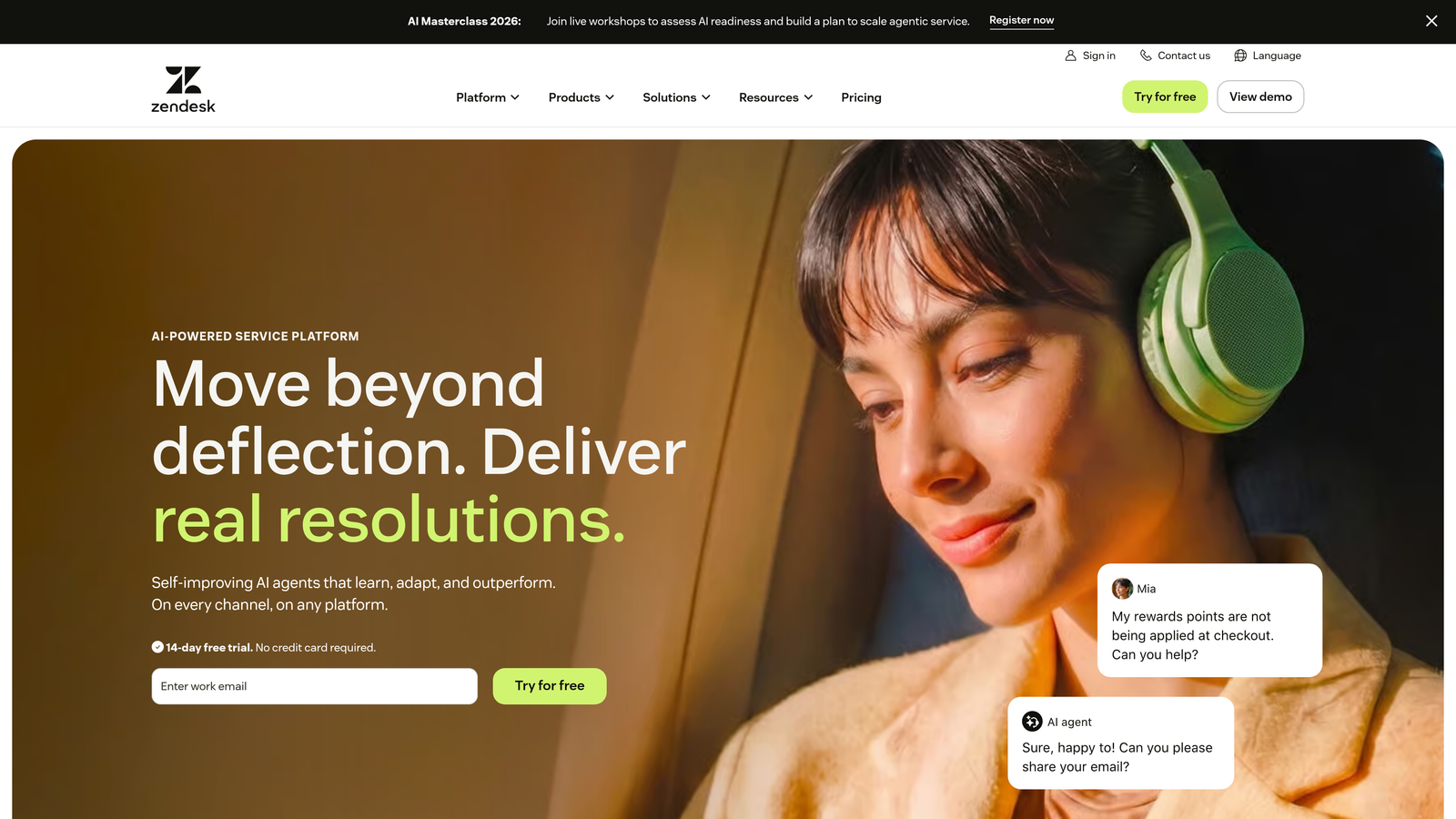
Zendesk is one of the most established names in customer support, with AI capabilities layered across its Suite product through Zendesk AI.
Where This Tool Shines
Zendesk's strength is its maturity. Enterprises with complex compliance requirements, multi-region deployments, and large agent teams will find robust SLA management, reporting, and security controls that newer platforms are still building toward. The app marketplace with over 1,000 integrations means it connects to virtually any tool in your stack.
The AI layer, built in partnership with OpenAI, adds intelligent triage, suggested replies, and macro suggestions on top of the existing workflow. It's AI as an accelerant to human agents rather than a replacement architecture. Teams already invested in Zendesk can layer AI in without a platform migration.
Key Features
Zendesk AI: Covers intelligent triage, suggested replies, and macro suggestions, available as an add-on to existing Suite plans.
Extensive App Marketplace: Over 1,000 integrations spanning CRMs, analytics tools, e-commerce platforms, and developer tools.
Enterprise-Grade Compliance: Robust SLA management, audit logs, and security controls suited for regulated industries.
Omnichannel Support: Handles email, chat, voice, social, and messaging from a unified agent workspace.
Best For
Enterprise teams with established support operations, compliance requirements, and large agent workforces. Also a strong choice for organizations already using Zendesk who want to add AI without switching platforms.
Pricing
Suite Team plans typically start around $55/agent/month; AI features are priced as a separate add-on. Verify current pricing at zendesk.com.
3. Intercom
Best for: Product-led SaaS teams that blend support with in-app messaging and onboarding
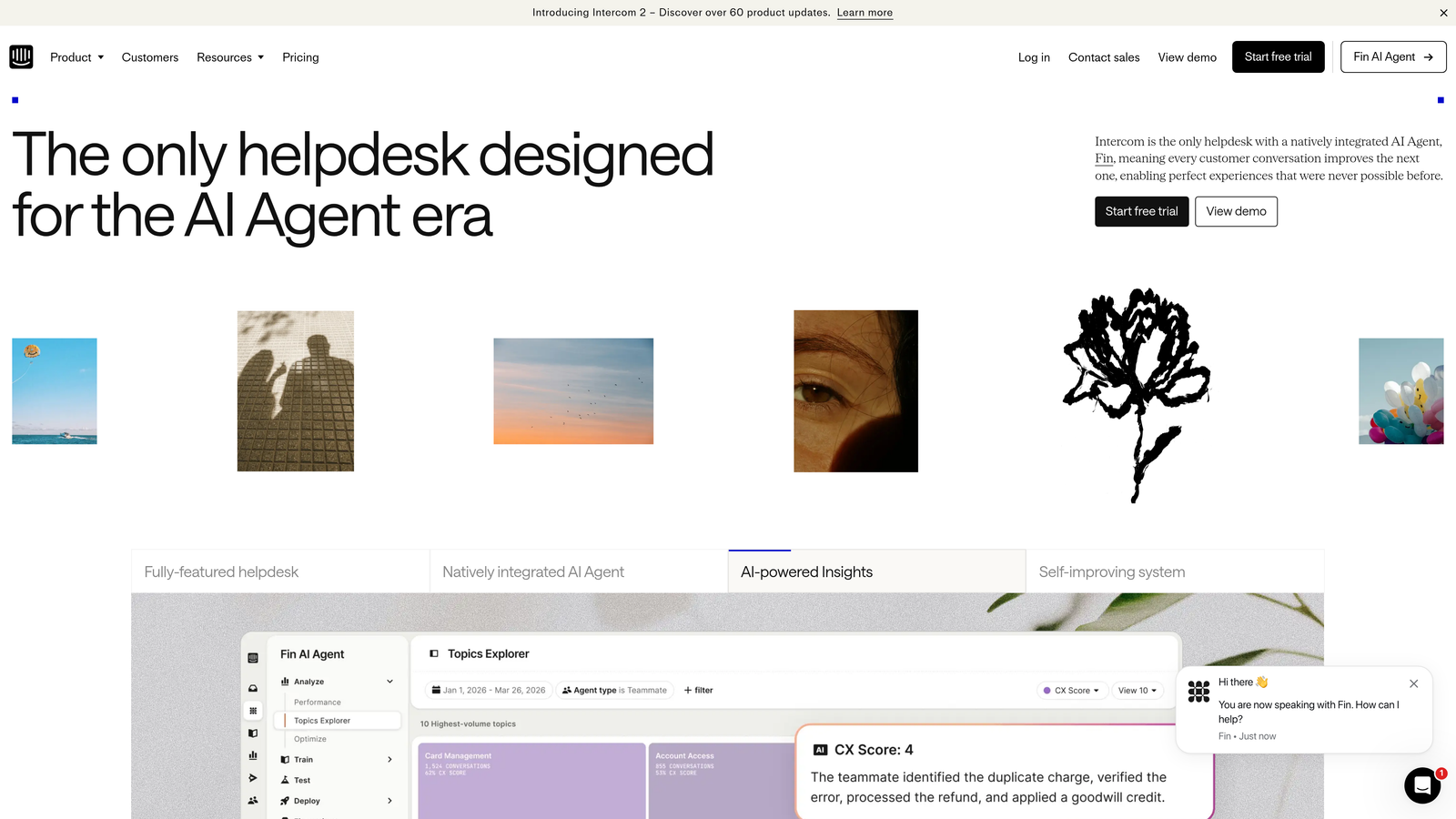
Intercom is a customer communications platform that combines support, product messaging, and AI resolution through its Fin AI agent.
Where This Tool Shines
Intercom's real differentiation is how tightly it ties support to the product experience. In-app messaging, onboarding flows, and product tours live alongside the support inbox, making it particularly powerful for product-led growth companies where the line between support and activation is blurry. Fin AI, trained on your knowledge base and connected content, handles common queries autonomously before they reach a human agent.
For teams that want one platform managing both user communication and support, Intercom reduces the tool sprawl that comes with stitching separate systems together. The tradeoff is that it's less focused on deep technical support workflows compared to dedicated helpdesks.
Key Features
Fin AI Agent: Trained on your knowledge base for autonomous query resolution, with human handoff when needed.
In-App Messaging and Product Tours: Combines onboarding flows and support in a single platform, reducing tool sprawl.
AI-Assisted Inbox: Human agents get reply suggestions and conversation summaries to speed up responses.
Conversation Routing and Tagging: Automates ticket classification and assignment based on content and context.
Best For
Product-led SaaS companies that want support and in-app messaging under one roof. Teams that are already using Intercom for product communication and want to extend it into support without adding another platform.
Pricing
Tiered plans with Fin AI charged per resolution in some configurations. Verify current pricing at intercom.com.
4. Freshdesk
Best for: Mid-market teams seeking competitive pricing with solid AI automation across the full support lifecycle
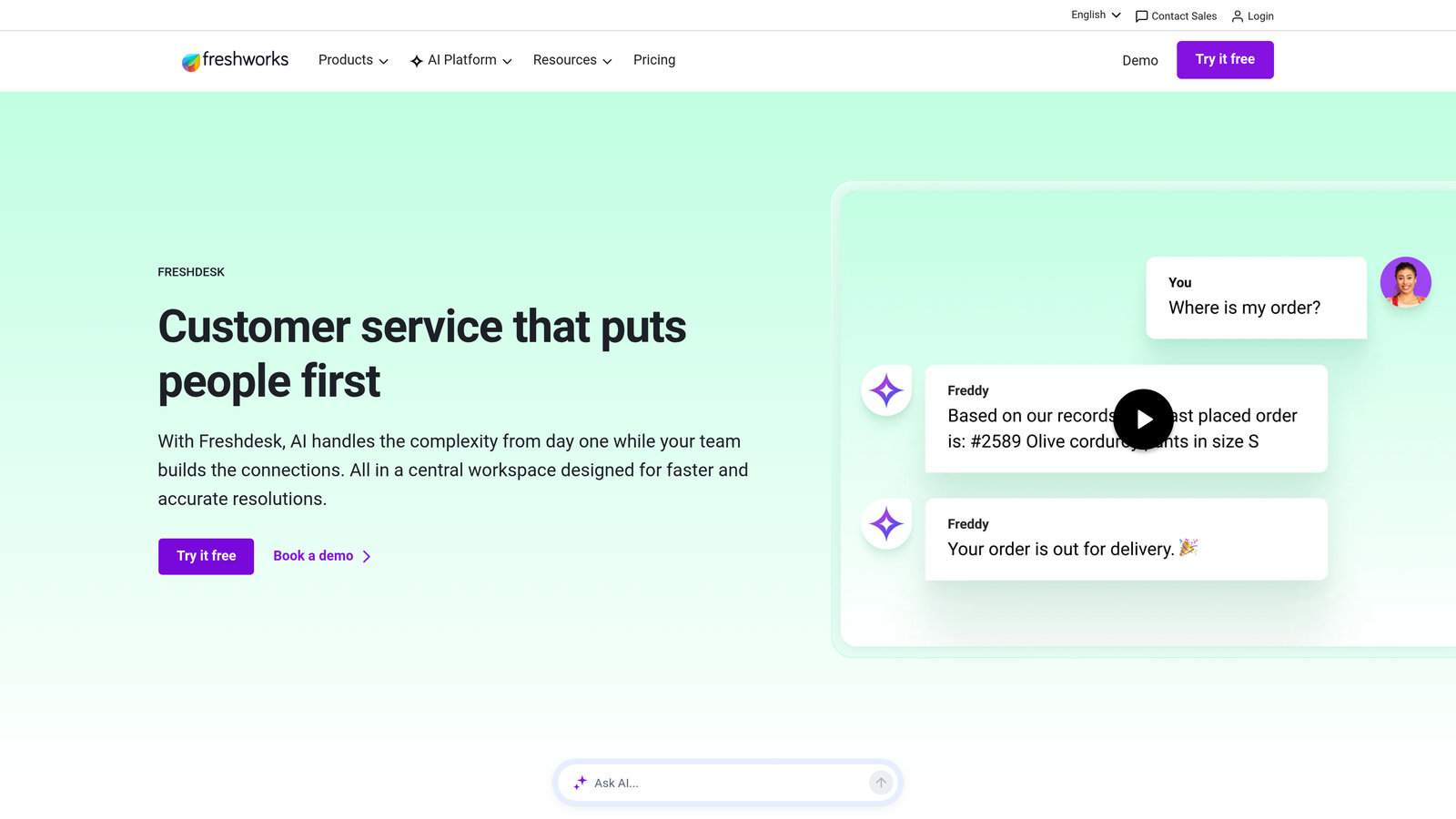
Freshdesk is a mid-market helpdesk from Freshworks, with Freddy AI powering automation across ticketing, self-service, and analytics.
Where This Tool Shines
Freshdesk hits a sweet spot on value. The free tier makes it accessible for early-stage teams, and the paid tiers scale affordably into mid-market territory. Freddy AI covers three distinct use cases: Freddy Copilot assists human agents with suggested replies and summarization, Freddy Self Service handles customer-facing deflection, and Freddy Insights surfaces analytics and trend detection for support managers.
Teams already using other Freshworks products like Freshsales or Freshservice will find that the ecosystem integrates cleanly, reducing the friction of managing multiple vendor relationships.
Key Features
Freddy Copilot: Provides agents with AI-generated reply suggestions and conversation summarization to speed up resolution.
Freddy Self Service: Customer-facing AI deflection that handles common queries before they create tickets.
Freddy Insights: Analytics layer that detects trends and surfaces actionable data for support managers.
Omnichannel Coverage: Handles email, phone, chat, and social media from a unified inbox.
Best For
Mid-market teams that want capable AI features without enterprise pricing. Also a natural fit for teams already using other Freshworks products who want a unified vendor relationship.
Pricing
Free tier available; Growth plan typically starts around $15-18/agent/month with AI features available in higher tiers. Verify current pricing at freshdesk.com.
5. Tidio
Best for: SMBs and e-commerce teams that need fast deployment and conversational AI without a long setup process
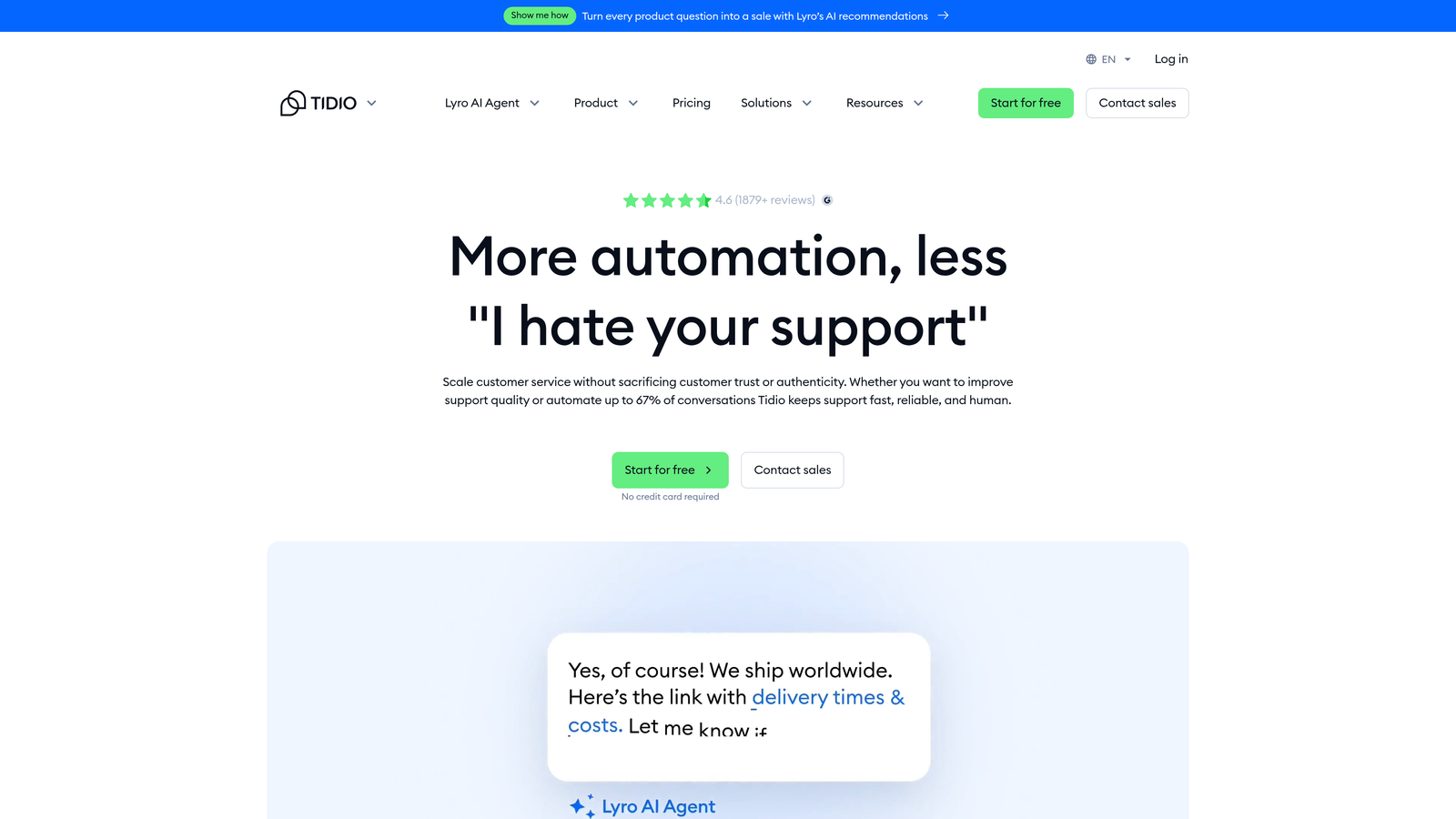
Tidio is a live chat and AI customer service platform designed for fast deployment, popular with small businesses and e-commerce teams.
Where This Tool Shines
Tidio's standout quality is time-to-value. Teams can get a working AI chat widget deployed in hours rather than weeks, with Lyro AI handling conversational support autonomously out of the box. The fallback to live chat agents is seamless, so customers don't experience jarring handoffs when the AI reaches its limits.
E-commerce integrations with Shopify and WooCommerce make it easy to surface order-related context in conversations. It's not the deepest platform on this list for complex B2B workflows, but for teams that need something working quickly without heavy IT involvement, Tidio delivers.
Key Features
Lyro AI Agent: Handles conversational support autonomously, trained on your content, with smooth escalation to human agents.
Quick Deployment: Minimal technical requirements mean most teams can go live without engineering support.
E-Commerce Integrations: Native connections to Shopify and WooCommerce for order-aware support conversations.
Free Tier: Available for teams starting out, with paid plans unlocking higher AI conversation volumes.
Best For
SMBs, e-commerce brands, and early-stage teams that prioritize speed of deployment over deep customization. Not the best fit for enterprise B2B teams with complex ticketing workflows or compliance requirements.
Pricing
Free tier available; Lyro AI included on paid plans. Verify current pricing at tidio.com.
6. Help Scout
Best for: Teams that prioritize human empathy and agent effectiveness over full automation
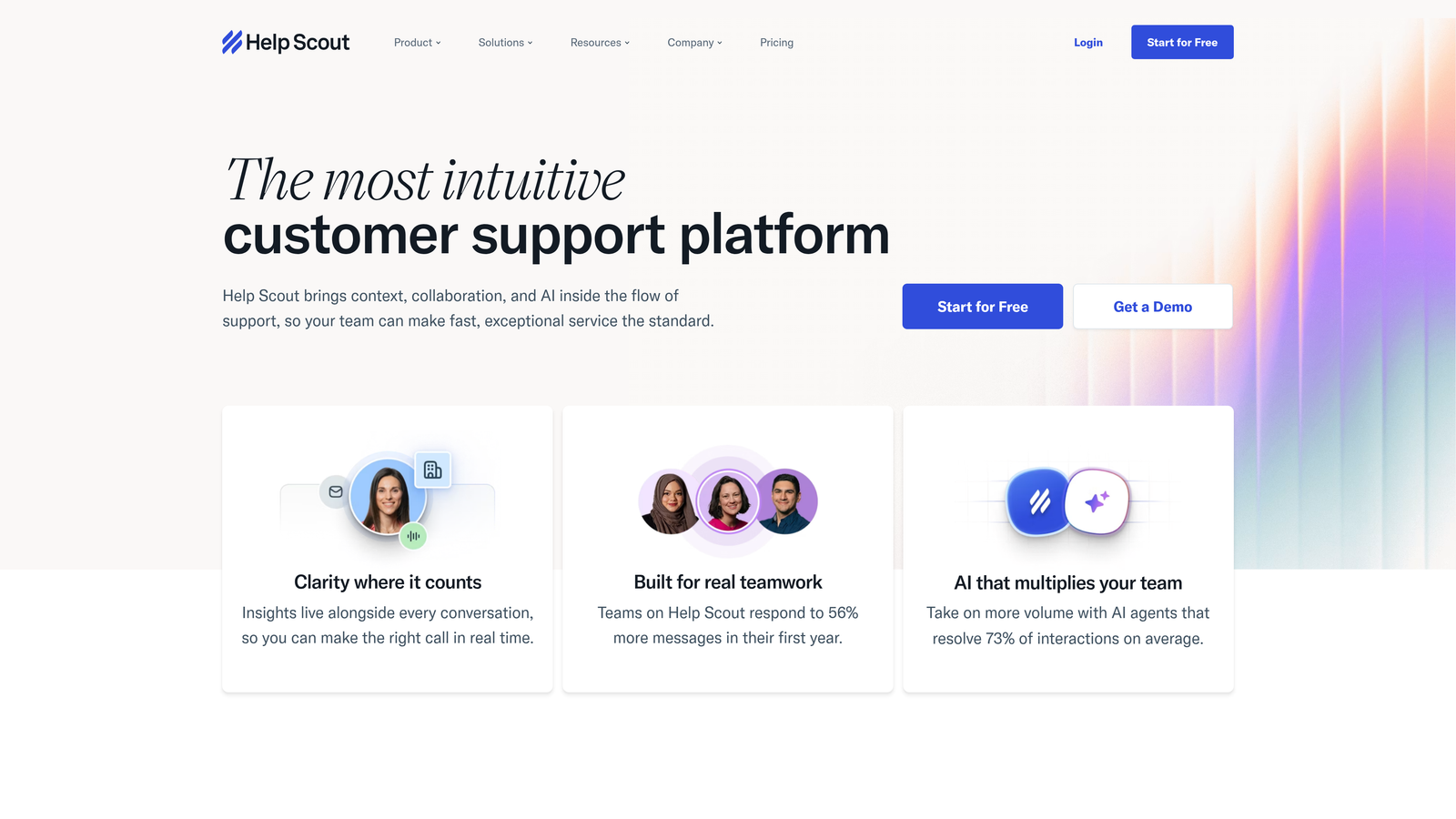
Help Scout is a human-centered helpdesk that uses AI to make agents faster and more effective, rather than replacing them entirely.
Where This Tool Shines
Help Scout has a clear and deliberate philosophy: AI should amplify human agents, not eliminate them. This shows up in features like AI Drafts, which generates reply suggestions for agents to review and send rather than firing off autonomous responses. The result is a tool that maintains brand voice and customer empathy while reducing the cognitive load on support teams.
For teams where support quality and relationship-building are core to the brand, this approach is genuinely valuable. The interface is clean and intuitive, and the Summarize feature that condenses long conversation threads is a practical time-saver for agents inheriting tickets mid-conversation.
Key Features
AI Drafts: Generates reply suggestions for agents to review and approve, keeping humans in the loop on every response.
Summarize: Condenses long conversation threads instantly, helping agents get up to speed without reading every message.
AI Answers: Self-service responses powered by your documentation, reducing inbound ticket volume.
Clean Shared Inbox: Intuitive interface focused on collaboration and clarity for support teams.
Best For
Teams where brand voice, customer empathy, and relationship quality matter as much as resolution speed. A strong choice for companies in industries where customers expect a human touch, even in support interactions.
Pricing
Standard plan typically starts around $20-25/user/month. Verify current pricing at helpscout.com.
7. Kustomer
Best for: High-volume support orgs managing complex, multi-touchpoint customer relationships
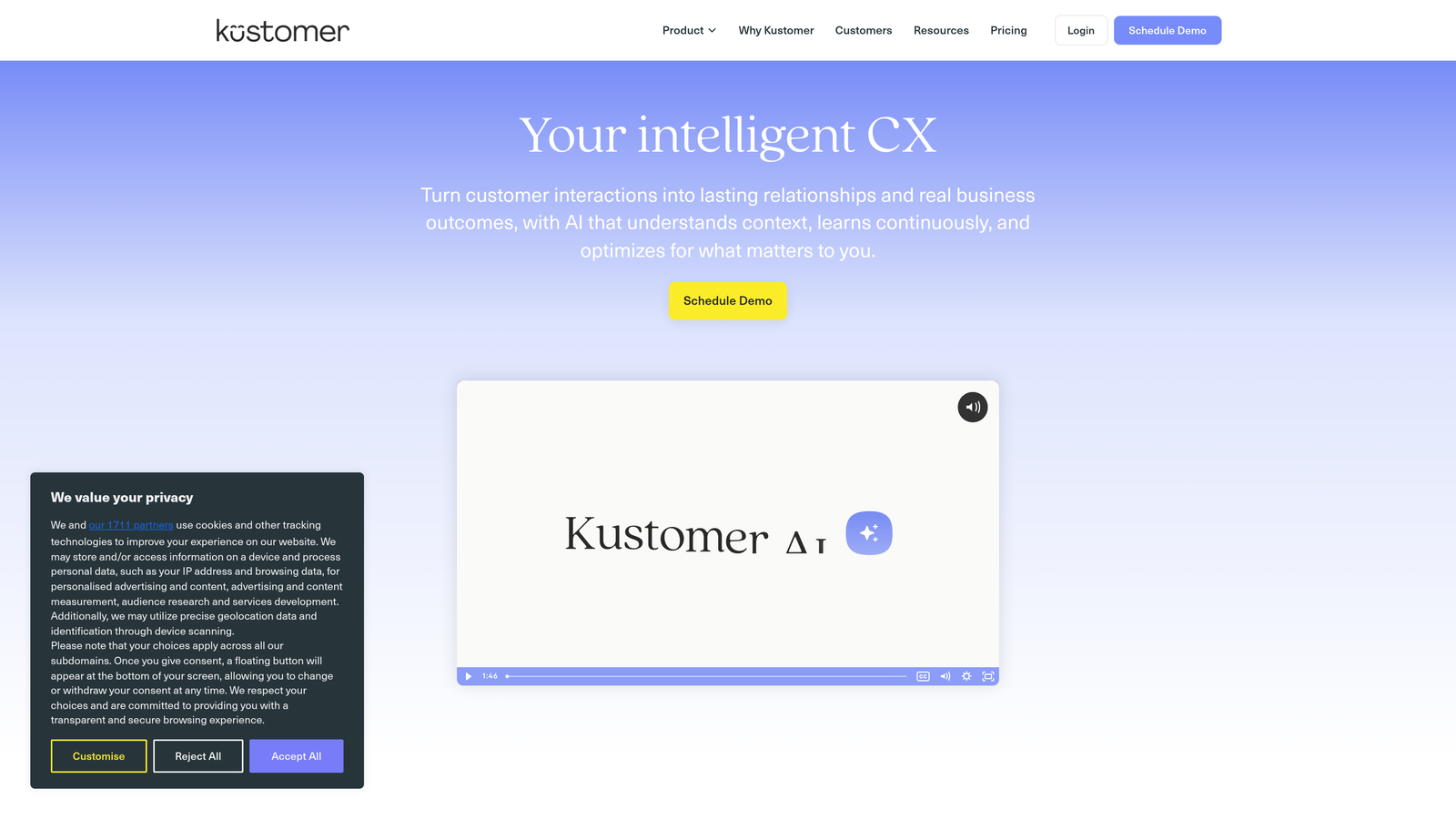
Kustomer is a CRM-native helpdesk that unifies every customer interaction into a single timeline, with AI powering routing and resolution.
Where This Tool Shines
Kustomer's unified customer timeline is its defining feature. Every interaction across every channel, from email and chat to social and phone, appears in a single chronological view. For support teams managing customers with complex histories, this eliminates the context-switching and tab-juggling that slows agents down and leads to repetitive questions that frustrate customers.
The built-in CRM component also reduces the need for a separate customer data tool, which can simplify the stack for teams that currently maintain both a helpdesk and a CRM just to get a complete customer picture.
Key Features
Unified Customer Timeline: Every interaction across all channels consolidated into a single view, giving agents complete context instantly.
AI-Powered Routing: Intelligent routing and suggested responses based on conversation content and customer history.
Workflow Automation: Handles complex, multi-step support processes without manual intervention.
Built-In CRM: Reduces the need for a separate customer data platform by combining support and relationship data.
Best For
Support organizations managing high volumes of complex, relationship-heavy interactions where full customer context is essential to every conversation. Less suited for teams that primarily handle simple, transactional queries.
Pricing
Enterprise pricing; contact Kustomer directly for a quote. Verify at kustomer.com.
8. Forethought
Best for: Enterprises that want AI capabilities layered onto an existing helpdesk without platform migration
Forethought is an AI layer that sits on top of existing helpdesks like Zendesk and Salesforce, adding intelligent triage, deflection, and agent assistance without requiring organizations to change their core platform.
Where This Tool Shines
Forethought's value proposition is clear: you've already invested in Zendesk, Salesforce Service Cloud, or ServiceNow, and you're not ready to rip and replace. Forethought adds AI capabilities on top of what you have, covering three distinct layers: Triage for automatic routing and tagging, Solve for AI deflection before a ticket is even created, and Assist for real-time suggestions surfaced to human agents during conversations.
This architecture is particularly appealing for enterprises where a platform migration would require months of change management, retraining, and data migration. Forethought extends the life and capability of existing investments.
Key Features
Triage: Automatically routes and tags incoming tickets based on content, intent, and historical patterns.
Solve: AI deflection that answers customer queries before a ticket is created, reducing inbound volume.
Assist: Surfaces real-time AI suggestions to human agents during live conversations.
Multi-Platform Compatibility: Works with Zendesk, Salesforce Service Cloud, ServiceNow, and other enterprise helpdesks.
Best For
Large enterprises with significant existing helpdesk investments who want AI capabilities without the disruption and cost of a full platform migration. Not the right fit for teams starting fresh or looking for a standalone helpdesk.
Pricing
Enterprise pricing; contact Forethought directly for a quote. Verify at forethought.ai.
9. Gorgias
Best for: E-commerce brands, particularly Shopify merchants, with high volumes of order-related support
Gorgias is a helpdesk built specifically for e-commerce brands, with deep Shopify integration and AI automation for order-related support queries.
Where This Tool Shines
Gorgias is purpose-built for a specific problem: e-commerce support teams drowning in "where is my order?" and "how do I return this?" tickets. Order data, return status, and purchase history surface directly within tickets, so agents never need to switch tabs to look up customer information. AI automation handles the most repetitive order queries at scale, freeing agents for higher-complexity issues.
The revenue-aware reporting is a genuinely useful differentiator: it connects support activity to retention and revenue metrics, helping support teams demonstrate their business impact rather than just reporting on ticket volume.
Key Features
Native E-Commerce Integrations: Deep connections to Shopify, BigCommerce, and Magento with order data surfaced directly in tickets.
AI Order Query Automation: Handles high-volume, repetitive order-related queries autonomously at scale.
Revenue Reporting: Connects support activity to retention and revenue metrics for business impact visibility.
Macros and Rules: Enables fast, consistent agent responses for common scenarios without full automation.
Best For
E-commerce brands with high support volumes, particularly those on Shopify. Less relevant for B2B SaaS teams or service businesses without transactional order workflows.
Pricing
Usage-based pricing tied to ticket volume. Verify current pricing at gorgias.com.
Which Platform Is Right for Your Team?
The right AI helpdesk depends heavily on your architecture preference, team size, and where support fits in your broader business strategy. Here's a quick orientation by use case.
AI-first B2B SaaS teams: Halo AI is the strongest fit for teams that want autonomous resolution, page-aware product guidance, and business intelligence built in from day one rather than bolted on later.
Enterprise teams with existing infrastructure: Zendesk remains the default for large organizations that need proven compliance, SLA management, and a deep integration ecosystem. Forethought is worth evaluating if you want AI without migrating off Zendesk or Salesforce.
Product-led SaaS companies: Intercom makes the most sense when support and in-app messaging need to live in the same platform, particularly for teams where activation and retention are tightly linked to the support experience.
Mid-market teams watching budget: Freshdesk delivers competitive AI capabilities at a price point that works for growing teams that aren't ready for enterprise contracts.
Empathy-first support organizations: Help Scout is the clear choice for teams where brand voice and human judgment matter in every interaction.
CRM-heavy support orgs: Kustomer's unified timeline makes it the natural fit for teams managing complex, multi-touchpoint customer relationships.
SMBs that need speed: Tidio gets you to a working AI chat deployment faster than any other platform on this list.
E-commerce brands: Gorgias is the purpose-built answer for Shopify merchants and high-volume order support teams.
Your support team shouldn't scale linearly with your customer base. Let AI agents handle routine tickets, guide users through your product, and surface business intelligence while your team focuses on complex issues that need a human touch. See Halo in action and discover how continuous learning transforms every interaction into smarter, faster support.