9 Top Customer Service AI Solutions for B2B Teams in 2026
This guide evaluates nine top customer service AI solutions purpose-built for B2B SaaS teams in 2026, ranking each platform across autonomous resolution depth, integration ecosystem quality, adaptive learning, and business intelligence — giving support managers and product leaders a clear framework for choosing the right AI-first support platform for how they actually work.
 Matt PattoliFounder13 min read
Customer service AI has crossed a threshold. The question for B2B SaaS teams is no longer "should we use AI for support?" but "which platform is actually built for how we work?" The shift from AI as a chatbot add-on to AI as the primary resolution layer has changed what good looks like, and the tools that led the market two years ago aren't necessarily the right fit today.
This list focuses on platforms evaluated across four criteria: depth of autonomous resolution, integration ecosystem quality, how the AI learns over time, and whether the platform delivers intelligence beyond basic support metrics. It's built for B2B SaaS teams, product leaders, and support managers who need more than a ticketing upgrade.
Whether you're evaluating an AI-first architecture or looking to layer intelligence onto an existing helpdesk like Zendesk or Intercom, the tools below cover the full spectrum of what's available in 2026.
1. Halo AI
Best for: B2B SaaS teams that want AI-first support with deep product context and business intelligence.
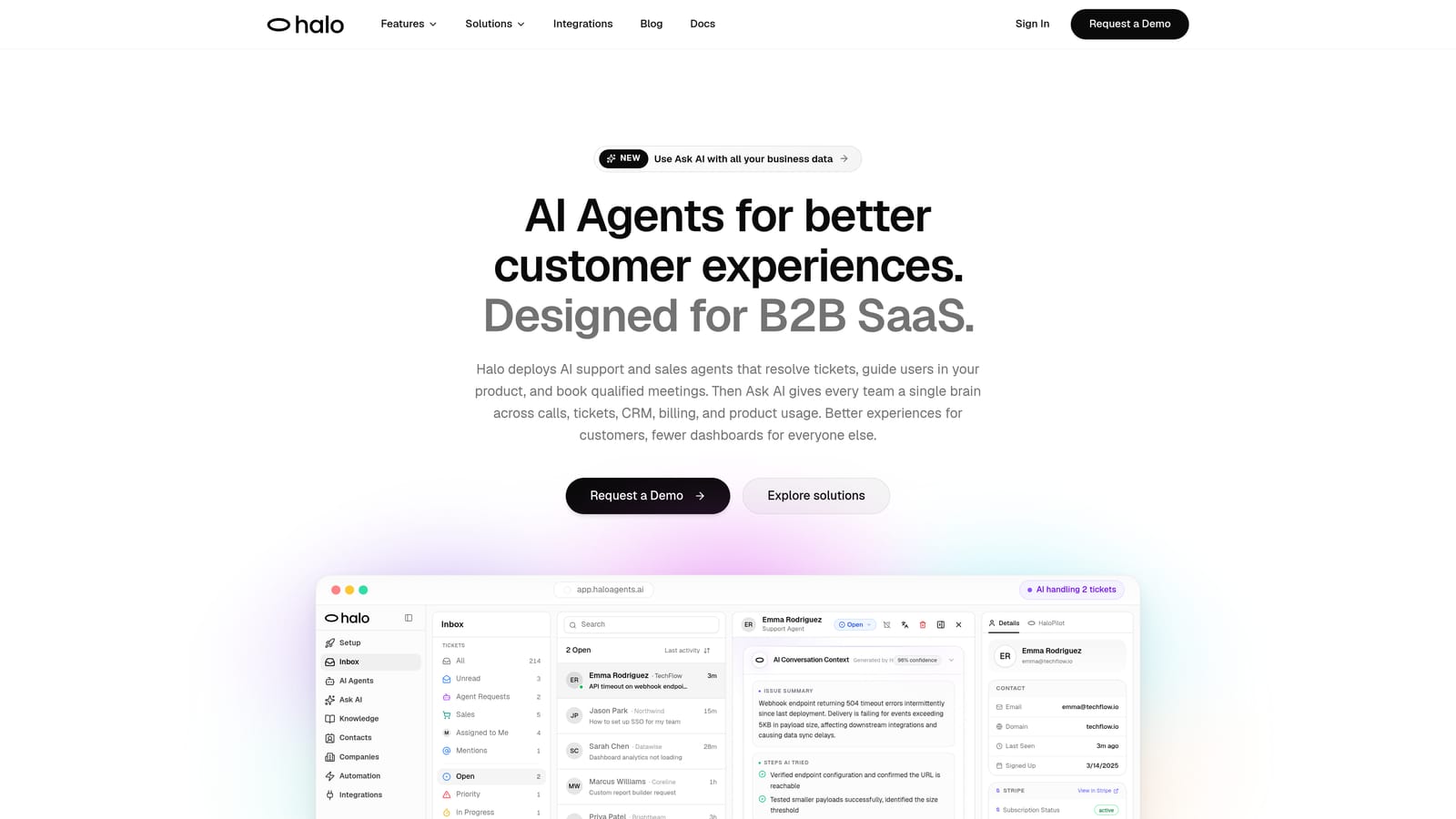
Halo AI is an AI-first customer support platform built from the ground up for B2B SaaS teams, not a chatbot layer bolted onto a legacy helpdesk.
Where This Tool Shines
Most AI support tools know what a user typed. Halo knows what they're looking at. Its page-aware chat widget sees the exact page and UI state a user is on, allowing the AI agent to provide contextual visual guidance rather than generic answers. That distinction matters enormously in SaaS products where the same question means something completely different depending on where in the app it's asked.
Beyond ticket resolution, Halo's smart inbox surfaces business intelligence that most support platforms simply don't capture: customer health signals, revenue anomalies, and product feedback trends. Support stops being a cost center and starts generating signals that feed product and revenue teams.
Key Features
Page-Aware Chat Widget: The AI sees what the user sees, delivering contextual guidance tied to the specific page and product state rather than generic knowledge base answers.
Smart Inbox with Business Intelligence: Surfaces customer health signals, revenue anomalies, and product feedback trends directly within the support workflow.
Auto Bug Ticket Creation: Automatically generates bug reports and routes them to Linear or connected developer tools without requiring manual triage.
Live Agent Handoff with Context Preservation: When escalation is needed, the full conversation context transfers to the human agent seamlessly, eliminating the frustrating "please repeat your issue" experience.
Continuous Learning: Every resolved interaction feeds back into the model, meaning Halo gets measurably smarter the longer it runs on your product.
Integration Ecosystem: Native connections to Linear, Slack, HubSpot, Intercom, Stripe, Zoom, PandaDoc, and Fathom, covering the full B2B SaaS stack.
Best For
Product-led SaaS companies that need AI support agents to understand product context, not just text. Particularly strong for teams where support, product, and engineering need to share signals, and for organizations that want their support layer to generate business intelligence rather than just close tickets.
Pricing
Contact for pricing. Halo is positioned for B2B SaaS teams and enterprise product organizations. Visit haloagents.ai to get a demo and discuss your specific use case.
2. Intercom
Best for: Teams that want a polished, mature AI agent with a strong human-agent inbox experience.
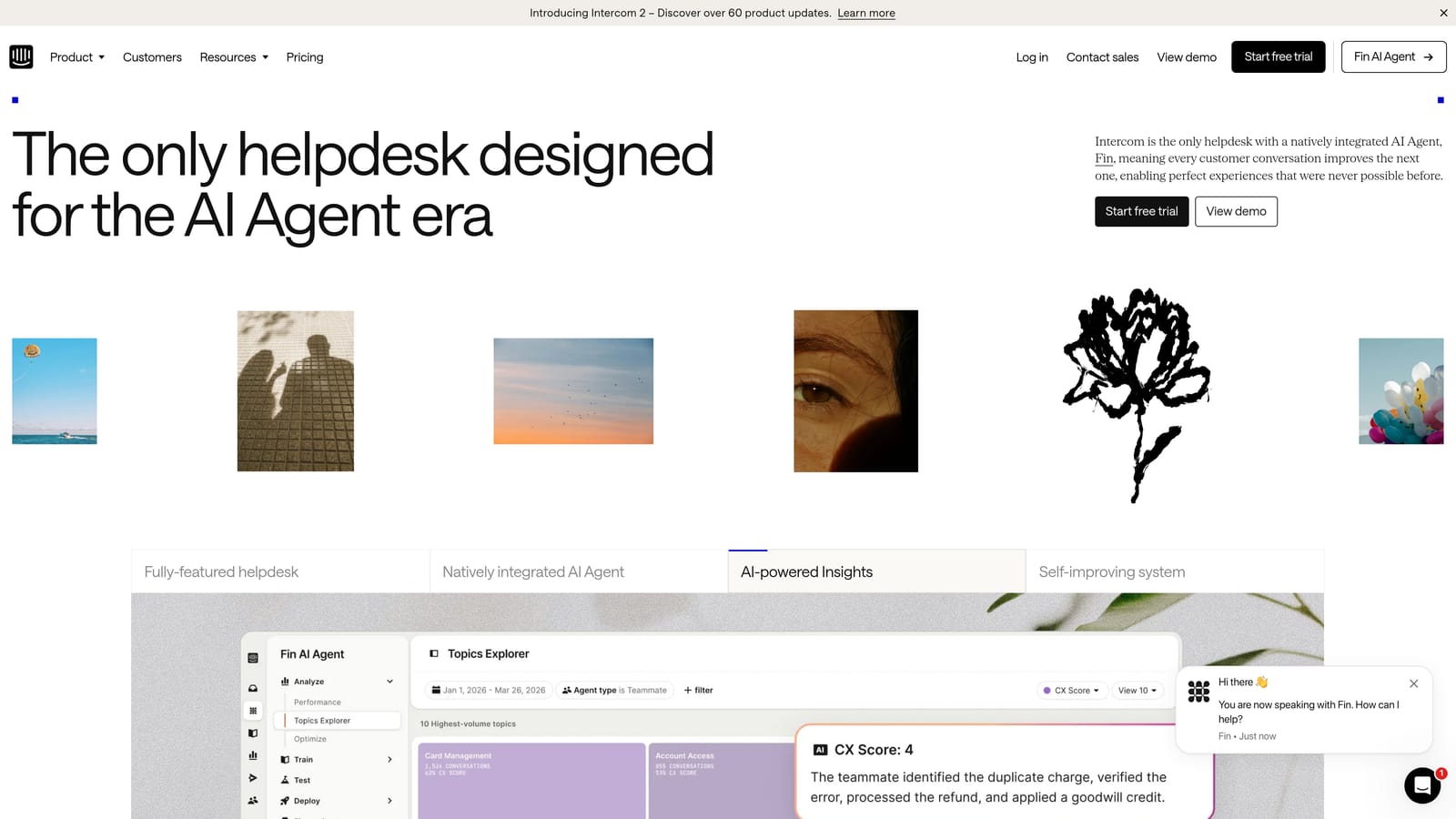
Intercom is a customer messaging platform with Fin, its LLM-powered AI agent, handling a wide range of support queries using connected knowledge bases and content sources.
Where This Tool Shines
Intercom's greatest strength is the seamlessness between its AI and human layers. Fin handles queries autonomously, but when escalation is needed, the handoff into Intercom's inbox is smooth, and agents have full conversation context. The product design is genuinely excellent, which matters when you're asking support teams to live in a tool all day.
The developer ecosystem is also a real asset. Intercom integrates with a broad range of third-party tools and has a well-documented API, making it adaptable to complex support stacks. Its built-in customer data layer gives agents useful context without requiring a separate CRM lookup.
Key Features
Fin AI Agent: Resolves queries autonomously using your knowledge base, connected content, and conversation history.
AI-to-Human Handoff: Smooth escalation workflow within a polished inbox UI that agents actually enjoy using.
Developer Ecosystem: Strong third-party integrations and a well-maintained API for custom workflows.
Built-in Customer Data Platform: Conversation history and customer attributes accessible directly within the support interface.
Best For
SaaS and tech companies that want a proven, well-designed platform with strong AI capabilities and a mature human-agent experience. Works well for teams where both AI deflection and agent productivity are equally important priorities.
Pricing
Tiered plans with Fin AI priced per resolution. Pricing changes frequently; check intercom.com for current rates.
3. Zendesk AI
Best for: Enterprise teams that need AI layered across a robust, industry-standard ticketing infrastructure.
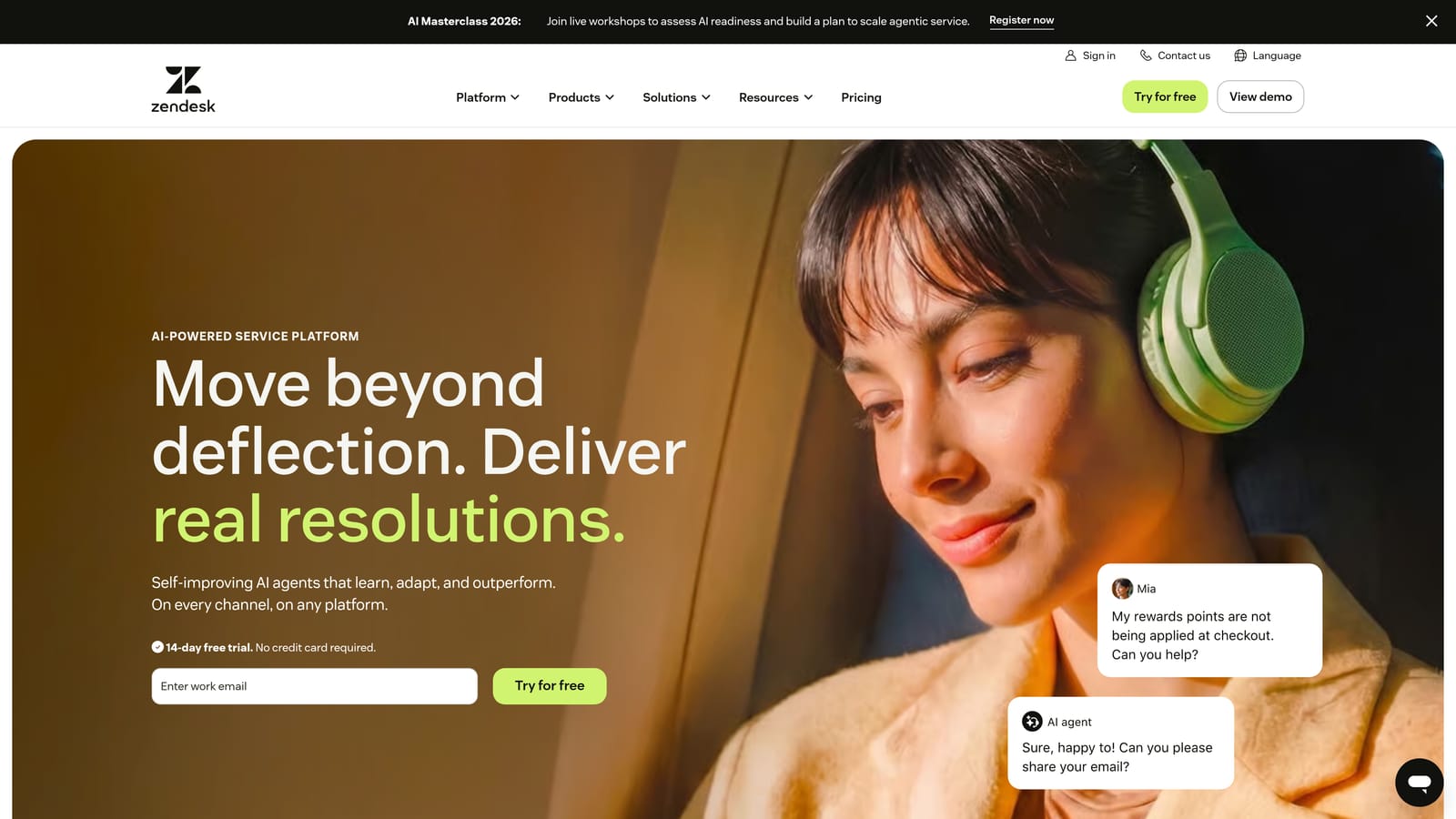
Zendesk AI brings intelligent triage, agent assist, summarization, and self-service bots to Zendesk's established ticketing platform, which remains the default infrastructure for large support operations globally.
Where This Tool Shines
Zendesk's AI story is best understood as augmentation rather than replacement. If your team already runs on Zendesk and you want to add intelligent routing, reply suggestions, and automated workflows without migrating platforms, the AI layer fits in naturally. The depth of the underlying ticketing system, including reporting, SLAs, and workforce management tools, remains a genuine competitive advantage.
For enterprise teams with complex routing rules and large agent teams, Zendesk AI's ability to triage by intent and priority before a ticket ever reaches a human is a meaningful efficiency gain.
Key Features
Intelligent Triage and Routing: Classifies and routes tickets based on detected intent and priority, reducing manual sorting overhead.
Agent Copilot: Provides in-conversation reply suggestions and conversation summarization to speed up agent response times.
AI-Powered Self-Service Bots: Integrated with your Zendesk help center for autonomous query deflection before tickets are created.
Advanced Analytics and Workforce Management: Comprehensive reporting tools that go well beyond basic support metrics.
Best For
Enterprise organizations already invested in the Zendesk ecosystem that want to add AI capabilities without a platform migration. Less ideal for teams looking for an AI-first architecture or deeper product-context awareness.
Pricing
AI features are included across Suite plans, with capabilities varying by tier. Enterprise pricing is available directly at zendesk.com.
4. Freshdesk Freddy AI
Best for: Growing teams that want accessible AI across self-service, agent assist, and analytics without enterprise-level complexity.
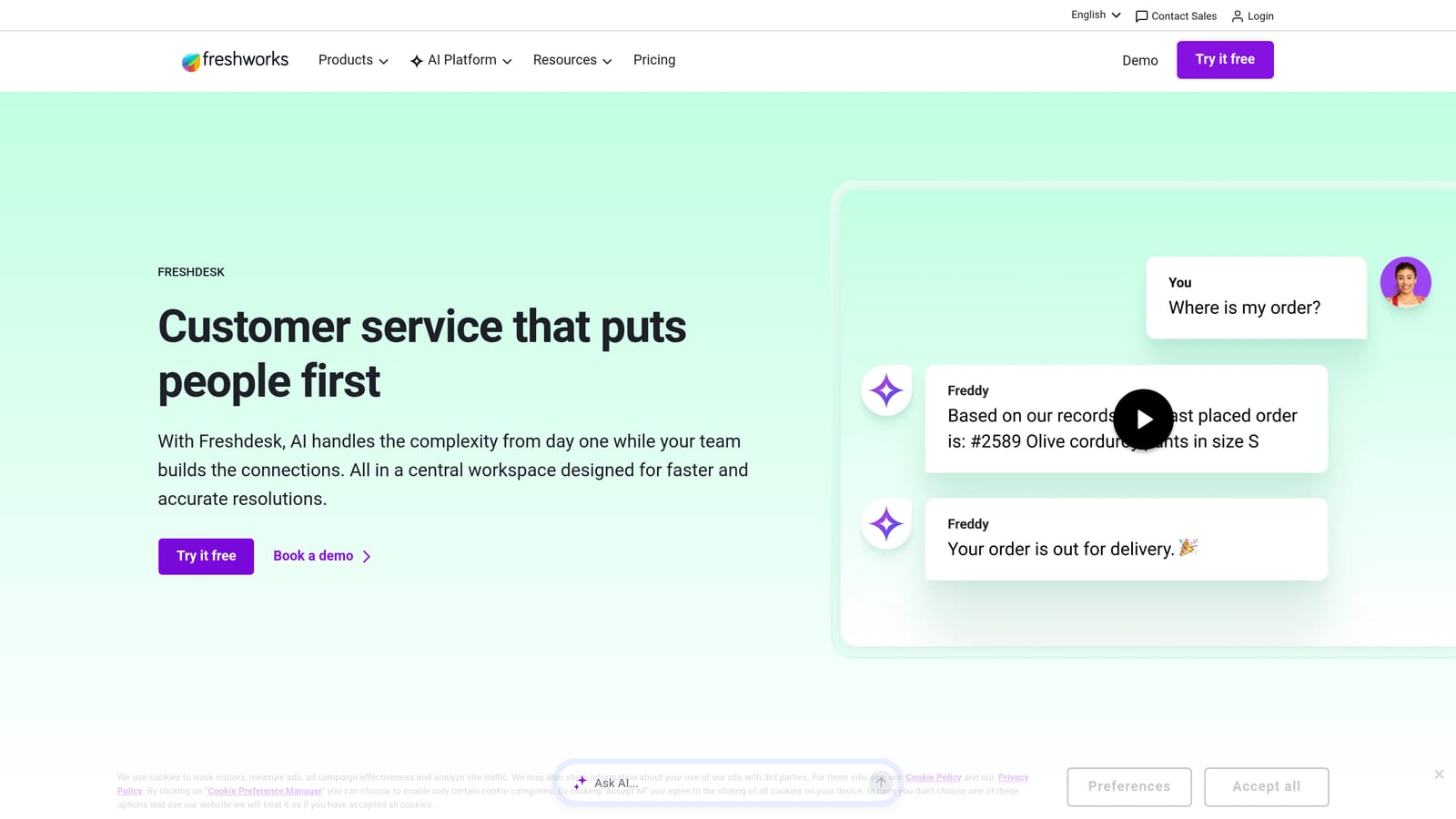
Freshdesk Freddy AI is Freshworks' AI layer spanning the full support workflow, from autonomous query resolution to in-conversation agent suggestions and trend analytics.
Where This Tool Shines
Freshdesk's AI offering stands out for its accessibility. Freddy covers three distinct functions: self-service resolution (Freddy Self Service), agent assist (Freddy Copilot), and analytics (Freddy Insights), giving teams a layered AI approach without requiring a large implementation budget. For SMBs and mid-market teams that don't have a dedicated support ops function, this breadth at a reasonable price point is genuinely valuable.
The fact that Freddy works across Freshdesk, Freshchat, and other Freshworks products also means teams already in the Freshworks ecosystem can extend AI across multiple channels without adding a new vendor.
Key Features
Freddy Self Service: Handles autonomous query resolution using your knowledge base, reducing inbound ticket volume.
Freddy Copilot: Provides in-conversation suggestions and next-step recommendations to agents during live interactions.
Freddy Insights: Surfaces support analytics and trend detection to help teams identify patterns in ticket volume and customer issues.
Cross-Product Coverage: Works across Freshdesk, Freshchat, and connected Freshworks tools for consistent AI across channels.
Best For
SMB and mid-market teams already using Freshworks products, or teams evaluating an accessible entry point into AI-powered support without a large implementation overhead.
Pricing
Freddy AI is available as an add-on or included in higher-tier plans. Check freshworks.com for current pricing, as it varies by product tier.
5. Salesforce Agentforce
Best for: Enterprise organizations where support, sales, and service data all live within the Salesforce ecosystem.
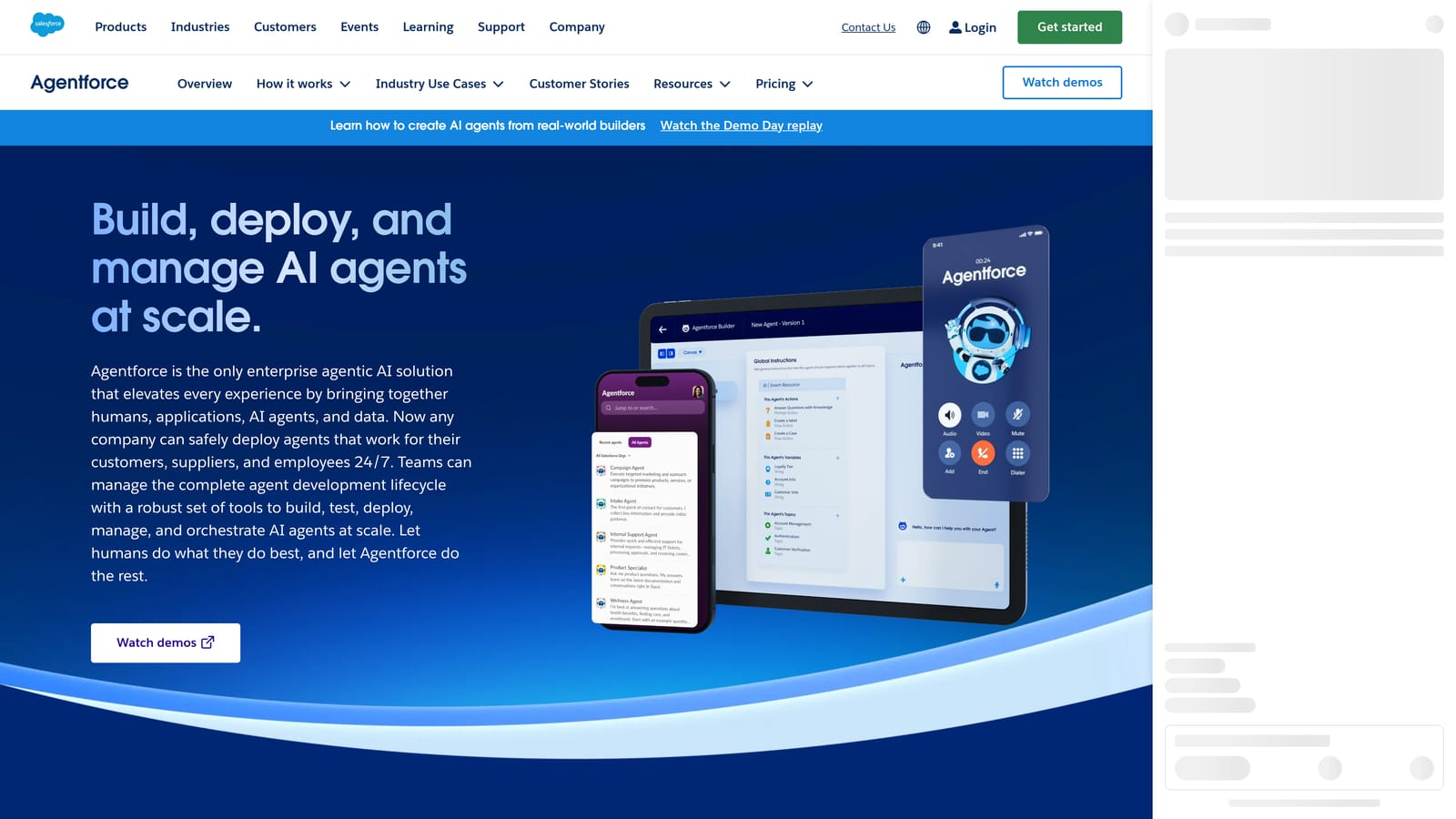
Salesforce Agentforce is Salesforce's autonomous AI agent platform, giving support agents native access to CRM data, case history, and Service Cloud context in every interaction.
Where This Tool Shines
The core advantage of Agentforce is data depth. When an AI agent has native access to a customer's full CRM record, deal history, and previous case data, the quality of autonomous resolution improves substantially. For enterprise support operations where context is everything, this integration eliminates the lookup friction that slows down both AI and human agents.
Agentforce is also configurable across service, sales, and field team use cases, making it a platform investment rather than a point solution. That said, getting the most from it requires Salesforce expertise, and the implementation complexity is real.
Key Features
Native CRM Data Access: Agents have full customer, deal, and case context without requiring external integrations or data syncs.
Configurable Autonomous Agents: Deployable across service, sales, and field team workflows with significant customization options.
Deep Platform Integration: Works natively with Service Cloud, Sales Cloud, and Data Cloud for a unified enterprise data layer.
Consumption-Based Pricing: Flexible enterprise pricing model that scales with actual usage rather than fixed seat counts.
Best For
Large enterprises where Salesforce is the system of record for customer data and where support, sales, and service teams need to work from a unified platform. Less suited for teams outside the Salesforce ecosystem.
Pricing
Consumption-based enterprise pricing. Contact Salesforce directly at salesforce.com/agentforce for quotes.
6. Tidio
Best for: Small businesses and e-commerce teams that need fast deployment and straightforward AI automation.
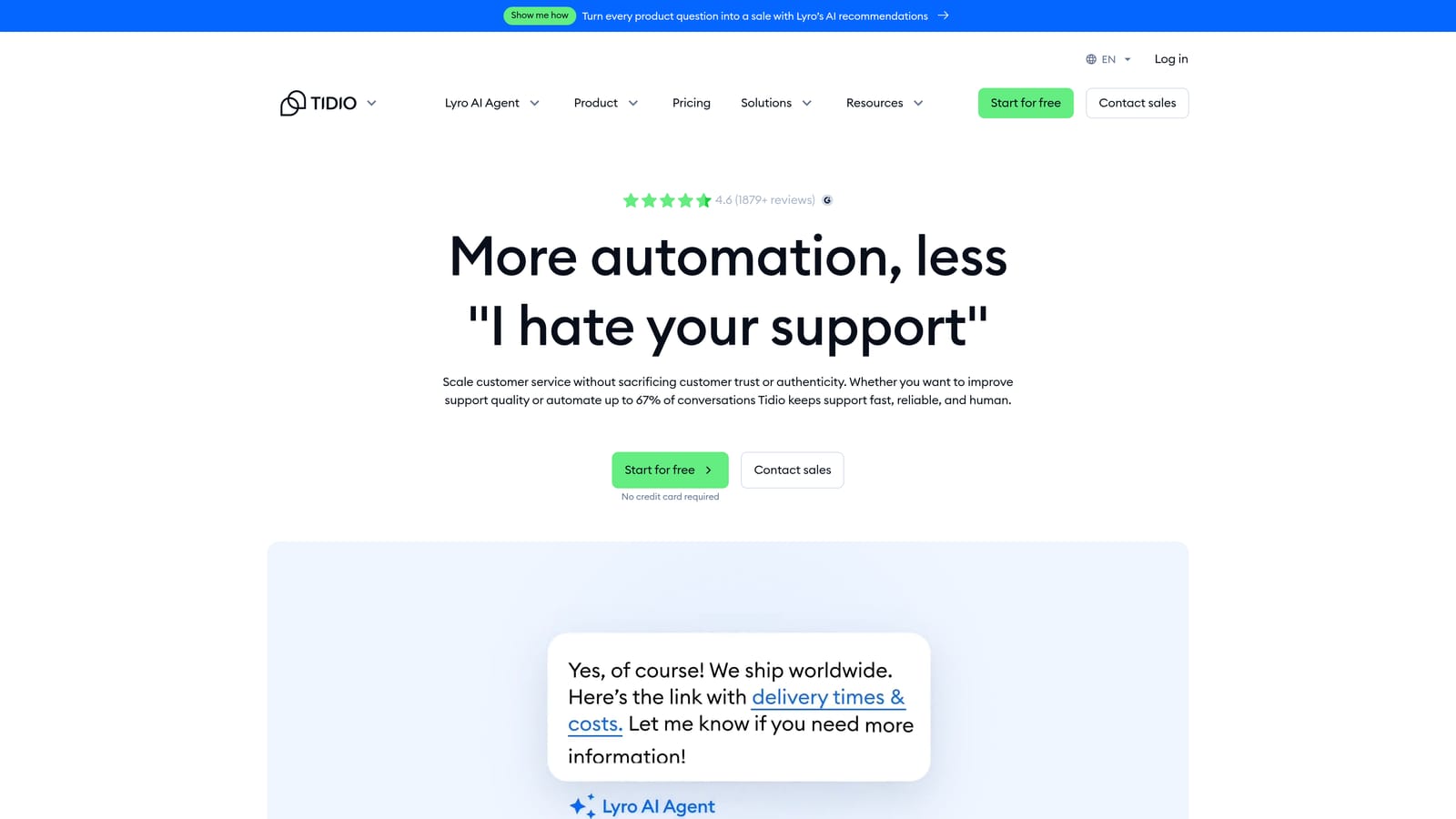
Tidio is a fast-to-deploy customer service platform with Lyro, its AI agent, designed to handle common queries with minimal technical setup required.
Where This Tool Shines
Tidio's primary advantage is speed to value. Teams can have Lyro handling common questions using their existing knowledge base with very little implementation overhead. For businesses that don't have a dedicated support ops team or technical resources for a complex deployment, this accessibility is a genuine differentiator.
The live chat fallback to human agents is smooth, and Tidio's mobile experience is solid for teams managing support across devices. It's not built for complex B2B workflows, but for high-volume simple queries, it delivers efficiently.
Key Features
Lyro AI Agent: Resolves common queries autonomously using your connected knowledge base with minimal configuration required.
Live Chat Fallback: Smooth handoff to human agents when queries exceed the AI's scope, with a clean mobile experience.
Simple Setup: Minimal technical overhead makes it accessible to non-technical teams and small businesses.
Free Tier: Available for small teams that want to test AI support automation before committing to a paid plan.
Best For
E-commerce brands, small businesses, and teams new to AI support automation that prioritize fast deployment and ease of use over deep workflow customization or enterprise integrations.
Pricing
Free tier available; Lyro AI is included on paid plans. Check tidio.com for current pricing tiers.
7. Kustomer
Best for: High-volume consumer support operations that need a unified omnichannel customer timeline.
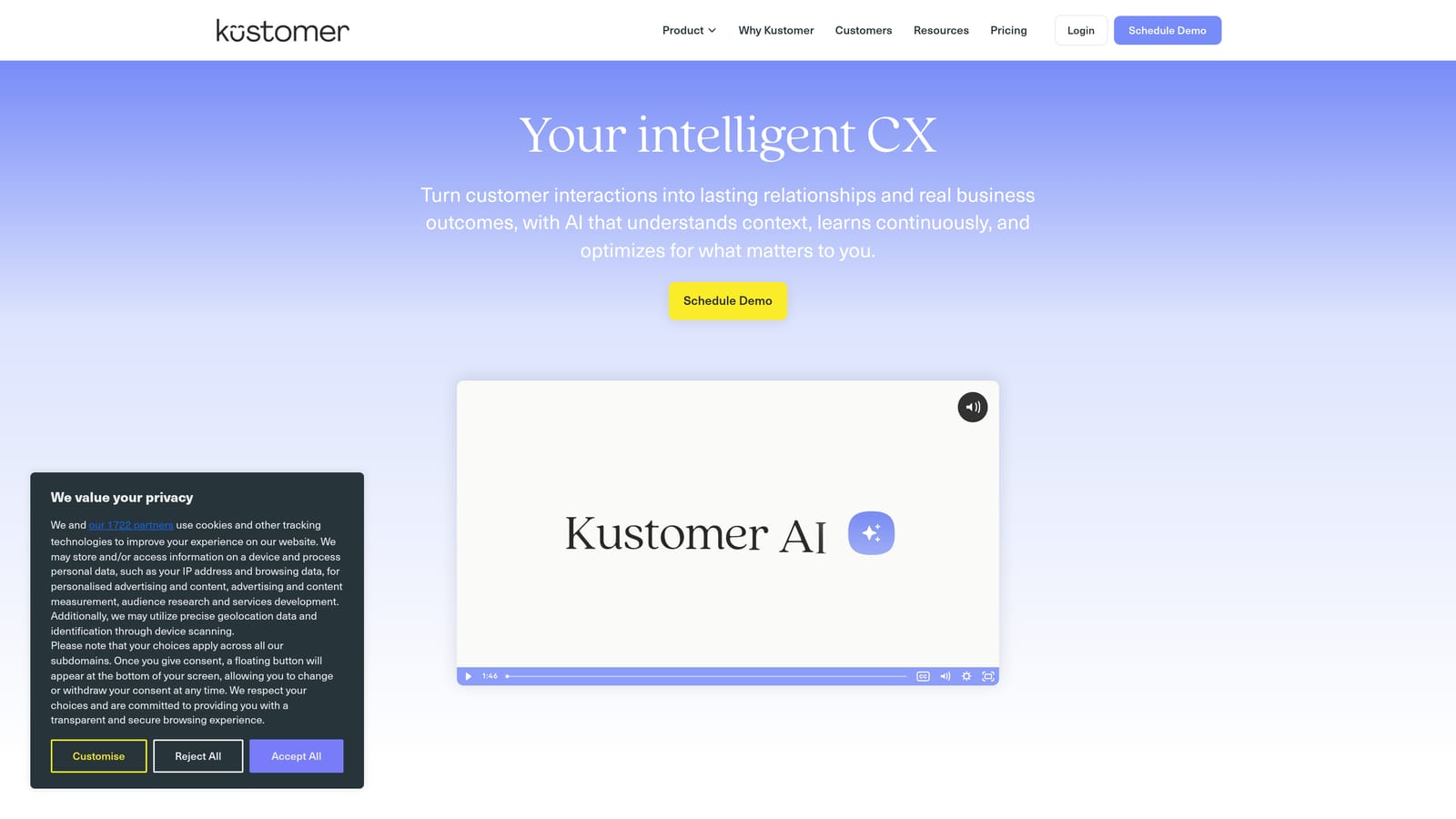
Kustomer is an omnichannel customer service platform with AI-powered routing and sentiment detection, built around a unified customer timeline that consolidates all interactions in one view.
Where This Tool Shines
Kustomer's unified customer timeline is a genuine differentiator for high-volume operations. Rather than managing separate ticket threads across channels, agents see a single continuous history per customer spanning email, chat, social, SMS, and voice. For consumer brands handling thousands of interactions daily, this consolidation meaningfully reduces agent context-switching.
The AI routing and sentiment analysis capabilities help prioritize which conversations need immediate human attention, making the platform effective for teams managing mixed-urgency inbound volume. Enterprise buyers evaluating Kustomer should note the platform's ownership history when considering long-term stability.
Key Features
Unified Customer Timeline: Single continuous thread per customer across email, chat, social, SMS, and voice, eliminating siloed channel views.
AI-Powered Routing and Sentiment Analysis: Automatically prioritizes conversations and detects customer sentiment to guide agent response.
Automation Workflows: Handles high-volume repetitive queries through configurable automation rules.
Omnichannel Coverage: Full channel breadth for consumer brands managing support across multiple platforms simultaneously.
Best For
D2C brands, marketplace operators, and subscription businesses managing high-volume consumer support across multiple channels. Less common in pure B2B SaaS environments.
Pricing
Enterprise pricing. Contact Kustomer directly at kustomer.com for quotes.
8. HubSpot AI Help Desk
Best for: Teams already running on HubSpot CRM that want AI support features without adding a new vendor.
HubSpot's Service Hub brings AI-powered ticketing, reply suggestions, and a chatbot builder to teams already operating within the HubSpot ecosystem.
Where This Tool Shines
The compelling case for HubSpot's help desk is native CRM integration. Support agents see full contact history, deal stage, and company data in every conversation without switching tools or syncing data. For teams where sales and support are closely aligned, this eliminates a significant amount of context-gathering friction.
The AI features, including ticket summarization, reply suggestions, and a chatbot builder for self-service deflection, are practical additions rather than headline capabilities. HubSpot's unified reporting across marketing, sales, and support is also genuinely useful for revenue-focused teams that need to connect support activity to business outcomes.
Key Features
AI Ticket Summarization and Reply Suggestions: Speeds up agent response times with contextual suggestions directly within the HubSpot inbox.
Native CRM Integration: Full contact, deal, and company history available in every support conversation without external lookups.
Chatbot Builder: Self-service deflection tool for handling common queries before they reach the support queue.
Unified Reporting: Cross-functional reporting that connects support metrics to marketing and sales data in a single dashboard.
Best For
Teams already invested in the HubSpot stack that want to add AI-assisted support without introducing a new platform. Particularly strong for organizations where support and sales share customer data regularly.
Pricing
Help desk features are included in Service Hub plans. Check hubspot.com for current plan pricing.
9. Gladly
Best for: Consumer-facing brands that want a people-centric support model with AI surfacing full customer history.
Gladly replaces the traditional ticket-based model with a continuous conversation thread per customer across all channels, with AI surfacing history and next-best-action recommendations throughout.
Where This Tool Shines
Gladly's fundamental premise is different from most platforms on this list: it organizes support around people, not tickets. Every interaction a customer has had across every channel lives in a single continuous thread, which agents and AI work from together. For brands where customer relationships span years and multiple product touchpoints, this model reduces repetition and improves the quality of every interaction.
The AI layer surfaces relevant history and recommends next best actions rather than trying to fully replace human judgment, which suits support teams that handle nuanced, relationship-sensitive queries where full automation isn't appropriate.
Key Features
People-Centric Model: One continuous conversation thread per customer across all channels, replacing disconnected ticket numbers.
AI History Surfacing and Next Best Actions: AI surfaces relevant customer context and recommends appropriate next steps without requiring agent research.
Omnichannel Coverage: Unified experience across email, chat, voice, SMS, and social within a single interface.
Relationship-First Design: Built for brands where the quality of long-term customer relationships is a competitive differentiator.
Best For
Retail, subscription, and lifestyle consumer brands where support is relationship-driven and customer history spans many interactions over time. Less commonly used in pure B2B SaaS contexts but worth evaluating for consumer-facing product teams.
Pricing
Enterprise pricing. Contact Gladly directly at gladly.com for quotes.
Choosing the Right Platform for Your Team
The right customer service AI platform depends heavily on two things: your existing stack and what you need AI to actually do. These aren't the same decision, and conflating them leads to expensive mismatches.
Here's a practical breakdown by use case:
For B2B SaaS teams that need product-context AI: Halo AI is the strongest fit. Its page-aware architecture, continuous learning, and business intelligence layer are purpose-built for SaaS support environments where context and product signals matter as much as resolution speed.
For teams already on Zendesk or Freshdesk: Zendesk AI and Freshdesk Freddy AI are the natural paths. They add meaningful AI capabilities without requiring a migration, and the depth of their underlying platforms remains a genuine advantage for established support operations.
For enterprise teams inside the Salesforce ecosystem: Agentforce is the clear choice when CRM data access is the primary driver. The implementation investment is real, but the data depth it unlocks is difficult to replicate through integrations alone.
For CRM-native teams on HubSpot: Service Hub's AI features make sense if you're already in the HubSpot stack and want to avoid adding a new vendor to your support workflow.
For high-volume consumer support: Kustomer and Gladly both address omnichannel complexity well, with Kustomer leaning toward automation at scale and Gladly toward relationship-centric models.
For small teams or e-commerce brands: Tidio offers the fastest path to AI deflection with the lowest implementation overhead.
The broader question worth asking is whether you want AI as a feature within your existing helpdesk, or AI as the primary architecture with integrations to your stack. That distinction shapes everything from resolution rates to the business intelligence your support layer can generate.
Your support team shouldn't scale linearly with your customer base. Let AI agents handle routine tickets, guide users through your product, and surface business intelligence while your team focuses on complex issues that need a human touch. See Halo in action and discover how continuous learning transforms every interaction into smarter, faster support.