9 Best Customer Service Automation Platforms in 2026
This comprehensive guide evaluates the top customer service automation platforms available in 2026, comparing AI capabilities, integration depth, and deployment ease to help B2B SaaS and support teams find the right solution for scaling operations without increasing headcount—whether they're upgrading an existing helpdesk or building a new support stack from scratch.
 Grant CooperFounder12 min read
Customer service teams are under more pressure than ever. Ticket volumes keep climbing, headcount budgets keep shrinking, and customers expect instant answers at 2am on a Sunday. Automation isn't a nice-to-have anymore; it's the foundation of any support operation that wants to scale without breaking.
But here's the problem: not all platforms are built the same. Some bolt AI onto legacy helpdesk infrastructure and call it intelligent. Others are purpose-built for autonomous resolution from the ground up. Some shine at routing and triage; others excel at deflection, guided onboarding, or surfacing business intelligence from support data.
This list covers the best customer service automation platforms available in 2026, evaluated on AI capability, integration depth, ease of deployment, and real-world utility for B2B SaaS and product teams. Whether you're replacing a clunky helpdesk, layering AI onto an existing stack, or starting fresh, you'll find a clear recommendation here.
1. Halo AI
Best for: B2B SaaS teams wanting autonomous AI agents with page-aware context and business intelligence
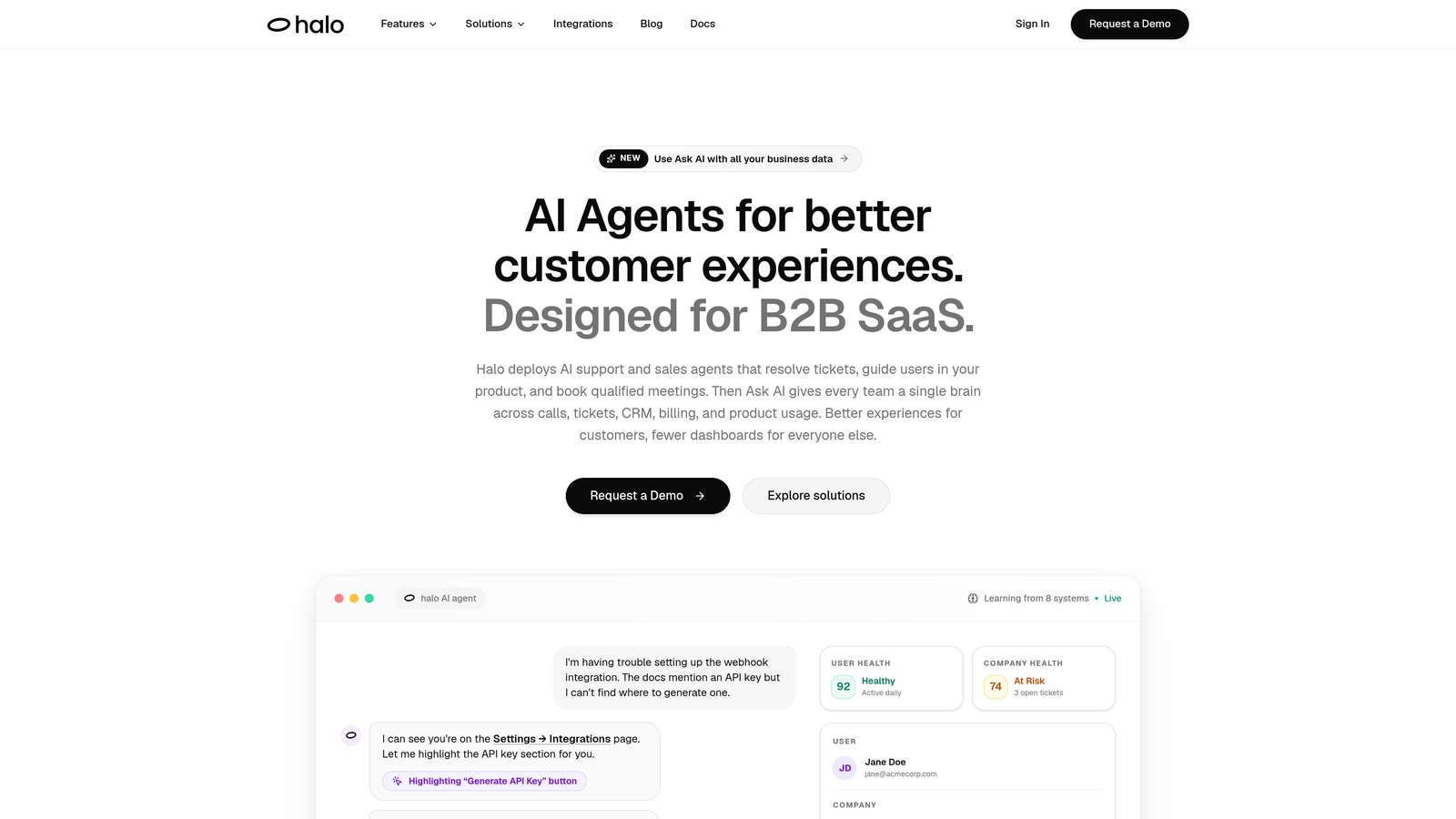
Halo AI is an AI-first customer support platform that deploys intelligent agents to resolve tickets, guide users through your product, and surface actionable business intelligence from every support interaction.
Where This Tool Shines
What separates Halo from most platforms on this list is its architecture. It wasn't built as a helpdesk with AI features added later; it was designed from the ground up around autonomous resolution. That distinction matters more than it sounds, because AI-native systems learn and adapt in ways that bolt-on features simply can't replicate.
The page-aware chat widget is a genuine differentiator. The AI sees what the user sees on screen, enabling it to provide visual UI guidance rather than generic text responses. Pair that with continuous learning from every resolved and escalated ticket, and the system gets meaningfully smarter over time rather than staying static.
Key Features
Page-Aware Chat Widget: The AI understands the user's current screen context, delivering precise UI guidance instead of generic answers.
Continuous Learning: Every resolved ticket and every escalation feeds back into the model, improving resolution accuracy over time.
Smart Inbox with Business Intelligence: Surfaces customer health signals, revenue anomalies, and churn indicators from support data — turning your inbox into a strategic asset.
Auto Bug Ticket Creation: Detects and automatically logs bugs to Linear, removing manual triage from your engineering workflow.
Live Agent Handoff: Escalates gracefully to human agents when complexity exceeds AI confidence, with full conversation context preserved.
Deep Integrations: Connects to Slack, HubSpot, Stripe, Zoom, Linear, PandaDoc, Fathom, and Intercom out of the box.
Best For
Product teams and B2B SaaS companies that want more than deflection. If you need your support system to resolve tickets autonomously, guide users through complex product flows, and feed intelligence back to your product and revenue teams, Halo is built for exactly that use case.
Pricing
Pricing is available directly on haloagents.ai. Contact the team for details tailored to your team size and support volume.
2. Intercom
Best for: SaaS companies wanting a polished messenger-first experience with strong AI conversation handling
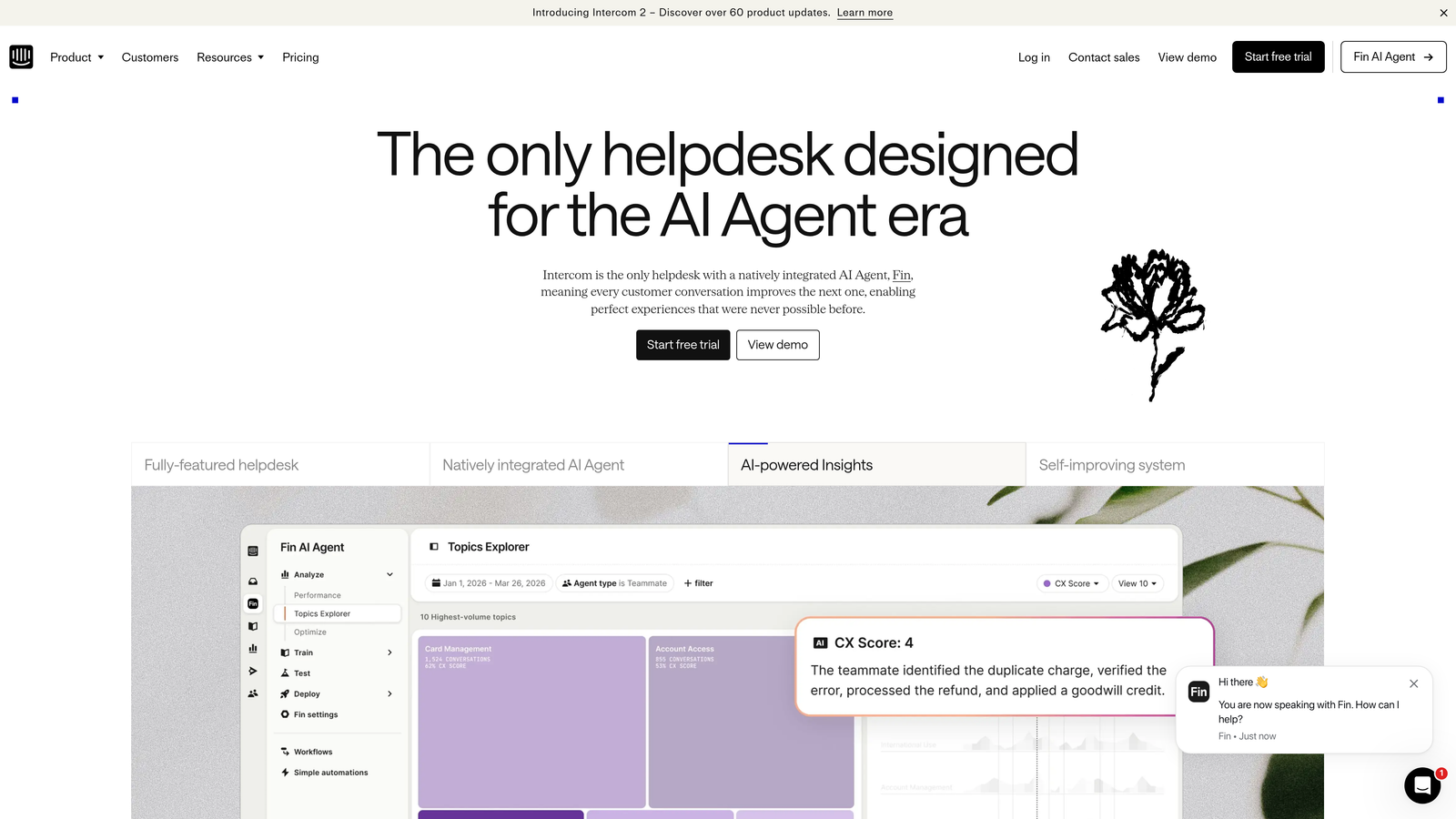
Intercom is a leading conversational support platform with its Fin AI Agent handling multi-turn customer conversations across chat, email, and in-product messaging.
Where This Tool Shines
Intercom's Fin AI Agent, powered by large language models, has become one of the most capable autonomous resolution tools in the market. It handles multi-turn conversations with context, not just single-question deflection, which makes it genuinely useful for complex support scenarios.
The messenger-first UX is also best-in-class for SaaS products. If in-product chat experience matters to your brand, Intercom's polish is hard to beat. The trade-off is cost: pricing can escalate significantly at scale, which pushes some growing teams toward alternatives.
Key Features
Fin AI Agent: LLM-powered autonomous resolution across chat, email, and in-product surfaces with multi-turn conversation handling.
Workflow Automation Builder: Visual builder for routing, escalation, and response logic without engineering involvement.
Messenger UX: Highly customizable in-product chat widget with strong brand alignment options.
Reporting and CSAT: Built-in satisfaction measurement and conversation analytics.
Integrations: Deep connections to Salesforce, HubSpot, Stripe, and Slack.
Best For
SaaS companies with established support operations that want a proven, polished platform. Particularly strong for teams already invested in the Intercom ecosystem or those prioritizing in-product messaging quality above all else.
Pricing
Tiered plans with a Starter option for smaller teams. Current pricing is listed at intercom.com and can scale considerably for larger organizations.
3. Zendesk
Best for: Enterprise teams needing omnichannel support with extensive customization and a massive app marketplace
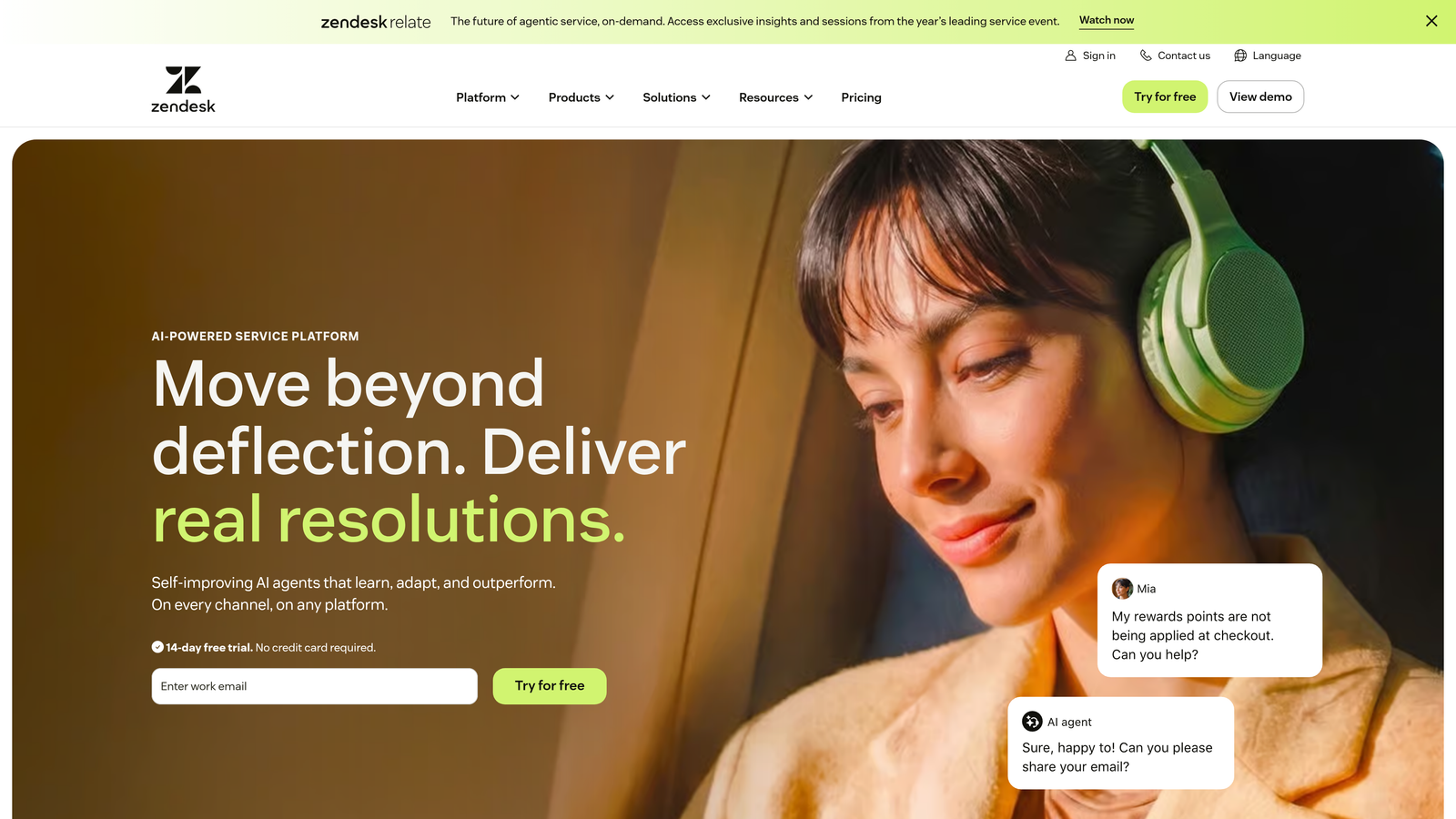
Zendesk is the industry-standard enterprise helpdesk with AI-powered triage, omnichannel ticket management, and one of the largest integration marketplaces in customer support.
Where This Tool Shines
Zendesk's install base is enormous for a reason. It handles omnichannel support at scale better than almost anyone, covering email, chat, voice, social, and self-service within a single platform. For enterprises with complex routing requirements and strict SLA management needs, it remains the benchmark.
The AI features, including intelligent triage, suggested replies, and Answer Bot for self-service deflection, are solid. They're not as deeply autonomous as newer AI-first platforms, but for teams that need proven reliability over cutting-edge experimentation, that trade-off is often acceptable.
Key Features
AI-Powered Intelligent Triage: Automatically classifies, routes, and prioritizes incoming tickets based on content and intent.
Omnichannel Coverage: Unified management across email, chat, voice, social media, and self-service portals.
Zendesk Marketplace: Over 1,000 app integrations covering CRM, analytics, e-commerce, and productivity tools.
Answer Bot: Self-service deflection using your existing knowledge base content.
Advanced SLA Management: Granular SLA policies with escalation rules and reporting dashboards.
Best For
Mid-market to enterprise teams with complex, multi-channel support operations. Can feel heavyweight for smaller teams, but if you need proven scale and deep customization, Zendesk delivers.
Pricing
Suite plans at multiple tiers. Current pricing is publicly listed at zendesk.com.
4. Freshdesk
Best for: SMB and mid-market teams wanting capable AI automation at a more accessible price point
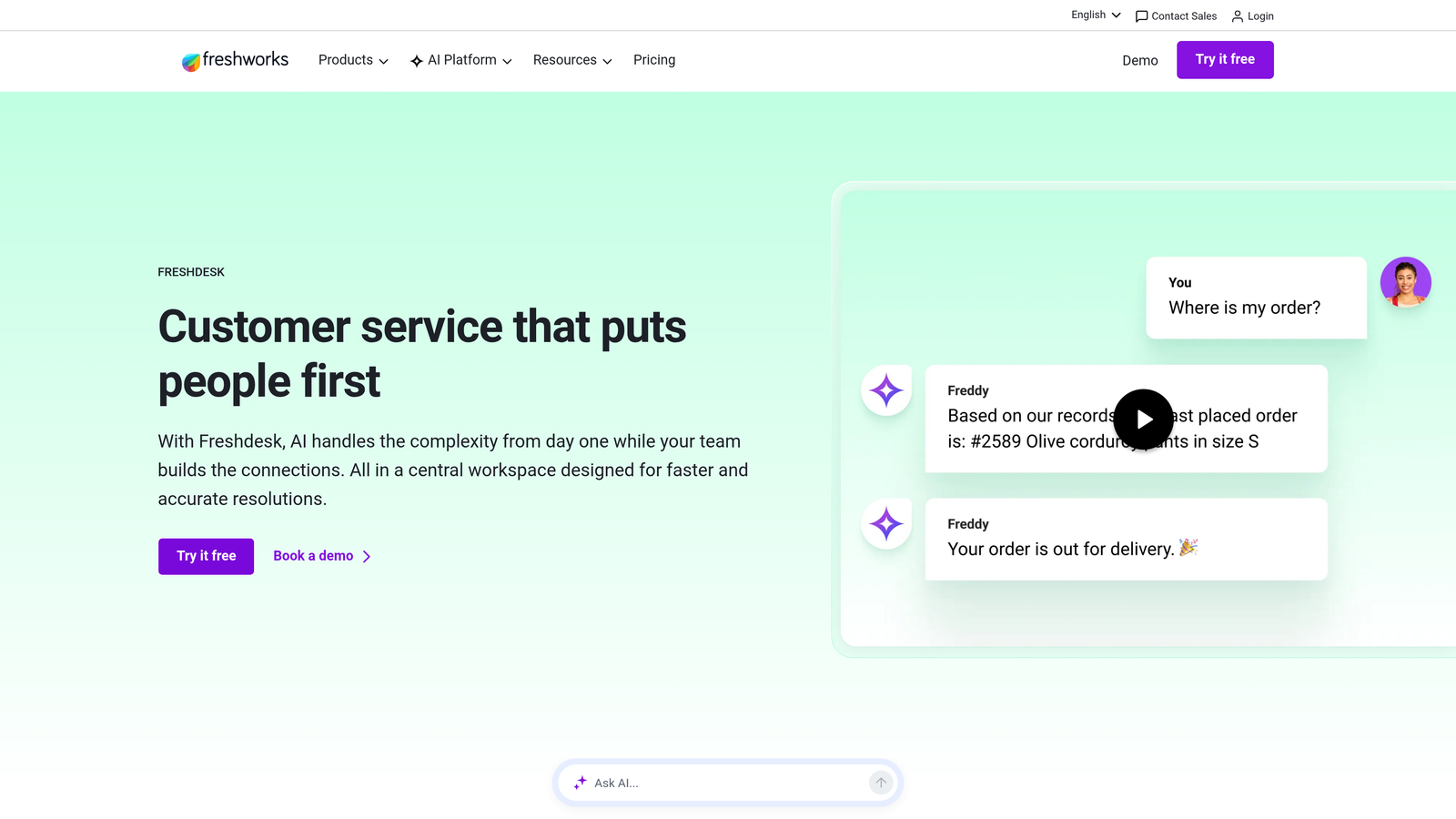
Freshdesk is a cost-effective helpdesk platform from Freshworks with Freddy AI handling auto-resolution, agent assist, and analytics across the support workflow.
Where This Tool Shines
Freshdesk hits a sweet spot for teams that need genuine automation capability without the enterprise price tag. Freddy AI handles ticket auto-resolution, suggests replies to agents, and provides analytics that help teams understand where bottlenecks are forming. It's not as deeply autonomous as AI-first platforms, but it covers the core automation use cases well.
The free tier also makes it accessible for early-stage teams that want to establish proper support infrastructure before committing to paid plans. Collision detection and team inbox management keep things organized as teams grow.
Key Features
Freddy AI: Handles ticket auto-resolution, agent-assist suggestions, and support analytics within the platform.
Omnichannel Support: Email, chat, phone, and social media coverage available on higher-tier plans.
Collision Detection: Prevents multiple agents from working the same ticket simultaneously.
Automation Rules: Configurable ticket assignment, SLA enforcement, and workflow triggers.
Free Tier: A functional free plan for small teams getting started with structured support.
Best For
SMB and mid-market teams that need solid helpdesk functionality with AI assistance at a price point below Zendesk or Intercom. Also a good fit for teams already using other Freshworks products.
Pricing
Free plan available. Paid plans are listed at freshdesk.com across multiple tiers.
5. Tidio
Best for: E-commerce businesses wanting fast-to-deploy AI chat with native Shopify and WooCommerce integrations
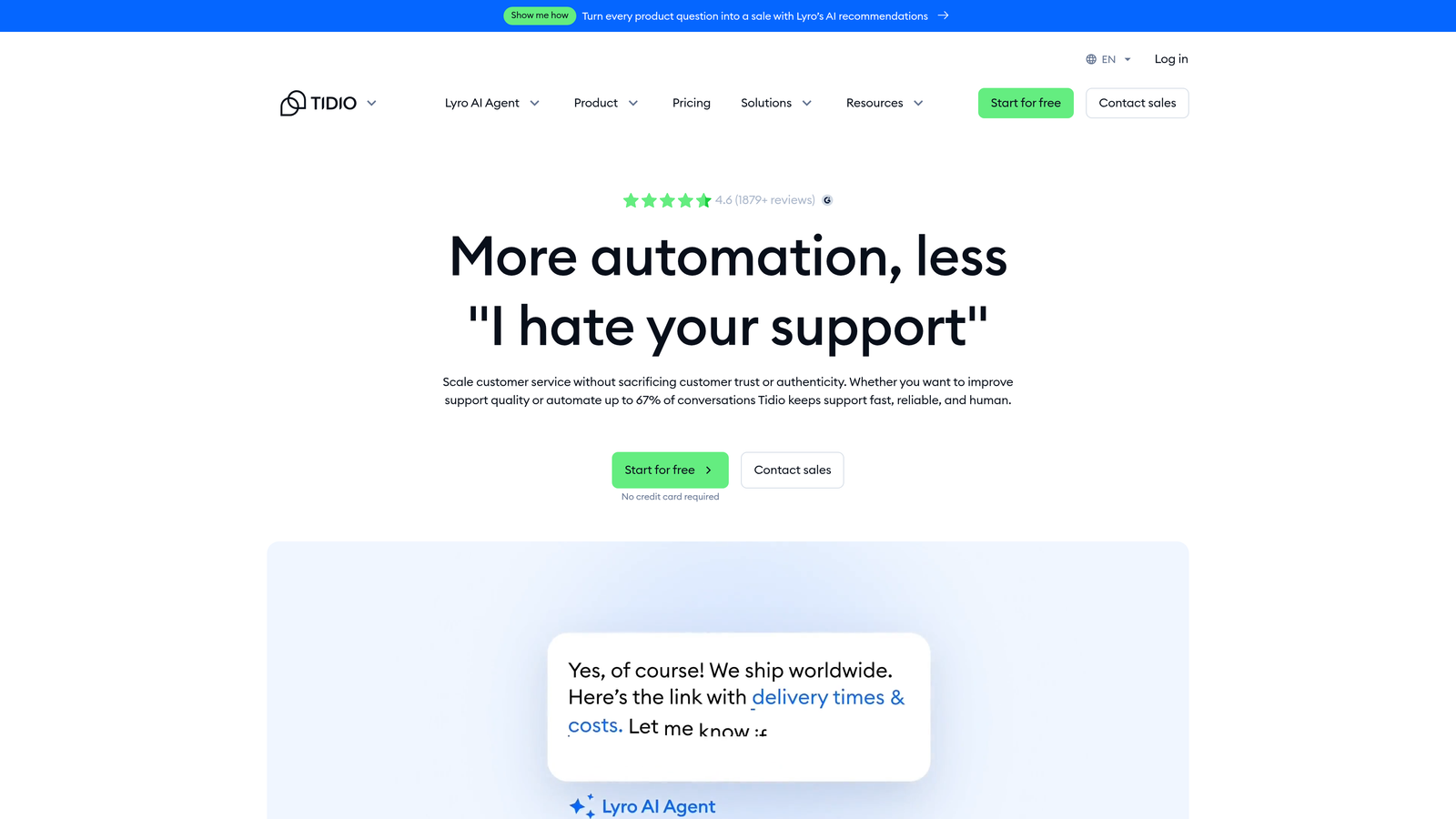
Tidio is a live chat and AI chatbot platform built for rapid deployment, with its Lyro AI handling customer questions and strong native integrations for e-commerce platforms.
Where This Tool Shines
Tidio's biggest advantage is speed to value. You can have a functioning AI chatbot live on your site in a matter of hours, not weeks. The low-code setup requires no engineering involvement, which makes it genuinely accessible for small teams and solo operators.
For e-commerce specifically, the native Shopify and WooCommerce integrations are a real differentiator. Lyro AI can answer product questions, handle order status queries, and escalate to live agents when needed, all within the context of your store's data. It's less suited for complex B2B SaaS workflows, but within its target use case it performs well.
Key Features
Lyro AI Chatbot: Conversational AI for self-service with context-aware responses to customer questions.
E-Commerce Integrations: Native connections to Shopify and WooCommerce for order and product context.
Low-Code Setup: Deployable without engineering resources, typically within hours.
Live Agent Handoff: Smooth escalation from AI to human agents when conversations require it.
Proactive Messaging: Visitor tracking with trigger-based outreach to engage customers at key moments.
Best For
E-commerce businesses and small teams that need fast deployment and solid AI chat without a complex implementation. Less ideal for B2B SaaS teams with nuanced product support workflows.
Pricing
Free plan available. Lyro AI is included on paid tiers. Current pricing is listed at tidio.com.
6. Drift (Salesloft)
Best for: Revenue teams where customer support and sales pipeline conversations overlap significantly
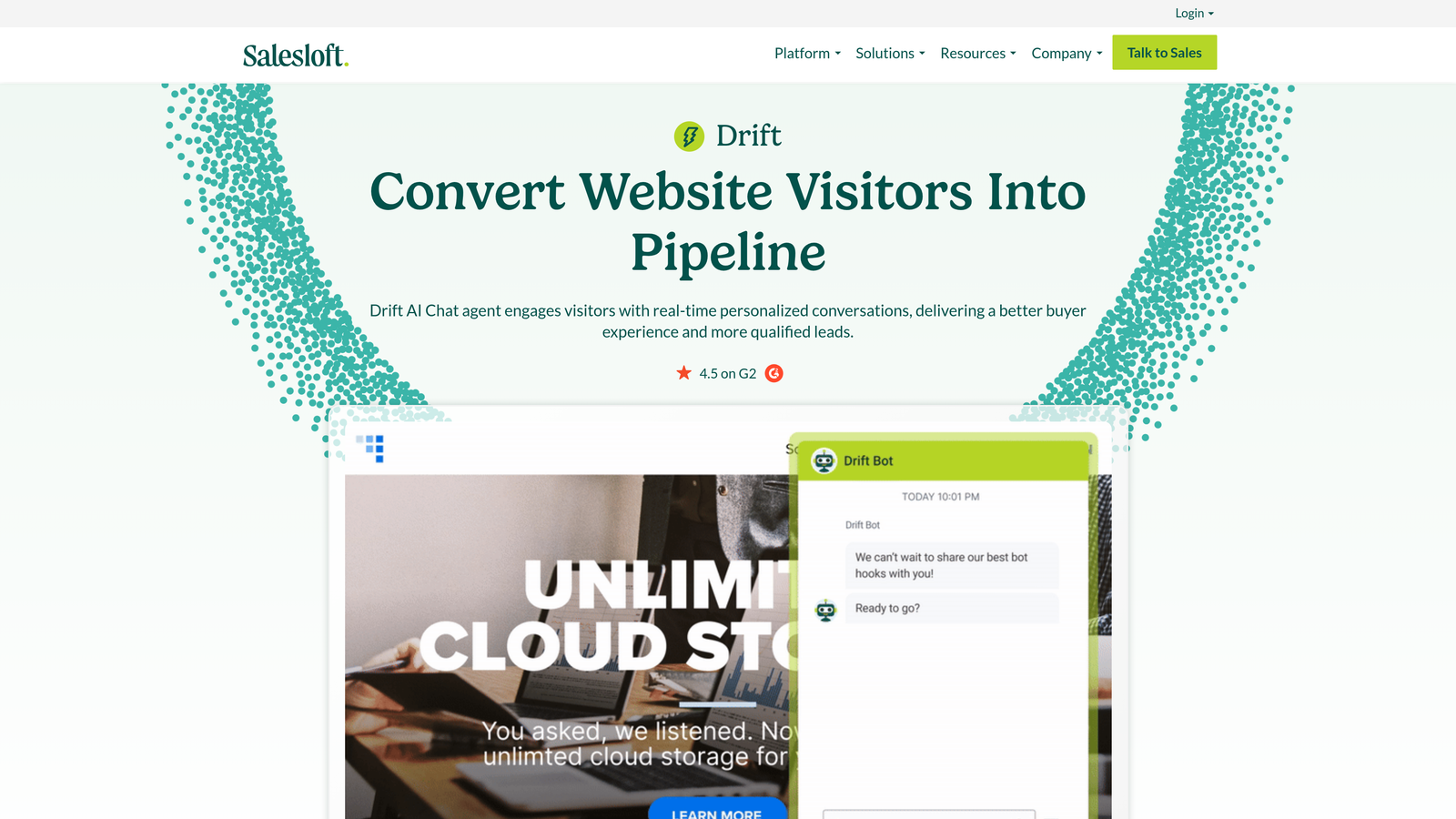
Drift, now part of Salesloft following its 2023 acquisition, is a conversational platform that blends support automation with sales engagement in a way few tools can match.
Where This Tool Shines
Drift's core strength is the bridge it builds between support and revenue. Most support platforms treat every conversation as a ticket to close. Drift treats conversations as opportunities: to qualify prospects, book meetings, route high-value accounts to the right rep, and deflect routine support questions simultaneously.
For teams running account-based marketing programs or those where support conversations frequently turn into expansion opportunities, this hybrid approach has real value. It's not the right fit for teams that need deep ticket management or complex support workflows, but for revenue-focused teams it fills a unique space.
Key Features
AI Chatbots for Support and Sales: Handles both support deflection and sales qualification within the same conversation layer.
ABM Targeting and Routing: Identifies and routes target accounts to appropriate sales reps automatically.
Meeting Booking Automation: Enables prospects and customers to book meetings directly within chat.
Conversation Intelligence: Analytics on engagement patterns and conversation outcomes.
CRM Integrations: Deep connections to Salesforce and HubSpot for revenue team workflows.
Best For
B2B revenue teams where support and pipeline overlap. Particularly strong for companies running ABM programs or those where customer success conversations frequently generate expansion revenue.
Pricing
Enterprise-focused pricing model. Contact Salesloft directly for current pricing details.
7. Kustomer
Best for: High-volume customer environments needing a unified customer timeline across every touchpoint
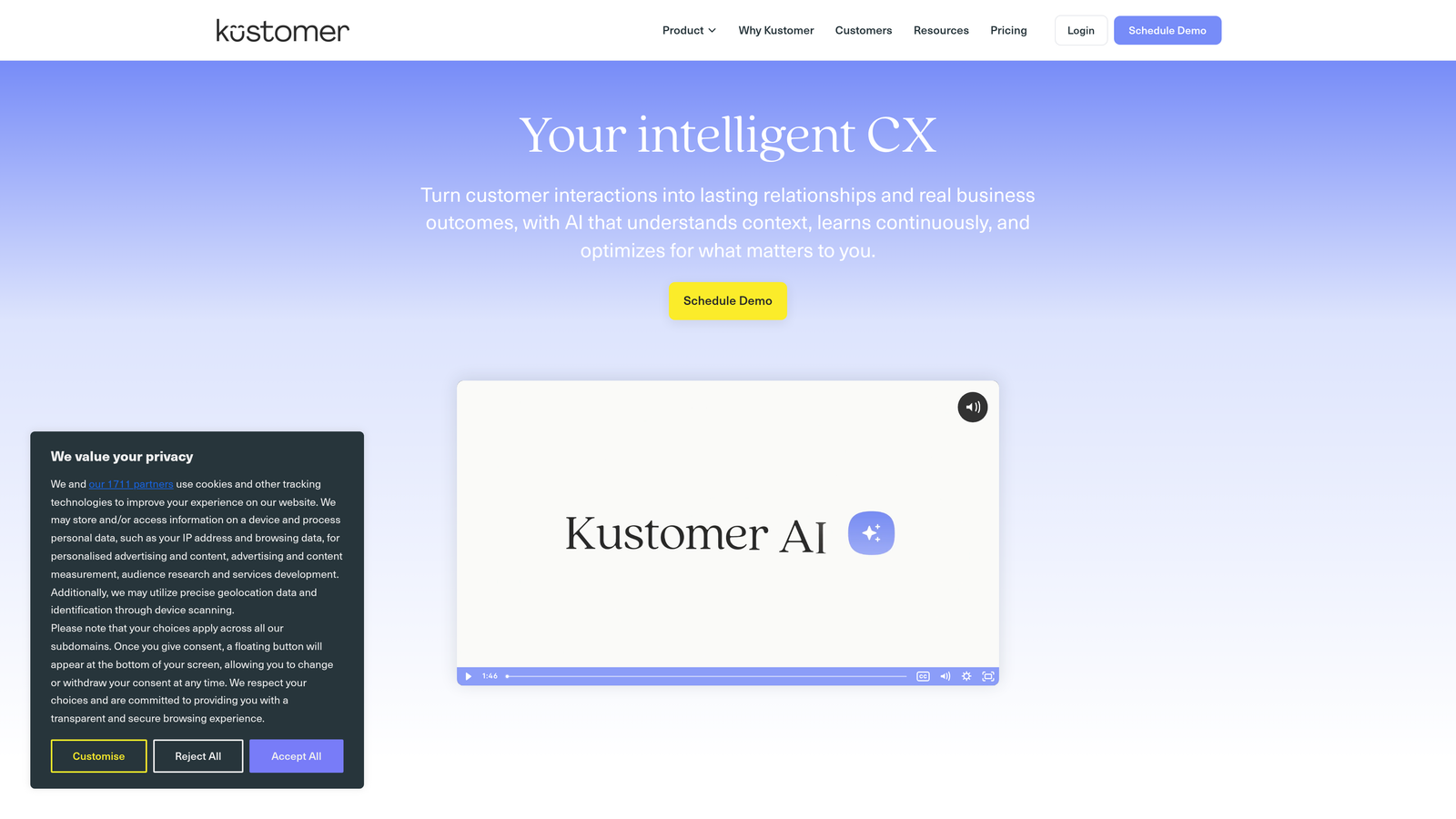
Kustomer is a CRM-native customer service platform, now owned by Meta, that unifies every customer interaction into a single timeline with AI workflows handling routing, tagging, and response suggestions.
Where This Tool Shines
Kustomer's defining feature is its unified customer timeline. Rather than treating each ticket as an isolated event, it surfaces the full history of every customer interaction across every channel in a single view. For teams managing high volumes of repeat customers, this context dramatically improves resolution quality and speed.
The AI workflows for routing, tagging, and response suggestions layer on top of that foundation effectively. It's particularly well-suited to B2C and DTC environments where customer relationships are ongoing and context-heavy. Pure B2B SaaS teams may find the CRM-native approach more than they need.
Key Features
Unified Customer Timeline: Every interaction across all channels consolidated into a single customer view.
AI Routing and Tagging: Automated classification and routing based on conversation content and customer data.
Omnichannel Coverage: Email, chat, SMS, voice, and social media within a single platform.
Visual Workflow Builder: No-code automation builder for routing logic and escalation rules.
E-Commerce and Subscription Integrations: Deep connections to platforms common in DTC and subscription businesses.
Best For
B2C, DTC, and subscription businesses managing high volumes of repeat customers who need rich context at every interaction. Less optimized for pure B2B SaaS support workflows.
Pricing
Per-user pricing model. Current plans are listed at kustomer.com.
8. Ada
Best for: Enterprise teams needing no-code AI agents that can take action inside connected systems, not just respond
Ada is an enterprise-grade no-code AI agent builder designed for action-based automation, where agents execute steps inside connected tools on behalf of customers rather than simply answering questions.
Where This Tool Shines
The distinction Ada draws between answering and acting is important. Most chatbots retrieve information and present it. Ada's agents can actually do things: update records, initiate workflows, trigger actions in connected systems, all without human involvement. For enterprises with complex, multi-step support scenarios, this capability is significant.
The no-code builder with strong brand controls and guardrails also makes it accessible to non-technical teams while keeping enterprise compliance requirements in check. Multi-language support makes it viable for global support operations without maintaining separate configurations per region.
Key Features
Action-Based AI Agents: Agents execute steps inside connected tools, not just retrieve and display information.
No-Code Agent Builder: Visual builder with brand controls and guardrails for non-technical teams.
Multi-Language Support: Built-in support for global operations across multiple languages.
Resolution Rate Analytics: Performance tracking focused on autonomous resolution rate as a primary KPI.
Enterprise Integrations: Connects to major CRMs, helpdesks, and data platforms.
Best For
Enterprise support teams that need AI agents capable of taking real action inside connected systems. Particularly strong for global operations and teams with strict brand and compliance requirements.
Pricing
Enterprise pricing model. Contact Ada directly for a quote tailored to your organization.
9. Help Scout
Best for: Teams that want structured, human-feeling support with AI productivity tools layered in thoughtfully
Help Scout is a shared inbox and knowledge base platform with AI-assisted drafting and summarization, built for teams that prioritize a warm, human support experience over maximum automation.
Where This Tool Shines
Help Scout occupies a deliberate position in this market: it's not trying to maximize autonomous resolution. It's trying to make human agents faster, more organized, and more effective. The AI Summarize and AI Drafts features reduce the cognitive load on agents without removing them from the loop entirely.
For teams whose support brand is built on genuine human connection, this philosophy resonates. The Docs knowledge base integrates cleanly with the Beacon widget for in-product self-service, and the per-user pricing model without per-ticket fees makes costs predictable as volume grows.
Key Features
Shared Inbox with Collision Detection: Prevents duplicate responses and keeps team coordination clean.
Docs Knowledge Base: Integrated self-service content that connects to the Beacon in-product widget.
AI Summarize and AI Drafts: AI tools that speed up agent responses without replacing human judgment.
Beacon Widget: In-product help and chat widget for self-service and live support.
Predictable Pricing: Per-user plans with no per-ticket fees, making cost scaling straightforward.
Best For
Smaller teams and companies where support quality and human warmth are core to the brand. A strong fit for teams that want AI productivity gains without fully autonomous resolution.
Pricing
Per-user plans with transparent pricing listed at helpscout.com.
Which Platform Is Right for Your Team?
The right choice depends heavily on where you sit on two axes: how much autonomy you want AI to have, and how complex your support workflows actually are.
If you're a B2B SaaS team that wants genuine autonomous resolution with continuous learning and business intelligence baked in, Halo AI is purpose-built for that outcome. It's not a helpdesk with AI features added; it's an AI-first platform designed to get smarter with every interaction.
For teams already deep in the Intercom ecosystem or prioritizing messenger UX above all else, Intercom's Fin AI Agent is a strong choice. If enterprise scale and omnichannel coverage are your primary requirements, Zendesk remains the benchmark. Freshdesk is the smart pick for SMB and mid-market teams watching budget. Tidio wins on speed to deployment for e-commerce. Drift is the clear choice when support and sales pipeline overlap. Kustomer suits high-volume B2C environments with repeat customers. Ada serves enterprises that need AI agents to take real action inside connected systems. And Help Scout is the right call for teams that want AI-assisted productivity without fully handing the wheel to automation.
The broader trend is clear: autonomous resolution rate is becoming the KPI that matters, not just deflection. Platforms that were built AI-first are pulling ahead of those that added AI as a feature layer.
Your support team shouldn't scale linearly with your customer base. Let AI agents handle routine tickets, guide users through your product, and surface business intelligence while your team focuses on complex issues that need a human touch. See Halo in action and discover how continuous learning transforms every interaction into smarter, faster support.