11 Best Customer Support AI Platforms to Scale Your Team in 2026
Discover the top customer support AI platforms of 2026 with this comprehensive breakdown of 11 solutions evaluated across autonomous resolution capability, integration depth, analytics, and pricing—helping B2B SaaS teams scale support operations without proportionally growing headcount.
 Matt PattoliFounder15 min read
Scaling customer support is one of the most frustrating growth problems in B2B SaaS. Ticket volume climbs, customer expectations rise, and the instinct to hire more agents creates a cost structure that doesn't scale. The good news: AI support platforms in 2026 have matured well beyond simple chatbots and keyword-matching deflection tools.
Today's top platforms range from AI-native architectures built entirely around autonomous agents to established helpdesks with serious AI layers added on top. Each approach has real trade-offs depending on your stack, team size, and how much automation you actually need.
To build this list, we evaluated platforms across five criteria: autonomous resolution capability (not just deflection), integration depth, analytics and business intelligence, ease of deployment, and pricing transparency. Whether you're running a lean support team at a Series B startup or managing a global enterprise contact center, there's a platform here worth your attention.
1. Halo AI
Best for: B2B SaaS product teams who want AI-native support that learns and scales autonomously.
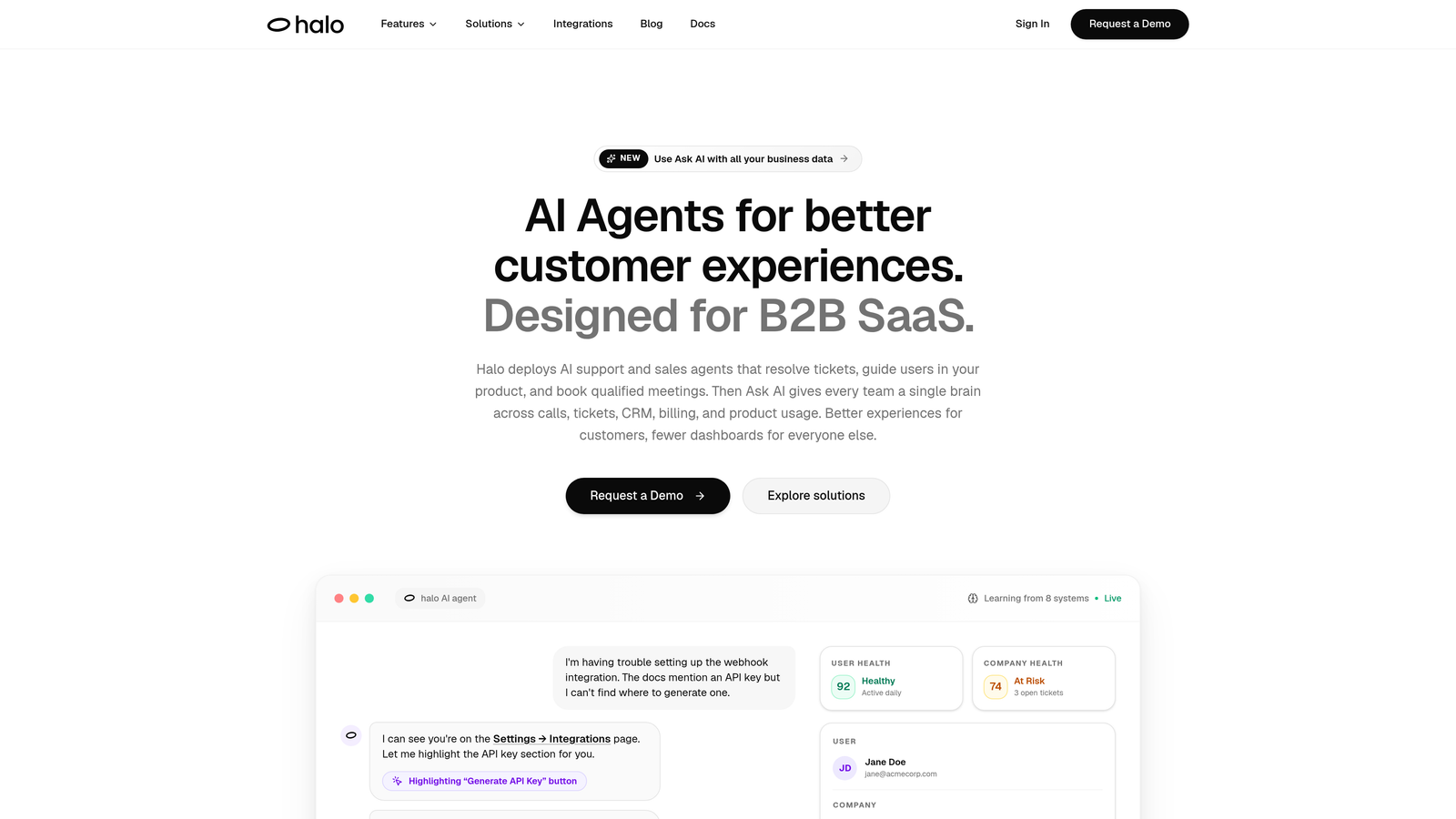
Halo AI is an AI-native customer support platform built specifically for B2B product teams who need intelligent, context-aware support without growing headcount to match it.
Where This Tool Shines
What separates Halo from bolt-on AI layers is its architecture. It was built AI-first, not retrofitted onto a ticket system. The platform's page-aware agents actually see what a user is looking at in your product, which means guidance is contextual rather than generic. Instead of pointing someone to a help article, Halo can walk them through the exact step on the exact screen they're stuck on.
The continuous learning engine is another differentiator. Every resolved ticket makes the AI smarter, so resolution quality improves over time rather than staying static. For teams that care about moving beyond deflection rates toward true autonomous resolution, this is the architecture that makes it possible.
Key Features
Page-Aware AI Agents: Agents understand the user's current context within your product, enabling precise, screen-level guidance rather than generic responses.
Auto Bug Ticket Creation: Automatically converts support conversations into structured bug reports and routes them to Linear, reducing manual work for engineering and support teams.
Smart Inbox with Business Intelligence: Goes beyond support analytics to surface customer health signals, revenue intelligence, and anomaly detection from ticket patterns.
Live Agent Handoff: Escalates complex issues to human agents with full conversation context preserved, so customers never have to repeat themselves.
Deep Integration Stack: Connects natively with Slack, HubSpot, Intercom, Stripe, Zoom, PandaDoc, and Fathom, making it a hub across your entire business stack rather than an isolated support tool.
Best For
Halo AI is best suited for B2B SaaS companies at growth stage and beyond, particularly product teams running complex software where contextual support matters. If your support tickets frequently involve in-product guidance, bug reporting, or customer health monitoring, Halo's architecture is purpose-built for exactly that workflow.
Pricing
Contact for pricing. Halo is designed for B2B SaaS teams and pricing is tailored to team size and usage. Reach out via haloagents.ai for a demo and quote.
2. Intercom Fin
Best for: Existing Intercom users who want AI resolution layered onto their current messenger workflow.
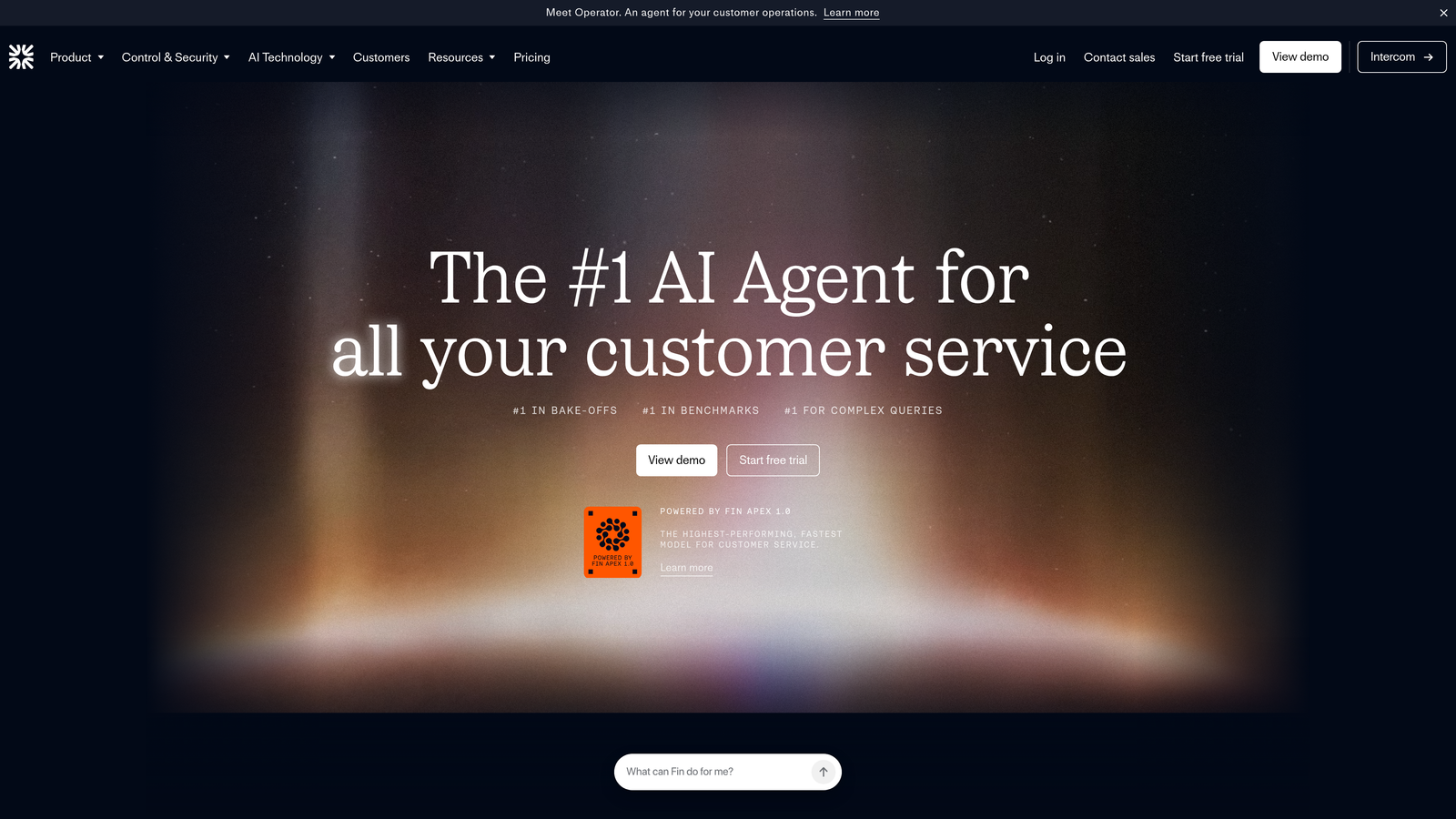
Intercom Fin is Intercom's native AI agent, designed to resolve customer questions directly from your existing help center content and conversation history.
Where This Tool Shines
If you're already on Intercom, Fin is the lowest-friction path to AI-powered resolution. It plugs into your existing messenger, inbox, and workflows without requiring a platform migration. Setup is relatively fast because Fin learns from content you've already created.
The usage-based pricing model is also worth noting. Rather than paying a flat monthly fee regardless of AI performance, you pay per resolved conversation. That aligns incentives well: you only pay when Fin actually solves something.
Key Features
Help Center Resolution: Resolves queries by drawing directly from your existing articles and past conversation data.
Native Messenger Integration: Works seamlessly within Intercom's existing messenger, inbox, and automation workflows.
Customizable AI Personality: Adjust tone and communication style to match your brand voice.
Multilingual Support: Handles customer queries across multiple languages without additional configuration.
Usage-Based Pricing: Charges per resolution rather than per seat, making cost directly tied to value delivered.
Best For
Teams already invested in the Intercom ecosystem who want to add AI resolution without switching platforms. Less ideal for teams who aren't on Intercom, since Fin's value is deeply tied to the broader Intercom infrastructure.
Pricing
Starts at $0.99 per resolution, charged on top of your existing Intercom plan. Costs scale with resolution volume.
3. Zendesk AI
Best for: Enterprise teams already running Zendesk Suite who want AI embedded across every support channel.
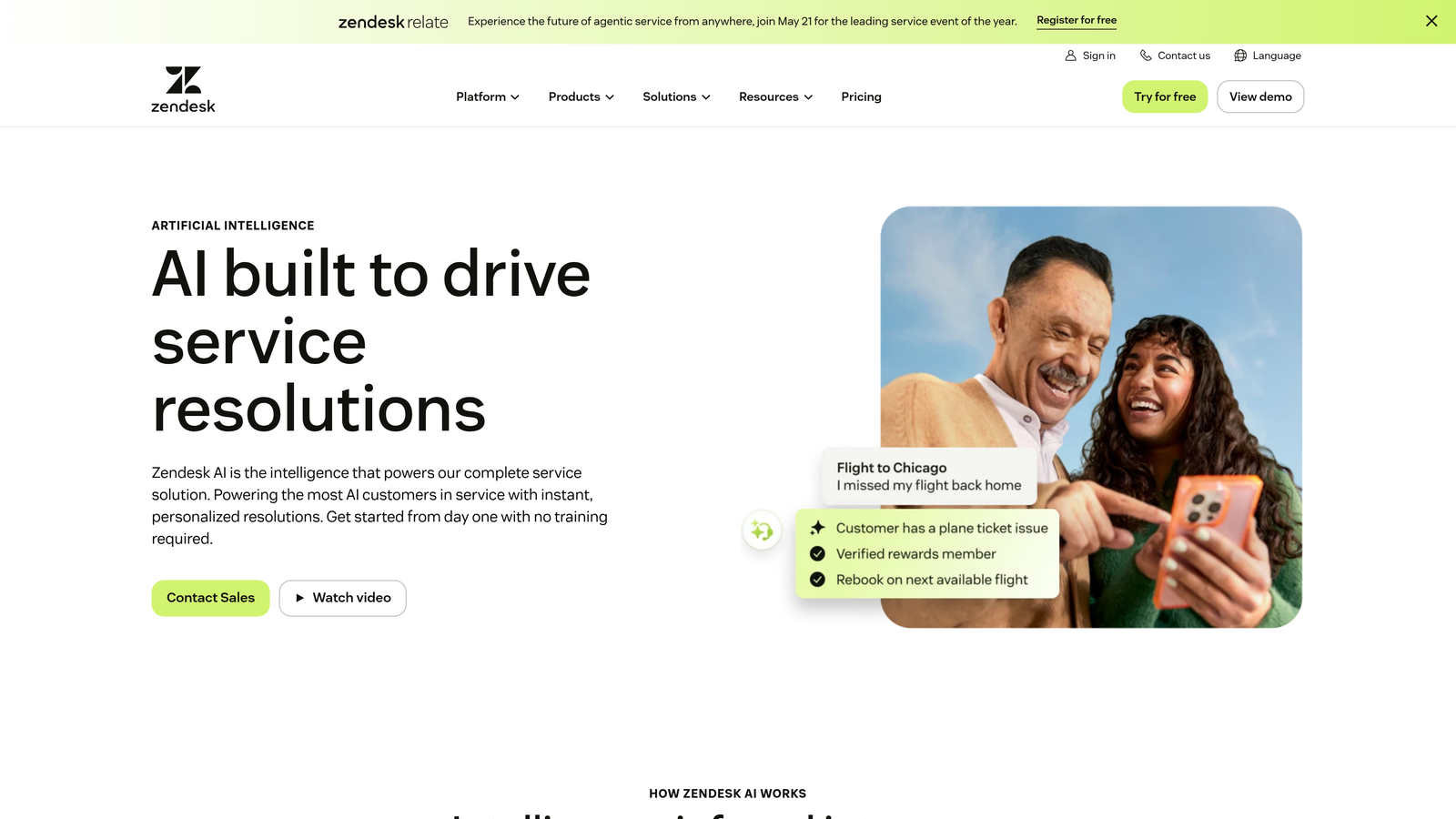
Zendesk AI brings intelligent triage, generative replies, and agent assist capabilities across email, chat, voice, and social channels within the Zendesk Suite.
Where This Tool Shines
Zendesk's strength is breadth. If you're managing high ticket volumes across multiple channels, the intelligent triage system automatically classifies intent, language, and sentiment so the right tickets reach the right agents faster. That alone can meaningfully reduce resolution time at scale.
The agent assist features are genuinely useful for human agents too, surfacing relevant knowledge base articles and suggesting macros mid-conversation. It's less about replacing agents and more about making every agent faster and more consistent.
Key Features
Intelligent Triage: Automatically classifies incoming tickets by intent, language, and sentiment to accelerate routing.
Generative AI Replies: Drafts responses for both customer-facing bots and human agents using your existing knowledge base.
Agent Assist: Surfaces relevant macros and articles to human agents in real time during live conversations.
Multi-Channel Coverage: Supports email, chat, voice, and social from a single platform.
Advanced AI Add-On: Additional automation depth available for teams needing higher-level AI capabilities beyond the base Suite.
Best For
Mid-market and enterprise companies already running Zendesk Suite. Switching costs are high if you're not already in the ecosystem, but for existing Zendesk customers, the AI layer is a natural upgrade path.
Pricing
AI features are included in Suite plans starting from approximately $55 per agent per month. An Advanced AI add-on is available at additional cost for deeper automation capabilities.
4. Ada
Best for: Enterprises with high ticket volumes focused on maximizing autonomous resolution rates across chat, email, and voice.
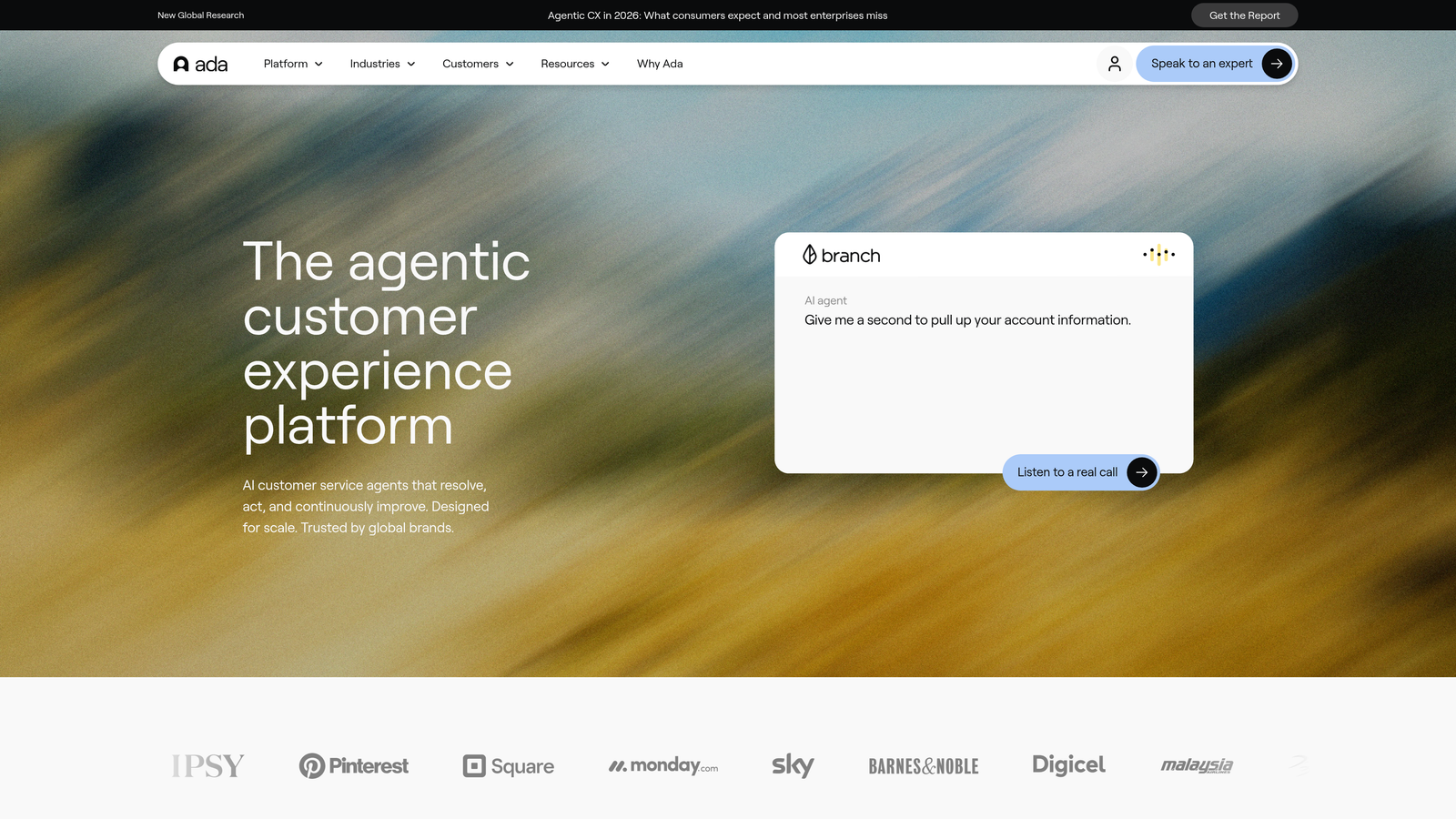
Ada is an automation-first AI platform built for enterprise support operations that need to resolve, not just deflect, queries at scale.
Where This Tool Shines
Ada's core philosophy centers on resolution rate as the primary KPI, which is a meaningful distinction from platforms that still optimize for deflection. Deflection means a customer didn't reach an agent; resolution means their problem was actually solved. That framing shapes how Ada is built and measured.
The no-code bot builder combined with generative AI capabilities gives non-technical teams real control over conversation design without engineering involvement. For enterprises managing complex support workflows, that flexibility matters.
Key Features
Multi-Channel AI Agent: Resolves queries across chat, email, and voice from a single platform.
No-Code Bot Builder: Drag-and-drop interface with generative AI for building and customizing conversation flows.
Resolution Rate Measurement: Tracks whether the AI truly solved the problem, not just whether it avoided a human handoff.
CRM Integrations: Connects with Zendesk, Salesforce, and other major CRM and helpdesk platforms.
Multilingual Support: Handles conversations in 50+ languages for global support operations.
Best For
Enterprise support teams with high ticket volumes across multiple channels, particularly those prioritizing measurable autonomous resolution over simple deflection metrics. Less suited for SMBs given the enterprise pricing model.
Pricing
Custom enterprise pricing based on ticket volume and configuration. Contact Ada directly for a quote.
5. Freshdesk Freddy AI
Best for: Growing teams wanting solid AI-assisted support at a budget-friendly price point within the Freshworks ecosystem.
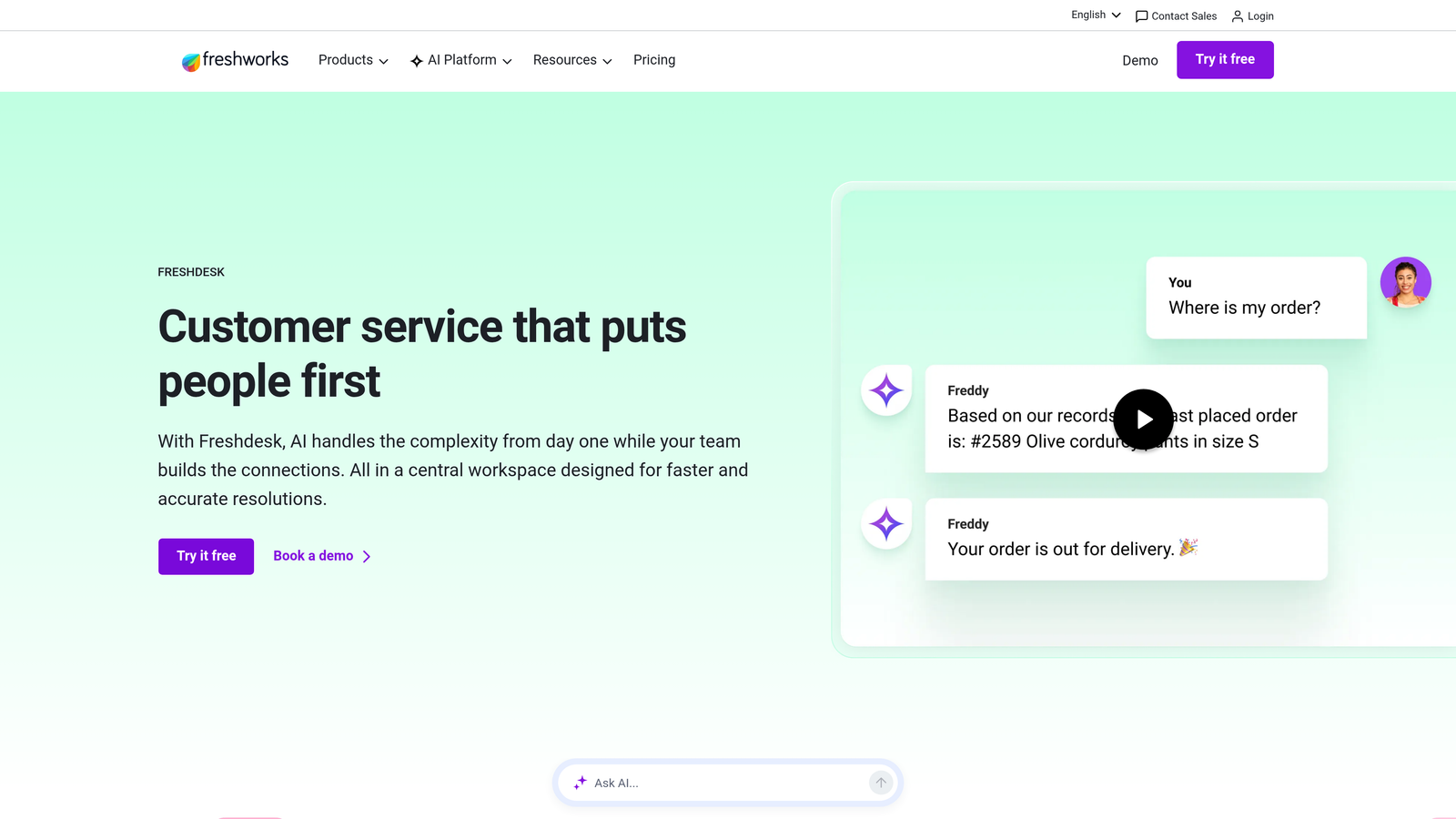
Freshdesk's Freddy AI is an AI assistant embedded across the Freshworks suite, offering auto-triage, suggested responses, and bot flows at a price point that undercuts many competitors.
Where This Tool Shines
Freshdesk's biggest advantage is value for money. You get meaningful AI capabilities, including auto-triage, suggested responses, and a chatbot builder, at a price that's accessible for teams not yet at enterprise scale. The integration across the broader Freshworks suite (Freshsales, Freshchat) also means you're not stitching together disconnected tools.
For teams coming from a spreadsheet or basic helpdesk and making their first serious investment in AI-assisted support, Freddy AI provides a low-risk entry point with room to grow.
Key Features
Auto-Triage: Freddy automatically prioritizes and categorizes incoming tickets to reduce manual sorting.
AI-Suggested Responses: Surfaces relevant reply suggestions to human agents based on ticket content and history.
Chatbot Builder: Pre-built templates and a visual builder for creating automated conversation flows.
Freshworks Suite Integration: Works natively with Freshsales and Freshchat for a unified customer view.
Affordable Entry Point: Competitive pricing compared to Zendesk and Intercom at similar capability tiers.
Best For
SMBs and mid-market teams that want AI-assisted support without enterprise pricing. Also a strong fit for teams already using other Freshworks products who want to consolidate their stack.
Pricing
Free tier available. Pro plan starts from approximately $49 per agent per month with AI features included.
6. Tidio
Best for: Small businesses and e-commerce brands wanting fast, simple AI chat that deploys in minutes.
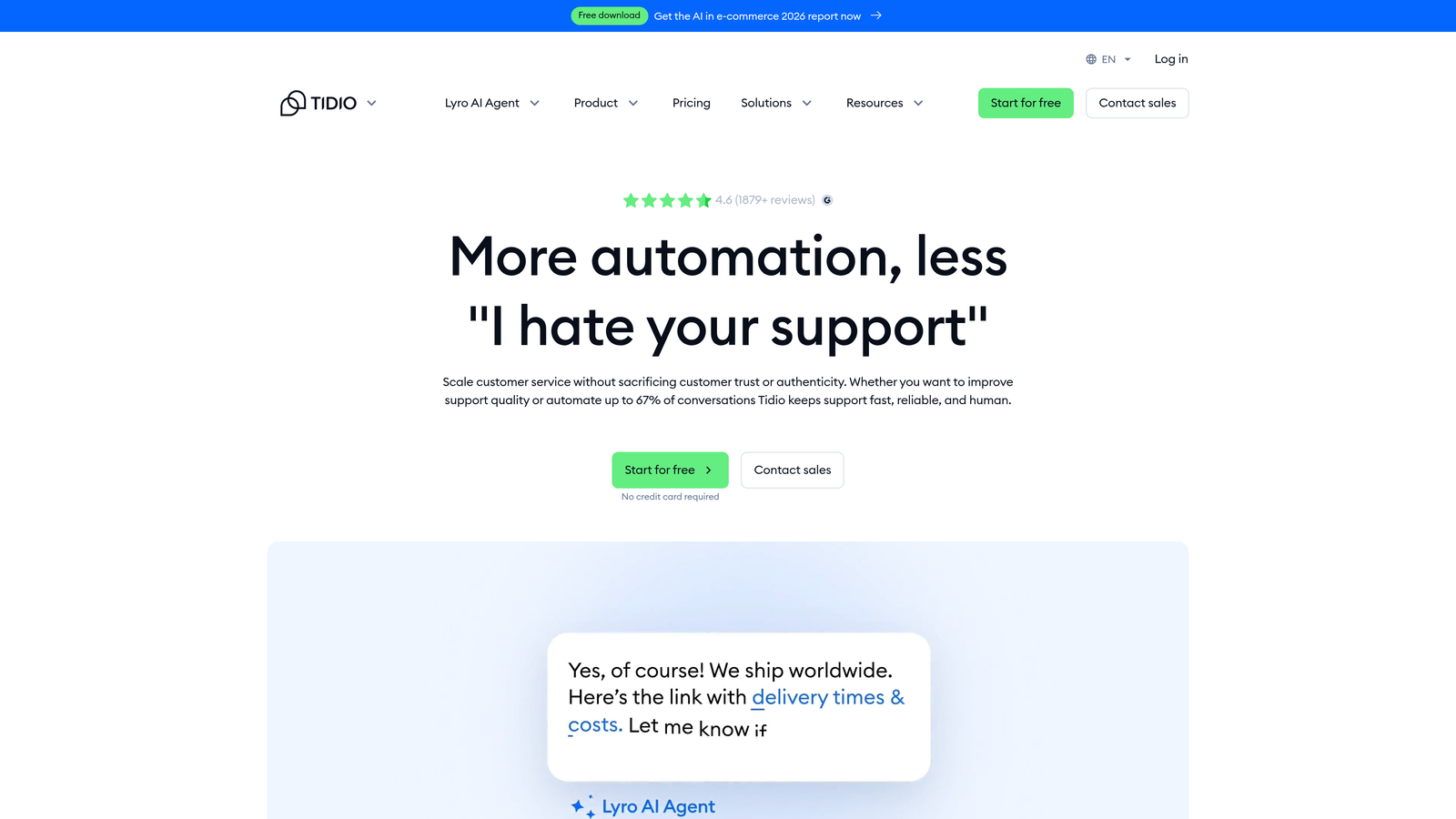
Tidio is a lightweight AI chatbot and live chat platform built for small businesses, with Lyro AI learning from your FAQ content to handle common queries instantly.
Where This Tool Shines
Tidio wins on simplicity and speed. If you need an AI chatbot live on your site today, Tidio is built for exactly that. The Lyro AI engine learns from your existing FAQ and help content without requiring complex setup, and the drag-and-drop flow builder makes customization accessible to anyone on your team.
The native Shopify, WordPress, and WooCommerce integrations also make Tidio a natural fit for e-commerce operators who want to handle order status, returns, and FAQ queries automatically without a dedicated support team.
Key Features
Lyro AI Chatbot: Learns from your FAQ and help content to resolve common queries without manual flow building.
Drag-and-Drop Flow Builder: Visual interface for building custom conversation paths without coding.
E-Commerce Integrations: Native connections to Shopify, WordPress, and WooCommerce.
AI-Assisted Live Chat: Suggests responses to human agents during live conversations.
Fast Deployment: Typically live within minutes of installation, with minimal configuration required.
Best For
Small businesses, e-commerce brands, and solo operators who need affordable AI chat without complexity. Not designed for enterprise-scale operations or complex B2B support workflows.
Pricing
Free plan available. Lyro AI starts from approximately $39 per month, making it one of the most accessible entry points on this list.
7. Forethought
Best for: Enterprise teams wanting a modular AI platform covering customer-facing resolution, agent assist, and intelligent routing in one system.
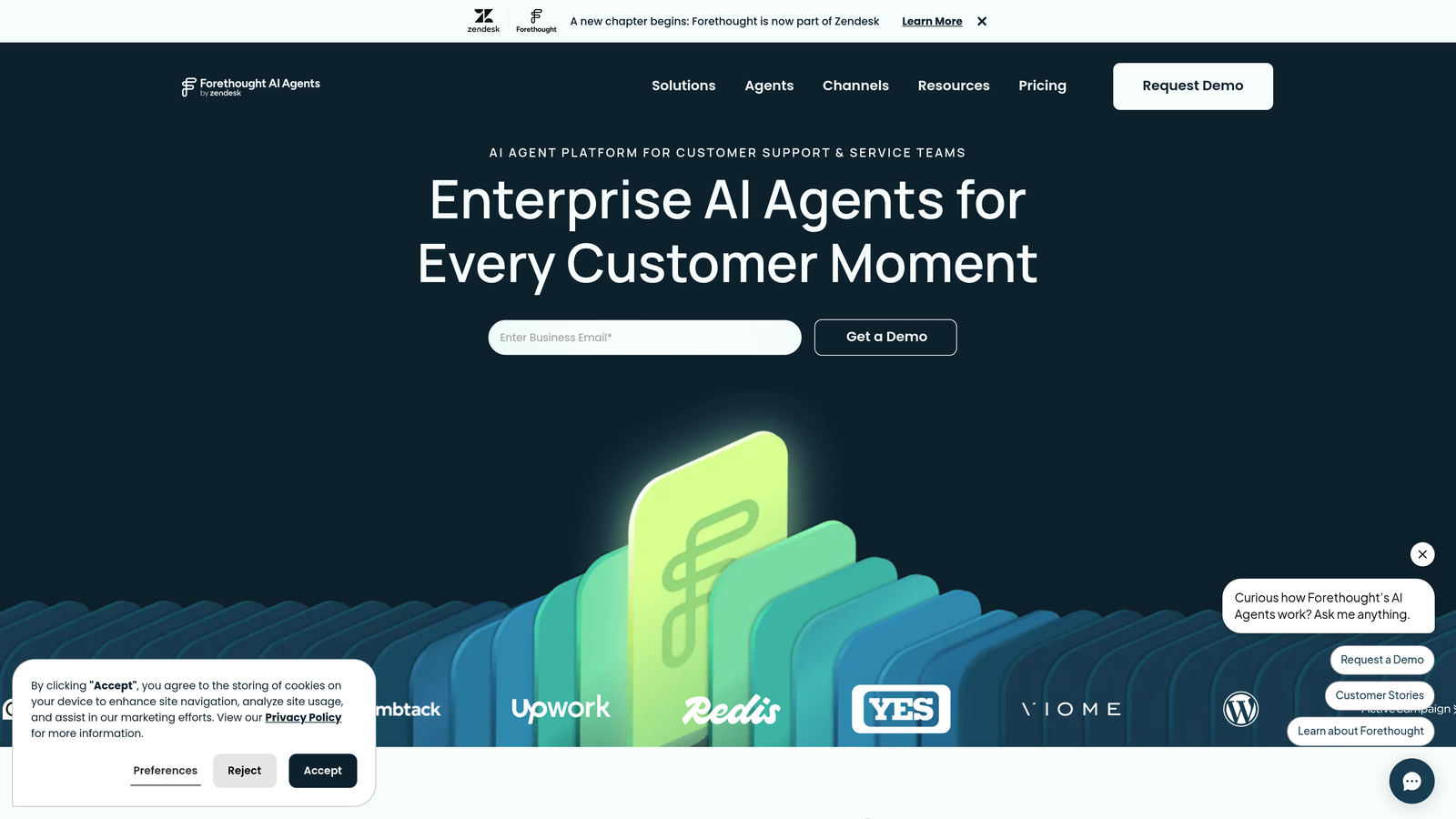
Forethought is an enterprise AI platform that combines customer-facing automation, real-time agent assistance, and intelligent ticket routing into a modular suite.
Where This Tool Shines
Forethought's modular approach is its strength. You can deploy Solve for customer-facing resolution, Assist for agent productivity, and Triage for intelligent routing independently or together. That flexibility means you can start with one module and expand without switching platforms as your needs grow.
The SupportGPT generative layer adds contextual, conversational responses on top of the structured modules, making interactions feel less robotic than traditional rule-based bots while still operating within guardrails your team controls.
Key Features
Solve: Customer-facing AI agent that resolves queries without human intervention.
Assist: Real-time knowledge surfacing and response suggestions for human agents during live conversations.
Triage: Routes tickets based on detected intent, urgency, and sentiment rather than simple keyword rules.
SupportGPT: Generative AI layer for natural, contextual responses across all modules.
Helpdesk Integrations: Connects with Zendesk, Salesforce, and ServiceNow for teams already invested in those ecosystems.
Best For
Enterprise support operations that need modular AI deployment across customer-facing and agent-facing workflows. Strong fit for teams on Zendesk or Salesforce looking to add a purpose-built AI layer on top.
Pricing
Custom pricing based on ticket volume and which modules are selected. Contact Forethought for a quote.
8. Kustomer
Best for: D2C and e-commerce brands that need AI operating on a full customer timeline with order history and CRM data in context.
Kustomer is a CRM-first customer support platform where AI works from a unified customer timeline that combines support history, order data, and CRM records in a single view.
Where This Tool Shines
Most support platforms treat customers as ticket numbers. Kustomer treats them as people with history. The unified timeline means that when an AI agent or human agent picks up a conversation, they have the full picture: previous interactions, order status, account value, and behavioral history all in one place.
That context makes AI responses significantly more relevant. An AI agent that knows a customer has had two previous issues with the same product can respond differently than one seeing the customer for the first time.
Key Features
Unified Customer Timeline: Combines support tickets, order history, and CRM data into a single contextual view for every customer.
AI Chatbots with History Context: Bots respond with awareness of the customer's full account and interaction history.
Omnichannel Support: Handles chat, email, social, SMS, and voice from one platform.
Workflow Automation: Business rules engine for automating complex routing and escalation logic.
D2C and E-Commerce Fit: Purpose-built for brands with high order volumes and repeat customer relationships.
Best For
D2C brands, subscription businesses, and e-commerce companies where customer history and order context are central to every support interaction. Less suited for pure B2B SaaS teams without significant transaction data.
Pricing
Enterprise plan starts from approximately $89 per user per month.
9. Drift (Salesloft)
Best for: Revenue-focused teams who need AI that handles both support deflection and sales qualification in a single conversation layer.
Drift, now part of Salesloft, is a conversational AI platform that blurs the line between support and sales, routing and qualifying conversations while resolving common queries.
Where This Tool Shines
Drift's unique angle is that it doesn't treat support and sales as separate functions. A visitor asking a product question might also be a qualified buyer. Drift's AI can identify that intent, answer the support question, and book a meeting with a sales rep in the same conversation flow.
For companies where the support chat is also a revenue channel, that dual capability is genuinely valuable. The revenue attribution analytics also give sales and marketing teams visibility into which conversations converted.
Key Features
Dual-Purpose AI Chatbot: Handles both support deflection and lead qualification within the same conversation.
Automated Meeting Booking: Books sales meetings directly from support conversations when buying intent is detected.
Intent-Based Routing Playbooks: Routes conversations based on detected intent, whether support-focused or sales-focused.
CRM Integrations: Connects with Salesloft, Salesforce, and other major CRM platforms.
Revenue Analytics: Tracks conversation-to-pipeline attribution for revenue reporting.
Best For
B2B companies where website chat serves both support and sales functions, particularly teams already using Salesloft for their revenue workflow. Less ideal for pure support use cases where sales qualification isn't a priority.
Pricing
Custom pricing; typically bundled with Salesloft plans. Contact Salesloft for current pricing details.
10. HubSpot Service Hub AI
Best for: Teams already in the HubSpot ecosystem who want support, CRM, and marketing data unified in one platform.
HubSpot Service Hub brings AI-powered chatbots, ticket automation, and knowledge base intelligence into HubSpot's broader CRM platform, connecting support data with marketing and sales in one unified system.
Where This Tool Shines
If your team already lives in HubSpot, Service Hub's AI features are a natural extension rather than a new tool to learn. The AI chatbot draws on HubSpot CRM data to personalize responses, and ticket routing connects directly to the contact and deal records your sales and marketing teams are already managing.
The unified view across marketing, sales, and support is genuinely useful for teams that want to understand the full customer journey without stitching together multiple platforms.
Key Features
CRM-Connected AI Chatbot: Pulls HubSpot CRM data into chatbot responses for contextually personalized interactions.
Automated Ticket Routing: Routes and prioritizes tickets based on contact properties and deal data from HubSpot CRM.
AI-Powered Knowledge Base: Smart search and article suggestions surfaced within support conversations.
Customer Feedback and NPS: Built-in survey tools for tracking satisfaction alongside support metrics.
Cross-Platform Visibility: Unified view across HubSpot's marketing, sales, and service hubs for full customer journey insight.
Best For
Companies already using HubSpot for CRM, marketing, or sales who want to consolidate their support stack without adding a new vendor. Also a strong starting point for teams new to AI-assisted support who want a gentle learning curve.
Pricing
Free tools available. Service Hub Professional starts from approximately $100 per month with full AI features included.
11. Cognigy
Best for: Global enterprises with complex voice support operations requiring 100+ language support and contact center platform integrations.
Cognigy is an enterprise conversational AI platform with particularly strong voice capabilities, designed for large-scale global support operations with complex compliance and infrastructure requirements.
Where This Tool Shines
Most AI support platforms treat voice as an afterthought. Cognigy treats it as a first-class channel. The platform's voice AI agents are built for phone-based support automation at scale, integrating directly with enterprise contact center platforms like Genesys, NICE, and Avaya.
The combination of 100+ language support and on-premise deployment options also makes Cognigy one of the few platforms that can realistically serve highly regulated global enterprises where data residency and compliance requirements rule out cloud-only solutions.
Key Features
Voice AI Agents: Purpose-built phone support automation that integrates with enterprise contact center infrastructure.
100+ Language Support: Handles customer conversations across more languages than virtually any competitor on this list.
Low-Code Flow Editor: Visual interface for designing complex, branching conversation flows without heavy engineering involvement.
Contact Center Integrations: Native connections to Genesys, NICE, Avaya, and other major contact center platforms.
On-Premise Deployment: Supports both cloud and on-premise deployment for organizations with strict data compliance requirements.
Best For
Global enterprises with significant phone-based support volume, complex compliance requirements, or multi-language operations. Likely over-engineered for SMBs or companies whose support is primarily chat and email.
Pricing
Custom enterprise pricing. Contact Cognigy directly for a quote based on your deployment requirements and volume.
Which Platform Is Right for Your Team?
The honest answer is that the best customer support AI platform depends heavily on three things: your existing tech stack, your ticket volume, and whether you need a bolt-on AI layer or an AI-native architecture built for autonomous resolution.
Here's a quick-hit guide to cut through the noise:
AI-native with product context: Halo AI is the standout choice for B2B SaaS teams who need agents that understand what users are doing inside their product, not just what they're typing in a chat window.
Already on Intercom: Fin is the lowest-friction upgrade. Stay in your ecosystem and pay only for what gets resolved.
Enterprise Zendesk shop: Zendesk AI is the natural path. The triage and agent assist features alone justify the upgrade for high-volume teams.
Maximum automation at scale: Ada's resolution-first approach and multi-channel coverage make it the strongest choice for enterprises optimizing for autonomous resolution rates.
Budget-conscious teams: Freshdesk Freddy AI and Tidio both deliver real AI capability at price points that work for growing teams not yet at enterprise scale.
CRM-centric operations: Kustomer for D2C and e-commerce brands; HubSpot Service Hub for teams already in the HubSpot ecosystem.
Voice-heavy global enterprise: Cognigy is in a category of its own for phone-based support automation at scale.
Your support team shouldn't scale linearly with your customer base. AI agents can handle routine tickets, guide users through your product, and surface business intelligence while your team focuses on complex issues that genuinely need a human touch. See Halo in action and discover how continuous learning transforms every interaction into smarter, faster support.