11 Best Customer Support Automation Tools to Scale Smarter in 2026
This guide evaluates the top customer support automation tools for 2026, comparing AI-native platforms and established helpdesks across five key criteria—including AI depth, integrations, and real-world complexity handling—to help B2B SaaS teams, e-commerce brands, and SMBs scale support operations without proportionally increasing headcount.
 Matt PattoliFounder15 min read
Scaling customer support without scaling headcount used to mean one thing: more automation rules, more decision trees, more "if this, then that" logic that breaks the moment a customer asks something slightly unexpected. That era is fading fast.
The shift happening right now is from rule-based automation to AI-native platforms that can actually resolve issues, not just deflect them. The tools on this list reflect that shift, covering everything from AI-first platforms built around autonomous resolution to established helpdesks that have added meaningful AI layers, plus vertical-specific solutions for e-commerce and SMB teams.
To build this list, we evaluated each tool across five criteria: depth of AI capabilities, integration breadth, deployment complexity, pricing transparency, and the ability to handle real-world support complexity beyond surface-level FAQs. Whether you're a B2B SaaS team looking to eliminate ticket backlogs or an e-commerce brand trying to automate order inquiries, there's a fit here for you.
1. Halo AI
Best for: B2B SaaS teams that want AI-native autonomous ticket resolution with deep product and stack integration.
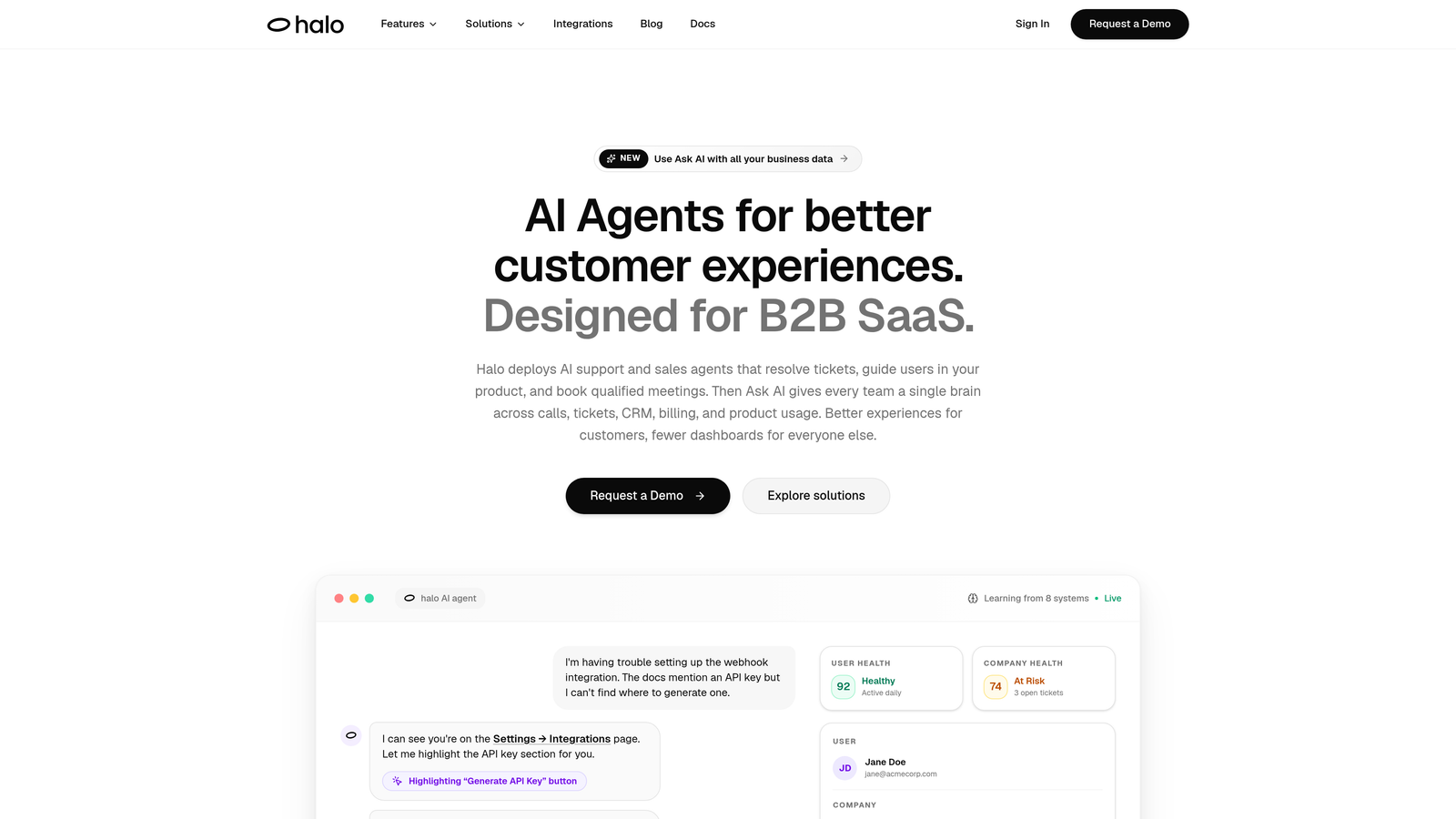
Halo AI is an AI-native customer support platform that deploys autonomous agents to resolve tickets, guide users through your product with page-aware context, and automatically create bug reports — learning from every interaction to get smarter over time.
Where This Tool Shines
Most support tools were built as helpdesks first, with AI added later. Halo AI was designed the other way around. Its AI agents don't just surface knowledge base articles; they take actions, handle multi-step issues, and understand what page a user is on when they reach out. That context changes everything about the quality of support delivered.
The continuous learning architecture is what separates Halo from one-time-configured chatbots. Every resolved ticket, every escalation, every piece of user feedback feeds back into the system, making it progressively more capable without requiring your team to manually retrain it.
Key Features
Page-Aware Chat Widget: The widget sees what your user sees, enabling visual UI guidance and context-specific help rather than generic responses.
Autonomous Ticket Resolution: AI agents resolve tickets end-to-end, with continuous learning from every interaction improving resolution quality over time.
Auto Bug Ticket Creation: Automatically generates and routes bug reports to Linear and other engineering tools when users report product issues.
Smart Inbox with Business Intelligence: Goes beyond basic metrics to surface customer health signals, revenue intelligence, and anomaly detection from support conversations.
Live Agent Handoff: Escalates complex issues to human agents with full conversation context intact, so nothing gets repeated or lost.
Best For
B2B SaaS companies and product teams that want genuine AI resolution rather than deflection, particularly those already using tools like Linear, Slack, HubSpot, Intercom, Stripe, or Zoom. Best suited for teams that want support to generate business intelligence, not just close tickets.
Pricing
Contact for pricing. Plans are scaled to team size and ticket volume, making it adaptable for growth-stage and enterprise teams alike.
2. Intercom
Best for: Product-led SaaS companies wanting conversational support with proactive engagement across channels.
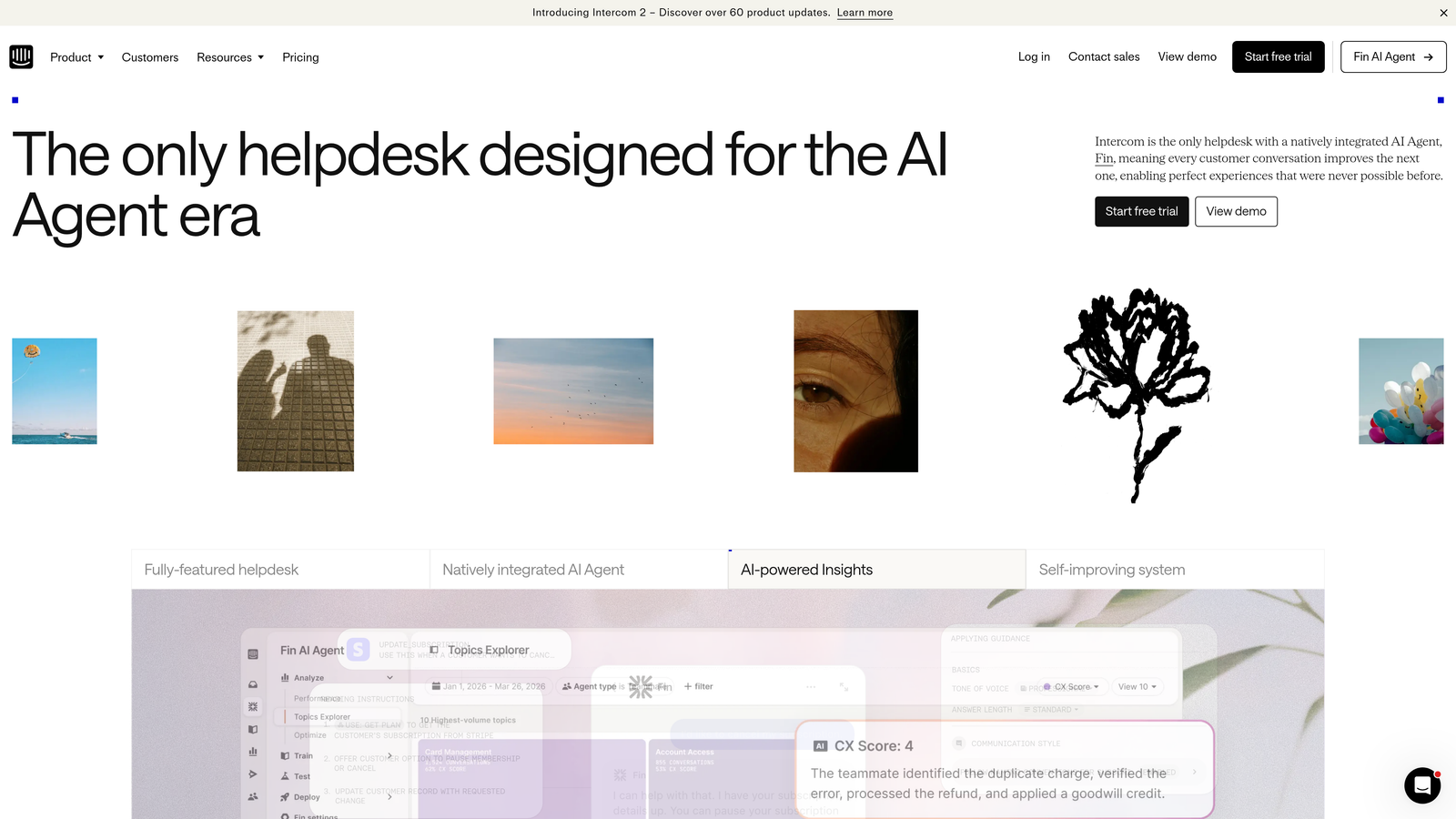
Intercom is a customer messaging platform with Fin AI Agent for automated resolution, proactive support, and a unified inbox spanning chat, email, and social.
Where This Tool Shines
Intercom built its reputation on conversational, in-product messaging, and that DNA still shows. Fin AI Agent handles a meaningful share of incoming conversations autonomously, while the platform's proactive messaging tools let teams get ahead of common issues before customers even reach out.
The unified inbox experience is genuinely well-designed, and the workflow builder gives non-technical teams real control over automation logic without needing developer involvement.
Key Features
Fin AI Agent: Conversational AI that resolves tickets across channels, trained on your help content and conversation history.
Proactive Messaging and Tours: Trigger in-app messages and product tours based on user behavior to reduce inbound support volume.
Unified Inbox: Consolidates chat, email, and social conversations into a single agent workspace.
Custom Bots and Workflow Builder: Visual automation builder for routing, tagging, and escalation logic.
App Marketplace: Extensive integrations with CRM, billing, and product analytics tools.
Best For
SaaS companies that want to blend reactive support with proactive customer engagement. Particularly strong for teams that value in-app messaging as a core channel alongside traditional ticketing.
Pricing
Starts at $39/seat/month (Essential plan); Fin AI Agent usage is billed per resolution, so costs can scale with volume.
3. Zendesk
Best for: Large enterprises needing omnichannel ticketing with mature automation, reporting, and a massive integration ecosystem.
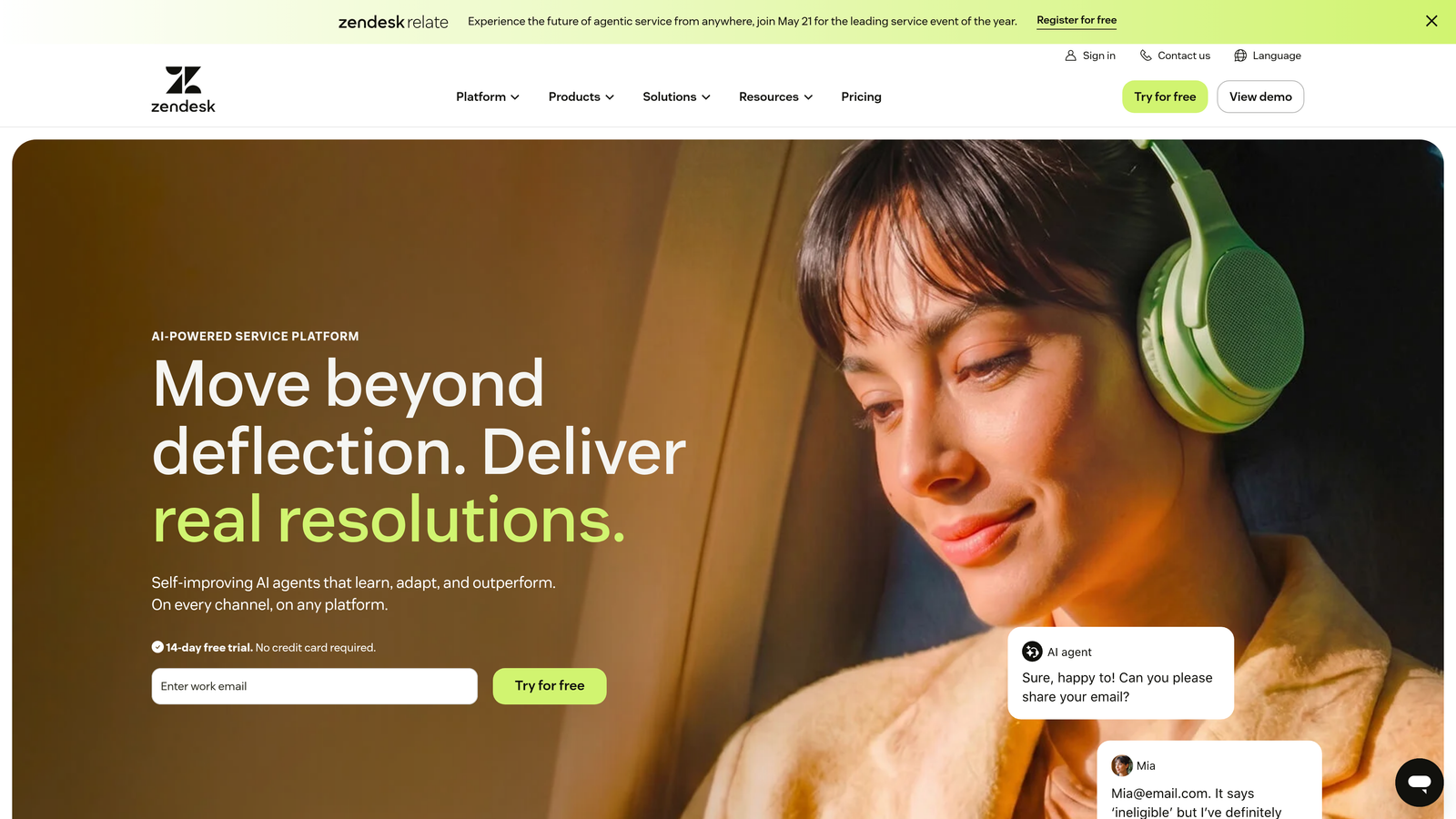
Zendesk is an enterprise-grade helpdesk platform with omnichannel support, advanced automation triggers, and AI-powered features built for large-scale support operations.
Where This Tool Shines
Zendesk's strength is breadth and maturity. It handles virtually every support channel, has one of the largest integration marketplaces in the industry, and offers reporting depth that enterprise teams expect. For organizations that need to standardize support across multiple regions, products, or teams, Zendesk provides the infrastructure to do it.
Its AI capabilities have expanded significantly, with agent assist features, intelligent routing, and ticket classification that reduce manual triage. It's less AI-native than purpose-built platforms, but the AI layer is genuinely useful rather than cosmetic.
Key Features
Omnichannel Ticketing: Unified management across email, chat, phone, social, and messaging apps in one platform.
AI-Powered Routing and Agent Assist: Intelligent ticket classification, routing, and real-time suggestions to help agents resolve issues faster.
Advanced Automation Workflows: Macros, triggers, and automation rules for complex support processes and SLA management.
Integration Marketplace: Over 1,500 apps covering CRM, e-commerce, analytics, and engineering tools.
Reporting and Analytics: Robust dashboards with customizable metrics and team performance tracking.
Best For
Enterprise support teams with high ticket volumes, multiple channels, and complex routing requirements. Also a strong choice for teams that need deep compliance and security controls alongside support functionality.
Pricing
Starts at $19/agent/month (Support Team); Suite plans begin at $55/agent/month with full omnichannel capabilities included.
4. Freshdesk
Best for: Growing teams that want solid helpdesk functionality with AI features at a budget-friendly price point.
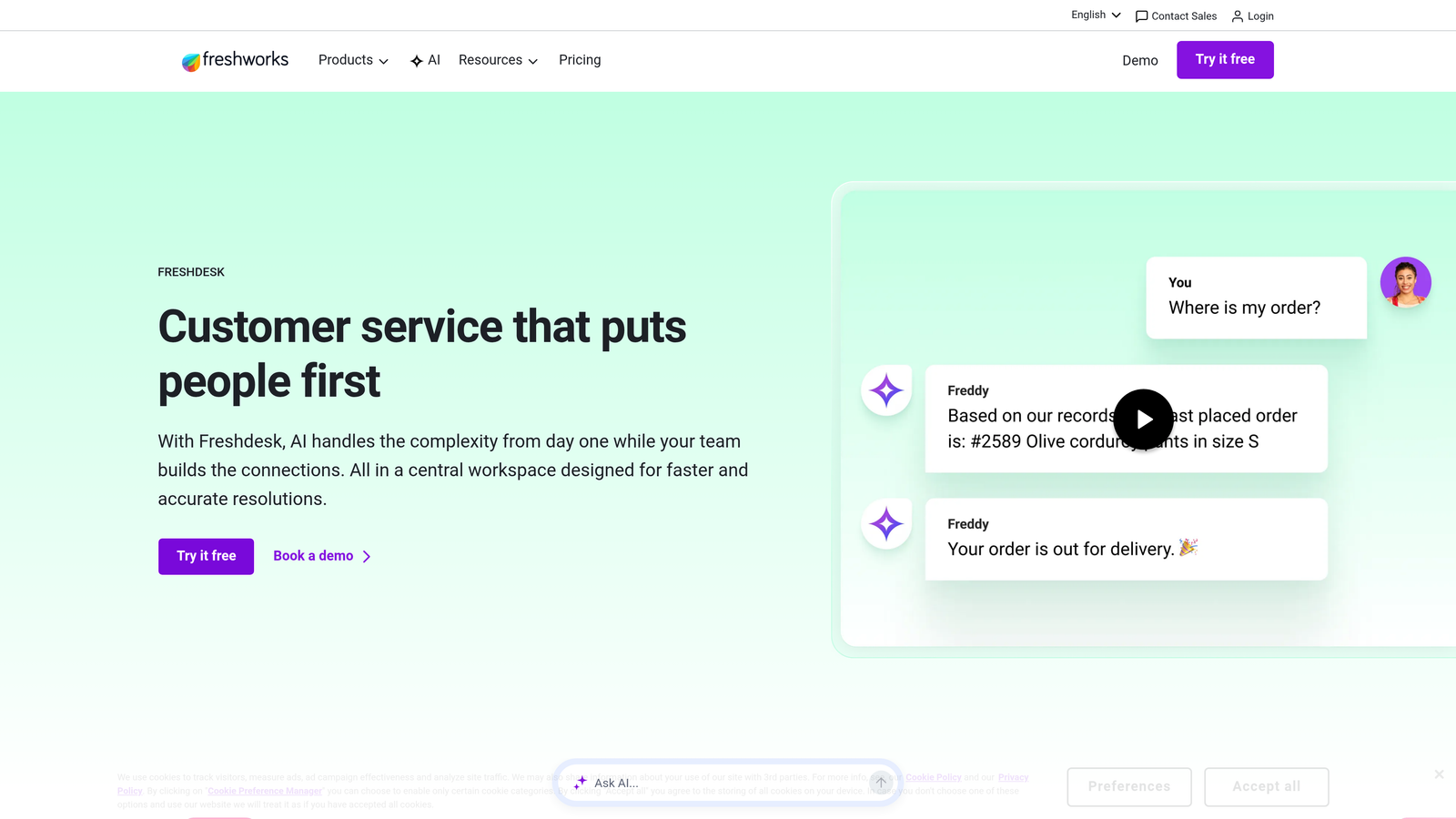
Freshdesk is an affordable helpdesk platform with Freddy AI for ticket summarization, response suggestions, and workflow automation, offering strong value for teams watching their spend.
Where This Tool Shines
Freshdesk hits a sweet spot between capability and cost that many mid-market teams appreciate. Freddy AI handles the AI-assist layer reasonably well, covering auto-triage, response suggestions, and ticket summarization without requiring a significant configuration investment to get started.
The free tier is genuinely useful for small teams, and the Freshworks ecosystem means that as your business grows, you can layer in CRM, ITSM, and sales tools from the same vendor without major integration headaches.
Key Features
Freddy AI: Handles ticket summarization, response suggestions, and auto-triage to reduce agent workload.
Multi-Channel Ticketing: Email, chat, phone, social, and WhatsApp all managed in one place.
Scenario Automations and SLA Management: Automate repetitive workflows and enforce response time commitments.
Free Tier: Functional free plan for up to 2 agents, making it accessible for early-stage teams.
Freshworks Ecosystem Integration: Native connections to Freshsales CRM and Freshservice ITSM for unified business operations.
Best For
Growing startups and SMBs that need a capable, multi-channel helpdesk without enterprise pricing. Also a good fit for teams already invested in the Freshworks product suite.
Pricing
Free tier for up to 2 agents; paid plans start at $15/agent/month, with higher tiers unlocking advanced automation and AI features.
5. Ada
Best for: Enterprise teams needing scalable AI resolution across multiple languages and channels without code-heavy setup.
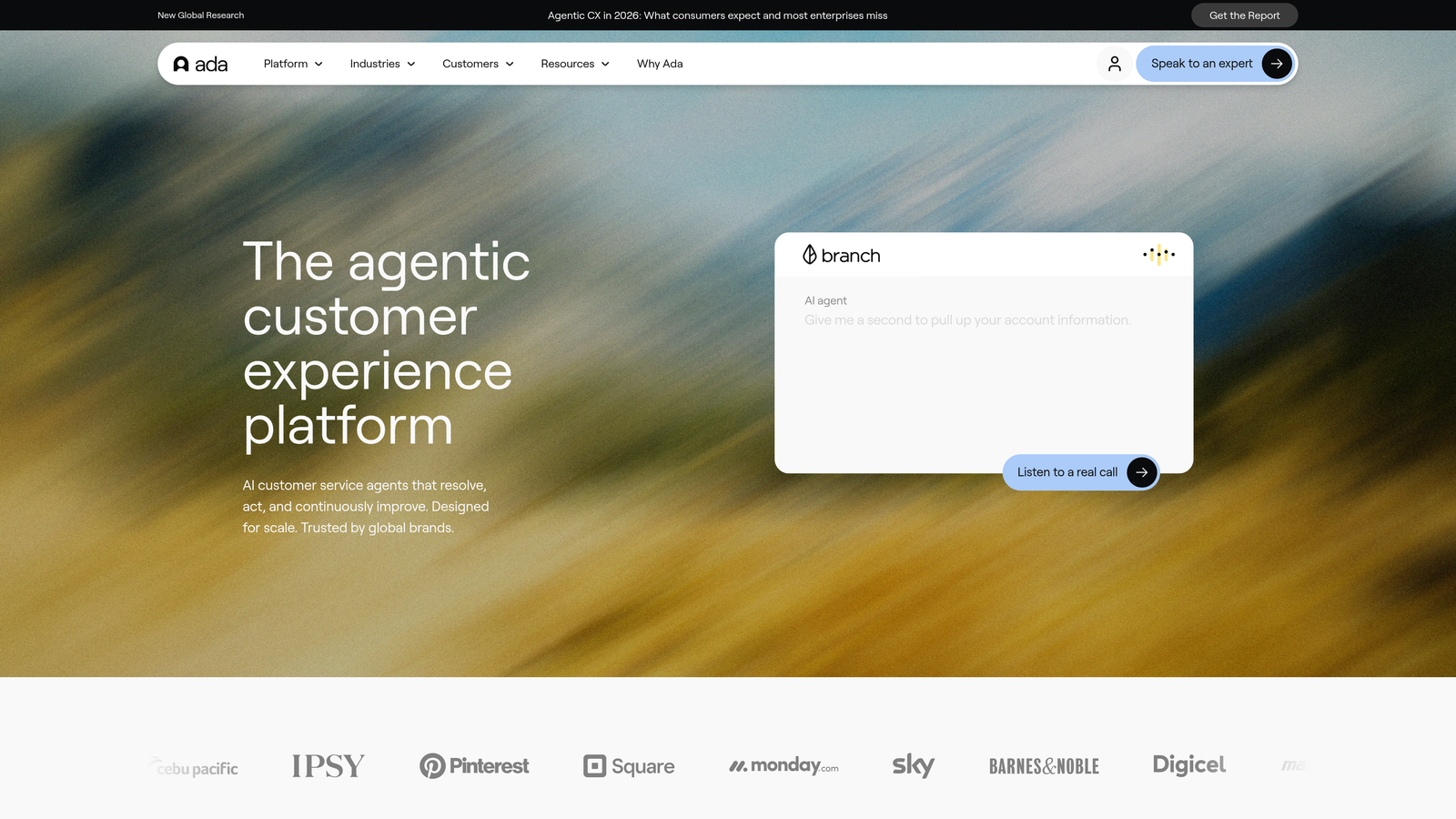
Ada is an enterprise AI agent platform purpose-built for automated customer service resolution at scale, with no-code configuration and strong multi-language support.
Where This Tool Shines
Ada's core philosophy is resolution over deflection, which is a meaningful distinction. Rather than routing customers to articles and hoping they find what they need, Ada's AI is designed to actually solve the issue. That focus on outcomes rather than activity makes it particularly compelling for enterprises where resolution quality directly impacts retention.
The no-code builder means customer experience teams can manage and update AI agents without waiting on engineering resources, which dramatically reduces the time between identifying a gap and fixing it.
Key Features
AI-First Resolution Engine: Focused on solving customer issues end-to-end, not just deflecting to self-service content.
No-Code Platform: Build and manage AI agents through a visual interface without developer involvement.
Multi-Language Support: Handles conversations in 50+ languages for global customer bases.
Omnichannel Deployment: Deploy across web, mobile, social, and SMS from a single configuration.
Helpdesk Integrations: Connects with Zendesk, Salesforce, and other major platforms to fit into existing stacks.
Best For
Enterprise companies with large, global customer bases and high volumes of repetitive inquiries. Particularly strong for teams that need AI resolution to work across multiple languages and channels simultaneously.
Pricing
Custom enterprise pricing based on usage and deployment scope; contact Ada directly for a quote tailored to your volume.
6. Tidio
Best for: Small businesses and e-commerce teams wanting fast, affordable chatbot deployment with minimal setup time.
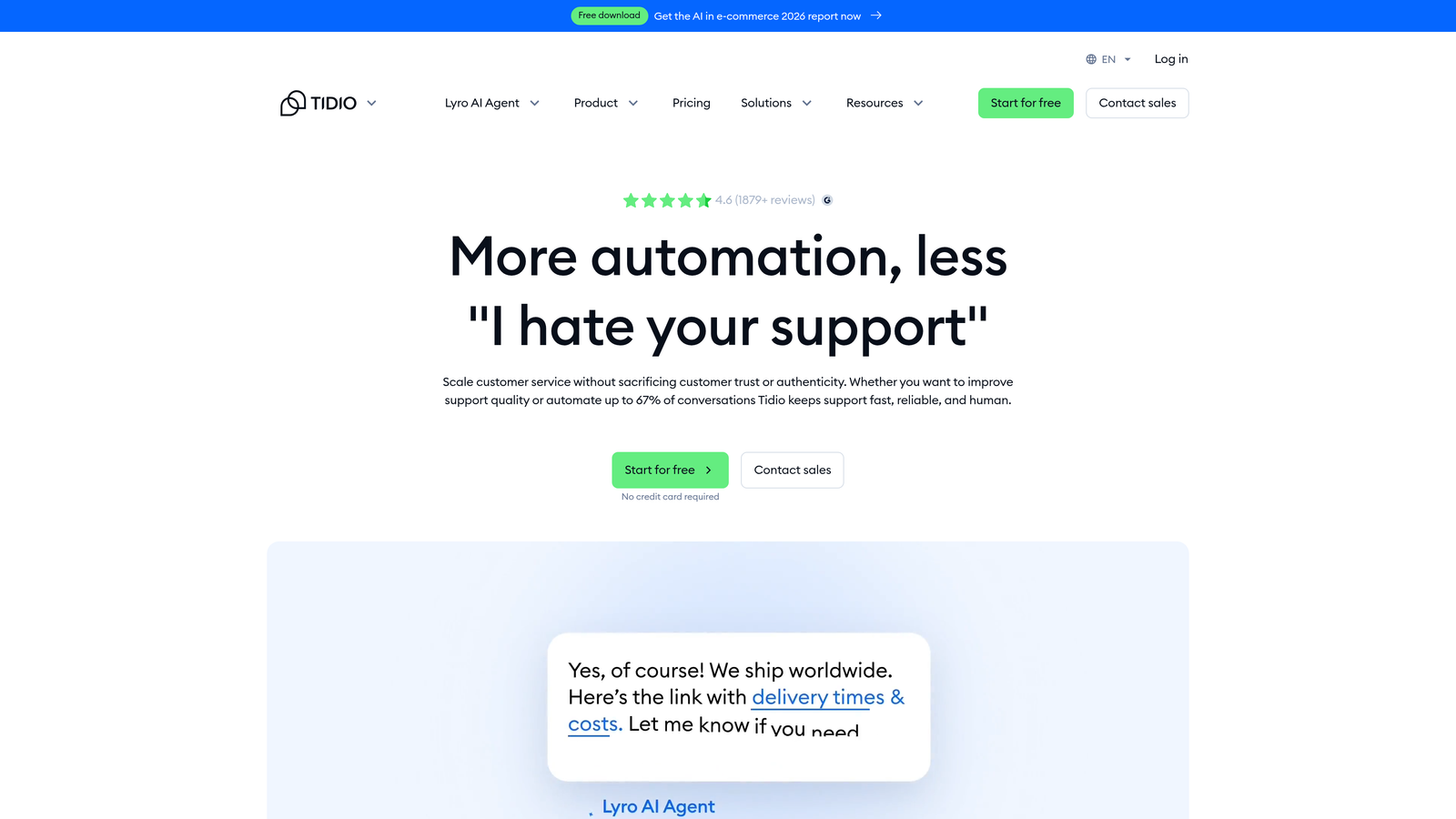
Tidio is an easy-to-deploy chatbot and live chat platform with Lyro AI, designed for smaller teams that want quick automation wins without a lengthy implementation process.
Where This Tool Shines
Tidio's appeal is simplicity and speed. You can have a working chatbot live on your site in a matter of hours, not weeks. Lyro AI learns from your existing knowledge base content, so it doesn't require extensive training data to start handling common questions effectively.
For Shopify and WordPress merchants in particular, the native integrations mean setup is genuinely plug-and-play. It's not the most sophisticated AI on this list, but for teams at an early stage, it delivers meaningful automation without the complexity or cost of enterprise platforms.
Key Features
Lyro AI Chatbot: Learns from your knowledge base to answer customer questions automatically without manual flow-building.
Visual Chatbot Builder: Drag-and-drop interface for creating custom conversation flows for specific scenarios.
Combined Live Chat and Chatbot: Seamlessly blend automated and human responses in a single widget.
E-Commerce Integrations: Native connections to Shopify, WordPress, and Wix for fast deployment.
Visitor Tracking: See who's on your site in real time and trigger proactive chat based on behavior.
Best For
Small businesses, e-commerce stores, and early-stage startups that want affordable, easy-to-launch automation. Less suited for complex B2B support environments with multi-step issue resolution needs.
Pricing
Free plan available; paid plans start at $29/month; Lyro AI is available as an add-on from $39/month.
7. HubSpot Service Hub
Best for: Teams already using HubSpot for CRM, marketing, or sales who want support tightly connected to the full customer journey.
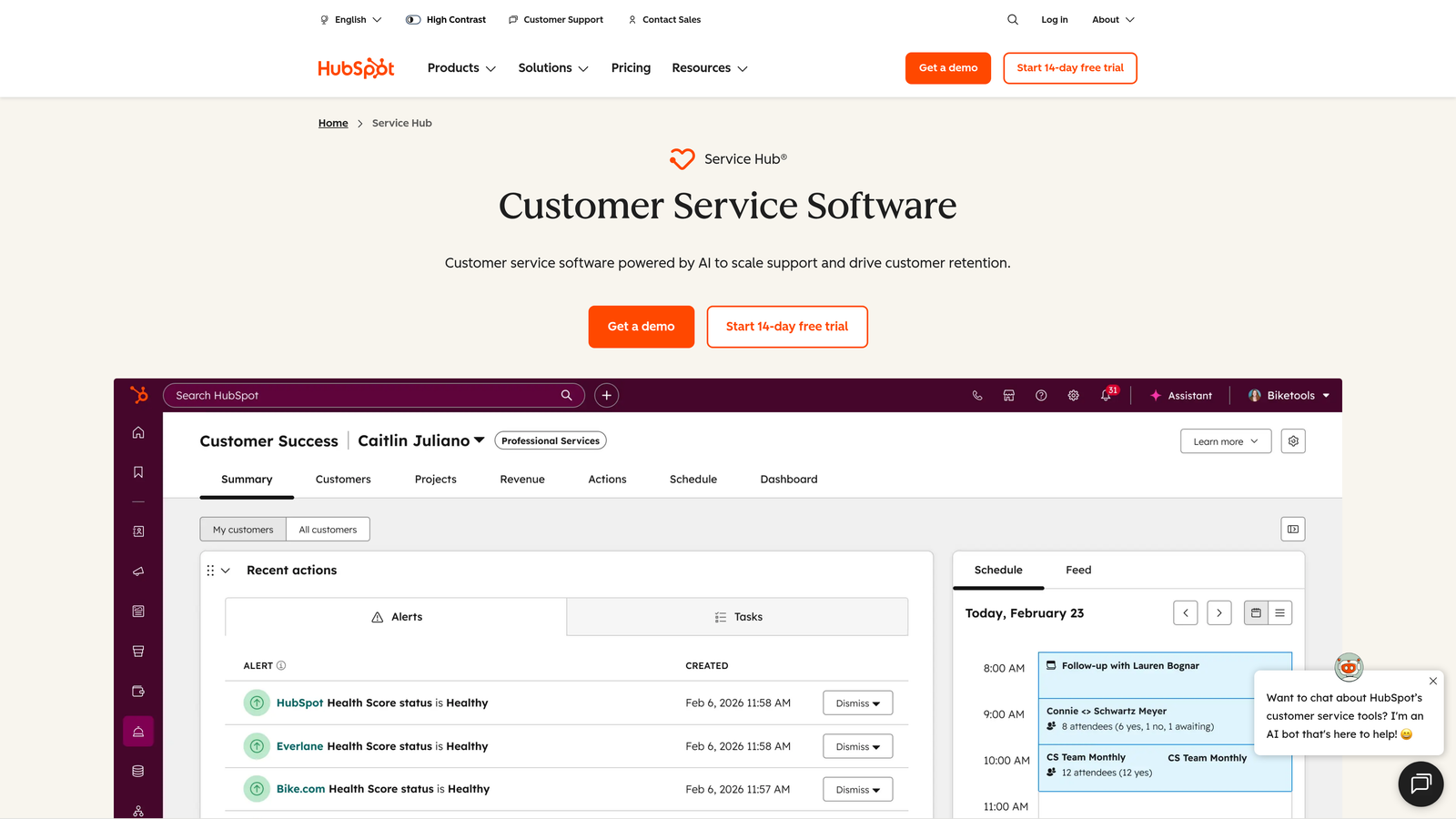
HubSpot Service Hub is a CRM-connected customer service platform with ticketing, knowledge base, AI tools, and feedback surveys built natively into the HubSpot ecosystem.
Where This Tool Shines
The real differentiator here is context. When your support team opens a ticket in HubSpot, they see the customer's full history: marketing emails they've received, deals they're part of, previous support interactions, and contact details. That level of context makes every support conversation more informed and more personal.
For teams already paying for HubSpot's CRM or Marketing Hub, adding Service Hub is a natural extension rather than introducing a new vendor relationship. The AI chatbot and routing tools are solid, if not the most advanced on this list.
Key Features
Full CRM Context: Every support interaction includes complete marketing and sales history from the HubSpot CRM.
AI Chatbot and Routing: Automated conversation handling and intelligent routing based on inquiry type and customer data.
Knowledge Base with AI Search: Self-service content with AI-powered search and article suggestions for agents.
Customer Feedback and NPS: Built-in survey tools for tracking satisfaction and identifying at-risk customers.
Shared Inbox with SLAs: Automated ticket assignment, SLA tracking, and team collaboration tools in one view.
Best For
B2B companies running on HubSpot who want support, marketing, and sales data unified in one platform. Less compelling as a standalone support tool if you're not already in the HubSpot ecosystem.
Pricing
Free tools available for basic use; Starter from $20/seat/month; Professional from $100/seat/month with advanced automation and reporting.
8. Help Scout
Best for: Teams that prioritize a human, relationship-focused support experience with smart AI assistance behind the scenes.
Help Scout is a collaborative shared inbox platform with AI drafts, conversation summarization, and workflow automation designed for teams that want support to feel personal rather than automated.
Where This Tool Shines
Help Scout occupies a distinct position on this list: it's not trying to maximize automation for its own sake. Instead, it uses AI to help human agents work faster and more thoughtfully. AI draft suggestions are trained on your past conversations, so they sound like your team rather than a generic bot. That matters a lot when your brand voice is a competitive differentiator.
The clean, distraction-free interface and collision detection (which prevents two agents from replying to the same ticket simultaneously) make it genuinely pleasant to use, which is rarer than it should be in helpdesk software.
Key Features
AI Drafts and Reply Suggestions: AI-generated responses trained on your team's historical conversations to match your voice and tone.
Conversation Summarization: AI summaries give agents instant context on long or complex threads without reading every message.
Shared Inbox with Collision Detection: Prevents duplicate replies and keeps team coordination clean with private notes.
Beacon Widget: Embedded help widget for in-app messaging and self-service content delivery.
Docs Knowledge Base: Integrated self-service documentation with search built directly into the support experience.
Best For
Customer-centric teams at SMB to mid-market scale that want AI to assist agents rather than replace them. Particularly well-suited for companies where tone and relationship quality are central to the customer experience.
Pricing
Starts at $25/user/month (Standard); Plus plan at $50/user/month with expanded automation and reporting capabilities.
9. Forethought
Best for: Enterprise teams that want to add AI resolution and triage on top of their existing Zendesk, Salesforce, or ServiceNow setup.
Forethought is an AI layer for enterprise support that adds intelligent triage, autonomous resolution, and agent assist capabilities on top of existing helpdesk platforms without replacing them.
Where This Tool Shines
Forethought's overlay architecture is its defining characteristic. Rather than asking you to migrate away from Zendesk or Salesforce Service Cloud, it sits on top and makes those platforms significantly smarter. SupportGPT models are trained on your historical ticket data, meaning the AI understands your specific customers, your product's terminology, and your team's resolution patterns.
This approach is particularly valuable for enterprises that have invested heavily in their existing helpdesk configuration and can't justify a full platform migration, but still want meaningful AI resolution capabilities.
Key Features
SupportGPT Models: AI trained on your historical ticket data for context-specific resolution and routing.
Intelligent Triage and Routing: Routes tickets based on detected intent and urgency rather than keyword matching.
Solve AI Agent: Autonomous resolution of common inquiries without agent involvement.
Agent Assist: Real-time response suggestions and knowledge surfacing during live agent conversations.
Overlay Architecture: Works on top of Zendesk, Salesforce, and ServiceNow without replacing your existing setup.
Best For
Enterprise support teams already committed to a major helpdesk platform that want to layer in advanced AI without a full migration. Ideal when the existing helpdesk configuration is too valuable to abandon.
Pricing
Custom pricing based on ticket volume and deployment scope; contact Forethought directly for a tailored quote.
10. Dixa
Best for: Modern omnichannel support teams that want a unified agent workspace with built-in quality assurance and AI-powered routing.
Dixa is a conversational customer service platform with a unified agent workspace across phone, email, chat, and social, built for teams that need consistent quality across every channel.
Where This Tool Shines
Dixa's unified workspace genuinely delivers on the omnichannel promise. Agents handle phone calls, emails, chats, and social messages from a single interface without context-switching between tools. The AI-powered routing ensures conversations reach the right agent based on skills, availability, and conversation content rather than simple round-robin assignment.
The built-in quality assurance tools are a standout feature that many competitors leave to third-party integrations. AI-assisted conversation scoring gives team leads visibility into support quality at scale without manually reviewing every interaction.
Key Features
Unified Agent Workspace: Phone, email, chat, and social all managed from a single, consolidated interface.
AI-Powered Routing and Prioritization: Intelligent conversation distribution based on agent skills and conversation context.
Quality Assurance with AI Scoring: Automated conversation scoring to monitor and improve support quality at scale.
Native E-Commerce Integrations: Direct connections to Shopify, Magento, and major CRM platforms.
Real-Time Analytics Dashboards: Live performance visibility for team leads and support managers.
Best For
Mid-market to enterprise support teams managing high volumes across multiple channels who need both operational efficiency and quality oversight built into the same platform.
Pricing
Starts at $39/agent/month (Essential); Growth and Ultimate tiers available for teams needing advanced features and higher volume capacity.
11. Gorgias
Best for: E-commerce brands on Shopify or BigCommerce that want deep order data integration and revenue-aware support automation.
Gorgias is an e-commerce-focused helpdesk with deep Shopify and BigCommerce integration, AI-powered auto-responses for order inquiries, and revenue tracking features that connect support to sales outcomes.
Where This Tool Shines
Gorgias was built specifically for e-commerce, and that focus pays off in ways that general-purpose helpdesks can't easily replicate. When a customer asks about their order, the agent sees that order's full details pulled directly from Shopify, including status, tracking, and purchase history, without toggling between systems.
The revenue attribution feature is genuinely useful for e-commerce teams trying to justify support investment to leadership. Seeing which conversations converted to purchases, and which agents drove the most revenue, reframes support as a growth function rather than a cost center.
Key Features
Deep Shopify and BigCommerce Integration: Order data, customer history, and fulfillment details pulled directly into every ticket.
AI Auto-Responses for Order Inquiries: Automated handling of order status, return requests, and shipping questions without agent involvement.
Revenue Attribution Tracking: Measures the direct revenue impact of support conversations and individual agent performance.
Dynamic Macros: Personalized automated replies using variables like order number, customer name, and product details.
Multi-Channel Coverage: Email, chat, social media, and SMS managed from a single inbox.
Best For
Direct-to-consumer and e-commerce brands running on Shopify or BigCommerce with significant order inquiry volume. Less suited for B2B SaaS or service businesses without a transactional e-commerce component.
Pricing
Starts at $10/month (Starter, 50 tickets included); Pro plans from $60/month as ticket volume and team size grow.
Which Tool Is Right for Your Team?
The right customer support automation tool depends on three things: your existing stack, your team size, and how much of your support volume you actually want AI to resolve versus assist with.
Here's a quick-reference breakdown by use case to help you narrow it down:
AI-native autonomous resolution: Halo AI is the strongest choice for B2B SaaS teams that want genuine resolution, not just deflection, with deep integrations across their entire business stack.
Established messaging platform: Intercom remains the go-to for product-led SaaS companies that want proactive engagement alongside reactive support.
Enterprise omnichannel: Zendesk is the mature, proven choice for large organizations with complex routing, compliance needs, and a massive integration ecosystem.
Budget-friendly helpdesk: Freshdesk delivers solid AI-assisted support at a price point that growing teams can sustain without strain.
Enterprise AI resolution at scale: Ada is built for global enterprises that need autonomous resolution across 50+ languages and multiple channels simultaneously.
Small business quick start: Tidio gets e-commerce and SMB teams live with chatbot automation faster than almost anything else on this list.
CRM-connected support: HubSpot Service Hub is the natural choice if your team is already running on HubSpot and wants support integrated with your full customer journey.
Human-feeling shared inbox: Help Scout is ideal when your brand depends on personal, relationship-driven support and you want AI to assist agents, not replace them.
AI layer on existing helpdesk: Forethought is the right call when you've invested heavily in Zendesk or Salesforce and want to add AI resolution without migrating your entire setup.
Omnichannel conversational: Dixa suits modern support teams that need unified phone, email, chat, and social management with quality assurance built in.
Shopify-native e-commerce: Gorgias is purpose-built for DTC brands where order inquiries dominate the queue and revenue attribution matters.
Your support team shouldn't scale linearly with your customer base. Let AI agents handle routine tickets, guide users through your product, and surface business intelligence while your team focuses on complex issues that need a human touch. See Halo in action and discover how continuous learning transforms every interaction into smarter, faster support.