9 Top-Rated AI Helpdesk Platforms for B2B Teams in 2026
This guide evaluates nine top rated AI helpdesk platforms across five criteria — AI capability depth, integrations, continuous learning, scalability, and B2B SaaS value — helping teams distinguish bolt-on AI tools from platforms built AI-first. Whether you're a lean startup or a scaling enterprise, it surfaces the right solution for autonomous ticket resolution and support-driven business intelligence.
 Matt PattoliFounder13 min read
Legacy ticketing systems were built for a world where support meant logging requests and waiting in queues. That world is gone. Today's B2B SaaS teams need platforms that don't just manage tickets but resolve them autonomously, surface business intelligence from support conversations, and improve with every interaction.
This list evaluates nine AI helpdesk platforms on five criteria: depth of AI capability (not just bolt-on features), integration ecosystem, continuous learning over time, scalability for growing teams, and overall value for B2B SaaS use cases. Whether you're a lean startup or a scaling enterprise, there's a meaningful difference between platforms that added AI to existing infrastructure and those built AI-first from day one.
If you're exploring how modern AI support fits into your broader customer experience strategy, the Halo AI blog covers practical guidance on AI-driven support operations. You can also browse Halo's resources for deeper dives into autonomous ticket resolution and business intelligence from support data.
1. Halo AI
Best for: B2B SaaS teams wanting AI-native autonomous support with business intelligence built in.
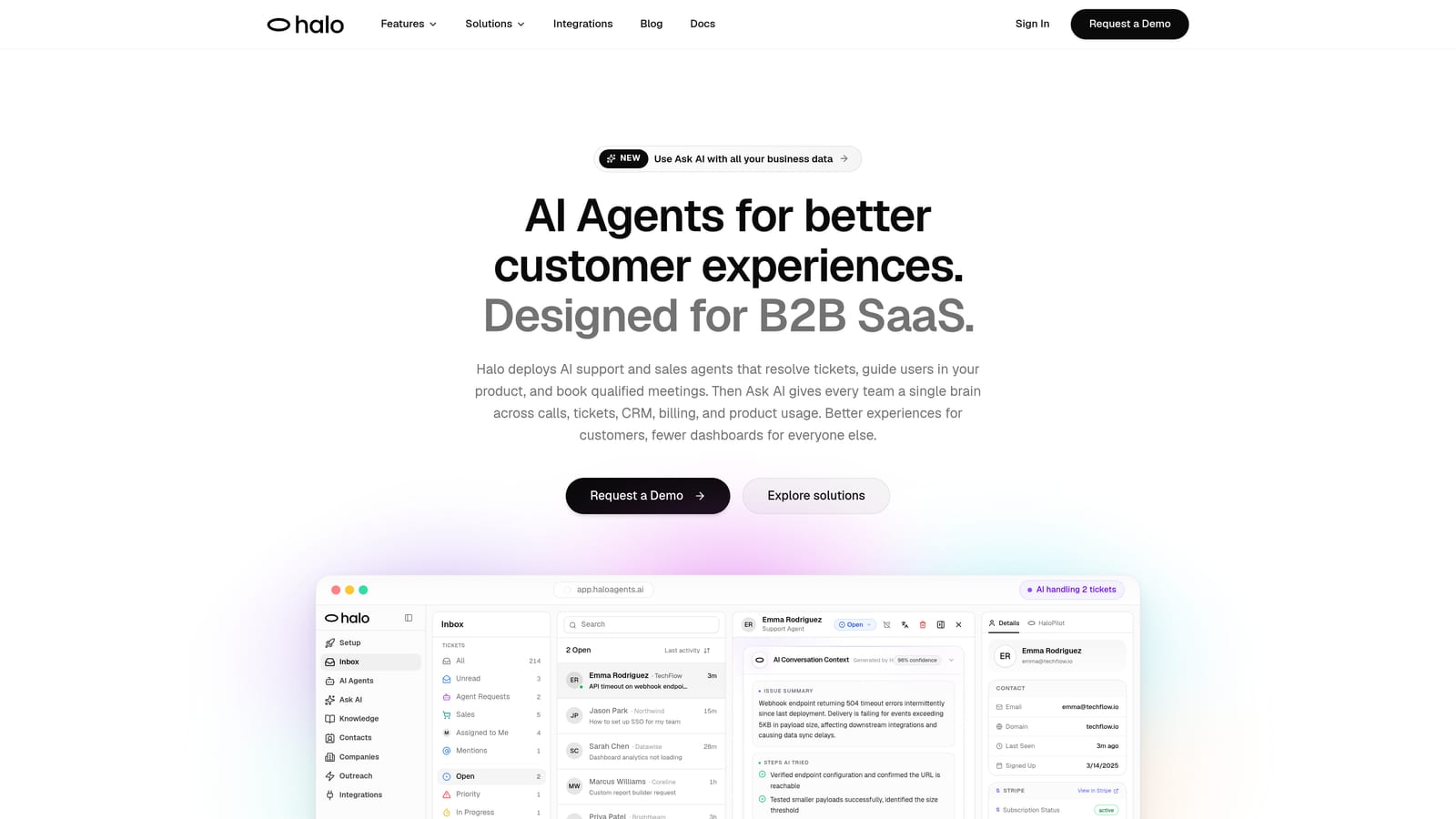
Halo AI is an AI-first customer support platform that deploys intelligent agents to resolve tickets, guide users visually through your product, and surface business intelligence signals — all while learning from every interaction.
Where This Tool Shines
What separates Halo from the rest of this list is its architecture. Rather than layering AI onto a legacy ticketing system, Halo was built from the ground up with autonomous resolution as the core design principle. The result is a platform that gets meaningfully smarter over time, not just faster at suggesting macros.
The page-aware context engine is particularly distinctive. Halo's AI agent can see what the user sees in your product and deliver contextual, visual UI guidance — not generic help article links. Combined with its smart inbox that surfaces churn indicators, customer health signals, and revenue anomalies, Halo functions less like a helpdesk and more like an intelligence layer on top of your customer relationships.
Key Features
Page-Aware AI Agent: The agent understands the user's current context in your product and delivers visual, step-by-step UI guidance rather than generic documentation.
Continuous Learning Engine: Every resolved ticket improves the model, so resolution quality compounds over time rather than staying static.
Auto Bug Ticket Creation: Automatically identifies and routes bug reports to engineering tools like Linear, closing the loop between support and product without manual triage.
Smart Inbox with Business Intelligence: Surfaces customer health signals, revenue anomalies, and churn indicators directly from support conversation data.
Live Agent Handoff: Seamlessly escalates complex issues to human agents with full conversation context preserved.
Deep Integration Ecosystem: Connects natively with HubSpot, Slack, Linear, Stripe, Zoom, Intercom, PandaDoc, and Fathom.
Best For
Halo is purpose-built for B2B SaaS product and support teams who want AI that does more than deflect tickets. If your team needs support data to feed into revenue intelligence, product decisions, or customer health monitoring, Halo's architecture is designed for exactly that use case.
Pricing
Contact for pricing. Halo is built for B2B SaaS teams and pricing is tailored to team size and usage volume.
2. Zendesk AI
Best for: Large enterprises needing a mature, compliance-ready helpdesk with broad AI feature coverage.
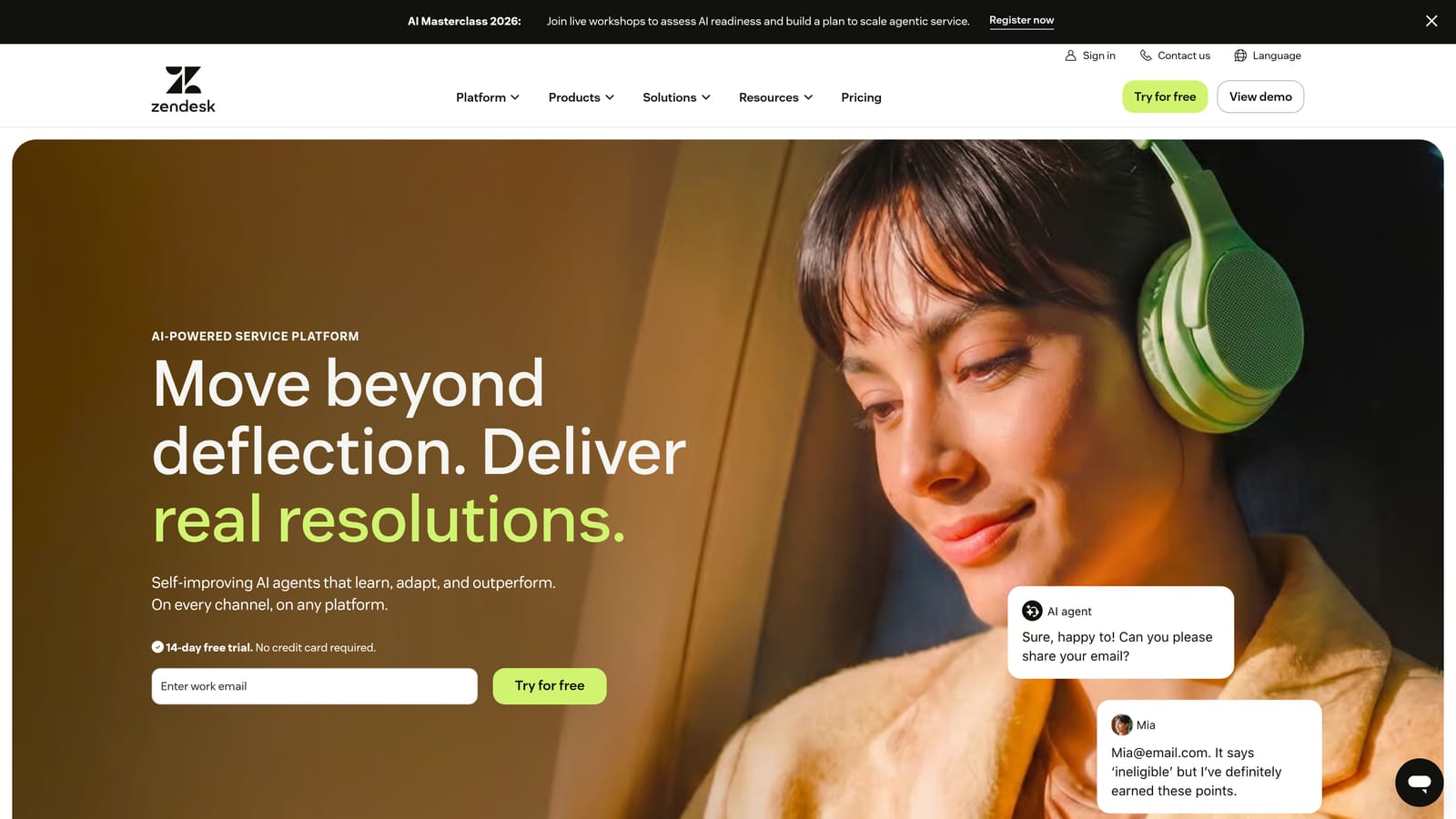
Zendesk AI is one of the most established enterprise helpdesk platforms, with intelligent triage, AI-powered macros, and agent assist layered onto a mature ticketing infrastructure.
Where This Tool Shines
Zendesk's strength is its maturity. With over a decade of enterprise deployments, it offers a level of compliance readiness, security controls, and operational stability that newer platforms are still building toward. The app marketplace, with more than 1,000 integrations, means you can connect almost any tool in your stack.
The AI features, including Intelligent Triage and suggested responses, are genuinely useful for high-volume teams. That said, they feel like additions to an existing system rather than the core of how the platform works. Teams that need AI to be the backbone of their support operation may find the architecture limiting over time.
Key Features
Intelligent Triage: Automatically classifies and routes incoming tickets based on intent, sentiment, and urgency.
AI-Powered Macros: Suggests pre-built responses and actions based on ticket context, helping agents respond faster.
1,000+ App Marketplace: One of the largest integration ecosystems in the helpdesk space.
Enterprise Compliance Controls: SOC 2, HIPAA, GDPR, and other compliance frameworks supported out of the box.
Omnichannel Support: Manages email, chat, voice, and social channels from a unified interface.
Best For
Zendesk is a strong fit for enterprise teams with complex compliance requirements, large agent workforces, and established support operations. It's less ideal for teams looking to minimize human agent involvement through autonomous AI resolution.
Pricing
Starts around $55 per agent per month. Enterprise plans scale significantly higher depending on features and volume.
3. Intercom
Best for: Teams prioritizing in-product chat experiences and AI-powered conversation resolution.
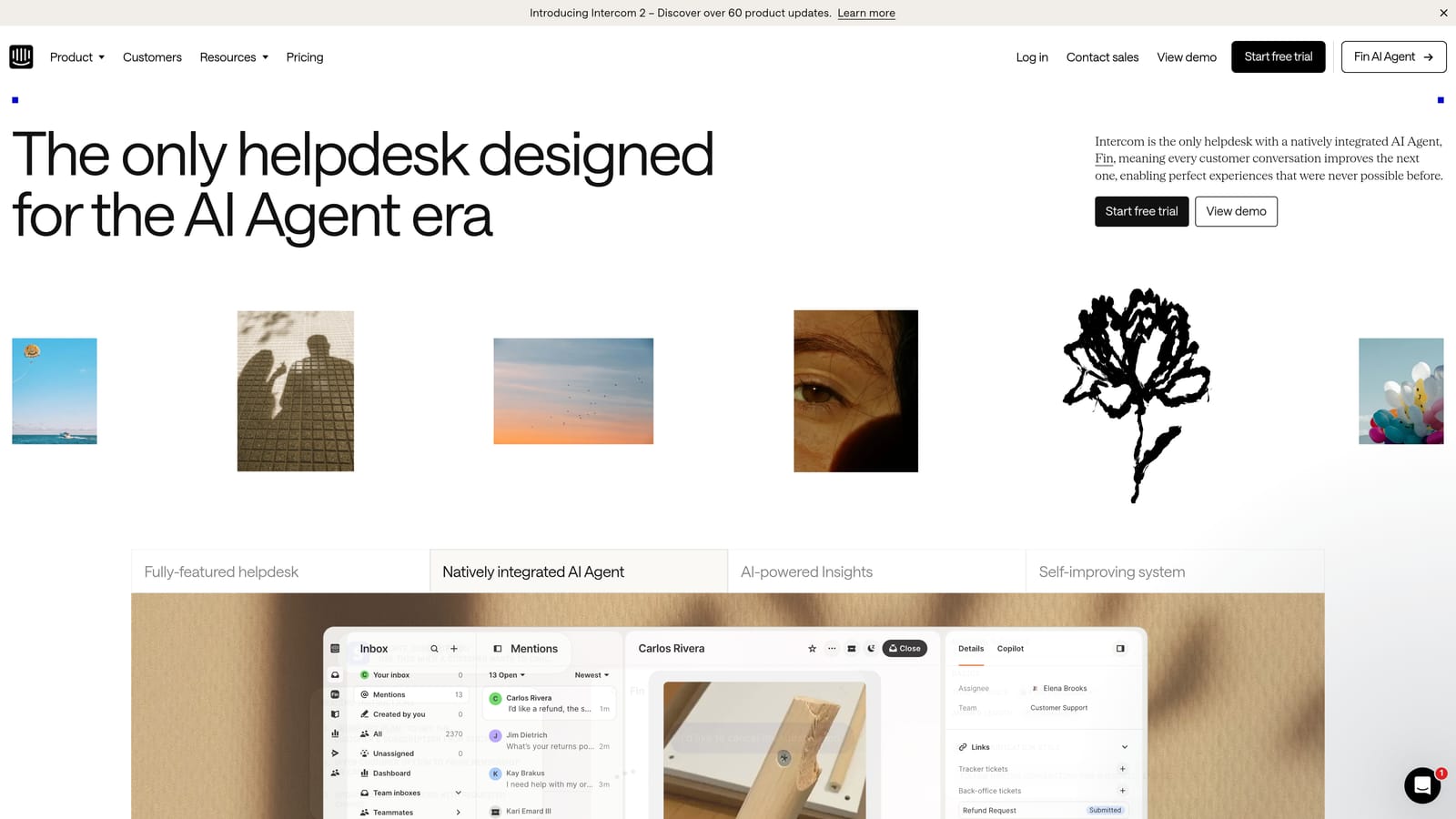
Intercom is a conversational support platform featuring Fin AI Agent, one of the more capable autonomous resolution tools currently available, combined with strong in-product messaging.
Where This Tool Shines
Fin AI Agent is genuinely impressive. Built on large language models, it handles a meaningful portion of incoming conversations without agent involvement, and does so with a level of conversational quality that many competitors haven't matched. For teams where chat is the primary support channel, Intercom's native experience is hard to beat.
Intercom also excels at proactive support. Product tours, in-app messages, and targeted outreach campaigns allow teams to get ahead of common issues before tickets are even created. The omnichannel inbox ties chat, email, and social into one workspace.
Key Features
Fin AI Agent: LLM-powered autonomous resolution that handles conversations end-to-end without agent involvement.
In-Product Messaging: Trigger targeted messages based on user behavior, lifecycle stage, or product usage patterns.
Omnichannel Inbox: Combines chat, email, and social conversations in a single unified workspace.
AI Conversation Summaries: Provides agents with instant context when taking over from Fin.
Product Tours and Onboarding: Built-in tools for guiding new users through product features.
Best For
Intercom is best suited for product-led growth companies and SaaS teams where chat-first, in-product support is the primary motion. Pricing can become a consideration for smaller teams given the per-resolved-conversation model for Fin.
Pricing
Seat pricing starts around $39 per month. Fin AI resolution is charged per resolved conversation, which can add up at volume.
4. Freshdesk
Best for: SMB and mid-market teams wanting capable AI features at accessible pricing.
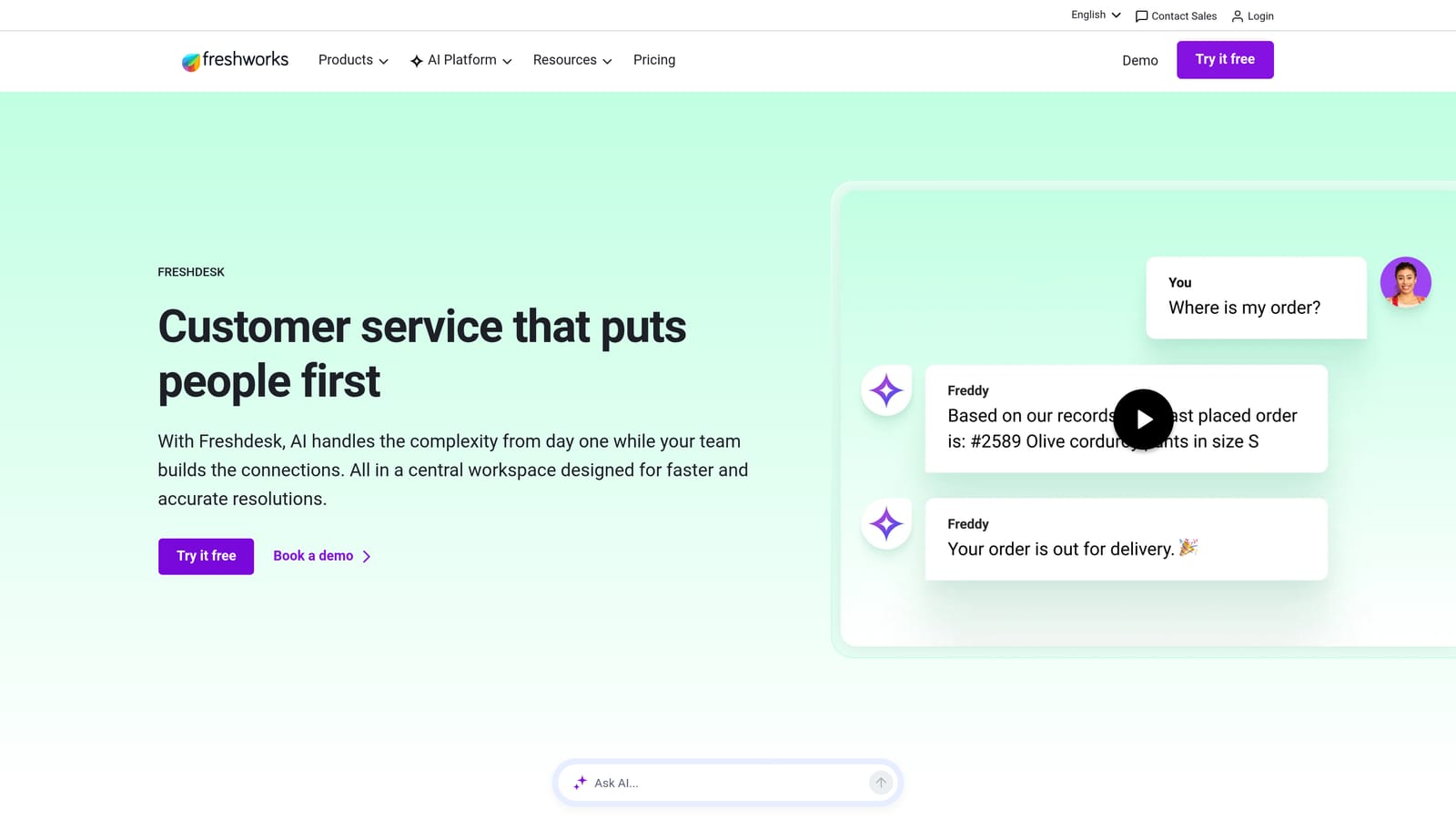
Freshdesk is a feature-rich helpdesk platform with Freddy AI handling auto-responses, agent assist, and predictive routing across multiple support channels.
Where This Tool Shines
Freshdesk punches above its price point. Freddy AI delivers meaningful automation, including automated responses, article suggestions, and predictive routing, without requiring enterprise-level investment. The platform's UI is consistently cited as intuitive, which reduces onboarding friction for growing teams.
Being part of the Freshworks suite is a real advantage for teams already using Freshsales or Freshchat. The data flows between products without custom integration work, giving support teams visibility into sales context and vice versa.
Key Features
Freddy AI: Handles automated responses, suggests knowledge base articles, and assists agents with reply drafts in real time.
Predictive Support: Identifies tickets likely to escalate and surfaces them for proactive resolution.
Multi-Channel Coverage: Supports email, chat, phone, and social from a single interface.
Freshworks Suite Integration: Native data sharing with Freshsales, Freshchat, and other Freshworks products.
Competitive Pricing Tiers: Free plan available with a clear upgrade path as teams scale.
Best For
Freshdesk is an excellent fit for SMB and mid-market teams that need solid AI-assisted support without the complexity or cost of enterprise platforms. Teams already in the Freshworks ecosystem will get the most value.
Pricing
Free plan available. Paid plans start around $15 per agent per month, with higher tiers unlocking advanced Freddy AI capabilities.
5. HubSpot Service Hub
Best for: Teams already on HubSpot CRM who want support tightly connected to sales and marketing data.
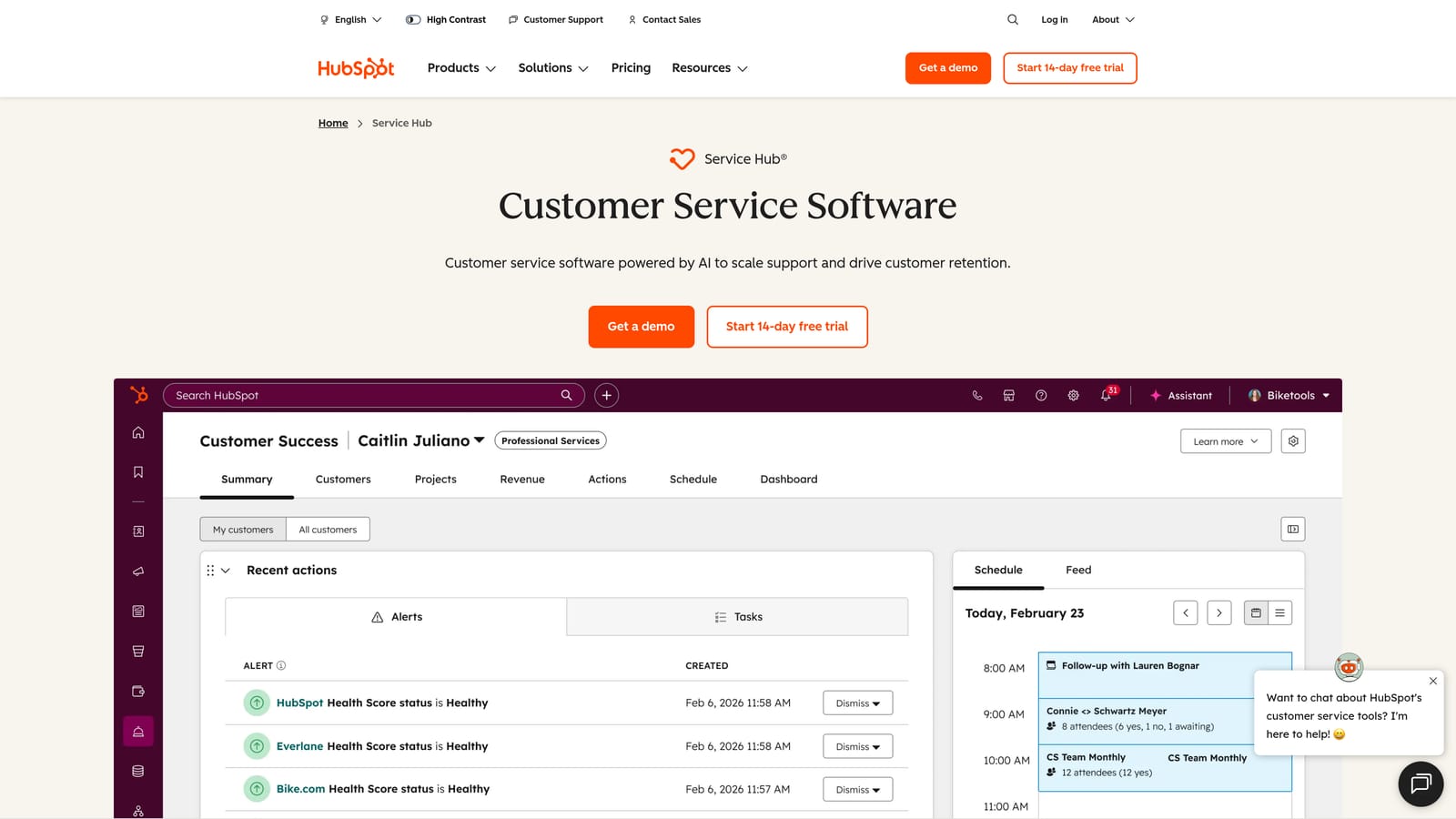
HubSpot Service Hub is a helpdesk built natively inside HubSpot's CRM, giving support teams full visibility into contact records, deal history, and marketing activity alongside every ticket.
Where This Tool Shines
The native CRM integration is what makes Service Hub genuinely different from most helpdesks. When a ticket comes in, agents immediately see the contact's full history: what deals they're involved in, what emails they've received, what pages they've visited. That context changes the quality of every support interaction.
For teams where support, sales, and marketing need to operate as a connected unit, Service Hub removes a lot of the friction that comes from switching between systems. The AI features, including conversation summaries and a chatbot builder, are solid rather than groundbreaking.
Key Features
Native CRM Integration: Every ticket is linked directly to contact records, company data, and deal history inside HubSpot.
AI Conversation Summaries: Instantly condenses long threads so agents can get up to speed without reading every message.
Customer Portal: Allows customers to submit and track their own tickets through a self-service interface.
Shared Inbox and SLA Management: Keeps teams aligned on response time commitments across channels.
Cross-Team Workflow Handoff: Seamless escalation and collaboration between support, sales, and marketing workflows.
Best For
Service Hub is the natural choice for HubSpot-centric teams. If your company runs on HubSpot for CRM and marketing, adding Service Hub creates a unified revenue and support operating system without additional integration complexity.
Pricing
Starter from $15 per seat per month. Professional and Enterprise tiers add advanced automation, reporting, and AI features.
6. Drift (Salesloft)
Best for: B2B teams where support and sales conversations overlap and pipeline context matters.
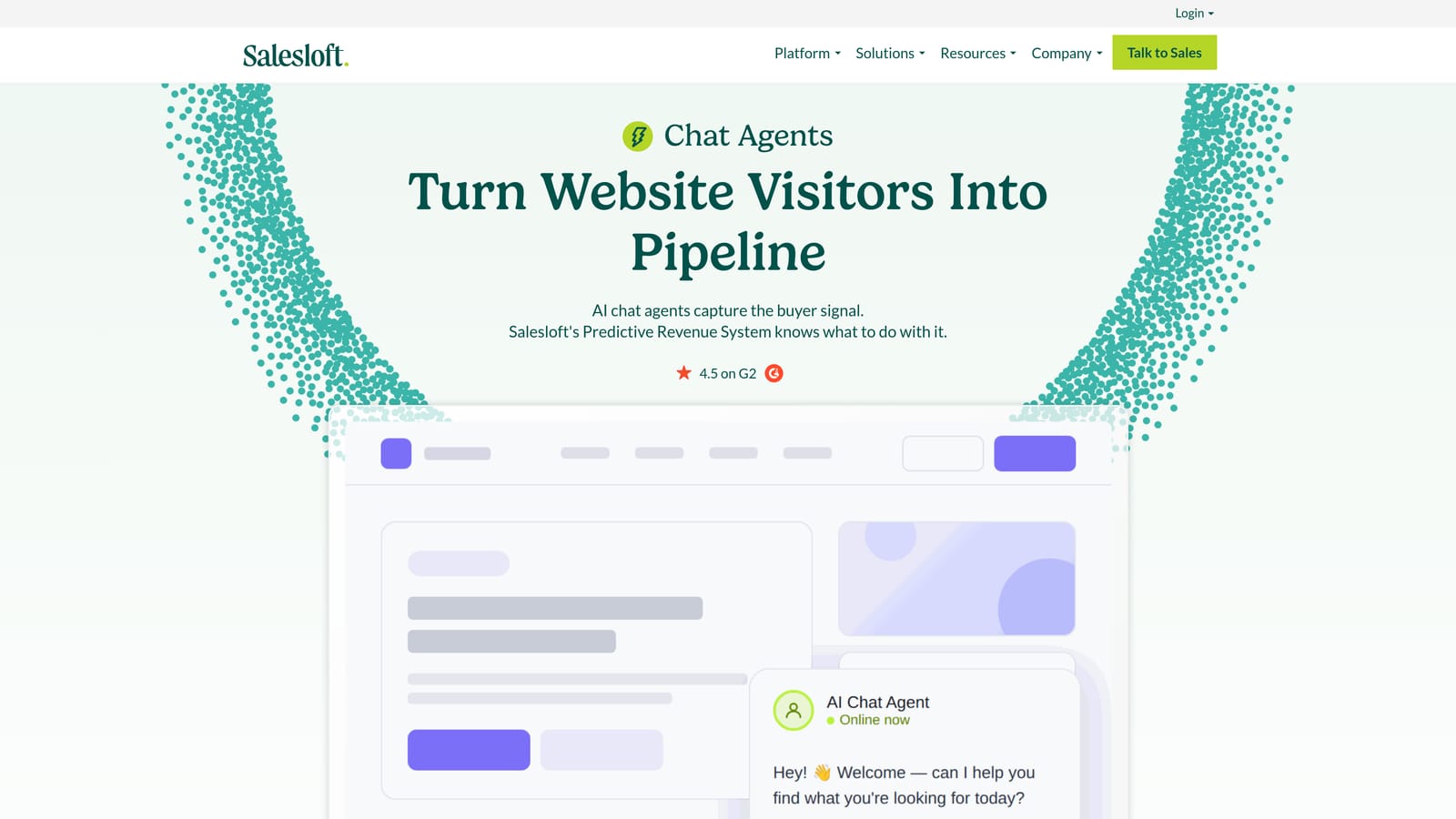
Drift, now part of Salesloft, is a conversational platform with AI-driven routing that uses CRM and pipeline data to direct conversations to the right team at the right time.
Where This Tool Shines
Drift's core strength is pipeline-aware routing. When a high-value prospect starts a conversation, Drift can recognize them from CRM data and route them directly to a sales rep rather than a support queue. For B2B teams where a single conversation with the right account can move a deal, this kind of intelligence is genuinely valuable.
The Salesloft integration deepens this further, creating a unified workflow for revenue teams. Drift is less focused on deep ticket resolution and more on conversation capture and intelligent handoff, which is exactly what some B2B teams need.
Key Features
Pipeline-Aware Routing: Uses CRM data to identify high-value visitors and route them to sales rather than support queues.
AI Conversational Routing: Directs conversations based on visitor intent, behavior, and account data.
Chatbot Builder: Branching logic flows for both support deflection and sales qualification.
Salesloft Integration: Unified workflow for teams managing both revenue and support conversations.
Live Agent Takeover Alerts: Real-time notifications when a conversation needs human attention.
Best For
Drift fits best at B2B companies where the line between support and sales is intentionally blurred — particularly account-based teams managing a mix of prospect and customer conversations through the same channels.
Pricing
Contact for pricing. Advanced AI routing and Salesloft integration features require premium plans.
7. Tidio
Best for: Lean support teams needing fast deployment and affordable AI chat capabilities.
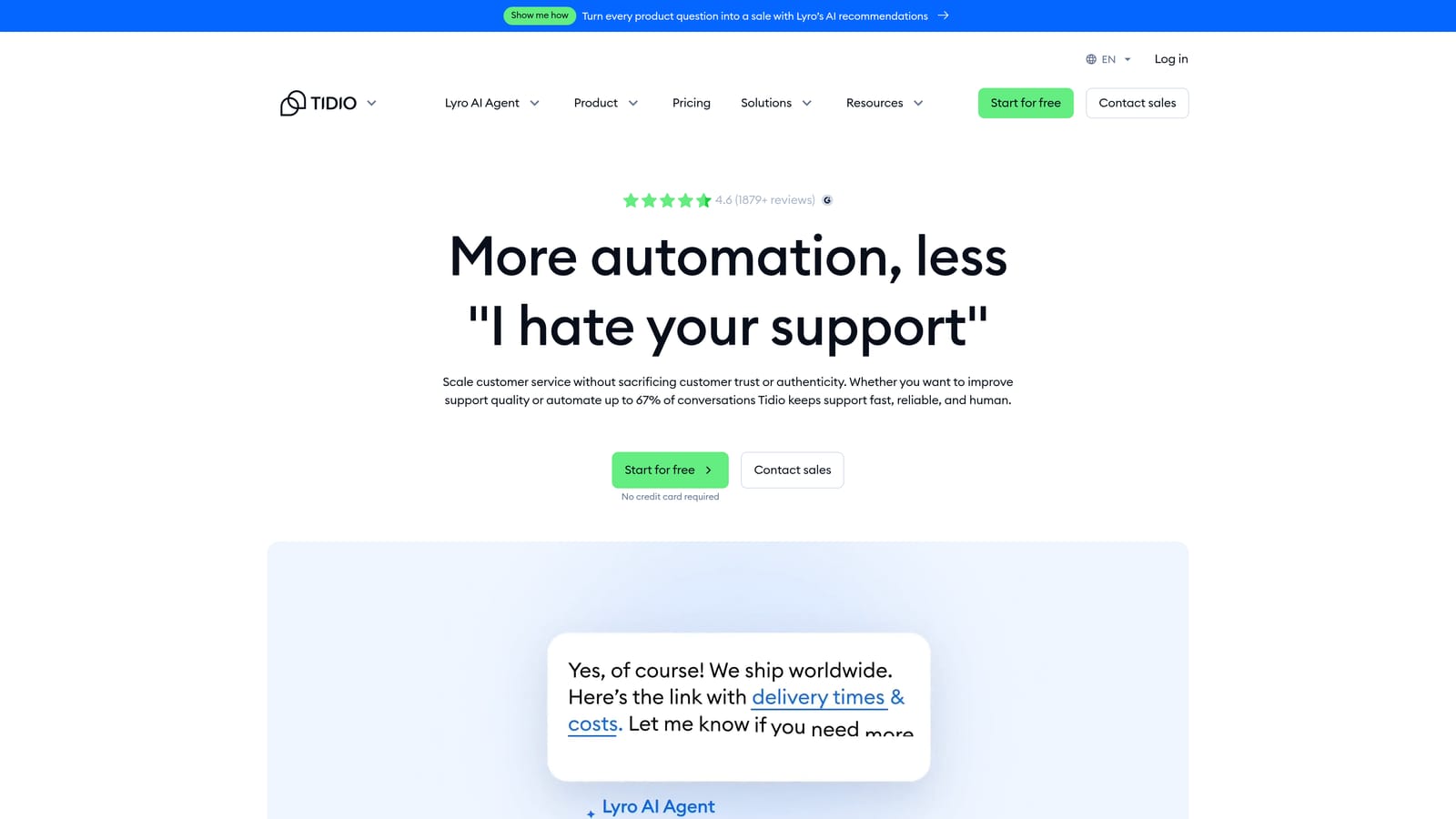
Tidio is a lightweight AI helpdesk platform featuring the Lyro AI chatbot, designed for quick setup and accessible pricing without sacrificing core automation capabilities.
Where This Tool Shines
Tidio's biggest advantage is speed to value. Teams can get Lyro AI up and handling conversations in a fraction of the time it takes to configure more complex platforms. The no-code chatbot builder makes it accessible to teams without dedicated technical resources.
For smaller teams with straightforward support needs, Tidio covers the essentials well: AI conversation handling, live chat fallback, and basic channel integrations. It's not designed for complex enterprise workflows, but for the right team size and ticket complexity, it delivers solid results without the overhead.
Key Features
Lyro AI Chatbot: Handles autonomous conversations using AI, with a natural conversational style that reduces the need for scripted flows.
No-Code Setup: Chatbot configuration requires no technical expertise, enabling fast deployment.
Live Chat Fallback: Smooth handoff to human agents when conversations exceed Lyro's resolution capability.
Email and Messenger Integration: Connects support across multiple common channels.
Accessible Entry Pricing: Free tier available with a clear path to Lyro AI on paid plans.
Best For
Tidio is a strong fit for small businesses and lean SaaS teams with lower ticket complexity. Teams that need enterprise integrations or advanced business intelligence from support data will likely outgrow it.
Pricing
Free plan available. Lyro AI starts from $29 per month, with higher tiers for increased conversation volume.
8. Kustomer
Best for: High-volume support teams managing complex customer histories across multiple channels.
Kustomer is a CRM-native helpdesk with a unified customer timeline view and AI-powered workflow automation built for teams handling large support volumes with rich customer context.
Where This Tool Shines
Kustomer's unified customer timeline is genuinely useful for high-volume operations. Rather than seeing a series of disconnected tickets, agents see a complete chronological history of every interaction a customer has had, across every channel, in a single view. This dramatically reduces the "can you explain your issue again?" problem.
The AI workflow automation handles triage and routing at scale, and the flexible API allows for custom integrations that more rigid platforms can't accommodate. Kustomer has gone through ownership changes, having been acquired by Meta and subsequently returned to independent operation, but the product has remained a solid choice for complex support environments.
Key Features
Unified Customer Timeline: Aggregates every interaction, purchase, and conversation into a single chronological view per customer.
AI Workflow Automation: Powers triage, routing, and prioritization at high ticket volumes without manual intervention.
Omnichannel Coverage: Handles email, chat, SMS, voice, and social from one platform.
Business Intelligence Reporting: Tracks support performance metrics and team productivity at scale.
Flexible API: Supports custom integrations for teams with unique data or workflow requirements.
Best For
Kustomer fits high-volume support operations where customer history depth matters and teams need to manage complex, multi-touch customer relationships across many channels simultaneously.
Pricing
Starts around $89 per agent per month. Enterprise pricing available for larger deployments.
9. Help Scout
Best for: Teams where relationship quality and agent experience take priority over maximum automation.
Help Scout is a human-first helpdesk that uses AI to assist agents rather than replace them, with a clean interface and features like AI Summarize and AI Assist built to reduce cognitive load.
Where This Tool Shines
Help Scout's philosophy is deliberately different from most platforms on this list. The goal isn't maximum deflection. It's giving human agents the tools to respond faster, with better context, and with less mental overhead. AI Summarize condenses long threads instantly, and AI Assist helps draft or improve responses without taking the agent out of the loop.
The interface is consistently praised for its clarity and lack of clutter. Collision detection prevents two agents from drafting responses to the same ticket simultaneously, which sounds minor until it happens to you. For teams where a thoughtful, relationship-driven support experience is a competitive differentiator, Help Scout's approach is a genuine strategic choice.
Key Features
AI Summarize: Instantly generates a summary of any conversation thread so agents can respond without reading every message.
AI Assist: Helps agents draft, refine, and improve responses directly inside the compose window.
Collision Detection: Prevents multiple agents from responding to the same ticket simultaneously.
Docs Knowledge Base: Built-in self-service documentation builder for customer-facing help content.
Clean, Low-Distraction UI: Interface designed specifically to reduce agent cognitive load during high-volume periods.
Best For
Help Scout is ideal for teams where support quality and agent wellbeing are priorities, and where fully autonomous AI resolution isn't the goal. It's a particularly good fit for companies where support relationships directly influence retention.
Pricing
Starts at $50 per month for up to 3 users. Pricing scales by user count rather than per-seat, which can be cost-effective for small teams.
Which Platform Is Right for Your Team?
The right AI helpdesk depends less on feature checklists and more on how you think about the role of support in your business. Here's a quick orientation by team type.
Startups and lean teams: Tidio and Freshdesk offer fast deployment and accessible pricing. Help Scout is worth considering if your team is small and relationship quality matters more than automation depth.
Mid-market SaaS teams: Intercom and HubSpot Service Hub are strong contenders, especially if you're chat-first or already invested in HubSpot. Halo AI is worth serious evaluation if you want an AI-native architecture that grows more capable over time rather than staying static.
Enterprise teams: Zendesk and Kustomer address the compliance, scale, and complexity requirements that enterprise environments demand. Both carry higher price points that reflect that positioning.
Revenue-aligned B2B teams: If your support team is expected to contribute to retention, expansion, and product intelligence, Halo AI's smart inbox and business intelligence layer make it a category of one. No other platform on this list surfaces churn signals, customer health indicators, and revenue anomalies directly from support conversation data as a native capability.
There's also a structural point worth making: platforms that bolt AI onto legacy ticketing infrastructure have a ceiling. The AI can get faster, but it doesn't fundamentally change how the system works. AI-native platforms compound. Every resolved ticket improves the model, every integration adds context, and the gap between AI-native and AI-added widens over time.
Your support team shouldn't scale linearly with your customer base. Let AI agents handle routine tickets, guide users through your product, and surface business intelligence while your team focuses on complex issues that need a human touch. See Halo in action and discover how continuous learning transforms every interaction into smarter, faster support.