8 Best AI Platforms vs. Traditional Helpdesks: Which Is Right for Your Team in 2026?
This guide compares the top AI-native support platforms against traditional helpdesks, helping B2B SaaS teams evaluate which approach best fits their size, complexity, and growth goals. In the traditional helpdesk vs AI platform debate, the right choice depends on whether your team needs autonomous ticket resolution and scalable intelligence or structured, human-driven workflows — and this breakdown covers exactly what each option delivers.
 Grant CooperFounder12 min read
Traditional helpdesks were built for a world where every customer question needed a human answer. That world has changed. Today's B2B support teams are drowning in repetitive tickets, struggling to scale without adding headcount, and losing visibility into the patterns that actually matter.
The question isn't whether to modernize your support stack. It's which approach fits your team right now. This guide compares leading AI-native support platforms against established traditional helpdesks, so you can see exactly what each offers, where each falls short, and which makes sense depending on your team's size, complexity, and growth trajectory.
We've focused on tools that serve B2B SaaS teams and product-led companies — the environments where support quality most directly impacts retention and revenue. Here are the top platforms worth evaluating.
1. Halo AI
Best for: B2B SaaS and product-led teams that want autonomous ticket resolution with business intelligence built in.
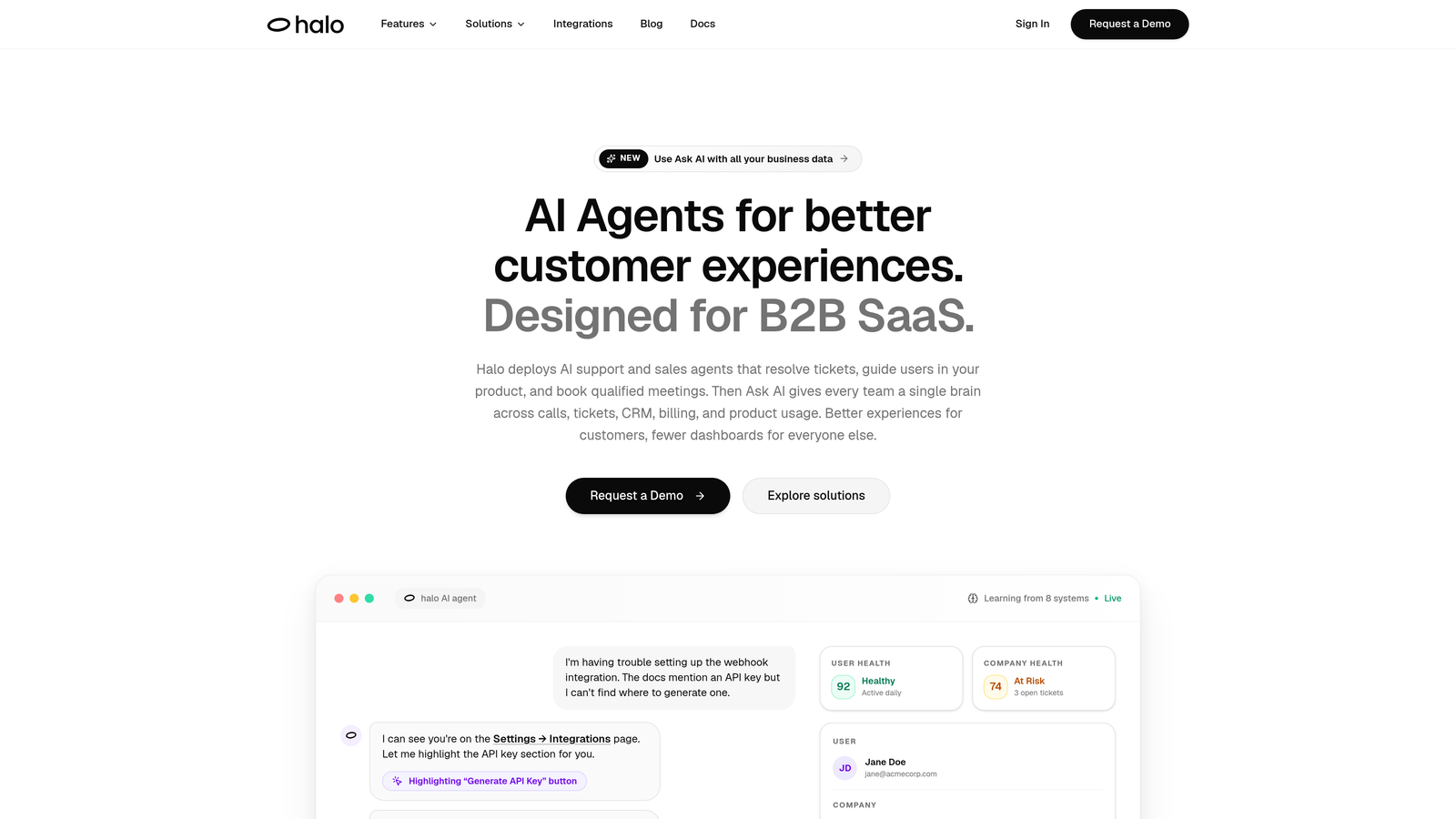
Halo AI is an AI-native customer support platform that resolves tickets, guides users through your product with page-aware context, and surfaces business intelligence — all while learning from every interaction.
Where This Tool Shines
Most AI features in traditional helpdesks are bolt-ons. Halo is built differently: autonomous resolution is the default behavior, not an optional add-on. The platform attempts to resolve every ticket first and escalates to a live agent only when the issue genuinely requires human judgment.
What sets Halo apart for product teams is the page-aware context layer. The AI agent can see what a user is looking at in your product, which means guidance is specific and visual rather than generic. Pair that with auto bug ticket creation routed directly to Linear, and your support function starts feeding your product roadmap in real time.
Key Features
Page-Aware AI Agents: The AI sees what users see in your product and delivers in-context visual UI guidance rather than generic help article links.
Autonomous Ticket Resolution: Handles routine tickets end-to-end and escalates complex issues to live agents with full conversation context preserved.
Auto Bug Ticket Creation: Detects product issues in support conversations and automatically creates bug tickets routed to Linear or your issue tracker.
Smart Inbox with Business Intelligence: Goes beyond ticket management to surface customer health signals, revenue anomalies, and trend detection across your support data.
Continuous Learning Architecture: Every resolved interaction improves the system's resolution quality over time without manual retraining.
Deep Integrations: Connects with Slack, HubSpot, Intercom, Stripe, Zoom, PandaDoc, and Fathom for a unified view across your business stack.
Best For
Product-led growth companies, B2B SaaS teams with high volumes of repetitive tickets, and organizations where support data should directly inform product decisions. Particularly strong for teams tired of managing AI as a separate configuration layer on top of a legacy ticketing system.
Pricing
Visit haloagents.ai for current pricing details. Pricing is not published in this article to ensure you see the most accurate and up-to-date information.
2. Zendesk
Best for: Enterprise teams that need deep configurability, mature SLA management, and a large integration ecosystem.
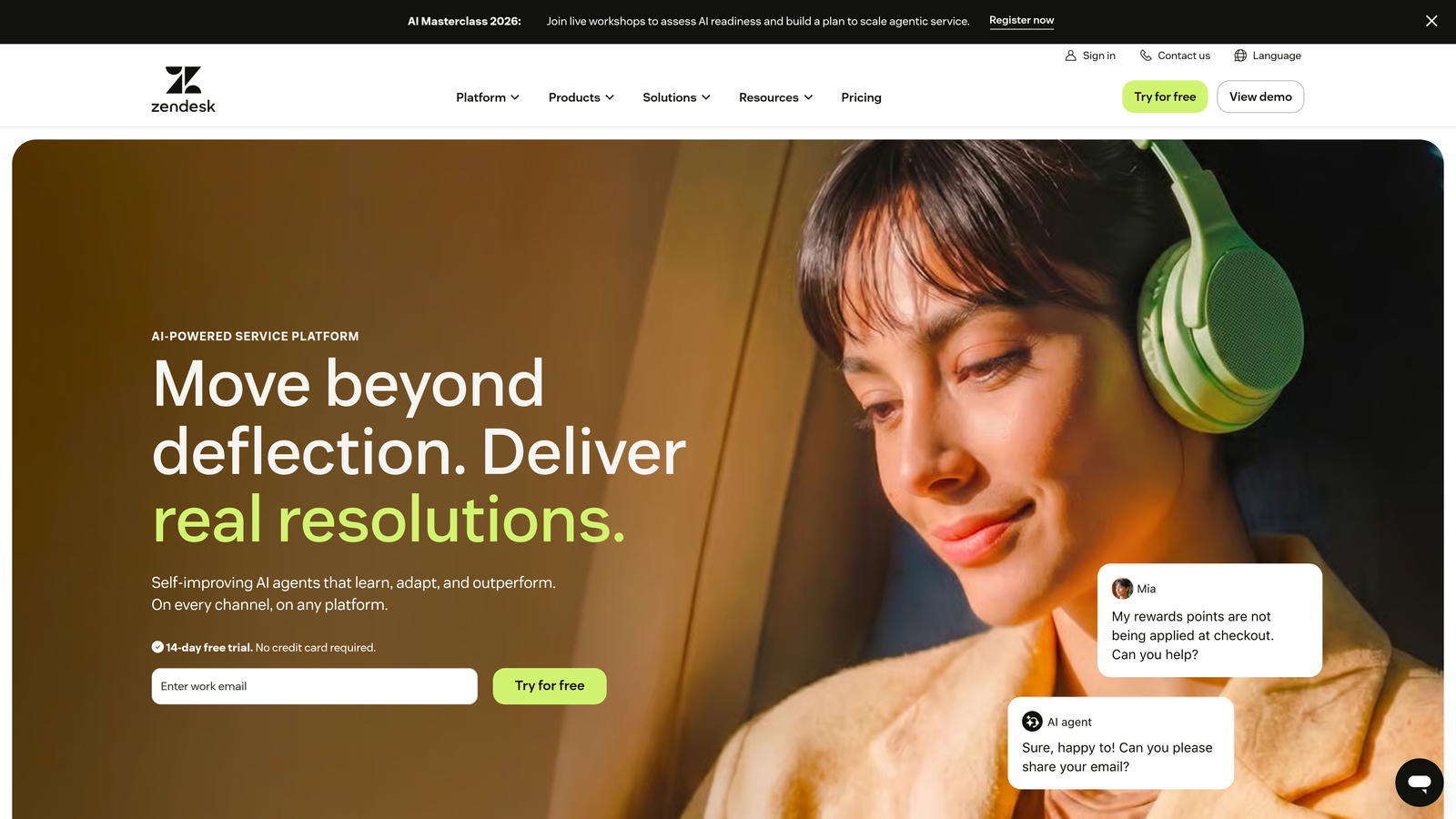
Zendesk is the industry-standard enterprise helpdesk with mature ticketing workflows, robust reporting, and hundreds of marketplace integrations.
Where This Tool Shines
Zendesk has been the default choice for enterprise support teams for good reason. Its SLA management, ticket routing, and reporting capabilities are genuinely best-in-class for organizations running complex, multi-tier support operations. If you need granular control over every workflow, Zendesk delivers.
The tradeoff is architectural. Zendesk AI (formerly Answer Bot) is a capable layer, but it sits on top of a ticket-first system rather than being woven into the core. Teams that want AI-driven resolution as the default experience will need to invest significant configuration time to get there.
Key Features
Configurable Ticket Routing: Highly flexible tagging, routing rules, and SLA management for complex support operations.
Zendesk AI: Offers suggested replies, macro recommendations, and basic deflection — available on higher tiers.
App Marketplace: Hundreds of third-party integrations covering CRM, billing, analytics, and more.
Omnichannel Support: Handles email, chat, voice, and social from a single interface.
Robust Reporting: Detailed dashboards for ticket volume, SLA compliance, and agent performance.
Best For
Large enterprise support teams with complex workflows, strict SLA requirements, and dedicated admins to manage configuration. Less ideal for lean teams that want AI-first resolution without significant setup overhead.
Pricing
Suite Team starts at $55/agent/month billed annually. Verify current pricing and tier details at zendesk.com.
3. Intercom
Best for: SaaS teams that want in-app messaging, product onboarding flows, and AI-assisted support in one platform.
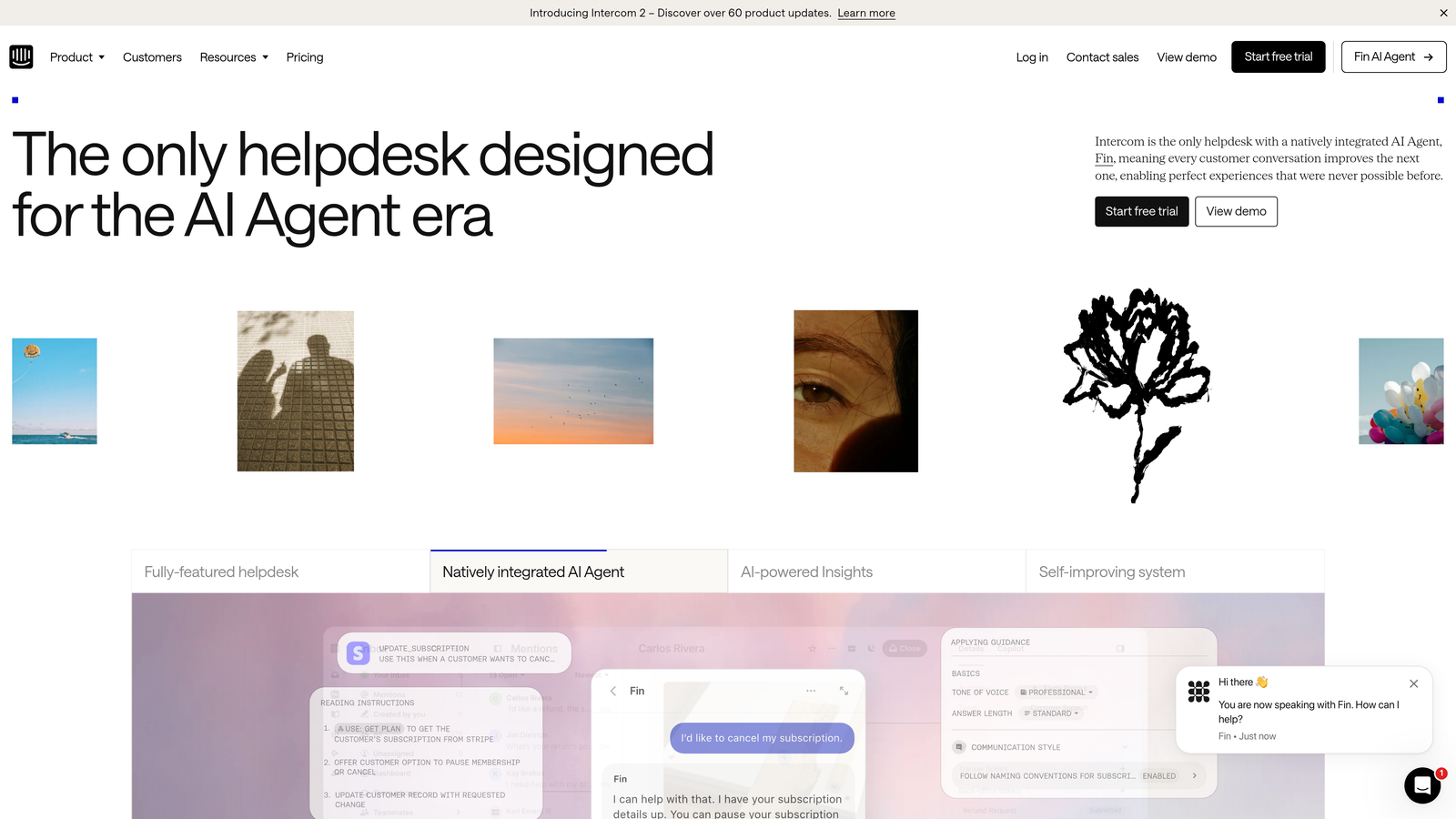
Intercom is a conversational support platform combining in-app messaging, live chat, a knowledge base, and the Fin AI agent for automated query resolution.
Where This Tool Shines
Intercom's Fin AI agent has matured considerably and can handle a meaningful portion of FAQ-style queries without human intervention. The platform's real strength, though, is the combination of support and onboarding in a single tool. If you're running product tours, in-app messages, and support conversations, Intercom keeps all of that in one place.
The shared inbox and conversation routing are solid for growing teams. Where Intercom sometimes draws criticism is pricing — the cost can scale quickly as you add seats and AI features, so it's worth modeling your expected usage carefully before committing.
Key Features
Fin AI Agent: Handles FAQ and common queries conversationally, reducing the volume reaching human agents.
In-App Messenger: Strong product onboarding and tour capabilities alongside support conversations.
Shared Inbox: Conversation routing and assignment rules for team collaboration.
Help Center: Knowledge base built directly into the platform, accessible from the messenger widget.
CRM and Billing Integrations: Connects with common SaaS tools for context in every conversation.
Best For
SaaS companies that want support and onboarding in one platform, and teams where in-app messaging is a core part of the customer experience. Less ideal for teams primarily focused on autonomous ticket resolution at scale.
Pricing
Essential plan starts at $29/seat/month. Verify current pricing at intercom.com, as costs can vary significantly based on usage and AI feature tiers.
4. Freshdesk
Best for: SMBs and growing support teams that need a capable multichannel helpdesk without a large upfront investment.
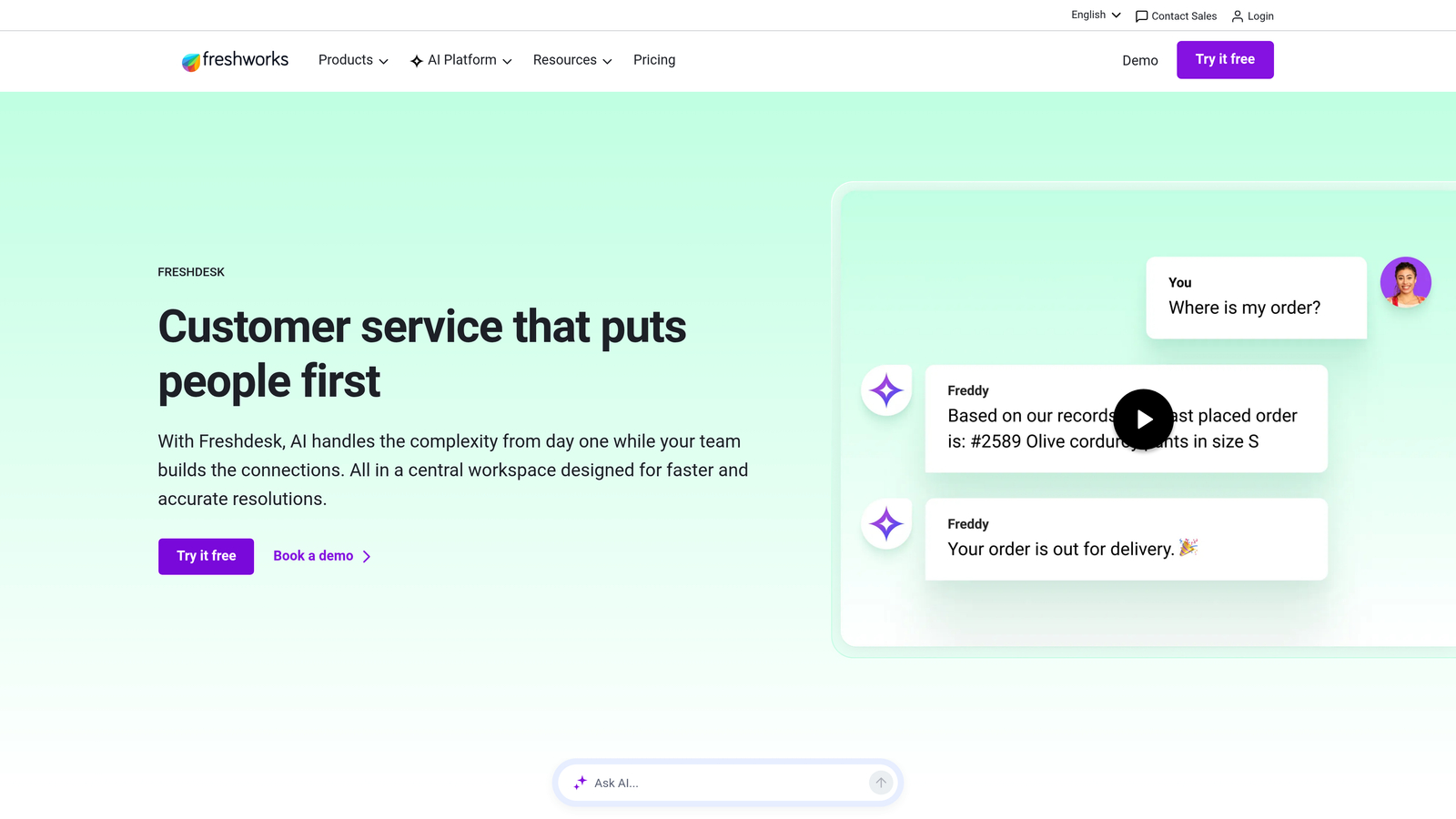
Freshdesk is a traditional helpdesk with a generous free tier and Freddy AI as an add-on automation layer, popular with small and mid-sized teams.
Where This Tool Shines
Freshdesk's free plan is genuinely useful — not a stripped-down trial but a functional starting point for small teams. The setup process is faster and less complex than Zendesk, which makes it a natural first helpdesk for teams that are formalizing support for the first time.
Freddy AI adds suggested replies, ticket summarization, and basic deflection, but like most bolt-on AI layers, it requires deliberate configuration to deliver meaningful automation. Teams expecting out-of-the-box autonomous resolution will find Freddy more of an assistant than an autonomous agent.
Key Features
Free Plan: Core ticketing features available at no cost for small teams, with no artificial time limit.
Freddy AI: Suggested replies, ticket summarization, and basic deflection on paid tiers.
Multichannel Support: Email, phone, chat, and social channels managed from one interface.
Collision Detection: Prevents multiple agents from responding to the same ticket simultaneously.
Marketplace Integrations: Connects with CRM, billing, and project management tools.
Best For
Small to mid-sized teams getting started with structured support, or organizations that need a cost-effective multichannel helpdesk before investing in AI-native tooling. Less suited for fast-scaling B2B teams that need autonomous resolution from day one.
Pricing
Free plan available. Paid plans start from $15/agent/month. Verify current tiers at freshdesk.com.
5. Tidio
Best for: Small businesses and e-commerce teams that want a lightweight chatbot and live chat solution without technical complexity.
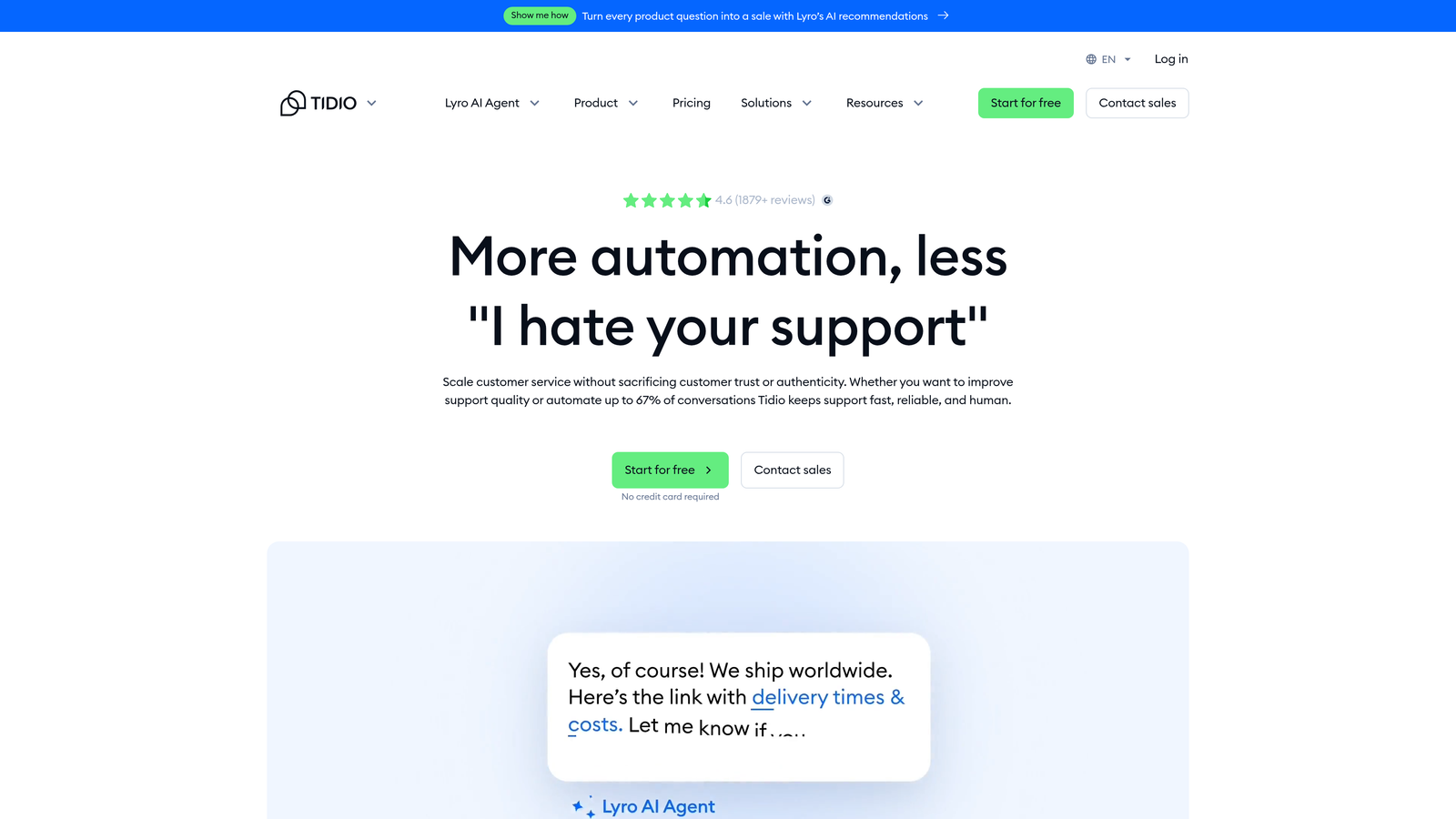
Tidio is a lightweight live chat and AI chatbot platform with a visual chatbot builder and Lyro AI for FAQ deflection, designed for non-technical users.
Where This Tool Shines
Tidio's visual drag-and-drop chatbot builder is genuinely approachable. You don't need a developer to set up basic conversation flows, which makes it accessible for small teams that want to automate common questions without a lengthy implementation project.
Lyro AI handles FAQ-style deflection reasonably well for straightforward use cases. The platform is best understood as a starting point for automation rather than an enterprise-grade AI support system. For B2B SaaS teams with complex support workflows, Tidio's capabilities will likely feel limited as you scale.
Key Features
Lyro AI: Conversational FAQ handling and basic ticket deflection without manual flow building.
Visual Chatbot Builder: Drag-and-drop interface for building conversation flows — no coding required.
Live Chat Widget: Real-time visitor tracking alongside live chat for immediate engagement.
Multichannel Basics: Email and Messenger integration alongside live chat in one dashboard.
Simple Analytics: Chat volume and response time reporting for basic performance visibility.
Best For
Small businesses, e-commerce teams, and early-stage startups that need a quick, affordable way to add live chat and basic FAQ automation. Not designed for complex B2B support workflows or high-volume enterprise environments.
Pricing
Free plan available. Lyro AI starts from $29/month. Verify current pricing at tidio.com.
6. Help Scout
Best for: Teams that prioritize relationship-driven, human-first support with a clean, minimal shared inbox experience.
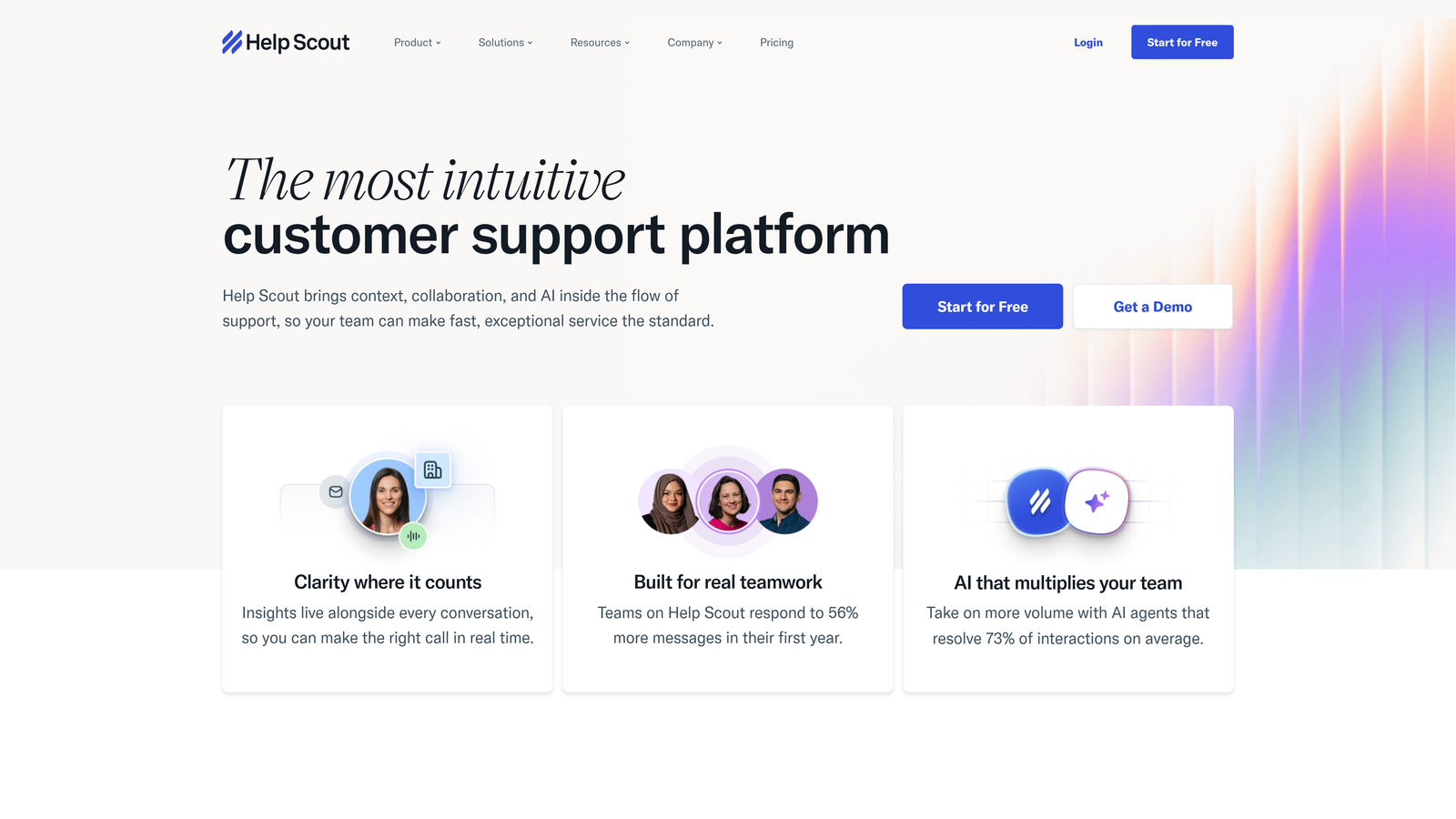
Help Scout is a human-first shared inbox and knowledge base platform built for teams that want support to feel like a real conversation, not a ticket queue.
Where This Tool Shines
Help Scout's deliberate simplicity is its defining feature. The shared inbox is designed to feel like email rather than a traditional ticketing system, which means agents spend less time navigating complex UI and more time responding to customers. For teams where support quality and relationship tone matter more than automation volume, that philosophy resonates.
The Beacon in-app widget gives customers access to the knowledge base and proactive help without leaving your product. Help Scout has added AI Drafts and Summarize features to assist agents, but the platform is intentionally positioned to augment human agents rather than replace them. Teams expecting heavy automation will find it less capable than AI-native alternatives.
Key Features
Shared Inbox: Email-style interface that keeps conversations feeling personal rather than transactional.
Beacon Widget: In-app help widget with proactive messaging and knowledge base search.
AI Drafts and Summarize: AI-assisted writing and conversation summarization to speed up agent responses.
Customer Profiles: Full conversation history and notes attached to each customer record.
Workflows: Automated tagging, routing, and auto-replies for common scenarios.
Best For
Small to mid-sized teams that value clean UX and relationship-driven support, and organizations where human judgment is central to every interaction. Not the right fit for teams that need high-volume autonomous resolution.
Pricing
Standard plan from $22/user/month. Verify current pricing at helpscout.com.
7. Kustomer
Best for: Support teams that need every interaction grounded in full customer history, with AI workflows built on top of rich CRM context.
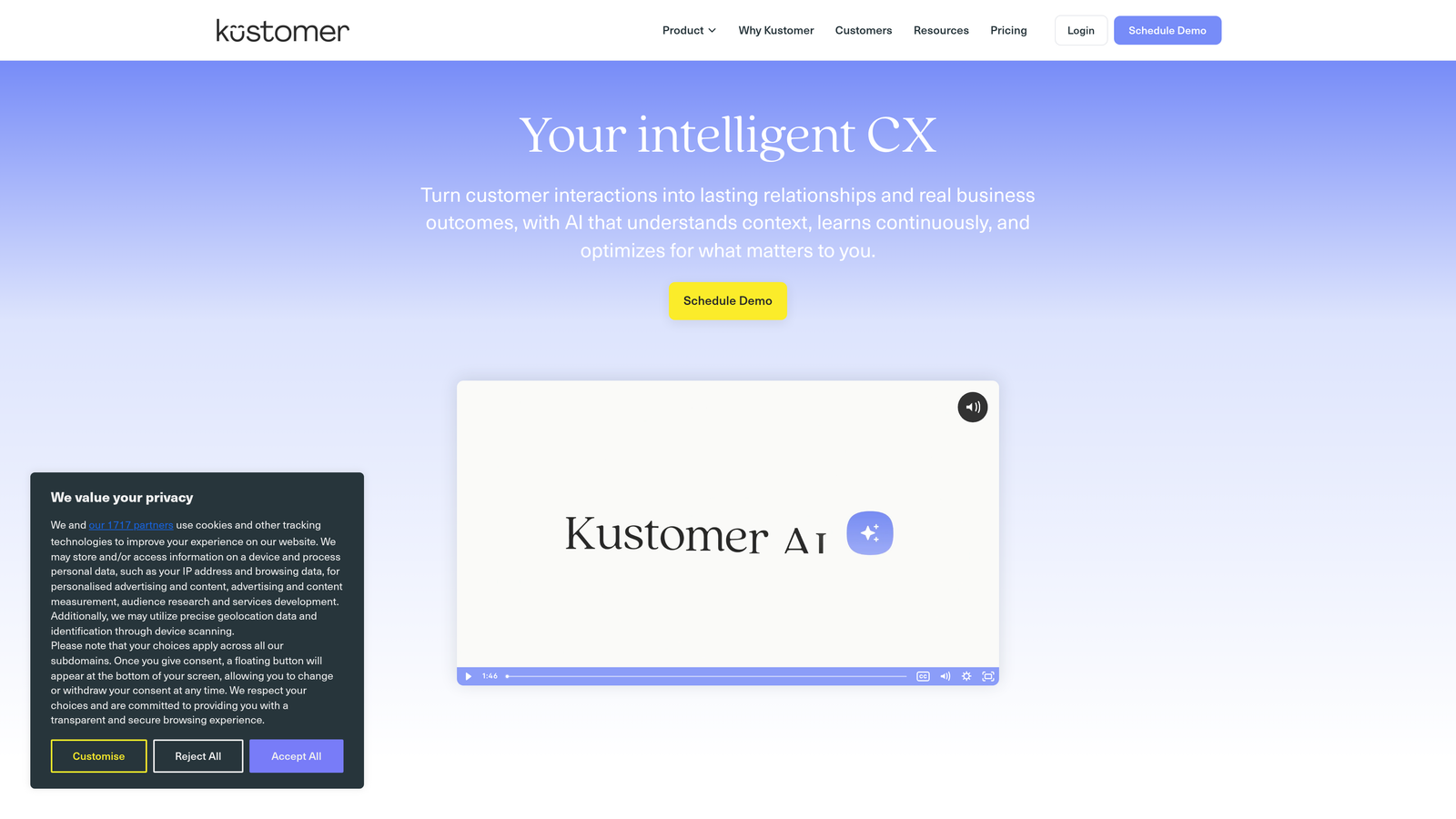
Kustomer is a CRM-native support platform that unifies every customer touchpoint into a single timeline, with AI-powered routing and workflows built on top of that context.
Where This Tool Shines
Kustomer's defining advantage is the customer timeline view. Rather than treating each ticket as an isolated event, the platform consolidates purchases, conversations, events, and behavioral data into one continuous record. For support teams where context is everything — high-value accounts, complex histories, recurring issues — that unified view changes how agents work.
AI routing and suggested responses are grounded in that customer history rather than just the current message, which can meaningfully improve resolution relevance. Teams evaluating Kustomer should note that it's positioned as a premium platform; the pricing reflects that positioning.
Key Features
Customer Timeline View: Consolidates all touchpoints — purchases, conversations, and product events — into a single continuous record.
AI-Powered Routing: Routes and suggests responses based on full customer history, not just the current ticket.
Omnichannel Support: Email, chat, SMS, social, and voice managed from one platform.
Business Rules Engine: Complex automation workflows without custom code.
Deep CRM Integrations: Revenue context available in every support conversation.
Best For
Mid-market and enterprise teams where customer history and context are central to resolution quality, particularly in industries with high-value accounts or complex customer relationships. Enterprise pricing makes it less accessible for early-stage teams.
Pricing
Enterprise pricing model. Verify current plans and pricing at kustomer.com.
8. Drift (Salesloft)
Best for: Revenue teams that handle inbound support and sales conversations in the same interface, with account-based targeting built in.
Drift is a conversational platform positioned at the intersection of sales and support, using AI playbooks to route, qualify, and engage inbound conversations.
Where This Tool Shines
Drift sits in an interesting position: it's not a pure support tool, and it's not a pure sales tool. For revenue teams that field a mix of inbound support queries and sales conversations, that overlap can be a genuine advantage. AI playbooks route conversations based on visitor intent and account data, so a high-value prospect gets a different experience than a standard support request.
The bionic chatbot model — combining AI responses with human handoff in a single conversation flow — works well for teams that want automation without fully removing the human element. Teams looking for a dedicated support platform focused on ticket resolution and business intelligence will likely find Drift's feature set oriented more toward pipeline than support operations.
Key Features
AI Playbooks: Routes conversations based on visitor intent and account-level data for personalized engagement.
Bionic Chatbots: Combines AI and human responses in a single conversation flow without jarring handoffs.
Account-Based Targeting: Personalizes support and sales conversations based on company and contact data.
Meeting Scheduling: Built-in calendar booking alongside live chat in the same interface.
Revenue Integrations: Deep connections with Salesforce, HubSpot, and Salesloft workflows.
Best For
Revenue-focused teams where inbound support and sales qualification happen in the same channel, and organizations already embedded in the Salesloft ecosystem. Less suited as a standalone support platform for teams primarily focused on ticket resolution and customer health.
Pricing
Premium pricing model. Verify current plans at drift.com.
Which Tool Is Right for Your Team?
The honest answer is that the right choice depends on where your team is today and where you're headed. Not every organization needs an AI-native platform, and not every traditional helpdesk is a dead end.
A traditional helpdesk still makes sense if your ticket volume is low, your industry requires human review of every response, or your team is formalizing support for the first time. Freshdesk and Help Scout are strong starting points in those scenarios. Zendesk is the right call if you're running a large enterprise operation that needs deep configurability and mature SLA management above all else.
An AI-native platform pays off when your ticket mix is dominated by repetitive, answerable queries — password resets, billing questions, how-to requests. It pays off when your team is growing faster than you can hire. And it pays off when you want support data to do more than sit in a dashboard: to surface product bugs, flag at-risk accounts, and reveal the patterns that drive churn before they become problems.
Intercom and Kustomer occupy a strong middle ground for SaaS teams that need context-rich support with meaningful AI assistance. Drift is worth evaluating if your support and sales motions overlap significantly.
For teams ready to move beyond routing tickets and into actually resolving them, your support team shouldn't scale linearly with your customer base. Let AI agents handle routine tickets, guide users through your product, and surface business intelligence while your team focuses on complex issues that need a human touch. See Halo in action and discover how continuous learning transforms every interaction into smarter, faster support.