9 Best Zendesk AI Automation Tools to Supercharge Your Support in 2026
This guide reviews the 9 best Zendesk AI automation tools of 2026, evaluating each on integration depth, automation quality, ease of setup, and value for B2B SaaS support teams. Whether you're battling repetitive tickets or struggling to scale, these tools offer the intelligence and Zendesk compatibility to meaningfully transform your support operation.
 Matt PattoliFounder12 min read
If your team is running support on Zendesk, you already know the platform is powerful. But AI automation is where the real efficiency gains live. Whether you're drowning in repetitive tickets, struggling to scale without adding headcount, or tired of agents copy-pasting the same responses, the right AI tool can transform how your support operation runs.
The challenge is that not every "AI automation" tool plays nicely with Zendesk, and not all of them are built with the same depth. Some bolt on a basic chatbot. Others offer genuine intelligence that learns from your data, routes tickets smartly, and hands off to humans at exactly the right moment.
Here are the top tools worth your attention in 2026, evaluated on integration depth, automation quality, ease of setup, and value for B2B SaaS teams.
1. Halo AI
Best for: B2B SaaS teams wanting an AI-first support platform with deep business intelligence and cross-stack integrations.
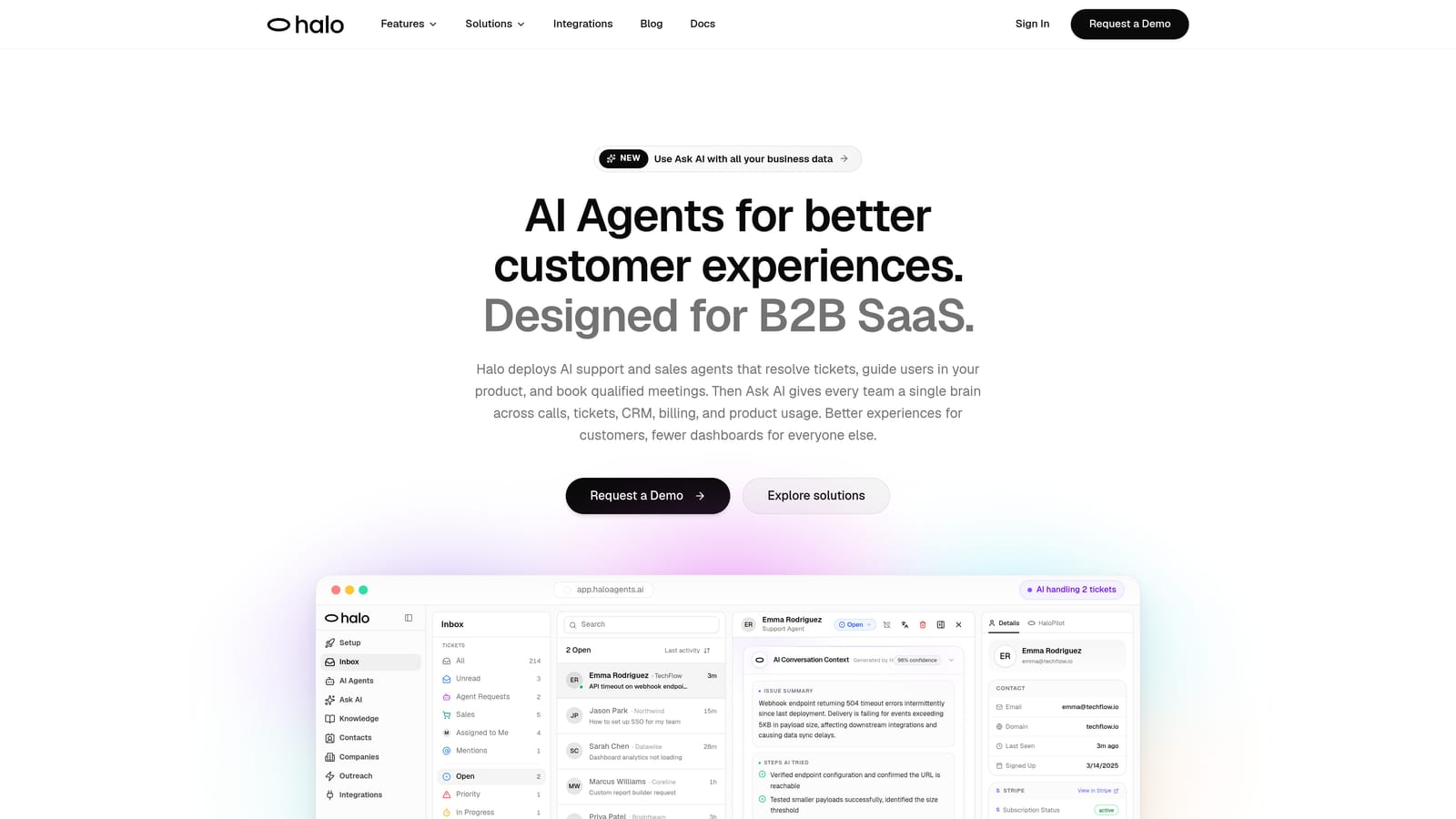
Halo AI is an AI-first customer support platform built for teams that want more than a chatbot bolted onto their helpdesk.
Where This Tool Shines
What separates Halo from most tools on this list is its page-aware architecture. The AI understands which product area a user is in when they reach out, enabling contextual guidance rather than generic responses. This matters enormously for SaaS products where a billing question looks completely different from a configuration issue.
The smart inbox goes beyond ticket metrics. It surfaces customer health signals and revenue anomalies, turning your support queue into a source of business intelligence. For product and CS teams, that's a fundamentally different value proposition than traditional helpdesk automation.
Key Features
Page-Aware Chat Widget: Understands the specific product area a user is in, enabling contextually relevant responses and guidance.
Autonomous Ticket Resolution: Resolves support tickets independently, with a continuous learning loop that improves from every interaction.
Auto Bug Ticket Creation: Converts support signals into engineering tickets automatically, routed to Linear or your preferred engineering system.
Smart Inbox with Business Intelligence: Surfaces customer health signals, revenue anomalies, and support trends beyond standard ticket analytics.
Live Agent Handoff: Escalates to human agents with full context preserved, so customers never have to repeat themselves.
Deep Integrations: Connects with Linear, Slack, HubSpot, Intercom, Stripe, Zoom, PandaDoc, and Fathom across your entire SaaS stack.
Best For
B2B SaaS companies that want an AI-first support layer with genuine business intelligence, not just ticket deflection. Particularly strong for product-led growth teams where support context connects directly to customer health and revenue signals.
Pricing
Demo-led sales process. Contact Halo directly at haloagents.ai to discuss pricing based on your team's needs and ticket volume.
2. Zendesk AI (Native)
Best for: Existing Zendesk customers who want AI capabilities with zero integration overhead.
Zendesk AI is Zendesk's own Advanced AI add-on, offering intelligent triage, agent copilot suggestions, and automated summaries built directly into the Zendesk Suite.
Where This Tool Shines
The biggest advantage here is frictionless deployment. If you're already on Zendesk Suite, there's no integration work, no new vendor relationship, and no data migration. The AI features activate on top of your existing workflows, which makes adoption significantly easier for teams that are already stretched thin.
The agent copilot is particularly useful for newer agents who need guardrails. Suggested replies and macro recommendations reduce response time while keeping quality consistent, without requiring senior agents to manually review every ticket.
Key Features
Intelligent Triage: Detects intent, sentiment, and language on incoming tickets to route them accurately before an agent touches them.
Agent Copilot: Surfaces suggested replies and macro recommendations in real time as agents work tickets.
Automated Conversation Summaries: Generates summaries for faster handoffs between agents or shifts.
OpenAI Partnership: Powered by large language model capabilities through Zendesk's partnership with OpenAI.
Zero Integration Work: Activates natively within existing Zendesk Suite plans, no third-party connectors required.
Best For
Teams already committed to the Zendesk ecosystem who want AI capabilities without adding another vendor. Less suited for teams needing cross-stack intelligence or AI that operates outside the Zendesk environment.
Pricing
Paid add-on on top of existing Zendesk Suite plans. Check zendesk.com for current rates, as pricing varies by plan tier.
3. Intercom Fin
Best for: Chat-first support teams prioritizing self-service deflection with conversational AI.
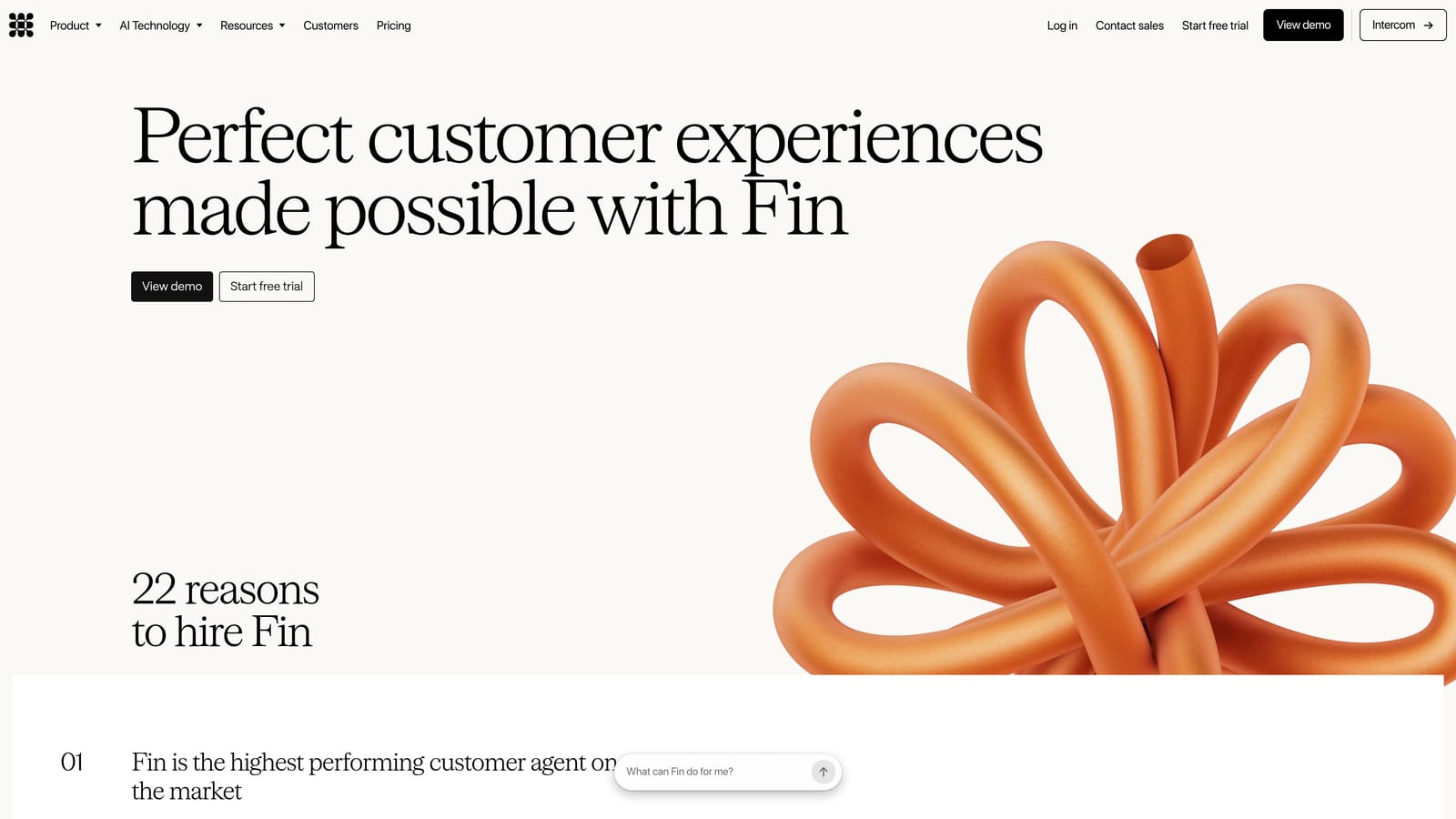
Intercom Fin is Intercom's LLM-powered AI agent that resolves customer questions directly from your help content, with strong conversational AI and multi-source knowledge ingestion.
Where This Tool Shines
Fin's strength is its ability to generate accurate, conversational responses from your existing help center content without requiring you to manually script every possible answer. The latest iteration, Fin 2, can ingest knowledge from multiple sources, making it more flexible for teams with content spread across different systems.
The per-resolution pricing model is worth noting. Rather than a flat monthly seat fee, you pay based on what Fin actually resolves. For teams with variable ticket volumes, this can make cost planning more predictable.
Key Features
GPT-Powered Resolution: Answers customer questions from help center content and custom answer libraries without manual scripting.
Multi-Source Knowledge Ingestion: Fin 2 pulls from multiple knowledge sources for more comprehensive coverage.
Seamless Human Handoff: Escalates within Intercom Messenger with full conversation context intact.
Per-Resolution Pricing: Cost scales with actual AI resolutions rather than seat count.
Self-Service Deflection: Designed to handle high volumes of common questions before they reach a human agent.
Best For
Teams using Intercom as their primary messenger who want strong AI deflection. Can integrate with Zendesk via third-party connectors, though Fin is most powerful within the native Intercom environment.
Pricing
Per-resolution pricing model. Check intercom.com for current rates and plan details.
4. Freshdesk Freddy AI
Best for: Teams evaluating Zendesk alternatives who want native AI built into their helpdesk from day one.
Freshdesk Freddy AI is Freshworks' native AI layer across the Freshdesk suite, covering self-service bots, agent assist, and analytics.
Where This Tool Shines
Freddy is best understood as a complete AI layer embedded within Freshdesk rather than a standalone tool. If you're evaluating whether to stay on Zendesk or move to Freshdesk, Freddy's breadth across self-service, agent assist, and analytics is a meaningful factor in that decision.
Freddy Insights adds an analytics and anomaly detection layer that helps support ops leaders spot trends and performance gaps without manually pulling reports. For teams where visibility into support performance is as important as the automation itself, this is a differentiator.
Key Features
Freddy Self Service: End-user deflection bot that handles common questions before they reach the queue.
Freddy Copilot: Suggested responses and article recommendations for agents handling live tickets.
Freddy Insights: Analytics layer with anomaly detection to surface support trends and performance issues.
Native Ecosystem Integration: No third-party connectors required within the Freshdesk environment.
SMB to Mid-Market Scalability: Plan tiers designed to grow with teams as volume increases.
Best For
Teams open to switching from Zendesk or those already on Freshdesk who want AI capabilities without additional vendor complexity. Less relevant if you're firmly committed to staying on Zendesk.
Pricing
Varies by Freshdesk plan tier. Check freshdesk.com for current rates across plan levels.
5. Forethought
Best for: Enterprise support teams with high ticket volumes needing sophisticated triage and routing logic.
Forethought is an enterprise AI platform for intelligent ticket triage, routing, and resolution, layered on top of Zendesk and other helpdesks for high-volume support operations.
Where This Tool Shines
Forethought's core strength is predicting ticket intent before routing occurs. Rather than relying on keyword matching or manual tagging, the platform uses AI to classify incoming tickets by intent and sentiment, then routes them to the right team or queue automatically. For high-volume operations where misrouting creates cascading SLA problems, this matters.
The Discover module is worth highlighting for ops leaders. It analyzes your ticket data to identify automation opportunities you might be missing, essentially telling you where AI can have the most impact based on your actual patterns.
Key Features
Solve: AI resolution for common ticket types without human involvement.
Triage: Intent and sentiment tagging applied before tickets enter the routing workflow.
Assist: Real-time agent suggestions during ticket handling to reduce handle time.
Discover: Analytics module that surfaces automation opportunities from your historical ticket data.
Deep Zendesk Integration: Enterprise-grade routing logic built on top of Zendesk's ticket structure.
Best For
Mid-market to enterprise teams with substantial ticket volumes where routing accuracy and triage speed are primary pain points. Less suited to smaller teams where the implementation complexity may outweigh the benefits.
Pricing
Enterprise pricing. Contact Forethought directly at forethought.ai for a quote based on volume and use case.
6. Tidio Lyro
Best for: SMBs and lean support teams wanting accessible conversational AI without enterprise pricing.
Tidio Lyro is Tidio's conversational AI product designed for smaller teams, offering accessible AI chat automation that integrates with Zendesk and other helpdesks.
Where This Tool Shines
Lyro is designed to be set up quickly, without engineering involvement, using your existing FAQ and knowledge content as its training source. For a lean team that doesn't have the bandwidth for a complex implementation, that accessibility is genuinely valuable.
The escalation path to Zendesk is clean: when Lyro can't resolve a question, it creates a ticket in Zendesk automatically. This keeps your existing helpdesk workflow intact while adding an AI deflection layer in front of it.
Key Features
Conversational AI from Your Content: Trained on your FAQ and knowledge base without custom scripting or engineering work.
Autonomous Question Handling: Resolves repetitive questions before escalating to a human agent.
Zendesk Ticket Creation on Handoff: Creates tickets automatically in Zendesk when conversations need human follow-up.
Accessible Pricing: Designed for teams that can't justify enterprise-level AI spend.
Quick Setup: Deployable without engineering resources, reducing time to value.
Best For
Small to mid-sized teams with moderate ticket volumes who need AI deflection without the implementation overhead. Particularly useful for e-commerce and smaller SaaS companies where common questions dominate the queue.
Pricing
Lyro is available on paid Tidio plans. Check tidio.com for current pricing tiers and conversation limits.
7. Assembled
Best for: Support ops leaders focused on workforce management, forecasting, and SLA performance.
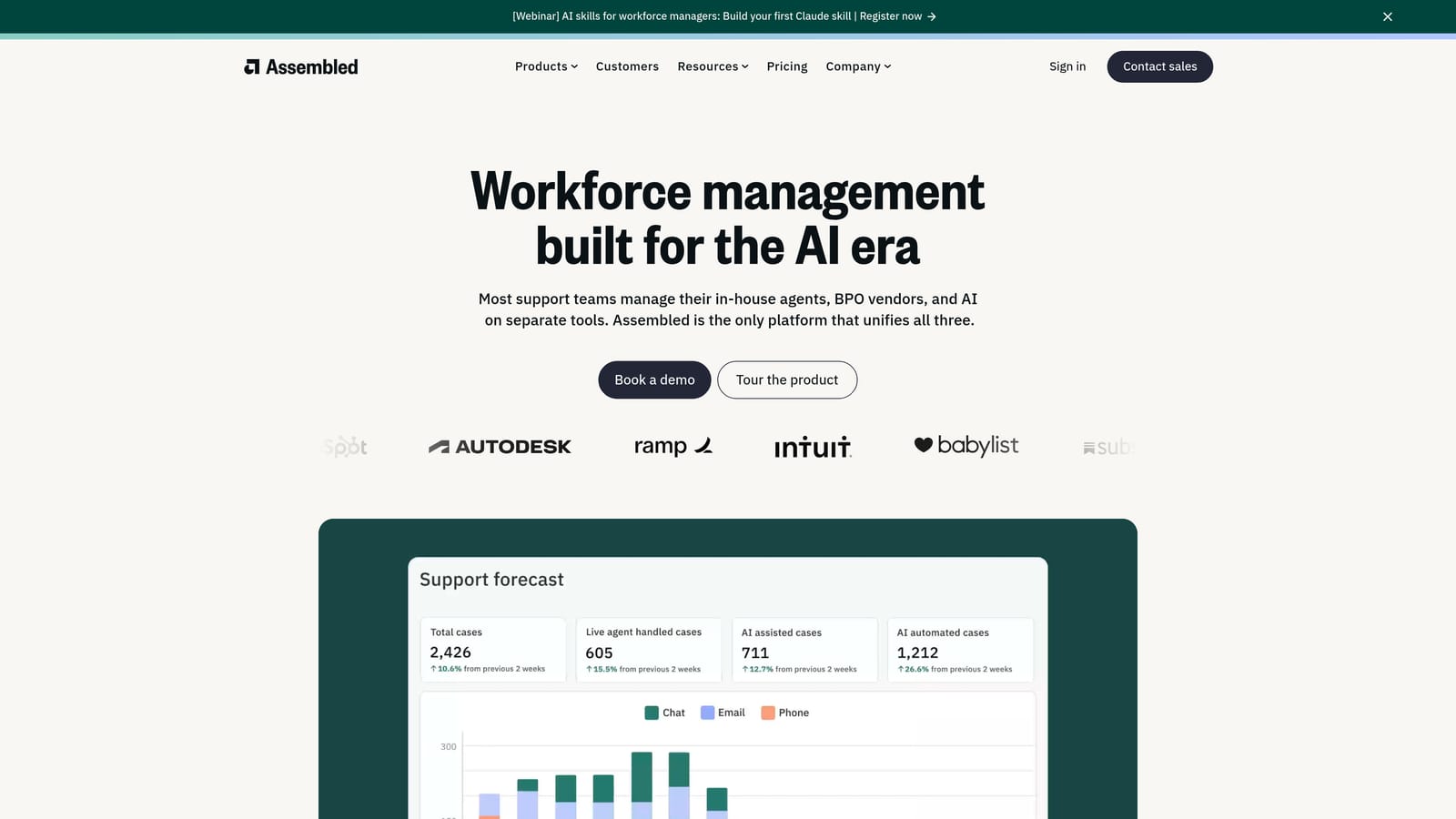
Assembled is an AI-powered workforce management platform that integrates with Zendesk to help support ops teams forecast volume, schedule agents, and manage SLA performance.
Where This Tool Shines
Assembled sits in a different category from most tools on this list. It's not focused on autonomous ticket resolution; it's focused on making sure the right number of agents are scheduled at the right times based on predicted ticket volume. For teams where staffing inefficiency is the core problem, this is the tool that addresses it directly.
The Zendesk integration pulls historical ticket volume data to power AI-driven forecasting. This means your scheduling decisions are based on actual patterns from your queue, not manual estimates that are often off in either direction.
Key Features
AI-Driven Volume Forecasting: Uses Zendesk ticket data to predict incoming volume and inform staffing decisions.
Agent Scheduling and Capacity Planning: Builds schedules based on forecasted demand and agent availability.
Real-Time Adherence Tracking: Monitors whether agents are following their scheduled activities and flags deviations.
SLA Monitoring: Tracks performance against SLA targets in real time with alerting capabilities.
Reporting Dashboards: Provides ops leaders with visibility into staffing efficiency and team performance.
Best For
Support operations leaders at mid-market to enterprise companies where scheduling accuracy and SLA management are primary concerns. Not a replacement for AI resolution tools, but a strong complement to them.
Pricing
Contact Assembled directly for pricing. Details available at assembledhq.com.
8. Guru
Best for: Teams with large knowledge bases where agents spend too much time hunting for accurate answers.
Guru is an AI-powered knowledge management platform that surfaces verified answers to agents inside Zendesk in real time, reducing handle time and knowledge-hunting.
Where This Tool Shines
Guru addresses a problem that's easy to overlook: agents often know they need to find an answer, but locating the right, up-to-date information takes longer than it should. The AI search surfaces relevant knowledge cards directly within the Zendesk interface, so agents don't have to context-switch to a separate wiki or knowledge base.
The verification layer is what sets Guru apart from a standard internal wiki. Knowledge cards are marked as verified or flagged as outdated, which means agents can trust that what they're sharing with customers is actually accurate. For teams where incorrect information creates downstream problems, this is a meaningful safeguard.
Key Features
AI-Powered Knowledge Search: Surfaces relevant answers inside Zendesk without requiring agents to leave the interface.
Verified Answer Cards: Knowledge is marked as verified or flagged for review, ensuring accuracy before agents share it.
Knowledge Base Analytics: Identifies content gaps based on what agents are searching for but not finding.
Browser Extension: Provides in-context knowledge access across any tool agents use, not just Zendesk.
Multi-Platform Integration: Connects with Slack, Zendesk, Salesforce, and other tools in the support stack.
Best For
Teams with large, distributed internal knowledge bases where finding accurate information is a daily friction point for agents. Particularly valuable for companies with complex products, frequent updates, or distributed teams across time zones.
Pricing
Free tier available for smaller teams. Paid plans scale with team size. Check getguru.com for current plan details.
9. Certainly
Best for: Teams that want full control over conversation design without relying on engineering resources.
Certainly is a no-code conversational AI bot builder with visual flow design, multilingual support, and Zendesk integration for teams that want to own their automation logic.
Where This Tool Shines
Certainly gives non-technical teams the ability to design, test, and deploy support conversation flows without writing a line of code. The visual builder makes it possible for a support manager to own the bot's logic directly, rather than depending on an engineering queue every time something needs to change.
Multilingual support is a genuine differentiator for international teams. If your customer base spans multiple languages and you need your bot to handle conversations natively in each, Certainly's built-in multilingual capabilities reduce the complexity of managing separate flows per language.
Key Features
Visual No-Code Bot Builder: Drag-and-drop interface for designing conversation flows without engineering involvement.
Multilingual Support: Handles conversations in multiple languages for international customer bases.
Zendesk Integration: Creates tickets and triggers agent handoffs within Zendesk automatically.
Pre-Built Templates: Common support scenarios available as starting points to reduce build time.
Bot Performance Analytics: Tracks conversation outcomes and bot performance to identify improvement areas.
Best For
Support teams that want granular control over their automation flows and serve international customers across multiple languages. Best suited to teams where a non-technical owner needs to manage and iterate on bot logic independently.
Pricing
Contact Certainly directly for pricing. Details available at certainly.io.
Which Tool Is Right for Your Team?
The right choice depends less on which tool has the longest feature list and more on where your specific bottleneck actually lives. Here's a quick way to think through it.
If you want an AI-first platform with business intelligence beyond tickets: Halo AI is built for this. The page-aware context, continuous learning, and smart inbox that surfaces customer health signals and revenue anomalies make it the strongest choice for B2B SaaS teams that want support to connect directly to product and revenue outcomes.
If you're committed to Zendesk and want zero integration work: Zendesk AI (Native) is the logical starting point. You won't get cross-stack intelligence, but you'll get meaningful AI capabilities activated directly within your existing workflows.
If you're an SMB with a lean team and limited budget: Tidio Lyro offers the most accessible entry point. Setup is fast, pricing is reasonable, and it handles the repetitive question load that clogs smaller queues.
If you're an enterprise with high volume and complex routing needs: Forethought is purpose-built for this. Its triage and intent detection capabilities are designed for operations where misrouting at scale creates real SLA damage.
If your agents spend too much time finding answers: Guru addresses the knowledge access problem specifically. Pair it with any of the other tools on this list for a more complete automation stack.
If scheduling and SLA management is your core pain point: Assembled sits in its own category and is worth evaluating alongside, not instead of, an AI resolution tool.
Your support team shouldn't scale linearly with your customer base. Let AI agents handle routine tickets, guide users through your product, and surface business intelligence while your team focuses on complex issues that need a human touch. See Halo in action and discover how continuous learning transforms every interaction into smarter, faster support.