9 Best AI Agents for SaaS Support in 2026
SaaS support teams struggling with growing ticket volumes are turning to AI agents for SaaS support to autonomously handle routine inquiries while escalating complex issues to human agents. This comprehensive guide evaluates nine purpose-built AI support platforms based on their autonomy, integration capabilities, learning systems, and practical fit for product teams—helping you choose between solutions that enhance existing helpdesks versus those that replace them entirely.
 Grant CooperFounder10 min read
SaaS support teams face a familiar challenge: ticket volumes grow faster than headcount budgets. AI agents have emerged as the practical solution—autonomous systems that handle routine inquiries, escalate complex issues to humans, and learn from every interaction. But not all AI support agents are built the same. Some bolt onto existing helpdesks, others replace them entirely. Some excel at simple FAQ deflection, while others can navigate complex product workflows.
This guide breaks down the top AI agents purpose-built for SaaS support, evaluating each on autonomy, integration depth, learning capabilities, and real-world fit for product teams.
1. Halo AI
Best for: SaaS teams wanting AI-first support with deep product context and business intelligence
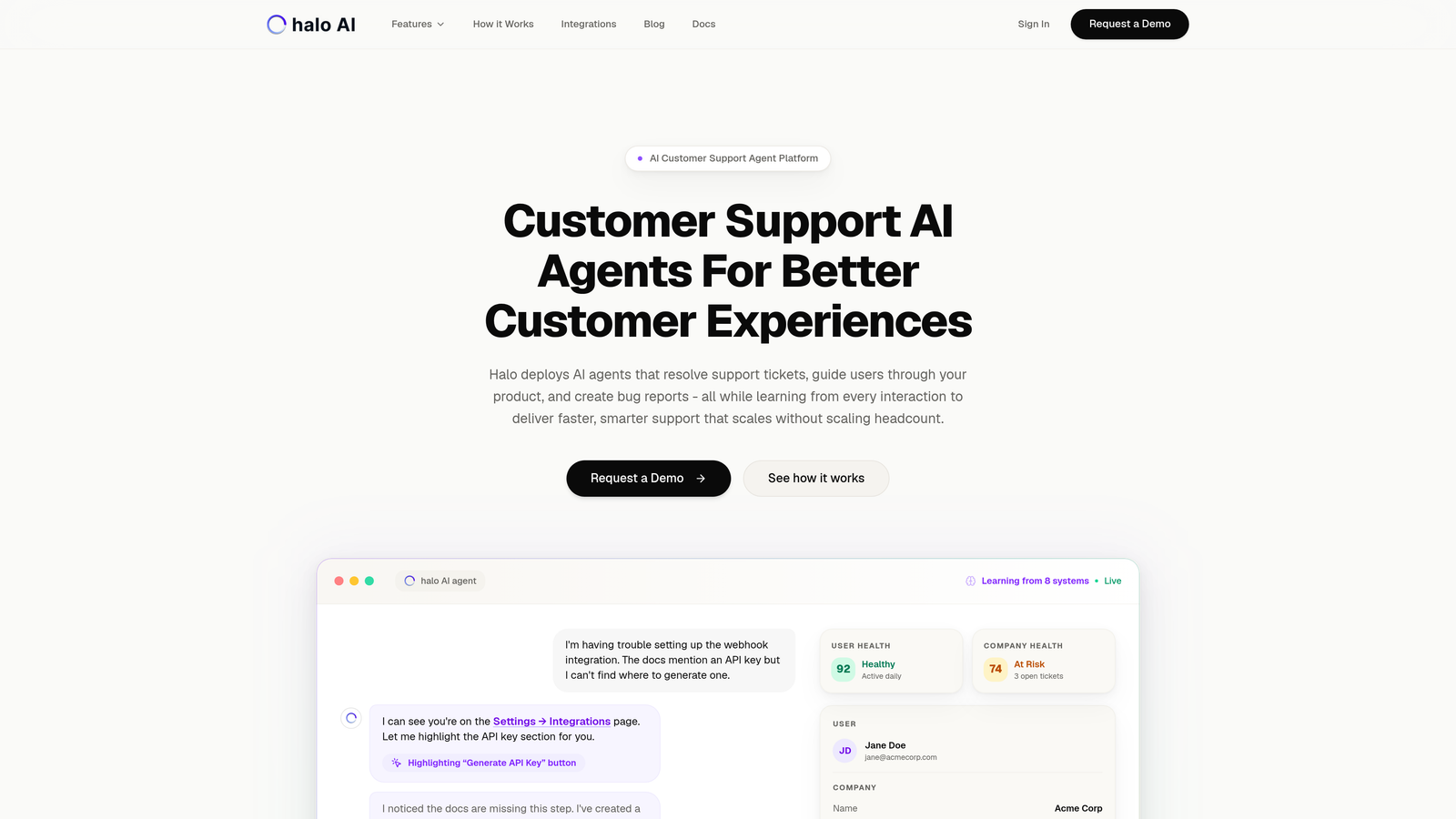
Halo AI is an AI-powered customer support platform built from the ground up for product-led SaaS companies.
Where This Tool Shines
Unlike AI agents bolted onto existing helpdesks, Halo operates as an AI-native platform. Its page-aware chat widget sees exactly what users see in your product, providing context-rich guidance that goes beyond generic FAQ answers.
The platform's continuous learning architecture means every resolved ticket makes the system smarter. It connects across your entire business stack—Linear for bug tracking, HubSpot for customer data, Stripe for billing context—creating a unified intelligence layer that delivers insights beyond traditional support metrics.
Key Features
Page-Aware Context: Chat widget understands the exact screen users are viewing, enabling precise visual guidance through complex workflows.
Continuous Learning: System improves autonomously from every interaction, building institutional knowledge without manual retraining.
Auto Bug Ticket Creation: Automatically generates detailed bug reports in Linear when product issues are detected during support conversations.
Smart Inbox with BI: Surfaces customer health signals, revenue intelligence, and anomaly detection alongside traditional support metrics.
Intelligent Handoff: Escalates complex issues to human agents with full conversation context and suggested next steps.
Best For
Product teams at B2B SaaS companies who need support that understands their product deeply and provides business intelligence beyond ticket resolution. Particularly valuable for teams using Zendesk, Freshdesk, or Intercom who want AI capabilities those platforms don't natively provide.
Pricing
Contact for pricing based on your support volume and integration requirements.
2. Intercom Fin
Best for: Teams already using Intercom who want native AI without switching platforms
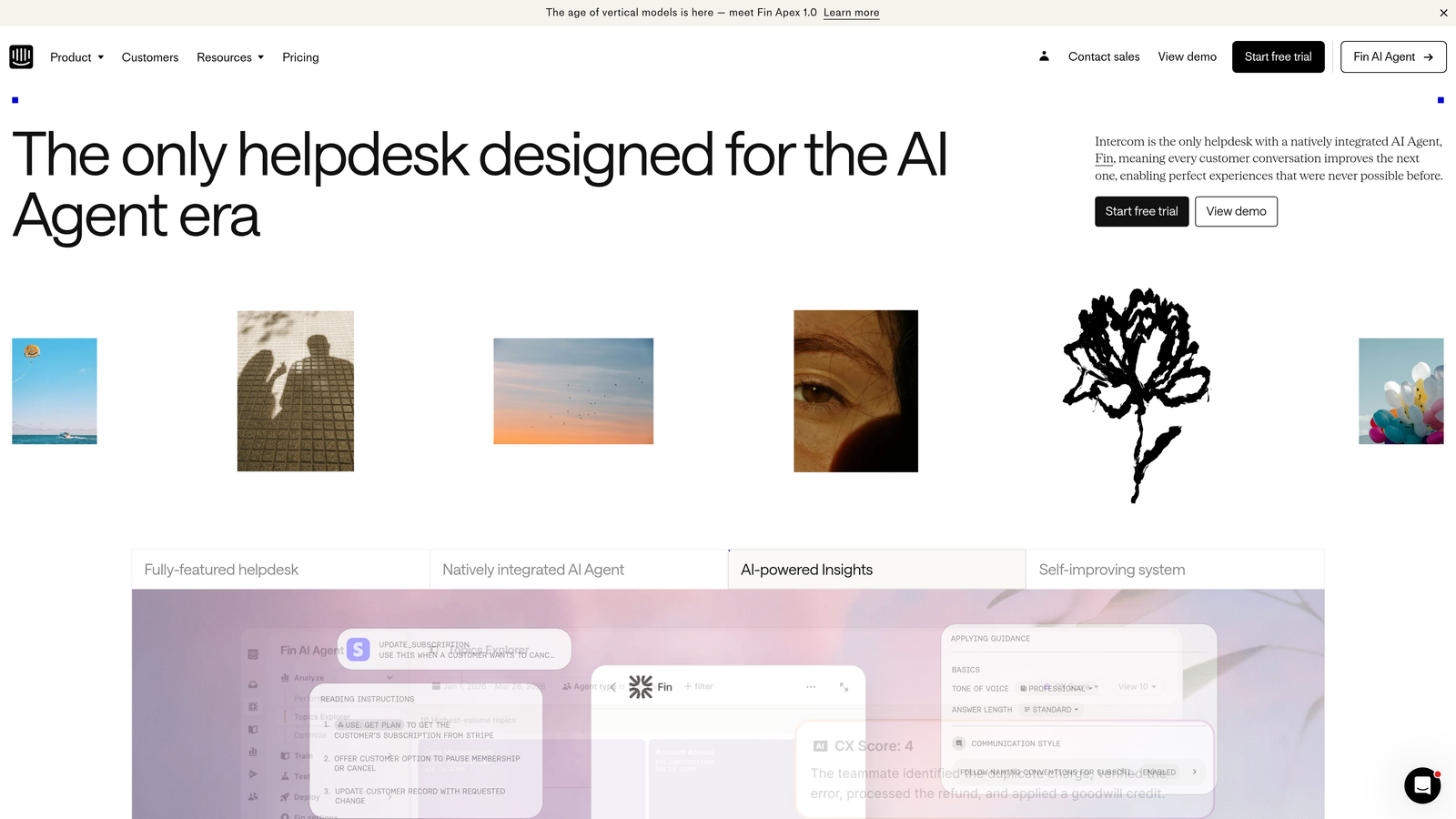
Intercom Fin is a GPT-4 powered AI agent built directly into Intercom's customer messaging platform.
Where This Tool Shines
Fin's integration advantage is unbeatable if you're already in the Intercom ecosystem. It pulls from your existing help center content, conversation history, and customer data without requiring separate setup or data migration.
The human handoff experience is seamless—agents receive full conversation context when Fin escalates, eliminating the frustrating "let me repeat everything" customer experience common with other AI tools.
Key Features
GPT-4 Conversational AI: Leverages advanced language models for natural, context-aware customer conversations.
Help Center Learning: Automatically trains on your existing documentation and updates as content changes.
Contextual Handoff: Transfers complex issues to human agents with complete conversation history and suggested responses.
Custom Answer Controls: Set guardrails and confidence thresholds to prevent AI hallucinations or off-brand responses.
Built-In Analytics: Track resolution rates, customer satisfaction, and AI performance directly in your Intercom dashboard.
Best For
SaaS companies already invested in Intercom who want to add AI capabilities without platform switching costs or integration headaches.
Pricing
Starting at $0.99 per resolution, making it cost-effective for teams with moderate ticket volumes.
3. Zendesk AI Agents
Best for: Enterprise SaaS with complex support operations and strict compliance requirements
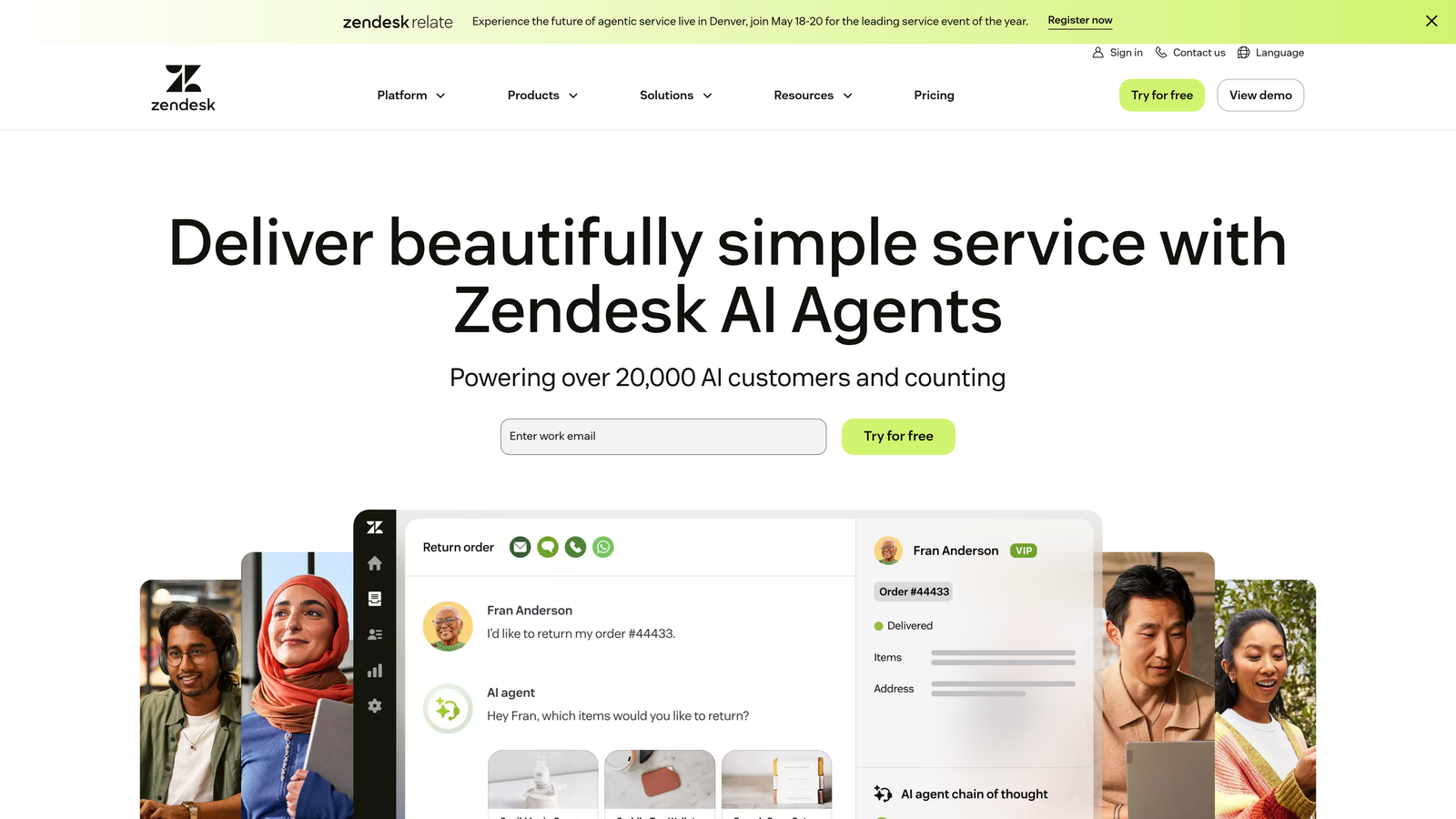
Zendesk AI Agents deliver enterprise-grade automation built into the Zendesk Suite platform.
Where This Tool Shines
Zendesk's AI capabilities excel in large-scale operations where intelligent routing and workflow automation matter more than conversational finesse. The platform's pre-built industry workflows accelerate deployment for teams in regulated industries like healthcare or finance.
For enterprises already standardized on Zendesk, the AI agents integrate with existing macros, triggers, and reporting infrastructure—preserving years of operational investment while adding intelligent automation.
Key Features
Intent Detection and Routing: Automatically categorizes incoming tickets and routes them to specialized teams or AI workflows.
Industry-Specific Workflows: Pre-built automation templates for common use cases in SaaS, e-commerce, and financial services.
Agent Assist: Surfaces suggested responses and relevant knowledge base articles to human agents during conversations.
Macro Automation: AI-powered suggestions for applying macros and templates based on ticket content and history.
Enterprise Compliance: SOC 2, HIPAA, and GDPR compliance built into the platform architecture.
Best For
Large SaaS enterprises with established Zendesk implementations, complex support hierarchies, and strict security or compliance requirements.
Pricing
Included with Suite Professional and Enterprise plans. Advanced AI features available as add-on pricing.
4. Ada
Best for: Global SaaS companies needing multilingual support at high volume
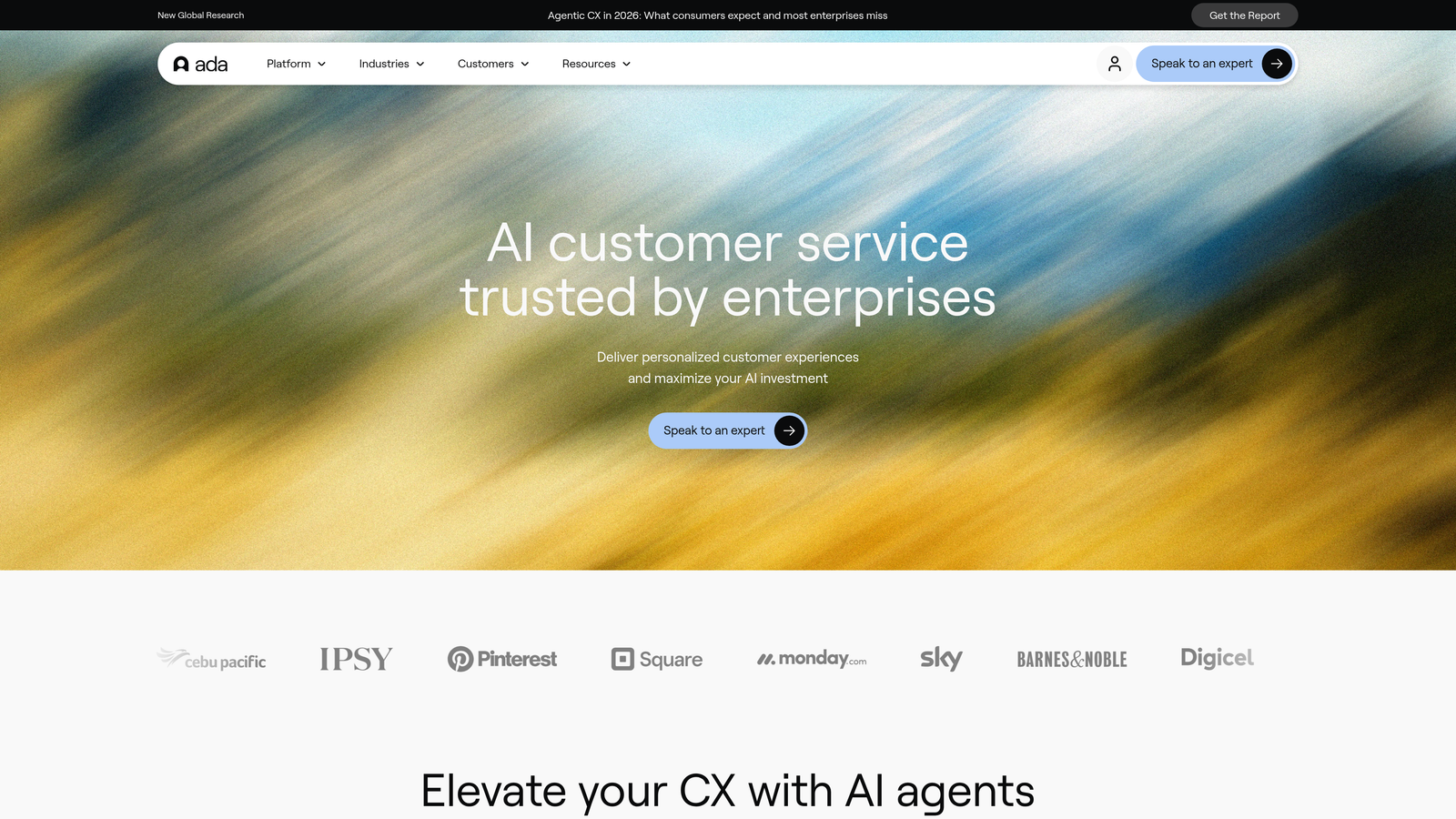
Ada is an AI automation platform specializing in high-volume, multilingual customer support across channels.
Where This Tool Shines
Ada's multilingual capabilities are unmatched—supporting 50+ languages out of the box without requiring separate training for each language. This makes it ideal for SaaS companies with global customer bases who can't afford language-specific support teams.
The platform's API-first architecture allows technical teams to build custom integrations and workflows that go beyond standard chatbot capabilities, making it a favorite among product-led companies with engineering resources.
Key Features
50+ Language Support: Native multilingual capabilities without per-language configuration or training overhead.
No-Code Builder: Visual conversation flow designer that non-technical teams can use to create and modify AI workflows.
Proactive Messaging: Trigger automated outreach based on user behavior, account status, or product usage patterns.
Advanced Analytics: Detailed dashboards tracking deflection rates, containment, customer satisfaction, and conversation paths.
API-First Architecture: Extensive API access for custom integrations with internal tools and business systems.
Best For
High-growth SaaS companies serving international markets, particularly those with engineering teams who can leverage Ada's API capabilities for custom workflows.
Pricing
Custom pricing based on resolution volume and feature requirements. Generally suited for mid-market to enterprise budgets.
5. Freshdesk Freddy AI
Best for: Mid-market SaaS teams using the Freshworks ecosystem for sales and support
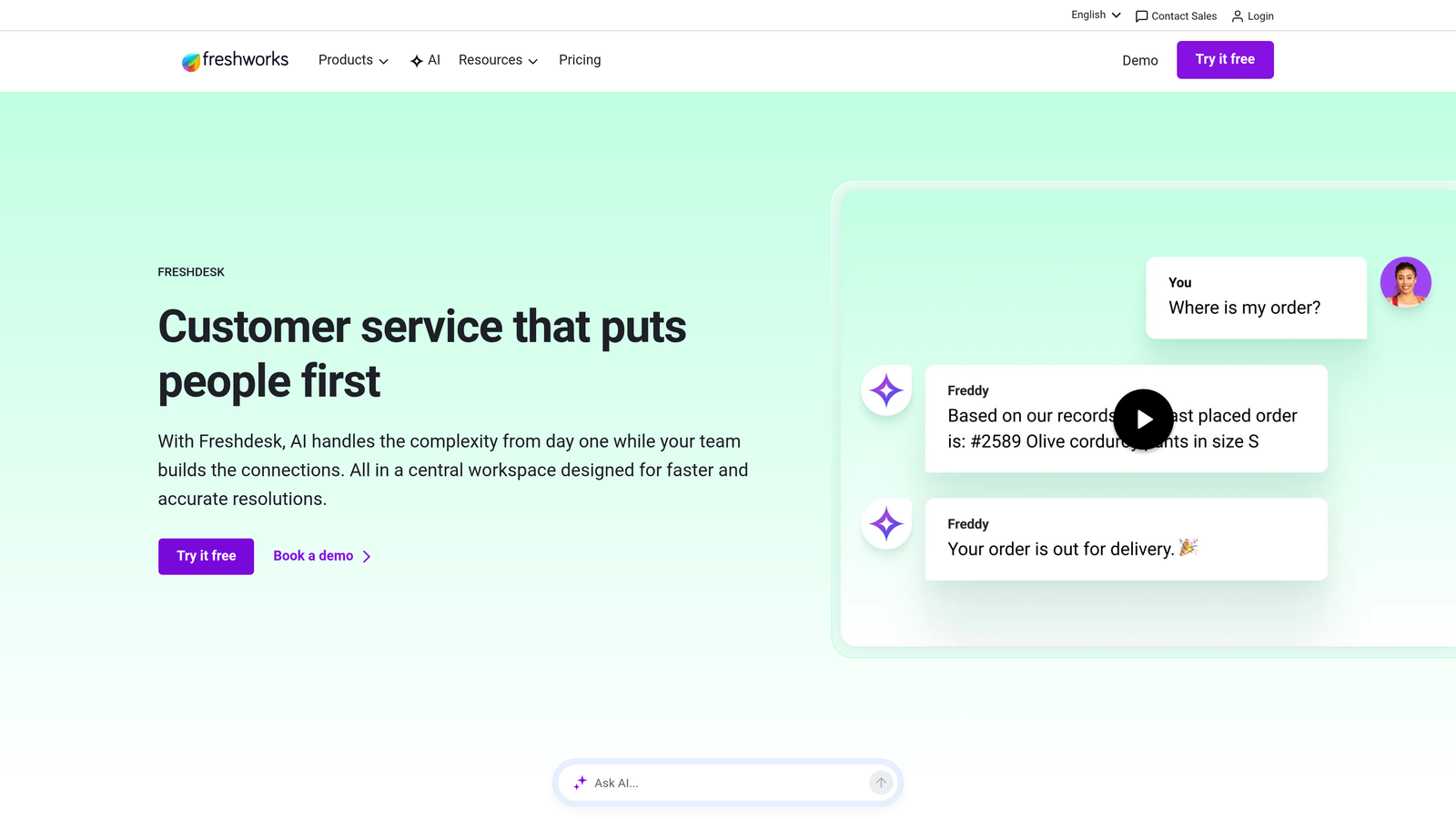
Freshdesk Freddy AI is an AI assistant integrated across the Freshworks customer service suite.
Where This Tool Shines
Freddy's advantage lies in its unified data model across Freshworks products. If you're using Freshsales CRM alongside Freshdesk, Freddy can surface sales context, deal status, and customer health data directly in support conversations.
The "thank you detector" feature is particularly clever—it prevents agents from reopening tickets when customers simply reply with gratitude, reducing unnecessary work and improving efficiency metrics.
Key Features
Auto-Triage and Classification: Automatically categorizes and prioritizes incoming tickets based on content, urgency, and customer data.
Canned Response Suggestions: AI-powered recommendations for templated responses based on ticket content and historical patterns.
Article Recommender: Surfaces relevant knowledge base articles to agents during conversations, improving first-contact resolution.
Thank You Detector: Identifies gratitude responses to prevent unnecessary ticket reopens and follow-ups.
CRM Data Unification: Pulls customer context from Freshsales, including deal status, account health, and interaction history.
Best For
Mid-market SaaS companies using Freshworks for both sales and support who want unified customer intelligence across teams.
Pricing
Included with Freshdesk Pro and Enterprise plans, making it accessible for growing teams without separate AI licensing costs.
6. Forethought Solve
Best for: SaaS teams focused on maximizing ticket deflection and ROI measurement
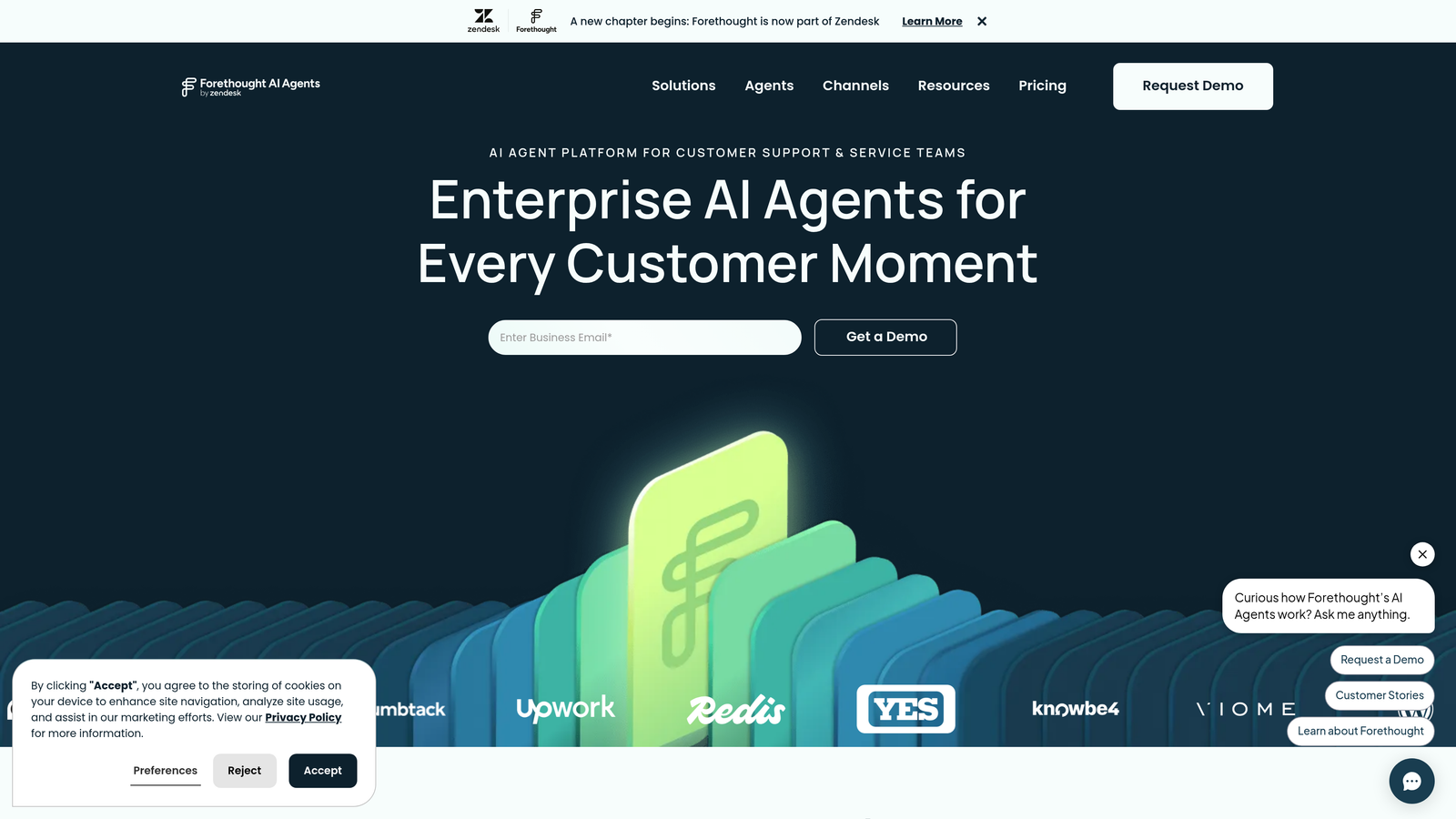
Forethought Solve is an AI platform built specifically for ticket deflection and intelligent case routing.
Where This Tool Shines
Forethought excels at identifying gaps in your knowledge base by analyzing which questions AI can't confidently answer. This feedback loop helps support teams prioritize documentation efforts based on actual customer needs rather than guesswork.
The platform's ROI tracking capabilities are more detailed than most competitors, making it easier to justify AI investment to finance teams and measure actual cost savings from deflection.
Key Features
Predictive Ticket Routing: AI-powered routing that sends tickets to the right team or agent based on content, complexity, and historical resolution patterns.
Knowledge Gap Identification: Surfaces questions AI struggles with, highlighting documentation gaps that need attention.
Workflow Automation Builder: Create custom automation workflows for common ticket types and resolution paths.
ROI Analytics: Detailed tracking of cost savings, deflection rates, and efficiency gains from AI automation.
Multi-Channel Deployment: Deploy AI across email, chat, SMS, and voice channels from a single platform.
Best For
Data-driven SaaS teams who need to prove ROI from AI investments and systematically improve support documentation based on customer behavior.
Pricing
Custom pricing based on ticket volume and channel requirements. Typically suited for companies handling 5,000+ tickets monthly.
7. Kustomer IQ
Best for: E-commerce SaaS needing unified customer timelines and proactive engagement
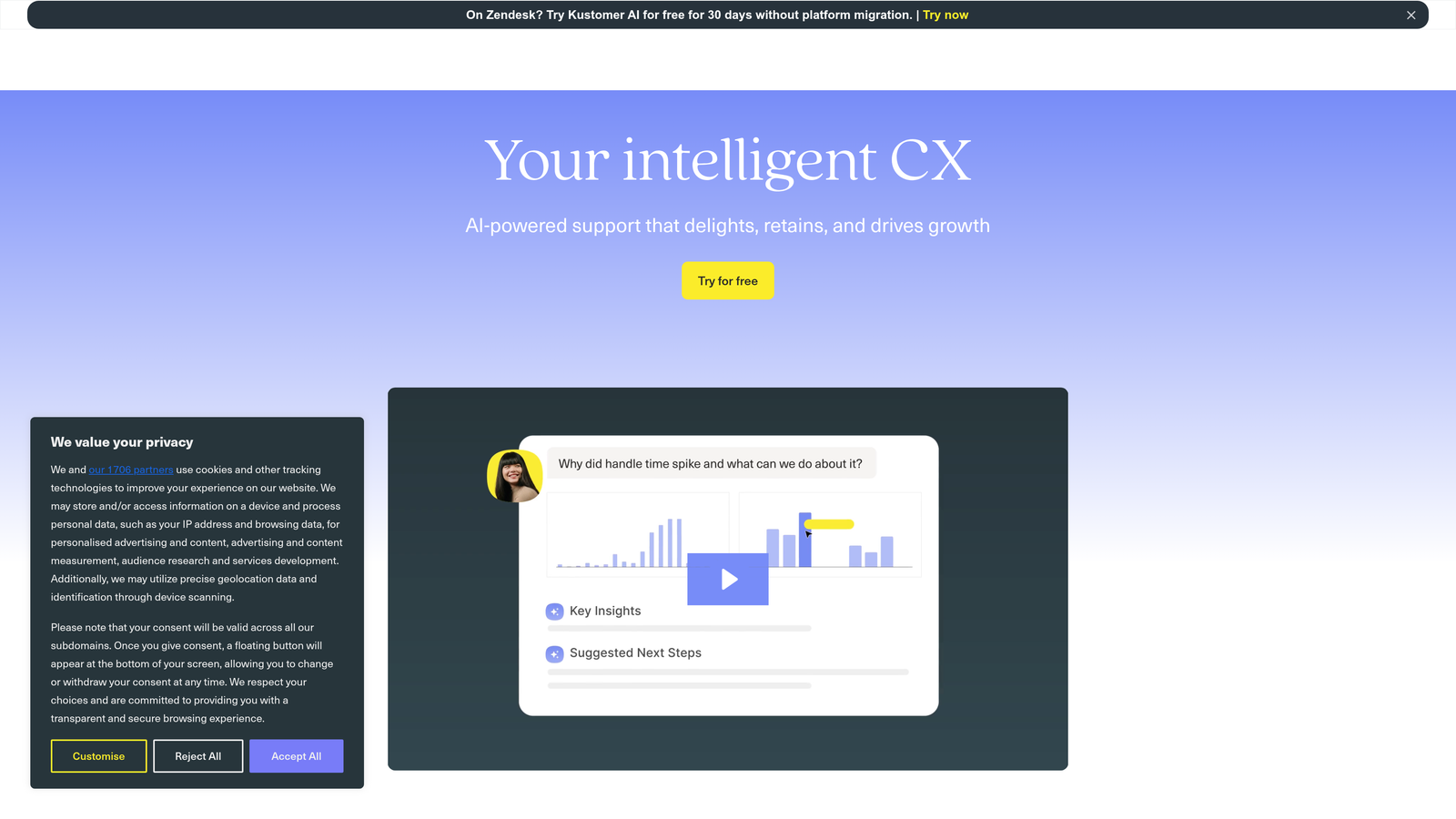
Kustomer IQ is an AI-powered CRM platform with unified customer timeline views and intelligent automation.
Where This Tool Shines
Kustomer's unified timeline approach displays every customer interaction—support tickets, purchases, product usage, email opens—in a single chronological view. This context-rich interface helps agents understand the full customer journey before responding.
The sentiment analysis capabilities go beyond basic positive/negative detection, identifying frustration, confusion, or urgency in customer messages to trigger appropriate escalations or proactive outreach.
Key Features
Unified Customer Timeline: Chronological view of all customer interactions across support, sales, product usage, and billing.
Sentiment Analysis: Real-time detection of customer emotion and urgency to trigger appropriate responses or escalations.
Proactive Outreach Triggers: Automated messaging based on customer behavior, account status, or detected issues.
Custom Chatbot Builder: Visual builder for creating branded chatbots with custom logic and integrations.
E-Commerce Integrations: Deep connections with Shopify, Magento, and other e-commerce platforms for order and inventory context.
Best For
SaaS companies with e-commerce components or subscription models who need deep customer context and proactive engagement capabilities.
Pricing
Starting at $89 per user per month, positioned for mid-market teams with moderate agent counts.
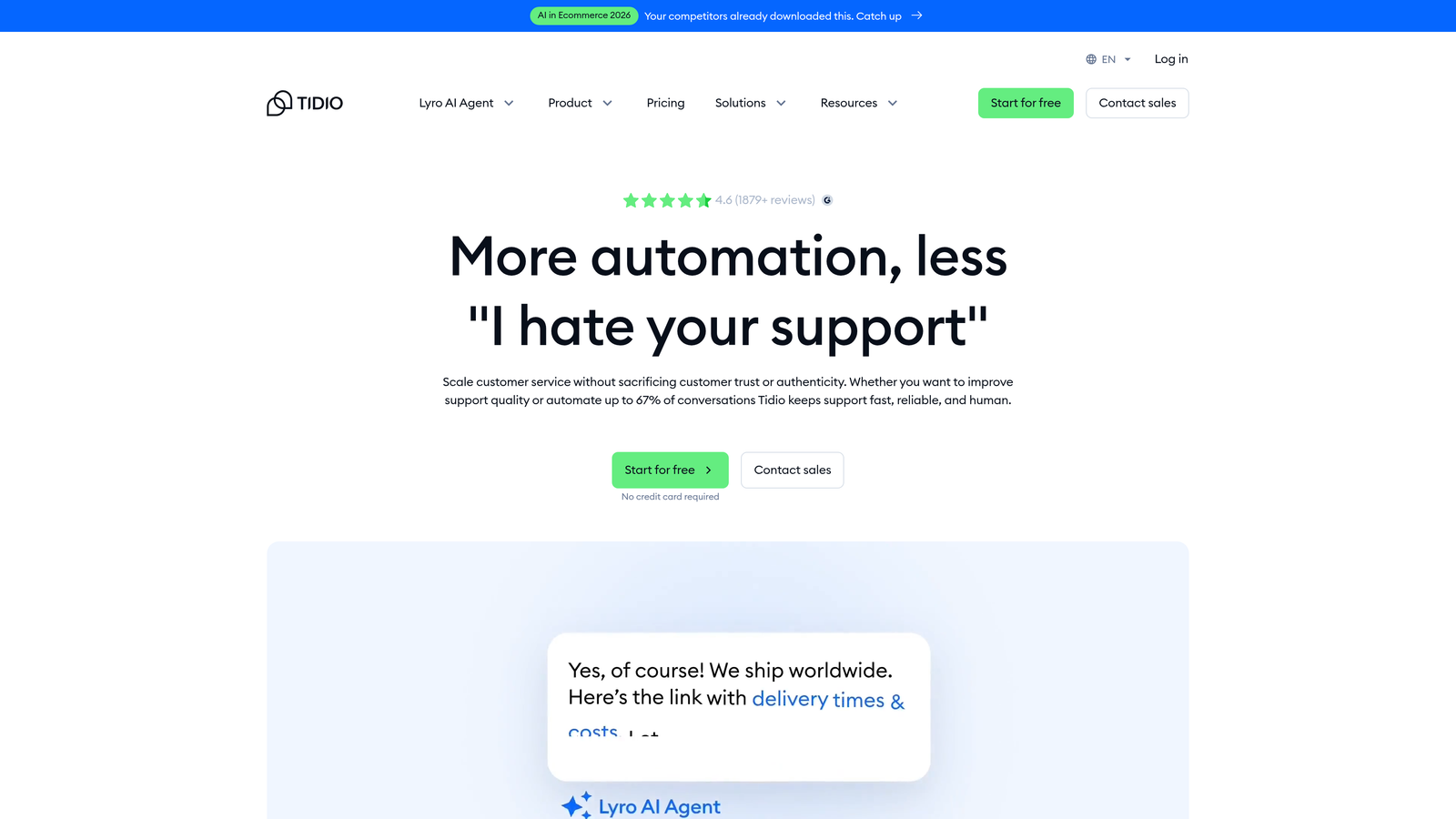
8. Tidio AI (Lyro)
Best for: Early-stage SaaS companies needing affordable AI without enterprise complexity
Tidio AI is an accessible chatbot solution featuring Lyro conversational AI for growing SaaS companies.
Where This Tool Shines
Tidio's approachability makes it ideal for startups and early-stage companies without dedicated support teams. The visual flow builder is genuinely intuitive—non-technical founders can build functional chatbots in an afternoon.
The free tier offers real functionality, not just a trial period, making it possible to test AI support capabilities before committing budget. This low-risk entry point is valuable for bootstrapped SaaS companies.
Key Features
Lyro Conversational AI: Natural language processing for human-like conversations without rigid keyword matching.
Visual Flow Builder: Drag-and-drop interface for creating chatbot workflows without coding or technical expertise.
Live Chat with AI Assist: Hybrid approach where AI handles initial responses and human agents can jump in when needed.
WordPress and Shopify Integration: One-click installation for popular platforms used by early-stage SaaS companies.
Affordable Starter Pricing: Accessible pricing tiers that scale with company growth rather than requiring enterprise commitments.
Best For
Bootstrapped or early-stage SaaS companies who need basic AI support capabilities without complex implementation or enterprise pricing.
Pricing
Free tier available with basic features. Lyro AI capabilities start at $29 per month, making it the most accessible option on this list.
9. Ultimate.ai
Best for: Enterprise SaaS requiring custom AI model training and advanced dialogue design
Ultimate.ai is a virtual agent platform with deep customization capabilities, now part of Zendesk.
Where This Tool Shines
Ultimate.ai's custom AI model training sets it apart from plug-and-play solutions. Teams can train models on their specific product terminology, industry jargon, and company voice—creating AI agents that sound authentically on-brand.
The advanced dialogue design tools give technical teams granular control over conversation flows, fallback behaviors, and integration logic. This flexibility comes at the cost of complexity, but for teams with specific requirements, it's invaluable.
Key Features
Custom AI Model Training: Train models on company-specific terminology, product knowledge, and brand voice guidelines.
Advanced Dialogue Designer: Granular control over conversation flows, decision trees, and conditional logic.
Backend System Integrations: Connect AI agents to internal APIs, databases, and business systems for dynamic responses.
Multilingual Support: Deploy AI agents across multiple languages with language-specific training and customization.
Conversation Analytics: Detailed analysis of dialogue paths, drop-off points, and optimization opportunities.
Best For
Enterprise SaaS companies with complex products, unique terminology, or specific compliance requirements that demand custom AI training and dialogue control.
Pricing
Custom enterprise pricing based on implementation complexity, training requirements, and scale. Requires significant upfront investment.
Making the Right Choice
Choosing the right AI agent for your SaaS support depends on where you are in your growth journey and what you're optimizing for.
For teams wanting an AI-first approach with deep product awareness, Halo AI delivers continuous learning and business intelligence beyond basic ticket handling. The platform's page-aware context and integration depth make it particularly valuable for product-led SaaS companies where understanding user behavior matters as much as resolving tickets.
Enterprise teams already embedded in Zendesk or Intercom ecosystems may find Fin or Zendesk AI Agents the path of least resistance. The integration advantages and zero migration costs often outweigh feature differences, especially for large organizations with established processes.
High-growth SaaS with multilingual needs should evaluate Ada's global capabilities. Supporting 50+ languages without per-language overhead becomes critical when expanding internationally, and Ada's API-first architecture scales with technical sophistication.
Early-stage teams can start with Tidio's accessible pricing before scaling up. The free tier offers genuine functionality for bootstrapped companies, and the upgrade path is straightforward as ticket volumes grow.
The best choice isn't always the most feature-rich. It's the one that fits your current stack, scales with your trajectory, and genuinely reduces the load on your human support team. Consider your existing tools, team technical capabilities, and whether you need AI that suggests or AI that resolves.
Your support team shouldn't scale linearly with your customer base. Let AI agents handle routine tickets, guide users through your product, and surface business intelligence while your team focuses on complex issues that need a human touch. See Halo in action and discover how continuous learning transforms every interaction into smarter, faster support.