9 Best AI Customer Service Tools for Marketplaces in 2026
Marketplaces require AI customer service tools that can simultaneously handle the distinct needs of buyers and sellers without sacrificing speed or accuracy. This guide evaluates the 9 best AI customer service for marketplaces solutions in 2026, comparing their ability to manage multi-party support scenarios, integrate with marketplace tech stacks, and autonomously resolve high-volume inquiries across both sides of your platform.
 Matt PattoliFounder13 min read
Marketplaces face a customer support challenge that most SaaS products never encounter: you're serving two completely different customer groups at the same time. A buyer wants to know where their order is. A seller wants to understand why their payout is delayed. Both expect fast, accurate answers, but the context, urgency, and underlying data required to help each one are entirely different.
Traditional helpdesks struggle with this dual-sided complexity, especially as transaction volumes grow and ticket queues split across buyer and seller workflows. AI customer service tools built for (or adaptable to) marketplace environments can resolve common inquiries autonomously, route complex issues to the right team, and maintain consistent experiences on both sides of the platform.
We evaluated these tools based on their ability to handle multi-party support scenarios, integrate with marketplace tech stacks, scale with transaction volume, and deliver actionable intelligence beyond basic ticket deflection. Here are the best options for 2026.
1. Halo AI
Best for: Marketplaces that want autonomous AI agents with continuous learning and business intelligence built in.
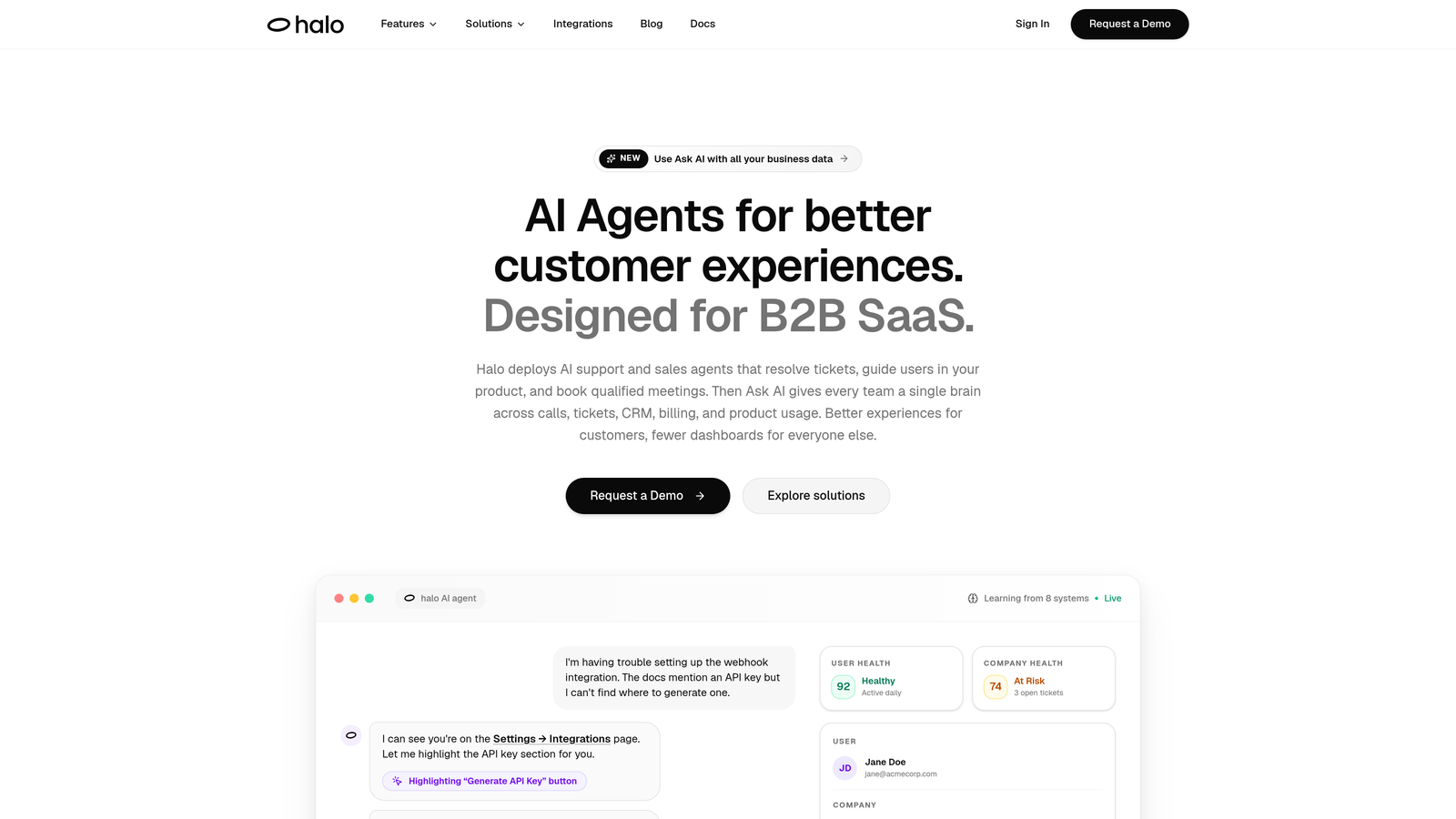
Halo AI is an AI-native customer support platform where autonomous agents resolve tickets, guide users visually, and surface business intelligence across every interaction.
Where This Tool Shines
What sets Halo apart in a marketplace context is its architecture. It wasn't built as an AI layer bolted onto an existing helpdesk. It was designed from the ground up around autonomous agents that learn continuously from every interaction, which means the system gets meaningfully smarter as your transaction volume grows rather than plateauing.
The page-aware chat widget is particularly valuable for dual-sided platforms. It sees what the user sees, so whether a seller is confused about a listing policy page or a buyer is stuck on a checkout screen, the AI agent has full visual context before it responds. That kind of contextual awareness dramatically reduces the back-and-forth that frustrates users and inflates ticket resolution times.
Key Features
Autonomous AI Agents: Resolve support tickets without human intervention, handling routine buyer and seller inquiries end-to-end.
Page-Aware Chat Widget: Sees the user's current screen and provides visual UI guidance, not just text responses.
Smart Inbox with Business Intelligence: Surfaces customer health signals, anomaly detection, and revenue intelligence beyond standard support metrics.
Auto Bug Ticket Creation: Automatically generates bug reports with direct integration into Linear and Slack, reducing manual handoffs between support and engineering.
Live Agent Handoff: Escalates complex or sensitive issues to human agents with full conversation context transferred, so nothing gets repeated.
Best For
B2B and B2C marketplace teams that want AI to handle the volume while their human agents focus on complex disputes, policy violations, and high-value seller relationships. Especially strong for teams already using tools like Intercom, HubSpot, Linear, or Slack.
Pricing
Contact for pricing. Halo is designed to scale with ticket volume, making it well-suited for marketplaces with seasonal spikes or rapid growth phases.
2. Zendesk AI
Best for: Large-scale marketplace operations that need enterprise-grade helpdesk infrastructure with AI layered on top.
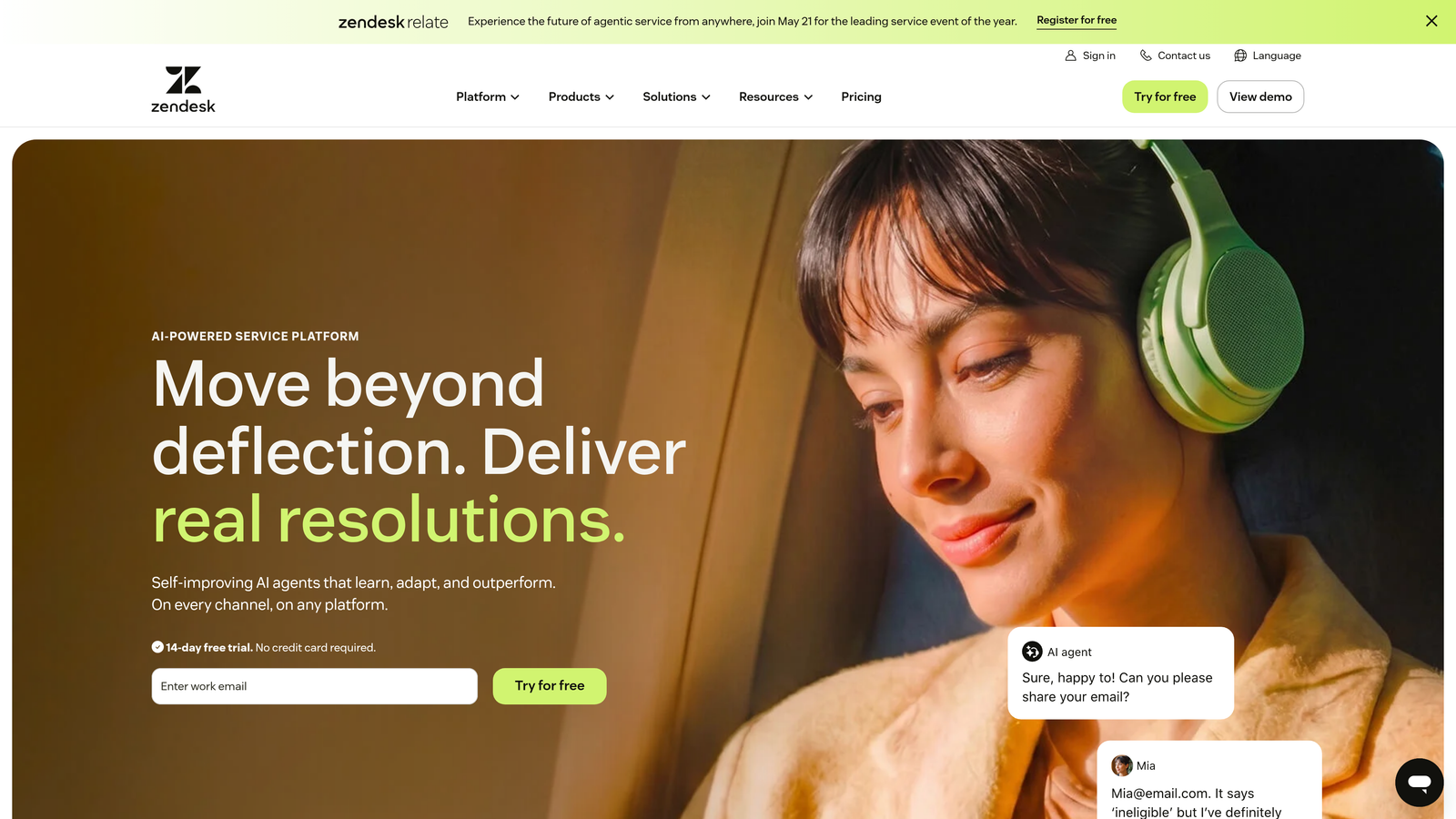
Zendesk AI is an enterprise helpdesk platform with native AI agents, intelligent triage, and one of the largest integration ecosystems in the customer support space.
Where This Tool Shines
Zendesk's multi-brand support capability is one of its strongest features for marketplaces. You can create entirely separate support experiences for buyers and sellers, with distinct help centers, ticket routing rules, and SLA policies, all managed within a single platform. That separation matters when your buyer and seller populations have genuinely different expectations and escalation paths.
The Zendesk Marketplace app ecosystem is also a major asset. If your platform runs on custom infrastructure, there's a reasonable chance an integration already exists. For teams that need to connect order management systems, payment processors, or listing databases to their support workflow, this breadth of integrations reduces the engineering lift considerably.
Key Features
AI Agents: Automated resolution across email, chat, and social channels for common buyer and seller inquiries.
Intelligent Triage: Automatic ticket classification and routing based on intent, sentiment, and user type.
Multi-Brand Support: Separate buyer and seller experiences within a single Zendesk instance.
Zendesk Marketplace: Extensive app ecosystem for custom integrations with marketplace infrastructure.
Advanced Analytics: Custom reporting dashboards for tracking resolution rates, CSAT, and team performance.
Best For
Established marketplaces with large support teams, complex routing requirements, and the resources to configure and maintain an enterprise helpdesk environment. Less ideal for lean teams that need fast, low-maintenance deployment.
Pricing
Suite plans start at $55/agent/month. AI add-ons are priced separately, which can make total cost higher than initial estimates suggest.
3. Intercom Fin
Best for: Product-led marketplaces that want AI resolution tightly integrated with in-app messaging and onboarding flows.
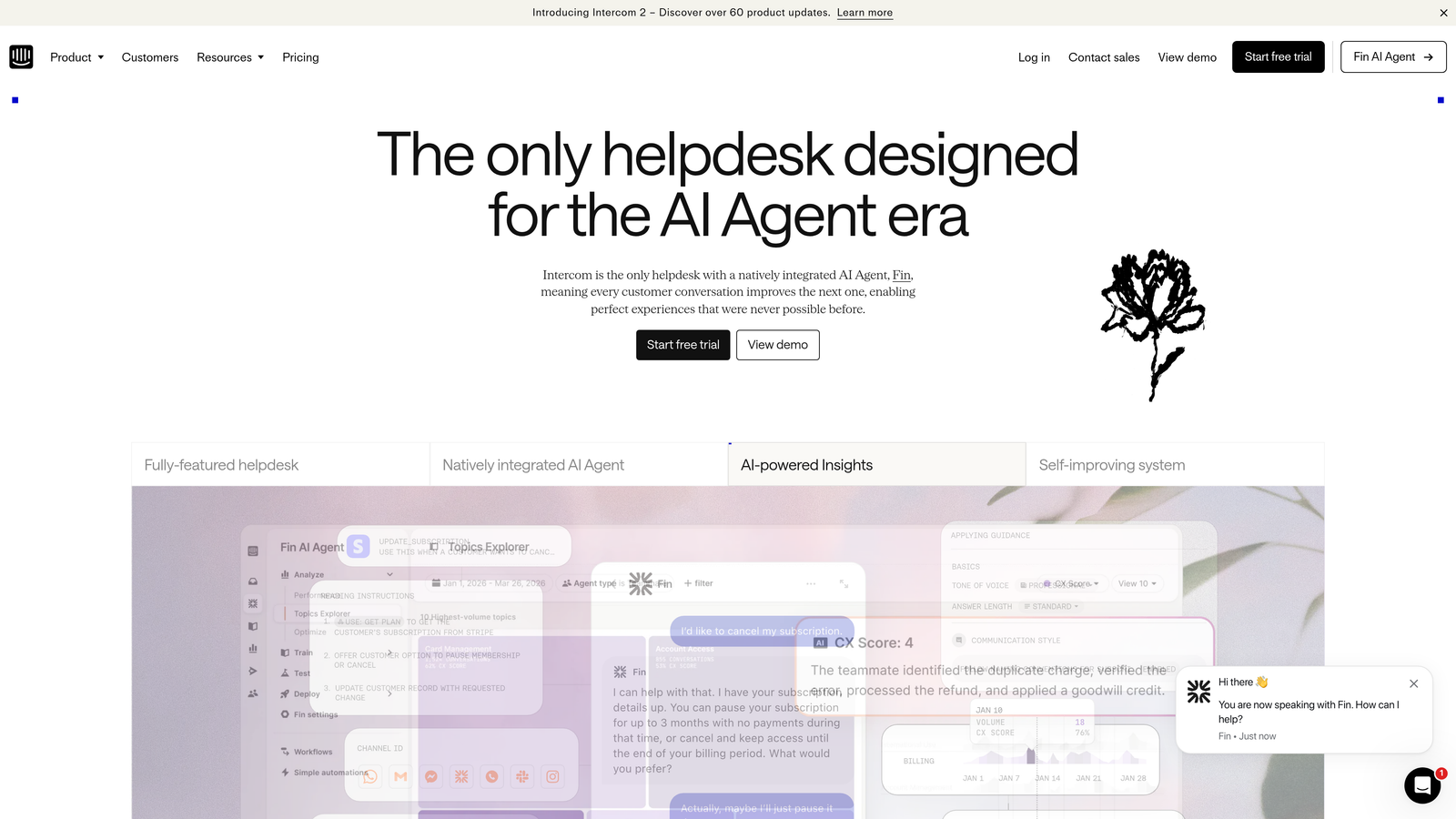
Intercom Fin is a conversational AI agent built into Intercom's messaging platform, combining automated resolution with in-app communication and product tours.
Where This Tool Shines
Fin's strength is its deep integration with the Intercom ecosystem. If you're already using Intercom for in-app messaging, onboarding, and user communication, Fin slots in naturally without requiring a separate support stack. For marketplaces that want to use the same platform to onboard new sellers, communicate policy updates, and resolve support tickets, this consolidation has real operational value.
The proactive messaging capabilities are worth noting for marketplace use cases. You can trigger contextual messages based on user behavior, which is useful for catching sellers before they submit a ticket about something like a listing rejection or a payout threshold they haven't reached yet.
Key Features
Fin AI Agent: Trained on your help center content to provide instant, accurate answers without human involvement.
In-App Messaging and Product Tours: Buyer and seller onboarding flows built directly into the platform.
Custom Workflows: Routing logic between AI and human agents based on issue type or user segment.
Proactive Messaging: Triggered outreach based on user behavior and page context to prevent tickets before they're submitted.
Resolution Reporting: Tracks AI resolution rates and conversation quality metrics.
Best For
Marketplace teams already invested in the Intercom ecosystem, or those that want to unify onboarding, messaging, and support in a single platform. Per-resolution pricing for Fin means costs scale with volume, which is worth modeling carefully for high-traffic marketplaces.
Pricing
Starts at $29/seat/month. Fin AI is charged per resolution, so total cost depends heavily on your AI deflection volume.
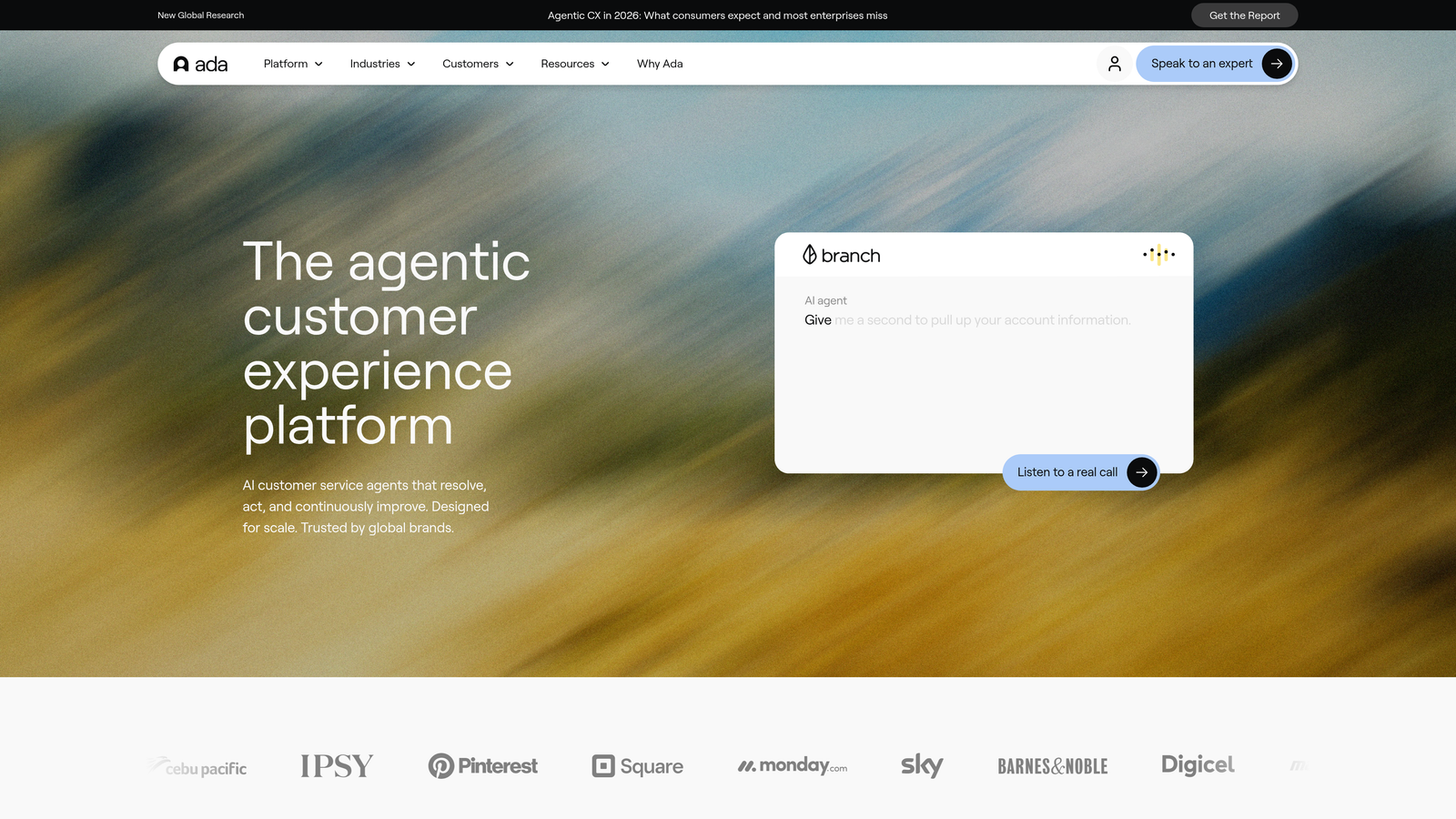
4. Ada
Best for: Enterprise marketplaces with global reach that need multilingual AI agents and high-volume automation without heavy engineering investment.
Ada is an enterprise AI customer service platform with a no-code agent builder, broad multilingual support, and omnichannel coverage designed for large-scale automation.
Where This Tool Shines
Ada's multilingual capabilities stand out for global marketplaces operating across multiple regions. Supporting 50+ languages with AI agents means you can maintain consistent support quality across buyer and seller populations regardless of geography, without building separate workflows for each language.
The action-oriented AI is another differentiator. Rather than just answering questions, Ada's agents can execute tasks: processing a refund request, updating account information, or checking order status by connecting directly to backend systems. For marketplace operations, this means AI can close tickets that would otherwise require a human to take an action in a separate system.
Key Features
No-Code Agent Builder: Rapid deployment of AI agents without engineering resources.
Multilingual Support: AI agents operating across 50+ languages for global marketplace coverage.
Omnichannel Coverage: Chat, email, SMS, and social channels managed from a single platform.
Action-Oriented AI: Agents that execute tasks in connected systems, not just provide answers.
Enterprise Security: Compliance controls and security features suited for platforms handling sensitive transaction data.
Best For
Large, global marketplace operations that need enterprise-grade security, multilingual reach, and AI that can take actions rather than just respond. The no-code builder is a genuine advantage for teams without dedicated AI engineering resources.
Pricing
Custom enterprise pricing. Contact Ada directly for a quote based on your volume and use case.
5. Freshdesk Freddy AI
Best for: Growing marketplaces that want AI-assisted support at competitive price points with a familiar helpdesk structure.
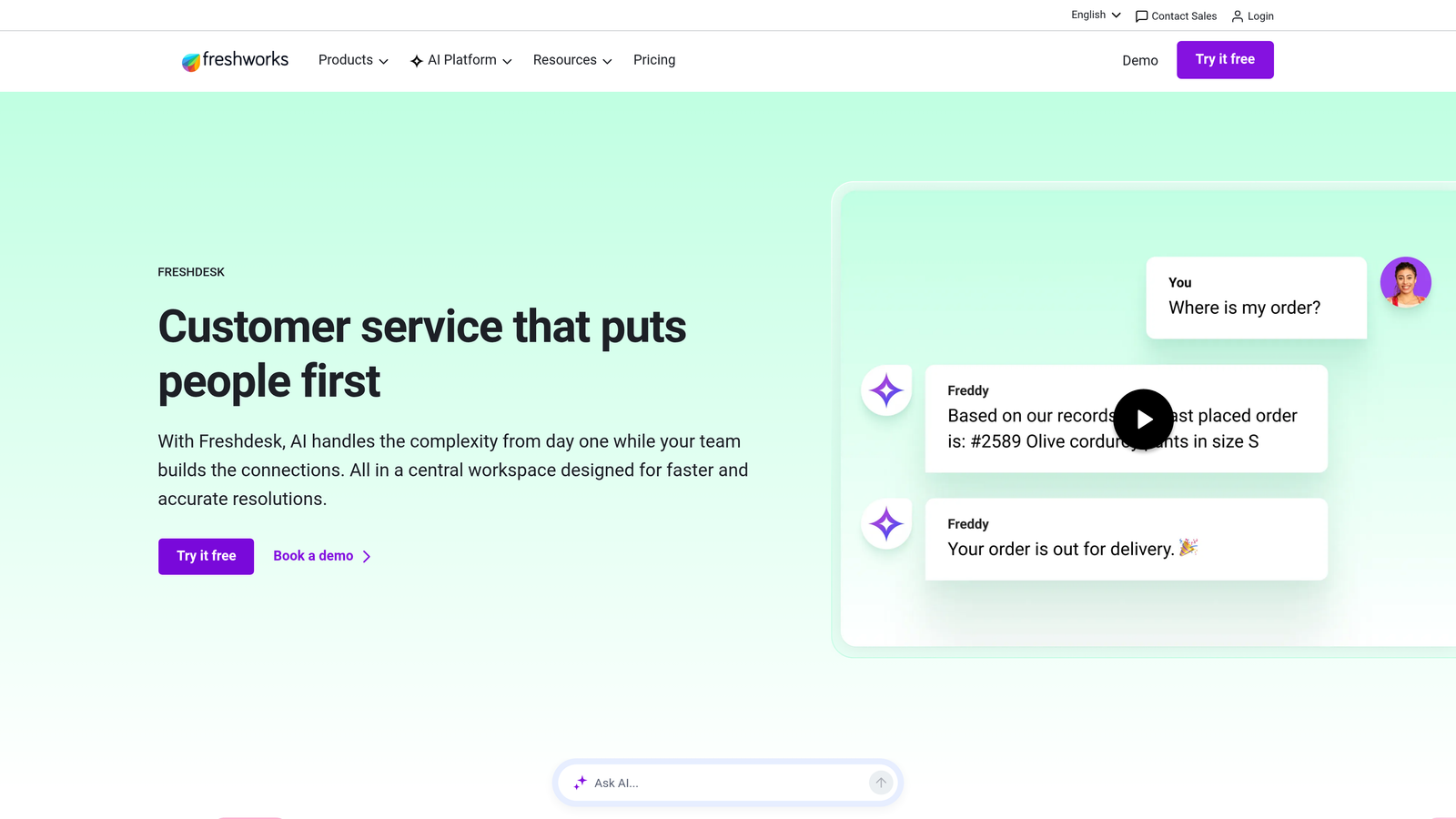
Freshdesk Freddy AI is the AI layer within Freshworks' helpdesk platform, offering automated triage, suggested responses, and chatbot capabilities across multiple channels.
Where This Tool Shines
Freshdesk's value proposition is accessibility. The free tier and low entry-level pricing make it a realistic option for marketplace teams that are scaling but not yet at the volume that justifies enterprise contracts. Freddy AI's auto-triage and suggested response features reduce agent workload without requiring a full AI-native deployment.
The collaboration tools are useful for marketplace support teams managing both buyer and seller queues. You can structure separate team inboxes, assign tickets based on user type, and use rules to automate initial routing, which helps smaller teams stay organized as ticket complexity grows.
Key Features
Freddy AI: Auto-triage, suggested responses, and ticket summarization to accelerate agent workflows.
Free Tier: Available for small teams starting out, with a genuine path to upgrade as needs grow.
Multi-Channel Support: Email, chat, phone, and social channels in a single interface.
Marketplace App Ecosystem: Integration options for connecting marketplace-specific tools and data sources.
Queue Management: Collaboration tools for managing separate buyer and seller support queues.
Best For
Marketplace teams at earlier growth stages, or those with budget constraints that still want AI-assisted capabilities. Freddy AI's more advanced features are gated behind higher-tier plans, so teams should evaluate which capabilities they actually need before selecting a tier.
Pricing
Free plan available. Paid plans start at $15/agent/month. Freddy AI features are included in higher tiers.
6. Gorgias
Best for: E-commerce marketplaces built on Shopify or BigCommerce that need deep order management integration within the support interface.
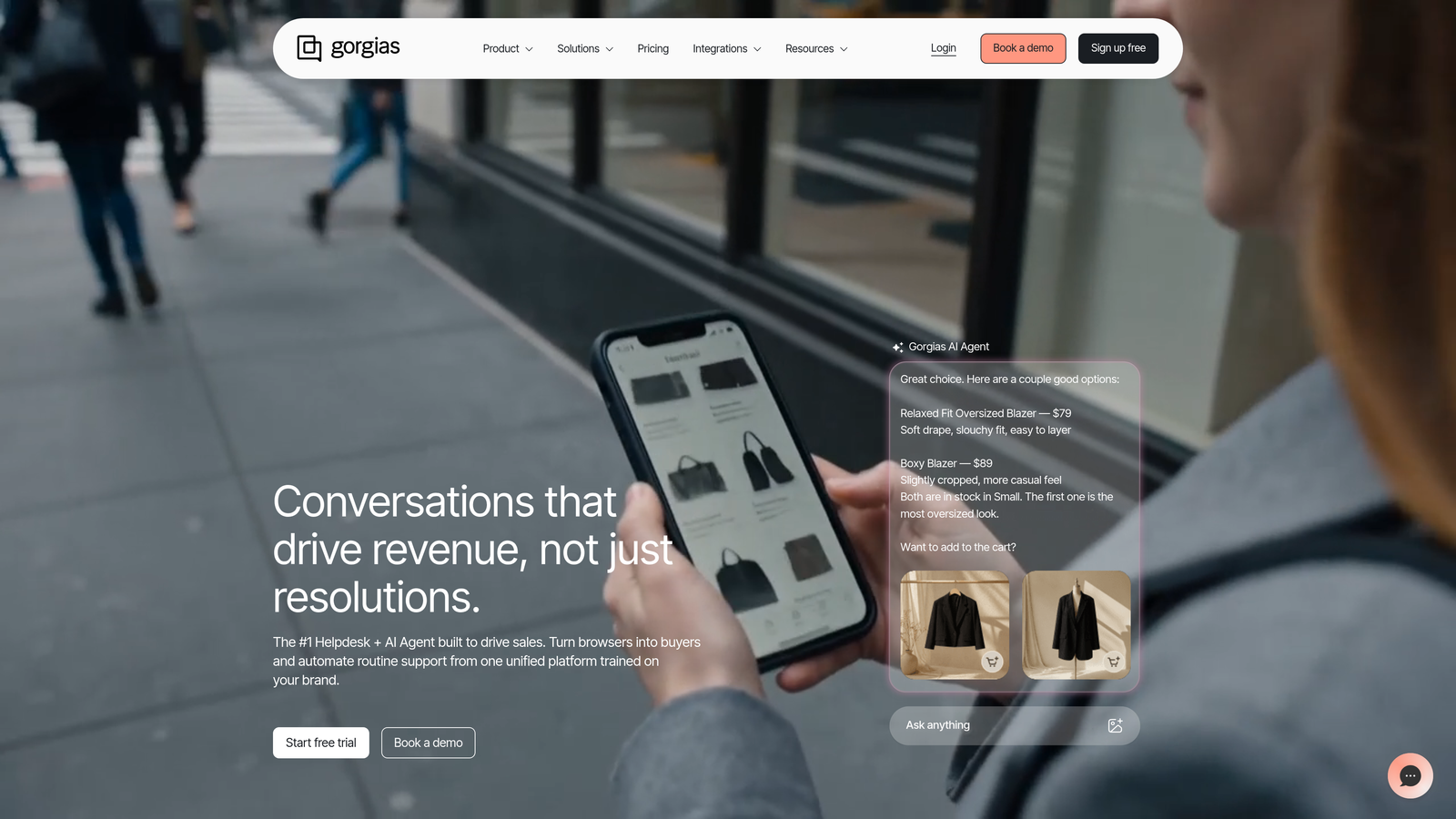
Gorgias is an e-commerce customer support platform with native Shopify and BigCommerce integrations, allowing agents and AI to take order actions directly from a ticket.
Where This Tool Shines
Gorgias was built specifically for e-commerce, and it shows. The depth of its Shopify integration means support agents can view order details, issue refunds, edit orders, and pull tracking information without leaving the ticket interface. For marketplace platforms running on Shopify infrastructure, this eliminates the tab-switching that slows down resolution times.
The revenue attribution feature is a differentiator worth noting. Gorgias links support interactions to sales outcomes, giving marketplace operators visibility into how support quality affects conversion and repeat purchase behavior. That kind of data is useful when making the case internally for support investment.
Key Features
E-Commerce Integrations: Deep native connections to Shopify, BigCommerce, and Magento for order data within tickets.
AI Auto-Responses: Automated replies for common order status, tracking, and return inquiries.
Revenue Attribution: Links support conversations to sales impact for ROI visibility.
Order Management Actions: Refunds, tracking lookups, and order edits executed directly from the support interface.
Macros and Rules Engine: Automated ticket workflows for routing and response at scale.
Best For
Marketplace operators whose platform infrastructure is built on Shopify or BigCommerce. Less suited for marketplaces on custom infrastructure or those needing deep seller-side support workflows.
Pricing
Starts at $10/month for 50 tickets. Pricing scales by ticket volume rather than per agent, which works well for marketplaces with variable support demand.
7. Tidio
Best for: Smaller or earlier-stage marketplaces that need a fast, lightweight AI chatbot deployment without significant engineering overhead.
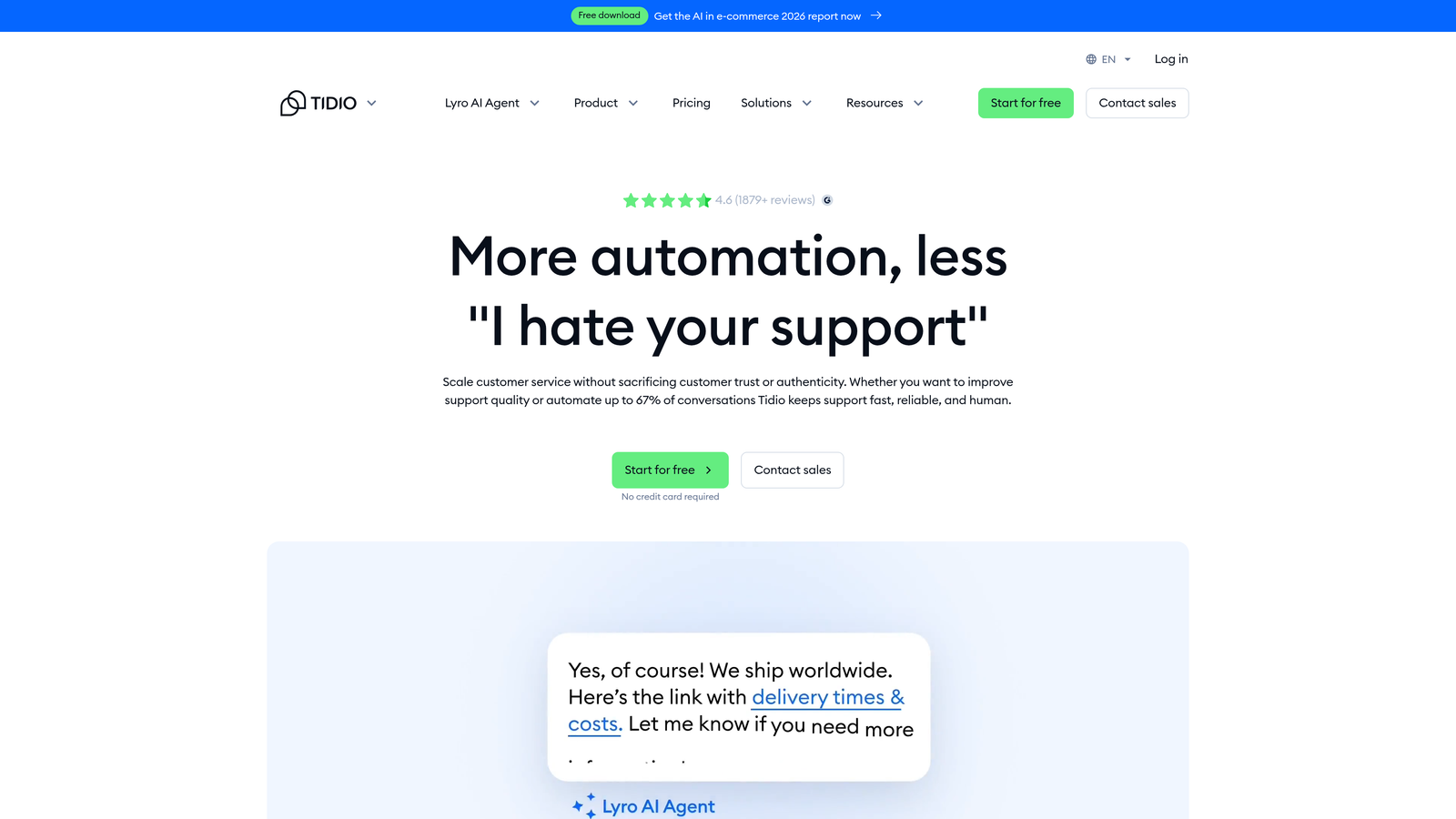
Tidio is a lightweight AI chatbot and live chat platform featuring Lyro AI, designed for rapid deployment and accessible pricing for teams that want quick results.
Where This Tool Shines
Tidio's primary advantage is speed to value. Lyro AI can learn from your FAQ content in a short setup window, meaning a small marketplace team can have an AI chatbot handling common buyer inquiries within a day rather than weeks. For teams that have been managing support entirely through email or basic live chat, Tidio represents a meaningful step forward without a major infrastructure commitment.
The visual chatbot builder makes it accessible to non-technical team members who want to customize conversation flows for different user types. You can build separate flows for buyer inquiries and seller questions without writing code, which is practical for lean operations.
Key Features
Lyro AI: Chatbot that learns from FAQ content quickly and handles common inquiries autonomously.
Live Chat with AI Assist: AI-suggested responses for human agents during live conversations.
Visual Chatbot Builder: No-code flow creation for custom buyer and seller conversation paths.
Platform Integrations: Shopify, WordPress, and website widget support for fast deployment.
Visitor Tracking: Basic analytics on visitor behavior and conversation performance.
Best For
Smaller marketplaces, early-stage platforms, or teams taking their first step into AI-assisted support. Tidio's capabilities are more limited than enterprise options, but its simplicity and price point make it a practical starting point.
Pricing
Free plan available. Paid plans from $29/month. Lyro AI available as an add-on from $39/month.
8. Kustomer
Best for: Marketplaces with complex, multi-touchpoint customer journeys that need a unified view of every interaction across the full relationship lifecycle.
Kustomer is a CRM-first customer service platform that aggregates every interaction, transaction, and data point into a single customer timeline.
Where This Tool Shines
Kustomer's unified timeline is its defining feature. Rather than treating each ticket as an isolated event, it builds a complete picture of every buyer or seller interaction: past purchases, previous conversations, subscription status, and custom data objects specific to your marketplace. When a seller contacts support about a payout issue, the agent sees the full account history before reading the first message.
The custom objects and data modeling capabilities make Kustomer particularly adaptable to marketplace-specific entities. You can model things like listings, transactions, or seller tiers as first-class objects in the system, which means your support workflows can reference marketplace-specific context that a generic helpdesk wouldn't understand.
Key Features
Unified Customer Timeline: Every interaction, transaction, and data point aggregated into a single view per user.
AI Classification and Routing: Intelligent ticket routing based on full customer context, not just the current message.
Omnichannel Support: Consistent experience across chat, email, social, and voice channels.
Custom Objects and Data Modeling: Marketplace-specific entities modeled directly within the platform.
Proactive Outreach: Triggered communications based on customer events and behavioral signals.
Best For
Marketplace teams where context depth matters more than raw automation speed: platforms with high-value sellers, complex multi-step buyer journeys, or support teams that need rich customer history to resolve issues effectively.
Pricing
Enterprise pricing starting at $89/user/month, positioning Kustomer as a premium option suited for teams with established support operations.
9. Cognigy
Best for: Large enterprise marketplaces that need sophisticated voice and chat AI agents with deep backend system orchestration.
Cognigy is an enterprise conversational AI platform with strong voice and chat capabilities, built for complex multi-step conversations and large-scale system integrations.
Where This Tool Shines
Cognigy operates at a different level of complexity than most tools on this list. Its strength is orchestrating AI agents across voice and digital channels while connecting deeply to enterprise backend systems like SAP, Salesforce, or custom APIs. For marketplace operators running on enterprise infrastructure with voice support channels, this level of integration depth is difficult to match.
The agent assist features are worth highlighting for marketplace environments where escalations involve complex multi-party situations. When a live agent takes over from an AI, Cognigy surfaces relevant context and suggested next steps in real time, reducing the cognitive load on agents handling difficult disputes or policy-sensitive conversations.
Key Features
Voice and Chat AI Agents: Natural language understanding across both voice and digital support channels.
Enterprise System Integrations: Deep connections to SAP, Salesforce, and custom APIs for backend orchestration.
Low-Code Flow Builder: Complex multi-step conversation design without extensive engineering resources.
Agent Assist: Real-time guidance and context surfacing for live agents handling escalated conversations.
Conversation Analytics: Insights across voice and digital channels for performance monitoring and optimization.
Best For
Enterprise marketplace operations with voice support channels, complex backend system requirements, and the technical resources to configure and maintain a sophisticated conversational AI platform.
Pricing
Custom enterprise pricing. Contact Cognigy directly for a quote based on your channel mix and integration requirements.
Choosing the Right AI Support Tool for Your Marketplace
The right tool depends heavily on where your marketplace sits today and where it's heading. There's no single answer, but the use-case patterns are fairly clear once you map your requirements against what each platform does best.
If you're an AI-first team that wants agents to learn and improve continuously: Halo AI's architecture is purpose-built for this. The combination of autonomous agents, page-aware context, and business intelligence makes it especially strong for marketplace teams that want support to be a source of product and revenue insight, not just a cost center.
If you're running on Shopify or BigCommerce infrastructure: Gorgias is the most practical choice. The order management integration alone saves significant agent time on the buyer side, and the revenue attribution data is genuinely useful for marketplace operators.
If you need enterprise scale with multi-brand separation: Zendesk AI has the ecosystem depth and configuration flexibility to handle complex buyer and seller segmentation at high volume, though the total cost of ownership requires careful planning.
If global reach and multilingual coverage are priorities: Ada's 50+ language support and action-oriented AI make it the strongest option for marketplaces operating across multiple regions with diverse user populations.
If you're earlier stage and need a fast start: Tidio or Freshdesk give you accessible entry points with genuine AI capabilities, without requiring a major infrastructure commitment before you've validated the approach.
The broader principle worth keeping in mind: marketplace support complexity tends to grow faster than headcount can scale. Seasonal volume spikes, policy changes that generate seller ticket surges, and the inherent complexity of multi-party disputes all create pressure that static knowledge bases and manual routing can't absorb efficiently.
Your support team shouldn't scale linearly with your customer base. Let AI agents handle routine tickets, guide users through your product, and surface business intelligence while your team focuses on complex issues that need a human touch. See Halo in action and discover how continuous learning transforms every interaction into smarter, faster support.