9 Best AI Customer Support Integration Tools in 2026
The best ai customer support integration tools connect seamlessly with your existing CRM, ticketing systems, and product databases to eliminate context-switching and reduce customer wait times. This guide evaluates top platforms based on integration depth, setup complexity, and AI capabilities to help teams build intelligent, connected support workflows that pull customer data from tools like Stripe and HubSpot without requiring technical expertise.
 Matt PattoliFounder12 min read
Your support stack is only as powerful as its connections. AI customer support tools that can't talk to your CRM, ticketing system, or product database leave agents context-switching and customers waiting. The best AI integration tools plug directly into your existing workflows—pulling customer data from Stripe, syncing conversations to HubSpot, escalating bugs to Linear—without requiring your team to become middleware experts.
We evaluated dozens of platforms based on integration depth, setup complexity, AI capabilities, and real-world performance. Here are the top tools that actually deliver on the promise of connected, intelligent support.
1. Halo AI
Best for: Teams building AI-first support with deep multi-system connectivity and continuous learning
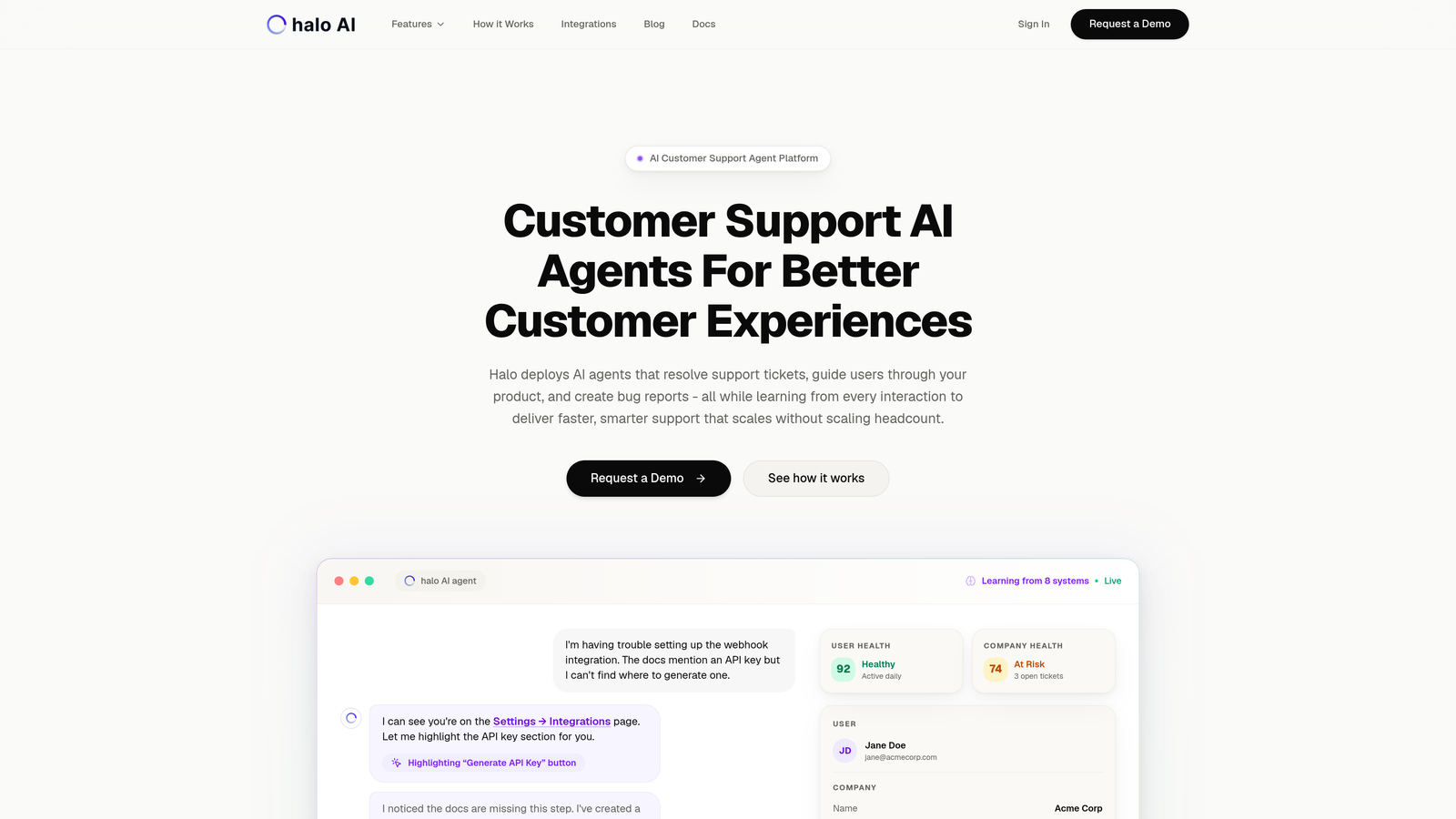
Halo AI is an AI-native customer support platform that sees what your users see and connects to your entire business stack.
Where This Tool Shines
Unlike bolt-on AI features added to existing helpdesks, Halo was built from the ground up as an AI-first architecture. The platform's page-aware chat widget understands the visual context of where users are in your product, enabling it to provide guidance that references specific UI elements they're looking at.
What sets Halo apart is its approach to learning. Every interaction—whether resolved by AI or escalated to humans—feeds back into the system's knowledge base. This means your support gets smarter with each ticket, not just faster.
Key Features
Page-Aware Context: The chat widget sees what users see on the page, enabling visual UI guidance that references specific buttons, forms, or elements.
Multi-System Integrations: Native connections to Linear, Slack, HubSpot, Intercom, Stripe, Zoom, PandaDoc, and Fathom create a unified view of customer interactions.
Autonomous Bug Reporting: Automatically creates detailed bug tickets in Linear from support conversations, complete with reproduction steps and user context.
Business Intelligence Analytics: Goes beyond support metrics to surface customer health signals, revenue intelligence, and anomaly detection across your stack.
Smart Escalation: Knows when to hand off to human agents and provides full context for seamless transitions.
Best For
B2B product teams and SaaS companies who want AI that integrates deeply with their existing tools rather than replacing them. Particularly valuable for companies using Zendesk, Freshdesk, or Intercom who need more intelligent automation without abandoning their current helpdesk investment.
Pricing
Contact for custom pricing based on team size and integration requirements.
2. Intercom Fin
Best for: Existing Intercom users wanting native AI without changing platforms
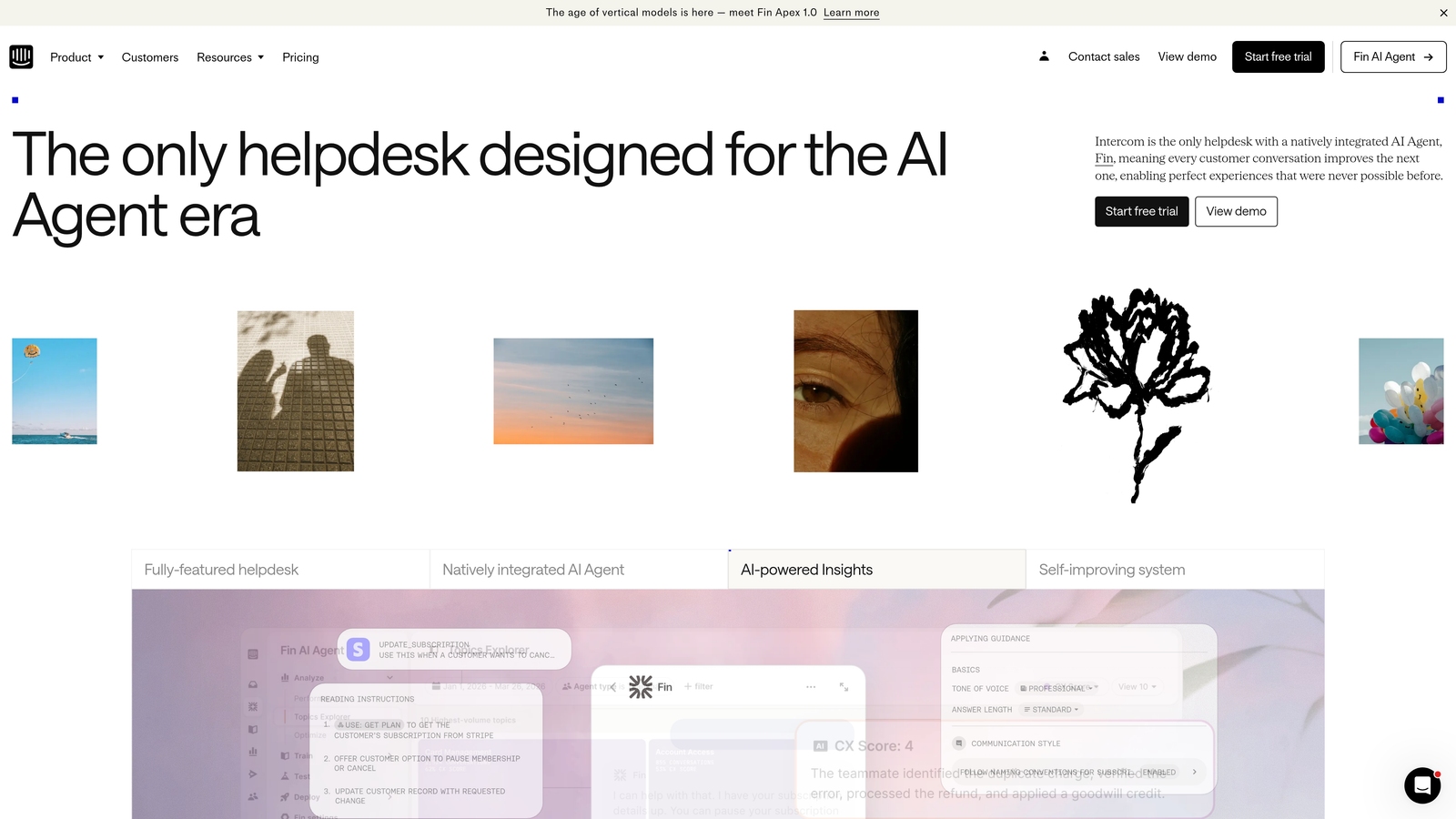
Intercom Fin is an AI agent built directly into Intercom's customer messaging platform with automatic knowledge base training.
Where This Tool Shines
If you're already using Intercom, Fin provides the smoothest possible AI adoption path. There's no separate login, no data migration, no learning curve for your team. The AI trains itself on your existing help center content, which means you can go live in hours rather than weeks.
The handoff experience is particularly polished. When Fin escalates to a human agent, the entire conversation history and context flows seamlessly, so your team never starts from scratch.
Key Features
Auto-Training: Scans your help center articles and learns to answer questions without manual training data preparation.
Contextual Handoffs: Transfers conversations to human agents with full history and AI-suggested next steps.
Multi-Language Support: Handles customer inquiries in multiple languages using the same knowledge base.
Custom Answer Sources: Point Fin to specific documentation, internal wikis, or knowledge bases beyond your public help center.
Resolution Analytics: Track which questions Fin resolves autonomously versus which require human intervention.
Best For
Companies already invested in the Intercom ecosystem who want AI capabilities without platform switching. Works best for teams with well-maintained help centers that can serve as immediate training material.
Pricing
Starts at $0.99 per resolution, making it cost-effective for teams with moderate support volumes.
3. Zendesk AI
Best for: Enterprise teams needing extensive third-party integrations and compliance
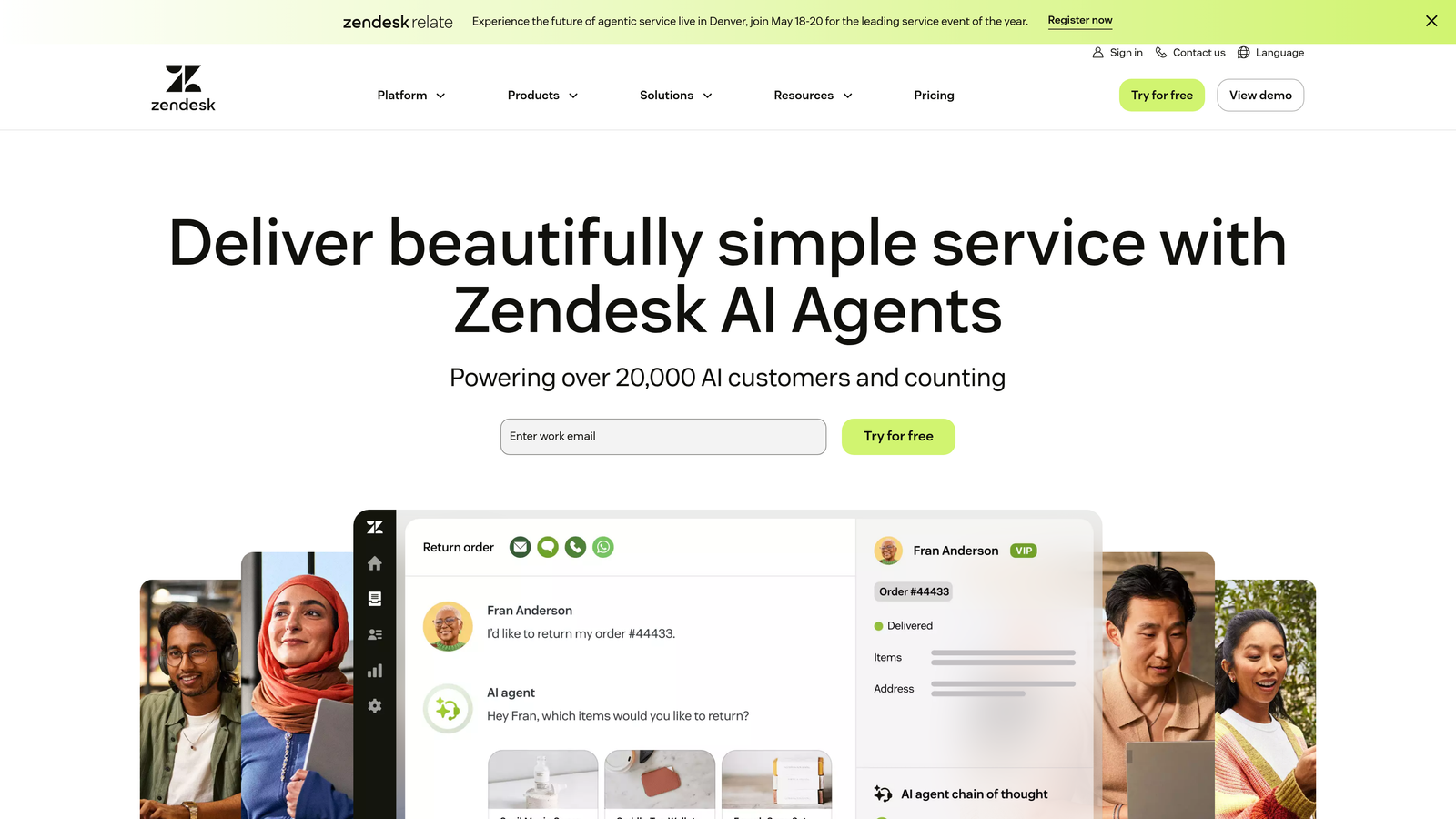
Zendesk AI brings enterprise-grade AI capabilities to the Zendesk Suite with access to 1,500+ marketplace integrations.
Where This Tool Shines
Zendesk's massive app marketplace gives you pre-built connections to virtually any business tool you're using. Need to pull customer data from Salesforce, sync with Jira, or connect to a custom internal system? There's likely an app for that, which saves your engineering team from building custom integrations.
The AI features focus on augmenting agent productivity rather than full automation. Intent detection routes tickets intelligently, sentiment analysis flags frustrated customers for priority handling, and response suggestions help agents reply faster without sounding robotic.
Key Features
Intent Detection: Automatically categorizes incoming tickets and routes them to the right team or agent based on content analysis.
Sentiment Analysis: Identifies customer frustration levels and adjusts ticket priority accordingly.
Marketplace Integrations: Over 1,500 pre-built apps connect Zendesk to CRMs, project management tools, and business systems.
Agent Assist: Suggests relevant help articles and response templates while agents are composing replies.
Macro Suggestions: Recommends pre-written responses based on ticket content and historical patterns.
Best For
Large enterprises with complex tech stacks who need battle-tested integrations and enterprise-grade security. Best suited for teams with significant agent headcount who want AI to enhance human productivity rather than replace it.
Pricing
AI features available as an add-on starting at $50 per agent per month, on top of base Zendesk Suite pricing.
4. Freshdesk Freddy AI
Best for: Mid-market companies using Freshworks ecosystem for sales and support
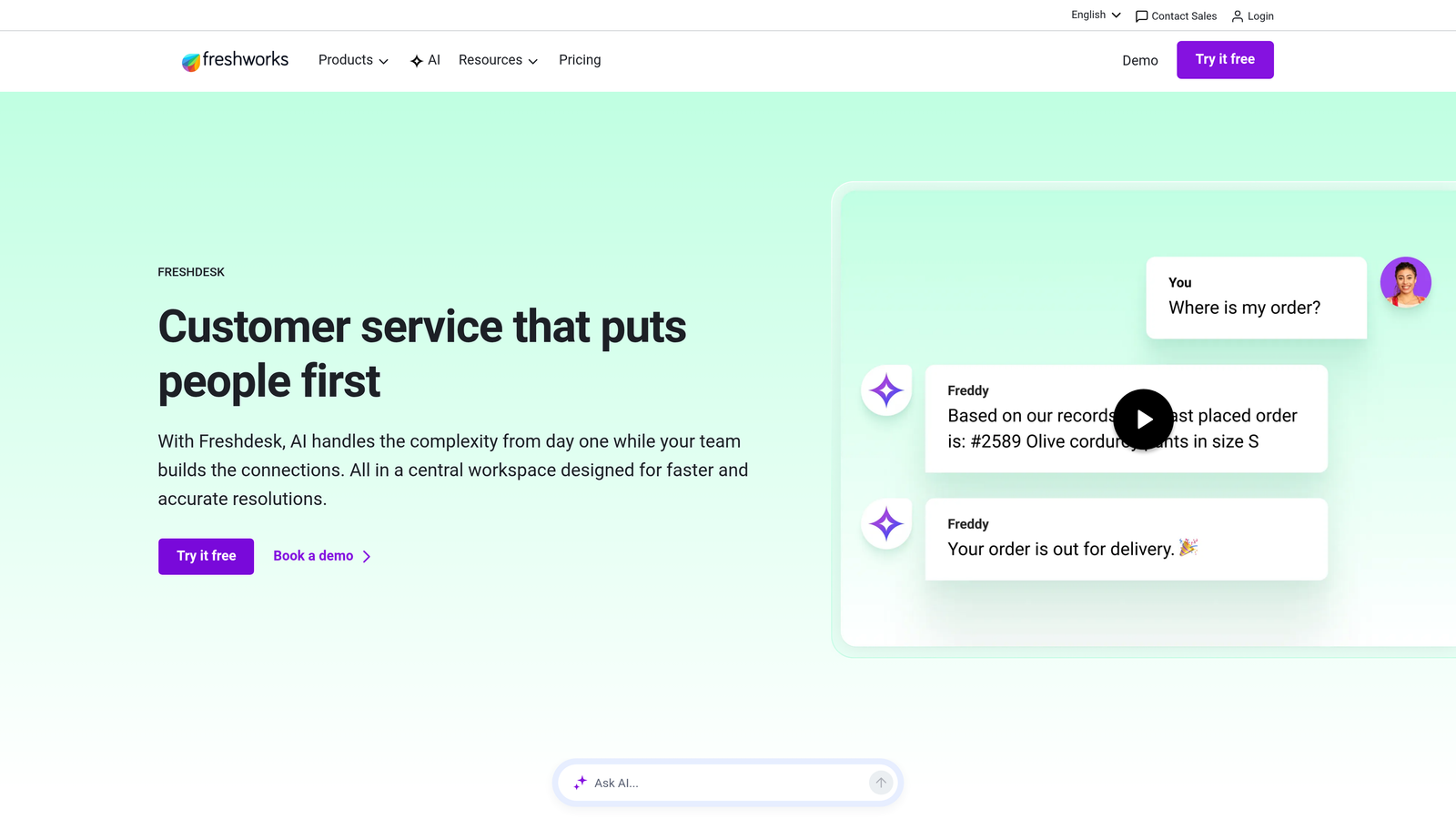
Freshdesk Freddy AI provides AI-powered automation within the Freshworks suite with native CRM connectivity.
Where This Tool Shines
Freddy AI's biggest advantage is its tight integration with Freshsales CRM. If your sales and support teams both live in the Freshworks ecosystem, you get a unified customer view that most competitors can't match without complex integrations. Support agents see deal stages, sales notes, and revenue data right in the ticket interface.
The "thank you detector" is a small but brilliant feature that prevents unnecessary ticket reopenings when customers reply with simple acknowledgments, keeping your metrics clean and agents focused on real work.
Key Features
Auto-Triage: Categorizes and tags incoming tickets automatically based on content and historical patterns.
Canned Response Suggestions: Recommends pre-written replies that match the ticket context and customer sentiment.
Freshsales Integration: Native connection to Freshworks CRM shows deal status, revenue data, and sales interactions within support tickets.
Thank You Detector: Identifies gratitude responses and prevents unnecessary ticket reopenings.
Field Suggestions: Auto-populates ticket fields like priority, category, and assignee based on AI analysis.
Best For
Growing companies that want unified sales and support data without managing multiple integrations. Particularly valuable for B2B teams where support needs visibility into deal status and customer lifecycle stage.
Pricing
Freddy AI features are included in the Pro plan at $49 per agent per month.
5. Ada
Best for: Enterprise teams building custom conversation flows with API-first requirements
Ada is an automation platform with a no-code conversation builder and API-first architecture for custom integrations.
Where This Tool Shines
Ada gives you control. The no-code conversation builder lets non-technical team members design complex conversation flows without writing code, while the API-first architecture means your developers can build custom integrations to any system you use. This combination makes Ada powerful for companies with unique workflows that don't fit standard templates.
The proactive messaging capabilities stand out. Rather than waiting for customers to ask questions, Ada can trigger conversations based on user behavior—like reaching out when someone abandons a cart or gets stuck on a specific page.
Key Features
No-Code Builder: Visual conversation flow designer lets support teams create and modify automation without engineering resources.
API-First Architecture: Comprehensive API access enables custom integrations with proprietary systems and internal tools.
Proactive Messaging: Triggers conversations based on user behavior patterns, page visits, or specific actions.
Multi-Channel Deployment: Deploy the same conversation flows across web chat, mobile apps, and social messaging platforms.
Context Preservation: Handoff rules ensure human agents receive full conversation history and user context.
Best For
Enterprise companies with complex, non-standard workflows who need both business user control and developer flexibility. Works well for organizations with internal systems that require custom integration work.
Pricing
Custom enterprise pricing based on conversation volume and integration requirements.
6. Kustomer IQ
Best for: Teams prioritizing unified customer timelines across all channels
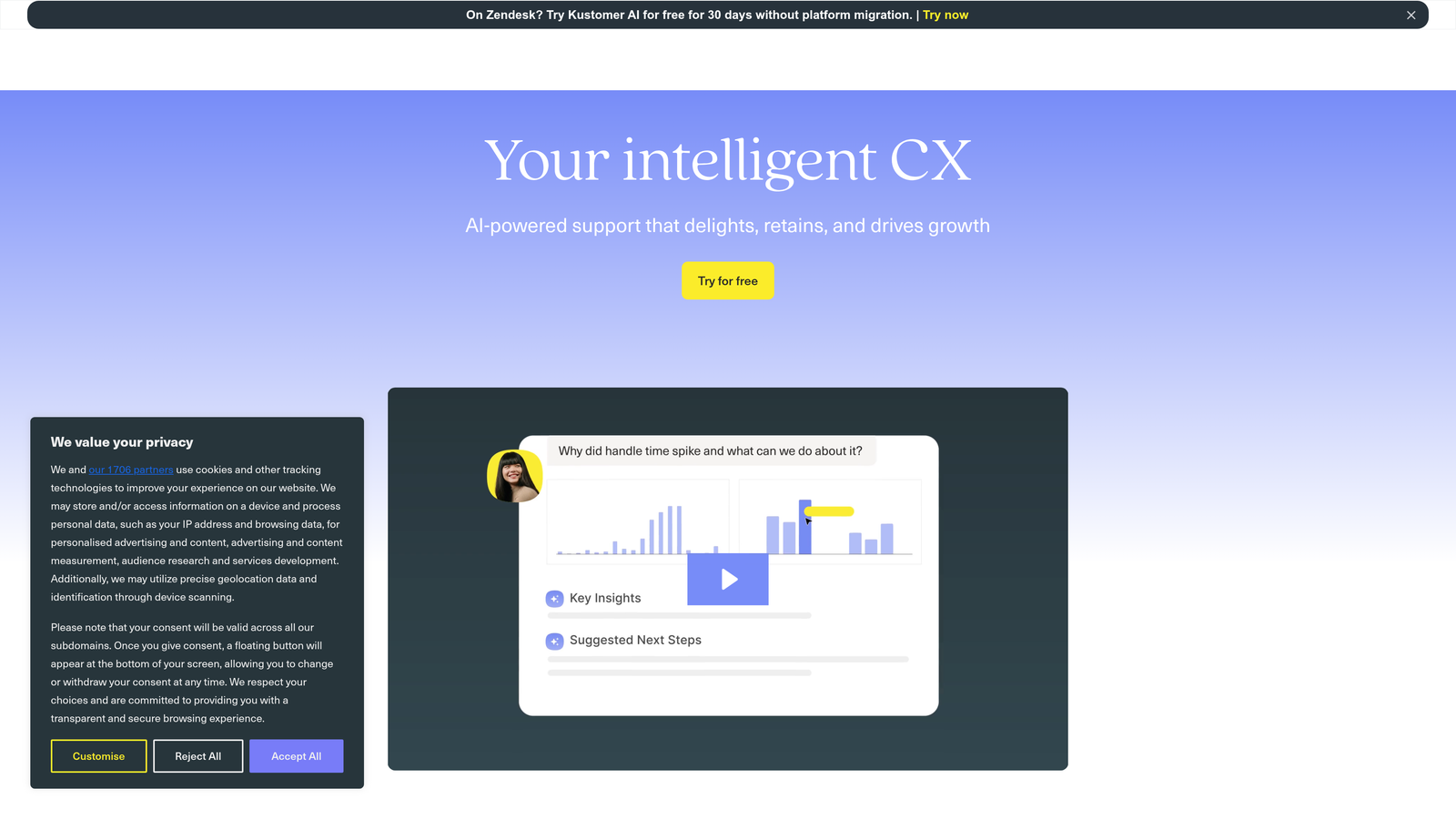
Kustomer IQ adds AI capabilities to Kustomer's CRM-first support platform with unified customer views.
Where This Tool Shines
Kustomer's fundamental architecture treats every customer as a unified record rather than a collection of separate tickets. This means agents see a complete timeline of every email, chat, phone call, and social media interaction in one view. When you add IQ's AI layer on top, you get intelligent routing and response suggestions that understand the full customer relationship, not just the current ticket.
The real-time data enrichment is particularly valuable for B2B support. As soon as a customer reaches out, Kustomer pulls in their account status, subscription tier, recent purchases, and support history—giving AI and agents complete context instantly.
Key Features
Unified Timeline: Single customer record shows all interactions across email, chat, phone, and social channels in chronological order.
Real-Time Enrichment: Automatically pulls customer data from connected systems as conversations begin.
Intent Classification: Analyzes incoming messages and routes them to specialized teams or AI workflows.
Personalized Suggestions: AI-recommended responses incorporate customer history and preferences for more relevant replies.
Omnichannel History: Agents see previous conversations regardless of which channel the customer used.
Best For
Companies with high-value customers who interact across multiple channels and need agents to have complete context. Particularly strong for B2B SaaS and subscription businesses where customer relationships span months or years.
Pricing
Enterprise plan starts at $89 per user per month with IQ features included.
7. Gorgias
Best for: E-commerce brands needing deep Shopify and BigCommerce integration
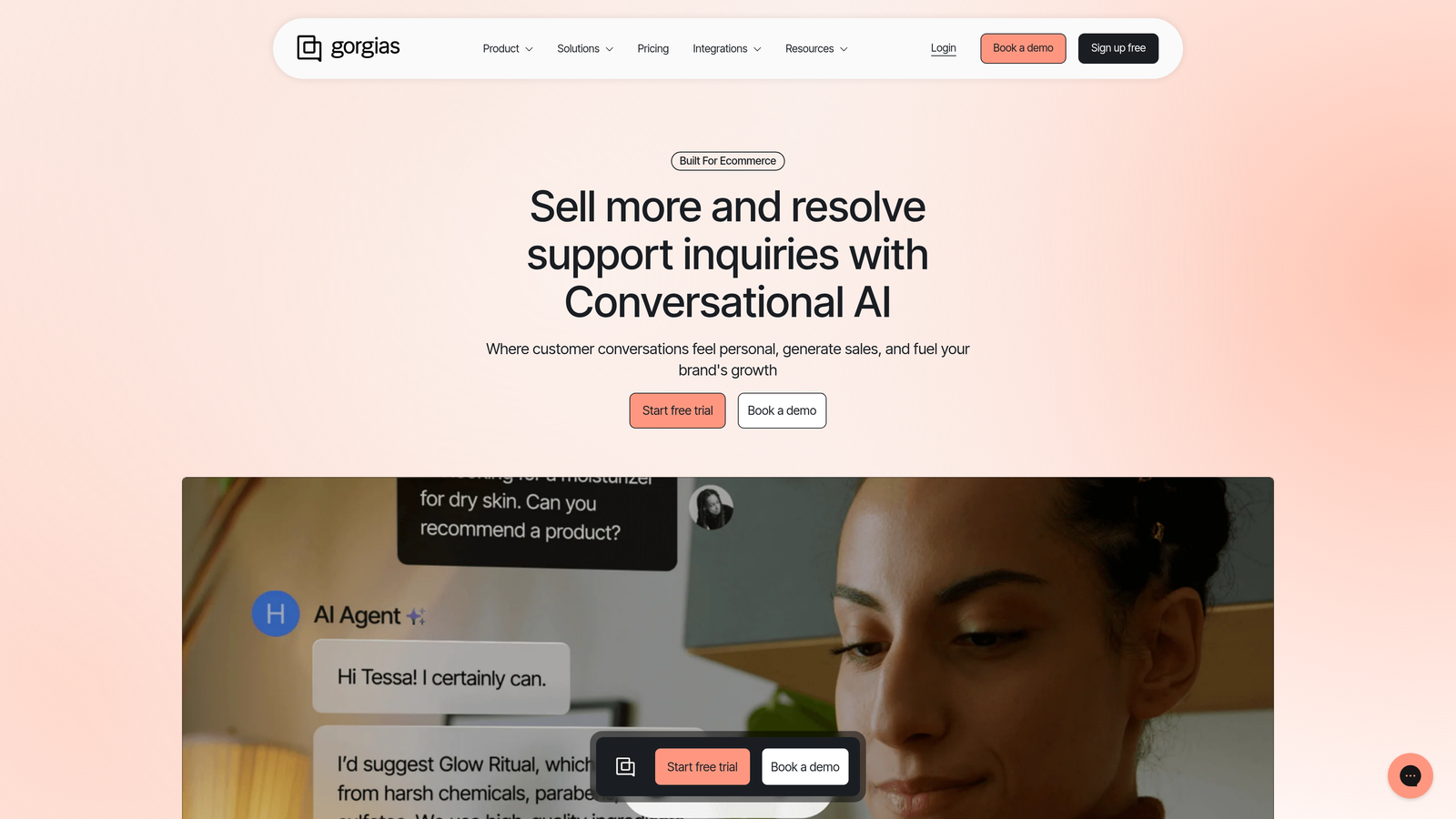
Gorgias is a helpdesk built specifically for e-commerce with native integrations for order management and fulfillment.
Where This Tool Shines
Gorgias understands e-commerce support is fundamentally different from SaaS support. Most customer questions involve orders—tracking shipments, processing returns, applying discounts, or resolving payment issues. Gorgias lets AI handle these tasks directly, looking up orders, issuing refunds, and editing shipping addresses without human intervention.
The revenue attribution feature is brilliant for proving support's business impact. When an agent (or AI) resolves a ticket that leads to a purchase, Gorgias tracks it and shows you which support interactions drive revenue, not just which ones close tickets.
Key Features
Order Management AI: Automatically looks up orders, processes refunds, and edits shipping details through Shopify or BigCommerce integrations.
Revenue Attribution: Tracks which support tickets lead to purchases and calculates the revenue impact of support interactions.
Commerce Platform Integration: Native connections to Shopify, BigCommerce, Magento pull order data directly into tickets.
Automated Order Responses: AI handles common inquiries about shipping status, return policies, and order modifications.
Customer Lifetime Value: Displays total customer spend and order history within support tickets for context.
Best For
E-commerce brands of any size who need AI that can take actions on orders, not just answer questions. Essential for direct-to-consumer brands handling high volumes of order-related support requests.
Pricing
Starts at $10 per month for 50 tickets, scaling up based on ticket volume with AI features available at higher tiers.
8. Tidio Lyro
Best for: Small businesses testing AI support with minimal setup requirements
Tidio Lyro provides conversational AI for SMBs with quick deployment and accessible pricing.
Where This Tool Shines
Lyro removes the barriers that keep small businesses from adopting AI support. There's no training data to prepare, no complex integration projects, and no enterprise sales process. Point Lyro at your FAQ page, and it learns to answer questions in minutes. The pricing is transparent and affordable, making it realistic for teams testing whether AI support makes sense for their business.
The live chat fallback ensures you never leave customers hanging. If Lyro can't answer a question, it seamlessly transitions to human agents through the same interface, maintaining conversation continuity.
Key Features
Instant Learning: Scans FAQ pages and learns to answer questions without manual training or data preparation.
Zero Training Data: Gets started immediately without requiring historical ticket data or conversation examples.
Platform Integrations: Pre-built connectors for Shopify, WordPress, and Wix enable quick deployment on common platforms.
Human Fallback: Automatically transfers to live chat when AI can't resolve an inquiry.
Conversation Analytics: Simple dashboard shows resolution rates and common question patterns.
Best For
Small businesses and startups who want to test AI support without significant upfront investment. Ideal for teams with basic support needs who aren't ready for enterprise-grade complexity.
Pricing
Starts at $39 per month for 50 AI conversations, with transparent scaling as volume increases.
9. HubSpot Service Hub AI
Best for: Companies using HubSpot CRM who want unified marketing, sales, and support data
HubSpot Service Hub adds AI-powered service tools to HubSpot's unified CRM platform.
Where This Tool Shines
HubSpot's real advantage is breaking down silos between marketing, sales, and support. When all three teams work in the same CRM, support agents see which marketing campaigns brought in the customer, what sales promised during the deal, and the complete relationship history. This context makes AI suggestions more relevant and helps agents provide more informed support.
The conversation intelligence features are particularly valuable for support team coaching. Managers can identify patterns in how top performers handle difficult conversations and use those insights to train the broader team.
Key Features
Unified CRM View: Support agents see marketing campaign data, sales deal history, and support interactions in one interface.
AI Ticket Summarization: Automatically generates concise summaries of long email threads and chat conversations.
Knowledge Base Suggestions: Recommends relevant help articles to agents based on ticket content and customer context.
Conversation Intelligence: Analyzes support conversations to identify coaching opportunities and performance patterns.
Native CRM Integration: Direct access to all customer data stored in HubSpot without separate integrations.
Best For
B2B companies already using HubSpot for marketing and sales who want to add support without fragmenting their customer data. Most valuable when sales, marketing, and support teams need to collaborate closely on customer success.
Pricing
Service Hub Professional starts at $90 per month per seat, with AI features included at this tier.
Making the Right Choice
Choosing the right AI customer support integration tool depends on your existing stack and growth trajectory. For teams building from scratch who want AI-native architecture with comprehensive integrations, Halo AI offers the deepest multi-system connectivity and continuous learning capabilities. Existing Zendesk or Intercom users will find their native AI additions provide the smoothest adoption path without platform switching.
E-commerce brands should prioritize Gorgias for its commerce-specific features like order management and revenue attribution. Companies deeply invested in the HubSpot ecosystem will benefit from Service Hub's unified view across marketing, sales, and support. Mid-market teams using Freshworks can leverage Freddy AI's native CRM integration. SMBs testing AI waters can start with Tidio Lyro's accessible pricing and minimal setup requirements.
Whatever you choose, prioritize integration depth over feature count. An AI that can't access your customer data is just a fancy chatbot. The most powerful tools don't just read data from your systems—they take actions, create records, and surface intelligence across your entire business stack.
Your support team shouldn't scale linearly with your customer base. Let AI agents handle routine tickets, guide users through your product, and surface business intelligence while your team focuses on complex issues that need a human touch. See Halo in action and discover how continuous learning transforms every interaction into smarter, faster support.