9 Best AI Helpdesks for Software Companies in 2026
Choosing the right AI helpdesk for software companies means finding a platform built to handle technical queries—API issues, deployment failures, and code-level support—not generic customer requests. This guide evaluates the nine best AI-powered helpdesks in 2026 based on autonomous ticket resolution, developer tool integrations, and the ability to scale technical support without increasing headcount.
 Matt PattoliFounder14 min read
Software companies face a support challenge that generic helpdesks weren't built to solve. Your users aren't asking about return policies or shipping times. They're asking about API rate limits, webhook configurations, deployment failures, and billing edge cases tied to usage tiers. When a ticket requires product context, code-level understanding, or a direct line to your engineering team, a one-size-fits-all support platform starts to show its limits fast.
AI-powered helpdesks purpose-built for software teams change the equation. They can resolve tickets autonomously, triage bugs directly to engineering tools like Linear and Jira, and scale support capacity without adding headcount. We evaluated dozens of platforms and narrowed the field to the ones that genuinely stand out for software companies in 2026.
Our selection criteria included AI resolution accuracy for technical queries, integration depth with developer tools, ability to learn from product documentation, live agent handoff quality, and pricing transparency. Whether you're a bootstrapped SaaS startup or an enterprise platform, there's an option here that fits.
1. Halo AI
Best for: Software teams that need an AI-first support platform with page-aware context and engineering workflow integration.
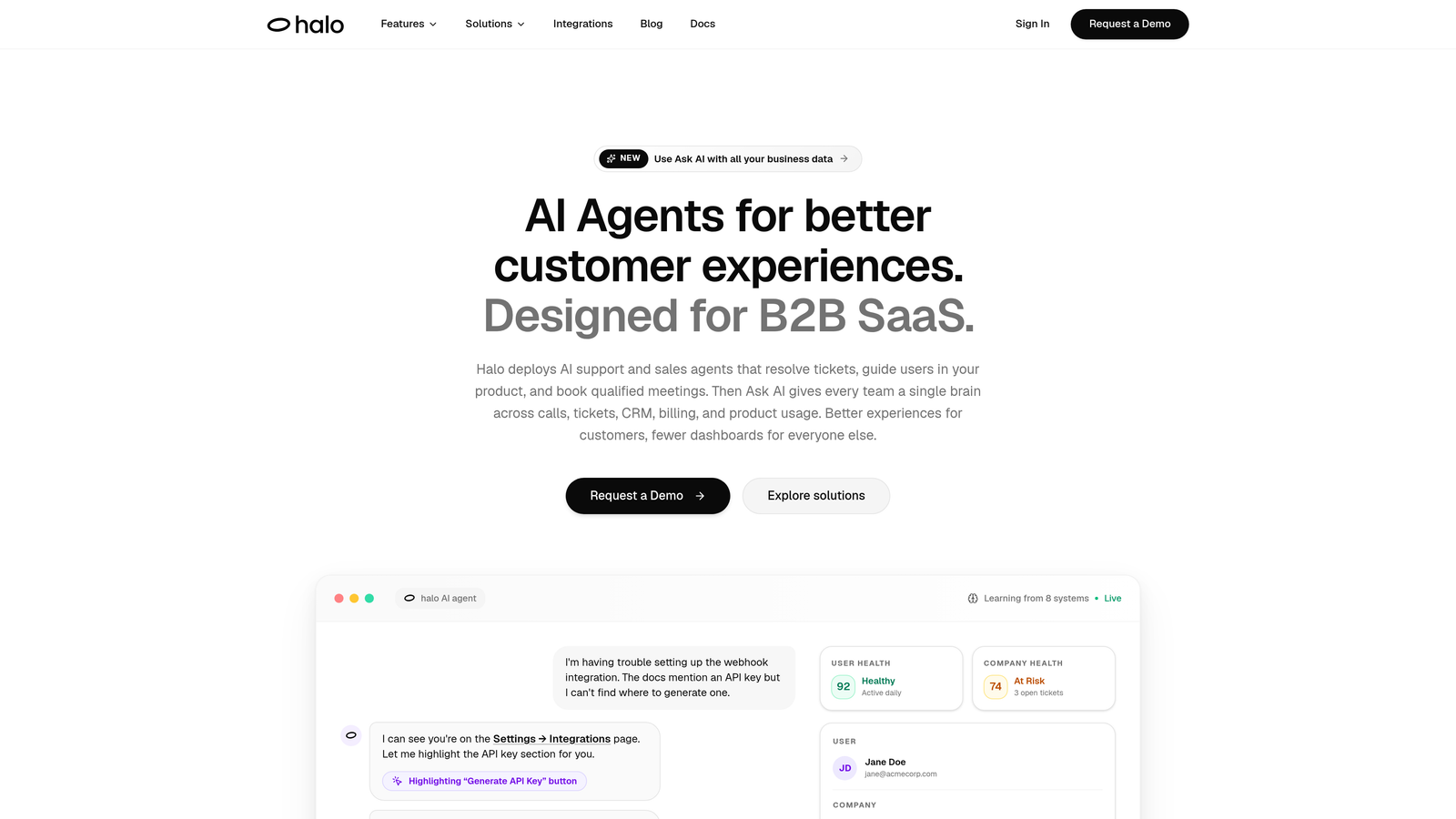
Halo AI is an AI-native customer support platform that deploys intelligent agents to resolve tickets, guide users through your product with page-aware context, and automatically create bug reports — all while learning from every interaction.
Where This Tool Shines
What separates Halo from helpdesks that have bolted AI onto existing infrastructure is its architecture. It was built AI-first, which means the intelligence isn't a layer on top of a legacy ticketing system. It's the foundation. The platform's page-aware chat widget actually sees what your users see, providing visual UI guidance that's contextually relevant to exactly where they are in your product at that moment.
The business intelligence layer is particularly compelling for software companies. Halo's smart inbox doesn't just manage tickets. It surfaces customer health signals, revenue insights, and anomaly detection from support data, turning your helpdesk into a source of product and commercial intelligence rather than just a cost center.
Key Features
Page-Aware Chat Widget: Understands the user's current location in your product to deliver contextually accurate guidance and visual UI walkthroughs.
Automatic Bug Ticket Creation: Identifies bugs from support conversations and automatically creates tickets in Linear, Jira, or your preferred engineering tool without manual intervention.
Smart Inbox with Business Intelligence: Goes beyond ticket management to surface customer health signals, churn risk indicators, and revenue intelligence from support patterns.
Continuous Learning: Every resolved interaction improves the AI's accuracy over time, meaning the system gets smarter the more your team uses it.
Deep Integration Stack: Connects natively with Slack, HubSpot, Intercom, Stripe, Zoom, PandaDoc, Fathom, and more — bridging support with your entire business stack.
Best For
Software companies that want an AI-first platform rather than an AI-enhanced legacy tool. Particularly well-suited for product-led growth companies where support, product feedback, and customer success are tightly connected, and for teams that need their helpdesk to do more than resolve tickets.
Pricing
Contact for pricing; Halo offers tailored plans designed for software teams. Reach out via haloagents.ai to discuss options for your team size and support volume.
2. Intercom Fin
Best for: Teams already on Intercom who want a capable AI agent without switching platforms.
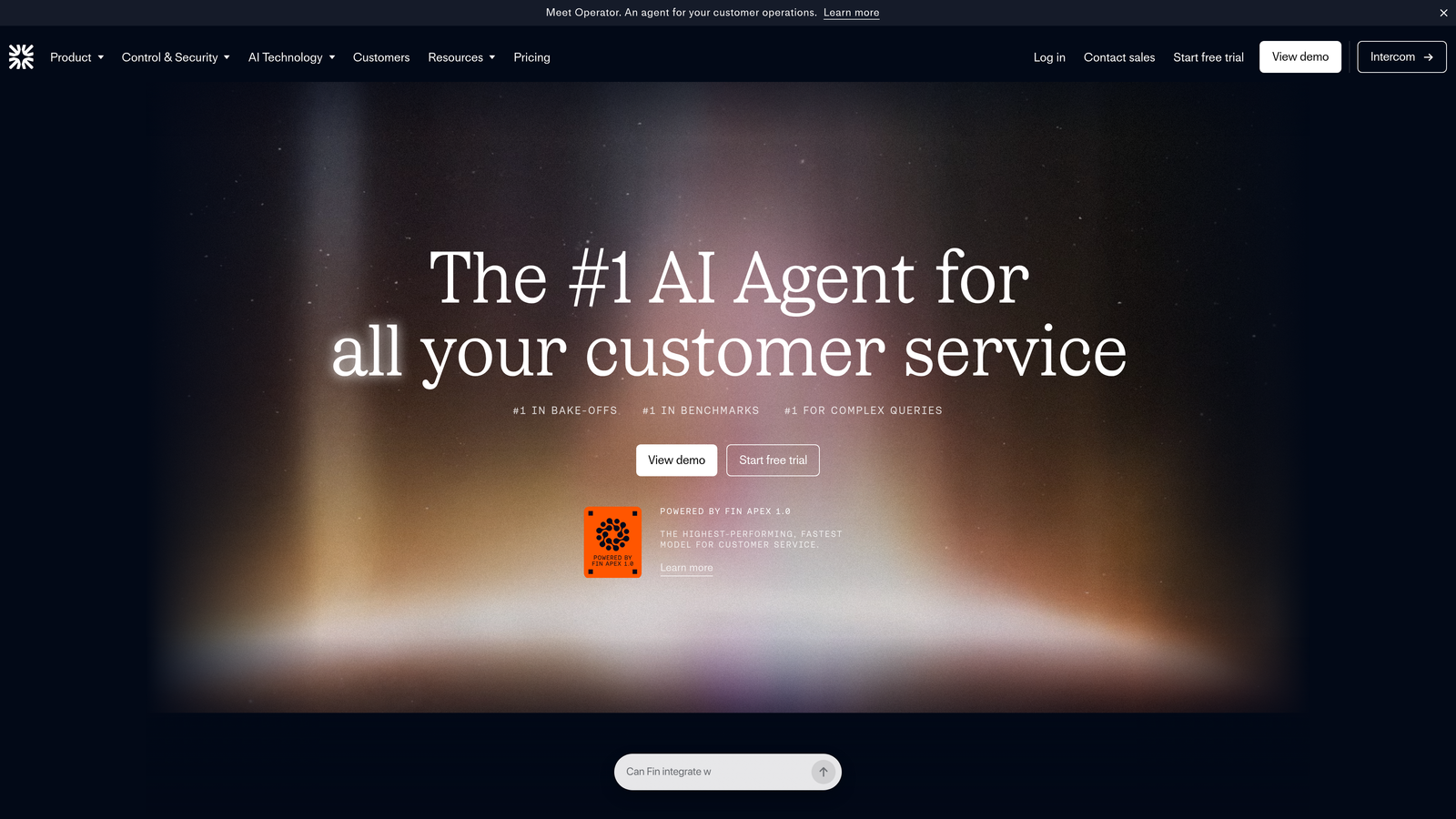
Intercom Fin is Intercom's dedicated AI agent that resolves support questions using your help center content, conversation history, and custom data sources — natively embedded in Intercom's messaging platform.
Where This Tool Shines
Fin's biggest advantage is how seamlessly it fits into Intercom's existing ecosystem. If your team already uses Intercom for customer messaging, product tours, and lifecycle communication, Fin slots in without requiring a platform migration. It draws on your existing help center articles and past conversation history to generate answers, which means the quality of its responses scales with the quality of your documentation.
The per-resolution pricing model is worth noting. For teams with predictable support volumes, it can be cost-effective, but for high-volume operations the costs can accumulate quickly. The built-in reporting on resolution rates and AI performance gives teams solid visibility into where Fin is succeeding and where it needs more training content.
Key Features
Multi-Source Training: Fin learns from help center articles, past conversations, and custom data sources to build a broad knowledge base.
Native Intercom Integration: Works directly within Intercom's messenger, product tours, and customer data infrastructure.
Audience-Based Customization: Tone and answer behavior can be adjusted per audience segment, useful for distinguishing between developer and end-user support.
Resolution Reporting: Built-in dashboards track resolution rates and AI performance over time.
Best For
Teams already invested in Intercom's platform who want AI resolution capabilities without adding another vendor. Less ideal for companies that need deep engineering workflow integration or are starting fresh with a new support stack.
Pricing
Per-resolution pricing at approximately $0.99 per resolution; pricing may vary based on plan and volume. Check Intercom's current pricing page for the latest details.
3. Zendesk AI
Best for: Enterprise software companies that need compliance certifications and a mature, proven support infrastructure.
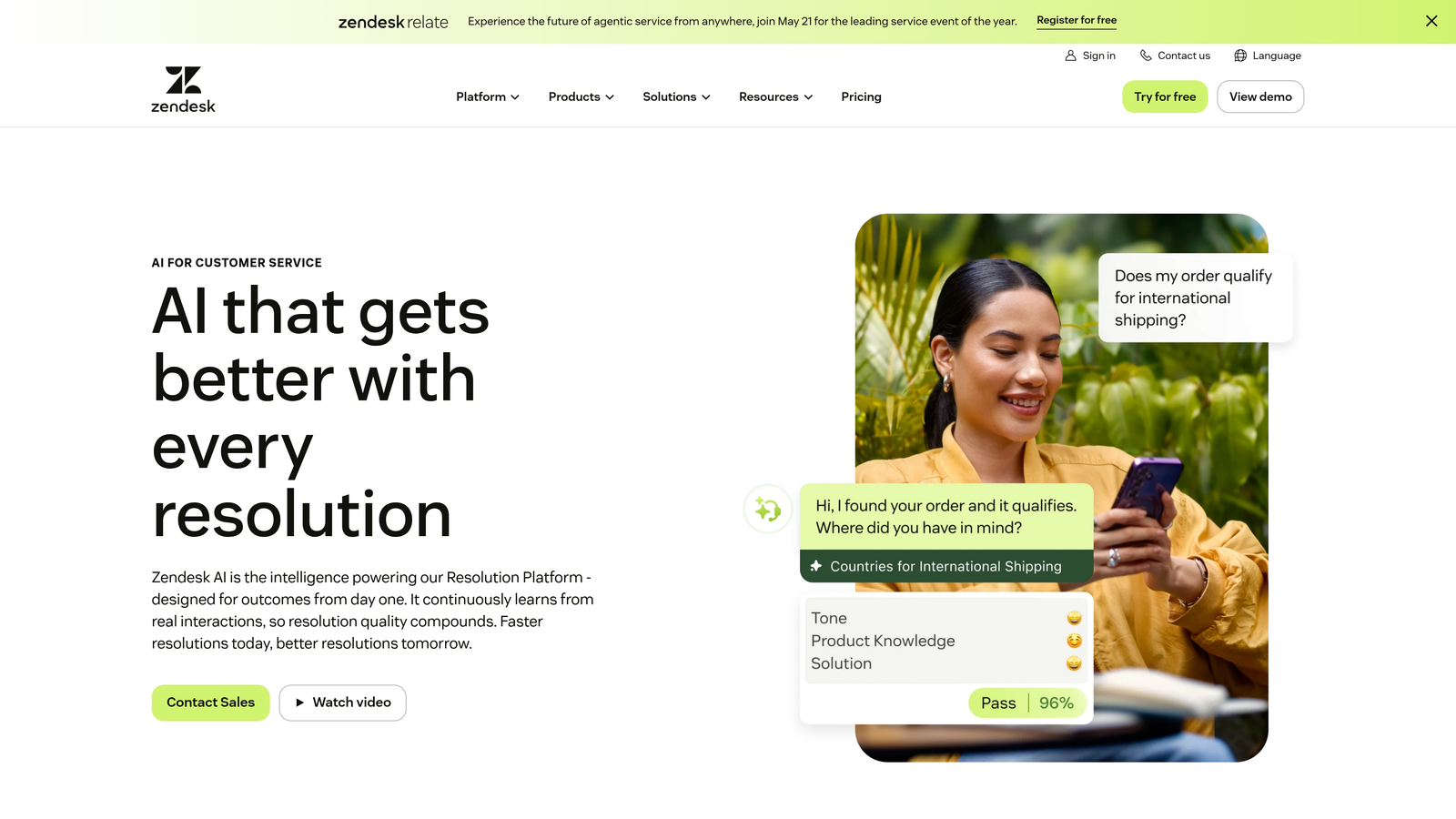
Zendesk AI is an enterprise-grade helpdesk with AI agents, intelligent triage, and agent assist tools layered onto one of the most established support platforms available.
Where This Tool Shines
Zendesk's strength is its maturity. The platform has been refined over many years, and its AI capabilities benefit from an enormous dataset of support interactions. For enterprise software companies with complex compliance requirements, Zendesk's certifications (SOC 2, HIPAA, GDPR) provide the assurance that procurement and legal teams need before signing off on a support platform.
The app marketplace with over 1,500 integrations is genuinely impressive, covering virtually every tool in a typical software company's stack. The tradeoff is complexity: Zendesk can require significant setup and administration, and AI features often come as add-ons that increase the total cost of ownership.
Key Features
AI Agents: Automated resolution across email, chat, and messaging channels with configurable escalation paths.
Intelligent Triage: Automatically categorizes, prioritizes, and routes tickets based on content and customer context.
Massive Integration Ecosystem: Over 1,500 apps in the marketplace covering developer tools, CRMs, analytics platforms, and more.
Enterprise Compliance: SOC 2, HIPAA, and GDPR certifications for regulated industries and enterprise procurement requirements.
Best For
Enterprise software companies with established support teams, complex compliance requirements, and the resources to configure and maintain a sophisticated platform. Less suited to lean startups that need fast time-to-value without heavy implementation overhead.
Pricing
Suite plans start around $55 per agent per month; AI capabilities are available as add-ons at additional cost. Enterprise plans are custom-priced.
4. Freshdesk Freddy AI
Best for: Budget-conscious software teams that want solid AI features without enterprise-level pricing.
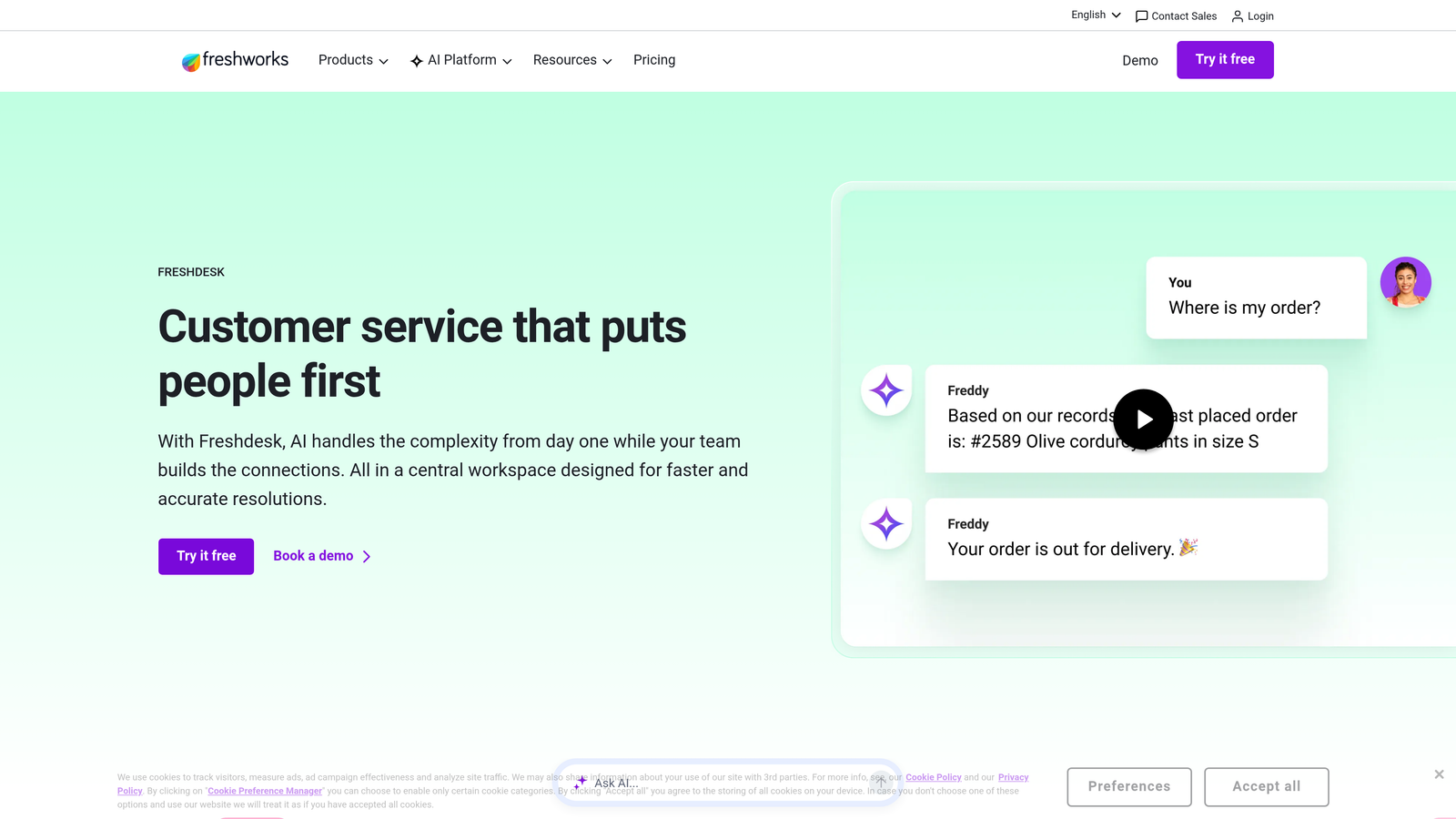
Freshdesk is Freshworks' full-featured helpdesk platform, powered by Freddy AI for automated responses, ticket classification, and intelligent agent suggestions.
Where This Tool Shines
Freshdesk punches above its price point. The Freddy AI suite covers auto-triage, suggested responses, and self-service bots without requiring a premium enterprise contract. For early-stage software companies managing support costs carefully, the free tier and affordable entry-level plans make it accessible to get started without a major financial commitment.
The knowledge base with AI-powered article suggestions is a practical feature for software companies building out their documentation. When a user submits a ticket, Freddy can suggest relevant articles before the ticket even reaches an agent, reducing resolution time for common questions.
Key Features
Freddy Auto-Triage: Automatically classifies and routes incoming tickets based on content, priority, and team structure.
Freddy Self Service Bots: Deploys automated resolution bots across chat and messaging channels with no-code configuration.
AI-Powered Knowledge Base: Suggests relevant articles to users and agents based on ticket content and search behavior.
Competitive Pricing Tiers: Free plan for small teams with paid plans starting at accessible price points, making AI features available without enterprise budgets.
Best For
Small to mid-sized software teams that need reliable AI-assisted support at a price that doesn't require board approval. Teams that prioritize cost efficiency over cutting-edge AI architecture will find Freshdesk a strong value proposition.
Pricing
Free plan available; paid plans from $15 per agent per month; AI features included in higher-tier plans. Check Freshworks' site for current plan details.
5. Ada
Best for: Software companies focused on achieving high autonomous resolution rates at scale through conversational AI.
Ada is an AI-first customer service automation platform built around achieving genuine resolution — not just deflection — through conversational AI agents trained on your knowledge base and connected systems.
Where This Tool Shines
Ada distinguishes itself by focusing on resolution quality rather than just containment. The platform's AI agents can reason through multi-step problems, connect to backend systems, and take actions on behalf of users, which is meaningful for software companies where support often requires looking up account data, checking subscription status, or walking through a technical process.
The analytics suite is detailed and actionable. Teams can see not just resolution rates but also the specific reasons tickets escalate to humans, which surfaces gaps in documentation and training content. That feedback loop helps software teams continuously improve their self-service coverage.
Key Features
Reasoning-Based Resolution: AI agents that work through multi-step technical queries rather than matching keywords to canned responses.
Backend System Actions: Connects to knowledge bases, CRMs, and operational systems to take real actions on behalf of users during conversations.
Multi-Channel Deployment: Consistent AI experience across web, mobile, social, and third-party messaging platforms.
Resolution Analytics: Detailed reporting on resolution rates, escalation reasons, and content gaps to drive continuous improvement.
Best For
Mid-market to enterprise software companies with significant support volume that need high autonomous resolution rates and are willing to invest in a purpose-built AI platform. Custom pricing makes it less accessible for early-stage teams.
Pricing
Custom pricing based on resolution volume; contact Ada's sales team for a quote tailored to your support scale.
6. Tidio
Best for: Small software teams and startups that need fast-to-deploy AI support without complex configuration.
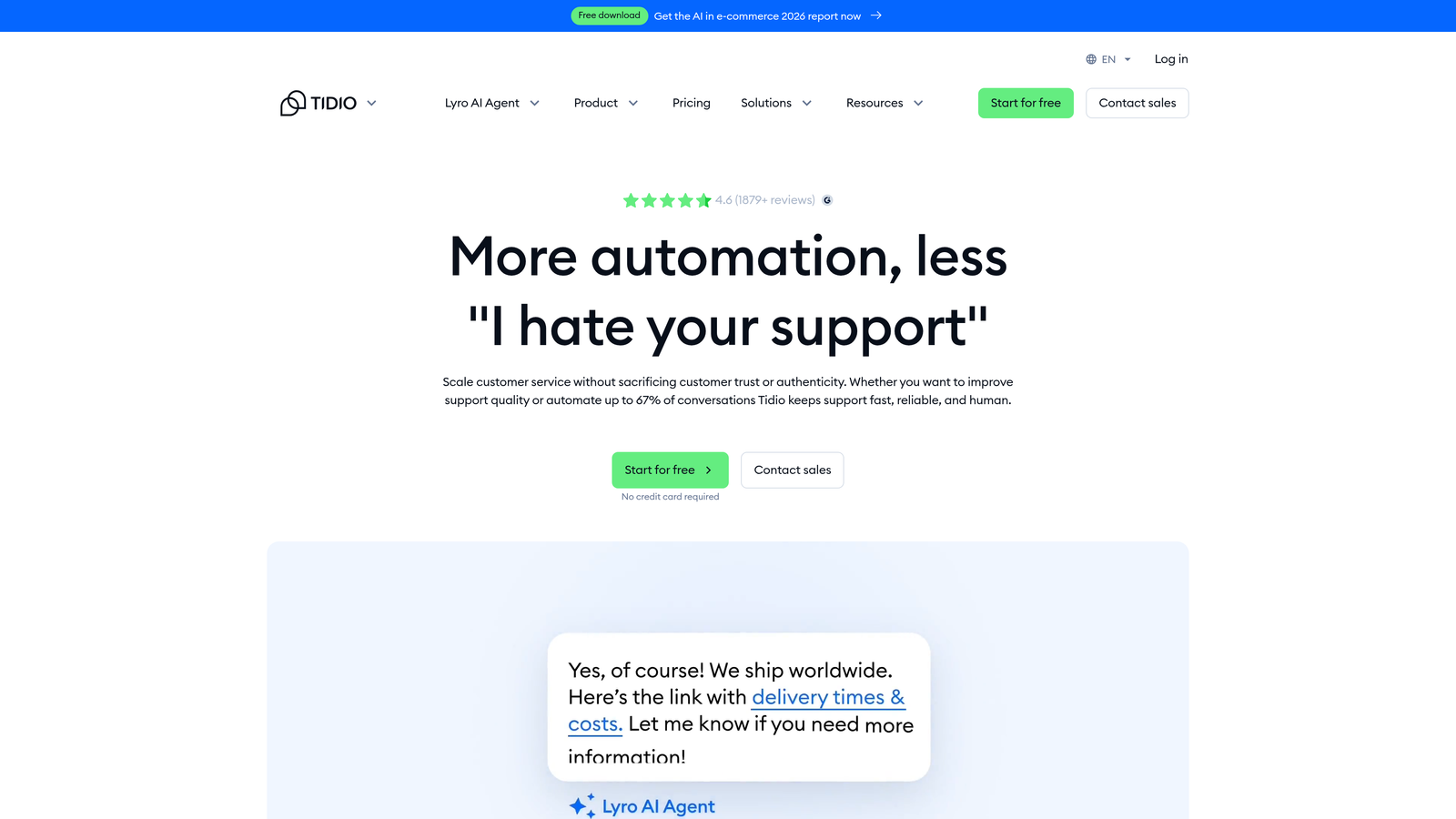
Tidio is an affordable live chat and AI chatbot platform featuring Lyro AI, designed to get automated support running quickly without requiring dedicated implementation resources.
Where This Tool Shines
Tidio's appeal is simplicity and speed. For a bootstrapped SaaS team that needs to stop answering the same ten questions repeatedly, Lyro AI can be trained on existing FAQ content and deployed in a matter of hours rather than weeks. The no-code visual chatbot builder lets non-technical team members create custom conversation flows without engineering support.
The live chat component with AI-powered reply suggestions for agents is a practical middle ground for teams that aren't ready to fully automate support but want AI to accelerate their human agents. It's a stepping stone that can evolve as the team's support needs grow.
Key Features
Lyro AI Chatbot: Learns from FAQ and support content to handle common queries automatically with conversational responses.
No-Code Chatbot Builder: Visual flow builder for creating custom automated conversation paths without writing code.
AI Reply Suggestions: Surfaces relevant response suggestions to live agents during conversations to reduce handle time.
Accessible Pricing: Generous free tier and transparent paid plans that scale with usage, making it viable for very early-stage teams.
Best For
Early-stage software companies and small teams that need an affordable, quick-to-implement AI support layer. Teams with complex technical support needs or high ticket volumes will likely outgrow Tidio's capabilities as they scale.
Pricing
Free plan available; Lyro AI from $39 per month; premium plans scale with usage and conversation volume.
7. Help Scout
Best for: Software teams that want AI to augment their human agents rather than replace them, with a clean and intuitive interface.
Help Scout is a human-centered helpdesk platform with AI features designed to make support agents faster and more effective, including AI drafts, conversation summaries, and smart article suggestions.
Where This Tool Shines
Help Scout's philosophy is refreshingly honest: AI should make human agents better, not eliminate them. For software companies that handle complex, nuanced support conversations where human judgment matters, this approach resonates. The AI Drafts feature generates reply suggestions grounded in your knowledge base and conversation history, giving agents a strong starting point without removing them from the loop.
The platform's simplicity is a genuine competitive advantage. Teams can onboard new support agents quickly because the interface doesn't require extensive training. For fast-growing software companies where the support team is expanding alongside the product, that low learning curve has real operational value.
Key Features
AI Drafts: Generates contextual reply suggestions based on your knowledge base, past conversations, and ticket content.
AI Summarize: Instantly summarizes conversation history so agents can pick up tickets mid-thread without reading through lengthy exchanges.
Beacon Widget: Embedded self-service widget with AI-powered article recommendations that surface relevant help content proactively.
Intuitive Interface: Clean, minimal UI that reduces agent training time and keeps support workflows straightforward.
Best For
Software teams with strong human support cultures that want AI as a productivity multiplier rather than a replacement. Particularly well-suited for companies where support quality and tone are a brand differentiator.
Pricing
Plans start at $22 per user per month; AI features are included in standard plans without requiring a separate add-on purchase.
8. Drift (Salesloft)
Best for: Software companies where support and sales overlap significantly and need intelligent routing between both teams.
Drift, now part of the Salesloft platform, combines AI chatbot support with lead qualification and sales routing — making it a strong fit for software companies where inbound conversations span both support and revenue conversations.
Where This Tool Shines
Drift's differentiation is its ability to handle both support and sales conversations within a single AI-powered interface. For software companies running product-led growth motions, where a prospect might start with a technical question and transition into a buying conversation, Drift can intelligently route that interaction to the right team without the user experiencing a jarring handoff.
The Salesloft integration deepens the revenue intelligence layer, connecting conversational data with sales pipeline context. That's a meaningful advantage for software companies where support conversations often signal expansion opportunities or churn risk that sales and success teams need to act on.
Key Features
Dual-Purpose AI Chatbot: Handles support queries and qualifies sales leads simultaneously within the same conversation interface.
Intelligent Team Routing: Routes conversations to support, sales, or customer success based on context and intent signals.
Conversational Landing Pages: In-app and web messaging experiences that engage visitors at high-intent moments.
CRM Integrations: Native connections with Salesforce, HubSpot, and other major CRM platforms for bidirectional data sync.
Best For
Software companies with active sales motions where support and revenue conversations intersect frequently. Less suited for teams that need pure support automation without the sales-oriented features that come with the Drift/Salesloft package.
Pricing
Custom pricing; contact the Salesloft sales team for current plan options and packaging details.
9. DevRev
Best for: Software companies that need tight, native integration between customer support and engineering workflows.
DevRev is a developer-centric support platform built specifically for software companies, natively connecting customer support tickets to engineering work items and product development cycles.
Where This Tool Shines
DevRev solves a problem that most helpdesks address awkwardly through integrations: the gap between what customers report and what engineers act on. Rather than syncing tickets to Jira or Linear via a third-party connector, DevRev treats support tickets and engineering work items as first-class objects within the same system. That native connection reduces the friction and data loss that typically occurs when support teams try to communicate product issues to engineering teams.
The AI-powered clustering feature is particularly valuable for software companies managing high ticket volumes. By automatically grouping related issues, it surfaces product trends and systemic bugs that might otherwise be buried in individual tickets. That kind of pattern recognition accelerates product decisions and helps engineering teams prioritize the issues that are affecting the most customers.
Key Features
Native Support-to-Engineering Connection: Links customer support tickets directly to engineering sprints and work items within a unified platform, no integration middleware required.
AI-Powered Issue Clustering: Automatically groups related tickets to surface product trends, recurring bugs, and systemic issues at scale.
Built-In Product Analytics: Ties product usage data to support conversations for richer context on customer issues and feature gaps.
Developer-First Design: Built specifically for software and developer-focused companies, with workflows and terminology aligned to engineering and product teams.
Best For
Software companies where the feedback loop between support and product is a strategic priority, particularly those with engineering teams that need direct visibility into customer-reported issues without manual handoff processes.
Pricing
Free tier available for small teams; growth plans with custom pricing based on team size and usage. Contact DevRev for current plan details.
Finding the Right AI Helpdesk for Your Software Team
The nine platforms on this list cover a wide spectrum, from enterprise-grade infrastructure to lightweight tools built for lean teams. The right choice depends on where your team is today and where your support operation needs to go.
If you're an early-stage team watching every dollar, Freshdesk and Tidio offer accessible entry points with genuine AI capabilities. If you're an enterprise with compliance requirements and an established support team, Zendesk provides the maturity and certification coverage that procurement demands. If your support and sales motions are deeply intertwined, Drift bridges that gap more naturally than most.
For software companies that want the tightest support-to-engineering feedback loop, DevRev is purpose-built for exactly that problem. And for teams that want AI to assist rather than replace their human agents, Help Scout strikes a thoughtful balance.
But if you're looking for a platform that was built AI-first from the ground up, understands where your users are in your product at any given moment, automatically routes bugs to your engineering tools, and surfaces business intelligence beyond basic ticket metrics, Halo AI is the standout option for software companies in 2026.
Your support team shouldn't scale linearly with your customer base. AI agents can handle routine tickets, guide users through your product with page-aware precision, and surface the kind of customer health signals that inform product and revenue decisions. See Halo in action and discover how continuous learning transforms every interaction into smarter, faster support.