9 Best AI Helpdesk Software to Get Quotes From in 2026
Comparing AI helpdesk software quotes is the most efficient way to evaluate real costs, feature depth, and implementation timelines before committing to a platform. This guide reviews the 9 best AI helpdesk solutions worth requesting quotes from in 2026, helping support teams distinguish between platforms with genuine autonomous AI capabilities versus those offering basic automation dressed up as artificial intelligence.
 Matt PattoliFounder14 min read
Finding the right AI helpdesk software starts with getting quotes that match your team's actual needs, not just browsing pricing pages with vague "contact us" buttons. Whether you're replacing an aging helpdesk, adding AI automation to your existing stack, or building a support operation from scratch, comparing quotes across platforms is the fastest way to understand real costs, feature trade-offs, and implementation timelines.
The AI helpdesk market heading into 2026 has matured considerably. Nearly every major vendor now offers some form of AI automation, but the depth of that AI varies wildly. Some platforms resolve tickets autonomously. Others just suggest canned responses and call it AI. Knowing the difference before you sign a contract matters enormously.
We evaluated dozens of platforms and narrowed the list to nine worth requesting quotes from this year. Our selection criteria: AI capability depth, integration flexibility, transparent or accessible pricing, scalability for growing B2B teams, and overall value for support automation. Here are the platforms that made the cut.
1. Halo AI
Best for: B2B SaaS teams that want AI agents resolving tickets autonomously, not just assisting agents
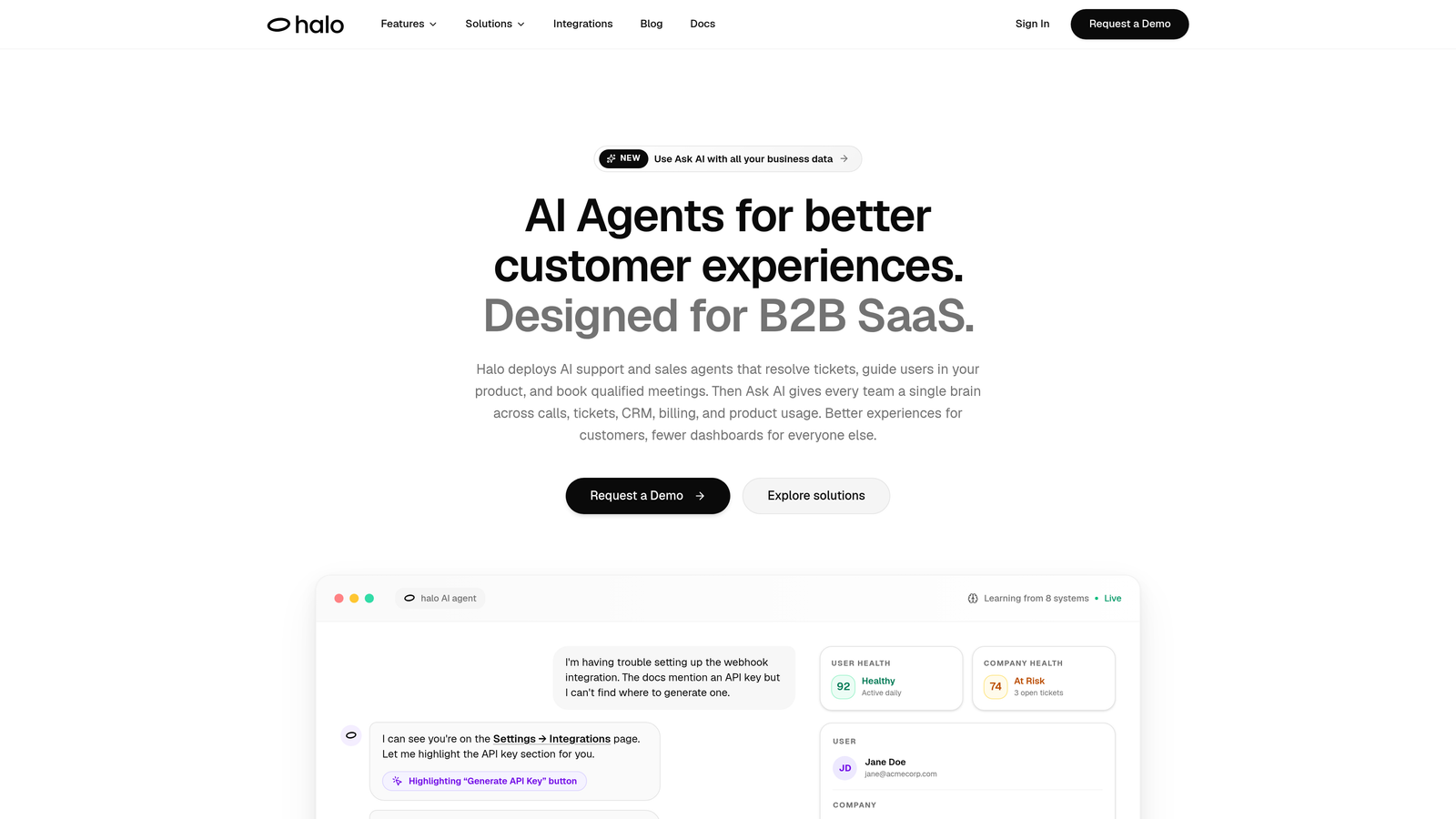
Halo AI is an AI-native customer support platform built from the ground up around autonomous agents, not retrofitted with an AI layer on top of legacy helpdesk infrastructure.
Where This Tool Shines
Most helpdesk platforms treat AI as a copilot: it suggests, the human decides. Halo takes a different approach. Its AI agents are designed to resolve tickets end-to-end, handling the full interaction from first contact to resolution without requiring an agent to approve every step. That distinction matters significantly for teams dealing with high ticket volumes on routine issues.
What sets Halo apart further is page-aware context. The chat widget actually sees what users see in your product, which means it can provide visual, step-by-step guidance rather than generic knowledge base links. Combine that with continuous learning from every interaction, and the system gets meaningfully smarter over time rather than staying static.
Key Features
Autonomous AI Agents: Resolve support tickets end-to-end without requiring human approval on every step, handling routine issues at scale.
Page-Aware Chat Widget: Sees what users see inside your product, enabling precise visual guidance rather than generic article suggestions.
Smart Inbox with Business Intelligence: Surfaces customer health signals, anomaly detection, and revenue intelligence beyond standard support metrics.
Auto Bug Ticket Creation: Automatically creates and routes bug reports with native integrations to Linear, Slack, HubSpot, Intercom, Stripe, Zoom, PandaDoc, and Fathom.
Live Agent Handoff: Escalates complex issues to human agents with full conversation context preserved, so customers never have to repeat themselves.
Best For
Product-led SaaS companies and B2B teams that want AI to genuinely own ticket resolution rather than just assist agents. Particularly well-suited for teams already using tools like Linear, HubSpot, or Intercom who need a support layer that connects to their entire business stack.
Pricing
Custom quotes available. Request a demo at haloagents.ai to get pricing tailored to your team size, ticket volume, and integration requirements.
2. Zendesk AI
Best for: Enterprise teams with complex workflows that need deep customization and a large integration ecosystem
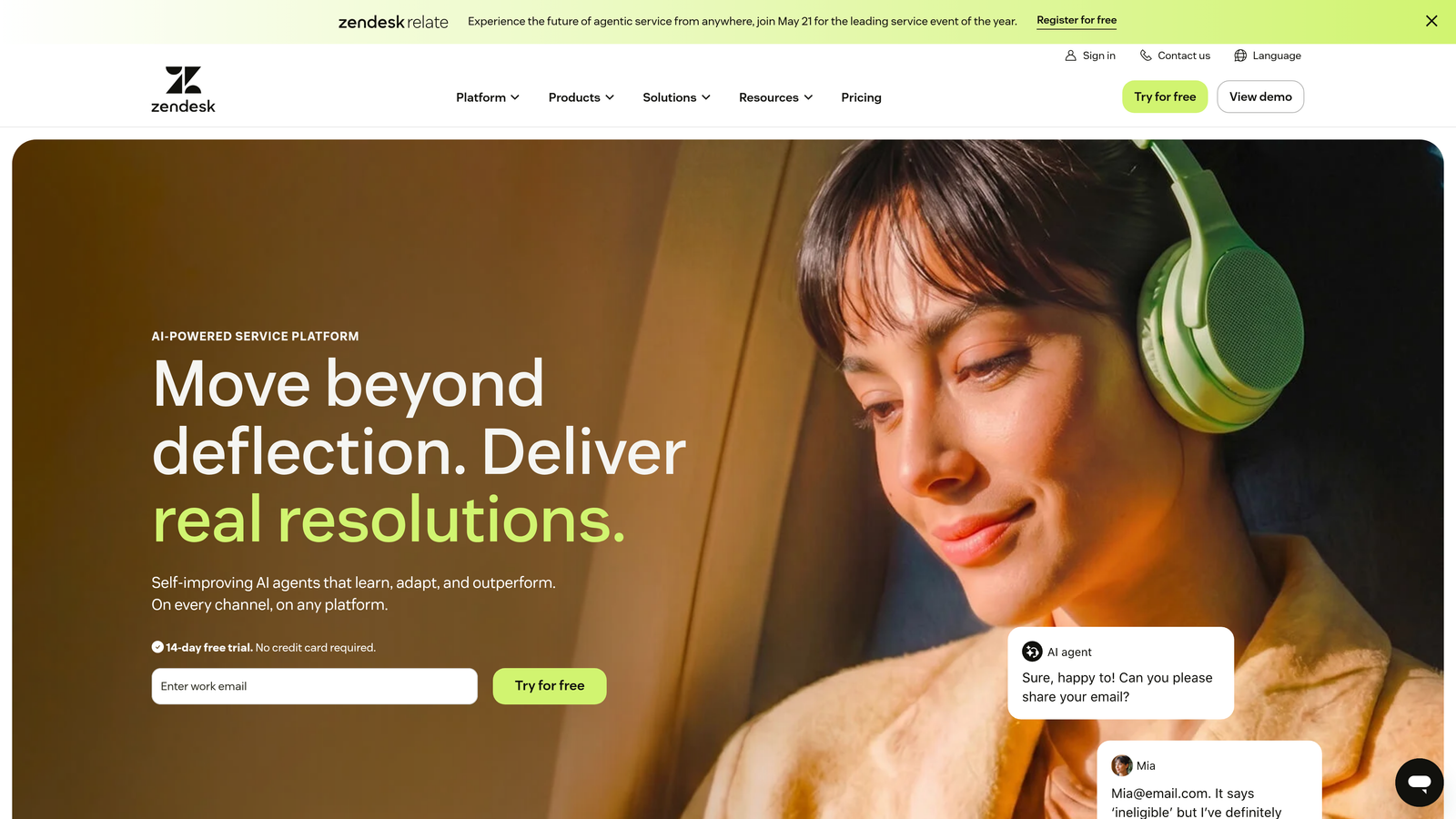
Zendesk AI is an enterprise-grade helpdesk platform with an advanced AI layer offering intent detection, agent copilot functionality, and automated workflow orchestration.
Where This Tool Shines
Zendesk's market position comes from its sheer breadth. With over 1,500 marketplace integrations and years of enterprise deployments behind it, it handles complex multi-department, multi-brand support environments well. The AI layer adds meaningful capability on top of that foundation, particularly for routing and agent assistance.
The agent copilot feature is genuinely useful: it surfaces relevant knowledge base content, suggests responses, and summarizes ticket context so agents spend less time digging. For teams with established Zendesk workflows, adding the AI layer is a natural extension rather than a rip-and-replace decision.
Key Features
AI-Powered Intent Detection: Automatically classifies and routes incoming tickets based on detected intent and topic.
Agent Copilot: Surfaces response suggestions and relevant knowledge articles in real time as agents work tickets.
Generative AI Tools: Handles ticket summarization and tone adjustment to speed up agent response drafting.
1,500+ Marketplace Integrations: Connects with virtually every major business tool across CRM, billing, engineering, and communication categories.
Advanced Analytics: Custom reporting dashboards with deep operational visibility across teams and channels.
Best For
Enterprise support organizations with large agent teams, complex escalation workflows, and a need for extensive customization. Also strong for companies already invested in the Zendesk ecosystem who want to add AI without migrating platforms.
Pricing
Suite plans start around $55 per agent per month; Advanced AI is a paid add-on. Request a quote directly from Zendesk for exact pricing based on your team size and feature requirements.
3. Freshdesk (Freddy AI)
Best for: Mid-market teams wanting omnichannel support with AI-assisted triage and a free starting tier
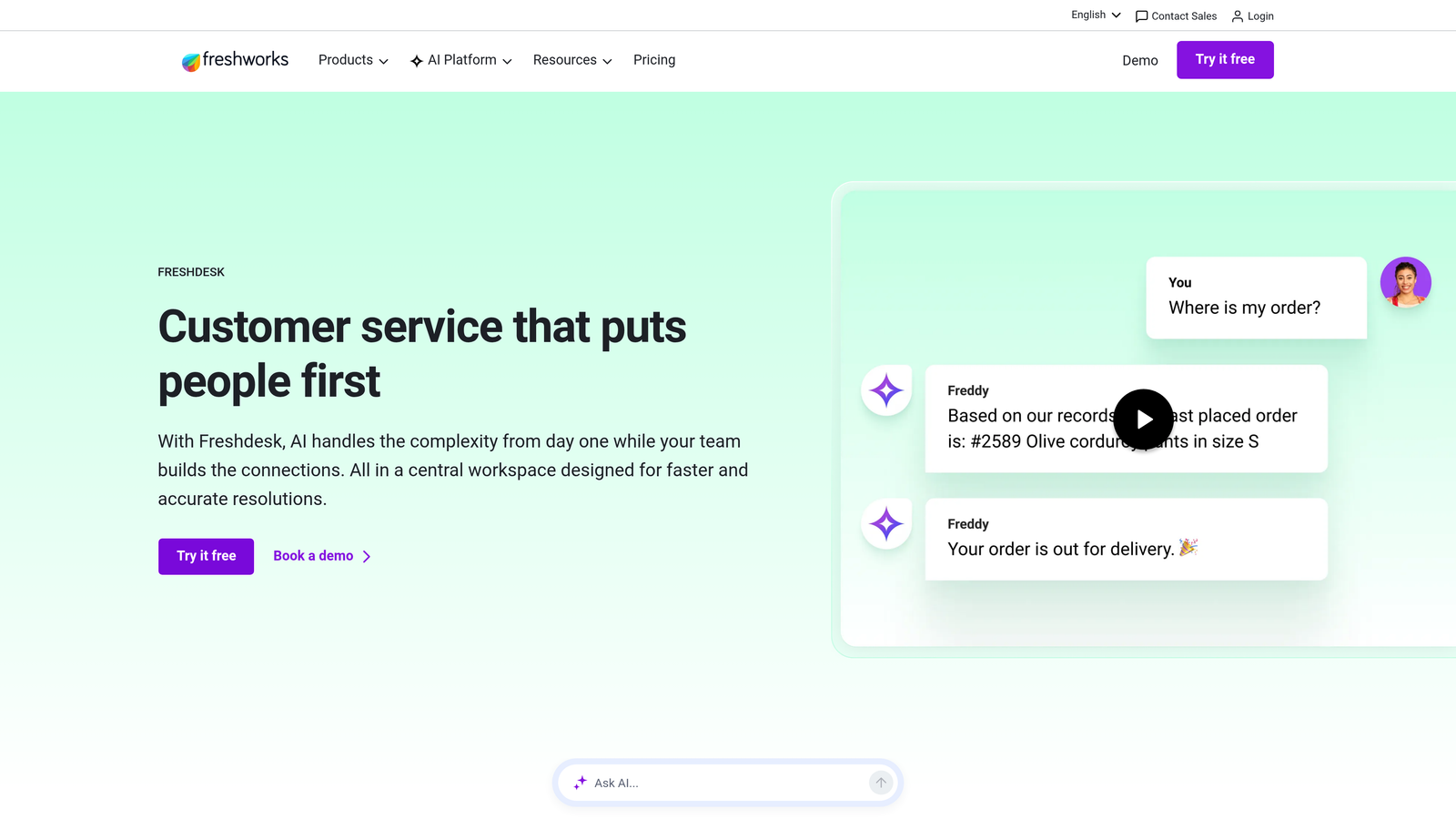
Freshdesk is a mid-market helpdesk platform with Freddy AI providing auto-triage, response suggestions, and self-service chatbot capabilities across multiple channels.
Where This Tool Shines
Freshdesk hits a sweet spot for growing teams that need genuine omnichannel coverage without enterprise-level complexity or pricing. Email, chat, phone, social, and messaging apps all funnel into a unified inbox, and Freddy AI helps manage the volume through automatic classification and suggested responses.
The free tier is a legitimate differentiator for smaller teams testing the waters. As teams scale, Freddy Self-Service handles deflection through a configurable chatbot that can handle a meaningful portion of repetitive queries before they ever reach an agent.
Key Features
Freddy AI Auto-Triage: Automatically classifies tickets, predicts fields, and suggests responses to reduce manual agent work.
Omnichannel Inbox: Unifies email, chat, phone, social, and messaging into a single agent workspace.
Freddy Self-Service Chatbot: Deflects routine queries with a configurable self-service bot before tickets reach agents.
Team Collaboration Tools: Includes team huddles and shared ticket ownership for complex issues requiring multiple contributors.
Free Tier Available: Functional free plan for small teams to get started without upfront commitment.
Best For
Mid-market companies managing support across multiple channels who want AI assistance without a steep price tag. Also a good fit for teams that want a free entry point and room to scale into AI features as they grow.
Pricing
Free plan available; paid plans start around $15 per agent per month. AI features unlock on higher tiers. Request a quote for enterprise pricing and volume discounts.
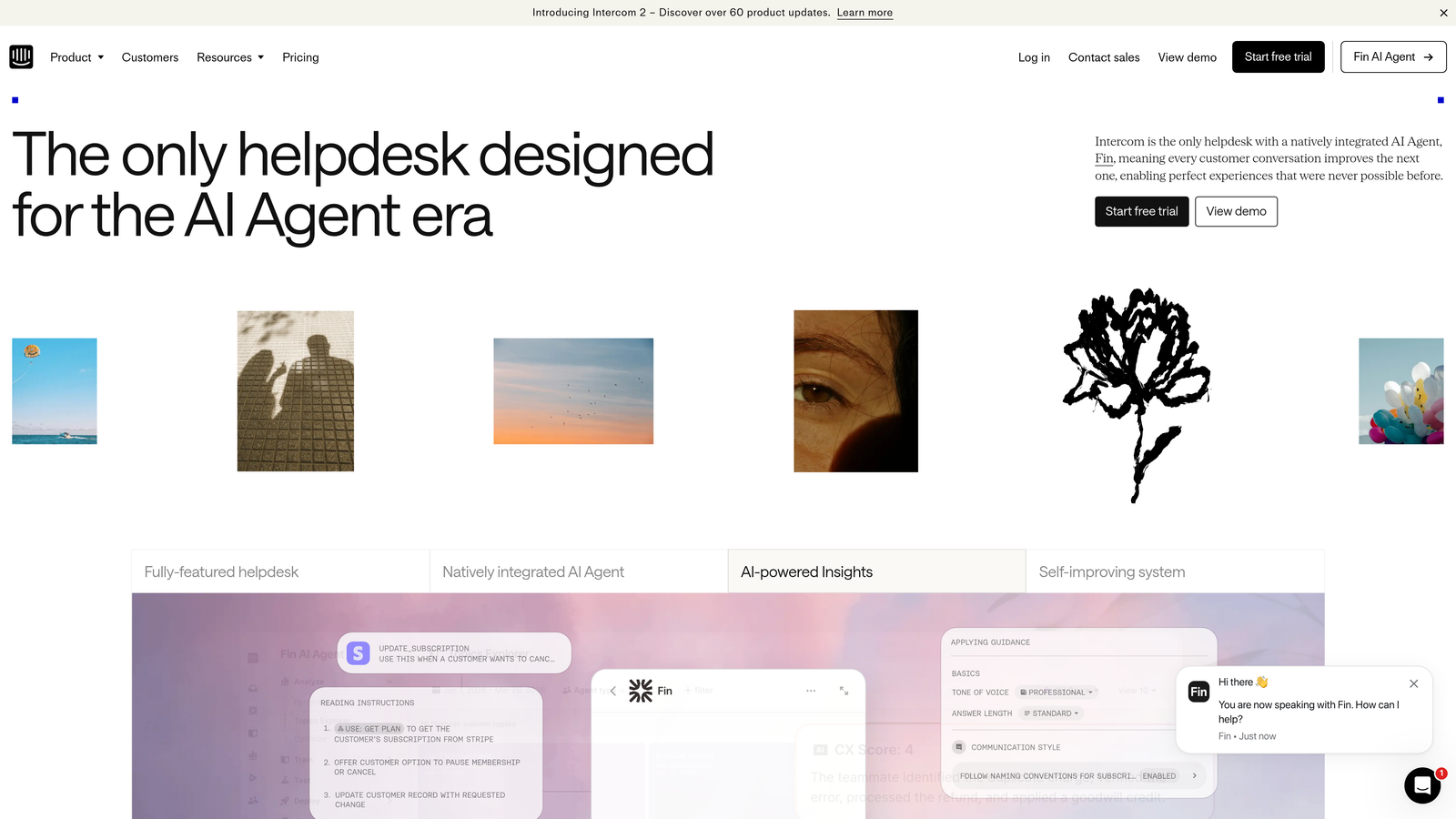
4. Intercom with Fin AI
Best for: Product and growth teams that want conversational AI deeply embedded in the customer experience
Intercom is a conversational support platform with Fin AI agent that resolves frontline queries autonomously, grounded directly in your knowledge base content.
Where This Tool Shines
Fin AI is one of the more credible autonomous resolution tools in the market. Rather than just suggesting responses, it reads your knowledge base and answers questions directly, handling a meaningful share of frontline volume without agent involvement. The per-resolution pricing model is worth noting: you pay for outcomes, not seats, which aligns incentives in an interesting way.
Intercom's broader platform strength is in proactive engagement. In-app product tours, targeted messages, and behavioral triggers give product and growth teams tools that go well beyond reactive support. If your support strategy intersects with onboarding and retention, that breadth is genuinely valuable.
Key Features
Fin AI Agent: Resolves customer questions autonomously using knowledge base grounding, without requiring agent review on each interaction.
Per-Resolution Pricing: AI interactions billed per successful resolution rather than per seat, aligning cost with actual value delivered.
Proactive Messaging: In-app product tours and behavioral triggers for onboarding and retention use cases.
Workflow Automation: Customizable inbox with macros and automation rules for routing and escalation.
Strong API Ecosystem: Robust integration options for connecting Intercom to your existing tech stack.
Best For
SaaS companies that blend support with product-led growth, particularly those where onboarding, in-app guidance, and support overlap. Teams comfortable with usage-based pricing will find the per-resolution model for Fin AI appealing.
Pricing
Starts around $29 per seat per month; Fin AI charged approximately $0.99 per resolution. Request a quote for volume pricing if you're processing significant ticket volume through Fin.
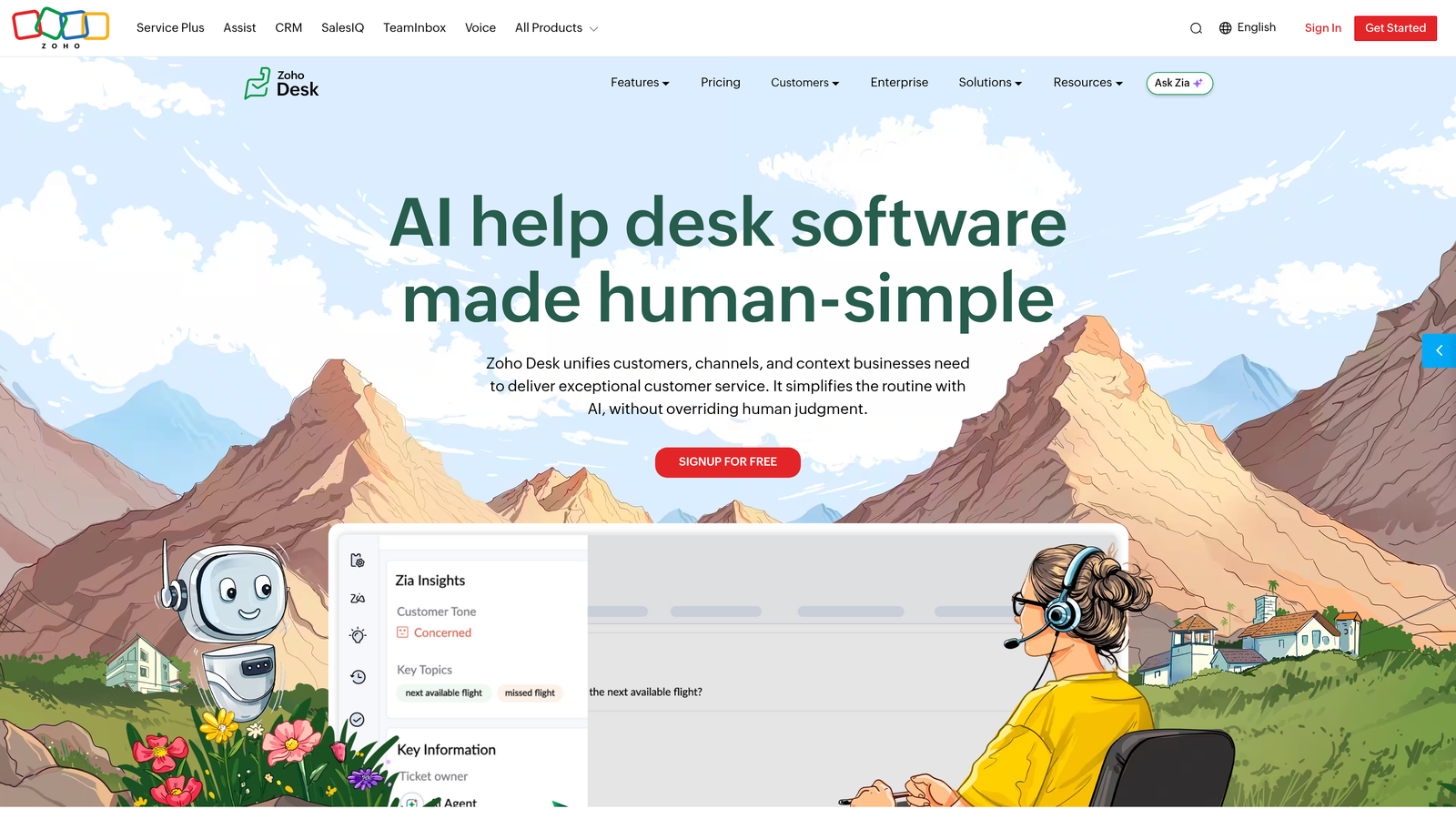
5. Zoho Desk (Zia AI)
Best for: Budget-conscious teams already in the Zoho ecosystem who want AI-assisted support without switching platforms
Zoho Desk is a budget-friendly helpdesk with Zia AI assistant offering sentiment analysis, anomaly detection, and automated ticket tagging within the broader Zoho product suite.
Where This Tool Shines
For companies already running Zoho CRM, Zoho Analytics, or any of the 40+ Zoho applications, Zoho Desk is the natural support layer. The native integrations are deep and genuinely functional, not surface-level API connections. Zia AI adds meaningful intelligence on top, particularly the sentiment analysis and anomaly detection features that help teams spot problems before they escalate.
The pricing is competitive at every tier, and the free plan for up to three agents makes it accessible for very small teams. Multi-department and multi-brand support is handled cleanly, which is useful for companies managing multiple products or customer segments.
Key Features
Zia AI Assistant: Provides sentiment analysis, field predictions, and anomaly alerts to surface issues before they become problems.
Automated Ticket Tagging: Classifies and prioritizes incoming tickets automatically based on content and context.
Native Zoho Ecosystem Integration: Deep connections to Zoho CRM, Analytics, and 40+ other Zoho applications out of the box.
Multi-Department Support: Handles multiple brands and departments within a single Zoho Desk instance.
Contextual Customer Views: Full interaction history and customer context available to agents at the point of response.
Best For
Small to mid-sized businesses already using Zoho's suite of products, or teams that want a competitively priced helpdesk with solid AI features without committing to enterprise-level spending.
Pricing
Free plan for up to 3 agents; paid plans from approximately $14 per agent per month. Zia AI features available on Professional tier and above.
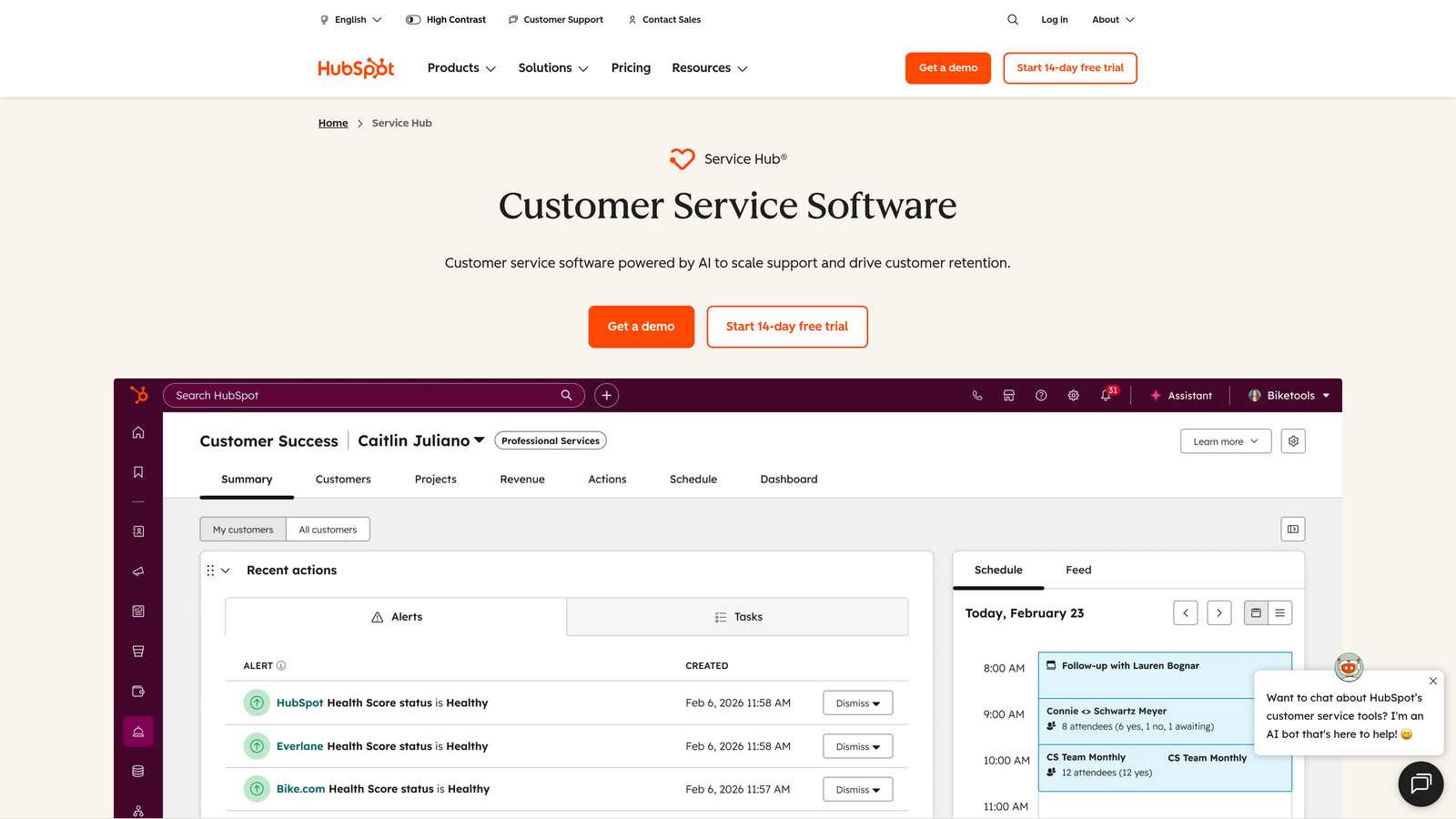
6. HubSpot Service Hub
Best for: Revenue-focused teams that want support tightly integrated with CRM and the full customer lifecycle
HubSpot Service Hub is a CRM-integrated service platform with Breeze AI copilot for agents, knowledge base management, and customer feedback tools tied to the complete HubSpot suite.
Where This Tool Shines
The core value proposition of Service Hub is context. Because it sits inside the HubSpot CRM, agents see the full customer lifecycle: deal history, marketing touches, previous support interactions, and account health all in one view. For B2B teams where support quality directly affects renewal and expansion, that visibility is a genuine competitive advantage.
Breeze AI adds practical agent assistance through response drafting and ticket summarization. It's not autonomous resolution, but for teams that want AI assistance without fully handing off ticket handling, it strikes a reasonable balance. The free tier with basic ticketing and live chat also makes it easy to start without a procurement process.
Key Features
Breeze AI Copilot: Assists agents with response drafting and ticket summarization directly within the HubSpot workspace.
Full CRM Integration: Complete customer lifecycle visibility including deals, marketing history, and account health alongside support tickets.
Knowledge Base with AI Suggestions: Surfaces relevant articles automatically and flags gaps based on support trends.
Customer Feedback Tools: Built-in NPS tracking and satisfaction surveys tied to customer records.
Free Entry Point: Basic ticketing and live chat available at no cost, with a clear upgrade path to AI features.
Best For
B2B companies where support, sales, and marketing operate in the same HubSpot environment. Especially valuable for customer success teams that need support data tied directly to renewal and expansion signals.
Pricing
Free tools available; Starter from $20 per seat per month; Professional from $100 per seat per month. Request a quote for enterprise needs and bundled HubSpot pricing.
7. Tidio
Best for: SMBs and e-commerce teams that need conversational AI deployed quickly without technical resources
Tidio is an SMB-focused customer service platform with Lyro AI chatbot for conversational support automation and fast no-code deployment.
Where This Tool Shines
Tidio's primary strength is speed to value. The no-code chatbot builder and visual flow editor mean teams can deploy Lyro AI without engineering involvement, which matters enormously for small businesses without dedicated technical resources. Lyro trains on your existing content and handles automated responses for common queries without requiring extensive configuration.
The multichannel coverage is solid for the price point: website widget, Facebook Messenger, Instagram, and email all connect into a single inbox. For Shopify, WordPress, and Wix users in particular, native integrations make setup straightforward.
Key Features
Lyro AI Chatbot: Trained on your content to handle automated responses for common customer questions without manual flow building.
No-Code Chatbot Builder: Visual flow editor for creating custom conversation paths without engineering resources.
Real-Time Visitor Monitoring: Live chat with active visitor tracking for proactive engagement opportunities.
Multichannel Coverage: Connects website widget, Messenger, Instagram, and email into a unified inbox.
E-Commerce Integrations: Native integrations with Shopify, WordPress, and Wix for quick deployment on common platforms.
Best For
Small businesses and e-commerce teams that want conversational AI running quickly without a lengthy implementation. Also a good fit for teams that want to test AI-assisted support before committing to a more complex enterprise platform.
Pricing
Free plan available; paid plans from approximately $29 per month. Lyro AI conversations billed separately based on volume. Request a quote for custom volume pricing.
8. Help Scout
Best for: Small-to-mid teams that prioritize clean usability and AI assistance without overwhelming feature complexity
Help Scout is a clean, simple helpdesk platform with AI Drafts and AI Summarize features designed for teams that value usability and focused functionality over feature sprawl.
Where This Tool Shines
Help Scout has always competed on simplicity and agent experience, and its AI features follow that same philosophy. AI Drafts generates full reply drafts based on conversation context, which agents can edit and send rather than writing from scratch. AI Summarize condenses long threads so agents joining a conversation mid-stream can get up to speed in seconds rather than reading through dozens of messages.
For teams that have found Zendesk or Freshdesk overwhelming, Help Scout is a deliberate step toward clarity. The Beacon widget handles embedded help and live chat cleanly, and the Docs knowledge base integrates tightly with the ticketing workflow.
Key Features
AI Drafts: Generates complete reply drafts based on conversation context, reducing time spent on initial response composition.
AI Summarize: Condenses long conversation threads into concise summaries for fast agent onboarding on complex tickets.
Beacon Widget: Embedded help widget with live chat and knowledge base access directly within your product or website.
Docs Knowledge Base: AI-suggested articles surface relevant content as agents and customers search for answers.
Team Efficiency Tools: Collision detection and saved replies prevent duplicated work and speed up common responses.
Best For
Small to mid-sized teams that want AI assistance without complexity, particularly those that have bounced off more feature-heavy platforms and want a tool their agents will actually enjoy using.
Pricing
Plans from $25 per user per month; AI features included on Plus plan and above. Request a quote for team pricing on larger deployments.
9. Kayako (by Engageware)
Best for: Companies managing complex multi-channel support journeys that need a unified customer view across every touchpoint
Kayako is a unified customer service platform combining AI-powered self-service, live chat, and journey tracking for organizations managing support across multiple channels and teams.
Where This Tool Shines
Kayako's differentiator is SingleView technology, which provides a complete customer journey view across every channel in a single interface. Rather than stitching together context from separate inboxes, agents see the full history of how a customer has interacted across email, chat, social, and self-service. For complex support environments where customers move across channels, that unified view meaningfully reduces resolution time and customer frustration.
The AI-powered self-service layer handles deflection through knowledge base suggestions, while proactive engagement triggers in live chat allow teams to reach customers before issues escalate. Collaborative internal notes and team assignments make it functional for multi-team support organizations.
Key Features
SingleView Technology: Unified customer journey view across all channels in a single agent interface, eliminating context switching.
AI-Powered Self-Service: Knowledge base suggestions and automated deflection to reduce inbound ticket volume.
Proactive Live Chat: Engagement triggers that allow teams to reach customers proactively based on behavior signals.
Collaborative Internal Notes: Team assignment and internal communication tools for managing complex multi-team tickets.
Complete Customer Context: Full interaction history available to every agent at every touchpoint, regardless of channel.
Best For
Mid-to-enterprise companies managing support across multiple channels where customer journey continuity is a priority. Particularly useful for teams where customers frequently start on one channel and continue on another.
Pricing
Custom pricing based on team size and feature requirements. Request a quote directly from Kayako for a tailored proposal.
Which Tool Is Right for Your Team
The right AI helpdesk platform depends heavily on where you are and where you're headed. Here's a quick map of which tools fit which situations best.
Enterprise Zendesk shops: If your organization is already running Zendesk at scale, adding the Advanced AI layer is the path of least resistance. It won't require migration, and the copilot features integrate cleanly with existing workflows. For teams that want to go further toward autonomous resolution, Halo AI is worth evaluating as a next step.
Mid-market teams: Freshdesk and HubSpot Service Hub both hit the mid-market well, but for different reasons. Freshdesk wins on omnichannel breadth and pricing flexibility. HubSpot wins if your support, sales, and customer success teams are already sharing a CRM and you want that context flowing into every support interaction.
SMBs and e-commerce: Tidio is the fastest path to conversational AI for small teams, particularly on Shopify or WordPress. Zoho Desk is the better choice if you're already in the Zoho ecosystem. Help Scout suits teams that want clean, functional AI assistance without a steep learning curve.
Product-led SaaS companies: Intercom with Fin AI and Halo AI are the two platforms most aligned with product-led growth environments. Intercom's per-resolution model and proactive messaging tools work well for onboarding-heavy use cases. Halo's page-aware AI agents and business intelligence layer are a strong fit for teams that want support to generate insights, not just close tickets.
The practical advice: request quotes from two or three platforms that fit your profile and run them in parallel. Published pricing rarely reflects what you'll actually pay once team size, ticket volume, and integration requirements enter the conversation. Parallel evaluations also give you negotiating leverage and a clearer picture of implementation timelines before you commit.
Your support team shouldn't scale linearly with your customer base. Let AI agents handle routine tickets, guide users through your product, and surface business intelligence while your team focuses on complex issues that need a human touch. See Halo in action and discover how continuous learning transforms every interaction into smarter, faster support.