9 Best AI Support Software Plans for B2B Teams in 2026
Comparing AI support software plans across nine leading platforms, this guide helps B2B teams navigate the complex pricing models—from per-resolution billing to seat-based tiers—to find the right fit for their ticket volume, team size, and integration requirements. Whether you're adopting your first AI support tool or scaling beyond your current platform, this breakdown evaluates pricing transparency, AI capability depth, and real-world cost implications to support a confident purchasing decision.
 Grant CooperFounder14 min read
Choosing the right AI support software plan isn't just a feature comparison exercise. Pricing models across the industry vary so dramatically that two platforms with similar capabilities can end up costing very different amounts at scale, depending on your ticket volume, team size, and integration needs.
Per-resolution billing, per-seat pricing, conversation-based tiers, and custom enterprise contracts all have different implications for your budget as you grow. Understanding what's included in each plan at the base level versus what gets added on later is critical before you commit.
This guide covers the top AI support platforms for B2B teams, comparing plan structures, standout features, and ideal use cases. Whether you're evaluating your first AI support tool or rethinking a platform that's no longer scaling with you, this breakdown will help you make a confident decision. Selection criteria include AI capability depth, pricing transparency, integration ecosystem, scalability, and overall value at different team sizes.
1. Halo AI
Best for: B2B product and support teams wanting AI-first architecture with deep business stack integrations
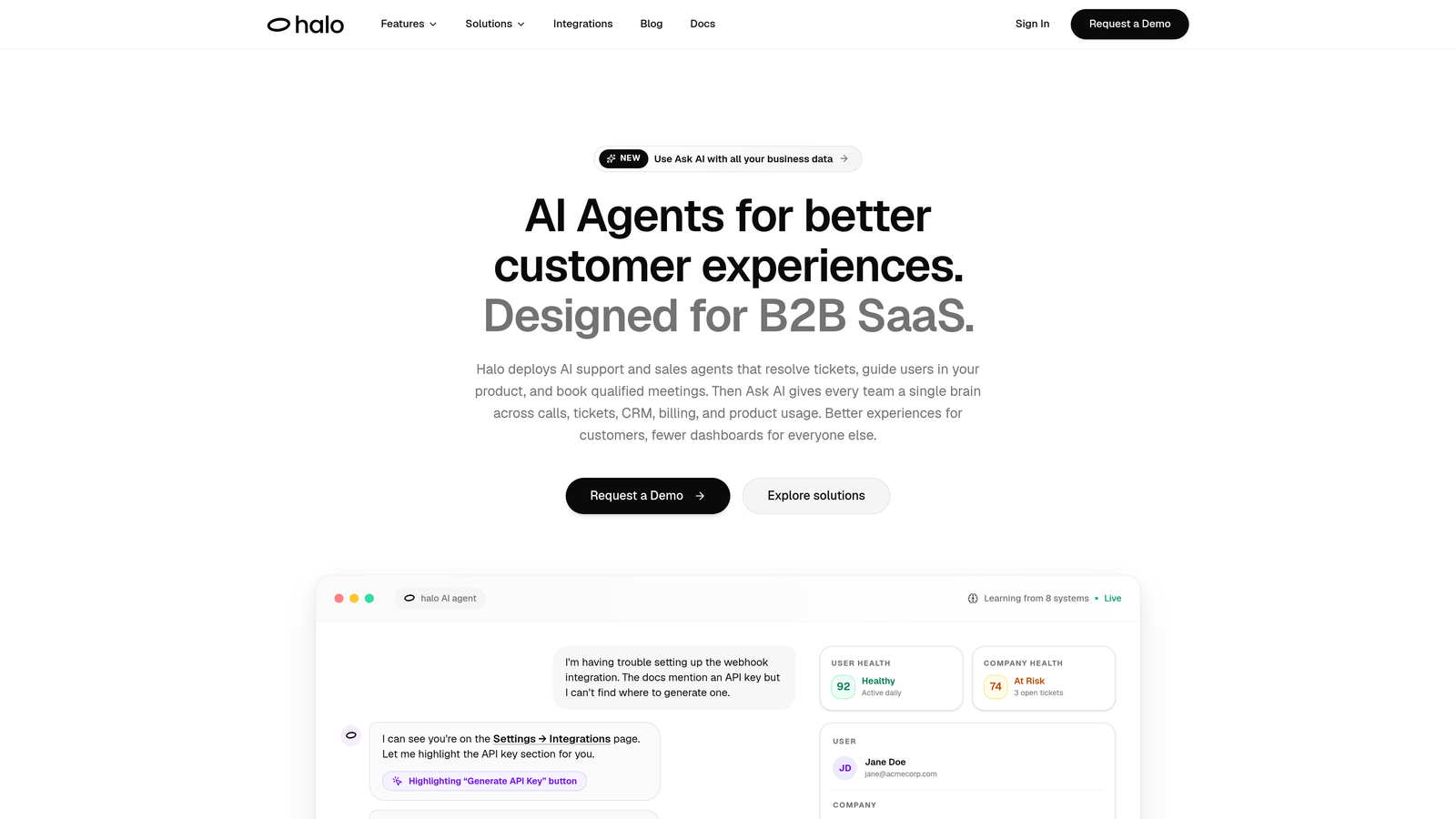
Halo AI is an AI-first customer support platform that deploys intelligent agents to resolve tickets, guide users through your product, and surface business intelligence across your entire support operation.
Where This Tool Shines
What separates Halo from most platforms on this list is its architecture. Rather than bolting AI onto an existing helpdesk, Halo is built AI-first from the ground up. Its agents continuously learn from every interaction, which means the system gets meaningfully smarter over time rather than requiring constant manual retraining.
The page-aware context capability is particularly valuable for SaaS teams. Halo's chat widget can see what users are looking at in real time, allowing it to provide visual, contextual guidance rather than generic knowledge base responses. That's a meaningful difference when your users are stuck on a specific screen or workflow.
Key Features
Page-Aware AI Agents: The chat widget understands the user's current page context and delivers targeted guidance based on exactly where they are in your product.
Smart Inbox with Business Intelligence: Goes beyond ticket management to surface customer health signals, revenue insights, and anomaly detection that inform decisions beyond the support team.
Auto Bug Ticket Creation: Automatically generates bug reports and routes them to Linear, Jira, or Slack when patterns suggest a product issue, closing the loop between support and engineering.
Live Agent Handoff: Escalates complex conversations to human agents with full context preserved, so customers never have to repeat themselves.
Deep Integration Ecosystem: Connects natively with HubSpot, Intercom, Stripe, Zoom, PandaDoc, Fathom, and more, giving AI agents the cross-system context to resolve issues intelligently.
Best For
Halo is best suited for B2B SaaS companies and product-led growth teams that want their support function to generate intelligence, not just close tickets. If your team is already using a modern business stack and wants AI that connects the dots across tools, Halo is built for that environment.
Pricing
Contact for pricing. Plans scale based on usage and feature needs, making it worth a direct conversation to understand what fits your volume and integration requirements.
2. Intercom
Best for: Teams wanting per-resolution AI pricing with a mature messenger and helpdesk foundation
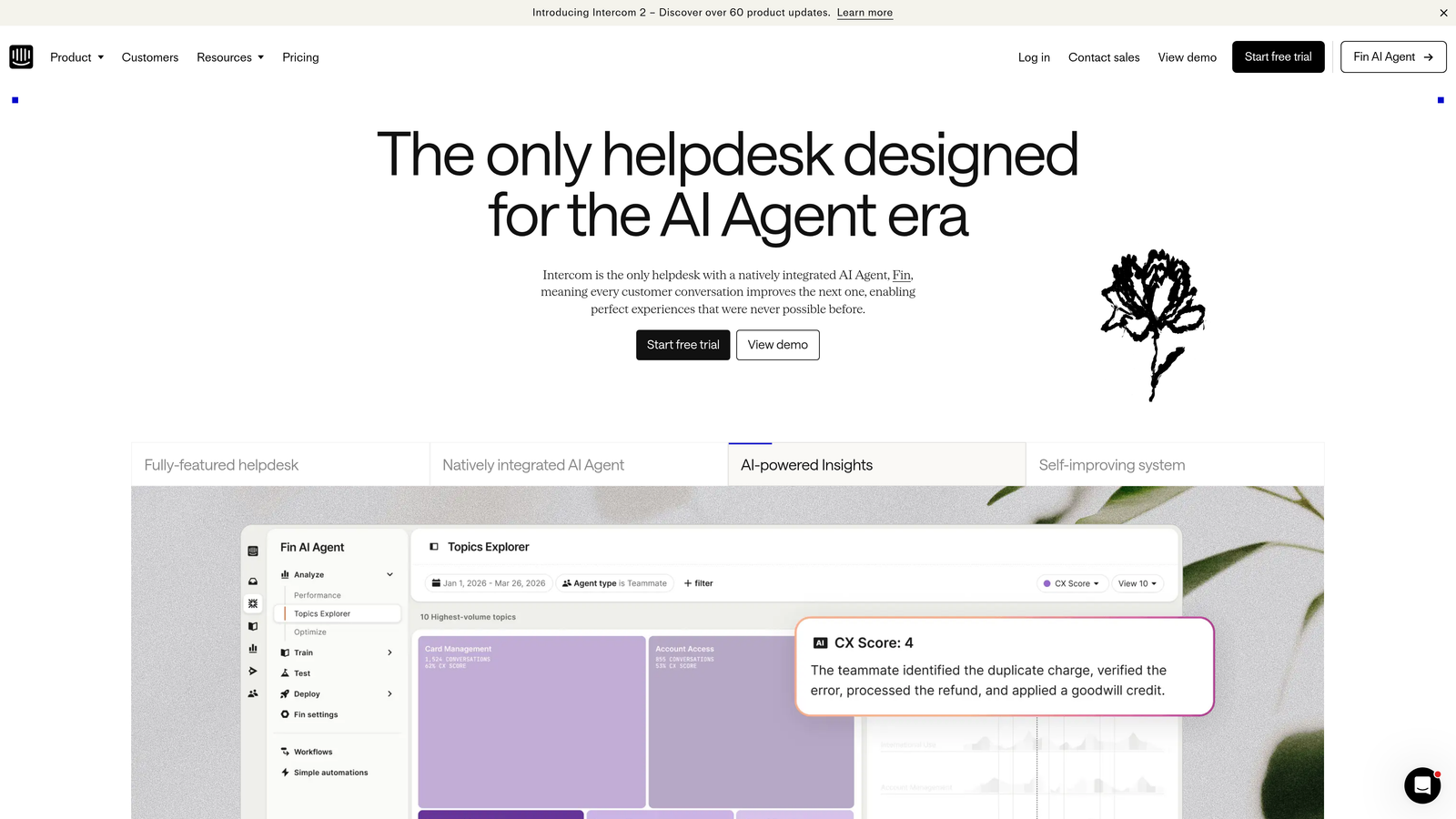
Intercom is a conversational support platform featuring Fin, its AI agent that resolves customer questions using a per-resolution pricing model built on Intercom's established messenger infrastructure.
Where This Tool Shines
Intercom's Fin AI agent introduced one of the more transparent pricing models in the industry: you pay per successful resolution rather than per seat. For teams with variable ticket volumes, this can make cost forecasting more predictable. Fin draws from your existing knowledge base and help center content, which means setup time is relatively low if your documentation is already solid.
The broader Intercom platform adds significant value through its automation builder, which lets teams configure routing rules, escalation paths, and proactive messaging without engineering involvement. The app marketplace is extensive, with hundreds of integrations covering most common B2B tools.
Key Features
Fin AI Agent: Resolves customer questions autonomously using your existing content, with per-resolution billing rather than seat-based pricing.
Customizable Messenger: Rich media support and flexible design options for embedding the support experience directly in your product.
Workflows Automation Builder: Visual builder for creating routing logic, escalation rules, and proactive outreach without code.
Conversation Analytics: Detailed reporting on resolution rates, response times, and CSAT across all channels.
App Marketplace: Extensive integrations with CRMs, project management tools, and communication platforms.
Best For
Intercom works well for growing SaaS teams that want a proven platform with predictable AI costs. The per-resolution model is particularly appealing for teams with fluctuating support volume who want to avoid overpaying during quiet periods.
Pricing
Essential plan starts at $29 per seat per month. Fin AI is charged separately at approximately $0.99 per resolution, so total cost depends heavily on your AI resolution volume.
3. Zendesk AI
Best for: Enterprise teams needing omnichannel support with mature SLA management and compliance requirements
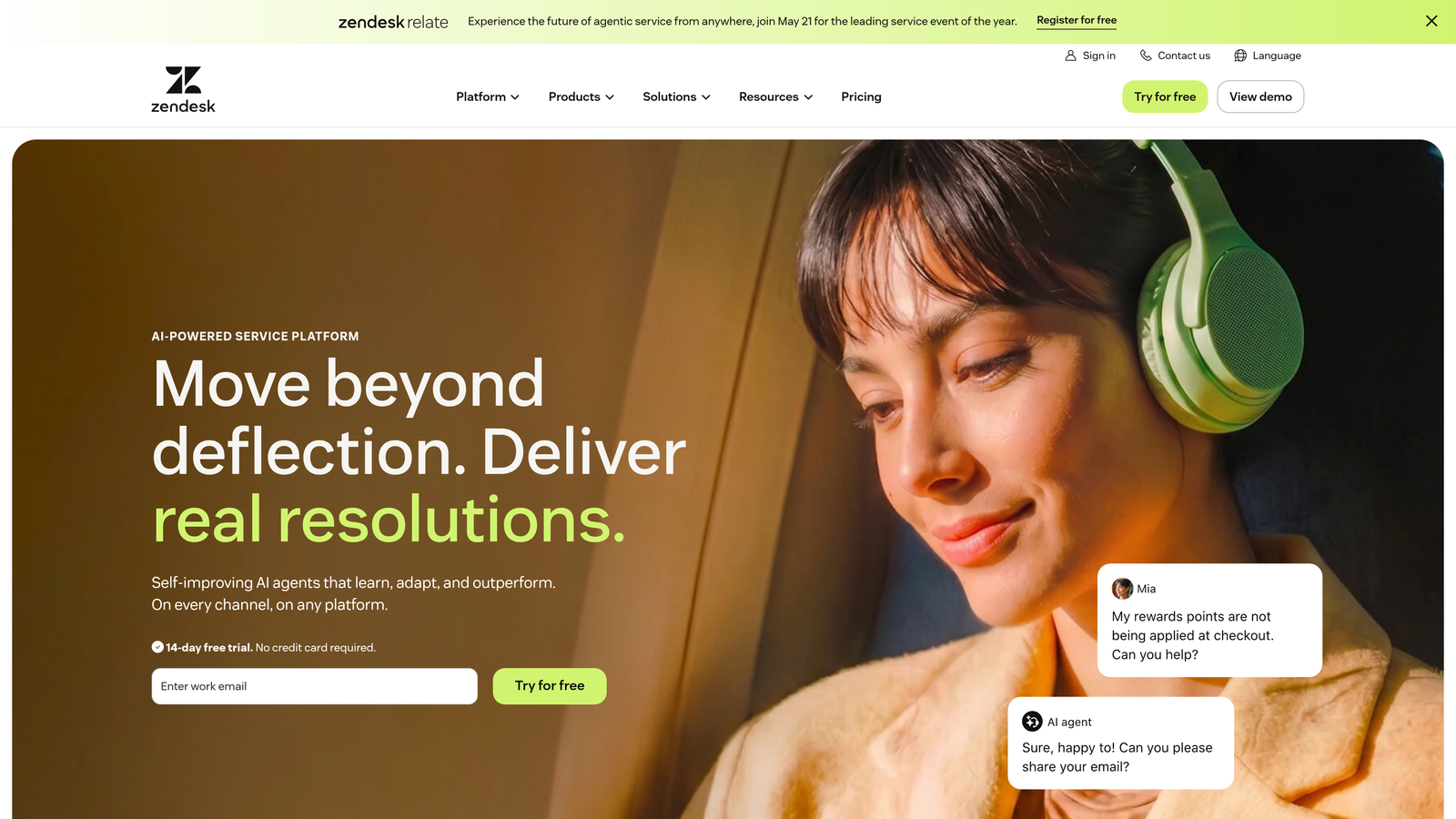
Zendesk is an enterprise-grade helpdesk platform with AI capabilities available as an add-on, covering automated responses, intelligent triage, and agent assistance across multi-channel operations.
Where This Tool Shines
Zendesk's strength is its maturity. The platform has been refined over many years, and its ticketing system, SLA management, and reporting capabilities are among the most robust available. For enterprises with complex support operations spanning multiple channels, regions, and compliance requirements, that depth matters.
The Advanced AI add-on brings AI agents, intelligent triage, and an agent copilot to the platform. The triage capability is particularly useful for high-volume operations, automatically categorizing and routing tickets based on intent, sentiment, and urgency before a human ever touches them.
Key Features
Advanced AI Add-On: Includes AI agents for automated resolution, intelligent triage for routing, and an agent copilot for real-time assistance during live conversations.
Omnichannel Support: Unified inbox across email, chat, phone, social media, and messaging apps with consistent SLA tracking.
Advanced SLA Management: Granular SLA policies with automated escalation and breach prevention tools.
1,500+ Marketplace Integrations: One of the largest integration ecosystems in the industry, covering virtually every common business tool.
Enterprise Security and Compliance: SOC 2, HIPAA, and other certifications for organizations with strict data requirements.
Best For
Zendesk is ideal for enterprise support operations with complex multi-channel needs, large agent teams, and strict compliance requirements. It's less suited for lean teams looking for AI-first simplicity.
Pricing
Suite Team starts at $55 per agent per month. The Advanced AI add-on is an additional cost available on Professional plans and above, so total pricing can climb quickly for larger teams.
4. Freshdesk (Freddy AI)
Best for: Budget-conscious teams wanting a free starting tier with AI capabilities available as they scale
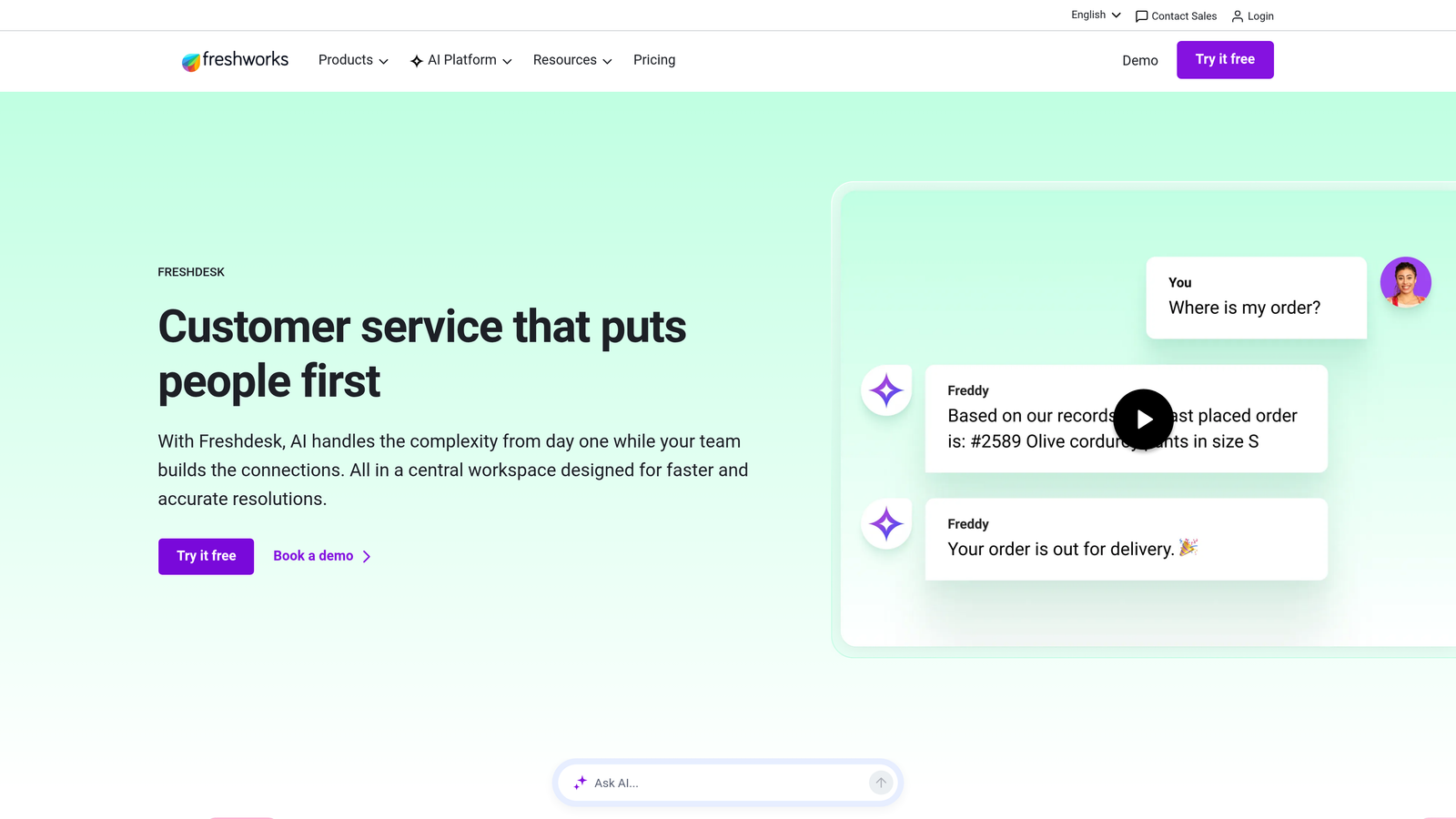
Freshdesk is an affordable helpdesk platform featuring Freddy AI for agent assistance and self-service automation, with a free plan that makes it accessible for smaller teams just getting started.
Where This Tool Shines
Freshdesk's pricing structure is genuinely friendly for smaller teams. The free plan covers up to two agents with core ticketing functionality, and the paid tiers remain among the more affordable options in the market. This makes it a realistic entry point for teams that want to get structured support operations running before investing heavily in AI.
Freddy AI adds meaningful capability at the Pro tier and above, including real-time agent suggestions, automated response drafting, and self-service chatbots for common queries. The platform's multi-channel ticketing handles email, chat, phone, and social from a single inbox.
Key Features
Free Plan: Supports up to two agents with core ticketing, making it accessible for very small teams or teams piloting a new tool.
Freddy AI Copilot: Provides real-time suggestions and response drafts to agents during live conversations, reducing handle time.
Freddy Self Service: AI-powered chatbots that handle common queries autonomously before routing to agents.
Multi-Channel Ticketing: Unified inbox across email, chat, phone, and social with automation workflows for routing and prioritization.
Marketplace Integrations: Connects with popular CRMs, project management tools, and communication platforms.
Best For
Freshdesk is a strong fit for small to mid-sized teams that need a cost-effective helpdesk with a clear upgrade path to AI features. It's particularly appealing for teams not yet ready to commit to enterprise pricing.
Pricing
Free plan available. Growth plan starts at $15 per agent per month. Freddy AI features are available on the Pro plan at $49 per agent per month and above.
5. Ada
Best for: Enterprise teams prioritizing fully automated, multi-step AI resolution without human intervention
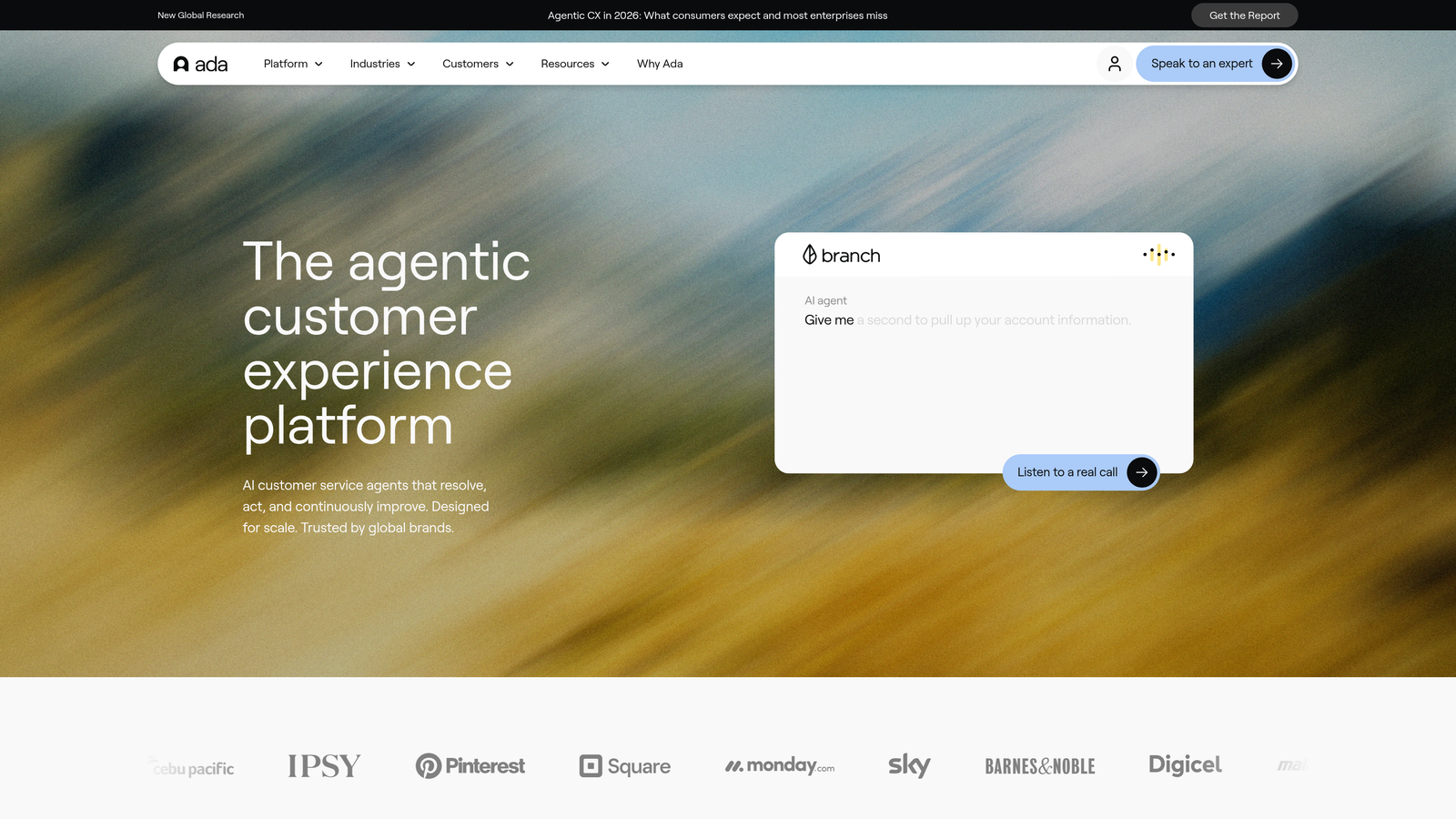
Ada is an enterprise automation platform built specifically for AI-first customer service, featuring a reasoning engine designed to resolve complex queries through multi-step logic rather than simple FAQ matching.
Where This Tool Shines
Ada's reasoning engine is its core differentiator. Rather than matching customer questions to static responses, the platform works through multi-step resolution logic, pulling from integrated knowledge sources and taking actions within connected systems. This makes it capable of handling queries that most chatbots would immediately escalate.
The no-code builder gives customer service and operations teams control over conversation design without engineering dependency. For enterprises that want to iterate quickly on their AI experience, that autonomy is valuable.
Key Features
AI Reasoning Engine: Handles multi-step resolution logic for complex queries, going beyond simple keyword matching to understand and act on customer intent.
No-Code Conversation Builder: Allows non-technical teams to build, test, and deploy AI conversation flows without engineering support.
Multichannel Deployment: Supports web, mobile, social, and SMS channels from a single platform.
Knowledge Base Integration: Automatically sources answers from connected documentation and knowledge systems.
Enterprise Analytics: Resolution rate, containment metrics, and conversation analytics for measuring AI performance.
Best For
Ada is built for mid-market and enterprise organizations that want high automation rates and have the content infrastructure to support them. Teams with well-documented processes and complex product environments will get the most from its reasoning capabilities.
Pricing
Custom enterprise pricing. Contact Ada's sales team for plan details based on your volume and deployment needs.
6. Tidio
Best for: Startups and small teams wanting fast deployment with conversation-based AI pricing
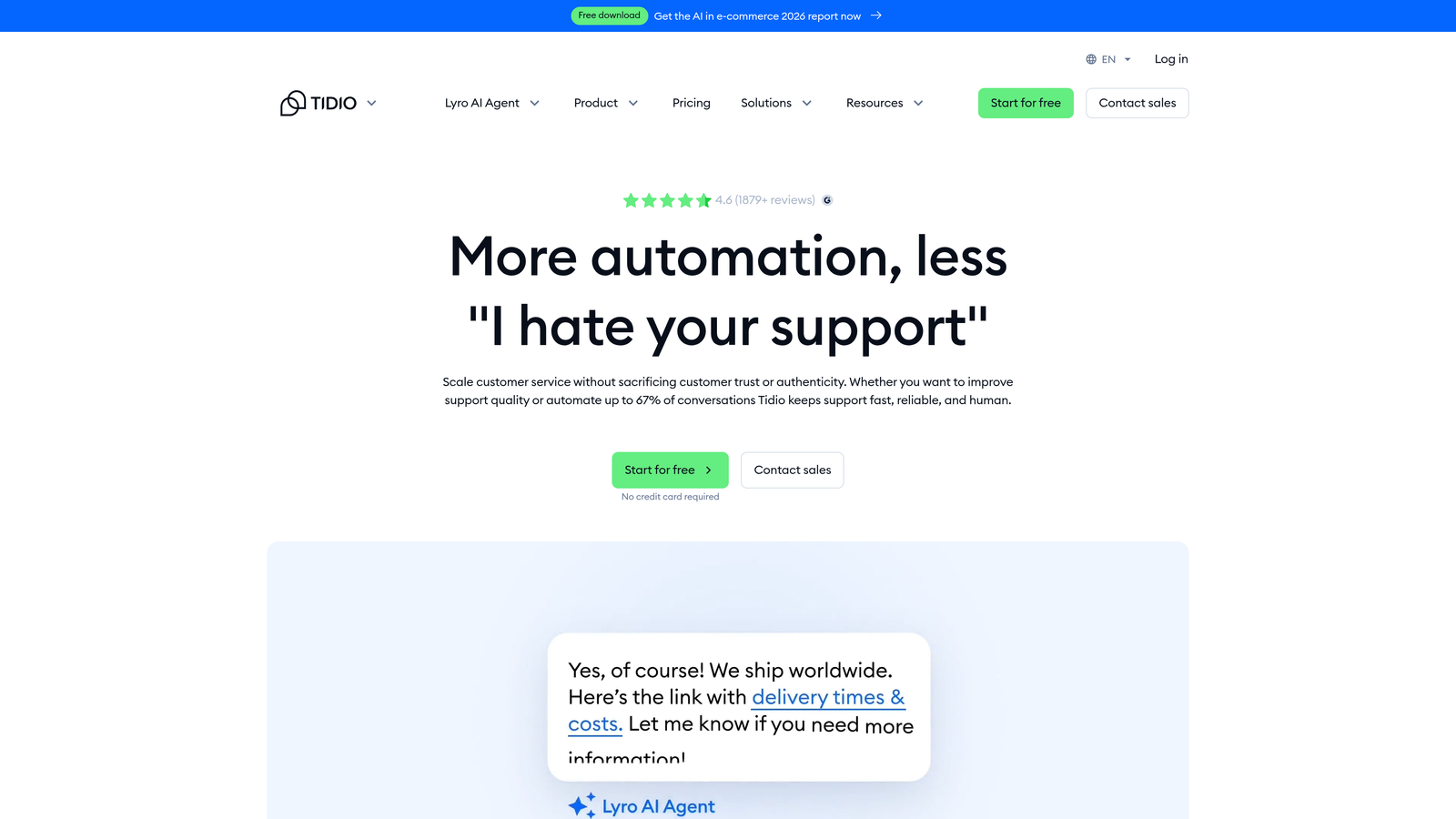
Tidio is an accessible AI chatbot platform featuring Lyro AI, with conversation-based pricing tiers designed for quick deployment by smaller teams who want AI support without enterprise complexity.
Where This Tool Shines
Tidio's setup speed is genuinely impressive. Teams can have a working AI chatbot live in hours rather than weeks, which makes it a practical choice for companies that need to get something functional running quickly. Lyro AI handles common questions conversationally, and the visual flow builder makes it easy to customize automation without technical skills.
The conversation-based pricing model is transparent and scales naturally with usage. For smaller teams with lower ticket volumes, the entry-level tiers are very affordable compared to seat-based alternatives.
Key Features
Lyro AI Chatbot: Handles customer conversations autonomously with conversation-based pricing that scales with your usage volume.
Visual Flow Builder: Drag-and-drop interface for building custom chatbot automations and routing logic without code.
AI-Assisted Live Chat: Suggests responses to agents during live conversations to speed up resolution.
Multichannel Inbox: Combines chat, email, and Facebook Messenger into a unified agent view.
Platform Integrations: Native integrations with Shopify, WordPress, and other common platforms, particularly strong for e-commerce.
Best For
Tidio is best for startups, small teams, and e-commerce businesses that want affordable AI chat capabilities with minimal setup friction. It's less suited for complex B2B support operations requiring deep integrations.
Pricing
Free plan available. Lyro AI starts at $39 per month for 50 conversations, with pricing scaling based on conversation volume.
7. HubSpot Service Hub
Best for: Teams already in the HubSpot ecosystem wanting unified CRM, marketing, and support intelligence
HubSpot Service Hub is a CRM-integrated service platform with AI chatbot capabilities and help desk tools, purpose-built for teams that want their support data connected to the full customer lifecycle.
Where This Tool Shines
The CRM integration is Service Hub's defining advantage. Because every support interaction is tied to a contact record with full marketing and sales history, agents have complete context before they respond. AI chatbots can personalize conversations based on what the customer has purchased, which pages they've visited, or where they are in their lifecycle, without any manual lookup.
For teams already using HubSpot for marketing and sales, adding Service Hub creates a genuinely unified view of the customer rather than siloed support data that never connects to revenue context.
Key Features
Native CRM Integration: Every ticket and conversation is tied to a full contact record, giving agents and AI complete customer lifecycle context.
AI Chatbot Builder: Builds automated chat flows connected to your knowledge base, with personalization driven by CRM data.
Ticket Pipeline Management: Visual ticket boards with automated routing, SLA tracking, and escalation rules.
Customer Feedback and NPS: Built-in survey tools and NPS tracking connected directly to contact records.
Unified Reporting: Cross-functional dashboards that connect support metrics with marketing and sales performance.
Best For
Service Hub is the obvious choice for HubSpot-centric organizations. If your team already runs on HubSpot, the integration value alone justifies serious consideration. For teams on other CRMs, the platform is capable but loses its primary differentiator.
Pricing
Free tools available. Starter plan at $15 per seat per month. Professional plan at $90 per seat per month with advanced AI and automation features included.
8. Drift (Salesloft)
Best for: Revenue-focused teams that want AI handling both support conversations and pipeline generation
Drift, now part of the Salesloft platform, is a conversational AI tool designed to operate at the intersection of customer support and revenue generation, combining chatbot automation with buyer intent signals.
Where This Tool Shines
Drift's positioning is unique on this list: it treats every conversation as both a support opportunity and a revenue signal. The platform's buyer intent scoring and account-based targeting capabilities mean that when a high-value prospect or existing customer engages with your chat, the system can route and respond differently than it would for a standard support query.
For B2B teams where support and sales overlap, particularly in account expansion or renewal contexts, that intelligence is genuinely useful. Conversational landing pages and playbooks let teams create tailored experiences for specific segments or campaigns.
Key Features
Revenue-Aware AI Chatbots: Handles support queries while simultaneously identifying pipeline opportunities and routing high-intent visitors appropriately.
Buyer Intent Signals: Real-time engagement scoring that flags high-value accounts for prioritized routing or sales follow-up.
Conversational Playbooks: Pre-built conversation flows tailored to specific segments, campaigns, or account types.
CRM and Sales Tool Integrations: Connects with Salesforce, HubSpot, and other major sales platforms for bidirectional data flow.
Account-Based Targeting: Personalizes chat experiences based on company, account tier, or firmographic data.
Best For
Drift is best for B2B companies where the support and revenue teams share goals around customer retention and expansion. If your support function is expected to contribute to pipeline or renewal metrics, the platform's dual focus is a genuine advantage.
Pricing
Custom pricing as part of the Salesloft platform. Contact sales for plan details based on your team size and use case.
9. Forethought
Best for: Mid-market and enterprise teams needing intelligent triage, ticket categorization, and generative AI resolution
Forethought is an AI-powered support automation platform specializing in intelligent ticket routing, categorization, and generative AI resolution, built to layer onto existing helpdesk systems rather than replace them.
Where This Tool Shines
Forethought's modular approach is its standout design choice. Rather than requiring teams to migrate to a new platform, it integrates with existing helpdesks like Zendesk and Salesforce Service Cloud, adding AI intelligence on top of infrastructure you already have. This makes adoption significantly lower-risk for organizations with established workflows.
The SupportGPT generative AI capability handles customer-facing responses with context drawn from your knowledge base and historical ticket data. The Triage AI module handles the routing and prioritization side, reducing the manual work agents spend categorizing incoming tickets before they can start resolving them.
Key Features
SupportGPT: Generative AI that drafts and sends customer-facing responses based on your knowledge base and historical resolution patterns.
Solve AI: Automated self-service resolution for customer queries before they reach the agent queue.
Triage AI: Intelligent ticket routing and prioritization that categorizes incoming tickets by intent, urgency, and topic automatically.
Assist AI: Agent-facing tool that surfaces relevant knowledge and suggested responses during live ticket handling.
Helpdesk Integrations: Native integrations with Zendesk, Salesforce, and other major helpdesk platforms for layered deployment.
Best For
Forethought is ideal for mid-market and enterprise teams with high ticket volumes who want to add AI intelligence to an existing helpdesk without a full platform migration. Teams on Zendesk or Salesforce will find the integration particularly smooth.
Pricing
Custom pricing based on ticket volume and modules selected. Contact Forethought's sales team for a plan tailored to your support operation.
Which AI Support Plan Is Right for Your Team?
The right choice depends heavily on where your team is today and where you expect to be in 12 to 24 months. Here's a quick way to think through the decision.
For AI-first architecture with deep integrations: Halo AI is built for B2B teams that want their support function to do more than close tickets. The combination of page-aware agents, business intelligence surfacing, and connections across your entire tech stack makes it a strong fit for product-led SaaS companies that want AI working across the business, not just in the inbox.
For enterprise scale and compliance: Zendesk AI or Forethought are the natural choices. Zendesk's maturity and omnichannel depth suit complex enterprise operations, while Forethought's layered approach lets you add AI without disrupting existing workflows.
For budget-conscious teams starting out: Freshdesk's free tier and affordable paid plans make it the most accessible entry point, with a clear upgrade path to AI features as your needs grow. Tidio is a strong alternative for teams with lower volume who want fast deployment.
For CRM-integrated support: HubSpot Service Hub is the obvious answer for teams already running on HubSpot. The unified customer lifecycle view is difficult to replicate with standalone tools.
When evaluating plans, pay close attention to what's included in the base tier versus what requires an add-on. Many platforms charge separately for AI capabilities, which can significantly change your total cost at scale compared to what the headline pricing suggests.
Your support team shouldn't scale linearly with your customer base. Let AI agents handle routine tickets, guide users through your product, and surface business intelligence while your team focuses on complex issues that need a human touch. See Halo in action and discover how continuous learning transforms every interaction into smarter, faster support.