9 Best AI Support Tools for Product Teams in 2026
Discover the 9 best AI support tools for product teams in 2026, evaluated for autonomous ticket resolution, bug tracking integrations, and roadmap-informing insights that help scaling teams manage support without pulling engineers into triage.
 Grant CooperFounder13 min read
Product teams wear a lot of hats. You're shipping features, squashing bugs, responding to user feedback, and somehow still expected to keep support queues under control. As your product scales, that last part gets harder fast. Tickets pile up, bug reports disappear into Slack threads, and engineers get pulled into triage conversations that should never have reached them.
AI support tools built for product teams solve this differently than traditional helpdesks. The best ones don't just deflect tickets — they close them autonomously, surface patterns that inform your roadmap, and feed customer issues directly into your development workflow.
We evaluated dozens of platforms across four criteria: depth of AI capabilities, product-team-specific features like bug tracking integrations, ease of implementation, and value at scale. Here are the tools that genuinely move the needle for product teams.
1. Halo AI
Best for: Product teams that want autonomous ticket resolution plus dev workflow integration in one platform
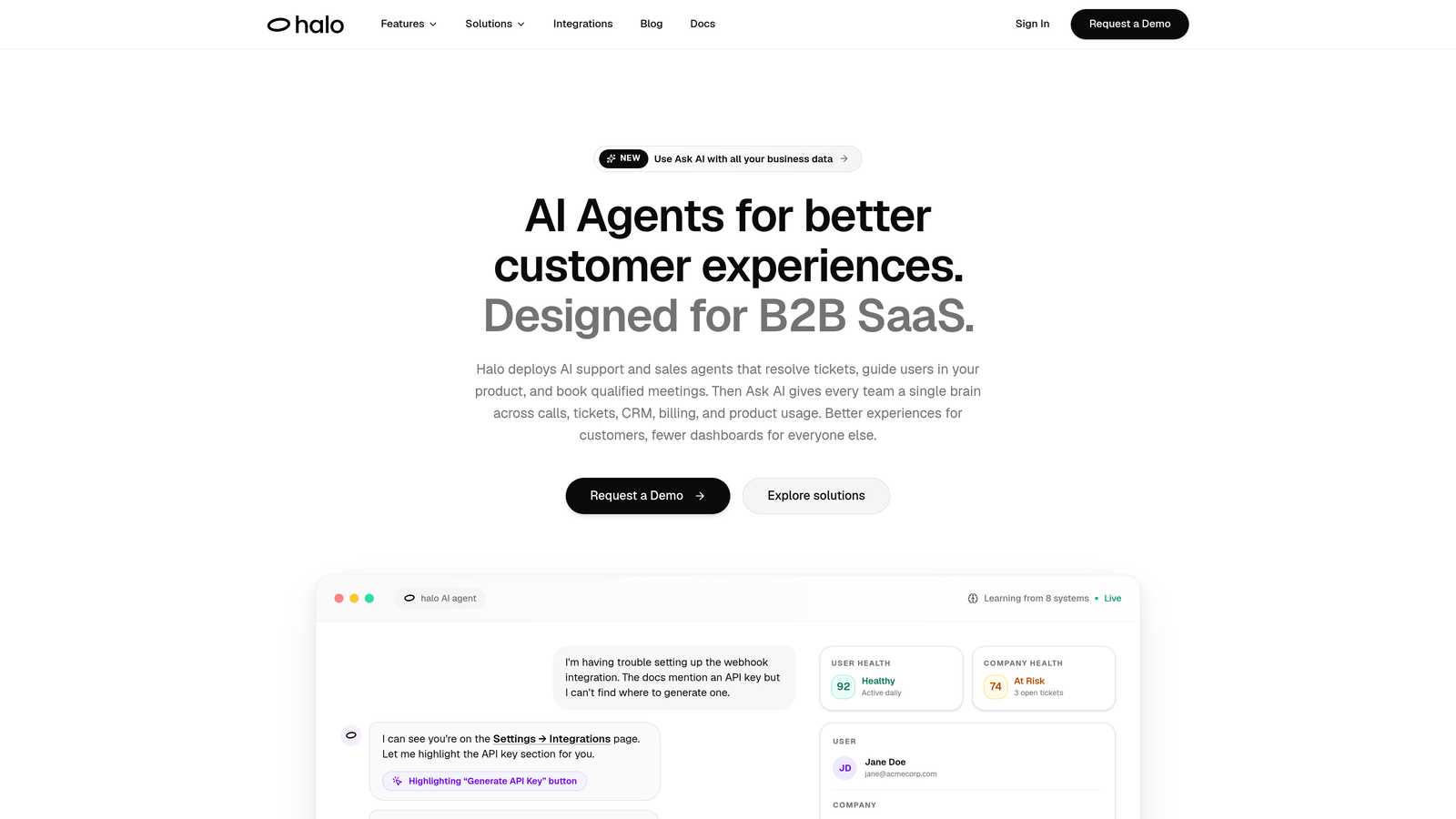
Halo AI is an AI-native support platform that deploys autonomous agents to resolve tickets, guide users with page-aware context, and automatically create bug reports in your dev tools.
Where This Tool Shines
Halo was built AI-first, not retrofitted. That architectural difference shows up in how its agents operate: they don't just suggest responses for humans to approve — they resolve tickets end-to-end, learning from every interaction to get smarter over time. For product teams, this means the support layer actually gets better as your product evolves.
The standout capability is page-aware context. Halo's chat widget sees what users see, which means it can provide visual UI guidance rather than generic text instructions. Pair that with automatic bug ticket creation in Linear (with full conversation context attached), and you have a direct pipeline from customer-reported issues to your engineering backlog — no manual handoff required.
Key Features
Autonomous AI Agents: Resolve support tickets end-to-end without human intervention, with escalation to live agents for complex issues.
Page-Aware Chat Widget: Understands what page a user is on and provides contextually relevant, visual UI guidance in real time.
Auto Bug Ticket Creation: Automatically generates Linear tickets from support conversations, complete with full context so engineers have everything they need.
Smart Inbox with Business Intelligence: Surfaces customer health signals, revenue intelligence, and anomaly detection — turning support data into product insights.
Deep Integrations: Connects with Linear, Slack, HubSpot, Intercom, Stripe, Zoom, PandaDoc, and Fathom for a unified view across your business stack.
Best For
Product teams at scaling B2B companies who need more than ticket deflection. Halo is particularly well-suited for teams already using Linear for issue tracking, who want support conversations to feed directly into their development workflow without manual triage or context-switching.
Pricing
Contact for pricing. Halo is designed to scale support capacity without scaling headcount, making it most cost-effective as ticket volume grows.
2. Intercom Fin
Best for: Teams already on Intercom who want an AI agent that works with existing help center content
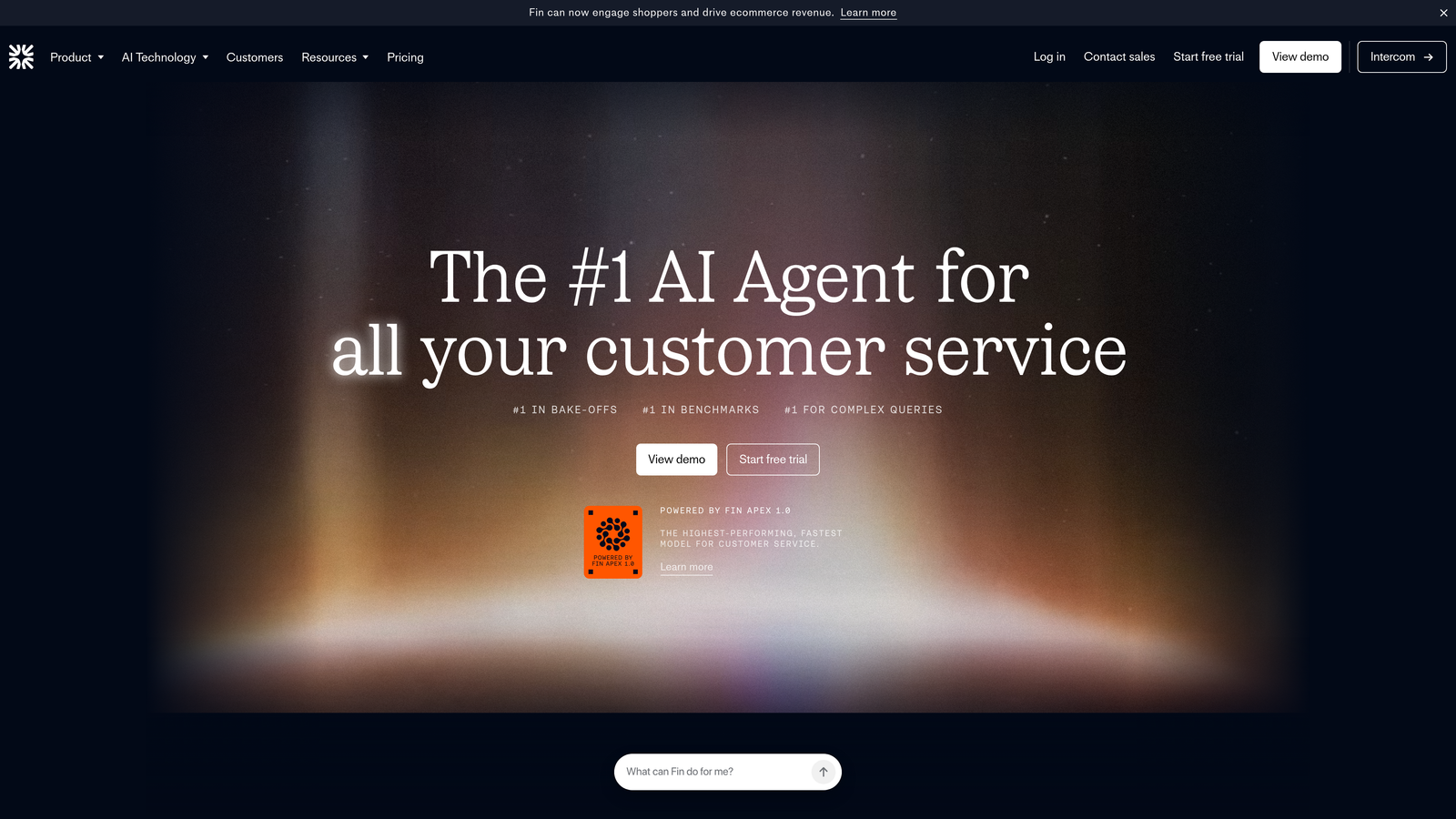
Intercom Fin is Intercom's native AI agent that resolves customer questions using your help center content, with clean handoff to human agents when needed.
Where This Tool Shines
Fin's biggest advantage is how quickly it activates. If you're already running Intercom and have a populated help center, Fin can start resolving conversations with minimal setup. It handles multi-turn dialogue well, meaning it doesn't just pattern-match to an article — it can work through a question conversationally.
The handoff experience is notably smooth. When Fin reaches its limits, it passes the full conversation context to a human agent, so customers don't have to repeat themselves. For product teams managing support alongside engineering work, that context continuity reduces the back-and-forth that slows resolution.
Key Features
AI Agent Trained on Your Content: Learns from your Intercom help center and custom data sources to answer product-specific questions accurately.
Multi-Turn Dialogue: Handles conversational back-and-forth rather than single-turn lookup responses.
Seamless Human Handoff: Transfers conversations to live agents with full context preserved.
Custom Answers and Workflows: Allows teams to define specific responses for complex or sensitive product queries.
Resolution Reporting: Built-in analytics on AI resolution rates and performance over time.
Best For
Companies already invested in the Intercom ecosystem who want to add AI resolution without switching platforms. Less ideal for teams that need deep dev workflow integration or bug tracking automation.
Pricing
Starts at $0.99 per resolution. Requires an active Intercom subscription, so total cost depends on your existing plan tier.
3. Zendesk AI
Best for: Enterprise support operations that need AI layered across an established helpdesk workflow
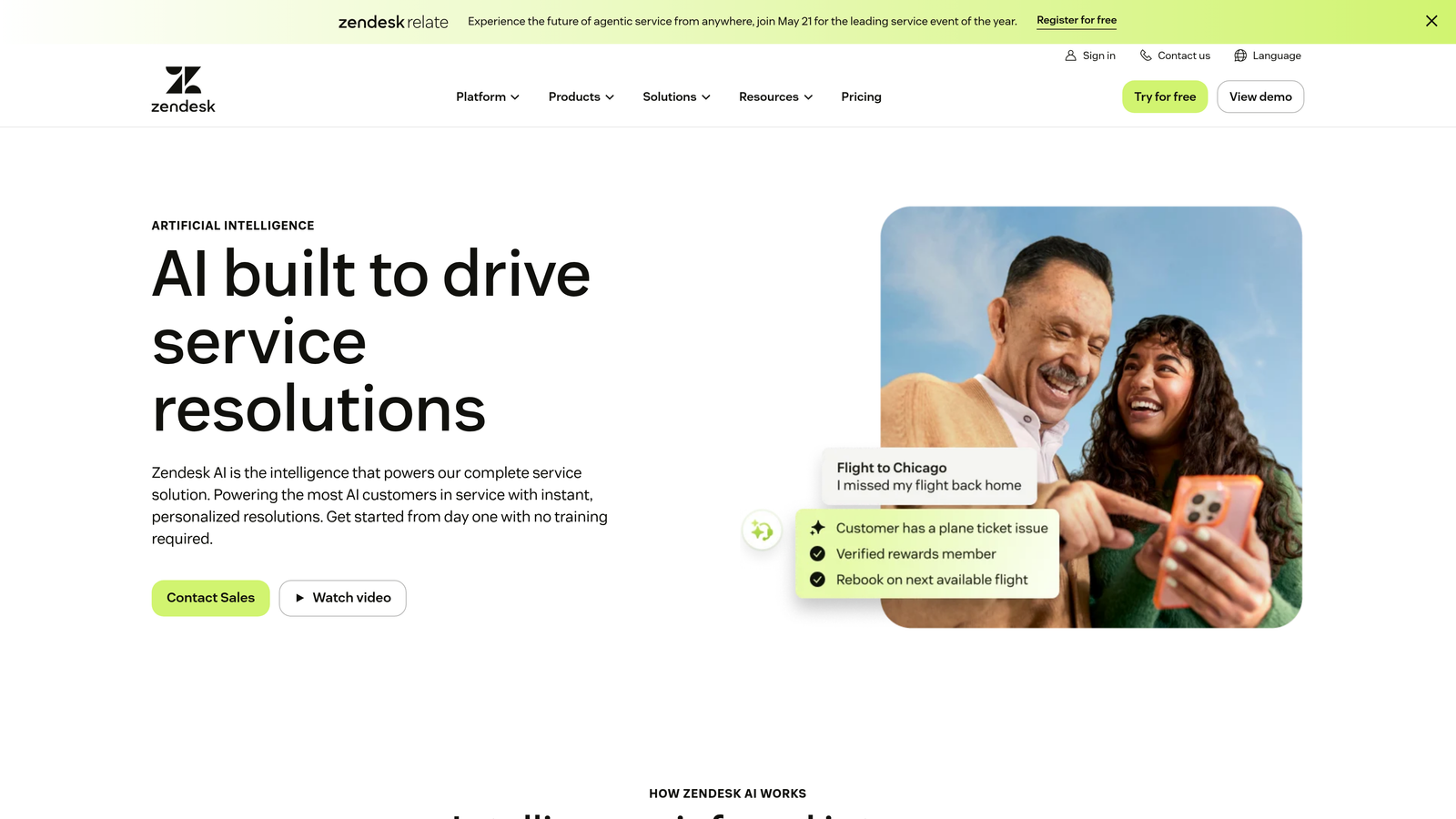
Zendesk AI is a suite of AI capabilities woven throughout the Zendesk platform, covering intelligent triage, generative replies, and agent assist tools.
Where This Tool Shines
Zendesk AI's strength is breadth. It touches every part of the support workflow: incoming tickets get auto-classified by intent, language, and sentiment; agents get suggested responses and next-best-action recommendations; and knowledge base gaps get flagged automatically. For larger teams with complex routing rules, that coverage is genuinely useful.
The AI-powered content cues feature is worth highlighting for product teams specifically. It identifies where your knowledge base is falling short based on what customers are actually asking — which is useful signal for product documentation and self-service strategy.
Key Features
Intelligent Triage: Auto-classifies tickets by intent, language, and sentiment to route them correctly from the start.
Generative AI Replies: Drafts responses grounded in your knowledge base content for agent review.
Agent Assist: Surfaces suggested responses and next-best-action recommendations directly in the agent workspace.
Content Cues: Identifies knowledge gaps by analyzing what questions aren't being answered well.
AI-Driven Analytics: Provides trend analysis and insight reports across your support operation.
Best For
Mid-to-large support teams already running Zendesk Suite who want AI to augment their existing agents rather than replace them. The setup investment is significant, making it less ideal for smaller or faster-moving product teams.
Pricing
AI features available on Suite Professional and above. Advanced AI capabilities require a separate add-on, which increases overall cost meaningfully.
4. Freshdesk Freddy AI
Best for: Growing teams on Freshdesk looking for AI-assisted resolution and smarter ticket management
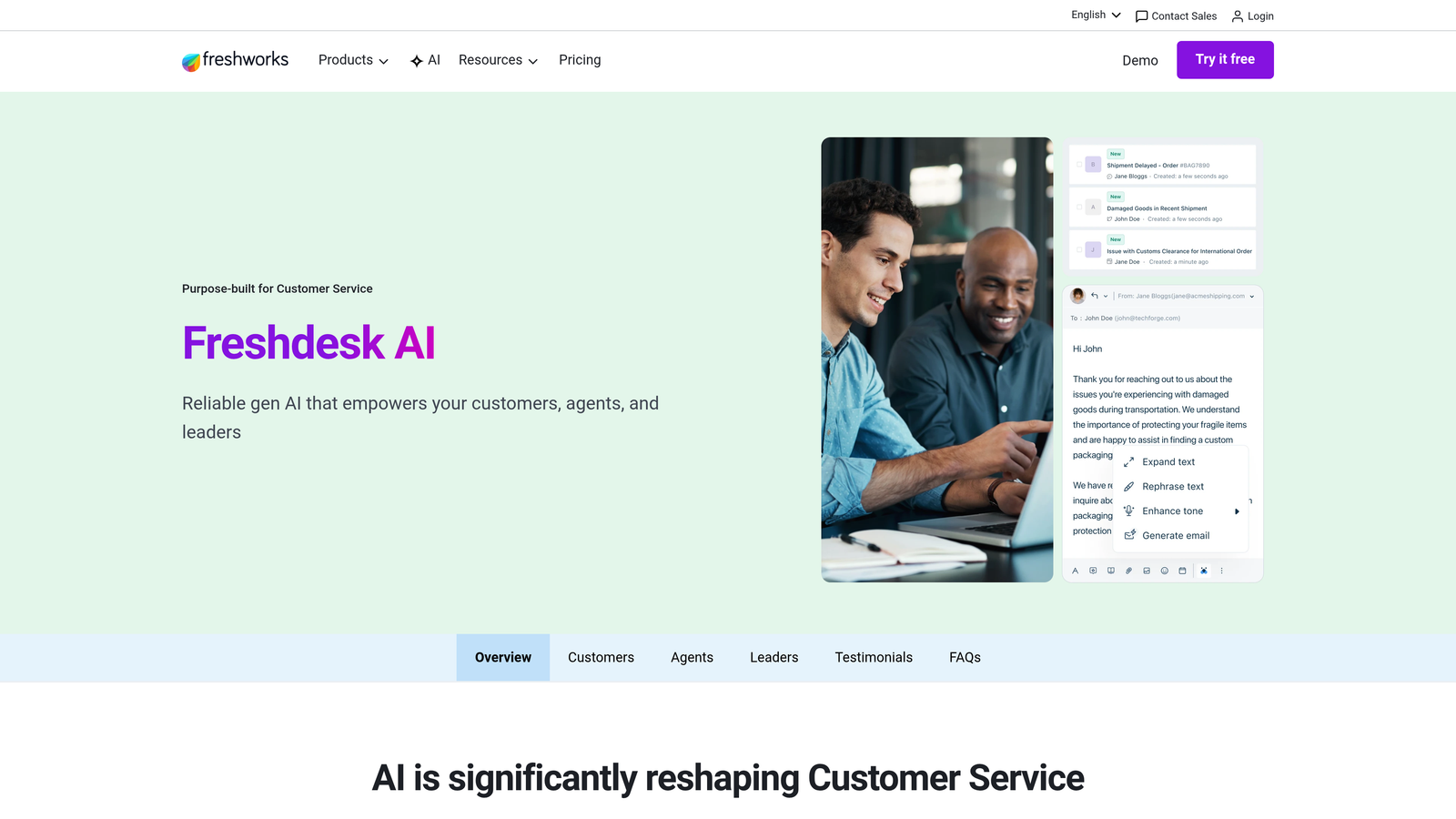
Freshdesk Freddy AI is Freshworks' AI engine that powers self-service bots, agent assistance, and intelligent ticket management across the Freshdesk platform.
Where This Tool Shines
Freddy splits its capabilities into two distinct modes: customer-facing and agent-facing. Freddy Self Service handles automated resolution for end users, while Freddy Copilot works alongside your agents to suggest responses and surface relevant information. That separation makes it easy to deploy incrementally — start with one, add the other as your team grows.
The auto-triage and routing capabilities are solid for teams managing high ticket volumes across multiple product lines. Freddy handles categorization intelligently, which reduces the manual sorting that eats into engineering time when product teams double as support.
Key Features
Freddy Self Service: Customer-facing bot that handles automated resolution for common product questions.
Freddy Copilot: Agent-facing AI assistant that suggests responses and surfaces relevant context during live conversations.
Auto-Triage: Intelligent ticket categorization and routing based on content and context.
Queue Hygiene Tools: Thank you detector and spam filter keep ticket queues focused on actionable items.
Canned Response Suggestions: Recommends relevant macros based on the specific ticket content.
Best For
Teams already on Freshdesk who want to add AI capabilities without migrating platforms. Works well for mid-sized product companies with established support workflows looking to reduce manual triage overhead.
Pricing
Core AI features included starting at the Pro plan. Freddy AI Copilot is available as a paid add-on for teams that want the full agent-assist experience.
5. Unthread
Best for: Product teams whose support lives in Slack and need structured ticket tracking without leaving it
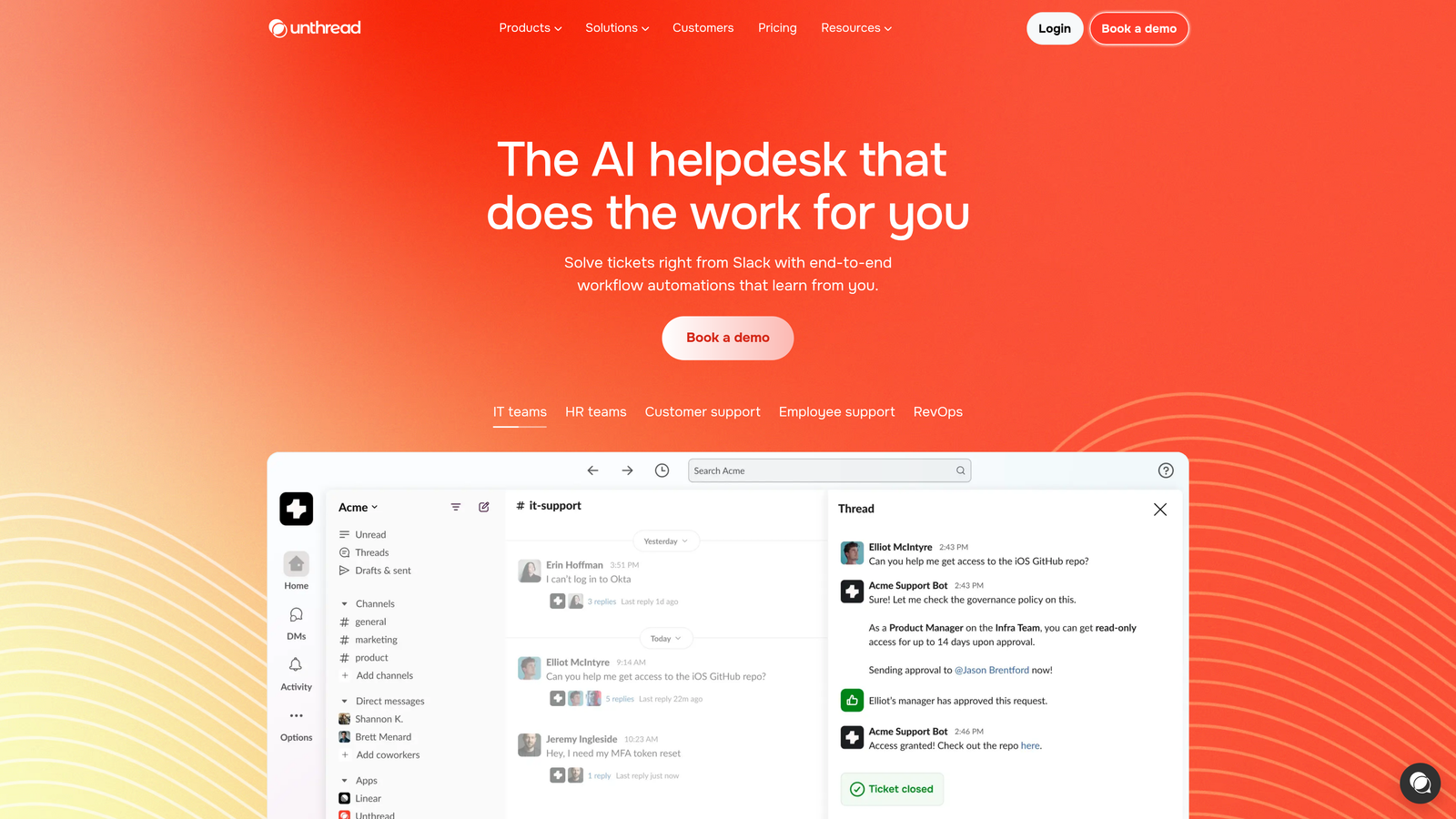
Unthread is a Slack-native support tool that converts messages into trackable tickets with AI categorization, SLA management, and direct integrations with engineering tools.
Where This Tool Shines
If your customers or internal stakeholders report issues through Slack, Unthread solves a real problem: those messages disappear into threads, never get tracked, and never get resolved systematically. Unthread turns Slack channels into a proper support queue without forcing anyone to change how they communicate.
The Linear, Jira, and GitHub integrations are particularly relevant for product teams. When a support conversation surfaces a bug, you can escalate it directly to your engineering backlog from within Slack — no context switching, no copy-pasting. That workflow alignment is where Unthread earns its place on this list.
Key Features
Slack-to-Ticket Conversion: Automatically converts Slack messages into structured, trackable support tickets.
AI Categorization: Assigns priority and category to incoming tickets based on message content.
SLA Tracking: Manages response time commitments and escalation workflows directly within Slack.
Engineering Tool Integrations: Direct connections to Linear, Jira, and GitHub for bug escalation with full context.
Multi-Channel Support: Customer portal and email integration for teams managing support beyond Slack.
Best For
B2B SaaS product teams where Slack is the primary communication layer for customer interactions, internal bug reports, or both. Especially useful for early-to-mid stage companies that haven't invested in a full helpdesk yet.
Pricing
Free tier available for small teams. Paid plans start at $50 per month, making it one of the more accessible options on this list.
6. DevRev
Best for: Teams that want support and product development natively unified in a single platform
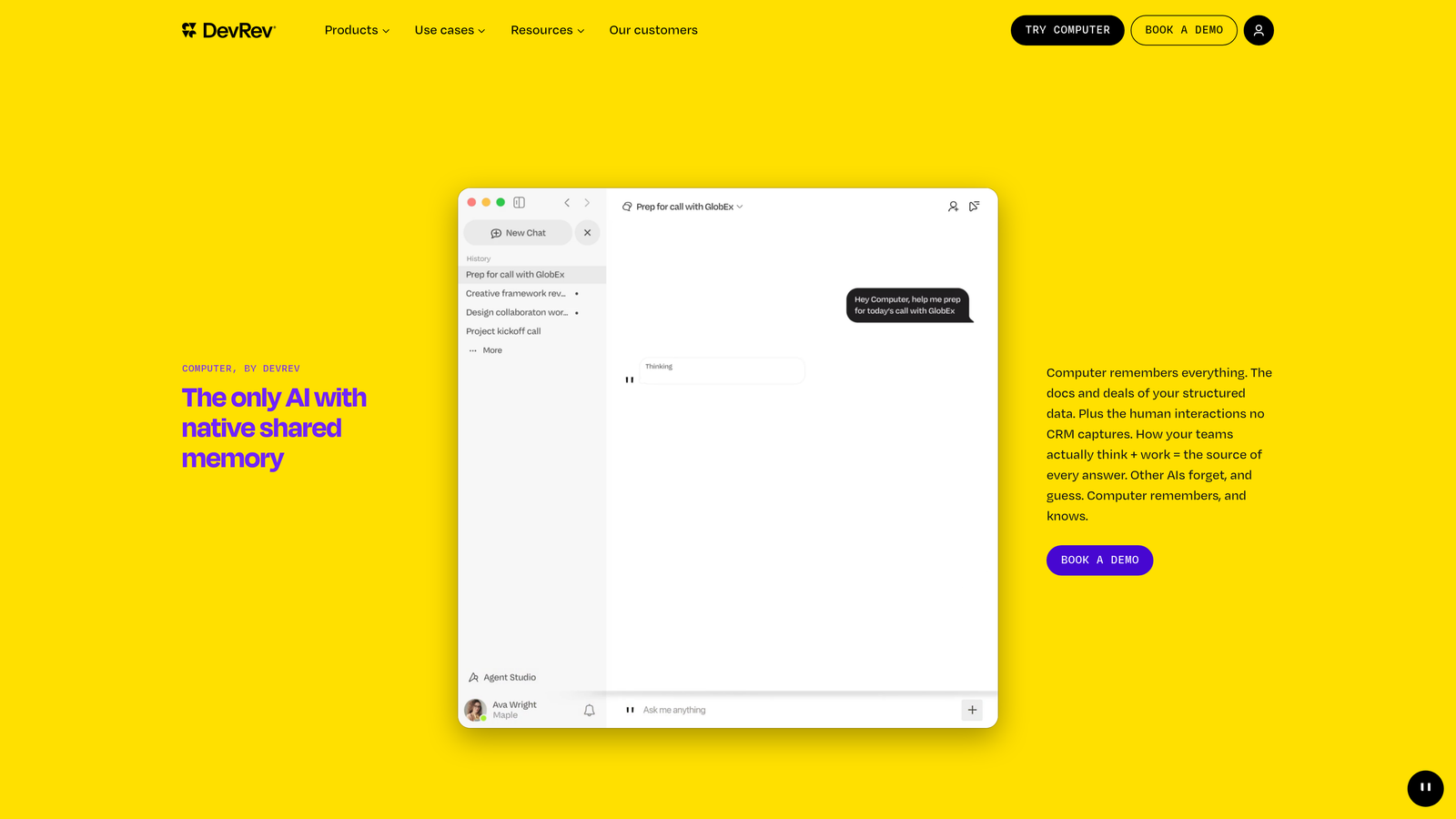
DevRev is a platform that natively connects customer support and product development, linking support conversations directly to engineering work items.
Where This Tool Shines
DevRev's core premise is that support and product development shouldn't live in separate systems. Rather than integrating two tools, it builds both into one platform. Support tickets, product backlog items, customer feedback, and sprint planning coexist in a shared environment — which means engineers see customer context without leaving their workspace.
The AI-powered clustering feature is particularly interesting for product teams. It groups similar customer issues into product themes automatically, so instead of reviewing hundreds of individual tickets, your PM sees "42 customers reported confusion on the onboarding flow this week." That's roadmap signal, not just support data.
Key Features
Native Support-to-Dev Linking: Connects support tickets directly to product backlog items without manual integration work.
AI Issue Clustering: Groups customer problems into product themes to surface patterns at scale.
Turing AI Bot: Handles automated customer responses using your product documentation and past resolutions.
Built-In Product Management: Includes trails, sprints, and roadmap features so support and development share one system of record.
Customer 360: Links support history to product usage data for a complete view of each customer's experience.
Best For
Product-led companies where engineering and support teams need tight alignment. Best suited for teams willing to consolidate tooling rather than add another integration layer on top of existing systems.
Pricing
Free tier available for small teams. Pro plans are custom-priced based on team size and usage requirements.
7. Aide
Best for: Product teams that want to turn support ticket data into actionable product intelligence
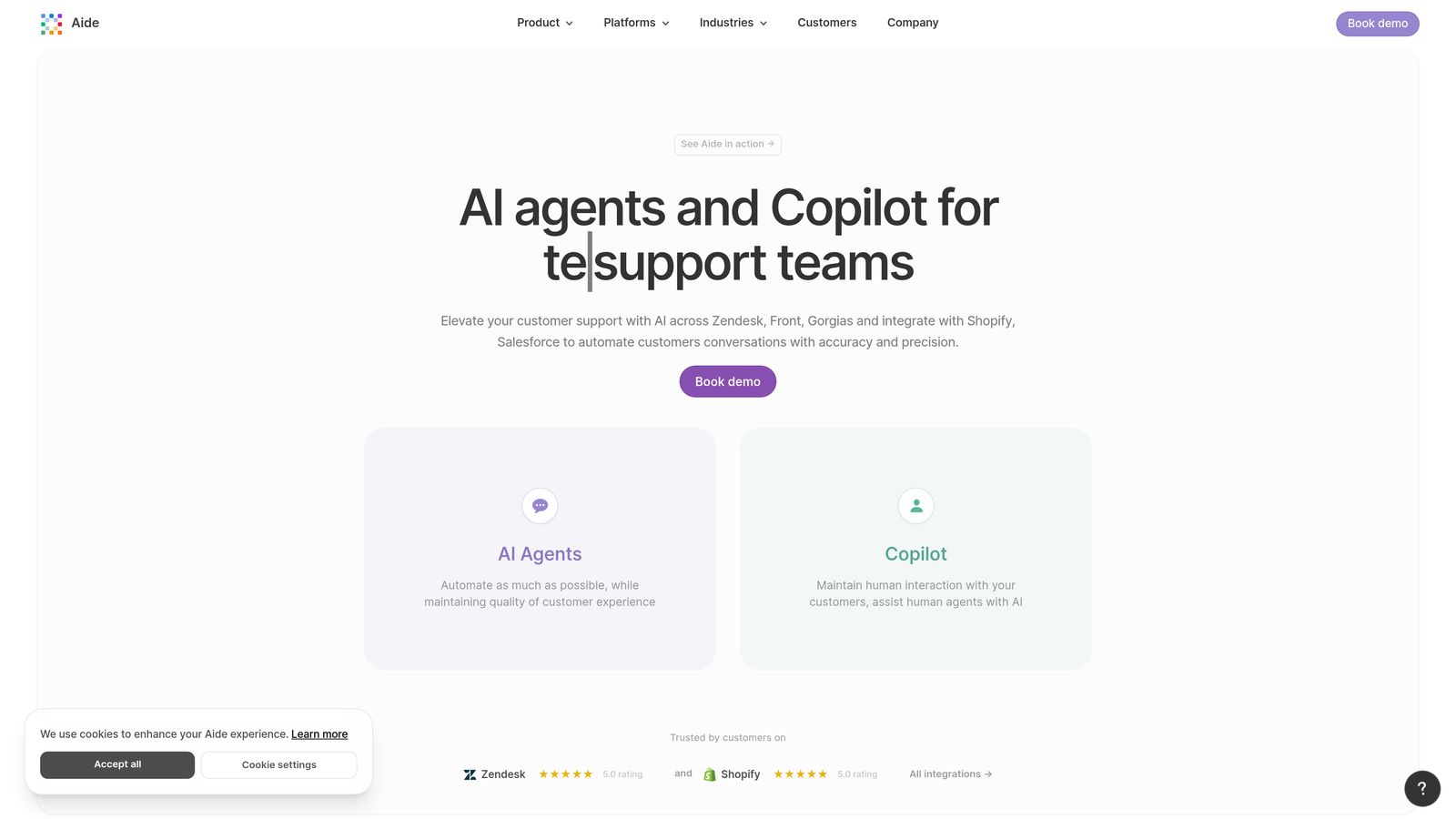
Aide is an AI-powered support intelligence platform that auto-tags tickets, detects trending issues, and transforms support conversations into product insights.
Where This Tool Shines
Aide approaches support from an intelligence-first angle. Rather than leading with automation or chatbots, it focuses on making sense of what your existing ticket volume is telling you. Auto-tagging, topic clustering, and trend detection run continuously across your support conversations, surfacing emerging issues before they become widespread problems.
For product teams that already use Zendesk, Freshdesk, or Front, Aide layers on top without requiring a platform change. You get the analytical layer without the migration cost — which makes it a practical choice for teams that are satisfied with their helpdesk but want better signal from their support data.
Key Features
AI Auto-Tagging: Classifies incoming tickets automatically for consistent categorization at scale.
Topic Clustering: Groups related conversations to detect trends across your support volume.
Visual Insight Dashboards: Surfaces emerging product issues and feature requests in a format that's useful for roadmap discussions.
Suggested Responses: Recommends replies and macros based on how similar tickets were resolved historically.
Helpdesk Integrations: Works directly with Zendesk, Freshdesk, and Front without replacing them.
Best For
Product managers and support leads who need better visibility into what customer issues are actually trending, and want that data presented in a way that's useful for prioritization — not just reporting.
Pricing
Contact for pricing. Cost scales with ticket volume, making it more accessible for teams with moderate support loads.
8. Threado AI
Best for: Product teams managing community-driven support across Slack, Discord, and web
Threado AI is an AI agent platform deployable across Slack, Discord, and web, trained on your documentation, community threads, and past conversations.
Where This Tool Shines
Threado fills a specific gap: community-led support at scale. When your users help each other in Slack communities or Discord servers, a lot of product knowledge gets buried in those threads. Threado trains on that content alongside your official docs, so its AI agents can answer questions using the collective knowledge your community has already generated.
The no-code setup is genuinely accessible. Teams without dedicated engineering resources can deploy an AI agent across multiple channels without custom development work. For early-stage product teams managing active communities, that speed-to-value matters.
Key Features
Multi-Channel Deployment: Deploy AI agents across Slack, Discord, and web widget from a single configuration.
Community Content Training: Learns from community conversations alongside official documentation for richer answers.
Source-Cited Responses: Generates answers with citations so users can verify and explore further.
Knowledge Gap Analytics: Identifies which questions aren't being answered well so you can fill documentation gaps.
No-Code Configuration: Setup and management require no engineering resources.
Best For
Developer tools companies, open-source projects, or any product with an active user community in Slack or Discord. Less suited for teams whose support is primarily email or ticket-based.
Pricing
Free plan available. Paid plans start at $49 per month, making it one of the more affordable entry points on this list.
9. Assembled
Best for: Larger support operations that need AI-assisted handling alongside workforce management and forecasting
Assembled is a support operations platform combining AI-assisted ticket handling with workforce management, demand forecasting, and real-time performance dashboards.
Where This Tool Shines
Assembled occupies a different category from the other tools on this list. It's less about AI agents resolving tickets autonomously and more about giving support operations leaders the infrastructure to run a high-performing team at scale. Workforce management, scheduling, and capacity planning are first-class features alongside the AI assist capabilities.
For product teams at companies where support is a significant operational function, Assembled provides visibility that pure AI tools don't: real-time dashboards showing queue health, agent utilization, and demand forecasts based on historical patterns. That operational intelligence is what justifies the platform for teams of meaningful size.
Key Features
AI Assist: Automated ticket resolution and agent suggestions to reduce manual handling time.
Workforce Management: Scheduling and capacity planning tools built for support team operations.
Demand Forecasting: Predicts ticket volume based on historical patterns to inform staffing decisions.
Real-Time Operations Dashboards: Live visibility into queue health, agent performance, and team capacity.
Helpdesk Integrations: Connects with Zendesk, Salesforce, Intercom, and Kustomer for data consolidation.
Best For
Support operations teams of 20 or more agents where workforce planning is as important as AI automation. Less suited for small product teams or early-stage companies where headcount is still small.
Pricing
Contact for pricing. Assembled is typically positioned for teams with meaningful agent headcount, so costs reflect that operational scope.
Which Tool Is Right for Your Team
The right tool depends on three things: where your team already works, what outcome matters most, and how tightly you need support connected to your development workflow.
Here's a quick way to think through the decision:
If you need autonomous resolution plus dev workflow integration: Halo AI is the strongest fit. Its page-aware context, auto bug ticket creation in Linear, and business intelligence layer make it purpose-built for product teams who want support to feed directly into their product development cycle — not just deflect tickets.
If you're already on Intercom or Zendesk: Intercom Fin and Zendesk AI are the natural starting points. You'll get meaningful AI capabilities without a platform migration, though neither offers the deep dev workflow integration that product teams often need.
If Slack is your primary support channel: Unthread is the obvious choice. It structures what would otherwise be lost in threads, and its Linear and Jira integrations make bug escalation seamless.
If you want support and product development in one system: DevRev is built for exactly that. It's a bigger commitment than adding an integration, but the payoff is genuine alignment between customer issues and engineering priorities.
If you need better signal from existing ticket data: Aide layers onto your current helpdesk and turns your support volume into product intelligence without requiring a platform change.
If you manage a developer community on Slack or Discord: Threado handles community-driven support at a price point that makes sense for earlier-stage teams.
If you're running a large support operation: Assembled adds the workforce management and forecasting layer that pure AI tools don't address.
The broader point is this: your support team shouldn't scale linearly with your customer base. The tools on this list exist to break that relationship — handling routine tickets autonomously, surfacing product insights without manual analysis, and connecting customer issues to engineering workflows without friction.
For product teams that want all three in one platform, see Halo in action and discover how continuous learning transforms every interaction into smarter, faster support — without adding headcount every time your user base grows.