10 Best AI Support Tools for Tech Companies in 2026
This guide evaluates the top ai support tools for tech companies in 2026, ranking platforms based on AI autonomy, technical query handling, engineering workflow integrations, and scalability. Whether you're a growing startup or mid-market SaaS company, these solutions help resolve issues autonomously and manage high ticket volumes without proportionally expanding headcount.
 Matt PattoliFounder14 min read
Tech companies face a support challenge that most helpdesk software wasn't designed to solve. Your customers are technically sophisticated, your product surface area is vast, and ticket volume compounds faster than your ability to hire. Routing and tagging tickets faster doesn't fix the underlying problem. What tech teams actually need is AI that can resolve issues autonomously, detect product bugs from support patterns, and guide users through complex workflows in real time.
We evaluated AI support platforms on the criteria that matter most to tech companies: depth of AI autonomy, integration with engineering and product workflows, ability to handle technical queries, analytics capabilities, and scalability. Whether you're a 20-person startup drowning in a backlog or a mid-market SaaS company looking to grow without proportionally growing headcount, here are the top AI support tools worth your attention in 2026.
1. Halo AI
Best for: Tech companies wanting AI-native, product-aware support with business intelligence built in.
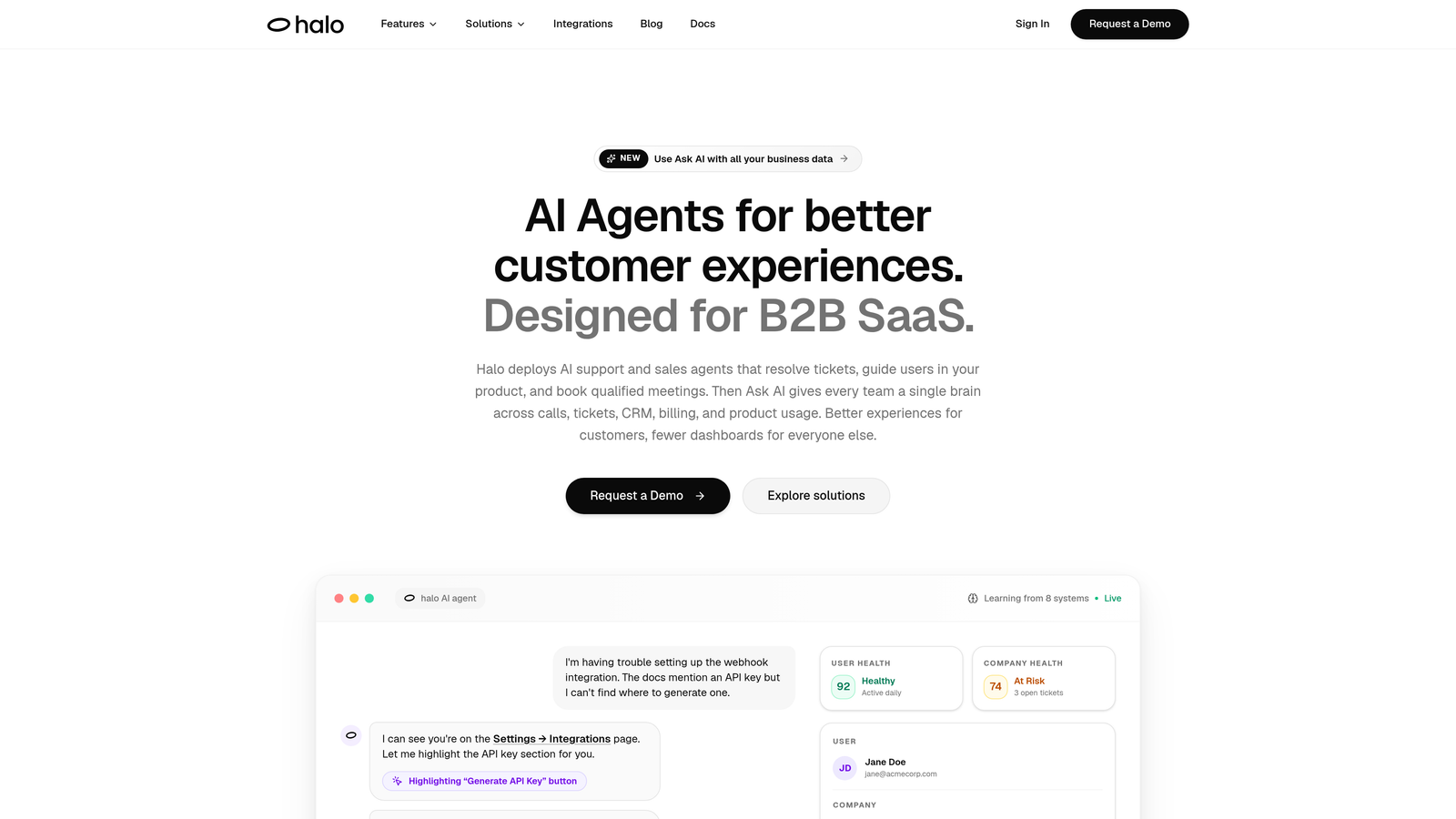
Halo AI is an AI-first customer support platform with autonomous agents that resolve tickets, provide page-aware visual guidance, and surface business intelligence from every interaction.
Where This Tool Shines
What separates Halo from most tools on this list is its architecture. It was built as an AI-native platform from the ground up, not a legacy helpdesk with AI features grafted on. That distinction matters: AI autonomy is deeper, context is richer, and the system continuously learns from every resolved ticket rather than relying on static rule sets.
The page-aware context engine is particularly valuable for SaaS companies. Halo's agents can see what users see in your product, enabling them to deliver precise, step-by-step visual guidance rather than generic help center links. Combined with automatic bug ticket creation in Linear and a smart inbox that surfaces customer health signals and revenue anomalies, Halo positions support as a strategic function, not just a cost center.
Key Features
Page-Aware AI Agents: Agents understand the user's current product context and deliver visual, in-product guidance tailored to exactly where they are.
Auto Bug Ticket Creation: Automatically generates Linear tickets from support conversations when product issues are detected, closing the loop between support and engineering.
Smart Inbox with Business Intelligence: Goes beyond support metrics to surface customer health signals, revenue insights, and anomaly detection directly from ticket data.
Live Agent Handoff: Escalates complex issues to human agents with full conversation context preserved, so customers never have to repeat themselves.
Deep Integration Stack: Connects natively with Linear, Slack, HubSpot, Intercom, Stripe, Zoom, PandaDoc, and Fathom for a truly unified support operation.
Best For
B2B SaaS and tech companies that want autonomous ticket resolution, product-level context, and support data that feeds directly into engineering and revenue workflows. Particularly strong for teams using Linear and looking to close the loop between customer issues and product development.
Pricing
Contact Halo AI directly for pricing. Given the platform's depth and integration breadth, pricing is tailored to team size and resolution volume.
2. Intercom Fin
Best for: Teams already on Intercom who want a native AI agent without switching platforms.
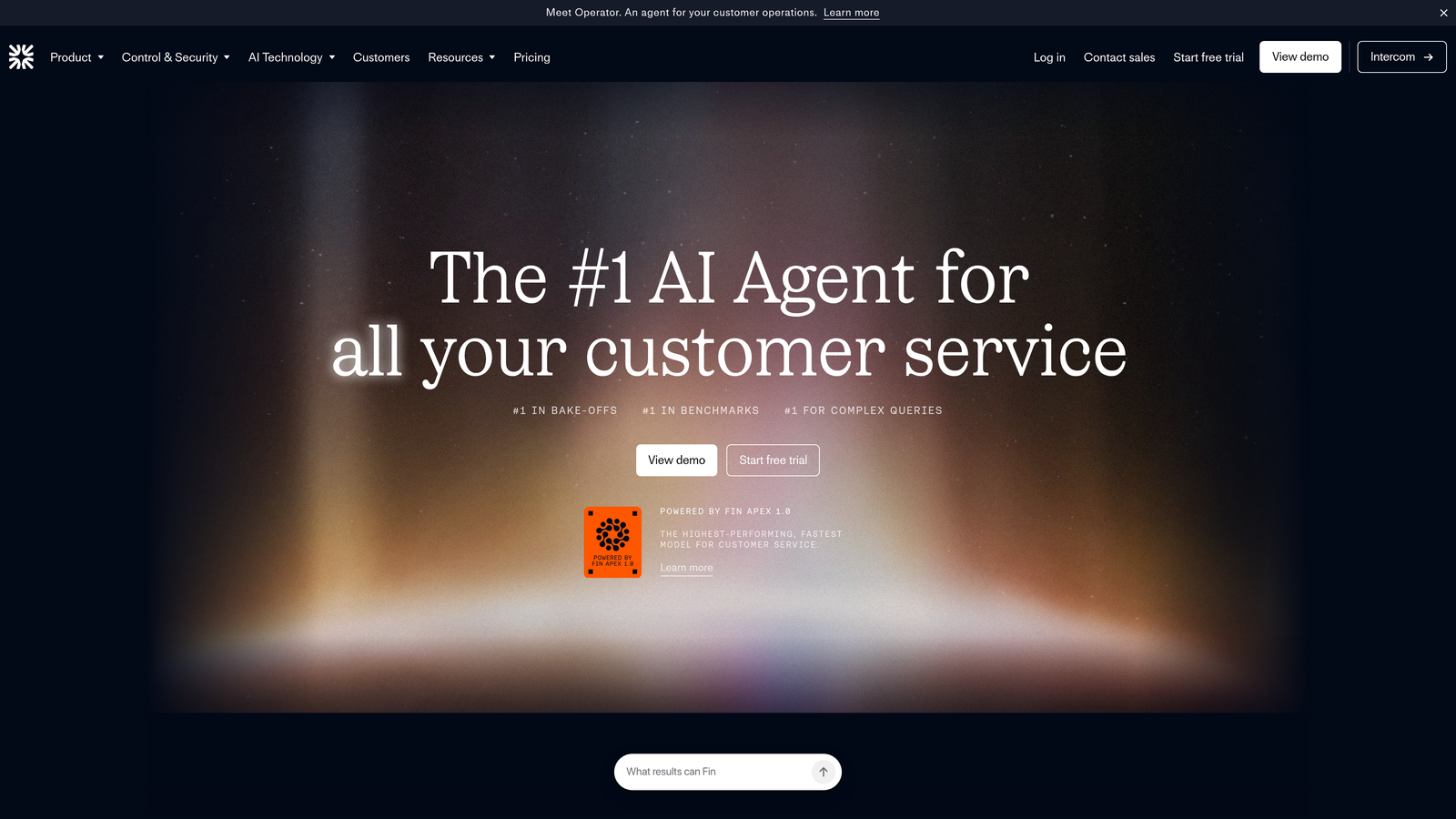
Intercom Fin is Intercom's AI agent that resolves customer queries using your help center content and executes actions through custom workflows.
Where This Tool Shines
Fin's biggest strength is how seamlessly it integrates with the existing Intercom ecosystem. If your team is already living in Intercom's inbox and messenger, Fin feels like a natural extension rather than a new tool to manage. It uses your help center articles and custom data sources to resolve queries, and it can take transactional actions through Intercom's workflow builder.
The multilingual support is solid for tech companies with global user bases, and the human handoff experience is polished, with full conversation context passed to agents without friction.
Key Features
AI Resolution Engine: Draws on help center articles and custom data sources to answer queries without human intervention.
Custom Actions and Workflows: Fin can execute transactional tasks like order lookups or account changes through Intercom's workflow builder.
Native Messenger Integration: Deeply embedded in Intercom's messenger, inbox, and reporting with no additional configuration needed.
Multilingual Support: Handles queries across multiple languages, useful for globally distributed customer bases.
Contextual Handoff: Passes full conversation history to human agents when escalation is needed.
Best For
Companies already invested in the Intercom platform who want AI resolution without migrating to a new tool. Less ideal for teams that aren't already on Intercom, since Fin's value is tightly coupled to that ecosystem.
Pricing
Usage-based pricing per resolution, layered on top of an existing Intercom subscription. Costs can scale quickly at higher resolution volumes.
3. Zendesk AI
Best for: Large enterprise support teams needing AI across a high-volume, multi-channel operation.
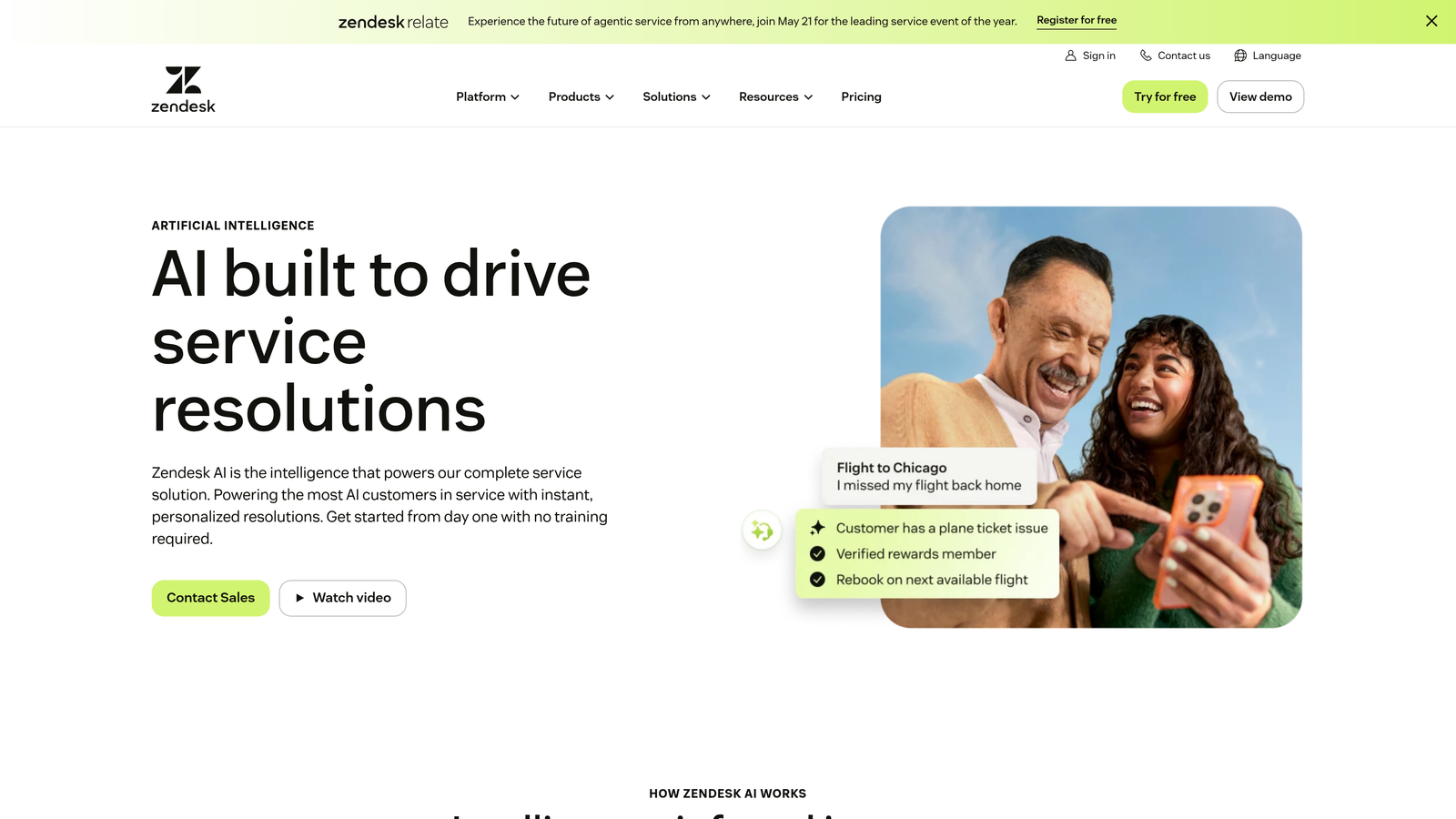
Zendesk AI is an enterprise-grade AI layer built into the Zendesk Suite, covering intelligent triage, generative reply suggestions, AI bots, and knowledge gap detection.
Where This Tool Shines
Zendesk AI is built for scale. If you're processing thousands of tickets per day across multiple channels and need AI that can triage, classify, summarize, and suggest responses without missing a beat, Zendesk's infrastructure handles it reliably. The knowledge gap detection feature is genuinely useful: it identifies where your help center is falling short based on what users are actually asking.
The tradeoff is complexity and cost. Zendesk AI is powerful, but it requires meaningful investment in setup, configuration, and ongoing management. Smaller teams may find the overhead difficult to justify.
Key Features
Intelligent Triage: Automatically classifies and routes incoming tickets based on intent, sentiment, and priority.
Generative AI for Agents: Suggests replies and generates ticket summaries to reduce agent handle time.
AI-Powered Bots: Self-service bots for deflecting common queries before they reach the queue.
Knowledge Gap Identification: Surfaces content gaps in your help center based on unresolved or escalated queries.
Advanced Analytics: Comprehensive reporting across AI interactions, resolution rates, and agent performance.
Best For
Enterprise tech companies with large, established Zendesk deployments and dedicated support operations teams. Less suited to startups or companies without existing Zendesk infrastructure.
Pricing
AI features are available as an add-on to Zendesk Suite plans, with an Advanced AI add-on for premium capabilities. Pricing scales with agent count and usage.
4. Ada
Best for: High-volume support operations needing automated resolution across multiple channels and languages.
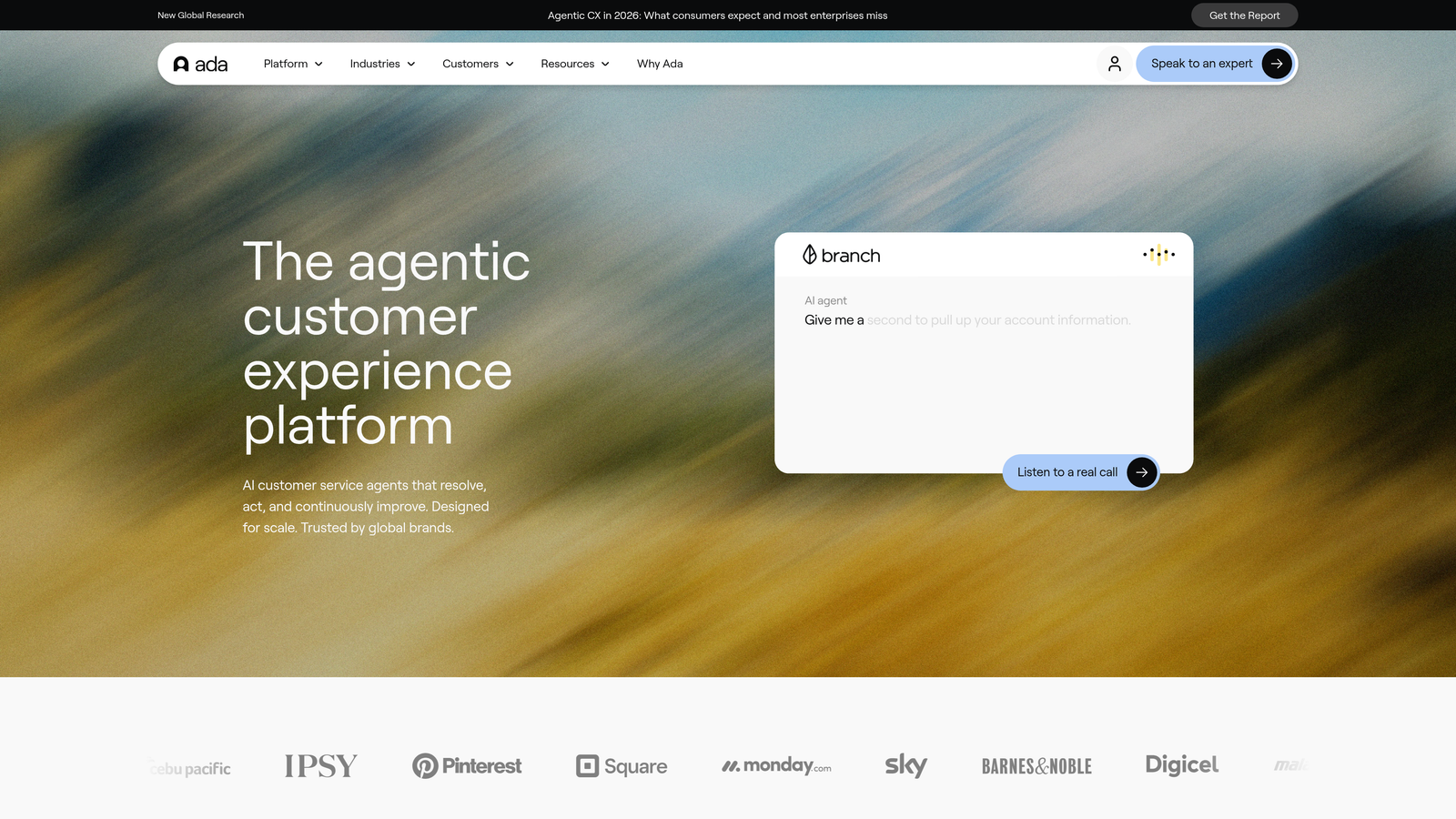
Ada is a no-code AI agent platform with a reasoning engine designed to handle complex, multi-step queries across chat, email, voice, and social channels.
Where This Tool Shines
Ada's reasoning engine sets it apart from simpler chatbot tools. Rather than matching keywords to canned responses, it can work through multi-step queries with logic, making it more capable of handling the kind of nuanced questions tech company customers tend to ask. The no-code builder also means support teams can build and iterate on AI agents without engineering involvement.
For tech companies with global audiences, Ada's multilingual capabilities are a genuine differentiator. It supports a wide range of languages out of the box and maintains consistent resolution quality across them.
Key Features
No-Code AI Agent Builder: Build and deploy AI agents without writing code, with a reasoning engine for complex query handling.
Multi-Channel Deployment: Operates across chat, email, voice, and social from a single platform.
Multilingual Support: Handles queries in multiple languages with consistent quality.
System Integrations: Connects to CRMs, helpdesks, and business systems to take actions and pull context.
Resolution Analytics: Tracks resolution rates and surfaces improvement opportunities over time.
Best For
Mid-market to enterprise tech companies with high ticket volumes, global customer bases, and a need for multi-channel AI resolution without heavy engineering investment.
Pricing
Custom pricing based on resolution volume. Contact Ada directly for a quote tailored to your team's scale.
5. Forethought
Best for: Support teams that want AI-powered triage and agent assist before committing to full autonomous resolution.
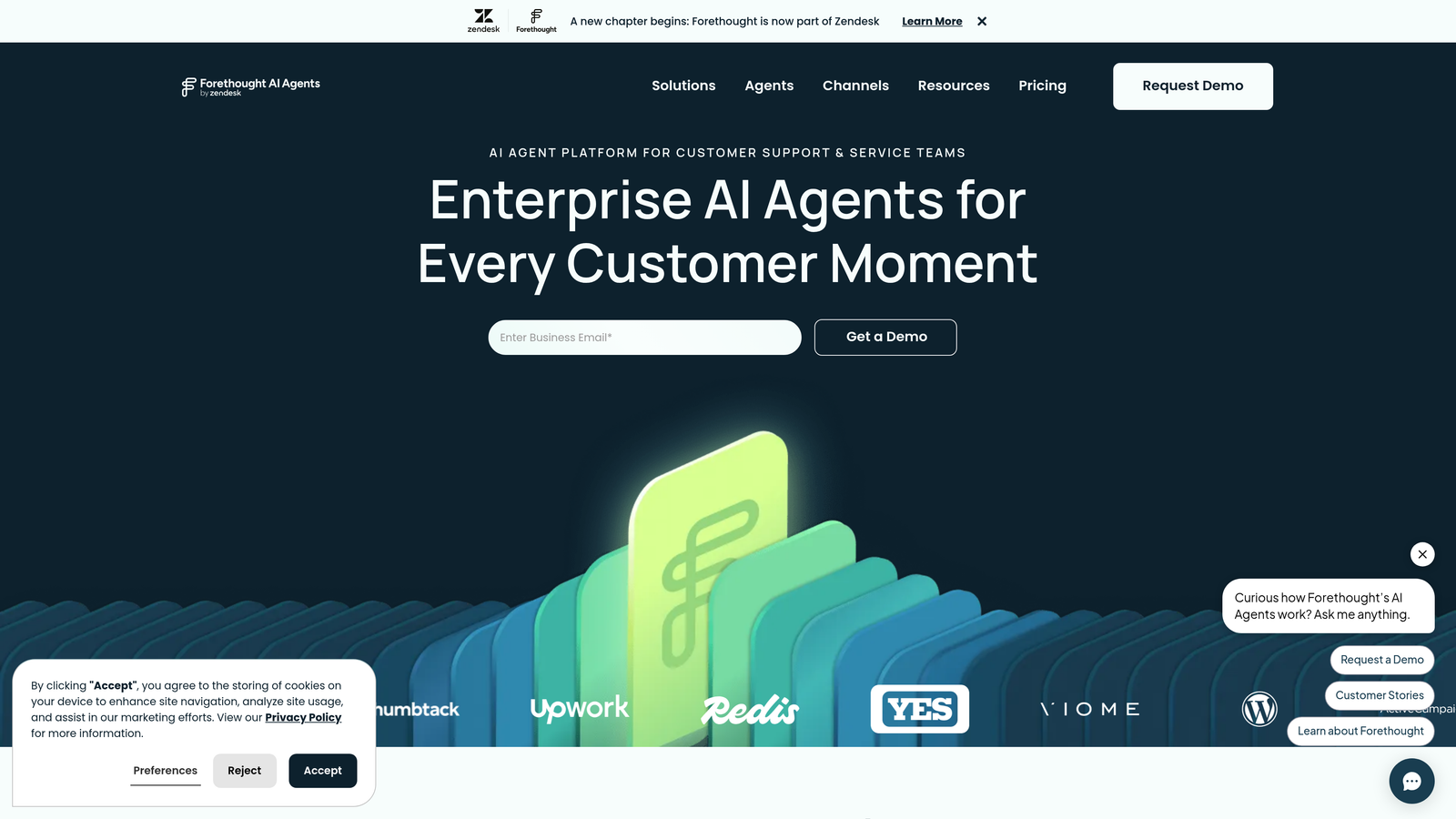
Forethought is an AI platform focused on intelligent ticket triage, real-time agent assist, and self-service resolution for customer support teams.
Where This Tool Shines
Forethought takes a layered approach to AI: it can triage and prioritize tickets automatically, surface relevant knowledge and suggested responses for human agents, and deflect common queries through a self-service widget. This makes it a strong fit for teams that aren't ready to go fully autonomous but want meaningful AI assistance throughout the support workflow.
The prioritization logic is particularly useful for tech companies with mixed ticket queues, where a critical bug report might arrive at the same time as a billing question. Forethought's AI can identify and surface the urgent issue before it gets buried.
Key Features
AI Triage: Automatically classifies incoming tickets and assigns priority scores based on content and context.
Agent Assist: Surfaces real-time suggested responses and relevant knowledge articles as agents work tickets.
Self-Service Widget: Resolves common queries before they enter the ticket queue.
Workflow Automation: Automates repetitive support tasks to reduce manual workload.
Performance Analytics: Dashboard tracking AI resolution rates, agent efficiency, and support trends.
Best For
Support teams that want to augment human agents with AI rather than replace them. A good middle ground for companies not yet ready for fully autonomous AI resolution.
Pricing
Custom pricing based on ticket volume. Contact Forethought for a tailored quote.
6. Freshdesk Freddy AI
Best for: SMB tech companies looking for an affordable AI entry point within a full helpdesk platform.
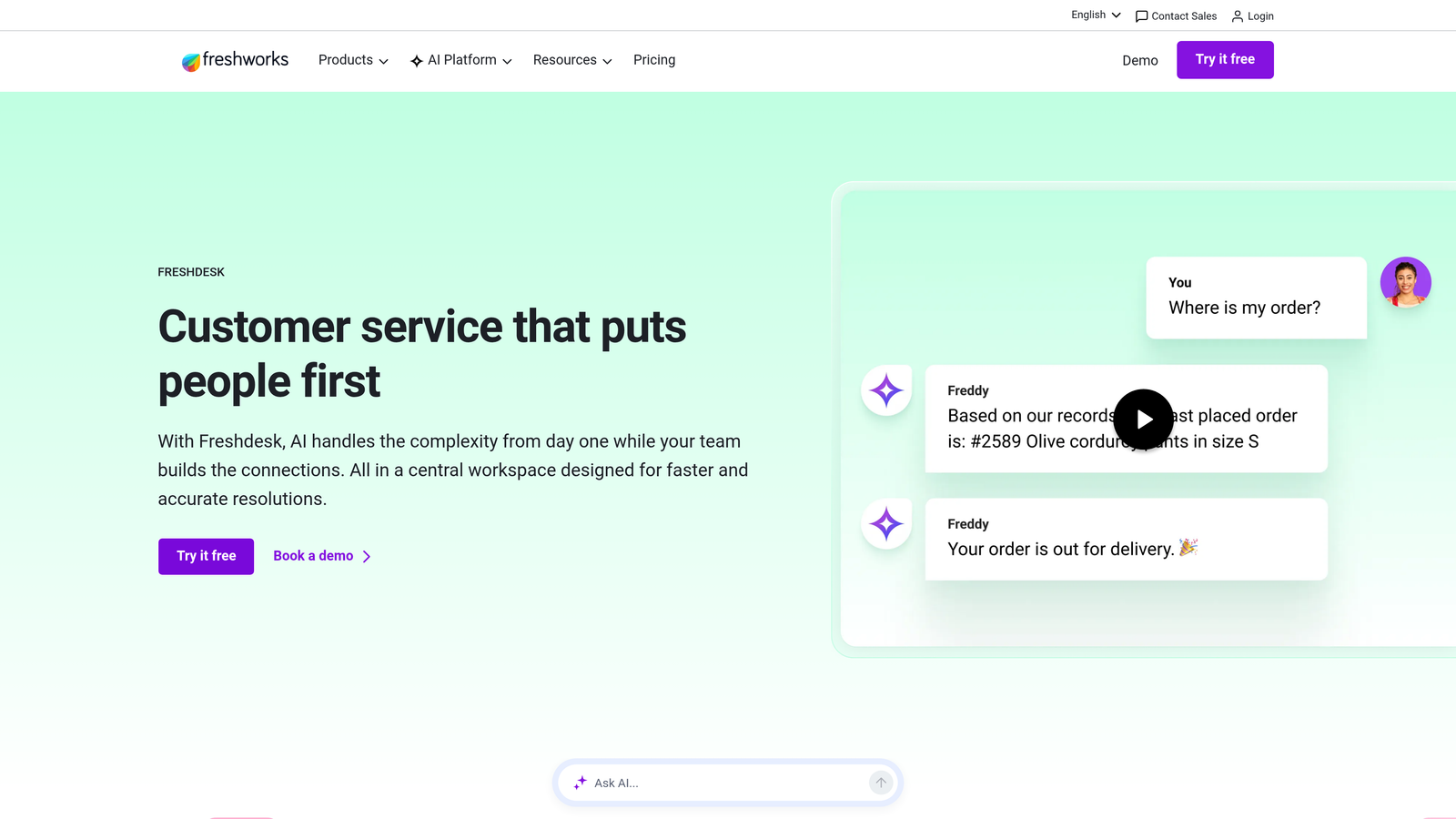
Freshdesk Freddy AI is Freshworks' AI layer for Freshdesk, offering auto-triage, suggested replies, a bot builder, and workflow automation at accessible price points.
Where This Tool Shines
Freddy AI's main appeal is the combination of affordability and breadth. You get auto-triage, AI-suggested responses, and a bot builder without needing an enterprise budget. For smaller tech teams that are also using other Freshworks products like Freshsales or Freshservice, the integrated ecosystem is a genuine advantage: data flows between tools without custom integrations.
The tradeoff is depth. Freddy AI is a capable AI layer, but it doesn't match the autonomy or intelligence of purpose-built AI-native platforms. It's a strong starting point, not necessarily a long-term ceiling.
Key Features
Freddy Auto-Triage: Classifies and routes incoming tickets automatically based on content analysis.
AI-Suggested Responses: Surfaces contextually relevant reply suggestions for agents in real time.
Bot Builder: Visual builder for creating self-service chat flows without coding.
Freshworks Ecosystem Integration: Native connections to Freshsales, Freshservice, and other Freshworks products.
Accessible Pricing Tiers: AI features available on Pro plan and above, making it reachable for smaller teams.
Best For
Small to mid-sized tech companies that want AI-assisted support without enterprise pricing, especially those already using or considering other Freshworks products.
Pricing
AI features included in the Pro plan at $49 per agent per month, with some advanced Freddy features available on Enterprise plans only.
7. Tidio AI (Lyro)
Best for: Startups and small SaaS teams that need fast deployment and low-maintenance conversational AI.
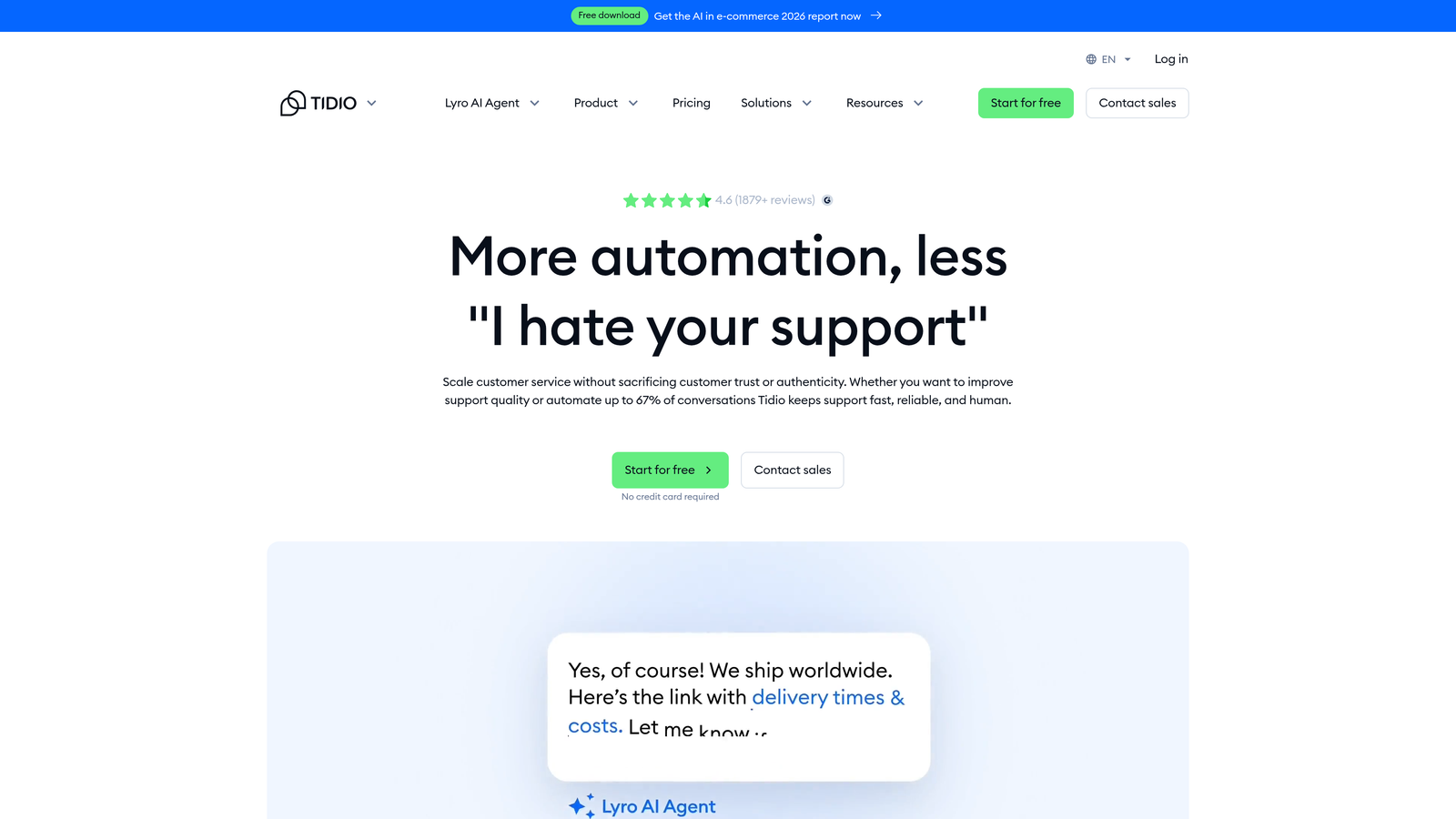
Tidio is a lightweight conversational AI platform whose Lyro AI chatbot learns from your help center content and handles common queries with minimal setup.
Where This Tool Shines
Lyro's biggest selling point is simplicity. You point it at your FAQ and help center content, and it's operational quickly, without weeks of training data preparation or complex configuration. For early-stage teams that need to reduce support load fast, that speed-to-value matters.
The live chat foundation also means Lyro integrates naturally with human handoff. When the AI reaches its limits, it escalates to a human agent without disrupting the conversation flow. The visual chat flow builder adds flexibility for teams that want to customize specific bot scenarios.
Key Features
Lyro AI Chatbot: Trained on your FAQ and help center content with minimal configuration needed to get started.
Quick Deployment: Up and running quickly without extensive technical setup or training data preparation.
Live Chat with AI Handoff: Seamlessly escalates to human agents when the AI can't resolve an issue.
Visual Flow Builder: Drag-and-drop builder for creating custom bot conversation scenarios.
SaaS and Ecommerce Integrations: Connects to common tools used by small teams and online businesses.
Best For
Early-stage startups and small SaaS teams that need a quick, low-cost AI support win without a lengthy implementation process.
Pricing
Free tier available. Lyro AI starts at $39 per month for 50 conversations, with higher-volume plans available.
8. Kustomer IQ
Best for: Support teams that want AI built on rich CRM context rather than just ticket content.
Kustomer IQ is the AI layer built into Kustomer's CRM-centric support platform, using full customer timeline data to power classification, sentiment analysis, and contextual suggestions.
Where This Tool Shines
Kustomer's core differentiator is its CRM-first approach to support. Every AI action, whether classification, sentiment analysis, or response suggestion, is informed by the full customer history: every past interaction, purchase, and touchpoint. For tech companies where customer context matters deeply (enterprise accounts, high-value users, complex onboarding histories), this depth of context produces more relevant AI outputs.
The unified platform also reduces the friction of switching between a helpdesk and a CRM, which is a meaningful efficiency gain for smaller support teams wearing multiple hats.
Key Features
Intent-Based Classification: Routes tickets based on detected intent and sentiment rather than simple keyword matching.
Full Customer Timeline: AI and human agents both work with complete customer history in a single view.
Sentiment Analysis: Monitors emotional tone across conversations to flag at-risk customers or escalating situations.
AI-Suggested Responses: Generates contextually relevant reply suggestions based on customer history and query content.
Unified CRM and Support Data: Eliminates the need for separate CRM and helpdesk tools for many teams.
Best For
Tech companies where customer relationship context is critical to support quality, particularly those managing enterprise accounts or complex customer lifecycles.
Pricing
Enterprise plan starts at $89 per user per month. KIQ AI features are available as an add-on.
9. DevRev
Best for: Tech companies that want support insights to feed directly into product and engineering workflows.
DevRev is a support platform purpose-built for tech companies, connecting customer issues directly to product development so support data informs engineering sprints and roadmaps.
Where This Tool Shines
DevRev occupies a unique position in this list: it's less focused on maximizing AI resolution rates and more focused on making support intelligence actionable for product and engineering teams. The direct link between support tickets and dev issues means that recurring customer problems surface as product priorities, not just support metrics.
The AI-powered clustering of similar issues is particularly valuable. Instead of individual tickets getting resolved in isolation, DevRev groups related issues and surfaces them as patterns, giving product teams a clearer signal about what's actually breaking for users at scale.
Key Features
Support-to-Dev Link: Directly connects support tickets to engineering issues and feature requests within the same platform.
AI Issue Clustering: Groups similar support issues to surface product-level patterns and recurring problems.
Unified Platform: Support, product management, and engineering work in one connected environment.
PLuG AI Chatbot: Self-service chatbot with product context for customer-facing support.
Built-In Sprint Tracking: Issue and sprint management connected directly to support data and customer feedback.
Best For
Product-led tech companies where the support team and engineering team need to work closely together, and where support data should directly influence the product roadmap.
Pricing
Free tier available. Paid plans with expanded features are available at custom pricing based on team size and usage.
10. Kastro
Best for: Indie developers and small SaaS teams that want LLM-powered chat support with minimal overhead.
Kastro is a lightweight, AI-first chat widget powered by large language models and trained on your documentation for fast, low-friction deployment.
Where This Tool Shines
Kastro is built for simplicity. You feed it your documentation, and it becomes a capable chat support agent without complex workflows, training pipelines, or ongoing maintenance overhead. For solo founders or small teams who need to offer real AI support without dedicating engineering resources to it, that simplicity is the entire value proposition.
The conversation analytics feature helps small teams understand what users are commonly asking, which feeds back into documentation and product improvements over time. It won't replace a full support platform as you scale, but as an entry point it's hard to beat on simplicity-to-value ratio.
Key Features
LLM-Powered Chat Widget: Trained on your documentation and knowledge base to answer questions with natural language understanding.
Fast Deployment: Minimal technical setup required to get the widget live and functional.
Human Handoff: Escalates to a human when the AI reaches the limits of its knowledge.
Conversation Analytics: Tracks common questions and unresolved queries to inform documentation improvements.
Affordable Pricing: Designed specifically for small teams and indie developers who need cost-efficient AI support.
Best For
Indie developers, solo founders, and very small SaaS teams who need fast, affordable AI chat support without the complexity or cost of enterprise platforms.
Pricing
Free tier available. Paid plans start at $25 per month, making it one of the most accessible options on this list.
Which Tool Is Right for Your Team?
The right AI support tool depends less on feature checklists and more on where your company is today and where it needs to go. Here's a quick way to think about it.
Early-stage startups: Kastro and Tidio Lyro offer the fastest path from zero to AI-powered support without budget strain or technical overhead. They won't scale forever, but they'll buy you time while you figure out what your support operation actually needs.
Growing SaaS teams: Forethought, Freshdesk Freddy AI, and Ada are strong mid-tier options that balance AI capability with manageable complexity. Forethought works well if you want to augment human agents; Ada is the better pick if you're optimizing for autonomous resolution across channels.
Enterprise support operations: Zendesk AI and Kustomer IQ are built for the scale and complexity of large support teams. If you're already on one of these platforms, their AI layers are the logical next step.
Tech companies that want support connected to product: DevRev is purpose-built for this, and it's genuinely differentiated in how it closes the loop between customer issues and engineering priorities.
Teams that want AI-native, not bolt-on: This is where the distinction really matters. Most tools on this list add AI to an existing helpdesk foundation. Halo AI was built the other way around: AI-first, with page-aware context, autonomous resolution, auto bug creation, and business intelligence baked into the core. If you want support that learns from every interaction, connects to your entire stack, and delivers intelligence beyond ticket metrics, it's worth a closer look.
Your support team shouldn't scale linearly with your customer base. Let AI agents handle routine tickets, guide users through your product, and surface business intelligence while your team focuses on complex issues that need a human touch. See Halo in action and discover how continuous learning transforms every interaction into smarter, faster support.