9 Best AI Support Tools with CRM Integration in 2026
Discover the 9 best AI support tools with CRM integration in 2026, evaluated on real-time data sync, AI resolution capabilities, and compatibility with platforms like HubSpot and Salesforce. This guide helps support teams eliminate context gaps by connecting AI agents directly to customer data, enabling personalized responses and automatic record updates without manual effort.
 Grant CooperFounder13 min read
When your AI support tool doesn't know who it's talking to, every conversation starts from scratch. No purchase history, no account status, no context from the last three tickets. The result is frustrated customers repeating themselves and support agents manually piecing together information that should already be there.
The fix is tighter integration between your AI support layer and your CRM. When these systems share data in real time, AI agents can personalize responses, flag at-risk accounts, and update records automatically rather than just reading from a static knowledge base.
This guide covers the top AI support tools with CRM integration, evaluated on depth of CRM connectivity, AI resolution capabilities, data sync quality, setup complexity, and pricing transparency. Whether your CRM is HubSpot, Salesforce, or something more custom, there's an option here that keeps your support and customer data in lockstep.
1. Halo AI
Best for: B2B SaaS teams wanting AI-first architecture with deep business stack integration
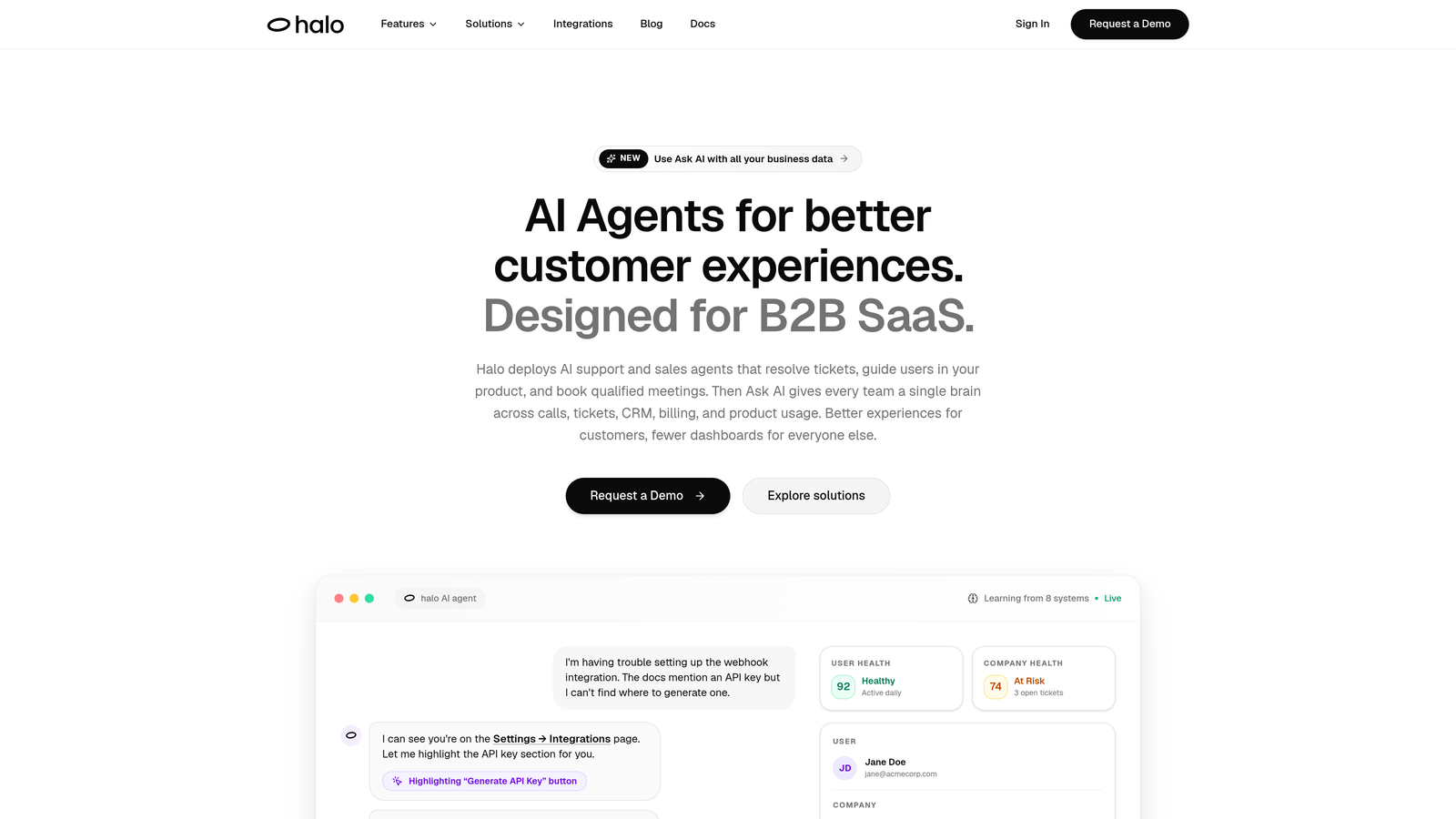
Halo AI is an AI-first customer support platform where intelligent agents resolve tickets, guide users through your product, and connect to your entire business stack for unified customer context.
Where This Tool Shines
Most tools in this category bolt AI onto an existing helpdesk or CRM. Halo is built AI-first from the ground up, which means the integrations aren't an afterthought. When a customer opens a chat, Halo's agents already have context from HubSpot, Stripe, Intercom, Slack, and more, so they're responding to a complete customer picture rather than a name and an email address.
The page-aware capability is particularly distinctive. Halo's agents can see what the user is looking at in real time, enabling contextual guidance that goes beyond generic FAQ responses. Combined with continuous learning from every interaction, the AI gets meaningfully smarter over time rather than staying static.
Key Features
Page-Aware AI Agents: Agents see what users see in real time, enabling step-by-step visual guidance without requiring users to describe their screen.
Native CRM and Stack Integrations: Pre-built connectors for HubSpot, Intercom, Stripe, Slack, Linear, Zoom, PandaDoc, and Fathom bring full customer context into every interaction.
Smart Inbox with Business Intelligence: Goes beyond ticket management to surface customer health signals, revenue intelligence, and anomaly detection from support data.
Auto Bug Ticket Creation: Automatically generates bug tickets in Linear when recurring issues are detected, closing the loop between support and engineering without manual effort.
Continuous Learning: Every resolved interaction feeds back into the AI, improving resolution accuracy and personalization over time.
Best For
B2B SaaS companies and product teams that want AI agents to do more than answer questions. Halo is especially valuable for teams using multiple tools across their stack who need a single AI layer that connects everything rather than managing point-to-point integrations.
Pricing
Contact for pricing. Plans are tailored based on ticket volume and the integrations required, making it more suitable for teams with defined support workflows than early-stage startups.
2. Zendesk AI
Best for: Large multi-brand organizations running complex omnichannel support operations
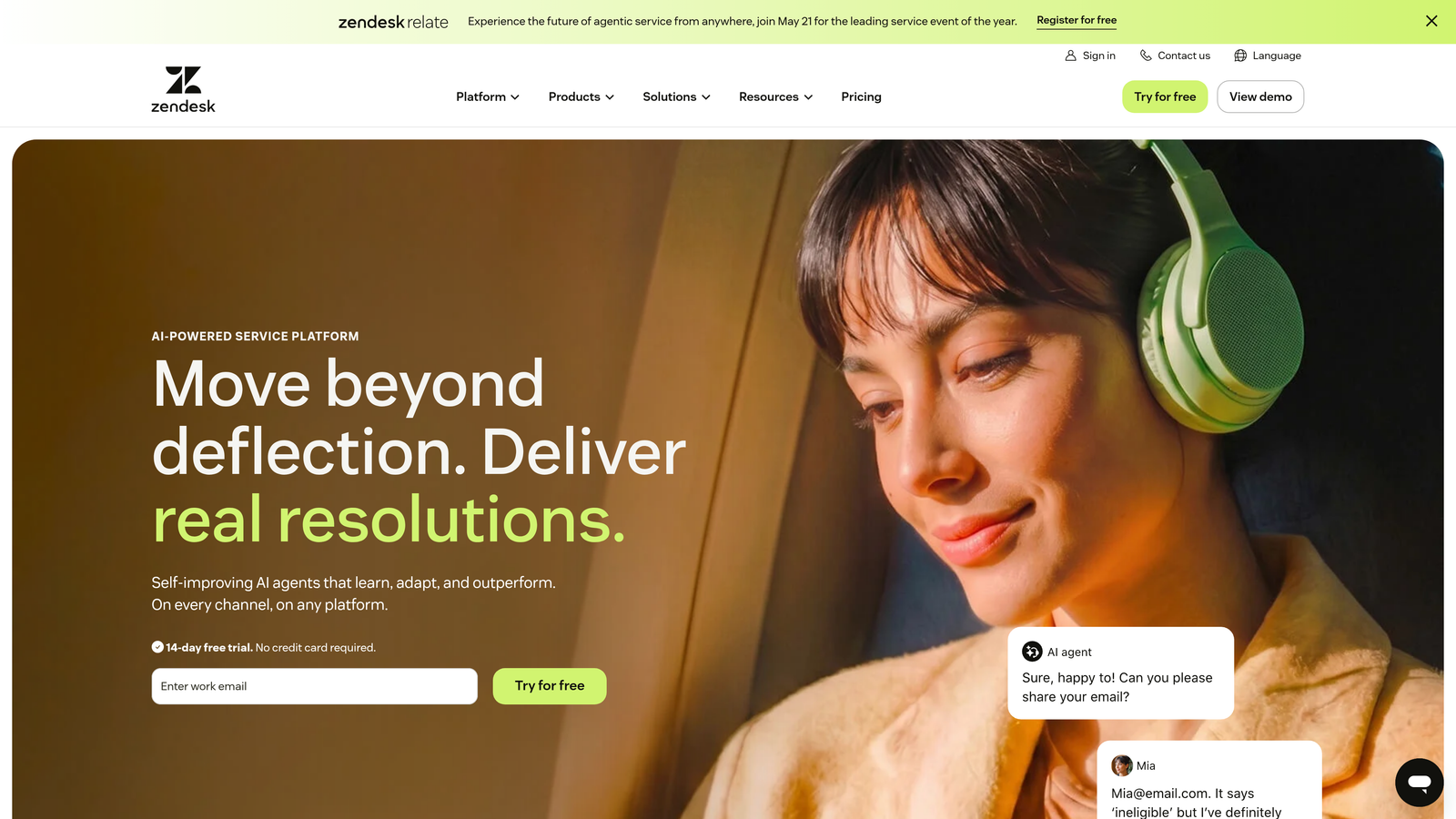
Zendesk AI is enterprise-grade AI support layered into the Zendesk ecosystem with native Sunshine CRM integration and pre-built connectors to major external CRMs.
Where This Tool Shines
Zendesk's strength is its breadth. It handles email, chat, phone, and social in a single platform, and its AI capabilities cover intent detection, automated routing, and agent assist. For organizations already invested in Zendesk, the AI layer feels native rather than grafted on.
The Sunshine CRM provides custom objects and relationship modeling that most support-only tools can't match. For enterprises with complex customer data structures, this flexibility is a meaningful differentiator.
Key Features
AI Intent Detection and Routing: Automatically classifies incoming tickets and routes them to the right team or triggers automated resolution flows.
Sunshine CRM: Native CRM with custom objects, relationships, and event tracking built directly into the Zendesk platform.
Pre-Built CRM Connectors: Out-of-the-box integrations with Salesforce, HubSpot, and Microsoft Dynamics for teams using external CRMs.
Advanced Analytics: Cross-functional reporting that spans support metrics and CRM data in a unified dashboard.
Omnichannel Coverage: Unified agent workspace across email, live chat, phone, and social channels.
Best For
Large enterprises and multi-brand organizations that need enterprise-grade reliability, deep omnichannel support, and flexible CRM data modeling. Less ideal for smaller teams given the pricing and implementation complexity.
Pricing
Suite plans start around $55 per agent per month. AI features and advanced add-ons are priced separately, so total cost can increase meaningfully at scale.
3. Intercom Fin
Best for: Product-led SaaS companies wanting AI support deeply tied to user behavior and in-app events
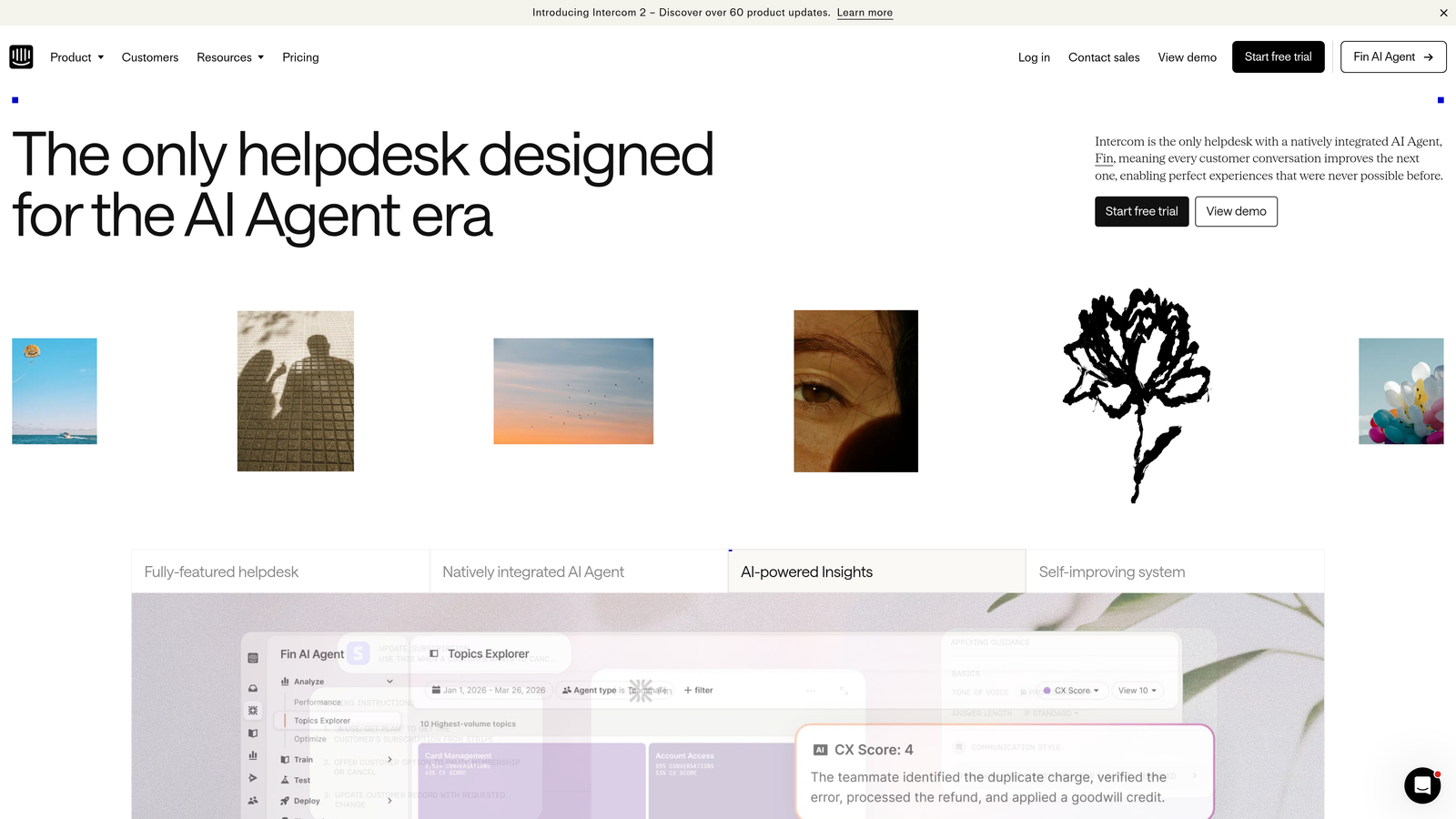
Intercom Fin is a conversational AI agent built on Intercom's customer data platform, with access to real-time user attributes, events, and full conversation history.
Where This Tool Shines
Fin's biggest advantage is the data it has access to by default. Because Intercom tracks user behavior, product events, and conversation history natively, Fin can personalize responses in ways that tools relying solely on CRM data cannot. If a user just completed onboarding or triggered a specific in-app event, Fin knows.
The custom actions capability extends Fin beyond answering questions. It can perform tasks in connected systems, such as updating a record, triggering a workflow, or fetching account-specific data, making it genuinely agentic rather than just conversational.
Key Features
Full Customer Data Platform Access: Fin draws on Intercom's native user attributes, events, and conversation history for every interaction.
Custom Actions: Fin can perform tasks in connected external systems, not just retrieve information.
In-App Messaging and Product Tours: Combines support with proactive user engagement in a single platform.
Native CRM Integrations: Pre-built connectors for Salesforce, HubSpot, and support for custom APIs.
Resolution-Based Billing: Fin usage is billed per resolution rather than per seat, aligning cost with actual AI performance.
Best For
Product-led growth companies and SaaS teams where user behavior data is as important as CRM data for delivering relevant support. Less suited for teams that don't use Intercom as their primary messaging layer.
Pricing
Seat-based plans start at $29 per seat per month. Fin AI usage is billed separately per resolution, so costs scale with AI activity rather than team size alone.
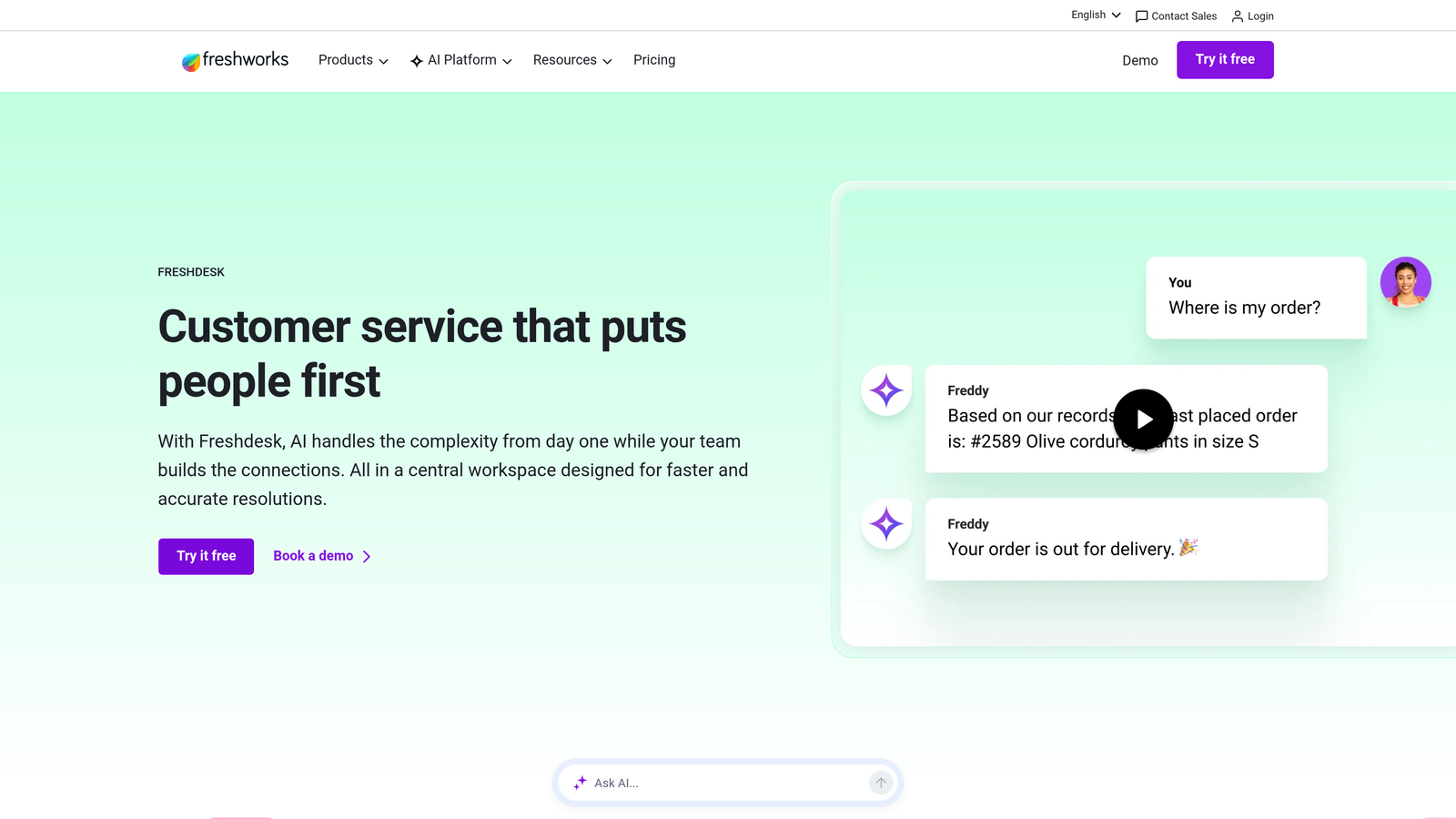
4. Freshdesk Freddy AI
Best for: Mid-market teams already using the Freshworks ecosystem who want a unified customer view across support, sales, and marketing
Freshdesk with Freddy AI is an AI-powered support platform with tight native integration across Freshsales CRM and Freshmarketer for a connected customer data experience.
Where This Tool Shines
If your team is already using Freshsales or Freshmarketer, Freshdesk's native cross-suite data sharing makes it genuinely easy to give support agents a complete customer timeline without complex integration work. Freddy AI sits across this data to handle triage, suggest responses, and resolve common tickets automatically.
For mid-market teams that want the benefits of a unified platform without enterprise-level pricing or complexity, Freshworks strikes a practical balance.
Key Features
Freddy AI Automation: Handles auto-triage, suggested responses, and ticket resolution using data from across the Freshworks suite.
Native Freshsales CRM Integration: Unified customer timeline across support and sales with no third-party connector required.
Cross-Suite Data Sharing: Real-time data flow between Freshdesk, Freshchat, Freshsales, and Freshmarketer.
External CRM Marketplace: Integrations with Salesforce, HubSpot, and other platforms via the Freshworks marketplace.
Competitive Mid-Market Pricing: Accessible pricing tiers designed for growing teams rather than enterprise budgets.
Best For
Mid-market companies invested in the Freshworks ecosystem. Teams using Salesforce or HubSpot as their primary CRM will get less value from the native integration advantages and may find better options elsewhere on this list.
Pricing
Free tier available for small teams. Pro plans start around $49 per agent per month, with Freddy AI features available on higher tiers.
5. Salesforce Einstein Service Cloud
Best for: Salesforce-native enterprises that need the deepest possible CRM integration without any external connectors
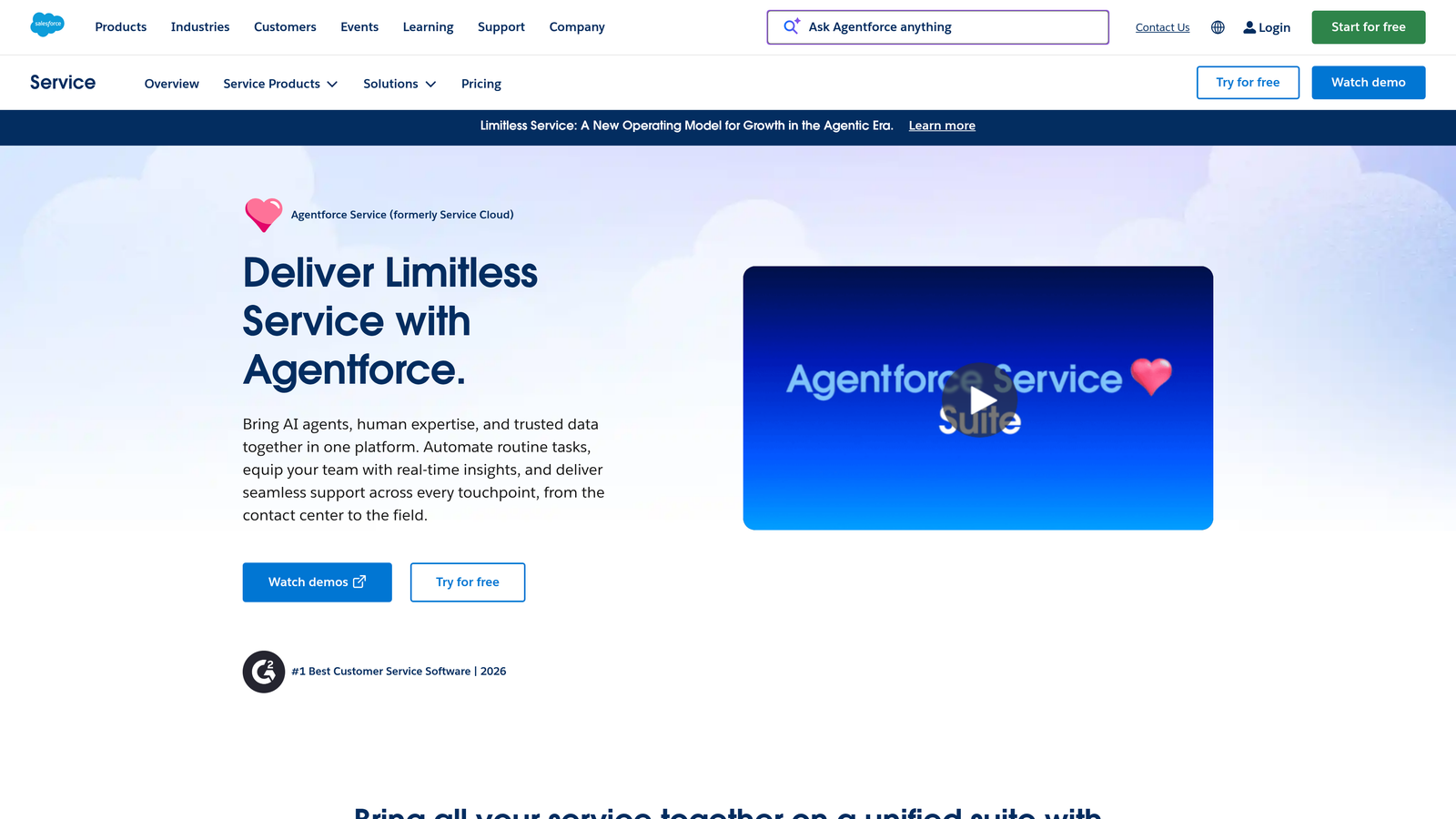
Salesforce Einstein Service Cloud embeds AI support capabilities directly inside Salesforce, giving agents access to every CRM object, workflow, and automation in the platform.
Where This Tool Shines
No tool on this list offers deeper CRM integration than Einstein, because for Salesforce shops, there is no integration to set up. AI has direct access to every account, contact, case, opportunity, and custom object in the platform. If your business runs on Salesforce, Einstein is the natural endpoint for AI support.
Einstein Copilot extends this further, enabling both agent assist and autonomous case resolution using the full Salesforce data model. The tradeoff is that configuration and customization require Salesforce admin expertise, which adds to implementation time and cost.
Key Features
Zero-Integration CRM Access: AI operates natively within Salesforce with access to every object, field, and relationship in your org.
AI Case Classification and Routing: Automatically categorizes and routes cases based on CRM data and historical patterns.
Einstein Copilot: Agent assist and autonomous case resolution using conversational AI grounded in Salesforce data.
Full Salesforce Ecosystem Access: Works across Sales Cloud, Marketing Cloud, and Commerce Cloud for cross-functional customer intelligence.
Next-Best-Action Recommendations: Surfaces contextual recommendations to agents based on the full customer record.
Best For
Enterprises already standardized on Salesforce that want AI capabilities without introducing another vendor or managing CRM sync. Not practical for teams not using Salesforce as their CRM.
Pricing
Service Cloud starts at $25 per user per month. Einstein AI features are available on higher tiers, with total costs scaling significantly for larger orgs.
6. HubSpot Service Hub
Best for: SMBs and growing teams already in the HubSpot ecosystem who want support, sales, and marketing data in one place
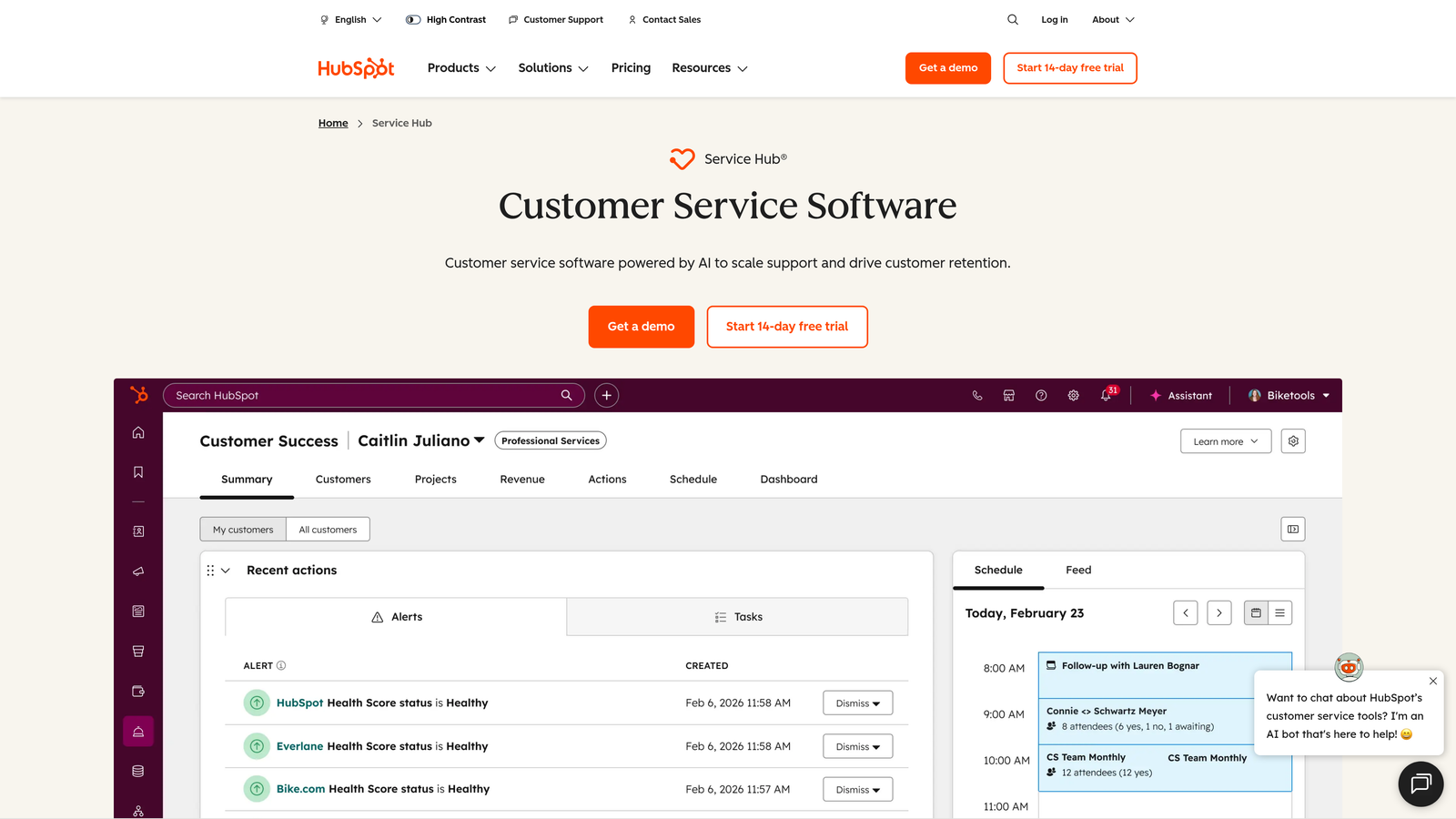
HubSpot Service Hub is an all-in-one service platform with AI features built directly into HubSpot's CRM, giving support teams a unified view of every customer touchpoint.
Where This Tool Shines
Service Hub's core advantage is the unified customer timeline. Because HubSpot connects marketing, sales, and service data in a single CRM, support agents see the full customer journey without any integration work. AI features like chatbot automation and ticket routing operate on top of this complete data model.
For teams that aren't ready to invest in enterprise tooling, the free CRM tier makes it possible to get started without upfront cost, with AI features unlocking progressively as you scale.
Key Features
AI Chatbot with Full CRM Context: Chatbot automation draws on the complete HubSpot customer record, including marketing and sales history.
Unified Customer Timeline: Every marketing, sales, and service interaction visible in a single customer record.
AI-Powered Knowledge Base: Smart search and content suggestions help customers self-serve before escalating.
Customer Feedback Surveys: CSAT and NPS data tied directly to CRM records for customer health tracking.
Free CRM Access: Core CRM features are free, lowering the barrier to entry for smaller teams.
Best For
SMBs and mid-market teams already using HubSpot for marketing or sales who want to extend that data model into support. Less compelling for teams using Salesforce or a different CRM as their system of record.
Pricing
Free tools available. Starter plans begin at $20 per month, with Professional plans at $100 per seat per month for advanced AI and automation features.
7. Ada
Best for: High-volume enterprise support operations that need flexible, no-code AI automation with custom CRM connectivity
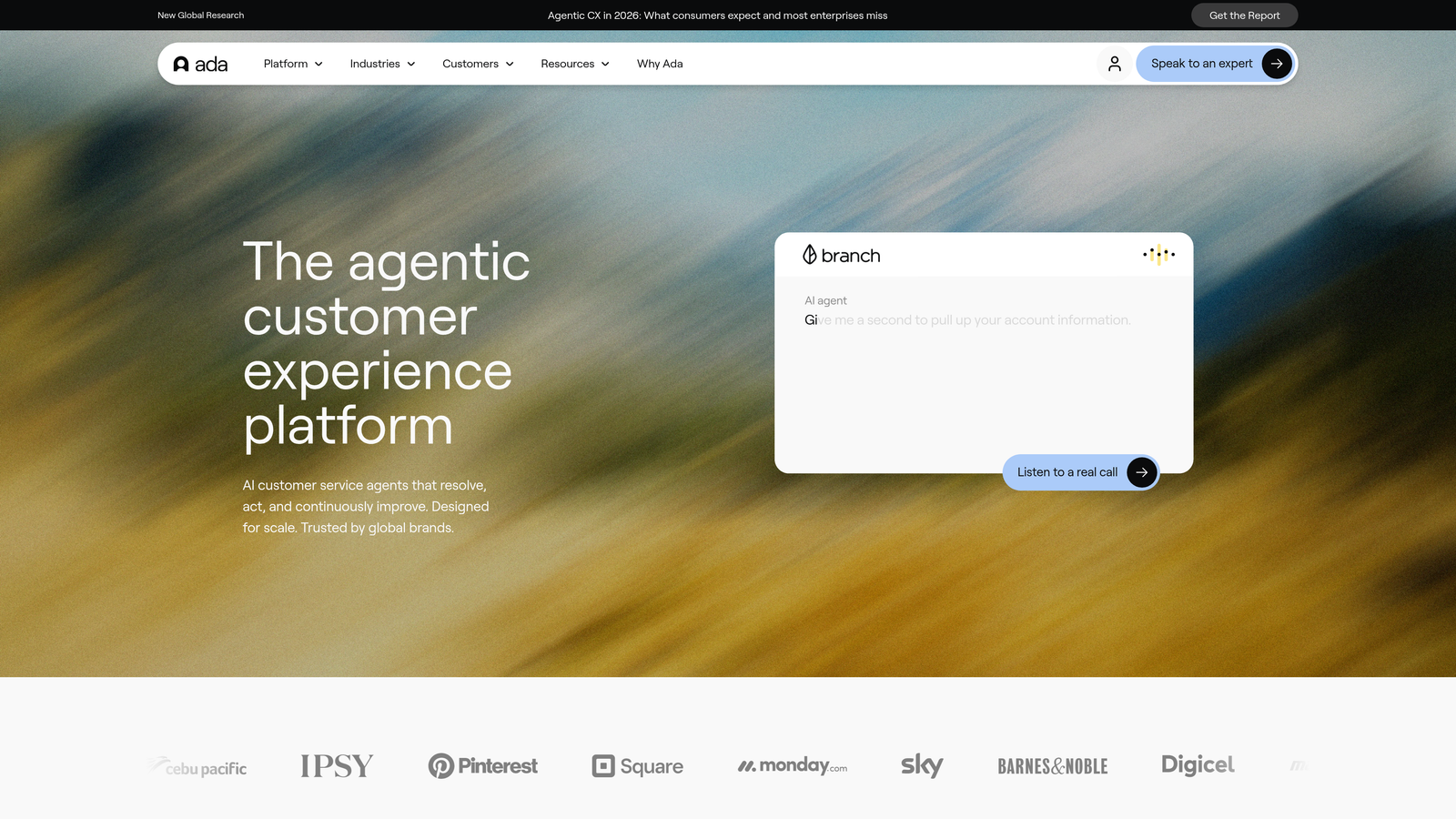
Ada is an AI-first automation platform with a no-code agent builder and a robust API layer that connects to Salesforce, Zendesk, and custom CRMs for large-scale support automation.
Where This Tool Shines
Ada's no-code builder makes it possible for non-technical teams to design sophisticated AI agent workflows without engineering involvement. The API layer is genuinely flexible, meaning teams with custom CRMs or complex data models aren't limited to pre-built connectors.
Multilingual support across more than 50 languages makes Ada particularly well-suited for global enterprises with diverse customer bases, where most other tools on this list would require significant localization effort.
Key Features
No-Code Agent Builder: Drag-and-drop workflow design that business teams can manage without engineering resources.
Robust API Layer: Flexible integration framework for custom CRMs and proprietary data systems beyond standard connectors.
Pre-Built CRM Connectors: Native integrations with Salesforce, Zendesk, and other major enterprise platforms.
Multilingual Support: AI agents operate across 50-plus languages for global customer bases.
Enterprise Analytics: Resolution tracking and performance analytics built for high-volume environments.
Best For
Large enterprises with high ticket volumes, global customer bases, or custom CRM environments that need flexible automation without heavy engineering investment. Pricing and complexity make it less suitable for smaller teams.
Pricing
Custom enterprise pricing. Contact Ada directly for quotes, as plans are scoped based on volume and integration requirements.
8. Tidio
Best for: Small businesses and e-commerce teams looking for an affordable AI chat entry point with HubSpot and Salesforce connectivity
Tidio is an affordable AI chat platform featuring the Lyro AI chatbot and integrations with HubSpot, Salesforce, and major e-commerce platforms.
Where This Tool Shines
Tidio occupies a clear niche: it's the most accessible entry point on this list for small businesses that want AI-assisted support without enterprise pricing or complex setup. Lyro handles FAQ resolution and basic ticket automation, while the visual chatbot builder lets non-technical users create custom conversation flows quickly.
The e-commerce integrations with Shopify and WooCommerce are a genuine differentiator for product-based businesses, where order status and purchase history are the most common support queries.
Key Features
Lyro AI Chatbot: Handles automated FAQ responses and simple ticket resolution with natural language understanding.
CRM and E-Commerce Integrations: Connects to HubSpot, Salesforce, Shopify, and WooCommerce for customer and order context.
Visual Chatbot Builder: No-code flow builder for creating custom conversation paths without developer help.
AI-Assisted Live Chat: Suggests responses to human agents during live conversations to speed up resolution.
Accessible Pricing: The most affordable option on this list, with a free plan available to get started.
Best For
Small businesses, e-commerce stores, and early-stage teams that want to add AI chat without significant budget or technical overhead. Teams with complex support workflows or enterprise CRM requirements will quickly outgrow Tidio's capabilities.
Pricing
Free plan available. Paid plans start at $29 per month, making it the most budget-friendly option in this comparison.
9. Kustomer
Best for: D2C brands and omnichannel-heavy teams that want a CRM built specifically for support rather than adapting a sales CRM
Kustomer is a CRM-first helpdesk platform with AI automation layered on top, featuring a unified customer timeline across all channels and strong omnichannel support capabilities.
Where This Tool Shines
Most tools on this list are either a helpdesk with CRM connectors or a CRM with support features added. Kustomer was designed from the start as a CRM built specifically for support teams, which means the unified customer timeline isn't an integration achievement but a default feature. Every channel, every interaction, every order is visible in one place.
AI features sit on top of this data model to handle classification, routing, and suggested responses. For D2C brands managing high volumes across social, messaging apps, and email simultaneously, this omnichannel-first architecture is a practical advantage.
Key Features
CRM-Native Customer Timeline: Every customer interaction across all channels unified in a single timeline by default, not via integration.
AI Classification and Routing: Automatically categorizes and routes incoming contacts based on CRM data and conversation context.
Omnichannel Coverage: Unified support across email, chat, social, SMS, and messaging apps including WhatsApp and Facebook Messenger.
Custom Objects and Data Modeling: Flexible data structures for complex customer relationships beyond standard contact and ticket fields.
AI-Suggested Responses: Surfaces relevant response suggestions to agents based on the full customer record and conversation history.
Best For
D2C brands, retail businesses, and omnichannel-heavy operations where social and messaging channels drive significant support volume. The enterprise pricing makes it a harder sell for smaller teams or B2B SaaS companies with lower channel complexity.
Pricing
Enterprise plans start at $89 per user per month, positioning Kustomer at the higher end of this list in terms of per-seat cost.
Which Tool Is Right for Your Team
The right choice here depends heavily on where your customer data already lives and how much of your support operation you want AI to own autonomously.
If you're a B2B SaaS team that wants an AI-first architecture connecting your entire business stack, Halo AI is the strongest fit. It's purpose-built for teams where support data, product usage, billing, and sales context all need to be in play at once, and the continuous learning model means it improves with your customer base rather than staying static.
For Salesforce-native enterprises, Einstein Service Cloud offers integration depth that nothing else can match because it's not an integration at all. HubSpot Service Hub makes the same argument for teams standardized on HubSpot, with the added benefit of accessible pricing for growing teams.
Product-led SaaS companies will find Intercom Fin's event-driven personalization particularly well-suited to their model. Mid-market teams in the Freshworks ecosystem get the best ROI from Freshdesk Freddy, while large multi-brand organizations running complex omnichannel operations will appreciate Zendesk AI's breadth and reliability.
For high-volume global enterprises that need flexible, no-code automation with custom CRM connectivity, Ada is the strongest option. Tidio is the clear choice for small businesses and e-commerce teams that want an affordable, low-friction starting point. And Kustomer is the natural fit for D2C brands where omnichannel coverage and a support-native CRM are the primary requirements.
The broader trend worth noting: buyers increasingly expect AI agents to not just read CRM data but write back to it, creating tickets, logging interactions, and flagging customer health changes automatically. The gap between a chatbot with CRM lookup and a true AI agent with full CRM context is widening, and it's becoming a key differentiator when evaluating these platforms.
Your support team shouldn't scale linearly with your customer base. Let AI agents handle routine tickets, guide users through your product, and surface business intelligence while your team focuses on complex issues that need a human touch. See Halo in action and discover how continuous learning transforms every interaction into smarter, faster support.