9 Best Automated Support Agent Software Platforms in 2026
As ticket volumes rise and customer expectations grow, automated support agent software has become essential for B2B teams seeking scalable solutions. This guide evaluates the 9 best platforms of 2026 based on autonomous resolution quality, AI capabilities, integration depth, and analytics—helping teams identify tools that genuinely reduce support workload rather than simply automating basic rule-based responses.
 Matt PattoliFounder13 min read
Ticket volumes are climbing. Customer expectations for instant answers have never been higher. And the idea of simply hiring more agents to keep up isn't a sustainable strategy for most B2B teams. That's why automated support agent software has moved from "nice to have" to a core piece of the modern support stack.
But not all platforms are created equal. This list focuses on tools built around genuine AI capabilities, not rule-based chatbots dressed up with a fresh coat of paint. The selection criteria: autonomous resolution quality, integration depth, how the system learns and improves over time, live agent handoff, analytics, and pricing transparency.
Here are the top automated support agent software platforms worth evaluating in 2026.
1. Halo AI
Best for: B2B SaaS teams wanting AI-first support with business intelligence built in
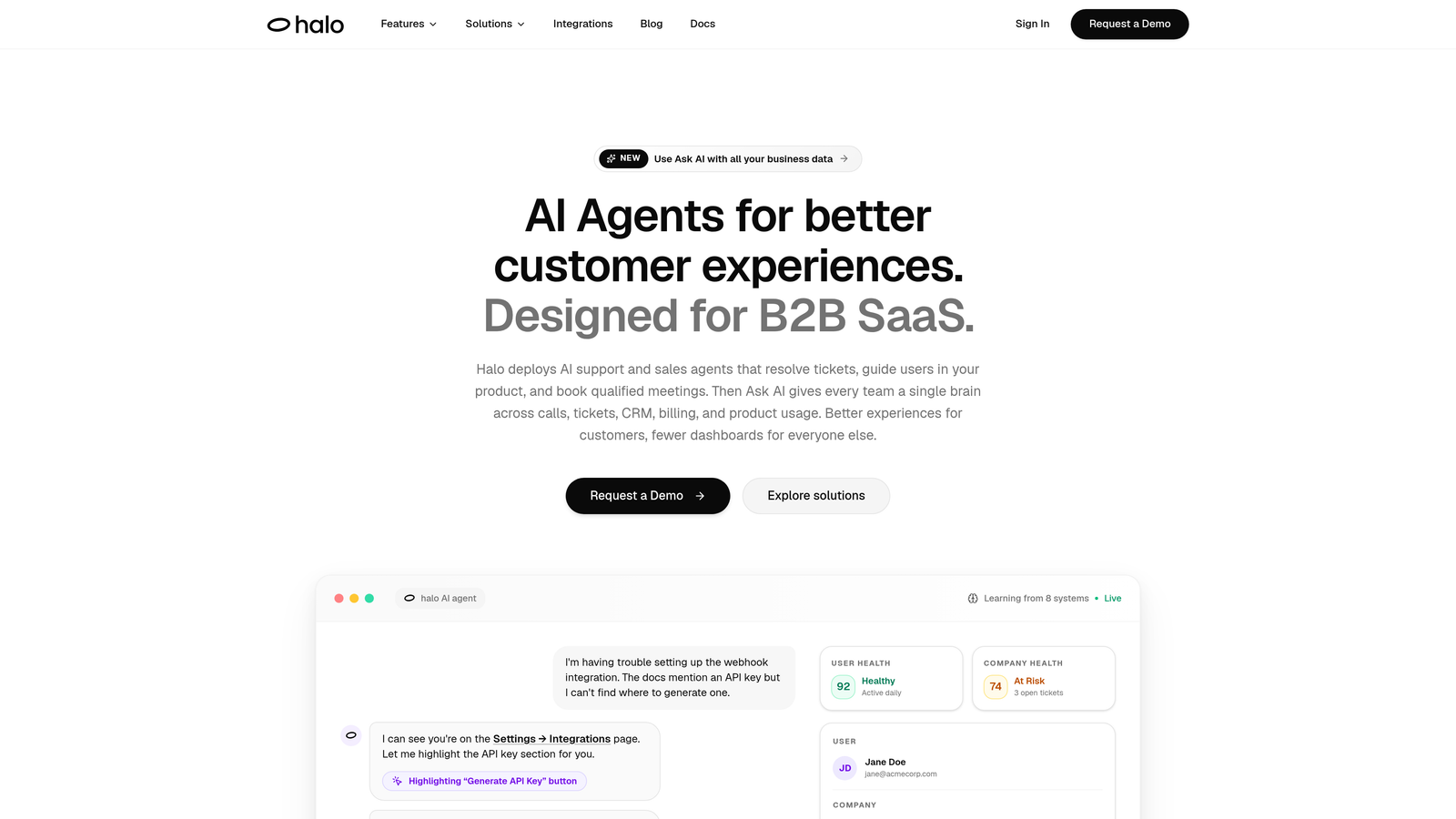
Halo AI is an AI-native customer support platform that resolves tickets, guides users visually through your product, and surfaces business intelligence from every support interaction.
Where This Tool Shines
What separates Halo from most platforms on this list is the concept of page-awareness. The AI agent actually sees what the user is looking at and can provide contextual, visual UI guidance rather than generic text responses. That's a meaningful difference when your product is complex and users need step-by-step help navigating it.
The other standout is what happens after a ticket is resolved. Halo doesn't just close the loop: it extracts business intelligence from support data, surfacing customer health signals, revenue insights, and anomaly detection. Your support operation becomes a source of product and revenue intelligence, not just a cost center.
Key Features
Page-Aware Chat Widget: Sees what the user sees and delivers visual UI guidance tailored to their exact context in the product.
Autonomous Ticket Resolution: AI agents resolve tickets end-to-end, with continuous learning from every interaction to improve over time.
Automatic Bug Ticket Creation: Detects issues and creates bug reports directly in tools like Linear, without requiring manual intervention from support or engineering.
Smart Inbox with Business Intelligence: Goes beyond support metrics to surface customer health signals, revenue intelligence, and anomaly detection.
Deep Integration Stack: Connects with Linear, Slack, HubSpot, Intercom, Stripe, Zoom, PandaDoc, and Fathom, linking support to your entire business stack.
Best For
B2B SaaS product teams and customer success organizations that want AI agents handling routine tickets while generating actionable business intelligence. Particularly strong for teams whose products have complex UIs where visual guidance adds real value.
Pricing
Contact for pricing. Designed specifically for B2B SaaS teams, so expect a conversation about team size, ticket volume, and integration requirements.
2. Intercom Fin
Best for: Teams already on Intercom who want AI resolution without switching platforms
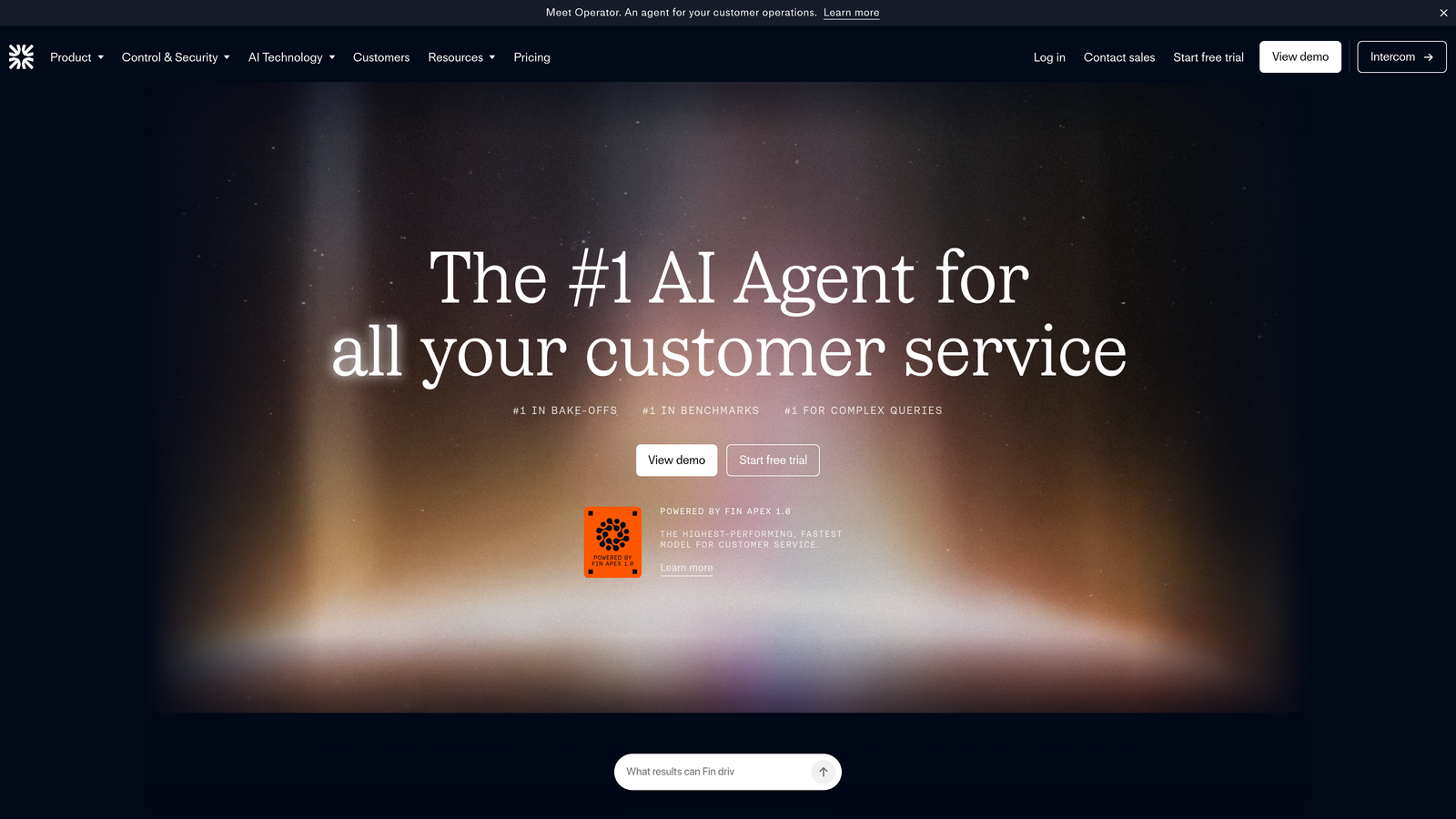
Intercom Fin is Intercom's AI-powered support agent, built natively into the Intercom messenger and inbox to resolve customer questions using your existing knowledge base.
Where This Tool Shines
Fin's biggest advantage is how seamlessly it lives inside the Intercom ecosystem. If your team already runs support through Intercom, there's no migration, no new tool to learn, and no re-training your knowledge base from scratch. Fin learns from your existing content and conversation history from day one.
The usage-based pricing model is also worth noting. Paying per resolution rather than per seat can be genuinely cost-effective for teams with variable ticket volumes, though it requires careful monitoring as you scale.
Key Features
Native Intercom Integration: Works directly within the Intercom messenger, inbox, and help center with no separate setup required.
Knowledge Base Training: Trained on your existing Intercom articles and past conversation history for immediate relevance.
Tone and Behavior Controls: Customizable personality and response style to match your brand voice.
Seamless Human Handoff: Escalates to human agents within the same conversation thread, preserving full context.
Per-Resolution Pricing: Pay based on what the AI actually resolves rather than a flat seat fee.
Best For
Support teams already invested in the Intercom platform who want to layer in AI resolution without disrupting existing workflows. Less ideal if you're evaluating a full platform switch or need deep integrations outside the Intercom ecosystem.
Pricing
Starting at $0.99 per resolution. Check Intercom's website for current pricing, as this model continues to evolve.
3. Zendesk AI Agents
Best for: Enterprises running Zendesk Suite who want AI automation across all support channels
Zendesk AI Agents is Zendesk's AI-powered automation layer for ticket resolution, routing, and agent assistance, significantly bolstered by the acquisition of Ultimate.
Where This Tool Shines
Zendesk brings something few platforms can match: years of support data powering pre-trained models that understand support intent out of the box. The AI triage and routing capabilities are particularly strong, classifying tickets by intent, language, and sentiment before a human ever touches them.
The addition of Ultimate's technology has expanded multilingual and multi-channel capabilities considerably. For large enterprise teams handling global support at scale, that combination is hard to replicate elsewhere.
Key Features
Autonomous AI Agents: Handles ticket resolution across email, chat, and messaging channels without human intervention.
Intelligent Triage and Routing: Classifies and routes tickets based on intent, language, and sentiment analysis.
Agent Copilot: Assists human agents handling escalated tickets with suggested responses and relevant knowledge.
Pre-Trained Models: Built on Zendesk's extensive historical support data for faster time-to-value.
Multilingual and Multi-Channel AI: Expanded capabilities from the Ultimate acquisition covering 100+ languages.
Best For
Large enterprises already on Zendesk Suite who need AI automation across multiple channels and languages. The switching cost for non-Zendesk teams is high, making this most compelling for existing customers.
Pricing
AI capabilities are available as an add-on to Zendesk Suite plans. Contact Zendesk directly for AI agent pricing, as it varies by plan tier and usage.
4. Ada
Best for: Enterprise CX teams needing multilingual AI agents without heavy technical resources
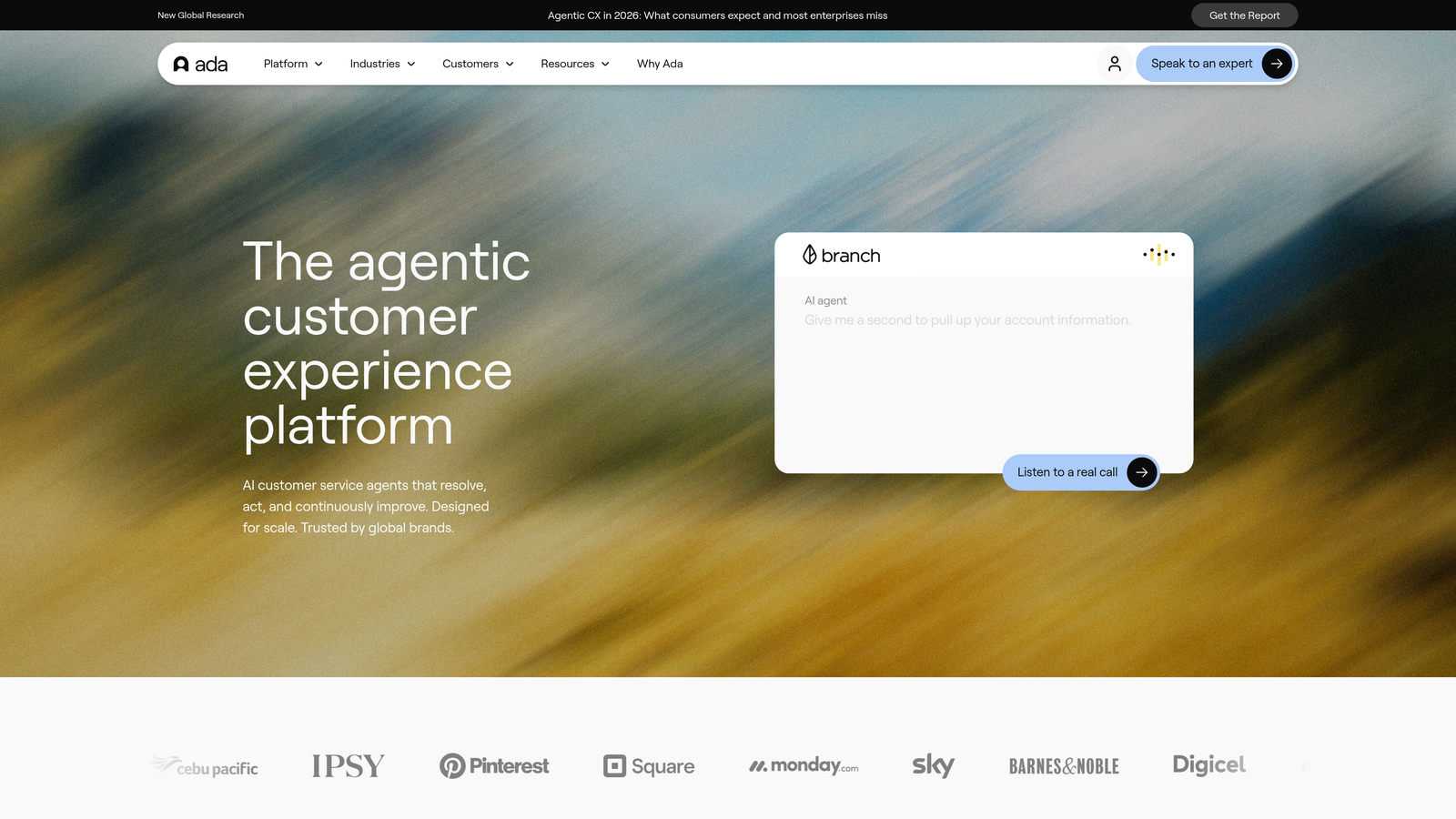
Ada is an enterprise-grade AI agent platform with a no-code builder, strong multilingual support across 50+ languages, and purpose-built automation for customer experience teams.
Where This Tool Shines
Ada has carved out a strong position in the enterprise multilingual segment. If your customer base spans multiple regions and languages, Ada's depth here is genuinely impressive: 50+ languages with AI-powered reasoning, not just basic translation layers.
The no-code builder is a real differentiator for CX teams without dedicated technical resources. Non-technical operators can build, modify, and deploy AI agents without waiting on engineering, which matters when you need to move quickly.
Key Features
No-Code AI Agent Builder: Accessible to non-technical CX teams for building and modifying agents without engineering support.
Multilingual Support: AI agents across 50+ languages with reasoning capabilities, not just translation.
Omnichannel Deployment: Deploy across web, mobile, social, and SMS from a single platform.
AI Reasoning Engine: Handles complex, multi-step resolutions rather than simple FAQ matching.
CRM and Helpdesk Integrations: Connects with Salesforce, Zendesk, and other major platforms.
Best For
Enterprise CX teams with global customer bases, high ticket volumes, and a need for autonomous resolution without requiring technical staff to manage the AI. Less suited to smaller teams or those on tight budgets.
Pricing
Enterprise pricing with custom quotes. Contact Ada directly for a proposal based on your volume and channel requirements.
5. Freshdesk Freddy AI
Best for: SMBs and mid-market teams wanting AI automation at an accessible price point
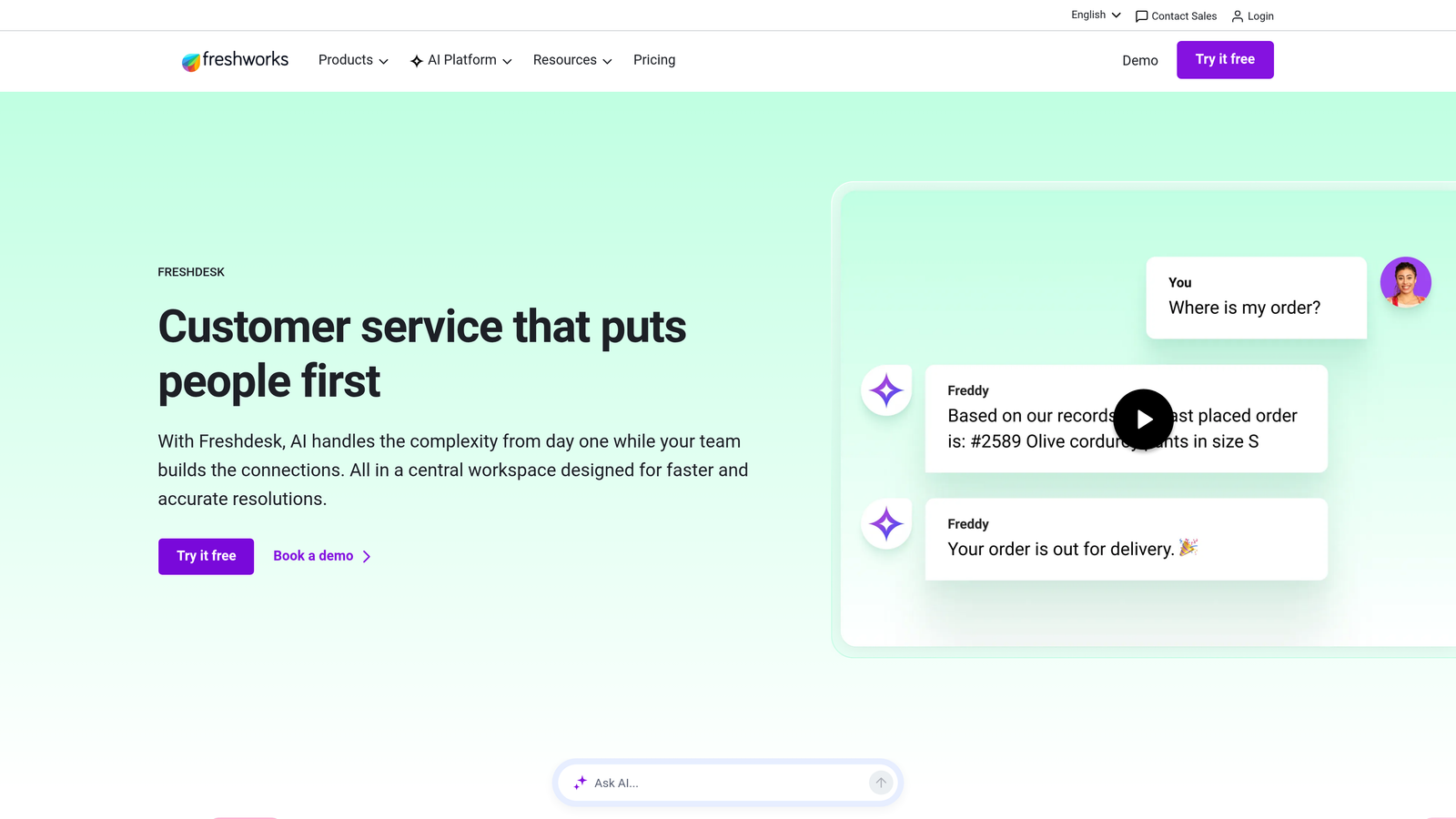
Freshdesk Freddy AI is Freshworks' AI layer for Freshdesk, providing automated ticket resolution, agent assist, and AI-powered insights with competitive pricing for growing teams.
Where This Tool Shines
Freddy AI makes a strong case for teams that want meaningful AI capabilities without enterprise-level pricing. The combination of a customer-facing AI agent and an agent-assist copilot in the same platform gives teams flexibility to automate where it makes sense while supporting humans on complex issues.
The native integration across the Freshworks suite is also worth mentioning. If you're using Freshsales or Freshchat alongside Freshdesk, Freddy creates a more connected data layer across sales and support.
Key Features
Freddy AI Agent: Customer-facing autonomous resolution for common support queries without human involvement.
Freddy Copilot: Agent-facing AI that suggests responses, summarizes tickets, and surfaces relevant knowledge during handling.
Ticket Summarization and Sentiment Analysis: Automatically processes incoming tickets to help agents prioritize and respond faster.
Freshworks Suite Integration: Connects natively with Freshsales and Freshchat for cross-functional data sharing.
Accessible Pricing: AI features available at price points accessible to SMBs, not just enterprise teams.
Best For
Growing SMBs and mid-market teams already using or evaluating the Freshworks ecosystem, particularly those that want both customer-facing automation and agent assistance without a large budget.
Pricing
Freddy AI is available on Pro and Enterprise plans, starting around $49 per agent per month. Verify current pricing directly with Freshworks.
6. Forethought
Best for: Teams that want AI triage and routing layered on top of an existing helpdesk
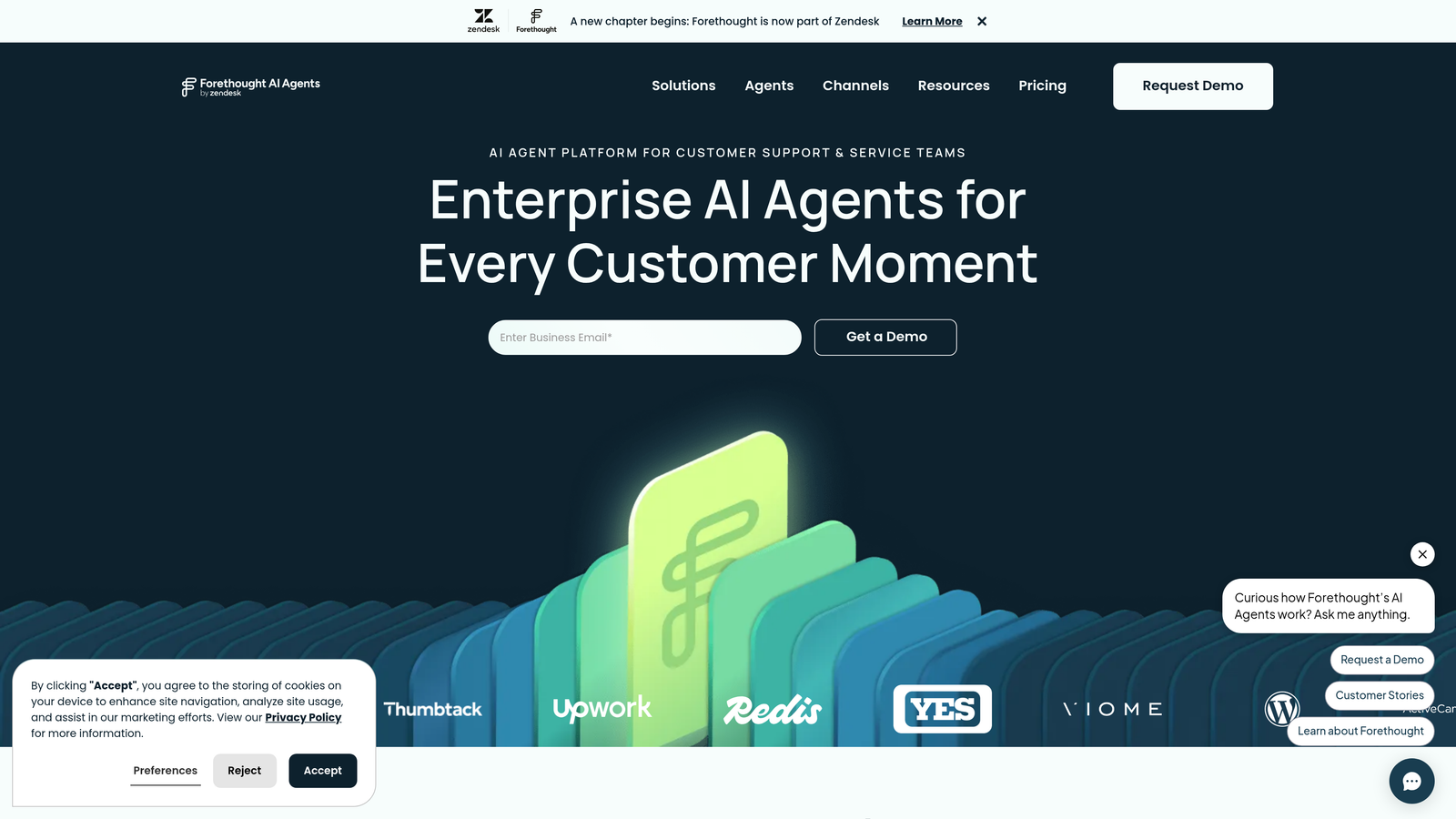
Forethought is an AI platform focused on intelligent ticket triage, predictive routing, and automated resolution, designed to sit on top of your existing helpdesk rather than replace it.
Where This Tool Shines
Forethought's architecture is deliberately additive. Rather than asking you to migrate your entire support operation, it integrates with Zendesk, Salesforce, and other platforms to add an AI intelligence layer on top. This makes it particularly appealing for teams with significant existing infrastructure they're not ready to replace.
The triage capabilities stand out. Forethought classifies tickets by intent, urgency, and sentiment before they ever reach an agent, which can meaningfully improve routing accuracy and reduce the time agents spend on the wrong tickets.
Key Features
AI-Powered Triage: Classifies tickets by intent, urgency, and sentiment automatically before routing to the right queue or agent.
Solve (Customer-Facing Agent): Autonomous resolution layer for handling common queries without human involvement.
Assist (Agent-Facing AI): Surfaces relevant knowledge and suggested responses during live ticket handling.
Helpdesk Compatibility: Works as an intelligence layer on top of Zendesk, Salesforce, and other major platforms.
Resolution and Deflection Analytics: Dashboard tracking what the AI resolves, deflects, and escalates for continuous optimization.
Best For
Support teams with established helpdesk infrastructure who want to add AI triage and resolution without a full platform migration. Also strong for teams where routing accuracy is a known pain point.
Pricing
Custom pricing based on ticket volume. Contact Forethought directly for a quote tailored to your usage.
7. Tidio
Best for: Small businesses and e-commerce teams wanting simple AI chat without complexity
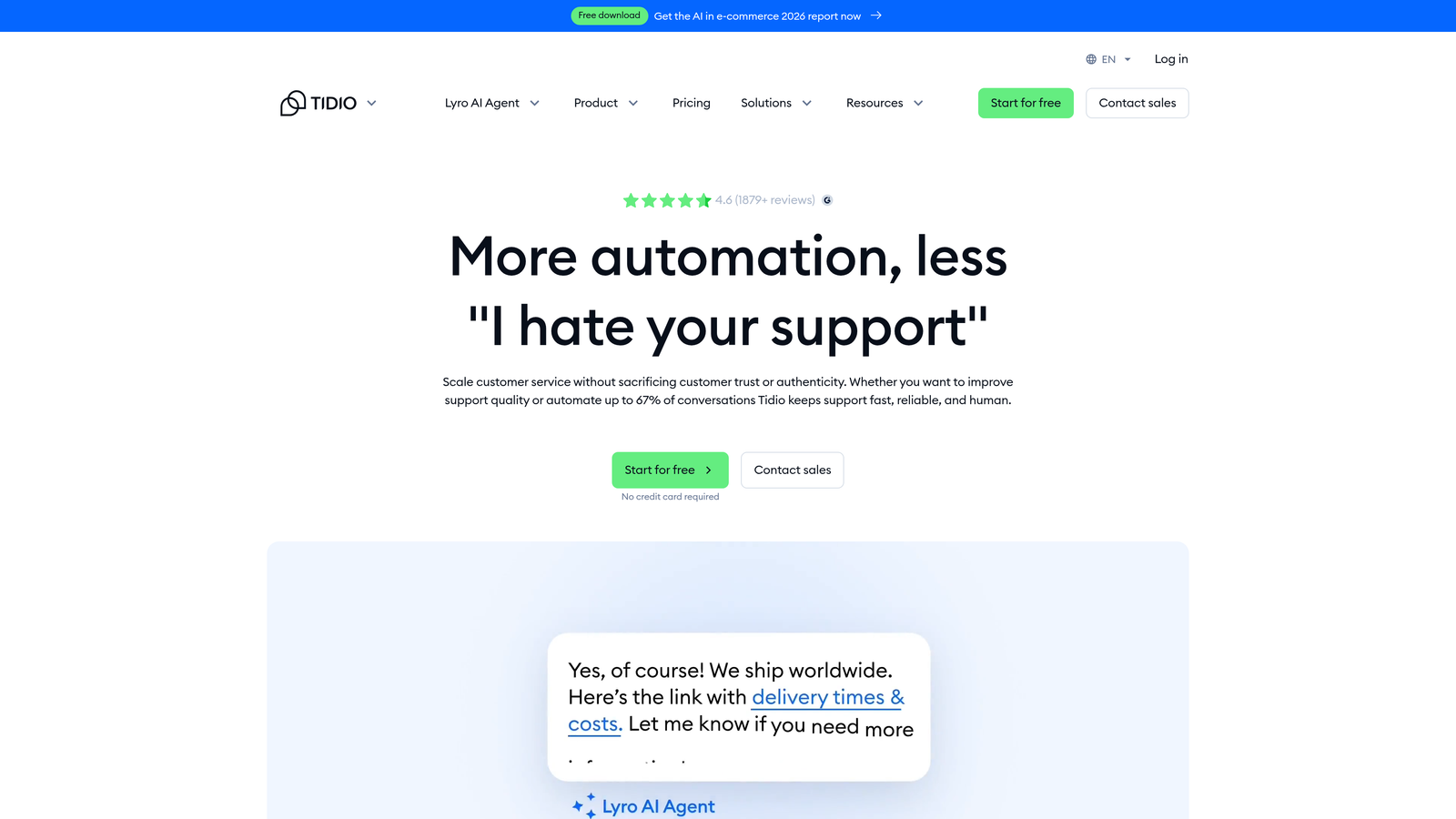
Tidio is an approachable AI chatbot and live chat platform designed for small businesses and e-commerce, with a visual builder and strong integrations for Shopify and WooCommerce.
Where This Tool Shines
Tidio wins on accessibility. The visual drag-and-drop builder means you can set up automated conversation flows without any technical background, and the free tier makes it genuinely low-risk to try. For small e-commerce teams managing support alongside a dozen other responsibilities, that simplicity has real value.
The Lyro AI chatbot adds a layer of conversational intelligence on top of the flow builder, handling open-ended customer questions rather than just scripted paths. It's not as sophisticated as enterprise platforms, but for the target use case it performs well.
Key Features
Lyro AI Chatbot: Conversational AI for handling customer questions beyond pre-built flows.
Visual Flow Builder: Drag-and-drop interface for creating chatbot conversations without coding.
E-Commerce Integrations: Native connections to Shopify, WooCommerce, and WordPress.
Combined AI and Live Chat: Single widget that handles both automated and human conversations seamlessly.
Free Tier Available: Entry-level access without a financial commitment to test before buying.
Best For
Small businesses, e-commerce stores, and solopreneurs who need basic AI chat capabilities without the complexity or cost of enterprise platforms. Not designed for high-volume B2B support environments.
Pricing
Free plan available. Paid plans start around $29 per month, with Lyro AI priced as a separate add-on. Check Tidio's website for current plan details.
8. Cognigy
Best for: Large contact centers needing AI automation across both voice and digital channels
Cognigy is an enterprise conversational AI platform supporting voice and digital channels, built for large contact centers that need omnichannel AI agent automation at scale.
Where This Tool Shines
Cognigy is one of the few platforms on this list that handles voice (phone) alongside digital channels with equal sophistication. For contact centers where a significant portion of interactions still happen over the phone, that matters. Most AI agent platforms are digital-first or digital-only.
The LLM orchestration layer is also notable. Cognigy lets you combine multiple AI models rather than being locked into a single provider, which gives enterprise teams more control over performance, cost, and compliance across different use cases.
Key Features
Omnichannel AI Agents: Covers voice (phone) and digital channels (chat, messaging, email) from a single platform.
LLM Orchestration: Combines multiple AI models for flexibility across use cases and compliance requirements.
Visual Conversation Designer: Enterprise-grade flow builder with governance controls for large teams.
Contact Center Integrations: Deep integrations with Genesys, NICE, Avaya, and other contact center infrastructure.
Flexible Deployment: On-premise and cloud options for regulated industries with strict data requirements.
Best For
Large enterprise contact centers handling high volumes across voice and digital channels, particularly in regulated industries like financial services or healthcare where deployment flexibility and compliance controls matter.
Pricing
Enterprise pricing with custom quotes. Contact Cognigy for a proposal based on channel volume and deployment requirements.
9. Ultimate (now part of Zendesk)
Best for: Enterprise teams seeking multilingual AI automation within the Zendesk ecosystem
Ultimate was a standalone AI agent platform with strong multilingual capabilities before being acquired by Zendesk. Its technology is now integrated into Zendesk's AI suite, bringing no-code bot building and 100+ language support to the Zendesk platform.
Where This Tool Shines
Ultimate built its reputation on multilingual AI that goes beyond surface-level translation. Support across 100+ languages with genuine reasoning capabilities made it a go-to for global enterprise CX teams. That capability is now accessible through Zendesk's platform, which expands its reach considerably.
The no-code bot builder was a key differentiator for Ultimate pre-acquisition, allowing CX teams to build and iterate on AI agents without engineering support. That philosophy carries through into the Zendesk integration.
Key Features
100+ Language Support: Multilingual AI agents with reasoning capabilities across a broad range of languages.
No-Code Bot Builder: CX-team-friendly interface for building and modifying AI agents without technical resources.
Backend Integrations: Connects to data sources for personalized, context-aware responses rather than generic answers.
Zendesk Integration: Now embedded within Zendesk's AI agent and routing capabilities post-acquisition.
Enterprise Track Record: Proven history with large enterprise CX teams before and after the Zendesk acquisition.
Best For
Enterprise teams already on Zendesk who need strong multilingual AI capabilities and a no-code approach to bot management. Prospective standalone buyers should evaluate through Zendesk's current AI offering.
Pricing
Now part of Zendesk's AI offerings. Contact Zendesk directly for pricing details as part of their Suite and AI add-on structure.
How to Choose the Right Automated Support Agent Software
The right platform depends heavily on where you are, what you're running today, and where you need to go. Here's a practical breakdown by situation.
If you're an enterprise on Zendesk: Zendesk AI Agents and the integrated Ultimate capabilities are the path of least resistance. You get AI automation without a migration, and the multilingual and multi-channel depth is hard to match at that scale.
If you're a B2B SaaS product team: Halo AI is purpose-built for this context. Page-aware visual guidance, automatic bug ticket creation, and business intelligence from support data are features that map directly to how product teams think about support. It's not just resolving tickets: it's connecting support to product, engineering, and revenue workflows.
If you're already on Intercom: Fin is the obvious starting point. The native integration, per-resolution pricing, and zero migration cost make it easy to evaluate without a major commitment.
If you're an SMB or e-commerce team: Tidio and Freshdesk Freddy offer accessible entry points. Tidio wins on simplicity and e-commerce integrations; Freddy wins if you're already in the Freshworks ecosystem.
If you run a large contact center with voice channels: Cognigy is the standout. Most platforms on this list don't handle phone at the same level.
If you want AI on top of your existing helpdesk without replacing it: Forethought is designed exactly for that. It adds triage intelligence and resolution capability as a layer, not a replacement.
The broader principle: evaluate based on your current stack, your growth trajectory, and whether you need a platform that learns and improves continuously or one that simply automates what you've already defined.
Your support team shouldn't have to scale linearly with your customer base. AI agents can handle routine tickets, guide users through your product, and surface business intelligence while your team focuses on complex issues that genuinely need a human touch. If you're building a B2B SaaS product and want an AI-first approach with continuous learning and business intelligence built in, see Halo in action and discover how every interaction can make your support smarter.