9 Best Automated Support Chat Solutions for B2B Teams in 2026
Modern automated support chat solutions now handle complex B2B issues with AI that understands context and learns continuously, going far beyond basic chatbots. This 2026 guide evaluates nine platforms based on AI capabilities, integration depth, scalability, and resolution rates to help B2B teams choose between enterprise-grade automation and nimble solutions that work with existing helpdesks.
 Matt PattoliFounder11 min read
Your support team is drowning in tickets while customers wait hours for simple answers. Automated support chat solutions have evolved far beyond basic chatbots—today's AI-powered platforms can resolve complex issues, understand context, and learn from every interaction. But with dozens of options flooding the market, finding the right fit for your B2B operation requires cutting through the noise.
We evaluated these tools based on AI capabilities, integration depth, scalability for growing teams, and real-world resolution rates. Whether you need enterprise-grade automation or a nimble solution that works with your existing helpdesk, this guide covers the standout options for 2026.
1. Halo AI
Best for: B2B teams wanting AI-first support that learns continuously and integrates across their entire business stack.
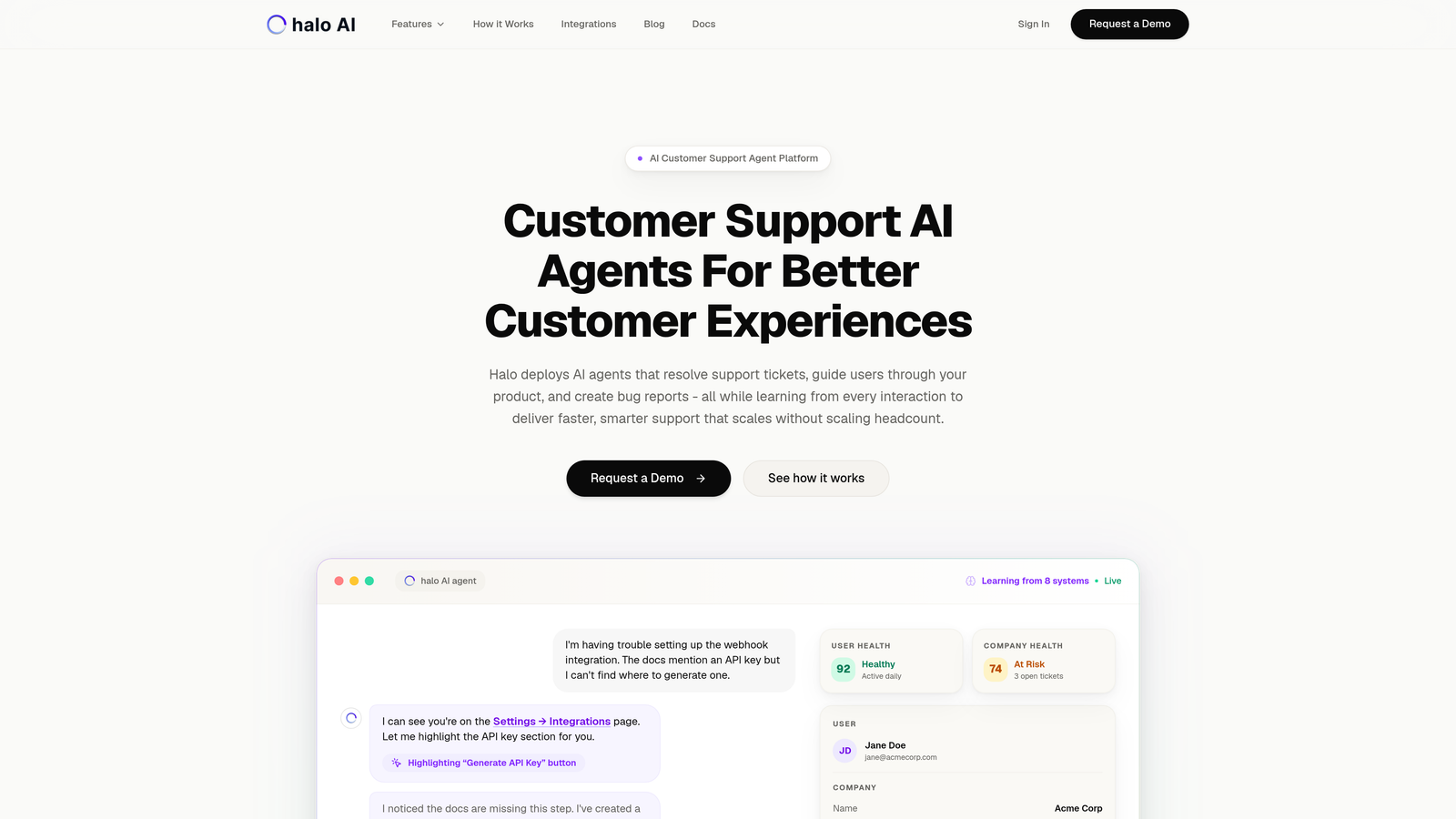
Halo AI is an AI-powered customer support platform built from the ground up for intelligent automation, not as an add-on to legacy helpdesk systems.
Where This Tool Shines
Unlike traditional chatbots that follow rigid scripts, Halo's AI agents learn from every interaction to deliver increasingly accurate resolutions. The platform's page-aware technology understands exactly what users see on screen, enabling visual guidance that goes beyond text-based support.
What sets Halo apart is its business intelligence layer. Beyond resolving tickets, it surfaces customer health signals, revenue intelligence, and usage anomalies—giving your team proactive insights rather than just reactive support data.
Key Features
Page-Aware Chat Widget: Sees what users see on your product interface, enabling contextual visual guidance and precise troubleshooting.
Autonomous Ticket Resolution: AI agents handle routine issues independently, escalating to humans only when complexity requires it.
Auto Bug Ticket Creation: Automatically generates development tickets in Linear when product issues are detected during support conversations.
Business Intelligence Analytics: Tracks customer health signals, churn risk indicators, and revenue intelligence beyond standard support metrics.
Deep Stack Integrations: Connects bi-directionally with Linear, Slack, HubSpot, Stripe, Intercom, Zoom, PandaDoc, and Fathom for unified customer context.
Best For
Product teams at B2B SaaS companies who need support automation that scales without adding headcount. Particularly valuable for teams currently using Zendesk, Freshdesk, or Intercom who want AI-first capabilities their existing platform doesn't provide.
Pricing
Custom pricing based on usage volume and team size. Contact their team for a tailored quote that matches your support needs.
2. Intercom Fin
Best for: Product-led companies already invested in the Intercom ecosystem who want GPT-powered automation.
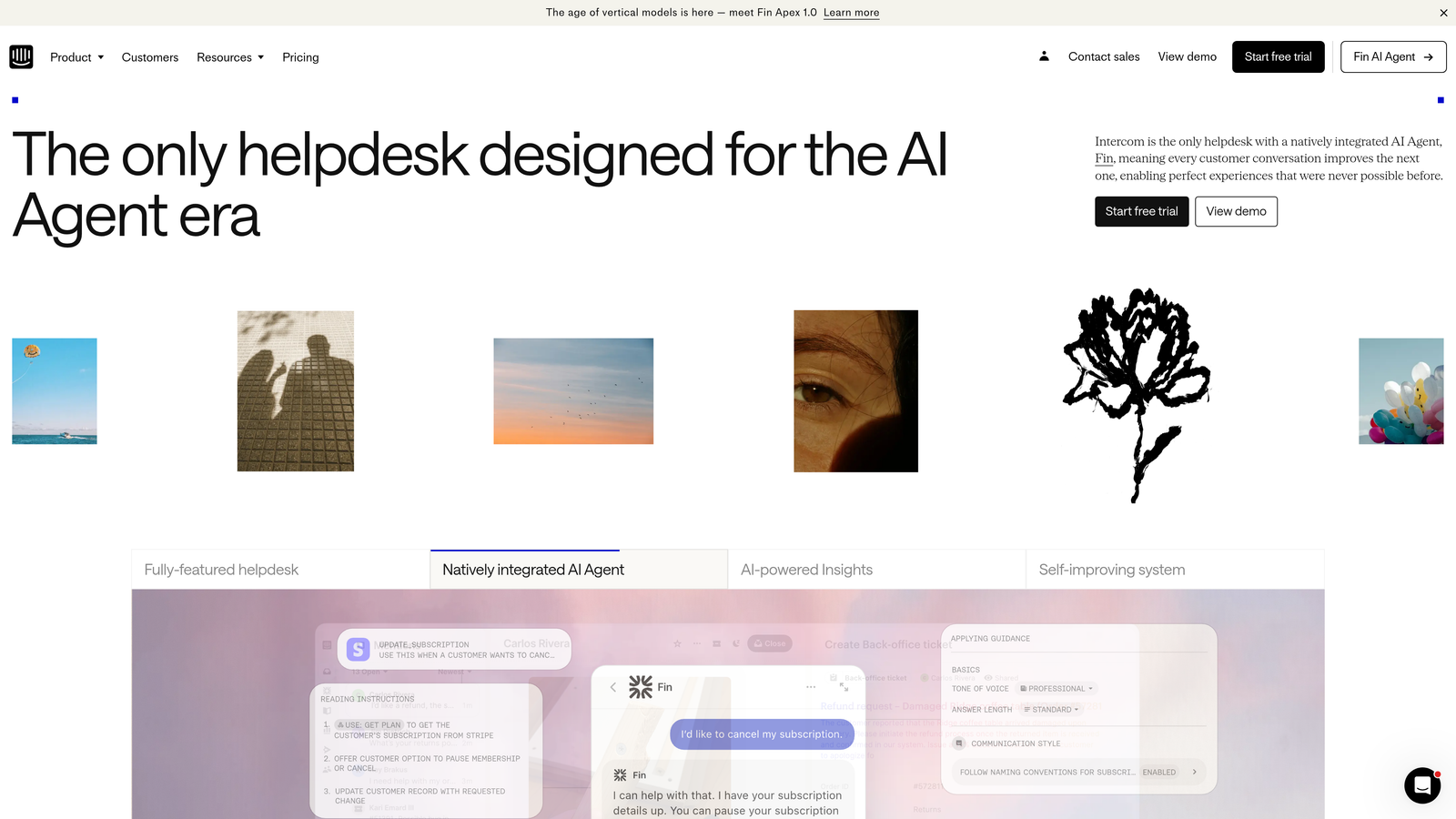
Intercom Fin is an AI support agent powered by GPT technology, designed to work seamlessly within Intercom's existing messaging platform.
Where This Tool Shines
Fin excels at learning from your existing help center content and past conversations, making setup relatively quick for teams with robust documentation. The GPT foundation means it handles nuanced questions better than older rule-based chatbots.
The human handoff workflow is particularly smooth—when Fin encounters something beyond its capabilities, it passes context seamlessly to your team rather than forcing customers to repeat themselves.
Key Features
GPT-Powered Resolution: Uses advanced language models to understand complex questions and provide contextual answers.
Help Center Learning: Automatically trains on your existing documentation, reducing manual configuration time.
Seamless Human Handoff: Transfers conversations to agents with full context when AI reaches its limits.
Product Tour Integration: Combines support with onboarding flows and in-product guidance.
Conversation History Context: Remembers previous interactions with customers for continuity across conversations.
Best For
Teams already using Intercom for customer messaging who want to add AI automation without switching platforms. Works well for product-led growth companies with strong self-service documentation.
Pricing
Starts at $0.99 per resolution, plus your existing Intercom subscription. Costs can add up quickly for high-volume support operations.
3. Zendesk AI
Best for: Enterprise organizations requiring comprehensive compliance, security controls, and advanced analytics alongside AI automation.
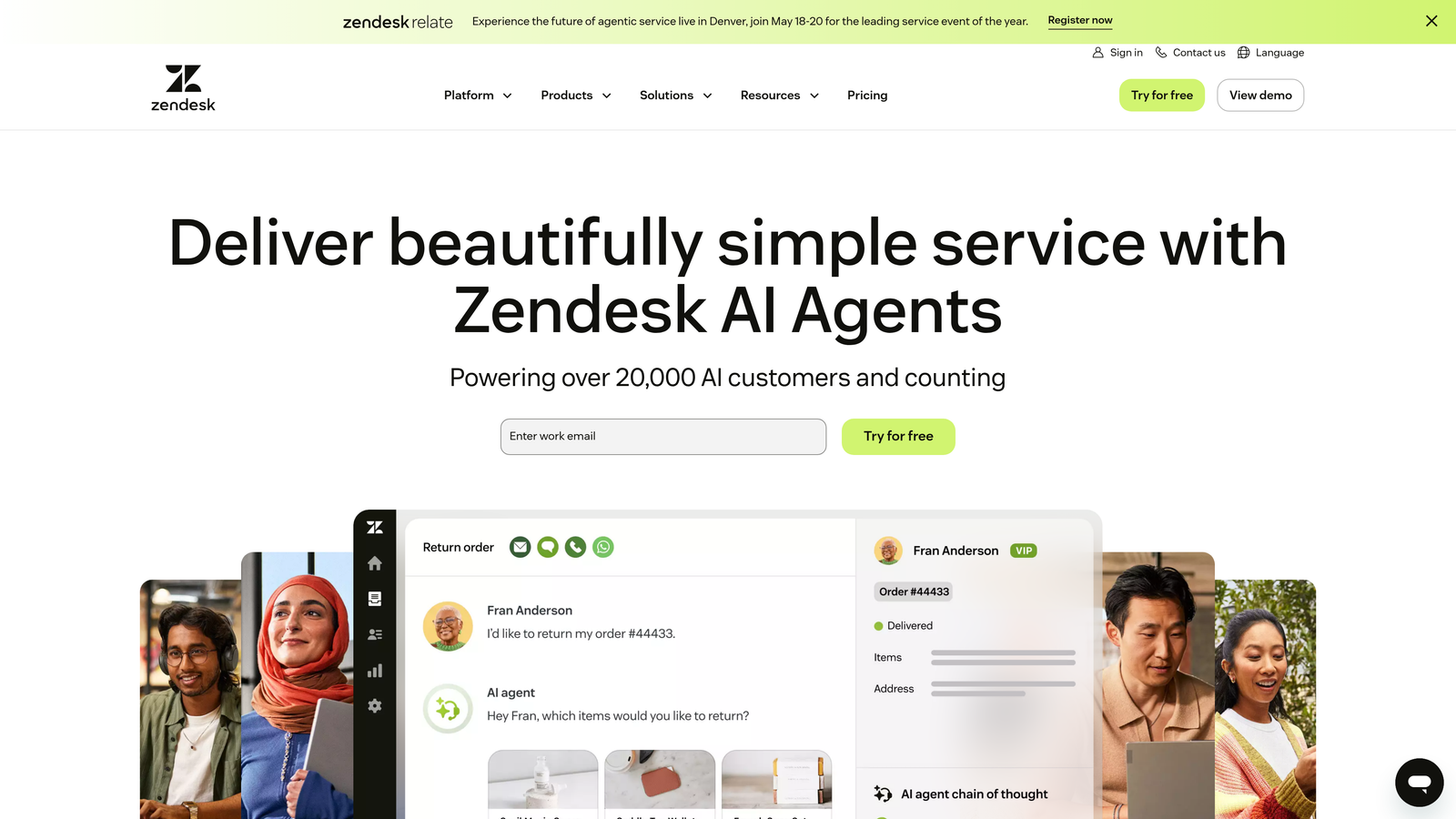
Zendesk AI is an enterprise-grade automation layer that adds intent detection, sentiment analysis, and intelligent routing to the Zendesk support ecosystem.
Where This Tool Shines
Zendesk's AI capabilities are built for scale and governance. The platform handles complex ticket routing across large teams with sophisticated rules, and its compliance reporting meets enterprise security requirements that smaller tools can't match.
The agent assist features are particularly valuable for large support teams—AI-suggested responses help maintain consistency across dozens or hundreds of agents, reducing training time and improving quality.
Key Features
Advanced Intent Detection: Analyzes incoming tickets to understand customer needs before routing, improving first-contact resolution rates.
Sentiment Analysis: Identifies frustrated customers automatically, enabling priority escalation for at-risk accounts.
Intelligent Ticket Routing: Distributes conversations to the right specialist based on complexity, topic, and agent expertise.
Agent Assist Suggestions: Provides real-time response recommendations to agents during conversations, speeding up resolution times.
Enterprise Security and Compliance: Offers SOC 2, GDPR, and HIPAA compliance with comprehensive audit trails and data governance.
Best For
Large enterprises with existing Zendesk deployments who need AI capabilities that meet strict security and compliance requirements. Best suited for teams of 50+ agents handling complex, regulated support operations.
Pricing
AI add-on starts at $50 per agent per month on top of Zendesk Suite plans, making it one of the pricier options for large teams.
4. Freshdesk Freddy AI
Best for: Mid-market teams seeking AI automation at accessible price points without enterprise complexity.
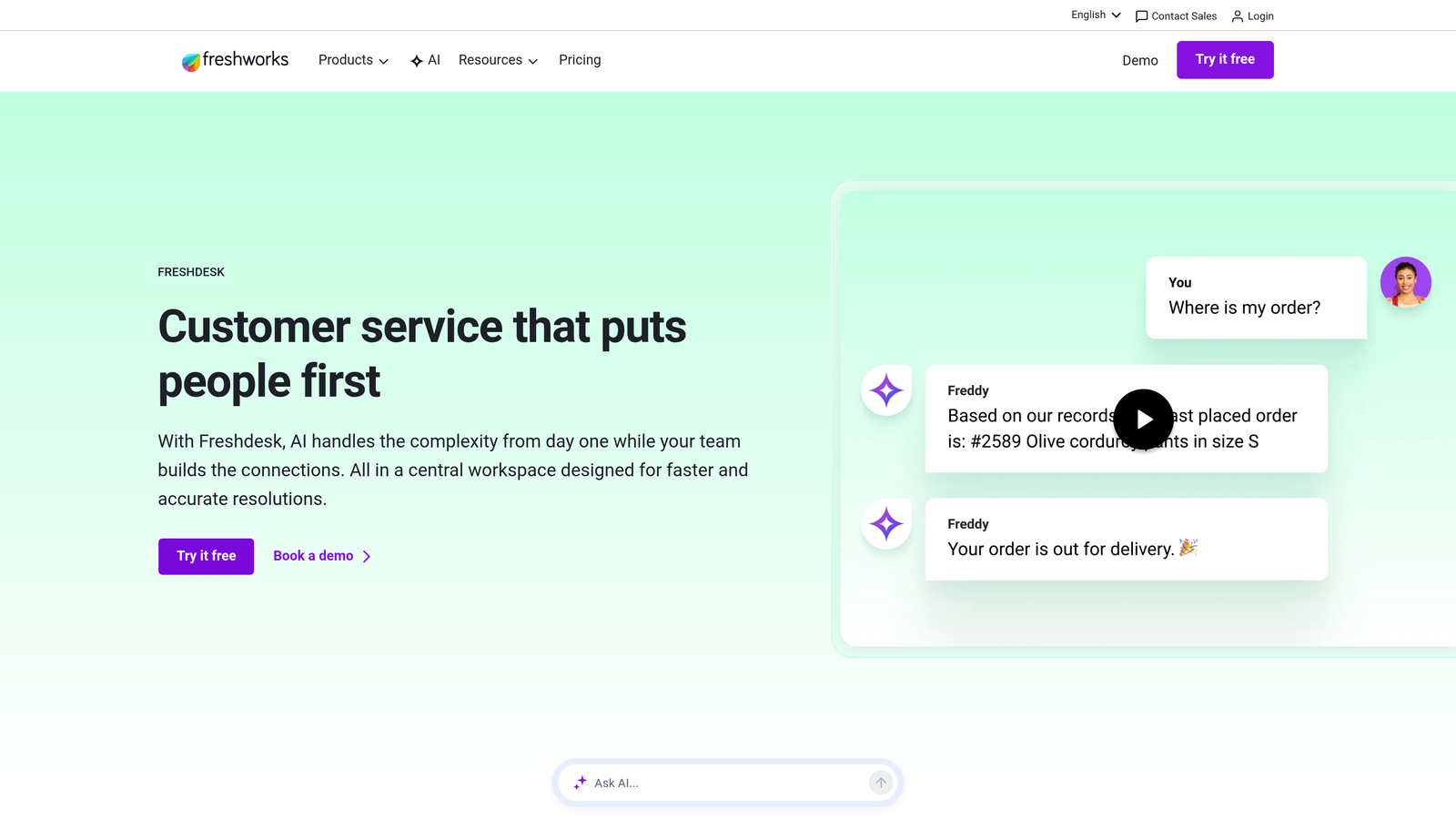
Freshdesk Freddy AI is an AI assistant that handles automatic ticket triage, response suggestions, and self-service chatbots within the Freshdesk platform.
Where This Tool Shines
Freddy AI delivers solid automation capabilities without the enterprise price tag or complexity. The automatic categorization and routing works well out of the box, reducing manual ticket sorting for growing teams.
The chatbot builder strikes a good balance between flexibility and ease of use—you can create custom flows without coding, but you're not drowning in options like some enterprise platforms.
Key Features
Automatic Ticket Categorization: Uses AI to tag and route incoming tickets based on content, saving agents from manual sorting.
AI-Suggested Responses: Recommends replies to agents based on ticket content and past resolutions, speeding up response times.
Self-Service Chatbot Builder: Visual interface for creating chatbot flows without coding knowledge.
Canned Response Optimization: Analyzes which saved responses perform best and suggests improvements over time.
Performance Analytics: Tracks AI resolution rates, agent productivity gains, and customer satisfaction metrics.
Best For
Growing B2B companies with support teams of 10-50 agents who want meaningful AI automation without enterprise-level investment. Works particularly well for teams new to AI support tools.
Pricing
Included in the Pro plan at $49 per agent per month. Advanced AI features require the Enterprise plan with custom pricing.
5. Ada
Best for: High-volume support operations needing multilingual capabilities and no-code flexibility at enterprise scale.
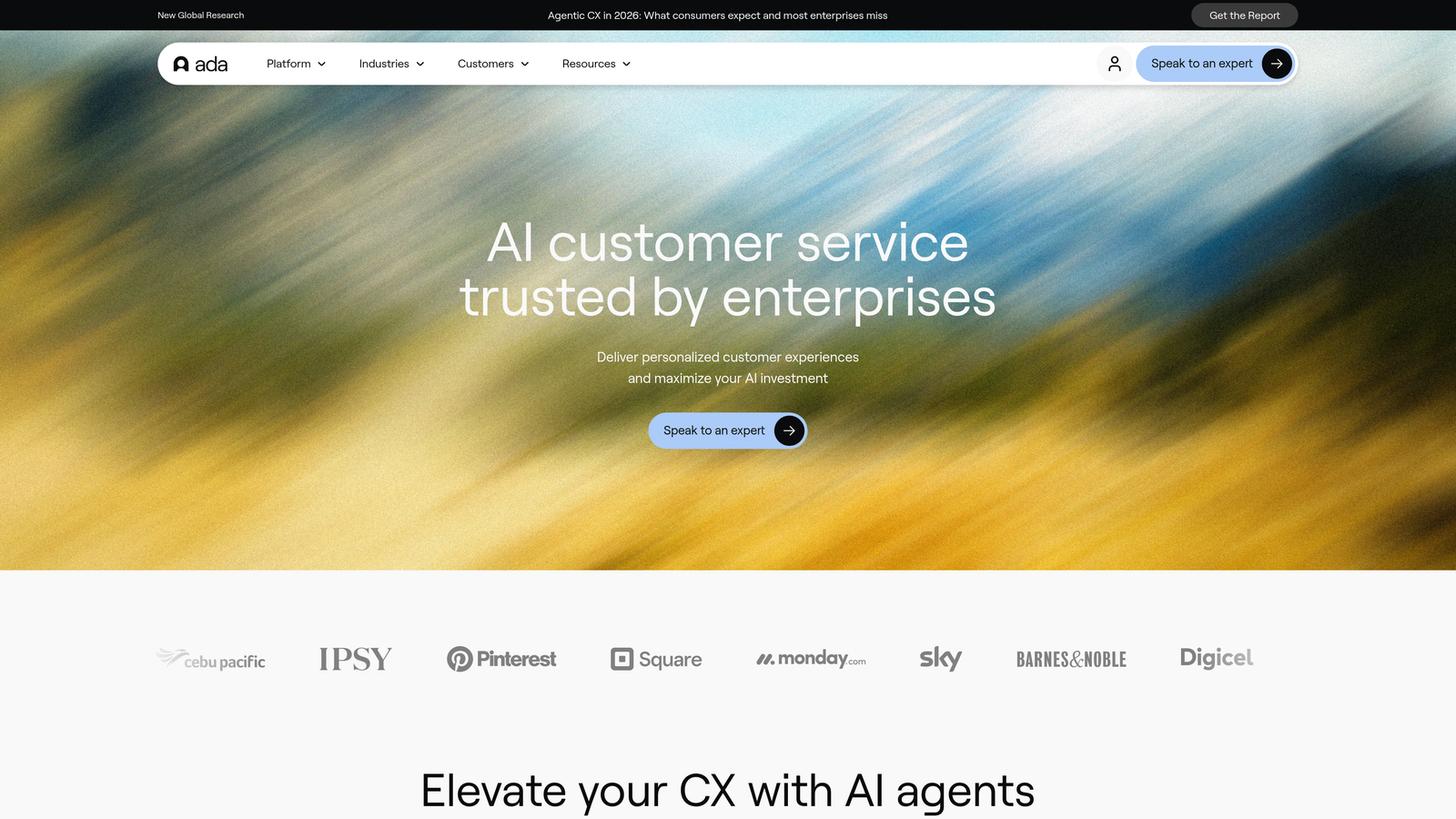
Ada is a no-code AI automation platform designed for companies handling thousands of support conversations daily across multiple languages.
Where This Tool Shines
Ada's no-code conversation builder empowers support teams to create and modify automation flows without engineering resources. This independence matters when you need to update responses quickly based on product changes or customer feedback.
The multilingual support is genuinely impressive—50+ languages work out of the box without separate training or configuration for each language, making global expansion significantly easier.
Key Features
No-Code Conversation Builder: Visual interface lets support teams create complex automation flows without developer involvement.
50+ Language Support: Handles multilingual conversations automatically without separate training per language.
Proactive Messaging: Initiates conversations based on user behavior, reducing inbound support volume.
API-First Architecture: Connects to virtually any system through flexible API integrations for custom workflows.
Resolution-Based Metrics: Tracks success by actual problem resolution rather than just conversation completion.
Best For
Enterprise companies with global customer bases handling 10,000+ support conversations monthly. Particularly valuable for teams supporting multiple languages or regions simultaneously.
Pricing
Custom enterprise pricing based on resolution volume. Expect higher costs than mid-market tools but lower than building custom AI internally.
6. Drift
Best for: B2B companies wanting conversational AI that bridges both sales and support with revenue-focused routing.
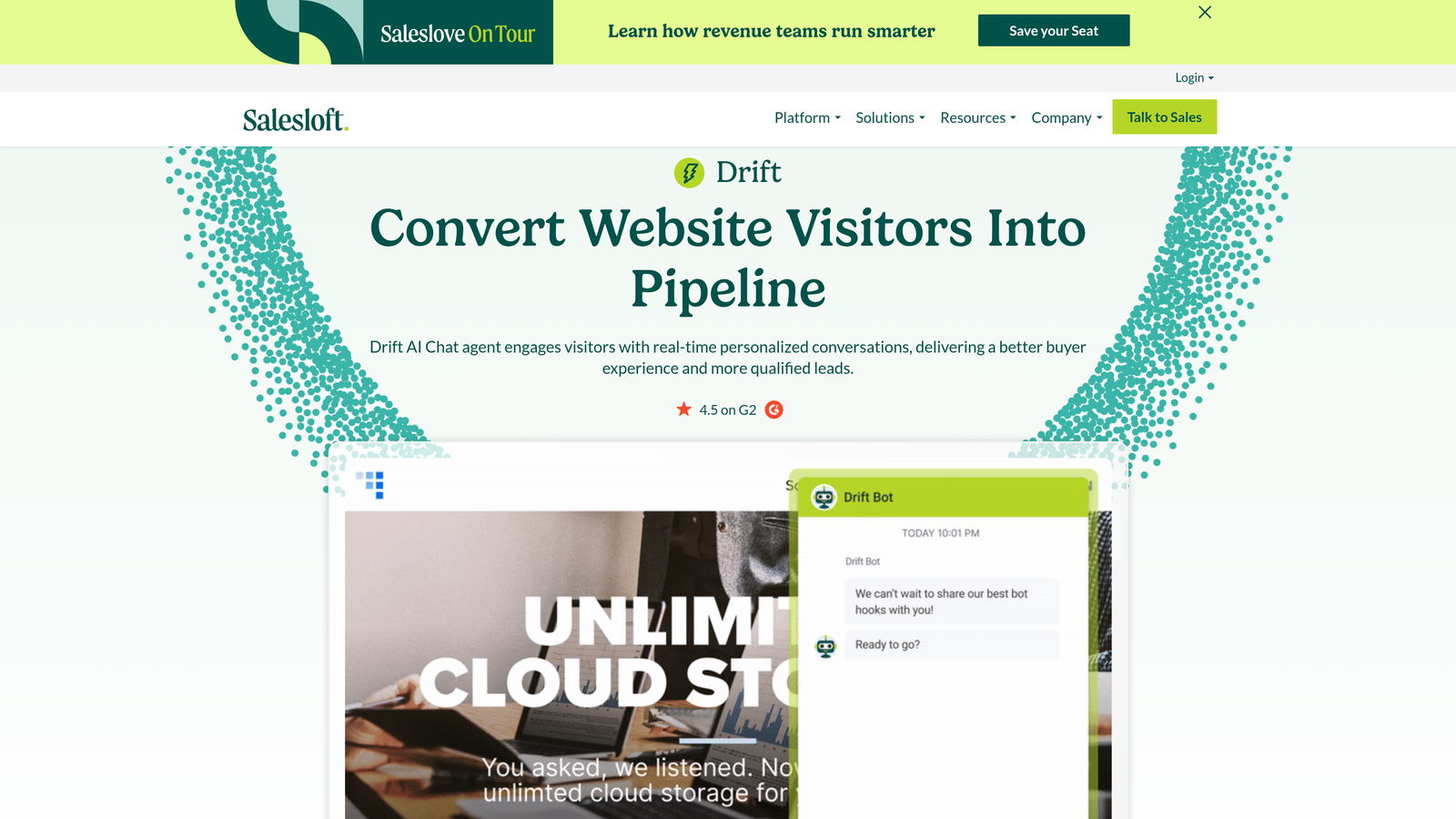
Drift is a conversational AI platform that combines sales engagement with support automation, routing conversations based on revenue potential and account status.
Where This Tool Shines
Drift excels at the sales-support intersection. The platform routes high-value prospects to sales while directing existing customers to support, maximizing revenue opportunities while maintaining service quality.
The account-based marketing integration is particularly strong—Drift recognizes visitors from target accounts and adjusts conversation flows accordingly, something pure support tools don't offer.
Key Features
Revenue-Focused Routing: Directs conversations to sales or support based on account value, intent signals, and buying stage.
ABM and Sales Intelligence: Identifies visitors from target accounts and provides sales context during conversations.
Meeting Scheduling Automation: Books sales calls and support sessions directly within chat conversations.
Intent Data and Buying Signals: Tracks visitor behavior to identify purchase intent and prioritize high-value conversations.
Video and Voice Support: Enables richer conversation formats beyond text-based chat.
Best For
B2B companies with high-touch sales processes who want unified conversational experiences across the customer lifecycle. Best for teams where support and sales need tight coordination.
Pricing
Premium plan starts at $2,500 per month, positioning Drift as a significant investment focused on revenue generation rather than pure support efficiency.
7. Tidio
Best for: Small teams and startups needing accessible chat automation with AI capabilities at budget-friendly prices.
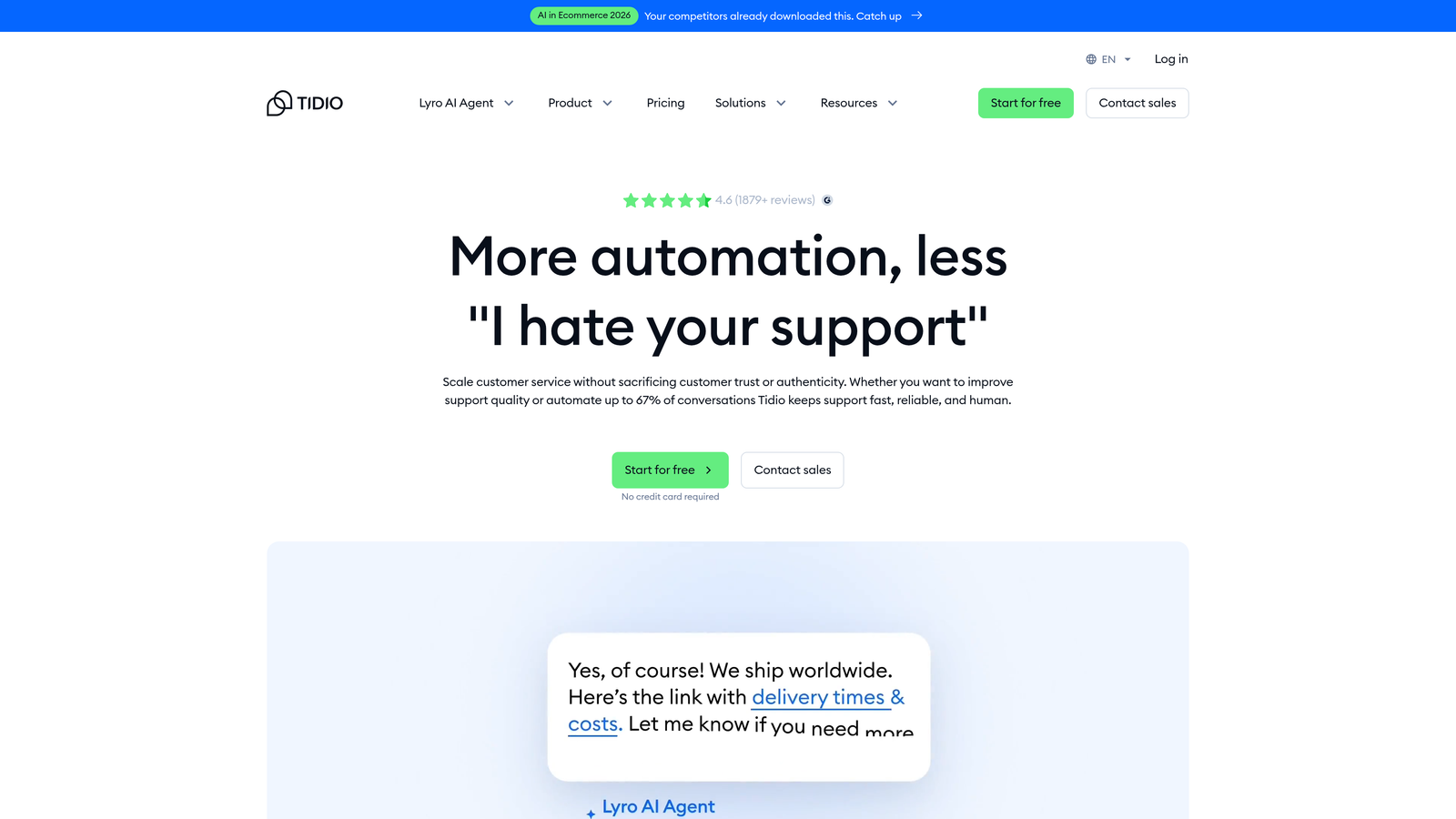
Tidio is a chat automation platform featuring visual flow builders and AI-powered responses designed for teams with limited technical resources and tight budgets.
Where This Tool Shines
Tidio's visual chatbot builder makes automation accessible to non-technical teams. You can create functional support flows in minutes without touching code, lowering the barrier to entry significantly.
The Lyro AI feature adds genuine intelligence to automated responses without the complexity of enterprise AI platforms. For small teams handling hundreds rather than thousands of conversations monthly, it provides meaningful automation at accessible price points.
Key Features
Visual Chatbot Flow Builder: Drag-and-drop interface for creating automation flows without coding skills.
Lyro AI for Automated Responses: AI-powered answer generation based on your help center content and past conversations.
Live Chat with Visitor Tracking: See what pages visitors browse before initiating conversations for better context.
E-commerce Platform Integrations: Direct connections to Shopify, WooCommerce, and other online store platforms.
Mobile App Support: Manage conversations on the go with iOS and Android apps for small team flexibility.
Best For
Startups and small businesses with support teams of 1-10 people who need basic automation without enterprise complexity or cost. Works particularly well for e-commerce businesses with straightforward support needs.
Pricing
Free tier available for basic chat. AI features start at $29 per month, making it one of the most accessible options for budget-conscious teams.
8. HubSpot Service Hub
Best for: Teams wanting unified customer lifecycle management with support automation tightly integrated into their CRM.
HubSpot Service Hub is customer service automation built directly into HubSpot's CRM, providing unified data across marketing, sales, and support.
Where This Tool Shines
The unified CRM foundation means support agents see complete customer context—marketing interactions, sales conversations, purchase history, and past support tickets all in one timeline. This eliminates the context-switching that plagues teams using separate tools.
For companies already using HubSpot for marketing or sales, adding Service Hub creates a seamless customer experience without integration headaches or data silos between departments.
Key Features
Unified CRM and Support Data: Single customer timeline across marketing, sales, and support touchpoints eliminates data fragmentation.
Conversational Bots with CRM Context: Chatbots access full customer history to provide personalized automated responses.
Knowledge Base with AI Search: Self-service documentation with intelligent search that understands natural language questions.
Customer Feedback and NPS Tools: Built-in surveys and feedback collection to measure satisfaction alongside support metrics.
Ticketing with Full Customer Timeline: Support tickets include complete interaction history for comprehensive context.
Best For
Companies already using HubSpot CRM who want to extend their unified customer data into support operations. Ideal for teams prioritizing lifecycle visibility over specialized support features.
Pricing
Starter plan at $20 per month for basic features. Professional plan at $500 per month unlocks advanced automation and AI capabilities.
9. Kustomer
Best for: E-commerce and subscription businesses needing omnichannel support with timeline-based customer views.
Kustomer is an omnichannel support platform featuring timeline-based conversation views, particularly strong for businesses with complex customer journeys across multiple channels.
Where This Tool Shines
Kustomer's timeline view presents customer interactions chronologically across all channels—chat, email, social media, SMS—giving agents complete context without switching between tools. This matters significantly for e-commerce where customers might message on Instagram, email about shipping, then chat about returns.
The e-commerce and subscription integrations are particularly deep, pulling in order history, subscription status, and payment information directly into support conversations for faster resolution.
Key Features
Timeline-Based Customer View: Chronological display of all customer interactions across channels in a single unified interface.
Omnichannel Support: Manages chat, email, social media, and SMS conversations from one platform without channel silos.
AI-Powered Classification and Routing: Automatically categorizes and routes conversations based on content and customer data.
E-commerce and Subscription Integrations: Deep connections to Shopify, Stripe, and subscription platforms with order data in conversations.
Proactive Outreach Automation: Initiates conversations based on customer behavior, order status, or subscription events.
Best For
E-commerce and subscription-based businesses with complex customer journeys across multiple communication channels. Works best for teams handling 5,000+ conversations monthly with significant channel diversity.
Pricing
Enterprise plan starts at $89 per user per month. Custom pricing available for larger teams with specific integration requirements.
Making the Right Choice
The automated support chat landscape has matured significantly—you're no longer choosing between basic chatbots and nothing. Today's decision centers on how deeply AI integrates with your business operations and whether the platform grows with your complexity.
If you're operating within an existing helpdesk ecosystem, tools like Intercom Fin, Zendesk AI, or Freshdesk Freddy AI extend your current platform with AI capabilities. These work well when you're satisfied with your helpdesk but want better automation on top of it.
For teams wanting AI-first architecture that learns continuously and connects across your entire business stack, Halo AI provides intelligence that goes beyond ticket resolution into business insights. The page-aware context and deep integrations make it particularly valuable for product-led B2B companies.
Enterprise operations with strict compliance requirements and large agent teams will find Zendesk AI or Ada better suited to their governance needs. The higher price points reflect comprehensive security controls and audit capabilities that smaller tools don't provide.
Budget-conscious startups should consider Tidio or HubSpot Service Hub's starter tier—both offer genuine automation without enterprise complexity or cost. You'll sacrifice some advanced features, but you'll get meaningful support automation that scales with early growth.
Your support team shouldn't scale linearly with your customer base. Let AI agents handle routine tickets, guide users through your product, and surface business intelligence while your team focuses on complex issues that need a human touch. See Halo in action and discover how continuous learning transforms every interaction into smarter, faster support.