9 Best Automated Support Tools for SaaS Platforms in 2026
This guide evaluates the 9 best automated support for SaaS platforms tools in 2026, comparing AI resolution capabilities, SaaS-specific integrations, scalability, and pricing to help teams reduce ticket volume and agent workload without proportionally growing headcount. Whether you're an early-stage startup or enterprise, the breakdown covers solutions suited to every stage of growth.
 Matt PattoliFounder13 min read
SaaS companies face a support challenge that's genuinely different from other industries. Users expect instant, contextual help inside the product, not generic FAQ pages or 48-hour email queues. And as your customer base scales, hiring proportionally more support agents becomes operationally unsustainable.
That's where automated support tools come in. These platforms use AI, workflow automation, and intelligent routing to resolve tickets faster, reduce agent workload, and keep customers happy without ballooning your headcount.
We evaluated dozens of tools and narrowed the field to nine that stand out specifically for SaaS teams. Our selection criteria included AI resolution capabilities, SaaS-specific integrations (billing tools, product analytics, dev platforms), ease of implementation, scalability, and pricing transparency. Whether you're a startup handling your first thousand users or an enterprise managing millions of interactions, there's a tool on this list for you.
1. Halo AI
Best for: SaaS teams wanting an AI-first support platform with page-aware context and business intelligence
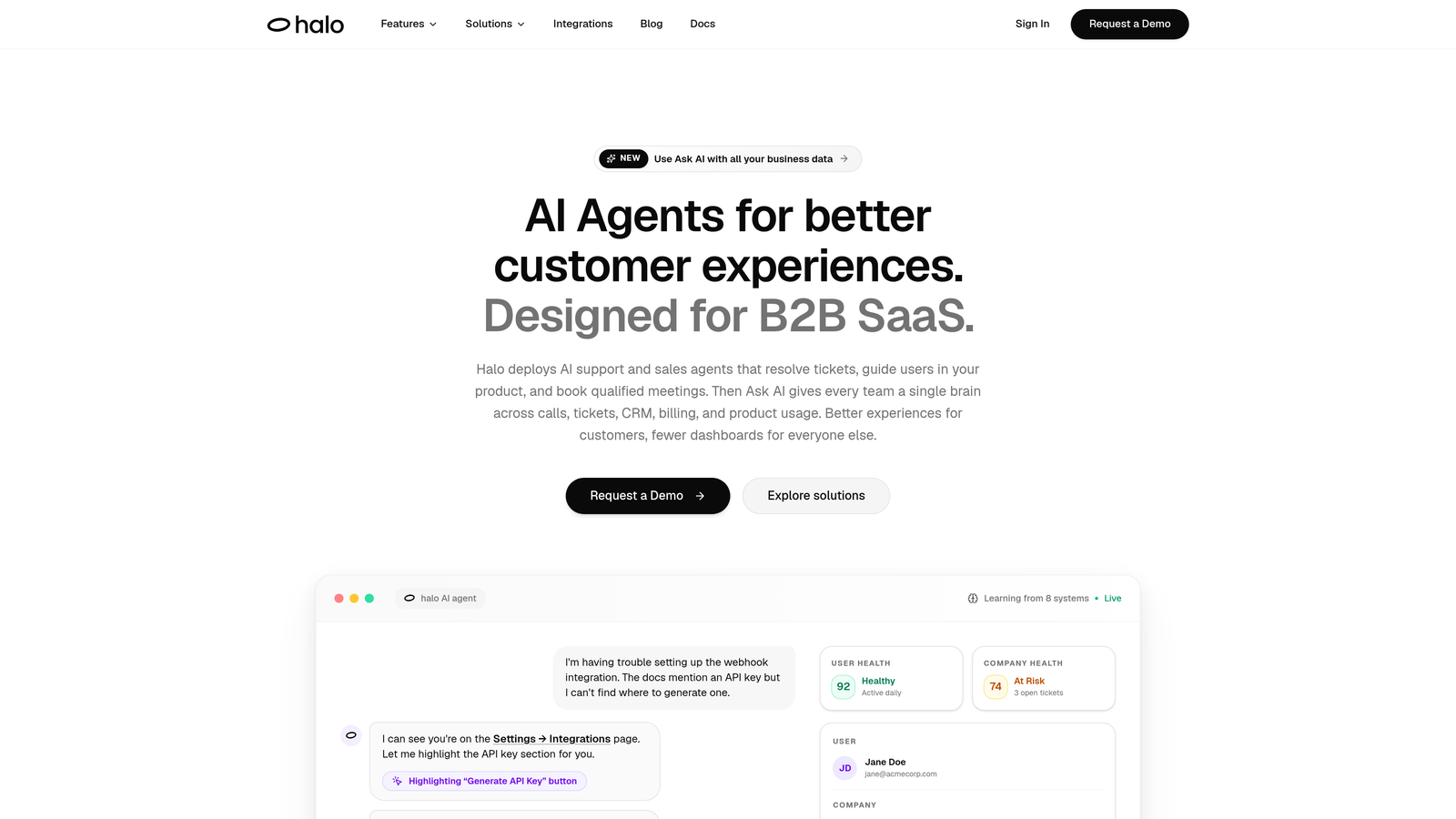
Halo AI is an AI-first customer support platform that deploys autonomous agents to resolve tickets, guide users with page-aware context, and surface business intelligence while continuously learning from every interaction.
Where This Tool Shines
Most support tools bolt AI onto an existing helpdesk workflow. Halo is built AI-first, which means the architecture is designed around autonomous resolution rather than assisted deflection. The platform's page-aware chat widget actually understands what a user is looking at inside your product, enabling guidance that's contextually relevant rather than generic.
Beyond ticket resolution, Halo surfaces customer health signals, revenue intelligence, and anomaly detection through its smart inbox. That means your support data becomes a source of business intelligence, not just a queue to clear.
Key Features
Page-Aware AI Chat Widget: Sees what users see in real time, enabling contextual guidance tied to specific product pages and actions.
Autonomous Ticket Resolution: AI agents handle tickets end-to-end with continuous learning from every resolved interaction.
Smart Inbox with Business Intelligence: Surfaces customer health signals, anomaly detection, and revenue intelligence alongside standard support metrics.
Auto Bug Ticket Creation: Automatically generates bug tickets integrated with Linear, Jira, and other developer tools without manual intervention.
Live Agent Handoff: Escalates complex issues to human agents with full conversation context preserved, so nothing gets repeated.
Best For
SaaS product teams and B2B companies who want AI that genuinely resolves tickets rather than deflecting them, and who need their support stack to connect with dev tools, CRM, billing platforms, and communication tools like Slack and Intercom.
Pricing
Contact for pricing; plans scale with usage and team size. Enterprise and startup tiers available.
2. Intercom
Best for: Teams wanting a unified messaging platform that combines support, onboarding, and sales conversations
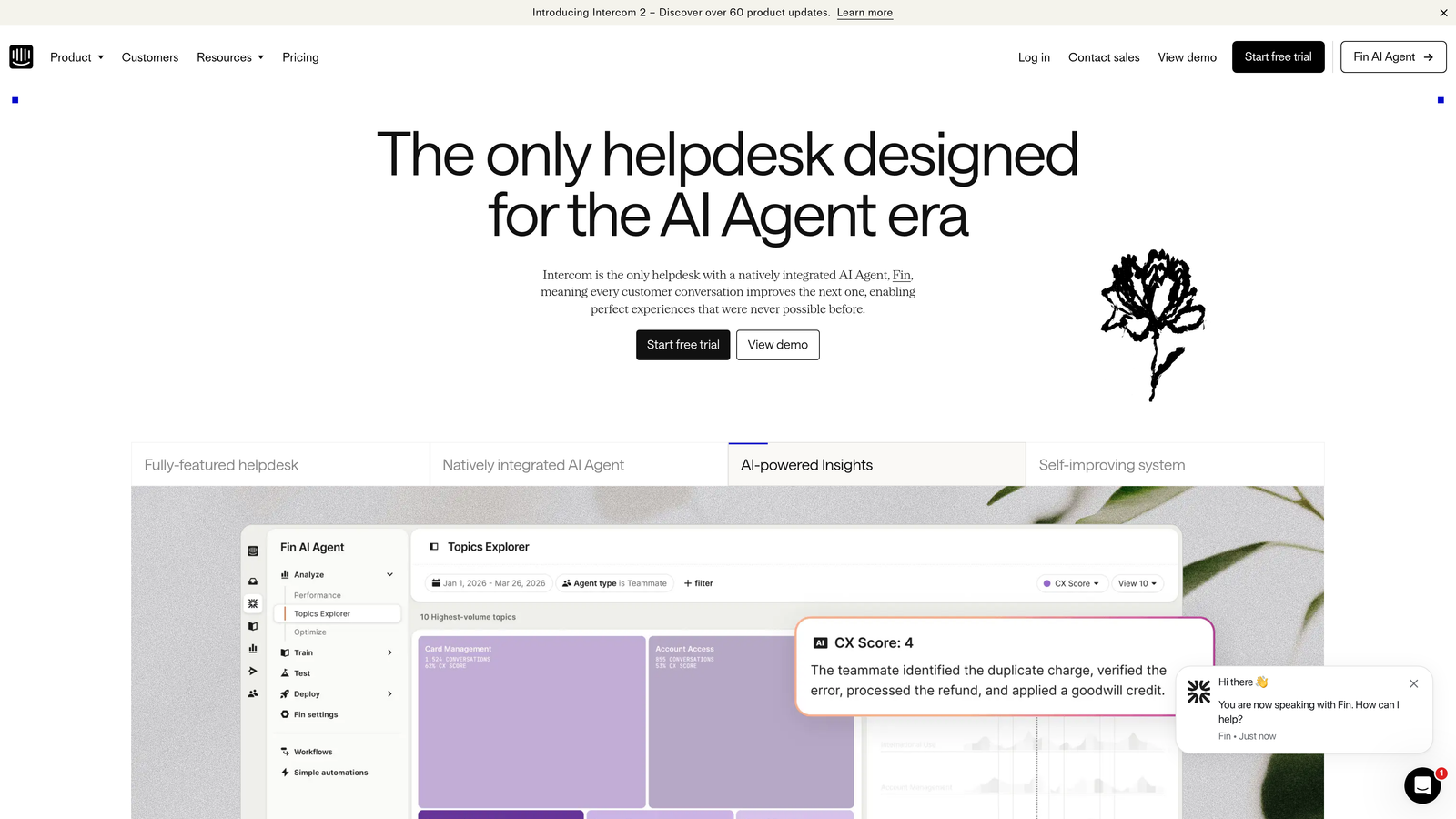
Intercom is a unified customer messaging platform with a Fin AI agent that handles frontline support across chat, email, and help center while connecting to a full engagement suite.
Where This Tool Shines
Intercom's strength is breadth. It handles support conversations, product tours, onboarding flows, and marketing messaging from a single platform. Fin, their AI agent, is trained on your help center content and handles a meaningful portion of incoming queries without human involvement.
For SaaS teams that want to consolidate their customer communication stack, Intercom reduces the number of tools in play. The tradeoff is that pricing can climb quickly as you add seats and AI resolution volume.
Key Features
Fin AI Agent: Handles automated resolution across chat and email channels, trained on your existing knowledge base content.
Unified Inbox: Combines support, marketing, and sales conversations in one workspace for full customer context.
Custom Bots and Workflow Builder: Build tailored automation flows without writing code using a visual editor.
Rich Help Center: AI-powered search and content management for self-service support at scale.
Product Tours and Onboarding: In-app guidance tools that sit alongside support, reducing onboarding-related ticket volume.
Best For
Growth-stage SaaS companies that want to unify support, onboarding, and customer communication in one platform, particularly those already using Intercom for marketing or sales engagement.
Pricing
Starts at $39/seat/month; Fin AI usage is billed per resolution, so costs can scale with volume.
3. Zendesk
Best for: Enterprise SaaS teams needing mature ticketing infrastructure with deep integration options
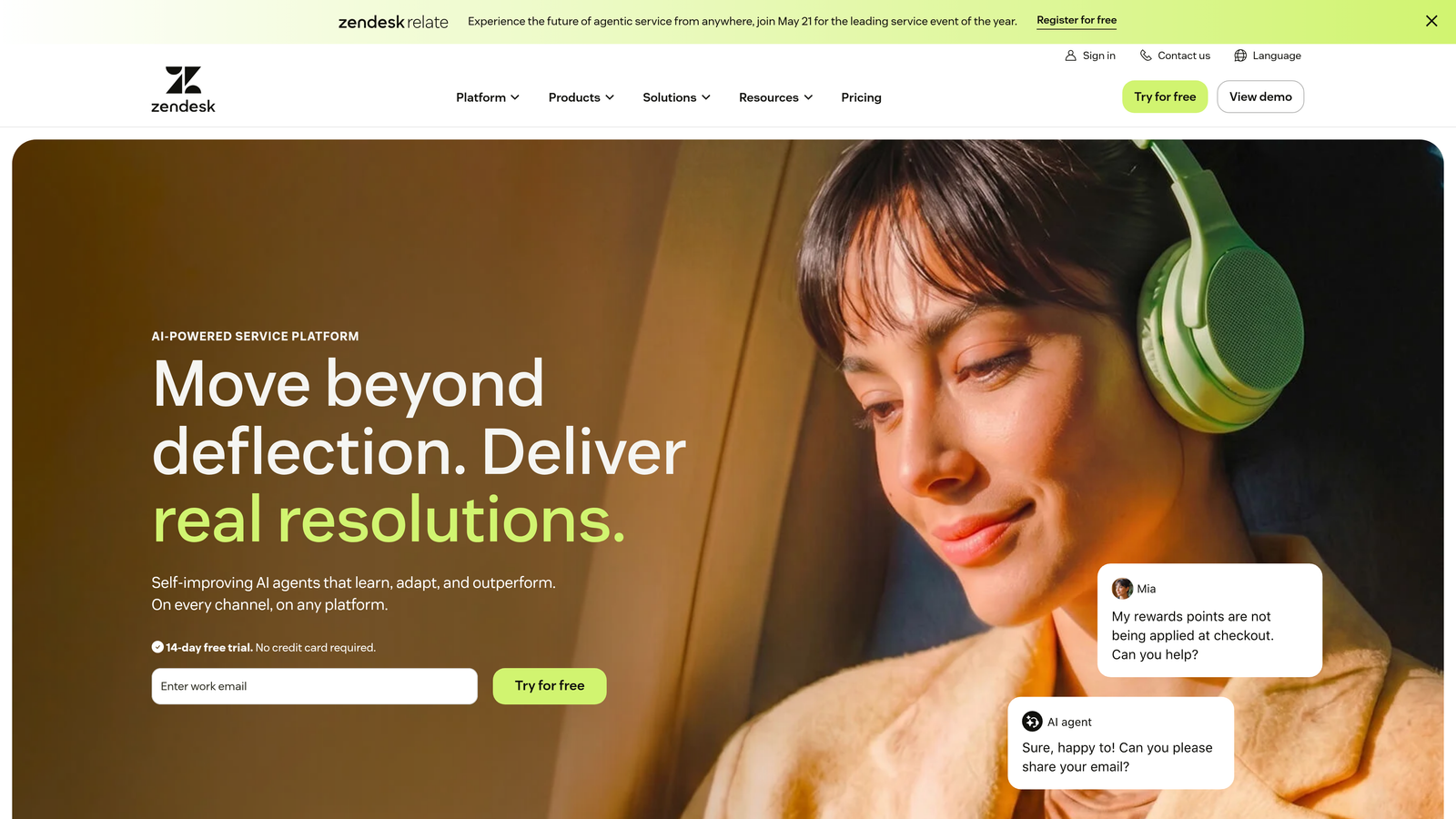
Zendesk is an enterprise-grade support platform with a massive integration ecosystem, advanced ticketing workflows, and AI features layered on top of a proven helpdesk foundation.
Where This Tool Shines
Zendesk's biggest advantage is its maturity. With over 1,500 pre-built integrations in the Zendesk Marketplace, it connects to virtually every tool in a SaaS stack. SLA management, multi-channel routing, and customizable workflows are all deeply developed and battle-tested at enterprise scale.
The AI capabilities, including intelligent triage, suggested replies, and agent assist, have improved considerably but function primarily as enhancements to existing workflows rather than standalone autonomous agents. If you're already invested in Zendesk, the AI add-ons are worth exploring.
Key Features
Advanced Ticketing: SLA management, macros, and multi-channel routing built for high-volume enterprise operations.
Zendesk AI: Intelligent triage, suggested replies, and agent assist tools that surface relevant information during live interactions.
1,500+ Integrations: Extensive marketplace covering CRM, billing, dev tools, analytics, and communication platforms.
Robust Reporting: Customizable dashboards and analytics for tracking team performance and ticket trends.
Help Center and Community Forums: Self-service tools with customization options for branded customer portals.
Best For
Enterprise SaaS companies with complex support operations, large agent teams, and a need for deep customization and integration across a broad tool ecosystem.
Pricing
Starts at $19/agent/month for the Support Team plan; AI add-on pricing varies and is quoted separately.
4. Freshdesk
Best for: Growing SaaS teams that need a full-featured helpdesk without enterprise-level pricing
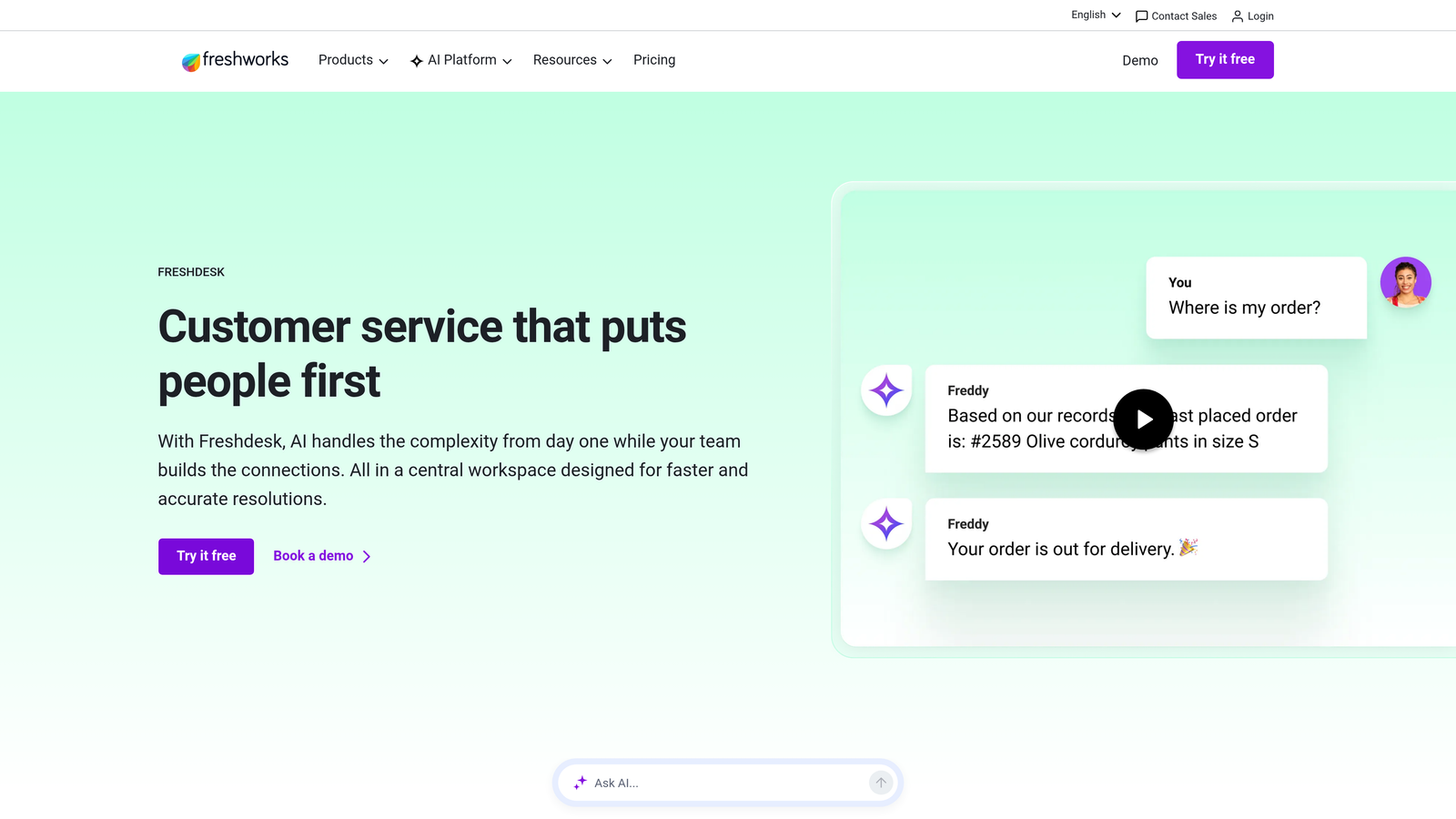
Freshdesk is an affordable, full-featured helpdesk with Freddy AI capabilities across the Freshworks ecosystem, offering strong automation for scaling teams.
Where This Tool Shines
Freshdesk's value proposition is strong feature coverage at accessible price points. The free tier makes it genuinely usable for early-stage SaaS teams, and the paid tiers scale reasonably as teams grow. Freddy AI handles auto-triage, suggested responses, and chatbot resolution without requiring a separate AI budget.
The broader Freshworks ecosystem is a meaningful advantage if you also need CRM, sales, or IT service management. Consolidating on one vendor reduces integration complexity and often lowers total cost.
Key Features
Freddy AI: Auto-triage, suggested responses, and chatbot resolution built into the platform rather than priced as a separate add-on.
Scenario Automation: Workflow rules that trigger multi-step actions based on ticket conditions, reducing repetitive manual work.
Freshworks Ecosystem: Native integration with Freshsales, Freshchat, and Freshservice for a unified customer view.
Collaboration Tools: Shared ownership, team huddles, and internal notes for complex tickets requiring multiple team members.
Free Tier: Basic ticketing available at no cost, making it accessible for teams just getting started.
Best For
Early-to-mid-stage SaaS companies looking for a capable helpdesk without significant upfront investment, especially those who might expand into other Freshworks products over time.
Pricing
Free plan available for up to 10 agents; paid plans start at $15/agent/month.
5. Ada
Best for: High-volume SaaS support teams focused on autonomous resolution and multilingual coverage
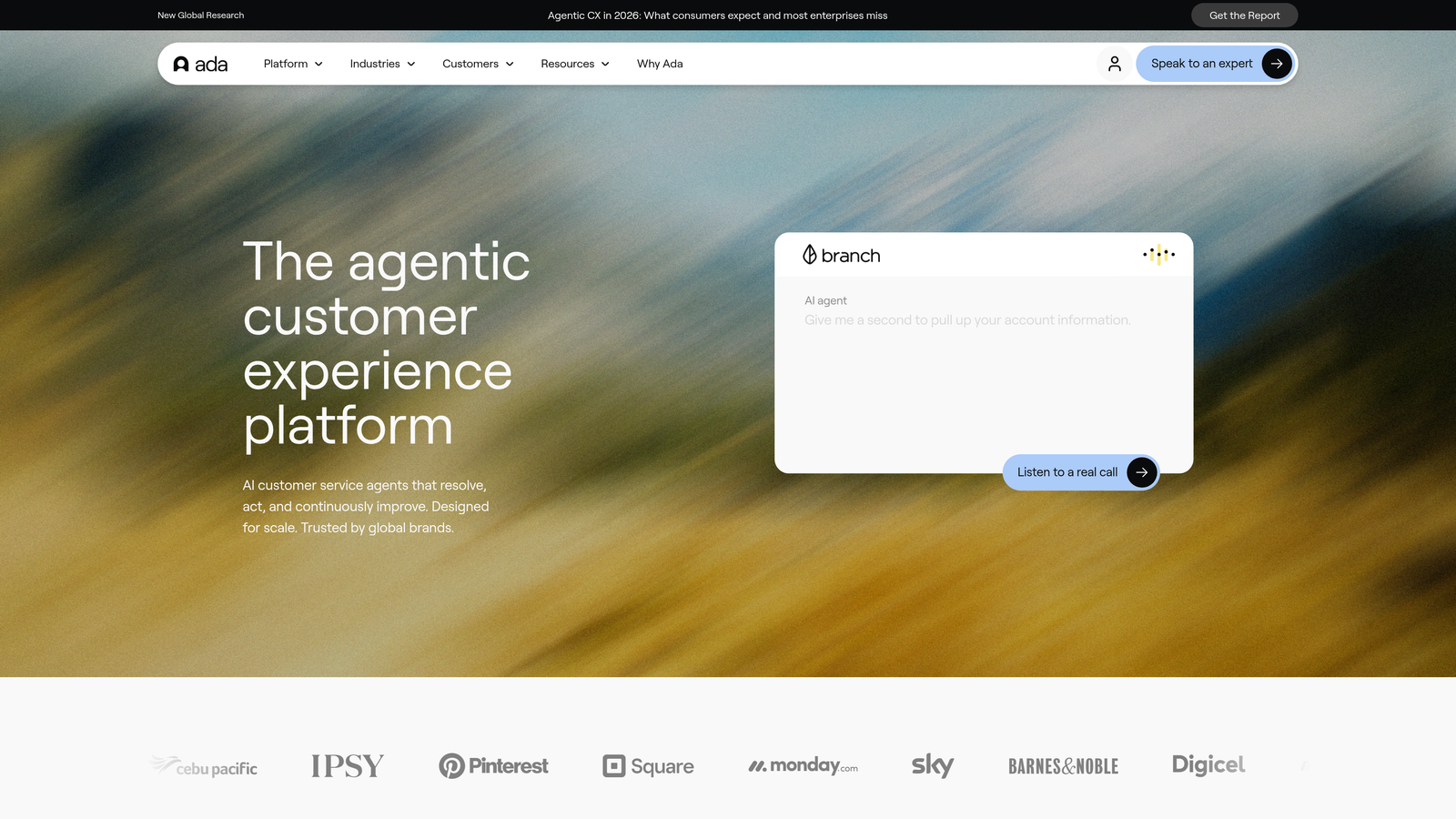
Ada is a purpose-built AI agent platform designed for high-volume automated resolution, with strong multilingual support and a focus on measuring actual problem-solving rather than deflection.
Where This Tool Shines
Ada takes a principled stance on how AI support should be measured. Rather than optimizing for deflection rate (how many users you pushed away from contacting support), Ada focuses on resolution rate: did the AI actually solve the problem? That distinction matters for SaaS teams who care about customer outcomes, not just ticket volume reduction.
The multilingual capability is genuinely strong, covering 50+ languages without requiring manual translation work. For SaaS companies with international user bases, this removes a significant operational burden.
Key Features
End-to-End AI Resolution: AI agent trained on company knowledge to handle conversations from first message to confirmed resolution.
Multilingual Support: Covers 50+ languages automatically, enabling global support without separate localization workflows.
Resolution Measurement: Built-in analytics that track whether issues were actually solved, not just whether users stopped asking.
No-Code Platform: Build and manage AI conversation flows without engineering resources.
Helpdesk Integrations: Connects with Zendesk, Salesforce, and other major platforms to layer on top of existing infrastructure.
Best For
Enterprise and mid-market SaaS teams with high ticket volumes, international customers, and a strong interest in measuring genuine AI resolution quality rather than surface-level deflection metrics.
Pricing
Custom pricing based on resolution volume; contact the Ada sales team for a quote.
6. Tidio
Best for: SaaS startups and product-led growth teams that need fast setup and an affordable starting point
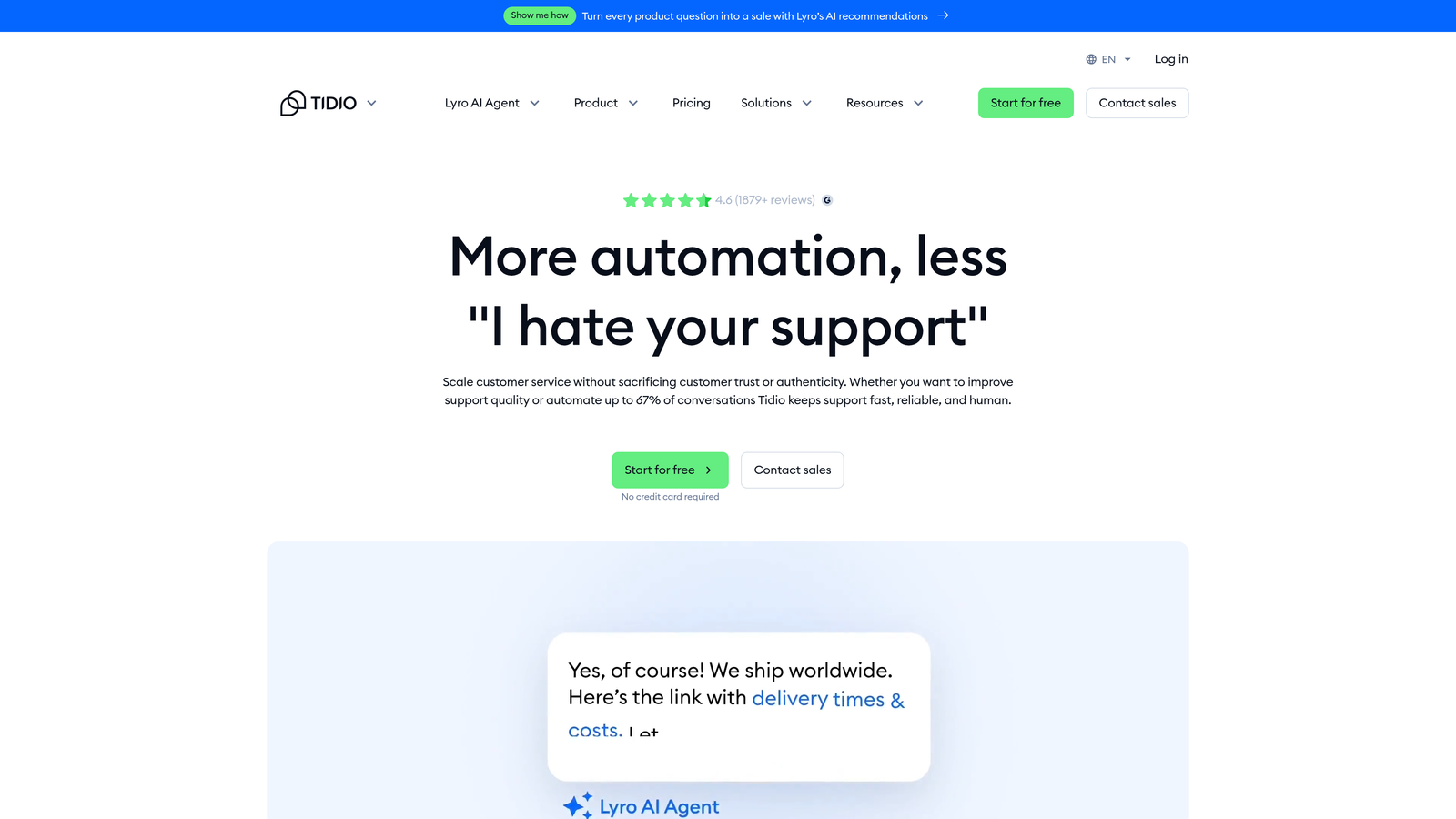
Tidio is a lightweight live chat and chatbot platform with a visual builder and AI assist, designed for quick deployment and ideal for early-stage SaaS and PLG teams.
Where This Tool Shines
Tidio's appeal is simplicity and speed. The visual drag-and-drop builder means you can have a working chatbot live in hours, not weeks. For SaaS teams that don't have dedicated support engineers or a large ops budget, that matters.
Lyro, Tidio's AI chatbot, pulls from your knowledge base to handle conversational support queries without requiring manual flow design for every scenario. It's not as capable as enterprise AI platforms, but it punches above its weight at its price point.
Key Features
Visual Chatbot Builder: Drag-and-drop interface with pre-built templates for common support scenarios, no coding required.
Lyro AI Chatbot: Conversational AI that answers questions from your knowledge base content automatically.
Live Chat with Visitor Tracking: Real-time user monitoring so agents can see who's on the site and proactively engage.
Platform Integrations: Connects with Shopify, WordPress, and website widgets for easy installation.
Generous Free Tier: Functional free plan that lets early-stage teams test the platform before committing.
Best For
Early-stage SaaS startups, product-led growth teams, and small support teams that need a working automated chat solution quickly without a large implementation budget.
Pricing
Free plan available; paid plans start at $29/month, making it one of the more accessible options on this list.
7. HubSpot Service Hub
Best for: SaaS teams already on HubSpot CRM who want support natively connected to customer revenue data
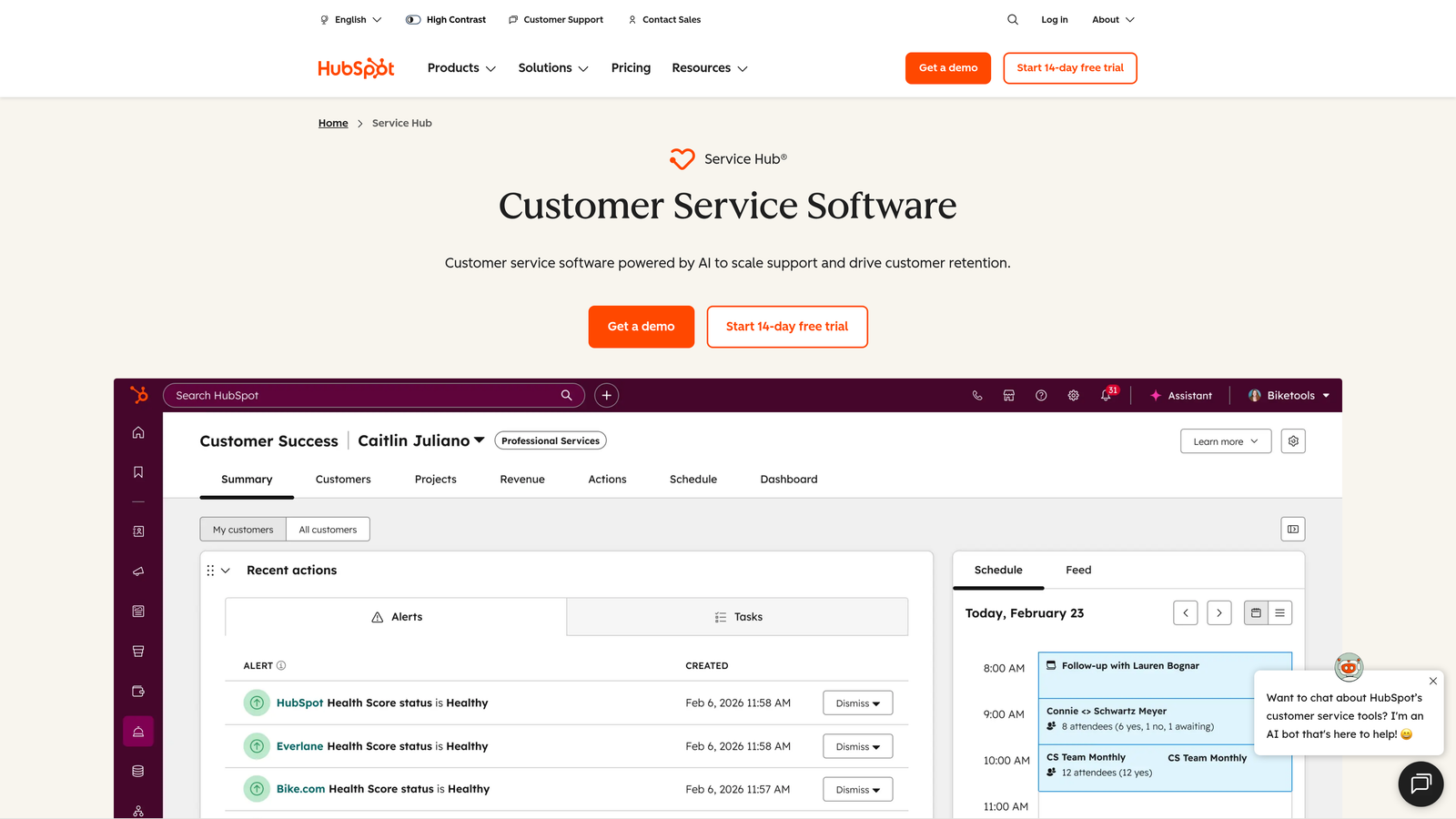
HubSpot Service Hub is a customer service platform natively integrated with HubSpot CRM, giving support teams full customer context from marketing and sales interactions alongside ticketing and automation.
Where This Tool Shines
The core advantage of Service Hub is context. When a support agent opens a ticket, they can see the customer's full HubSpot record: deal history, marketing interactions, sales notes, and renewal status. For SaaS companies where support quality directly affects retention and expansion, that context changes how conversations are handled.
If you're already running HubSpot for CRM and marketing, adding Service Hub creates a genuinely unified customer record without complex integrations. For teams not on HubSpot, the case is weaker since the platform's best features depend on that ecosystem.
Key Features
CRM-Native Ticketing: Tickets connected directly to HubSpot contact and company records, with full sales and marketing history visible.
AI Chatbot Builder: Conversation routing and automated responses with connection to CRM data for personalized interactions.
Knowledge Base: AI-powered search and customer feedback tools integrated with the broader HubSpot platform.
Customer Portal: Self-service ticket tracking that reduces inbound status-check volume.
Revenue-Tied Reporting: SLA management and support analytics connected to deal and revenue data for business-level insights.
Best For
SaaS companies already invested in the HubSpot ecosystem who want support, sales, and marketing data unified in one place without building custom integrations.
Pricing
Free tools available; Service Hub Starter begins at $20/month/seat, making it accessible for small teams already on HubSpot.
8. Forethought
Best for: Enterprise SaaS teams that need intelligent triage and classification layered on top of existing helpdesks
Forethought is an AI-powered support automation platform specializing in intelligent ticket triage, classification, and routing, helping enterprise teams prioritize and resolve issues faster.
Where This Tool Shines
Forethought is designed to work with your existing helpdesk rather than replace it. If you've built significant workflow infrastructure in Zendesk or Salesforce Service Cloud and aren't ready to migrate, Forethought layers AI capabilities on top without disrupting what's already working.
SupportGPT, their generative AI layer, is trained on your historical ticket data, which means the suggestions and responses it generates are informed by how your team has actually handled similar issues in the past. That historical grounding can improve relevance compared to AI trained only on documentation.
Key Features
SupportGPT: Generative AI responses trained on your historical ticket data for contextually relevant suggestions.
Intelligent Triage: Auto-classifies and routes tickets by intent and urgency, reducing manual sorting work for agents.
Solve AI: Automated resolution for common, repetitive issues without agent involvement.
Agent Assist: Real-time suggested responses and knowledge surfacing during live agent conversations.
Helpdesk Integration: Designed to layer on top of Zendesk, Salesforce, and other existing platforms without requiring migration.
Best For
Enterprise SaaS teams with established helpdesk infrastructure who want to add AI capabilities without a full platform migration, particularly those with large volumes of historical ticket data to train on.
Pricing
Custom pricing; contact the Forethought sales team for a quote based on your volume and use case.
9. Help Scout
Best for: SaaS teams that prioritize human-feeling customer interactions with smart automation running quietly in the background
Help Scout is a shared inbox and help center platform built for teams that value personal, conversational customer interactions while using AI drafts and automation to work more efficiently.
Where This Tool Shines
Help Scout deliberately avoids the ticket-number experience. Conversations look and feel like email threads, which many customers find less intimidating than formal support portals. For SaaS companies where brand experience and relationship quality matter, that distinction is meaningful.
The AI capabilities are intentionally understated: AI drafts suggest responses based on knowledge base content and conversation history, but the agent reviews and sends them. It's a human-in-the-loop model rather than autonomous resolution, which suits teams where support quality is a differentiator rather than a cost center.
Key Features
Ticket-Free Shared Inbox: Conversations appear as personal email threads, reducing the friction of formal support portals for customers.
AI Drafts: Suggested responses generated from knowledge base content and conversation history, reviewed by agents before sending.
Beacon Widget: In-app help center and contact options embedded directly in your product for contextual self-service.
Workflow Automation: Rules for tagging, assigning, and escalating conversations based on content and conditions.
Docs Knowledge Base: Built-in reporting on article effectiveness so you can see which content is actually helping customers.
Best For
SaaS teams at early-to-mid stage where support quality and relationship warmth are competitive differentiators, and where a human-in-the-loop AI model is preferred over fully autonomous resolution.
Pricing
Starts at $25/user/month on the Standard plan.
Finding the Right Fit for Your SaaS Support Stack
The automated support landscape has shifted considerably. The most important distinction to understand when evaluating these tools is the difference between AI that deflects and AI that resolves. Deflection pushes users toward articles and hopes they stop asking. Resolution actually solves the problem end-to-end. As you evaluate options, ask vendors specifically how they measure success and whether their metrics reflect genuine problem-solving.
Here's a quick orientation by use case to help you narrow the field:
For AI-first autonomous resolution with SaaS-specific integrations: Halo AI is built around this from the ground up, with page-aware context, continuous learning, and connections to dev tools, billing platforms, and CRM systems.
For unified messaging across support, onboarding, and marketing: Intercom brings everything into one platform and works well for teams that want to consolidate their customer communication stack.
For enterprise teams with complex existing infrastructure: Zendesk offers the deepest integration ecosystem and the most mature workflow tooling, while Forethought can add AI capabilities without requiring a migration.
For teams already on HubSpot: Service Hub is the natural extension, connecting support data to revenue context without custom integrations.
For early-stage and budget-conscious teams: Freshdesk and Tidio both offer functional free tiers with a clear upgrade path as you scale.
For teams where relationship quality is the differentiator: Help Scout's human-feeling approach suits companies where support is a brand experience, not just a cost to minimize.
The right choice ultimately depends on where you are in your growth curve, what tools you're already using, and whether you want AI to assist your agents or operate autonomously on your behalf. Those are meaningfully different product philosophies, and the tools on this list reflect that range.
Your support team shouldn't scale linearly with your customer base. AI agents can handle routine tickets, guide users through your product, and surface business intelligence while your team focuses on complex issues that genuinely need a human touch. See Halo in action and discover how continuous learning transforms every interaction into smarter, faster support.