9 Best Automated Support Tools for SaaS Products in 2026
Discover the 9 best automated support for SaaS products platforms in 2026, evaluated on AI capability, helpdesk integrations, deployment ease, and SaaS-specific features like bug escalations and multi-tier accounts. This guide includes pricing tiers, ideal use cases, and honest limitations for each tool, helping lean startups and scaling B2B teams find the right fit without wasting time on unnecessary demos.
 Matt PattoliFounder12 min read
SaaS teams face a familiar tension: your product grows, your user base scales, but your support headcount can't keep pace. Tickets pile up, response times slip, and customers churn before your team even sees the request. Automated support changes that equation, but only if you pick the right tool for how your product actually works.
This list covers the best automated support platforms built for SaaS products in 2026. We evaluated each tool on AI capability, helpdesk integrations, ease of deployment, and how well it handles the nuances of software support: think bug escalations, product walkthroughs, and multi-tier user accounts. Whether you're a lean startup or a scaling B2B product team, there's a fit here. We've included pricing tiers, ideal use cases, and honest notes on where each tool falls short, so you can make a confident decision without sitting through a dozen demos.
1. Halo AI
Best for: B2B SaaS teams that want AI-first architecture with business intelligence built in
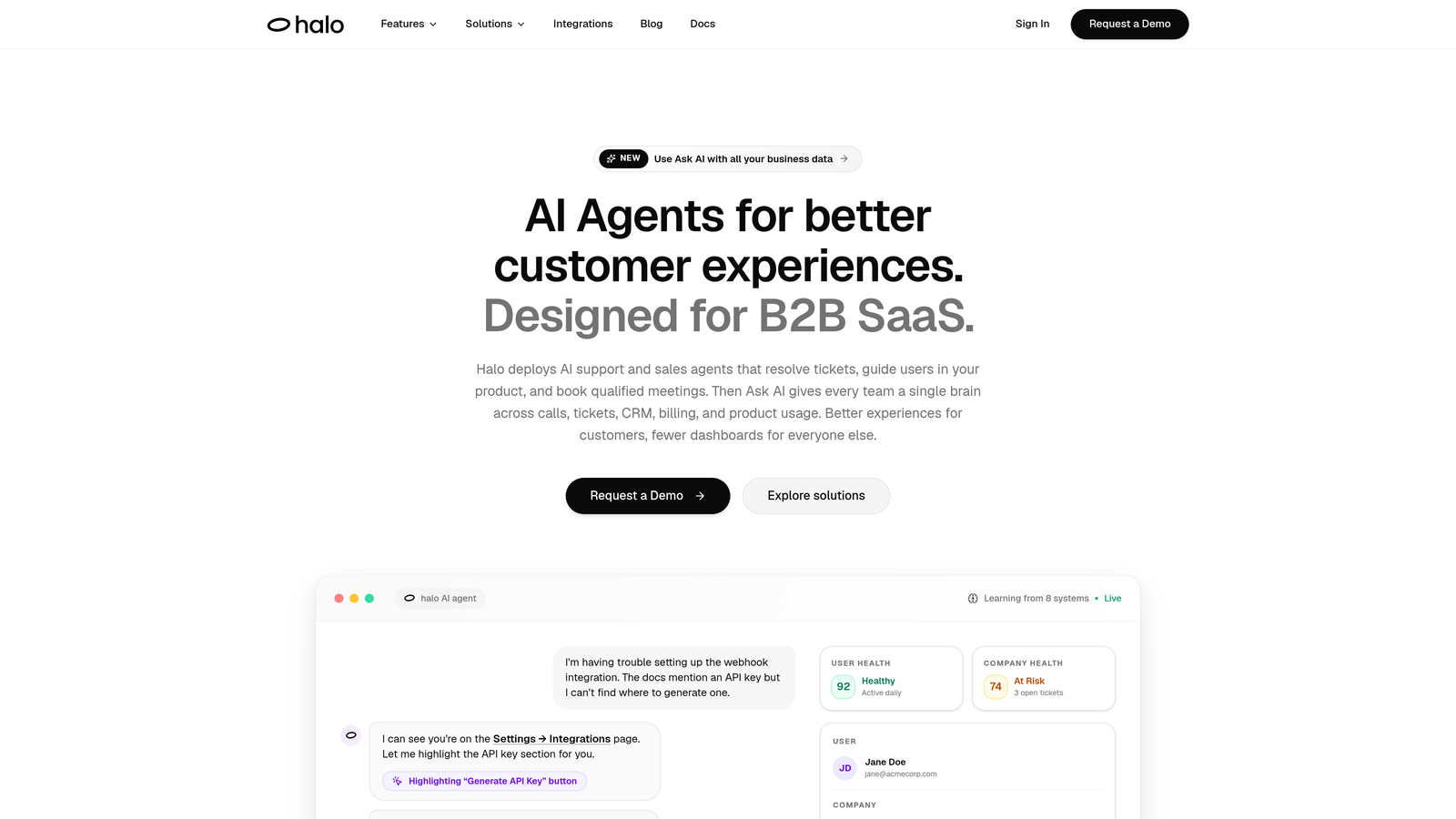
Halo AI is an AI-native customer support platform built specifically for SaaS product teams, not a bolt-on layer added to an existing helpdesk.
Where This Tool Shines
What separates Halo from most tools in this category is its page-aware context engine. The AI agent actually sees what a user is looking at inside your product, which means it can guide them through a specific workflow rather than serving up generic help articles. That's a meaningful difference when your users are stuck mid-onboarding at 11pm and no one is online to help.
Beyond resolution, Halo surfaces business intelligence that most support tools ignore entirely. Customer health signals, anomaly detection, and revenue intelligence flow through the same inbox where your team handles tickets, giving support a seat at the table in conversations about retention and expansion.
Key Features
Page-Aware Chat Widget: The AI sees what users see in your product, enabling contextual guidance rather than generic responses.
Autonomous Ticket Resolution: AI agents handle routine tickets end-to-end with smart escalation to live agents when complexity warrants it.
Auto Bug Ticket Creation: When users report issues, Halo automatically structures and routes bug reports to Linear or connected dev tools.
Smart Inbox with Business Intelligence: Surfaces customer health signals, anomaly detection, and revenue intelligence alongside standard support metrics.
Broad Integration Stack: Connects with Linear, Slack, HubSpot, Intercom, Stripe, Zoom, PandaDoc, and Fathom out of the box.
Best For
B2B SaaS product teams and customer success teams that want support automation to do more than deflect tickets. Halo is particularly well-suited for teams where support data should be informing product decisions, retention strategies, and revenue conversations.
Pricing
Contact for pricing. Visit haloagents.ai for current plans and to see a live demo of the platform.
2. Intercom
Best for: Teams already in the Intercom ecosystem wanting autonomous tier-1 resolution
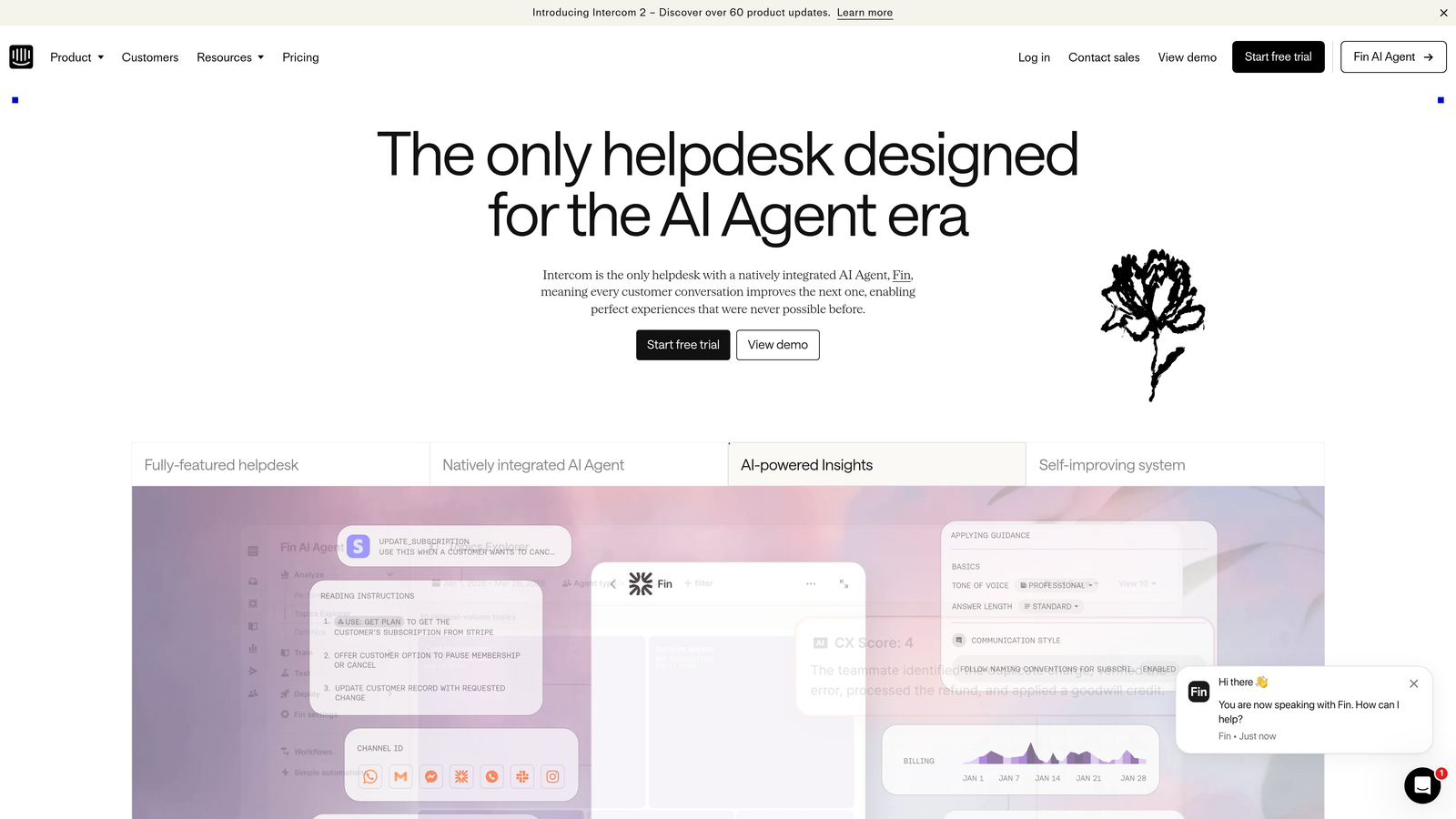
Intercom is a mature all-in-one customer messaging platform with Fin, its LLM-based AI agent, handling common support queries autonomously.
Where This Tool Shines
Fin is one of the more capable AI agents in the market for straightforward query resolution. It draws on your help content and handles a solid share of tier-1 tickets without human involvement, escalating cleanly when it hits the edges of its knowledge.
The real advantage here is ecosystem depth. If your team already uses Intercom for messaging, CRM, and customer data, adding Fin is a natural extension rather than a platform change. The unified inbox combining live chat, email, and in-app messaging is genuinely well-built.
Key Features
Fin AI Agent: LLM-powered autonomous resolution for common support queries with clean human handoff.
Unified Inbox: Combines live chat, email, and in-app messaging in a single workspace.
Built-In CRM: Customer data platform with conversation history and segmentation built in.
Workflow Automation: Robust routing rules and automation for ticket assignment and escalation.
App Marketplace: Extensive integrations available through Intercom's marketplace and API.
Best For
SaaS teams already using Intercom as their primary messaging layer, and companies that want a single platform covering support, in-app messaging, and customer data without stitching together multiple tools.
Pricing
Starts at approximately $39/seat/month; Fin AI usage is billed separately per resolution. Pricing has increased in recent years, so verify current plans at intercom.com before budgeting.
3. Zendesk AI
Best for: High-volume enterprise support operations needing intelligent triage and routing
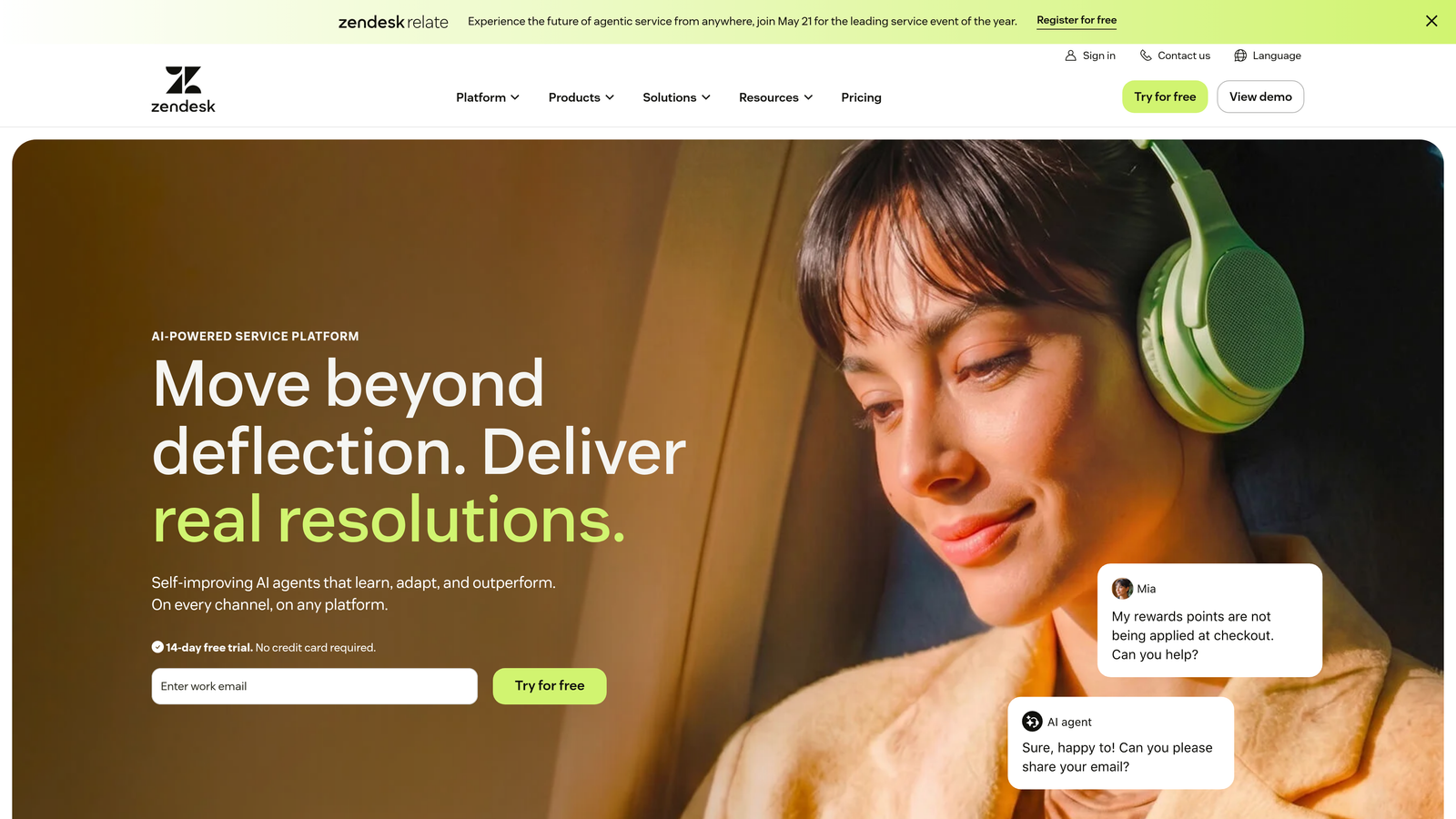
Zendesk AI layers intelligent automation directly into the Zendesk Suite, covering triage, routing, agent assistance, and self-serve deflection for teams at scale.
Where This Tool Shines
Zendesk's strength is its maturity. The intent detection, sentiment analysis, and smart routing capabilities are well-developed and handle the complexity that comes with large support operations: multiple product lines, tiered accounts, and global teams. Agent Copilot is a practical addition for teams where agent productivity is the primary bottleneck.
For teams already running Zendesk, the AI features are a natural upgrade rather than a migration. The ecosystem of integrations is among the largest in the category, which matters when your support stack has to connect to billing, CRM, and dev tools.
Key Features
Intelligent Triage: Detects intent, sentiment, and language to route tickets accurately from the moment they arrive.
Smart Routing: Matches tickets to the right agent or team based on skills, workload, and context.
Agent Copilot: Suggests macros, summarizes ticket threads, and guides agents through resolution steps.
AI-Powered Bots: Self-serve deflection bots that handle common queries before tickets are created.
Advanced Analytics: Comprehensive reporting across the full support operation.
Best For
Enterprise SaaS teams and high-volume support operations already on the Zendesk platform. Less ideal for early-stage teams: the complexity and cost are calibrated for scale, not speed of deployment.
Pricing
Suite plans start at approximately $55/agent/month; advanced AI features are available on higher tiers. Verify current pricing at zendesk.com.
4. Freshdesk (Freddy AI)
Best for: SMB and mid-market SaaS teams wanting accessible AI without a full platform overhaul
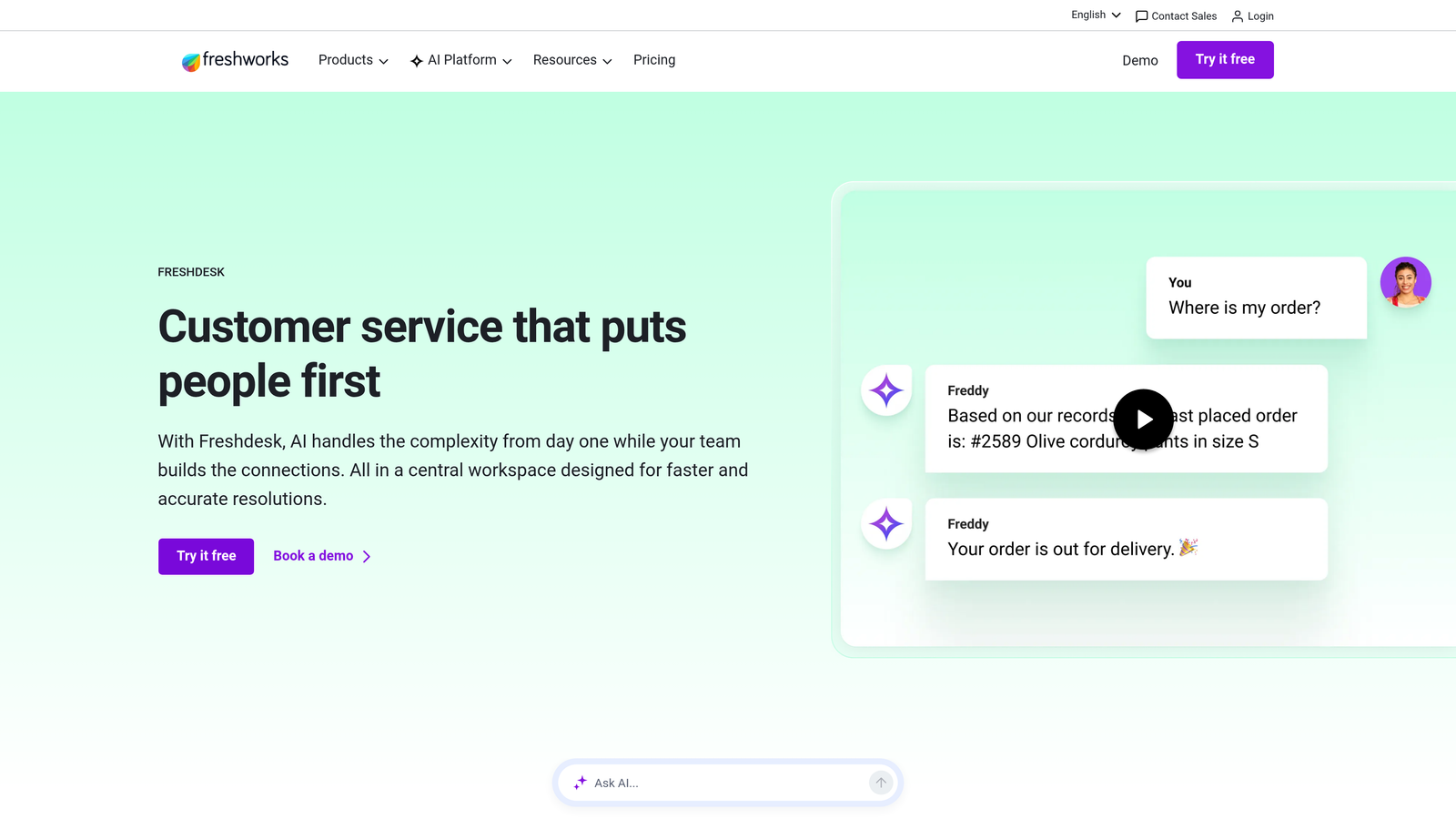
Freshdesk packages its AI capabilities under the Freddy brand, covering self-service bots, agent assist, and analytics insights across one of the more competitively priced helpdesks in the market.
Where This Tool Shines
Freddy AI is built to be approachable. Teams that don't have dedicated support ops resources can get Freddy Self Service running without heavy configuration, and the agent-side features (suggested replies, summarization, next-step guidance) genuinely reduce handle time without requiring agents to change their workflow dramatically.
Freshdesk's pricing structure makes AI-augmented support accessible to teams that would find Zendesk or Intercom cost-prohibitive. That's a real advantage for growing SaaS companies managing budget carefully.
Key Features
Freddy Self Service: Automated bot for query resolution and ticket deflection before issues reach the queue.
Freddy Copilot: Agent-assist features including suggested replies, ticket summarization, and next-step guidance.
Freddy Insights: AI-driven analytics that surface trends and identify areas for support improvement.
Omnichannel Coverage: Handles email, chat, phone, and social from a single platform.
Accessible Pricing: Competitive tiers designed for teams at different growth stages.
Best For
SMB and mid-market SaaS teams that want AI-augmented support without migrating off an existing helpdesk setup. A strong fit for teams that prioritize agent productivity improvements alongside deflection.
Pricing
Free plan available; paid plans start at approximately $15/agent/month. Verify current pricing and Freddy AI add-on costs at freshdesk.com.
5. Tidio
Best for: Early-stage SaaS products needing fast deflection with minimal setup
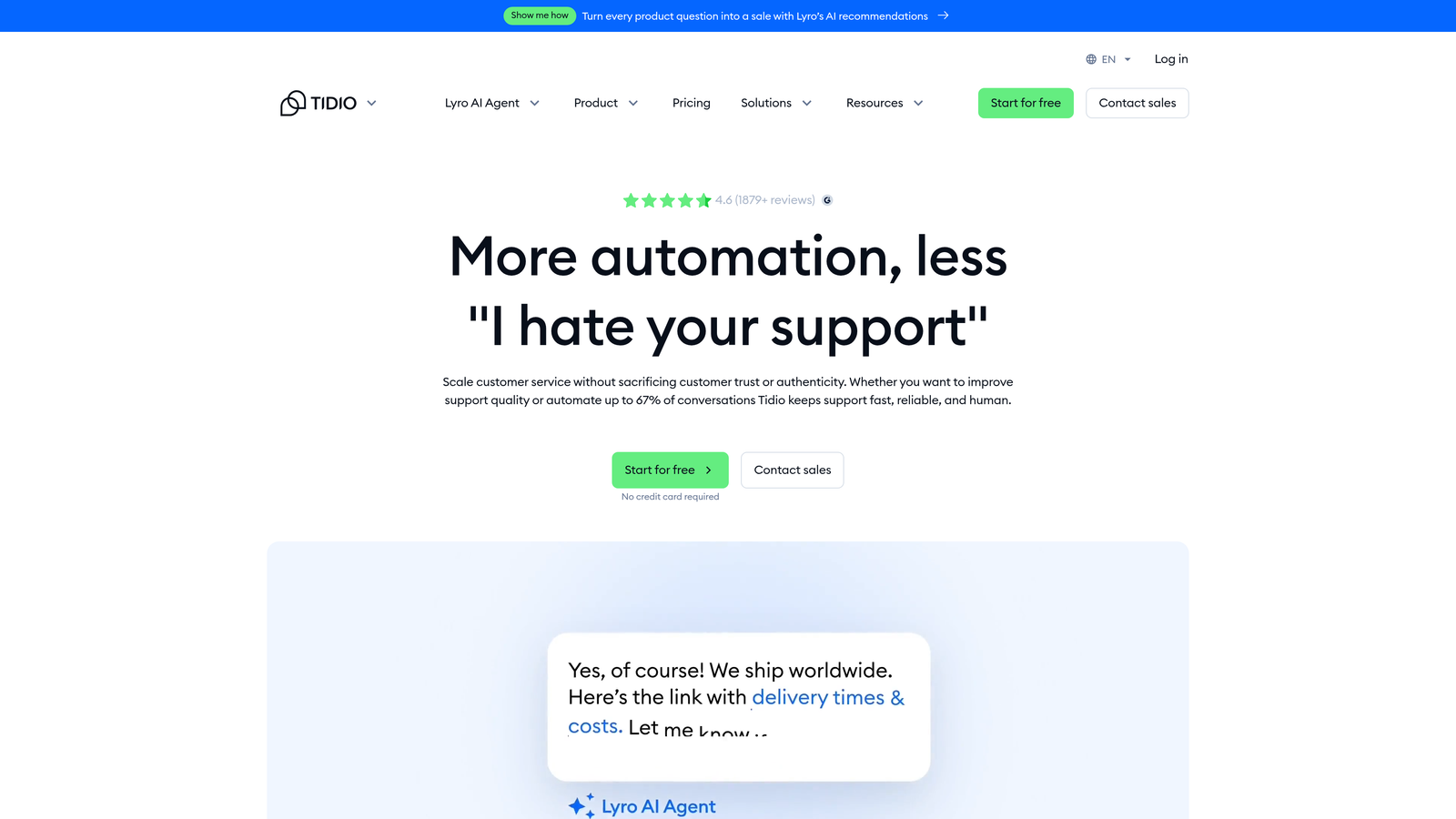
Tidio combines live chat and Lyro AI, its conversational AI product, in a single platform that can be deployed quickly without technical overhead.
Where This Tool Shines
Tidio's biggest advantage is speed to value. The visual, no-code chatbot builder means non-technical teams can create custom conversation flows in hours, not weeks. Lyro AI handles common support questions based on your help content and does it in a way that feels conversational rather than robotic.
For early-stage SaaS products where the support volume doesn't yet justify a full helpdesk platform, Tidio hits a practical sweet spot: real AI capability at a price point that makes sense before you've scaled.
Key Features
Lyro AI: Conversational AI that handles common support queries based on your existing help content.
No-Code Chatbot Builder: Visual flow builder for creating custom conversation paths without engineering support.
Combined Live Chat + Bot: Seamless handoff between automated and human conversations in one interface.
Easy Embed: Simple website and app integration with minimal setup required.
CRM Integrations: Connects with Shopify, WordPress, and popular CRM tools.
Best For
Early-stage or lower-complexity SaaS products that need immediate deflection capability. Less suited for enterprise ticket management or teams needing deep helpdesk workflow automation.
Pricing
Free plan available; Lyro AI plans start at approximately $29/month. Verify current pricing at tidio.com.
6. Drift
Best for: Revenue-focused B2B SaaS teams where support and expansion conversations overlap
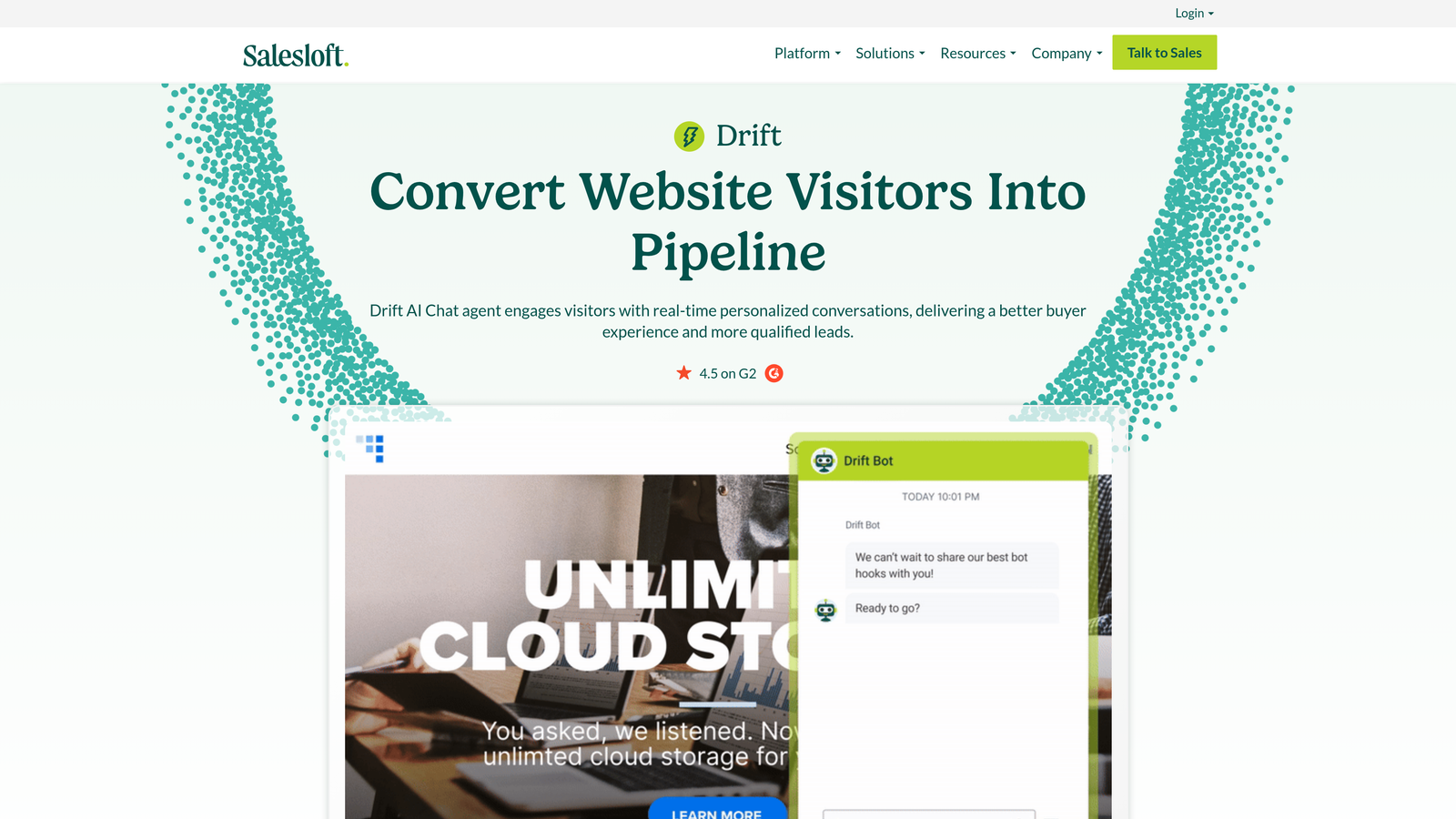
Drift is a conversational AI platform, now part of Salesloft, that blends support automation with sales intelligence for teams where a support conversation can turn into a pipeline conversation.
Where This Tool Shines
Drift's AI playbooks are designed to do something most support tools can't: detect buying signals within a support conversation and route accordingly. For product-led growth SaaS companies where the line between support and expansion is blurry, that capability has real value.
The account-based targeting and real-time visitor intelligence also give support and sales teams shared context on who they're talking to, which improves both the quality of support and the relevance of any follow-up conversation.
Key Features
AI Playbooks: Handle support queries and route to sales when expansion or renewal signals are detected.
Visitor Intelligence: Real-time account-based targeting and visitor identification.
Meeting Scheduling: Built-in scheduling and live chat handoff within conversation flows.
CRM Integrations: Connects with Salesforce, HubSpot, Marketo, and other major CRM platforms.
Revenue Reporting: Connects support conversations to pipeline and revenue outcomes.
Best For
Sales-led or PLG SaaS teams where support conversations frequently surface expansion or renewal opportunities. Worth noting that Drift's product roadmap continues to evolve post-acquisition by Salesloft, so verify current capabilities before committing.
Pricing
Contact for pricing as part of the Salesloft suite. Verify current plans at drift.com.
7. Help Scout
Best for: SaaS teams where relationship quality and brand voice are as important as deflection rates
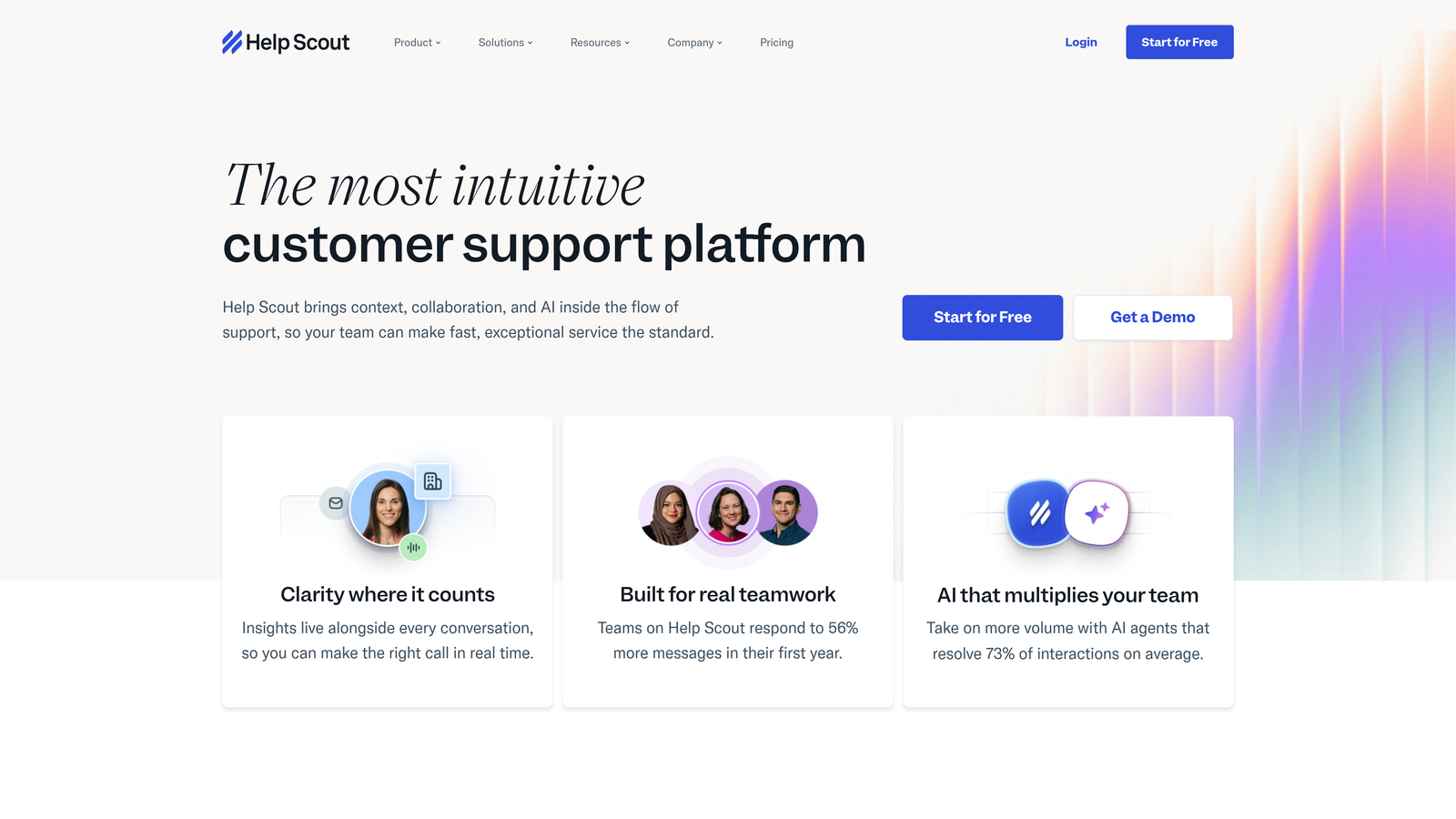
Help Scout takes a human-first approach to support, using AI to augment agents rather than replace them, while keeping the experience feeling personal for customers.
Where This Tool Shines
Help Scout's AI features are designed to make agents better, not to remove them from the equation. AI Summarize gives agents instant context on a ticket without reading a full thread. AI Assist helps draft replies that match your brand voice. AI Answers in the Beacon widget handles self-serve before escalation, but the transition to a human feels natural rather than jarring.
The UX is genuinely clean. Agents adopt it quickly because it looks and feels like email, which reduces training time and resistance. For SaaS teams where the support experience is part of the brand, that matters.
Key Features
AI Summarize: Instant ticket context without reading full conversation threads.
AI Assist: Drafts replies and improves agent responses while preserving brand voice.
AI Answers in Beacon: In-app self-serve widget that handles common questions before escalation.
Shared Inbox: Clean, email-like UX that agents adopt quickly with minimal training.
Docs Integration: Knowledge base builder integrated directly with the Beacon widget.
Best For
SaaS teams where customer relationship quality is a competitive differentiator. Less suited for teams that want fully autonomous AI resolution with minimal human involvement.
Pricing
Starts at approximately $22/user/month. Verify current pricing at helpscout.com.
8. Kustomer
Best for: SaaS companies managing complex, multi-touch customer relationships across sales, billing, and product usage
Kustomer is a CRM-first support platform that gives teams a full customer timeline view alongside AI-powered automation for routing, tagging, and response suggestions.
Where This Tool Shines
Kustomer's defining feature is context depth. Rather than treating each support ticket as an isolated event, it aggregates every touchpoint: sales history, billing interactions, product usage, and prior support conversations into a single timeline. For SaaS teams managing complex enterprise accounts, that context changes the quality of every conversation.
The AI automation handles the operational side: routing tickets to the right team, tagging for reporting, and surfacing suggested responses based on the full customer context. It's a more sophisticated setup than most tools on this list, which is both its strength and its limitation.
Key Features
Full Customer Timeline: Aggregates all touchpoints, sales, billing, product, and support, into a single view.
AI Routing and Tagging: Automated assignment and categorization based on customer context and content.
Omnichannel Coverage: Handles email, chat, phone, social, and SMS from one platform.
Deep CRM Capabilities: CRM functionality built alongside support workflows, not bolted on separately.
Customizable Workflows: Flexible automation for complex, multi-step support processes.
Best For
SaaS companies with complex, multi-product accounts and dedicated support ops resources. Note that Kustomer has gone through ownership changes (acquired by Meta, then sold) and is now independent again. Worth monitoring for platform stability before a long-term commitment.
Pricing
Starts at approximately $89/user/month. Verify current pricing at kustomer.com.
9. Chatbase
Best for: Lean SaaS teams needing fast self-serve deflection without a full platform investment
Chatbase lets you train a custom GPT-based chatbot on your own documentation, help center, or website content and deploy it in a matter of hours.
Where This Tool Shines
Chatbase removes almost all friction from getting an AI chatbot live. Upload your docs, point it at your URLs, and you have a chatbot grounded in your actual product knowledge rather than generic LLM responses. For lean teams with good documentation, that's a surprisingly capable deflection layer at a fraction of the cost of a full platform.
The technical barrier is genuinely low. Developers can use the API for custom integrations, but non-technical founders and support leads can get the embeddable widget running without writing a line of code. It's not a helpdesk replacement, but it's not trying to be.
Key Features
Custom AI Training: Train on uploaded docs, website URLs, or help center content to ground responses in your knowledge base.
Fast Deployment: Embeddable chat widget ready to go in hours with minimal setup.
GPT-Powered Responses: Answers grounded in your own content rather than generic AI outputs.
Conversation Analytics: Basic reporting on conversation topics and common user queries.
API Access: Available for teams that want custom integrations beyond the standard embed.
Best For
Lean SaaS teams and developers who need fast self-serve deflection without the overhead of a full helpdesk platform. Limited native helpdesk integrations mean it's better as a first layer of deflection than a complete support solution.
Pricing
Free plan available; paid plans start at approximately $19/month. Verify current pricing at chatbase.co.
Which Tool Is Right for Your Team?
The right automated support tool depends less on feature checklists and more on where your team sits right now, and where you're headed.
If you're an early-stage startup that needs deflection running this week without a major infrastructure investment, Tidio or Chatbase get you there fast. Both have free tiers, low setup friction, and enough AI capability to handle the common questions that consume your time before you've built a proper support operation.
If your team is already running Freshdesk or Zendesk, the path of least resistance is leaning into Freddy AI or Zendesk AI respectively. You get meaningful AI capability without a migration, and both platforms have invested seriously in their AI layers over the past couple of years.
For sales-led SaaS where support conversations regularly surface expansion signals, Drift is the only tool on this list explicitly designed to connect those dots. And if your team's competitive advantage is the quality of customer relationships rather than resolution speed, Help Scout's human-augmentation philosophy is a better fit than tools optimizing purely for deflection rates.
Complex enterprise accounts with multi-product relationships and dedicated ops resources point toward Kustomer. All-in-one messaging with a mature AI agent and strong ecosystem sits squarely in Intercom's lane.
If you want AI-first architecture built specifically for SaaS, with page-aware context, business intelligence signals, and continuous learning from every interaction, Halo AI is the tool built for that outcome. Your support team shouldn't scale linearly with your customer base. Let AI agents handle routine tickets, guide users through your product, and surface business intelligence while your team focuses on complex issues that need a human touch. See Halo in action and discover how continuous learning transforms every interaction into smarter, faster support.