9 Best Autonomous Support Agent Software Platforms in 2026
Autonomous support agent software has evolved far beyond basic chatbots, with today's leading platforms capable of resolving tickets end-to-end, escalating intelligently, and integrating seamlessly with existing tech stacks. This guide evaluates the 9 best autonomous support agent software platforms in 2026 based on resolution capability, integration depth, and scalability—helping support teams of any size improve efficiency without increasing headcount.
 Grant CooperFounder13 min read
If your support team is still manually triaging every ticket, you're leaving efficiency and customer satisfaction on the table. Autonomous support agent software goes beyond basic chatbots: these platforms resolve tickets end-to-end, escalate intelligently, learn from every interaction, and integrate with your existing stack without requiring a full helpdesk overhaul.
But not all autonomous agents are built the same. Some bolt AI onto legacy helpdesk infrastructure. Others are AI-first from the ground up. Some excel at deflection; others handle complex multi-step resolutions. The right choice depends on your team size, tech stack, and how much autonomy you actually want the AI to have.
This list covers the top autonomous support agent software platforms available in 2026, evaluated on resolution capability, integration depth, ease of deployment, and how well they scale without scaling headcount. Whether you're running a lean SaaS startup or managing enterprise support at scale, there's an option here worth a close look. For broader context, see our guide on automated customer support.
1. Halo AI
Best for: B2B SaaS teams that want AI-first autonomous support with deep product and business context.
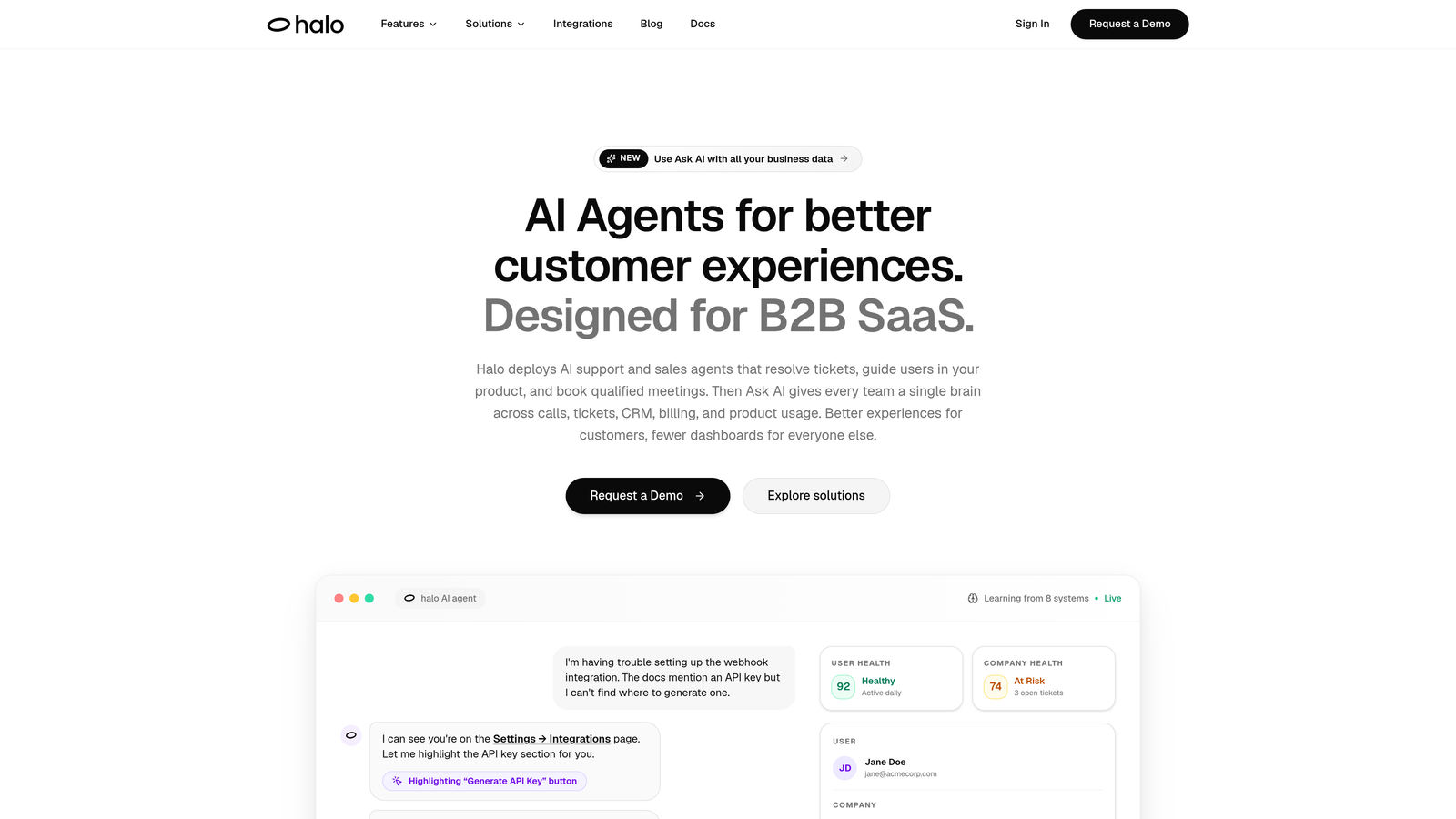
Halo AI is an AI-first autonomous support platform built specifically for B2B SaaS teams who need more than deflection.
Where This Tool Shines
What sets Halo apart from most platforms on this list is its architecture. Rather than layering AI onto an existing helpdesk, Halo is built AI-first from the ground up. That means the intelligence is central to every function, not a feature bolted on after the fact. The result is an agent that genuinely resolves tickets rather than just routing them.
The page-aware chat widget is particularly distinctive. Halo's agent can see what the user is currently viewing in your product, allowing it to provide contextual, visual UI guidance rather than generic instructions. Combined with continuous learning from every resolved interaction, the agent gets measurably smarter over time without requiring manual retraining.
Key Features
Page-Aware Chat Widget: Understands the user's current product context and delivers visual UI guidance tailored to exactly where they are in your application.
Autonomous Ticket Resolution with Live Agent Handoff: Resolves tickets end-to-end and escalates to human agents with full conversation context when complexity requires it.
Auto Bug Ticket Creation: Automatically identifies and routes bug reports directly to Linear, keeping your engineering team in the loop without manual triage.
Smart Inbox with Business Intelligence: Surfaces customer health signals, revenue anomalies, and product usage patterns directly from support interactions, turning your helpdesk into a source of strategic insight.
Deep Integrations: Connects natively with Slack, HubSpot, Intercom, Stripe, Zoom, PandaDoc, and Fathom, so your support data flows across your entire business stack.
Best For
B2B SaaS companies running lean support teams who want an AI agent that resolves tickets, guides users through their product, and surfaces business intelligence signals without requiring a platform migration or ongoing manual retraining. Particularly well-suited for product-led growth companies where support context has direct revenue implications.
Pricing
Verify current pricing and plan details directly at haloagents.ai.
2. Intercom Fin
Best for: Teams already on Intercom who want autonomous AI resolution without adding another tool.
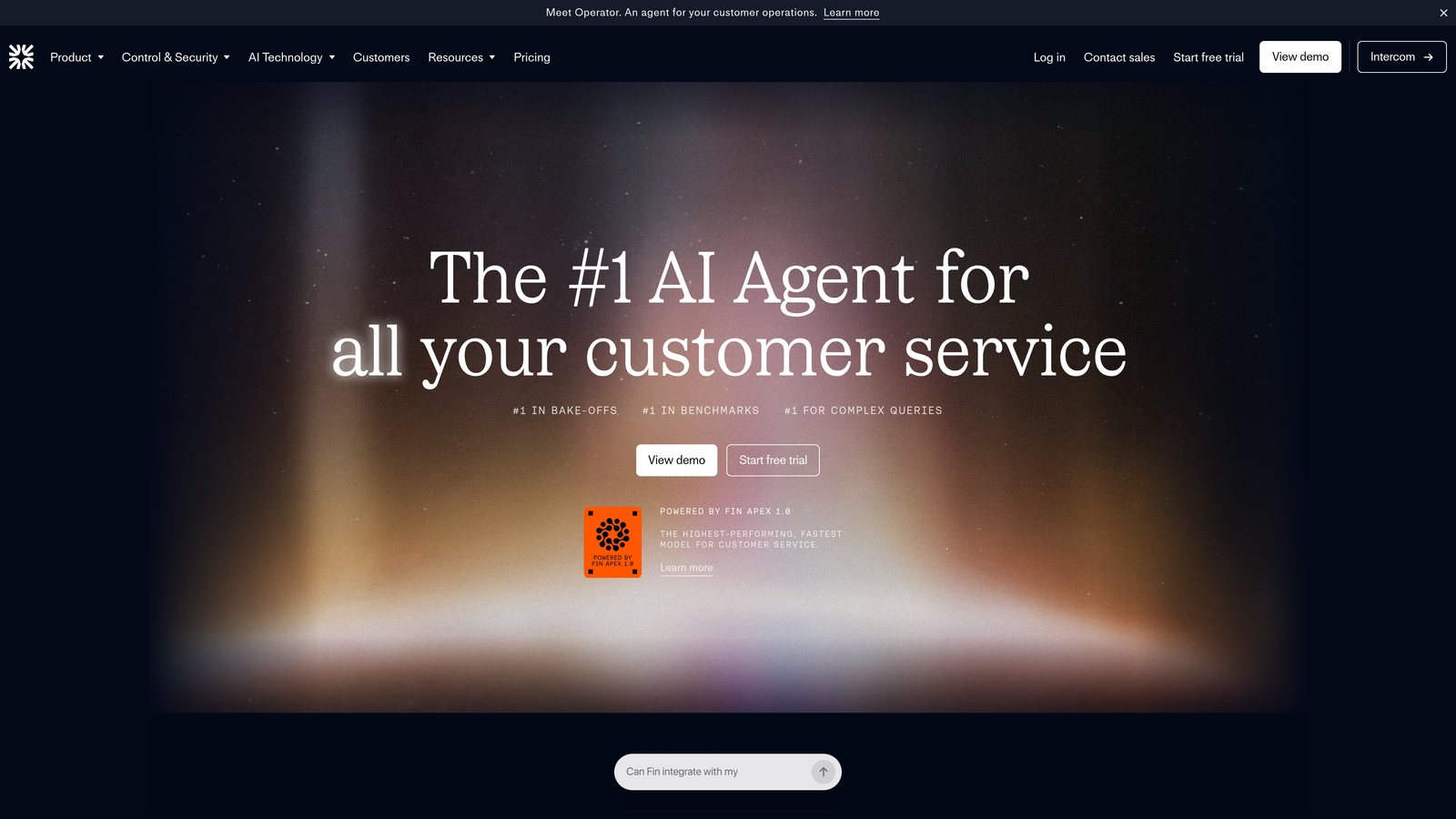
Intercom Fin is Intercom's native AI agent that autonomously resolves customer conversations using your existing help content.
Where This Tool Shines
Fin's biggest advantage is its native integration with the Intercom platform. If your team is already running support through Intercom, deploying Fin requires no separate integration, no data migration, and no new tooling overhead. The AI is trained directly on your help center and support content, which means setup is fast and the responses are grounded in your actual documentation.
Fin has matured significantly since its initial launch, with GPT-class models powering increasingly natural and accurate resolutions. The handoff experience within Intercom is smooth: when Fin can't resolve an issue, it transfers the conversation to a human agent within the same thread, preserving full context.
Key Features
GPT-Class AI on Your Content: Trained directly on your help center and support documentation for accurate, brand-appropriate responses.
Native Intercom Integration: No separate setup required; works within your existing Intercom configuration.
Seamless Human Handoff: Escalates within the same conversation thread with full context preserved.
Consumption-Based Pricing: You pay per resolution, which aligns cost directly with value delivered.
Multilingual Support: Handles conversations across major languages without separate configuration.
Best For
Companies already invested in the Intercom ecosystem who want to add autonomous resolution without platform complexity. Less compelling if you're not already on Intercom, since the native advantage disappears and other platforms may offer more flexibility.
Pricing
Consumption-based pricing per resolution. Verify current rates at intercom.com.
3. Zendesk AI (Zendesk Agents)
Best for: Enterprise support teams with complex Zendesk configurations who want AI embedded in existing workflows.
Zendesk AI delivers autonomous agents natively embedded in the Zendesk Suite for enterprise-scale ticket handling.
Where This Tool Shines
Zendesk AI earns its place for organizations that have built substantial operational infrastructure inside Zendesk. The AI agents work within existing workflows, macros, and routing logic, which means you're not rebuilding your support operations from scratch. For enterprise teams where "rip and replace" isn't a viable option, this native compatibility is genuinely valuable.
Intent detection across email, chat, and messaging channels is solid, and the autonomous resolution capabilities have expanded considerably as Zendesk has invested in AI development. The enterprise-grade security and compliance controls are also a meaningful differentiator for regulated industries.
Key Features
Native Workflow Integration: Works directly within existing Zendesk macros, routing rules, and ticket configurations.
Multi-Channel Intent Detection: AI-powered triage across email, chat, and messaging with consistent classification.
Autonomous Resolution with Escalation Logic: Handles common issue types independently and escalates when needed.
Enterprise Security and Compliance: Built to meet enterprise-grade data security and regulatory requirements.
Existing Suite Compatibility: No migration required for teams already running Zendesk Suite.
Best For
Large enterprise support teams with deep Zendesk configurations who need AI capabilities without disrupting existing workflows. Teams evaluating a fresh platform without prior Zendesk investment may find more flexibility elsewhere.
Pricing
Included in higher Zendesk Suite tiers; AI add-on pricing varies. Verify current rates at zendesk.com.
4. Freshdesk Freddy AI
Best for: SMB and mid-market teams on Freshdesk seeking accessible AI without a platform migration.
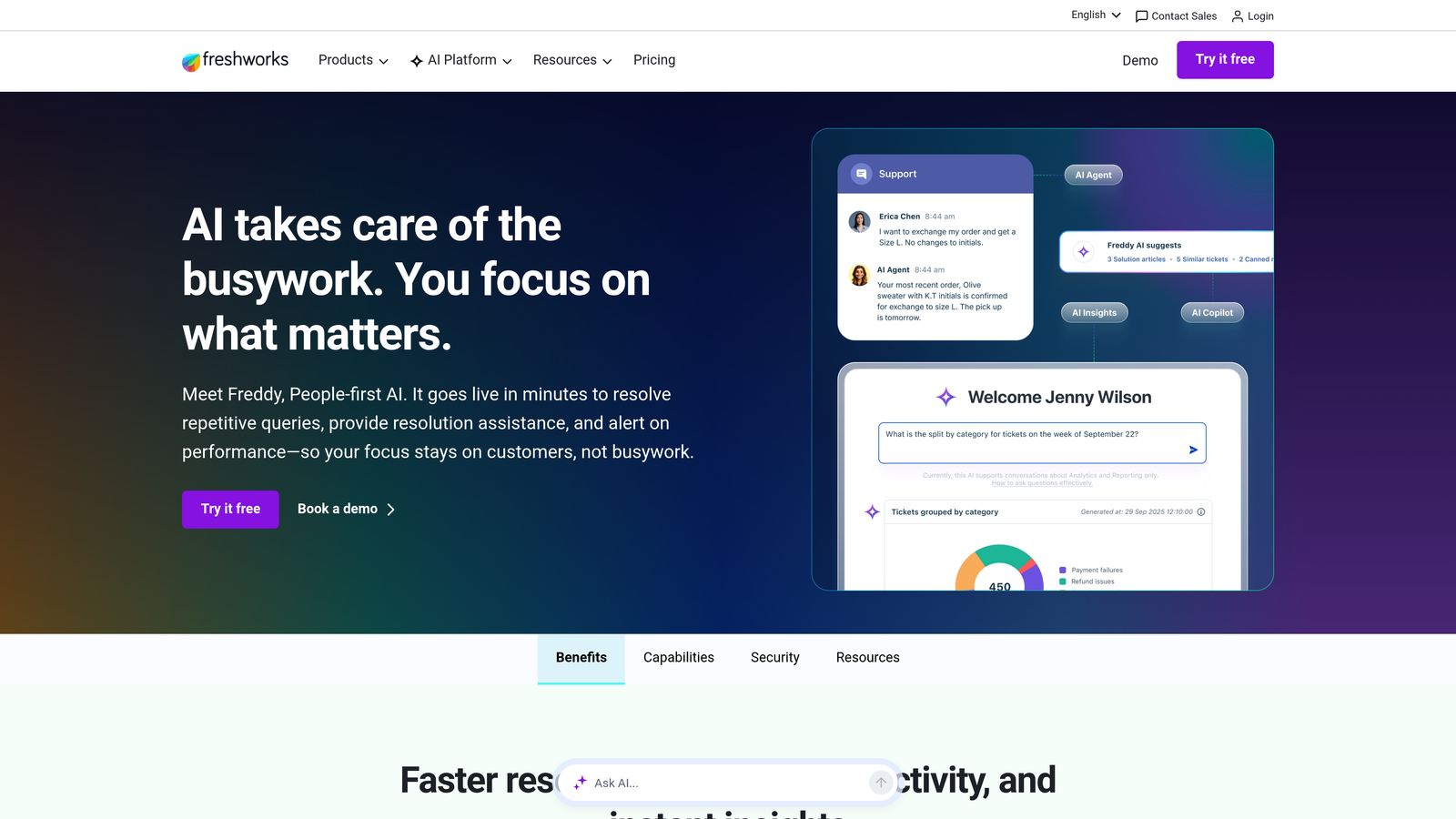
Freshdesk Freddy AI is Freshworks' AI layer for Freshdesk, handling autonomous deflection and resolution for growing teams.
Where This Tool Shines
Freddy AI's strongest argument is accessibility. For SMB and mid-market teams already running Freshdesk, it delivers meaningful AI capabilities at a price point that doesn't require an enterprise budget. The Freddy AI Agent handles inbound deflection and autonomous resolution without requiring a separate tool or integration overhead.
The agent-assist functionality is also worth noting. Beyond autonomous resolution, Freddy surfaces suggestions to human agents in real time, helping your team resolve tickets faster even when AI isn't handling them end-to-end. This hybrid approach works well for teams still building confidence in autonomous AI resolution.
Key Features
Freddy AI Agent: Handles inbound deflection and autonomous resolution natively within Freshdesk.
Agent-Assist Suggestions: Provides real-time resolution suggestions to human agents for faster handling.
No Integration Overhead: Built into Freshdesk with no separate tool or configuration required.
Freshworks Suite Connectivity: Integrates with Freshchat and Freshsales for a unified customer view.
Accessible Pricing: Available on Growth plan and above, making it viable for teams outside enterprise budgets.
Best For
SMB and mid-market teams already on Freshdesk who want to add AI capabilities without changing platforms or significantly increasing costs. Teams with complex B2B support scenarios or deep integration requirements may need a more specialized platform.
Pricing
Available on the Growth plan and above. Verify current tier pricing at freshworks.com.
5. Forethought AI
Best for: Support ops teams that want fine-grained control over AI triage, routing, and resolution logic.
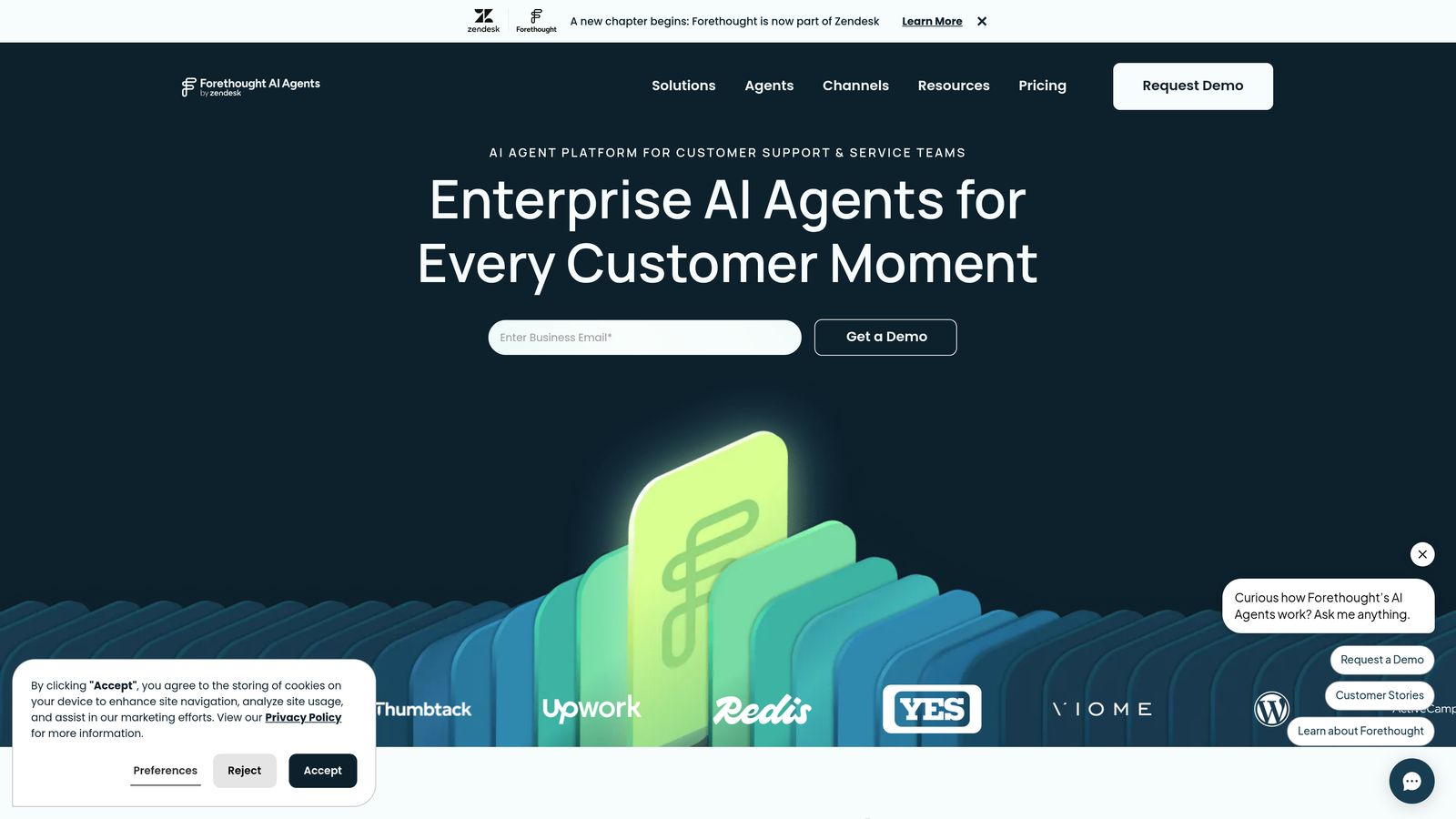
Forethought AI is a specialized AI platform built around intelligent triage, routing, and autonomous resolution with strong intent detection.
Where This Tool Shines
Forethought is built for support operations teams that want to understand and control exactly how their AI behaves. The intent detection and classification engine is notably strong, and the platform gives ops teams the ability to configure routing logic without requiring engineering involvement. For organizations where AI behavior needs to be auditable and adjustable, this level of control is a significant advantage.
The dual-product structure is also practical. Solve handles autonomous resolution for tickets the AI can handle independently. Assist provides agent-assist workflows for tickets that need a human. Teams can deploy both in parallel, which makes the transition to higher autonomy more manageable.
Key Features
Solve Product: Autonomous ticket resolution for issues the AI can handle end-to-end without human input.
Assist Product: Agent-assist workflows that surface recommendations and context for human agents.
Strong Intent Detection: Accurate classification engine that routes tickets based on intent, not just keywords.
No-Engineering Workflow Configuration: Support ops teams can adjust routing logic without developer support.
Multi-Helpdesk Integration: Connects with Zendesk, Salesforce, ServiceNow, and other major platforms.
Best For
Mid-market and enterprise support ops teams that need granular control over AI behavior, strong intent-based routing, and the flexibility to integrate with an existing helpdesk rather than replace it.
Pricing
Custom enterprise pricing. Contact Forethought directly at forethought.ai for a quote.
6. Ada
Best for: Large enterprises needing multilingual autonomous resolution with strong brand customization.
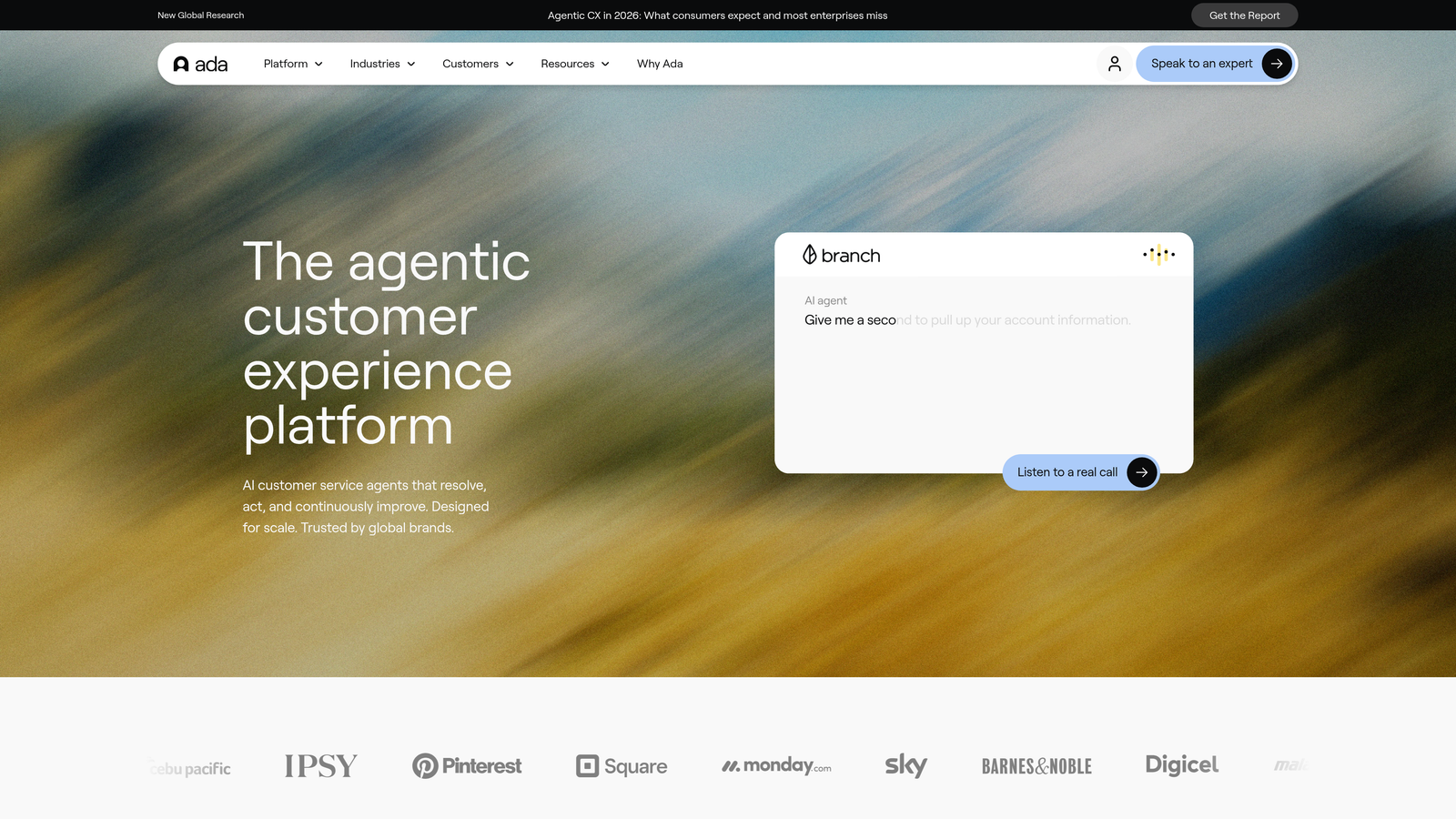
Ada is an enterprise AI agent platform built for high-volume, multilingual support with no-code configuration and robust escalation logic.
Where This Tool Shines
Ada has evolved considerably from its earlier scripted chatbot roots into a genuinely LLM-powered autonomous resolution platform. The no-code agent builder makes it accessible to non-technical teams, and the brand voice and persona customization options are among the most thorough on this list. For large organizations where consistency of tone across thousands of interactions matters, this level of control is meaningful.
Multilingual support across dozens of languages is another standout capability. For global enterprises handling support across regions, Ada removes the complexity of building and maintaining separate language-specific configurations.
Key Features
LLM-Powered Autonomous Resolution: Moves beyond scripted flows into genuine natural language understanding and resolution.
No-Code Agent Builder: Non-technical teams can configure, adjust, and expand the AI's capabilities without developer support.
Multilingual Support: Handles conversations across dozens of languages natively.
Brand Voice Customization: Detailed persona and tone configuration to match your brand identity at scale.
Escalation and Handoff Logic: Robust transfer workflows that preserve context when escalating to human agents.
Best For
Large enterprises and consumer brands with high ticket volumes, global customer bases, and a need for consistent brand voice across all automated interactions. Custom pricing makes it less accessible for smaller teams.
Pricing
Custom enterprise pricing. Contact Ada directly at ada.cx for a quote.
7. Tidio Lyro
Best for: SMBs and e-commerce teams that need fast, affordable autonomous support without dedicated ops resources.
Tidio Lyro is an AI-powered support agent built for small businesses and e-commerce teams who need to be live quickly and affordably.
Where This Tool Shines
Lyro's defining advantage is speed to value. Built on Claude for natural, accurate conversational responses, it can be deployed in hours with minimal configuration. For small teams without a dedicated support ops function, this low-friction setup is genuinely important. You don't need a project to get started.
The native Shopify integration and broader e-commerce platform support make Lyro particularly well-suited for online retail teams. It handles the high-frequency queries that dominate e-commerce support: order status, returns, product questions, and FAQs, all autonomously and without manual routing.
Key Features
Claude-Powered Conversations: Built on Anthropic's Claude for natural, accurate responses without extensive prompt engineering.
Fast Deployment: Can be live in hours with minimal setup, no dedicated ops team required.
Native E-Commerce Integrations: Shopify and other e-commerce platform integrations built in from the start.
Autonomous FAQ and Order Handling: Handles the most common support queries without human involvement.
SMB-Accessible Pricing: Entry-level pricing designed for teams that can't justify enterprise software budgets.
Best For
Small businesses, e-commerce brands, and early-stage startups that need fast, affordable autonomous support without complex configuration. Less suited for B2B SaaS teams with complex, multi-step support scenarios or deep integration requirements.
Pricing
Tiered pricing starting at an SMB-accessible rate. Verify current plans at tidio.com.
8. Kustomer AI
Best for: High-volume D2C and retail brands that need context-rich autonomous resolution grounded in full customer history.
Kustomer AI is a CRM-native customer service platform where AI agents operate with access to complete customer timelines and interaction history.
Where This Tool Shines
Kustomer's architecture is fundamentally different from standalone AI agents: the AI operates within a CRM-native platform, meaning it has access to a customer's complete history, past interactions, order data, and preferences from the moment a conversation starts. This context depth enables a quality of autonomous resolution that's difficult to replicate when support and customer data live in separate systems.
For high-volume consumer brands where a customer might contact support multiple times across different channels, this unified view is a genuine operational advantage. The AI can resolve issues with the full picture rather than treating every interaction as the first.
Key Features
Full Customer Timeline Access: AI agents operate with complete interaction history, order data, and customer preferences available from the start.
CRM-Native Architecture: Customer data and support operations unified in a single platform rather than integrated separately.
Context-Rich Autonomous Resolution: Resolves issues informed by the complete customer relationship, not just the current ticket.
Omnichannel Support: Handles email, chat, SMS, and social from a unified interface.
D2C and Retail Fit: Purpose-built for the data complexity of high-volume consumer brands.
Best For
D2C brands, retail companies, and high-volume consumer businesses where customer history and order data are central to resolution quality. Less relevant for B2B SaaS teams or organizations without complex customer data architectures.
Pricing
Enterprise pricing. Verify current plans at kustomer.com.
9. Salesforce Agentforce
Best for: Enterprises already deeply invested in the Salesforce ecosystem who want autonomous agents with native CRM and data access.
Salesforce Agentforce is Salesforce's autonomous AI agent platform, natively embedded in Service Cloud and Data Cloud for enterprise-scale resolution.
Where This Tool Shines
Agentforce's core strength is its native access to the entire Salesforce data layer. Autonomous agents can query Service Cloud records, trigger Salesforce flows, update CRM data, and escalate cases, all without leaving the Salesforce environment. For enterprises where Salesforce is the system of record for customer relationships, this native integration removes significant friction from autonomous resolution.
The platform has expanded rapidly since its late 2024 launch, with Salesforce investing heavily in its agent capabilities through 2025 and 2026. The per-conversation pricing model is straightforward, though implementation complexity is real. Agentforce delivers the most value for organizations already running Salesforce at scale, where the integration depth justifies the setup investment.
Key Features
Native Salesforce Data Access: Agents operate with real-time access to CRM, Service Cloud, and Data Cloud records.
Flow and Record Actions: Can trigger Salesforce flows, update records, and escalate cases autonomously.
Einstein AI Foundation: Built on Salesforce's Einstein AI with grounding in live business data.
Per-Conversation Pricing: Cost scales directly with usage volume.
Deep Salesforce Ecosystem Fit: Highest value for organizations where Salesforce is already the operational backbone.
Best For
Large enterprises with Salesforce as their core CRM and service platform. The implementation complexity and cost structure make it a poor fit for teams without existing Salesforce infrastructure or those evaluating platforms fresh.
Pricing
Per-conversation pricing model. Verify current rates at salesforce.com.
Which Platform Is Right for Your Team?
The right autonomous support agent platform depends less on feature lists and more on where you're starting from and where you want to go.
If you're a B2B SaaS team that wants AI-first architecture with page-aware context, business intelligence signals, and deep product integrations, Halo AI is purpose-built for exactly that. It's the strongest choice for teams who want their support agent to understand the product, not just the help docs.
If you're already embedded in a major platform, the native options are compelling for their own reasons. Intercom Fin is the natural choice for Intercom users. Zendesk AI makes sense for enterprise teams with complex existing Zendesk configurations. Freshdesk Freddy AI offers accessible AI for mid-market teams on Freshdesk. Salesforce Agentforce is the logical path for enterprises running Salesforce at scale.
For specialized needs: Forethought AI suits support ops teams that want fine-grained control over AI behavior. Ada is built for global enterprises needing multilingual support and brand customization. Kustomer AI is the strongest fit for D2C and retail brands where full customer history drives resolution quality. Tidio Lyro is the fastest path to autonomous support for SMBs and e-commerce teams on a budget.
The common thread across the best performers is this: autonomous resolution quality scales with context depth. The more the AI knows about your product, your customers, and your business, the better it resolves.
Your support team shouldn't scale linearly with your customer base. Let AI agents handle routine tickets, guide users through your product, and surface business intelligence while your team focuses on complex issues that need a human touch. See Halo in action and discover how continuous learning transforms every interaction into smarter, faster support.