9 Best AI Support Software for Small Business in 2026
This guide reviews nine of the best AI support software options for small business in 2026, evaluating each on automation depth, ease of setup, integration flexibility, and cost-effectiveness. Whether you run a SaaS product, e-commerce store, or professional services firm, it cuts through the noise to match the right AI-first support platform to your team's specific needs.
 Matt PattoliFounder13 min read
Small businesses face a genuine tension: customers expect fast, always-on support, but building a full support team isn't always financially realistic. AI support software bridges that gap, automating routine tickets, guiding users through your product, and escalating to humans only when it truly matters.
The result is faster resolutions without proportional headcount growth. But not all AI support tools are built the same. There's a meaningful difference between platforms that bolt AI onto an existing helpdesk and those designed AI-first from the ground up. That distinction affects how well the AI actually resolves tickets versus simply triaging them.
This list covers nine tools worth considering in 2026, evaluated on ease of setup, automation depth, integration flexibility, and value for smaller teams. Whether you're running a SaaS product, an e-commerce store, or a professional services firm, there's something here for your use case.
1. Halo AI
Best for: B2B SaaS teams wanting autonomous AI agents with deep product and business intelligence
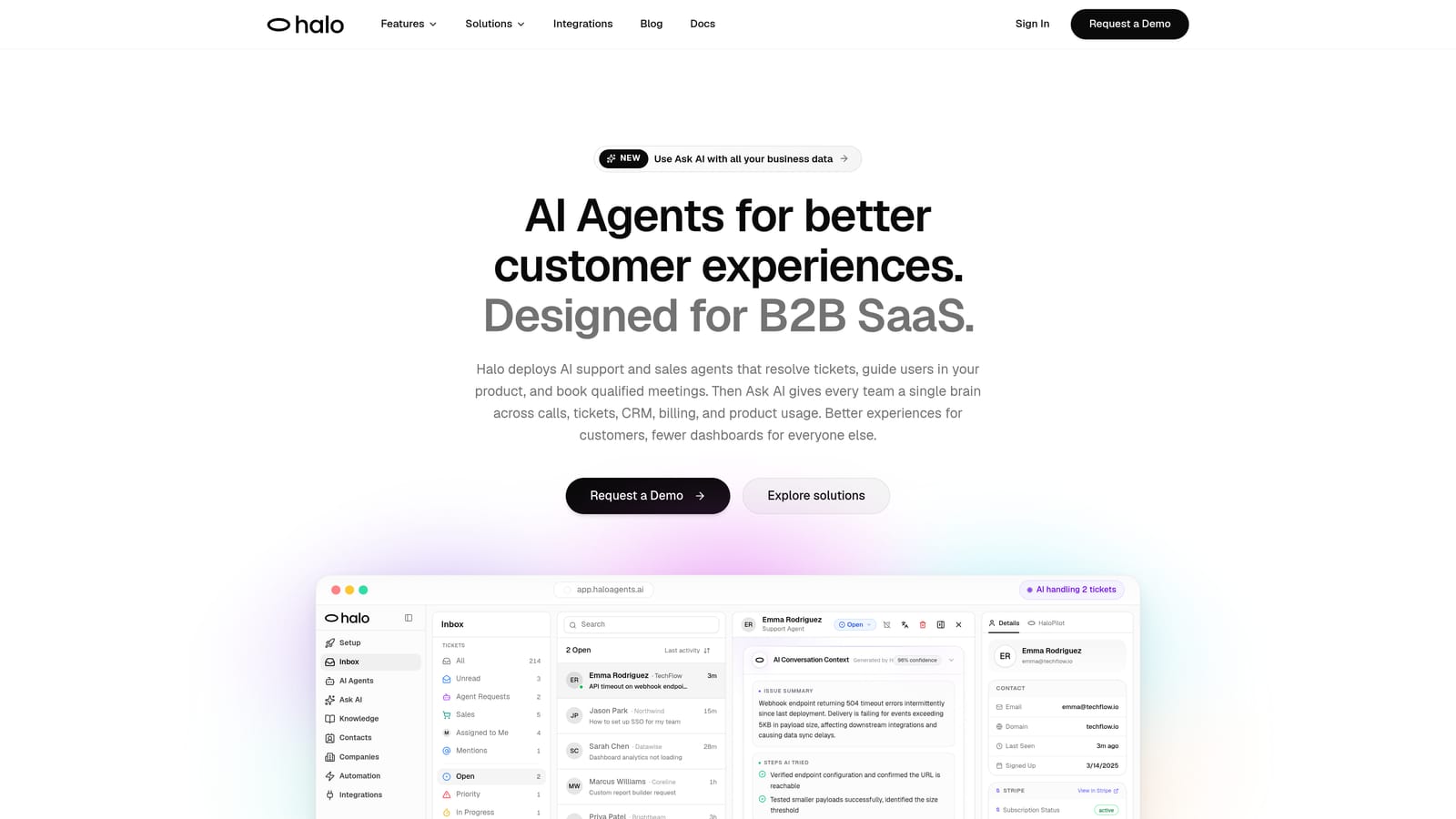
Halo AI is an AI-first customer support platform that deploys autonomous agents to resolve tickets, guide users through your product, and surface business intelligence across your entire support operation.
Where This Tool Shines
Unlike most tools on this list, Halo wasn't built as a helpdesk with AI layered on top. The AI agent is the primary responder, not a triage filter sitting in front of a human queue. That architectural difference matters: the AI is designed to resolve, not just route.
What makes Halo particularly interesting for SaaS teams is the page-aware context. The chat widget can see what screen or page the user is currently on, which means it can provide specific UI guidance rather than generic documentation links. Combined with automatic bug ticket creation that routes product issues directly to Linear, it closes a loop that most support tools leave open.
Key Features
AI-First Architecture: The AI agent operates as the primary resolution layer, with humans in a supervisory and escalation role rather than the default first responder.
Page-Aware Chat Widget: Sees what the user sees in real time, enabling contextual guidance that's specific to where they are in your product.
Auto Bug Ticket Creation: Detects product issues surfaced in support conversations and automatically creates tickets in Linear, keeping engineering informed without manual handoffs.
Smart Inbox with Business Intelligence: Goes beyond standard ticket metrics to surface customer health signals, revenue anomalies, and product usage patterns.
Live Agent Handoff: Escalates to a human when confidence is low or issue complexity is high, with full conversation context preserved so agents aren't starting from scratch.
Integration Ecosystem: Connects with Linear, Slack, HubSpot, Intercom, Stripe, Zoom, PandaDoc, and Fathom, making it a genuine hub rather than an isolated support tool.
Best For
B2B SaaS companies and product teams that want AI to operate autonomously rather than assist human agents. Particularly well-suited for teams already using Linear for engineering, Slack for internal communication, and HubSpot or Stripe for revenue operations. Less suited for pure e-commerce workflows where order management integrations take priority.
Pricing
Demo-first model with custom pricing. Visit haloagents.ai to book a demo and discuss pricing for your team size and use case.
2. Intercom
Best for: SaaS companies wanting a mature AI agent with a strong messaging and engagement platform underneath
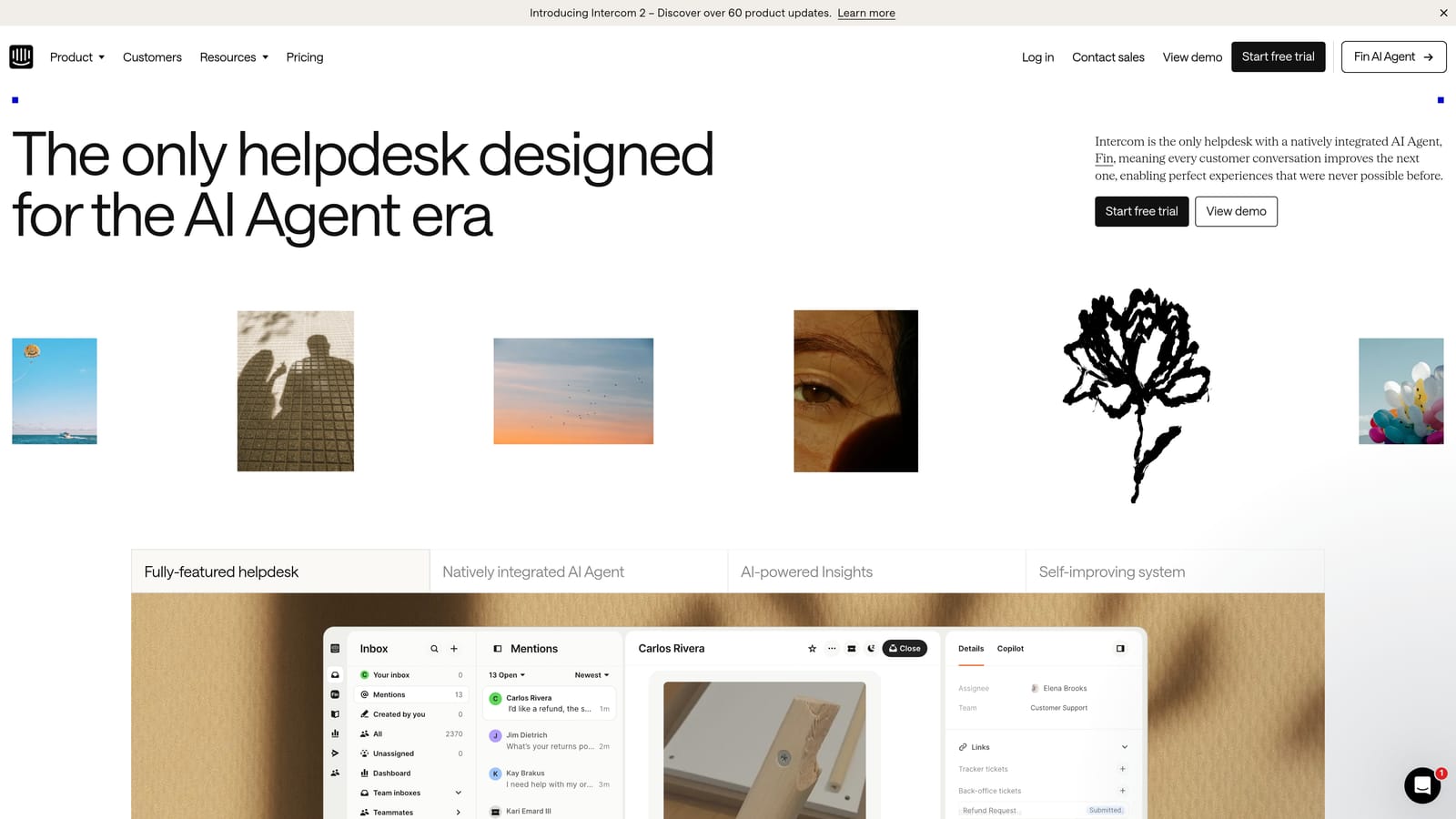
Intercom is a well-established customer messaging platform featuring Fin, an AI agent built on large language models that handles support conversations across chat and email.
Where This Tool Shines
Fin is one of the more capable AI agents in the market, trained to handle full support conversations rather than just keyword-matching to FAQ articles. It sits on top of Intercom's existing messenger, inbox, and help center infrastructure, which means you get a mature platform alongside the AI layer.
Intercom also offers AI Copilot for agents who prefer AI-assisted replies over fully autonomous resolution, giving teams flexibility in how much they lean on automation.
Key Features
Fin AI Agent: Autonomous ticket resolution across chat and email, built on large language models and trained on your help content.
AI Copilot: Provides suggested replies and context to human agents, sitting alongside the autonomous AI option rather than replacing it.
Unified Platform: Shared inbox, help center, and outbound messaging in a single tool, reducing the number of platforms a small team needs to manage.
Integration Ecosystem: Broad marketplace of third-party integrations, including CRMs and billing tools.
Best For
SaaS companies already invested in Intercom's ecosystem, or teams that want a single platform for support, onboarding messaging, and proactive customer engagement. Worth noting: Halo AI integrates directly with Intercom, so teams using Intercom's messenger can layer Halo's intelligence on top.
Pricing
Fin AI is historically priced per resolution, which can be unpredictable for small businesses with variable ticket volumes. Base plans start around $39/month. Verify current pricing at intercom.com before committing.
3. Freshdesk
Best for: Small teams wanting multi-channel support with a free entry point and gradual AI adoption
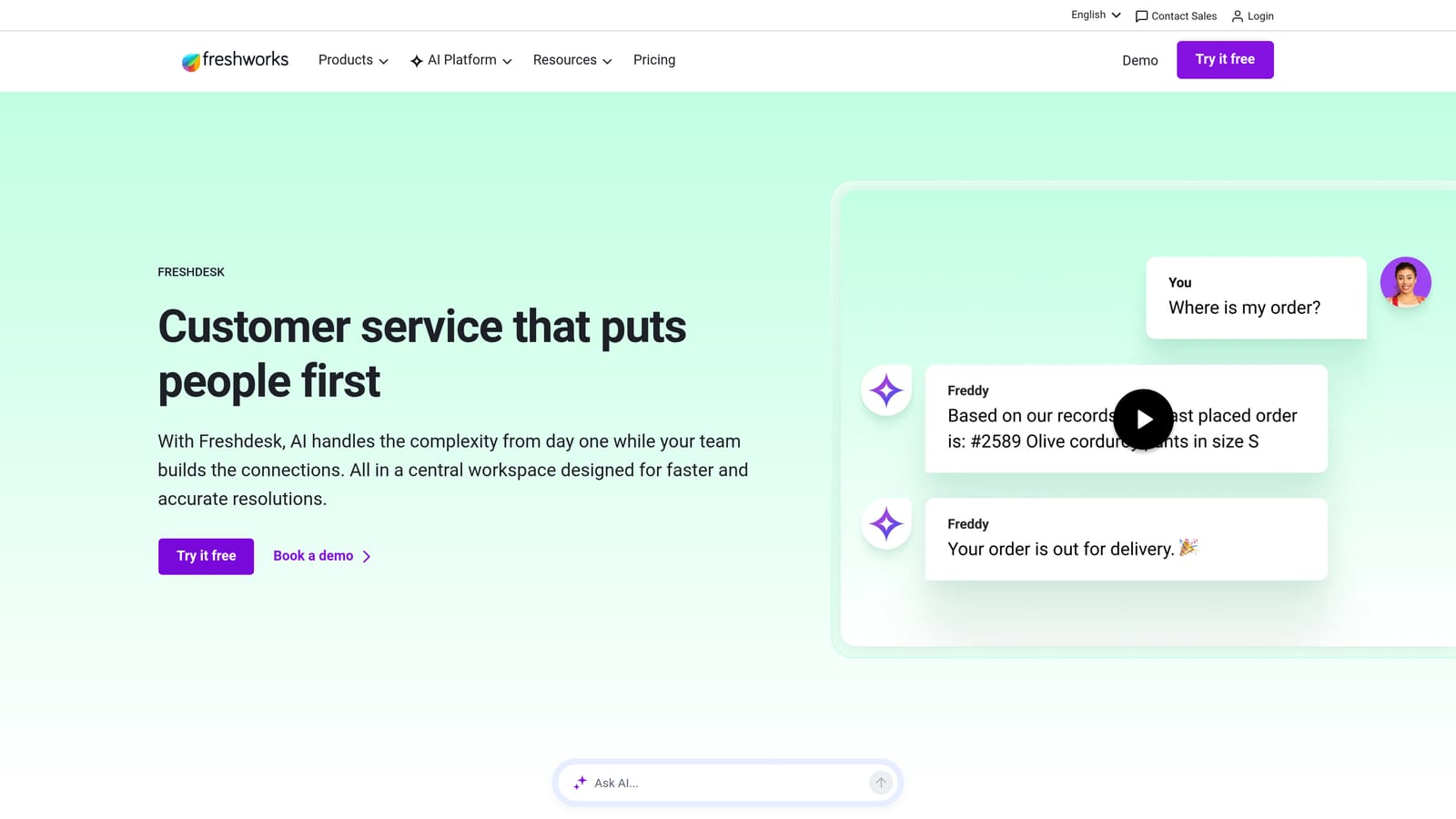
Freshdesk is a multi-channel helpdesk platform from Freshworks with Freddy AI providing ticket automation, response suggestions, and self-service chatbot capabilities.
Where This Tool Shines
Freshdesk's free Sprout plan makes it genuinely accessible for very small teams or solo operators who need basic helpdesk functionality without an immediate financial commitment. As teams grow, the AI features become available on paid tiers.
Freddy AI covers two distinct use cases: Freddy Self Service handles bot interactions with customers, while Freddy Copilot assists human agents with suggested replies and auto-triage. The separation gives teams control over where they want AI involved.
Key Features
Freddy AI: Covers auto-triage, response suggestions, and a self-service chatbot, with Freddy Copilot handling AI-assisted agent replies separately.
Free Tier: The Sprout plan provides basic helpdesk functionality for very small teams at no cost, making it a low-risk starting point.
Multi-Channel: Email, chat, phone, and social media channels managed from a single inbox.
Ease of Setup: Generally considered easier to configure than Zendesk, which matters for small teams without dedicated IT resources.
Best For
Early-stage businesses that need a free or low-cost entry point into structured support, or growing teams that want to adopt AI incrementally rather than committing to an AI-first architecture from day one.
Pricing
Free plan available. Paid plans start around $15/agent/month, with AI features unlocking on higher tiers. Verify current pricing at freshworks.com/freshdesk.
4. Tidio
Best for: Small e-commerce and retail businesses wanting fast AI setup without technical expertise
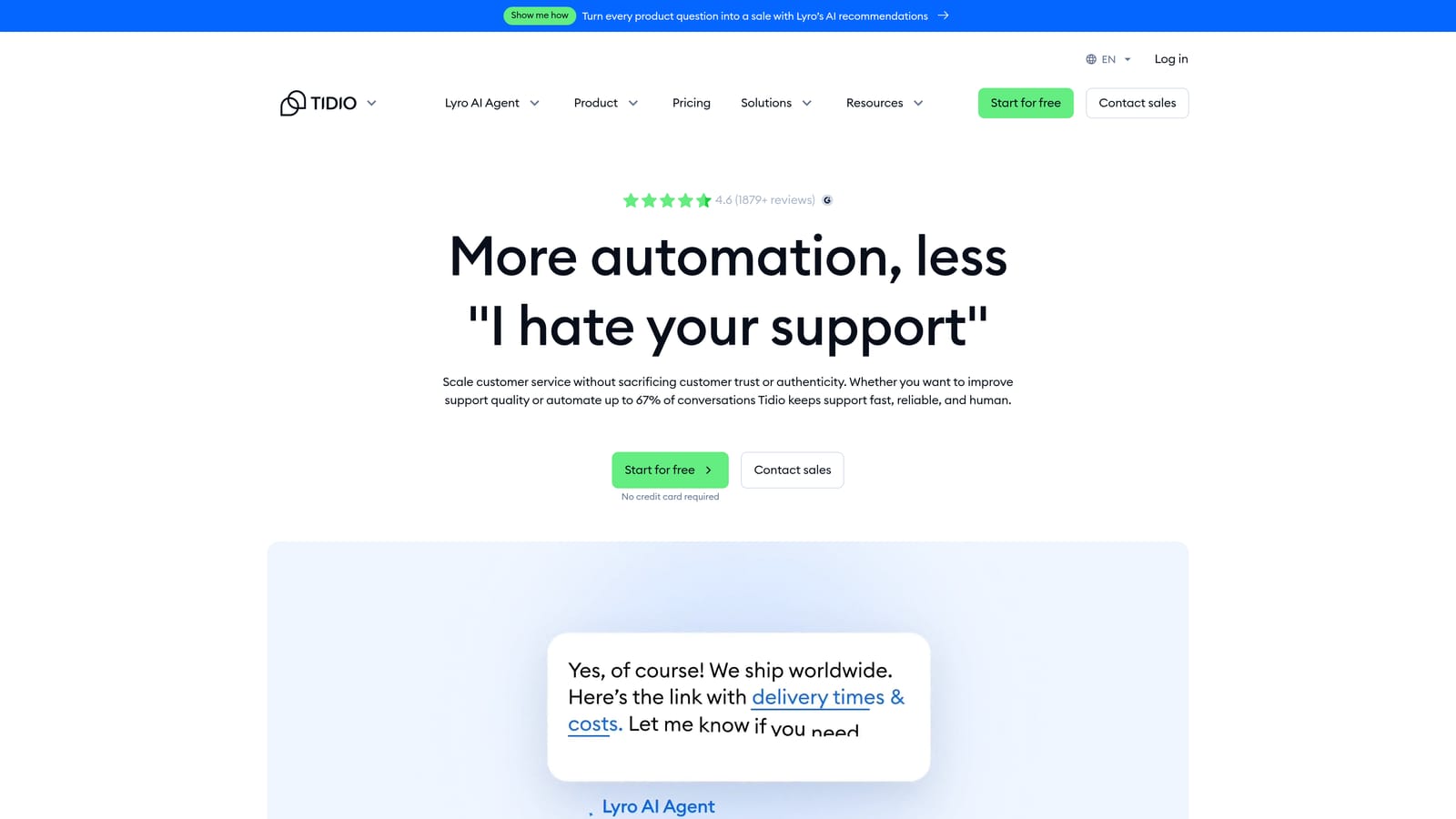
Tidio is a lightweight live chat and AI support tool built specifically for small businesses, with Lyro AI handling common customer questions through conversational automation.
Where This Tool Shines
Tidio's standout quality is setup speed. It's designed for non-technical users, meaning a small business owner can have Lyro AI answering customer questions within hours rather than days. The tool connects natively with Shopify and WordPress, which covers a large portion of small e-commerce businesses.
When Lyro can't resolve a question, it hands off to live chat seamlessly. For businesses where most support questions are predictable and high-volume (order status, shipping times, return policies), that combination handles a significant portion of the queue automatically.
Key Features
Lyro AI Chatbot: Trained on your support content and FAQs, handles common questions conversationally without requiring script-based flows.
Quick Setup: Designed for non-technical users with minimal configuration required to go live.
Native E-Commerce Integrations: Direct integrations with Shopify and WordPress, with order and product data accessible in conversations.
Live Chat Fallback: Smooth handoff to a human agent when AI confidence is low or the customer requests it.
Best For
Small e-commerce stores, retail businesses, and service providers with predictable, high-volume support questions. Less suited for complex B2B SaaS support where questions require deep product context or multi-step troubleshooting.
Pricing
Free plan available. Lyro AI starts around $29/month. Verify current pricing at tidio.com.
5. Zendesk
Best for: Small businesses planning to scale significantly and wanting enterprise-grade infrastructure from the start
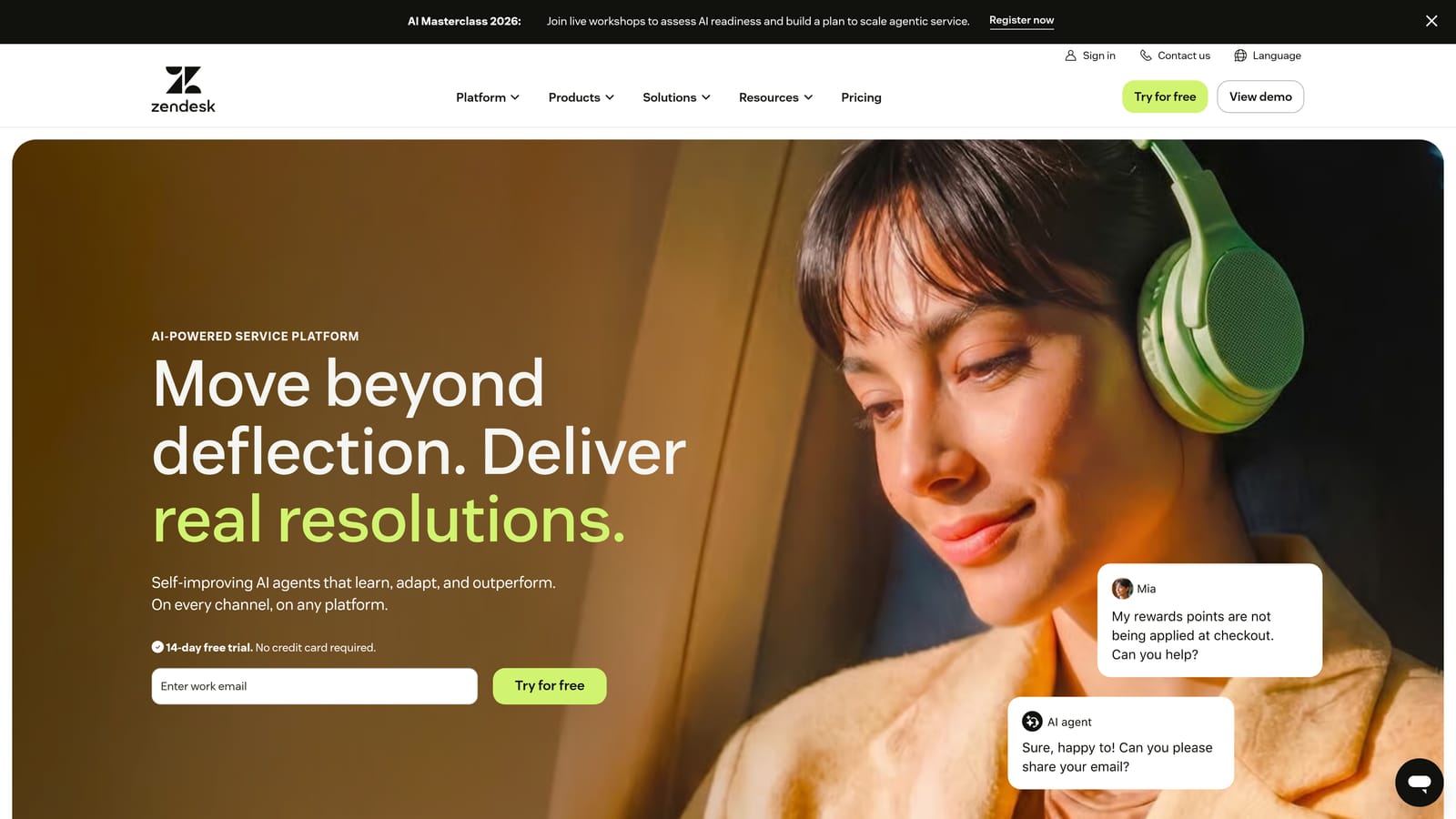
Zendesk is the market-leading helpdesk platform, with AI capabilities added via Zendesk AI offering triage automation, intent detection, and agent assistance.
Where This Tool Shines
Zendesk's primary strength is its depth. The reporting and analytics capabilities are among the best in the category, and the app marketplace gives teams access to hundreds of integrations. If you're a small business today but expect to grow a support team of 20+ people, Zendesk grows with you without requiring a platform migration.
That said, Zendesk is genuinely complex to configure and has become one of the more expensive options in this category. For a team of two or three people, much of the platform's power may go unused while the cost remains high.
Key Features
Zendesk AI: Automated triage, intent detection, and agent assist powered by their AI layer, built on their acquisition of Ultimate.ai.
Robust Reporting: Deep analytics dashboard with customizable reports, useful for teams that need to track support performance across multiple dimensions.
Large Integration Marketplace: Hundreds of third-party apps covering CRM, billing, project management, and more.
Omnichannel: Email, chat, voice, social, and messaging channels unified in one platform.
Best For
Small businesses with serious growth ambitions that want to invest in infrastructure that scales. Teams that prioritize reporting depth and integration breadth over AI-first resolution capabilities. Less ideal for very small teams where the complexity and cost outweigh the benefits.
Pricing
Plans start around $55/agent/month, with AI features on higher tiers. Pricing has increased in recent years. Verify current pricing at zendesk.com.
6. Zoho Desk
Best for: Small businesses already using the Zoho ecosystem wanting integrated AI at competitive price points
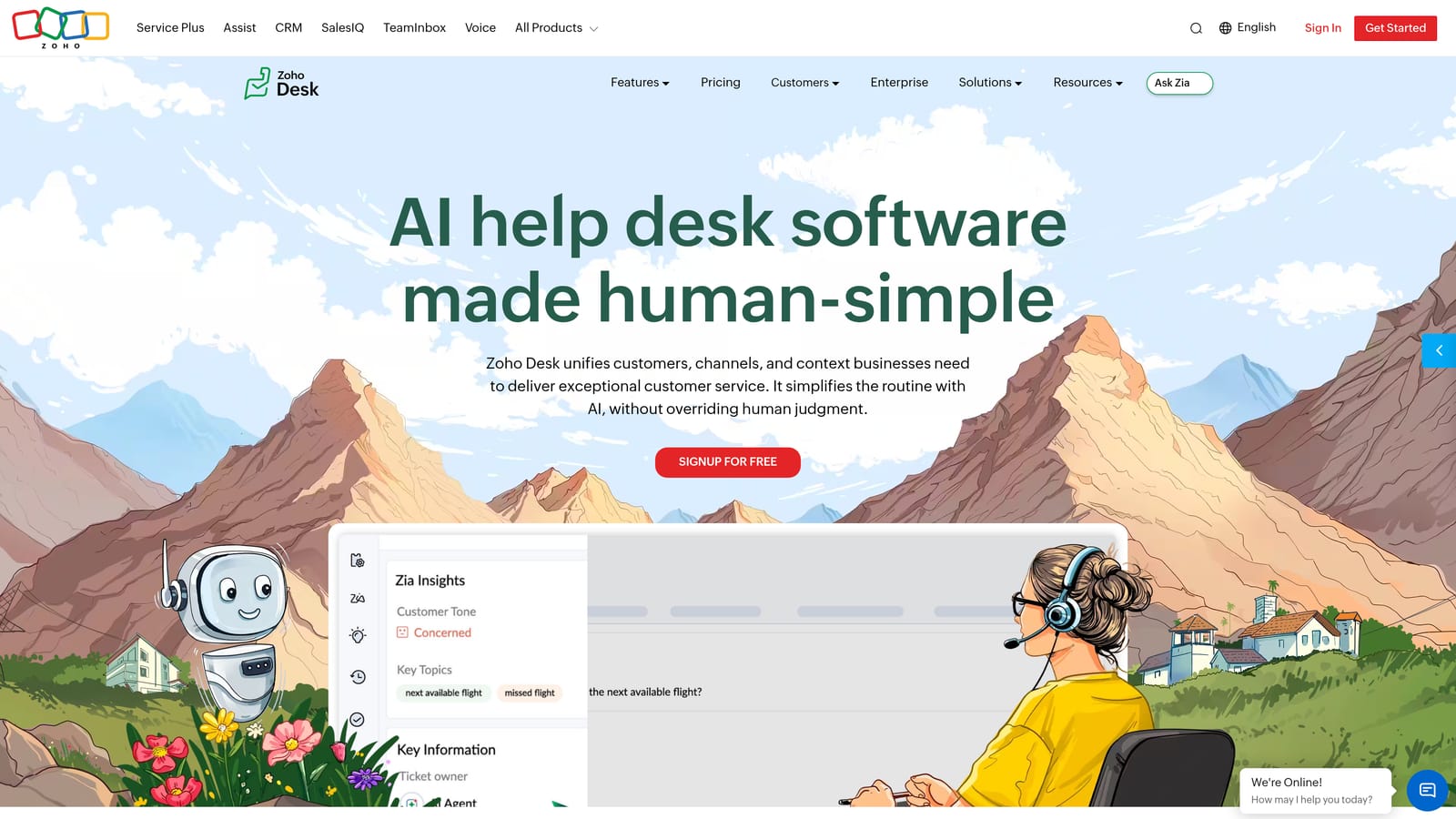
Zoho Desk is a helpdesk platform tightly integrated with the broader Zoho suite, featuring Zia AI for ticket tagging, sentiment analysis, and response suggestions.
Where This Tool Shines
The value case for Zoho Desk is strongest when you're already using Zoho CRM, Zoho Books, or other Zoho products. The native integration means customer data, billing history, and support tickets share context without needing custom connectors or third-party middleware.
Zia AI handles the practical automation work: classifying incoming tickets, detecting customer sentiment, and suggesting replies for agents. It's not as autonomously capable as newer AI-first tools, but it delivers solid value at a price point that's hard to match.
Key Features
Zia AI: Handles ticket classification, sentiment detection, and reply suggestions, reducing manual triage work for small teams.
Zoho Ecosystem Integration: Deep native connections to Zoho CRM, Zoho Books, and other Zoho products for unified customer context.
Multi-Channel Support: Email, chat, phone, and social channels included across plans.
Competitive Pricing: One of the more affordable options in the category, particularly for teams already paying for other Zoho products.
Best For
Small businesses that have adopted the Zoho suite and want their support tool to integrate natively without additional complexity. Teams that prioritize pricing efficiency and don't require cutting-edge autonomous AI capabilities.
Pricing
Plans start around $14/agent/month, with Zia AI features on higher tiers. Verify current pricing at zoho.com/desk.
7. Help Scout
Best for: Service businesses and small teams that want AI to assist human agents rather than replace them
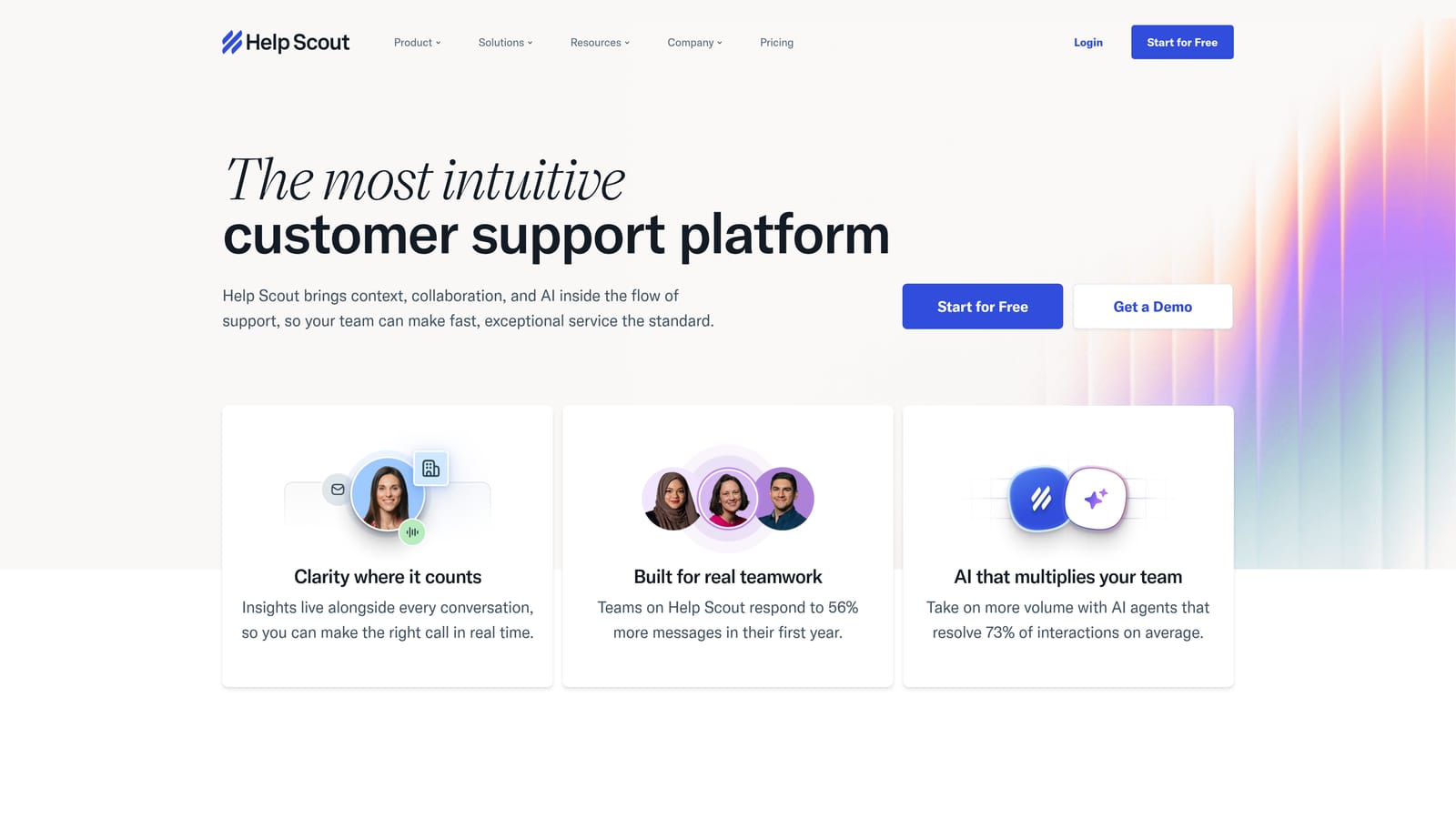
Help Scout is a deliberately simple, email-inbox-style support platform with AI assist features designed to help human agents reply faster and more consistently.
Where This Tool Shines
Help Scout's philosophy is different from the autonomous AI tools on this list. Rather than deploying AI as the primary responder, it uses AI to make human agents more effective. That's a legitimate choice for businesses where the quality and warmth of human communication is part of the customer experience.
The interface is intentionally clean and simple, which reduces training time and makes it approachable for teams that find tools like Zendesk overwhelming. The AI features feel like natural extensions of the writing process rather than a separate system to manage.
Key Features
AI Summarize: Condenses long email threads into a quick summary so agents can get up to speed on complex conversations without reading everything from the start.
AI Drafts: Suggests complete replies based on conversation context, which agents can edit and send rather than writing from scratch.
AI Assist: Adjusts tone, length, and clarity of agent-written replies before they're sent.
Beacon Chat Widget: Embeddable chat with self-service help center access, though less capable than full AI agent products.
Best For
Professional services firms, consultancies, and small teams where human relationships are central to the customer experience. Teams that want AI to reduce writing effort rather than automate full ticket resolution.
Pricing
Plans start around $22/user/month. Verify current pricing at helpscout.com.
8. Gorgias
Best for: E-commerce brands on Shopify, BigCommerce, or Magento needing order-aware AI support
Gorgias is a support platform purpose-built for e-commerce brands, pulling order data directly into every ticket alongside AI automation for high-volume order-related questions.
Where This Tool Shines
Gorgias solves a specific problem that generic helpdesks handle poorly: the agent needs to see order status, shipping details, and return history at the same time they're reading the customer's message. Gorgias makes that native, not a copy-paste exercise between tabs.
For e-commerce businesses where a significant portion of tickets are "where is my order?" or "how do I return this?", the AI automation can close those tickets without any human involvement. The revenue statistics per ticket feature also helps teams prioritize high-value customers when human attention is required.
Key Features
Native E-Commerce Integrations: Shopify, BigCommerce, and Magento order data appears directly within the ticket view, giving agents full context without switching platforms.
AI Automation for E-Commerce Queries: Handles order status, returns, and shipping questions autonomously, covering the most common support request types for online retailers.
Revenue Statistics per Ticket: Shows the customer's purchase value alongside their ticket, helping teams prioritize support resources by customer value.
Multi-Channel: Email, chat, social DMs, and SMS unified in one inbox.
Best For
E-commerce brands running on Shopify, BigCommerce, or Magento where order management is central to support operations. Not well-suited for SaaS companies, service businesses, or teams that need deep product integration beyond e-commerce platforms.
Pricing
Pricing is based on ticket volume, with starter plans around $10/month for low volumes. Volume-based pricing can scale unpredictably during peak periods. Verify current pricing at gorgias.com.
9. Crisp
Best for: Early-stage startups and micro-businesses needing basic AI support with minimal budget
Crisp is a budget-friendly shared inbox and live chat tool with MagicReply AI, suited for early-stage companies that need basic AI support without a significant monthly investment.
Where This Tool Shines
Crisp's generous free plan, which supports two agents with a shared inbox and live chat, is genuinely useful for founders or very small teams in the early stages of building a support function. There's no pressure to commit financially before you understand your support volume and patterns.
MagicReply AI suggests responses based on conversation history, reducing the time agents spend writing replies to recurring questions. It's not autonomous in the way that Halo or Fin are, but for a team of one or two handling a modest ticket volume, it meaningfully speeds up the workflow.
Key Features
MagicReply AI: Suggests responses based on past conversation history, helping agents reply faster to recurring question types.
Generous Free Plan: Supports two agents with shared inbox, live chat, and basic knowledge base access at no cost.
Unified Inbox: Shared inbox, live chat, and knowledge base in one tool, keeping the stack simple for small teams.
Simple Setup: Minimal configuration required, making it accessible for non-technical founders handling support themselves.
Best For
Early-stage startups, freelancers, and micro-businesses handling low to moderate ticket volumes. Teams that need a functional starting point before they have the budget or volume to justify a more sophisticated AI support platform.
Pricing
Free plan available for two agents. Paid plans start around $25/month for small teams. Verify current pricing at crisp.chat.
Which Tool Is Right for Your Business?
The right AI support software depends heavily on your business model, existing stack, and how much autonomy you want the AI to have.
For B2B SaaS teams that want AI operating as the primary resolution layer with deep product context and business intelligence, Halo AI is the strongest fit. The page-aware guidance, auto bug ticket creation, and integrations with tools like Linear, HubSpot, and Stripe make it genuinely useful beyond the support queue itself.
For e-commerce businesses, Gorgias is the category specialist with order data built into every ticket. Tidio is a lighter-weight option for smaller stores that need fast setup and conversational AI without complex configuration.
For early-stage companies not yet ready to invest in a dedicated AI platform, Crisp's free plan or Freshdesk's Sprout tier provide a functional starting point. For teams that want AI to assist human agents rather than replace them, Help Scout's approach is deliberately designed for that philosophy.
Zendesk and Zoho Desk both work well for teams that prioritize integration breadth and reporting depth, with Zoho offering significantly better value for businesses already in the Zoho ecosystem.
One principle worth holding onto as you evaluate: the distinction between AI that assists agents and AI that resolves tickets autonomously matters more than any individual feature. Know which model fits your team before you start a trial.
Your support team shouldn't scale linearly with your customer base. See Halo in action and discover how continuous learning transforms every interaction into smarter, faster support, so your team can focus on the complex issues that genuinely need a human touch.