9 Best AI Ticketing Systems for SaaS in 2026
Discover the best AI ticketing system for SaaS teams in 2026, with nine platforms evaluated on autonomous resolution capabilities, SaaS-specific integrations with dev tools and billing systems, and pricing transparency. This guide helps technical support teams move beyond reactive helpdesks toward AI-driven workflows that resolve tickets end-to-end and surface actionable product insights from support data.
 Matt PattoliFounder14 min read
SaaS support teams face a fundamentally different challenge than most businesses. Your customers are technical, your product changes constantly, and the same how-to questions arrive hundreds of times a day. Traditional helpdesks were built for reactive, agent-driven workflows. They were never designed to resolve tickets autonomously, learn from every interaction, or connect support conversations to engineering backlogs and revenue signals.
That's changed. A new generation of AI helpdesk software can now handle ticket resolution end-to-end, route intelligently based on context, and surface product insights buried in your support queue. The challenge is choosing the right one for your stack and stage.
To build this list, we evaluated tools on AI resolution capabilities, SaaS-specific integrations (dev tools, billing systems, product analytics), ease of implementation, pricing transparency, and whether the system genuinely improves over time. We also looked at whether AI is core to the architecture or a feature bolted onto a legacy platform. The distinction matters more than most buyers realize. Here are the top AI ticketing systems worth considering for SaaS teams in 2026.
1. Halo AI
Best for: SaaS teams wanting fully autonomous AI ticket resolution with built-in business intelligence
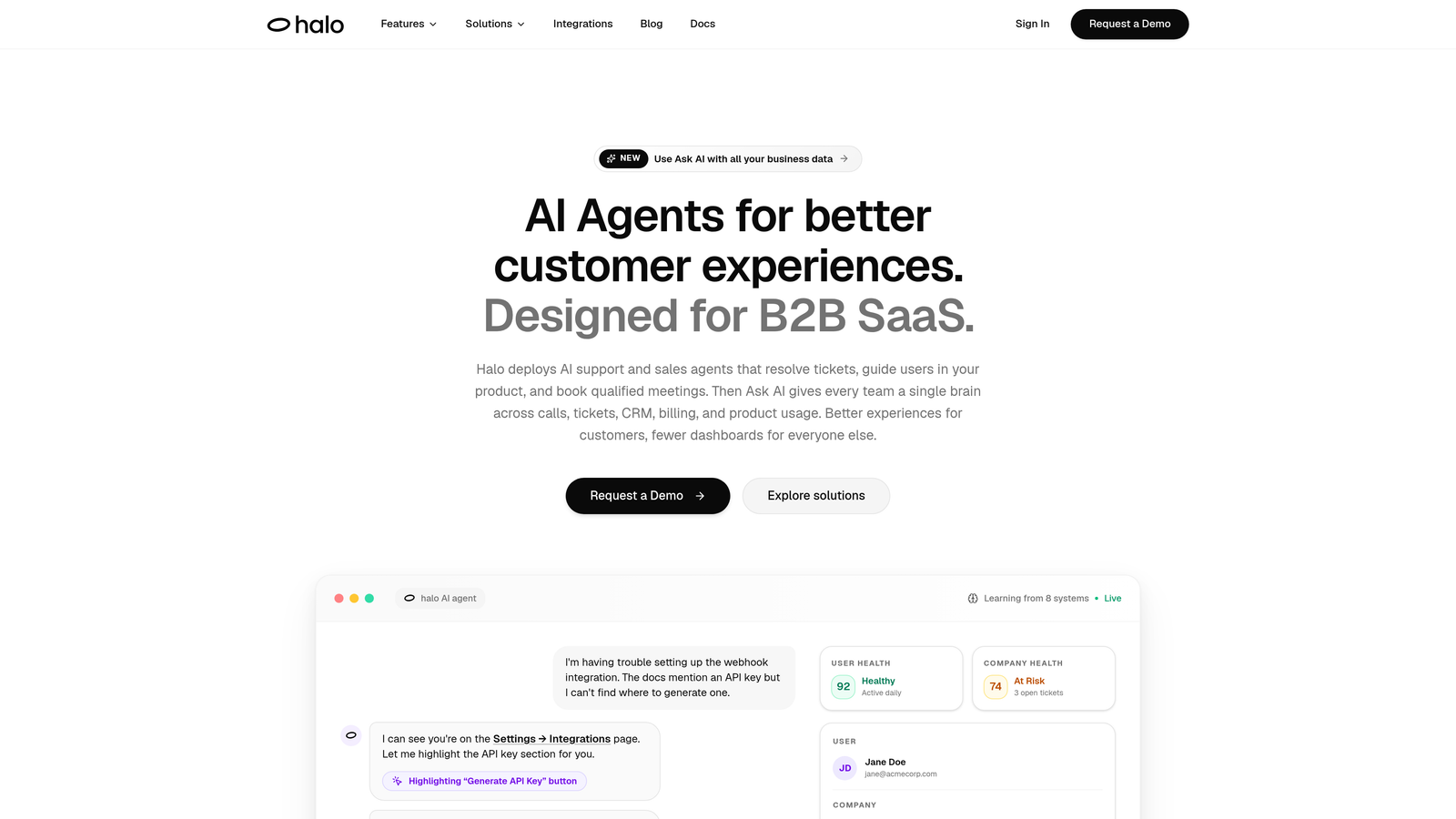
Halo AI is an AI-first customer support platform that autonomously resolves tickets, guides users visually through your product, and delivers business intelligence from every support interaction.
Where This Tool Shines
Most tools add AI to an existing helpdesk. Halo was built the other way around: AI is the architecture, not a layer on top. That means every ticket, every conversation, and every resolution feeds a learning loop that makes the system smarter over time. It's the difference between a tool that assists agents and one that genuinely replaces repetitive work.
What sets Halo apart for SaaS teams specifically is its page-aware context. The chat widget sees what your user sees, allowing it to provide visual UI guidance that's relevant to exactly where someone is in your product. Combine that with auto bug ticket creation and business intelligence signals surfaced from support data, and you have a platform that does far more than deflect tickets.
Key Features
Autonomous AI Ticket Resolution: AI agents handle tickets end-to-end with continuous learning from every resolved interaction, improving accuracy over time without manual retraining.
Page-Aware Chat Widget: The widget understands the user's current location in your product and delivers contextually relevant guidance and visual UI walkthroughs.
Auto Bug Ticket Creation: Support conversations automatically generate bug reports in Linear or Jira, closing the loop between customer issues and engineering workflows.
Smart Inbox with Business Intelligence: The inbox surfaces customer health signals, revenue intelligence, and anomaly detection so support data informs product and business decisions.
Deep SaaS Stack Integrations: Native connections to Linear, Slack, HubSpot, Intercom, Stripe, Zoom, PandaDoc, and Fathom make Halo a hub across your entire operation.
Best For
SaaS product teams and customer success organizations that want AI as the foundation of their support operation, not an add-on. Particularly strong for teams managing high ticket volumes with a lean support headcount and those who want support data to feed product and revenue decisions.
Pricing
Contact Halo AI directly for pricing. The platform is designed to serve SaaS teams across a range of sizes, with plans tailored to team needs and ticket volume.
2. Zendesk AI
Best for: Enterprise SaaS teams with existing Zendesk infrastructure seeking AI-enhanced workflows
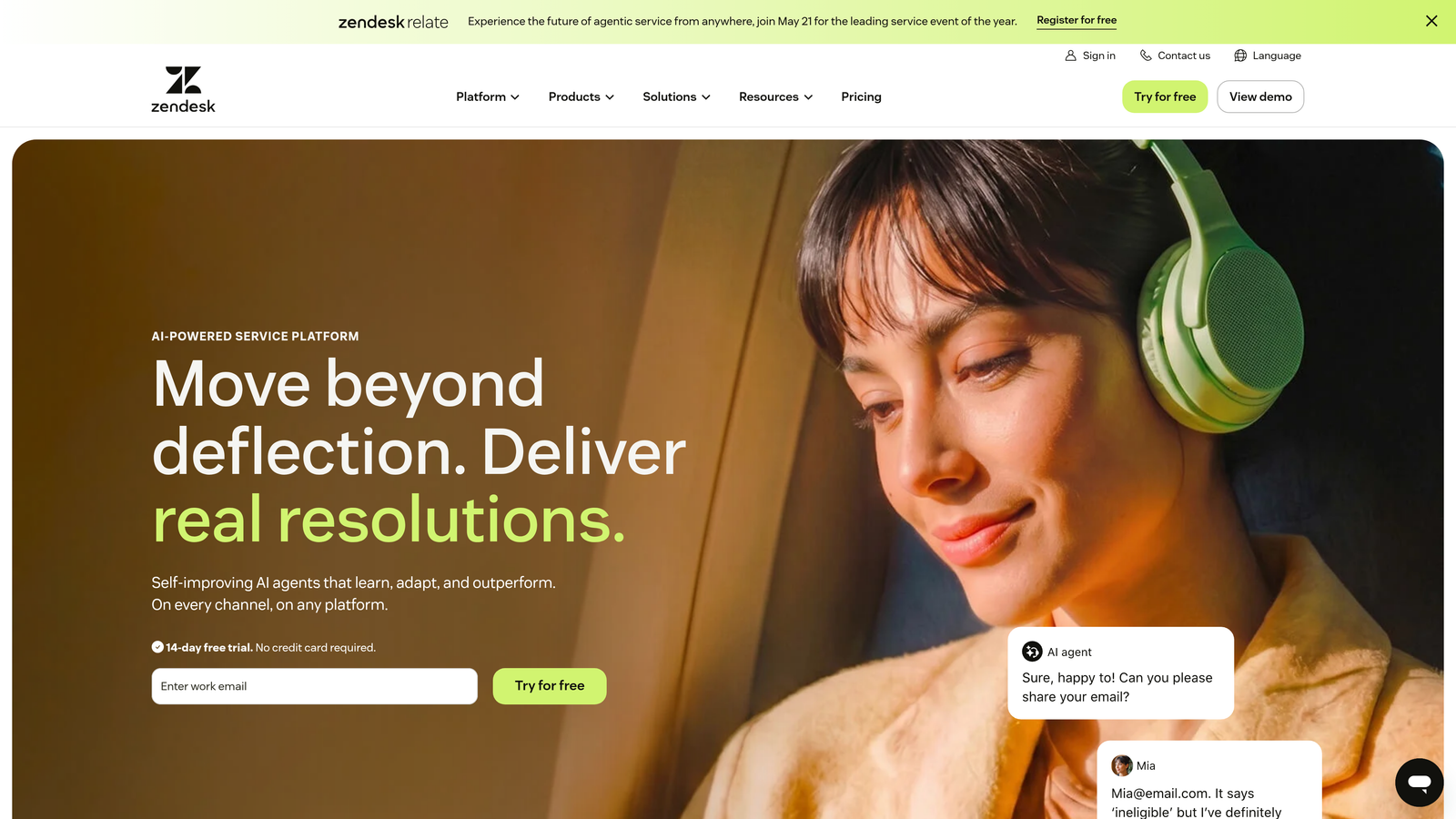
Zendesk AI is an enterprise-grade helpdesk platform with layered AI capabilities for ticket triage, agent assistance, and self-service optimization.
Where This Tool Shines
Zendesk's scale is hard to argue with. If your team is already running on Zendesk, the AI additions slot into familiar workflows without a rip-and-replace migration. The generative AI features help agents draft responses faster, and the routing intelligence reduces the manual overhead of triaging high-volume queues.
The tradeoff is that AI here is additive, not foundational. You're enhancing an existing agent-centric model rather than shifting to autonomous resolution. For enterprises with complex escalation trees and compliance requirements, that's often the right call.
Key Features
AI-Powered Ticket Routing: Automatically classifies and prioritizes incoming tickets based on intent, sentiment, and historical patterns.
Generative AI Agent Assist: Drafts suggested responses for agents based on ticket context and your knowledge base, reducing handle time.
1,500+ App Marketplace Integrations: Extensive ecosystem covering CRMs, billing tools, dev platforms, and communication channels.
Advanced Reporting Dashboards: Deep analytics on team performance, ticket trends, and customer satisfaction metrics.
Omnichannel Support: Unified inbox for email, chat, phone, and social media interactions.
Best For
Enterprise SaaS organizations with established Zendesk deployments, large support teams managing complex workflows, and companies that need extensive compliance controls alongside AI capabilities.
Pricing
Suite plans start at $55 per agent per month. AI add-on pricing is separate and varies by feature set and usage volume.
3. Intercom Fin
Best for: Product-led growth SaaS companies prioritizing in-app conversational support
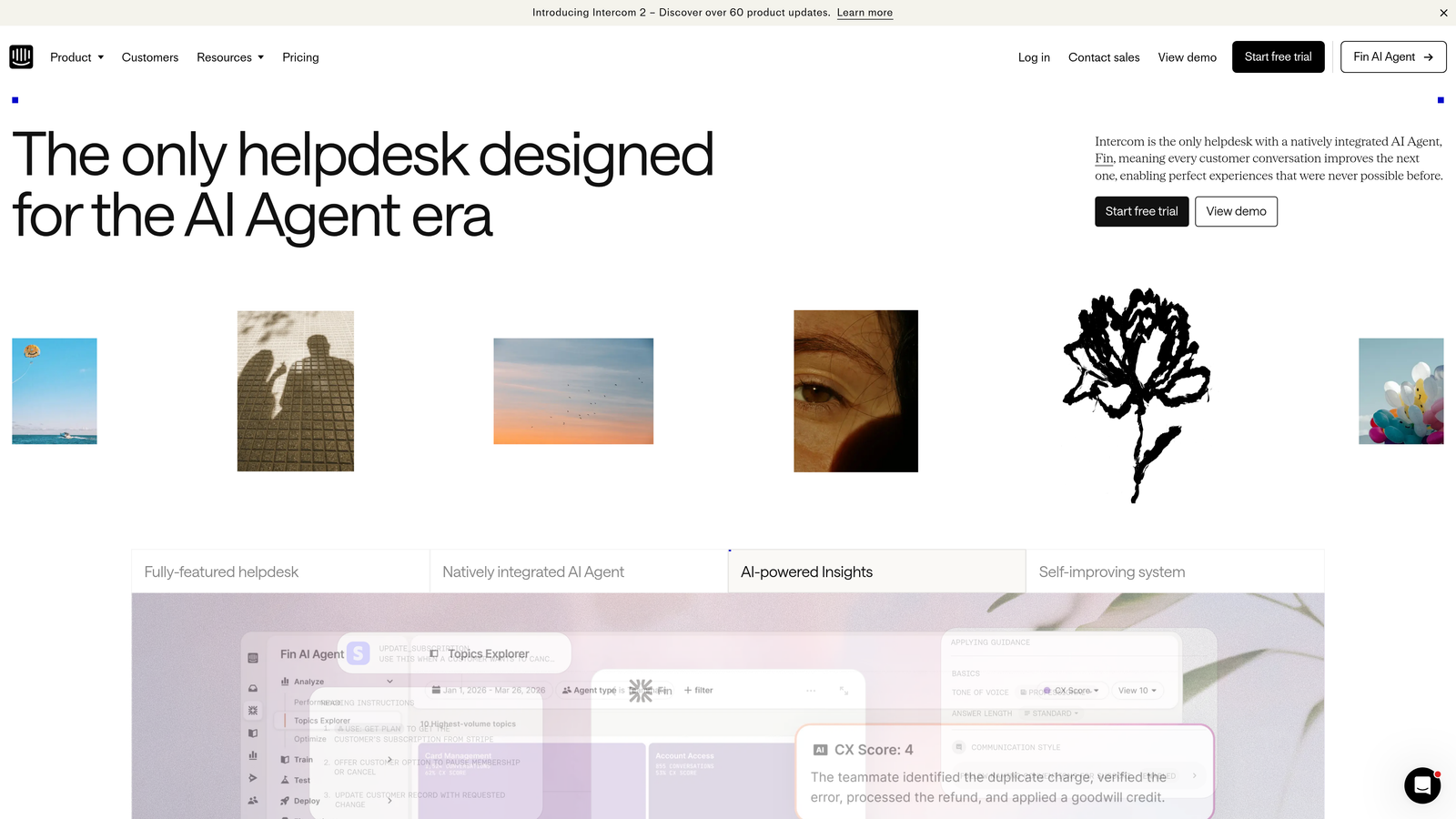
Intercom Fin is a conversational AI agent built into Intercom's messaging platform, resolving customer questions directly from your knowledge base and custom data sources.
Where This Tool Shines
Fin works particularly well in PLG environments where users expect to get answers inside the product without ever opening a separate support portal. The in-app messenger experience feels native, and Fin can resolve a meaningful portion of common questions without human involvement.
The per-resolution pricing model is worth understanding before you commit. It aligns costs with value delivered, which is appealing in principle, but can become unpredictable at scale depending on your ticket mix and resolution rates.
Key Features
Fin AI Agent: Resolves customer questions by drawing from your help center, custom knowledge sources, and connected data.
Native In-App Messenger: Delivers support directly inside your product with a messenger experience users are already familiar with.
Proactive Messaging and Product Tours: Triggers contextual messages and guided tours based on user behavior and lifecycle stage.
Custom Workflows and Automation Builder: Visual builder for routing rules, escalation paths, and automated follow-ups.
Per-Resolution Pricing for Fin: Pay based on the number of conversations Fin resolves autonomously, rather than agent seats.
Best For
PLG SaaS companies that already use Intercom for customer messaging and want to layer in AI resolution without switching platforms. Strong fit for teams with well-maintained knowledge bases that Fin can draw from.
Pricing
Essential plan starts at $29 per seat per month. Fin AI is charged separately on a per-resolution basis, so total cost scales with volume.
4. Freshdesk (Freddy AI)
Best for: Budget-conscious SaaS teams needing solid helpdesk functionality with AI triage
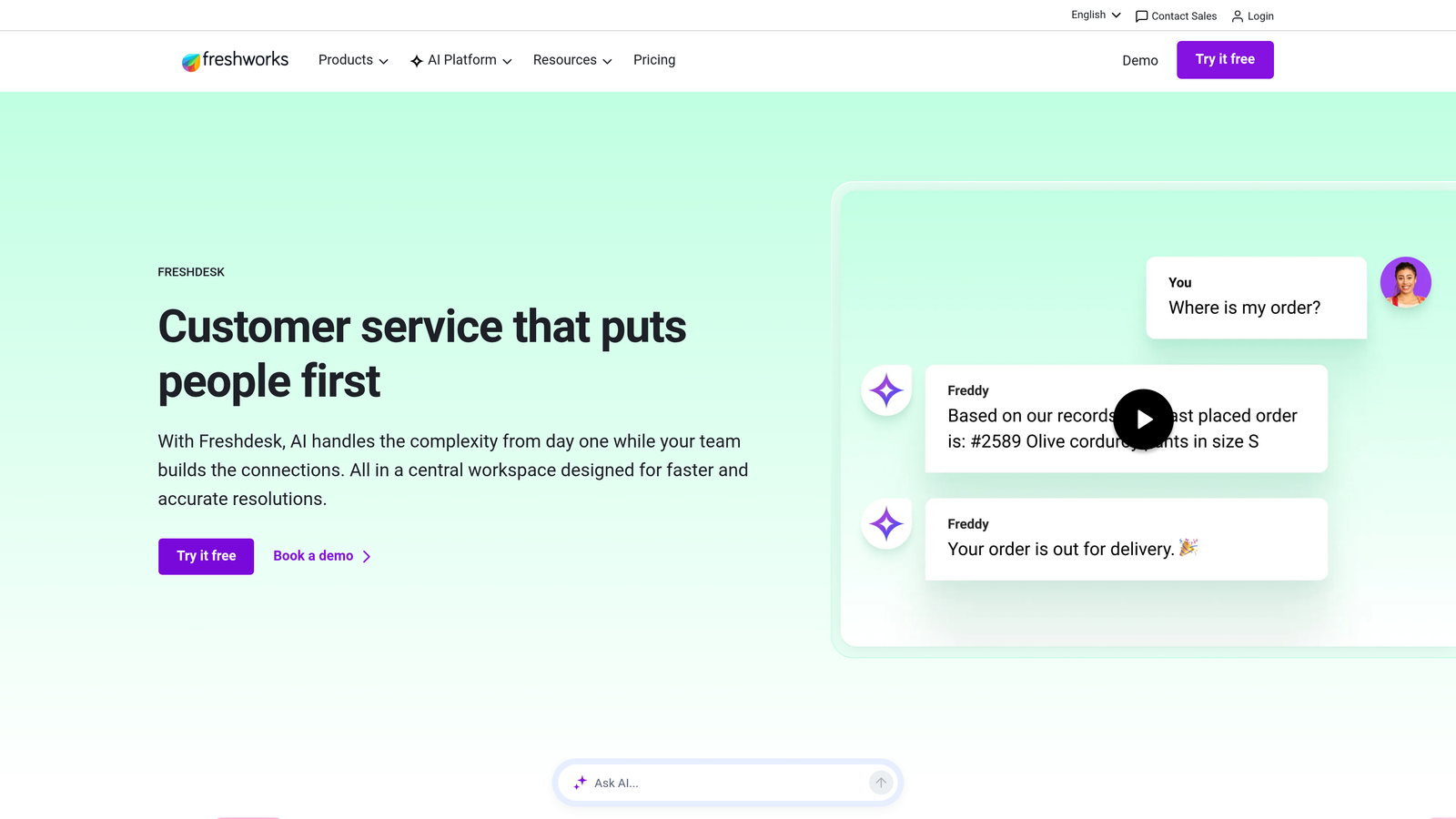
Freshdesk is a cost-effective helpdesk with Freddy AI handling auto-triage, canned response suggestions, and ticket deflection across the Freshworks ecosystem.
Where This Tool Shines
Freshdesk's value proposition is straightforward: solid helpdesk capabilities at a price point that doesn't require budget approval from three departments. Freddy AI adds meaningful automation without requiring a complex implementation, making it accessible for teams that don't have dedicated operations staff to configure workflows.
The free tier is genuinely useful for small teams getting started, and the Freshworks ecosystem means you can expand into CRM, ITSM, or sales tooling without switching vendors as you grow.
Key Features
Freddy AI Triage and Auto-Responses: Automatically classifies incoming tickets and suggests or sends responses for common queries.
AI-Powered Knowledge Base Suggestions: Surfaces relevant help articles to agents and customers based on ticket content.
SLA Management: Configurable SLA policies with automated escalation and breach alerts to keep response times on track.
Marketplace Integrations: Connects with popular SaaS tools including Slack, Jira, Salesforce, and others through the Freshworks marketplace.
Free Tier: Functional free plan available for small teams, with a clear upgrade path as volume and complexity grows.
Best For
Mid-market SaaS teams with moderate ticket volumes that need reliable helpdesk functionality without enterprise pricing. Also a good starting point for early-stage teams that expect to grow into more advanced features over time.
Pricing
Free plan available. Paid plans start at $15 per agent per month, making it one of the more accessible options on this list.
5. Zoho Desk (Zia AI)
Best for: Growing SaaS teams already in the Zoho ecosystem wanting affordable AI-assisted support
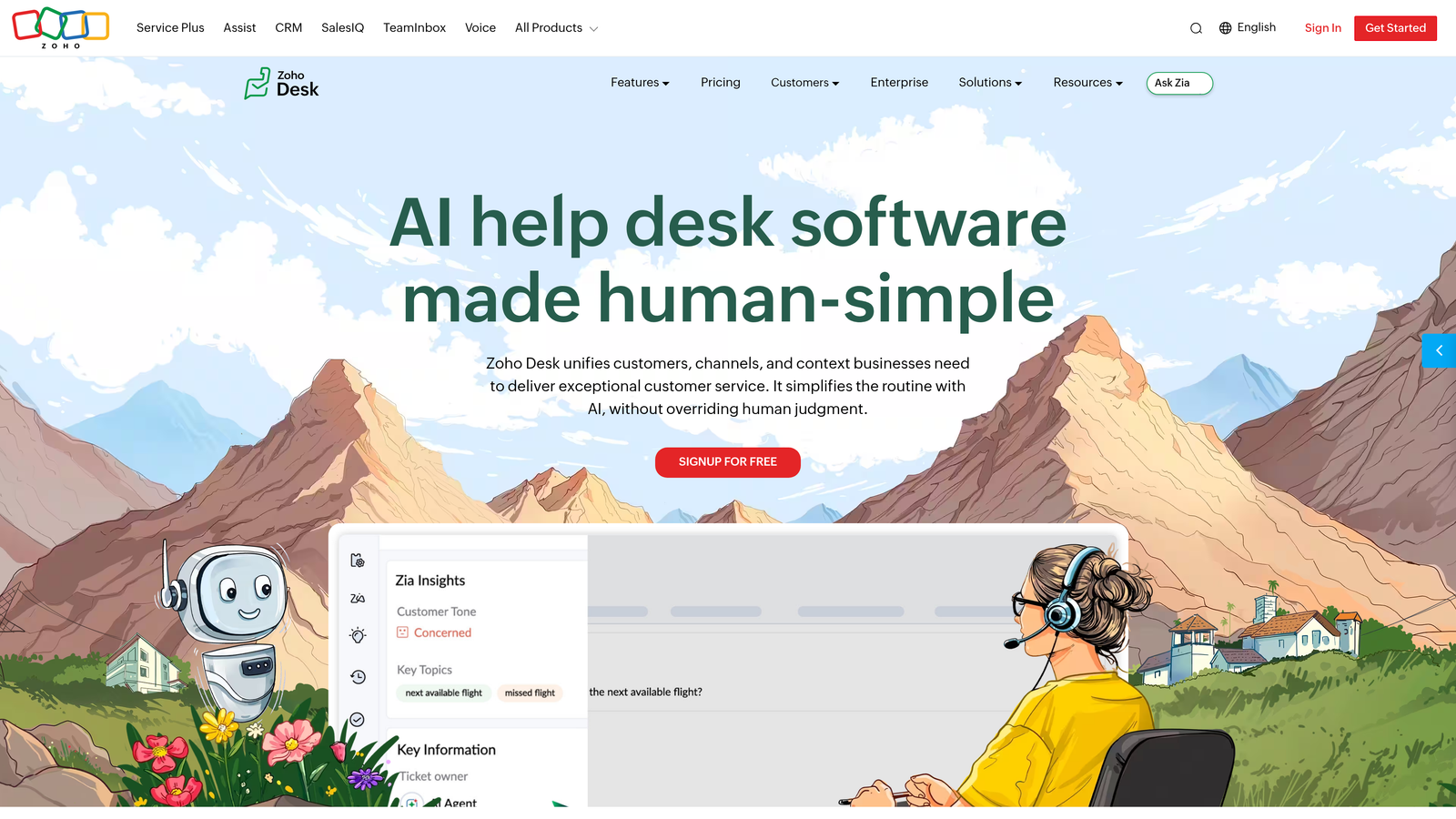
Zoho Desk is an affordable AI-powered helpdesk featuring Zia AI for sentiment analysis, anomaly detection, and auto-tagging, deeply integrated with the broader Zoho platform.
Where This Tool Shines
Zia brings a few genuinely useful capabilities that punch above Zoho Desk's price point. Sentiment analysis on incoming tickets helps teams prioritize frustrated customers before situations escalate, and anomaly detection flags unusual ticket volume spikes that might indicate a product incident.
The deep Zoho CRM integration is the real draw for teams already using Zoho for sales or project management. Having support, CRM, and analytics in one ecosystem reduces the integration overhead that plagues multi-tool stacks.
Key Features
Zia Sentiment Analysis: Automatically scores ticket sentiment to help teams prioritize emotionally charged or urgent customer issues.
Anomaly Detection: Flags unusual patterns in ticket volume or response metrics that might signal a product or service issue.
Deep Zoho Ecosystem Integration: Native connections to Zoho CRM, Projects, Analytics, and other Zoho products for unified business data.
Multi-Channel Ticketing: Handles support across email, social media, live chat, and phone in a unified interface.
Customizable Workflows: Flexible assignment rules and automation that adapt to different team structures and escalation paths.
Best For
Growing SaaS companies already invested in the Zoho ecosystem, or teams looking for affordable AI-assisted ticketing with CRM context built in from day one.
Pricing
Free plan available for up to 3 agents. Paid plans start at $14 per agent per month, making it one of the most affordable options with meaningful AI features.
6. Tidio
Best for: Early-stage SaaS startups needing fast deployment and basic AI ticket deflection
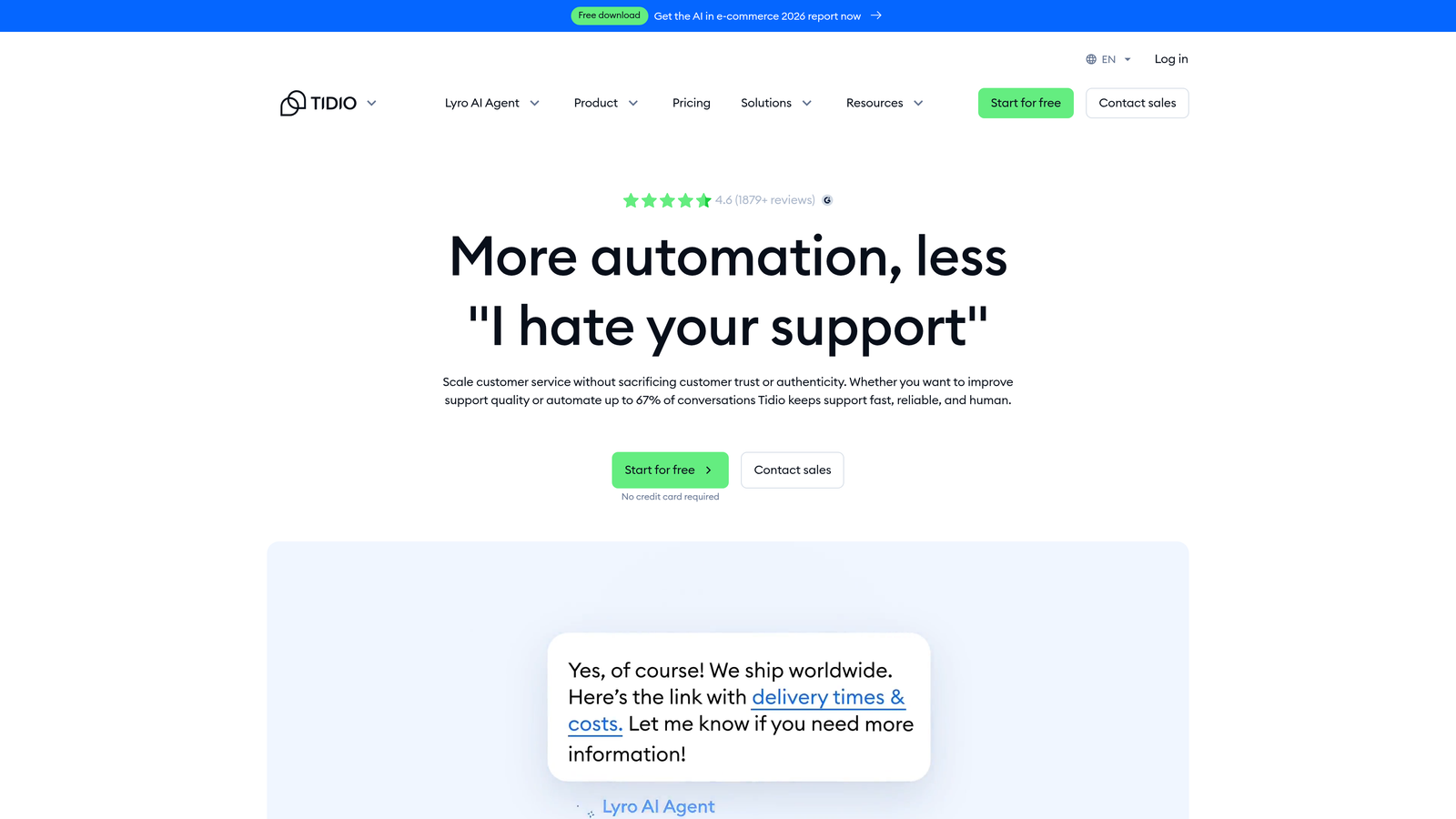
Tidio is a straightforward AI chatbot and ticketing platform featuring Lyro AI for automated conversations, designed for quick setup and immediate deflection.
Where This Tool Shines
When you're an early-stage SaaS team and your support needs are real but not yet complex, Tidio hits a practical sweet spot. Lyro AI handles common questions conversationally, the widget installs quickly, and you're not paying enterprise prices for capabilities you won't use for another 18 months.
The visual chatbot builder is accessible enough that a non-technical founder or a single support hire can configure and maintain it without engineering involvement. That matters a lot at the stage where everyone is wearing multiple hats.
Key Features
Lyro AI Chatbot: Conversational AI that deflects common questions and handles basic ticket resolution using your content and FAQs.
Visual Drag-and-Drop Builder: No-code chatbot flow builder that makes it easy to create and update conversation paths without developer help.
Combined Live Chat and Ticketing: Unified interface for both real-time conversations and asynchronous ticket management.
Easy Website Widget: Simple installation that gets you live in minutes rather than days.
Generous Free Tier: Free plan covers basic functionality for small teams just getting started with support tooling.
Best For
Early-stage SaaS startups and small teams that need a functional, affordable support solution with basic AI deflection. Not the right fit for teams with complex routing needs or high technical ticket volume.
Pricing
Free plan available. Paid plans start at $29 per month, making it one of the most accessible entry points on this list.
7. HubSpot Service Hub
Best for: SaaS teams using HubSpot CRM that want support tightly integrated with sales and marketing data
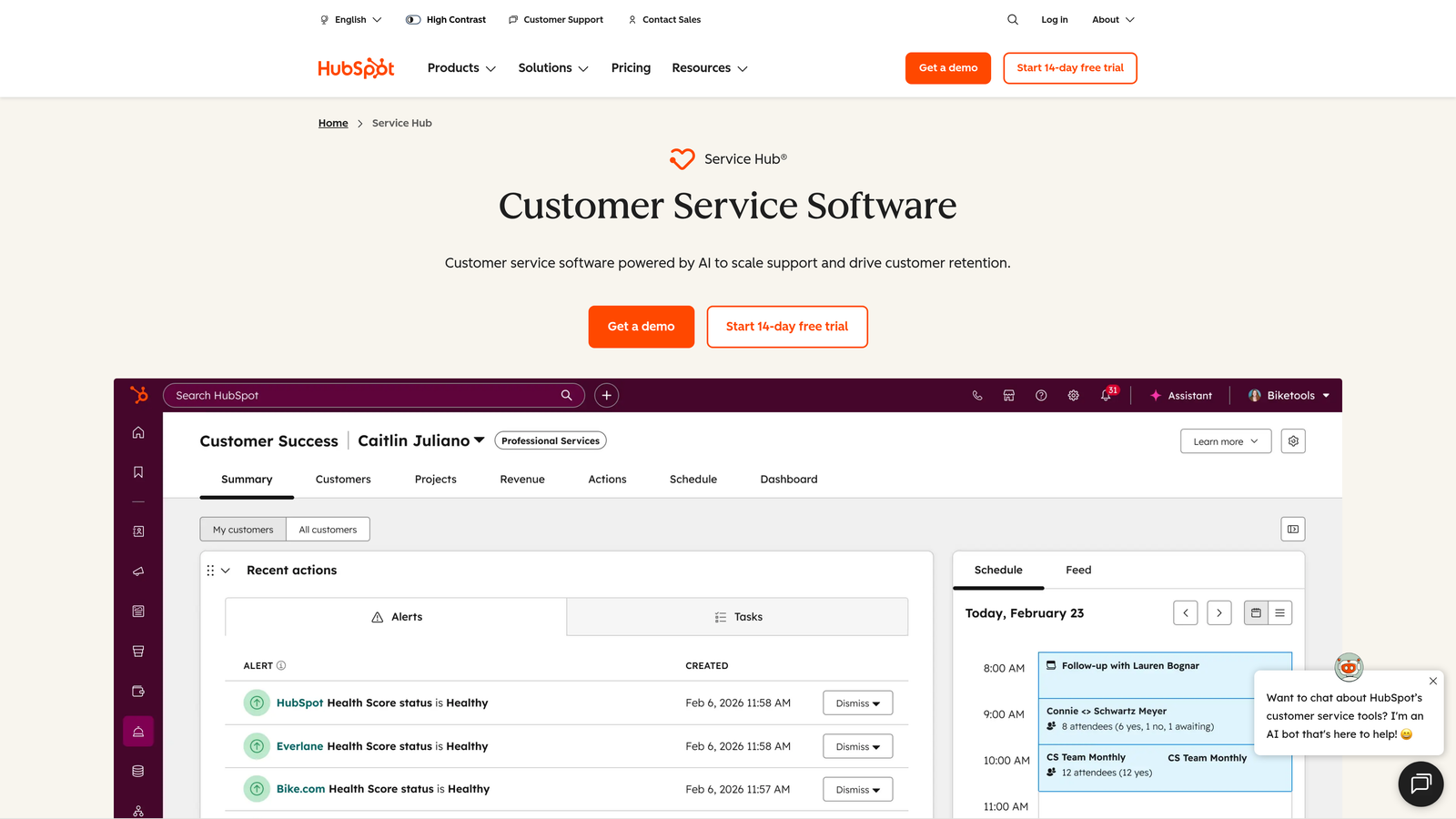
HubSpot Service Hub is a customer service platform built on HubSpot's CRM, giving support teams full customer lifecycle context alongside AI-powered ticketing tools.
Where This Tool Shines
The core value of Service Hub isn't the AI features specifically. It's the CRM context. When a support agent opens a ticket, they see the customer's entire history: deals closed, marketing emails received, previous support interactions, and account health. That context changes the quality of support conversations significantly.
For SaaS teams already running sales and marketing on HubSpot, adding Service Hub avoids the data fragmentation that comes from stitching together separate tools. The handoff between departments becomes seamless rather than a manual process.
Key Features
Unified CRM with Full Lifecycle Visibility: Every support ticket opens with complete customer history from sales, marketing, and previous support interactions in one view.
AI-Powered Knowledge Base and Chatbot: Automated self-service tools that deflect common questions and surface relevant content to customers.
Ticket Pipeline Management: Kanban-style ticket management with automation rules for routing, follow-ups, and status updates.
Customer Feedback and NPS Tracking: Built-in survey tools for collecting CSAT and NPS data tied directly to customer records.
Cross-Team Handoff: Seamless workflows connecting support, sales, and marketing for coordinated customer communication.
Best For
SaaS companies already using HubSpot for CRM who want to unify their customer-facing operations on a single platform. Less compelling as a standalone support tool if you're not invested in the HubSpot ecosystem.
Pricing
Free tools available. Starter plan at $20 per month. Professional plan at $100 per seat per month with more advanced automation and reporting.
8. DevRev
Best for: Engineering-heavy SaaS companies that need support tickets directly connected to product development
DevRev is an AI-native platform that unifies customer support ticketing with product development work items, built specifically for developer-centric SaaS organizations.
Where This Tool Shines
DevRev solves a real and persistent problem: the gap between what customers report and what engineering actually builds. By natively connecting support tickets to product work items, it eliminates the manual process of copying issues from a helpdesk into Jira or Linear and hoping someone follows through.
The AI clustering feature is particularly valuable at scale. When dozens of customers report variations of the same issue, DevRev groups them automatically so product teams can see the true scope of a problem rather than treating each ticket as isolated.
Key Features
Native Support-to-Engineering Connection: Support tickets link directly to engineering work items, creating a closed loop between customer issues and product fixes.
AI-Powered Issue Clustering: Automatically groups similar tickets to surface product gaps and prioritize engineering work based on customer impact.
Built-In Product Analytics: Ties support conversation data to product usage analytics for a more complete view of customer experience.
Developer-Friendly Interface: Modern UI designed for technical teams who find traditional helpdesks too sales-oriented or clunky.
Customer-to-Engineering Feedback Loops: Structured workflows that ensure customer insights reach the right engineering team without manual handoffs.
Best For
Engineering-led SaaS companies where product and support teams need to work from a shared system. Particularly strong for organizations where support ticket patterns directly inform the product roadmap.
Pricing
Free tier available. Paid plans vary by usage and team size. Contact DevRev for specific pricing based on your requirements.
9. Kayako
Best for: SaaS teams that prioritize complete customer journey context before every support interaction
Kayako is a customer service platform built around journey context, presenting the complete history of customer interactions across every channel before agents respond.
Where This Tool Shines
Kayako's SingleView feature is its defining differentiator. Rather than showing agents a single ticket in isolation, it surfaces the entire customer journey: every email, chat, purchase, and previous interaction in a unified timeline. For SaaS teams dealing with complex, multi-touch customer relationships, that context can be the difference between a generic response and a genuinely helpful one.
The collaborative features are well-executed too. Internal notes, assignments, and conversation threading keep teams aligned on complex issues without the ticket ping-pong that frustrates both agents and customers.
Key Features
SingleView Customer Journey Tracking: Unified timeline of all customer interactions across every channel, visible to agents before they respond to any ticket.
Collaborative Ticketing: Internal notes, @mentions, and assignment workflows for team coordination on complex issues.
AI-Assisted Responses: Response suggestions informed by full conversation context and historical interaction data.
Multi-Channel Support: Handles live chat, email, and social media interactions in a unified inbox.
Self-Service Help Center: Customer-facing knowledge base and portal for deflecting common questions before they reach the queue.
Best For
SaaS teams with complex, relationship-driven customer interactions where historical context significantly improves response quality. A solid mid-market option for teams that have outgrown simpler tools but don't need enterprise-scale infrastructure.
Pricing
Contact Kayako for current pricing. The platform has historically targeted mid-market teams with tiered plans based on agent count and feature requirements.
Which AI Ticketing System Is Right for Your SaaS Team?
The right choice depends on three things: where AI sits in your architecture, what your existing stack looks like, and how you define "better support." Those aren't the same for every team.
Here's a quick-hit guide based on common SaaS scenarios:
For autonomous AI-first resolution with business intelligence: Halo AI is built for teams that want AI as the core of their support operation, not a feature on top of it. The combination of continuous learning, page-aware guidance, auto bug ticket creation, and business intelligence signals makes it the strongest end-to-end option for SaaS teams that want support data to drive product and revenue decisions.
For enterprise teams with existing Zendesk infrastructure: Zendesk AI lets you layer intelligence onto a platform your team already knows, without a disruptive migration. The tradeoff is that you're enhancing an agent-centric model rather than shifting toward autonomous resolution.
For PLG companies focused on in-app support: Intercom Fin fits naturally into product-led motions where users expect to get answers inside the product. Just model out the per-resolution pricing carefully before committing at scale.
For budget-conscious mid-market teams: Freshdesk offers solid helpdesk functionality with meaningful AI triage at a price point that's hard to argue with. A practical choice for teams that need reliability over cutting-edge AI.
For engineering-heavy organizations: DevRev closes the loop between support and product development in a way no traditional helpdesk can. If your support tickets directly inform your roadmap, it's worth a serious look.
The broader question worth asking is whether you want AI as a bolt-on or as the foundation. Legacy platforms can get you further with AI than they could two years ago, but they were designed for a different era of support. Purpose-built platforms start from a different set of assumptions about what support can do.
Your support team shouldn't scale linearly with your customer base. Let AI agents handle routine tickets, guide users through your product, and surface business intelligence while your team focuses on complex issues that need a human touch. See Halo in action and discover how continuous learning transforms every interaction into smarter, faster support.