9 Best AI Tools for Product Support in 2026
Discover the best AI tools for product support in 2026, from AI-native platforms capable of autonomously resolving complex technical issues to feature-rich helpdesk integrations. This guide evaluates nine leading solutions based on resolution capabilities, product-awareness, and analytics to help support teams handle growing customer demands without simply adding more agents.
 Matt PattoliFounder14 min read
Product support teams are under more pressure than ever. Customers expect faster resolutions, product complexity keeps growing, and hiring more agents isn't always the answer. The good news is that AI tools for product support have matured well beyond the scripted chatbots of a few years ago. Today's best platforms can resolve complex technical issues autonomously, detect product bugs, surface churn signals, and hand off to human agents without losing context.
The challenge is that the market is crowded. Some tools are AI features bolted onto existing helpdesks. Others are AI-native platforms built from the ground up for autonomous resolution. Choosing the wrong one means either overpaying for capabilities you don't need or underinvesting in a tool that can't keep up with your product's complexity.
We evaluated these tools based on autonomous resolution capabilities, product-awareness depth, integration ecosystems, analytics and intelligence features, and pricing transparency. Whether you're a startup exploring your first AI support agent or an enterprise layering AI onto an existing helpdesk, here are the top tools worth your attention right now.
1. Halo AI
Best for: B2B SaaS teams that need product-aware AI agents with deep integration and business intelligence.
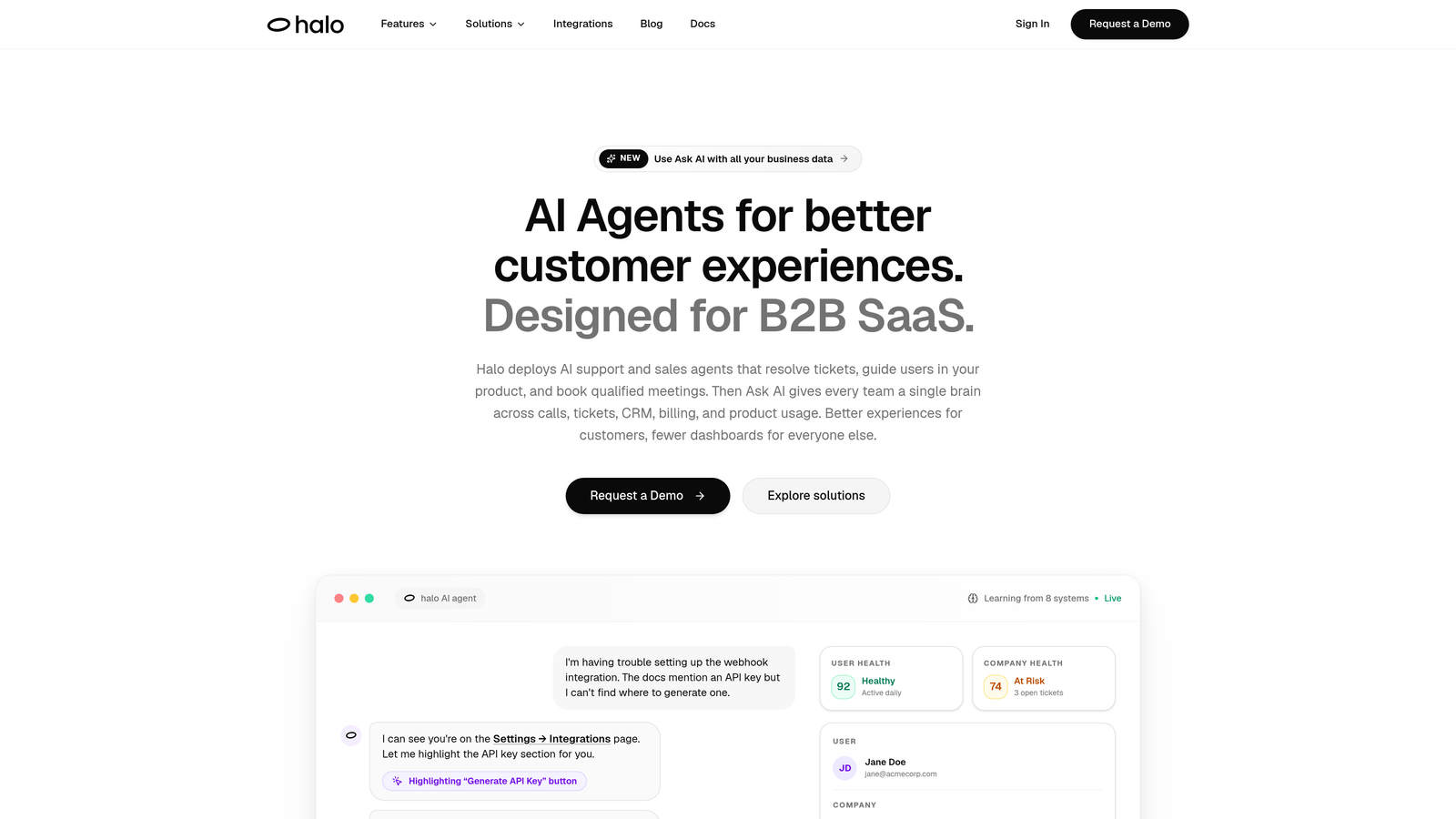
Halo AI is an AI-first product support platform built to resolve tickets, guide users visually through your product, and surface business intelligence from every interaction.
Where This Tool Shines
Most AI support tools answer questions. Halo AI understands context. Its page-aware architecture means the AI agent can see exactly what a user is looking at inside your product, not just what they typed into a chat box. This makes a significant difference when users are stuck on a specific UI element or workflow step. Instead of generic FAQ responses, they get visual guidance that's relevant to where they actually are.
The other standout capability is what Halo does beyond resolution. Its smart inbox layers business intelligence on top of support data, surfacing customer health signals, revenue indicators, and anomalies that would otherwise be buried in ticket queues. For product and support teams that want support data to inform product decisions, this is a genuinely differentiated feature.
Key Features
Page-Aware Chat Widget: The AI agent sees what users see inside your product and delivers visual UI guidance contextual to their current screen.
Autonomous Ticket Resolution: AI agents resolve tickets end-to-end with continuous learning from every interaction, getting smarter over time without manual retraining.
Auto Bug Ticket Creation: Automatically detects product issues from support conversations and creates bug tickets in Linear, Jira, and other engineering tools.
Smart Inbox with Business Intelligence: Customer health scoring, revenue signals, and anomaly detection built directly into the support inbox.
Deep Integration Ecosystem: Connects with Slack, HubSpot, Intercom, Stripe, Zoom, PandaDoc, and more, making it a connective layer across your entire business stack.
Best For
B2B SaaS companies and product teams that want more than deflection metrics from their AI investment. Especially well-suited for teams that need product-level context in support interactions, engineering handoffs for bug tracking, and support data that feeds back into product and revenue decisions.
Pricing
Contact for pricing. Designed for B2B SaaS teams scaling support without proportionally scaling headcount.
2. Intercom Fin
Best for: Teams already on Intercom who want a native AI agent with minimal setup.
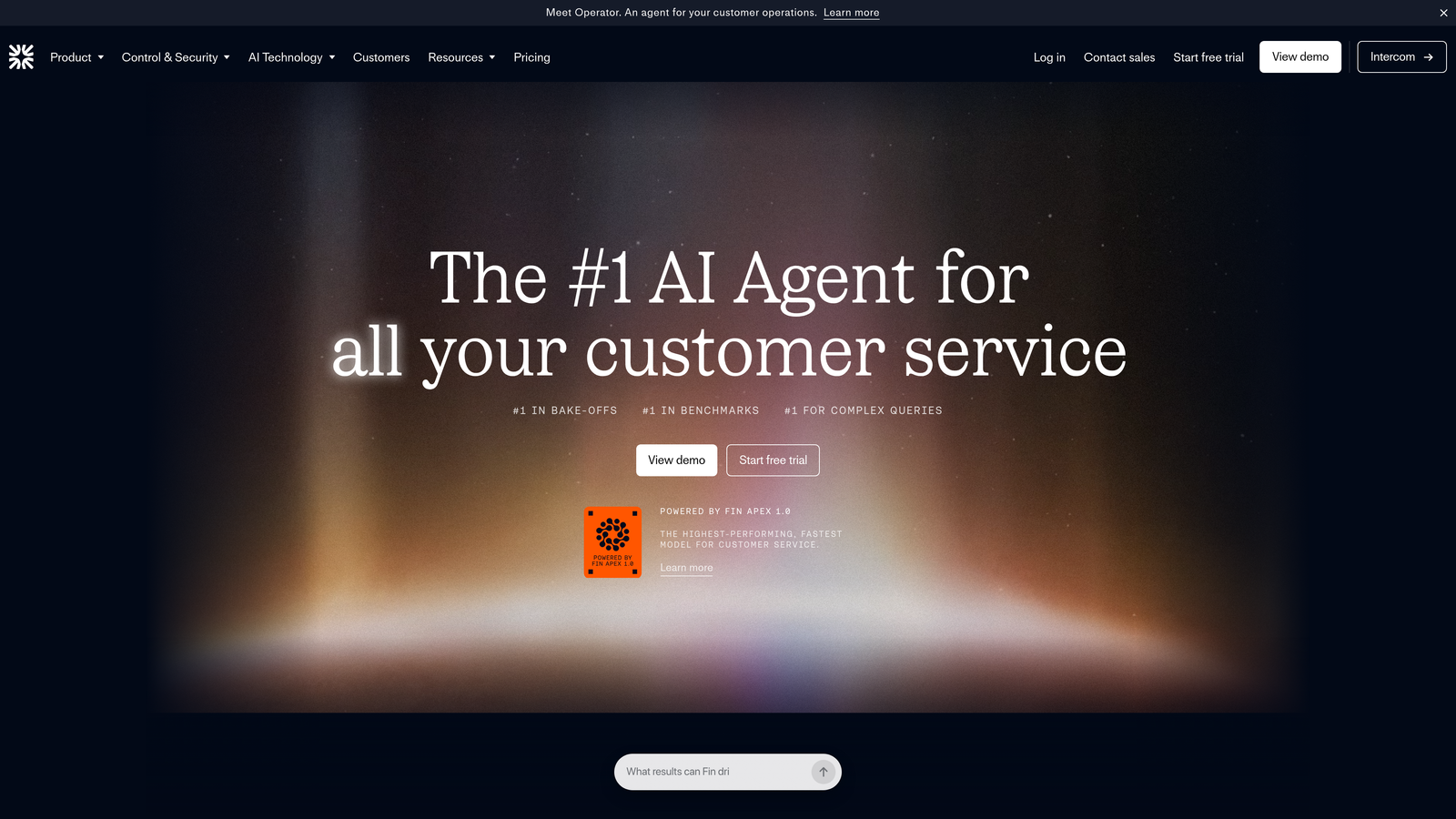
Intercom Fin is Intercom's native AI agent that resolves customer questions using your existing knowledge base, conversation history, and help center content.
Where This Tool Shines
Fin's biggest advantage is how naturally it fits into an existing Intercom setup. If your team already lives in Intercom's inbox and has a populated knowledge base, Fin can be up and running quickly. The AI generates answers grounded in your actual help content and cites sources, which builds user trust and reduces hallucination risk.
The handoff experience is also well-executed. When Fin can't resolve an issue, it passes the conversation to a human agent with full context intact. For teams that care about a smooth escalation path, this is one of the cleaner implementations in the market.
Key Features
Native Intercom Integration: Works directly within Intercom's messenger, inbox, and knowledge base without additional configuration layers.
Grounded AI Responses: Answers are generated from your help content with source citations to maintain accuracy and transparency.
Tone and Persona Customization: Adjust Fin's communication style to match your brand voice and support philosophy.
Seamless Human Handoff: Escalates to live agents with full conversation context preserved, so customers never have to repeat themselves.
Usage-Based Pricing: Pay per resolved conversation, which aligns cost directly with value delivered.
Best For
Companies already invested in the Intercom ecosystem who want to activate AI resolution without switching platforms or managing a separate tool. Less ideal if you need product-level context or cross-platform integrations beyond Intercom.
Pricing
Starts at $0.99 per resolution on top of existing Intercom plan pricing. Costs scale with resolution volume.
3. Zendesk AI
Best for: Enterprise teams on Zendesk Suite who want AI layered across their existing support workflows.
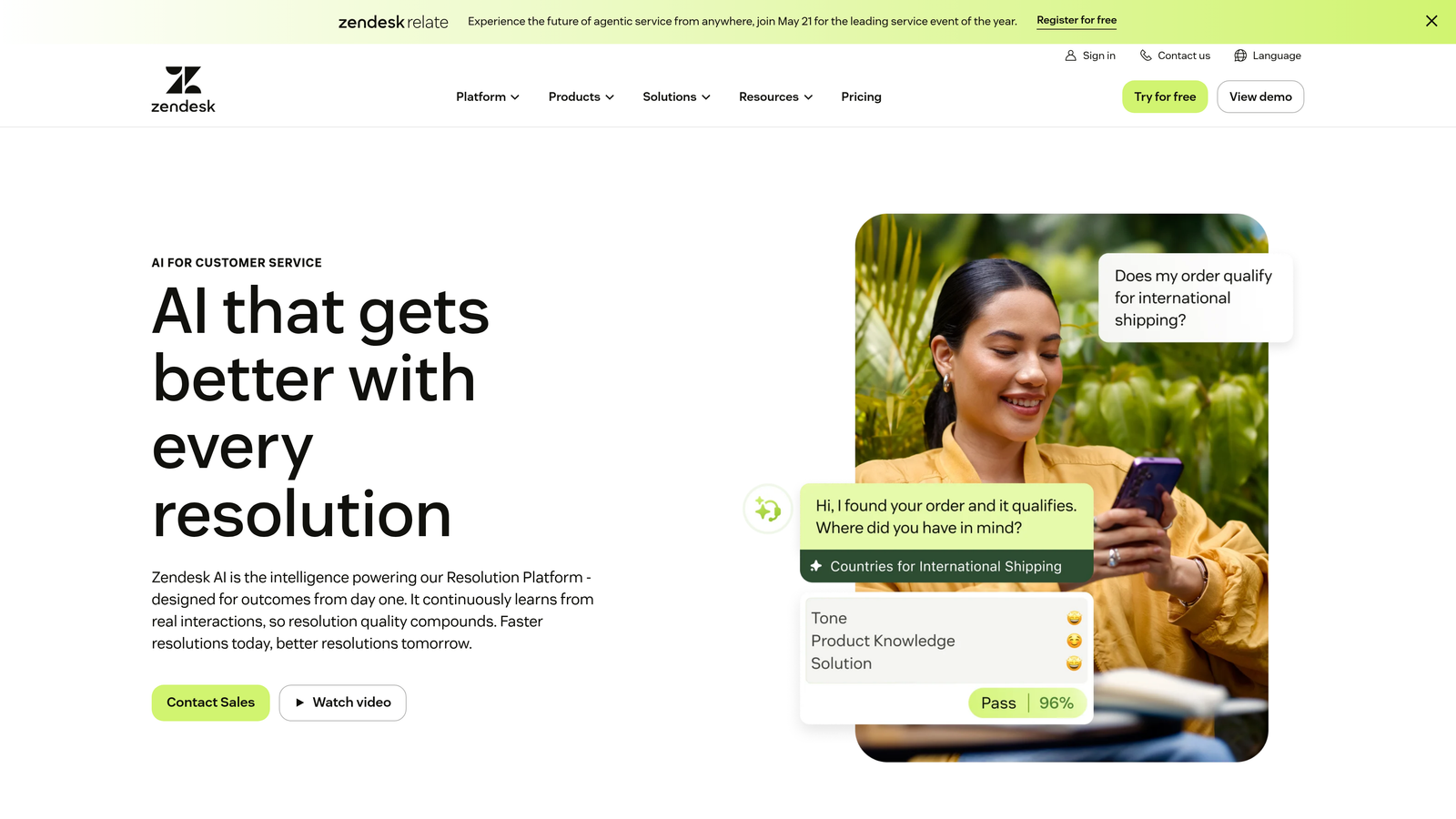
Zendesk AI is a suite of AI capabilities built into Zendesk, covering intelligent triage, agent assist, and generative AI bots for customer-facing resolution.
Where This Tool Shines
Zendesk AI benefits from something most competitors can't replicate: it was pre-trained on billions of real support interactions across Zendesk's enormous customer base. This means its intent classification and triage capabilities arrive with a head start that purpose-built tools often spend months achieving through training.
The dual-mode approach is also worth noting. Zendesk AI can power both customer-facing bots for deflection and agent-assist tools that surface relevant knowledge and suggest replies to human agents. Teams with a mix of automated and human-handled tickets get value from both layers simultaneously.
Key Features
Intelligent Triage: Automatically classifies tickets by intent, language, and sentiment to route them to the right queue or agent.
AI Agent Assist: Surfaces relevant knowledge articles and suggests replies to human agents during live conversations.
Generative AI Bots: Customer-facing automated resolution powered by generative AI trained on your help center content.
Pre-Trained Foundation: Leverages Zendesk's proprietary training data from billions of support interactions for stronger out-of-the-box performance.
AI Performance Analytics: Detailed reporting on deflection rates, AI resolution quality, and agent productivity impact.
Best For
Established teams on Zendesk Suite Professional or above who want to add AI capabilities without migrating to a new platform. Enterprise support operations with high ticket volumes benefit most from the triage and routing intelligence.
Pricing
AI features included in Suite Professional and above. An Advanced AI add-on is available for teams needing deeper capabilities. Contact Zendesk for current add-on pricing.
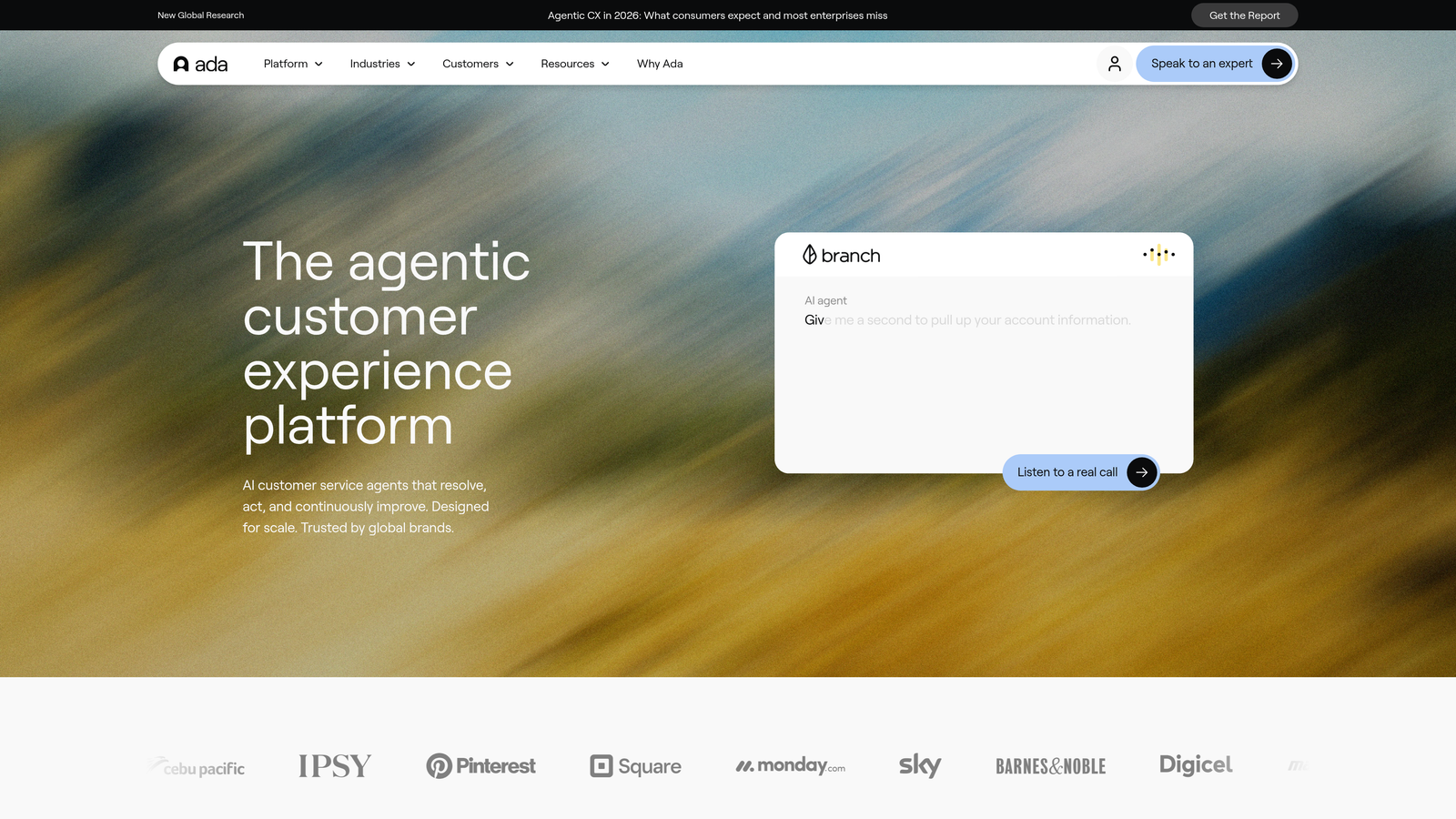
4. Ada
Best for: Mid-market and enterprise teams needing omnichannel AI agents with no-code configuration.
Ada is an AI-powered customer service automation platform that deploys autonomous agents across chat, email, voice, and social channels with no-code configuration tools.
Where This Tool Shines
Ada's strength is breadth. Where many tools focus on chat-only resolution, Ada deploys agents across multiple channels from a single configuration interface. The no-code builder means support teams can design and iterate on conversation flows without engineering involvement, which matters when your team needs to move quickly.
The action-oriented design is another differentiator. Ada agents don't just answer questions; they can pull data from and write to backend systems. This means an Ada agent can look up an order status, process a refund request, or update a customer record without a human in the loop.
Key Features
No-Code Agent Builder: Drag-and-drop conversation design that support teams can manage without developer resources.
Omnichannel Deployment: Single configuration deploys across web chat, email, SMS, voice, and social channels simultaneously.
Multilingual Support: Handles conversations in 50+ languages, making it well-suited for international customer bases.
Backend System Actions: Agents can read from and write to external systems, enabling transactional automation beyond Q&A.
Multi-Step Reasoning: Reasoning engine handles complex, multi-step queries that require logic beyond simple FAQ matching.
Best For
Mid-market and enterprise companies with global customer bases and multi-channel support operations. Particularly strong for teams that need agents to take actions inside backend systems, not just answer questions.
Pricing
Custom pricing based on volume and channels. Contact Ada directly for a quote tailored to your support operation.
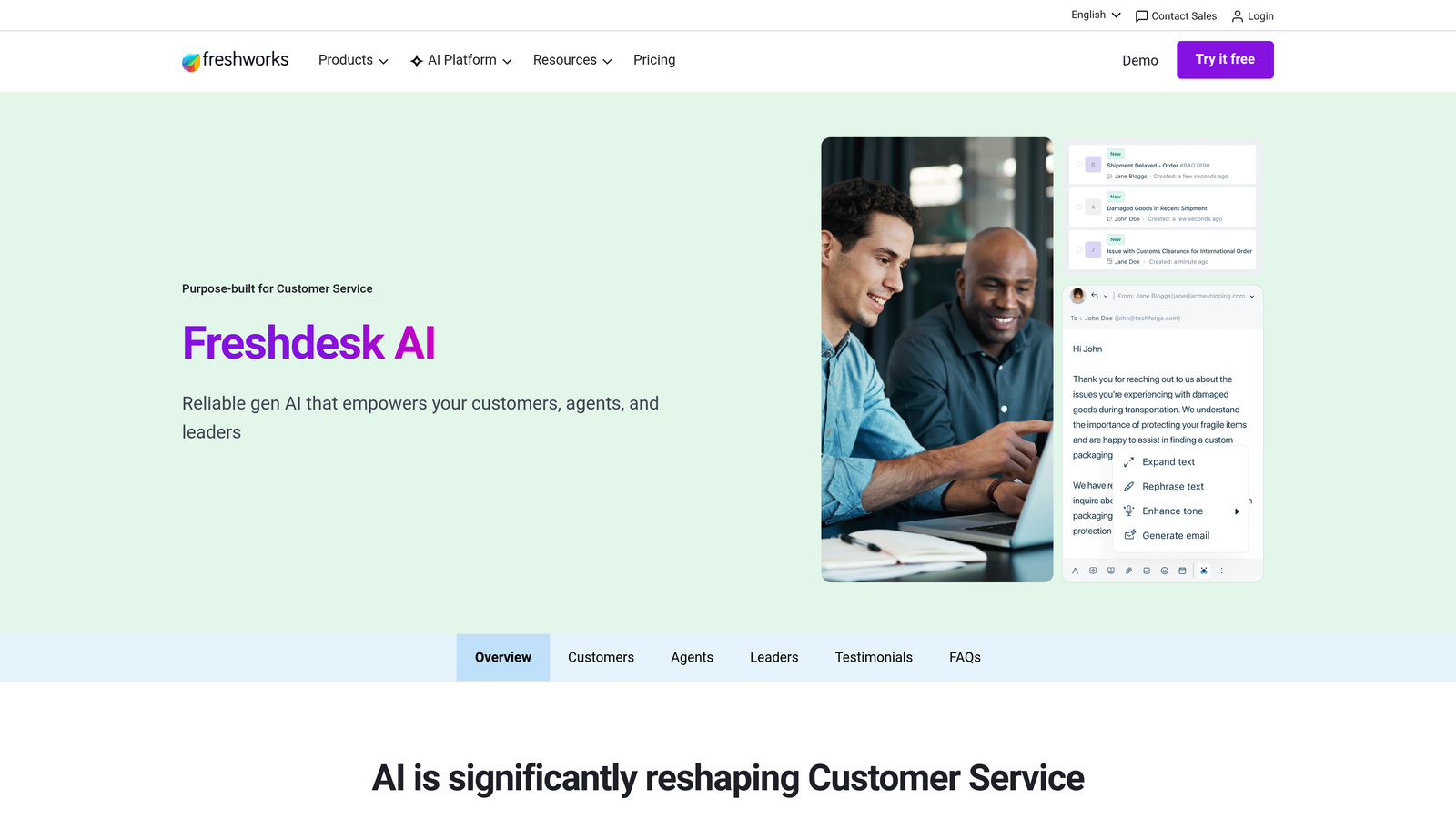
5. Freshdesk Freddy AI
Best for: Growing teams on Freshdesk looking for accessible AI features at competitive price points.
Freshdesk Freddy AI is Freshworks' AI engine embedded across Freshdesk, offering automated responses, ticket classification, and agent productivity tools without enterprise-level pricing.
Where This Tool Shines
Freddy AI stands out for making AI-powered support accessible to teams that aren't yet at enterprise scale. The dual-layer approach covers both sides of the support equation: Freddy AI Agent handles customer-facing automated resolution, while Freddy Copilot assists human agents with suggested responses and next-best actions during live tickets.
The cross-functional integration with Freshsales and Freshservice is also worth highlighting. For teams using multiple Freshworks products, Freddy creates a connected intelligence layer that spans sales, IT, and customer support workflows without additional integration work.
Key Features
Freddy AI Agent: Customer-facing automated resolution that handles common questions and ticket types without human involvement.
Freddy Copilot: Agent assist tool that suggests responses, surfaces relevant articles, and recommends next actions for human agents.
Auto-Triage and Classification: Automatically categorizes and routes incoming tickets based on content and intent.
Freshworks Suite Integration: Tight connection with Freshsales and Freshservice for cross-functional workflows across the customer lifecycle.
Accessible Pricing Tier: AI features available on mid-tier plans, making them reachable for teams not yet at enterprise scale.
Best For
Small to mid-sized teams on Freshdesk who want meaningful AI capabilities without committing to enterprise pricing. Also a strong fit for companies already using multiple Freshworks products who want unified AI across their stack.
Pricing
AI features available starting at the Pro plan (approximately $49 per agent per month). Advanced Freddy AI add-ons available for teams needing expanded capabilities.
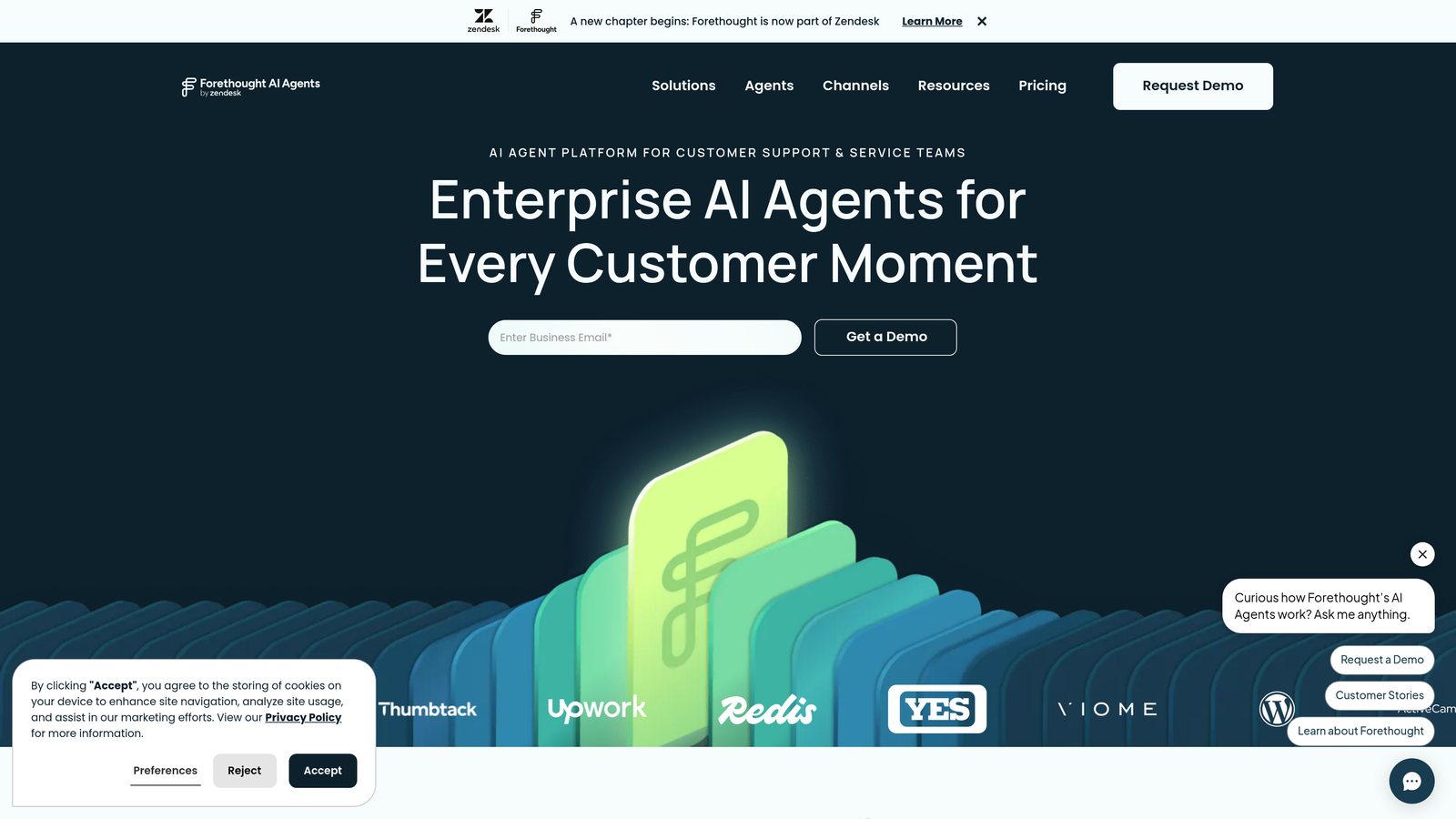
6. Forethought
Best for: Support operations teams focused on workflow automation and intelligent triage across multiple helpdesk platforms.
Forethought is an AI platform built around support workflow automation, featuring SupportGPT for intelligent triage, agent assist, and automated resolution that works across multiple helpdesk systems.
Where This Tool Shines
Forethought's platform-agnostic architecture is its most distinctive quality. While most AI tools are designed to work best within a single helpdesk ecosystem, Forethought integrates across Zendesk, Salesforce, Freshdesk, and others. This makes it a strong option for teams managing support across multiple platforms or considering a future migration.
SupportGPT brings generative AI to both customer-facing resolution and agent-assist workflows. The intent detection and priority routing capabilities are particularly strong for teams dealing with high ticket volumes where getting the right ticket to the right person quickly has a meaningful impact on resolution time.
Key Features
SupportGPT: Generative AI engine powering both customer-facing ticket resolution and agent-side drafting assistance.
Intelligent Triage: Intent detection and priority-based routing that directs tickets to the right queue or agent automatically.
Real-Time Agent Assist: Surfaces relevant knowledge and suggests replies to human agents as conversations unfold.
Platform-Agnostic Integration: Works across Zendesk, Salesforce, Freshdesk, and other helpdesk platforms without requiring a single-vendor commitment.
Workflow Analytics: Dashboard tracking deflection rates, resolution quality, and agent productivity metrics.
Best For
Support operations teams with complex routing needs or multi-platform environments. Also well-suited for teams that want to add AI intelligence to an existing helpdesk without replacing it entirely.
Pricing
Custom pricing based on ticket volume and modules selected. Contact Forethought for a tailored quote.
7. Tidio
Best for: Small businesses and e-commerce teams looking for affordable, easy-to-deploy AI chat support.
Tidio is an approachable AI chatbot and live chat platform featuring Lyro AI, designed for small businesses and e-commerce teams that need quick deployment and accessible pricing.
Where This Tool Shines
Tidio lowers the barrier to entry for AI-powered support significantly. The Lyro AI chatbot learns from your FAQ and help content with minimal setup, and the visual flow builder lets non-technical teams customize conversation paths without writing a single line of code. For small businesses that need something working this week, not next quarter, Tidio delivers.
The e-commerce integrations are a genuine strength. Shopify and WooCommerce connections mean Lyro can handle order status questions, return inquiries, and product questions directly from your store data. For e-commerce teams, this covers a large portion of inbound support volume automatically.
Key Features
Lyro AI Chatbot: Learns from your FAQ and help content to answer customer questions with minimal configuration required.
Visual Flow Builder: Drag-and-drop tool for building custom conversation paths without developer involvement.
Live Chat with AI Assist: Human agents get AI-suggested replies during live conversations to speed up response times.
E-Commerce Integrations: Native connections with Shopify, WooCommerce, and other e-commerce platforms for order and product data access.
Generous Free Tier: Basic AI capabilities available at no cost, making it accessible for teams testing AI support for the first time.
Best For
Small businesses, startups, and e-commerce teams with limited budgets and straightforward support needs. Less suited for complex B2B product support or teams needing deep integration with enterprise business systems.
Pricing
Free plan available for basic features. Lyro AI starts at approximately $39 per month for 50 conversations, with higher tiers for greater volume.
8. Cognigy
Best for: Enterprise teams in regulated industries needing sophisticated voice and chat automation with compliance controls.
Cognigy is an enterprise conversational AI platform for building sophisticated voice and chat agents with advanced NLU, compliance controls, and flexible deployment options including on-premise.
Where This Tool Shines
Cognigy operates at the high end of the enterprise market, and it shows in the depth of its capabilities. The advanced NLU engine handles multi-intent recognition and entity extraction at a level that simpler platforms struggle to match. For support scenarios involving complex, multi-part questions, this matters considerably.
The deployment flexibility is what sets Cognigy apart for regulated industries. Financial services, healthcare, and government organizations that cannot use public cloud infrastructure have on-premise and private cloud options that most competitors simply don't offer. Combined with extensive compliance certifications, Cognigy serves use cases that rule out most other tools on this list.
Key Features
Advanced NLU Engine: Multi-intent recognition and entity extraction for handling complex, nuanced customer queries accurately.
Voice Bot Capabilities: Phone-based support automation for organizations that handle significant inbound call volume.
On-Premise Deployment: Private cloud and on-premise options for regulated industries with strict data residency requirements.
Low-Code Conversation Design: Enterprise workflow orchestration with a low-code interface that balances flexibility with speed.
Compliance and Security Certifications: Extensive certifications supporting deployment in regulated industries and enterprise security environments.
Best For
Large enterprises in regulated industries such as financial services, healthcare, insurance, and government that require on-premise deployment, voice automation, and enterprise-grade compliance controls.
Pricing
Enterprise pricing model. Contact Cognigy directly for a custom quote based on deployment type and conversation volume.
9. Ultimate (Zendesk)
Best for: Multilingual enterprise support teams seeking virtual agent automation with strong CRM and helpdesk integrations.
Ultimate is an AI automation platform for customer support, now part of Zendesk, offering multilingual virtual agents and backend automation across multiple helpdesk and CRM platforms.
Where This Tool Shines
Ultimate built its reputation on multilingual support, and the breadth here is genuinely impressive. With support for over 100 languages, it serves global enterprise teams that need consistent AI-powered resolution across diverse customer bases without maintaining separate configurations for each language.
The backend automation capabilities extend beyond conversation handling into ticket management itself. Automatic tagging, routing, and escalation reduce the manual overhead that typically falls on support operations teams. Now integrated into Zendesk's Advanced AI offering, teams already on Zendesk get deeper platform synergy than when Ultimate operated as a standalone product.
Key Features
Multilingual Virtual Agents: Supports 100+ languages for consistent AI-powered resolution across global customer bases.
Backend Ticket Automation: Automatic tagging, routing, and escalation that reduces manual operations overhead.
Multi-Platform Integration: Works across multiple CRM and helpdesk platforms beyond Zendesk for teams with diverse tool stacks.
Dialogue Builder: Complex, multi-step conversation flow design for handling sophisticated support scenarios.
Zendesk Advanced AI Integration: Deeper platform synergy for Zendesk customers, combining Ultimate's multilingual strength with Zendesk's native capabilities.
Best For
Global enterprise support teams with multilingual requirements and high-volume ticket operations. Particularly strong for Zendesk customers who want to layer advanced multilingual AI onto their existing setup through the Advanced AI add-on.
Pricing
Available as part of the Zendesk Advanced AI add-on. Standalone pricing varies; contact Zendesk or Ultimate for current options.
Finding the Right Fit
The honest answer is that the best AI tool for product support depends on where you are as a team, what your product looks like, and how you think about the role AI should play in your support philosophy.
Here's a quick framework for thinking through the decision:
If you're a startup or small team: Tidio gives you the fastest path to AI-powered support at accessible pricing. If you're a B2B SaaS startup that needs product-aware agents and business intelligence from day one, Halo AI is built specifically for that use case.
If you're mid-market and already on a helpdesk: Intercom Fin, Freshdesk Freddy AI, and Forethought all layer AI onto existing infrastructure without requiring a platform migration. Forethought is the strongest choice if you're platform-agnostic or multi-platform. Freddy AI wins on price-to-capability ratio for Freshdesk teams.
If you're enterprise-scale: Zendesk AI and Ultimate make sense if you're committed to the Zendesk ecosystem. Ada handles omnichannel complexity well for large teams with global reach. Cognigy is the right call for regulated industries where deployment flexibility and compliance certifications are non-negotiable.
If you want AI that goes beyond support: This is where Halo AI stands apart from the rest of the list. Page-aware context, automatic bug ticket creation, and a smart inbox that surfaces customer health signals and revenue intelligence means support data starts informing product decisions and business strategy, not just closing tickets.
The shift happening right now in the market is away from deflection-focused chatbots and toward resolution-focused AI agents that take real actions. The tools that will serve your team best in 2026 are the ones built around that philosophy from the ground up.
Your support team shouldn't scale linearly with your customer base. Let AI agents handle routine tickets, guide users through your product, and surface business intelligence while your team focuses on complex issues that need a human touch. See Halo in action and discover how continuous learning transforms every interaction into smarter, faster support.