9 Best Help Desk Automation Platforms in 2026
This guide ranks the 9 best help desk automation platforms of 2026, evaluating each on AI capability, integration depth, ease of deployment, and B2B SaaS value. Whether you run a lean startup support operation or a high-volume enterprise inbox, it cuts through the noise so you can choose the right tool for your team.
 Grant CooperFounder14 min read
Help desk automation has moved well beyond simple ticket routing and canned responses. Today's B2B teams expect AI that resolves issues autonomously, surfaces business intelligence, and hands off seamlessly to human agents when complexity demands it. The right platform can dramatically reduce ticket volume, shorten resolution times, and free your support team to focus on work that actually requires human judgment.
This list covers the strongest help desk automation platforms available in 2026, evaluated on AI capability, integration depth, ease of deployment, and value for B2B SaaS teams. Whether you're running a lean startup support operation or managing a high-volume enterprise inbox, there's a platform here built for your situation. We've included Halo AI at the top because it's our product — but we've been honest about what each tool does best so you can make the right call for your team.
1. Halo AI
Best for: B2B SaaS teams that want AI-first autonomous support without building on a legacy helpdesk
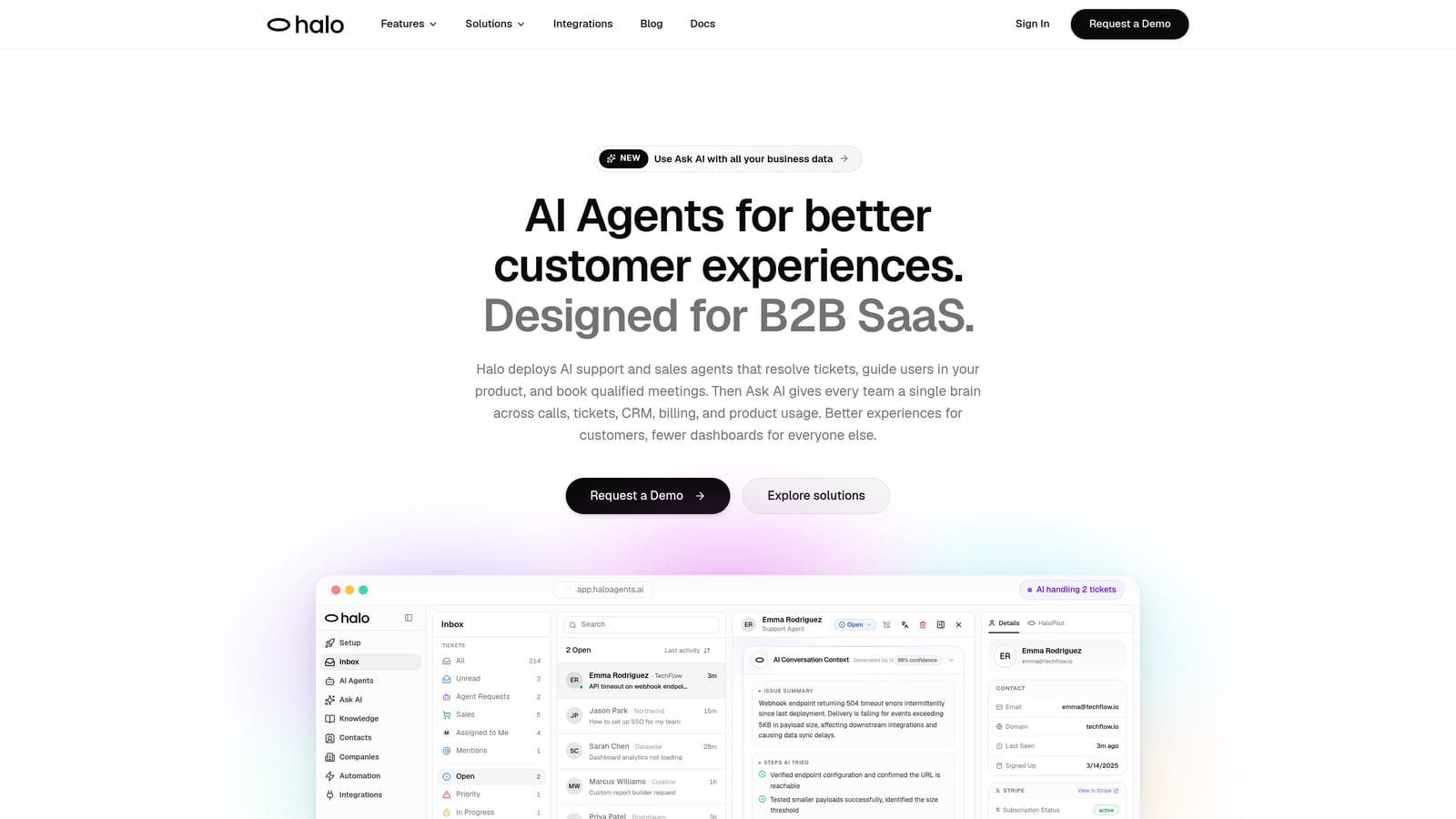
Halo AI is an AI-native customer support platform that deploys autonomous agents to resolve tickets, guide users through your product, and surface business intelligence signals — all without requiring a traditional helpdesk as the foundation.
Where This Tool Shines
Most platforms layer AI onto an existing ticketing architecture. Halo is built AI-first, which means the intelligence isn't an add-on — it's the core. The page-aware chat widget is a genuine differentiator: it understands what a user is actually looking at inside your product and provides context-specific guidance rather than generic answers.
Beyond ticket resolution, Halo's smart inbox surfaces business intelligence that most support tools never touch: customer health signals, revenue anomalies, and support trends that tell you something meaningful about your business, not just your queue. For SaaS teams where support data and product data should inform each other, that's a significant advantage.
Key Features
Page-Aware AI Agents: Understands what the user is viewing in your product and delivers contextually relevant guidance without requiring the user to describe their screen.
Auto Bug Ticket Creation: Automatically identifies and routes bug reports directly to Linear, removing manual triage from the equation entirely.
Smart Inbox with Business Intelligence: Surfaces customer health signals, revenue anomalies, and support trends alongside your standard inbox — turning support data into strategic insight.
Live Agent Handoff: Escalates complex issues to human agents with full conversation context preserved, so nothing gets lost in the transfer.
Native Integrations: Connects to Slack, HubSpot, Intercom, Stripe, Zoom, PandaDoc, Fathom, and Linear — covering the full B2B SaaS stack rather than just email and chat.
Continuous Learning: Every resolved interaction improves the model, so the system gets meaningfully smarter over time rather than staying static.
Best For
B2B SaaS companies that want AI agents handling ticket resolution end-to-end, not just suggesting replies for humans to approve. Particularly well-suited for product teams that want support and product usage data working together, and for organizations that have outgrown basic helpdesk tools but don't want the overhead of enterprise platforms.
Pricing
Contact for pricing. A demo is available at haloagents.ai for teams that want to see autonomous resolution in action before committing.
2. Zendesk
Best for: Large enterprises needing a battle-tested, highly configurable ticketing platform with broad AI coverage
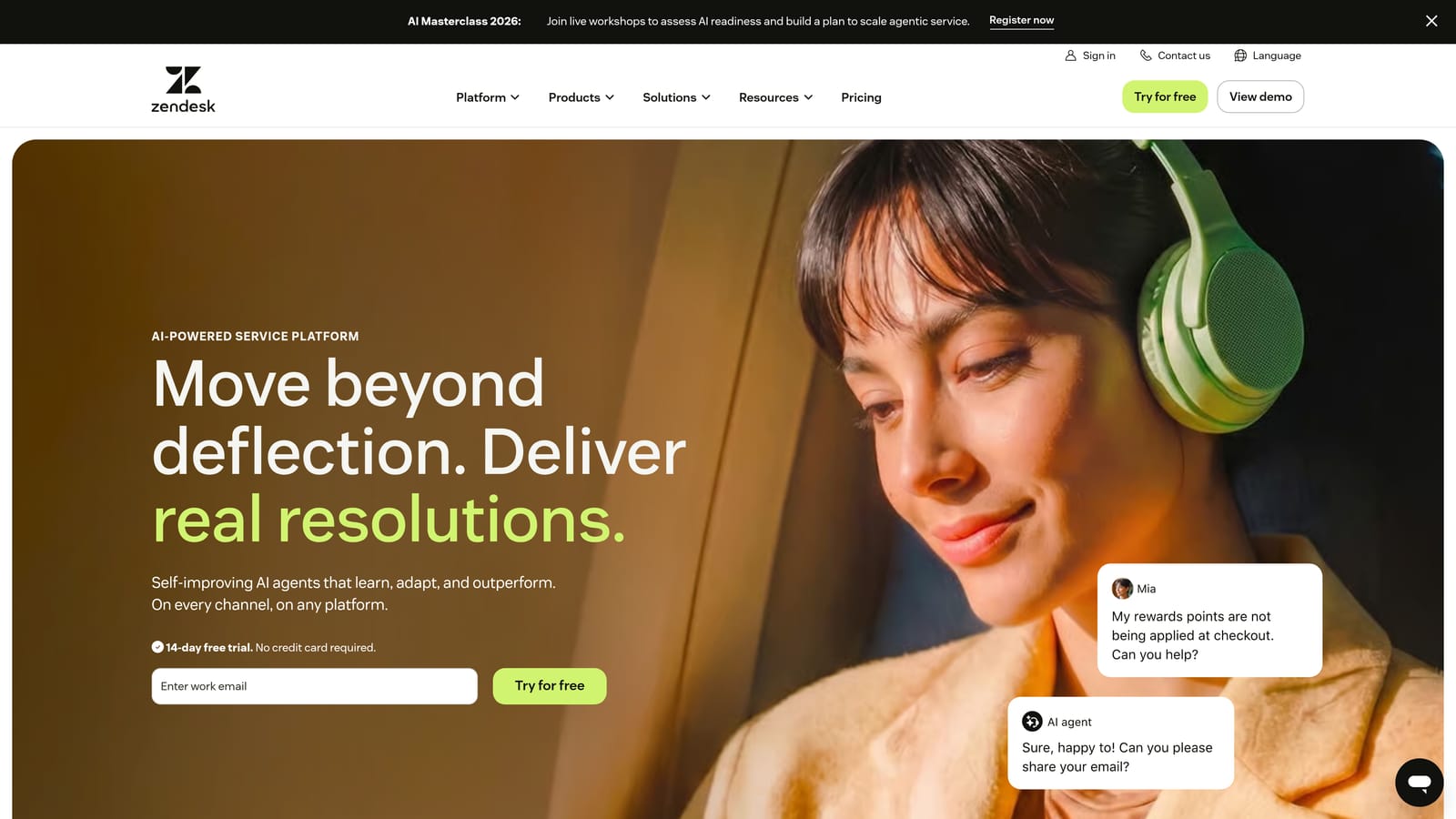
Zendesk is the most widely deployed enterprise helpdesk platform, with AI automation features layered onto a mature, highly configurable ticketing backbone and one of the largest app marketplaces in the industry.
Where This Tool Shines
Zendesk's strength is its depth. Triggers, automations, macros, and views give operations teams granular control over how tickets move through the system. For enterprises with complex routing logic, multiple support tiers, or strict SLA requirements, that configurability is genuinely valuable.
The AI layer — Zendesk AI — handles intent detection, ticket triage, and suggested replies. It's capable and improving, though it's worth noting these features sit on top of a legacy architecture rather than being built into the foundation. Teams evaluating Zendesk for AI-first use cases should factor in that the AI add-ons are priced separately from base plans.
Key Features
Zendesk AI: Covers ticket triage, intent detection, and AI-suggested replies to accelerate agent response times.
Advanced Workflow Automation: Triggers, automations, and macros give teams precise control over ticket routing and SLA management.
Omnichannel Support: Handles email, chat, voice, social, and messaging from a single inbox.
App Marketplace: Over 1,000 integrations available, covering a wide range of business tools and custom workflows.
Reporting and Analytics: Robust built-in reporting suite with custom dashboard capabilities for operations and leadership teams.
Best For
Enterprise support teams with high ticket volumes, complex routing requirements, and dedicated operations staff to manage configuration. Less ideal for lean teams looking for fast deployment or AI-first autonomous resolution out of the box.
Pricing
Suite plans start at approximately $55/agent/month billed annually. AI add-ons are priced separately, so total cost can increase meaningfully depending on the features your team needs.
3. Intercom
Best for: SaaS teams that want AI-powered resolution tightly integrated with in-product messaging and customer lifecycle tools
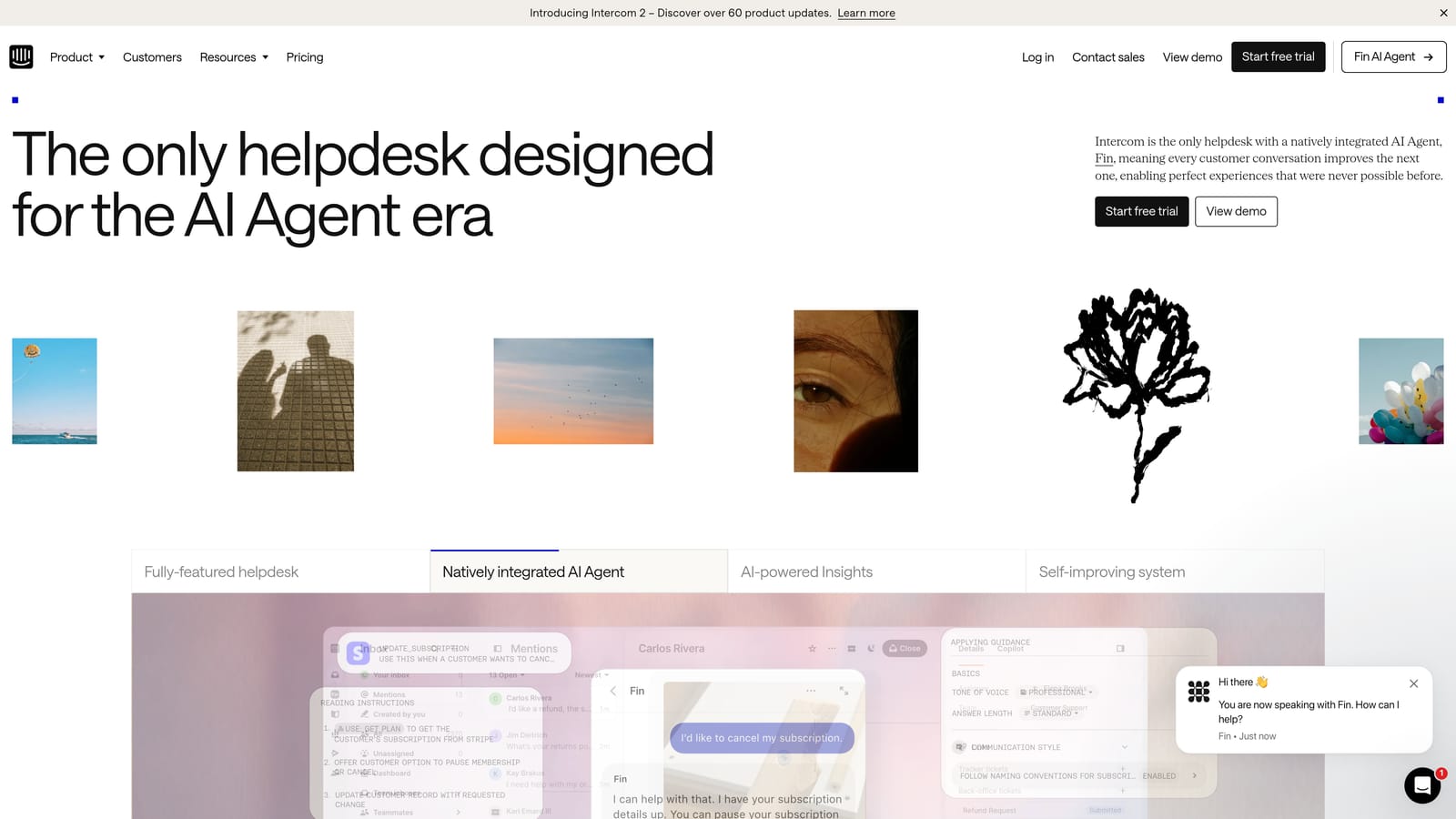
Intercom is a conversational support platform built around its Fin AI agent, designed for product-led companies that want support, onboarding, and customer engagement working from a single platform.
Where This Tool Shines
Fin AI is one of the more capable AI resolution agents currently available. It handles a meaningful share of incoming queries autonomously across multiple channels, and Intercom's conversational UX makes the experience feel natural rather than robotic. For teams where the support widget is also a product engagement tool, the combination is hard to beat.
Intercom also blends support with marketing and sales messaging in a way few platforms do. That's a genuine strength for product-led growth companies — though it can feel like more than you need if you're looking for a focused support automation tool.
Key Features
Fin AI Agent: Handles autonomous ticket resolution across email, chat, and other channels with solid out-of-the-box performance.
Messenger Widget: In-product chat with tour and engagement capabilities that go beyond basic support.
AI-Assisted Inbox: Reply drafts and conversation summaries help human agents work faster when escalations come through.
Customer Data Platform: Connects support interactions to product usage data for richer context.
Workflows Builder: Visual automation builder for routing, escalation, and handoff logic.
Best For
Product-led SaaS companies where support, onboarding, and in-product engagement need to work together. Teams with significant contact volume should model pricing carefully, as costs can escalate based on the number of contacts in the system.
Pricing
Essential plan starts at approximately $29/seat/month. Fin AI resolution is priced per resolved conversation, so total cost scales with usage volume.
4. Freshdesk
Best for: Growing mid-market teams that need solid automation without enterprise-level complexity or cost
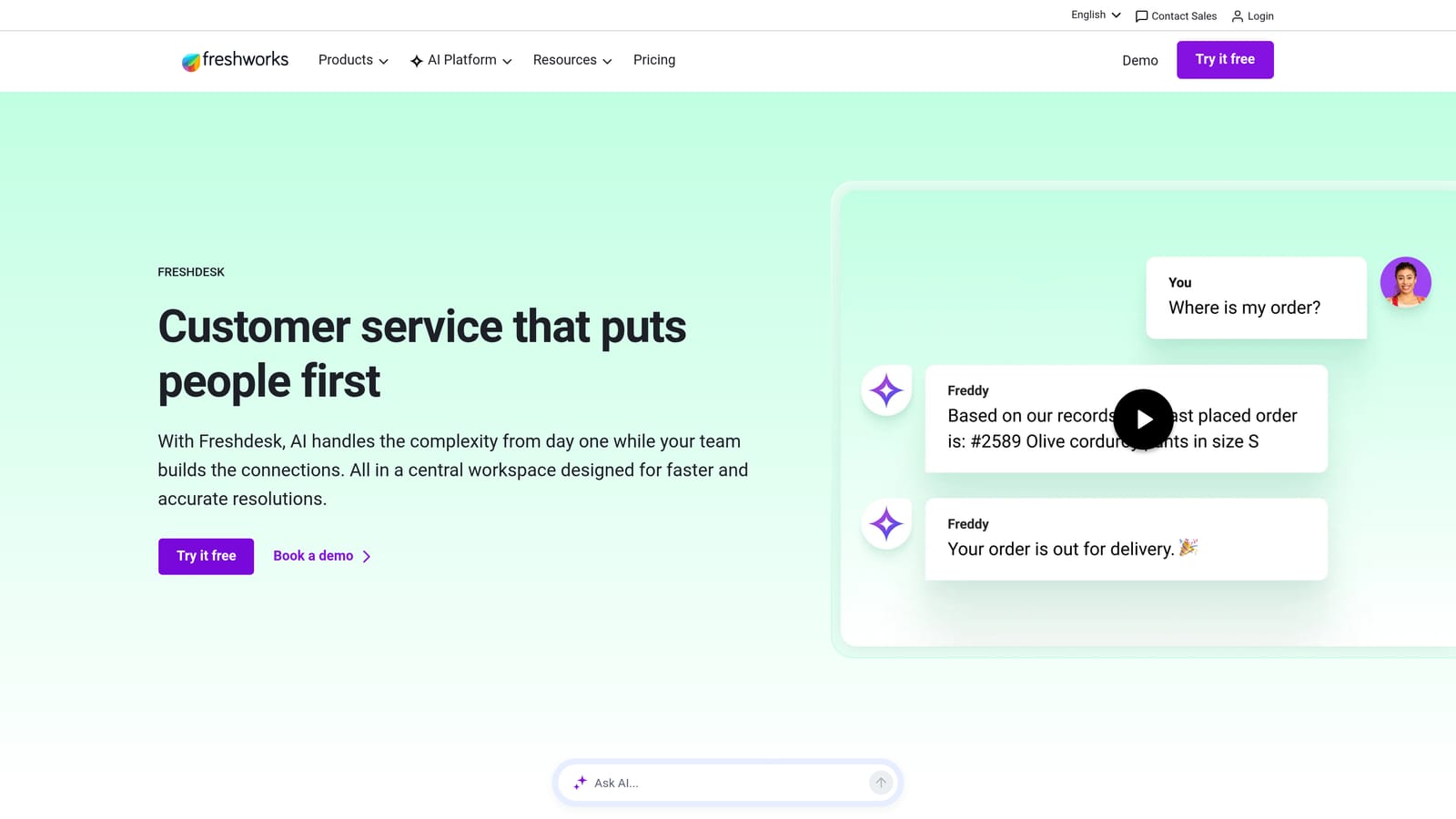
Freshdesk is a mid-market helpdesk platform with Freddy AI handling triage, response suggestions, and self-service deflection — offering strong value for teams that want meaningful automation without the implementation overhead of enterprise tools.
Where This Tool Shines
Freshdesk hits a sweet spot between capability and simplicity. The automation workflow builder is intuitive enough for non-technical teams to manage, and Freddy AI provides genuine triage and deflection value without requiring significant configuration. For teams moving off email-based support for the first time, the learning curve is manageable.
Freddy Self Service, the AI-powered knowledge base deflection layer, can meaningfully reduce inbound volume when paired with well-maintained documentation. It's not the most sophisticated AI in this list, but it delivers practical value at a price point that makes sense for growing teams.
Key Features
Freddy AI: Handles ticket triage, suggested responses, and self-service deflection across the inbox.
Omnichannel Inbox: Covers email, chat, phone, social, and WhatsApp from a single interface.
Automation Workflows: Routing, escalation, and SLA management without requiring technical configuration.
Freddy Self Service: AI-powered knowledge base deflection that reduces inbound volume by surfacing relevant articles before tickets are created.
Collision Detection: Prevents multiple agents from responding to the same ticket simultaneously.
Best For
Mid-market SaaS and e-commerce teams with growing support volume that need structured automation and AI assistance without the cost or complexity of enterprise platforms. Also a strong choice for teams transitioning from shared inbox tools.
Pricing
Free plan available for small teams. Paid plans start at approximately $15/agent/month. Freddy AI features are available on higher-tier plans, so teams focused on AI automation should evaluate Growth and Pro tiers.
5. HubSpot Service Hub
Best for: Revenue-aware support teams that need every ticket enriched with CRM, deal, and lifecycle data
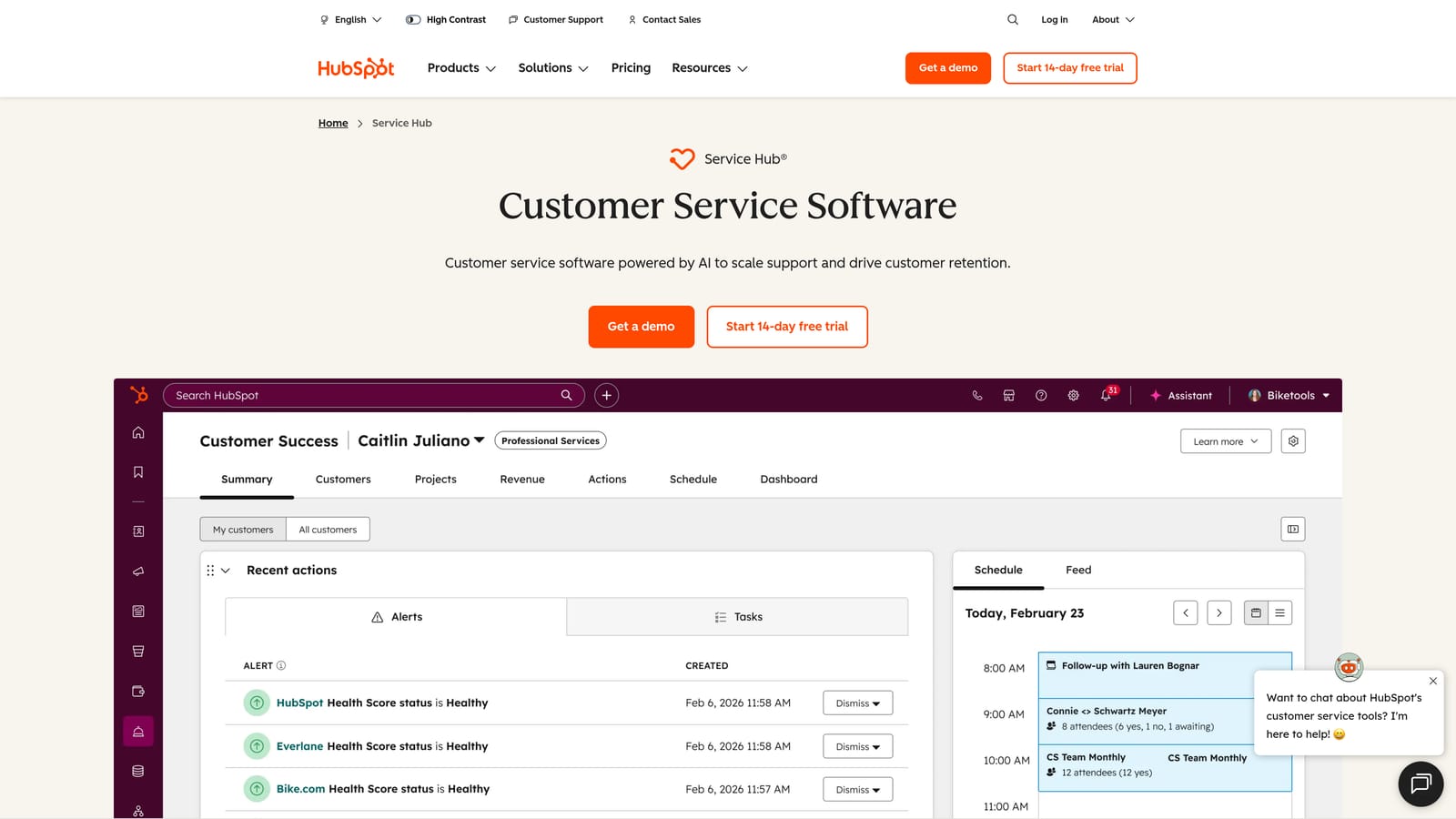
HubSpot Service Hub is a support platform built inside the HubSpot CRM ecosystem, where every ticket is automatically connected to contact records, deal data, and lifecycle stage — making it the strongest choice for teams where support and revenue data need to live together.
Where This Tool Shines
The core differentiator here isn't the AI — it's the data context. When a support ticket comes in, your agent already knows who the customer is, what they've purchased, where they are in the customer lifecycle, and what deals are open. That context changes the quality of every support interaction, particularly for account-based or high-touch SaaS businesses.
AI features including reply drafts and conversation intelligence are improving, but Service Hub is most powerful for teams already running HubSpot for marketing and sales. As a standalone support tool, it's capable but less differentiated than purpose-built alternatives.
Key Features
Native CRM Integration: Every ticket is automatically tied to contact and deal records without manual data entry or syncing.
AI-Assisted Replies: Draft suggestions and conversation intelligence to help agents respond faster and more accurately.
Knowledge Base: Built-in documentation with AI content suggestions to keep articles current and useful.
Customer Portal: Self-service ticket tracking and knowledge access for customers without requiring agent involvement.
Health Scores and Feedback Tools: NPS and CSAT collection with customer health scoring built into the CRM layer.
Best For
Teams already using HubSpot for CRM, marketing, or sales who want support data in the same system. Also strong for customer success teams that need to connect support patterns to renewal and expansion signals.
Pricing
Starter from approximately $15/seat/month. Professional and Enterprise tiers unlock advanced automation, reporting, and AI features. Teams evaluating Service Hub should factor in existing HubSpot licensing to understand total platform cost.
6. Salesforce Service Cloud
Best for: Large enterprises where support, sales, and service data must operate from a single platform and data model
Salesforce Service Cloud is enterprise-grade service automation powered by Einstein AI, designed for organizations where complexity, scale, and cross-functional data integration are non-negotiable requirements.
Where This Tool Shines
Service Cloud is the right answer when Salesforce is already your system of record. Einstein AI handles case classification, next-best-action recommendations, and article suggestions at scale, and the Omni-Channel routing engine distributes work intelligently across large, specialized support teams. The depth of the platform is genuinely impressive.
That depth comes with real tradeoffs. Implementation timelines and costs are significant, and the platform rewards organizations with dedicated Salesforce administrators. For teams without existing Salesforce infrastructure, the overhead of adopting Service Cloud as an entry point is difficult to justify.
Key Features
Einstein AI: Case classification, next-best-action recommendations, and knowledge article suggestions at enterprise scale.
Omni-Channel Routing: Intelligent case distribution across teams and skill sets based on configurable routing logic.
Deep Salesforce Integration: Native connection to Sales Cloud, Marketing Cloud, and Commerce for a unified data model across the business.
Field Service and Asset Management: Extends support capabilities beyond digital channels into field operations.
Custom Reporting: Extensive dashboard and reporting capabilities for complex operational and executive needs.
Best For
Large enterprises already invested in the Salesforce ecosystem, particularly those with complex case management requirements, multiple support tiers, or field service operations. Not the right starting point for teams new to enterprise platforms.
Pricing
Starter Suite from approximately $25/user/month. Enterprise and Unlimited tiers are required for full Einstein AI and automation capabilities, and implementation costs should be factored into total investment planning.
7. Help Scout
Best for: Small teams that prioritize relationship-driven support and a clean, human-feeling customer experience
Help Scout is a simplicity-first shared inbox platform with AI drafts and a deliberately personal customer experience — built for teams that value quality of interaction over high-volume automation throughput.
Where This Tool Shines
Help Scout's defining choice is removing ticket numbers from the customer-facing experience. Customers feel like they're emailing a person, not submitting a request to a system. For companies where brand voice and relationship quality are competitive advantages, that design decision matters more than it might seem.
The AI Drafts feature generates reply suggestions based on past conversations and knowledge base content, meaningfully reducing the time agents spend composing responses. It's not autonomous resolution — but for teams that want AI assistance rather than AI replacement, it fits naturally into the workflow.
Key Features
AI Drafts: Generates reply suggestions from past conversations and Docs content, reducing composition time without removing the human from the loop.
Shared Inbox: Collision detection and private notes keep team coordination clean without cluttering the customer-facing thread.
Docs Knowledge Base: Integrated documentation that connects directly to the Beacon chat widget for in-context self-service.
No Ticket Numbers: Preserves a personal, email-like experience for customers — a deliberate product philosophy, not an oversight.
Workflows: Basic routing and tagging automation for teams that need structure without complexity.
Best For
Small SaaS teams, agencies, and service businesses where support quality and personal tone matter more than automation scale. Not designed for high-volume environments where autonomous ticket resolution is the primary goal.
Pricing
Standard plan starts at approximately $22/user/month. The Plus plan unlocks advanced features including custom reporting and additional integrations.
8. Zoho Desk
Best for: Teams already in the Zoho ecosystem that need solid AI-assisted support at a competitive price point
Zoho Desk is an affordable, AI-assisted helpdesk platform with Zia AI for sentiment analysis, anomaly detection, and workflow automation — offering strong value for teams that want structured automation without a significant budget commitment.
Where This Tool Shines
Zia AI brings some genuinely useful capabilities at a price point where you wouldn't necessarily expect them: sentiment analysis on incoming tickets, automatic tag suggestions, and anomaly detection that flags unusual spikes in volume or tone. For teams that want AI-assisted triage without paying enterprise prices, Zoho Desk delivers.
The Blueprint feature is worth highlighting for process-driven teams. It enforces structured workflows across the ticket lifecycle — ensuring that escalations, approvals, and resolutions follow defined steps rather than relying on individual agents to remember the process. For regulated industries or teams with strict compliance requirements, that structure is valuable.
Key Features
Zia AI: Sentiment analysis, ticket tagging, and anomaly detection to surface issues before they escalate.
Blueprint: Structured process automation that enforces defined steps across the ticket lifecycle.
Zoho CRM Integration: Deep native integration for contact and account context without third-party connectors.
Omnichannel Support: Email, chat, phone, social, and web forms from a single inbox.
Self-Service Portal: Community forums and knowledge base for customer self-resolution before tickets are created.
Best For
Teams already using Zoho CRM, Zoho Analytics, or other Zoho products who want support automation in the same ecosystem. Also a strong choice for cost-conscious teams that need structured automation and AI triage without enterprise pricing.
Pricing
Free plan available for up to 3 agents. Paid plans start at approximately $14/agent/month, making Zoho Desk one of the most affordable options in this list for teams that need more than the free tier.
9. Tidio
Best for: Smaller B2B teams that need fast time-to-value from AI chat automation without a lengthy implementation
Tidio is a fast-to-deploy AI chat platform with Lyro AI handling routine queries out of the box — built for teams that want meaningful automation running quickly, not after a multi-month implementation project.
Where This Tool Shines
Deployment speed is Tidio's clearest advantage. Lyro AI can be handling a meaningful share of routine support queries within hours of setup, with minimal configuration required. For smaller teams that have been managing support through email or a basic chat widget, the jump in automation capability is immediate and noticeable.
The visual chatbot builder makes it accessible for non-technical team members to create custom conversation flows without developer involvement. That combination of fast setup and low maintenance overhead makes Tidio a practical starting point for teams earlier in their automation journey.
Key Features
Lyro AI: Autonomous resolution of routine support queries with minimal setup, handling common questions without human involvement.
Live Chat with AI Assistance: AI-suggested replies for human agents handling conversations that Lyro escalates.
Visual Chatbot Builder: Drag-and-drop flow builder for creating custom conversation paths without code.
Integrations: Connects to Shopify, WordPress, and common CRM tools for basic data context.
Analytics Dashboard: Conversation volume and resolution tracking to understand automation performance over time.
Best For
Smaller B2B and e-commerce teams that need AI chat automation running quickly without complex implementation. Less suited to high-volume enterprise environments or teams with complex multi-step support workflows that require deep system integration.
Pricing
Free plan available. Lyro AI plans start at approximately $29/month, priced based on resolved conversation volume — making costs predictable and directly tied to automation performance.
Which Platform Is Right for Your Team?
The honest answer depends on three questions: How much AI autonomy do you actually need? What does your existing tech stack look like? And how quickly do you need to see results?
If you're running a B2B SaaS operation and want AI agents resolving tickets end-to-end — not just suggesting replies — Halo AI and Intercom are the strongest options in this list. Halo's page-aware context and business intelligence signals make it particularly well-suited for product teams that want support and product data working together. Intercom's Fin AI is a strong alternative for product-led growth companies where the support widget is also a customer engagement tool.
For enterprise teams already embedded in Salesforce, Service Cloud is the natural choice. If your entire business runs on HubSpot, Service Hub gives you support data inside the CRM without stitching systems together. Teams in the Zoho ecosystem will find Zoho Desk delivers solid AI-assisted automation at a price that's hard to argue with.
Zendesk remains the safe enterprise choice for complex routing and omnichannel coverage, while Freshdesk hits the mid-market sweet spot between capability and cost. Help Scout is the right call when relationship quality matters more than automation volume. And if you need something running fast with minimal setup, Tidio gets Lyro AI handling queries the same day you deploy it.
Your support team shouldn't scale linearly with your customer base. Let AI agents handle routine tickets, guide users through your product, and surface business intelligence while your team focuses on complex issues that need a human touch. See Halo in action and discover how continuous learning transforms every interaction into smarter, faster support.