9 Best Support Automation Tools for SaaS in 2026
Discover the best support automation for SaaS in 2026 with this comprehensive breakdown of nine platforms evaluated on AI resolution quality, integration depth, scalability, and pricing. From AI-native tools that connect support to engineering workflows to purpose-built solutions for high-volume ticket management, this guide helps fast-growing SaaS teams find the right automation to resolve issues faster without proportionally scaling headcount.
 Matt PattoliFounder13 min read
As your SaaS user base scales, ticket volume grows exponentially, but hiring proportionally isn't sustainable. Support automation bridges that gap, letting you resolve common issues instantly, route complex problems to the right people, and extract insights from every customer interaction.
Not all automation tools are built the same. Some bolt AI onto legacy helpdesks, while others are purpose-built for the speed and complexity of modern SaaS workflows. We evaluated platforms across criteria that matter most to SaaS teams: AI resolution quality, integration depth with product and engineering stacks, scalability, analytics capabilities, and pricing transparency. Here are the top support automation tools for SaaS companies in 2026.
1. Halo AI
Best for: SaaS teams wanting an AI-native platform that learns from every interaction and connects support to engineering.
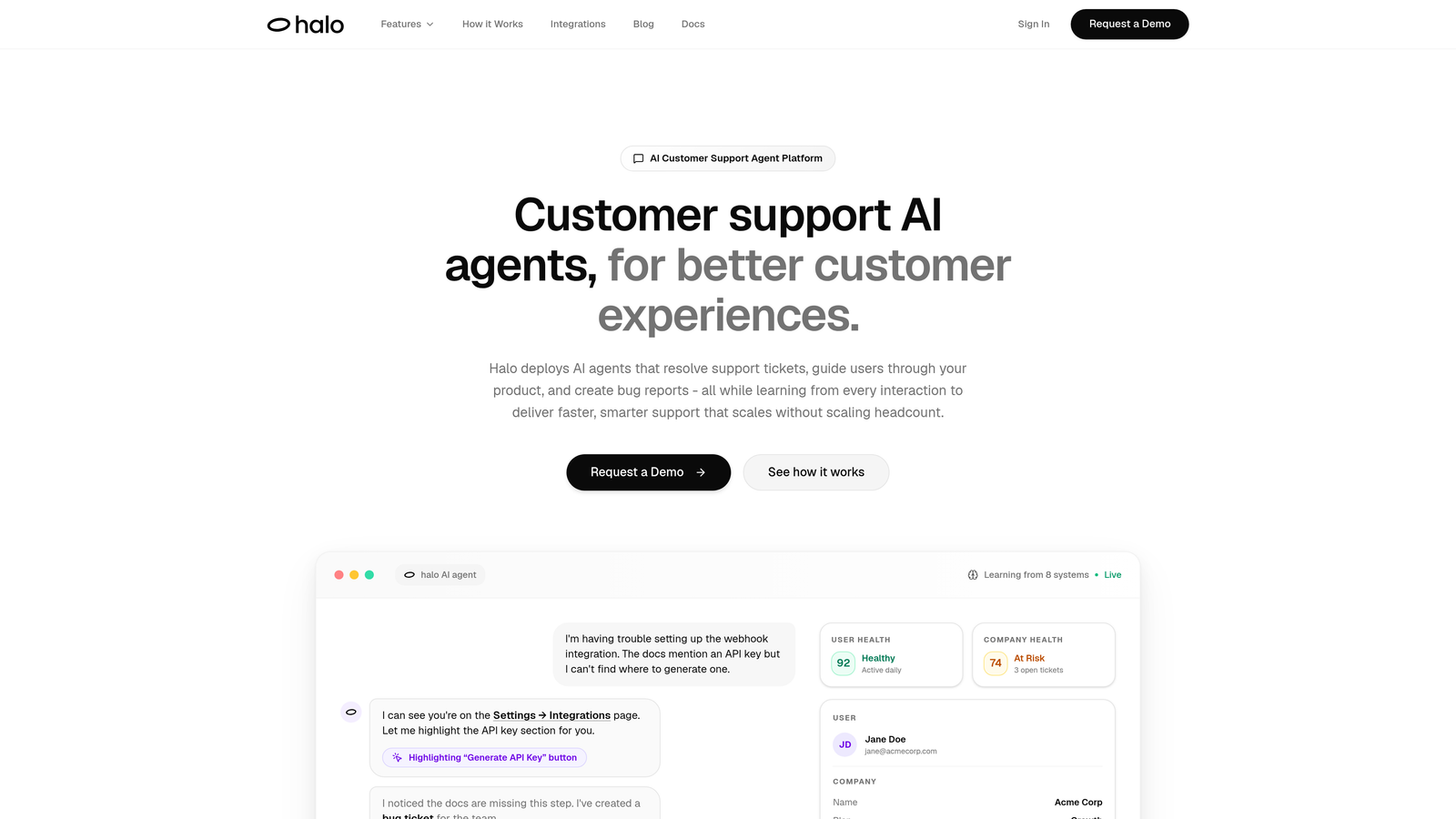
Halo AI is an AI-native customer support platform that deploys intelligent agents to resolve tickets, guide users with page-aware context, and generate business intelligence from every interaction.
Where This Tool Shines
What sets Halo apart from most support tools is that it wasn't built as a helpdesk with AI added on top. It was designed from the ground up around autonomous AI agents that improve with every conversation. That architectural difference matters: the system doesn't just match keywords to canned responses, it reasons through problems, takes action, and gets smarter over time.
The page-aware chat widget is a standout feature. Rather than asking users to describe what they're looking at, Halo's agents can see the same UI context the user sees, enabling visual guidance that's genuinely useful. Combined with direct integrations into Linear, Slack, HubSpot, Stripe, and more, Halo connects support intelligence to the rest of your business stack in ways most tools can't match.
Key Features
Page-Aware Chat Widget: Sees the user's current UI context to deliver precise, visual guidance without users needing to explain their screen.
Continuous Learning AI Agents: Agents improve with every resolved ticket, meaning resolution quality compounds over time rather than staying static.
Auto Bug Ticket Creation: Automatically generates bug reports and routes them to Linear when issues are detected, closing the loop between support and engineering.
Smart Inbox with Business Intelligence: Goes beyond ticket metrics to surface customer health signals, churn risk indicators, and anomaly detection across your user base.
Live Agent Handoff: Escalates complex conversations to human agents with full context preserved, so customers never have to repeat themselves.
Best For
Product-driven SaaS teams that want support automation deeply integrated with their engineering and product workflows. Particularly strong for companies prioritizing resolution quality over simple deflection, and teams that want their support layer to generate actionable business intelligence, not just close tickets.
Pricing
Contact for pricing; a demo is available on request at haloagents.ai.
2. Intercom
Best for: Product-led SaaS teams wanting unified messaging, proactive engagement, and AI-powered resolution in one platform.
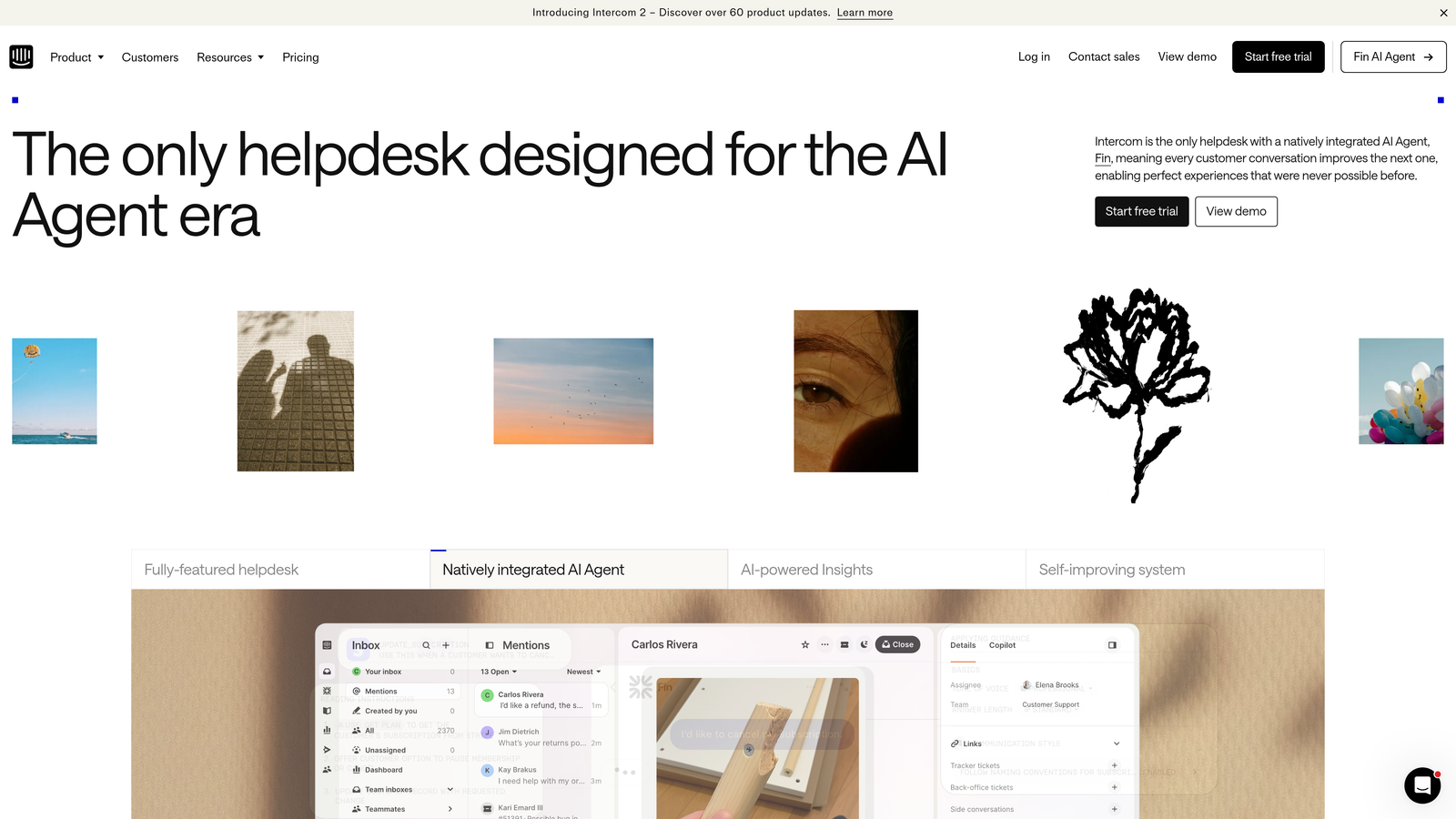
Intercom is a unified customer messaging platform with the Fin AI agent for automated support resolution, in-app messaging, and proactive engagement tools.
Where This Tool Shines
Intercom has long been the go-to for SaaS companies that think about support as part of the broader customer relationship. Fin, its AI agent, is trained on your help center content and handles a meaningful share of inbound questions without human involvement. The quality of resolution tends to be solid for documentation-heavy products.
Where Intercom really earns its place is in the combination of reactive support and proactive outreach. You can trigger in-app messages based on user behavior, run product tours, and manage the full customer lifecycle from a single workspace. That breadth is hard to replicate with point solutions.
Key Features
Fin AI Agent: Trained on your help center content to deliver instant, conversational resolution without human involvement.
In-App Messaging and Product Tours: Proactively guides users through features and onboarding flows inside your product.
Customizable Conversation Routing: Routes conversations based on topic, user attributes, and team availability with flexible workflow logic.
AI-Specific Resolution Metrics: Tracks Fin's resolution rate separately from human-handled conversations, giving clear visibility into AI performance.
Best For
SaaS teams that want a single platform for support, onboarding, and proactive engagement. Strong fit for product-led growth companies where in-app communication is central to the user experience.
Pricing
Starts at $39/seat/month; Fin AI is charged per resolution, so costs scale with usage rather than seat count.
3. Zendesk
Best for: Enterprise SaaS teams needing deep customization, extensive integrations, and robust SLA management.
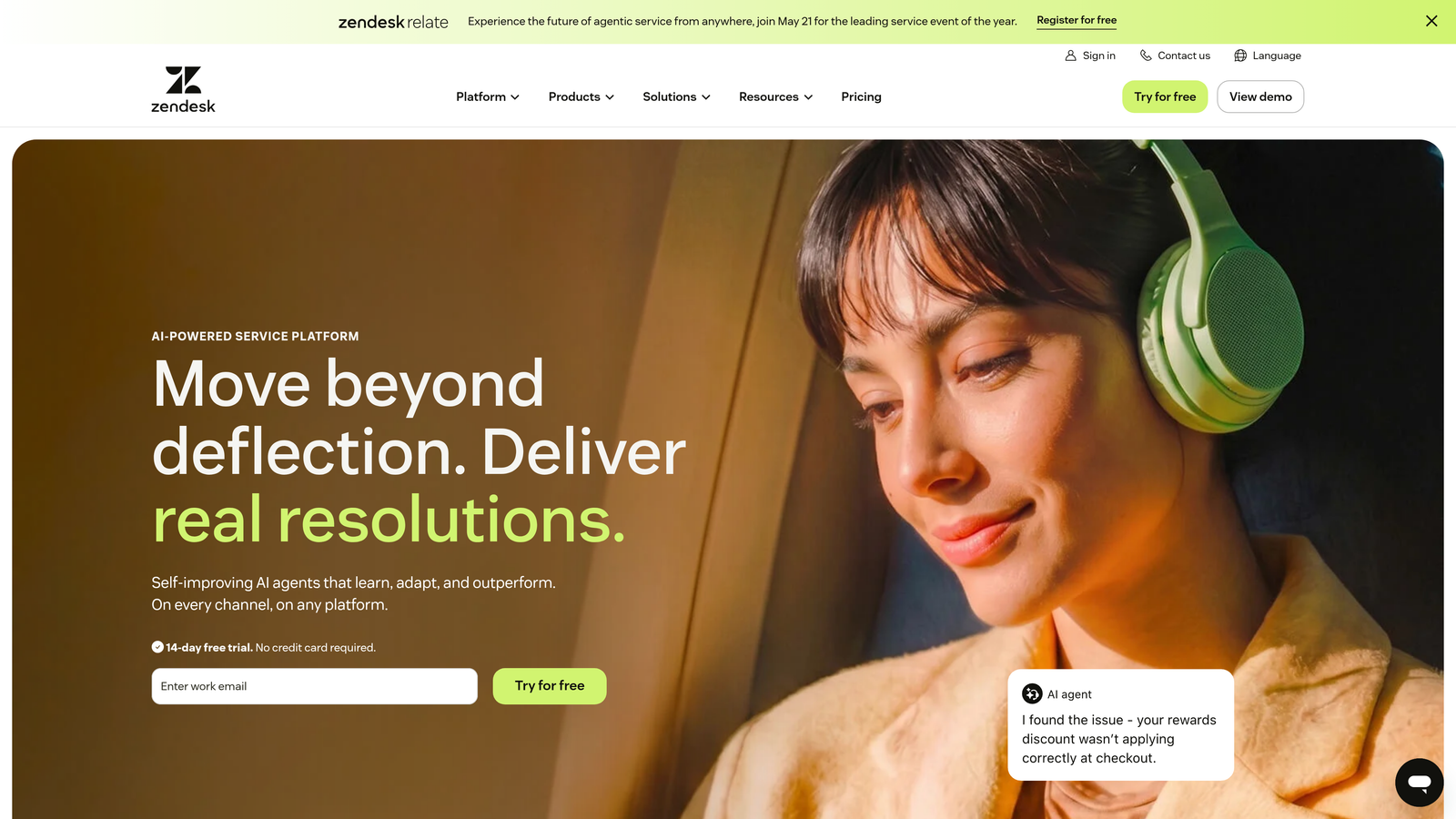
Zendesk is an enterprise-grade helpdesk platform with extensive customization, a large marketplace of integrations, and AI-powered automation add-ons.
Where This Tool Shines
Zendesk's strength is its maturity. After years of development and a massive ecosystem of apps and integrations, it can handle almost any support configuration a large SaaS company might need. Complex routing logic, multi-brand support, detailed SLA tracking, and compliance requirements are all well-served here.
The AI add-on brings intelligent triage and auto-replies to the platform, though it's worth noting this is a layer added to a legacy architecture rather than a native AI-first design. For organizations with established Zendesk workflows, the AI layer adds meaningful efficiency without requiring a platform migration.
Key Features
Advanced AI Add-On: Provides intelligent triage, intent detection, and auto-replies to reduce manual handling of common requests.
1,500+ Marketplace Integrations: Connects to virtually any tool in your stack, from CRMs to analytics platforms to engineering tools.
Customizable Workflows: Macros, triggers, and automations give teams granular control over how tickets are handled and escalated.
Robust Analytics and SLA Tracking: Detailed reporting on team performance, resolution times, and compliance with service agreements.
Best For
Larger SaaS organizations with complex support operations, multiple teams or brands, and established workflows. Less ideal for early-stage companies that want AI-native resolution without significant configuration overhead.
Pricing
Suite Team starts at $55/agent/month; the AI add-on is priced separately, so total cost can climb quickly for larger teams.
4. Freshdesk (Freshworks)
Best for: Early-stage and budget-conscious SaaS teams wanting omnichannel support with AI triage and a generous free tier.
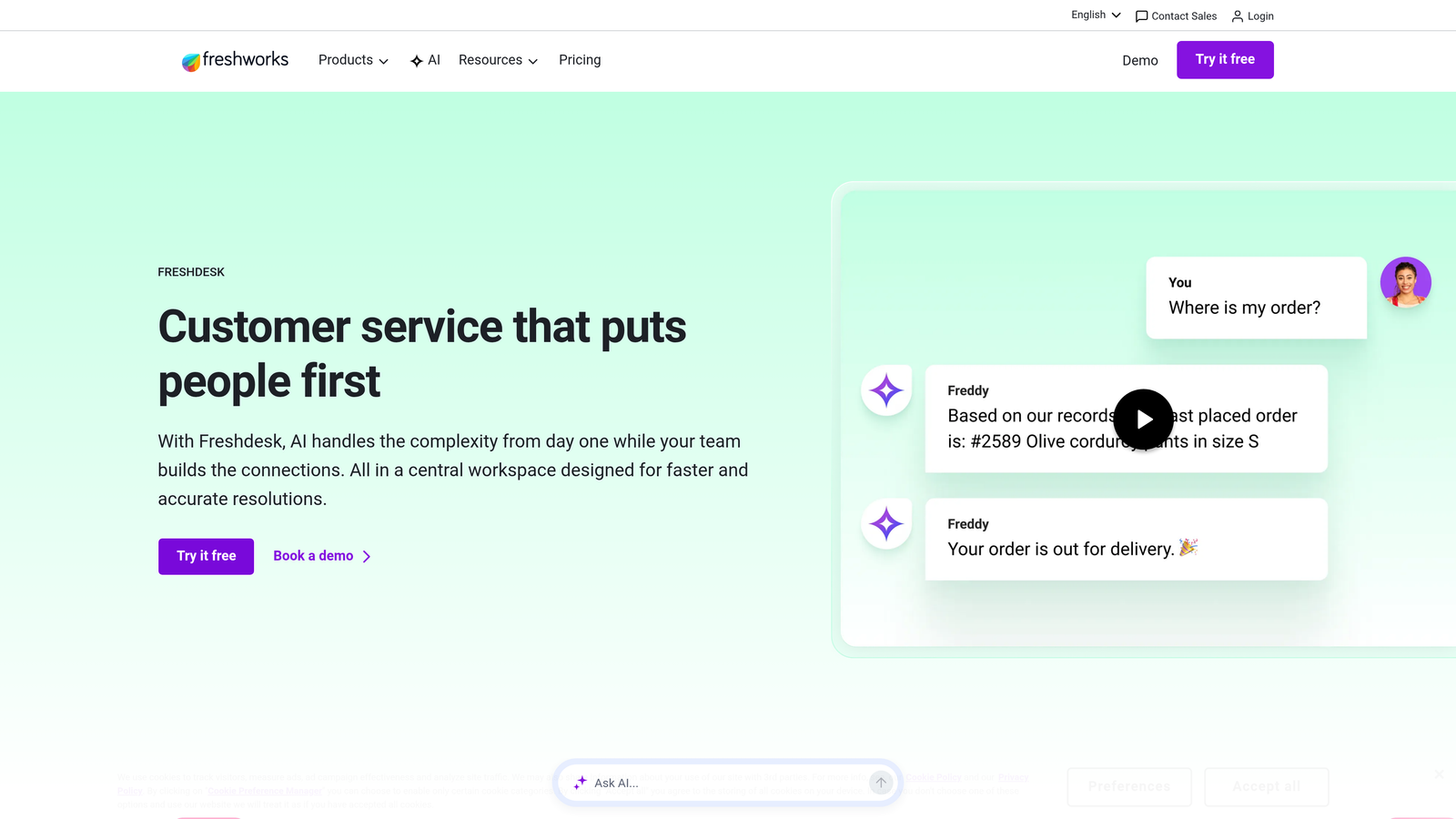
Freshdesk is a feature-rich helpdesk with Freddy AI for ticket triage and automation, offering one of the strongest free tiers in the market for growing teams.
Where This Tool Shines
Freshdesk punches above its price point. The free tier is genuinely functional, supporting up to two agents with email and social ticketing, a knowledge base, and basic reporting. For seed-stage SaaS companies watching every dollar, that's a meaningful starting point.
Freddy AI handles the automation layer: auto-triaging incoming tickets, suggesting responses to agents, and flagging priority issues. It's not as sophisticated as purpose-built AI platforms, but it meaningfully reduces manual work for teams that don't need cutting-edge AI resolution.
Key Features
Freddy AI: Automates ticket triage, suggests agent responses, and identifies patterns across incoming requests.
Omnichannel Support: Handles email, chat, phone, and social from a single workspace without requiring separate tools.
Free Tier: Supports up to two agents with solid core functionality, making it accessible for very early teams.
1,000+ Marketplace Integrations: Connects to a wide range of tools, including CRMs, billing platforms, and communication tools.
Best For
Early-stage SaaS companies that need a capable helpdesk without significant upfront investment. Also a good fit for teams scaling from startup to growth stage who want to defer platform migration as long as possible.
Pricing
Free plan available; paid plans start at $15/agent/month, making it one of the more affordable options in this category.
5. Ada
Best for: High-volume SaaS products needing scalable, no-code AI self-service with multilingual support.
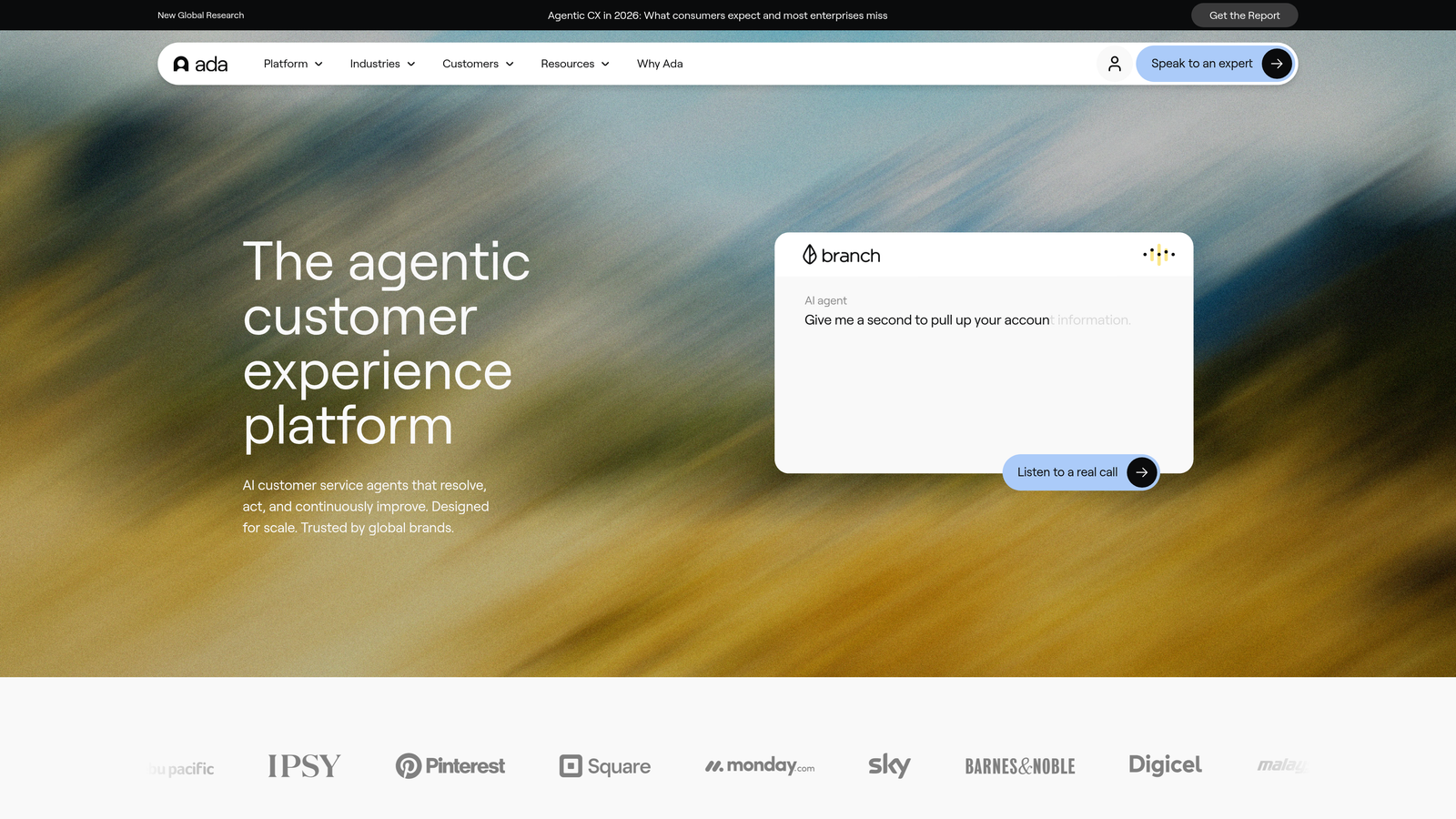
Ada is an AI-first customer service automation platform focused on high-volume self-service, with a no-code agent builder and support for over 50 languages.
Where This Tool Shines
Ada was built specifically around the premise that most support interactions shouldn't require a human. Its no-code agent builder lets non-technical teams create and iterate on automated flows without engineering involvement, which dramatically shortens the time between identifying a support gap and deploying a fix.
The multilingual capability is particularly valuable for SaaS companies with global user bases. Rather than maintaining separate workflows per language, Ada handles translation and localization automatically, letting you scale internationally without proportionally scaling your support team.
Key Features
No-Code AI Agent Builder: Drag-and-drop interface for creating automated workflows without engineering resources.
Automated Resolution Measurement: Tracks resolution rates with built-in coaching insights to help teams improve agent performance over time.
Multilingual Support: Handles conversations in 50+ languages, enabling global support without separate localization efforts.
CRM and Helpdesk Integrations: Connects to major platforms so automated resolutions can sync with existing records and workflows.
Best For
Mid-to-large SaaS companies with high ticket volumes and a significant percentage of repetitive, automatable requests. Particularly strong for teams serving international markets or operating across multiple languages.
Pricing
Custom pricing based on resolution volume; contact Ada for a quote tailored to your usage profile.
6. HubSpot Service Hub
Best for: SaaS teams already in the HubSpot ecosystem that want support tightly integrated with CRM and customer success data.
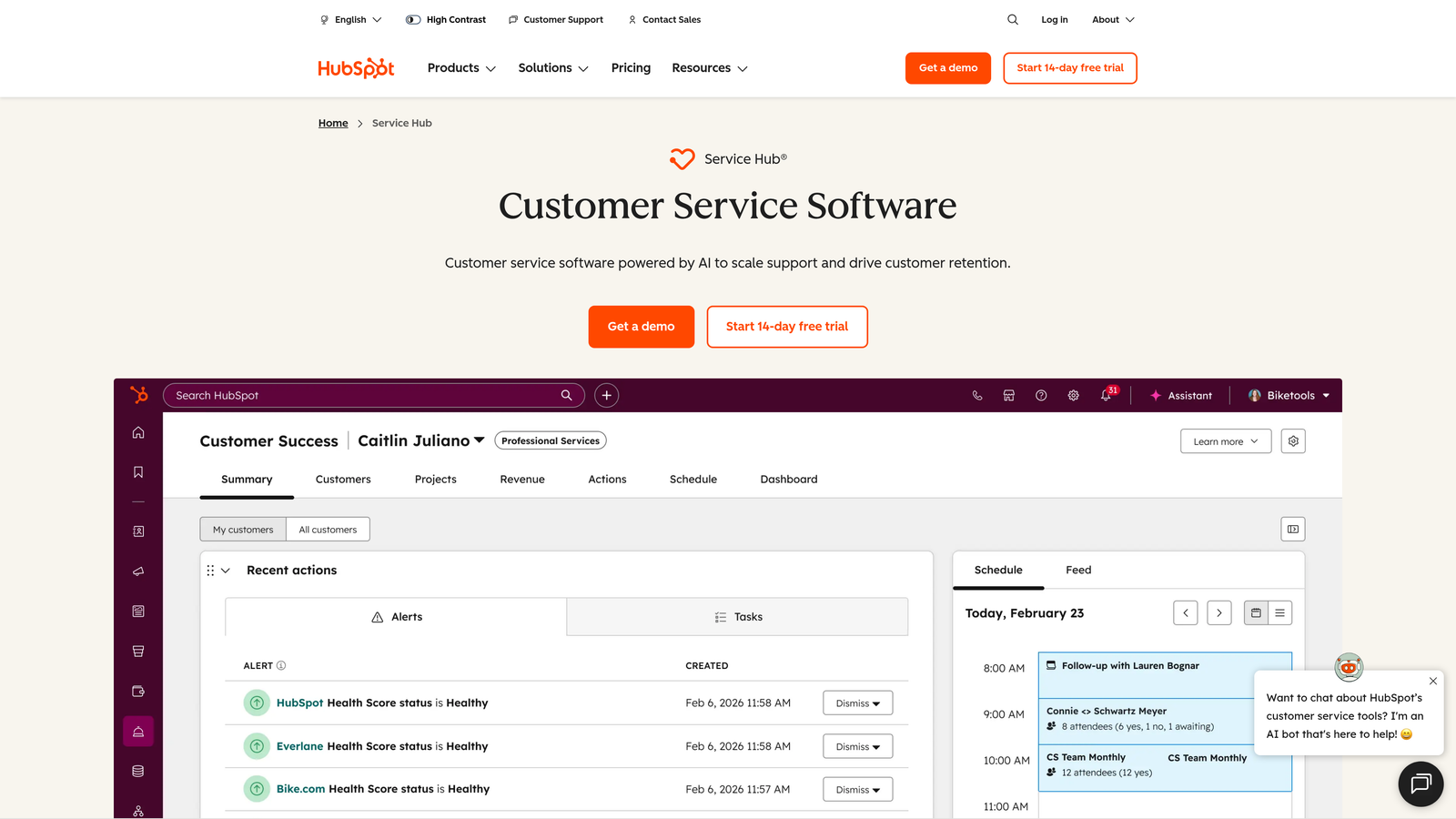
HubSpot Service Hub is a CRM-integrated service platform offering ticketing, knowledge base, and customer feedback tools within the broader HubSpot ecosystem.
Where This Tool Shines
If your team already lives in HubSpot for sales and marketing, Service Hub is the natural extension into support. Every ticket arrives with full CRM context: deal history, lifecycle stage, recent marketing touchpoints, and account health. That context helps agents personalize responses and prioritize high-value accounts without toggling between systems.
The knowledge base with AI-powered search suggestions is a solid self-service layer, and the NPS and CSAT tools make it easy to close the loop on customer sentiment without adding another platform to your stack.
Key Features
Full CRM Context on Every Ticket: Agents see complete customer history including sales interactions, making personalization straightforward.
AI-Powered Knowledge Base: Surfaces relevant articles to agents and customers based on conversation content and search behavior.
Customer Feedback and NPS Tracking: Built-in survey tools let you measure satisfaction and track sentiment trends over time.
Shared Inbox with Automated Routing: Centralizes team email with rules-based routing to direct tickets to the right people.
Best For
SaaS companies using HubSpot as their primary CRM that want to unify sales, marketing, and support data without a separate platform. Less compelling for teams not already in the HubSpot ecosystem.
Pricing
Free tools available; Starter at $20/month/seat; Professional at $100/month/seat.
7. Tidio
Best for: Small SaaS teams and early-stage products wanting affordable live chat and AI automation with minimal setup.
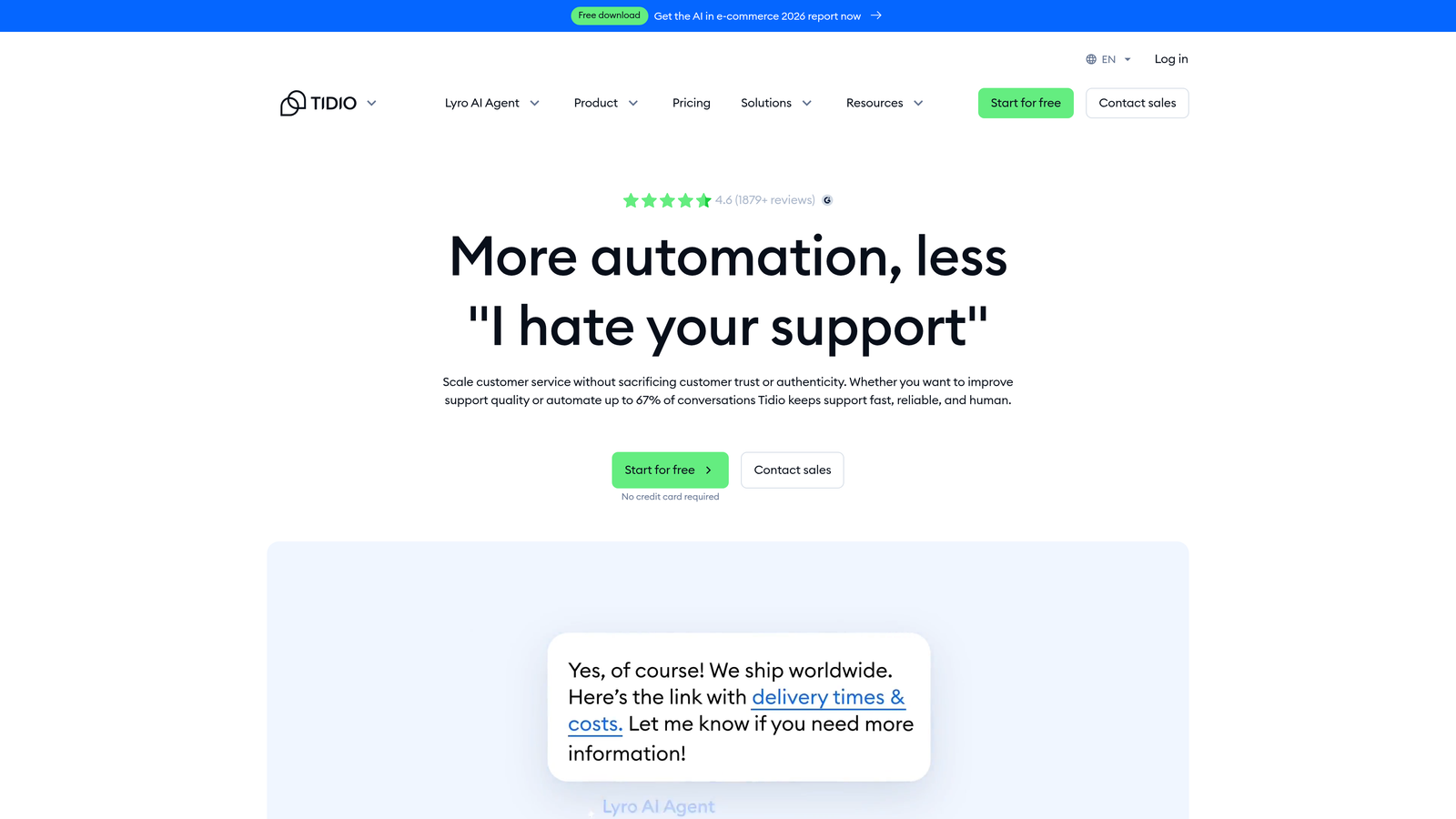
Tidio is an affordable live chat and AI chatbot platform featuring Lyro AI for automated conversations and a visual bot builder designed for quick deployment.
Where This Tool Shines
Tidio's appeal is simplicity and speed. You can have a functional chatbot live on your product within hours, not days, and the visual builder makes it accessible to non-technical team members. For early-stage SaaS companies that need something working now without a lengthy implementation, that matters.
Lyro AI learns from your FAQ content and knowledge base to handle common questions conversationally. It's not the most sophisticated AI in this list, but for straightforward support use cases it performs well and frees up human agents for more complex work.
Key Features
Lyro AI Chatbot: Learns from your existing FAQ and knowledge base content to answer common questions automatically.
Visual Bot Builder: Pre-built templates and a drag-and-drop interface make it easy to create and modify automated flows without code.
Live Chat with Visitor Tracking: Real-time monitoring of active visitors with the ability to proactively engage users showing signs of confusion or drop-off.
Quick Setup: Minimal technical overhead means small teams can deploy and iterate without engineering support.
Best For
Early-stage SaaS teams and small businesses that need an affordable, fast-to-deploy solution. Works well as a starting point before migrating to a more enterprise-grade platform as volume and complexity grow.
Pricing
Free plan available; paid plans start at $29/month, making it one of the most accessible options for budget-constrained teams.
8. Dixa
Best for: SaaS teams managing high-volume omnichannel support who need intelligent routing and a unified agent workspace.
Dixa is an omnichannel customer engagement platform with a unified agent workspace and intelligent conversation routing across all support channels.
Where This Tool Shines
Dixa's unified workspace is its headline feature: agents handle chat, email, phone, and social from a single interface without switching tools. For support teams managing high volumes across multiple channels, the reduction in context-switching translates directly into faster response times and fewer errors.
The intelligent routing engine goes beyond simple round-robin assignment. It factors in conversation context, agent skills, and real-time availability to match tickets with the best-positioned agent, which improves both resolution quality and team efficiency.
Key Features
Unified Agent Workspace: Manages all channels including chat, email, phone, and social from a single interface to eliminate tool fragmentation.
Intelligent Conversation Routing: Routes based on conversation content, agent skills, and availability rather than simple queue order.
Real-Time Dashboards and QA Tools: Provides live visibility into team performance and built-in quality assurance workflows.
Native Integrations: Connects directly to Shopify, Salesforce, and other common business tools without custom development.
Best For
Mid-market SaaS companies with established support teams handling significant volume across multiple channels. Well-suited for teams where agent efficiency and routing accuracy are primary bottlenecks.
Pricing
Starts at $39/agent/month; enterprise pricing available on request for larger deployments.
9. DevRev
Best for: Product-driven SaaS teams that want support tickets directly connected to engineering sprints and development workflows.
DevRev is a support-to-engineering platform that connects customer tickets directly to development sprints, built specifically for product-driven SaaS teams.
Where This Tool Shines
DevRev solves a problem that most support tools ignore: the gap between what customers report and what engineers actually build. By linking support tickets directly to code issues and sprint planning, it gives product teams a real-time view of customer impact when prioritizing work. That feedback loop is genuinely valuable for SaaS companies in active development.
The AI-powered clustering feature groups similar issues into product insights automatically, turning a flood of individual tickets into actionable signals for the product roadmap. For teams where support and product are closely aligned, this is a meaningful workflow improvement over passing spreadsheets between departments.
Key Features
Unified Support and Dev Tracking: Customer tickets link directly to code issues, giving engineers full context on customer impact without manual translation.
AI-Powered Issue Clustering: Groups similar support tickets into product insights, surfacing patterns that inform roadmap decisions.
Built-In Sprint Planning with Customer Impact Scoring: Helps engineering teams prioritize work based on how many customers are affected by each issue.
Automatic Ticket Enrichment: Adds product and usage context to tickets automatically, reducing the back-and-forth needed to understand the full picture.
Best For
Early-to-mid stage SaaS companies where product and support teams work closely together and engineering prioritization is directly influenced by customer feedback. Less suited for organizations where support and engineering operate in separate silos.
Pricing
Free tier available for small teams; growth plans start at $19.99/user/month.
Which Tool Is Right for Your SaaS Team?
The right support automation tool depends heavily on where you are as a company and what problem you're actually trying to solve. Here's a quick guide to cut through the noise.
For enterprise complexity: Zendesk remains the most configurable option for large organizations with intricate routing requirements, multiple brands, and strict SLA obligations. The tradeoff is cost and implementation overhead.
For product-led messaging: Intercom is the natural choice when support is one part of a broader in-app communication strategy. If you're running onboarding flows, product tours, and proactive messaging alongside reactive support, Intercom handles all of it in one place.
For budget-conscious scaling: Freshdesk and Tidio both offer generous free tiers and affordable paid plans. Freshdesk is the stronger choice for teams expecting to scale; Tidio is better for teams that need something live quickly with minimal configuration.
For engineering alignment: DevRev is purpose-built for teams where support tickets should directly influence what gets built. Halo AI takes a complementary approach, surfacing business intelligence and automatically routing bugs to Linear so your engineering team stays informed without manual handoffs.
For high-volume self-service: Ada is built for scale. If a large percentage of your ticket volume is repetitive and automatable, Ada's no-code builder and multilingual capabilities let you handle it without proportionally growing your team.
For AI-native resolution that gets smarter over time: Halo AI is the standout. Unlike tools that layer AI onto legacy helpdesk architectures, Halo was built from the ground up around intelligent agents that learn from every interaction, see what users see with page-aware context, and connect your support layer to your entire business stack.
Your support team shouldn't scale linearly with your customer base. Let AI agents handle routine tickets, guide users through your product, and surface business intelligence while your team focuses on complex issues that need a human touch. See Halo in action and discover how continuous learning transforms every interaction into smarter, faster support.