9 Best Support Automation Tools for SaaS in 2026
Discover the 9 best support automation tools for SaaS in 2026, evaluated on AI capabilities, integrations, and scalability to help growing teams resolve more tickets faster without expanding headcount. From AI-first platforms offering full ticket resolution to workflow automation layers compatible with Zendesk, Freshdesk, and Intercom, this guide identifies the right fit for every SaaS support stack.
 Grant CooperFounder12 min read
SaaS support teams face a compounding problem: ticket volume grows with every new user, but hiring more agents isn't always viable or efficient. The right support automation tools let you resolve more tickets faster, surface product insights, and keep customers happy without ballooning headcount.
This list covers the best support automation tools built for SaaS teams in 2026, from AI-first platforms that handle full ticket resolution to workflow automation layers that sit on top of your existing helpdesk. Each tool was evaluated on depth of AI capabilities, SaaS-specific integrations, ease of deployment, and value at scale.
Whether you're running support on Zendesk, Freshdesk, or Intercom, or looking to replace your current stack entirely, there's a fit here for your team.
1. Halo AI
Best for: SaaS teams that want AI agents to fully resolve tickets and surface business intelligence
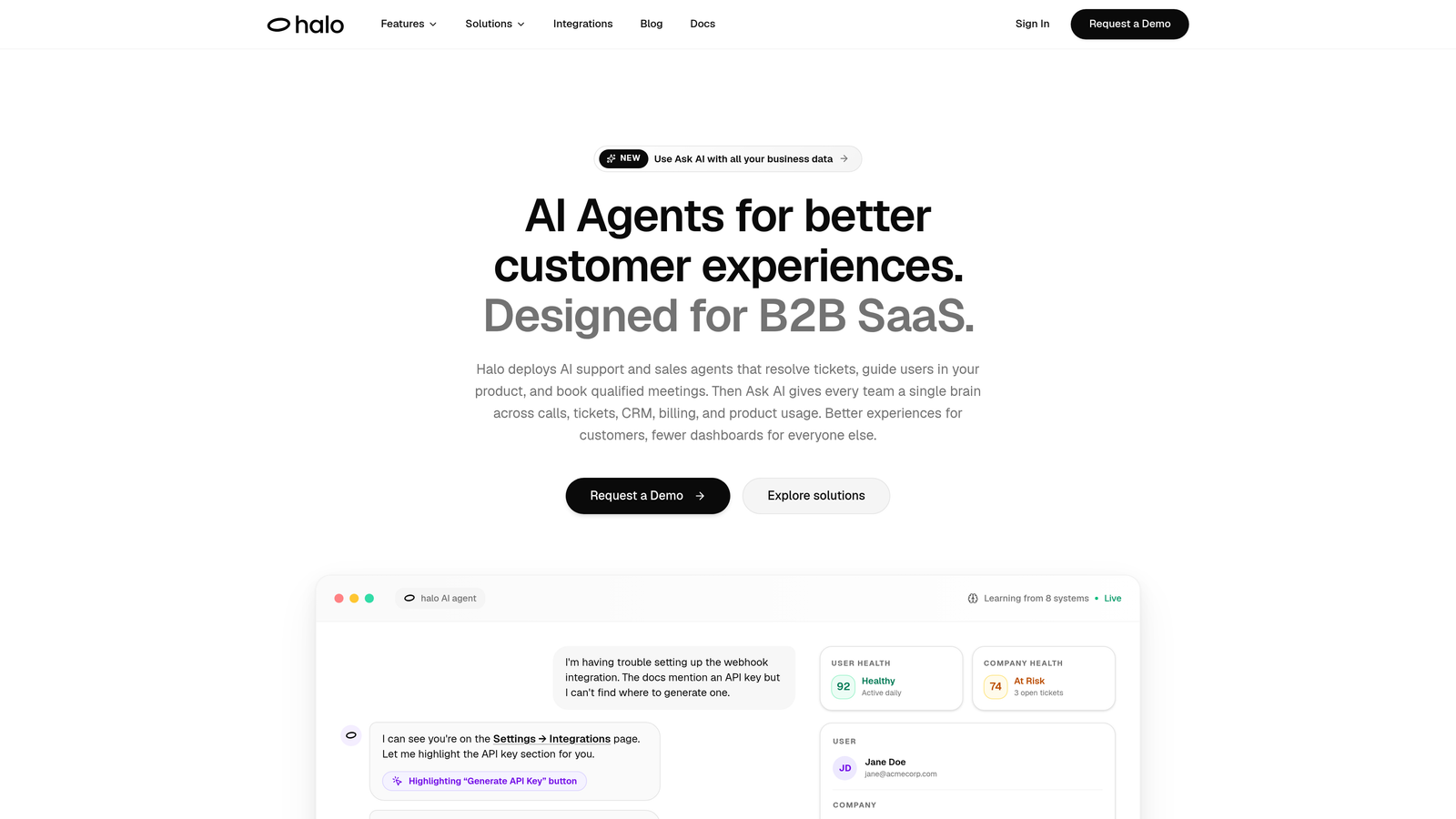
Halo AI is an AI-first support platform that deploys intelligent agents to resolve tickets, guide users through your product, and surface business signals — all while learning from every interaction.
Where This Tool Shines
What separates Halo from most tools on this list is its architecture. It wasn't built by bolting AI onto an existing helpdesk. It was designed from the ground up as an autonomous support layer, which means the AI isn't just suggesting replies to agents — it's resolving tickets end-to-end.
The page-aware context is a standout capability. Halo's AI can see what a user is actually looking at inside your product, which means guidance is contextual and specific rather than generic. That's a meaningful difference when your users are troubleshooting technical workflows.
Key Features
Page-Aware AI Agents: The AI understands which page or feature a user is viewing and delivers contextual UI guidance, not just generic knowledge base links.
Autonomous Ticket Resolution: Handles routine and technical queries end-to-end, with smart live agent handoff when complexity requires a human.
Auto Bug Ticket Creation: Automatically generates bug reports and routes them to Linear or connected project management tools, closing the loop between support and engineering.
Smart Inbox with Business Intelligence: Goes beyond deflection metrics — surfaces customer health signals, revenue anomalies, and churn indicators from support interactions.
Deep Integrations: Connects with Slack, HubSpot, Stripe, Intercom, Zoom, PandaDoc, Fathom, and more, so support data flows into the tools your whole team already uses.
Continuous Learning: Every resolved interaction improves the AI's accuracy and response quality over time, compounding value the longer you use the platform.
Best For
SaaS product teams and support leaders who want AI to handle routine ticket resolution autonomously while generating business intelligence from support interactions. Particularly strong for teams that need tight integration between support, product, and revenue tooling.
Pricing
Contact for pricing. Visit haloagents.ai for current plan details and to book a demo.
2. Intercom
Best for: SaaS teams wanting a mature all-in-one messaging and AI resolution platform
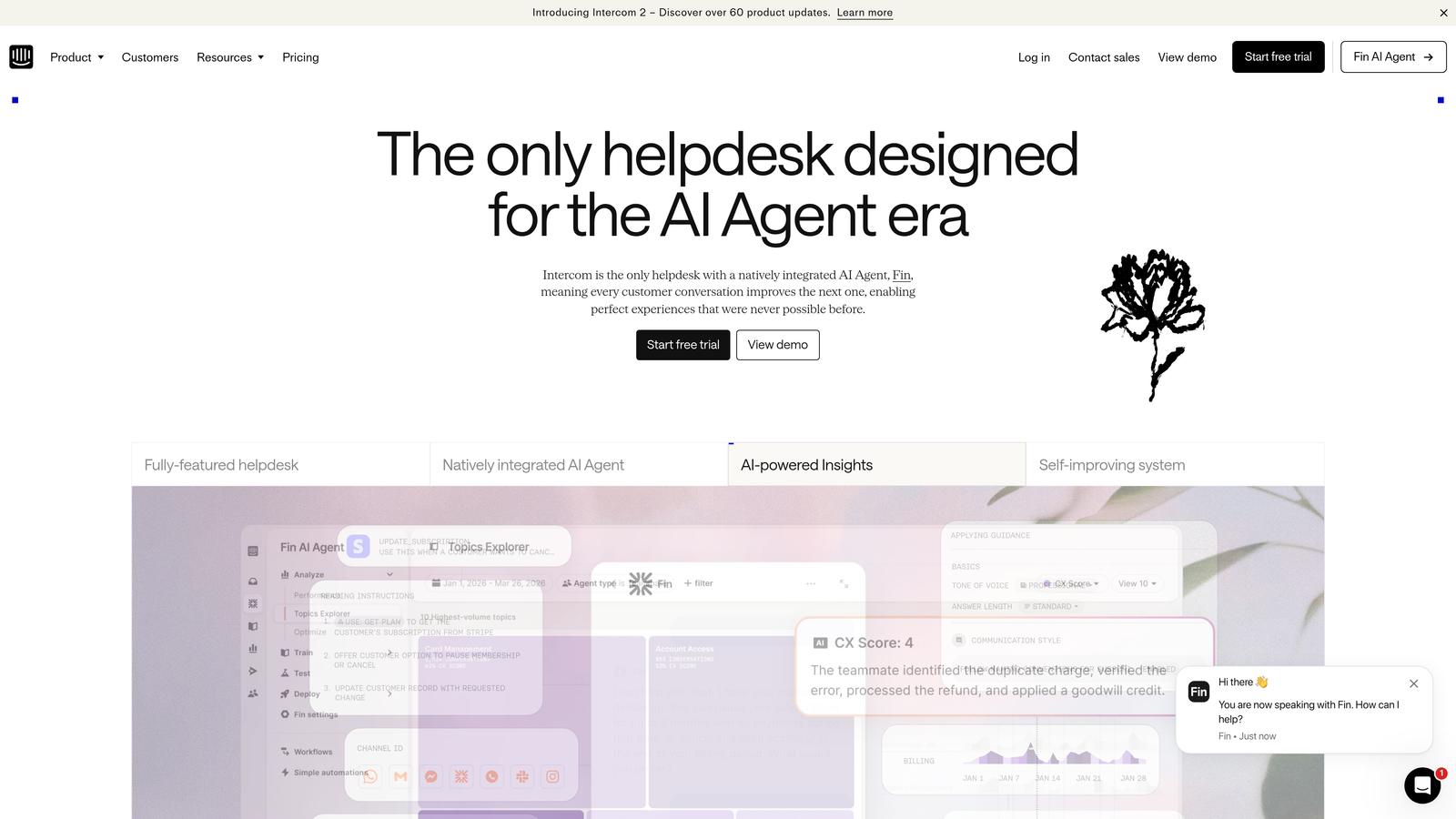
Intercom is a comprehensive customer messaging platform with Fin, an AI agent built on large language models that autonomously resolves support queries across chat, email, and in-product surfaces.
Where This Tool Shines
Intercom's Fin AI agent is one of the more capable autonomous resolution tools available today. It draws on your knowledge base to answer questions with source citations, which builds user trust and reduces the "black box" feeling of AI responses.
The transition from Fin to a human agent is handled within the same inbox, which keeps the customer experience seamless. For SaaS teams already invested in the Intercom ecosystem, adding Fin requires minimal setup overhead.
Key Features
Fin AI Agent: Autonomously resolves support queries with cited sources, handling a wide range of common SaaS support questions without agent involvement.
Human Handoff: Seamlessly escalates from Fin to a live agent within the same conversation thread, preserving full context.
In-App Messenger: Supports product tours, onboarding flows, and proactive messaging alongside reactive support.
Conversation Analytics: Robust reporting on resolution rates, CSAT, and team performance.
App Marketplace: Extensive integrations with SaaS-relevant tools across CRM, billing, and product analytics.
Best For
Mid-market to enterprise SaaS teams that want a mature, battle-tested platform combining AI resolution with in-app messaging and onboarding. Teams already using Intercom will find the upgrade path to Fin straightforward.
Pricing
Starts at approximately $39 per seat per month. Fin AI usage is billed per resolution, so costs scale with volume. Verify current pricing at intercom.com.
3. Zendesk
Best for: Larger SaaS organizations with complex routing needs and enterprise compliance requirements
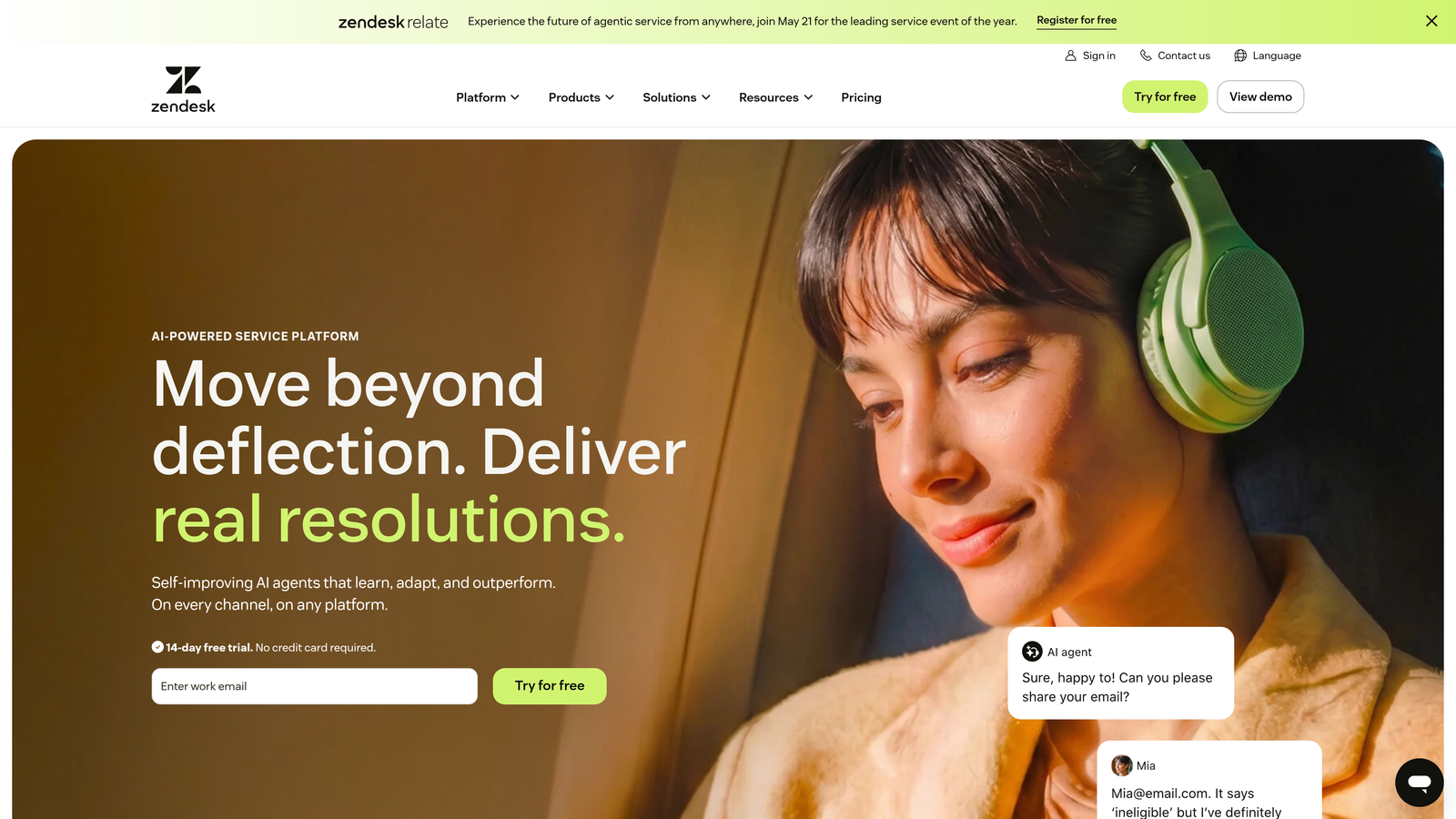
Zendesk is the industry-standard helpdesk platform with AI-powered triage, agent assist, and self-service automation built across its ticketing, messaging, and knowledge base products.
Where This Tool Shines
Zendesk's strength is breadth. The platform handles high ticket volumes across multiple channels with sophisticated SLA management, routing rules, and workflow automation that larger support teams genuinely need.
The AI layer, Zendesk AI, adds intelligent triage and intent detection on top of that foundation. It won't fully resolve tickets autonomously the way AI-first tools do, but it meaningfully accelerates agent workflows through suggested macros and reply drafts.
Key Features
Zendesk AI Triage: Automatically categorizes tickets by intent, sentiment, and urgency to route them to the right team or queue.
AI-Suggested Macros and Replies: Surfaces relevant reply templates and draft responses to help agents respond faster.
Answer Bot: Deflects common questions through self-service before a ticket is created, reducing inbound volume.
SLA Management: Robust service level agreement tracking and escalation workflows for teams with strict response commitments.
Integration Ecosystem: Deep integrations with Salesforce, Jira, Slack, and hundreds of other tools.
Best For
Enterprise SaaS teams and organizations with complex multi-tier support structures, strict compliance needs, or large agent teams that require enterprise-grade workflow management.
Pricing
Suite plans start at approximately $55 per agent per month, billed annually. Enterprise tiers are significantly higher. Confirm current pricing at zendesk.com.
4. Freshdesk
Best for: Growing SaaS teams that want AI automation at a more accessible price point
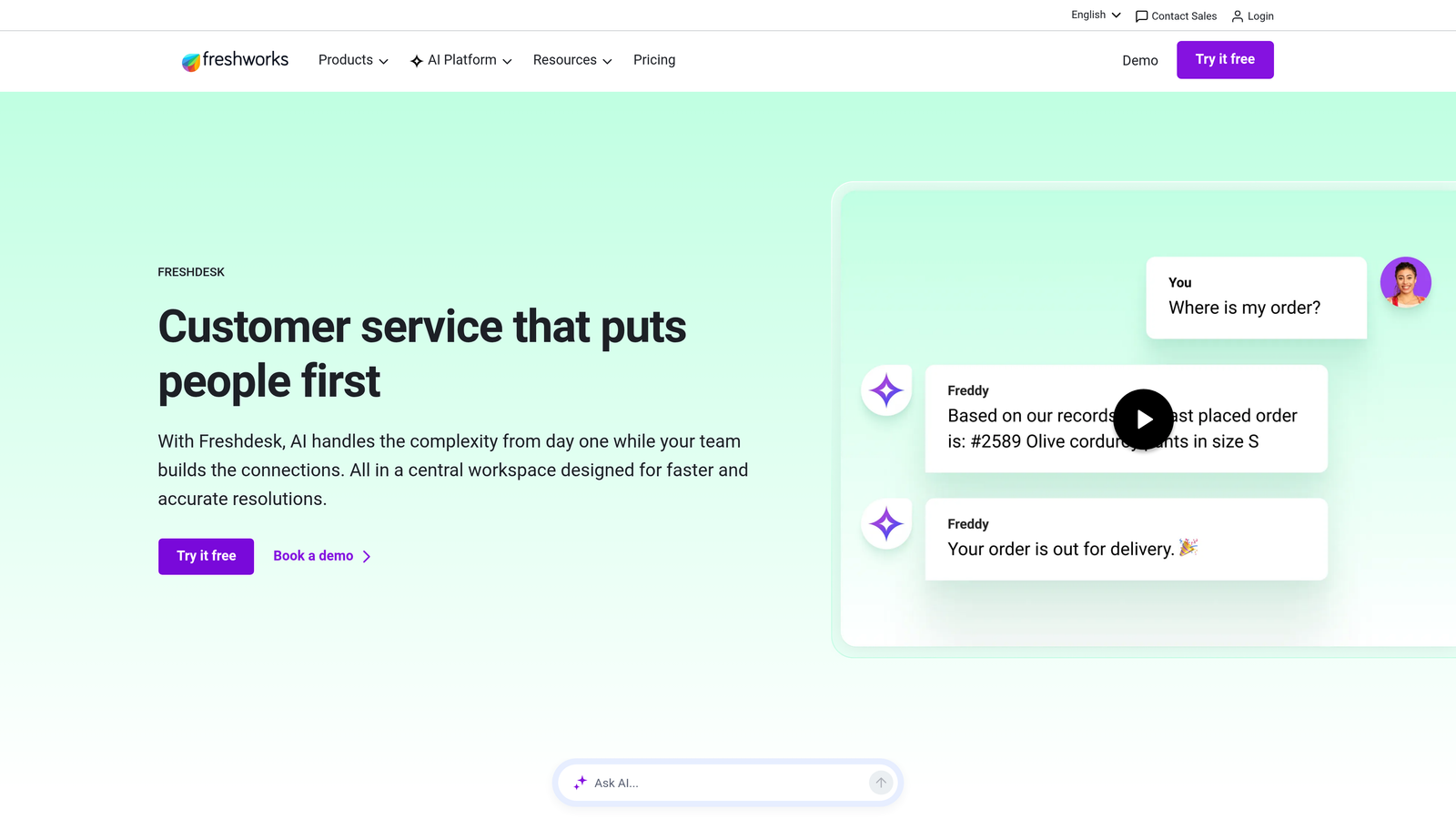
Freshdesk is a cloud-based helpdesk with Freddy AI, a suite of automation tools covering self-service chatbots, agent copilot assistance, and analytics.
Where This Tool Shines
Freshdesk hits a sweet spot for SaaS teams that need real AI capability without Zendesk-level pricing. Freddy AI spans the full support workflow: deflection before tickets are created, assistance while agents are working, and analytical insights after the fact.
The omnichannel coverage is solid, and the free plan makes it genuinely accessible for early-stage teams that want to start with structure before layering on automation.
Key Features
Freddy Self Service: AI-powered chatbot that deflects common queries before they become tickets, drawing on your knowledge base.
Freddy Copilot: Real-time agent assist with suggested replies, tone adjustments, and contextual knowledge retrieval.
Freddy Insights: Automated reporting with anomaly alerts to surface unusual patterns in support volume or resolution rates.
Ticket Automation: Rule-based categorization, prioritization, and routing to reduce manual triage work.
Omnichannel Support: Handles email, chat, phone, and social channels from a single inbox.
Best For
Growing SaaS teams scaling past manual support but not yet ready for enterprise-tier pricing. Also a strong fit for teams migrating from basic email-only support to a structured helpdesk with AI capabilities.
Pricing
Free plan available for small teams. Paid plans start at approximately $15 per agent per month. AI features are available on higher tiers. Verify at freshdesk.com.
5. Tidio
Best for: Early-stage SaaS teams that need fast deployment with minimal technical overhead
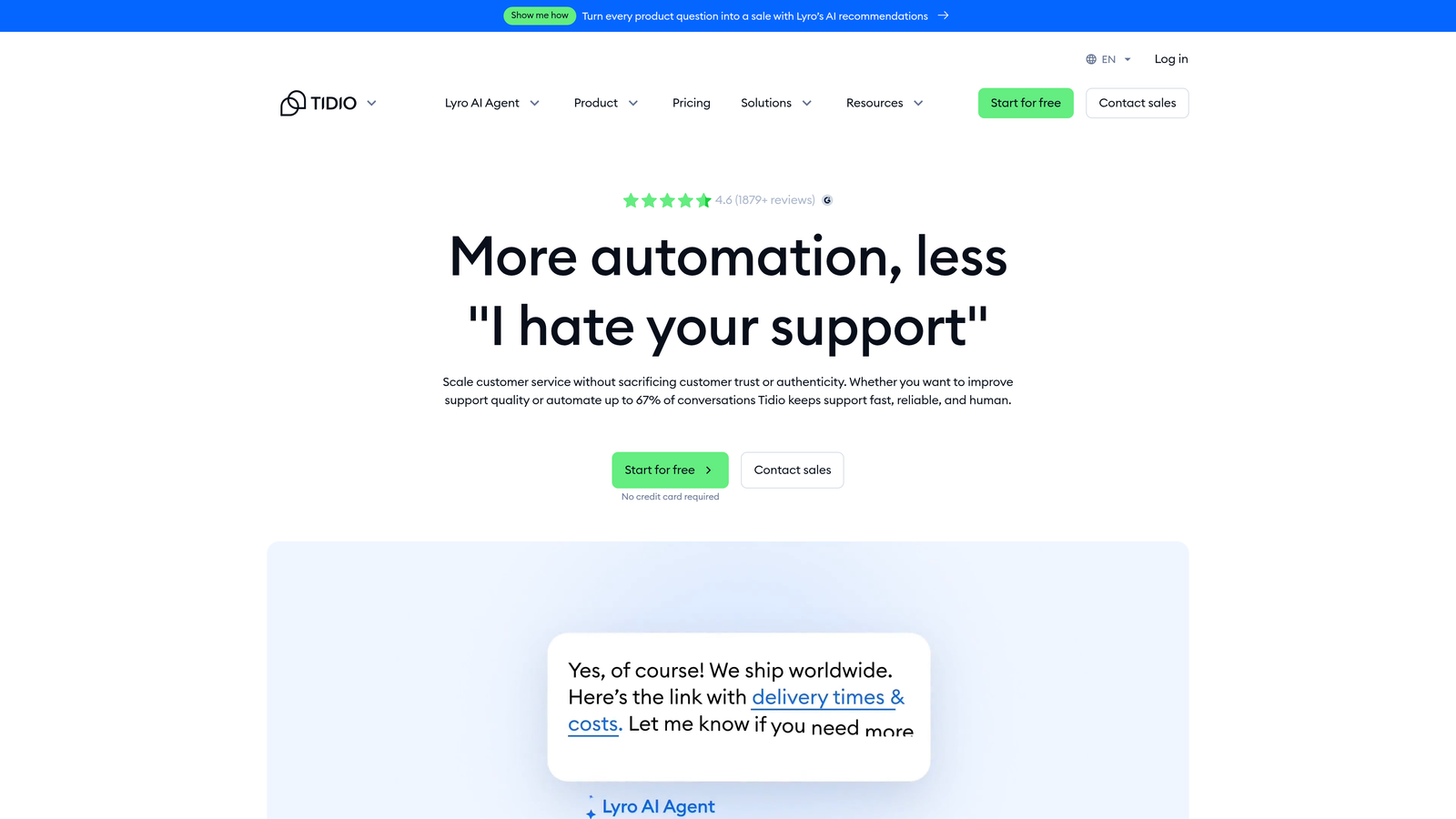
Tidio is a live chat and AI automation platform featuring Lyro AI, designed for fast deployment and accessible to teams without deep technical resources.
Where This Tool Shines
Tidio's primary advantage is speed to value. The no-code chatbot builder and quick setup process mean a small team can have conversational automation running in under an hour. For early-stage SaaS teams that need something working now, that matters.
Lyro AI handles a wide range of common support queries conversationally, which reduces the robotic feel of older rule-based chatbots. It won't handle deeply technical SaaS queries, but for common questions it performs well.
Key Features
Lyro AI: Conversational AI that handles common support queries automatically, trained on your help content.
Visual Chatbot Builder: No-code flow creation for building custom automation paths without developer involvement.
Live Chat: Real-time visitor monitoring with agent takeover capability when automation isn't sufficient.
Multi-Channel Integration: Connects email and Messenger alongside the primary chat widget.
Fast Setup: Deployable in under an hour with minimal configuration required.
Best For
Early-stage SaaS startups and small teams that want accessible AI automation quickly, without the complexity or cost of enterprise platforms. Less suited for teams with complex technical support needs or high ticket volumes requiring sophisticated routing.
Pricing
Free plan available. Lyro AI starts at approximately $29 per month. Confirm current pricing at tidio.com.
6. Gorgias
Best for: SaaS teams with significant transactional support volume around billing and subscriptions
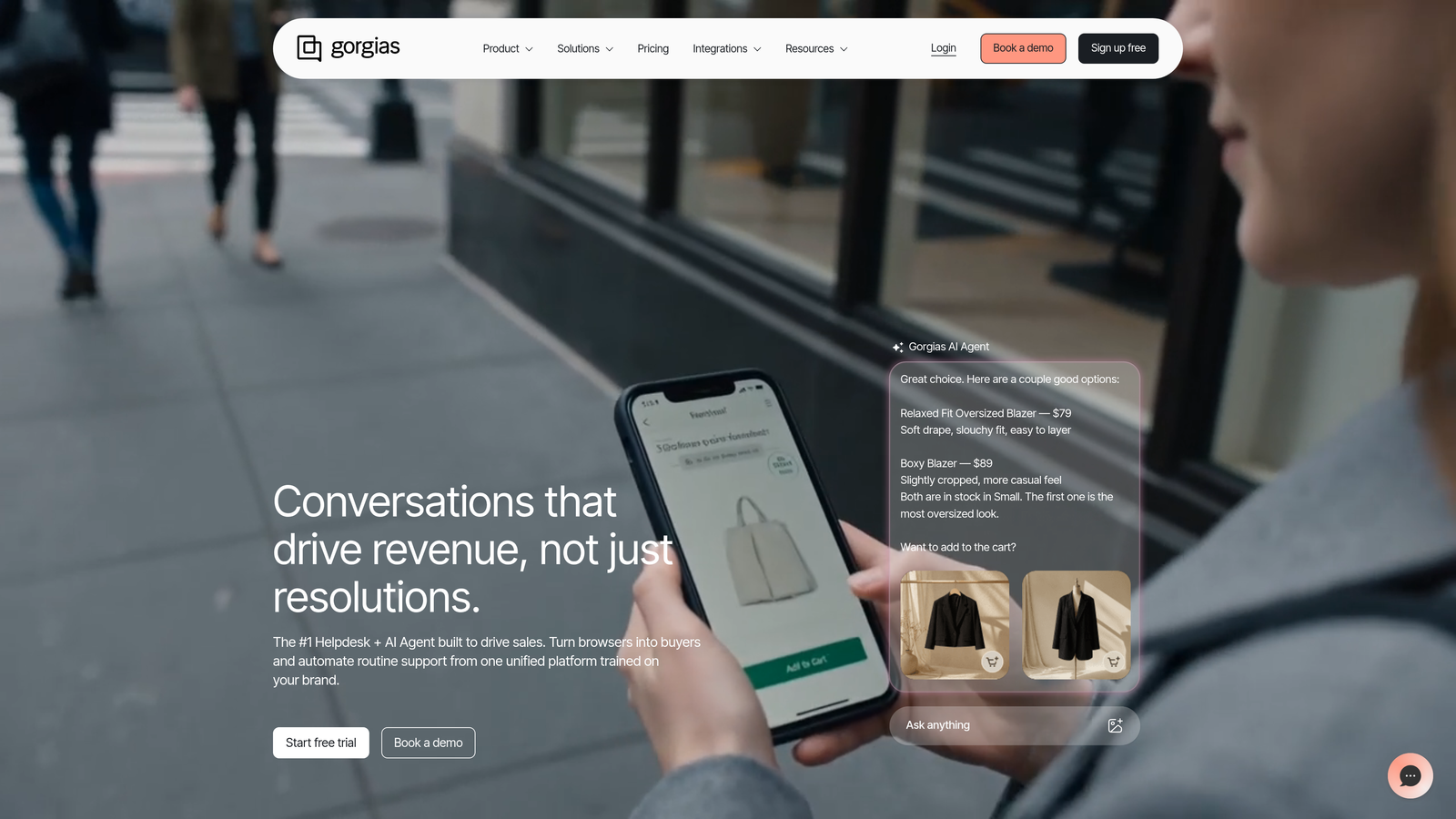
Gorgias is a support automation platform with deep transactional data integrations, enabling AI to autonomously resolve billing, subscription, and order-related tickets without agent involvement.
Where This Tool Shines
Gorgias built its reputation in e-commerce, but its deep billing and subscription integrations make it genuinely useful for SaaS teams where a significant portion of tickets relate to plan changes, payment failures, and subscription management.
The ability to pull live Stripe data into automated responses means the AI can answer "why did my card get charged?" or "what's on my current plan?" accurately without any agent involvement. That's a meaningful deflection category for SaaS products.
Key Features
Transactional Automation: Resolves billing and subscription queries using live data from connected tools, without requiring agent review.
Intent Detection: Routes or auto-closes tickets based on detected intent, reducing manual triage for repetitive query types.
Macros and Rules Engine: Flexible workflow automation for common repetitive scenarios beyond billing.
Revenue Attribution: Ties revenue statistics to support interactions so you can see the business impact of support quality.
Billing Integrations: Deep connections with Stripe, Recharge, and other subscription billing tools.
Best For
SaaS teams with high volumes of billing, subscription, and account management tickets that want AI to handle those queries autonomously. Less suited for teams with primarily technical or product-focused support queries.
Pricing
Starts at approximately $10 per month for 50 tickets, scaling with volume. Confirm current pricing at gorgias.com.
7. Forethought
Best for: Teams that want smarter AI on top of an existing helpdesk without migrating platforms
Forethought is an AI layer that integrates with existing helpdesks to add intelligent triage, routing, and ticket deflection without requiring a platform migration.
Where This Tool Shines
If your team is locked into Zendesk or Salesforce Service Cloud and can't migrate, Forethought is one of the cleanest ways to add meaningful AI capability on top. It handles triage, routing, deflection, and agent assist as discrete modules you can adopt incrementally.
Note that Forethought was acquired by Moveworks in 2024, so the product roadmap and positioning may continue to evolve. Worth verifying the current state of the product if you're evaluating it seriously.
Key Features
Triage AI: Automatically categorizes, tags, and routes incoming tickets based on content and intent.
Solve AI: Self-service deflection that intercepts common queries before tickets are created.
Assist AI: Agent-facing suggested replies and knowledge retrieval to accelerate response times.
Discover AI: Analytics layer that identifies workflow optimization opportunities from support patterns.
Native Integrations: Works directly with Zendesk, Salesforce Service Cloud, Freshdesk, and ServiceNow.
Best For
Enterprise SaaS teams using Zendesk or Salesforce that want to add AI intelligence without a platform change. Good for organizations where platform migration is politically or technically difficult.
Pricing
Custom pricing. Contact Forethought directly for a quote at forethought.ai.
8. Kustomer
Best for: SaaS teams that want support and customer data unified in a single CRM-native platform
Kustomer is a CRM-native customer service platform that unifies the full customer timeline with AI-powered automation across support workflows.
Where This Tool Shines
Kustomer's differentiator is the unified customer timeline. Rather than treating each support ticket in isolation, Kustomer aggregates support history, product usage data, and purchase behavior into a single view. For SaaS teams that want context-rich support, that's a meaningful advantage.
The AI automation layer handles routing and workflow automation across channels, while KIQ Customer Assist provides self-service deflection. It's a more complete customer data platform than a pure support tool.
Key Features
Unified Customer Timeline: Combines support history, product usage, and transaction data into a single agent view for context-rich interactions.
AI Routing and Automation: Intelligent workflow automation across email, chat, and other channels.
KIQ Customer Assist: AI-driven self-service that deflects common queries before they reach an agent.
Proactive Messaging: Outbound support automation for reaching customers before issues escalate.
Flexible Data Model: Customizable customer attributes that accommodate SaaS-specific data like subscription tier, feature usage, and account health.
Best For
Mid-market and enterprise SaaS teams that want support and customer data in one place, particularly those frustrated by the disconnect between their CRM and helpdesk. Higher price point suits teams where that unification delivers clear ROI.
Pricing
Starts at approximately $89 per agent per month at the Enterprise tier. Confirm current pricing at kustomer.com.
9. Help Scout
Best for: SaaS teams that want AI to assist agents rather than replace them entirely
Help Scout is a human-first support platform with AI Drafts and Summarize features that help agents work faster without fully automating the support experience.
Where This Tool Shines
Help Scout occupies a deliberate position: it's for teams that believe relationship-driven support is a competitive advantage and don't want to fully automate customer interactions. The AI features are assistive rather than autonomous, which keeps the human element intact.
The clean, minimal UI is genuinely appreciated by support teams who find enterprise helpdesks overcomplicated. If your team values simplicity and collaboration over feature density, Help Scout delivers that without compromise.
Key Features
AI Drafts: Generates reply suggestions for agents to review, edit, and send — keeping humans in the loop on every response.
AI Summarize: Condenses long conversation threads into quick summaries so agents can get up to speed without reading every message.
Beacon Widget: Embeds a chat widget with a built-in knowledge base and proactive messaging capability.
Workflows: Rule-based ticket routing, tagging, and assignment automation for common scenarios.
Team Collaboration: Clean inbox with strong internal notes, collision detection, and assignment features for coordinated team support.
Best For
SaaS teams with a relationship-focused support philosophy where brand voice and human judgment matter on every interaction. Also a strong fit for teams moving off email-based support who want structure without overwhelming complexity.
Pricing
Starts at approximately $22 per user per month on the Standard plan. Confirm current pricing at helpscout.com.
Which Tool Is Right for Your Team
The most important question isn't which tool has the most features. It's whether you need AI to assist your agents or to fully resolve tickets on its own. That distinction shapes everything else.
Here's a quick way to think through the decision:
Early-stage startups: Tidio or Freshdesk give you fast setup and accessible pricing without overcomplicating your stack. Freshdesk has more room to grow as your volume increases.
Scaling mid-market SaaS teams: Halo AI and Intercom are the strongest options for teams that want genuine autonomous resolution. Halo's page-aware context and business intelligence signals make it particularly compelling for product-led SaaS companies. Intercom is the better choice if you're already deep in that ecosystem.
Enterprise organizations: Zendesk and Kustomer handle the complexity, compliance requirements, and multi-team structures that larger orgs need. Forethought is worth evaluating if you're locked into an existing platform and need to add AI capability without migrating.
Teams with heavy billing and subscription support: Gorgias handles transactional query automation better than most, with deep Stripe integration that lets AI resolve payment and plan questions autonomously.
Teams that want AI assistance, not full automation: Help Scout keeps humans in the loop with AI Drafts and Summarize, which suits support cultures where every response reflects brand voice.
Your support team shouldn't scale linearly with your customer base. Let AI agents handle routine tickets, guide users through your product, and surface business intelligence while your team focuses on complex issues that need a human touch. See Halo in action and discover how continuous learning transforms every interaction into smarter, faster support.